❌

Reading view

In 2002 astronomers averaged the light of 200,000 galaxies and announced the universe was pale turquoise — then traced the color to a software error and corrected it to a beige they nicknamed cosmic latte
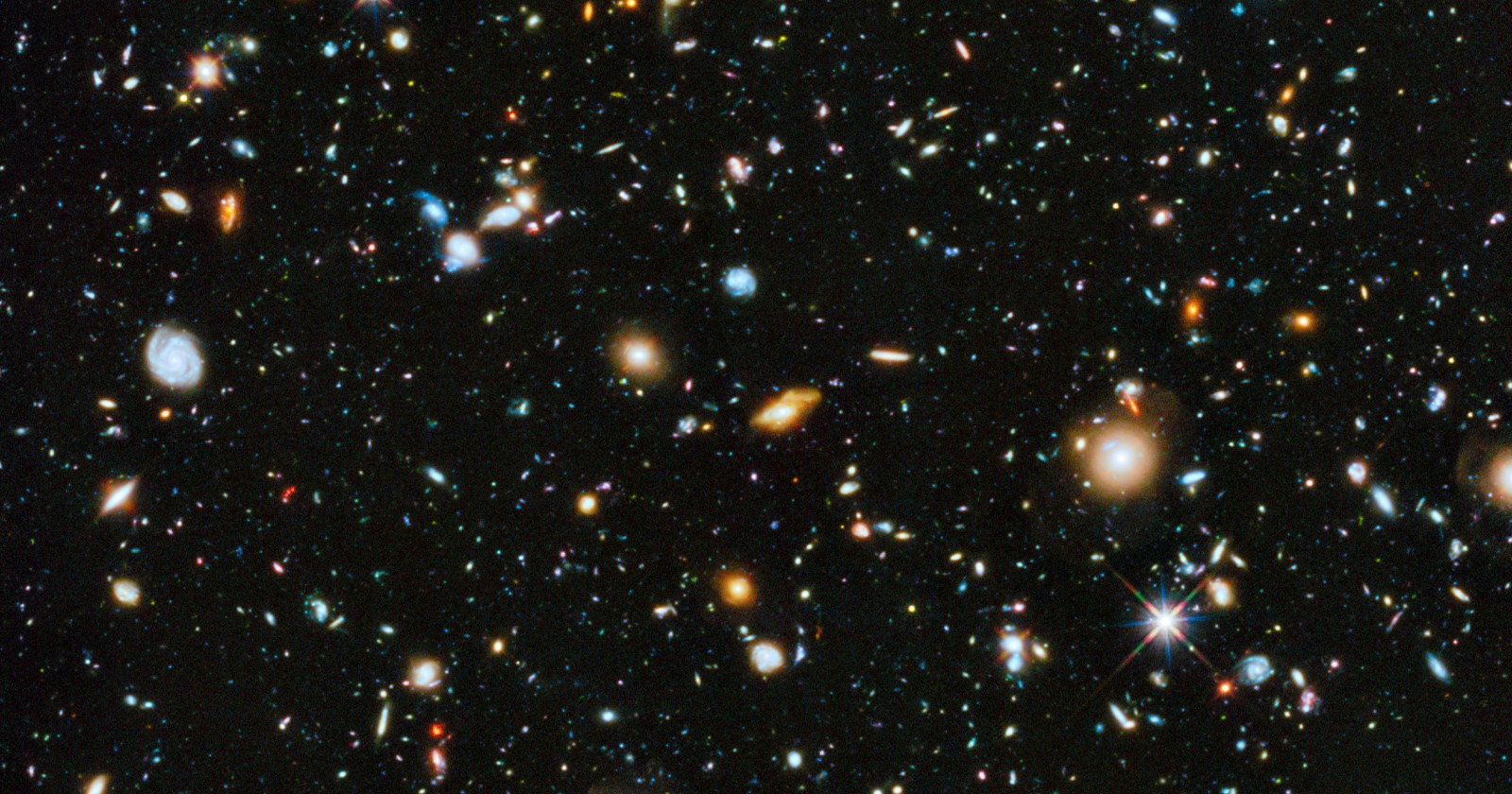
A field of thousands of galaxies in many colors, from blue to red, scattered across a dark sky

The universe is the color of weak coffee

In 2002 two astronomers at Johns Hopkins University, Karl Glazebrook and Ivan Baldry, averaged the light of more than 200,000 galaxies and first announced that the collective color of the universe was a pale turquoise. Within weeks they took it back. A mistake in their color software had skewed the result, and the corrected answer was a milky off-white that the public soon nicknamed cosmic latte.

The color was never the point of the research. It started as a footnote to a serious survey of the light galaxies give off, and it became, briefly, one of the most talked-about findings in astronomy. Newspapers ran with the idea that the cosmos had a single average shade, and home decorators took an interest in a color drawn from every galaxy at once. The retraction, when it came, was almost as widely reported as the original claim.

How you average the color of the universe

The two were studying the cosmic spectrum, built from the Australian Two-degree Field Galaxy Redshift Survey, which had measured the spectra of more than 200,000 galaxies. By combining many tens of thousands of those spectra, they produced a single volume-averaged, luminosity-weighted result, in effect the average color of light emitted by the nearby universe. Their real aim was to read the history of star formation out of that combined light, since young blue stars and old red stars leave different fingerprints in it.

That blend is why the spectrum landed where it did. It is a mixture of young, hot, blue populations and old, cool, red ones, and the average of the two is neither strongly blue nor strongly red. The paper noted that the resulting color is not the kind a single glowing object would produce, which was the first hint that turning a spectrum into a single perceived shade is less straightforward than it sounds.

On a whim, Glazebrook decided to work out what that spectrum would look like to a human eye, using the standard color-matching functions that describe how people perceive different wavelengths. Integrating the cosmic spectrum through those functions returned a blue-green that the team announced as “a few percent greener than pale turquoise.” Announced at a January 2002 meeting, the idea that the universe had an average color, and that the color was greenish, caught the public imagination at once.

The white-point mistake

Not long after the turquoise claim made news, Mark Fairchild of the Munsell Color Science Laboratory at the Rochester Institute of Technology got in touch. Fairchild had, almost literally, written the book on the subject, the 1998 text “Color Appearance Models.” He and his colleagues found that the free software the astronomers had used had set its “white point” incorrectly. The white point is the light that the eye treats as plain white, and it shifts with surroundings, a little yellow under household bulbs, a little blue on some screens. The wrong setting had tinted the whole result green.

A color scientist at the same laboratory, Francis Imai, put the problem in everyday terms. “Tungsten lights, for example, can make the white point a little bit yellowish,” he explained. “Some monitors have a bluish white point. Your visual system tries to adapt, so that you assume that color is white, but it’s actually yellowish or bluish.” The freeware had effectively chosen the wrong reference for white, and the error pulled the whole result toward green.

When the white point was fixed for someone viewing the light in a dark room, the color came out beige. Adjusted for daylight it turned faintly red, and for indoor lighting it shifted blue. Baldry made the dependence vivid: “if you look at all the light in the universe from a room that has a red neon light, then it may appear turquoise,” he said. “But that’s not a standard perspective.”

Glazebrook did not hide from the mistake. “It’s our fault for not taking the color science seriously enough,” he said. “I’m very embarrassed. I don’t like being wrong, but once I found out I was, I knew I had to get the word out.”

The astronomers posted their spectrum data online and invited anyone to recompute the color. From a flurry of suggested names, cosmic latte stuck, chosen for the milky off-white shade.

What the color actually means

The “color of the universe” is not a property of space the way temperature or density is. It is a perceptual quantity, and the turquoise blunder showed exactly why that matters: the same spectrum reads as beige, red or blue depending only on the lighting you imagine yourself standing in. There is no neutral place to view all the galaxies from, so there is no single true color, only a color for a stated set of assumptions.

It is also an average, luminosity-weighted across one survey’s galaxies at modest distances, not a tally of every photon the cosmos has ever released. The galaxies in the 2dF sample are relatively nearby in cosmic terms, so the figure describes the light of the present-day universe rather than the redder glow of its distant, earlier reaches. And it was, by the authors’ own account, a lighthearted aside to a paper about how fast stars have formed across cosmic time. The beige is real enough, but it describes a calculation and a convention, not a wall you could paint to match the sky.

The naming, too, was informal. Cosmic latte was a popular choice rather than a scientific term, and it appears in galleries of color values more often than in the astronomical literature.

A beige worth keeping

What lingers is less the color than the correction. Two researchers made a vivid, widely repeated claim, learned within weeks that they had got it wrong, and said so in plain language rather than letting the prettier answer stand.

The universe, averaged and viewed in the dark, is roughly the color of milky coffee. The more durable lesson is in how quickly that beige replaced the turquoise once someone checked the color science.

The post In 2002 astronomers averaged the light of 200,000 galaxies and announced the universe was pale turquoise — then traced the color to a software error and corrected it to a beige they nicknamed cosmic latte appeared first on Space Daily.
  •  

A dying star might never collapse into a black hole — a tiny Big Bang could ignite at its core and leave a gravastar with no singularity and no event horizon

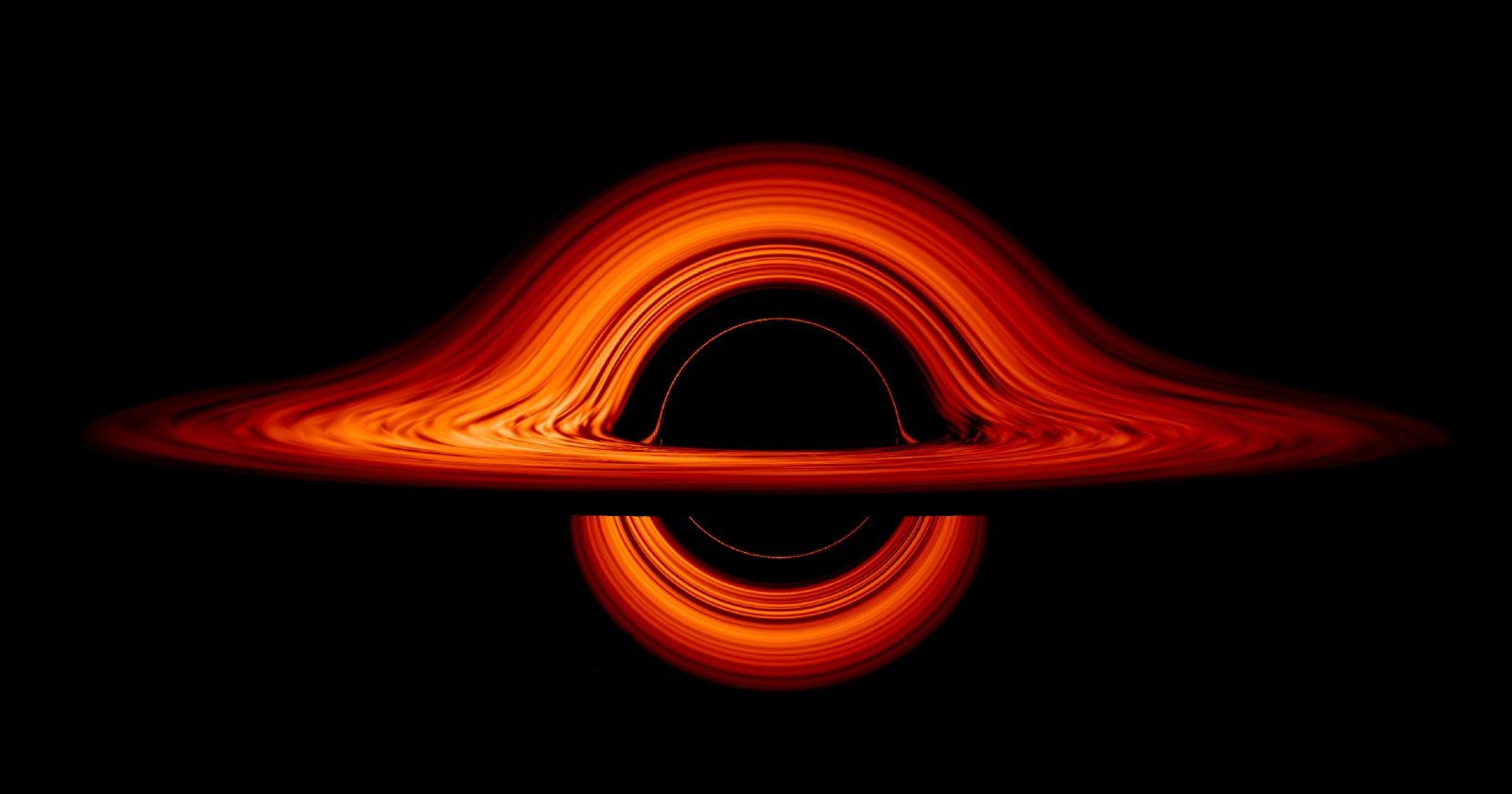
Simulation of a black hole with a glowing orange accretion disk warped into a halo by its gravity

When a very massive star burns through its fuel, the textbook ending is bleak. Nothing is left to push back against gravity, the core caves in on itself, and everything funnels down to a single point of infinite density called a singularity, wrapped in an event horizon that lets nothing escape. A black hole. Two theoretical physicists at Goethe University Frankfurt have now written down a different ending, one in which the same collapse triggers something like a miniature Big Bang inside the star and stops short of a black hole entirely.

In their solution to Einstein’s equations, a tiny region of dark energy switches on at the center of the imploding star and begins to expand, the way our own universe did in its first instant. That expansion pushes outward just as gravity pulls in, and if the two forces settle into balance, the collapse freezes. What remains is a gravastar: an object almost as compact as a black hole, but with no singularity at its heart and no horizon around it.

What a gravastar actually is

The gravastar, short for gravitational vacuum condensate star, is not a new idea. It was first proposed in 2001 by physicists Pawel Mazur and Emil Mottola, who suggested that gravitational collapse might end not in a singularity but in a ball of dark energy held together by a thin shell of ordinary matter.

Dark energy is the same repulsive ingredient that cosmologists invoke to explain why the universe’s expansion is speeding up. Inside a gravastar, it would exert an outward pressure that props up the object’s enormous mass, which would otherwise keep falling inward. The thin shell of matter at the surface, helped by gravity, acts like a belt holding the whole thing in place.

The appeal is that a gravastar sidesteps the two features of black holes that physicists find hardest to accept. There is no singularity, the point where the equations of general relativity stop making sense, and there is no event horizon, the one-way boundary that traps everything behind it. Mazur and Mottola argued their version would also be thermodynamically stable and would dodge the information paradox, the long-running puzzle of what becomes of the information that falls past a horizon. The trade-off is that a gravastar can be made nearly as dense and compact as a black hole, which is also the problem: from the outside, the two would look almost identical.

For about 25 years that idea sat with a hole in it. Researchers could describe what a finished gravastar might look like, and a few had modeled one forming from a collapsing shell of matter, but no one had shown how a solid, collapsing ball of matter would actually turn into one. That is the gap the new work tries to close.

The Big Bang that stops a collapse

The Frankfurt physicists started from one of the oldest models in the field, the Oppenheimer-Snyder description of a uniform sphere of pressureless matter, or dust, collapsing under its own weight. Left alone, that sphere becomes a black hole. The new step was to seed an expanding patch of dark energy, technically a de Sitter region, at the very center and follow what happens as the two meet. They did this within ordinary general relativity, without the exotic modifications to gravity that such black hole alternatives often require, which is part of why the result drew notice.

In the model, the dark energy bubble starts from zero size and grows outward while the dust falls inward. As the bubble approaches the Schwarzschild radius, the size at which an object of that mass would tip over into a black hole, its expansion naturally slows. If it comes to rest just as it meets the infalling matter, the inward and outward motions cancel and a static gravastar is born. The authors compare the seed to a small Big Bang going off inside the dying star.

There is a delicate handoff where the growing bubble meets the falling dust. In the model a surface tension along that boundary keeps the dark energy from simply engulfing the matter; instead the dust is nudged outward as the region expands against it. Because the dust is treated as collisionless, the two do not slam together in a shock, they just pile up slightly at the seam. That is what lets the configuration settle rather than tear itself apart.

Daniel Jampolski worked out the solution in his master’s thesis, supervised by Luciano Rezzolla, a professor of theoretical astrophysics at the university. To find configurations that actually balance, the pair did not run the collapse forward. They started from a finished gravastar and integrated the equations backward in time to learn which starting conditions could have produced it, a standard trick when only a narrow set of inputs yields the configuration they were after.

Where the picture is still idealized

This is a result on paper, not a sighting in the sky, and the authors are careful about what it does and does not establish. The balance that produces a gravastar is one of only three possible outcomes in their model. The other two are a plain black hole or an object that never settles into equilibrium. Landing on the gravastar requires fine-tuning the starting conditions, which means the scenario is possible in the mathematics rather than obviously common in nature.

There are other simplifications baked in. The collapsing matter is treated as idealized dust with no internal pressure, and the collapse is assumed to be perfectly spherical, conditions no real star fully obeys. The dark energy bubble is assumed to begin at exactly zero size, which the authors describe as a mathematical convenience that a fuller quantum treatment would have to replace. And the model finds a ceiling on how compact the original star can be: above an initial compactness of three-eighths, in the units physicists use, the collapse to a black hole becomes unavoidable no matter what.

Rezzolla has been blunt that none of this is a case against black holes. Looking for alternatives, he has said, should not suggest skepticism toward black holes, which remain the most natural and simplest explanation for what gravitational collapse produces. The point is to test whether the exotic alternatives can even form in principle, and now one of them has at least a formation story.

How we would ever tell the difference

If gravastars look so much like black holes from the outside, the obvious question is whether anyone could distinguish them. Using light to tell the two apart is still a matter of open debate among physicists. The more promising route runs through gravitational waves. When two compact objects merge, the new object left behind rings like a struck bell as it settles, and a gravastar with no horizon should ring at different frequencies than a black hole with one.

Those tremors are exactly what detectors have been recording since 2015, when the first gravitational waves were observed. So far the signals fit ordinary black holes well, and the difference a gravastar would make is subtle enough that picking it out would take more sensitive instruments than exist today.

For now the work adds a worked example to a long-running argument about what really sits at the end of a star’s life. The equations permit something other than a singularity, at least in an idealized case, which is not the same as saying nature chooses it. Whether the universe ever takes that option is a question the math cannot answer on its own.

The post A dying star might never collapse into a black hole — a tiny Big Bang could ignite at its core and leave a gravastar with no singularity and no event horizon appeared first on Space Daily.

  •  

Ariane 6 set to launch the heaviest payload in Ariane history, 36 Amazon Leo satellites, on the debut of upgraded boosters

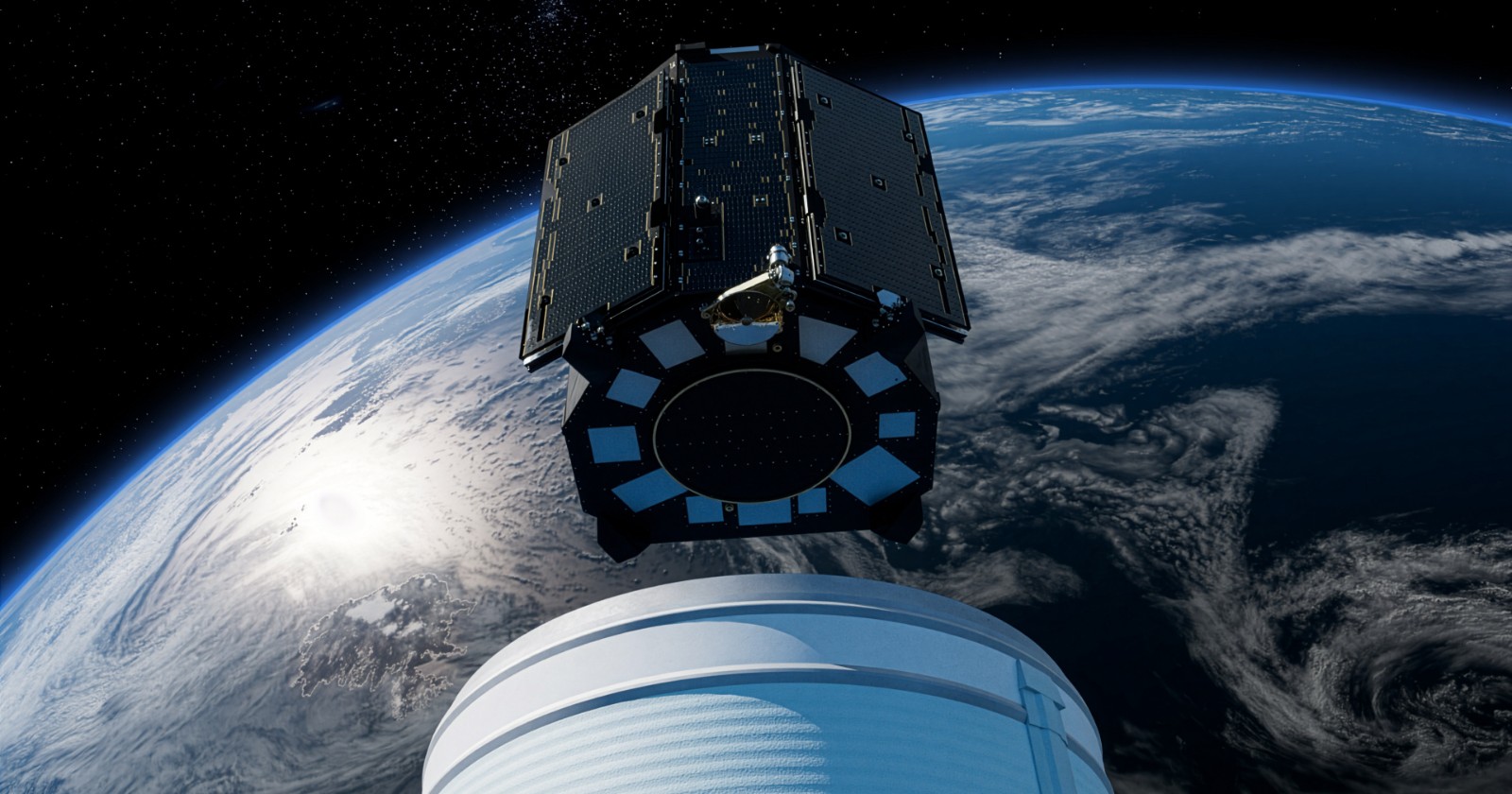
Artist's impression of an Ariane 6 upper stage releasing a spacecraft in orbit above Earth

Arianespace is scheduled to launch 36 Amazon Leo broadband satellites aboard an Ariane 6 rocket on Wednesday, June 17, in a flight the company says will carry the heaviest payload ever launched by an Ariane launcher. Liftoff from Europe’s Spaceport in Kourou, French Guiana, is targeted for a window that opens at 11:53 a.m. UTC (8:53 a.m. local time in Kourou), according to Arianespace’s mission announcement.

Designated VA269 by Arianespace and LE-03 by Amazon, the mission is the third Ariane 6 flight dedicated to Amazon’s low Earth orbit constellation and the eighth Ariane 6 launch overall. The 36 satellites are four more than rode each of the two previous Amazon flights, which carried 32 apiece.

Why this flight carries more

The extra payload comes from a hardware change rather than a bigger rocket. VA269 is the first Ariane 64 to fly with four P160C solid-propellant boosters, an upgraded version of the P120C boosters used on earlier Ariane 6 flights.

The upgrade is internal: each P160C holds more propellant, up to 156 tonnes, in a motor about one meter longer than the P120C’s. Arianespace says that raises booster performance by about 10 percent and lifts Ariane 64’s capacity to roughly 22 tonnes in low Earth orbit, an increase of more than two metric tons. The company describes the P160C, built by ArianeGroup, as among the world’s largest one-piece carbon-fiber solid rocket motors.

The 36 satellites sit under the rocket’s 20-meter fairing. If the flight goes to plan, they will separate over a sequence lasting one hour and 51 minutes from liftoff to release of the final satellite.

Where the constellation stands

Amazon Leo, the company’s satellite internet network formerly known as Project Kuiper, is being deployed across several rockets. Amazon says more than 330 of its satellites have been deployed so far across 12 missions, using Atlas V, Ariane 6, Falcon 9 and other launchers.

A successful VA269 would bring to 100 the number of Amazon Leo satellites launched by Arianespace across three missions in under five months, and would mean Europe has launched more than a quarter of Amazon’s growing constellation. Amazon Leo is Arianespace’s largest single customer, with an initial contract for 18 Ariane 6 launches.

“The upgraded P160C boosters are bringing exactly the performance gains we designed them for, and LE-03 will be our most ambitious launch together yet,” Arianespace chief executive David Cavaillolès said in a statement released with Amazon.

What is and is not settled before liftoff

The record and the new booster capability are claims about a flight that has not happened yet. Launch dates and windows commonly slip for weather or technical reasons, and the heaviest-payload milestone and the P160C’s performance gain are only confirmed once the rocket flies and the satellites separate as planned. The figures above are Arianespace’s and Amazon’s own pre-flight numbers; the deployment outcome will not be known until the mission concludes, nearly two hours after liftoff.

Arianespace says the satellites reached Kourou in mid-April and that the rocket’s core stage and four boosters are already assembled on the pad. The company plans to confirm the result after the flight.

The post Ariane 6 set to launch the heaviest payload in Ariane history, 36 Amazon Leo satellites, on the debut of upgraded boosters appeared first on Space Daily.

  •  

At least two trillion galaxies fill the observable universe — ten times the old estimate — and most are too faint for any telescope today to see, a 2016 study found

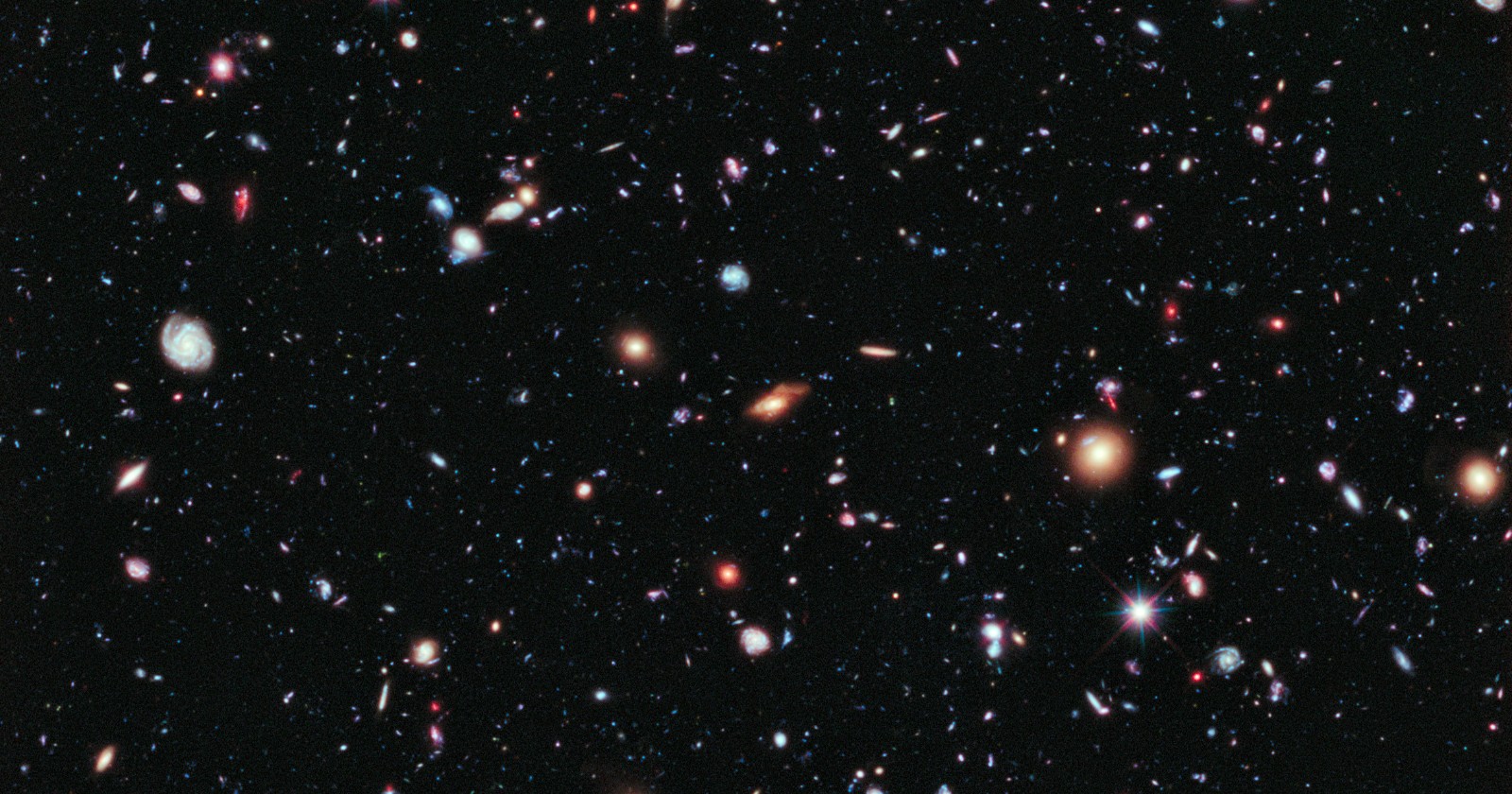
A deep Hubble exposure filled with thousands of faint, distant galaxies of many colors against black sky

Two trillion, and most of them out of sight

In 2016 a team led by Christopher Conselice at the University of Nottingham put the number of galaxies in the observable universe at about two trillion, roughly ten times the figure astronomers had been working with. The twist sits inside the result: the great majority of those galaxies are too faint for any telescope now operating to detect.

The paper states it plainly. There are “at least 2 × 10¹² (two trillion) galaxies in the currently visible universe, the vast majority of which cannot be observed with present day technology as they are too faint.” In other words, the count is less a tally of dots in our images than an estimate of how many dots the images are missing.

How you count galaxies you cannot see

The team did not add up galaxies one by one. Instead they used galaxy stellar mass functions, which describe how many galaxies of each mass exist in a given slice of space. They measured these at many points in cosmic history, reaching back to within roughly 650 million years of the Big Bang. Much of the deep data came from the Hubble Space Telescope, whose narrow, long-exposure images act like core samples drilled through the universe.

Fitting those measurements with a standard mathematical curve, the researchers worked out the density of galaxies at each epoch, then integrated across the whole observable volume and the whole age of the universe. The arithmetic ran down to galaxies as small as a million times the mass of the Sun, faint dwarfs that no survey can see at great distance.

Working with colleagues at Leiden Observatory in the Netherlands and the University of Edinburgh, the team turned narrow, deep images of the sky into three-dimensional maps. From those they measured the volume and the galaxy density of one small slice of space after another. Conselice likened the effort to an intergalactic archaeological dig, a way of estimating how many galaxies had been missed rather than counting the ones already on the photographic plates. The faintest galaxies the model implies would shine at around magnitude 29 on the astronomers’ brightness scale, far below the reach of the unaided eye and beyond all but the deepest exposures ever taken.

Two independent versions of the calculation gave 1.2 trillion and 2.8 trillion. The University of Nottingham reported the averaged figure of two trillion as the headline result, the product of what Conselice described as roughly fifteen years of work.

“We are missing the vast majority of galaxies because they are very faint and far away,” Conselice said when the study appeared. “It boggles the mind that over 90 percent of the galaxies in the universe have yet to be studied.”

The early universe was more crowded

The count is high partly because the young universe was busier than the present one. When the team tracked how galaxy numbers changed over time, the trend ran backward. A given volume of space held about ten times more galaxies when the universe was a few billion years old than it does today.

That sounds backward, since the universe has only grown older and larger. The explanation is that small galaxies have spent billions of years merging into bigger ones, so the population thins even as individual galaxies grow. Most of the missing multitude are low-mass systems, no larger than the dwarf galaxies that orbit the Milky Way, and they are exactly the ones too dim to register at great distance.

Why the number jumped tenfold

Before this work, the count was usually put in the hundreds of billions, with the often-quoted figure around 100 billion. Even careful counts from the deepest direct images, such as the Hubble Ultra Deep Field, reached only a couple of hundred billion galaxies. The 2016 model put the true total at almost ten times that direct-count number, roughly two trillion. That implies about ninety percent of galaxies are fainter than current telescopes can register, below an apparent brightness of about magnitude 29.

That gap is not just bookkeeping. The number of galaxies feeds into the total amount of starlight filling space, and into the centuries-old puzzle known as Olbers’ paradox, which asks why the night sky is dark if the universe is full of stars. A sky packed with two trillion galaxies might seem to make the paradox worse, not better.

The team’s answer is that the light of those distant galaxies never reaches us at full strength. Most of it is absorbed by gas in intergalactic space, and the expansion of the universe stretches the rest toward redder, fainter wavelengths. So the universe can be far more crowded than telescopes show while the night sky stays dark, with most of its contents waiting in the gloom for sharper eyes.

What this does and does not prove

The two-trillion figure is a model-dependent extrapolation, not a head count, and the authors are careful about its limits. The result hinges on two choices: the smallest galaxy mass they counted and the earliest epoch they reached. They note that pushing the mass limit lower would multiply the total by about seven, which is why they frame two trillion as a floor rather than a ceiling.

The bigger caveat arrived later. In 2021 a team used NASA’s New Horizons spacecraft, far enough from the Sun to escape the dust glow that brightens the sky near Earth, to measure the cosmic optical background, the summed light of all galaxies. From out there the sky was about ten times darker than the darkest view Hubble can manage. The researchers argued in public that the faintness of that glow points to a total closer to the hundreds of billions than to trillions. “We simply don’t see the light from two trillion galaxies,” one of them, Marc Postman, told reporters.

So the famous number is one side of an open argument, the high end of a range that newer data has pulled downward. What survives the dispute is the underlying lesson rather than the digit: most of the universe’s galaxies, on any of these estimates, are fainter than we can currently observe.

A number that keeps moving

The galaxy count has climbed and fallen as instruments changed, from a few hundred billion in the 1990s to two trillion in 2016 and back toward the hundreds of billions in the New Horizons reading. Each revision says as much about the reach of the telescope as about the universe itself.

That may be the honest takeaway. The number of galaxies is not a settled fact carved into the sky but a running estimate, one that shifts every time a new instrument sees a little deeper into the dark.

The post At least two trillion galaxies fill the observable universe — ten times the old estimate — and most are too faint for any telescope today to see, a 2016 study found appeared first on Space Daily.

  •  

SpaceX Dragon set to depart the space station with bioprinted tissue and cancer-treatment samples, bound for a California splashdown

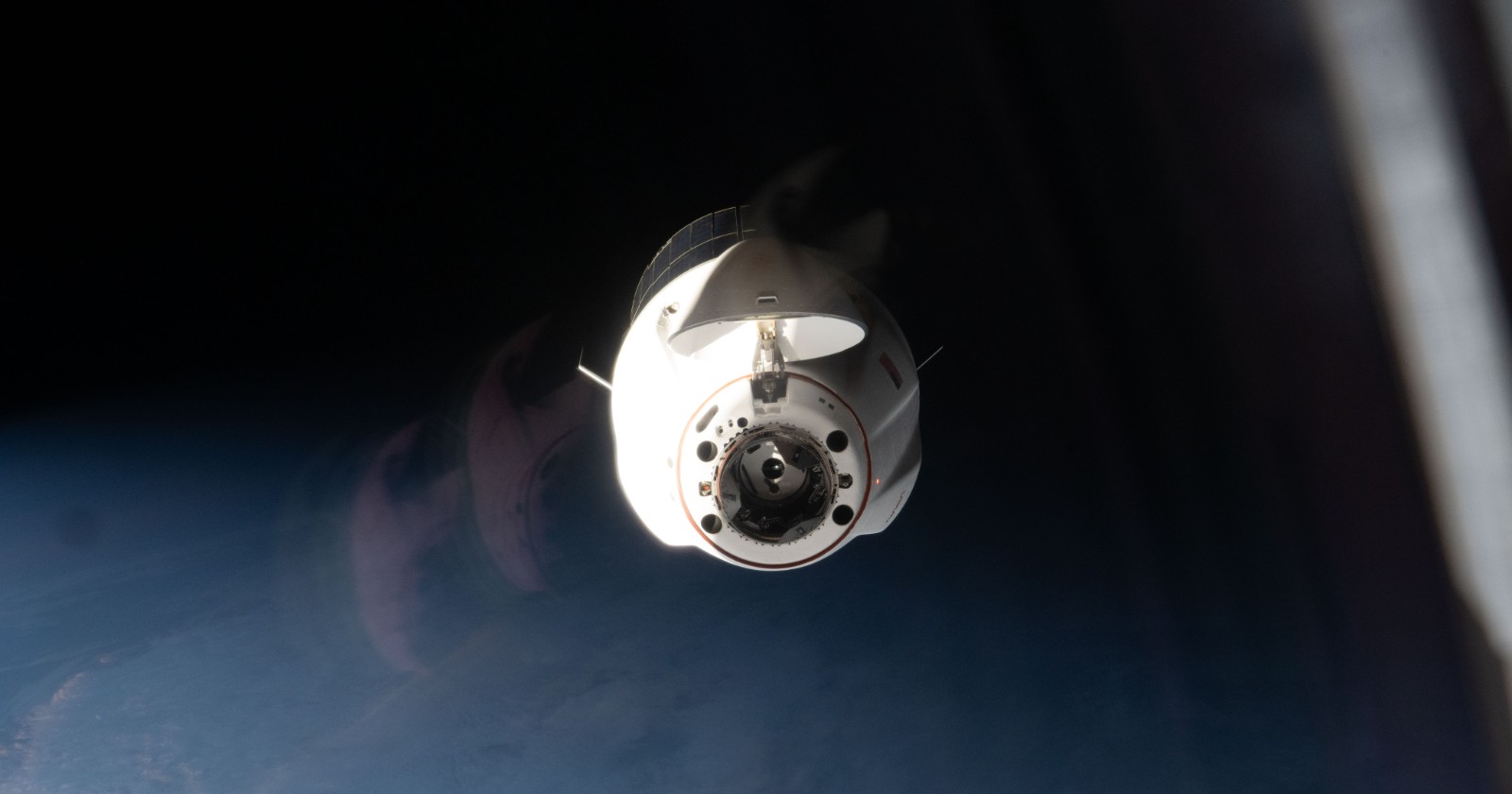
A SpaceX Dragon cargo spacecraft, its nose cone open to reveal the docking mechanism, approaches the International Space Station on May 17, 2026.

A SpaceX Dragon cargo spacecraft is scheduled to leave the International Space Station on Tuesday, June 16, and head back to Earth carrying research samples and used hardware, with splashdown expected off the coast of California early on Wednesday, June 17.

According to NASA, the capsule will undock from the forward port of the station’s Harmony module at about 12:05 p.m. EDT, after a command from SpaceX ground controllers, then fire its thrusters to back away from the orbiting laboratory. Live undocking coverage begins at 11:45 a.m. EDT on NASA+ and the agency’s YouTube channel. The spacecraft is due to reenter the atmosphere the next day and splash down at about 5:08 a.m. PDT; NASA will not carry the splashdown live but plans to post updates on its space station blog. The flight closes out the 34th SpaceX commercial resupply mission, known as CRS-34.

Dragon is returning thousands of pounds of cargo. The science aboard includes bioprinted organ and cartilage tissue, data on storing cryogenic fuel for future missions, and DNA-inspired materials being developed into cancer treatments. The returning hardware includes an ocular imaging device used to track crew members’ eye health, an absorbent bed that filters trace contaminants from cabin air, and a separator pump from the station’s waste and hygiene compartment.

Several of the experiments target health problems on Earth. One NASA investigation grew blood-forming stem cells in microgravity, where researchers believe the cells better keep their ability to develop into the red and white blood cells used to treat blood diseases and cancers. Another, called MVP Cell-09, sent up lab-grown heart tissue deliberately infected with pneumonia-causing bacteria, which tend to grow more aggressive in orbit, to study a poorly understood link between pneumonia and heart disease. A third returns 3D-printed cartilage; NASA notes that more than 900,000 knee cartilage injuries occur in the United States each year, many requiring surgery, and that printing in microgravity spreads cells more evenly than is possible on the ground.

Partners flew experiments of their own. The European Space Agency’s Green Bone study tested a scaffold made from wood and designed to mimic real bone, work aimed at conditions such as osteoporosis, which weakens the bones of millions of people. Other returning samples include heart, liver, kidney, and brain tissue models dosed with experimental RNA-based drugs, and semiconductor crystals grown in orbit for use in sensors and lasers.

NASA frames these as early-stage investigations. The samples still have to be analyzed back on Earth, and the medical and engineering payoffs the agency describes remain prospective rather than proven.

Dragon arrived at the station on May 17, carrying nearly 6,500 pounds of crew supplies and experiments, two days after launching on a Falcon 9 rocket from Space Launch Complex 40 at Cape Canaveral Space Force Station in Florida. It docked to the Harmony module to deliver cargo to the Expedition 74 crew.

Once the capsule is recovered, its cargo heads to research teams across the United States and Europe, where the slower work of the mission begins: reading what weeks in microgravity did to the samples.

The post SpaceX Dragon set to depart the space station with bioprinted tissue and cancer-treatment samples, bound for a California splashdown appeared first on Space Daily.

  •  

An asteroid long thought to be a chunk of the Moon may be ordinary space rock instead, a new study finds, as China’s Tianwen-2 circles it to grab a sample

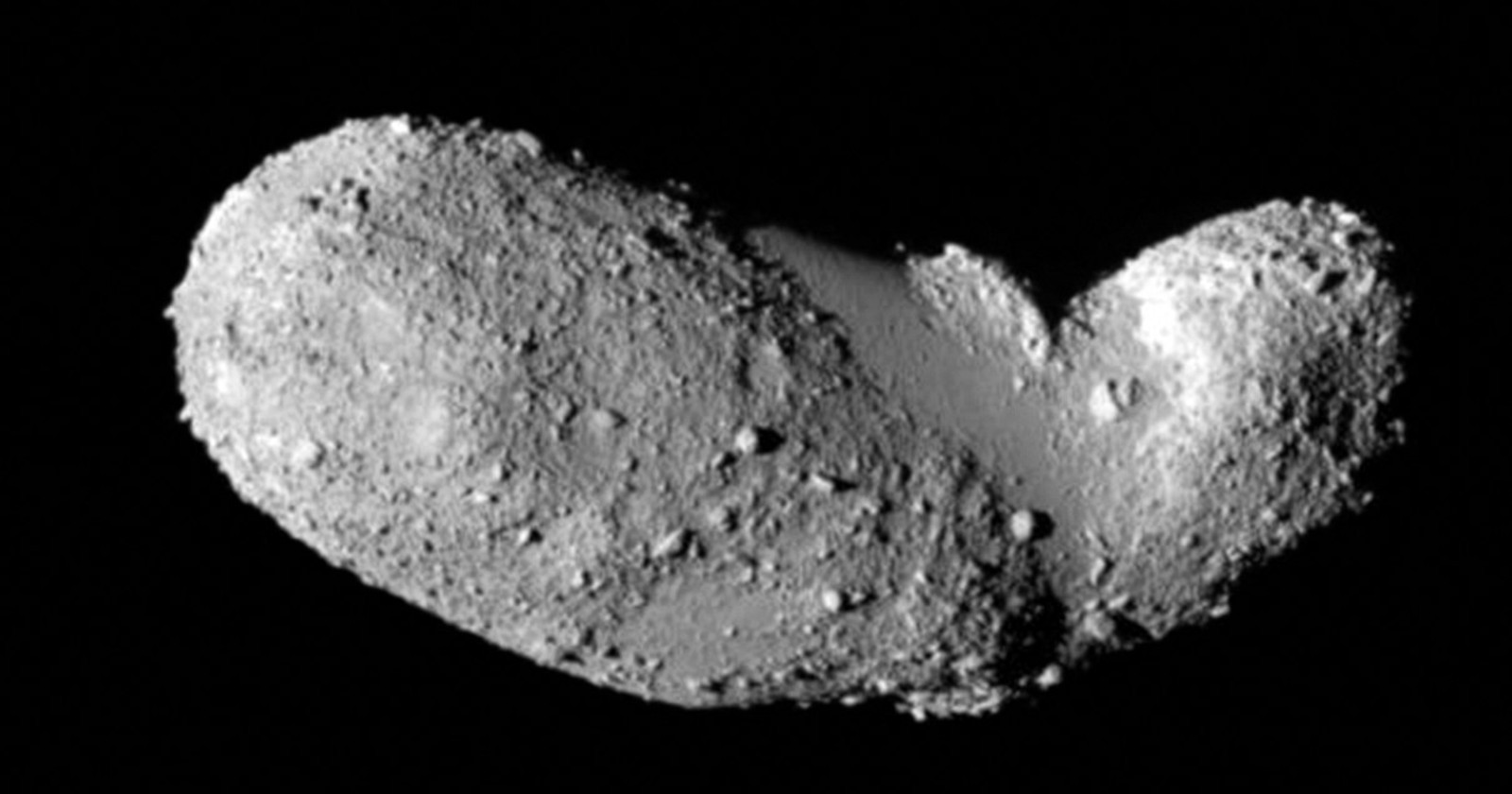
Close-up of the elongated, rubble-strewn asteroid Itokawa against the black of space.

For five years, the leading story about Kamoʻoalewa, a small asteroid that travels alongside Earth, was that it might be a stray piece of the Moon. A new peer-reviewed study argues it is probably something far more ordinary: a fragment of a distant asteroid family, weathered until its surface only looks lunar.

The timing is sharp. On or around June 7, after a 13-month cruise, China’s Tianwen-2 spacecraft slipped into orbit around Kamoʻoalewa, a maneuver tracked by independent radio astronomers even before China’s space agency formally confirmed it. Sample collection is expected within weeks. The asteroid that may decide a long-running debate about its own origin is now being circled by the machine built to bring a piece of it home.

Why the Moon theory took hold

Kamoʻoalewa was found in 2016 by the Pan-STARRS survey in Hawaiʻi, and it is one of a small set of asteroids called quasi-satellites: rocks that orbit the Sun but stay close enough to Earth to seem like loose companions. This one is the most stable of the bunch, expected to linger near us for a few hundred years. It is small, somewhere between roughly 40 and 100 metres across, and it spins fast, turning about once every 28 minutes.

Quasi-satellites are faint and awkward to observe, which is part of why this one drew such outsized attention once a clue to its makeup appeared. It sits close, it stays put for centuries, and it is bright enough to study with large telescopes during its annual passes. For an object that might preserve a record of the early Solar System, that combination is rare.

In 2021, astronomers reported that its reflected light was a closer match to lunar-like silicates than to any common asteroid type, with an unusual extra redness. That resemblance was the spark for the lunar-fragment idea. A 2024 study went further, proposing a specific birthplace: the young Giordano Bruno crater on the Moon’s far side, from which an impact could have flung debris into an Earth-like orbit.

It was a tidy and romantic picture. A souvenir of the Moon, looping around its parent planet, waiting to be collected.

What the new study actually did

Writing in Nature Communications, a large international team led from the Chinese Academy of Sciences reopened the case from three directions. First, they reanalyzed the asteroid’s spectrum and pinned down a key absorption feature at a wavelength of 1.001 micrometres, a value they report as consistent not with lunar material but with LL chondrites, a common type of stony meteorite.

Then they tested whether ordinary meteorite could be made to look like Kamoʻoalewa. In the lab, the team blasted LL chondrite samples with laser pulses to mimic space weathering, the slow darkening and reddening that solar wind and tiny impacts inflict on any airless surface over millions of years. Heavily weathered chondrite powder, they found, reproduced the asteroid’s spectrum. Solid chips of the same meteorite did not.

Finally, they traced where such an object could have come from. Their modeling points to the ν6 secular resonance, a gravitational escape route in the inner asteroid belt, and more specifically to the Flora family, a cluster of asteroids born from an ancient collision. Kamoʻoalewa’s makeup, they write, resembles the well-studied asteroid Itokawa and seven Flora-family members, only more weathered.

The resonance matters because it offers a plausible delivery route. Rocks that drift into it can have their orbits stretched until they cross Earth’s path, which is one way an inner-belt fragment could end up as a quasi-satellite rather than a lunar one. The argument, in short, is that you do not need the Moon to explain Kamoʻoalewa. An ordinary asteroid nudged out of the Flora family and aged in sunlight can account for the same colour, the same orbit, and the same odd companionship with Earth.

Why a powder, not a slab, is the key detail

That powder-versus-chip result is the quiet heart of the paper. A fresh asteroid surface and a deeply weathered one can be the same rock and still reflect light differently, and grain size matters as much as chemistry. The team’s reading is that Kamoʻoalewa is coated in fine, long-exposed dust, which is exactly what would redden an ordinary asteroid until its colour drifts toward the lunar range.

If that holds, the redness that first suggested the Moon is not a fingerprint of lunar rock at all. It is what time does to a small, slow-tumbling asteroid that has been left out in the solar wind for ages. The comparison with Itokawa carries weight here, because Japan’s Hayabusa mission already returned grains from Itokawa and confirmed it as an ordinary chondrite body. The new study places Kamoʻoalewa in that same broad company.

What this does and does not prove

This is a competing explanation, not a verdict. The authors are careful to say Kamoʻoalewa probably came from the Flora family, and the hedge is doing real work. Reflectance spectra are notoriously slippery; weathering, grain size, viewing angle and composition can all nudge an asteroid’s colour in similar directions, which is why two capable teams can look at the same faint object and reach different conclusions.

The lunar-origin case has not been withdrawn, and the dynamical argument for a recent lunar escape still has its defenders. It is also worth noting that the new paper is an early-access version of an accepted manuscript, released ahead of final editing, so small details may still change. What the study does is weaken the single strongest pillar of the Moon theory, the matching red spectrum, by showing that a plain meteorite can be pushed to look the same.

In other words, the resemblance to the Moon is real. The new work simply argues it is a coincidence of weathering rather than a sign of shared birth.

The sample that will end the argument

What makes this debate unusual is that it has an expiration date. Most arguments about an asteroid’s origin are settled, if at all, by ever-finer remote measurements. This one will be settled by holding the rock.

The stakes are not trivial. If the grains turn out to be lunar, Kamoʻoalewa becomes a free sample of the Moon’s far side, delivered to Earth’s neighbourhood without a crewed landing. If they are ordinary chondrite, the asteroid becomes a well-preserved relic of the early Solar System and a test case for how badly space weathering can disguise a familiar rock. Those are two very different prizes, and the same capsule settles which one we get.

Tianwen-2 is expected to collect material from Kamoʻoalewa within weeks and send a capsule back toward Earth in 2027, after which the spacecraft heads onward to a comet. A returned sample can be measured for the isotopes and minerals that distinguish lunar rock from a chondrite asteroid, the kind of test no telescope can perform from afar. For once, a question about where a space rock came from will be answered by the rock itself, and the answer is already on its way.

The post An asteroid long thought to be a chunk of the Moon may be ordinary space rock instead, a new study finds, as China’s Tianwen-2 circles it to grab a sample appeared first on Space Daily.

  •  
❌