Since the debut of Garrett P Serviss’ 1898 novel “Edison’s Conquest of Mars,” space-based warfare was relegated to the imagination — but no longer.
In an address on the “State of the Space Force” on Tuesday, reported by Space.com, chief of space operations for the US Space Force General Douglas Schiess informed the public that the Pentagon has definitively deployed active space-based weapons platforms.
“Let me be crystal clear: today, Guardians operate on-orbit weapons that can defend the joint force against space-enabled attacks,” Schiess said. “Space is both a battlefield and the backbone of our joint force.”
Schiess stopped short of providing any details about the weapons, instead sharing a war story of one Space Force operator named “Specialist Gray.”
“Even as alarm red sirens were blaring and incoming missiles targeted her site, she courageously held the line, protecting forces, denying adversary capability, and delivering space effects until her commander had to literally pull her from the console to safety,” Schiess recounted with a dramatic flair. “She locked onto the target, optimized her weapon system and waged electromagnetic warfare against a determined adversary.”
As Space.com notes, those descriptive elements may point to a kind of non-physical platform, like a signal jammer or a microwave emitter, though it’s anyone’s guess what weapon “Specialist Gray” was supposed to be operating.
The news came just ahead of the Space Force’s request for over $71 billion in additional funding for 2027, adding to the over $100 billion it’s already been allocated, independent journalist Ken Klippenstein reported.
Evidently, the orbital-weapons announcement was meant to give that absurd request some extra oomph — which, if granted, it would represent the single highest one-year budget adjustment received by any US military branch since 1952.
According to new reporting by The Guardian, nearly all of the top ten global producers of forever chemicals, otherwise known as polyfluoroalkyl substances, or PFAS, plan to ramp up production quotas on the back of the data center boom.
There’s a clear market demand for this: PFAS play a huge role in data center construction, where they’re used in cooling systems, AI chips, circuit boards, and fire suppression systems — not to mention the coating on thousands of miles of cables used to connect these components together.
Though components laden with PFAS are found throughout the industrial world, their use in data centers is particularly troubling. Because these facilities run almost non-stop save for the rare pause for maintenance, their components break down remarkably quickly, which means data center owners are constantly scrapping old parts in favor of new ones.
When those old components are tossed to the curb, the PFAS will almost inevitably wind up in the environment, increasing the likelihood that they wind up in the food chain. When we eat contaminated plant and animal products, these forever chemicals accumulate in our body, where they may contribute to a laundry list of debilitating health problems.
“These companies’ expansion plans show that unless governments and regulators insist on a rapid phaseout, we will face a new tidal wave of forever chemicals,” Anne-Sofie Bäckar, executive director of Swedish chemical watchdog ChemSec, told The Guardian.
Of course, PFAS are far from the only toxic discharge attributable to the AI data center boom. On Monday, the Gothamist reported that nearly 5,000 gallons of diesel fuel had somehow spilled out of the Equinix Data Center in Secaucus, New Jersey, flowing directly into a tributary creek in the New Jersey Meadowlands.
As Climate Revolution Action Network executive director Ben Dziobek told the Gothamist, it’s proof that data centers harms extend far beyond their property lines.
“Leaving this [data centers] to individual towns doesn’t make any sense,” Dziobek said. “Data centers create problems that don’t stop at municipal boundaries, whether it’s pollution or straining the grid and driving up everyone’s electric bills.”
Choosing to bury their heads in the sand on behalf of the citizens of this country and perhaps the planet at large, the Trump administration has announced that the Environmental Protection Agency will eliminate limits on greenhouse gas pollution produced by coal and natural gas power plants, the Associated Press reports.
Needless to say, it would be a staggering setback in the federal government’s ability to tackle climate change, and the effects could be long-lasting in both an environmental and legal sense. The administration is also proposing a separate rule that could prevent future administrations from imposing restrictions on greenhouse gas emissions from power plants, all but ensuring a future of ecological catastrophe.
“Tearing down our national protections against climate pollution from power plants will have enormous costs for the health, safety and well-being of families across the country,” Vickie Patton, general counsel for the Environmental Defense Fund, told the AP. “Americans everywhere are already suffering from record-breaking heat, more dangerous floods and storms, and skyrocketing insurance costs.”
Manish Bapna, the president of the Natural Resources Defense Council, told the New York Timesthat the EPA “is ending its legal and moral responsibility to end climate pollution.”
These changes, which involve repealing regulations passed under the preceding Biden and Obama administrations and passing new ones, have been a long time coming.
Led by EPA administrator Lee Zeldin, the agency first proposed them last year, arguing that CO2 and other greenhouse gas emissions from power plants are neither a significant contributor to “dangerous pollution” that harms human health, nor to climate change. It follows, Trump’s EPA argues, that the agency doesn’t have the authority to regulate the emissions under the Clean Air Act, the US’s landmark air quality control law passed in 1963.
The action will almost certainly face fierce legal challenges from environmental groups.
“The Sierra Club will fight back against this reckless and dangerous proposal with everything we have in the courts, in Congress, and in communities across the country,” Holly Bender, the group’s chief program officer, said in a statement.
Trump has long been a climate change skeptic, calling it not only a “hoax,” but the “greatest con job ever perpetrated on the world.” Upon taking office in 2025, he immediately withdrew the US from the Paris Agreement for the second time (the first happened during his first term, and was overturned by president Biden). The international treaty is an agreement to limit global warming to 1.5 degrees Celsius, or 2.7 degrees Fahrenheit, past which scientists say the worst effects of climate change will be irreversible.
A clear beneficiary of the changes is the coal industry, which Trump has gone to great lengths to appease. He has proposed relaxing regulations around how it disposes of its toxic waste, and directed the federal government to pour $700 million into supporting the industry. But “clean, beautiful coal,” as Trump calls it, is pound for pound the most carbon-emitting fuel and the largest source of global CO2 emissions.
In the age of AI agents, it’s no longer enough to ask how much electricity a single chatbot prompt uses. Today’s AI models are even more complicated systems, often designed to complete complex tasks autonomously, and are made up not only of large language models, but a host of other tools and application layers which demand much more power than the humble standalone chatbot.
That makes calculating their total electricity usage a much bigger can of worms. Yet with virtual radio silence from the top private AI labs on internal energy use, it’s nearly impossible to say definitively what kind of impact our AI assistants are having on the electrical grid.
In a blog post flagged by Wired‘s Molly Taft, the climate scientist Zeke Hausfather took it upon himself to calculate the likely energy demand behind his typical sessions with Claude Code, an AI-coding assistant developed by Anthropic.
Measuring the number of tokens his AI assistant consumed, Hausfather estimated that his average daily use fell in the range of 1.2 to 5.9 kWh — an alarming amount for a single consumer, consuming more electricity than two refrigerators running all day long.
Most of this token consumption, 3.2 billion over an eight-week period, came from the agent “re-reading its own working memory,” Hausfather wrote, which happens every time the tool takes a new step.
“Every time an agent takes a step (eg, runs a command, reads a file, or calls a tool), the model re-processes its entire accumulated context,” the climate scientist wrote.
“The text I actually see (eg, the model’s output) is only around 0.4 percent of total tokens processed,” Hausfather continued. “Some 96 percent of the tokens are cache reads where the agent re-reads its own context at each of those 14,000 steps. This matters enormously for the energy estimate, because a cached token is much cheaper to re-read than a fresh one is to process.”
Extrapolating those results out over a year, Hausfather contends that he would emit “a bit more per year than running an electric clothes dryer, and about half as much as driving an electric car 11,500 miles in California.”
That might not sound like much, but over an entire population of AI users, it adds up quickly. Likewise, it “represents a net new source of emissions, at a time when global temperatures are skyrocketing and our emissions reduction goals are increasingly off track,” the climate scientist explains.
The exact climate toll, though, remains hazy. As Wired notes, AI sustainability researcher Boris Gamazaychikov called the calculation a “good effort,” but one based on old data. Gamazaychikov’s own research on agentic AI energy consumption should be due out later in September — and when it drops, it could drastically change our understanding of the true cost of AI agents.
These days, large language models are pushing the line between schizophrenic break and reality closer than ever before.
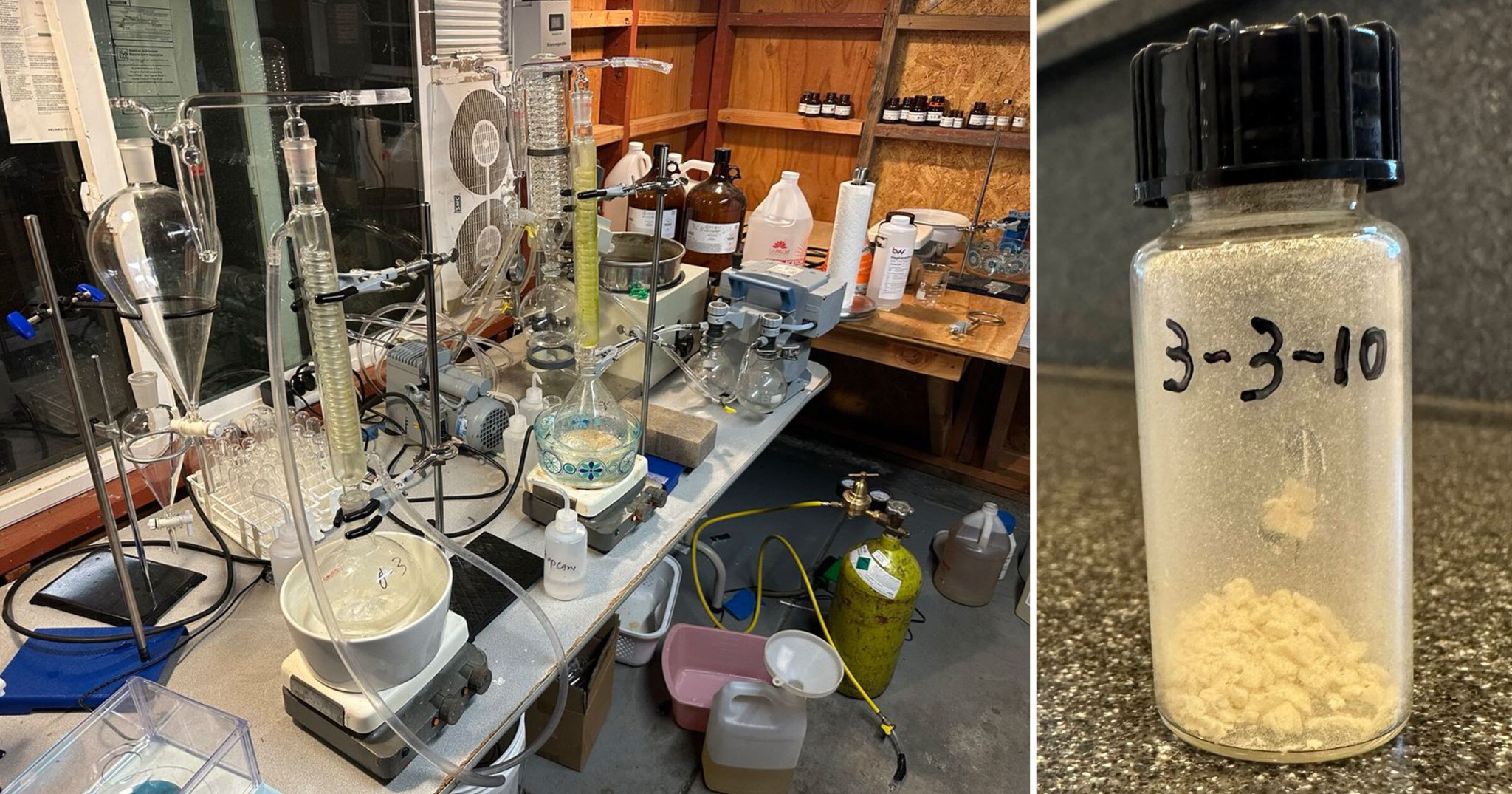
In a wild new post that’s going viral on X-formerly-Twitter, an enterprising young biochemist named Douglas Yao showcased a new drug he’s been developing with the aid of ChatGPT. He’s not employed by any pharma company, and his drug lab is setup on a couple folding tables in his garage.
Specifically, Yao enthuses about a new drug he calls “PAC-3310,” which he says is meant to treat schizophrenia. “It was designed by ChatGPT,” Yao explains, “and I synthesized it in a chemistry lab I built in my garage.”
The result is a small vial of yellow powder — the first sample of 3310, apparently — which Yao says is modeled after the recently-authorized antipsychotic Cobenfy, “but improved.”
This vial contains a new drug called PAC-3310. It was designed by ChatGPT, and I synthesized it in a chemistry lab I built in my garage.
PAC-3310 is a new selective M4 muscarinic receptor agonist for treating schizophrenia – similar to the recent breakthrough drug Cobenfry, but… pic.twitter.com/o7z6iLR50T
On his GitHub page, Yao boasts that he’s used AI to “design several thousand new small molecule drugs” over the past year, including a “new Alzheimer’s drug,” which he’s developing in addition to the schizophrenia treatment.
“I then taught myself synthetic chemistry, built a chem lab in my garage, and synthesized a hundred of them,” he continued. “I’m now testing these compounds in cell lines and mice.”
But whatever the one-man pharma lab hopes to accomplish is difficult to say. Yao references the fact that “drug developers typically spend tens of millions of dollars generating pre-clinical efficacy evidence for a new drug,” saying that “my approach can do this at 1/1000 the cost.” This seems to suggest dreams of someday manufacturing the various drugs on a massive scale for human consumption — a process that would take years of grueling and expensive work for a well-resourced drug lab, let alone a solo entrepreneur using a box fan as a fume hood.
For instance, to even approach the Food and Drug Administration’s “New Drug Application” — itself a costly 12-month process requiring inspection of the facility where the drug will be manufactured — one first has to conduct rounds of preclinical testing followed by three phases of clinical trials. Forget “tens of millions,” as Yao mentions; this is a process that can easily cost several billion.
Even then success is far from guaranteed, as only 13.8 percent of drugs that enter clinical trials go on to obtain full approval from the FDA.
While Yao might have been right at home in the free-wheeling research landscape of the 1970s, we no longer live in a world where a mad genius can synthesize hundreds of new drugs a year from a private lab. For one thing, the regulatory environment is much more demanding, as outlined above, to say nothing of the fact that all the low-hanging fruit has been picked from the vine decades ago.
When it comes to Yao’s ChatGPT-generated Alzheimer’s treatment, the landscape is particularly fraught. As one 2019 study found, no new drug has been approved to treat Alzheimer’s since 2003, and not for a lack of trying: as the study notes, over 200 proposed substances meant to treat the disease have either failed in clinical trials or been abandoned by their creators.
The graveyard of failed Alzheimer’s treatments is so vast that the renowned organic chemist Derek Lowe has built a blog on drug discovery which routinely features after-actionreports on failed substances designed to treat the neurodegenerative disease. Simply put, to think that ChatGPT alone is enough to overcome these scientific and institutional hurdles is delusional.
Replies to Yao’s post were quick to point out the irony here, of using ChatGPT — which is well-known for leading vulnerable users down dangerous breaks from reality — to synthesize drugs to treat cognitive diseases like Alzheimer’s and schizophrenia.
“Hello schizophrenic, take this medicine that chatgpt made for you,” one poster quipped on X.
Another replied that “believing you single-handedly cured schizophrenia on a commercial laundry folding table in a garage is, ironically, a classic symptom of schizophrenia.”
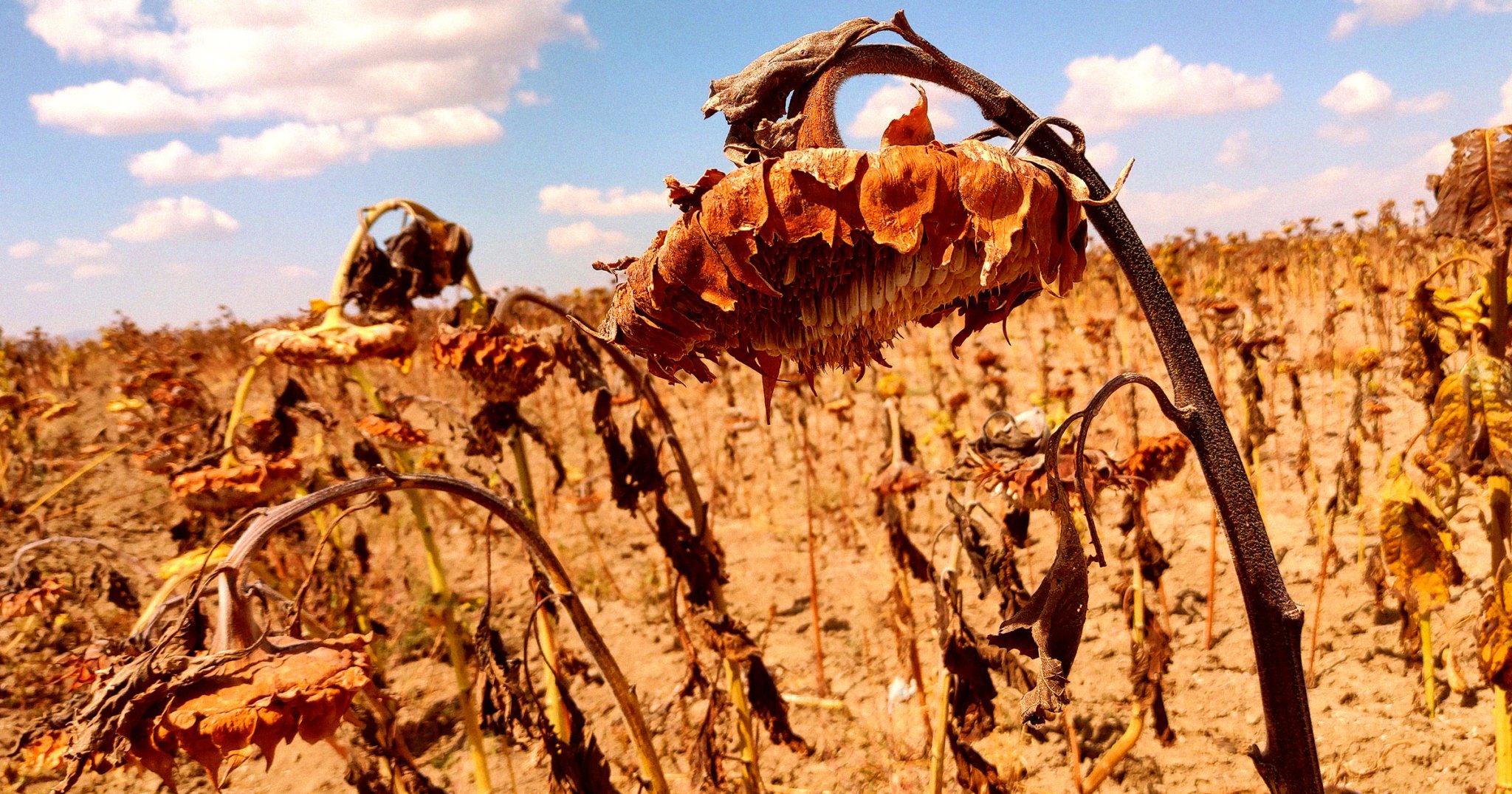
When the Denver board of Water Commissioners approved stage one drought restrictions back in March, they did so facing some of the driest conditions in decades. According to the US Drought Monitor, the watershed sourced for Denver’s water utility is experiencing a “severe to exceptional drought,” while the Denver metropolitan area has been in a “severe drought.”
As a result, residents and businesses have been asked to scale back. Denverites now have to limit watering their lawns to two days a week, chosen by address. And even on those days, customers are prohibited from watering between the hours of 10am and 6pm, Gadget Review reports.
Yet as some 1.5 million customers honor the restrictions, one major customer is evidently refusing to close the tap: a brand new AI data center.
In a now-viral video circulating on social media, an unidentified resident of Denver’s Elyria-Swansea neighborhood filmed the massive lawn of a data center being sprayed with copious amounts of water.
“You better believe that they are watering their entire green with so many sprinklers that it’s literally making a giant pond,” the woman says.
Denver residents see local DATA CENTER water its massive lawns while the whole are faces drought restrictions pic.twitter.com/rrj7vMrhpt
The identity of the data center in question is unconfirmed, but it’s likely the new 18 megawatt facility owned by the cloud computing company CoreSite. At around 170,000 square feet in size, the mammoth facility recently went live in Elyria-Swansea, though not without sparking a wide-ranging debate around Denver’s zoning regulations.
It isn’t known which tech companies are renting out space in CoreSite’s Denver facility, but elsewhere the company has proudly partnered with tech giants like Amazon, Google, and Microsoft.
As for the water use, it’s impossible to say whether the lawn sprinklers were in violation of the city’s drought restrictions without knowing the exact time and date that the reel was filmed. It’s also possible that the facility is using recycled water to irrigate its grass, though that approach has proved disastrous in other cities.
Going forward, Gadget Review notes that all lawn sprinklers will be fully restricted as of October 1, with a ban set to last until Spring of next year. If Denver’s data centers are still spewing after the cut-off, it remains to be seen how — or even if — local leaders plan to hold the facility’s owners accountable.
Drilling thousands of miles into the Earth to study our planet’s inner layers — its thin crust, rigid mantle, liquid outer core, and solid inner core — simply isn’t feasible given technological limitations.
Instead, geologists typically use clever tricks to explore our planet’s interior, like probing seismic activity triggered by the dynamics of these shifting layers to plumb their mysteries.
And much like these layers, that picture continues to evolve. As detailed in a new study published in the Journal of Geophysical Research: Solid Earth, researchers at the Chinese Academy of Sciences analyzed data from over two million earthquakes across the planet that took place between 1990 and 2024, using a machine learning algorithm to identify structures lurking several thousand miles below the surface.
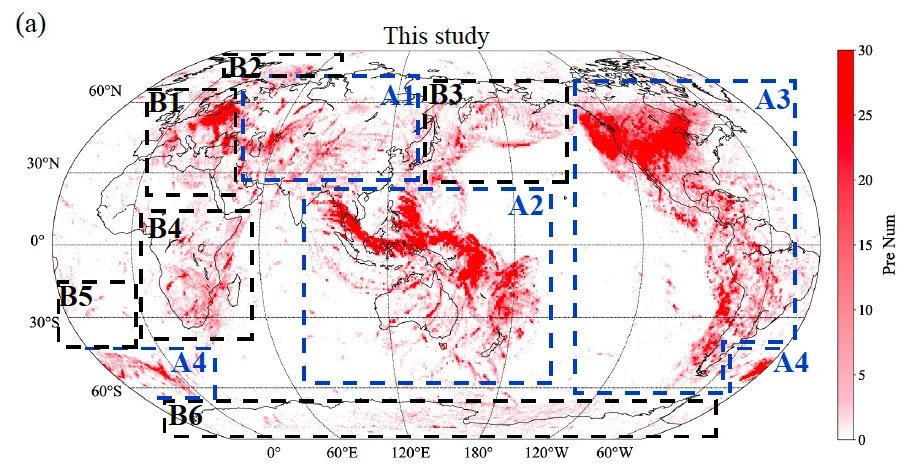
They identified almost 175,000 “PKP precursors,” mysterious seismic signals that arrive at earthquake detectors before the main event, which can allow scientists to map the Earth’s innermost structures. More specifically, scientists believe the precursors are triggered by “small heterogeneities” just above the region where the Earth’s solid mantle meets its liquid iron core, roughly 1,800 miles below the surface.
While identifying these precursors has “traditionally required painstaking manual screening, a slow and laborious process,” the researchers noted, the new algorithm allowed them to identify “roughly ten times more” PKP precursors “than all previous studies combined.”
With this data in hand, the scientists set out to create what they claim to be the “most complete global map to date of potential small-scale heterogeneities in the Earth’s deep interior,” which includes six new areas that “host significant heterogeneities that had never been documented before.”
“Whereas previous studies could only identify sparse, isolated patches sampled by precursors, our results reveal that these potential heterogeneities may extend across broad regions in the form of continuous bands,” the researchers concluded.
The scientists suggest that these ancient structures — six larger groups spread out across the interior of the globe, as seen in the image above — could be related to subduction zones, where material that gets dragged deep below the surface is chemically altered by the extreme pressure and temperature of the core-mantle boundary. As Science Alert points out, this can spur the material take on vastly different physical properties.
The data could help us identify the time or severity of future seismic activity — and bring us one small step closer in unraveling the mysteries surrounding the formation of the Earth’s various layers and how tectonic plates formed.
While American tech billionaires fret over the capabilities of Chinese AI, one national security advisor has a brilliant idea to flatten the competition: simply bomb their data centers to smithereens.
In a new report titled “Superpowers and AGI,” former Obama-era national security official Jacob Stokes calls for United States to begin preparing readiness drills in response to Chinese AI development — up to and including military strikes on the nation’s data centers, the South China Morning Post reported.
AGI, or artificial general intelligence, refers to the theoretical point at which an AI model achieves human, or superhuman, levels of reasoning and intelligence. Though the science is still out on whether such a system is even possible, Stokes’ report begins from the assumption that AGI is inevitable, and that if the US can’t get to it first, its military needs to prepare to take drastic action.
Referring to the US as a hypothetical “laggard state” behind China’s achievement of AGI, Stokes — now the deputy director of the Indo-Pacific Security Program at the Center for a New American Security, a prominent DC think tank — writes that the country could “try to sabotage the leading state’s AGI systems, either through physical infiltration or offensive cyber operations; that is, cyberattack.”
“Cyberattacks to sabotage AGI might not provoke large-scale retaliation,” Stokes considers, given that “cyberattacks are already to some extent considered normal state behavior below [the] threshold of war.”
But waging an unprecedented cyberwar is just one of many scenarios he outlines. As Stokes observes, AI doesn’t just live online; it also requires immense computing power from physical facilities to run.
“The final option,” therefore, “would be the most dangerous and carry the most escalation risk: kinetic attacks, meaning destroying things with missiles and bombs.”
“Data centers can be bombed with conventional munitions,” Stokes writes. (He’s not the first thinker to suggest bombings to stop powerful AI; in 2023, AI critic Eliezer Yudkowsky suggested that countries needed to be ready to “destroy a rogue data center by airstrike.”)
Of course, the China hawk isn’t numb to what such an attack would mean for the world.
“Bombing would cross a major threshold that heretofore has not been crossed in US-China relations,” Stokes continues. “Trying to think through the particulars of that will be especially important, in part because it will help policymakers… start to work backwards based on the unique nature of the technology, in the same way that in a past era, policymakers would learn about nuclear weapons.”
The difference is that nuclear weapons are physical objects which can be empirically observed. AGI, in contrast, remains a fantasy — albeit one which can evidently justify preparations to make war — not unlike the fiction of weapons of mass destruction which justified the brutal invasion and occupation of Iraq in 2003.
And that’s not to mention the fact that China’s approach to AI development is dramatically different than the United States’, which currently leads the world in most large language model (LLM) benchmarks. If anybody is chasing AGI, it’s the US — which surely wouldn’t take kindly to news that Chinese leaders were organizing war games around its own AI development.
Even so, Stokes is undeterred in painting China as the ultimate boogeyman. He warns that Chinese AI companies could make a “surprise technological breakthrough” that brings it closer to AGI, and thus the ability to produce cutting-edge “offensive cyber tools — in other words, cyber weapons.”
Stokes, who previously served as national security advisor to then-vice president Joe Biden as well as the Department of Homeland Security, has long worried about the economic strength of the US relative to its chosen adversaries. Still, his latest comments mark a severe escalation, even for the US national security establishment.
While making a mountain out of a Chinese molehill, Stokes’ report also takes a blind eye to the present-day use of AI by his own country’s military. In Iran, for example, US forces have used LLMs like Claude and Grok to help plan out bombing campaigns — which may have played a role in the Shajareh Tayyebeh girls’ school bombing, which killed over 150 elementary students and staff.
With so many climate projections and mitigation strategies eyeing far-away years like 2050, it can be tempting to assume there’s still time to reverse the worst impacts of an ever-warming planet.
Unfortunately, that’s no longer in the cards — at least according to the United Nations Environment Programme, which just released a dismal report calling for the “world to face the inevitability of exceeding global warming of 1.5 degrees Celsius” above pre-industrial levels.
That’s significant, because the 1.5 degree threshold has long been associated with a range of grim climate tipping points at which the planet will experience irreversible consequences such as the “breakdowns of major ocean circulation systems, abrupt thawing of boreal permafrost, and collapse of tropical coral reef systems,” per a UN climate explainer.
The new UN paper, coming on the heels of the hottest summer on record and pessimistically titled “Limiting Overshoot,” identifies the consequences of this reality, and recommends some immediate actions to keep things from spiraling even further.
Though most scientists agree we’re hovering around the 1.4 degree point at the moment, the UN notes that even in the best case scenario, where “all climate commitments and policies are implemented, warming is projected to reach 1.8 degrees Celsius at a minimum.” If we follow our current track, however, the report highlights the distinct possibility of hitting 2.6 degrees by the year 2100.
That catastrophic future is far from certain, although drastic intervention is becoming increasingly urgent if we hope to stave it off. Underscoring the severity of the present moment, the UN frames the situation in terms of maintaining warming at the 1.5 degree mark — no longer a theoretical ceiling, but the new floor going forward. Doing so, the report authors write, depends “on achieving sustained net-negative CO2 emissions at global scale in the second half of this century, and potentially further reductions of non-CO2 emissions.”
“Decisions taken this decade will determine whether viable options remain to gradually reverse warming back to 1.5 degrees Celsius,” they explain.
Speaking to CBCNews, UN Environment Programme executive director Inger Andersen said “let’s be very clear, 1.5 target is still the goal.”
“But now we need to approach it differently from above,” Andersen explained. “Every tenth of a degree we avoid still means less damage.”
Around the world, the demand for cleaner alternatives to petroleum-based jet fuel is rising.
By 2030, the European Union will require a minimum sustainable aviation fuel (SAF) blend of 6 percent, which will rise to 70 percent by 2050. Countries like the United Kingdom, Singapore, Japan, and Brazil are instituting similar policies, putting pressure on players in the global energy trade to ease reliance on crude oil.
SAF can come from all kinds of recycled waste byproducts like plant material, animal fat, and used cooking oil — the latter of which has already become a major source for existing SAF supplies. Unfortunately, the flow of extra spent fry oil is already slowing to a trickle as refiners swoop in to secure the gloop.
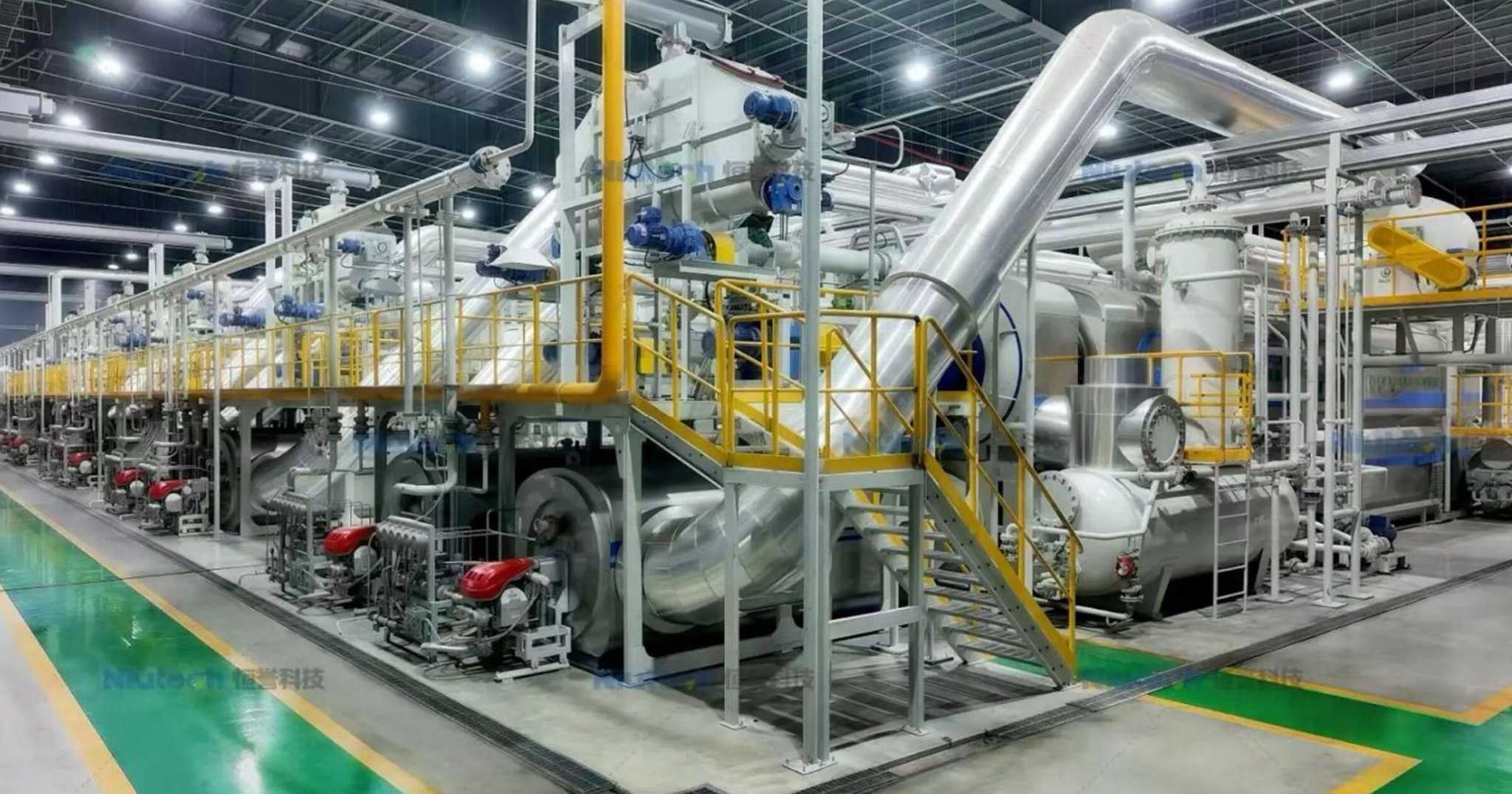
That’s where Chinese company Niutech comes in. In a new press release, first spotted by Interesting Engineering, Niutech announced a massive contract with an anonymous “global energy major” to build out an “industrial continuous waste plastic pyrolysis production line” capable of churning out 10,000 to 50,000 tons of plastic-derived SAF each year.
That might seem like a lot to unpack, but it’s really pretty simple. Basically, the Chinese firm is announcing the development of a massive supply line that turns plastic garbage into usable jet fuel. It plans to do so using a thermal decomposition process called pyrolysis, in which plastic waste is heated to extraordinary temperatures in an oxygen-free environment.
Though it isn’t new, pyrolysis remains something of a niche for the industrial-grade plastics-recycling space. For this approach to meet the growing need for SAF, it first has to graduate beyond the realm of small eco-startups into a widely-accepted industry standard — which appears to be Niutech’s goal.
Unlike previous SAF initiatives involving plastics, this particular production line will all be under one roof, cutting down on the need for costly shipping and handling. The Niutech refinery is also said to make use of a smorgasbord of plastics like polyethylene, nylon, polypropylene, and ABS, all “without complex pre-treatment such as washing, sorting or drying” — streamlining the complex process of sorting plastic and converting it to refinable oil at this kind of scale.
Should Niutech and its anonymous industry partner succeed in bringing the system online, it would undoubtedly serve as a constant source of plastics-based SAF for the global aviation industry, and as a role model for other refineries to follow.
“Large-scale pyrolysis projects impose stringent requirements on continuous operational capability,” a Niutech spokesperson said in the company’s press release. “Niutech has focused on pyrolysis technology for nearly 40 years and brings mature equipment and extensive project experience. This partnership is another validation of the strength of our industrial continuous technology.”
In a lake in northern British Columbia, an island suddenly appeared, almost out of thin air, thickly covered in fully-grown trees. When a boater posted footage of the new island on social media, incredulous officials thought the video was AI-generated, according to the New York Times.
But it was no hoax. Satellite imagery of Williston Lake, an artificial reservoir and Canada’s largest body of freshwater, confirmed that the nearly two-and-a-half acre island was real.
“This is a first for us, for this reservoir,” Bob Gammer, a spokesman for BC Hydro, the government-owned utility that operates the reservoir, told the NYT.
Speaking to The Guardian, he added: “In the days of AI, you really needed another form of verification or evidence like a corroborating eyewitness account. And soon, we got that.”
The island was floating roughly 60 miles west of the reservoir’s WAC Bennett dam. BC Hydro believes the island is a chunk of the reservoir that broke off from a sheltered piece of shoreline due to water levels that are the highest in 14 years. Over the course of several years, logs and woody debris could have accumulated in this area, Gammer explained, forming a sort of raft on which trees can grow — and embark on naval expeditions, apparently.
“We could easily see that a mass of woody debris with live vegetation on top of it rises up, floats and breaks free from the shoreline,” Gammer told the NYT. “Then the winds in the reservoir carry it out into open water. So that’s our best guess at how this all came to be.”
Just as experts began coming to terms with the new island, it showed it had another trick up its sleeve. Sometime around August 5, the island disappeared, according to Scientific American. Then on August 15, fresh satellite imagery showed that it had reappeared again — some 20 miles northwest of where it was first spotted, hugging the shore.
Did the island swink, swim, or — we find ourselves asking because of its incredible powers — turn invisible? It’s likely that it temporarily drifted to shore, blending in with the shoreline before drifting out to the water again.
Patel lacked virtually any degree of relevant working experience for the job before the Senate confirmed him — and now, the agency is opening the doors for even more highly questionable hirings.
As inside sources told CBS News, the FBI has quietly lowered standards of its background checks for potential federal agents and other personnel. The bureau is now officially looking the other way when it comes to prostitution, for instance — as long as recruits didn’t hire sex workers over three times.
Even more eyebrow-raising is that the FBI is even allowing the consideration of candidates who engaged in bestiality or animal cruelty, according to CBS‘ sources. However, any such incidents would’ve had to have taken place before the candidate turned 18.
The broadcaster’s sources also said there was no distinction between candidates who were forced into sexual activity with animals or if they did so willingly. An FBI spokesperson claimed that eligibility requirements were limited to a “narrow set of circumstances, such as in cases where a person was sexually abused with animals as a child.”
Experts, however, were appalled at the news, arguing that the FBI is undermining its responsibility in vetting applicants by changing background check standards.
“Bestiality is clearly a potential indication of a more serious emotional issue, and even in a circumstance where it is not, the pool of candidates should be extensive enough that the criteria should certainly not be eliminated,” former FBI agent James Davidson told CBS.
Before the changes, which were reportedly implemented earlier this summer, the FBI’s webpage was clear about automatically disqualifying special agents who engaged in “prostitution or bestiality.”
Both current and former FBI employees told the CBS that the bureau could now be hiring “people with questionable backgrounds,” allowing them to undermine the integrity of the service. Others warned that the news was evidence of a major “recruiting problem.”
Considering the fact that the agency is being helmed by a personality as controversial as Patel, these changes shouldn’t come as too much of a shock.
While he hasn’t personally acknowledged the latest changes, Patel has frequently called for new hiring standards at the bureau, arguing that “we are losing too many qualified candidates to the rigors of the requirements from yesteryear” in a July interview with former FBI agent John Nantz.
Patel’s motivation for lowering standards could be to bring in his closest associates. As ProPublica reported in November, his personal assistant didn’t clear their polygraph test and required a waiver, claims the FBI has since denied.
Two are dead and over 25 buildings damaged after a cataclysmic explosion at a cannabis facility in Sand Springs, Oklahoma last week.
According to initial reporting by KTUL, the blast happened at 1:30am, and literally blew the roof off the building, sending out shockwaves that could be felt up to 30 to 40 miles away.
“It was like around 1:20, 1:25. And it was just a big boom,” local man Donovan Ruffin, who lives a mile away from the blast, told the news channel. “Me and my wife woke up at the same time. And as soon as I heard it, I woke up… I have a window right by my bed, so I seen a flash.”
Ryan Bassham, the owner of the THC facility where the explosion occurred, was later arrested on murder charges, People reported, after defying an order from the fire marshal to halt extraction operations.
One explanation being offered up — though not officially confirmed — is that the explosion traces back to the use of butane to produce THC concentrate.
One of the more popular methods by which the cannabis industry produces concentrated products like rosin is through a process known as butane hash oil (BHO) extraction. Basically, producers use liquid butane as a solvent, pouring it over raw plants at temperatures in the ballpark of -40 degrees Fahrenheit.
Because liquid butane has an exceptionally low boiling point — 30.02 degrees Fahrenheit to be exact — the solvent can be easily cooked off after mixing with the plant matter, leaving just the dissolved cannabinoids behind. Though this is said to be one of the most straightforward methods for concentrating cannabis, the use of highly flammable butane makes it one of the most dangerous.
As the publisher Technology Networks explained in a blog post on BHO extraction, a “faulty gasket or improper check could lead to disaster.”
Overall, there is no national count of BHO-related explosions or injuries, so it’s difficult to say how common an occurrence it is. According to one clinical study conducted at the burn unit of the University of California, Davis Medical Center, there were at least eight BHO-related hospitalizations between 2011 and 2012, though that number is likely higher today after a decade of legalization and cannabis industry growth.
Whether you’re looking for medical advice or tips on industrial agriculture, one thing is abundantly clear: never trust an AI chatbot without first getting a second opinion, preferably from a human who has actual expertise in the topic.
That’s the takeaway from an incident in the small city of Chuzhou, China, after a large langue model dispensed some advice that led to the untimely death of 25 acres worth of produce.
According to the Taiwanese publication CTWANT, a 67-year-old farmer surnamed Wu decided to start consulting an AI chatbot for advice nearly a year ago. He was reportedly skeptical at first, though the farmer began to let his guard down after some early successes with the AI’s farming tips.
Since that time, Wu has come to rely on his LLM for everything from fertilizing guidance to scheduling various tasks around the farm. After months of fruitful consultations, he decided to follow his AI chatbot’s new pesticide plan to the letter, letting loose on some 25 acres of precious sesame seedlings, all without ever double-checking with an expert or outside documentation.
The plan generated for him was basically a Long Island ice tea of agro-chemicals: a mix of “high-efficiency flupyridine” and “flufenazate” for pesky weeds, with plenty of “thiamethoxam” and “emamectin benzoate” for bugs and other pests, CT reported.
Not even a day after treatment, Wu says his juvenile sesame crop began to wither and die.
Per a video interview later translated by Tom’s Hardware, the farmer offered some hard-earned advice to any other growers looking to use his concoction: “If you spray it, the next day the seedlings won’t survive.”
“Both the grass and the seedlings will die, and the seedlings will die even faster,” Wu lamented.
It’s just the latest case of an LLM cooking up some slop that lands a professional in hot water. If nothing else, Wu’s in good company: he joins a host of other dupes across the legal, medical, financial, education, and media industries who’ve likewise fallen prey to an AI chatbot’s inaccurate output.
It’s not just you — the United States is going through a record-bustingly hot summer.
According to the National Oceanic and Atmospheric Administration, the contiguous US averaged 76.89 degrees Fahrenheit in July, which is even hotter than the July 1936 Dust Bowl, an environmental and agricultural disaster marked by devastating dust storms.
Much like the Dust Bowl, which was the result of both natural and human-made factors, this year’s record-breaking temperatures are the result of a strong El Niño — a naturally occuring weather pattern — exacerbating the calamitous effects of human-caused climate change.
“It’s not good when you’re breaking records from the Dust Bowl, which we are in this case,” Yale Climate Connections meteorologist Jeff Masters told the Associated Press. “And that was a crazy sort of situation where you put tens of millions of people in motion. You had this great migration because of the drought and the heat that hit the center of the US — just a cataclysmic event in US history.”
“If we’re exceeding records from the Dust Bowl, that says that we’re in deep trouble,” Masters added.
While the heat was more concentrated in the Midwest during the Dust Bowl, all 48 lower states experienced excessive heat this summer — at least one degree Fahrenheit warmer than the 20th century average.
And instead of focusing on ways to fight the effects of climate change, much of the country is moving in the opposite direction. The Trump administration is closely aligned with the fossil fuel industry and is actively seeking to reopen coal-burning plants. AI data centers powered by gas generators are compounding a major uptick in greenhouse gas emissions.
The result is a country literally on fire, while suffering the second-worst July drought conditions on record for the contiguous US, according to Yale Climate Connections. Per the US Drought Monitor, a whopping 71 percent of the contiguous US experienced abnormal dryness or drought during the first week of August, coming on top of billions of dollars in direct damages during the first half of 2026.
Meanwhile, major wildfires continue to burn across both the US and Canada, exposing millions to dangerous levels of air pollution and causing an estimated 4,000 premature deaths across the continent within a single week last month, according to The Economist.
The prognosis is just as grim as one might think.
“This may be one of the coolest years we’re gonna experience for the rest of our lives,” Masters told the AP.
To give humanity a fighting chance we need to “stop burning so many fossil fuels,” he added. “We also need to be spending money to adapt to the new climate that we’ve put in place.”
Tech Goliaths are scrambling to build as much AI computing capacity as they possibly can, come hell or low water. One of the dominant players in the space, Amazon Web Services, has its heart set on an AI data center so enormous that it could easily become the largest source of carbon dioxide emissions in the United States.
According to the New York Times, Amazon has confirmed its investment in a massive gas-burning power plant in Texas, meant to supply up to 7.65 gigawatts of energy to a planned data center in Pecos County. Should it come online as planned, the plant’s 35 turbines would be allowed to spew 33 million tons of CO2 a year, the NYT notes, which would easily make it the largest single fount of emissions in the country.
That’s a stunning amount of carbon exhaust, putting that single data center in a league with entire countries including Switzerland, Ireland, and Bulgaria.
It would also be in stark defiance of Amazon’s stated climate goals, which center on reaching net-zero carbon emissions by 2040.
That’s not lost on the tech giant. But as Amazon spokesperson Margaret Callahan told the NYT, the “world looks different now than when we co-founded the climate pledge.”
“We’re being transparent about the challenges, investing in innovation, and delivering measurable results,” Callahan continued. “Growth and sustainability don’t have to be in opposition — in fact, our results show they reinforce each other.”
Even without the new Pecos County plant, Amazon’s emissions are staggering. The company recently disclosed a record increase in its total emissions last year, with company-wide electricity usage rising by 34 percent across 2025.
That the company is blatantly papering over its previous climate commitments isn’t a shocker at this point, in other words, as the company reaches new emission highs with each passing year.
Water levels in rivers across Europe are reaching astonishing lows lately as a record heatwave continues to bake much of the continent.
Images captured by the European Union’s Copernicus Sentinel-2 satellite revealed the extraordinary extent of the drought, which is clearly desiccating Europe’s major waterways. Water levels in one of those rivers, the Danube, have become so low that ancient ruins are beginning to surface for the first time in centuries.
As Reuters reported, the portion of the Danube that flows through Bulgaria has slowed to a mere trickle, revealing foundations of the Constantine Bridge, a nearly 1,700 year-old structure that was opened for business back during the rule of Roman Emperor Constantine the Great in the year 328 AD.
Though the bridge is believed to have been destroyed just a few decades after it was finished, researchers regard it as among the longest bridges engineered by the Roman Empire, a marvel of ancient engineering. Though receding water levels come with plenty of downsides, Pavel Popov, a Bulgarian archeologist with the Pleven Regional Historical Museum told Reuters that the droughts do offer a unique opportunity to study the ancient wonder.
“For archaeologists, these moments are extremely valuable because nature briefly reveals an object that is hidden beneath the Danube for most of the time,” Popov explained. “It gives us a rare opportunity to observe, document and study it in its real environment.”
After the ruins surfaced, Reuters reports that local researchers used drones to survey the exposed ruins, with the low water levels offering a chance to trace the bridge’s physical footprint and evaluate the condition of the foundation materials.
Numerous other treasures have surfaced across the Danube, like the remains of a mammoth tusk in the Bulgarian village of Ryahovo, and a sunken Nazi warship near the Croatian town of Opatovac.
Scientists have finally created what might be the only thing that can get meatheads to eat their veggies: protein lettuce.
By literally shooting pig genes into the chloroplasts of lettuce and tobacco cells, an international team of researchers were able to grow produce that contained the animal protein myoglobin, they report in a new study published in the journal Frontiers in Plant Science.
Is this the pathway to the next ridiculous protein-infused snack? (We’re looking at you, protein popcorn.) Not quite. Instead, the scientists say their findings could pave the way to weaning ourselves off of environmentally-destructive meat.
“Our study demonstrates, for the first time, that higher plants can stably produce myoglobin, one of the key proteins responsible for many of meat’s desirable properties,” study lead atuhor Alexia Groff, a plant biotechnology researcher at Imperial College London, told ScienceAlert. “This is very relevant at a time when the demand for sustainable food production platforms is greater than ever.”
To combine pig genes with plant DNA, the researchers used a machine called a biolistic particle delivery system, or a “gene gun.” The nickname is apt: it works by firing microscopic metal particles covered in genes into their target. (Biolistic, by the way, is a portmanteau of “biological ballistics.”)
The target, this time, were the chloroplasts of lettuce and tobacco seedlings. Because of their “bacterial ancestry and their high number of copies per cell,” Groff explained in a statement about the work, “chloroplasts are generally much better at making large amounts of protein than the cell nucleus.”
Their genetic bullets hit the bullseye. In followup tests, the seedlings showed they had incorporated the pig DNA into the chloroplast genome. When the plants grew into adulthood and produced seeds, their offspring still possessed the transferred genes.
In all, the lettuce and tobacco plants yielded about 800 mg and 810 mg of myoglobin protein per kilogram of their dry weight. That’s ten times less than beef, but because growing plants is far more efficient than raising animals, the tradeoff could be worth it.
“Plant cultivation is far more resource-efficient than livestock production; consequently, plant-derived myoglobin could achieve protein yields per hectare that rival — or even potentially exceed — those of animal agriculture,” the authors wrote in the study, “whilst also benefiting from substantially lower water use and greenhouse gas emissions.”
If this gets adopted at scale, these protein-infused plants could be dried up and be used to bolster the protein in plant-based meats.
Other researchers caution that the food still needs to be proven safe to eat and sustainable to produce, but are optimistic about the findings.
“This an important advance on earlier plant and algal research. Demonstrating stable myoglobin production in plant chloroplasts, including in an edible crop, raises the possibility of using plants as scalable, low-input production platforms alongside microbial fermentation,” Rodrigo Ledesma-Amaro, director of the ICL’s Bezos Center for Sustainable Protein, said in a statement. “In the longer term, this could diversify how and where these ingredients are produced.”
Amazon billionaire Jeff Bezos and his actor buddy Leonardo DiCaprio are catching some heavy flak recently, but for a seemingly bizarre reason: pledging millions of dollars to protect 100 of the world’s most threatened animal species.
The charity initiative, called the Phoenix Species Project, was first revealed on DiCaprio’s Instagram account, where the six-time academy award nominee described it as the “largest single philanthropic initiative ever dedicated to the recovery of Critically Endangered species, across 30 countries.”
“I could not be prouder to announce this,” DiCaprio continued. “Save these species, and we protect everything around them. The forests, the rivers, and the climate itself.”
For such a seemingly altruistic venture, the response to the announcement was strikingly polarized. As the Independent noted, DiCaprio and Bezos were summarily blasted for engaging in “greenwashing,” a negative term given to the strategy employed by massive corporations and the wealthy to cover their outsize impact on the environment with a little eco-charity.
“As soon as people realize and actually feel the effects of what those rich f***s did to our planet they suddenly start their greenwashing campaign,” one Redditor wrote in response to the announcement, per the Independent.
“Uber-wealthy people helping a fraction of the problems that they cause,” another commenter lamented. “For publicity.”
It certainly wouldn’t be the first time Bezos has been accused of greenwashing, especially given the immense carbon footprint of his flagship company Amazon. In 2020, for example, the billionaire’s Bezos Earth Fund pledged $10 billion to protect biodiversity, bringing a massive amount of money to the global effort to mitigate climate change — at least on paper.
As the backlash illustrates, your reaction to the those types of efforts probably hinge on your economic and social worldview.
The haters aren’t just being petty, though. As the Journal of Political Inquiry observed, Bezos’s wealth is only possible thanks to his previous position as chief executive of one of the largest corporate polluters on the planet. Between 2020 and 2021 alone, Amazon’s carbon dioxide emissions grew by 18 percent, while his space company Blue Origin is altering the outer atmosphere in ways we’re only starting to understand.
And his empire’s carbon emissions have only skyrocketed since then, as the demand for cloud computing supersedes previous pledges to clamp down on Amazon’s extraordinary excretions of noxious pollutants.
In other words, it’s no wonder the masses are rising up in opposition to the billionaire and his actor friend — if only online, at least for now.
The amount of pollution spilling out of fossil-fuel generators is astounding. In the United States, this explosion of emissions is led by states like Texas, which on a global scale is comparable only to China in terms of new infrastructure powered by dead dinosaurs.
And as more data centers crop up throughout the US, that problem — of rising emissions linked to the accelerating demand for any kind of electricity — is only going to get worse.
According to reporting by the New York Times, the US currently has at least 82 data center-linked gas generators either in development or in the proposal stage. These are massive facilities which rival public electrical generators in size and power, only they’re not managed by the government, and the power they generate isn’t meant for citizens.
Instead, these are private generators, developed by big tech companies like Mark Zuckerberg’s Meta or Elon Musk’s xAI. The electricity they’ll supply is intended only for data centers, which grow ever-hungrier for power as new iterations of AI chips and energy-hungry large language models enter into production.
Assuming all 82 of those plants come online as planned, the NYT notes they could spew enough emissions in one year to rival the output of half the passenger cars in the US.
That’s an astonishing amount of pollution, made possible thanks to industry-friendly state regulators in places like Texas and Ohio, where permits for behemoth fossil fuel fired generators are approved in as little as 18 days, often without public disclosure.
It’s possible that moratoriums on new data centers might slow the burn, but unless states begin the unlikely task of banning new gas generators for existing facilities, we can expect US fossil fuel emissions to continue to rise precipitously in the years to come.

 Login