❌

Reading view

Whistleblower alleges millions of Driscoll’s berries sent to Canada with excess chemical levels



A whistleblower lawsuit in California is alleging millions of pounds of Driscoll's fruit containing non-compliant levels of pesticides and chemicals crossed the border into Canada, and the company tried to cover it up.


  •  

Pesticide linked to cancer and hormone disruption pollutes a quarter of US river miles


A cancer-linked pesticide banned in more than 60 countries around the world contaminates an estimated 25% of river and stream miles in the lower 48 U.S. states, including many waterways used for drinking water, according to a new analysis.

  •  

Judge weighs "fairness" of $7.25B Roundup settlement for cancer victims


Opposing teams of attorneys spent hours on Monday battling over a proposed $7.25 billion settlement of the U.S. Roundup cancer litigation that, if approved, would allow Bayer to keep selling its controversial glyphosate weed killers while providing roughly $10,000 to $165,000 for individuals suffering from cancer they blame on Roundup use.

  •  

EPA coordinated with Bayer on reapproval for controversial herbicide dicamba


The US Environmental Protection Agency (EPA) worked directly with pesticide maker Bayer in approving the controversial herbicide dicamba earlier this year, presenting the company with different options for how to reduce drift and runoff and then aligning on those options in the final decision, according to internal agency records.  

  •  

Chemours, DuPont, Corteva settle North Carolina 'forever chemicals' claims for $455M


Chemours , DuPont, and Corteva on Thursday reached a $455 million settlement with North Carolina and 11 local entities over PFAS contamination claims tied to Chemours' Fayetteville Works plant and other historical discharges.

  •  

Industry interests spent big money to stop California from banning PFAS pesticides


An ambitious bill to keep toxic “forever chemicals” off California produce lost its teeth after the chemical and agricultural industries spent hundreds of thousands of dollars lobbying against it.

  •  

Relâcher des millions de moustiques pour faire baisser leur population : le principe surprend

32 millions de moustiques lâchés dans la nature, non pas pour piquer, mais pour stopper la propagation de maladies. Le projet de la filiale de Google fait autant parler les scientifiques que le grand public. Une initiative aussi audacieuse que méconnue qui mérite qu'on s'y attarde sérieusement.

  •  

Honeybee Queens May Pass Toxic Chemicals to the Next Generation

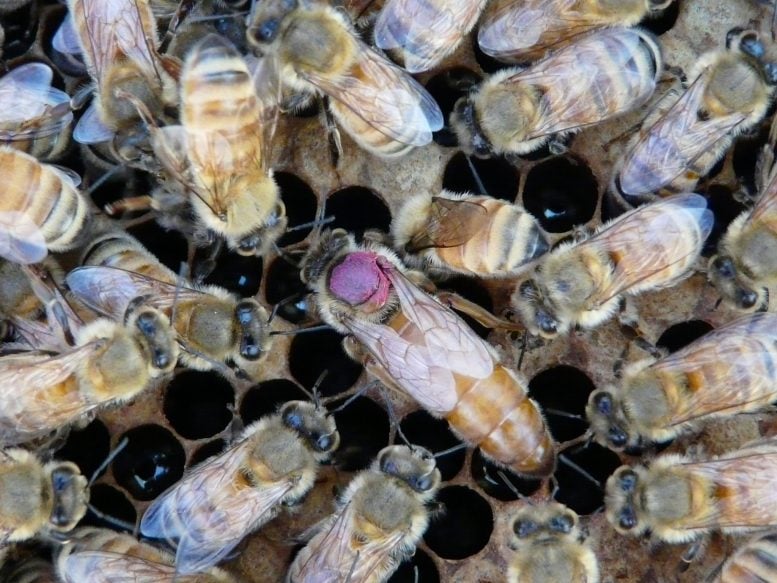
Honeybee Queen Surrounded by Her RetinueStudy reveals how contamination can increase within colonies. Inside a honeybee colony, worker bees act as living filters. They intercept much of the pesticide contamination entering the hive, helping shield the queen and the developing young she produces. But when exposure continues and that protective system begins to fail, the queen may redirect the chemical [...]
  •  
❌