❌

Reading view

Iran strikes on Amazon data centers caused permanent loss of customer data

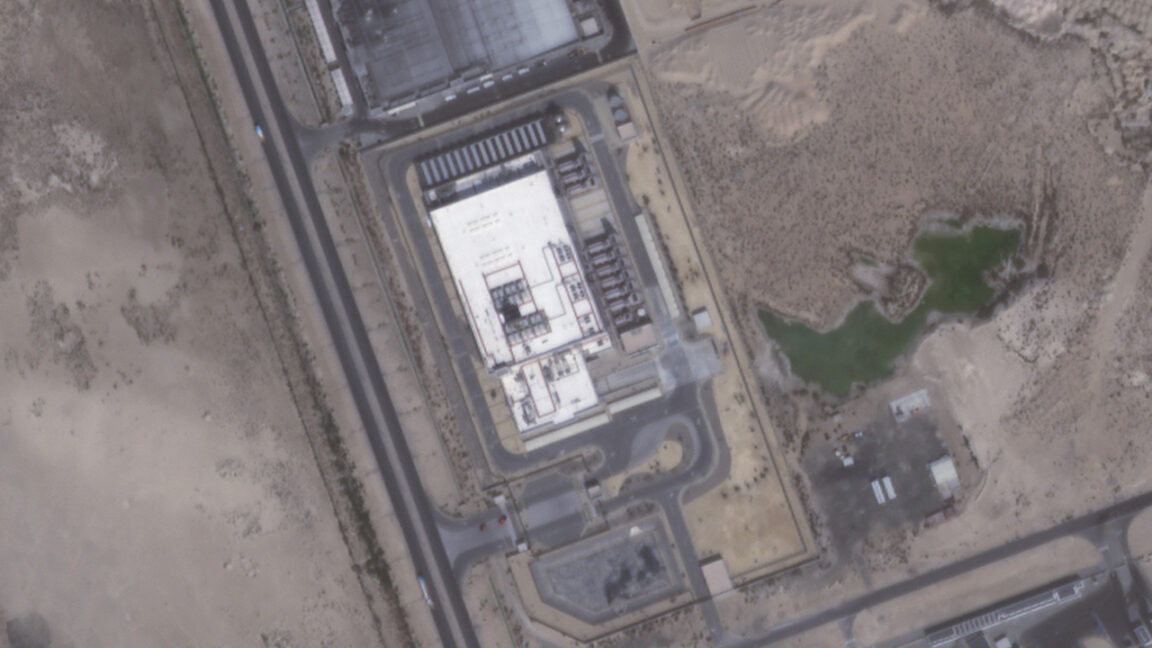
Half a year after Iranian drone strikes knocked out multiple Amazon data centers, the US tech company has acknowledged the permanent loss of some customer data that was hosted in Bahrain and the United Arab Emirates.

Amazon Web Services was “unable to restore access to the resources and data” hosted in some of the war-damaged data centers, according to an AWS dashboard update posted on September 15. The development was first reported by Reuters and suggests that the Iranian strikes inflicted catastrophic damage on the data centers.

Customer data was irretrievably lost in one of three AWS availability zones in the United Arab Emirates region, specifically the mec1-az2 availability zone. Each availability zone is serviced by one or more Amazon data centers.

Read full article

Comments

© Planet Labs PBC

  •  

GitHub Outage

Vlad Fedorov (Hacker News):

On August 17, GitHub experienced an outage that lasted 7 hours and 47 minutes. It disrupted github.com, authentication, GitHub Actions, APIs, pull requests, issues, and Copilot, affecting developers and organizations around the world.

[…]

Neither outage was caused by a code or configuration change. Both incidents were capacity failures at their core. We failed to scale critical components before demand exceeded their capacity. Since April, monthly commits have grown from 1.4 billion to 2.9 billion. That growth explains the pressure on our systems, but it does not excuse these outages.

[…]

As part of the reliability commitments we made earlier this year, we have focused on three priorities: adding capacity, improving efficiency, and removing architectural bottlenecks. We have since added more than 3 million CPU cores, 120 petabytes of high-speed storage, and significant network capacity. We installed as much hardware as available power allowed in our existing data centers while accelerating our migration to Azure.

Alejandro Forero Cuervo:

This is the wrong way to think about this because there’s no such thing as infinite capacity. A large distributed system will be simultaneously mostly idle and (in some subcomponents) overloaded. The root cause is not “a component didn’t have enough capacity (because of auto scaling failures)”, but rather “this complex system collapses (rather than degrade gracefully) when demand exceeds capacity”.

When components reach capacity limits, the excess traffic of the lowest priority should be rejected. Rejected traffic should not be retried — in fact, not only should clients not retry these errors, these errors should cause client-side throttling. Traffic isolation should be applied — if the cause of the overload is a single client/customer system, no other system should be affected.

Nearly a decade ago I wrote about some of the techniques we applied at Google to implement these protections. Most other large internet services have since copied them, afaik.

Previously:

  •  

Xbox Outage Affected Discs

Jay Peters:

An extended Xbox outage that began Sunday evening didn’t just cause issues for people trying to play digital games — it blocked people from playing their disc-based games, too.

Xbox’s status page initially reported the outage on Sunday at about 11PM ET, and it also prevented people from logging in, launching apps, or finding games on the Xbox store. This morning, the page also noted that users “may have problems” playing their digital and disc games, which posts on social media confirmed. During that time, my colleague Richard Lawler was able to launch digital games he owned, but trying to boot up games tied to Game Pass popped up error code 0x87e107df, indicating the license couldn’t be verified.

Matt Birchler (Hacker News):

When Sony announced that they were discontinuing physical discs for PlayStation, I was less outraged than many. The reason I felt this way wasn’t because I loved what Sony was doing. I think it came from an understanding that physical media ain’t what it used to be.

[…]

It’s still just a license, and Microsoft, Sony, and Nintendo can either intentionally or, in this case, unintentionally prevent you from playing that game, even if you own the physical copy. This isn’t even to mention the fact that when you pop the disc in your drive, you’re not playing from the disc. It’s installing it to your internal hard drive and is probably installing a bunch of updates that are required to make the game actually work at all.

Kyle Orland:

For years now, the testers at DoesItPlay have been documenting this trend, testing thousands of physical game releases to see which ones live up to the promise of full “plug and play” functionality without an Internet connection. Thus far, a full 27 percent of the physical releases they’ve tested require some sort of download to fix game-breaking bugs or obtain core game content that is not stored on the physical release itself. That ratio balloons to 34 percent for tested PS5 games and 50 percent for those on the Xbox Series X.

Previously:

  •  

Petlibro accused of “gaslighting” users over smart pet feeder outage

Petlibro founder and CEO York Wu provided more information about an outage that left users unable to control their smart pet feeders through the companion app and, in some reported cases, left them with hungry pets.

Petlibro, a company owned by Shenzhen, China-headquartered firm Shenzhen Libro Technology Co., first acknowledged the outage on Tuesday at 5 am PT. At 7 pm PT on Wednesday, Petlibro said the outage was resolved. Notably, some people online reported different information at the time, and some claimed to still have problems as of August 13.

In a blog post on Saturday that included an apology and acknowledgement of the “frustration and concern” the outage caused, Wu confirmed that problems with Petlibro’s cloud server caused the outage:

Read full article

Comments

© Petlibro

  •  
❌