New owners apply for permission to extract oil in Horse Hill despite landmark ruling from supreme court in 2024
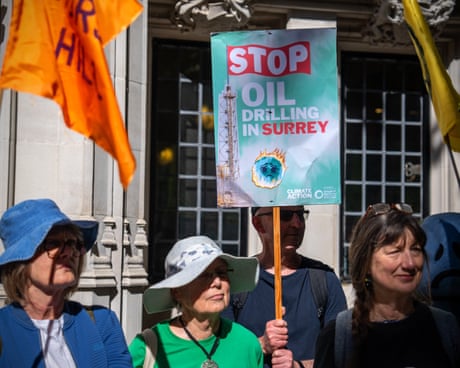
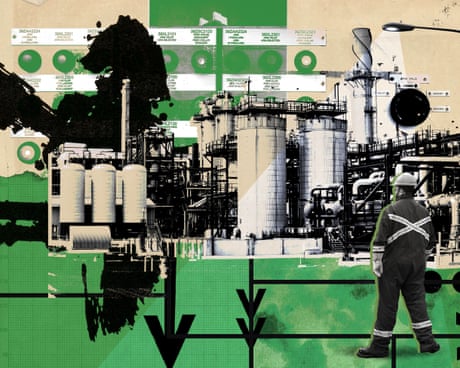
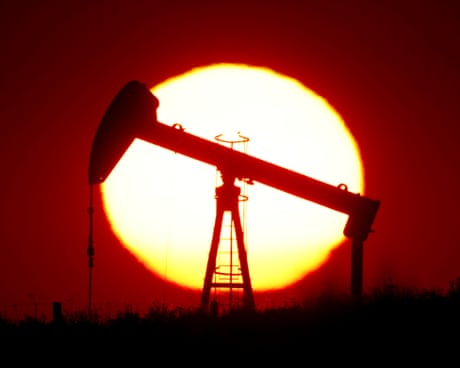
After years of trying to dig for oil in Surrey, the company behind the drilling project that was turned down in a landmark supreme court ruling has sold off the site for a fraction of the money it spent on it, and rebranded as a clean energy company.
Meanwhile, the new owners, who picked up the site for £1m, are applying, once again, for permission to dig.
Energy Transfer, whose CEO is a major Trump donor, named as biggest single methane producer in new rankings
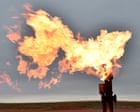
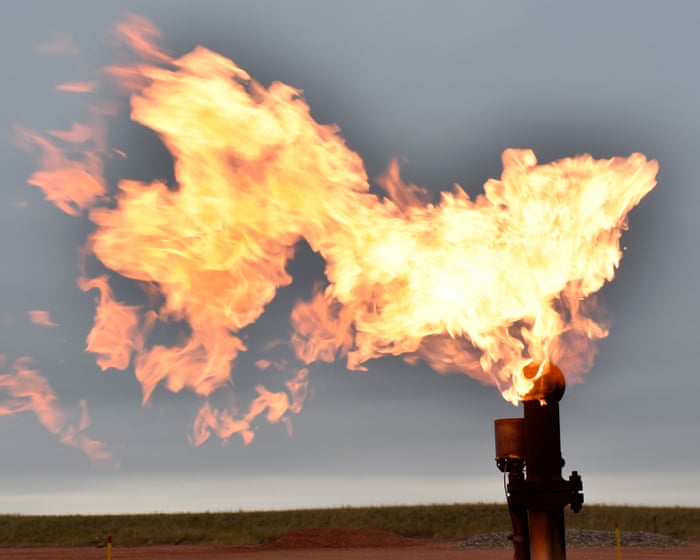
Down a short gravel track in a largely nondescript corner of Louisiana sits a gas processing facility, operated by a company whose chief executive is a major donor to Donald Trump. It may be the largest emitter of methane in the US.
The Energy Transfer site, located near the city of Shreveport,is named as the biggest single “super-emitter” in new rankings of US oil and gas operations for the largest releases of methane, a powerful greenhouse gas that is rapidly overheating our planet, according to a new UCLA study, which is based on satellite data.
Climate catastrophe is on our doorstep – yet Labour’s impending approval of further drilling will bring more pain for negligible gains
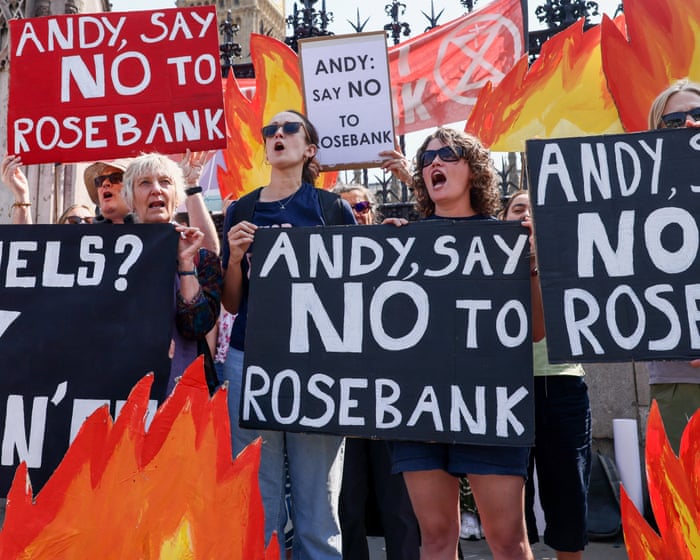
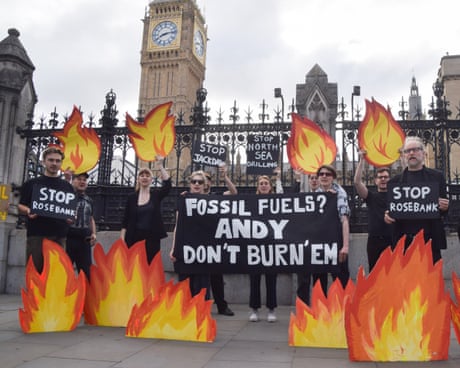
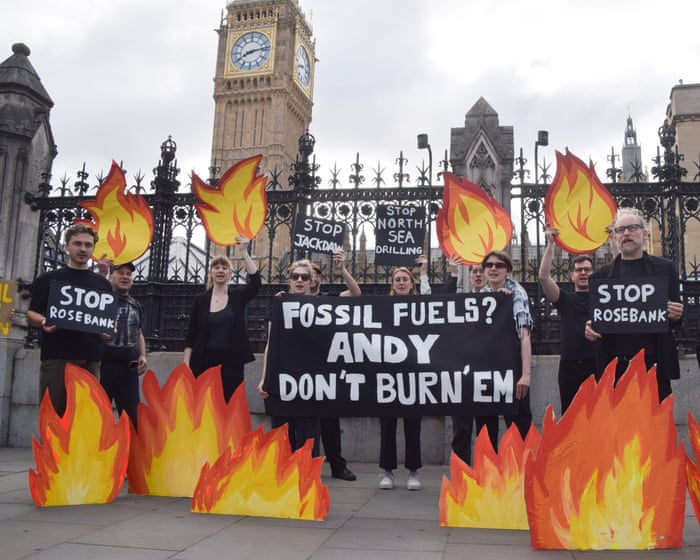
Pinch yourself, it’s happening again. Here is a Labour government spending a vast amount of political capital to earn tiny material gains while risking huge political losses. It occurred repeatedly under Keir Starmer, and now – with the impending decision to approve further gas and oil drilling in the North Sea – it is happening under Andy Burnham. You rack your brains to explain it, but no rational explanation comes.
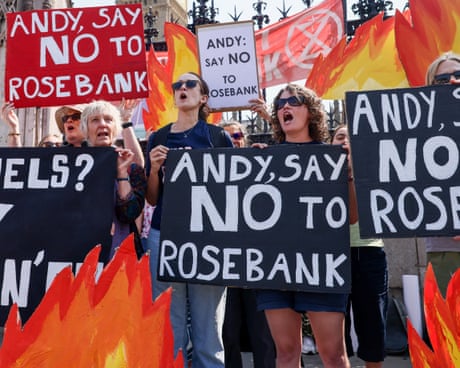
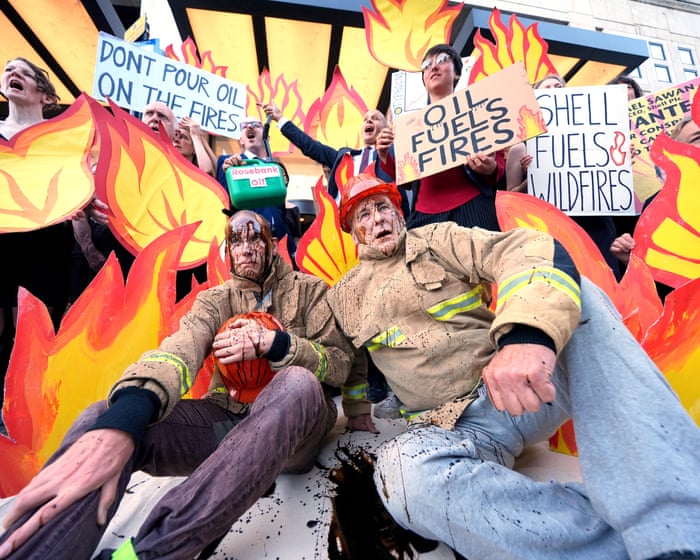
Burnham is studiously cryptic about his reasons. His clearest statement to date goes as follows: “There is a resource there. When people are struggling, we can’t ignore that.” Does he mean that oil and gas workers are struggling? If so, this decision will be of little use to them. The Jackdaw gasfield, likely to be approved this week, will generate a grand total of 27 direct full-time jobs. The Rosebank oilfield, whose approval is likely to follow soon, will support 450 UK-based jobs during its lifetime. Yet the UK’s net zero economy directly employs 300,000 people, and a further 400,000 jobs are planned. The rest of the green economy employs more than 600,000. A just transition for fossil fuel workers, securing jobs in the green economy, is better for everyone.
Arthur Downing, author of Power and the People: A History of British Energy, says all-encompassing rapid transition will need a mutualised system
Have you ever wondered why it is that most houses in the UK are reliant on gas boilers? Not what’s stopping more people from replacing them with heat pumps, but instead why and how the gas boiler became so ubiquitous in the first place?
Arthur Downing, the author of the new book Power and the People: A History of British Energy, can tell you exactly why. “We only have boilers in our houses because of a state-owned enterprise that went into everybody’s home and installed natural gas-suitable appliances at no direct cost,” he says. The nationalised gas industry of the 1940s to the 1980s, which oversaw this huge project, was for three decades one of the “most dynamic, innovative, efficient industries in Britain”, Downing says. Yet few of us would use these terms to describe it as such now.
Campaigners say ‘seismic shift’ follows years of pressure to sever ties with oil and gas firm
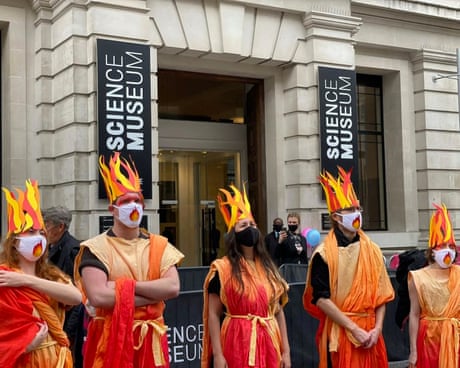
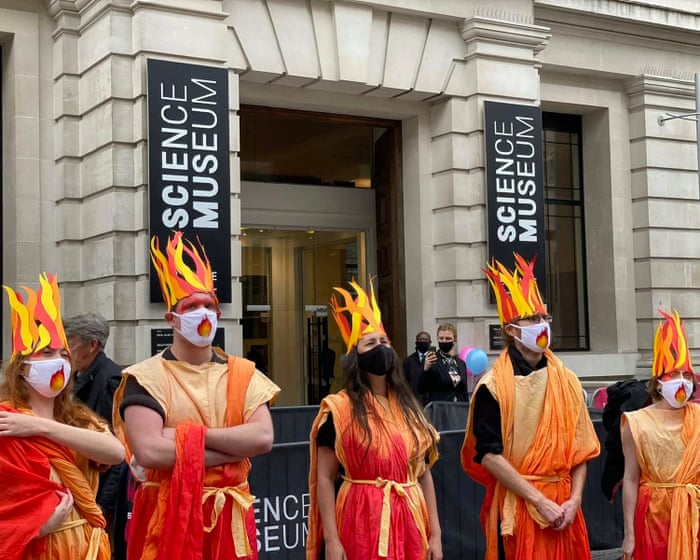
The London Science Museum has ended its decades-long partnership with the oil and gas company BP in what has been described as a “seismic shift” for the museum.
The Science Museum Group academy, which was established in 2018 to provide training and resources, announced on Friday that it would be ending its partnership with BP. In a statement, the director and chief executive of the Science Museum Group, Sir Ian Blatchford, said the partnership had “drawn to a close at the end of the current contract term”.
In today’s newsletter: As we enter our fifth summer heatwave, Andy Burnham’s government is looking at what the UK should do with its remaining North Sea oil and gas
Good morning. What a difference a new job can make. “To have a shot at staying within 1.5C global warming, we can’t have any new oil or gasfields … It’s irresponsible and shortsighted to be funding new #fossilfuels when we need to be getting to #NetZero.”
This was the 2022 message from Miatta Fahnbulleh, now the secretary of state for energy security and net zero. It’s a testament to her remarkable rise that Fahnbulleh wasn’t even an MP when she posted it four years ago. Today, she is in the cabinet, facing (or is the face of, at least) one of the most challenging, and potentially controversial questions looming for the new government: to drill or not to drill, baby?
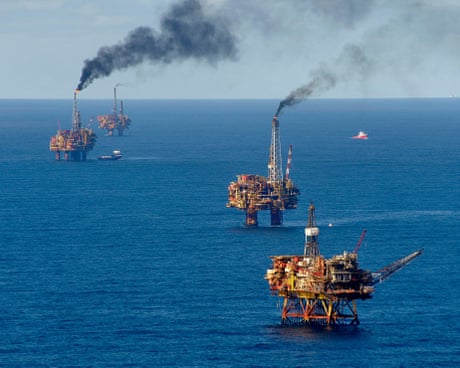
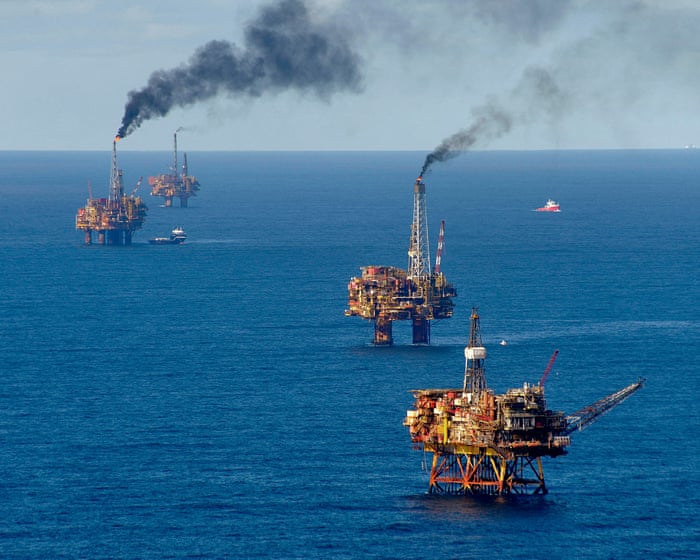
Two sites are the focus of fierce debate. Yesterday, a public consultation on whether to greenlight extraction at one of them – Jackdaw – closed. Next Monday, it’ll be the same for the other, Rosebank. Andy Burnham has been silent about the climate crisis since taking office. As we enter yetanother heatwave, what his government does next will be a defining signal of intent on the issue.
Colombia | More than 100 people have died after a powerful earthquake struck western Colombia, collapsing and severely damaging scores of buildings in major cities including Cali and Pereira.
UK weather | Almost three-quarters of England is now in drought, with four more regions officially declared, and as much of Europe braces for its fifth climate crisis-driven heatwave this summer.
Crime | Police are investigating whether Joshua Kerry, the man charged with the murder of the former Reform UK and Conservative politician Ann Widdecombe, had any role in an attempted burglary last year at the then London home of Nigel Farage.
China | More than a million people were moved to safety across eastern China by Sunday evening as powerful Typhoon Dolphin made landfall amid fears torrential rain would cause flooding and landslides.
Ukraine | Russia has banned voting against the war in September’s elections, after the supreme court upheld a suit brought by a small pro-Kremlin nationalist party, and stripped voters of their last option on the ballot: Yabloko, the country’s only remaining anti-war party.
Iran conflict windfall over three months reignites calls for companies ‘cashing in on human misery’ to pay for environmental damage
Eight of the biggest oil companies amassed profits of more than $90bn (£67bn) in just three months as the Iran conflict sent energy prices soaring and the emissions-fuelled climate crisis caused deadly heatwaves.
The windfall war profits have reignited calls for oil and gas supermajors such as Saudi Aramco and BP to pay for the environmental damage caused by “cashing in on human misery” and fund a rapid transition to renewable energy.
Live, rolling coverage as London’s biggest companies defy Middle East disruption and UK petrol prices rise to around £1.60 per litre, the highest since Donald Trump ordered renewed strikes
The story piquing the interest of the financial press this morning is that of Leopold Aschenbrenner, the AI Wunderkind (he’s German-born) who has been forced to sell off his fund in a fire sale after the AI boom ran out of steam.
The 24-year-old had persuaded a lot of people to give him a lot of money for a hedge fund, after previously working for OpenAI and the FTX Future Fund, a charitable arm of the fraudulent crypto empire of Sam Bankman-Fried, who is now in prison. Aschenbrenner ploughed that money into debt-fuelled bets on artificial intelligence companies, earning huge returns until he found out that stocks can also fall.
The trader dubbed the “Nostradamus of AI” would have been hard-pressed to foresee how quickly his high-flying hedge fund would run into trouble.
The firm’s rapid downward spiral is a familiar tale, as Silicon Valley and Wall Street once again threw their weight behind a bright-eyed but untested investor who promised this time would be different. “Everybody always wants to find the next golden child,” said one longtime hedge fund executive. “It just keeps happening.”
In less than 24 hours — which included a conversation between Griffin and Aschenbrenner — Griffin’s Citadel hedge fund reached out to Situational Awareness and snapped up the investments at a discount, according to a person familiar with the matter who asked not to be identified citing private information.
It was a startling reversal for Aschenbrenner, a former researcher at OpenAI who – before starting his hedge fund roughly two years ago — had no previous investment experience. His fledging firm has watched its assets plunge from $45bn at the start of July to about $10bn.
PM tells reporters the government cannot ignore the energy resource ‘when people are struggling’
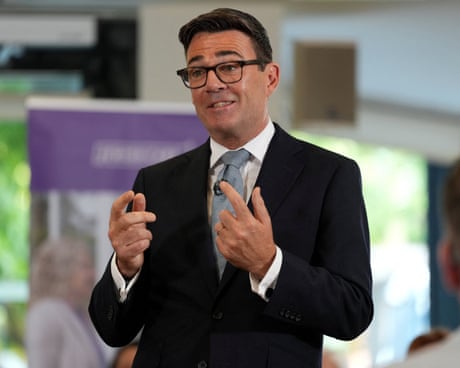
Andy Burnham has said he will take a “pragmatic” approach to oil and gas drilling in the North Sea, saying the government could not ignore the potential energy resources it holds.
The prime minister’s comments came in response to a question about his conversation with Donald Trump on his first day in No 10. Trump had said Burnham told him he would “open up” North Sea oil, something the UK summary of the call made no mention of.
Environmentalists renew calls for windfall tax to support households after Q2 earnings rise to almost $10bn
Shell has posted its second highest quarterly earnings on record as the energy market surge caused by the Middle East crisis helped to double its net profit to almost $10bn in the three months to June.
Europe’s biggest oil and gas company reported a quarterly profit of $9.8bn (£7.4bn), more than double the figure for the second quarter last year and the highest since its record-high earnings in the months after Russia’s invasion of Ukraine.
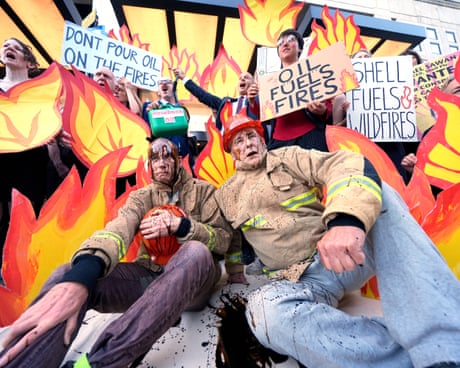
Exclusive: Blunder at Rosebank, UK’s biggest undeveloped oilfield, comes as government considers granting licence
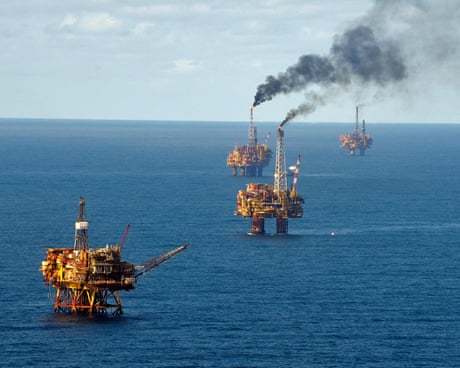
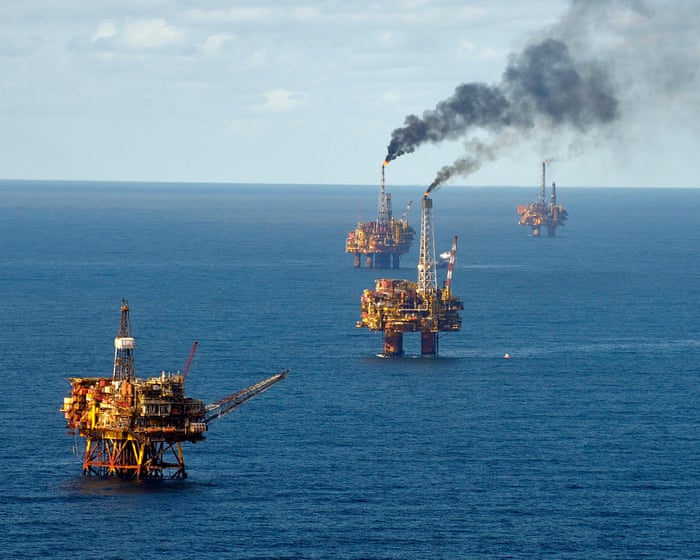
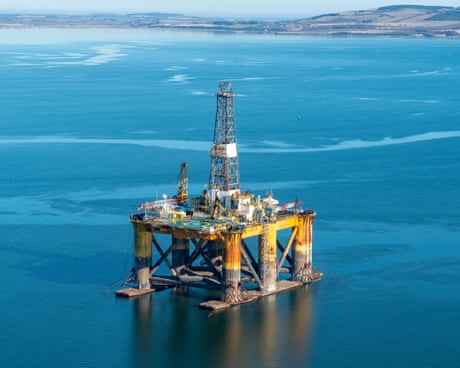
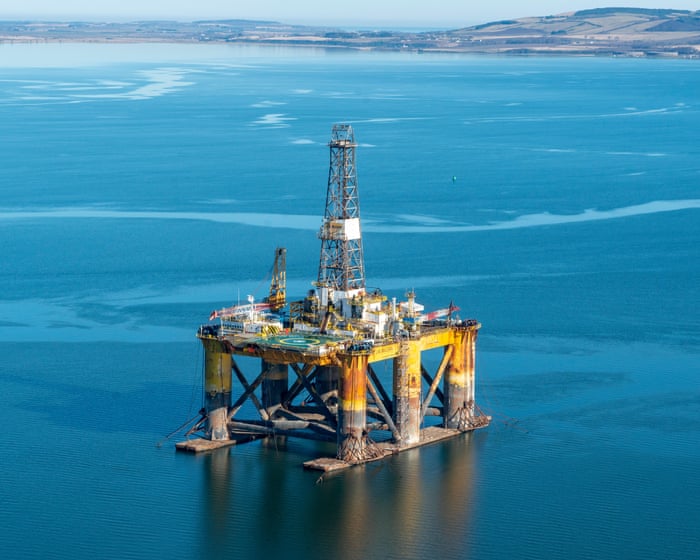
Production at Britain’s biggest undeveloped oil and gasfield could be delayed for months after equipment from a rig was accidentally dropped in the North Sea, the Guardian can reveal.
One task awaiting new energy secretary Miatta Fahnbulleh is devising a plan to avoid a crisis by the end of the decade
Welcome to the energy secretary job, Miatta Fahnbulleh. You have a politically tricky decision to make on whether to approve production at the Jackdaw gasfield and the Rosebank oilfield. But here’s another one that can’t wait much longer: what is the broader plan to ensure Britain avoids a gas supply crisis in 2030?
By way of reminder, one of the more alarming reports published by the energy department under Ed Miliband was the one that warned of “an emerging risk” to gas supplies at the turn of the decade if an important piece of kit – an import terminal, say, or the critical 725-mile Langeled pipeline from Norway – were to be out of the action during a severe cold snap.
Campaigners say field will bring minimal benefit for UK economy, as industry lobbies Burnham for go-ahead
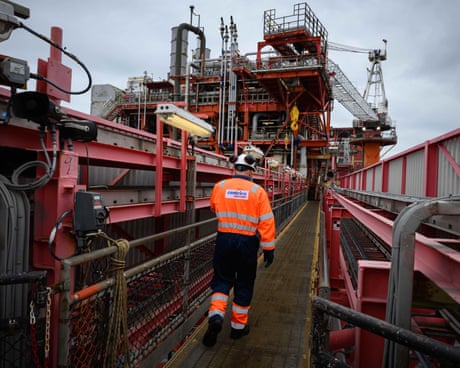
More people can fit on to the top deck of a standard London bus than will be directly employed on the new Jackdaw gasfield in the North Sea, industry documents show.
Lobby appeals to prospective PM’s reindustrialisation agenda as it pushes for Rosebank and Jackdaw approval
The UK’s North Sea oil industry has made a last-ditch attempt to curry favour with the Labour government by appealing to Andy Burnham’s reindustrialisation agenda just days before he is expected to become Britain’s next prime minister.
Industry lobbyists have written to more than 400 Labour MPs to call on the government’s new leaders to allow more oil and gas drilling in UK waters to support homegrown energy and show “a commitment to UK manufacturing, industrial capability and the skilled workforce that has powered the nation for generations”.
There are far better ways to tackle climate breakdown, but successive governments have chosen to listen to the fossil fuel companies instead
The new prime minister will be looking for money? Well, here’s £21.7bn lying on the ground. The government could cancel its deranged, disastrous carbon capture and storage (CCS) programme at no cost to public welfare: in fact, it would greatly reduce the harm we will suffer.
The scientific consensus is that burning fossil fuels drives the climate crisis, yet the world’s biggest oil companies are planning to increase production
As the world swelters in ever more dangerous heat, why are oil companies being allowed to turn up the gas instead of paying for the consequences of their greed?
That ought to be the question on everyone’s minds amid baking heat domes over much of the northern hemisphere, temperature records being smashed day after day, children dying in locked cars, hospitals filling with heatstroke victims and emergency services tackling wildfires.
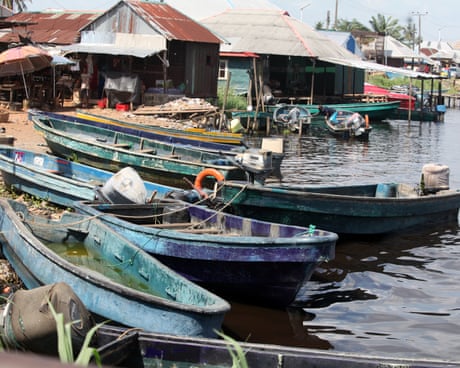
Villagers in Awoye in the Niger Delta say the ongoing pollution is causing sickness and environmental destruction, while pleas for help go unanswered
Perched on a narrow hospital cot across from her son, Bodunwa Orugbemi can hear the distant Atlantic Ocean and smell the stench of crude oil on the air drifting in from the shore. For days, her 21-year-old son has been lying in this hospital in the Niger Delta, swallowing small spoonfuls of food without being able to speak.
Seventy‑year‑old Orugbemi says Ijadopin started coughing one evening in May, inside their small wooden home in Awoye on Nigeria’s Atlantic coastline. After a few days his cough intensified, then he developed a skin irritation, followed by difficulty breathing.
In our increasingly dystopian world, who wouldn’t want to at least be open to a utopian antidote? The Global Justice Report, published on Thursday, outlines how to build a prosperous, equitable world within safe planetary boundaries. It’s a push from the modern eco-socialist left in a global battle for ideas that will shape the future.
Based on past social achievements and future energy transformation, it indicates that the overwhelming majority of people on the planet could, by the end of the century, work less and earn more – while keeping temperatures down and avoiding much of the current destruction of nature. It is an ambitious, comprehensive and upbeat plan, and a stronger argument around which to build a political campaign than abstract goals of net zero or decarbonisation.
Investigation reveals regulator let firms off the hook on cleanup bonds despite backlog that will take decades to clear
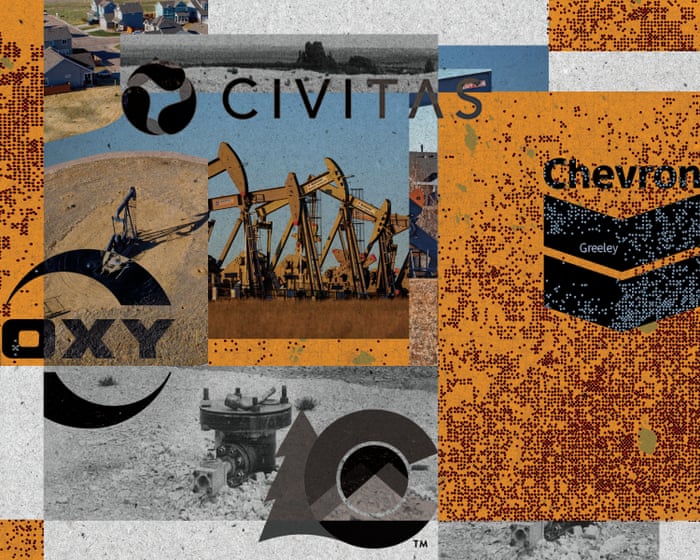
When Christiaan van Woudenberg moved to Erie, Colorado, in 2007, he never imagined he would become an anti-fracking activist. He simply thought he was buying his dream home – a four-bedroom with a panoramic mountain view, 30 minutes north of downtown Denver.
Then, in 2014, the drilling started. Oil and gas rigs sprang up, some just 800ft (240m) from his bedroom window. The dream turned to nightmare: loud noises rumbled all night long, and the air stank like exhaust. Neighbors started getting headaches and nosebleeds, and Van Woudenberg developed new respiratory issues. He kept his windows shut and worried about his daughters going outside.

 Login