Decades before the modern web, the BBC Domesday Project dared to archive an entire nation using…. what else – massive LV-ROM (LaserVision Read Only Memory) LaserDiscs. To mark the impending 40th anniversary of the BBC Domesday Project's release, the UK's Centre for Computing History (CCH) hosted a celebration at its museum on September 19, bringing together several of the original team members responsible for the system. One was Mike Tibbetts, an assistant to Peter Armstrong, the BBC producer behind the project. Tibbetts revealed that the UK's domestic intelligence service, MI5, took an interest in the system, but "they didn't understand a word of what we were doing!" "And on one occasion, Peter and I had to give a presentation, or Peter gave the presentation to [former prime minister] Margaret Thatcher, and well, I'm not sure she understood what we were doing either…" What they were doing was compiling a trove of data that will prove invaluable to historians in the years to come, even if the politicians of the era looked nervously on at the amount of data being handed over to the public. The Domesday Project was intended to be a modern version of the Domesday Book, compiled after the 1066 Norman invasion of England. The original book surveyed most of England and parts of Wales and was used by the King to assess dues owed to him. 900 years later, the name was given to a project in which more than a million people participated to provide a snapshot of life in the UK. Participants (many of whom were school children) contributed content, which was linked with maps, photographs, and other data. It was all compiled onto a pair of LaserDiscs – the Community Disc and the National Disc – and accessed via a BBC Master computer and a Philips VP415 LaserVision player. Armstrong came up with the idea, and the team compiled the project between 1984 and 1986. The system was eventually released at the end of 1986, and was aimed at schools, libraries, and universities. It was, alas, not a roaring sales success – the exact price per unit is difficult to pin down, but approximately £5,000 is a fair estimate. Government subsidies lowered the cost to around £3,000, but it was still out of reach for much of its audience. As a resource, however, it has huge value, which will only increase as the years pass. Tibbetts drew parallels to the original Domesday Book, which took centuries for historians to recognize as a vital resource. "Perhaps," he mused, "40 years is simply too short a time for historians to perceive the Domesday Project as a sufficiently distant benchmark of useful research." Perhaps. However, while hundreds of years have passed since the Domesday Book was compiled, the years have not been kind to the Domesday Project, thanks to technology's inexorable march. "The original Domesday Book had one huge advantage over the Domesday Project when it comes to future-proofing and longevity," explained Tibbetts. "The vellum pages of the original Domesday have been preserved for 940 years so far, and it's likely to continue to exist well into the future. "It took very few years for the bespoke technology of the BBC Domesday Project to be overtaken by universal media technologies." However, they chose the technology at the time for good technical reasons. The BBC Micro could output a 625-line television picture. The Philips LaserVision system could be re-engineered to store alphanumeric data. There wasn't much in the way of authoring and playback systems, so, as Tibbetts explained, the team had to invent everything. "In technological terms," he said, "the world of 1984 really couldn't be more different from the instant-access, media-rich world of today." And so, inevitably, within a few short years, that technology began to show its age. "As was entirely predictable, our discs aged and became difficult to read. The expensive LV-ROM player was quickly superseded by cheaper and more widely available CD-ROM and DVD systems." And, worse, "Largely because of the lack of any great academic interest in preserving our massive resource for the future, the BBC Domesday Project was in grave danger of disappearing without a trace." Several initiatives have kicked off over the years to preserve the project, and the CCH's event was as much about celebrating those as it was about looking at the project's genesis. Tibbetts dropped some nuggets of information about the project, estimating that 60 people reported directly to him and Armstrong, with another 60 in subcontracted teams. He also discussed the frustration the team felt as doubt was cast about whether the project was even possible. "We came back from Christmas in January 1986," Tibbetts recalled, "we sat down for our first team meeting, and I was forced to point out that our little VAX minicomputer didn't have one byte of data that was ready to go onto the Domesday discs, so we did the whole thing in a few months!" As far as hardware was concerned, Andy Finney, who handled mastering the discs, remembered that the original plan for the Domesday Project was for it to be mouse-based, rather than the trackball the system used for navigation. The mouse was still a relatively novel concept, alien to many users. "I remember vividly one chap who was navigating with this mouse on the table, and he moved the mouse towards him, and by the time he got to the edge of the table, he hadn't actually reached the bottom of the screen. So he went on the edge and underneath…" Tibbetts added, "I always feel guilty about the mouse, because we got that wrong … the decision came down in favor of the trackball because that is much more easy for somebody with movement disabilities to use rather than a mouse." "But boy, did we get that wrong…" As Tibbetts noted, even with little interest from some parts of the academic community, enthusiasts have continued to put in a huge amount of effort over the years to keep the resource accessible. Simon Inns of the Domesday86 project described it as "a race against time" – not just for hardware, but to get data off discs before bit rot rendered them unreadable. The good news is that the Domesday discs have been preserved, and reside in the Internet Archive. "Anyone," said Inns, "can go to the Internet Archive and download a Domesday Disc. This is, like, groundbreaking stuff. 10 years ago, this was a laugh, right? Now you can actually do this." While there might not be many functioning examples of the hardware around anymore, the preservation efforts mean that the Domesday Project will endure. "Our hope," said Inns, "is that within the next couple of years, everyone in this room [at The Centre for Computing History] will be able to have a Domesday system and be able to experience what it was like." ®
Take this display at Alcantarí International Airport, which serves Sucre, Bolivia's constitutional and judicial capital. Eagle-eyed Register reader Phil Pearce spotted the Windows 11 desktop and its update prompt while waiting for a delayed Boliviana de Aviación (BoA) flight. The prompt comes from K-Lite Codec Pack, a collection of components that enables Windows to play various audio and video formats. Its presence suggests the passenger display is powered by a fairly ordinary Windows installation rather than some mysterious specialist signage system. Whoever configured the display does not appear to have disabled K-Lite's update notifications or arranged for them to run silently. In this instance, it appears the updater spotted newer versions and lumbered to the foreground with an update prompt – useful on a PC with a keyboard and mouse, but less so on a passenger-facing display beyond anyone's reach. The exposed desktop also displays the Microsoft Store, Outlook, a weather widget, and several shortcuts – more than one might expect a departure board to require. Why airport signage needs Outlook is anyone's guess, although Microsoft has not been shy about preinstalling it. The app even surfaced during NASA's recent Artemis mission and promptly required technical support. Our reader could not dismiss the prompt or update the codecs, but at least the wayward desktop gave delayed passengers something else to watch while wondering what had happened to their flight. ®
Just 7 percent of Brits think social media is a force for good and around one in three suspect that life would get better if all these sites were erased from the internet tomorrow. Or so claims Opinium Research, which describes itself as a “strategic insight agency.” It polled 2,000 adults and 1,100 parents in September and The Register’s major surprise is that more people of Britland didn’t want to see social media rubbed out. Some 42 percent surveyed said these networks are addictive, and half think they are worse for society now than they were in 2010 as they contain false or misleading information and the algorithms dictate what they see, making public debate more divisive. More than half reckon the rot set in due to commercialization, yet one in ten admitted buying products every day via the platforms in the last year with around a fifth doing so every week and 12 percent claiming they discover new brands via their feeds daily. Irrespective of the negative sentiments, 49 percent use social media more now than they did 16 years ago, and a third use it a lot more. 31 percent are more using it to view content than post themselves. When there’s so much bot slop and political propaganda to chew through, who has time to upload pictures of, er, cats or the meals they made for themselves? More emphatically, seven in ten people surveyed support fines for social media businesses whose platforms expose under-16s to harmful content. Britain has tried to tackle this and a social media ban for that age group is in the offing. The research was not commissioned by any commercial or government entity, Opinium told The Register it was designed as a “thought leadership piece.” It lands a week before The Social Reckoning hits the cinemas, Aaron Sorkin’s sequel to his critically acclaimed The Social Network, a film that cast Mark Zuckerberg in a less than favorable light. The digital ditch has widened in the past five years since Elon Musk bought Twitter - a tool used by a tool to sow seeds of discontent. Some of the glorious leaders of social media empires have also kowtowed to US President Donald Trump, emboldening those with opinions some may consider racist or sexist. Trump threatened to send Zuck to prison if he was re-elected, branding him a so-called “election fraudster.” Trump lost the 2020 election and there is no evidence he lost it due to fraud. The depressing fact is that more Brits are shovelling social media up their nose than ever before. According to Statista, 55.5 million are signed up, compared to 29.4 million in 2010. This is despite people knowing it is addictive, has ruined the quality of public discourse, and wrecked privacy - we all know none of these platforms are truly free; users pay with their data. This vulture’s account on X is mostly unused, though he is testing out Bluesky, which seems to be a gentler and kinder version of the artist formerly known as Twitter. He deleted Facebook years ago and never looked back (yes, including the data it held in its datacenter). And you can’t find him on Instagram or Snapchat or anything else used to “socialize” or argue with other humans. The UK’s latest Prime Minister – the seventh in ten years – last week announced a center to fight misinformation. If that had been in place around the time leading up to the Brexit vote in 2016, maybe the country could have countered alleged Russian interference. Perhaps other divisive forces in British politics would have crawled back under a rock. Then again, Trump did enjoy a second coming. So what to do? Apart from Reg readers and the quality of the comments they add to our articles, should the internet should become a read-only medium? Terminating social media might be a first step in the right direction. ®
There’s kids running up a few hundred bucks on in-app purchases, and then there’s the case of nine-year old YouTuber Mighty Mike Plays, who just cost his dad $118,000 – and possibly his job – after running a bunch of Google ad campaigns for his channel on papa's company credit card. The young Roblox and Minecraft YouTuber posted a video Tuesday – or perhaps it's more apt to say his father Dave posted the video to explain why Might Mike Plays might be going dark for a while. In it, nine-year-old Mike explains “I think this might be the end,” before handing the mic to his dad. “My son has been running some high-budget campaigns on YouTube that I was pretty much unaware of,” Dave explained after taking the mic. Dave didn’t figure this out after spotting the charges himself, however. He learned about it after being called into a meeting with his manager and the finance department at his employer, an unnamed “large” company where he works in marketing. Dave was confronted with a spreadsheet with a full breakdown of three weeks of advertising spending from his corporate card that totaled $118K and asked to explain it. “It dawned on me that, oh crap, this is probably something my son did,” Dave said in the video. “The number sitting on the page in front of me had about five more digits than it should have.” A breakdown of the spending named his child’s account, as well as Roblox and Minecraft video titles, making it pretty clear pretty quickly that Mighty Mike had been misusing dad’s corporate card. Whatever excuse Dave made for the mortgage-sized mess apparently didn’t go over too well with his employer, as Dave explained in the video that the matter is being escalated up the corporate ladder and he’s not sure if he’ll keep his job. “This is not just like a haha, funny story, everything worked out fine kinda situation,” Dave said. “There is a real genuine chance I have to end up personally having to pay some or all of this back out of my pocket.” A series of avoidable events As for how a nine-year old could run up six figures of ad spending to boost his video game recordings, Dave admits that’s pretty much entirely his fault. Dave started the channel for Mike a couple of years ago after watching his son spend hours in front of the computer passively ingesting Roblox and Minecraft videos posted by other players. He reasoned that encouraging Mike to record and post his own videos would at least be a bit more interactive. After a few months of doing so, Mike asked his dad for some Robux, the in-game currency used by Roblox players to buy cosmetic items and access to game features. In what would prove to be the first of several dumb moves, Dave put it on his company card. The advertising professional apparently failed to realize that putting those card details into the account made them permanently accessible. Then came the second mistake: Mike said that his subscriber and viewer count wasn’t growing as fast as he wanted it to, so Dave sat him down and helped him set up a Google ad campaign for his videos with a $20 spending limit. “I didn’t think for one second that this was going to be an issue,” Dave admitted. “Huge mistake on my part; turns out he was watching a little more closely than I realized.” After that $20 budget ran out, Mike simply started another campaign. Then another, and another, and presumably a bunch more after that, too. “When a nine-year old gets access to ad account with no limits and a CC that just says ‘approved’ every single time no matter what, he does not think that what he’s doing is wrong,” Dave said, correctly taking the blame for everything that happened. “This nine-year-old kid literally ransacked my company card,” Dave added. There are some good lessons for parents to take away from this: First off, don’t use your company card for personal purchases, which ought to go without saying. It’s perfectly reasonable that this should cost Dave his job, as he was apparently fine with using his company card for small personal purchases and is only feeling the sting of accountability because his kid went wild with company cash. Second, it’s probably safe to assume, after so many in-app purchase horror stories over the years, that any financial information stored on a device accessible to a kid is going to be used inappropriately, and you have no one to blame except yourself when it happens. “I’m not blaming him,” said Dave. “He’s only nine, he didn’t understand fully what a company card meant, or that a large number on the screen represented real money.” Better yet, just keep your kids away from screens. There’s plenty of evidence to suggest exposing kids to screen time – even a bit of it – has a long-term effect on their developing brains. Make ‘em go play outside, and if Minecraft is still on their minds just give ‘em a shovel and tell them to dig until they find some diamonds, or redstone, or something. It’s better for your wallet, the kids get exercise, and on the off chance they find something of value you can turn that into some Robux instead. ®
SpaceX is aiming for a September 22 launch of its monstrous Starship rocket on a 10-hour mission to deliver 26 Starlink V3 satellites into orbit. The flight, set to launch at 1215 UTC if all goes to plan and the authorities give the green light, will be the first time Starship has gone into orbit, and the mission is planned to fly at an altitude of approximately 275 km. The mission aims for six orbits, followed by a deorbit burn using a single Raptor engine while. The engineers are then planning a splashdown in the Pacific Ocean west of Chile. The Super Heavy Booster will be ditched in the Gulf of Mexico, hopefully under better control this time. On flight 13, the booster made a "hard splashdown," as SpaceX delicately put it, after only eight of the planned 13 engines reignited. The booster used all 33 engines for its boostback burn, but according to SpaceX, "the three center engines showed signs of ice clogging which triggered an early end to the maneuver." In true iterative style, SpaceX tweaked the hardware to improve filtering and updated the software to "enhance relight reliability." SpaceX has also changed Starship's heatshield, including adding curved tiles to reduce heating in tile gaps and "additional retention mechanisms added to tiles in areas deemed to be at highest risk of falling off during ascent." It is also reusing a pair of tiles recovered from the previous flight test. If Starship is to become truly reusable, these tiles will need to fly over and over again. Getting to orbit is by no means guaranteed. The SpaceX team will only command a final burn to enter orbit if there is sufficient hardware redundancy to perform a deorbit burn when the time comes. After all, nobody wants something the size of Starship making an uncontrolled reentry after its orbit eventually decays. Starship has had an eventful test program. Some missions were spectacularly successful, and several boosters returned to be caught by arms on the launch tower. Others were impressive failures. The vehicle is critical to SpaceX's future; it can loft far greater payloads than the company's workhorse Falcon 9 and is an essential part of NASA's Artemis program. For Artemis III, planned for 2027, SpaceX is expected to launch a Starship equipped with the docking apparatus planned for the lunar variant. Reaching orbit is therefore a critical step. ®
The US Department of Energy has selected a new participant for a program aimed at expanding the domestic supply of fuel for next-generation nuclear reactors. However, we shouldn't expect that to mean the US' ever-growing fleet of datacenters will be powered by low-carbon nuclear energy any time soon. Utah-based Nusano announced on Monday that the DoE had selected it for its Nuclear Energy Launch Pad Program designed to help companies commercialize their nuclear power concepts. In this case, Nusano is working on a new method of creating high-assay low-enriched uranium, or HALEU, fuel that’s required for most next-generation nuclear reactors, like small modular reactors (SMRs) and molten salt reactors. HALEU is defined as uranium enay, low-riched to between 5 and 20 weight percent of U-235, the primary fissile isotope that nuclear reactors use to generate power. Traditional nuclear reactors use low-enriched uranium of under five percent. The higher enrichment is needed for smaller, more efficient reactor designs that are currently under development. Several advanced reactor demonstrations in the US have reached zero-power criticality, but none is yet operating commercially. The US has been without a steady commercial-scale supply of HALEU for years, with Russia historically the main commercial supplier and China also possessing HALEU enrichment capability. As of 2026, there’s only a single company in the US actively producing HALEU, and it’s not Nusano. The DoE has signed agreements with several others to produce more HALEU and related fuel products, but those firms are still establishing their facilities, and production remains minuscule. Centrus, the only American company producing HALEU, has generated less than two metric tons since it signed a contract with the government in 2019. The competition heats up Nusano expects to blow Centrus’ meager fuel generation out of the water with its HALEU enrichment design. That said, the company’s design hasn’t actually been realized yet. Nusano didn’t answer a question about whether it had built a functional demonstration HALEU enrichment unit, and when asked whether it had produced any HALEU, the company said that prototype development is still under way. “Nusano expects each unit will produce 5.9 metric tons (MT) of HALEU per year, with the first unit scheduled to be operational in 2031,” Nusano comms boss Scott Larrivee told The Register in an email. “Nusano’s Launch Pad application includes a well-developed, practical plan to move from proof-of-concept to commercial implementation.” As for what that’ll look like, Nusano describes a method that’s completely different from other forms of HALEU production. Whereas other HALEU refiners use gas centrifuges to produce HALEU, spinning uranium hexafluoride gas at high speeds to increase U-235 concentration, Nusano’s method ditches gas entirely. “The method is complex, costly, and potentially hazardous,” Larrivee explained. “If released, uranium hexafluoride reacts with moisture in air or human tissue to form highly toxic, corrosive hydrogen fluoride and uranyl fluoride.” Those gases, Larrivee said, can cause potentially fatal injuries like chemical burns and lung and kidney damage. Nusano is proposing a method that uses uranium feedstock that’s converted to metal prior to enrichment. Unspecified “proprietary separation techniques” are then used to enrich the metal and separate out U-235. The HALEU output of Nusano’s design is metal. “The Nusano process is metal in, metal out. No deconversion. No gaseous fluorine chemistry anywhere,” Larrivee added. Nusano’s current design only requires 1,200 square feet per HALEU unit, and the company anticipates its production cost will be lower than those of gas-centrifuge enrichment. That said, a lot of Nusano units will be needed to meet expected American demand. According to the DoE, HALEU demand could reach 50 metric tons per year by 2035, and Nusano is only expecting to get its first 5.9 MT/year unit up and running by 2031. It’s also not clear if Nusano’s current promises will still be the same if and when its HALEU units are up and running. In June 2025, the company said it had achieved a breakthrough that would allow a single HALEU unit to produce 50 metric tons annually and enable it to scale production to 350 metric tons per year by 2029. Search the company website for that announcement today, and it’s gone. We were only able to see it by pulling up an archived copy. Larrivee said that announcement was out of date, developed under prior company leadership, and that the numbers in the latest release were reflective of current development plans. A number of datacenter operators have promised to embrace SMRs and other next-gen nuclear when the technology is available. With HALEU output still low and commercial-scale production years away, it's unclear when those promises will be realized. Meanwhile, the Trump administration's Environmental Protection Agency has just scrapped Biden-era emissions regulations for coal and gas power plants, which it said means coal generation in the US could increase by more than ten times current levels. In other words, next-gen nuclear is, as ever, still on the horizon while bit barns crank up the fossil fuel turbines, now with even less regard to environmental impacts. ®
The US Space Force has deployed "space control weapons" into orbit, although it stopped short of explaining what they are and how it got there. US Air Force Secretary Troy Meink reportedly spoke at the Air and Space Forces Association conference and said the US had deployed weaponry around Earth. There is no word on the nature of the weaponry, nor on how and when it was launched. There have been plenty of classified launches, and the US also has the X-37 program. There are two uncrewed X-37B spaceplanes, which can loiter in orbit for years performing classified activities. The Register asked officials about the weaponry, but we have not yet received a reply. Something that could jam satellite communications is possible, or a device that could fire a pulse to disable electronics. Another possibility is something more ballistic or kinetic, although the potential for destruction to create debris doesn't bear thinking about. One wag on social media dubbed the consequences of an ill-thought-out ballistic weapon as "Mutually Assured Kessler Syndrome." Kessler Syndrome is a theoretical situation in which space around Earth becomes so crowded that collisions between objects cause a cascade of debris, eventually making orbital space inaccessible. A ballistic weapon that could generate a cloud of space junk is therefore less than ideal. The Outer Space Treaty, which forbids weapons of mass destruction in space, went into force in 1967, but the superpowers have found ways to work around it over the years. The Soviet Union, for example, fitted Salyut 3 with a self-defense gun. The station was launched in 1974. There was also the US's Strategic Defense Initiative (also known as Star Wars), which was intended to be used to intercept ballistic missiles. The current Golden Dome plan, espoused by the current US administration, calls for a constellation of satellites with detection and interception capabilities. Other nations have reacted with alarm to the news. A China foreign ministry spokesperson reportedly said, "We urge the US side to stop expanding its military capabilities and preparing for war in outer space." Shortly before Meink made his statement, the BRICS nations called for the "prevention of an arms race in outer space (PAROS) and of its weaponization, as well as the threats or use of force against outer space objects" in the New Delhi Declaration. The Register spoke to Dr Bleddyn Bowen, Associate Professor in Astropolitics at Durham University and author of Original Sin: Power, Technology and War in Outer Space, who reckoned weapons in space were nothing new, even if the public pronouncements and confirmations from the US were. In the absence of clarity from the US, Bowen speculated on what the weaponry might be, pondering if it might be a close-inspector satellite, or perhaps something with a dedicated electronic warfare capability. "If I was putting any money down, that's probably what it is…" Bowen also noted the importance of the weaponry's location. "The Americans, of course, really don't want any more debris in space," he said, so doing something kinetic in geostationary orbits is unlikely. But, "if you're putting this stuff at very low orbits, then you know you might be more inclined to take a chance with debris-generating stuff." Without detail, Bowen said the US acknowledgment could serve a public relations function. "I can see the rationale for saying this to say in public 'we're not sitting on our hands.'" "Of course, the trade-off then is you have experts like me who think, 'Well, tell us a bit more because we can't do anything with that information,' and the Chinese and Russians will also use it at the United Nations by saying, 'See, they admit it. The Americans are weaponizing space,' even though they are doing it themselves anyway." ®
Britain killed off its national digital ID scheme this summer, but from today you can use a digital ID to prove you're old enough to buy a pint. New rules taking effect on Tuesday allow pubs, bars, restaurants, music venues and shops in England and Wales to accept digital proof of age when selling alcohol, meaning customers can use an app on their phone instead of digging around for a driving license or passport. The change is voluntary. Businesses don't have to accept digital proof of age, customers don't have to use it, and the government admits the technology will take time to gain wide support. So anyone planning to leave their wallet at home tonight may want to check with the pub first. Still, it gives digital identity technology a conspicuously everyday new job just two months after Prime Minister Andy Burnham pulled the plug on his predecessor's much grander national Digital ID scheme. That project, announced under Keir Starmer, would have created a government-backed digital credential and eventually made digital right-to-work checks mandatory. Burnham ditched the scheme in July, with his government saying the money and resources earmarked for it would be redirected elsewhere. Digital identity itself, however, wasn't buried with it. The new alcohol rules rely on the UK's existing Digital Verification Services (DVS) framework. To be accepted for booze purchases, digital proof of age must be provided through a DVS certified against the government's trust framework and listed on its statutory register. The government confirmed earlier this month that while the national Digital ID program announced under Starmer has been binned, GOV.UK One Login, GOV.UK Wallet and the existing framework for private-sector digital verification services will continue. The DVS framework predates Starmer's national Digital ID plan. The government is also keeping its planned digital driving license alive. It says GOV.UK Wallet and the digital driving license are separate from the digital proof-of-age services becoming usable today, although the wallet is expected eventually to offer another way for people to prove their age when buying alcohol. For now, third-party providers get first crack at the bar. Yoti says its Yoti ID and Post Office EasyID apps can now be used as proof of age where businesses choose to accept them, while Luciditi says its ID verification service is being integrated into point-of-sale and Challenge 25 systems. This isn't simply a case of waving a phone at whoever happens to be behind the bar. Businesses accepting digital proof must use a registered DVS, rather than relying on someone eyeballing an app or, worse, a screenshot of somebody else's ID. The ID must meet at least a "medium level of confidence," and providers need a way to check it belongs to the person holding the phone. How they do that is largely up to them. In practice, the government reckons the experience could be as simple as showing a QR code for staff to scan or tapping a phone against a compatible reader. Rather than handing over a driving license containing a name, address and date of birth, the customer can share confirmation that they're over 18. There are limits. Facial age estimation and other age-assurance technologies aren't covered by the change and can't substitute for a registered DVS when carrying out a digital alcohol age check. Digital proof can be used at self-service checkouts, but retailers still need humans around to deal with such stubbornly analog problems as drunk customers and adults buying booze for children. So Britain's grand national Digital ID may have joined the long list of government technology projects that didn't make it to the finish line, but the infrastructure around it is still finding its way into daily life. Starting with the important stuff: getting served. ®
There’s a lot of garbage floating around in low Earth orbit that threatens both crewed and uncrewed spacecraft, but a new idea based on one of nature's enduring shapes could offer better protection against debris impacts that's no yolk. Bad puns aside, and we do beg your forgiveness, Chinese researchers at Dalian University of Technology have developed a new spacecraft armor design that, according to a research paper published on Tuesday, offers considerably more protection by taking inspiration from the shape of a typical egg. “Natural biological structures have evolved to demonstrate excellent energy absorption performance over long-term adaptation,” lead author Yuxin Wang told the American Institute of Physics, whose journal published his team’s results. Debris in orbit poses serious risks to spacecraft and satellites: Even a tiny piece can cause massive damage, as chunks of metal and other spacecraft debris travel at blistering speeds. Debris in low Earth orbit typically travels at around 7 to 8 kilometers per second, while impacts between orbiting objects can occur at relative velocities approaching 15 kilometers per second. For reference, even the most high-powered military rifles struggle to achieve a muzzle velocity over 1.45 km/s. According to orbital debris tracker Orbital Radar, a 1 cm aluminum sphere traveling at 10 km/s packs the same amount of kinetic energy as a hand grenade. With so many satellites in orbit, collision risks are rising. Starlink is lowering its orbit, while SpaceX has separately proposed launching up to one million satellites for an orbital datacenter system. Things are getting crowded and better spacecraft protection is definitely needed. Wang’s team’s design is simple: Sandwich a bunch of 3D-printed aluminum eggs between two aluminum plates, fill the shells with water, and model what happens when fake space debris smacks into them at hypervelocity. The researchers also produced 3D-printed structures for testing. Several designs were compared: one with the pointy ends of the shells against the faceplate, an inverse of that design, a mix of shell configurations, and one with spheres instead of eggshells. The design with the pointy ends against the faceplate performed best in the simulations, reducing projectile velocity by 64.9 percent. For comparison, a single aluminum plate reduced projectile velocity by 51 percent under the same simulated conditions. The eggshells don’t have to be large, either: The design tested by Wang’s team used water-filled eggs that were just 12 mm high (around half an inch), with aluminum plates a single millimeter thick on either side. Weight is still likely to be a concern, as covering a spacecraft in half an inch of water-filled eggshells will likely make it considerably heavier. We asked Wang if his team had considered that, but didn’t hear back. Per the AIP, the group is now working to optimize their design and conduct further tests. Regardless, Wang told AIP Publishing the results show that better spacecraft protection is possible. “This work demonstrates that bionic, lightweight metastructures are a promising route for hypervelocity-impact protection,” Wang said. “We hope this research can attract more attention to bio-inspired protective structures.” No matter how the protection ends up being designed, it’s sorely needed. ISS residents have had to shelter in place on multiple occasions due to the potential of space junk collisions, and the growing number of satellites and debris in orbit raises the risk of further collisions, moving some orbital regions closer to conditions associated with Kessler syndrome, where collisions create more debris that can trigger further collisions and potentially make heavily affected orbits unusable. It’s either eggshells, or someone really quickly figures out how to develop spacecraft shields akin to those from Star Trek. My money’s on the shells, but in this case, I’d love to end up with egg on my face. ®
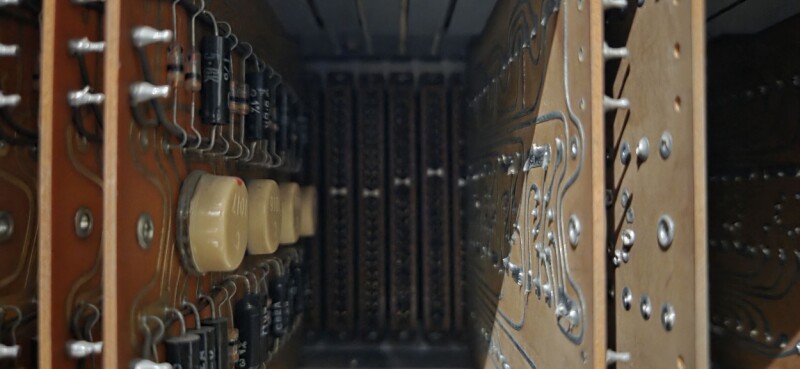
You can go retro by using an old video game console or a PC from the 1980s, but why stop there when, like one man, you can build your own vacuum tube computer using 75-year-old recycled components? A UK resident who identifies himself only as “Mike” has done just that, as detailed on his tube computer website and accompanying Hackaday project page. Mike’s tube computer is primarily made up of 460 recycled, Soviet-era 6N3P vacuum tubes, which were common enough in their age to be readily and cheaply available online. “Many were used and then stored for over 50 years, so life expectancy may be questionable,” Mike explained on Hackaday. A new 6N3P tube is supposed to have around 500 hours of life, but because each has been used, its current condition is essentially a mystery. Throw in manufacturing inconsistencies of mid-century Soviet Russia, and each tube had enough variability to necessitate extensive testing, Mike explains in the technical writeup on his website. “I calculated the component values and tested the results, but in many cases the theory did not accurately match the practice,” Mike writes. “So I built a test rig to test the viability of various component values and found a range of values that seemed to work in most cases.” All told, Mike’s tube computer, with its 460 6N3P tubes, consists of 920 thermionic triodes that use heat to release electrons for his computing work. Those tubes are mounted to 46 separate 10-tube PCBs, which in turn sit on five backplane PCBs. The entire thing includes a control console that Mike describes as “far too simple” and in need of a complete redesign to better handle variations in the computer’s logic levels. It takes between 10 and 15 minutes for the entire system to stabilize once switched on, Mike said, resulting in a “warm and cozy computer room.” The tubes all power up in random states, requiring the machine to be reset each time it is switched on, but then it’s ready for the fun part: computing. The entire thing uses NOR (i.e., not OR) gates, just like the Apollo guidance computers that got humans to the Moon, which allows it to be a bit smaller than some of the other classic tube computers of yesteryear. As for what it can do, well - 16-bit math is a possibility, as well as anything else that can be done with a limited set of 16 instructions on a 4-bit instruction register. Mike has it configured to output a 64-bit Fibonacci sequence and, more excitingly for his grandchildren and the kid in all of us, plans to use it to power a simple flight simulator once its I/O system is finished. “The basic idea is that back in the 1920s the commercial development of the British R80 airship had actually been approved by the government and the Airship is moored overnight at the wonderful Brighton Aerodrome before a morning launch on a voyage to Paris,” Mike says on his website. “By pressing controls on the image of the bridge of the R80 you can direct the airship software,” he adds. “You can control the ballast, gas release, engine power, elevators, rudder and the bow mooring gear, which is used to release the airship from the tower.” He says that “a bit of vision” is needed to picture oneself flying an airship from Brighton to Paris, as the machine has no graphical output aside from a single mechanical display that used to serve as a clock at a British Rail station. The tube computer’s binary output is used to directly control the mechanical display. Mike describes his fascination with tube computers as “an addiction,” noting that this is the third such system he’s built since getting his first one up and running in 2021. “I designed The Tube Computer so it could show itself working at the most fundamental level of computing,” Mike says, while noting that he’s always careful to keep a fire extinguisher handy thanks to the fact you can smell it running due to all the heat it generates - enough to keep its entire room warm. “The Tube Computer has behaved itself so far, unlike a previous system that went BANG twice,” Mike said, adding that it still requires regular adjustments which, due to its size and position hanging on a wall, require a ladder to undertake. “It is probably one of the few computers that needs both a small tweeker [sic] and a big step ladder.” ®
Tesla's Cybercab's wheels have only just hit the asphalt for its commercial launch and the autonomous vehicle has already attracted the attention of the US National Highway Traffic Safety Administration (NHTSA). The body announced an investigation into Tesla's self-certification of the vehicle at the weekend. Central to the probe is the fact that the Cybercab famously lacks conventional controls. The NHTSA says there are "clear vehicle performance requirements" – stuff like brake controls – that "in order for automakers to access the US market, they must certify that their vehicles meet these standards – subject to oversight from the agency to confirm compliance. When certified vehicles appear to not adhere to these requirements, NHTSA conducts an investigation." The NHTSA is updating the requirements for autonomous vehicles designed never to be operated by a human, but Tesla appears to have jumped the gun somewhat, prompting the agency to open an Audit Query (AQ) just hours after the Cybercab began a commercial rollout on the streets of Austin, Texas. Tesla told the NHTSA that it had certified the Cybercab "as compliant with all applicable Federal Motor Vehicle Safety Standards (FMVSS)." The vehicles lack permanently attached manual controls such as a brake pedal, accelerator, steering wheel, or mirrors. In the AQ, the agency wrote it intended to "examine the process and technical data on which Tesla relied when certifying the Cybercab and related issues. "Among other things, NHTSA will consider the extent to which Tesla’s certification depended on determinations that certain FMVSS are inapplicable to the Cybercab." Tesla is not the only company with autonomous vehicles ferrying passengers around on US roads without using conventional controls in the cabin. Amazon tentacle Zoox, for example, was granted a two-year exemption [PDF] at the end of July 2026, with the proviso that "not more than 2,500 exempted vehicles are introduced into interstate commerce for commercial deployment in any 12-month period." There is therefore precedent. However, the NHTSA wants to see how Tesla came up with its self-certification for the Cybercab. NHTSA Administrator Jonathan Morrison said, "NHTSA fully supports the safe development and deployment of automated vehicles. But as the federal regulator, we need to ensure that all of our laws are followed." The agency noted, "When certified vehicles appear to not adhere to these requirements, NHTSA conducts an investigation." ®
A defense startup has raised $7 million to develop its counter-drone system that uses small interceptors to defend against swarms of FPV (First-Person View) drone swarms, the kind causing heavy battlefield casualties in Ukraine. San Francisco-based Mara says it has secured the funding to bring its Spike drone defense system to market, aiming to provide a cost-effective counter to small FPV attack drones - typically quad-copters with an explosive payload. The system comprises separate Spotter sensor / targeting units and multiple Seeker kinetic interceptors. The latter are small (250g / half a pound), fast (200 kmph / 124 mph), tube-launched, and have onboard intelligence to help find their way to the target. Mara claims that deployments can scale from a single rucksack kit to protect a squad of troops, to a vehicle-mounted launcher, up to a multi-kilometer perimeter shield for a base or site. A launcher can be fitted with up to 48 of the Seeker interceptors, and reloaded in less than a minute, or so the firm says. The Spotter detection and tracking sensor combines electro-optical and acoustic sensors with an optional low-signature radar, for day and night all-weather protection. “Small drones changed the battlefield because they distributed the cost and capability of precise attack,” Mara co-founder and CEO Daniel Kofman said in a statement. Yet many defensive countermeasures are concentrated into one costly point solution, he claims. “Spike creates a distributed mesh of small, cheap nodes that can each aim and shoot in multiple directions at once.” The components of its Spike system have already been tested by potential customers, Mara says. Seeker completed intercepts cued through US Army systems at an exercise in Texas, while Spotter has been operated on an armored vehicle during another Army exercise in Europe. Most recently, Ukrainian forces operated Spotter near to the front line in their country, where it tracked multiple FPV drones. Mara says it has research and testing agreements with three US defense organizations, and is in early-stage engagements with international military partners in the UK, Czech Republic and Ukraine. The $7 million funding round was led by Khosla Ventures. We asked Mara for further details, such as the range of its Seeker interceptors and just how inexpensive they are, and will update if we get answers. ®
Microsoft's latest Xbox merchandising deal means at least you can sit on an IKEA cushion while you wait for your PlayStation 5 to boot. IKEA has announced YXSTABY, a nine-piece collection of items aimed at the XBOX completist who has to have every possible piece of merchandise associated with their beloved game console. Need a stool? How about one modeled on a controller's thumbstick? A cushion? There's a D-pad to throw on the sofa. And a tariff refund for Xbox customers? Ah, well, the IKEA deal only goes so far… IKEA has long had a reputation for being that place where relationships go to die, thanks in part to the occasionally labyrinthine layout of its store. Xbox has, under the leadership of Asha Sharma, acquired a similar rep as far as staffers and game studios are concerned. Thousands of workers were laid off in recent months as Sharma "reset the business" to improve the platform's standing in a market dominated by rivals. In the UK, IKEA charges £12 for a cushion or platter, and up to £115 for a side table on wheels. The Reg suspects Xbox branded stuff will be a little pricier but considerably less than an Xbox itself. Microsoft Store shows the comparatively weedy Xbox Series S retailing for £429.99, while the beefier Series X goes for £669.99. When launched in 2020, the Series S cost £249. "Unfortunately," wrote Microsoft, "console storage and memory prices have increased by more than 2.5x and we expect another doubling by the fall of 2027." It is far from alone. Price rises have become a way of life in the tech industry in recent months as demand for memory outstripped supply. This is not the first gaming-related wares that IKEA has sold. The BRÄNNBOLL collection predates the Xbox collaboration and features "everything to improve your gaming adventures, from a rug that helps you hit the enemies, not the table, to gaming bolsters that boost your comfort and play." The YXSTABY range was unveiled at Gamescom this month, but eager buyers have a little longer to wait for that Xbox-inspired stool. The range will be in stores and available online from October 1. ®
For years, Corey Quinn, chief cloud economist at Duckbill and occasional Reg columnist, has argued that Amazon's Route 53 DNS service is a database. While literally true in the sense that DNS records are stored key-value pairs, it's more of a provocation than an endorsement. Even so, the idea has inspired prior jibes. In that spirit, Colin Percival, the creator of backup service Tarsnap, has released Route 53 Files, "a new file system that seamlessly connects any AWS compute resource with Amazon's highest-availability database." "The opening line of referring to Route 53 as Amazon's highest-availability database was partly a hat-tip to Corey," Percival told The Register. "Everyone in the field knows it's true, though." But Percival's satirical target isn't really AWS database downtime. He's more focused on Amazon S3 Files, a file system that links AWS compute resources with Amazon Simple Storage Service. "S3 Files launched in April and my reaction was, 'Oh, we're shipping category errors now? Hold my beer,'" explained Percival. "I'm not saying that Route 53 Files can't be useful – as Corey notes, the API for Route 53 is awful – but the inspiration was 'this needs to be satirized' and the launch post was written with that in mind." The launch post was penned in the style of the S3 Files launch post. Percival pointed to one particular passage about Route 53 Files being "ideal for shared workloads that mutate authoritative DNS, such as AI agents collaborating through file-based tools and on-call engineers reverting each other's changes using sed." That passage, he said, echoes wording from the AWS post pitching S3 Files as being "ideal for interactive, shared workloads that mutate data, from agentic AI agents collaborating through file-based tools to ML training pipelines processing datasets." Percival said he understands that many AWS customers love S3 Files. "But the fact customers ask for faster horses doesn't in itself mean that's what we should give them; the weird edge cases which come up when you ship category errors can cause unexpected problems and I'm not convinced that customers understand them sufficiently," he said. Percival said he doesn't personally know anyone using S3 Files in production. "I'm just looking at the design and saying, 'that looks like a sharp edge which will hurt someone.' Two examples which come to mind are the 'Sync back to S3 after 60 seconds of inactivity,' which I'm sure will bite someone eventually when they end up waiting for changes which never arrive because a file is being continuously updated; and the IAM integration, which (due to the security fail which is IMDS) gives people far less privilege separation than they might expect from a filesystem." Quinn expressed appreciation for Percival's work. "I've been calling Route53 a database for the better part of a decade mostly to annoy people who know what a database is," Quinn told The Register. "Colin took the amazing bones of a legendary service and gave it an interface model that isn't molten garbage, and I am totally here for it. He replaced the API with echo which is a downgrade in every respect except for the part where it works without requiring six weeks of cloud school." And the funny thing is that it actually works. ®
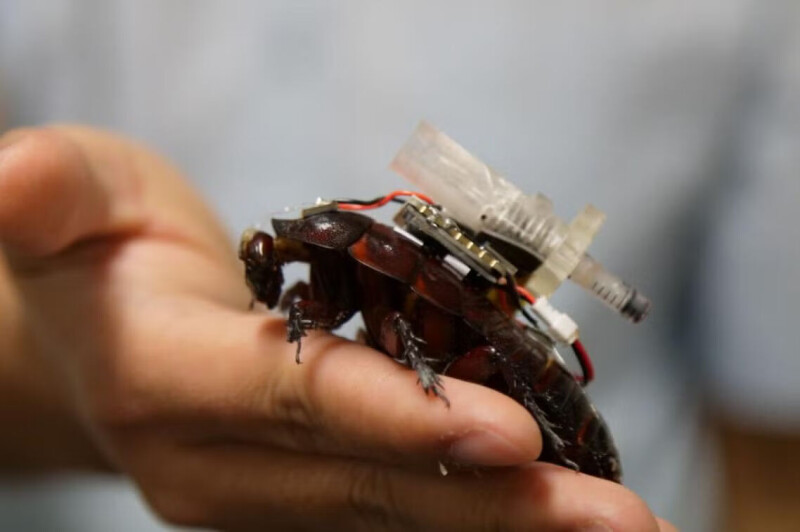
Picture this: You’ve just undergone one of the most harrowing experiences of your life, and you’re trapped in the rubble of a collapsed building. You’re injured, air is running out, and human rescuers can’t reach you. But crawling through the rubble to administer life-saving drugs and reassure you comes the last thing you’d expect: a swarm of cyborg cockroaches bearing tiny syringes. Unfortunately for those who’d rather find solace in the arms of a fluffy, drooly St. Bernard, this tale is anything but science fiction. It’s not even a new idea: Cockroaches fitted with electronics that allow rescue workers to control their movements from a distance have been on the research docket for biotech researchers for some time. What’s new in this latest experiment from researchers at Australia’s University of Queensland is outfitting the, erm, little buggers with devices remote rescuers can use to shoot a drug dart into trapped patients. “A lot of people might not like the sight of a giant cockroach scurrying towards them, but if you’re trapped in rubble or stuck in a cave and need help, it could make a real difference between life and death,” PhD candidate and lead research paper author Hai Nhan Le told the University of his phobia-triggering project. Giant is right – the species chosen for the project, the giant burrowing cockroach, is the world’s heaviest roach species, and can grow up to 8 centimeters in length, or around 3.1 inches. Known to be docile, they’re popular pets in their native Australia, and – lucky for anyone coming face to face with one while trapped in a pile of rubble – they’re known to be relatively clean and disease-free, too. The giant burrowing cockroach was chosen for its size, per the paper, as they needed to be large enough to “integrate centimetre-scale apparatuses for … real world scenarios.” The “paraborgs,” as the team calls their subjects, were outfitted with electrodes that gave researchers the ability to make the roaches turn left and right, control their speed, and immobilize them in order to deliver drugs without the roach moving while scientists tried to take aim. Then they were fitted with various add-ons specific to their roles in the paramedic swarm –one built to search, another equipped with a single launchable drug syringe, for example. Outfitting the roaches with their cyborg backpacks isn’t fatal, and the team said that their subjects were able to live just as long as other roaches once their harnesses were removed. *shudder* Well, at least they're good at their jobs The Queensland team had overwhelming success in getting their paraborgs to end up where they wanted them - 100 percent successful, in fact, the paper said. As for drug injection, the auto-injection mechanism succeeded 90 percent of the time, and paraborgs able to get within 15 cm of a target (5.9 inches) were able to successfully inject drugs 95 percent of the time. The only trouble spot for the experiment was getting the robo roaches to sit still, with only a 72 percent success rate in stabilizing the cockroaches for injection targeting. That’s still a pretty good rate of success, leaving the team to predict that swarms of specially-outfitted paraborgs could be swarming over disaster sites in a matter of a few short years. “Some could carry cameras and environmental sensors, while others could carry specialised emergency or medical equipment,” UQ robotics engineering lab director and lecturer Dr. Thang Vo-Doan said of the project. “Hopefully, within the next 5 to 10 years, we could see cyborg insect rescue teams deployed to help people in real emergencies.” Hopefully large bugs bearing medical aid isn’t something that’ll send you into a panic. ®
BORK!BORK!BORK! Wide, super wide, ultra wide, and monitor-munga screens might be all the rage these days. But check out the girth of this Debian display in Scotland. Spotted by eagle-eyed Register reader Kenny Millar, this digital billboard in the west central Lowlands town of Greenock has been showing a Debian login prompt for a few weeks now. We know the Linux fraternity are less than keen on advertisements in their operating system, but this is getting ridiculous. Did you know that Debian had its own tartan? No, we didn't either. Our reader provided a link to a Google Street View shot of the board in happier times, in 2024. However, the base of the sign in 2024 hinted at the fate that has since befallen it. It was a 75Media billboard, something now removed. 75Media, a major outdoor advertising company in the UK, ceased trading at the end of 2025, and we fear that the Greenock signage whoopsie is a real-world example of the lights being on, but nobody's in. Or, in this case, Debian prompting for a login, but no humans to handle the request. So the board waits… It looks like Debian 11 – Bullseye – is the operating system in use. Released in 2021, the operating system reaches the end of long-term support in 2026, although fixes can continue until 2031 (assuming someone is paying the bills). With 75Media out of the picture, responsibility for the board has likely shifted to a different advertising agency. Despite its imposing physical dimensions, the display resolution comes in at just 1,200 x 320 pixels which is plenty for running a couple of Doom sessions side by side, but tight for actual desktop use. It's fitting, then, that the terminal driving the board is left on display. No true IT professional, after all, likes to stray far from the command line. There is something strangely plaintive about this board with its login prompt bared to the world, but with no techie behind the scenes to either put it out of its misery with a sudo shutdown -h or set off the next slideshow of ads to entice passing motorists. A case of perhaps IT is aware, but nobody cares. ®

 Login