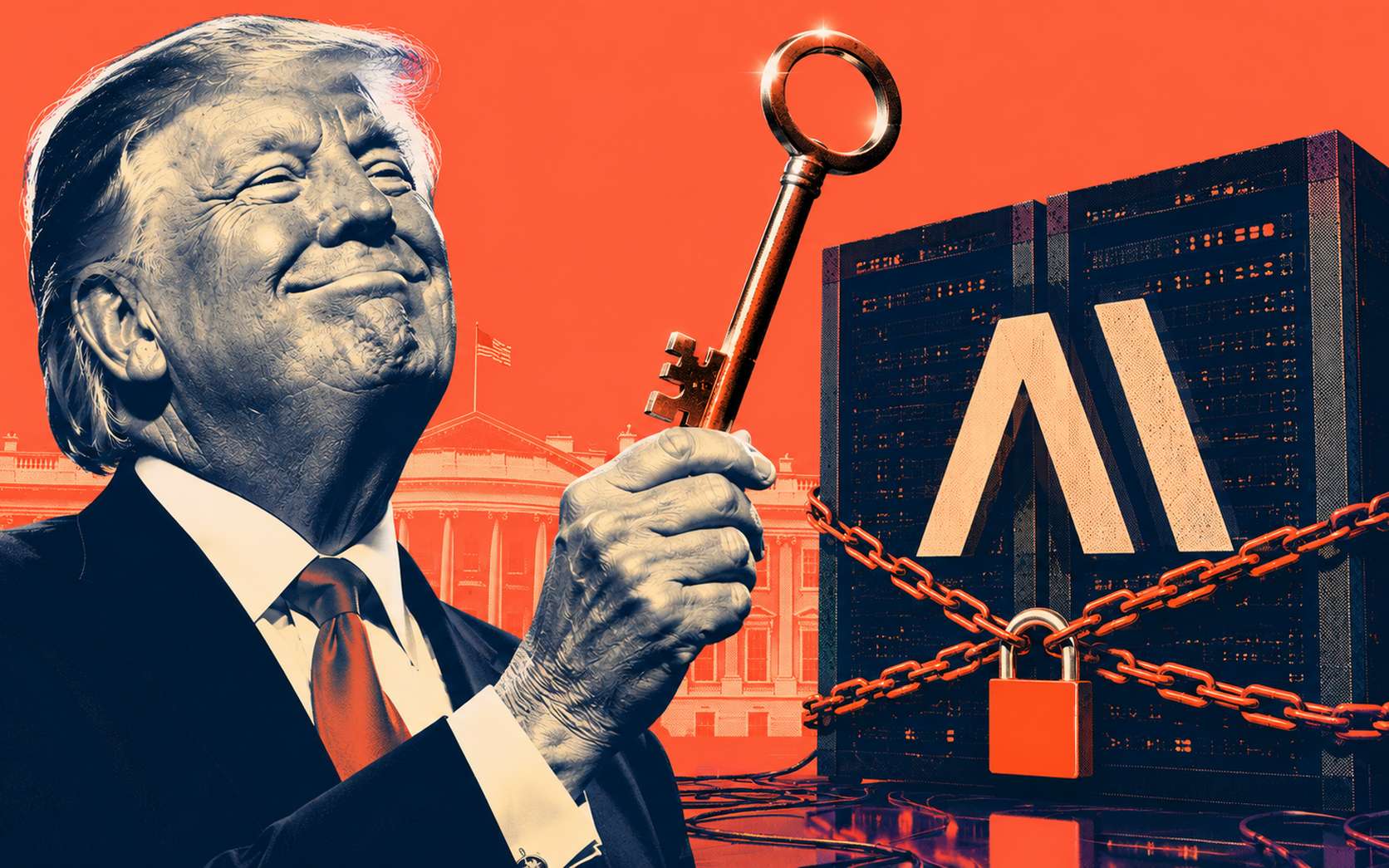
Anthropic (tweet, Hacker News):
The US government, citing national security authorities, has issued an export control directive to suspend all access to Fable 5 and Mythos 5 by any foreign national, whether inside or outside the United States, including foreign national Anthropic employees. The net effect of this order is that we must abruptly disable Fable 5 and Mythos 5 for all our customers to ensure compliance.
David Sacks (recently departed AI czar, via Dare Obasanjo, Hacker News):
Fable is Mythos with guardrails. But if those guardrails fail, then you’ve exposed Mythos and its advanced cyber capabilities to people who shouldn’t have them. (Keep in mind that Anthropic itself widely promoted the idea that Mythos was a cyberweapon and needed to be regulated as such. They asked for government regulation of Mythos and championed the guardrails on Fable. If there is a vulnerability — big or small — it is Anthropic’s responsibility to patch.)
A highly credible trusted partner of both Anthropic and the USG who was testing Fable came forward with a jailbreak of those guardrails. The Admin asked Dario to fix the jailbreak or de-deploy the model. Dario refused.
Amrith Ramkumar and Robert McMillan (Hacker News):
The Trump administration’s decision to halt all foreign use of Anthropic’s most-capable AI models was prompted by conversations between Amazon.com Chief Executive Andy Jassy and U.S. officials including Treasury Secretary Scott Bessent, people familiar with the matter said.
Dare Obasanjo:
If Claude Mythos is as powerful and dangerous as Anthropic says it is then export controls are totally reasonable. After all, Biden put export controls on Nvidia GPUs for similar reasons.
That said, banning foreign worker Anthropic employees from Mythos reads more like retaliation than regulation.
Ben Thompson (via John Gruber):
Anthropic went on to make the case that non-universal jailbreaks were inevitable and also narrow, and that there was no evidence of a universal jailbreak; the jailbreak that was found, meanwhile, appears to have been reported by Amazon, which is notable given Amazon is both an investor in Anthropic and a major provider of inference to the company. As I write this, senior Anthropic staff are in Washington D.C. seeking to resolve what they insist is a misunderstanding, and which White House officials are suggesting is insouciance by the company’s leadership to legitimate national security concerns.
I don’t actually have much to add to the current conflict given how many facts are in dispute; what I am not surprised about is the fact that the conflict is happening: I already explained in Anthropic and Alignment why conflict between the U.S. government and Anthropic was inevitable. To that end, people who are arguing that Mythos isn’t powerful enough to warrant the government’s drastic action are missing the point: if it’s not powerful enough now, the next one will be, or the one after that, particularly now that models are increasingly useful in creating their successors.
[…]
The broader takeaway from that previous episode, however, is that Anthropic believes that they are the ones who should have final say over how Anthropic is used; given that they think only they should be developing leading edge AI, they by extension think that only they should have final say over AI generally. When you further combine this realization with the company’s pronouncements about AI’s ability to conduct all economic activity, you realize that Anthropic’s leadership effectively wants to have power over everything and everyone.
Bruce Schneier:
The government’s actions won’t help. The problem isn’t any one particular model; it’s the general trend of increasing AI capabilities. And any real solution requires the sort of collective action that just isn’t possible right now.
[…]
The broader community had only a few days with Fable, but that time we learned some about its capabilities. Its difference is less the new model’s raw analytical and problem solving capabilities, and more that the model doesn’t need that sophisticated harness.
[…]
Human systems rely on so many norms that we scarcely recognize the existence of until they are broken. AIs naturally think outside the box, because they don’t have any real conception of what the box is or why it’s there in the first place.
There is no foolproof way to prevent people from using AI models to complete harmful tasks. There is no way to prevent the models from incidentally causing harm while completing benign tasks. AI models are no longer isolated from the real world. They browse the internet and answer emails.
Hayden Field:
Anthropic declined to comment multiple times this week about the state of the talks, saying there was no news to share. But the lack of news is the story here. After 14 days of high-intensity negotiations, nobody knows when or if Anthropic’s most powerful AI models will come back, let alone whether President Trump could expand his order to more companies with similar tech.
[…]
It’s not clear exactly why Anthropic and the administration remain at an impasse. One problem may be that there’s no clear framework for applying export controls to AI systems. Most companies making dual-use products — civilian systems with potential defense or military uses — can evaluate them using what’s essentially a checklist during the manufacturing and production process. Anthropic, however, is facing a complicated bureaucracy figuring out how to apply its rules from first principles.
[…]
Katie Moussouris, the founder and CEO of Luta Security, viewed a report about the Fable 5 vulnerability at Anthropic’s request. She thinks it’s significantly overblown. In a blog post, Moussouris detailed how researchers jailbroke guardrails that prevent Fable 5 from finding exploitable security holes, one of the unfettered Mythos 5’s scariest capabilities. […] In Moussouris’ eyes, however, this shouldn’t have triggered such a severe governmental action and is in fact an essential tool for AI coding.
Jared Perlo (Hacker News):
The U.S. government is allowing Anthropic to deploy its Mythos 5 model to a select group of customers and partners, according to a letter from Commerce Secretary Howard Lutnick to Anthropic that was seen by NBC News.
In the letter, Lutnick wrote that the government was confident in the guardrails Anthropic had put in place to allow trusted users to access the powerful AI system.
Julie Bort (Reddit):
It is now allowing Anthropic to make Mythos 5 available to more than 100 specific U.S. government agencies and companies, including allowing the non-American employees at those organizations to access to the model, both Semafor and Reuters report. This list also includes Anthropic’s own non-American employees, who were included in the original ban that forbade non-Americans from accessing the models.
[…]
Apparently, the administration did not address the release of Fable 5 in this directive.
It’s unclear what technical changes Anthropic may have made or what else they may have done to change Lutnick’s mind.
Kate Park (Hacker News):
On Wednesday, Chinese cybersecurity firm 360 reportedly unveiled Tulongfeng, an AI tool it says can go head-to-head with Anthropic’s Mythos.
Dare Obasanjo:
It seems inevitable that OpenAI and Anthropic will lobby the U.S. government to ban Chinese models in much the same way car companies effectively got Biden to ban Chinese EVs with 100% tariffs.
This puts them on a collision course with the hyperscalers like Microsoft who’ll happily host GLM & Kimi.
Previously:
Update (2026-07-01): Anthropic (tweet, Hacker News):
As of today, June 30, the export controls on Fable 5 and Mythos 5 have been lifted.
[…]
We have also restored access to Mythos 5 for a set of US organizations, following the US government’s approval on June 26. We continue to coordinate with the government to expand access to the broader set of domestic and international partners in the Glasswing program.
[…]
Importantly, the reported technique did not expose any unique Mythos-level cyber capabilities. The behavior reflected a borderline case for Fable 5’s safeguards—as we will explain below, there are some tasks that are unlikely to be dangerous but are nonetheless blocked by the safeguards out of an abundance of caution. The reported technique allowed access to one such behavior, but it only involved routine defensive cybersecurity work.
Even so, we moved quickly to address the reported bypass. Working closely with the government, we trained an improved safety classifier that targets and blocks the behavior described in the report. Users will be notified if a request to Fable 5 is blocked, and the request will instead be sent to Opus 4.8.

 Login