What Is Driving Diesel Prices Up? Energy Chaos Caused by Two Wars.

Β© Jeff Chiu/Associated Press

Β© Jeff Chiu/Associated Press
For decades, Washington has assumed that military aid translates into political influence. If the United States provides the weapons, intelligence, training, and diplomatic backing that keep an ally fighting, conventional wisdom suggests it should also have considerable leverage over when, and how, that war ends.
Yet, a sweeping new analysis published by the Brookings Institution and authored by Dr. Dafna Rand, a senior fellow at Brookings, the Federation for American Scientists, and the Council on Foreign Relations, argues that the opposite has increasingly become true.
Whether in Ukraine, Gaza, Yemen, or Afghanistan, the U.S. has repeatedly discovered that sustaining an allyβs war effort is often far easier than steering its ultimate direction. Instead of conclusive victories followed by lasting peace, modern conflicts are increasingly settling into drawn-out stalemates, frozen conflicts, or recurring cycles of violence that resist outside pressureβeven from Washington.
Dr. Randβs report examines one of the defining strategic dilemmas confronting American foreign policy in the 21st century: why the worldβs most powerful military and diplomatic actor has struggled to shape the decisions of partners whose war efforts depend heavily on U.S. support.
Drawing on more than 30 interviews with senior American officials involved in decision-making throughout four major conflicts, alongside hundreds of government documents, the analysis shows recurring patterns that appear independent of geography or the adversary involved.
βWars, whether between or within states, are not ending in the 21st century,β Dr. Rand writes. βFrozen conflicts, on-again-off-again fighting, and stalemates have become the norm.β
Dr. Rand argues that this changing nature of warfare has profoundly changed the assumptions underpinning American security strategy.
Following the costly wars in Iraq and Afghanistan, Washington increasingly shifted toward supporting partners rather than committing large numbers of U.S. troops directly to combat. The expectation was that supplying allies with military assistance would provide the United States with considerable influence over battlefield strategy and political consequences.
Instead, Dr. Rand says that American leverage consistently diminishes as conflicts drag on.
One of the studyβs central conclusions is that Washington and its partners frequently begin wars without agreeing on what victory actually means. At the outset of each conflict examinedβincluding Ukraineβs defense against Russia, Israelβs campaign against Hamas, the Saudi-led intervention in Yemen, and Americaβs withdrawal from AfghanistanβAmerican and partner governments shared broad objectives, though often failed to establish detailed political end states.
That omission, Dr. Rand argues, becomes increasingly costly as wars continue.
Early battlefield success frequently encourages partners to pursue more ambitious goals than originally envisioned. At the same time, Washington gradually becomes more interested in negotiated settlements as financial costs mount, domestic political support declines, and wider strategic priorities begin competing for attention.
According to Dr. Rand, many officials interviewed expressed regret that these conversations about political objectives, postwar governance, and acceptable settlement terms did not occur before military campaigns gained momentum.
The report also highlights an uncomfortable reality of modern alliances. Although the United States provides enormous military assistance, it does not exercise command over allied governments or their armed forces. As a result, disagreements naturally emerge over strategy, operational design, and acceptable risks.
Ukraine provides one of the clearest examples. Initially, Washington and Kyiv shared an overriding objective of preventing Russia from conquering the country. However, over time, American officials became increasingly divided over whether continued fighting or eventual negotiations better served long-term U.S. interests.
Some officials viewed prolonging the conflict as strategically beneficial because it weakened Russiaβs military while strengthening Ukraineβs defense capabilities. Others believed diplomatic attempts should have begun earlier, particularly after Ukraineβs battlefield gains in 2022 created what they viewed as an opportunity to negotiate from a stronger position.
Dr. Rand notes that internal disagreements within the U.S. government complicated communication with Ukrainian leaders, in particular regarding expectations for territorial objectives and the role military offensives were intended to play in eventually creating conditions for diplomacy.
The Gaza conflict exposed a different, but related, collection of challenges.
Following Hamasβ October 7, 2023, attacks, President Joe Bidenβs administration moved rapidly to reassure Israel of unshakable American support while simultaneously urging restraint based on lessons learned from Americaβs own post-9/11 military campaigns.
Dr. Rand concludes that Israeli leaders largely heard the reassurances while failing to fully internalize Washingtonβs accompanying warnings about civilian casualties, operational design, and the long-term strategic consequences of an extended campaign.
As the war progressed, American officials increasingly concluded that humanitarian concerns and mounting civilian casualties were not exclusively moral issues but strategic ones as well, arguing that prolonged destruction could ultimately strengthen Hamasβ long-term recruitment and undermine Israelβs own security objectives.
Despite this growing divergence, the report suggests Washington hesitated to use its available leverage aggressively, partly because of domestic political sensitivities surrounding support for Israel.
Another recurring finding centers on American public opinion.
Support for allies often begins overwhelmingly strong immediately after major attacks or invasions. But that support steadily erodes as wars lengthen, casualties mount, humanitarian problems increase, or questions come up regarding the conduct of partner governments.
Dr. Rand says this pattern appears across Yemen, Afghanistan, Gaza, and, increasingly, Ukraine.
Importantly, she argues this erosion can occur even when Americans continue believing the underlying cause remains just. Instead, fatigue over prolonged commitments, concerns about costs, or doubts regarding the likelihood of decisive success gradually reshape political calculations in Washington.
Those changing domestic dynamics, in turn, reduce Americaβs leverage abroad.
Once congressional debates begin questioning military assistance or public enthusiasm declines, allied governments recognize that Washingtonβs ability to maintain long-term support has become less certain.
Dr. Rand argues this weakens American bargaining power precisely when policymakers most need it.
Among the studyβs most significant recommendations is that future administrations should treat leverage as a rapidly diminishing resource.
Rather than assuming influence will expand alongside continued military assistance, Dr. Rand contends the opposite usually occurs. The strongest opportunity to shape an allyβs political objectives exists during the opening weeks of conflict, before battlefield realities, domestic politics, and diverging national interests begin pulling partners in different directions.
To address this, the report proposes forming formal βsecurity contracts,β or a memorandum of understanding, early in future conflicts that clearly define shared political objectives, expected end states, standards for humanitarian conduct, and mechanisms for periodically reassessing strategy.
Dr. Rand also recommends keeping consistent communication across the entire U.S. national security apparatus, warning that mixed signals from different agencies make it easier for partners to ignore American advice or exploit disagreements inside Washington.
Perhaps most notably, the report argues that future administrations should not focus solely on influencing allies. Even in conflicts involving close partners, Washington should simultaneously pursue diplomatic means with adversaries whenever possible, recognizing that negotiated settlements often require engaging both sides rather than relying exclusively on pressure directed at friendly governments.
Ultimately, the analysis shows that the challenge confronting U.S. policymakers goes beyond any single conflict. As interstate wars, civil wars, and proxy wars become increasingly protracted, Americaβs ability to translate military assistance into political influence may continue shrinking unless it fundamentally rethinks how partnerships are managed from the very beginning of a war.
βThe United States must be brutally honest with its partners,β Dr. Rand writes. βThe United States must recognize that pressuring its partners to end wars will get harder, not easier, as time passes and the partner grows better able to resist U.S. pressure.β
Study: Dr. Dafna H. Rand, Why canβt the United States end alliesβ wars?, Brookings Institution Foreign Policy at Brookings (2026).
Tim McMillan is a retired law enforcement executive, investigative reporter and co-founder of The Debrief. His writing typically focuses on defense, national security, the Intelligence Community and topics related to psychology. You can follow Tim on Twitter:Β @LtTimMcMillan. Β Tim can be reached by email:Β tim@thedebrief.orgΒ or through encrypted email:Β LtTimMcMillan@protonmail.comΒ
Diplomats say de-escalation talks continue as Trump vows retaliation over US soldier deaths
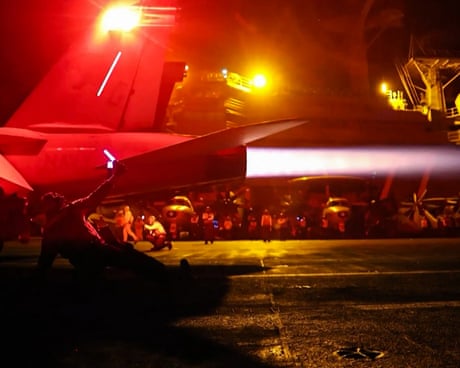
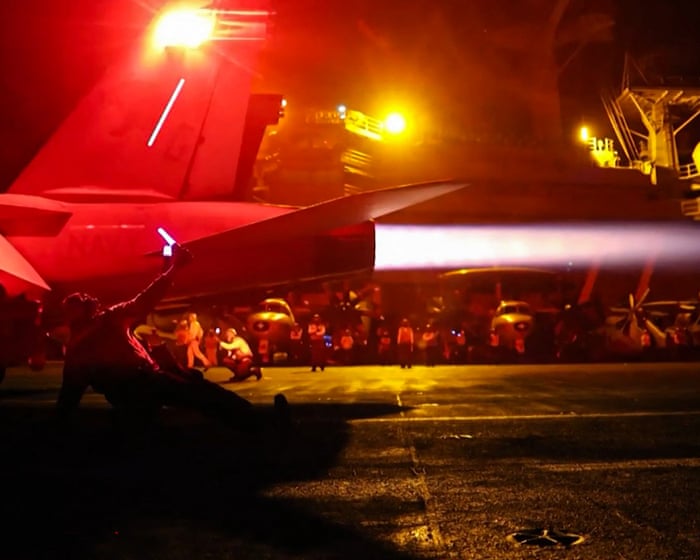
The US military said it has launched its 10th consecutive round of strikes on Iran to force the reopening of the strait of Hormuz.
Earlier on Monday, Iranβs president said the country is in a βfull-scale warβ after the US expanded its aerial campaign and Tehran struck Washingtonβs Gulf allies, even as diplomats said talks to de-escalate were continuing.
Continue reading...
Β© Photograph: US Central Command (CENTCOM)/AFP/Getty Images

Β© Photograph: US Central Command (CENTCOM)/AFP/Getty Images

Β© Photograph: US Central Command (CENTCOM)/AFP/Getty Images
It's a shameful day for the Church of England, says Julian Mann, as its General Synod passes an anti-Israel motion pledging to "engage with" what the Chief Rabbi calls a "shocking" document containing "so much falsehood".
The post A Shameful Day for the Church of England appeared first on The Daily Sceptic.
In Israelβs Qafzeh cave, archaeologists have discovered an intriguing set of ancient human remains that reveal a story of illness, violence, death, and survival in the remote past.
The international team of archaeologists from Centro Nacional de InvestigaciΓ³n sobre la EvoluciΓ³n Humana (CENIEH) and Tel Aviv University revealed their analysis of ancient human fossil remains, known as Qafzeh 25, in a recent paper published in Scientific Reports.Β
The findings provide rare evidence of interpersonal violence, care for the injured, and early funerary practices in a human population that lived between 92,000 and 145,000 years ago.
The researchers used a range of techniques to examine one particularly intriguing skull, including high-resolution micro-computed tomography (microCT) alongside macroscopic and microscopic analyses. Their investigation revealed a linear lesion across the mandible and lower premolars, with characteristics consistent with trauma inflicted by a sharp object.
Despite the severity of the injury, the researchers concluded that the individual survived the ordeal based on evidence of bone remodeling. The extent of healing suggests the person lived for a considerable period after suffering the wound.
Although the available evidence does not allow archaeologists to determine exactly how the injury occurred, they consider interpersonal violence the most likely explanation. The discovery is particularly significant because evidence of sharp-force trauma in Middle Paleolithic human remains is exceedingly rare.

Beyond the apparent head injury, the Qafzeh 25 skull yielded another remarkable discovery. Detailed examination of the teeth revealed dental conditions that had not previously been documented in humans of this antiquity.
The microCT scan revealed a hidden carious lesion in a lower premolar, along with enamel defects. These sorts of tooth decay issues are uncommon in early homo sapiens, as they are largely caused by bacteria that thrive on sugars. Before the advent of agriculture and later processed carbohydrates and refined sugars, such tooth decay was rare due to diets high in meats, nuts, and fibrous vegetables, which helped clean the teeth.
Looking beyond the skull, the researchers also examined the broader funerary context of the skeleton in an effort to reconstruct the burial practices of these ancient humans.
A broader analysis of the entire skeleton suggests it was deliberately buried, as it lacks evidence of carnivore predation or damage consistent with exposure to the elements. According to the researchers, this makes Qafzeh Cave one of the most important sites in the world for studying Homo sapiensβ earliest internment practices and the relationship not just between the living and the dead, but also between the living and the dying.
βThese findings provide new evidence in the ongoing debate about the origins of complex behaviours such as interpersonal violence, the care of injured or ill individuals, and funerary practicesβfundamental aspects for understanding the social and cultural evolution of our species,β said lead author Ana Pantoja PΓ©rez, a member of theΒ DEATHREVOL research group.
The find represents one of the earliest known well-preserved human populations outside of Africa at this time, residing in the Levant at least 90,000 years ago. With evidence of a healed traumatic injury, unusual dental disease, and intentional burial, the Qafzeh 25 skeleton offers a rare glimpse into the livesβand deathsβof some of our earliest ancestors.
The paper, βA Taphonomic Reassessment of Qafzeh 25 and Its Implications for Violence, Health and Funerary Practices,β appeared in Scientific Reports on June 30, 2026.
Ryan Whalen covers science and technology for The Debrief. He holds an MA in History and a Master of Library and Information Science with a certificate in Data Science. He can be contacted at ryan@thedebrief.org, and follow him on Twitter @mdntwvlf.
An unusual artifact unearthed at a site in central Israel is offering researchers an unexpected look at far-reaching trade networks, religious traditions, and cultural change that rocked the ancient Near East.
The tiny relic, uncovered at the ancient settlement of Tel Hadid, is nearly 2,700 years old. Archaeologists have identified it as a stamp sealβa common object from this region and period, although upon closer inspection, what it reveals is something more complex than others of its kind.
βThe object is remarkable for its material,β writes Tel Aviv University archaeologist Ido Koch and colleagues in a recent paper published in the journal Levant that describes the object. Crafted from mother-of-pearl, the researchers say this stamp seal is quite unlike any other and represents βa medium hitherto undocumented in the southern Levantine stamp seal corpus.β
Normally, stamp seals were made from durable stone during the Iron Age. What prompted the ancient creator of the recovery from Tel Hadid to use a pearl oyster instead remains perplexing, since this brittle material is so delicate that Koch and his colleagues say engraving it would have been extraordinarily difficult using Iron Age tools.

In short, crafting such an artifact from mother-of-pearl using known techniques available to artisans in the Near East nearly 2,700 years ago should have been impossible.
So why did its ancient creator choose to undertake such a demanding task in the first place?
The Tel Hadid site, also known as al-Haditha, is an archaeological site in the Ben Shemen Forest in central Israel found between present-day Tel Aviv and Jerusalem. The site overlooks the countryβs coastal plain, and 2,700 years ago, its position also would have held strategic importance.
It was there in 2019 that archaeologists uncovered the stamp seal during excavations led by Koch and his team, which they say belonged to Pinctada margaritifera, a species of pearl oyster native to the Red Sea and Persian Gulf. This identification was significant, since it means the raw material traveled hundreds of miles before ultimately reaching the settlement.
Based on its origins and the craftsmanship that obviously went into its creation, Koch and his colleagues believe the unusual artifact reflects the profound changes that followed the Assyrian conquest of the Kingdom of Israel during the late eighth century B.C.E. At the time, populations that had fallen under Assyrian rule were frequently moved to different locations within the empire, resulting in communities that blended cultures normally only connected by expansive trade routes stretching from Mesopotamia to Arabia and beyond.
The stamp seal appears to reflect these far-reaching connections, since the mother-of-pearl is believed to have been carried by one of the many deported families among their valuables. However, it is also possible that the artifact was imported through the flourishing commercial networks that emerged through the rise of the Assyrian Empire.
However, Koch and his colleagues say the engraved design may also provide clues to the artifactβs origins. Instead of depicting imagery with roots among the Israelites, it depicts a crescent moon mounted on a triangular standardβa human figure is also present, raising its arms in apparent worship.
This imagery is associated with the Mesopotamian moon god Sin, whose worshipers spread quietly amidst Assyriaβs western provinces. Apart from the imagery it depicts, the shallow nature of the engravingβperhaps a requirement for working with such delicate materialβalso suggests that instead of functioning as a practical stamping seal, the object may have been worn as an amulet due to its religious significance.
Altogether, the combination of an exotic and unlikely material for the creation of such an item, along with its foreign religious imagery, and the care that went into its creation, all reveal clues that point to multiculturalism within communities under ancient Assyrian rule.
βThe seal thus demonstrates how a recognized colonial motif was materially articulated within a western Assyrian provincial context,β Koch and his colleagues write, βwhile also providing a rare opportunity to examine the practices and constraints of seal engraving on [mother of pearl].β
The teamβs study, βA unique mother-of-pearl stamp seal from Late Iron Age Tel αΈ€adid, Israel,β was published in Levant.
Micah Hanks is the Editor-in-Chief and Co-Founder of The Debrief. A longtime reporter on science, defense, and technology with a focus on space and astronomy, he can be reached atΒ micah@thedebrief.org. Follow him on XΒ @MicahHanks, and atΒ micahhanks.com.

Β© The New York Times
The economic shock of the closure of the Strait of Hormuz has sparked calls to abandon fossil fuels faster. But that's the wrong lesson, says Richard Lyon β and Net Zero obsessed Britain will learn this the hard way.
The post Hormuz: The Slow-Motion Crash appeared first on The Daily Sceptic.

Β© The New York Times

Geochemical analysis of 780,000-year-old stone tools from Israel suggests Acheulean (or Acheulian) hominins repeatedly sought specific basalt sources, revealing sophisticated planning and deep knowledge of their landscape.
The post Acheulean Toolmakers Chose Their Stone with Surprising Precision appeared first on Sci.News: Breaking Science News.