❌

Reading view

Monarch butterfly saved after landing in refried beans

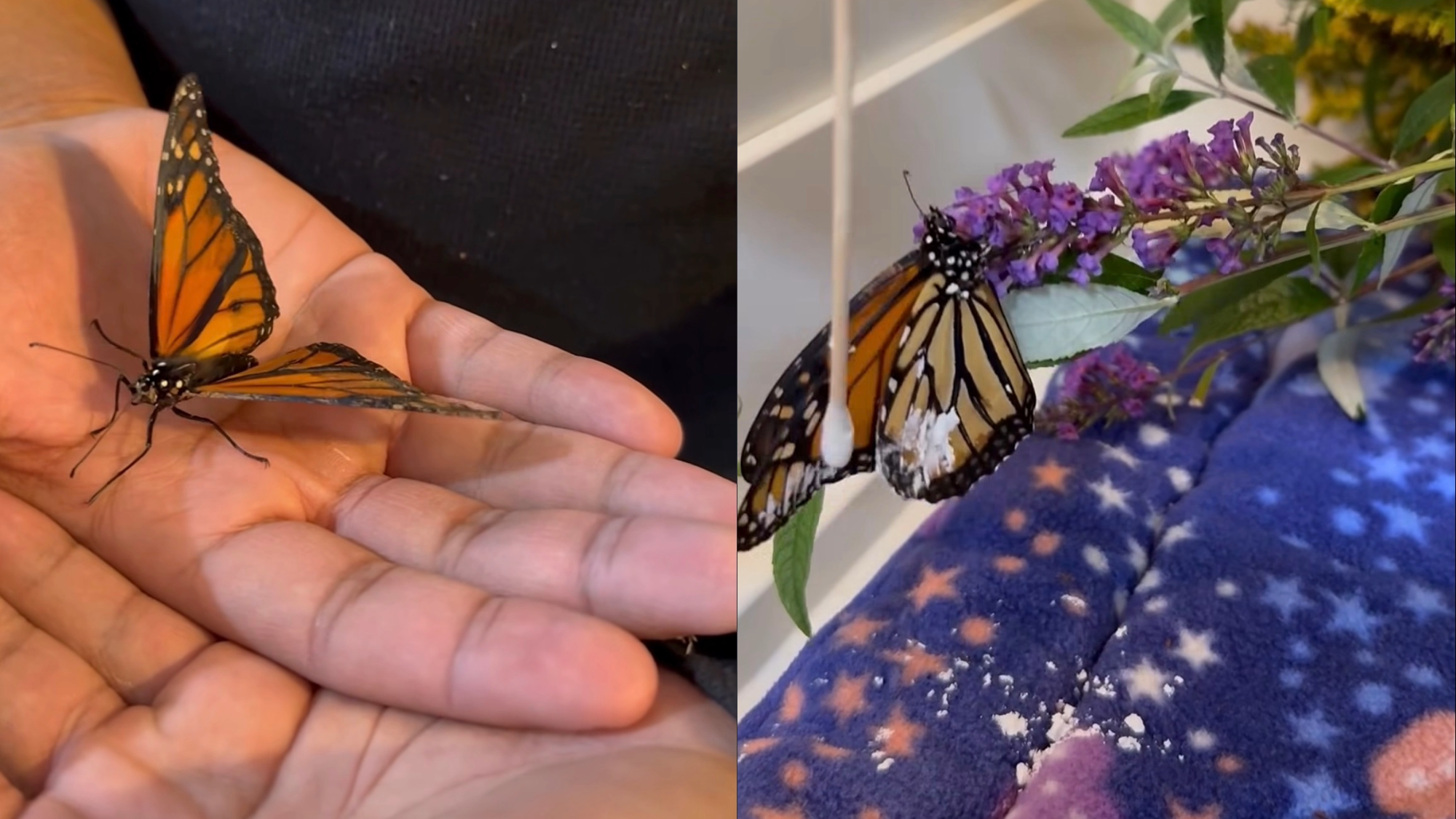
A migrating monarch butterfly (Danaus plexippus) recently brought into Sweetbriar Nature Center in Smithtown on New York’s Long Island came with a unique backstory. The male butterfly flew into a nearby house and landed on a pot of refried beans. The man living there took the butterfly out of the pan, but by morning the butterfly still could not fly. There was only one thing left to do for the injured insect—bring him to the professionals.

“Butterflies are incredibly delicate, and even handling them can cause additional damage or leave them unable to fly,” Janine Bendicksen, Sweetbriar Nature Center’s Director of Wildlife Rehabilitation, tells Popular Science. “That makes butterfly rehabilitation especially challenging—we have to be extremely careful with every step.”

The team got to work on fixing this unusual patient. They started by checking the butterfly for a parasite called OE (Ophryocystis elektroscirrha) that can live on monarchs. If the insect is parasite-free, the team can then assess the injuries and determine whether rehabilitation is possible. Butterflies are very delicate, and just handling them can cause additional damage.

“In cases where a monarch has lost part of a wing, we may be able to transplant a portion of a donor wing,” says Bendicksen. “When the circumstances are right, we can carefully attach the donor wing to the injured butterfly.”

The team gently sprayed the butterfly’s wings with water several times to remove the bean residue that prevented him from flying. Then, a challenge arose. How do you remove the greasy residue from such delicate wings? The solution came from a common powdery substance found in kitchen pantries—cornstarch.

“We use starch regularly in wildlife rehabilitation to help dry out materials, and we had also previously used starch when replacing a wing on another monarch,” Bendicksen explains. “Because we already knew it was safe and effective in that context, we felt it was a good option for this particular situation. We were looking for something that would help remove the remaining moisture and residue without causing additional damage to the delicate wings.”

The cornstarch trick worked. The monarch was able to fly again. The team gently transported him outside and he took to the skies. Monarchs are currently on their way to the overwintering grounds in the forested mountains of Central Mexico. Their migrations are multigenerational, with roughly four generations of monarch butterflies emerging throughout the year. This butterfly may have been in the third generation (lays eggs in the north, but does not migrate) of the fourth generation that treks south. 

“It’s not often that we are called upon to rehabilitate a butterfly,” Bendicksen says. “Most butterflies have relatively short lifespans, but when we receive a monarch in the fall—especially one that will travel thousands of miles on its migration to Mexico—we do everything we can to give it the best possible chance.”

The post Monarch butterfly saved after landing in refried beans appeared first on Popular Science.

  •  

Bee stingers work like saws to pump venom  

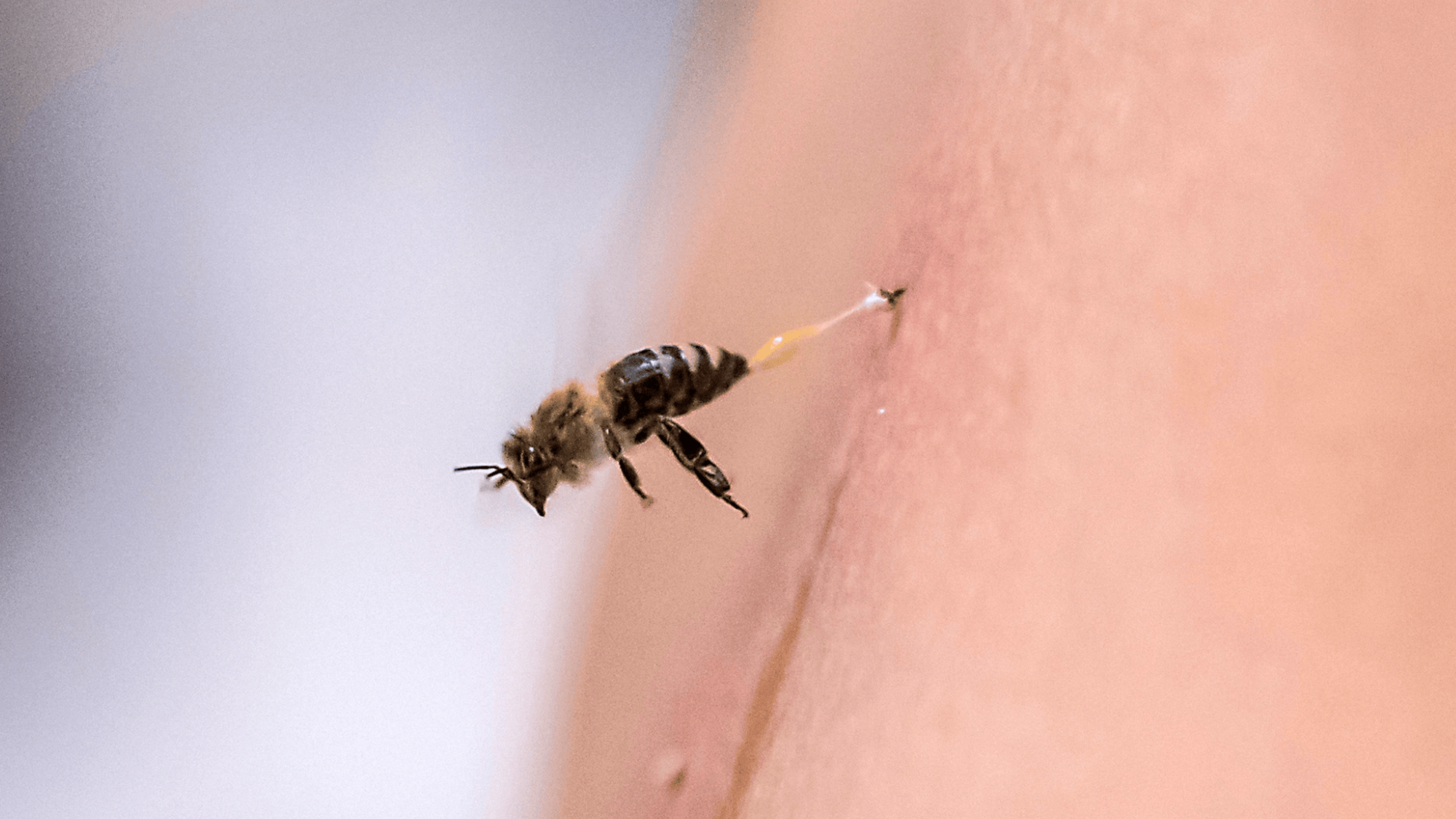
It’s one of nature’s seemingly magical tricks. A honey bee (Apis mellifera) stings a victim, and the stinger will still pump venom into a wound even after it has fully detached from the bee’s body. Thanks to some high-speed video, we may finally know the secrets behind this sting. 

A team in Australia found that the tiny 2 millimeter (or only 0.08 inch) stinger of a honey bee works like a double-piston micro-pump. It pumps in two different directions and can deliver a continuous flow of venom. The findings are described in a study published today in the journal PNAS.

“We’ve known since as early as 1910 that the venom sac of a honey bee stinger empties into a chamber with little pumping elements called valves, but until now we didn’t know exactly how they work,” Fiorella Ramirez-Esquivel, a study co-author and entomologist at Macquarie University, said in a statement. “If you’ve ever been stung by a bee, you’ll know it’s a very painful process, but now we’ve been able to identify all the working parts packed into the tiny stinger.”

In bees, autotomy is when a worker bee thrusts its stinger into a target and then leaves the stinger behind. The stinger then continues to penetrate into the target tissue and inject venom all on its own. 

To better understand how autotomy works, the team from Macquarie and the University of New South Wales had bees sting a clear gel that mimics human skin, while taking high-speed video. They saw that the tiny stinger itself contains several different components including one venom sac and a pumping chamber, muscles, and nerves. The stinger also has two sharp, pointed lancets. These lancets slide backwards and forwards on a system of rails (called the olistheter), similar to a reciprocating saw. These saw-like lancets are what pushes the stinger deeper into the skin and also pumps the venom.

Each of the two long lancets has a valve attached to it that sits inside of the pumping chamber. The team found that these valves change shape to form a seal during the downstroke. They then collapse during the upstroke, creating pressure for pumping while minimizing backflow when refilling.

“Finally, and perhaps most dramatically, as the valves meet in the middle of the stroke, they change shape again to push past each other,” said Ramirez-Esquivel. “This is a remarkable strategy to pump fluid since maintaining a seal is vital to effectively transmit pressure. The unique geometry of the valves is the key; they act as collapsible pistons and—by pumping in opposite directions—they’re able to deliver a continuous flow of venom.”

The team continued to explore the mechanics and flow of the stinger with microCT scans. They then used these scans to 3D print a small robot of the bulb chamber and lancets. The tiny bee-bot confirmed these key features of the pumping cycle.

“The double piston design adds complexity but it’s the key to the stinger being able to deliver venom continuously in a compact, autonomous unit,” said Dr Ramirez-Esquivel.

Understanding this mechanism could inspire designs for new micropumps to deliver medicine to human patients in a less invasive way.

The post Bee stingers work like saws to pump venom   appeared first on Popular Science.

  •  

“Geriatric” Butterfly Species Lives Almost Three Times Longer Than Its Relatives, Study Finds

In the dense, vibrant rainforests stretching across South and Central America, a remarkable evolutionary marvel is unfolding in the form of a tropical butterfly genus that defies traditional biological limits on lifespan. According to a groundbreaking study led by researchers at the University of Bristol, as published recently in Nature Communications, Heliconius butterflies have evolved a sophisticated anti-aging mechanism that dramatically extends their lifespans compared to their close relatives. This discovery not only challenges existing paradigms surrounding insect longevity but also opens a new frontier in understanding the molecular and physiological bases of aging in natural populations.

Heliconius butterflies, widely distributed throughout neotropical ecosystems, have long intrigued biologists due to their exceptional longevity. Unlike most butterfly species, which complete their adult phase within a few weeks, Heliconius butterflies exhibit lifespans that soar to nearly a full year, with median lifespans averaging around three times those of closely related species. Specifically, Heliconius hewitsoni can live up to 348 days in the wild, a staggering contrast to the mere 14 days observed in its relative Dione juno. This magnified difference—in terms of maximum lifespan—exceeds a 25-fold disparity, presenting a natural laboratory to investigate the factors that contribute to longevity.

Delving into the evolutionary dynamics behind this phenomenon, the research team employed an integrative methodology that combined field observations, controlled insectary experiments, and mark-release-recapture studies across multiple Heliconiini tribe species. This multifaceted approach allowed the scientists to quantify not only lifespan but also the patterns of physiological aging, including metrics such as physical performance decline via grip-strength assessments. Intriguingly, in some Heliconius species like Heliconius hecale, the expected decline in physical capabilities that accompanies aging in most organisms was virtually absent, underscoring an evolved resistance to senescence.

The research highlights a unique ecological adaptation: adult pollen feeding. Heliconius butterflies are one of the few lepidopteran groups capable of digesting pollen throughout their adult lives, contrasting with the nectar-reliant feeding habits of most butterflies. This dietary specialization appears intricately linked to their extended healthspan and longevity. Pollen is a rich source of proteins and amino acids, which are hypothesized to support enhanced somatic maintenance and cellular repair mechanisms, potentially underpinning slower rates of aging and sustained physiological function.

To rigorously test the relationship between diet and aging, the study contrasted Heliconius hecale with its non-pollen-feeding relative Dryas iulia under controlled conditions that varied access to pollen. Remarkably, while Heliconius hecale individuals sustained their muscular function and body mass longer and evaded typical age-related deterioration, even those deprived of pollen retained a longevity advantage relative to Dryas. This finding implies that while pollen feeding contributes nutritionally, intrinsic genetic or epigenetic adaptations also play a critical role in extending lifespan, suggesting a complex interplay between evolved traits and ecological factors.

From an evolutionary biology perspective, the divergence in longevity and aging rates within the Heliconiini tribe exemplifies natural selection’s power in shaping life-history traits in response to ecological niches and resource utilization. The accelerated lifespan and delayed senescence in Heliconius suggest that adaptive shifts—such as adult pollen feeding—can drive profound modifications in physiology and perhaps modulate molecular pathways linked to aging, including oxidative stress resistance, protein homeostasis, and metabolic regulation.

The implications of this research extend beyond the entomological sphere, offering a promising model for the biology of aging and lifespan extension. Insects have already revealed fundamental insights into genetic regulation and cellular processes, and the Heliconius genus introduces a new dimension by combining extraordinary longevity with ecological and evolutionary relevance. Decoding the molecular mechanisms enabling Heliconius butterflies to circumvent typical aging processes could illuminate targets for biomedical research into human healthspan and age-related diseases.

Jessica Foley, the study’s lead author, emphasized the significance of these findings within the broader context of longevity research. Highlighting the vast interspecies disparity in lifespan—from ephemeral mayflies surviving mere days to ant and termite castes living decades—she notes that Heliconius butterflies offer a naturally evolved system to decode the underlying biology that governs such diversity. Their relatively recent evolutionary divergence from short-lived relatives strengthens the value of this natural comparative experiment.

Furthermore, the study underscores the utility of integrating ecological, physiological, and evolutionary data to unravel complex biological phenomena. By blending fieldwork with laboratory precision, the researchers were able to identify robust patterns of aging and performance that are rarely accessible in wild insect populations. This holistic approach models a pathway forward for future studies aimed at dissecting the multifactorial influences on longevity and healthspan.

In conclusion, the revelation that Heliconius butterflies not only live exceptionally long lives but also maintain functional integrity well into old age represents a profound breakthrough in understanding natural aging mechanisms. Their case underscores how dietary innovations and evolutionary pressures can collectively sculpt lifespan, challenging the limits traditionally imposed by physiology. As research progresses, the Heliconius genus is poised to emerge as a vital model system, shedding light on the deep evolutionary roots of ageing and longevity and potentially inspiring novel therapeutic approaches for age-associated conditions in humans.


Subject of Research: Animals

Article Title: Evolution of increased longevity and slowed ageing in a genus of tropical butterfly

News Publication Date: 16-Jun-2026

Web References: 10.1038/s41467-026-73635-7

Image Credits: Louise Bestea

Keywords: Insects, Lepidoptera, Rainforests, Tropical forests, Evolutionary biology

  •  

Ancient Europeans Ate Some Pretty Gross Things, but The Ickiest One Was Probably by Accident


An analysis of dental tartar containing traces of human diets dating back over 33,000 years has revealed that ancient Europeans and many early Asian populations likely only ate insects by accident, perhaps as larvae in the carcasses of dead animals.

Conversely, the new study found that intentional insect consumption, called entomophagy, was more common in tropical regions and among Neanderthal populations.

Although the difference has some cultural and religious roots, the team found evidence that the abundance of insects in the tropics and the decreasing ability of humans migrating away from the tropics to digest insects likely led to the modern-day separation over thousands of years.

The Institute of Evolutionary Biology (IBE), a joint center of the Spanish National Research Council (CSIC) and Pompeu Fabra University (UPF), research team behind the new findings suggests their research could help explain why some modern populations still consume insects as food while other parts of the world consider it gross or taboo, especially given the increasing food demands of a rising world population.

Insect Consumption in Ancient Northern Europeans Likely Accidental

According to a statement announcing the new research, hundreds of millions of people currently include insects in their diet. However, they also note that most of the Western world continues to “show an aversion” to including any of the more than 1,611 insect species designated as edible by the Food and Agriculture Organization of the United Nations (FAO) in theirs. Although some theories suggest the difference is almost purely cultural, the team concedes that “its origin remains unknown.”

To explore the origins of human entomophagy, the IBE analyzed 745 samples of ancient human dental tartar dating back to 33,000 before present. According to the team’s results published in the journal Science Advances, dental tartar (sometimes called dental ‘calculus’) is a critical archaeological tool because it preserves the DNA of the species these human ancestors consumed during their lifetimes.

Although the analysis found evidence for entomophagy amongst virtually all ancient populations sampled in the study, the levels varied dramatically. Notably, the evidence suggested that ancient humans in northern Eurasia did not routinely eat insects in measurable quantities. Instead, any consumption was likely incidental, including consumption of insect larvae in rotting food.

Curious whether the lack of entomophagy in ancient European and Central and Northern Asian populations was purely cultural or whether genetic and geographic factors were involved, the team studied human genes involved in chitin digestion. Chitin, which can be found in some marine animal shells, is also part of an insect’s hard exoskeleton.

According to the study authors, the analysis revealed that the ‘chitinase’ genes in North Eurasian human populations “carry mutations that confer a reduced capacity to digest insect exoskeletons.” Their analysis revealed that this reduced capacity to digest insect exoskeletons has persisted in the genomes of modern Eurasian populations “for the last 9,000 years,” which would coincide with the widely accepted date for the origin of agriculture.

Pablo Librado, study leader and a principal investigator at the IBE, said the “scarce presence of insects in the diet of northern Eurasians” suggests that the cause may not lie solely in more recent cultural factors but also in ecological and evolutionary components dating back several millennia. 

Neanderthals and Denisovans Probably Ate Insect Larvae in Rotting Meat

When the team compared data from ancient human tartar with that of ancient Neanderthals, they found that Neanderthals engaged in much higher levels of entomophagy than humans living in the same regions. According to the study authors, Neanderthal insect consumption levels were similar to those found in western chimpanzee populations, which the researchers note “rely on entomophagy to supplement their diet on the savanna, especially during periods of drought.”

Further analysis of the extracted insect DNA showed that the group most commonly consumed by the Neanderthal specimens included flies and mosquitoes. Although the team only analyzed the DNA, they noted that a recent hypothesis suggests Neanderthals ate carcasses laden with mosquito larvae.

“The abundance of mosquito remains reinforces the possibility that the carcasses of their prey were kept in ponds and marshy areas, where mosquitoes lay their eggs,” the team’s statement explained.

An analysis of the Neanderthal DNA and the DNA from the lone Denisovan study subject revealed that both ancient hominid populations could digest chitin. This result reinforced the genetic basis for increased or reduced entomophagy beyond cultural factors. 

Humans Ate Fewer Bugs When They Moved Away from Tropical Regions

One geographic component identified by the chitinase DNA analysis showed higher levels of digestive enzyme expression among humans living in or near the tropics. However, the expression of these enzymes gradually decreased as populations moved away from tropical regions. The team said this variation, which has been maintained for at least the last 9,000 years, “reflects the abandonment of entomophagy in European populations.”

Manuel Piñero, a predoctoral researcher at the IBE and first author of the study, noted that large numbers of insects must be consumed to offset the “high caloric cost” of collecting them, which might explain the higher levels of entomophagy in this region.

“In the tropics, there is a greater availability of social insects, such as termites and locusts,”  Piñero  explained, adding that the biomass and diversity of tropical edible insects enable “sustainable exploitation throughout the year.” The researcher also noted that insect consumption “adds to pest control.”

When discussing the implications of their findings, Librado highlighted the DNA and geographic factors the IBE team uncovered.

“Beyond cultural or religious factors, our results suggest that the reduced availability of insects in non-tropical areas may have been a key factor in the abandonment of entomophagy, leading to a reduced capacity to digest insect exoskeletons,” the researcher explained.

Christopher Plain is a Science Fiction and Fantasy novelist and Head Science Writer at The Debrief. Follow and connect with him on X, learn about his books at plainfiction.com, or email him directly at christopher@thedebrief.org.

  •  

PHOTODOC: A Real Bug’s Life – in Australia

National Geographic’s series ‘A Real Bug’s Life’ returns on January 15th to Disney+ for a second season, this time including an episode dedicated to our unique Australian insect life. The production team shared...

The post PHOTODOC: A Real Bug’s Life – in Australia first appeared on Science Illustrated.

  •  
❌