❌

Reading view

In ground tests this year, Boeing engineers got two separately created pairs of entangled photons to hand their entanglement to two photons that had never met, all on a 15-kilogram payload, and the open question now is whether that fragile trick survives the handful of watts and violent thermal swings of orbit

Take two pairs of entangled photons that were generated separately and never interacted. Perform a single joint measurement on one photon from each pair, and the two leftover photons — strangers until that instant — come out entangled with each other. Boeing has now pulled off that maneuver, called entanglement swapping, on a compact payload built to survive a rocket launch rather than sit on a temperature-controlled optical bench.

The company announced on June 18 that its Q4S satellite system demonstrated high-fidelity entanglement swapping during ground testing, then passed environmental qualification and moved into final spacecraft integration ahead of a planned 2027 launch and a one-year orbital demonstration. According to SpaceNews, Boeing ran the swapping tests for more than a year before beginning integration. The question the mission exists to answer is not whether the physics works — it does — but whether it survives the constraints of a spacecraft: power budgets measured in watts, thermal swings of hundreds of degrees, and vibration loads that would shatter a laboratory optical bench.

What Entanglement Swapping actually does

Entanglement swapping is the protocol that makes a real quantum network possible, and the mechanics are worth slowing down on. Two pairs of entangled photons are generated independently. A joint measurement is then performed on one photon from each pair, and the remaining two photons — which never interacted — become entangled with each other.

The effect is, in essence, quantum teleportation of entanglement itself. Without it, the maximum distance over which entangled photons can be reliably shared is limited by fiber loss and atmospheric attenuation, capping any terrestrial quantum link at a few hundred kilometers. With swapping, those links can be chained, node to node, into something that spans a continent.

The theoretical foundation traces back decades. A foundational Nature Photonics review identified photonic systems as a natural carrier for quantum information, owing to their high transmission speed and low noise. Photons do not decohere easily in transit. They simply get lost.

That loss is the engineering problem. Repeater architectures built on entanglement swapping are the proposed solution, with a review of quantum communication in Nature Photonics framing such repeaters as the central architectural choice for scaling quantum networks beyond metropolitan distances.

Why space changes the calculus

Fiber attenuates photons exponentially with distance. Vacuum does not. A satellite in low Earth orbit looking down through the atmosphere only has to push photons through roughly 10 kilometers of dense air at each end of the link — a far gentler optical path than 1,000 kilometers of glass.

This is the geometric argument that has driven nearly every serious proposal for global quantum networking toward space. China’s Micius satellite demonstrated satellite-to-ground quantum key distribution in 2017. Boeing’s Q4S goes a step further by aiming to test the swapping protocol itself in orbit, which is what a true quantum repeater node would need to perform.

According to Boeing, the Q4S mission is intended to test quantum networking protocols under real space-mission constraints, moving beyond laboratory demonstrations.

The qualification matters. Laboratory demonstrations of entanglement swapping have existed for years. None have flown.

The engineering challenge of flight hardware

Single-photon detectors typically need cryogenic cooling. Entangled photon sources require precise temperature control and vibration isolation. Optical alignment tolerances are measured in micrometers. Compressing all of that onto a spacecraft bus is the kind of problem that consumes engineering careers — and Boeing’s partner HRL Laboratories has described fitting the core capability into a roughly briefcase-sized, 15-kilogram space-grade subassembly.

Boeing’s earlier work points toward how the company built toward this moment. NASA, the University of Illinois and Boeing had already shown that a payload in orbit could generate pairs of photons that remained entangled in microgravity. That experiment validated the source. Q4S now has to validate the network primitive built on top of it.

The broader race for quantum infrastructure

Boeing is moving in a field that is starting to attract serious commercial interest beyond research institutions. Cisco has publicly identified quantum networking as a strategic direction for its long-term roadmap, signaling that the traditional networking industry now treats this as more than a physics curiosity.

Recent ground-based progress has accelerated the timeline. A team at Heriot-Watt University reported teleporting entanglement across two linked quantum networks in late 2025, joining two smaller networks into a single reconfigurable eight-user system and showing that a network-of-networks architecture works at lab scale.

The geopolitical stakes are difficult to ignore. China has invested heavily in quantum communication infrastructure. The European Union has funded a quantum communication initiative aimed at deploying a secure network across member states. The United States has been slower to commit at the federal level, leaving room for companies like Boeing to define what American space-based quantum capability looks like.

What Q4S will actually prove

The on-orbit mission has a narrow scientific goal: demonstrate that the entanglement-swapping protocol Boeing has tested on the ground performs at acceptable fidelity when subjected to launch, orbital thermal cycling, radiation exposure and the mechanical realities of a satellite bus.

Fidelity is the figure of merit. Quantum protocols degrade gracefully — entanglement is not binary — and the question is whether enough quality survives the trip to support useful applications. Boeing has said it will share technical results for peer review, a notable choice for a payload funded entirely by company research-and-development money rather than a government contract that would typically mandate disclosure.

That choice signals where Boeing thinks the value lies. Q4S is not a product. It is a credentialing exercise — a way to show that the company can build flight-qualified quantum hardware in a field where the customer base of the future likely includes national security agencies, financial institutions, and whoever ends up operating the backbone of any quantum internet.

quantum satellite payload

The 2027 context

The Q4S launch will arrive in a year already crowded with significant space milestones. Commercial cargo programs are maturing — China has shortlisted four commercial launch providers for its low-cost Qingzhou cargo spacecraft, whose first full-scale mission is tentatively scheduled for January 2027. Artemis hardware is moving toward crewed lunar flight. Multiple commercial space stations are targeting initial elements.

Against that backdrop, a roughly briefcase-sized payload doing physics experiments may sound modest. The implications are not. If quantum networking matures into infrastructure, it would reshape the security architecture of global communications, enable distributed quantum computing across continents, and provide timing references precise enough to redefine geodesy and navigation.

What separates a footnote from a foundation comes down to the orbital numbers: the fidelity the swapping protocol holds in space against its ground-test baseline, whether the payload survives the full mission rather than failing on a single component, and whether Boeing follows Q4S with a constellation or a partnership once governments decide they need flight-qualified quantum nodes. The company has not said what comes after. Funding the work itself and publishing the results suggests it is positioning for the contracts that follow.

For now, the hardware sits in a clean room, two photon sources and a measurement stage compressed into something that weighs about as much as a large suitcase, waiting for a ride to orbit. The photons it will entangle up there have never met and never will, in any ordinary sense. Whether that fragile connection holds through launch vibration, vacuum, and the long thermal day-night cycle of low Earth orbit is the one thing a workbench can never tell you — and the only thing the 2027 flight is built to find out.

The post In ground tests this year, Boeing engineers got two separately created pairs of entangled photons to hand their entanglement to two photons that had never met, all on a 15-kilogram payload, and the open question now is whether that fragile trick survives the handful of watts and violent thermal swings of orbit appeared first on Space Daily.

  •  

When JAXA engineers needed a self-deploying transformation mechanism small enough to survive a lunar landing inside a metal sphere, they called the Japanese toy company behind the original 1984 Transformers line — and the robot that emerged, eight centimeters across, spent 100 minutes rolling across the Moon in January 2024 and quietly rewrote what a machine the size of a tennis ball can do on another world

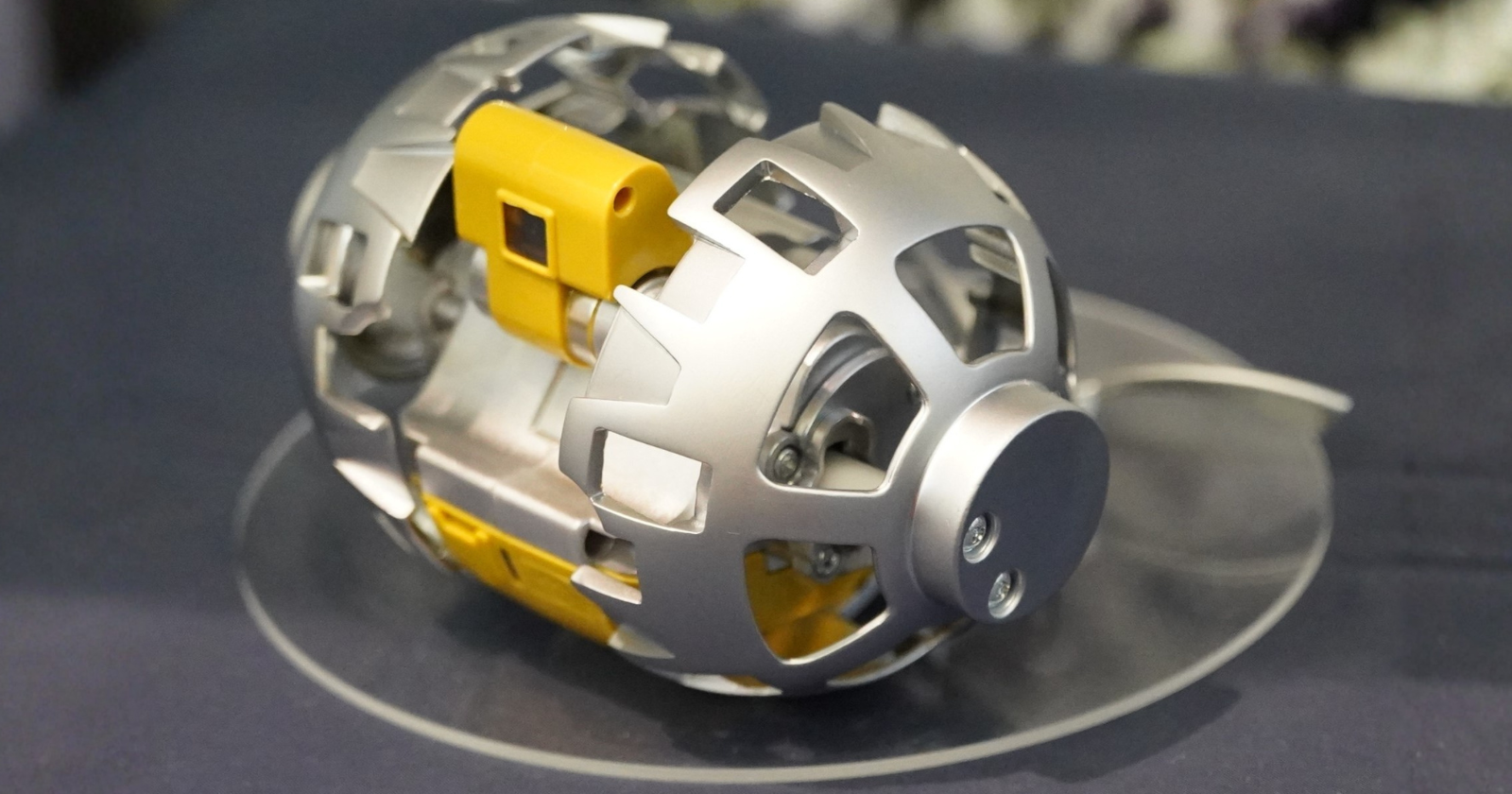
When JAXA engineers needed a self-deploying transformation mechanism small enough to survive the jolt of a lunar landing inside a metal sphere, they called Takara Tomy — the Japanese toy company behind the original 1984 Transformers line. The robot that came out of that collaboration, called SORA-Q, is eight centimeters across, weighs 250 grams, and spent roughly 100 minutes rolling across the Moon in January 2024. The full results of that mission, published in Science Robotics, suggest the future of planetary exploration may belong to swarms of tiny, cheap, autonomous machines working alongside larger spacecraft.

SORA-Q hitched a ride to the lunar surface aboard Japan’s Smart Lander for Investigating Moon (SLIM), which touched down on January 19, 2024, making Japan the fifth nation ever to soft-land on the Moon. What followed was an unusual experiment in miniaturization, autonomy, and — improbably — toy engineering.

A toy company’s quiet trip to deep space

SORA-Q is 8 centimeters across — about three inches — and weighs 250 grams. It was built by JAXA in partnership with Sony Group, Doshisha University in Kyoto, and Takara Tomy, the Japanese toy maker that produced the original 1984 Transformers line. The collaboration was not a marketing stunt. Takara Tomy’s decades of work on transforming mechanical toys gave the team a head start on the central engineering problem: how to fit a working rover inside a sphere small enough to survive the violent jolt of a lunar landing, then have it unfold itself into a functional vehicle without human help.

The result is a probe that arrived on the Moon as a metal ball, then split open into two hemispheres that act as wheels on either side of a central body, with a deployable camera mast and a small tail acting as a stabilizer. SORA-Q can move in two distinct gaits — a butterfly mode where both halves rotate together, and a crawl mode where they rotate independently to deal with inclines and rough terrain.

The name itself is a piece of marketing in miniature. Sora means universe in Japanese. The Q stands for question, quest, the Japanese word kyu (sphere), and the robot’s silhouette, which resembles the letter Q in the alphabet.

What actually happened on the lunar surface

The company that built the original Transformers helped design a lunar rover the size of a tennis ball — and its 100 minutes on the Moon quietly rewrote what small planetary robots can do
Photo by Pixabay on Pexels

SLIM landed near Shioli, a 270-meter-wide crater inside the larger 98-kilometer-wide Cyrillus crater, in the lunar region called Mare Nectaris. The landing was precise — JAXA had nicknamed SLIM the Moon Sniper for a reason — but not clean. A thruster failure during descent left the lander resting nose-down on the surface, with its solar panels facing the wrong way.

That awkward posture is how SORA-Q earned its keep. After being ejected just before touchdown, the little robot transformed, rolled clear, and used its onboard cameras to photograph SLIM in its compromised orientation. Those images helped JAXA engineers diagnose what had gone wrong with the lander and plan a power recovery once the sun angle shifted.

SORA-Q itself ran for about 100 minutes — 20 to 30 minutes short of its expected lifespan — before communications cut out, most likely because the battery on its relay partner, LEV-1, ran down. During that window it captured 12 high-resolution images of the surrounding terrain. Some of the data was lost in transmission, but enough came back to validate the core engineering claims.

Why two robots, not one

One of the more interesting findings concerns how the two small rovers worked together. SORA-Q did not talk to Earth directly. Instead, it relayed its data through LEV-1, a slightly larger hopping robot also deployed by SLIM. LEV-1 then beamed everything home.

This is a meaningful architectural choice. It means SORA-Q could carry less radio hardware, less power, and less mass, because it offloaded the hardest part of communication — punching a signal across roughly 240,000 miles of space — to a partner. The trade-off is dependence: when LEV-1 went quiet, SORA-Q effectively went deaf.

The mission showed that such platforms can serve as independent explorers, capable of accessing environments beyond the reach of a primary large spacecraft. Small rovers are not replacements for the Perseverance-class vehicles NASA sends to Mars. They are scouts, helpers, and pinch-hitters for the places larger machines cannot fit.

Why miniaturization matters now

The next decade of lunar exploration is going to involve a lot of cramped, dangerous places. NASA’s Artemis program is targeting the lunar south pole, where Shackleton Crater alone is 21 kilometers wide and 4.2 kilometers deep. Permanently shadowed craters there may hold water ice — the single most valuable resource for any sustained human presence on the Moon — but they are exactly the kind of terrain where a billion-dollar rover cannot safely go.

A swarm of expendable, transforming probes the size of a grapefruit looks very different in that context. They are cheap enough to lose. They are small enough to drop into a vent or roll down a crater wall. And because they are autonomous — SORA-Q used onboard image processing to avoid obstacles without any input from mission control — they can operate in places where communication delays or terrain blockage make remote piloting impractical.

The communications problem is itself a major focus of agency work. NASA-funded efforts are underway to deploy 4G and 5G cellular networks on the lunar surface, including a Nokia Bell Labs experiment to link a lander to a rover. If those networks come online, small rovers like SORA-Q gain something they currently lack: a persistent, high-bandwidth pipe back to Earth that does not depend on a single fragile relay partner running out of battery.

The buddy-cop model of planetary exploration

SORA-Q makes the case for a hybrid architecture that already has precedent. NASA’s Perseverance rover on Mars carried the Ingenuity helicopter, which operated for nearly three years and completed 72 flights before rotor blade damage grounded it in January 2024. That pairing — a heavy, instrument-rich primary vehicle plus a light, expendable scout — has become a template.

SORA-Q extends the template to the ground. A future mission could land a conventional rover and release a handful of small transforming probes to investigate specific features in parallel: a skylight into a lava tube, a boulder field, the floor of a permanently shadowed crater. Some of those probes would fail. Some would lose contact. Enough would return data to make the mission worth it.

This is also how Japan has tended to operate in deep space. JAXA’s Hayabusa missions to asteroids have repeatedly used small, dispersed landers — including the MINERVA hoppers and the European MASCOT probe — as supplements to the main spacecraft. The agency’s appetite for these smaller, riskier, technically inventive platforms shows up across its program, including in the surprises that emerged when Hayabusa2’s asteroid target turned out smaller and faster than expected.

What a toy company contributed that an aerospace prime could not

There is something worth pausing on in the SORA-Q origin story. JAXA did not approach Takara Tomy because it ran out of aerospace contractors. It approached them because the specific engineering problem — a robust, lightweight, self-deploying transformation mechanism — is something the toy industry has spent forty years solving on consumer budgets.

Toys have to be cheap, durable, and assembled at scale. They have to work the first time, every time, in the hands of children. The transforming mechanisms inside a Transformer figure are a kind of compressed industrial knowledge about hinges, joints, and cam-driven motion that aerospace firms simply do not have at the same level of refinement.

A toy version of SORA-Q is available for purchase in Japan. It rolls around a living room and takes pictures of cats. Its lunar twin, built with the same core mechanism, is now part of the ongoing story of planetary exploration.

The dividing line between a toy and a spacecraft, it turns out, is thinner than most people assume — and Japan has spent the last decade quietly figuring out how to walk along it.

The post When JAXA engineers needed a self-deploying transformation mechanism small enough to survive a lunar landing inside a metal sphere, they called the Japanese toy company behind the original 1984 Transformers line — and the robot that emerged, eight centimeters across, spent 100 minutes rolling across the Moon in January 2024 and quietly rewrote what a machine the size of a tennis ball can do on another world appeared first on Space Daily.

  •  

At a 140,000-square-foot plant in Long Beach that the aerospace industry calls Space Beach, a former Raytheon executive is using agentic AI to turn out defense electronics in weeks instead of years — not to replace his engineers, but because the Pentagon wants far more hardware than the shrinking pool of engineers can build

Defense contractors are quietly deploying agentic AI across their engineering floors — and the reason has nothing to do with the layoffs everyone keeps predicting in every other industry

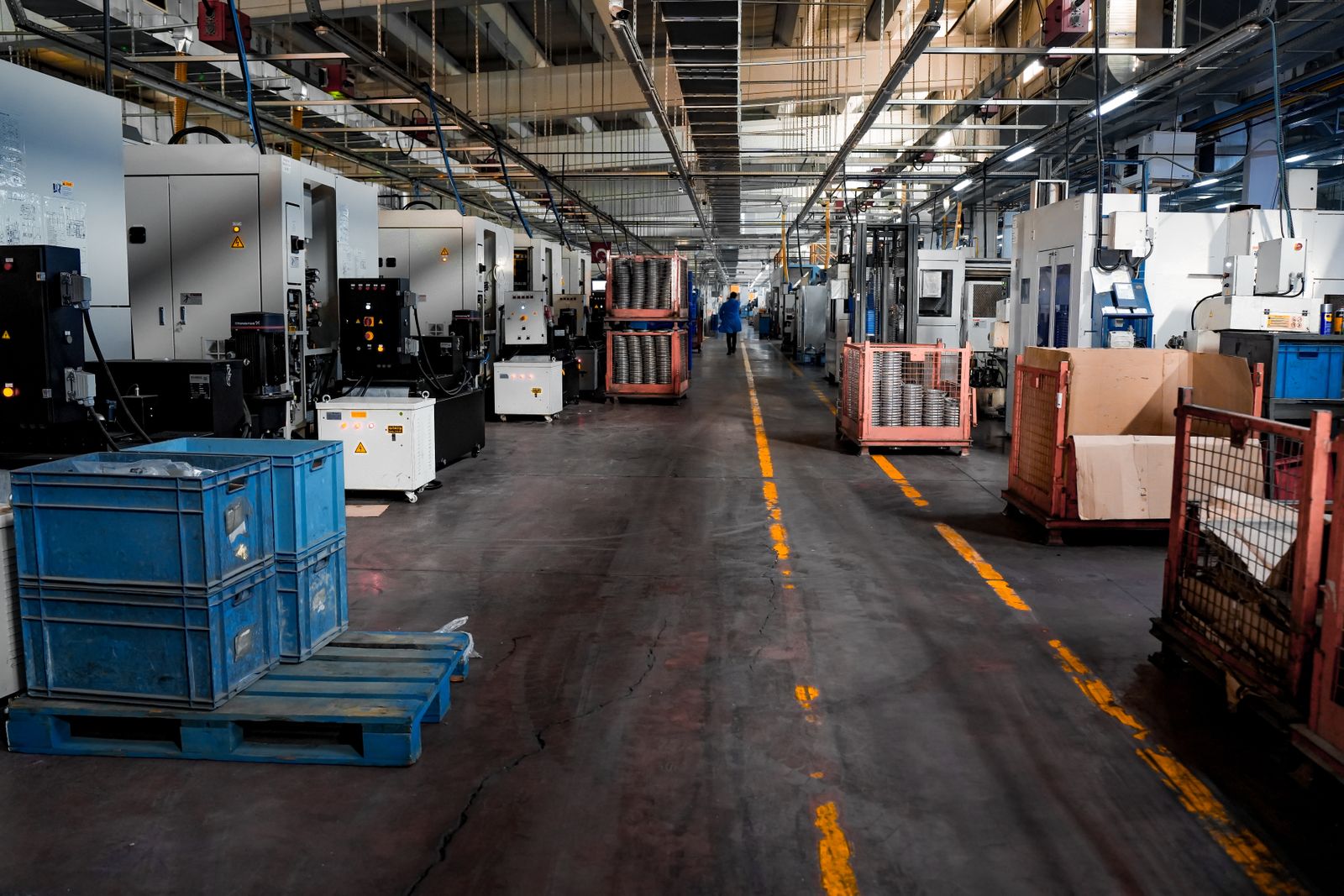
Inside a 140,000-square-foot building in Long Beach that the local aerospace crowd calls Space Beach, circuit boards for spacecraft and defense systems are now coming off the line in a matter of weeks — the same boards that used to take years. The people who run the plant are not claiming the engineers suddenly got faster. They are saying something stranger: there are no longer enough engineers to build the hardware the United States has ordered, and a software agent is now doing the parts a person used to do.

The facility belongs to Voyager Technologies, a Denver-based aerospace and defense company that opened the site on March 12, 2026. Its purpose is narrow and blunt — compress the timeline between a defense-electronics design and a working board, using agentic artificial intelligence to do it.

That single fact cuts against the loudest story being told about AI everywhere else. In most industries the technology arrives as a way to trim headcount. In aerospace and defense it is arriving because the headcount cannot be filled.

The boards that used to take years

Voyager’s Long Beach center runs research, development, and manufacturing across advanced electronics, mission hardware, propulsion, and autonomy systems, SpaceNews reported from the March opening. It is the company’s second major buildout in three months, following the 150,000-square-foot Voyager American Defense Complex that opened in Pueblo, Colorado, in January with a focus on missile defense and tactical munitions.

The man running the defense side is Matt Magaña, Voyager’s president for space, defense, and national security. He grew up in Long Beach and spent close to two decades as a Raytheon executive before joining Voyager in 2024. He describes the old way of building mission electronics in plain terms: it takes years and years, and that is the bottleneck.

The plant’s pitch is that agentic AI can collapse that. Magaña has described printing circuit boards within weeks and months rather than years, using AI to compress the journey from a design to a board headed for orbit. “We’ve got to cut that down to have the speed of relevance,” he told Aviation Week.

Speed of relevance is a military phrase, and it is doing real work here. Voyager is building alongside other Space Beach companies, including Anduril Industries and True Anomaly, in a stretch of Southern California where firms have clustered to stay near the engineering talent and suppliers left over from the region’s older aerospace era.

The robots-on-the-factory-floor story is decades old. What is new at Space Beach is the robot in the engineering office — the one drafting the design, not bolting the part.

Why there aren’t enough people

The shortage is not anecdotal. Clay Mowry, chief executive of the American Institute of Aeronautics and Astronautics, told an audience at the ASCEND conference in Washington that some companies are trying to lift production “by a factor of four,” according to SpaceNews. Firms in the missile-interceptor business, he said, have to scale fast, and there are not enough trained people to put in the jobs — so they are scrambling.

The demand is real and specific. The companies cannot bring in enough trained engineers, software developers, and specialized manufacturing staff to meet the contracts already signed, let alone the expansion the Pentagon now wants. They are all chasing the same small pool of workers fluent in autonomy, machine learning, and systems integration, and that pool is not growing fast enough to match the order books.

The workforce is also aging out. About one-third of aerospace and defense manufacturing and engineering roles are held by workers 55 or older, the AIAA’s Aerospace America reported, citing Deloitte and McKinsey analyses, and the sector’s retirement and attrition rate runs nearly 10 percent above the national industry average. One McKinsey estimate put the cost of that talent drain at up to $330 million for a single mid-sized company.

So the experienced people are leaving faster than they can be replaced, the work is harder to learn than almost any other engineering discipline, and the orders keep climbing. The arithmetic does not close.

A shrinking pipeline

aerospace workforce engineering

The squeeze sits inside a broader contraction of the technical labor supply. The federal workforce shrank by roughly 220,000 people through November 2025, about a 10 percent cut, according to data analyzed by The New York Times from the Office of Personnel Management — the steepest reduction in decades. Many of those losses landed at civilian agencies that historically fed engineers into defense and aerospace through internships, fellowships, and research partnerships.

Money has been thrown at the gap. Congress added nearly $34 billion above the president’s fiscal 2026 defense request for more than 1,000 research and procurement programs, Roll Call reported, drawing on a database from Taxpayers for Common Sense. The watchdog group has counted more than $134 billion in such program increases since fiscal 2022.

But an appropriation does not produce a qualified engineer, and it does not shorten a test cycle. That is the wall the industry keeps hitting, and it is why a Denver company is standing up a building in Long Beach to let software do the work that hiring cannot fill.

What agentic AI actually does in the engineering office

Agentic AI is not the rule-based automation aerospace plants have used for forty years. Traditional automation handles one narrow, repeating task: a robotic arm welding a seam, a machine running a tolerance check. The agentic version is built to work across the whole production cycle — design iteration, compliance paperwork, supply-chain coordination, production planning — treating them as one connected job rather than a chain of handoffs.

On the floor, that changes who the engineer is. A systems engineer who once shepherded a single program can now oversee several, with the agent drafting the documentation, running the early trade studies, and grinding through the routine compliance work that used to eat hours a day. The engineer becomes a reviewer and a decision-maker instead of a producer of paperwork.

The people selling it are careful to say the humans do not disappear. Magaña has framed the goal as accelerating the cycle time, not removing the engineer from it. The agent is the junior staff that cannot be hired.

The space hardware itself is what makes this hard. A board bound for orbit has to survive launch loads, thermal swings of hundreds of degrees, and a radiation environment that corrupts ordinary electronics. Qualifying that hardware still routinely takes years — a timeline that turns into a problem when commercial operators want a satellite constellation fielded in months and defense customers want resilient systems in place before an adversary closes a gap.

This is where the agent is pointed. It can run thousands of simulation variations in parallel, assemble the qualification documentation, and flag design choices that historically surfaced only after an expensive physical test had already failed. The compression is not in the welding. It is in the thinking that used to happen one engineer at a time.

The accountability problem nobody has solved

The story the plant tells is coherent, and it is also unfinished. When a human engineer signs off on a missile-guidance design, there is a chain of accountability running back through years of training, licensure, and named responsibility. When an agent drafts the compliance package or proposes a design change, that chain gets harder to trace.

The qualification regimes that govern space and defense hardware were built around human reviewers checking human work. Adapting them to artifacts an AI generated — without losing the rigor that keeps an interceptor intercepting and a satellite operating — is a problem the sector has not solved. It is regulatory rather than technical, and it sits in the space between agentic AI accelerating a cycle and quietly defining it.

For now, the shortage is making the decision. The contracts are signed, the deadlines are fixed, and the engineers cannot be hired at the rate the order books demand, so the experiment is running whether or not the verification questions have answers.

Back in Long Beach, the boards keep coming off the line in weeks. The building is new, the talent it was meant to draw on is thinner than it has been in a generation, and the agent in the engineering office is doing the trade studies that a younger engineer, in another decade, would have done by hand. Whether those boards hold up the way years of human review once guaranteed will not be settled in a conference hall. It will be settled in orbit, and on the ranges, on the first programs fast enough to get there.

The post At a 140,000-square-foot plant in Long Beach that the aerospace industry calls Space Beach, a former Raytheon executive is using agentic AI to turn out defense electronics in weeks instead of years — not to replace his engineers, but because the Pentagon wants far more hardware than the shrinking pool of engineers can build appeared first on Space Daily.

  •  
❌