The written word is one of humanity's most important information technologies. Without it, mathematical and scientific discoveries would be lost to history. But it can also lock ideas in place long after they've stopped making sense.
So does writing speed up cultural change or slow it down?
Russell Gray, a professor in the Department of Linguistic and Cultural Evolution at the Max Planck Institute for Evolutionary Anthropology in Germany, heads a research project investigating how writing affects the way languages change. His team uses methods borrowed from evolutionary biology to trace languages through family trees — similar to the way biologists trace species.
Language is one element of culture that researchers can measure to determine whether writing speeds up or slows down cultural change.
"The obvious answer," Gray said, is that writing slows culture down because writing "is all codified and specified and people get trained in it." Gray doesn’t think the obvious answer is necessarily the right one. But other researchers agree that writing can lock in ways of thinking.
"Writing can lead to what learning psychologists sometimes call 'canalization,'" Charles Perreault, an associate professor in the School of Human Evolution and Social Change at Arizona State University, told Live Science in an email. "It can narrow the range of ways people think about a problem. When a rule, method, or story is written down, people may come to see it as the correct version … and may not even consider that a better or different way could exist."
Religious texts and legal codes are good examples. In both cases, the interpretation of rules written hundreds — or even thousands — of years ago shapes the way things are done, long after the circumstances that produced them have changed.
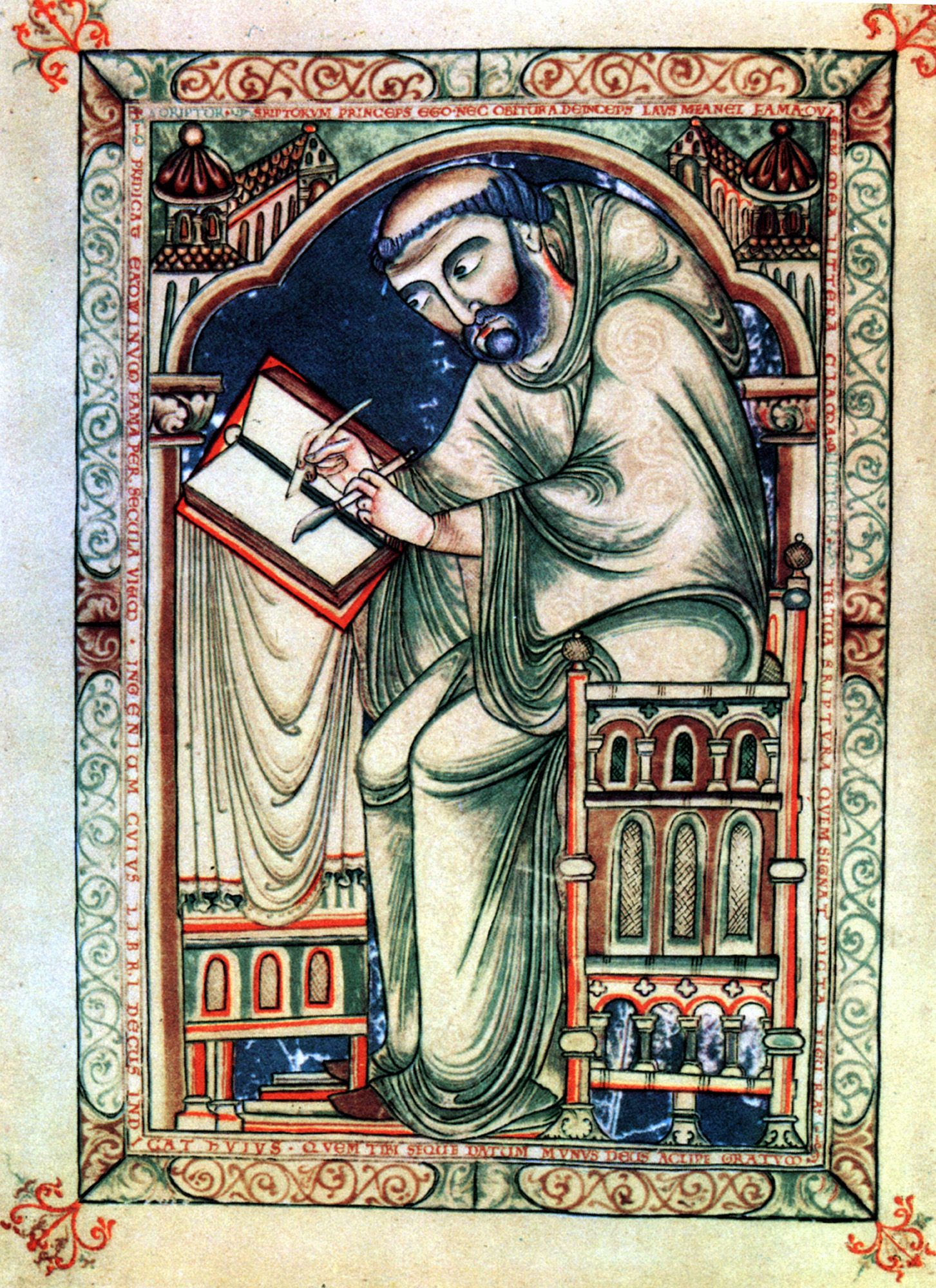
Eadwine the Scribe, from a 12th Century psalter written at Christ Church, Canterbury by Eadwine. For much of the Middle Ages and before the invention of the printing press, transcriptions written by monks were the primary cultural bridge preserving early Christian writings, and classic Greek and Latin texts, for posterity. (Image credit: UniversalImagesGroup via Getty Images)
This idea shows up in artistic expression, too: A 2017 analysis by ethnomusicologist Patrick Savage looked at more than 4,000 British-American ballads from the 16th through 20th centuries and found that written melodies changed less than those shared through oral tradition.
But there are also ways that writing may speed up cultural change.
"Before writing, much cultural knowledge had to be stored in people's brains," Perreault said. "That has obvious limits."
People forget things they don't study routinely, and when people die, their knowledge often dies with them. Because writing moves information storage beyond the human brain, it can reduce those losses, Perreault said.
"If writing prevents knowledge from being lost, and if it also helps information spread through a society, as with the printing press, then it could accelerate the ratchet effect of cumulative cultural evolution," Perreault said. "But this remains, to some extent, a hypothesis."
By the book
One reason the question of whether written language speeds or slows cultural evolution is that writing is hard to separate from everything that comes with it.
Writing has been separately invented only around four times in human history — although "some people argue there's a fifth in India," Gray said — which means nearly every writing system on Earth descends from that handful. Those systems spread through contact; trade, war, religion and the other ways humans intermingle had their own effects on cultural change that are hard to untangle from the effects of writing.
Also, "mass literacy is quite recent," Gray said. "If you've got these written varieties that are just used by, often, religious elites, that's potentially going to have much less impact."
So which force wins? Both experts think writing speeds up cultural change, though neither can prove it yet.
"I would say that writing probably speeds up cultural change overall," Perreault said. Gray agreed, though he acknowledged that most people would guess the opposite.
Still, Perreault cautioned, "these are empirical questions that have yet to be answered empirically."
New research from Indiana University suggests that when your brain makes a decision, it may not actually “make” it in the way neuroscientists have traditionally assumed.
Conventionally, decision-making has been described as a sequence: you have options to consider, you choose one, and then you act. However, neuroscientist Tom James argues that this sequence may not accurately reflect what actually happens in the brain.
Traditional models suggest that the brain has centralized processes responsible for making decisions. James argues that what people experience as “decision-making” may instead arise from ongoing interactions among perception, movement, the body, and the environment. If correct, this perspective could significantly change how scientists understand human behavior.
The Sandwich Model Debated
James describes one traditional approach to cognition as the “sandwich model”: sensory systems take in information, cognitive processes evaluate it and determine what to do, and motor systems then carry out the chosen action.
The problem, James argues, is that while scientists can identify many of the physical mechanisms involved in sensation and movement, it is much harder to locate a central point in the brain where a “decision” actually occurs.
Instead, James proposes thinking in terms of “action selection,” in which sensory, sensorimotor, and motor processes continually interact to produce behavior. But does that mean humans don’t actually make decisions?
“Of course they do. We use this language all the time, and it’s very helpful in terms of describing behavior,” James said in a statement. “The leap, I think, is to say that the brain works by having decision-making or control processes. It produces behavior that is well described in that way. But it doesn’t need a process that does that to make it look that way.”
In his view, “decision-making” may therefore be a useful way of describing human behavior rather than something the brain accomplishes through a specific, centralized process or system.
“As mental phenomena, they are defined on too abstract a level for the goals of cognitive neuroscience,” adds James.
Decisions are not “things”
Bridging neuroscience and philosophy, James draws on a physicalist framework associated with philosopher Daniel Dennett. Consider an object’s center of mass: it helps us describe and predict how the object behaves, but it isn’t a separate physical component causing the object to move.
James suggests decisions may work similarly. We can say someone “decided” to pick up a glass, but that does not necessarily mean there is a central location in the brain where that decision was made. Instead, the action could emerge from multiple brain and bodily processes working together.
As an analogy, James describes a robot programmed to follow a wall. Someone watching it might interpret its movements as a series of decisions, yet the robot does not require a centralized decision-making system. Instead, its sensors continually interact with its surroundings to guide its behavior.
James suggests that aspects of human behavior could be understood in much the same way.
A philosophical challenge
James’s argument also addresses a longstanding philosophical problem. If the brain contains a central system that observes information and decides how we should act, what controls that controller?
This resembles what Dennett famously called the “Cartesian Theater”: the idea of an internal observer somehow watching and interpreting what happens inside the brain. But proposing such an observer only pushes the problem back another step—who, then, observes the observer?
Rather than placing a hypothetical decision-maker somewhere inside the brain, James argues that researchers should focus on the interacting physical systems that produce behavior.
That could mean studying cognition as something that emerges through the ongoing relationship between the brain, body, and environment, rather than as a sequence of isolated stages.
The feeling that “I made a decision” may remain perfectly real and useful as a description of human experience, even if there is no single place or process in the brain where that decision occurs. From James’s perspective, what we call a decision may instead be the outcome of interactions among the brain, body, and surrounding world.
Chrissy Newton is a PR professional and the founder of VOCAB Communications. She currently appears on The Discovery Channel and Max and hosts the Rebelliously Curious podcast, which can be found on YouTube and on all audio podcast streaming platforms. Follow her on X: @ChrissyNewton, Instagram: @BeingChrissyNewton, and chrissynewton.com. To contact Chrissy with a story, please email chrissy @ thedebrief.org.
Although it might be difficult to believe in our hyper-connected lives, there are thousands of people across the planet who remain almost completely disconnected from the rest of the world.
It's estimated that there are at least 196 "uncontacted" Indigenous groups worldwide, living mainly in 10 countries in South America, Asia and the Pacific, including Brazil, Indonesia and India. They live in diverse environments, from islands, to deserts, and the forest-dense borderlands of the Amazon basin. These groups have had varying levels of contact with the outside world; while some have only sporadic encounters with neighboring Indigenous peoples, others more regularly encounter outsiders, sometimes against their will due to the presence of oil, logging, agriculture and mining industries that increasingly encroach on their lands.
But who among them are the most isolated people on Earth?
While this question is difficult to answer, there are some candidates for the "least contacted" groups, experts told Live Science.
There aren't strict definitions of what makes a group "uncontacted." The United Nations even notes that the description of such groups can vary from "free, uncontacted, hidden or invisible peoples, peoples in voluntary isolation, etc." Hal Russell, Asia and Pacific research and advocacy officer with the nongovernmental organization, Survival International, said, "We define 'uncontacted peoples' as Indigenous peoples who generally avoid contact with outsiders and have no permanent relationship with them, even while being aware of the outside world."
"Certainly there is a spectrum between permanent contact, initial contact, sporadic contact and none at all," he told Live Science.
Generally what unites these groups is that they have actively avoided or tried to limit contact with other cultures, even with other uncontacted peoples, to maintain their unique way of life.
"They do not want to be disturbed"
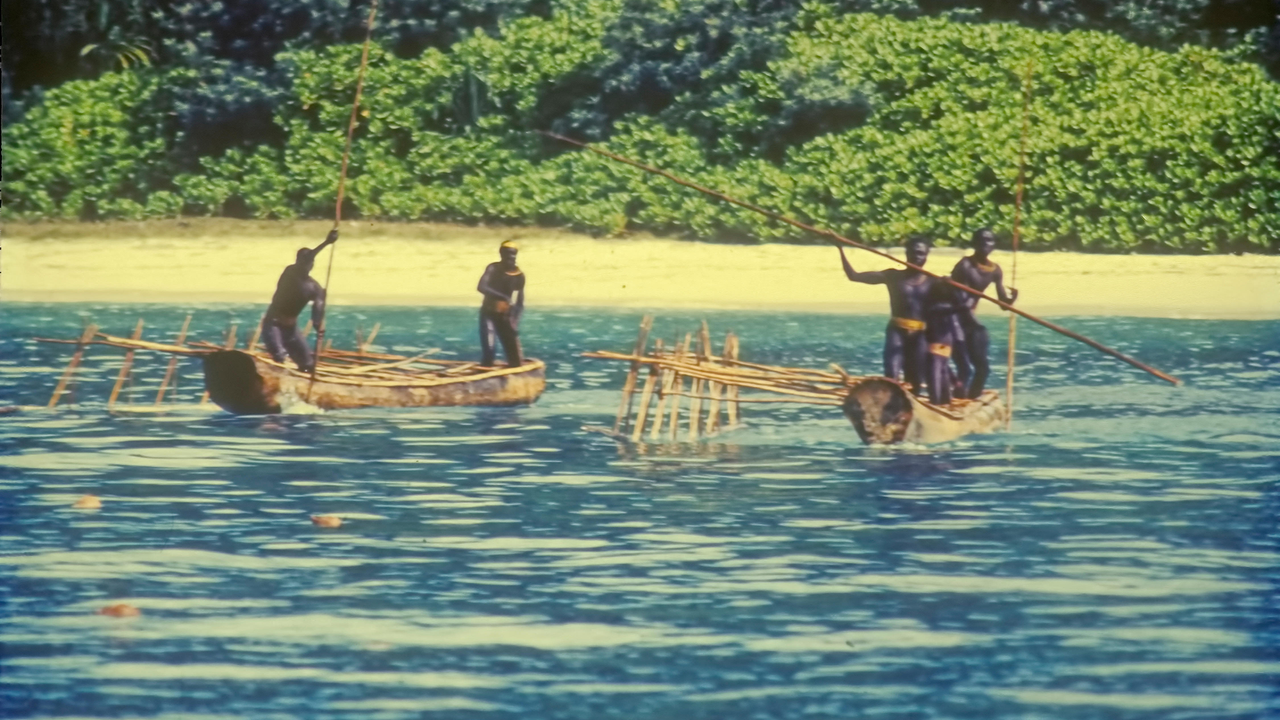
One such candidate is a small group of Indigenous islanders known as the Sentinelese, who live on North Sentinel Island within India's Andaman and Nicobar Islands in the Bay of Bengal. This group is so little known that anthropologists aren't even sure what they call themselves; their name is based on the roughly 23-square-mile (60 square kilometers) island where they live.
According to Survival International, it's believed that the Sentinelese have lived in the Andaman Islands for up to 55,000 years and are direct descendants of the first humans to migrate out of Africa. Today, the Sentinelese follow a hunter-gatherer lifestyle and fish along the coastline, using sleek, hand-carved canoes. Survival International estimates that the group includes between 50 and 150 people, although lack of access to the group makes them near impossible to count, and the government has not attempted to include them in the Indian census. Their official numbers remain unknown.
Aside from the island's remoteness, contact is even more difficult because the islanders reject it. The community has been known to shoot at approaching boats and hovering helicopters.
"When they shoot bows and arrows, they are communicating," Simron Singh, a professor at the University of Waterloo in Ontario whose expertise is in island environments and the peoples of the Andaman and Nicobar islands, told Live Science. "It says they do not want to be disturbed."
Only a handful of outsiders have ever set foot on North Sentinel Island, and Indian law now prohibits travel within a 3-mile-radius (5 km) of the island for the protection of both parties. Islanders are vulnerable to diseases brought by outsiders, and visitors are at risk of attack; the Sentinelese have shot and killed at least three people, including a missionary named John Allen Chau, who traveled to the island illegally in 2018.
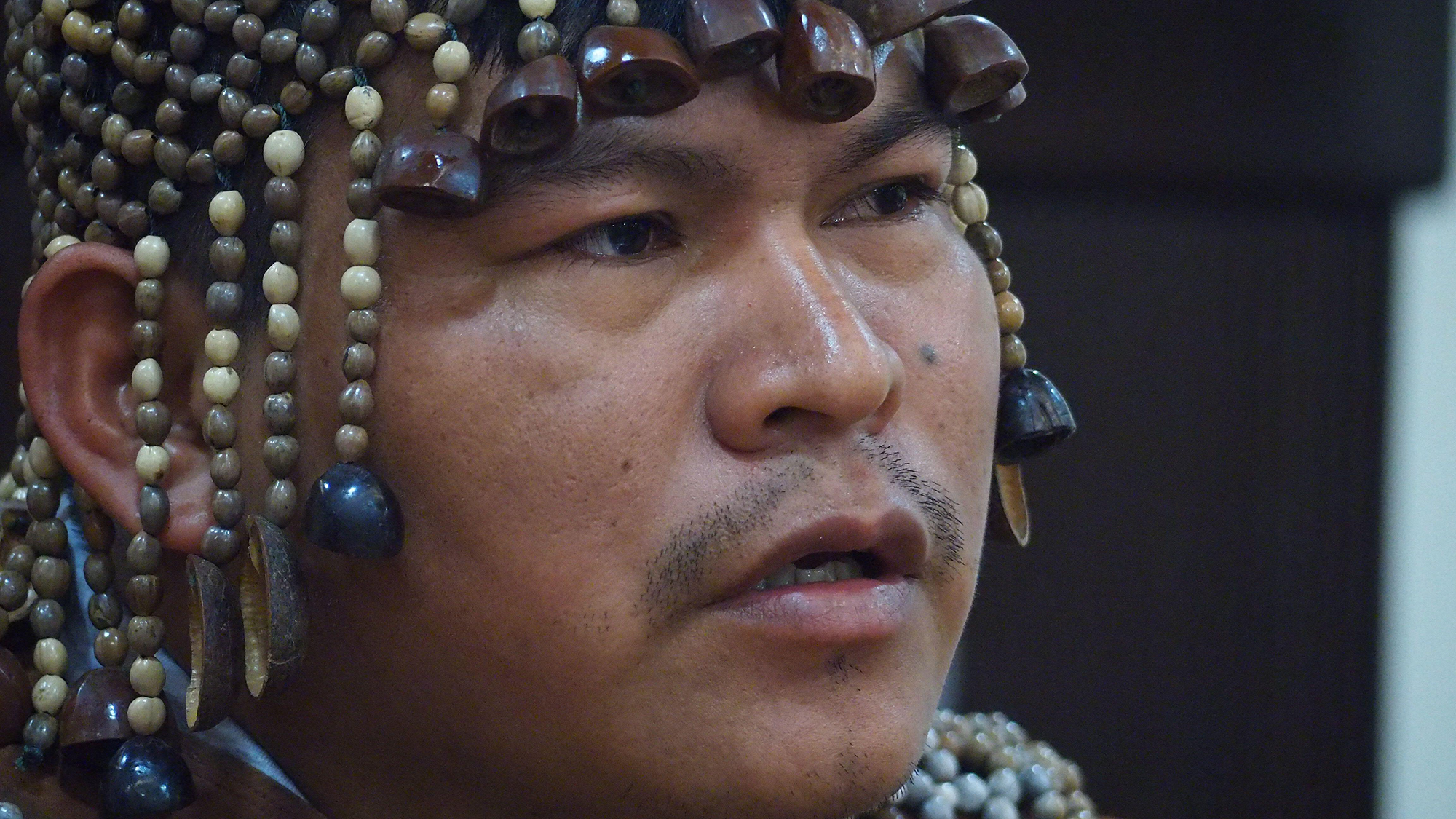
Herlin Odicio Estrella, an Indigenous leader and president of the Native Federation of Kakataibo Communities, speaks at a press conference in Lima on May 4, 2023. The conference addressed how regional and municipal governments are failing to protect Indigenous communities from coca growers encroaching on their communities. (Image credit: ZUMA Press, Inc. via Alamy)
"They erase their footprints"
Survival International estimates that 95% of "uncontacted" and "isolated" peoples live in the Amazon Basin (though the term "voluntarily isolated peoples" is more commonly used to refer to such groups there, according to Beatriz Huertas, an anthropologist, independent researcher and special adviser on isolated peoples policy with Rainforest Foundation Norway).
Huertas conducts research on these groups and to her one stands out in particular: the Kakataibo, a forest peoples in the Aguaytia basin, part of the Amazon in central Peru. The Kakataibo are very rarely encountered, even by other Indigenous peoples. In fact they "are so determined not to be found that they erase their footprints with Earth," Huertas said, "so there is not much information about them."
"We know that this isolation is a protective strategy they have adopted" precisely because they have had contact with the outside and it has not been a positive experience, Huertas explained.
Survival International highlights other highly-isolated groups in the region, including a nomadic Indigenous group called the Kawahiva. This group has evaded contact so successfully that they are known only through chance encounters and one piece of video evidence, and were only recognized as a distinct group in 1999. It's not uncommon for there to be "little recognition or documentation of an uncontacted group, in fact there are likely many uncontacted groups with no documentation at all," Russell said.
He noted that even in Brazil which has some of the most rigorous documentation policies, one Indigenous group was only documented in 2021, having eluded authorities up until that point. Very little is known about them, including their name.
Another prominent group that is extremely isolated is the Mashco Piro of the remote forests of Peru, who are thought to constitute the largest group of uncontacted peoples in the world, numbering about 750. Some in this group are the descended relatives of people who were enslaved and forced to work on Amazonian rubber farms in the 1800s, but escaped deeper into forests where they have since remained, shunning contact.
Misconceptions about isolated peoples
This history of contact for even the most remote people on Earth shows that the term "uncontacted people" is misleading, Huertas said. In fact, the phrase has fed into unhelpful misconceptions that these groups are "stuck in the Stone Age, as if they were living in a bubble," she said. "In the social sciences, we know that no people remain completely isolated from what is happening in their surroundings and, therefore, no people have remained stuck at any particular stage in history."
Another frequent misunderstanding is that these groups would want to connect if they knew more about the benefits of the outside world, Singh said. He has worked with the Nicobarese peoples of the Nicobar Islands, who haven't completely rejected contact like their Sentinelese neighbors, and has discovered that in their case this is not true. In fact, the Nicobarese are aware of wars and conflict beyond the island, and this has framed their perception that the outside world is "dangerous and uncivilized," Singh said.
In many cases historical experiences can explain why these groups would want to avoid the world beyond. By the mid-1900s, the Great Andamanese of nearby islands had experienced a population decline of up to 99% after bouts of conflict with British settlers and the influx of disease. The Sentinelese themselves had a historical encounter with British colonizers in the 1800s during which time some were kidnapped, infected with disease, and died, which may have shaped their current wariness of the outside world.
Some researchers have argued that these groups should be contacted to better protect them from current and future harms. But groups like Survival International counter that a long history of forced contact shows that this ultimately leads to more harm than good for these peoples, their safety and their survival.
Indigenous peoples have a human right to self-determination as affirmed by the United Nations, and researchers like Huertas and Singh said these groups clearly express that right by seeking contact when they want to associate with others, and retreating when they want to be left alone.
"It's not that they don't have the option [to seek contact] ... It's not rocket science to get on a boat and sail somewhere," Singh said. "It's a choice not to connect."
During several recent conversations, people have told me that they've stopped checking their phones in the morning. Not because nothing was happening, but because everything was. They described the feeling as standing under a waterfall of perpetual bad news.
Globally, 40% report they at least sometimes or often do the same, the highest figure ever recorded. People shared consistent reasons for this: the news put them in a bad mood, they felt overwhelmed and powerless to act.
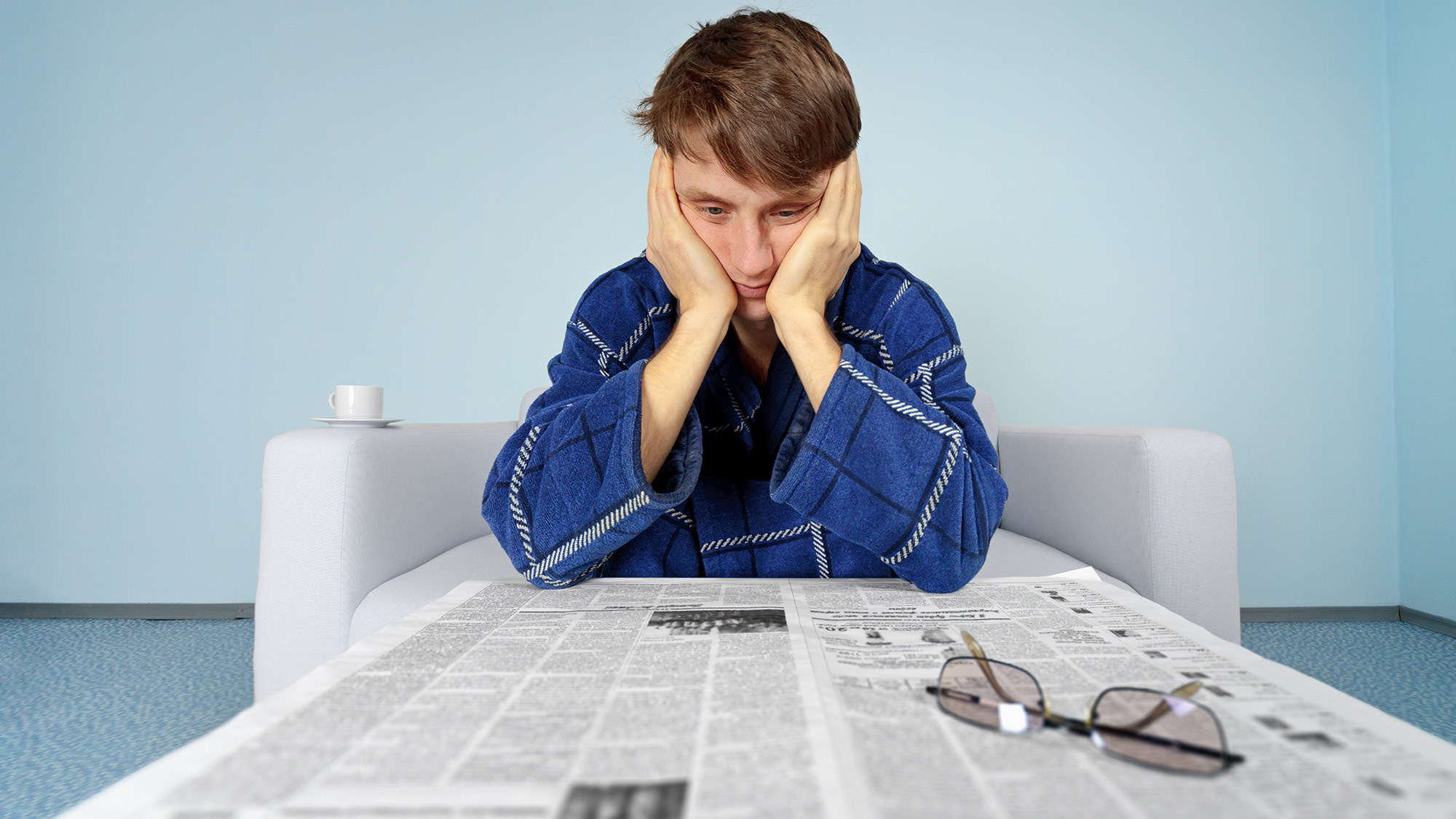
As a researcher in developmental psychology, focusing on social development and psychological well-being, I argue that news fatigue is not laziness, weakness or a generational decline in civic interest. It's the predictable response of a human brain meeting an environment it was never designed to navigate.
Wired for bad news
Long before smartphones or even the printing press, our cognitive architecture was shaped by a single problem: stay alive long enough to reproduce. Our ancestors whose attention drifted past the rustle in the grass left fewer descendants than those who froze, looked and listened.
The brain that paid attention to threats was the brain that survived.
This is the foundation of what psychologists call the negativity bias, one of the most replicated findings in cognitive science. Across decades of research, the human mind has been shown to weigh negative information more heavily than positive, attend to it faster and remember it longer.
A predator nearby mattered more than a beautiful sunset. The cost of missing a real threat was death, while the cost of overreacting was a few minutes of wasted vigilance. The asymmetry made this bias adaptive.
Here is the problem: the human brain has not changed since then. We are the same species as we were thousands of years ago. What's changed is the size of the world it's asked to scan for threats.
News fatigue is not laziness, weakness or a generational decline in civic interest. It is the predictable response of a human brain meeting an environment it was never designed to navigate. (Image credit: pzAxe via Getty Images)
Scanning the whole world
For most of human history, the threats our nervous system processed were local. A neighbouring tribe. A drought. The illness of a child we personally knew. Information about distant places would barely arrive, and if it did, it was mainly irrelevant.
In 2026, the same neurological system is being asked to absorb a war in one region, a financial shock in another, a climate disaster in a third and a violent crime in a fourth, all before lunchtime.
A study published in the scientific journal Nature Human Behaviour examined more than 105,000 real news headlines viewed nearly six million times. Each additional negative word increased click-through rates, while positive words had the opposite effect.
It's crucial to recognize the tactics meant to exploit our negative biases and create cognitive distance (Image credit: cbies/Shutterstock.com)
Recent studies suggest people around the world demonstrate measurably stronger physiological responses to negative news than to positive news. The body is reacting before the mind has decided whether the threat is relevant.
Some researchers have introduced a clinical framework for what happens in this instance called Problematic News Consumption (PNC) — a pattern of news engagement that results in preoccupation, dysregulation and disruption to daily functioning. In their 2022 study, the researchers found that 17% of American adults qualified as having severe levels of PNC. Among that group, 61% reported feeling unwell quite a bit or very much, compared with 6% of those who didn't.
For minority populations, news fatigue may be even more consequential.
Repeatedly witnessing harm directed at our own groups, even when we're not the immediate target, can have a significant psychological impact on people from the same group affiliation. For racialized communities, such as immigrants, the cognitive load could be even heavier, and the option to simply stop watching is much harder to exercise when the news is about their country of origin.
Looking away is not the fix
What's the solution to news fatigue? Well, it's not avoidance. A democracy depends on informed citizens.
Many adults already cite the spread of misleading information as a major source of stress. Withdrawing from accurate, trustworthy information only deepens the problem. We're wired to pay more attention to bad news, and that kind of content will find its way to us one way or another.
The fix is to manage the consumption and the sources.
Several approaches can help manage news fatigue and protect mental health. Containing news consumption to defined windows of time reduces the sense of being overwhelmed. Choosing depth over volume also matters: one carefully reported long-form article will inform you better than bursts of random, unreliable and emotionally loaded posts on Instagram.
There is also value in distinguishing between information and action — research on perceived control and stress consistently shows that the gap between awareness and agency is one of the strongest predictors of psychological distress. Identifying what you can actually do about what you read in the news, however small, regulates that response.
Finally, be wary of "rage bait" — intentionally provocative messages or content designed to boost engagement on social media platforms by eliciting negative reactions. Recognizing that certain content creators want to provoke rather than reflect reality creates useful cognitive distance.
The news will not become less "heavy." But our relationship with it can become more deliberate. Our brains were not built for this scale of input. They were, however, built to learn to adapt.

 Login