❌

Reading view

Lenore review – incel’s obsession with online influencer turns into anatomy of dislocated digital-age mindset

Digital-age Australian psychodrama tracks the shut-in mania of dangerously disaffected male fan, but doesn’t get inside his mind

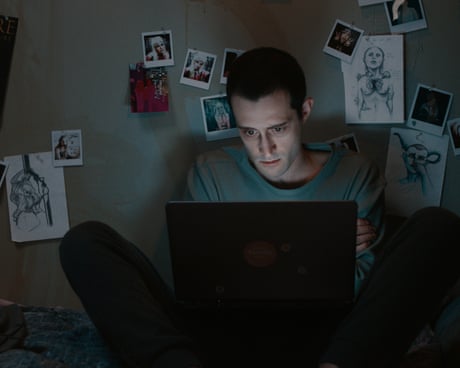
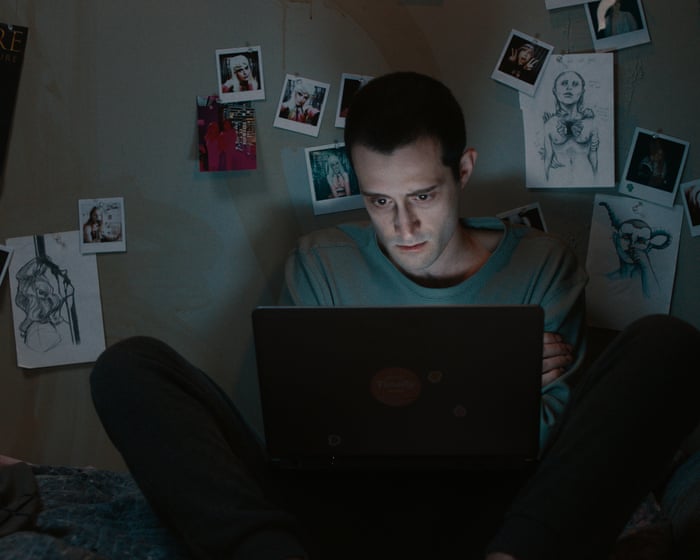
If the parasocial phenomenon is a kind of hell, then Max Wren, protagonist of this Australian digital-age psychodrama, resides in the ninth circle. Self-barricading in a basement room surrounded by screens, working on a documentary about the object of his disaffection (an enigmatic influencer called Lenore), this obsessive shut-in makes Eminem’s Stan look like the Dalai Lama. Touching on subjects including the attention economy, the male gaze, and incel isolation and misogyny, director David Ward feels both Max and Lenore’s pain. But his ungainly debut film doesn’t fully transcend its stage origins to capture the splintered headspace of the terminally online.

Like films about fictional pop stars that feature unconvincing music, it doesn’t help that the quickfire rΓ©sumΓ© of Lenore’s career only half-conveys her magnetism. A one-time beauty influencer called Veronica Brand, she later graduates to more extreme performance art-type stunts, such as livestreaming her miscarriage; a move that, spliced without her knowledge into a children’s TV broadcast, forced her into hiding. But this performative vulnerability, including hints of her abusive dad, apparently won her legions of OnlyFans-style acolytes. Not just Max, but also his colleague Sam (Sam Macdonald), a brash interloper outraged to find he was nothing special to Lenore and who turns up at Max’s door offering exclusive footage of her.

Continue reading...

Β© Photograph: Shaun Herbertson

Β© Photograph: Shaun Herbertson

Β© Photograph: Shaun Herbertson

  •  

The roaring 20s: how the current decade revolutionised cinema

Pre-Covid, the movie landscape was dramatically different: YouTubers weren’t dominating the box office, video game spin-offs rarely made an impact and Winnie-the-Pooh wasn’t yet the star of a slasher movie. Why such a flurry of innovation – and what will be next?

Cinema has always been a medium of research and development. At any given point, the industry is searching for yet another breakthrough that can drive it into the future. Synchronised sound in the 1920s. Technicolor in the 1930s. The invention of the modern blockbuster in the 1970s.

Conversely, the consensus is that, if the 2020s has a defining trend, then it is one of decline. The theatrical experience is under attack from all angles: streaming, YouTube, a once-in-a-century health crisis that shut cinemas down entirely. And yet, if you look closer, this has actually been one of the most innovative decades that cinema has ever seen. Whether down to technology or desperation, the film industry has spent these last few years figuring out new ways to make films that simply could not have existed even at the turn of the decade.

Continue reading...

Β© Photograph: SKLAE/Signature Entertainment

Β© Photograph: SKLAE/Signature Entertainment

Β© Photograph: SKLAE/Signature Entertainment

  •  

Zombies, gore and creepy kids – why we can’t stop playing horror games

As global anxieties multiply, ​v​ideo games from Resident Evil to Mouthwashing are providing rich source material to help decode society’s problems

β€’ Don’t get Pushing Buttons delivered to your inbox? Sign up here

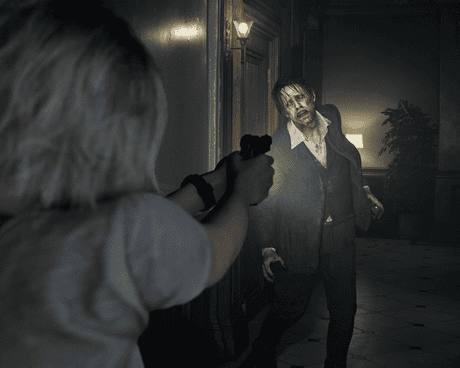
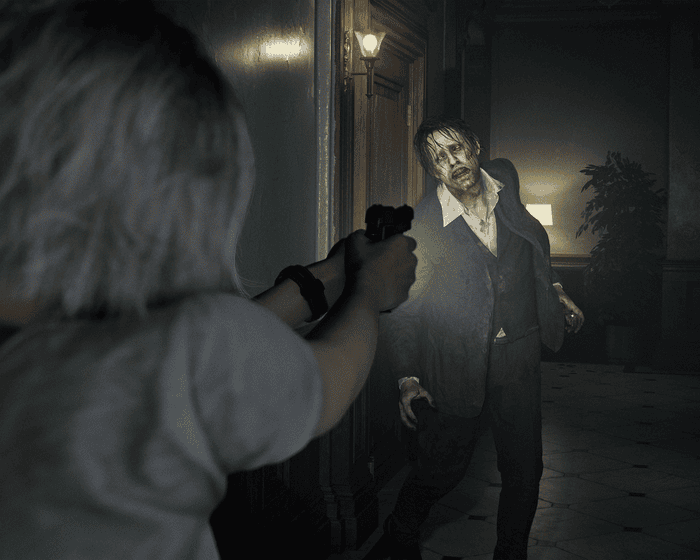
Horror is so hot right now. There’s Obsession, Evil Dead Burn and Hokum in the cinema, Widow’s Bay, From and Something Very Bad Is Going to Happen on TV, and, of course, a rotting smorgasbord of horror games including Resident Evil Requiem (pictured top) and Reanimal, soon to be joined by Silent Hill: Townfall, Silver Pines and Dreadmoor. We’re also seeing weird cross-pollinations, with horror movie studio Blumhouse making games, while games themselves become horror films and the whole backrooms genre infects every medium it touches.

So it was fascinating to attend last week’s horror and gaming conference at Falmouth University, in Cornwall: a gathering of students, researchers and lecturers, all engaged in the academic study of horror games. There were brilliant talks on zombies and posthumanism, the gothic in games, and the role of monstrous little girls in survival horror (there are a lot of them!). Subjects as diverse as masculine fragility, disability and ageing came up; Will Doyle, creative director at Supermassive Games, gave a great keynote on the art of creating horror in games using tools such as revulsion, spatial alienation and the human instinct of apophenia. I learned a lot about theorists such as Julia Kristeva and Mark Fisher, and about the technical similarities between indie horror games and film noir (for example, the use of darkness and creative camera techniques to β€œhide” budget restrictions). It was incredible fun.

Continue reading...

Β© Photograph: Capcom

Β© Photograph: Capcom

Β© Photograph: Capcom

  •  
❌