
❌

Reading view

Fossil Evidence Suggests Early Homo Had Abandoned Tree-Climbing by 1.8 Million Years Ago
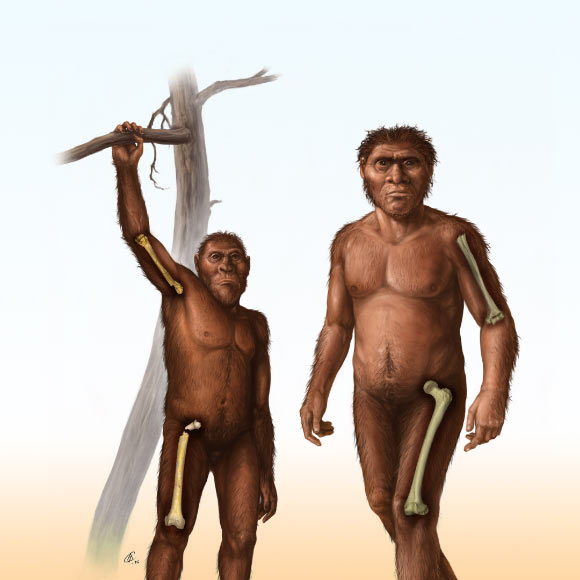
A depiction of an early Homo (right) characterized by relatively greater bone strength of the femur in the thigh compared to the humerus in the arm, and a depiction of an older human ancestor, Australopithecus (left), characterized by more equivalent strength in the bones of the arm and thigh. Image credit: Cullen Townsend.

New research led by University of the Witwatersrand and University of Southern California paleoanthropologists sheds more light on one of the most debated transitions in human evolution: when our ancestors stopped regularly climbing trees and committed fully to walking on two legs.

The post Fossil Evidence Suggests Early Homo Had Abandoned Tree-Climbing by 1.8 Million Years Ago appeared first on Sci.News: Breaking Science News.
  •  

Upright Walking and Larger Brains May Explain Why 90% of Humans Favor Their Right Hand

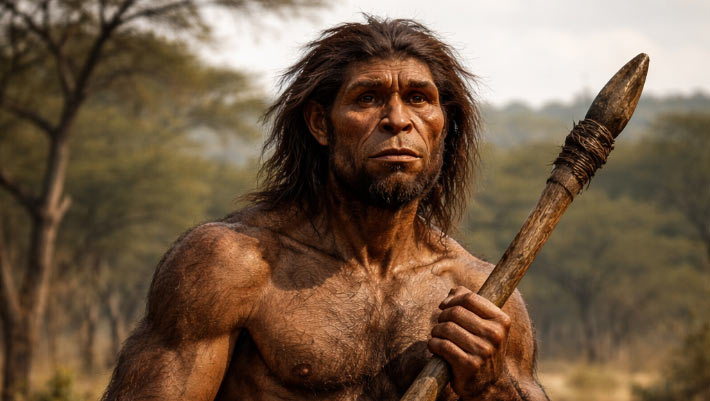
Reconstruction of Homo erectus.

New research from the University of Oxford and the University of Reading suggests bipedalism and expanding brain size helped drive the overwhelming dominance of right-handedness in humans.

The post Upright Walking and Larger Brains May Explain Why 90% of Humans Favor Their Right Hand appeared first on Sci.News: Breaking Science News.

  •  
❌