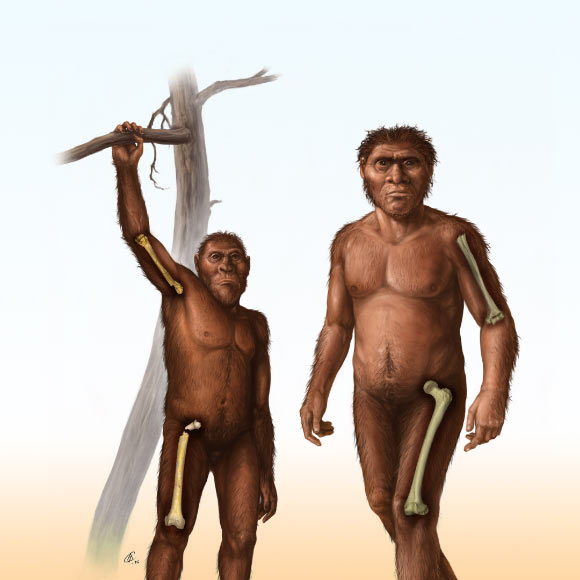
New research led by University of the Witwatersrand and University of Southern California paleoanthropologists sheds more light on one of the most debated transitions in human evolution: when our ancestors stopped regularly climbing trees and committed fully to walking on two legs.
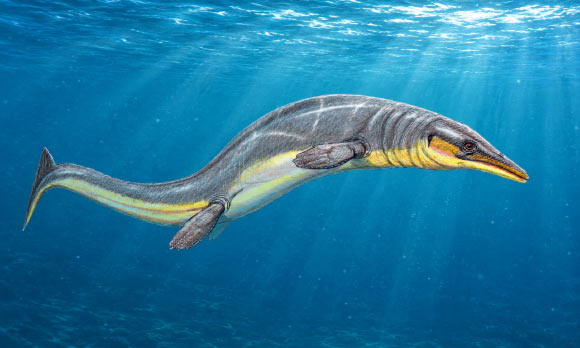
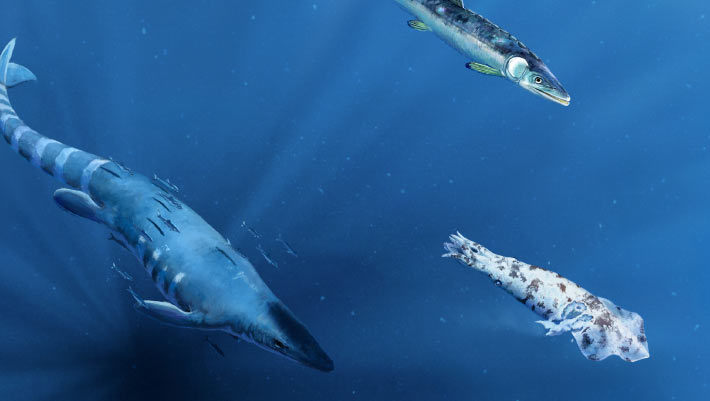
Paleontologists have described a previously unknown species of mosasaur -- a group of extinct marine reptiles that patrolled Cretaceous seas alongside dinosaurs on land -- based on fossils unearthed in Egypt’s Dakhla Oasis.
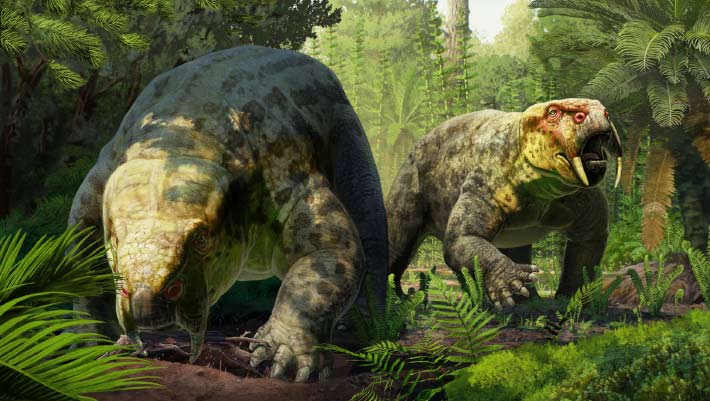
Paleontologists have identified a new species of ancient, distant mammal relative from two fossil specimens found decades apart in the Manda Beds of Tanzania.
El Soplao, a fossil site tucked into the hills of Cantabria in northern Spain, stands out for yielding amber pieces with a blue-violet hue and abundant bioinclusions, according to a new review paper.
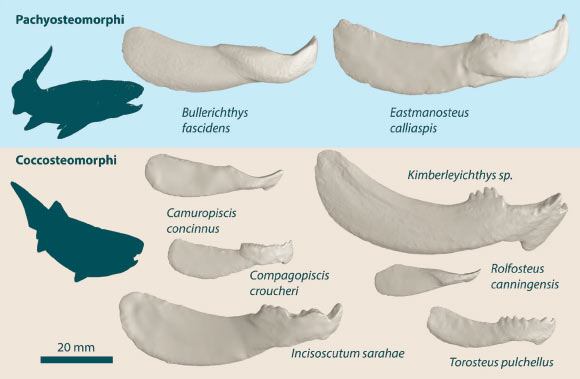
Long before sharks or reptiles ruled the seas, armor-plated fish called placoderms were already experimenting with different jaw designs to crush hard-shelled prey.
Paleontologists have identified a new species of extinct alligatorid that lived in what is now Colorado just a few hundred thousand years after the asteroid impact that wiped out the non-avian dinosaurs.
New research from the Natural History Museum at the University of Oslo suggests ichthyosaurs’ rib cages may have done a job modern whale ribs don’t: acting as ballast to help them dive.
A University of Cambridge-led research team has announced the discovery of a 560-million-year-old animal fossil preserved in three dimensions (3D) in a sheep field in the Norwegian Arctic.
The exceptionally rare Ediacaran Period fossil is the first of its kind in Europe in decades and gives scientists a unique window into a period of Earth’s history when the first complex life forms began to appear.
The discovery suggests the site could hide an entire lost ancient ecosystem that has remained hidden for hundreds of millions of years.
3D Fossil of 560-Million-Year-Old Lifeform ‘Unlike Animal Life Today’
When announcing the historic discovery, the Cambridge-led team noted that the fossil, called a Charnia, resembles a fern more than any animal life we would likely recognize today.
For example, Charnia has none of the organs we typically associate with animals. The archaic life form also lacks a mouth or visible means of locomotion. The closest modern comparison would be a sedentary jellyfish.
While previous efforts have identified ancient animal-life fossils from this period, the team noted that most are found as “flat impressions.” As a result, Professor Neil Davies from Cambridge’s Department of Earth Sciences said that many fossils from this period “occur as impressions where they’ve been squashed down under layers of rock,” like a flower pressed into a book.
“As a fossil record, the Ediacaran has several things working against it, primarily that most organisms were soft-bodied and skeletons hadn’t evolved yet, so that they are harder to preserve,” the team member and co-author of the study detailing the research explained.
Dr Veema agreed, while noting the difficulty in finding such rare specimens.
“Fossils need to be embedded within sedimentary rocks to be found, so if the rocks themselves are less common, then that makes the fossils harder to find,” the researcher explained. “Most Ediacaran fossils come from just a handful of locations, which makes it exciting to find them somewhere new.”
Fortunately, the newly identified 560-million-year-old life form was preserved in all three dimensions. The team said that discovering an ancient life form preserved in 3D is incredibly rare, particularly for soft-bodied organisms like Charnia. Finding one from this extremely ancient time, when animal life first began to appear, is even more unlikely, making the discovery unusually rare.
560 million years ago, when this Charnia was still alive, evidence suggests that it was buried during an ancient underwater avalanche. This sudden submergence also filled the animal’s body with sediment. The researchers said these events caused the fossil to become preserved in 3D
For example, the research team identified small ridges along the animal’s branches. Called keels, these extremely subtle features had never been detected in other, flatter Charnia fossils.
A 560-million-year-old Charnia fossil revealed subtle ridges not seen in previous specimens. The discovery could hint at a lost ancient ecosystem. Image Credit: Dr. Yorick Veenma.
Dr Yorick Veenma, from Cambridge’s Department of Earth Sciences and the lead author of the study detailing the team’s discovery, said finding a 3D fossil from this archaic time has provided them with an entirely new perspective.
“When you see the same species preserved in a different way, you start noticing properties you hadn’t seen before,” Dr. Veenma explained.
“There May Be a Whole Undiscovered Community of These Very Early Organisms”
Although scientists have found a few fossils from this period, they are often from the same handful of sites. However, this is the first time one has been found in Norway. Dr. Veema said this shows that discoveries can be made “in less familiar places.”
The researchers also successfully identified other components of the ancient ecosystem that this Charnia fossil called home. Future efforts may reveal that it was one small part of a larger, ‘lost’ ancient ecosystem supporting a variety of complex life forms.
“There may be a whole undiscovered community of these very early organisms preserved up there,” Davies explained. “Weird little umbrella-shaped blobs, things that don’t fit with what people know from elsewhere.”
“There are a whole host of different things that were not known before,” the researcher added.
Christopher Plain has spent the last six years as Associate News Editor and Head Science Reporter at The Debrief. Follow and connect with him on X, learn about his novels at plainfiction.com, or email him at christopher@thedebrief.org.
Paleontologists in Montana have discovered remarkably preserved feathers of an ancient aquatic bird inside a fossilized dinosaur dropping, offering rare insight into why certain birds survived the asteroid strike that wiped out the dinosaurs 66 million years ago.
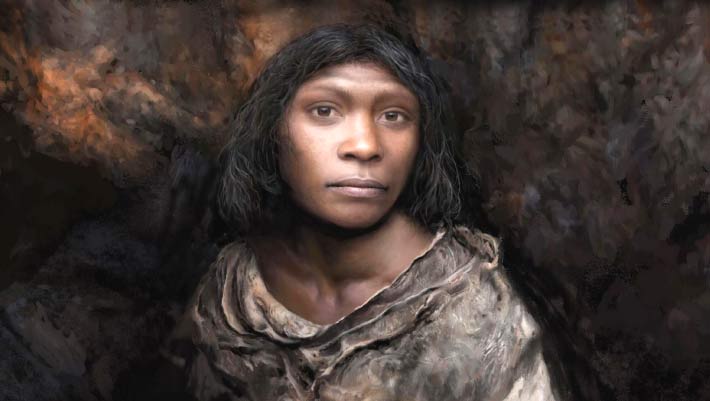
Paleoanthropologists have identified a trove of Denisovan fossils from a cave in China’s Yunnan province, extending the known range of the elusive human relative and providing the first-ever direct evidence of what its forearm bones looked like.
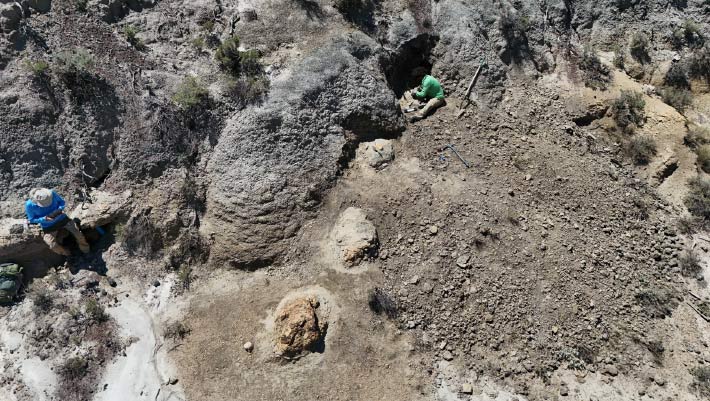
Paleontologists in North Dakota have unearthed a set of 66.5-million-year-old fossilized footprints that can be confidently attributed to a full-grown Tyrannosaurus rex.
Scientists have identified the first dinosaur fossil from a remote western section of the Bayan Gobi Formation in China’s Inner Mongolia, extending the known geographic range of dinosaur fossils in this important Early Cretaceous rock unit.
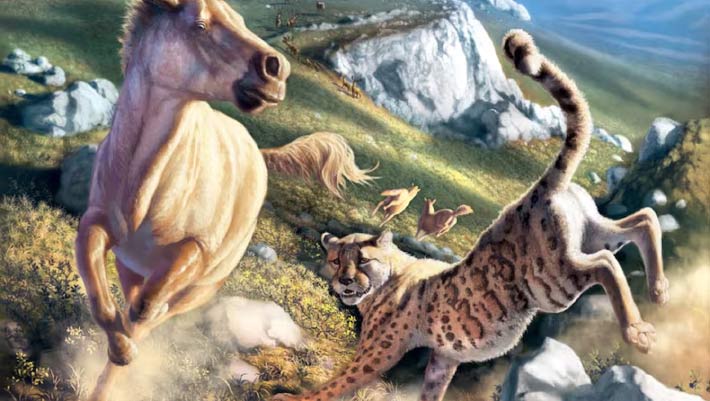
For several decades, paleontologists have described Miracinonyx trumani -- an extinct species of cheetah-like felid that roamed the North American prairies and steppe terrains more than 13,000 years ago -- as North America’s answer to the African cheetah (Acinonyx jubatus).
Paleontologists studying a fossil unearthed in southern Manitoba, Canada, have identified what they believe are two bite marks on the internal skeleton of the ancient giant cephalopod Enchoteuthis.
A new analysis of three skull fragments unearthed at the Gran Dolina cave site in Spain indicates that Homo antecessor had bone thickness closer to that of Neanderthals and modern people than to more archaic hominins.
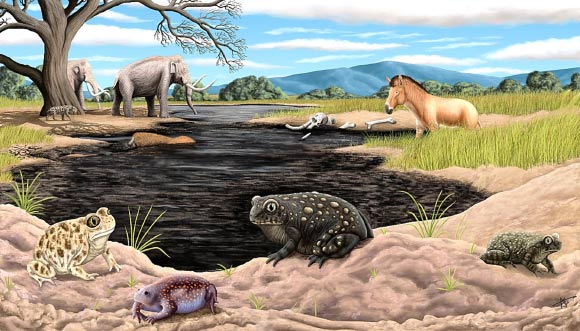
Paleontologists studying the La Brea Tar Pits, one of the world’s richest Ice Age fossil sites, have identified a previously unknown species of spadefoot toad that lived in what is now California during the latest Ice Age.
Paleontologists working in southern Wyoming have identified a previously unknown species of omomyid primate, adding a new chapter to the story of one of the best-studied fossil lineages in North America.
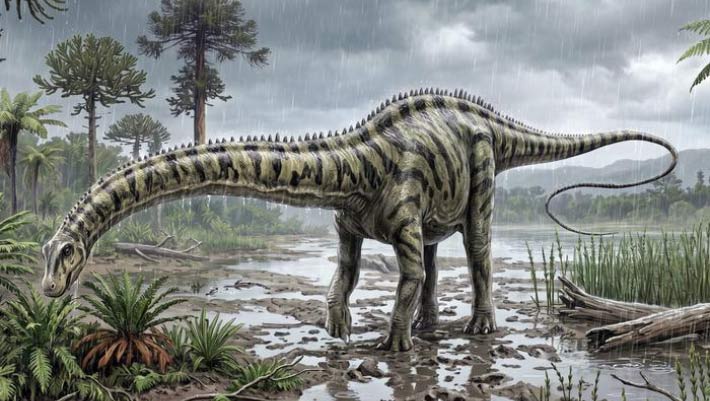
Paleontologists working in southern China have identified a new species of sauropod dinosaur that appears to belong to a group never before documented anywhere in East Asia.

 Login