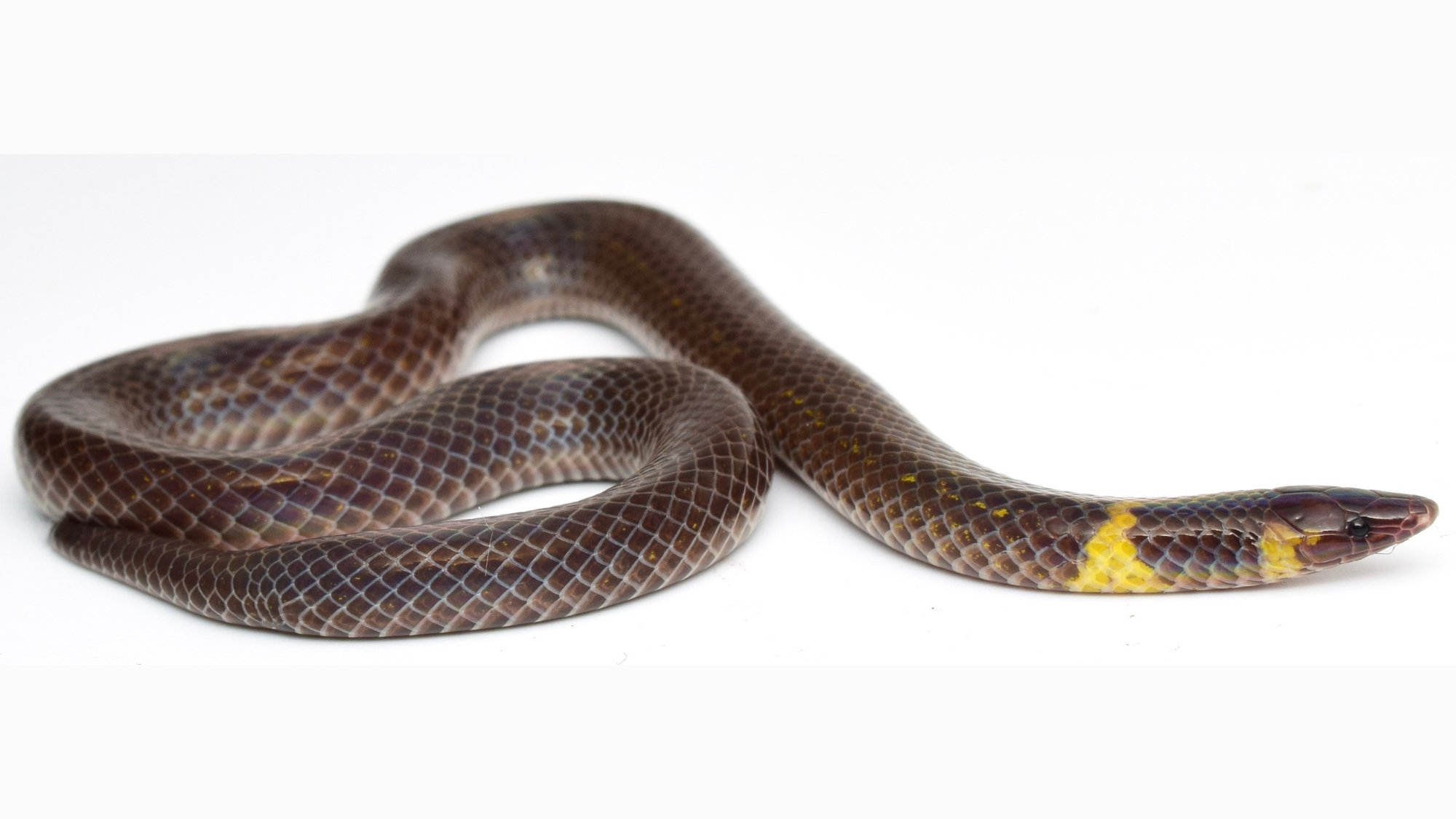
Snakes will bite, rattle their tails, and even spit venom to escape danger. But of all the world’s species, southeast Asia’s dwarf reed snake (Pseudorabdion longiceps) relies on an especially fascinating escape method. When threatened, the diminutive serpent rolls away like a speeding wheel.
An adult dwarf reed snake typically measures less than 12 inches long, but its unique locomotive maneuvers allow it to retreat as fast one foot per second—about four times faster than it travels by simply slithering on the ground. It’s not a flailing getaway, either. The snake also easily rolls along a straight path while somehow keeping its head both stable and facing forward.
Now, researchers finally have a better understanding of how the dwarf reed snake achieves such dizzying acrobatics. In a study published today in the journal Current Biology, a team at Japan’s Toho University detailed the specific physiology that enables its locomotion after filming the snakes with high-speed cameras. Essentially, the snake doesn’t rotate its entire body in a singular, forward motion—it whips one side of its body forward towards the ground while an arched portion swings down by its head in what the study’s authors call a “stroke.” The snake then alternates between its left and right side coming into contact with the ground for each successive stroke. Essentially, it’s like twirling a rope in a lateral circle while holding one end in your hand—except that end is the snake’s head.
The cumulative efforts bypass the traditional idea of a wheel requiring something like a central axle. Instead, this ingenious, highly controlled movement allows the animal to keep its head and sensory organs upright and facing ahead while traveling at such high speed. This is compounded by the dwarf reed snake directing regions of its body to engage in large, alternating rotations while stabilizing its head.
By gaining better insight into these biological mechanisms, researchers also highlight the difficulty in trying to predict an animal’s capabilities based solely on its physiology. A snake may have primarily evolved to slither—but that doesn’t mean it can’t get creative when necessary.
When zoology professor Daniel Baldassarre traveled to the remote Galápagos Islands of Wolf and Darwin with two other researchers, getting there proved quite a challenge. With no beaches to land a boat on, they had to approach the islands’ cliffs in a small dinghy and wait for a lull in the waves before jumping onto sharp, black lava rocks.
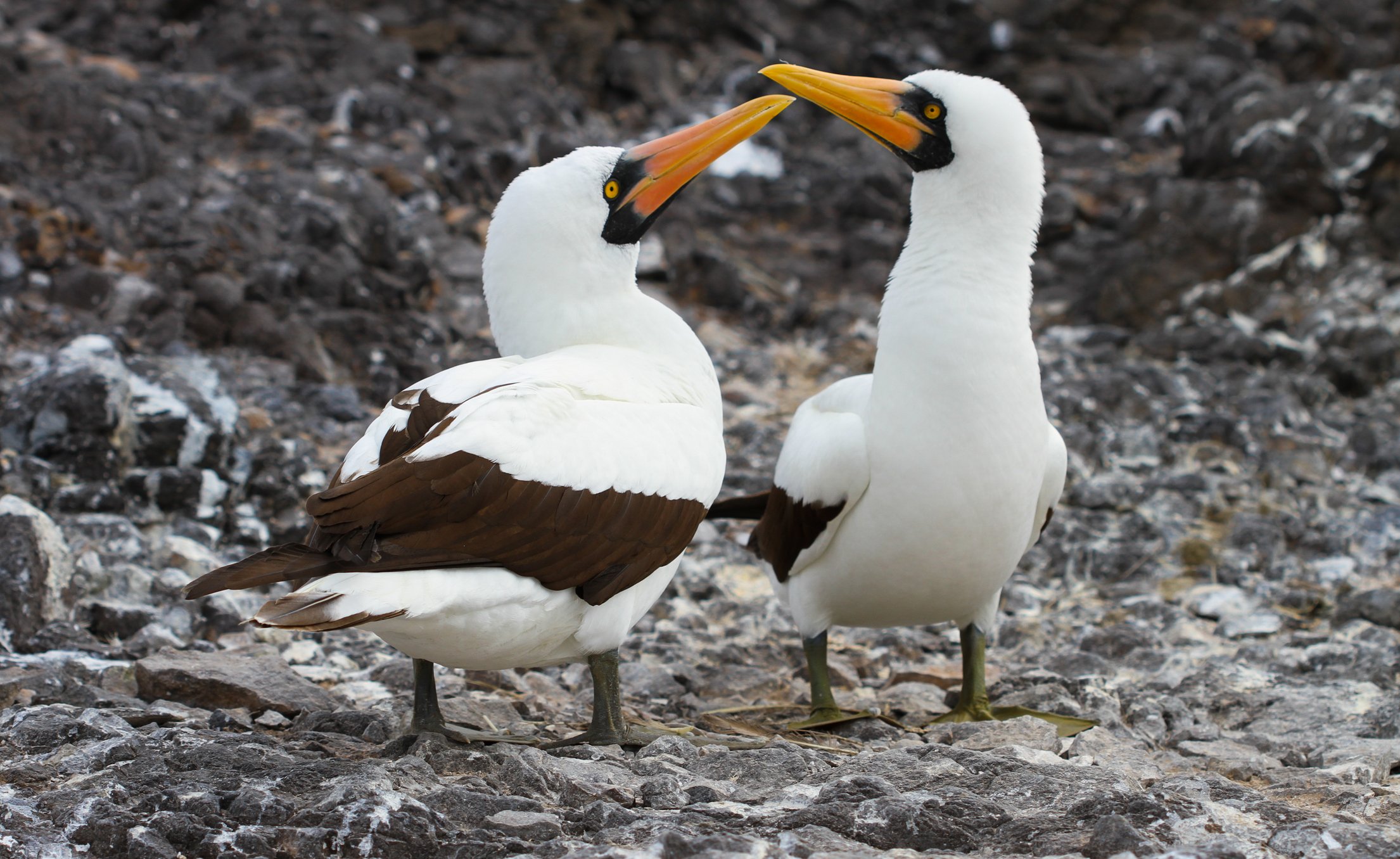
But their efforts paid off. On that trip, they saw a bird that very few people have ever set eyes on in the wild: the vampire ground finch. These finches are only found on Wolf and Darwin, and feed on the blood of much larger birds called Nazca boobies that also live on the islands.
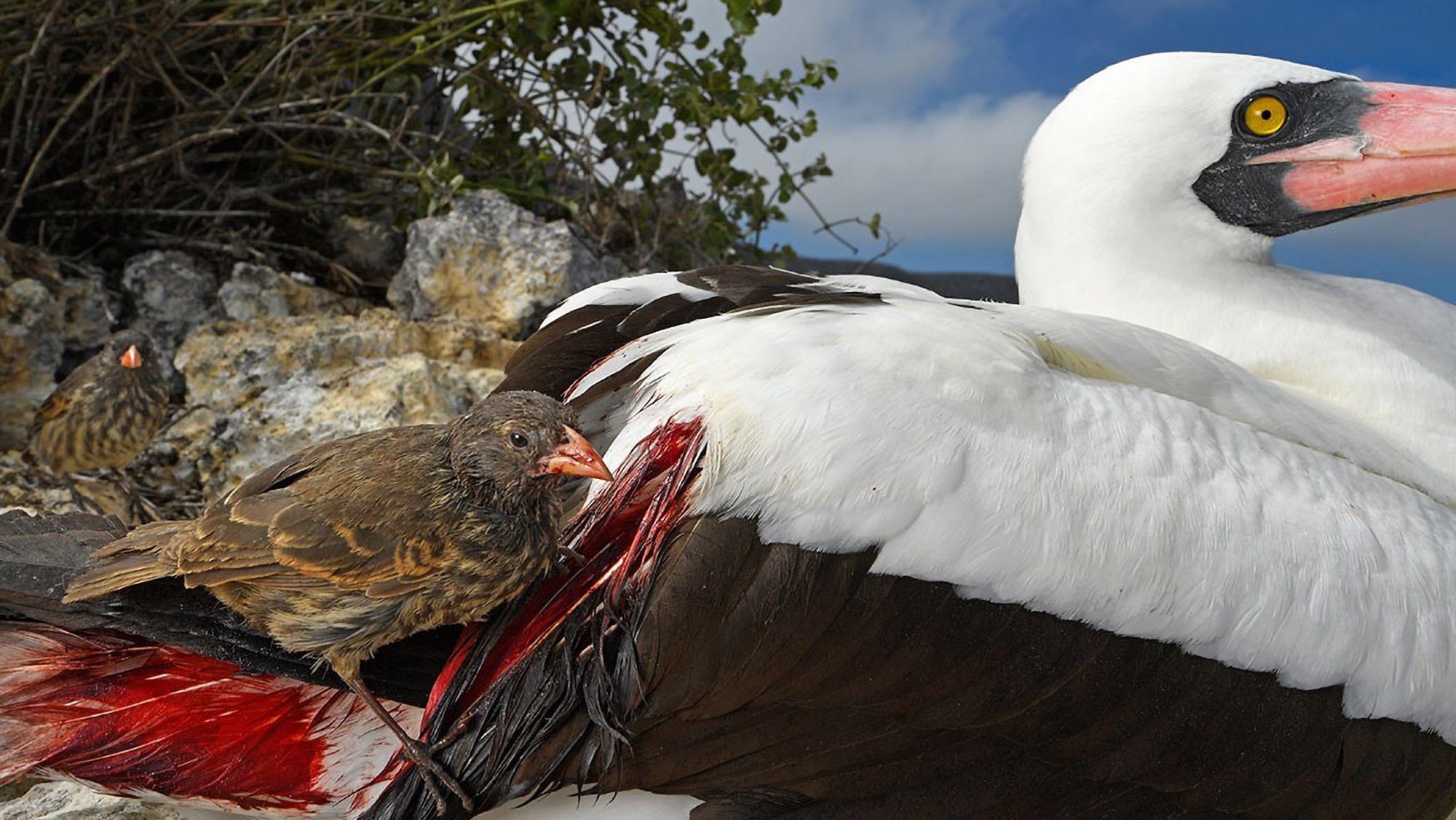
Up close, Baldassarre and his colleagues noted the vampire finches’ blood-stained bills and their throats visibly engorged with blood. They also saw them in action.
“We observed scores of vampire finches clamouring all over the backs, tails, and wings of boobies, opening up substantial wounds with their sharp beaks, and drinking their fill of blood,” they wrote in an article for The Conversation.
Why only some birds drink blood
“Blood is a notoriously difficult food source to process and extract nutrients from, which probably partly explains why so few animals have evolved to feed on it,” Baldassarre tells Popular Science. He suspects that on these islands where freshwater is extremely rare, blood might serve as a water source for the finches.
Two Nazca boobies perform their species’ mating call. Vampire ground finches feed on Nazca boobies on the remote Galápagos Islands of Wolf and Darwin. Image: Getty Images / inthedark72
It’s not the only component of the vampire finches’ diet, however. Based on unpublished data collected by Baldassarre and his colleagues, blood makes up about one-tenth of the vampire finches’ diet.
“These finches are quite opportunistic, so they will eat just about anything they can find,” Baldassarre says. “We observed them feeding on everything from seeds to insects to broken seabird eggs.”
One theory is that vampire finches rely more on blood feeding in periods of extreme drought, when other resources are scarce. But more research is needed to see if this idea holds up in practice.
How this strange behavior evolved
Vampire finches weren’t always vampires, scientists think. The relationship between vampire finches and boobies probably started off with the finches eating parasites found on the skin and feathers of the boobies. This would have been mutually beneficial because it provided a cleaning service for the boobies and food for the finches.
But at some point in evolutionary history, in the process of picking off parasites, the finches started to create lesions on the boobies’ skin, and eventually began feeding on their blood.
Over time, their bills became more scalpel-like, perfect for making skin incisions. Their digestive system also changed. When Baldassarre and his colleagues studied the microbes found in vampire finches’ guts, they found that their gut microbiome was very different from that of other, non-blood-consuming finches on the Galápagos Islands, something they attribute to their unique diet.
Until recently, vampire finches were considered a subspecies of the sharp-beaked ground finch (Geospiza difficilis).
“But they have now been designated as their own species [Geospiza septentrionalis] because of the differences they have evolved because of blood feeding,” Baldassarre notes.
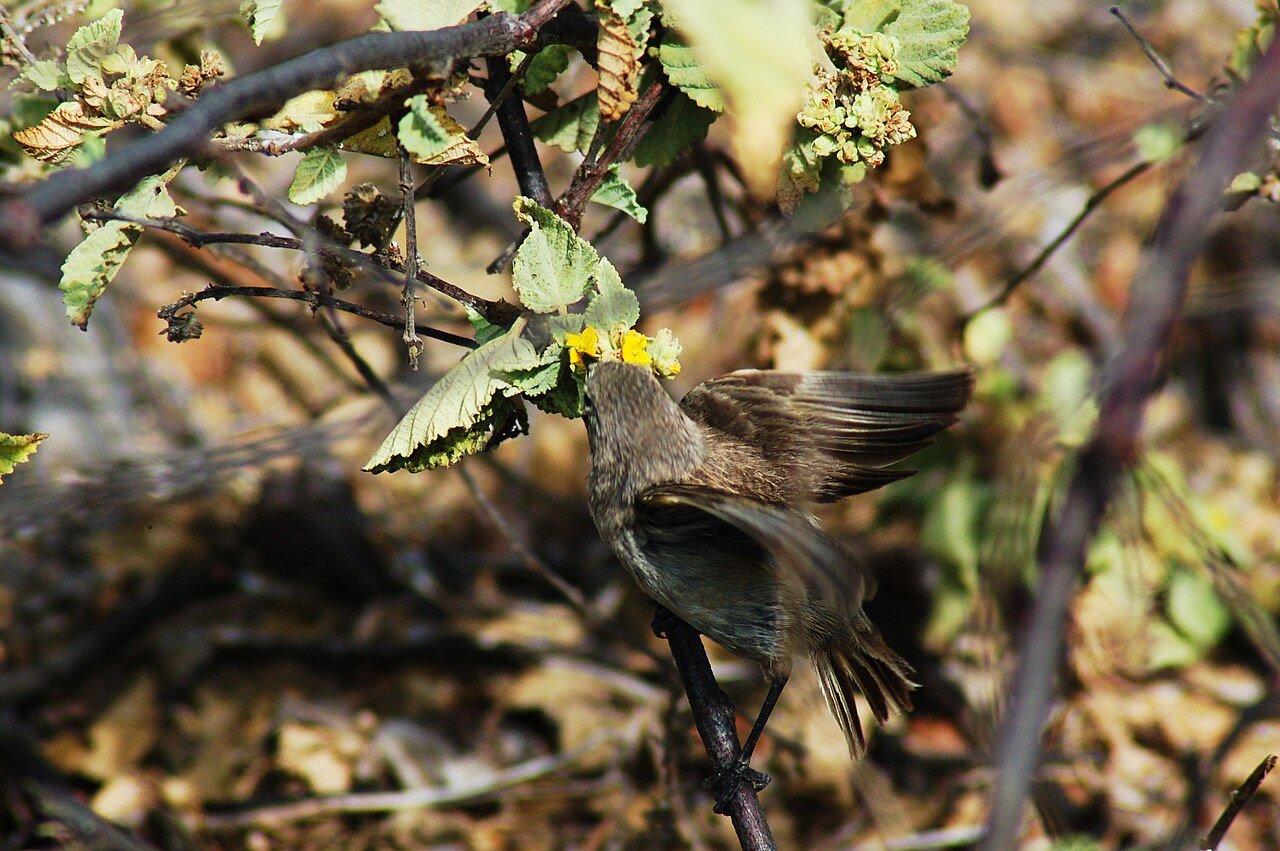
Vampire ground finches on Wolf island have been seen drinking nectar from Galápagos prickly pear flowers and other flowers. Image: Peter Wilton / CC BY 2.0
How the boobies cope
Baldassarre and his colleagues have seen vampire finches gang up on and kill nestling boobies,“but that was quite rare,” he points out.
“In most cases, the finches seem to inflict just enough damage to break the skin and extract some blood, but not too much to harm the boobies significantly.” This is similar to many parasite-host relationships, such as fleas, ticks, and mosquitoes on mammals. “You can kind of think of the vampire finches as giant mosquitoes,” Baldassarre says.
“For one, as in large animals being bitten by mosquitoes, often the damage is minimal and not noticeable, so it doesn’t elicit a strong reaction. Also, the boobies sometimes have a vested interest in staying put and guarding their spot in the colony, or perhaps nest or nestlings, so may not want to fly away. Finally, the finches seem to target hard-to-reach areas on the boobies like the base of tail feathers, so it’s likely difficult for the boobies to deter them.”
I, for one, was feeling very sorry for the boobies being constantly hounded by these small vampire birds. Until I learnt that Nazca boobies practice something called “obligate siblicide,” which essentially means that the first-hatched chick routinely attacks and kills its younger sibling. It’s a harsh, bird-eat-bird world in the Galápagos Islands.
In Ask Us Anything, Popular Science answers your most outlandish, mind-burning questions, from the everyday things you’ve always wondered to the bizarre things you never thought to ask. Have something you’ve always wanted to know? Ask us.
Many of the cutest animals on Earth have one appendage in common. Whether you’re thinking of an adorable raccoon, a kitten, or a puppy, it’s hard to imagine them without their fluffy tail. In fact, the overwhelming majority of animals have tails. Only a select few, like us humans, don’t have an external tail.
Sarah Durn: Think of some of the cutest animals you know, a puppy, a kitten, maybe a little red panda. Now, picture them without their tails.
It’s weird, right?
Tails are such a normal part of the animal world that we barely think about them, and they’re not just adorable accessories.
A kangaroo uses its big muscular tail to help it balance. Opossums can use their tails to grip branches. Fish use theirs to propel them through the water. And your dog can communicate an entire emotional journey with just a few well-timed wags.
Tails can help animals climb, swim, steer, balance, communicate, even swat away an annoying bug.
So what happened to ours? Because humans are part of a huge evolutionary family where tails are basically standard equipment.
We even briefly start developing a tail when we’re embryos. But look behind you now, and unless something has gone very unexpectedly, you probably don’t have one.
And neither do chimpanzees, gorillas, orangutans, or any of our other ape relatives. So somewhere deep in our evolutionary past, our ancestors lost their tails. But why? And what would life be like if we still had them?
No question is too simple or too out there. I’m Sarah Durn, an editor at Popular Science.
Annie Colbert: And hi, I’m Annie Colbert, editor-in-chief
SD: Here at PopSci, we’re always pondering quirky questions
AC: And this week we’re wondering: Why don’t humans have tails? Because tails are everywhere in the animal kingdom.
SD: And they’re incredibly useful. Beavers use their big flat tails to help maneuver through the water. Some monkeys can basically use their tails like an extra limb, wrapping them around branches as they climb. And rattlesnakes, of course, turn theirs into a built-in warning system
AC: So what happened to ours? Did we just lose them somewhere?
SD: Well, technically, humans never lost them.
AC: Okay.
SD: But that said, we have to go way back in our family tree, tens of millions of years back, to find out why our butts don’t have tails anymore.
AC: I’m guessing the answer isn’t because of pants?
SD: No, you are correct. This goes way beyond pants. We’re talking back to a time when our ancient ape ancestors were still hanging out in trees
AC: So when did tails disappear then? And more importantly, why would you want to give up a perfectly good tail?
SD: That’s the big question because for lots of animals, tails are incredibly useful for balance. But the way our ancient ape ancestors moved through the trees may have actually made a tail kind of pointless.
AC: So evolution really said, “We’re not using this anymore, so just get rid of it.”
SD: Yeah, pretty much. And later we’re going to get into what those ancient apes looked like and why their particular style of tree climbing may have made tails more trouble than they’re worth.
AC: And naturally, we also have to ask the important question: Would life actually be better if humans still had tails?
SD: I have some thoughts.
AC: Same. Many thoughts.
Now, before we swing into our evolutionary past, we want to know what questions are circling in your brain hole. If there’s something you’ve always wanted to know, submit your questions by clicking the “Ask Us” link at popsci.com/ask.
Again, that’s popsci.com/ask and click the “Ask Us” link
SD: We can’t wait to hear your questions
AC: We’ll be back right after this quick break to find out how humans ended up on team no tail.
SD: And stick around to the end because we’ll be joined by Science Friday host Flora Lichtman to discuss what makes a really good tail and whether she’d want one herself.
And we’re back. Okay, Annie, before this episode, how much time have you spent thinking about your tail?
AC: Absolutely none. I can confidently say I have never yearned for a tail.
SD: Yeah. No, I mean, neither have I, but I have spent a lot of time thinking about my tailbone.
AC: Uh-oh, where is this going?
SD: Yeah. Uh, a couple years ago, I was walking my Saint Bernard, Poochie, when he caught a whiff of something and took off. And me, trying to be a responsible dog walker, tried to hold onto the leash.
AC: Oh no.
SD: Yes, yes, yes. Safe to say Poochie, the Saint Bernard, won, and I fell straight onto my butt.
AC: Oh, Sarah. Ouch
SD: Yes, it was un-ideal. I ended up bruising my tailbone pretty bad.
AC: Mm.
SD: And unfortunately for me, this happened about a week before I left for a two-week long trip to Italy.
AC: Oof.
SD: Rome, Pompeii, the Colosseum, the Amalfi Coast, Puglia, all while carrying a little donut butt pillow everywhere I went.
AC: Oh my.
SD: Sometimes I even wore it as a hat.
AC: I mean, obviously.
SD: You know, sun protection is important.
AC: Crucial.
SD: Yeah, so I have actually spent a bit of time thinking about and cursing our teeny-tiny, mostly not there human tail because out we actually do have a tail. Kinda.
AC: Hmm. All right. Tell me more
SD: That tailbone I bruised, the coccyx, is at the bottom of your spine.
It’s basically what’s left of when our ancestors actually had a proper external tail.
AC: But humans had more of a tail at one point, right? Like fetuses have tails in the womb?
SD: Correct. When human embryos are developing, we actually form a little tail that extends beyond the rest of the body. But by around eight weeks, that external tail disappears.
AC: So I briefly had a tail?
SD: You did!
AC: Ugh, RIP. Gone too soon.
SD: We should all have a, like, little tail funeral upon our birth.
AC: Eh, that’s obviously the only normal response here.
SD: I mean, obviously.
Okay, but here’s the thing. Humans didn’t suddenly decide to ditch our tails. We inherited our tailless bodies from our ape ancestors.
So if we really want to figure out why humans don’t have tails today, we have to first figure out how our furry ancestors lost theirs. And for that, we have to go way back.
AC: How far back are we talking?
SD: Well, first let’s go back about five or six million years.
That’s roughly when scientists estimate the last common ancestor of humans, chimpanzees, and bonobos lived, and that doesn’t really help us with our tail mystery
AC: Because chimps and bonobos don’t have tails either.
SD: Exactly. And neither do gorillas, orangutans, or any other modern ape. So we have to keep going back.
AC: So rewind. Whoop, rewind.
SD: And eventually we get all the way back to around 25 to 30 million years ago. Megalodon is stalking the seas. Daeodon, aka “hell pigs,” were roaming North American forests. And keep in mind, we’re still tens of millions of years before the first saber-toothed cats and mammoths pop up.
And this is where things get interesting because around this time, our ape ancestors branched off from the ancestors of modern monkeys.
AC: And monkeys do have tails.
SD: Right. Most do.
So somewhere around this part of our family tree, around 25 to 30 million years ago, we finally crossed over to the tailless side from our tailed ancestors.
The frustrating thing is the fossil record doesn’t give us a perfect family album. We can’t point to one specific ancient ape and say, “There, that’s our ancestor, that’s the one that lost the tail.” But we can find clues, and one of the best clues comes from an ancient ape called Ekembo.
AC: Tell us your secret, ancient ape
SD: Yes! Tell them. So fossils from this genus have been found in Kenya and date back about 17 to 20 million years. And these animals would’ve looked pretty different from modern apes.
One species, Ekembo heseloni, probably had arms and legs that were roughly the same size. It climbed around on tree branches on all fours, and it had a long, flexible lower back, unlike modern apes. But there’s one thing we know it didn’t have.
AC: A tail?
SD: Exactly. And we can tell because of particular bone, the sacrum.
AC: And where is my sacrum?
SD: It’s right at the base of your lower spine, and it’s actually one of the places scientists can look to to figure out whether an animal could have supported a tail or not.
If you look at the sacrum of a cat or another tailed mammal, it leads into a whole bunch of tail vertebrae.
But in humans and apes, the sacrum just ends in a, you know, little point. And scientists see that little point in Ekembo heseloni. So even though this animal lived up to 20 million years ago, we know they didn’t have a tail.
AC: So by 20 million years ago, the tail was already gone.
SD: At least in Ekembo.
AC: Mm.
SD: And it’s not alone.
Another ancient ape called Nacholapithecus shows up in Kenya around 15 million years ago, and fossils of its sacrum show the same thing. It couldn’t have supported a tail either.
So we don’t know exactly which one of these ancient apes ultimately gave rise to later hominids, aka our ancestors, but we do know that tailless apes were already walking or climbing around millions and millions of years before humans existed.
AC: Okay, so we know the tail disappeared way back in our evolutionary history, but that still leaves the biggest question, which is why? Like, why would you give up a tail? They seem kind of awesome.
SD: And this is where we get into a little bit of scientific speculation because we don’t have one definitive answer.
One possibility is that it has to do with the way these early apes moved. Think about modern animals that really benefit from tails.
If you’re a cheetah sprinting and making incredibly fast turns, a tail can help you balance. Or if you’re a monkey moving quickly through the trees, a tail can be really useful. But these early apes weren’t moving like modern monkeys.
AC: So what were they doing?
SD: Well, millions of years ago, these apes probably had arms and legs that were about the same length, and scientists think they walked on all fours.
They were also climbing through trees looking for fruit. And if you’re trying to get some delicious fruit growing way out on the edge of a branch, you don’t necessarily want to go flying through the canopy.
You want to move slowly and carefully they could support their weight across multiple branches and deliberately work their way towards the good stuff.
AC: So less swinging dramatically through the jungle…
SD: …and more very cautious trip to the fruit bowl.
AC: Got it.
SD: And if you’re moving that slowly and deliberately, a tail might not give you much of an advantage. In fact, it could actually come with costs.
Your body has to spend energy growing this whole extra appendage, and then you’re dragging it around behind you where a predator could potentially grab it.
So as the University of Missouri anatomist Carol Ward told Popular Science, for these slow-moving, careful climbers, the tail just didn’t offer an advantage.
AC: So after all of this, the answer to why don’t humans have tails is basically because our ancestors stopped needing them.
SD: That’s one theory, but the important thing is that we didn’t lose our tails because humans started walking upright or because of something that happened recently in human evolution.
By the time anything resembling a human showed up, tails had already been absent from our branch of the family tree for millions and millions of years
AC: So I never really stood a chance.
SD: Nope. You were born into a long, proud lineage of tailless apes.
AC: Yet after this whole conversation, I’m starting to feel like we kinda got a bad deal.
SD: Yeah, well, before you get too jealous of Team Tail, there is someone I want us to talk to because last year Science Friday host Flora Lichtman went looking for an answer to a very important question. If you are gonna have a tail, what’s the best one to have?
AC: Ooh, yes. Let’s talk upgrades.
SD: Yes, let’s. We’ll talk with Flora about the science of tails, whether there really is a best tail for balance, and whether she’d actually want one herself. That’s after this quick break.
And we’re back with Flora Lichtman. Flora is a podcaster extraordinaire, an Emmy-nominated writer for Bill Nye’s Netflix show, Bill Nye Saves the World, and one of the hosts of Science Friday, a public radio program and podcast about science, nature, technology, and health.
Flora, thank you so much for making the time to come on Popular Science’s Ask Us Anything podcast.
Flora Lichtman: I am delighted to be here. Thank you for the invitation, and I love tails, so glad to talk about them.
SD: So yes, as you know, throughout this episode, we’ve been talking all about why humans don’t have tails when so many animals do, and last year you actually explored an important piece of this puzzle on a Science Friday episode called “In Search of the Best Tail for Balance,” which we’ll link in the show notes.
In the episode, you talked with roboticist Dr. Talia Moore and developmental biologist Dr. Ceri Weber about their work into figuring out what’s the best tail, and how a tail could actually help us build better robots.
So obviously I have to ask: Is there actually a best tail for balance?
FL: You know, of course, if you ask scientists, they’ll never give you a best because that’s their, their whole job is to find the nuance and the complicated elements of every story. But what I did learn from them is that there are ways to design tails so that they do their job better.
SD: Hmm.
FL: And the thing that I didn’t know about tails is that they’re an inertial appendage, which is not a term I’d heard.
But the way these researchers described it is that it’s like a tightrope walker’s stick.
SD: Hmm.
FL: That you use to sort of regain your balance. Like that, for animals with tails, that is a primary reason why they have a tail.
SD: Yeah.
FL: The difference, though, between a tightrope walker stick and a tail is that most tails aren’t rigid rods, right? Like, they’re curvy and they’re twisty.
So what these researchers did is this simulation to try to compare, you know, what tails work best as this inertial appendage, and they found that design matters, and, like, you can optimize basically the bones in the tail to make them work better. And they found, it turns out if you have, like, short bones, then long bones, then short bones, that gives you a very good tail.
And it turns out that a lot of mammals in the animal kingdom have tails just like this.
SD: Wow. Amazing. So after spending all of this time thinking about tails: Would you want one?
FL: You know, Sarah, I’ve been thinking about that. Here’s the problem. I already have such a problem finding pants that I like and that fit, so I feel like the tail is just not a challenge I need.
On the other hand, I’m also very clumsy, and I do feel like maybe a tail would’ve helped me in the past.
SD: Yes.
FL: …keep my balance.
SD: Yeah. Yeah, I mean, like theoretically, pants aside, if you did have a tail as a human, what would be different? What would be harder? What would be easier?
FL: I mean, besides my look, I think, the thing that would be easier is walking on a slippery, icy day in the Northeast.
SD: Mm-hmm.
FL: I think they do really help you regain balance. I like the idea of being able to swing from the trees.
SD: Yeah.
FL: I’m at the playground a lot with my kids. I feel like it would be a real flex to get on those monkey bars with a tail.
SD: Oh my God, you’d be the coolest mom.
FL: The something-ist mom for sure.
Would you want a tail?
SD: I think, yeah, I mean, I guess, like, I think I would. I think it’d be fun. I feel like it’s kinda like having wings, you know?
You’d be definitely, like, ostracized a little bit. Like, people would look at you funny, but you could do a lot of cool stuff. I don’t know. I look at squirrels, and they’re basically flying,
FL: That’s true.
SD: Okay, so you also encountered a lot of impressive tales, I’m sure, in your reporting. Do you have a favorite tale from the animal world?
FL: I’m really love seahorse tails.
SD: Oh, yeah.
FL: They’re so iconic and twisty and beautiful and they really need them because they’re these lightweight little animals that are, like, being, you know, battered by ocean waves, and they can use them to hang on.
But I was reading that not only that, which is like, that’s all cool, but actually, while most tails are cylindrical, the seahorse tail actually has a square profile, which I thought was cool, too.
So it’s… I don’t know. I’m into the seahorse tail.
SD: Yeah, no, excellent choice. Excellent, excellent choice. Flora, thank you so much for taking the time to talk tails with us. It was absolutely lovely.
FL: Delighted to be here. I would love to come back anytime.
SD: Oh, we’d love to have you.
AC: Okay, I started this episode having never really thought about having a tail, and now I definitely feel like maybe I’m missing out. Like, when I need help holding things, give me a tail.
SD: Same. Although after my tailbone incident, maybe I shouldn’t be trusted with an additional appendage.
AC: Yeah, that’s maybe for the best.
And that’s it for this episode. But don’t worry, we’ve got more episodes of Ask Us Anything live in our feed right now. Follow or subscribe to Ask Us Anything by Popular Science wherever you enjoy your podcasts.
And if you like our show, please leave a rating and a review
SD: If you could have any animal’s tail, which one would you want? Tell us in the comments.
AC: Yes, we want to know.
SD: We wanna know. Our producer is Alan Haburchak. This week’s episode was based on an article written for Popular Science by Sarah Kiley Watson, and a big thank you to Flora Lichtman for joining us.
AC: Thank you team, thank you tails, and thank you everyone for listening
SD: And one more time, if you want something you’ve always wondered about explained on a future episode, go to popsci.com/ask and click the “Ask Us” link. Until next time, be careful with your tailbone and keep the questions coming.
AC: Wait, if we had tails, what would chairs look like? And pants, and car seats.
SD: Planes? It’d be kind of cute to see all the tails lined up.
AC: I feel like we need tails. It’s time to change up humans.
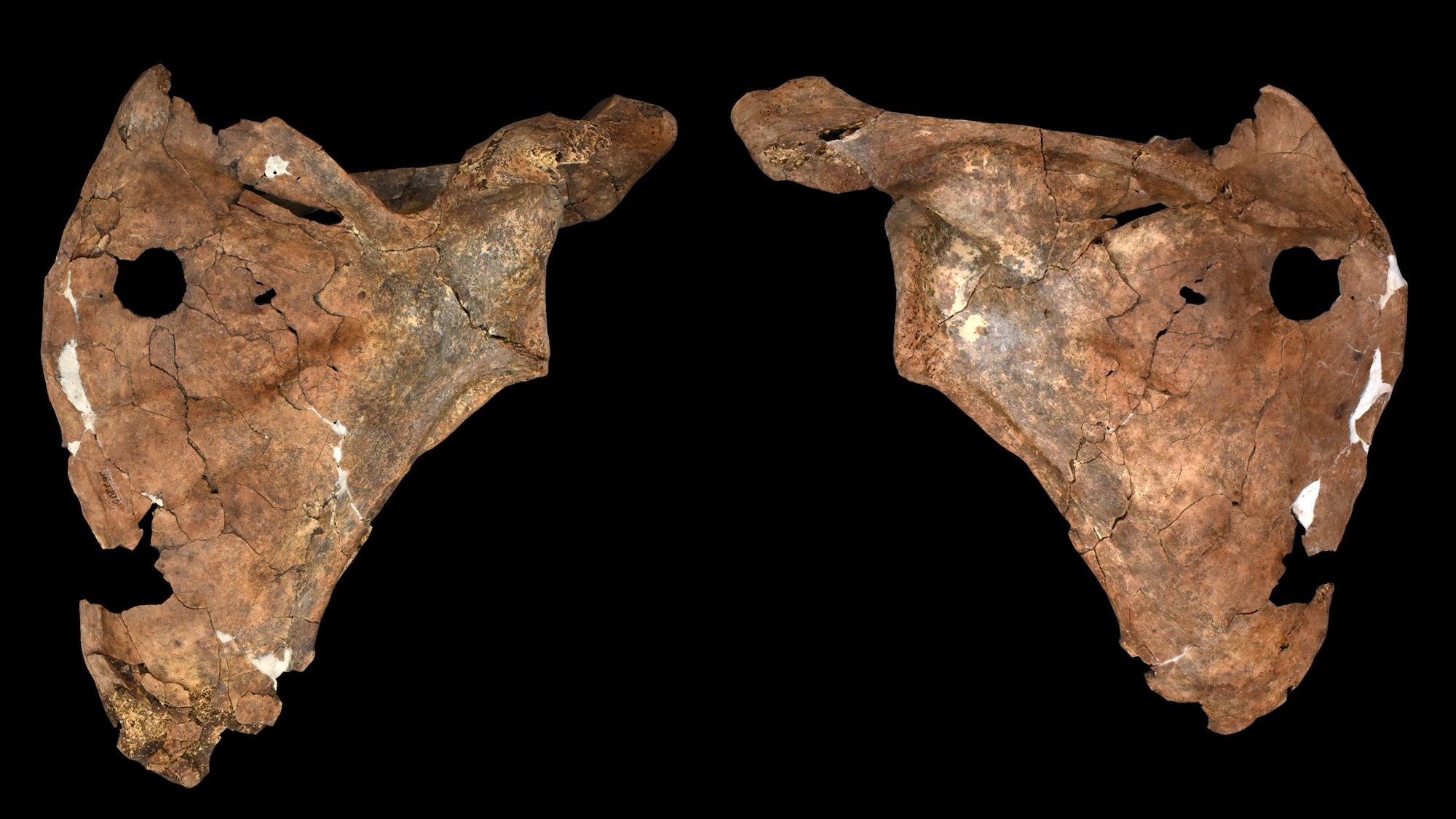
A small puncture wound through a 75,000-year-old Neanderthal shoulder blade may be the earliest evidence of death by spear on humanity’s family tree. Given forensic details such as the entry angle and overall damage, researchers believe the injury was made as an intentionally fatal “heart shot” that killed the ancient hominin within moments. The discovery is detailed in a study published today in the journal Scientific Reports.
In addition to the grisly injury, the nearly translucent bone itself makes this evidence even more striking.
“It’s extraordinary to have a perfectly preserved scapula from 75,000 years ago. These bones are so thin that you often don’t get complete scapulae from modern burials,” explained University of Cambridge archaeologist and study co-author Emma Pomeroy. “We were able to lift it out in one piece from under almost eight meters [roughly 26 feet] of rock and sediment.”
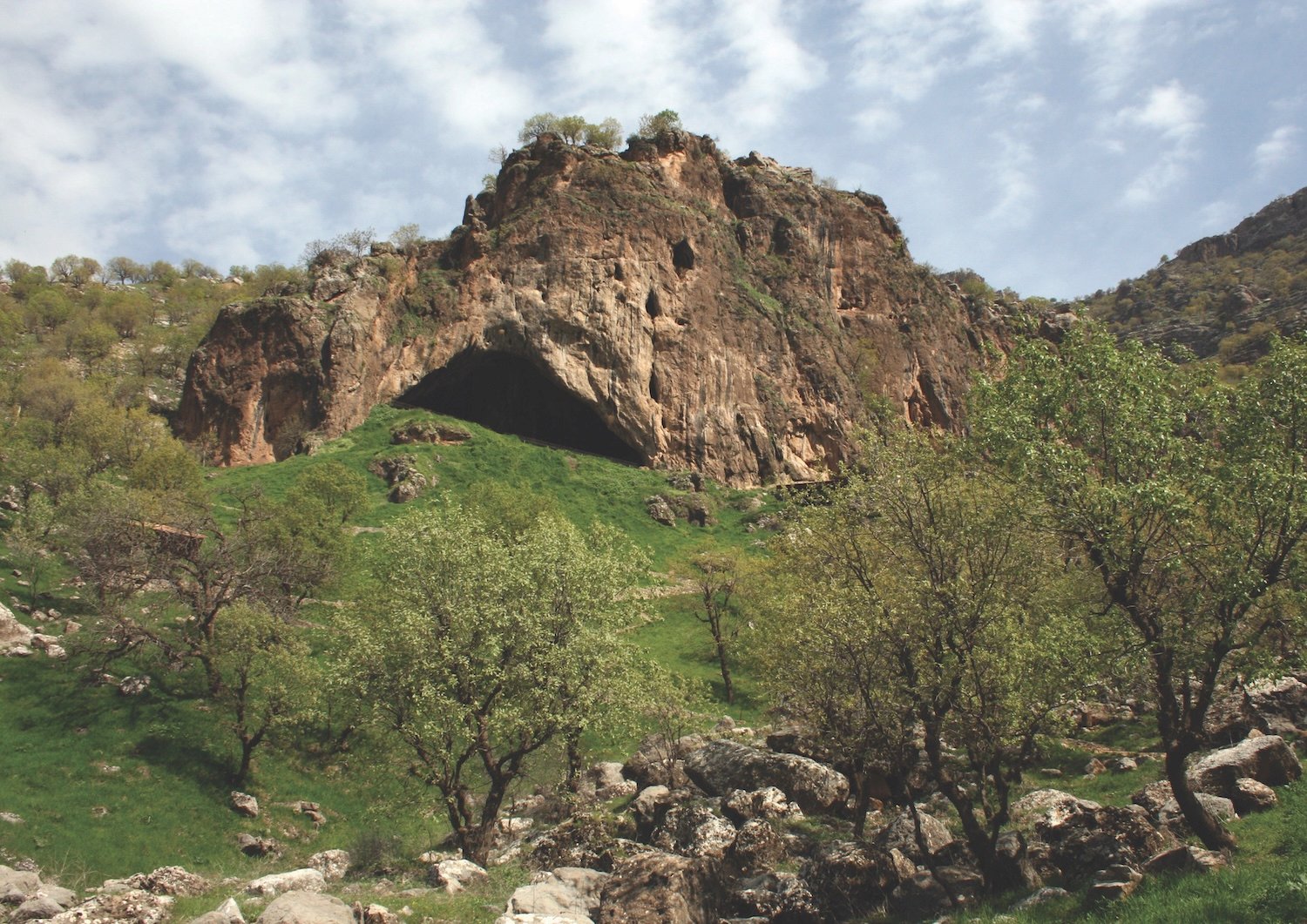
Pomeroy and her colleagues excavated the remains from inside Shanidar Cave, an archaeological site in Iraqi Kurdistan famous for containing evidence of ritualistic Neanderthal burials. The roughly 0.6 inch, nearly circular perforation on the bone was likely made with a wooden spear, since a stone or flint tip would create a flatter injury and leave behind microscopic mineral shards. The individual who inflicted the fatal injury drove the spear downward through the victim’s left chest cavity from the front, piercing major arteries and the lungs before creating the hole in the left scapula.
Located in Iraqi Kurdistan, Shanidar is a famous cave containing what appears to be early examples of Neanderthal funeral rituals. Credit: Graeme Barker
Remnants of a wooden spear weren’t found near the Neanderthal’s remains, which is understandable since the material often decomposes so quickly. That said, prior archaeological digs have revealed similar prehistoric wooden weapons dating as far back as 400,000 years. Pomeroy’s team believes a rounded spear carved from wood almost certainly caused the killing blow.
“Holes left by recreations of spears from this time are an excellent fit for the one we found in the Neanderthal scapula. That early technology absolutely works for this wound,” said Pomeroy.
Although it’s possible that a mishap like a hunting accident was the cause of death, Pomeroy argues the cumulative details suggest something far more purposeful.
“The position of the wound and the force required to push it right through the Neanderthal’s body bear the hallmarks of an intended kill shot directed towards the heart,” she added.
Another major injury the victim sustained before the possible stabbing supports this hypothesis—and complicates the story. In addition to the scapula, archaeologists documented a pair of left ribs, a right rib fragment, a nearly complete right hand, and seven teeth. Collectively, the remains indicate the Neanderthal was about 45 years old at the time of death. However, dental damage reveals the individual suffered a severe blunt-force blow to the front of the face at least a year before death. This injury split a lower front incisor lengthwise and even rotated some teeth inward.
“There’s no doubt that [they] would have had difficulty communicating and been in absolute agony for a long period of time,” said Pomeroy.
Despite this blow to the mouth, the Neanderthal survived for months or even years. This was only possible because others must have cared for the individual, including duties as simple as preparing softer foods to eat. In this sense, there is a distinct possibility the spear wound was a final, merciful act by someone close to them. According to Pomeroy, the prehistoric scene showcases both the highs and lows of what it means to be a human.
“On the one hand, we have evidence of a terribly violent end,” she said. “On the other, this was clearly an individual who was cared for during their lifetime.”
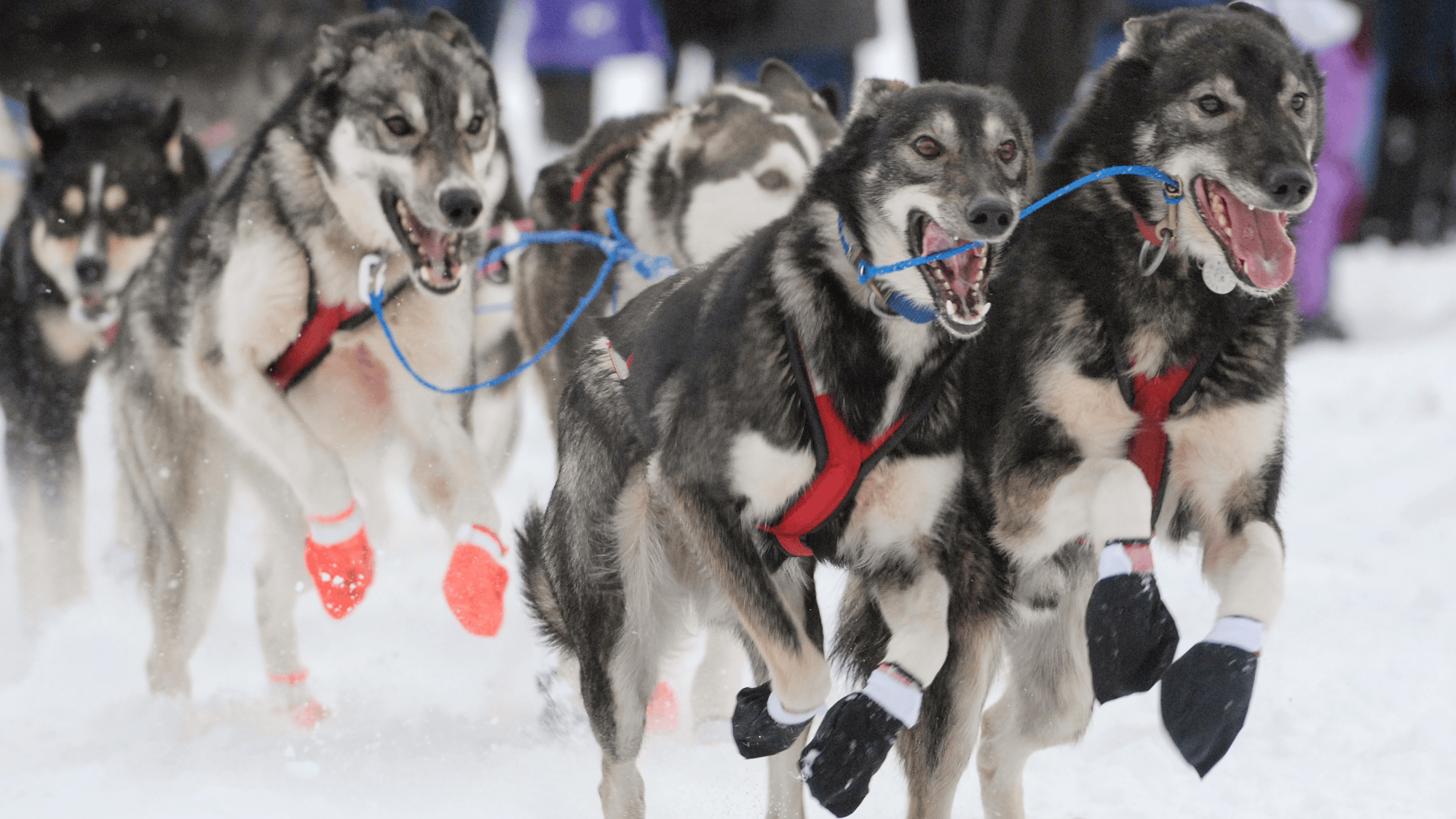
They’re some of Earth’s most powerful athletes, traversing thousands of miles of rough terrain in sub-zero temperatures, through blinding snow, and biting winds. Sled dogs have been helping humans travel across the planet’s coldest regions for centuries, hauling supplies, people, and equipment across the snow and ice. In the process, this important role that goes above and beyond simply being “man’s best friend” could have a visible impact on their evolution.
Sled dogs may have evolved shorter legs to help them pull loads more efficiently. Currently working sled dogs and those that lived about 2,000 years ago have six percent shorter leg bones than similar species, according to a study published today in the journal iScience. These findings could help biologists trace the origins of sled dogs and understand more about how dog-powered transportation spread over the past 9,000 years.
“Sled dogs have played an indispensable role in communities in the Arctic,” Mitya Kletzerman, a study co-author and an archeologist at the University of Haifa in Israel, said in a statement. “Without dogs, people couldn’t move as efficiently to hunt, relocate as conditions changed, or travel between communities to exchange knowledge and share new ideas. Understanding how the practice evolved could give us new insights into how people adapted to life in the Arctic.”
As of now, our earliest archeological evidence associated with dog sledding comes from 9,000-year-old sled parts and dog remains uncovered in 2017 on Zhokhov Island (present-day Russia). Sledding equipment like this is rarely found in the archaeological record, so it has remained difficult to pinpoint when and where the practice first emerged or spread.
Earlier studies have shown that work associated with humans can leave traces in an animal’s skeleton. Reindeer used for racing, carrying loads, and pulling have limb bone differences compared to those that do not pull. Kletzerman and her team were curious if sled dogs have also developed particular skeletal traits that have helped them adapt to all of the physical demands of pulling a sled.
In the study, the team developed a biomechanical model to help them understand how a dog’s body handles the work of pulling a sled. The model showed that one effective way to pull a sled loaded with material is for a dog to lower its center of gravity. This increases the canine’s ability to generate pulling force.
“When people or animals pull a load, it tends to tip them backward. A lower or more forward position of the center of mass counteracts this effect, allowing greater pulling force,” Kletzerman explained.
They then tested whether modern sled dogs have skeletal proportions that can lower their center of mass. They analyzed bones in 60 different modern canids, including sled dogs, wolves, spitzes, and mongrels. They then compared the lengths of five leg bones. Three in the forelegs (the humerus, radius, and ulna) and two in the hind legs (femur and tibia).
After accounting for overall skeletal size, they found that sled dogs have relatively shorter radius, ulna, and tibia bones than their non-sled pulling counterparts. These bones measured about six percent shorter on average.
“It’s unclear how this trait developed, but selective pressure may have preserved it, because it gave sled dogs an advantage over other dogs,” Kletzerman said.
To see if this characteristic already existed in ancient dogs, the team analyzed 82 ancient dog bones and three skeletons. The three skeletons were from ritually buried dogs uncovered from three archaeological sites associated with ancestral Inuit populations in present-day Chukotka, Russia, and date to 2,000 to 500 years ago.
Nearly 89 percent of the bones were consistent with the modern sled-dog pattern of shorter leg bones, as were all three ritually buried dogs. According to the team, this suggests that the skeletal pattern may be an effective way to identify that canine remains belonged to a sled dog, even when archaeological remains are incomplete or do not have any direct evidence of sled equipment.
“Dogs have been working alongside humans for thousands of years, but we’re only beginning to understand how that partnership shaped them,” Kletzerman concluded.
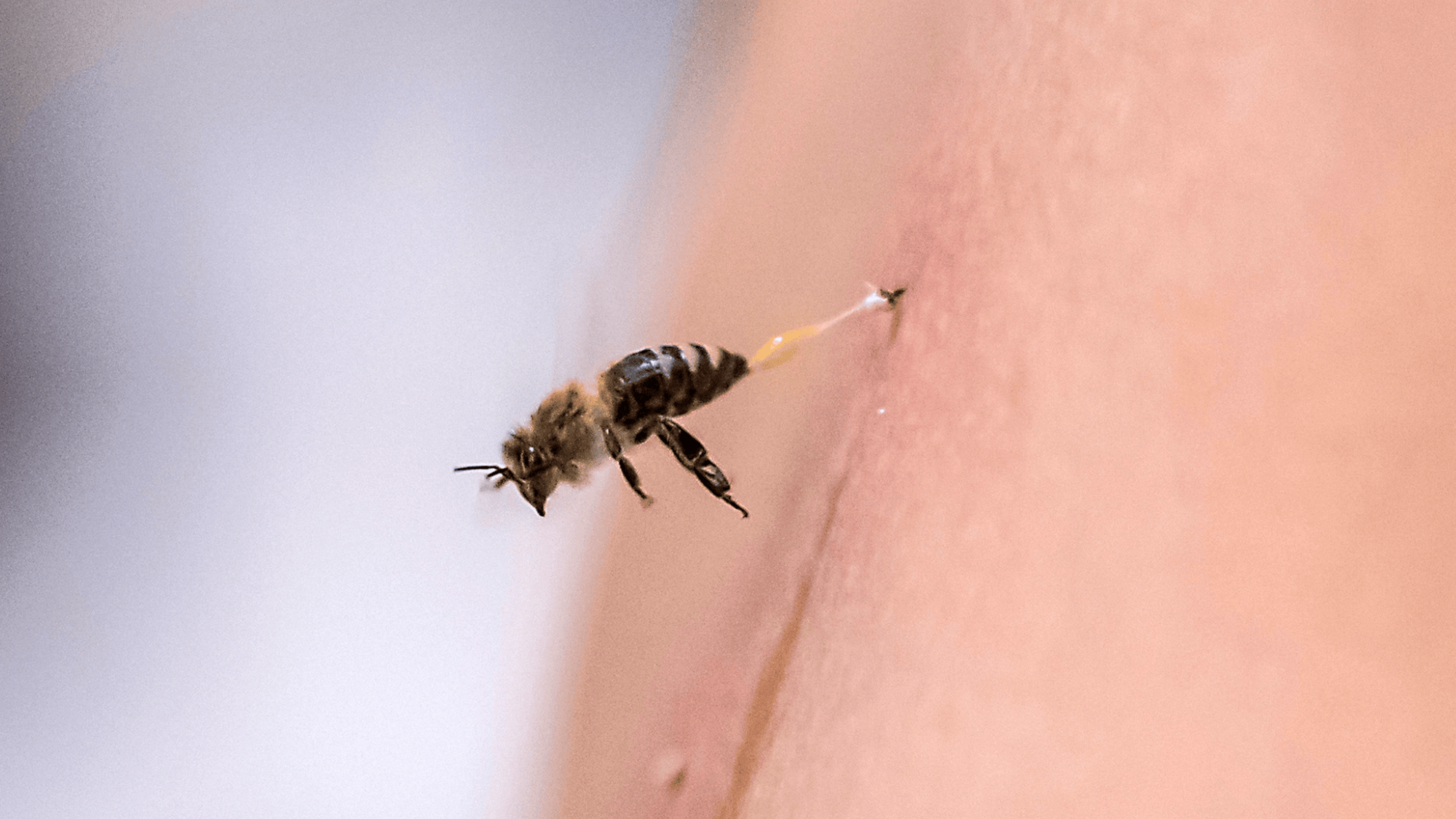
It’s one of nature’s seemingly magical tricks. A honey bee (Apis mellifera) stings a victim, and the stinger will still pump venom into a wound even after it has fully detached from the bee’s body. Thanks to some high-speed video, we may finally know the secrets behind this sting.
A team in Australia found that the tiny 2 millimeter (or only 0.08 inch) stinger of a honey bee works like a double-piston micro-pump. It pumps in two different directions and can deliver a continuous flow of venom. The findings are described in a study published today in the journal PNAS.
“We’ve known since as early as 1910 that the venom sac of a honey bee stinger empties into a chamber with little pumping elements called valves, but until now we didn’t know exactly how they work,” Fiorella Ramirez-Esquivel, a study co-author and entomologist at Macquarie University, said in a statement. “If you’ve ever been stung by a bee, you’ll know it’s a very painful process, but now we’ve been able to identify all the working parts packed into the tiny stinger.”
In bees, autotomy is when a worker bee thrusts its stinger into a target and then leaves the stinger behind. The stinger then continues to penetrate into the target tissue and inject venom all on its own.
To better understand how autotomy works, the team from Macquarie and the University of New South Wales had bees sting a clear gel that mimics human skin, while taking high-speed video. They saw that the tiny stinger itself contains several different components including one venom sac and a pumping chamber, muscles, and nerves. The stinger also has two sharp, pointed lancets. These lancets slide backwards and forwards on a system of rails (called the olistheter), similar to a reciprocating saw. These saw-like lancets are what pushes the stinger deeper into the skin and also pumps the venom.
Each of the two long lancets has a valve attached to it that sits inside of the pumping chamber. The team found that these valves change shape to form a seal during the downstroke. They then collapse during the upstroke, creating pressure for pumping while minimizing backflow when refilling.
“Finally, and perhaps most dramatically, as the valves meet in the middle of the stroke, they change shape again to push past each other,” said Ramirez-Esquivel. “This is a remarkable strategy to pump fluid since maintaining a seal is vital to effectively transmit pressure. The unique geometry of the valves is the key; they act as collapsible pistons and—by pumping in opposite directions—they’re able to deliver a continuous flow of venom.”
The team continued to explore the mechanics and flow of the stinger with microCT scans. They then used these scans to 3D print a small robot of the bulb chamber and lancets. The tiny bee-bot confirmed these key features of the pumping cycle.
“The double piston design adds complexity but it’s the key to the stinger being able to deliver venom continuously in a compact, autonomous unit,” said Dr Ramirez-Esquivel.
Understanding this mechanism could inspire designs for new micropumps to deliver medicine to human patients in a less invasive way.
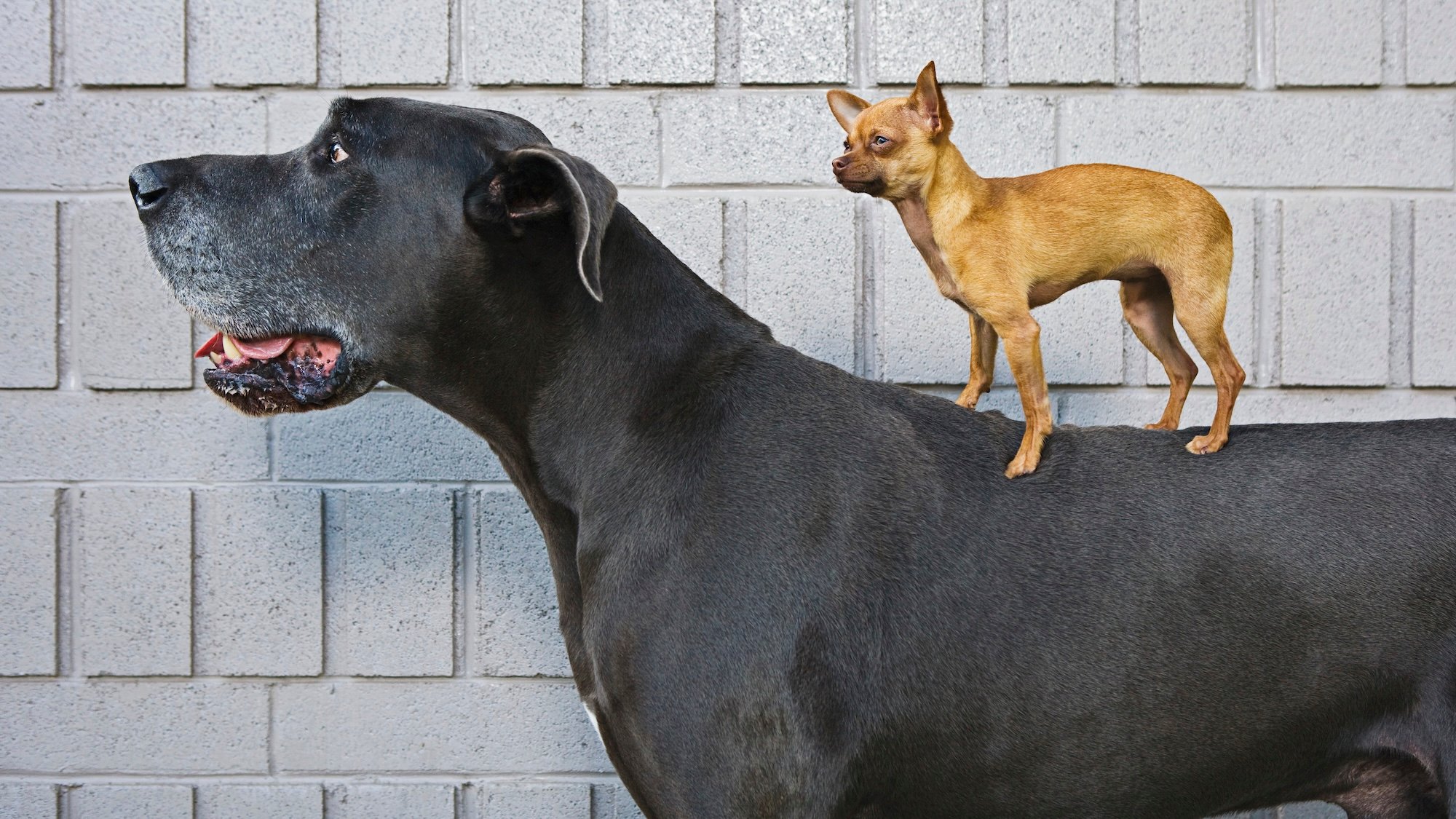
A first-of-its-kind genetic analysis of dog breeds presents the clearest insights into why larger dogs rarely outlive their smaller relatives. According to a team of biologists writing in the journal Science, the longstanding size–age correlation is likely due to “jumping genes” that inevitably begin sowing chaos inside canine DNA as dogs get older.
Most dog owners are aware of an unfortunate rule of thumb—the bigger the pooch, the shorter the lifespan. While this trend isn’t always the case, breeds like the Great Dane generally don’t stick around as long as smaller relatives like golden retrievers or even pugs. Larger dogs are also much more prone to age-related health issues and diseases. These canine traits starkly contrast with what biologists often see in other mammals, where larger species like whales frequently live much longer than tiny animals such as rodents. But these mysteries make your favorite furry friend’s genetics incredibly intriguing to researchers.
“Dogs provide an extraordinary model for understanding aging because they show dramatic variation in lifespan within a single species,” explained study co-author and Arizona State University (ASU) evolutionary biologist Noah Snyder-Mackler.
Dogs’ longstanding 30,000 plus years of companionship with humans also poses a unique opportunity for scientists. Pets and their owners share many of the same day-to-day experiences, environments, and physical habits, so it stands to reason that a better understanding of canine genes could guide future studies of human biology. Knowing this, Snyder-Mackler and his colleagues recently examined genetic data from 864 dogs stored in the Dog Aging Project. They specifically focused on mapping genome-wide DNA methylation, which allows genes to express themselves without altering their DNA sequence. DNA methylation is part of the larger epigenome influenced by external factors like stress and diet, and it’s also a widely known indicator of aging and DNA regulation.
Snyder-Mackler’s team discovered a dog breed’s aging is specifically tied to losing regulation in a class of transposable elements, or “jumping genes,” called LINE1s. These genes copy and intersperse throughout the genome by leaping between chromosomes, which damages DNA. This initially isn’t too problematic thanks to the regulation from DNA methylation, but that ability decreases with age. Less regulation means more damage in the form of genetic instability, diseases, and cancer.
“What we found is that the epigenetic regulation of transposable elements—especially LINE1s—appears to be a major factor shaping how quickly different dogs age,” Snyder-Mackler said.
Over 40 percent of LINE1-related portions of the genome lose DNA methylation as a dog ages, but the speed of decline is much faster in bigger breeds. The team’s findings showed larger dogs lost an average of 35 percent more LINE1 methylation than smaller canines.
“It suggests that faster aging in larger dogs may be driven, at least in part, by reduced control over these ‘jumping genes,’” concluded ASU genomicist and study co-author Blaise Mariner.
It’s still unclear if LINE1 behavior causes species to age, but the recent work emphasizes these genetic areas are focal points in biological aging. Beyond understanding aging differences among dog breeds, the discoveries may guide research into similar genetic changes in humans.
“If that’s the case, targeting these elements or the mechanisms that regulate them could be a promising avenue for future therapies to extend the health span in humans,” said Snyder-Mackler.
The viruses that gave rise to SARS-CoV-2 have been circulating in horseshoe bats and related mammals across Asia for millennia, and most of them have never spilled over into people. Yet a small number of these bat sarbecoviruses clearly can infect humans, as the COVID-19 pandemic demonstrated. A central question for pandemic preparedness has therefore been whether scientists can look at the properties of a newly discovered bat coronavirus and make an evidence-based judgement about how dangerous it might be. A new study published in PLOS Biology suggests that one measurable property, the breadth of species whose ACE2 receptor a virus can use, may be a surprisingly informative signal, predicting not only which animals a virus can infect but also how closely related it is to SARS-CoV-2 in the eyes of the human immune system.
Sarbecoviruses, the subgenus of coronaviruses that includes SARS-CoV and SARS-CoV-2, attach to their host cells through the receptor-binding domain, or RBD, of the Spike protein. This domain grips the angiotensin-converting enzyme 2 receptor, ACE2, on the surface of host cells, and it is also the principal target of neutralising antibodies. That dual role creates an intimate link between host range and antigenicity: the same molecular surface that determines which species’ receptors a virus can engage also determines how well antibodies raised against one virus recognise another. The research team, led by scientists at The Pirbright Institute together with collaborators including researchers at King’s College London, set out to map that relationship systematically across a diverse collection of bat sarbecoviruses.
The experimental strategy combined three complementary approaches. First, the researchers used binding assays to test whether the Spike proteins of different sarbecoviruses could attach to ACE2 proteins from a wide panel of mammalian species. Second, they used pseudotype-entry assays, in which harmless lentiviral particles are decorated with each coronavirus Spike protein, to test whether receptor binding actually translates into cell entry. Third, they measured how sera from SARS-CoV-2 convalescent individuals and monoclonal antibodies from vaccinated people who had experienced breakthrough infections neutralised the different viruses. By running the same viruses through all three assays, the team could directly correlate receptor usage with antigenic behaviour.
The results revealed a striking pattern. Sarbecoviruses in clade 1, the group that contains SARS-CoV-2 itself and the BANAL viruses isolated from bats in Laos, tended to be generalists. Their Spike proteins could productively engage ACE2 receptors from many different bat species, indicating that they are not finely tuned to a single host. In contrast, viruses from clade 3, exemplified by RhGB07, and clade 5, exemplified by Rc-o319, behaved as specialists, using a much narrower range of ACE2 receptors. Rc-o319, which was previously known to be unable to use human ACE2 efficiently, fits this specialist profile, whereas the BANAL viruses, which can use human ACE2, sit firmly in the generalist camp alongside SARS-CoV-2.
To understand the structural basis of this specialism, the team solved a novel structure of the RhGB07 Spike protein. The structure allowed them to identify specific residues within the RBD that are associated with the restricted receptor usage of this clade 3 virus. These residues presumably shape the receptor-binding interface in ways that favour particular bat ACE2 variants while excluding others. Such structural insights are valuable because they point to the molecular features that distinguish viruses capable of flexible receptor engagement from those locked into narrow host ranges, and they may help predict the properties of newly discovered sarbecoviruses from sequence data alone.
When the researchers extended their receptor panel beyond bats to include more diverse mammalian ACE2 proteins, the generalist phenotype largely held. Clade 1 viruses could bind and enter cells expressing ACE2 from humans, non-human primates, livestock, and rodents, as well as from species considered potential intermediate reservoir hosts, such as civets, raccoon dogs, and pangolins. This is significant because intermediate hosts are thought to have played a role in previous coronavirus spillovers, including the emergence of SARS-CoV in 2002. A virus that can already use the receptors of many species faces fewer barriers on the path from bat to human. The specialist viruses, by contrast, showed wider phenotypic diversity across this expanded panel, with RhGB07 exhibiting a more idiosyncratic pattern of receptor usage that did not simply mirror its bat-host profile.
The study also examined how SARS-CoV-2’s ongoing evolution in humans has changed its receptor preferences. Comparing variants that have emerged during the pandemic, the researchers found an expanding and, in some cases, shifting pattern of generalism, particularly for Omicron and its many sub-lineages. Omicron’s Spike has accumulated numerous mutations in the RBD, and these changes appear to have broadened or reconfigured the range of ACE2 molecules the virus can engage. This observation underscores that receptor usage is not a fixed property of a virus but a dynamic trait that can evolve under immune pressure and changing transmission landscapes, with potential consequences for which animal species might serve as new reservoirs for human-derived variants.
The antigenic side of the analysis produced equally important findings. When convalescent sera from people who had recovered from COVID-19 were tested against the panel of bat sarbecoviruses, clade 1 viruses, being phylogenetically closest to SARS-CoV-2, were antigenically the most similar. There was robust evidence for cross-neutralisation of these viruses, meaning that immunity generated against SARS-CoV-2 offers meaningful protection against its closest bat relatives. Importantly, however, the team also found evidence for limited cross-neutralisation across the entire subgenus, suggesting that even the more distantly related specialist viruses are not completely invisible to immunity primed by SARS-CoV-2 infection. This graded pattern of cross-reactivity maps closely onto the phylogenetic and receptor-usage relationships the researchers had established.
Using monoclonal antibodies derived from COVID-19 vaccinees who subsequently experienced breakthrough infections, the researchers were able to pinpoint which classes of antibody epitopes are responsible for the broader neutralisation observed across the sarbecovirus panel. Because antibodies recognise specific structural features of the RBD, identifying the epitope classes that mediate cross-neutralisation provides a rational basis for designing vaccines and therapeutics with deliberately broad coverage. Antibodies directed against more conserved features of the receptor-binding interface, rather than those specific to SARS-CoV-2’s particular configuration, appear to underpin the wider neutralising activity.
Taken together, the study delivers a unifying message: generalist ACE2 usage, phylogenetic proximity to SARS-CoV-2, and antigenic similarity travel together. A bat sarbecovirus that can flexibly use receptors from many mammalian species is likely to be a close relative of SARS-CoV-2 and likely to be partially neutralised by existing human immunity. This constellation of traits offers surveillance teams a practical framework for triage. When a new sarbecovirus is discovered, characterising its receptor-binding breadth through binding and pseudotype assays could provide an early, laboratory-based assessment of both its zoonotic potential and the degree to which current vaccines and antibodies might protect against it. As bat habitats are disturbed and human-wildlife interfaces expand, such tools for distinguishing the generalists from the specialists among the thousands of circulating bat coronaviruses could prove essential for anticipating, and perhaps preventing, the next spillover.
Subject of Research: ACE2 receptor usage breadth as a predictor of host range and antigenic relatedness across bat sarbecoviruses
Article Title: Breadth of ACE2 receptor usage predicts host range and antigenic relatedness across bat sarbecoviruses
Article References: Thakur, N., Newman, J., Ni, D., Seow, J., Hay, A. L., Lee, Y., Upadhyay, A., Ekundayo, B. E., Hammond, J. A., Peacock, T. P., Lau, K., Doores, K. J., & Bailey, D. (2026). Breadth of ACE2 receptor usage predicts host range and antigenic relatedness across bat sarbecoviruses. PLOS Biology, 24(10), e3003944. https://doi.org/10.1371/journal.pbio.3003944
The first animals may have appeared on Earth hundreds of millions years earlier than their fossils suggest, a new modeling study suggests.
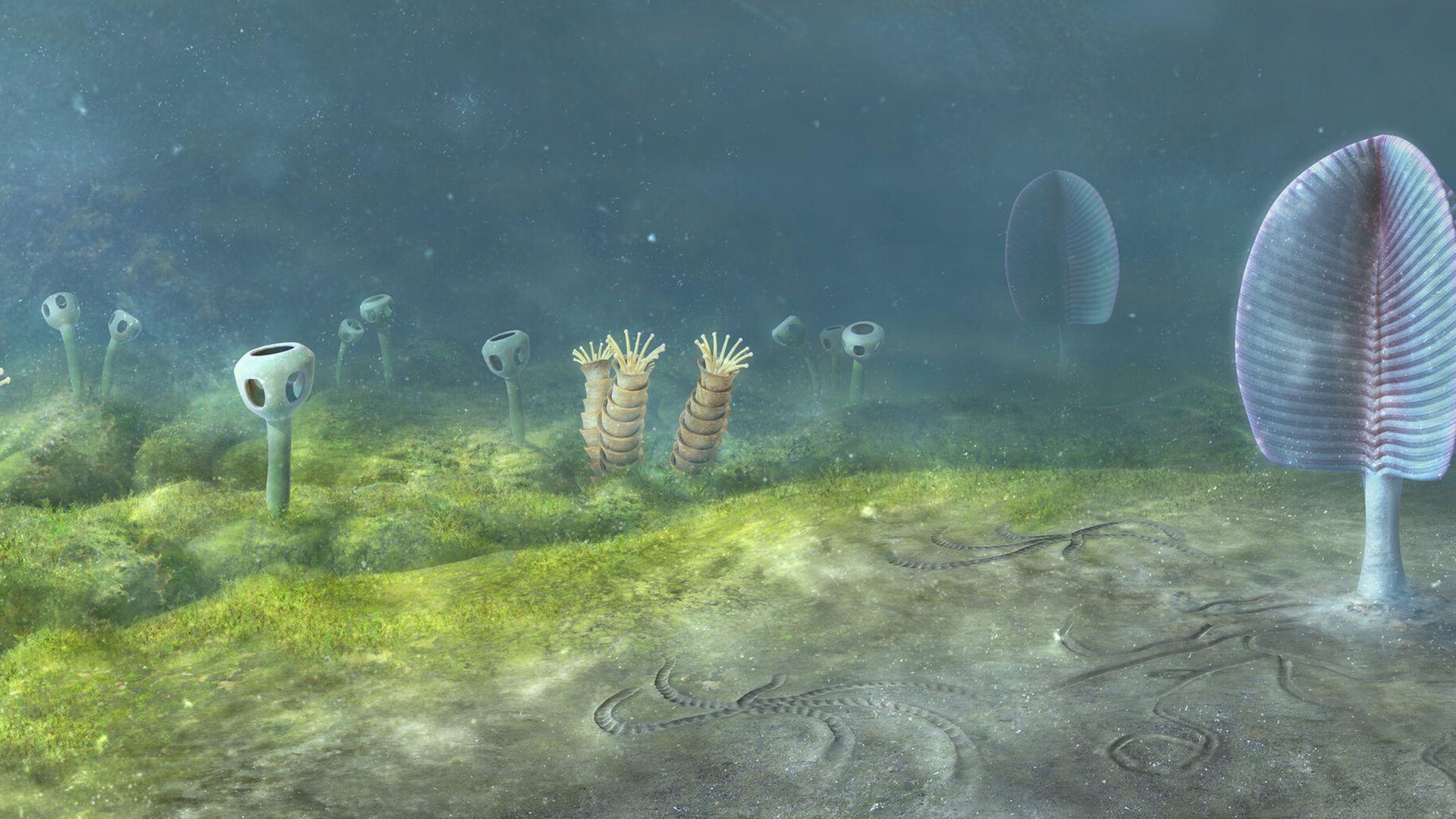
Previously, the earliest fossil evidence of animals dated to around 574 million years ago, during the Ediacaran period (635 million to 538 million years ago). In the new paper, a research team argues that we can't just rely on the spotty fossil record, and suggests that animals first appeared up to 200 million years earlier than the oldest known animal fossils.
In the study, published Friday (Oct. 2) in the journal Science Advances, the researchers argue that the absence of animal fossils in some exceptionally well-preserved ancient rocks doesn't mean the animals were absent from history. Instead, they suggest that the fossil record may be missing a key chapter of animal evolution, potentially pushing the origins of animals back to between 800 million and 700 million years ago.
This would place the emergence of animals deep within the Neoproterozoic era (1 billion to 539 million years ago), possibly before or during some of Earth's most extreme ice ages.
Even though scientists haven't found undisputed animal fossils from the Neoproterozoic, that doesn't mean animals didn't live at that time. Fossils can be absent from rocks for several reasons, including because scientists are looking in the wrong places or the conditions were unsuitable for creating fossils, making it difficult to determine the earliest evolved animals.
"Until that evidence becomes available, the precise birth date of the animal kingdom remains uncertain," study co-author Ross Anderson, an associate professor of natural history at the University of Oxford, said in a statement.
Where are the animals?
Until now, most researchers relied on the well-preserved rocks from the Ediacaran period, including the roughly 590 million-year-old Weng'an Biota in China, to investigate the timing of animal evolution. Because rock deposits there contain uniquely preserved microscopic organisms but no definitive animal fossils, experts have sometimes treated them as a kind of upper limit for when animals could have evolved.
"So the game is basically how much does it predate our first fossil discovery by and what happened in that evolutionary black box between when they actually originated versus when we get our first fossil window," Karma Nanglu, an assistant professor of evolutionary paleobiology at the University of California, Riverside who wasn't involved with the study, told Live Science.
But the researchers wondered whether other fossil sites from known animal periods actually had evidence of animal fossils.
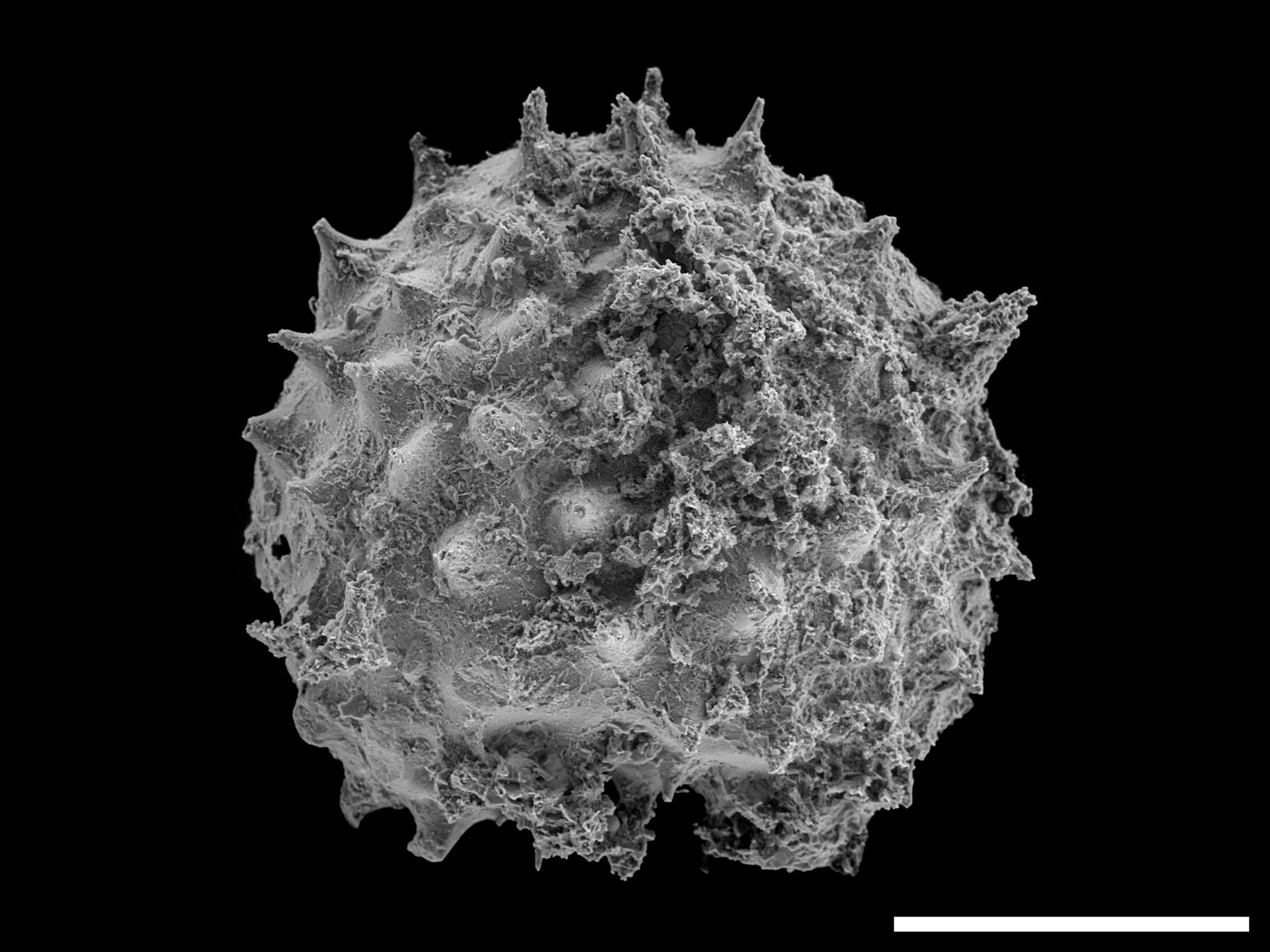
To find out, Anderson and his colleagues studied more than 140 samples from the Kheseen Biota in Mongolia, which is more than 40 million years younger than the 590 million-year-old Weng'an Biota deposit. Given that it's a younger deposit, the researchers hypothesized that there should be evidence of animal life left in the rock. Using electron scanning microscopy, the researchers saw microscopic fossils preserved in extraordinary detail, including tiny, spherical organisms and embryo-like structures containing internal cells.
An electron microscope image of Asterocapsoides wenganensis, a microscopic fossil from the Kheseen Biota in Mongolia. (Image credit: Derek Briggs.)
Yet, despite the quality of preservation, the researchers couldn't identify any of the microfossils as animals. That's important, because by the time the Kheseen Biota was deposited, animals were present elsewhere on Earth.
"The Kheseen Biota breaks the argument that the exceptional microfossils of Weng'an mean we would have seen animal fossils in the assemblage had they existed at the time," Anderson said. "The Kheseen microfossils are just as well-preserved, yet animals continue to be absent — despite the fact we know at that point they existed."
Using molecular clocks
Given the absence of fossil evidence, Anderson and his collaborators turned to another common method used to date ancient life: molecular clocks. Molecular clocks estimate when evolutionary lineages diverged by comparing genetic differences among living organisms and combining those differences with rates of genetic change. For example, if two bird species have five DNA changes and one DNA change takes about 1 million years to accumulate, scientists could estimate that the two species diverged around 5 million years ago.
"Molecular clocks are useful when we don't have a particularly good fossil record for a group of interest or a time period of interest," Nanglu said.
When the analysis was constrained by the younger Weng'an deposit, the estimated origin of animals was comparatively recent. When they used older geological constraints — specifically rock formations in Norway, Australia and Arizona deposited between around 850 million and 730 million years ago that have been used in the past for trying to find animals' early ancestors, the timeline changed. By comparing modern animal DNA to reference dates from the fossil record along with evolutionary rates of change — their estimate shifted back by roughly 200 million years, to between about 800 million and 700 million years ago.
"Pre-Ediacaran animal body fossils still elude us, and this analysis does not prove that animals existed 800 million years ago," study first author Orin Lole Durbin, a doctoral student of paleobiology at Virginia Tech who was a University of Oxford undergraduate at the time of the study, said in the statement. "Meanwhile, our molecular-clock analyses show how much further back their evolutionary history could extend."
Could animals have lived before "Snowball Earth"?
There are other clues that animals may have a longer history.
Chemical fossils, or biomarkers, have been interpreted as evidence consistent with sponges living at least 650 million years ago, tens of millions of years prior to the oldest known animal fossils.
If animals did originate 800 million years ago, their emergence would also intersect with the Cryogenian period, which began around 720 million years ago as part of the Neoproterozoic era. During this interval, Earth experienced enormous glaciations often referred to as "Snowball Earth."
Although there is no definitive answer to whether animals survived this uncertain time, the researchers plan to search additional Neoproterozoic rocks with different environments and preservation conditions to find more evidence for their analysis.
"Fossils themselves are by definition kind of hidden from general sight," Nanglu said."Beyond that there's an even more hidden world, and that has a lot of potential to tell us about animal origins."
Think you know about natural selection? Try your hand at our evolution quiz!
Cysteine is one of the main building blocks that cells use to make proteins. But this amino acid is a double-edged sword—too much cysteine is toxic to the cell. Cells therefore keep free cysteine levels to a minimum, converting most of the amino acid into the antioxidant glutathione.
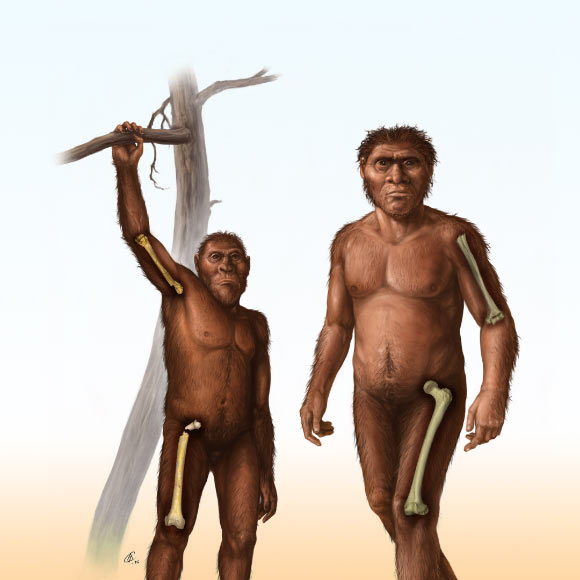
New research led by University of the Witwatersrand and University of Southern California paleoanthropologists sheds more light on one of the most debated transitions in human evolution: when our ancestors stopped regularly climbing trees and committed fully to walking on two legs.
Editor’s Note: This article was co-written by Lucas Brown and Alexia Kubas, our 2026–2027 AAS Media Fellows. We’re excited to welcome Lucas and Alexia to the team and look forward to featuring their writing on AAS Nova regularly!
Planetary nebulae mark a key evolutionary phase for low- and intermediate-mass stars, but properties of the parent star are difficult to sleuth out. Researchers have discovered an extragalactic planetary nebula in the center of a star cluster, offering an unprecedented opportunity to trace planetary nebula properties to parent star stats.
The Puzzle of Planetary Nebula Progenitors
A planetary nebula, so named because the first ones discovered resemble the planet Uranus in a small telescope, forms when a Sun-like star runs out of fuel and sheds its outer layers, leaving a hot remnant core enveloped in a gaseous nebula. At higher masses, a different process kicks in: stellar cores can collapse to produce a chaotic burst of stellar material called a supernova. Where exactly the boundary should be placed between planetary nebula progenitors and supernova-forming stars remains an outstanding question in the field of stellar evolution.
Answering this question is challenging because once a planetary nebula becomes visible, the progenitor star’s transition into a hot, compact white dwarf is already underway, making it difficult to determine the star’s initial mass. For this task, researchers seek out planetary nebulae within open clusters — groups of stars that were born from the same molecular cloud and are roughly the same age — so that cluster characteristics can help piece together the progenitor puzzle. Since open clusters tend to be relatively young, they are also a great tool to probe planetary nebulae from more massive progenitors and explore the boundary between stars that produce planetary nebulae and those that go supernova.
Striking Gold
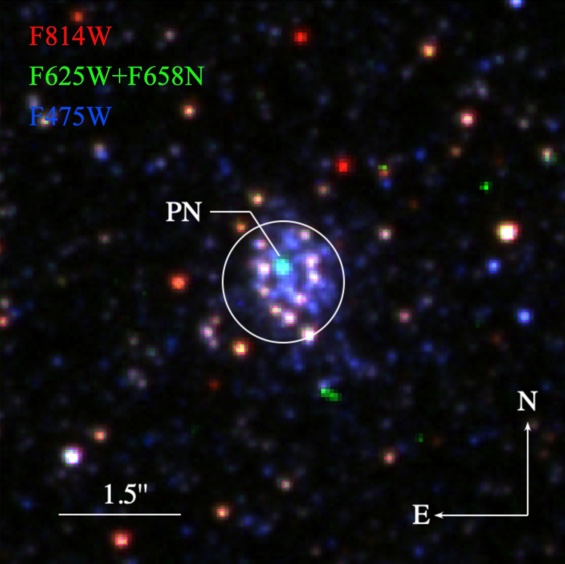
Open cluster AP 210 and planetary nebula M279 in the Andromeda Galaxy, as seen in archival Hubble observations. Click to enlarge. [Chen et al. 2026]
Numerous planetary nebula–open cluster pairs have been found in the Milky Way, but among those with well-constrained progenitor masses, very few push into the higher-mass regime where things get really interesting. Outside our home galaxy, the search has proven even more challenging due to data sparsity. Despite the odds, Pinjian Chen (Chinese Academy of Sciences) and collaborators have found a planetary nebula with one of the highest known progenitor masses in an open cluster in the Andromeda Galaxy.
To make this identification, Chen’s team used archival Hubble Space Telescope and MMT data to examine the location of the planetary nebula candidate M279 within the Andromeda Galaxy. The researchers’ critical observation was that the nebula not only overlaps with the position of an open star cluster called AP 210, but it also has an estimated velocity that matches the velocity of other stars in the cluster. These associations, when combined, provide strong evidence that M279 originated within the cluster.
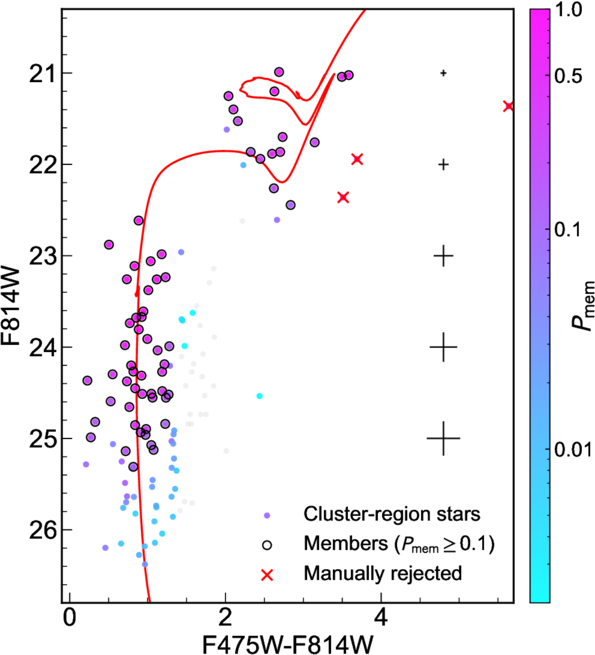
Color–magnitude diagram of stars in the open cluster AP 210. Colored dots represent stars, and the red line is the best-fitting isochrone, which was used to determine the cluster’s age. Click to enlarge. [Chen et al. 2026]
What’s My (Cluster) Age Again?
M279’s cluster origin has significant consequences for pinning down the properties of the progenitor star. First, stars in open clusters all form at roughly the same time — 90 million years ago in the case of AP 210 — allowing the authors to set a tight constraint on the progenitor’s age. Then, because the rate at which a star burns through its nuclear fuel and generates a planetary nebula is related to its initial mass, the researchers are able to connect this age to a specific progenitor mass of around 5.7 solar masses.
The team also subtracted the central star’s contribution from the observed spectrum to isolate the nebula’s composition, illuminating specific nuclear processes relevant to higher-mass stars. Planetary nebulae are cosmic cocktails whose chemical abundances trace the composition of the interstellar medium when the progenitor formed as well as elements formed via nucleosynthesis inside the star during its lifetime. Chen and collaborators found the nebula to be significantly nitrogen-enhanced, which is consistent with a massive asymptotic giant branch progenitor undergoing hot bottom burning that converts carbon to nitrogen. This newly minted metal would then be mixed back into the star’s outer layers, flooding the resultant nebula with its particular spectral signature.
While this work represents only a single observation of a high-progenitor-mass planetary nebula — and only the third compelling extragalactic planetary nebula–open cluster pair — it opens up the possibility that there may be many more waiting to be found, unlocking new insight into the lives of massive stars.
Citation
“A Planetary Nebula from a 5.7 M⊙ Progenitor in a 90 Myr M31 Star Cluster,” Pinjian Chen et al 2026 ApJL1005 L2. doi:10.3847/2041-8213/ae77e4
A new prehistoric animal species from Tanzania dating to around 240 million years ago, during the Triassic period, has been described by an international team of researchers. Led by the University of Bristol, the new species, named Dinodontosaurus isiyavamanda, could help scientists refine the age of one of the world's most significant fossil sites and reshape the timeline of early dinosaur evolution.
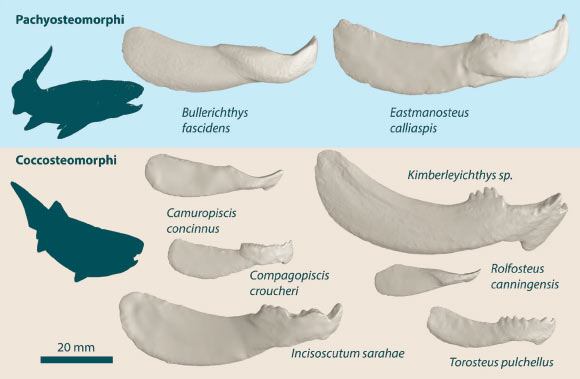
Long before sharks or reptiles ruled the seas, armor-plated fish called placoderms were already experimenting with different jaw designs to crush hard-shelled prey.
Many organisms often set up their homes on sea turtles. Known as epibionts, the most noticeable passengers are usually the algae and barnacles clinging to the marine reptile’s protective shell. Other epibionts include tiny crabs in the Planes genus who frequently hitch rides inside the crevices between a turtle’s shell and body.
Biologists at the Florida Museum of Natural History recently confirmed a surprising addition to crustaceans’ roster of ocean taxis, however. After examining dozens of specimens collected during surveys off Costa Rica’s Pacific Coast, researchers now know that some small crabs will occasionally climb aboard sea snakes. But these aren’t the Planes crabs the biologists expected. As they describe in a study published in the journal Ecology and Evolution, the clawed invertebrates instead belong to three species related to Planes within the same family.
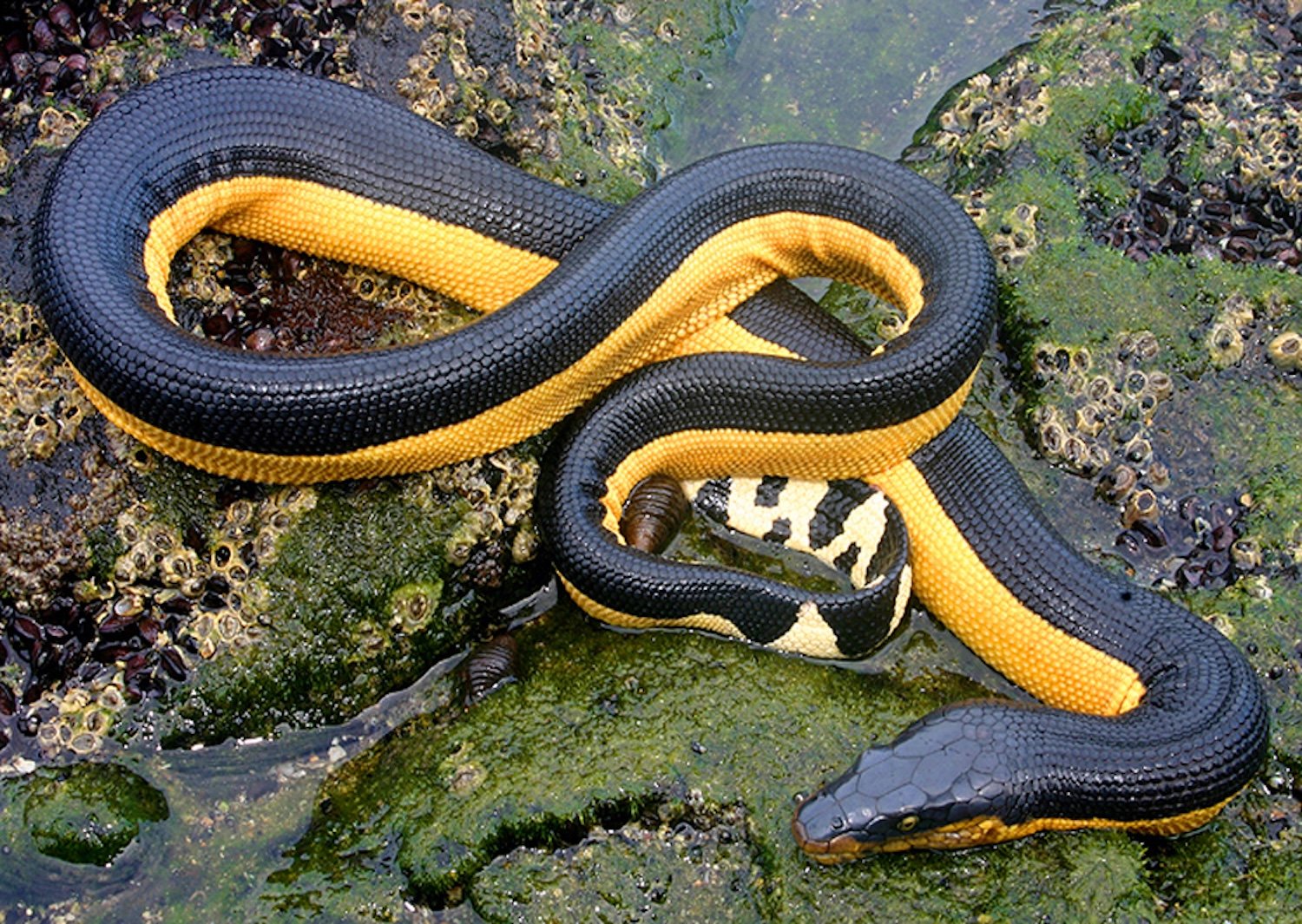
University of Florida (UF) marine herpetologist Joseph Pfaller first noticed one of the suspicious crabs back in 2012 while studying the yellow-bellied sea snake (Hydrophis platurus). More specifically, he was examining the reptiles’ old skin. Sea snakes shed their scales just like their land-based cousins, but they accomplish the task much differently. Without any hard surfaces to slide against, sea snakes coil into loops to generate enough friction to remove the outer epidermal layers.
The yellow-bellied sea snake is studied more for its appearance and behavior than its passengers. Credit: Flaxington
After only collecting a couple of snakes, Pfaller soon watched a small crab fall off one of them. He knew the ocean serpents sometimes hosted barnacles or other stationary organisms, but couldn’t recall a similar situation involving crustaceans—so he started paying attention.
Pfaller amassed 371 sea snakes by the end of his expedition, and he identified far more than crabs. Some of the reptiles also hosted shrimps, snails, and even a clingfish. Pfaller and his colleagues assumed no one previously noticed the additions because marine biologists are generally more focused on the yellow-bellied sea snakes themselves due to their colorful appearance, uncommon distribution, and fascinating underwater behaviors.
Technically speaking, most of the crabs weren’t actually crabs just yet. Instead, most of Pfaller’s collection were considered to be in megalopae—a phase between larva and adult life. That said, at least one young crab appeared to belong to the Planes genus.
Although Pfaller stored the preserved specimens at Florida Museum of Natural History, he soon transitioned to focusing on sea turtles instead of snakes. It took a decade before the oddities resurfaced. After casually mentioning the collection to University of Guam crustacean expert Robert Lasley, his colleague couldn’t resist the joke:
“‘Wait! Wait! Wait! Are you saying you have planes on a snake?’” remembered Pfaller, referencing the cult horror movie Snakes on a Plane.
One of the crab megalopa found on a sea snake. Credit: Elefánti et al. (2026)
The pair decided to follow up on his specimens by sequencing their DNA, assuming to confirm their Planes suspicions,but results collected by study co-author and UF invertebrate researcher Soma Elefánti weren’t what they expected.
“Honestly, the thought that we could name this study ‘Planes on a Snake’ was enough to get me motivated, but when we got the results, it was evident that something weird and interesting was going on here,” Lasley said.
As it turned out, none of the megalopae were in the Planes genus. Instead, they belonged to other species in the Grapsidae family, whose adult crabs live on Costa Rica’s coastal trees and rocky shorelines. The study authors knew most crabs release larvae into the water, regardless of living on land or in the water when adults. Because of this, they theorized that the larvae that survived long enough to transition into megalopae instinctually started scoping out a more solid habitat.
“They can swim well, but these things are also built to climb or settle onto something,” Lasley said.
The megalopae that eventually ended up on coastal drift lines likely encountered sea snakes, latched on, then were swept back out into the ocean.
“The snakes are just there, and the crabs don’t know the difference,” explained Pfaller.
The reason no adult Planes crabs were found on the snakes can also be explained by their family tree—Planes crustaceans evolved to know better than to try making a home on the reptiles. Meanwhile, these other species in the Graspidae family are still learning. But since these floaters would never make it back to shore, evolution would have likely taught them the hard way.
“It’s not a good idea. These crabs [had] made a poor decision,” said Lasley.
New research from the Natural History Museum at the University of Oslo suggests ichthyosaurs’ rib cages may have done a job modern whale ribs don’t: acting as ballast to help them dive.
In one of the most ambitious mapping efforts in the history of radio astronomy, China’s Five-hundred-meter Aperture Spherical radio Telescope — better known as FAST — has delivered a cosmic atlas of staggering proportions. The FASHI team, headquartered at the National Astronomical Observatories of the Chinese Academy of Sciences (NAOC), has announced the second data release of the FAST All Sky HI Survey, published as a cover story in the journal Science China Physics, Mechanics & Astronomy. Just two years after the survey’s first data release catalogued 41,741 galaxies, the new edition explodes that figure to 156,411 extragalactic sources detected in neutral hydrogen — nearly a fourfold leap that firmly establishes FASHI as the largest census of atomic hydrogen gas in galaxies ever compiled.
The scale of the achievement is difficult to overstate. FASHI DR2 now spans roughly 19,500 square degrees of sky, equivalent to 47.3 percent of the entire celestial sphere, and reaches out to redshifts below z = 0.09 — distances of well over a billion light years. For comparison, the previous benchmark in this field, the ALFALFA survey conducted with the now-collapsed Arecibo telescope in Puerto Rico, charted approximately 31,500 hydrogen-bearing galaxies across about 7,000 square degrees. FASHI DR2 has thus quintupled the galaxy count of its Arecibo predecessor while covering nearly three times the sky area, and it has done so with a sensitivity roughly 0.7 times deeper than ALFALFA’s, measured as a median noise level of 0.57 mJy per beam at a velocity resolution of 6.4 kilometers per second. In radio astronomy, lower numbers mean better sensitivity — and FASHI’s numbers are among the best ever achieved in a blind, wide-area survey.
The engine behind this performance is FAST itself. With its 500-meter dish nestled in the karst hills of Guizhou Province, the telescope remains the most sensitive single-dish radio instrument on Earth at the 21-centimeter wavelength of neutral hydrogen. The survey exploited a 19-beam receiver array, allowing the telescope to sweep the sky in an efficient drift-scan mode that turned routine transits of the sky above the dish into a torrent of data. Crucially, the instrument maintained exceptional stability across five full years of observing, from August 2020 through July 2025. In surveys of this kind, calibration drifts and instrumental fluctuations can quietly corrupt weak extragalactic signals; FAST’s long-term steadiness meant that faint hydrogen emission from distant galactic disks could be stacked, averaged and trusted.
Neutral hydrogen — the primordial fuel of star formation — is invisible to optical telescopes. The 21-centimeter spectral line, produced when the electron in a hydrogen atom flips its spin relative to the proton’s, provides the only direct tracer of the cold atomic gas from which galaxies build their stars. Detecting this feeble signal across cosmological distances requires both enormous collecting area and exquisite receiver stability. A blind HI survey, unlike targeted observations, simply listens to every direction on the sky and catalogs whatever whispers back, making it an unbiased inventory of gas-rich galaxies regardless of their optical brightness, dust content or morphology. That is precisely why such surveys are prized: they catch the dim, gas-dominated dwarfs and bloated hydrogen clouds that optical catalogs systematically miss.
To give the hydrogen detections physical meaning, the FASHI team cross-matched their radio catalog with the two great optical spectroscopic endeavors of the current era: the Dark Energy Spectroscopic Instrument survey and the Sloan Digital Sky Survey. This cross-identification yielded precise optical counterparts for approximately 64,000 sources, anchoring the hydrogen detections to galaxies with measured distances, stellar masses and star-formation rates. From these matches the team constructed a completeness-corrected statistical sample of more than 109,000 galaxies — a sample robust enough to push fundamental measurements into territory previously beyond reach.
The flagship result of the release is a new measurement of the HI mass function, the statistical distribution describing how many galaxies of a given hydrogen mass populate the local universe. Thanks to the sheer sample size and FAST’s depth, the team extended the reliable measurement range of this function down to hydrogen masses of about one million solar masses — roughly 10 to the power 6.2 in solar mass units — a regime where only the faintest dwarf galaxies live. These smallest gas reservoirs are the building blocks of galaxy evolution, the raw material that hierarchically assembles larger systems, and their census has long been fragmentary. Equally striking is the derived cosmic density of neutral hydrogen: Ω_HI equals (4.71 ± 0.03 statistical ± 0.40 systematic) × 10⁻⁴ in units of h₇₀³ Mpc⁻³ dex⁻¹. The statistical uncertainty is a mere 0.6 percent — the most precise determination of the universe’s atomic hydrogen budget ever made at low redshift.
Why does such a number matter? The cosmic HI density tracks how much raw fuel exists for future star formation, and comparing its evolution across cosmic time constrains how galaxies acquire and exhaust their gas. Because atomic hydrogen sits at the interface between the intergalactic medium and the star-forming interstellar medium, its abundance is a sensitive probe of gas accretion onto dark matter halos and of the feedback processes that heat or expel gas from galaxies. Baryonic matter, after all, is hidden in far more places than stars: cold gas, warm gas, plasma in and around halos. A precision measurement of the hydrogen component anchors models of where ordinary matter resides within the cosmic web of dark matter.
The applications of the new catalog ripple far beyond that single number. For galaxy evolution studies, the 156,411 detections provide direct observational constraints on gas accretion, star formation feedback and galaxy transformation — the processes that turn blue, gas-rich spirals into passive red systems. For cosmology, the HI mass function tests galaxy formation models within the prevailing dark matter framework. For large-scale structure work, the survey complements optical galaxy catalogs to trace the so-called HI cosmic web, revealing how diffuse gas threads through filaments and pools in voids — architecture that optical surveys alone can only infer. The dataset will also aid gravitational-wave and transient science: rapid localization of the host galaxies of gravitational-wave events depends on accurate galaxy catalogs, and an inventory of hundreds of thousands of nearby galaxies sharpens those host identifications. Finally, FASHI serves as a pathfinder for the Square Kilometre Array, the giant interferometric observatory under construction in Australia and South Africa, providing benchmark samples against which next-generation interferometric surveys will calibrate their systems and select their targets.
The trajectory of the project tells its own story. When FASHI DR1 appeared, it broke ALFALFA’s long-standing record for the largest blind HI survey. With DR2, the team argues, FASHI has moved from record-breaking to benchmark-setting — a transition that observers of Chinese radio astronomy describe as the shift from follower to leader in 21-centimeter science. The cover of the journal issue reinforces the mood: a warm sunset scene evoking the faint 21-centimeter photons from distant galaxies arriving at FAST after journeys of billions of light years, messengers of the cold gas that permeates the universe.
The survey’s story is also one of institutional perseverance. The work is led by NAOC in collaboration with the Guizhou Radio Astronomical Observatory, the Shanghai Astronomical Observatory, the CAS South America Center for Astronomy, Peking University and other partner institutions, with funding from the National Natural Science Foundation of China, the Chinese Academy of Sciences and the Ministry of Science and Technology of China. Sustained national investment in a single flagship instrument has now produced a dataset whose statistical power no other facility can currently match at these wavelengths.
The full FASHI DR2 source catalog has been released to the public through the FAST data portal, a decision that will likely seed hundreds of follow-up studies in the coming years, from targeted observations of hydrogen-rich dwarfs to statistical analyses of gas in galaxy groups and environmental studies of gas stripping in clusters. As the SKA era approaches, FASHI DR2 stands as both a scientific foundation and a demonstration: that a single dish, used patiently and precisely over five years, can still redraw the map of the gaseous universe. With nearly half the sky covered and a quarter of a million more square degrees potentially within reach, the question is no longer whether FAST will extend the hydrogen frontier, but how far.
Subject of Research: The FAST All Sky HI Survey (FASHI) second data release — a blind survey of extragalactic neutral hydrogen (21 cm) sources using the FAST telescope, measuring the HI mass function and cosmic HI density.
Article Title: FAST All Sky HI Survey completes “two-step leap” — from 41,741 to 156,411 galaxies, China’s FAST telescope maps the largest cosmic gas atlas
Keywords: FAST telescope, FASHI survey, neutral hydrogen, HI mass function, cosmic web, galaxy evolution, 21 cm line, ALFALFA, radio astronomy, Square Kilometre Array, dark matter halos, cosmology

 Login