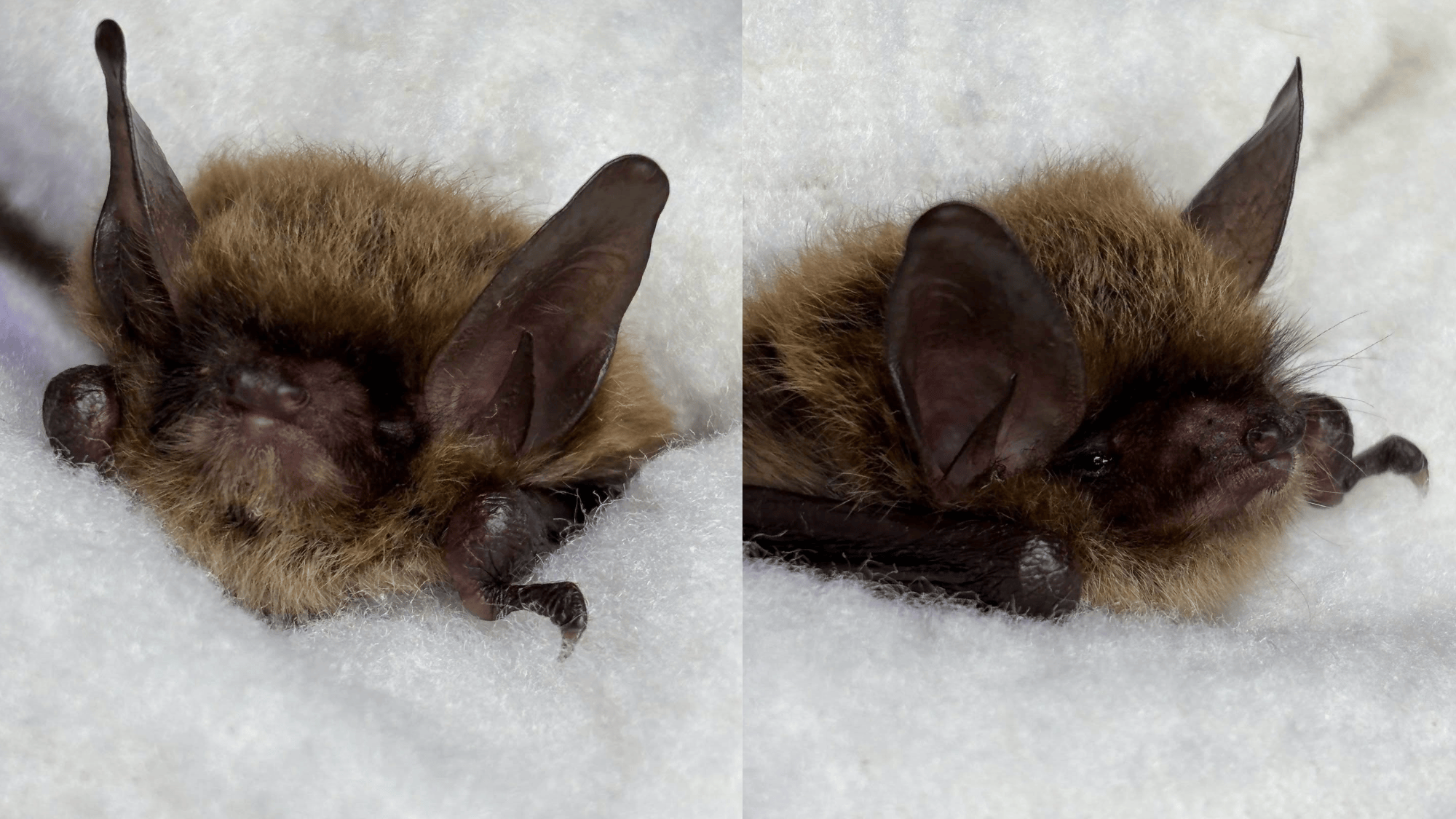
With Alaska’s fat bears done packing on their winter weight and spooky season in full swing, it’s time to turn our collective animal-loving attention to a smaller mammal—bats. The Bureau of Land Management’s (BOEM) annual Bat Beauty Contest returns on October 24 and promises “plenty of batty puns.”
Beginning Saturday, October 24, BOEM will post photos of the competitors to their Facebook and Instagram accounts and ask you to vote for the best-looking one. All of the competing bats are part of wild populations that live on land managed by the public agency and are photographed by wildlife technicians. The winner will be announced (appropriately) on Saturday, October 31.
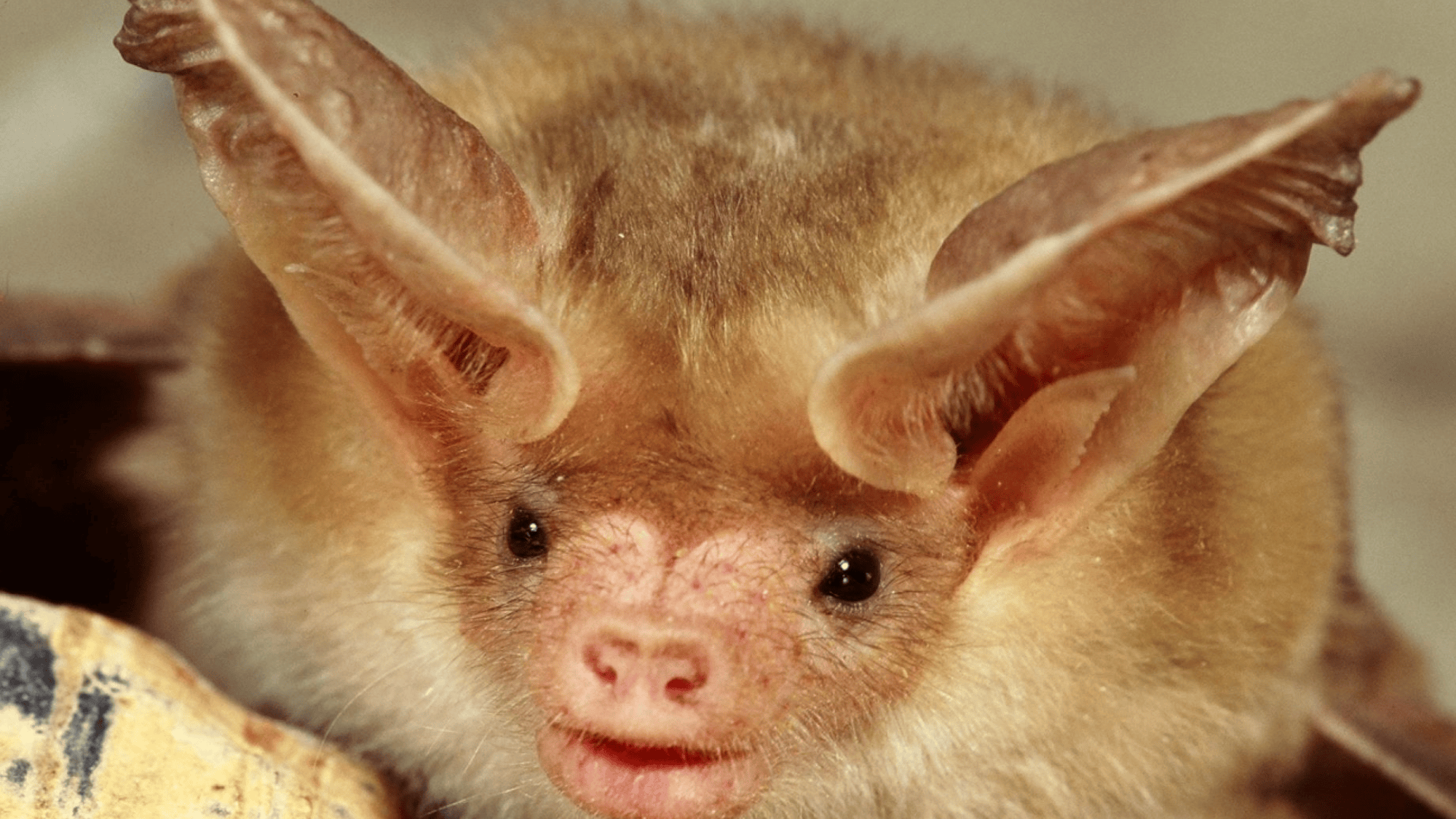
The bats in this competition are known for their squishy faces and clever names. In 2024, a hoary bat (Lasiurus cinereus) from Oregon named Hoary Potter took the crown. Other contestants included a long-eared myotis (Myotis evotis) named Honey Bunches of MyOtis, a myotis bat (Myotis myotis) named Robert Battinson, and western small-footed bats (Myotis ciliolabrum) named Batt Damon and Batlor Swift. The contest was not held in 2025 due to the 43-day-long federal government shutdown.
A hoary bat at Isle Royale National Park in Michigan. Image: NPS Photo/Bat Conservation International.
The contest is not all bat puns and a way to keep the spirit of Fat Bear Week alive. It falls during Bat Week (October 24-31). Bat Week raises awareness about the Earth’s only flying mammal. More than just a Halloween symbol, bats play a critical ecological role as plant pollinators and through eating insects that can threaten crops and forests around the world. According to Bat Week, one bat can eat up to its body weight in insects every night. Only three species of bats eat animal blood, with two specializing in bird blood. Female lesser long-nosed bats even make tequila possible. Every spring, they migrate from south-central Mexico up to the southwestern United States, following “nectar corridors” of columnar cacti and agave plants. They pollinate agave plants, which are then used to make tequila and mezcal. When they feed on cactus fruits and nectar, they may also help disperse cacti seeds. Other bats eat pollen, nectar, or fruit.
Bats are increasingly threatened due to habitat loss, light pollution, and diseases like white-nose syndrome. This fungal disease infects the skin of the muzzle, ears, and wings of hibernating bats. In about 20 years, it has killed millions of bats across North America and affects about half of the species on the continent. Bats also are often misunderstood as carriers of diseases such as rabies.
The planet is home to over 1,400 species of bats, and they make up almost 20 percent of all mammal species. Bats also can be found almost everywhere on Earth, even in desert and polar regions. To look up which bat species live near you, you can use Bat Week’s state bat database.
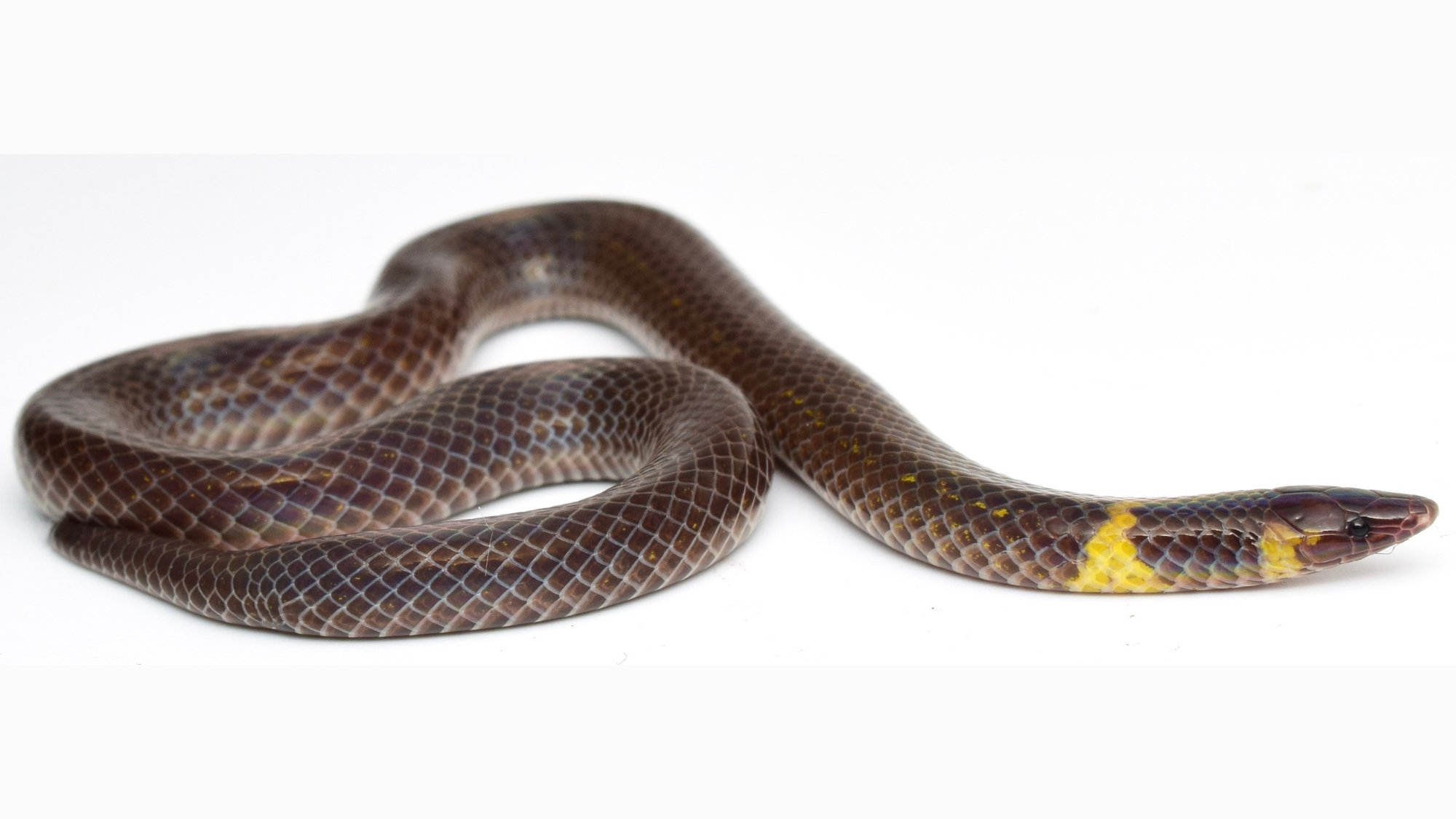
Snakes will bite, rattle their tails, and even spit venom to escape danger. But of all the world’s species, southeast Asia’s dwarf reed snake (Pseudorabdion longiceps) relies on an especially fascinating escape method. When threatened, the diminutive serpent rolls away like a speeding wheel.
An adult dwarf reed snake typically measures less than 12 inches long, but its unique locomotive maneuvers allow it to retreat as fast one foot per second—about four times faster than it travels by simply slithering on the ground. It’s not a flailing getaway, either. The snake also easily rolls along a straight path while somehow keeping its head both stable and facing forward.
Now, researchers finally have a better understanding of how the dwarf reed snake achieves such dizzying acrobatics. In a study published today in the journal Current Biology, a team at Japan’s Toho University detailed the specific physiology that enables its locomotion after filming the snakes with high-speed cameras. Essentially, the snake doesn’t rotate its entire body in a singular, forward motion—it whips one side of its body forward towards the ground while an arched portion swings down by its head in what the study’s authors call a “stroke.” The snake then alternates between its left and right side coming into contact with the ground for each successive stroke. Essentially, it’s like twirling a rope in a lateral circle while holding one end in your hand—except that end is the snake’s head.
The cumulative efforts bypass the traditional idea of a wheel requiring something like a central axle. Instead, this ingenious, highly controlled movement allows the animal to keep its head and sensory organs upright and facing ahead while traveling at such high speed. This is compounded by the dwarf reed snake directing regions of its body to engage in large, alternating rotations while stabilizing its head.
By gaining better insight into these biological mechanisms, researchers also highlight the difficulty in trying to predict an animal’s capabilities based solely on its physiology. A snake may have primarily evolved to slither—but that doesn’t mean it can’t get creative when necessary.
October is officially Bat Appreciation Month. In the spirit of the season and conservation, a team of biologists in California recently spent time finding bats at Muir Woods National Monument and Samuel P. Taylor State Park. And while Halloween is fast approaching, the activity had nothing to do with spooky festivities and everything to do with tracking hoary (Lasiurus cinereus) and western red bats (Lasiurus blossevillii).
The goal of their survey was to put GPS trackers on bats from the two migratory species. Hoary bats have grey-white fur and are the most widespread bat species in North, Central, and South America. Western red bats, also known as southern red bats, sport a reddish fur and are found in parts of South America. In redwood forests, bats like nesting within holes inside large trees.
“When they migrate, those little guys can cover a LOT of ground!” the Golden Gate National Recreation Area writes, referencing both species. “By learning about these migratory patterns, we can better understand entire ecosystems like Muir Woods.”
The bats were released back into the wild after getting their trackers. Image: NPS / Emily Pellegrini.
Bats are important members of such ecosystems. They are pollinators, they spread seeds, and they help manage insect populations. To catch these helpful agents, scientists set up a sheer, delicate net called a “mist net” over a creek at dusk. All bats are nocturnal, and when they went searching for their next meal—bugs—they flew into the net.
It was a bit of a trick for the winged mammals, but a treat for the human team. “Expert bat wranglers” carefully took them out of the nets, noted their weight and size, presumably attached the GPS tracker, and then returned them to the wild.
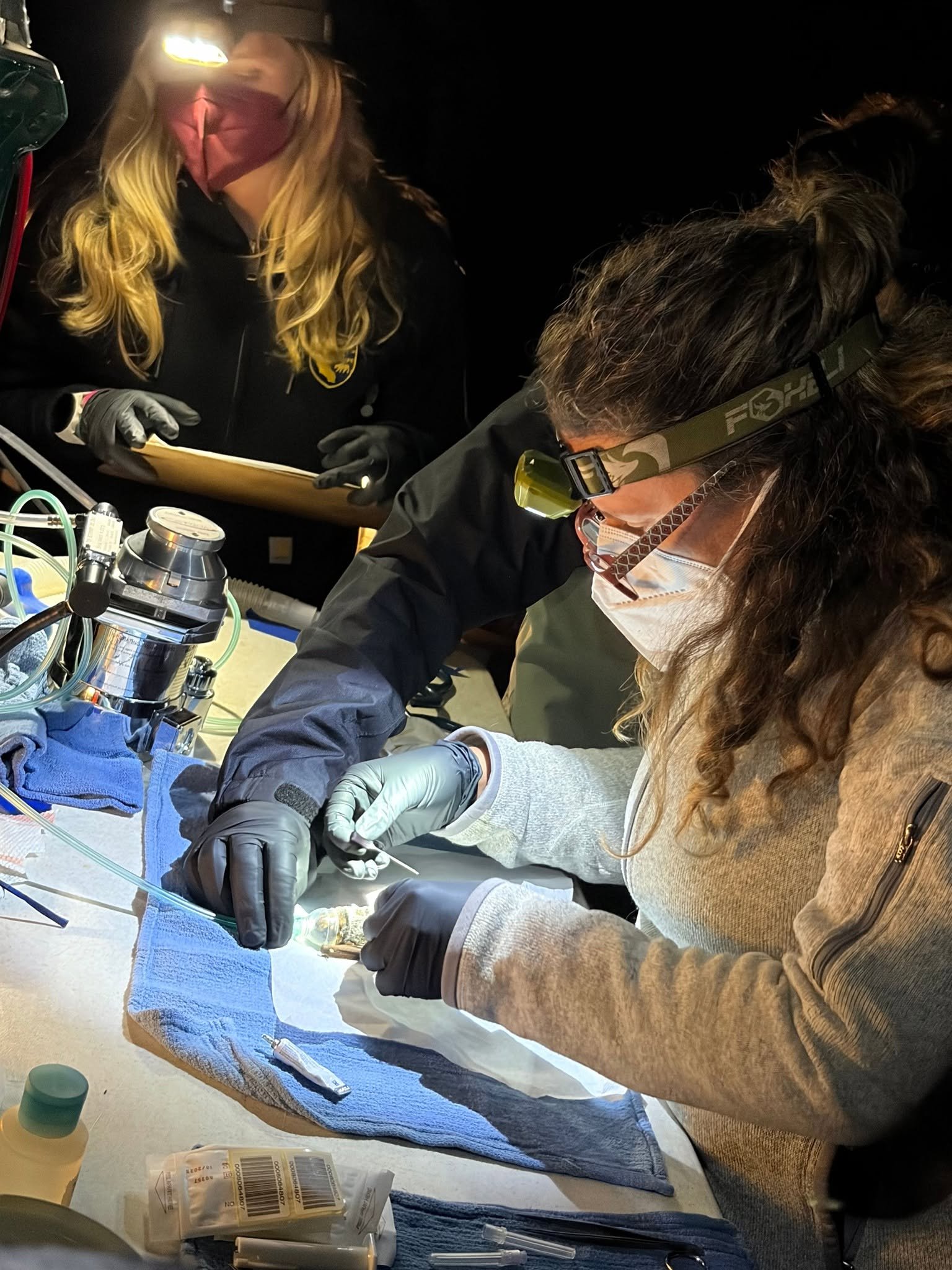
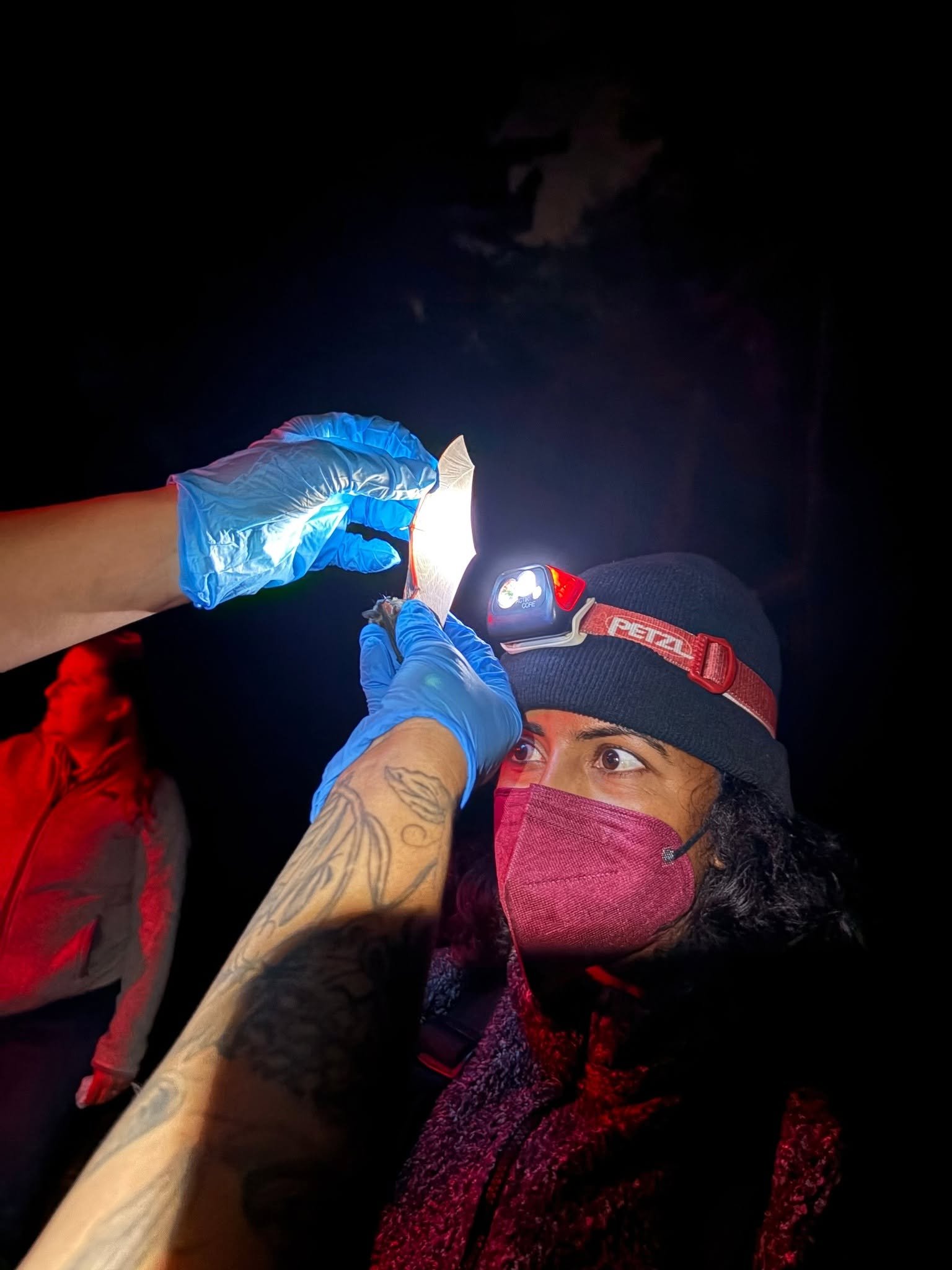
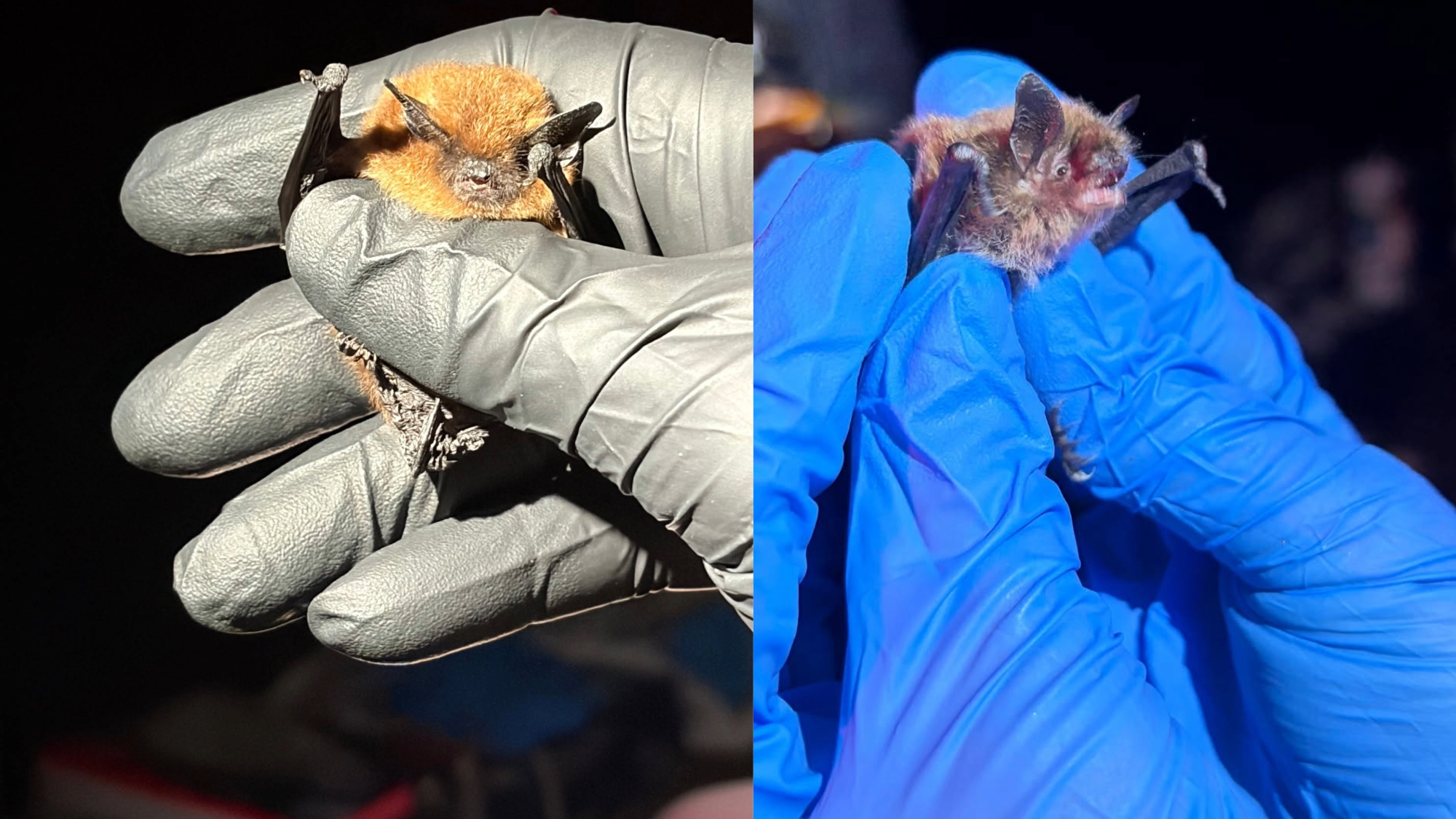
The Golden Gate National Recreation Area’s shared pictures of tiny, disgruntled looking bats carefully pinched between gloved fingers. In one image, an expert holds a bat wing up to the light of a colleague’s headlamp. In fact, illuminated wing membrane patterns literally shed light on the bat’s age and developmental stage.
A bat’s membrane can tell biologists how old the animal is and what developmental stage it is in. Image: NPS / Emily Pellegrini.
While this survey focused on two bat species, researchers at the Muir Woods National Monument have previously spotted 10 different species.
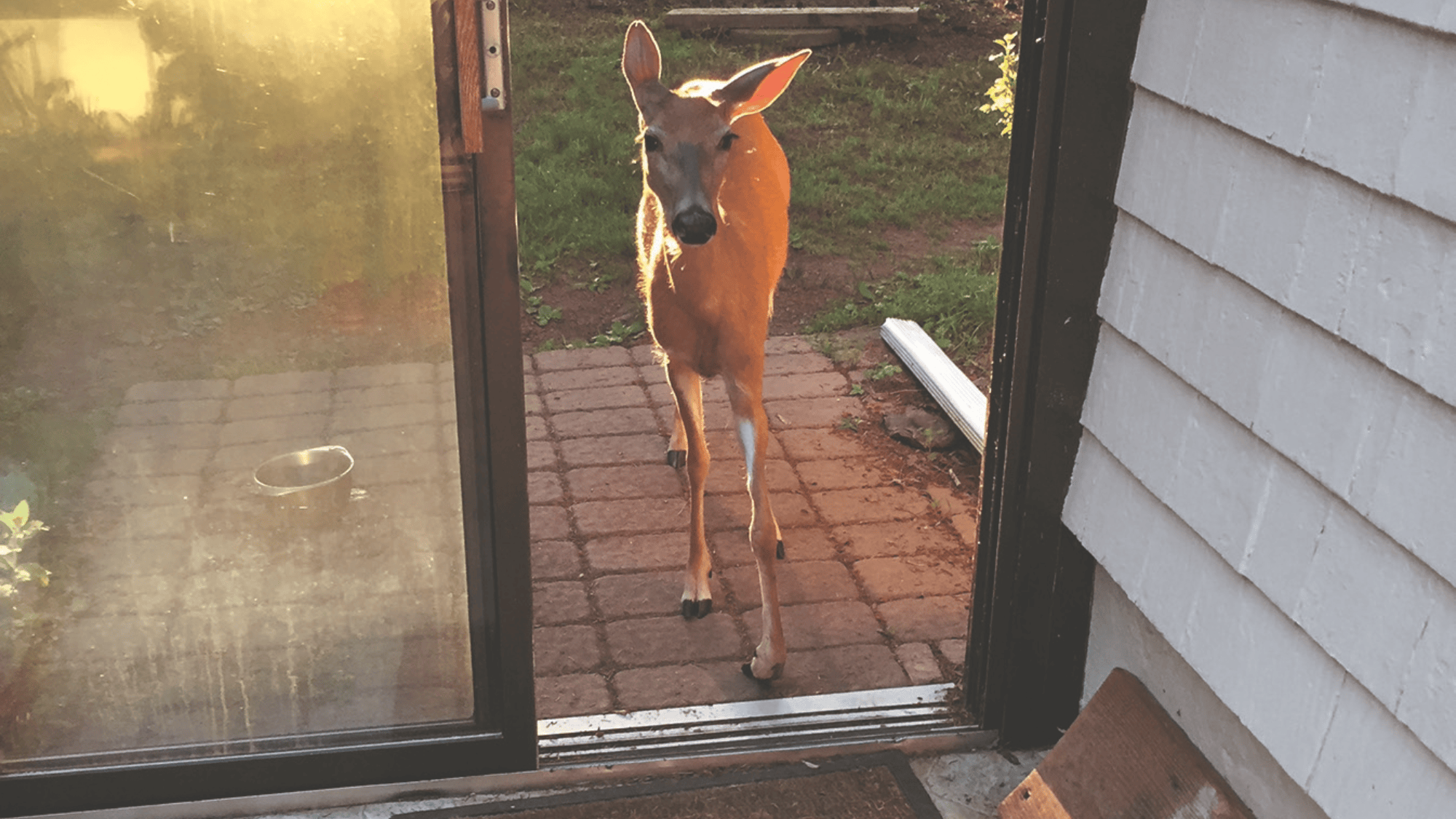
On the evening of March 18, as it was growing dark, I went to the window, not knowing what was drawing me. Next to the house stood a shadow, ghost-like, shrunken, at one with the dusk, almost translucent, and I recognized The Girl with the Broken Foot.
I walked out into the falling wet snow, slowly approaching her, and she allowed me to come close. Nine months old, she was the size of a fawn half that age. Starkly emaciated, her body seemed to be collapsing inward, her head held low. Literal hunger and a deeper starvation were palpable. She bore the haunted look of terminal solitude seen in souls driven to the margins of society, among the liv-ing, yet apart. She seemed so frail that I couldn’t imagine she would live more than another day or two.
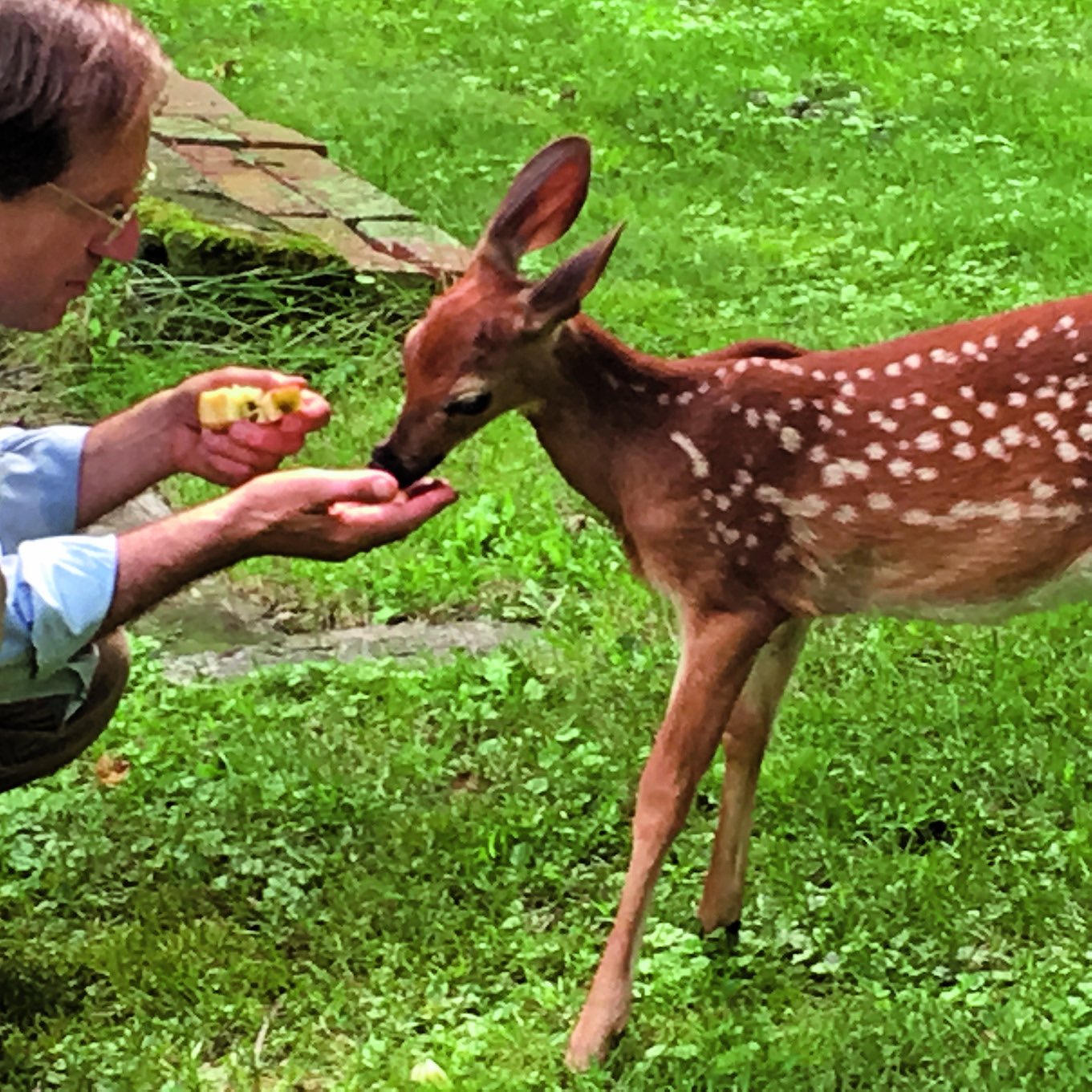
Going inside and returning with a bowl of apples, I cut them into pieces and placed a few on the ground between us. She was raven-ously hungry and I gave her a few more apples, and still more, until she had eaten a total of eight. After she had finished eating, she stayed with me. We stood about a foot apart. She showed no fear of me, a fact which I would later come to recognize as meaningful. The moment had the compelling quality which has been present at the onset of many enduring connections in my life, of being un-bound by linear time.
“I am watching over you,” I said softly. “If you come here, I will take care of you. You are not alone.”
It was fully dark when we parted, having been together for an hour. I expected that she would recede into the woods, yet the next morning she was sleeping against the house, directly beneath the window closest to where I sit all day to work. Save for the wall separating us, she could not have gotten any closer to me.
Paul feeding Penelope. Image: Paul Bochner.
When I went around to the front of the house, she struggled to her feet and approached. In the morning light, I was better able to assess the state of her health. Months of solitary survival had taken a severe toll. Her body seemed hollowed, her ribs and pelvis sharply visible beneath her skin, and it felt a miracle that she was alive. On her right flank was a hemispherical mass the size of a cantaloupe, which I took to be a tumor, yet it had an open, running wound at its center, which she periodically craned her neck to lick. Her eyes were running and had congealed masses at their inner corners.
I bent to get a look at her injured foot. From not being walked on, the backward-facing cloven hoof had grown to an abnormal length and was curling upward. The wrist, which unnaturally bore her weight, had a flattened forward surface, an oval about two inches across, worn raw, without hair or skin, only pale pink–grey flesh, which, at its center, appeared to have been further abraded to the bone. Her right front foot, forced to compensate, was splayed and rockered, her right scapula protruded, and her front quarters were substantially lower than her hips.
I again placed apple pieces on the ground between us. I spoke very gently to her, saying, “You are the best one of all the deer. You are the most beautiful. You are good.” I continued to talk to her while she ate her apples, and when she had taken all she could, she returned to her resting spot under the window. I went inside to work, keeping periodic watch, pleased that she seemed to have claimed a place. But in a few minutes, from around the corner of the house came the twins, followed by their mother who immediately and ag-gressively charged at her. The Girl with the Broken Foot lurched upright and hobbled down the embankment, across the road and into the woods.
She was once again alone, but a step had been taken. Since the previous evening, things had changed. Even before her second feed-ing she had recognized me on sight. She had approached and had again allowed me near.
Although I had seen her fewer than half a dozen times in the preceding months, from the night of our first connection, she began to come to the house every day. She slowly gained strength and I would watch for her and thrill to the sight of her slow approach. It was our private time. We stood together, and I placed her food on the ground between us. After she ate, she would stare into my eyes for long periods, seemingly entranced. I told her stories. I sang softly to her. I told her she was my beauty.
So began our journey, and one of the greatest loves I have ever known.
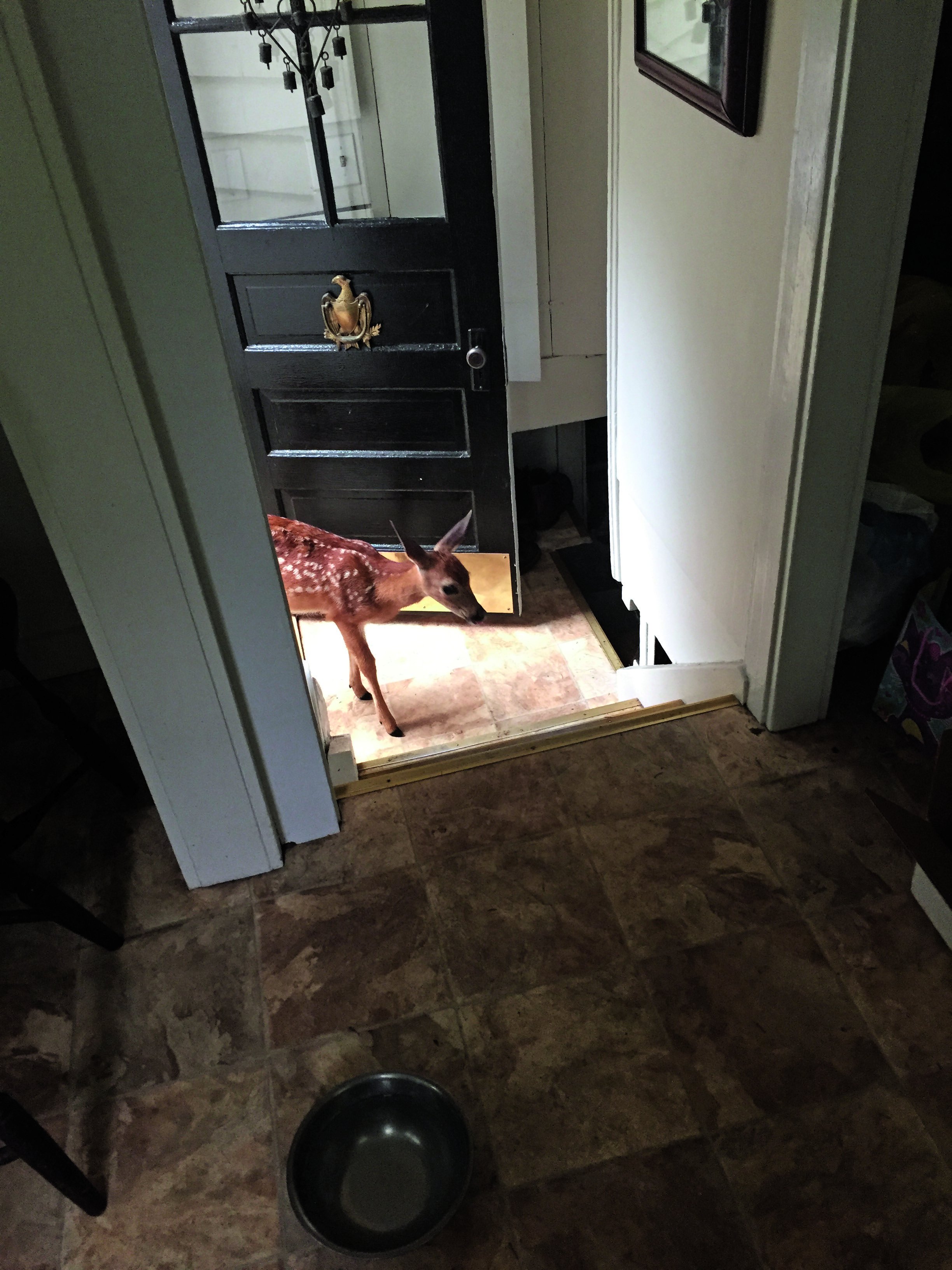
Penelope walking into the house. Image: Paul Bochner.
About the Author
Paul Bochner began his professional life early, as a working musician through his mid-teens in Los Angeles, then moving to Montreal at the invitation of the National Film Board of Canada. He has won several international awards for his films and is the recipient of a Guggenheim Fellowship in painting. He has written for The New Yorker and The Atlantic.
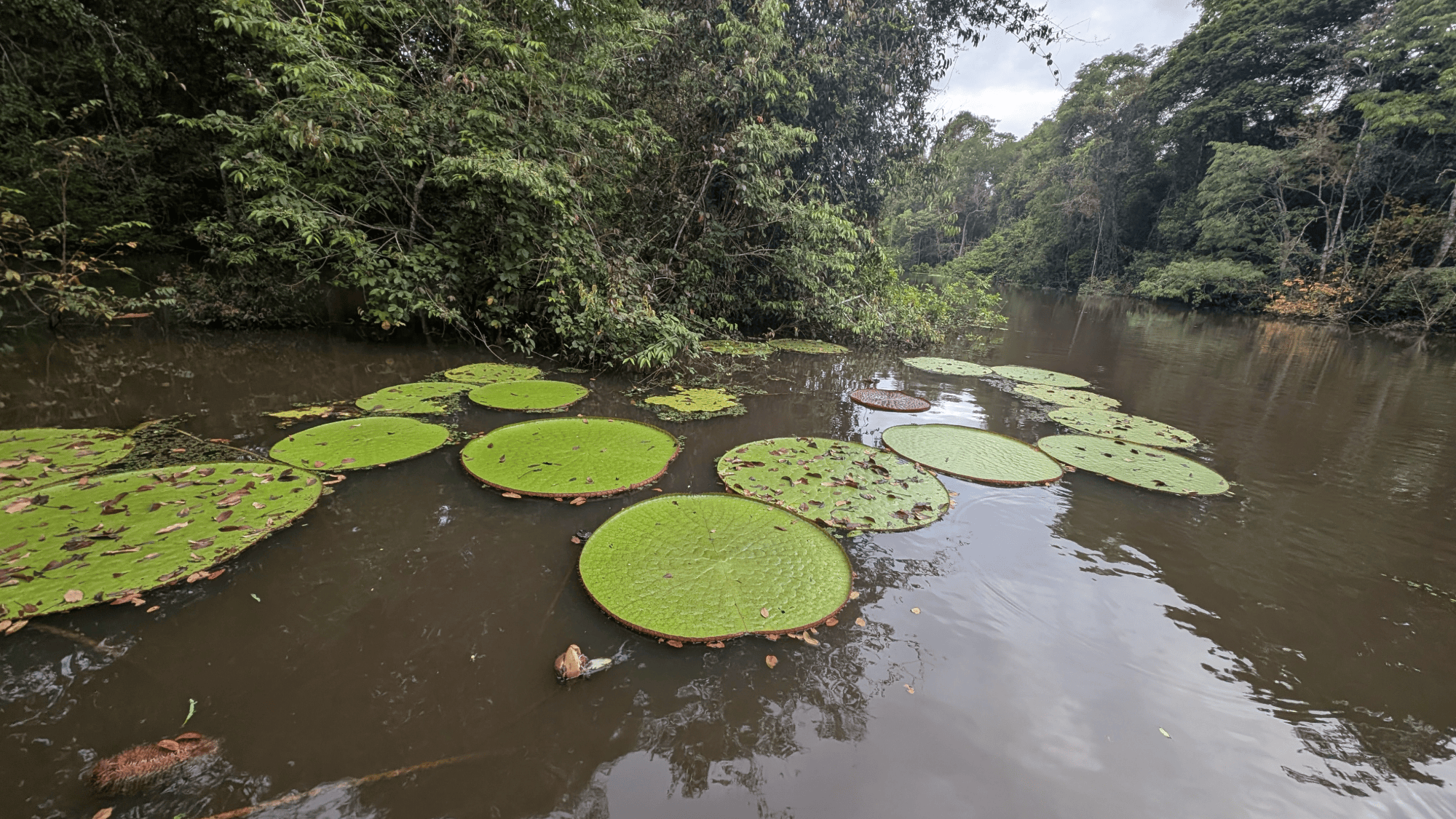
One cold December day in 2021, Colorado carnivorous plant grower Jeremiah Harris shared some pictures of wild Amazonian giant water lilies (Victoria amazonica) plants in the Inírida River in Guainía, Colombia to Instagram. There’s just one problem. No known Victoria water lily species grow there.
When water lily expert Carlos Magdalena saw the post on Instagram, he suspected a new plant species could be involved. To investigate the matter, he used satellite imagery to remotely search the Inírida River and its surrounding lakes and confirmed the presence of Victorias.
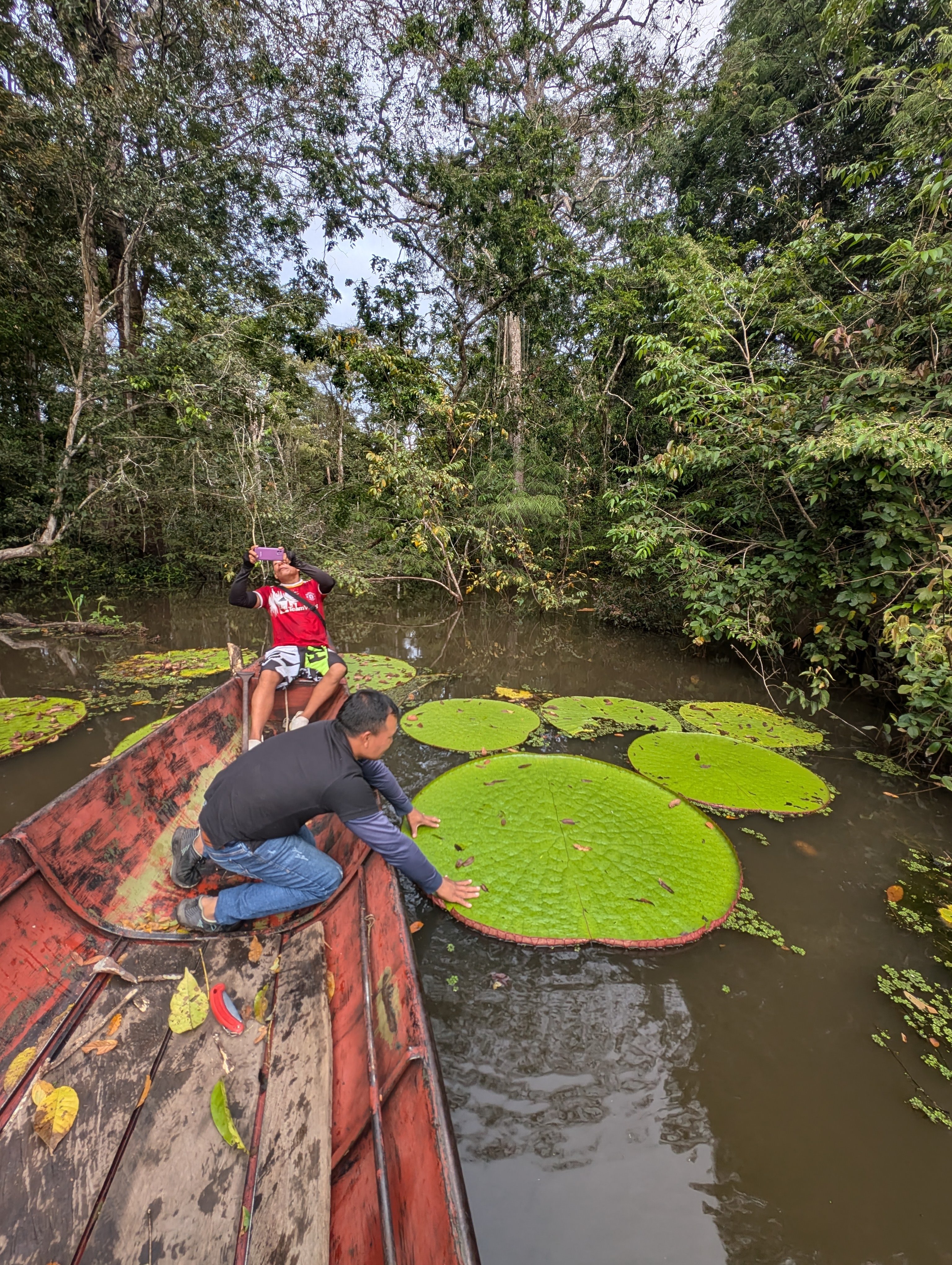
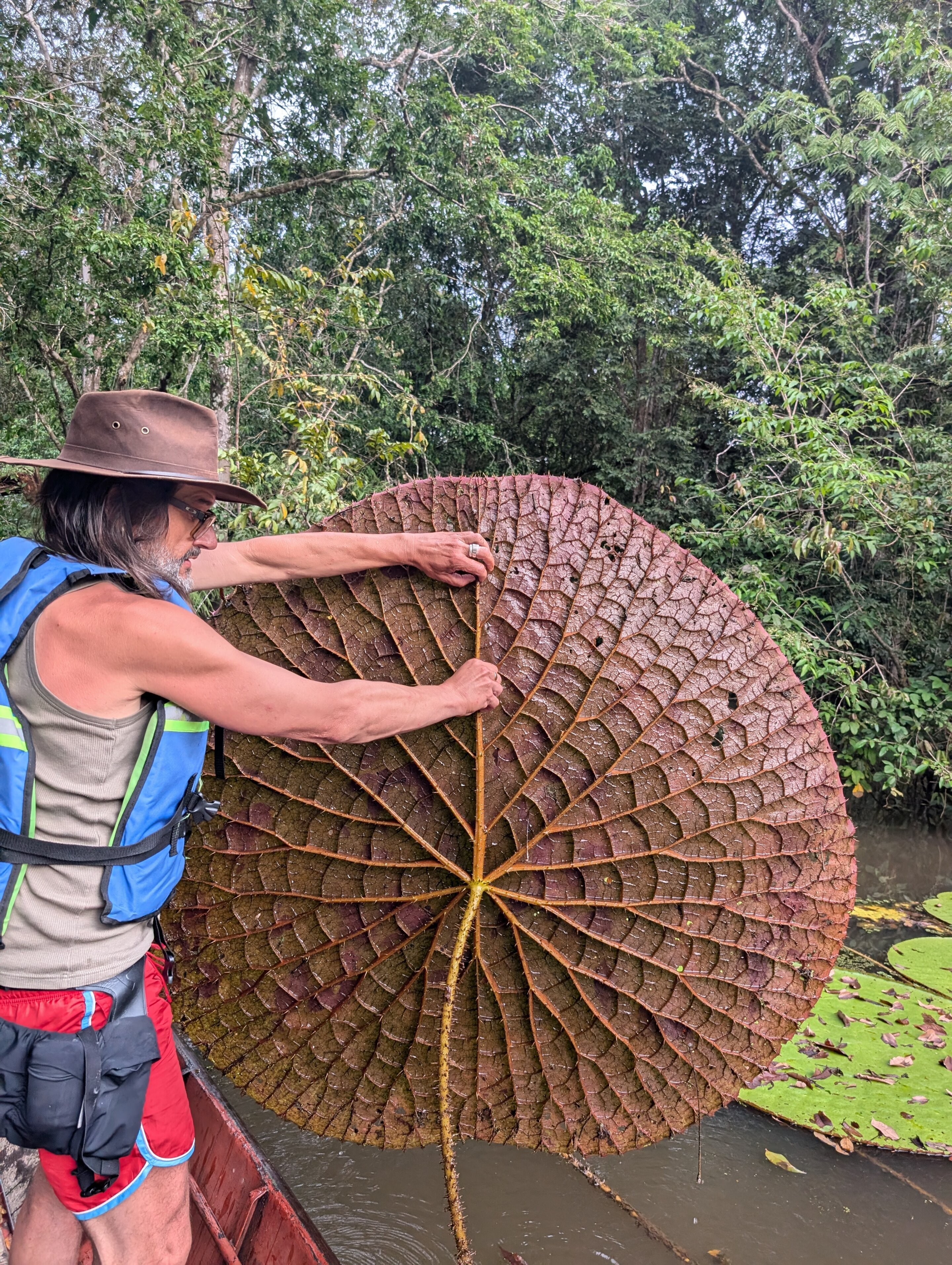
And yes, you can see these enormous plants from space. Victorias grow the world’s second largest single plant leaf.
Victoria colombiana is the fourth Victoria water lily to be described. Image: Carlos Magdalena.
Magdalena is a botanical and scientific research horticulturist at the Royal Botanic Gardens, Kew in the U.K. Along with his colleagues, the team went on a five-day expedition to Inírida. The team included members of the Indigenous reserves del río Atabapo, one of whom had seen the lilies during his childhood.
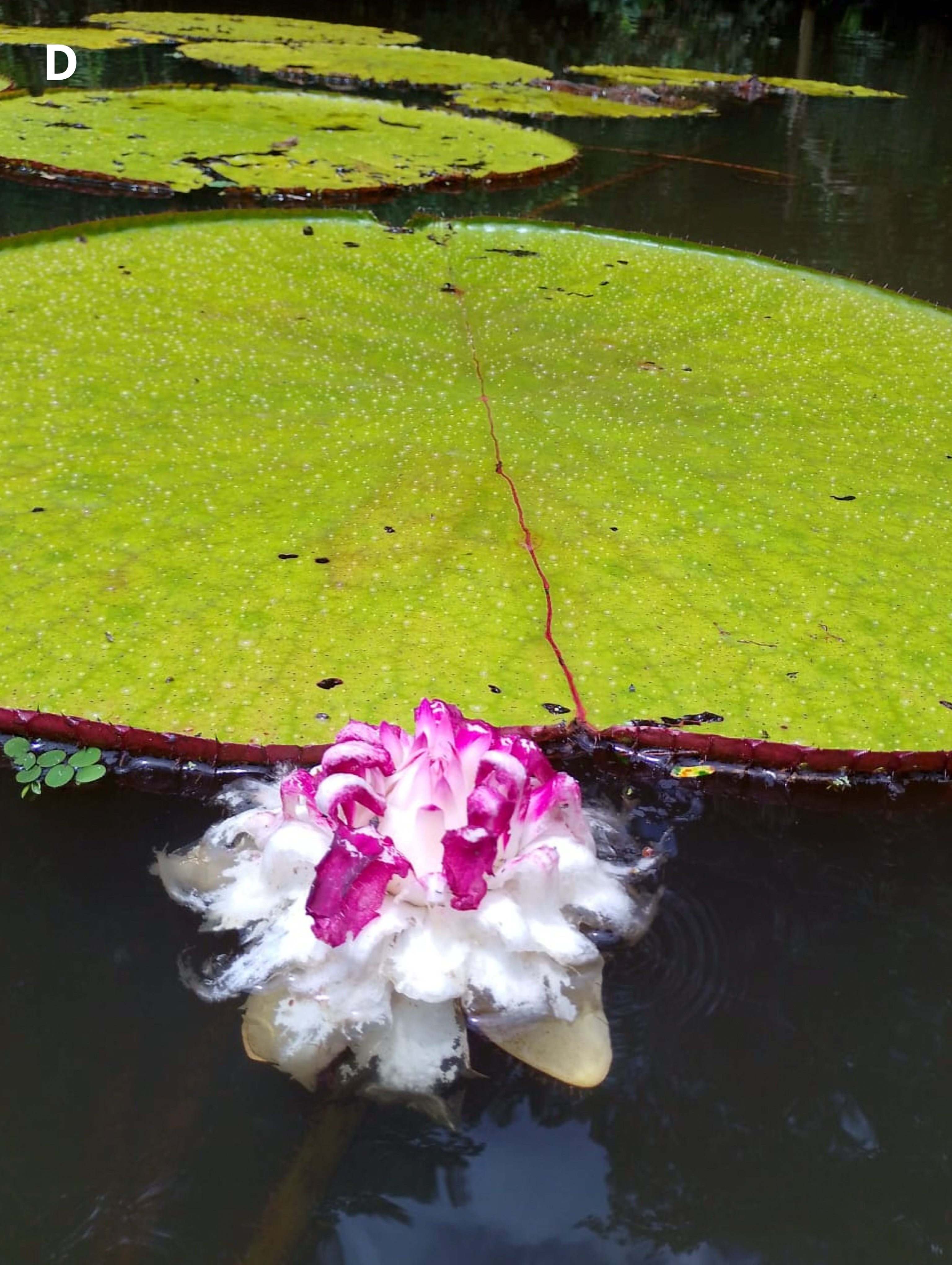
However, the trip didn’t exactly go according to plan. By their last night, they had found only two water lily plants, neither of which had flowers. This was a problem, because botanists need a flower to differentiate species. As if that wasn’t bad enough, the water lilies they found seemed to be struggling with a late rainy season.
But when Magdalena described their situation to the expedition’s boat captain, Gustavo Melo, he said he knew where they could find more of this water lily. They didn’t have much time to do so, with the team’s flight back to Bogotá was at 9:00 a.m. the next morning. Thus at 1:00 a.m., Melo, a member of the Indigenous Tucano community, led them to a small lake. There, they found five more Victorias, one of which was blooming.
Horiculturalist Carlos Magdalena holds up a giant lilypad. Image: Mauricio Bernal.
“This is one of those extraordinary stories where indigenous and horticultural knowledge with the help of social media and technology came together to uncover a truly extraordinary botanical achievement,” Magdalena said in a statement.
The researchers were able to collect what they needed to start the official scientific description of the new species: Victoria colombiana. They even managed to make that early flight. In their recent study published in the journal Phytotaxa, he and his colleagues also announced the discovery of another new Victoria species, Victoria mattogrossensis.
A Victoria colombiana bud. Image: Nilo Rodriguez.
The team estimates that there are only between 30 and 50 wild V. colombiana plants, and is extremely vulnerable to extinction. They are currently working to get the plant officially categorized as Critically Endangered by the IUCN Red List.
“Now that we know this water lily exists, our responsibility is to understand it better and protect it. With so many plants in the wild threatened with extinction, we simply cannot wait any longer to take action,” Magdalena added. Experts are considering starting a naturalized population in a more accessible lake in Indigenous territory and researchers also are hoping to cultivate the species in Bogotà.
When zoology professor Daniel Baldassarre traveled to the remote Galápagos Islands of Wolf and Darwin with two other researchers, getting there proved quite a challenge. With no beaches to land a boat on, they had to approach the islands’ cliffs in a small dinghy and wait for a lull in the waves before jumping onto sharp, black lava rocks.
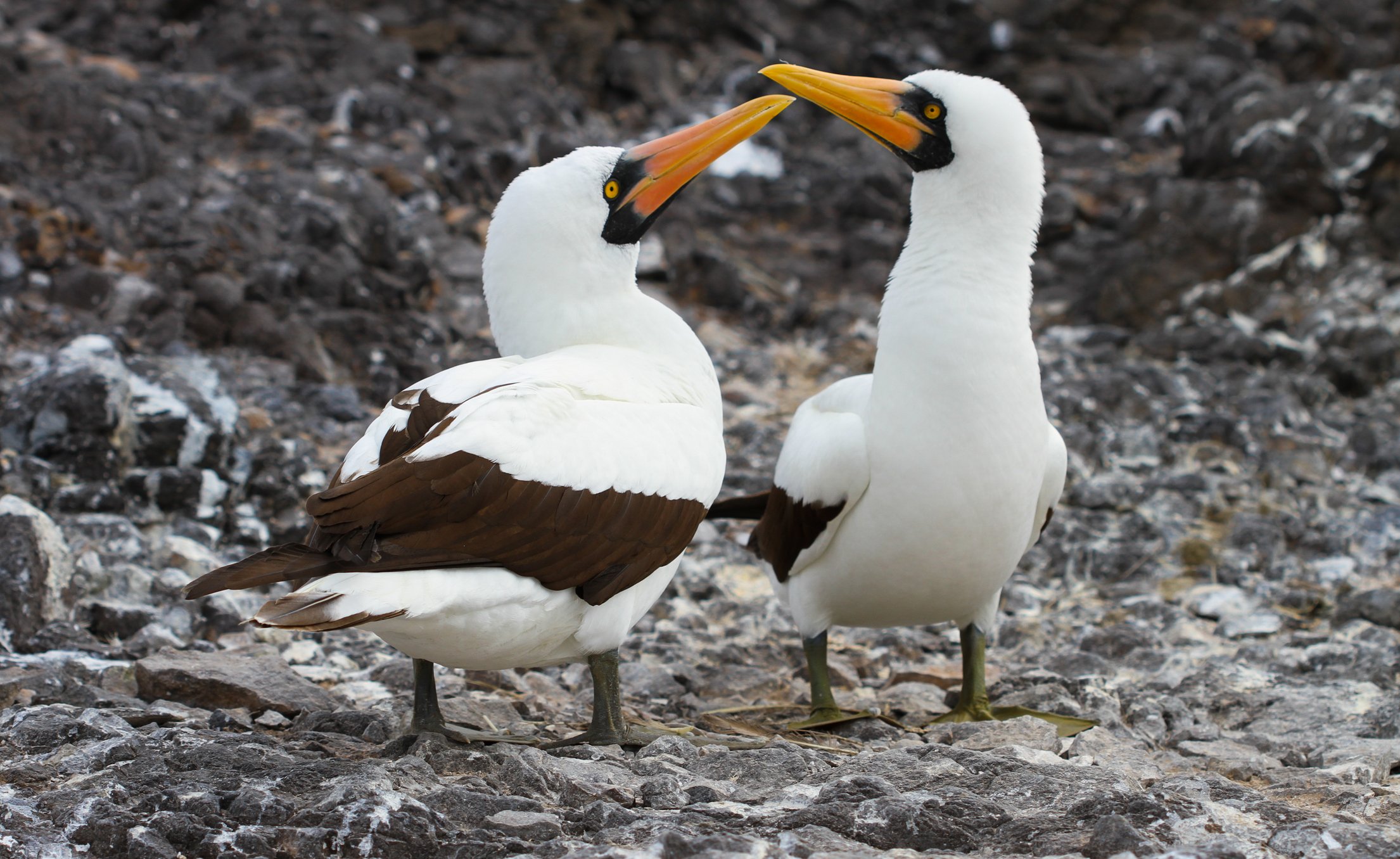
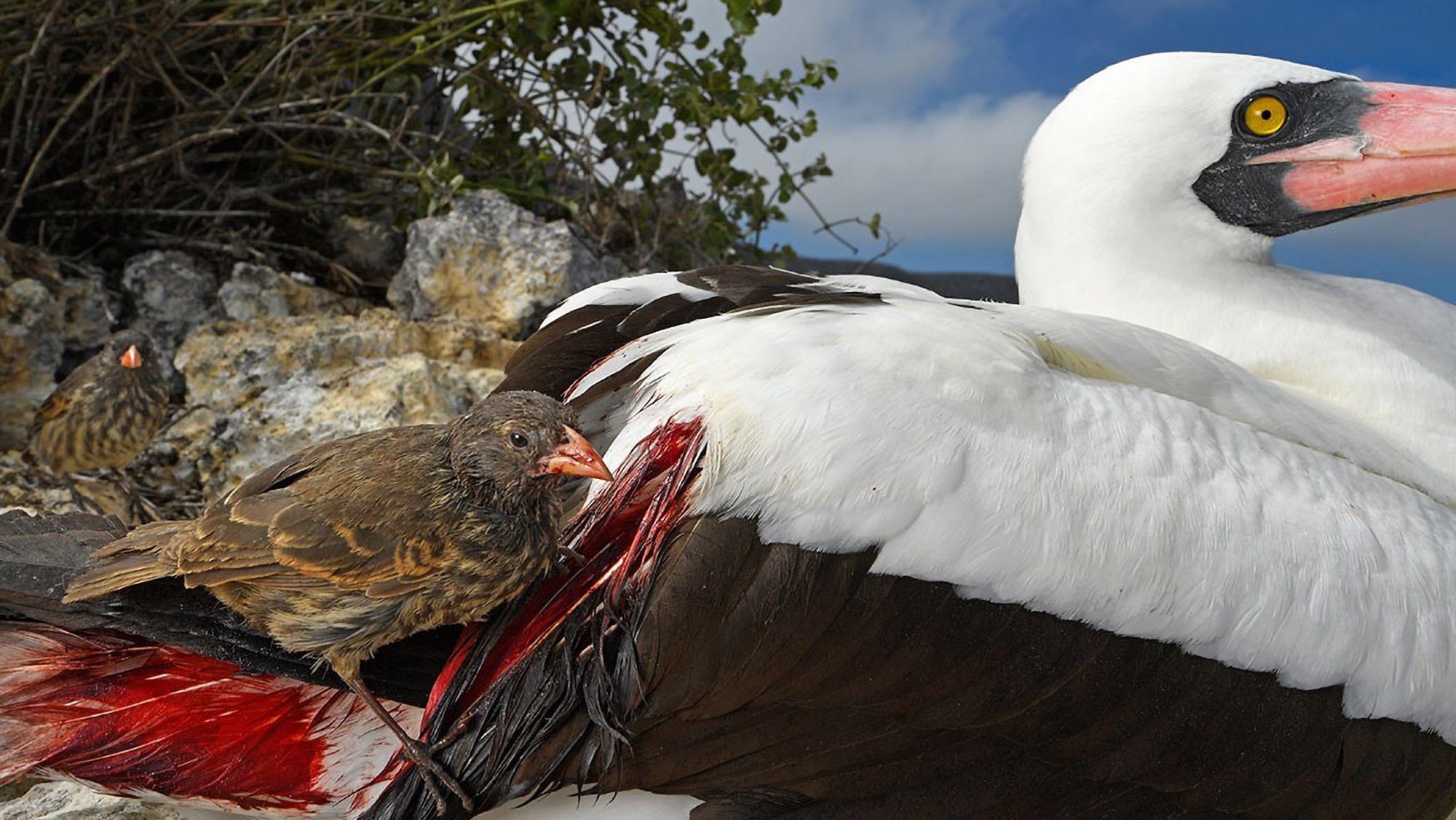
But their efforts paid off. On that trip, they saw a bird that very few people have ever set eyes on in the wild: the vampire ground finch. These finches are only found on Wolf and Darwin, and feed on the blood of much larger birds called Nazca boobies that also live on the islands.
Up close, Baldassarre and his colleagues noted the vampire finches’ blood-stained bills and their throats visibly engorged with blood. They also saw them in action.
“We observed scores of vampire finches clamouring all over the backs, tails, and wings of boobies, opening up substantial wounds with their sharp beaks, and drinking their fill of blood,” they wrote in an article for The Conversation.
Why only some birds drink blood
“Blood is a notoriously difficult food source to process and extract nutrients from, which probably partly explains why so few animals have evolved to feed on it,” Baldassarre tells Popular Science. He suspects that on these islands where freshwater is extremely rare, blood might serve as a water source for the finches.
Two Nazca boobies perform their species’ mating call. Vampire ground finches feed on Nazca boobies on the remote Galápagos Islands of Wolf and Darwin. Image: Getty Images / inthedark72
It’s not the only component of the vampire finches’ diet, however. Based on unpublished data collected by Baldassarre and his colleagues, blood makes up about one-tenth of the vampire finches’ diet.
“These finches are quite opportunistic, so they will eat just about anything they can find,” Baldassarre says. “We observed them feeding on everything from seeds to insects to broken seabird eggs.”
One theory is that vampire finches rely more on blood feeding in periods of extreme drought, when other resources are scarce. But more research is needed to see if this idea holds up in practice.
How this strange behavior evolved
Vampire finches weren’t always vampires, scientists think. The relationship between vampire finches and boobies probably started off with the finches eating parasites found on the skin and feathers of the boobies. This would have been mutually beneficial because it provided a cleaning service for the boobies and food for the finches.
But at some point in evolutionary history, in the process of picking off parasites, the finches started to create lesions on the boobies’ skin, and eventually began feeding on their blood.
Over time, their bills became more scalpel-like, perfect for making skin incisions. Their digestive system also changed. When Baldassarre and his colleagues studied the microbes found in vampire finches’ guts, they found that their gut microbiome was very different from that of other, non-blood-consuming finches on the Galápagos Islands, something they attribute to their unique diet.
Until recently, vampire finches were considered a subspecies of the sharp-beaked ground finch (Geospiza difficilis).
“But they have now been designated as their own species [Geospiza septentrionalis] because of the differences they have evolved because of blood feeding,” Baldassarre notes.
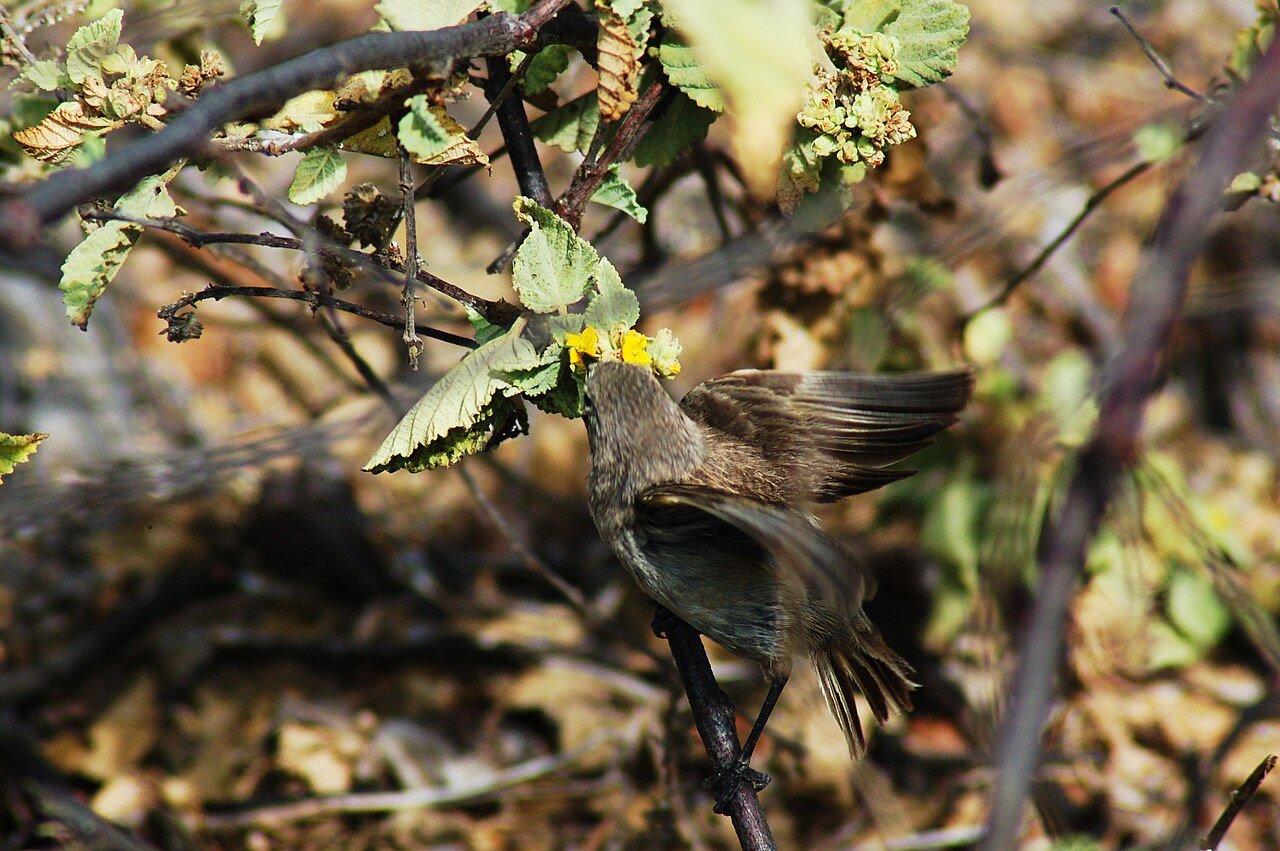
Vampire ground finches on Wolf island have been seen drinking nectar from Galápagos prickly pear flowers and other flowers. Image: Peter Wilton / CC BY 2.0
How the boobies cope
Baldassarre and his colleagues have seen vampire finches gang up on and kill nestling boobies,“but that was quite rare,” he points out.
“In most cases, the finches seem to inflict just enough damage to break the skin and extract some blood, but not too much to harm the boobies significantly.” This is similar to many parasite-host relationships, such as fleas, ticks, and mosquitoes on mammals. “You can kind of think of the vampire finches as giant mosquitoes,” Baldassarre says.
“For one, as in large animals being bitten by mosquitoes, often the damage is minimal and not noticeable, so it doesn’t elicit a strong reaction. Also, the boobies sometimes have a vested interest in staying put and guarding their spot in the colony, or perhaps nest or nestlings, so may not want to fly away. Finally, the finches seem to target hard-to-reach areas on the boobies like the base of tail feathers, so it’s likely difficult for the boobies to deter them.”
I, for one, was feeling very sorry for the boobies being constantly hounded by these small vampire birds. Until I learnt that Nazca boobies practice something called “obligate siblicide,” which essentially means that the first-hatched chick routinely attacks and kills its younger sibling. It’s a harsh, bird-eat-bird world in the Galápagos Islands.
In Ask Us Anything, Popular Science answers your most outlandish, mind-burning questions, from the everyday things you’ve always wondered to the bizarre things you never thought to ask. Have something you’ve always wanted to know? Ask us.
Some animal rescues are more complicated than others—especially when the creature in peril is about to become a snack for a seagull on a remote Alaskan beach with polar bears lurking nearby.
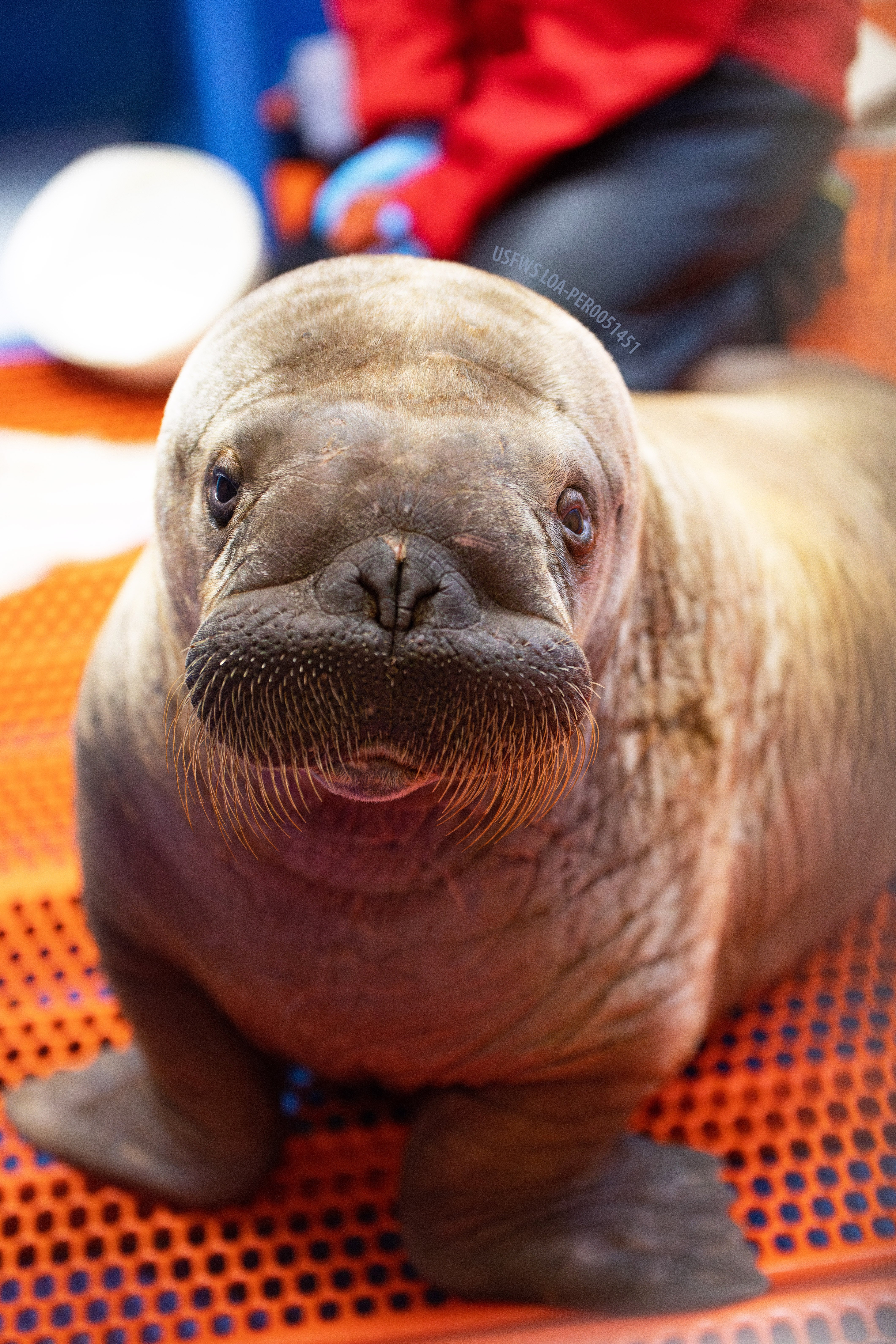
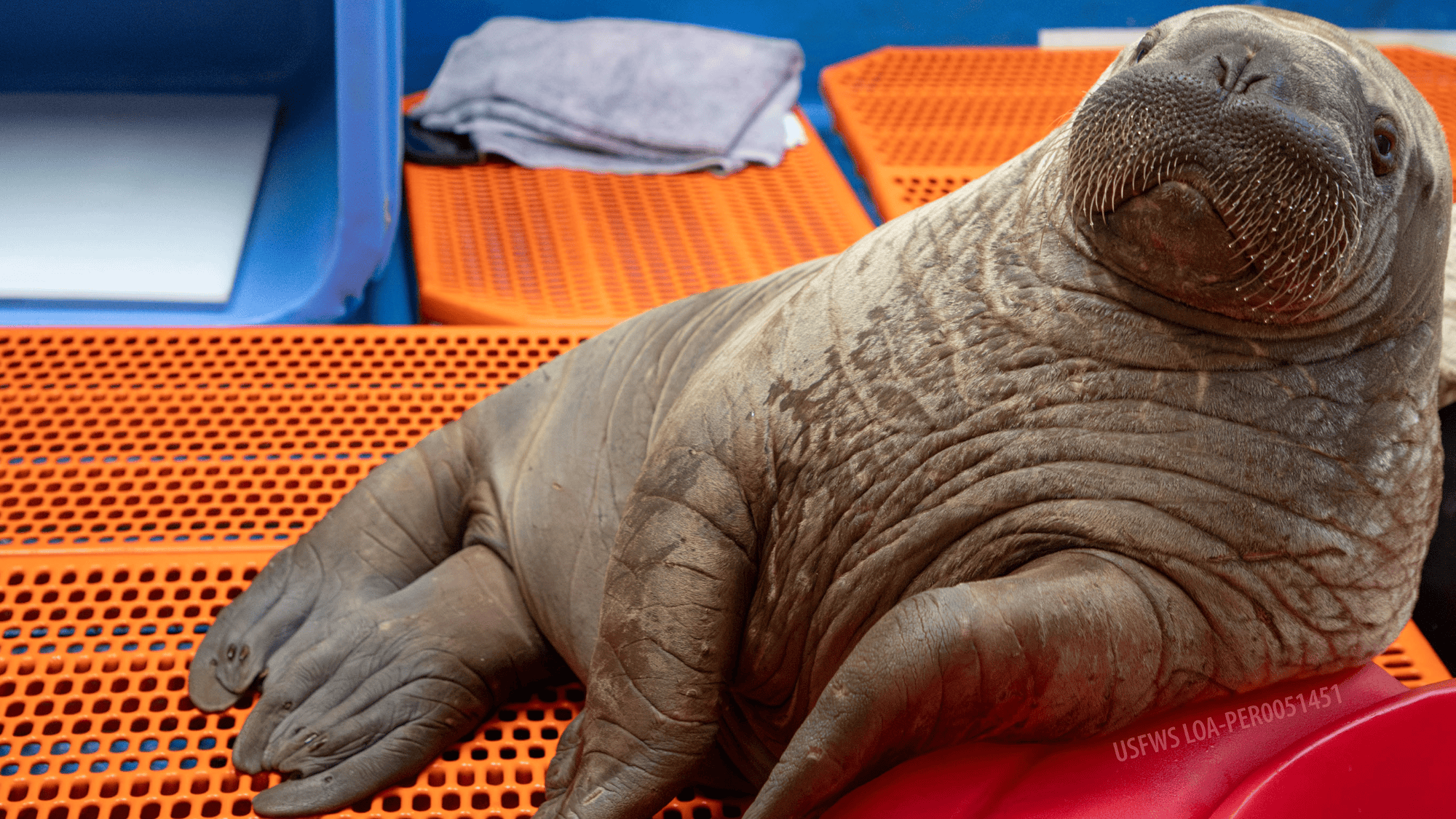
That was the sticky situation an orphaned Pacific walrus (a subspecies of Odobenus rosmarus) calf was in when two researchers found it on an island in the region of Point Lay, Alaska. U.S. Geological Survey (USGS) research walrus biologist Tony Fischbach and Ilisaġvik College student and Point Lay local Violet Anniskett stumbled upon the young male while investigating walrus carcasses on a remote beach. They found the orphan between the remains of two adult walruses, which was a first in Fischbach’s long experience working with walrus herds there.
The researchers requested permission to rehabilitate the walrus from the local Inupiaq community and the U.S. Fish and Wildlife Service. Once the approval arrived, the next hurdle was getting the mammal to the Alaska SeaLife Center. The center is the only marine mammal rehabilitation facility in Alaska, and was over 800 miles away. As if things could get any more difficult, stormy weather left Anniskett, Fischbach, and the walrus stuck on the island for days. In the meantime, the researchers guided the calf to an abandoned building to shelter from predators.
“When we found him, a determined flock of gulls was intent on scavenging him. He was in immediate peril of suffering this fate had we not gotten approval to intervene. Two polar bears were also active on the island,” Fischbach said in a statement.
“He bonded with us fast and wouldn’t sleep unless one of us were in the room. It was just us two for three days, stuck in a storm with the young walrus,” Anniskett added.
The calf was finally transported to the local airport, and made it to Alaska SeaLife Center on September 14 after a flight and van ride. The 200 pound baby arrived dehydrated, but in good physical condition. They treated some superficial wounds, gave him fluids, and applied other stabilizing treatments.
But the calf’s journey wasn’t over. In fact, orphaned Pacific walrus calves are one of the most specialized patients in marine mammal rehabilitation.That’s because in the wild, calves are very attached to their mothers, with whom they usually stay for one to two years. Close physical contact both with their mothers and others of their king is a crucial element in a calf’s early life. In the case of an orphaned calf, humans (who are authorized specialists) can act as surrogates, but it’s a tough babysitting job. Someone has to be around all the time to provide physical contact, social interaction, feeding support, and any veterinary care.
Caring for a Pacific walrus calf is not for the faint of heart, but can be pretty cute. Image: Kaiti Grant/Alaska SeaLife Center.
“Caring for an orphaned walrus calf is truly a team effort and requires around the clock commitment,” said Jane Belovarac, an Alaska SeaLife Center wildlife response curator. “At least two staff members have been working shifts around the clock to stay with him and provide the care he needs. This means long days and some unusual sleeping schedules for our team.”
It also means that the calf becomes comfortable with humans and thus cannot return to the wild. Now in a new long term home (whose location hasn’t been announced yet), he will be an ambassador for his species by teaching people about Pacific walruses.
Sometime between 32,000 and 11,000 years ago, dogs domesticated. Since then, these four-legged friends have provided companionship, assistance, and protection for people. Whether you favor a squished-face potato dog or a determined and smart working dog, you likely understand how dogs got the designation of “man’s best friend.”
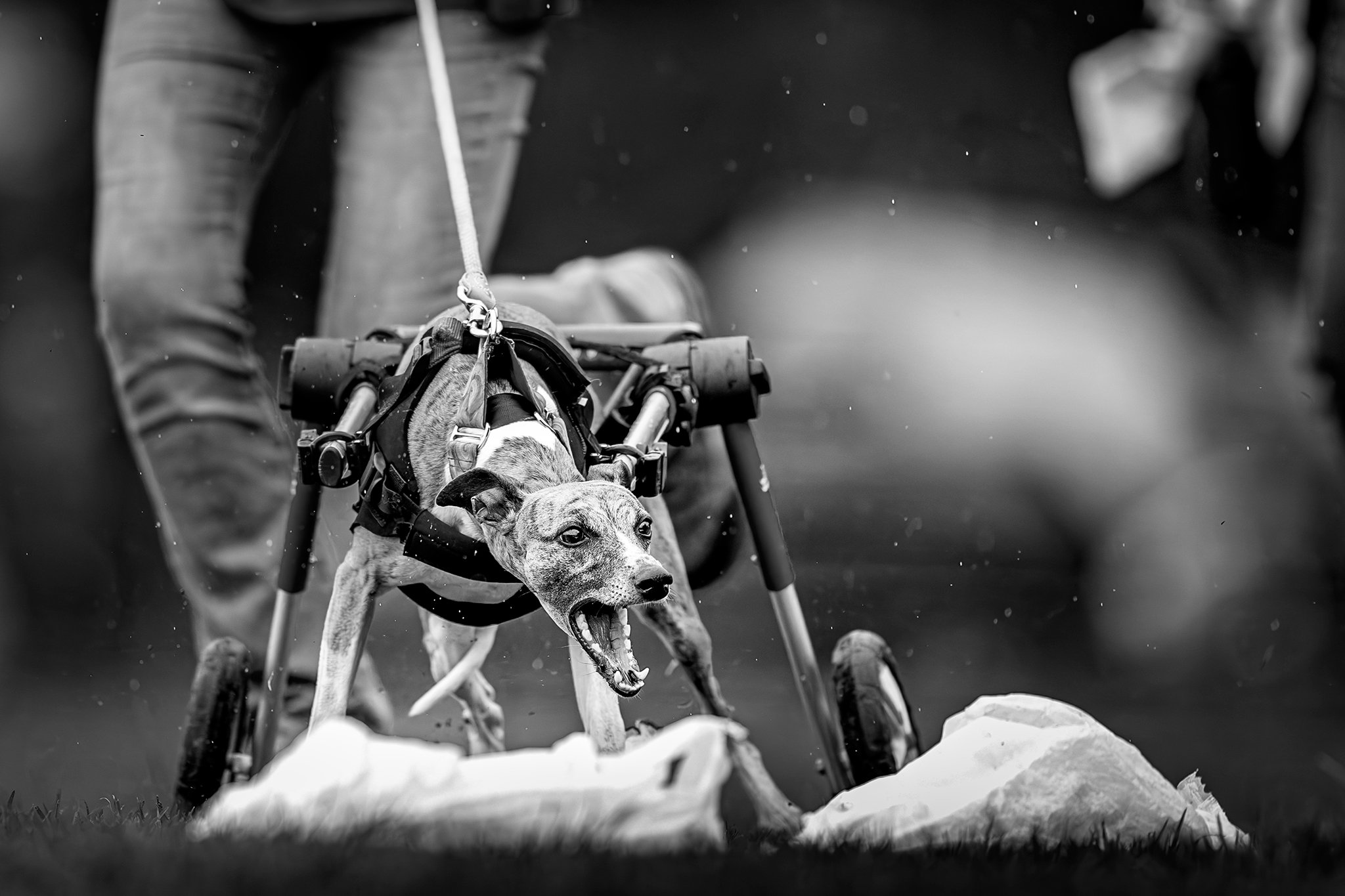
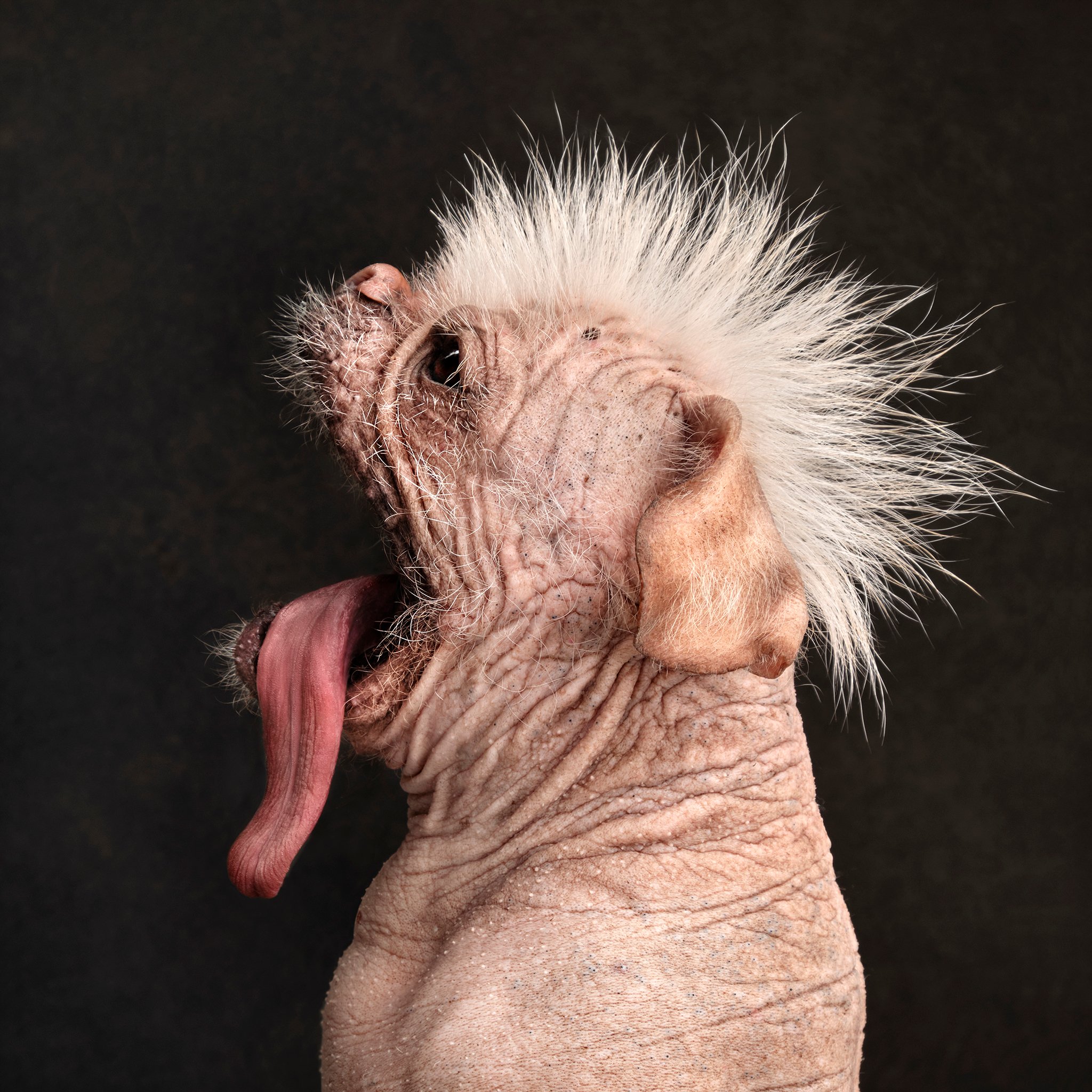
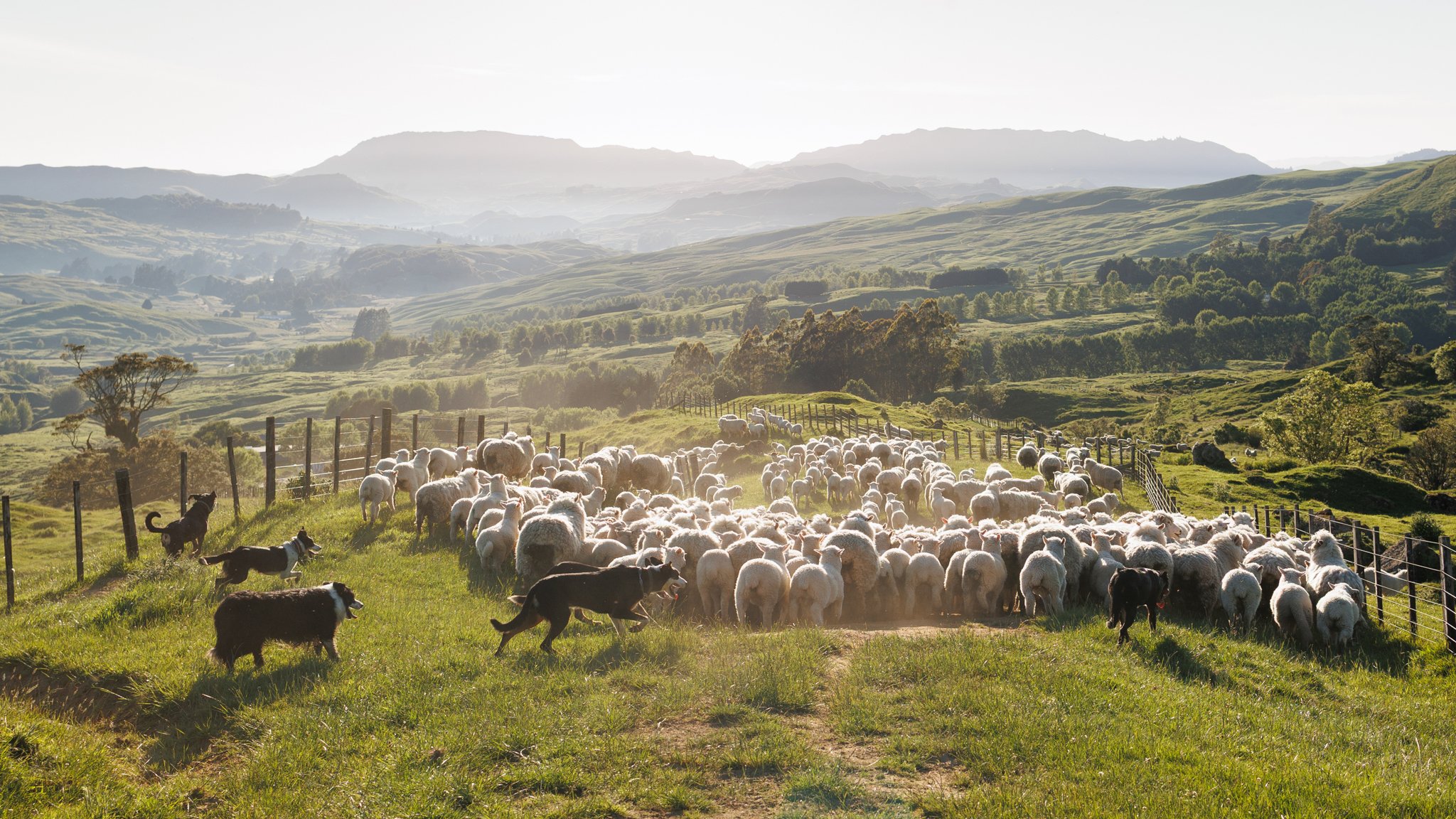
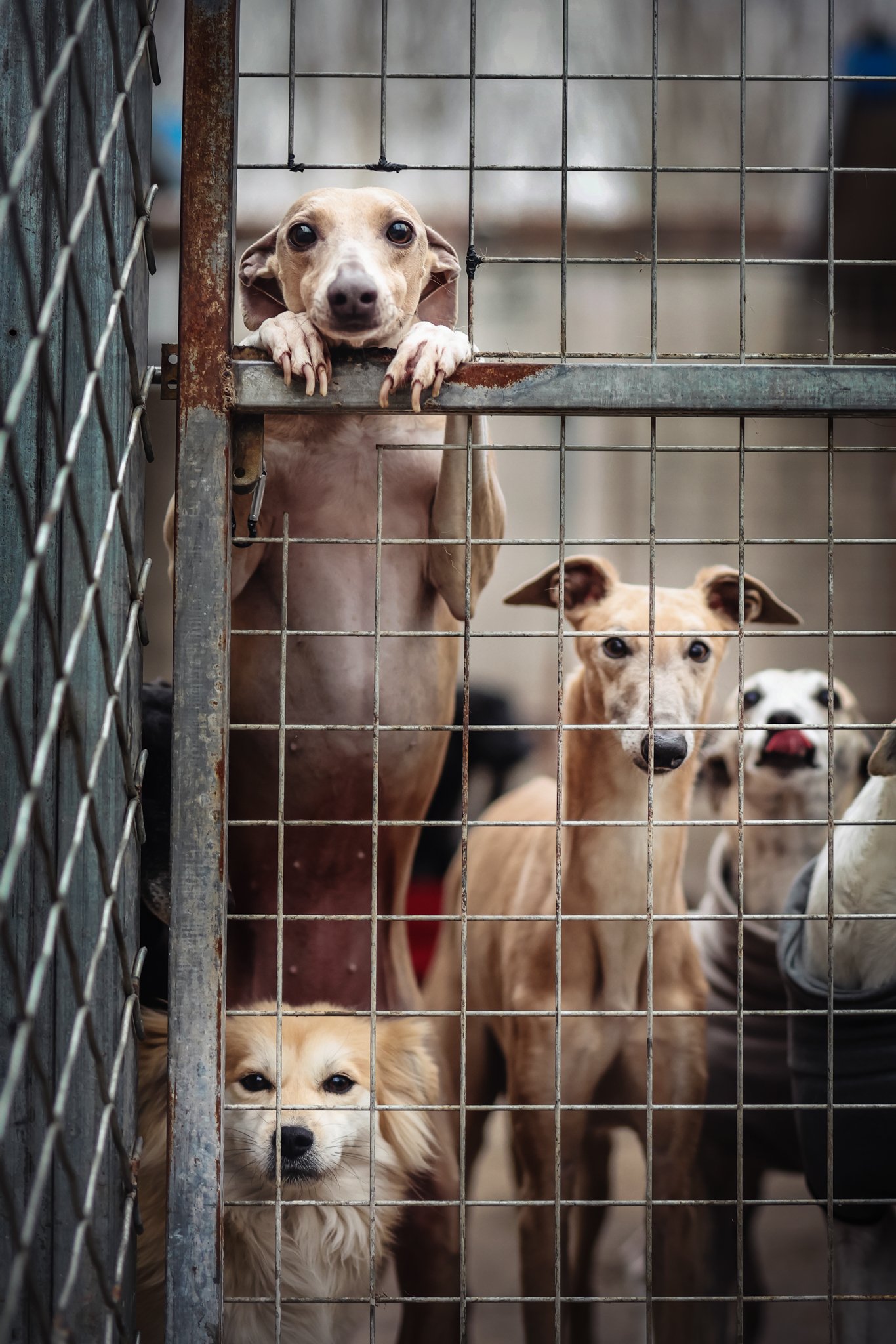
The Dog Photography Awards celebrate dogs of all shapes and sizes. The annual competition awards prizes across six categories (Studio, Action, Portrait, Dogs & People, Documentary, and Open) in addition to naming an overall winner.
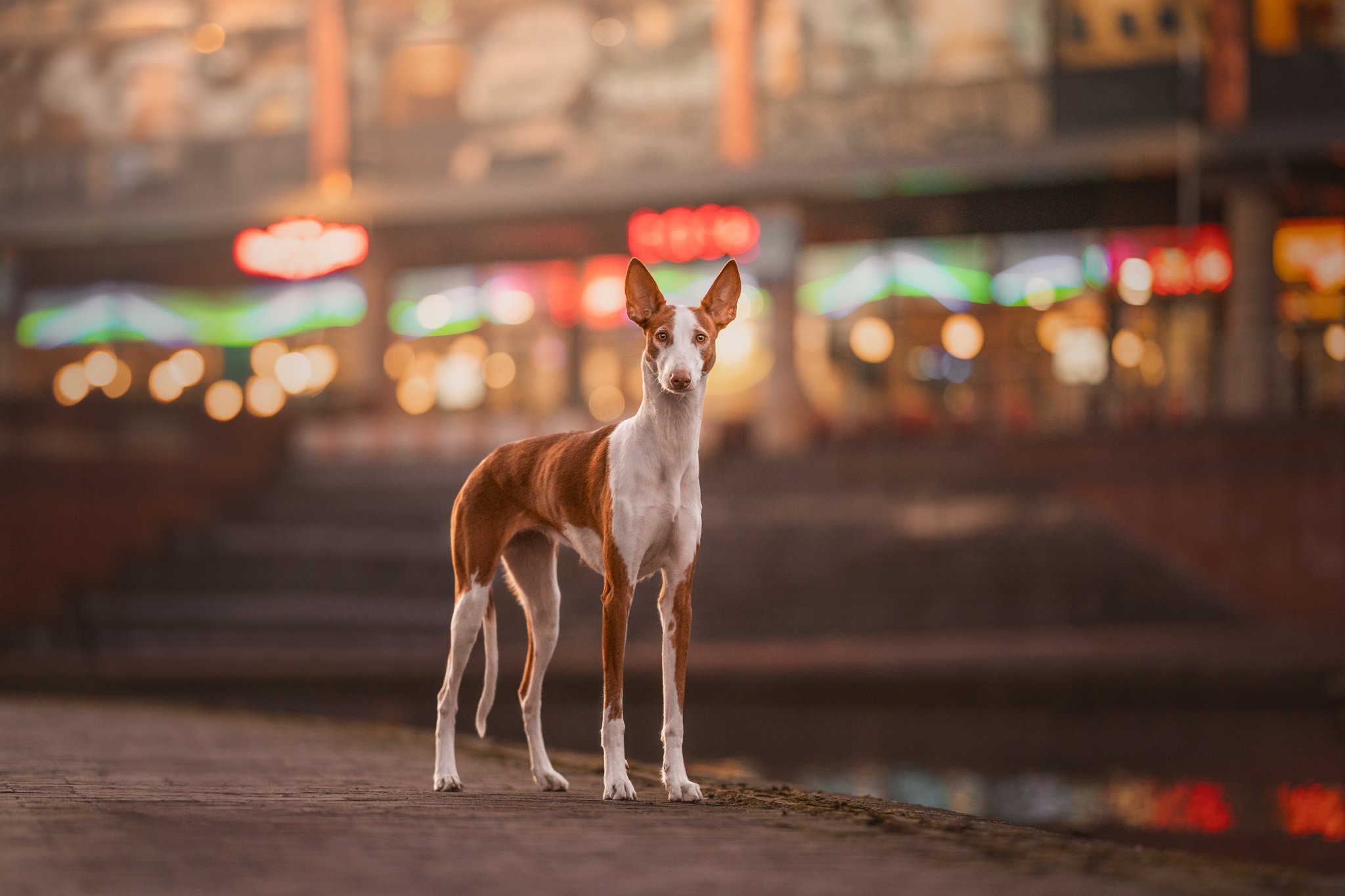
“City Lights” 2026 Portrait Outdoor, Honorable Mention Credit: Maddie Newton / Dog Photography Awards
This year, Katie Brockman took the prestigious title of Dog Photographer of the Year. The St. Louis-based photographer’s winning entry, titled “Loved and Hated” (seen below), captures the duality of feelings around pitbulls and similar breeds.
“I started photography after my dog Caldwell ended up at the emergency vet on Christmas Eve 2020 for an obstruction surgery” Brockman said. “I suddenly realized that I didn’t have enough photos of him, and I wanted a way to document our adventures together. So I saved up for a camera, and in 2021, I officially started my dog photography journey.”
“Loved and Hated” Dog Photographer of the Year 2026 Credit: Katie Brockman / Dog Photography Awards
This year’s competition drew 1,900 entries from photographers in 50 countries. A judging panel of photographers, dog experts, and industry professionals decided on the winners. And when it comes to photographing dogs, aren’t we all winners?
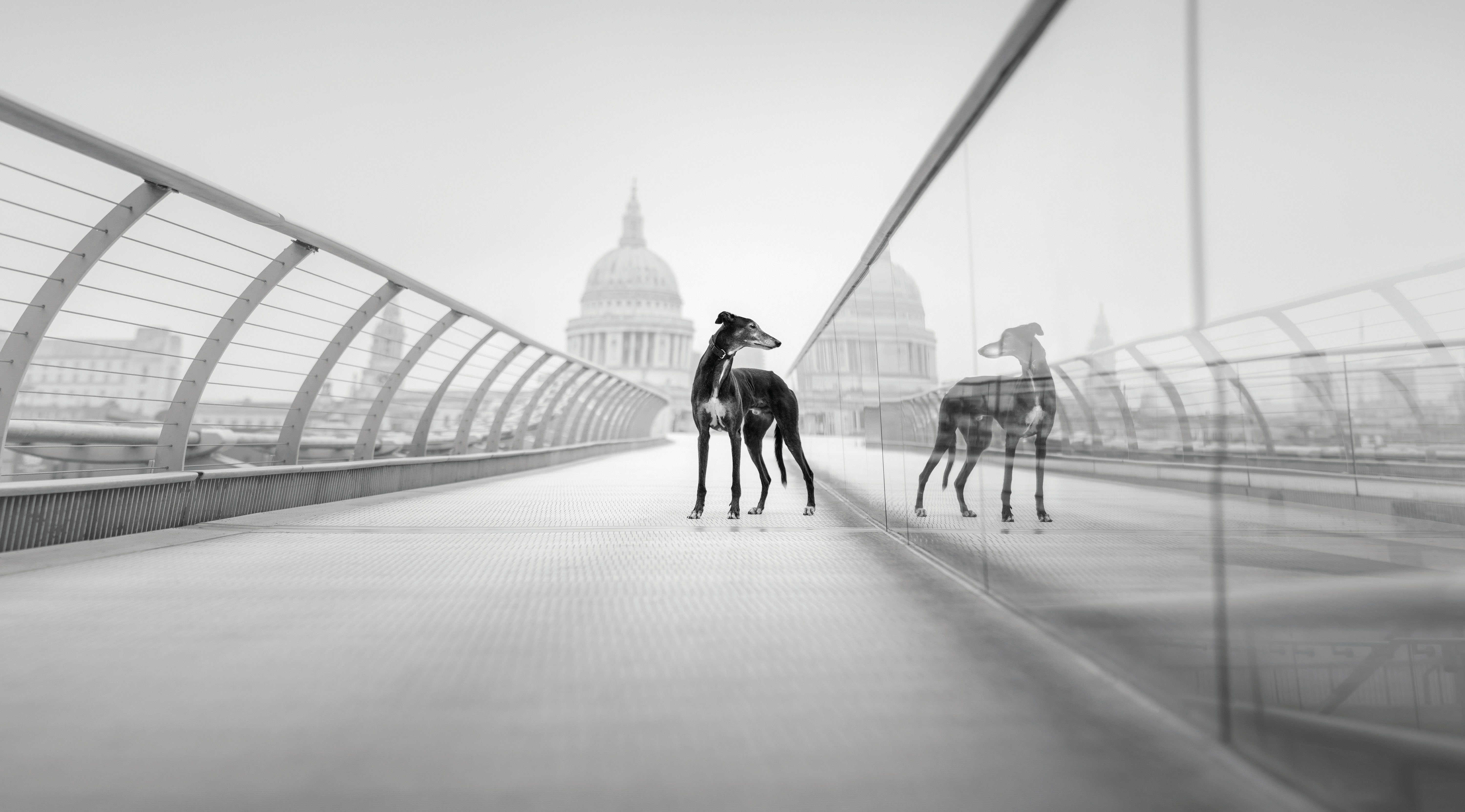
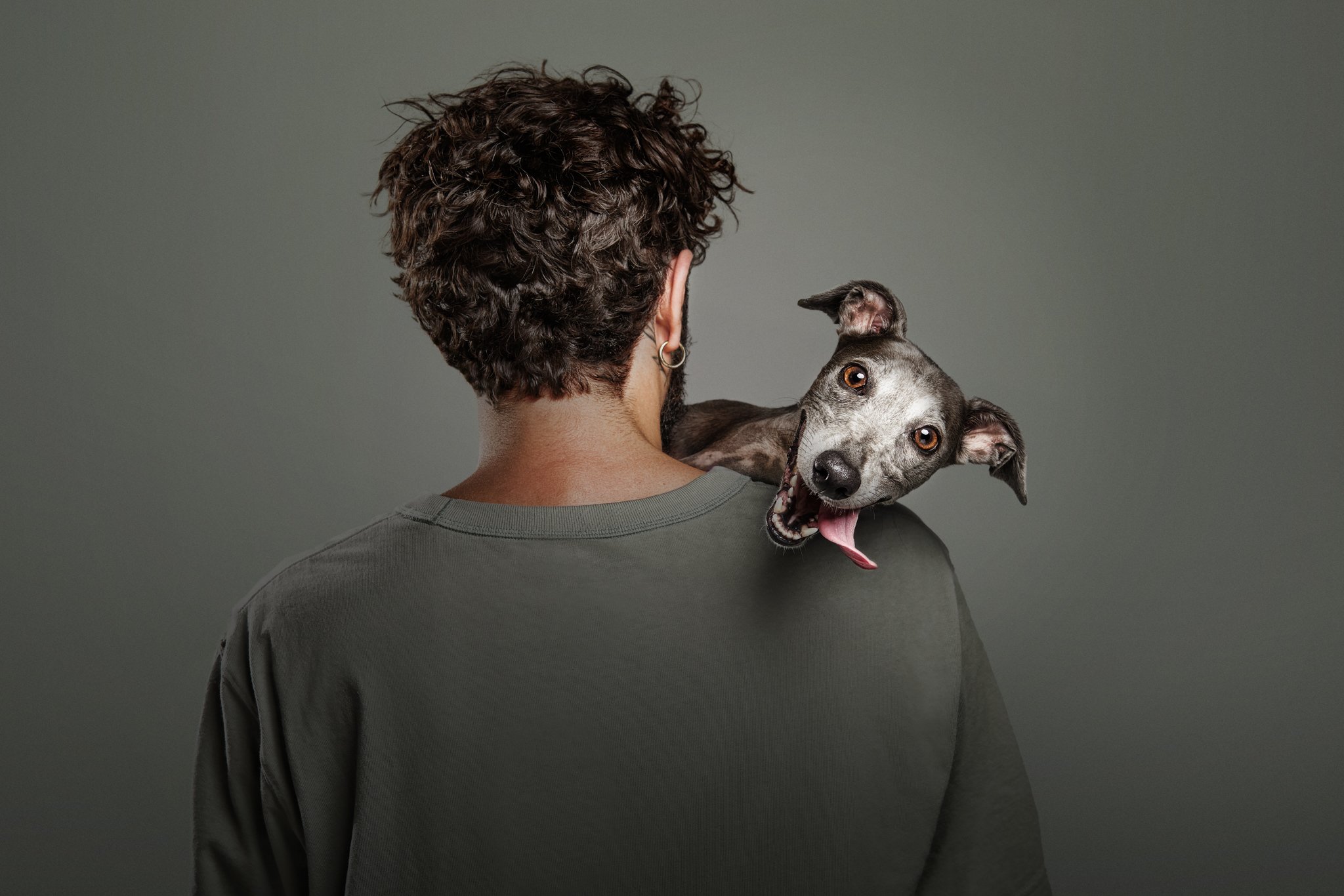
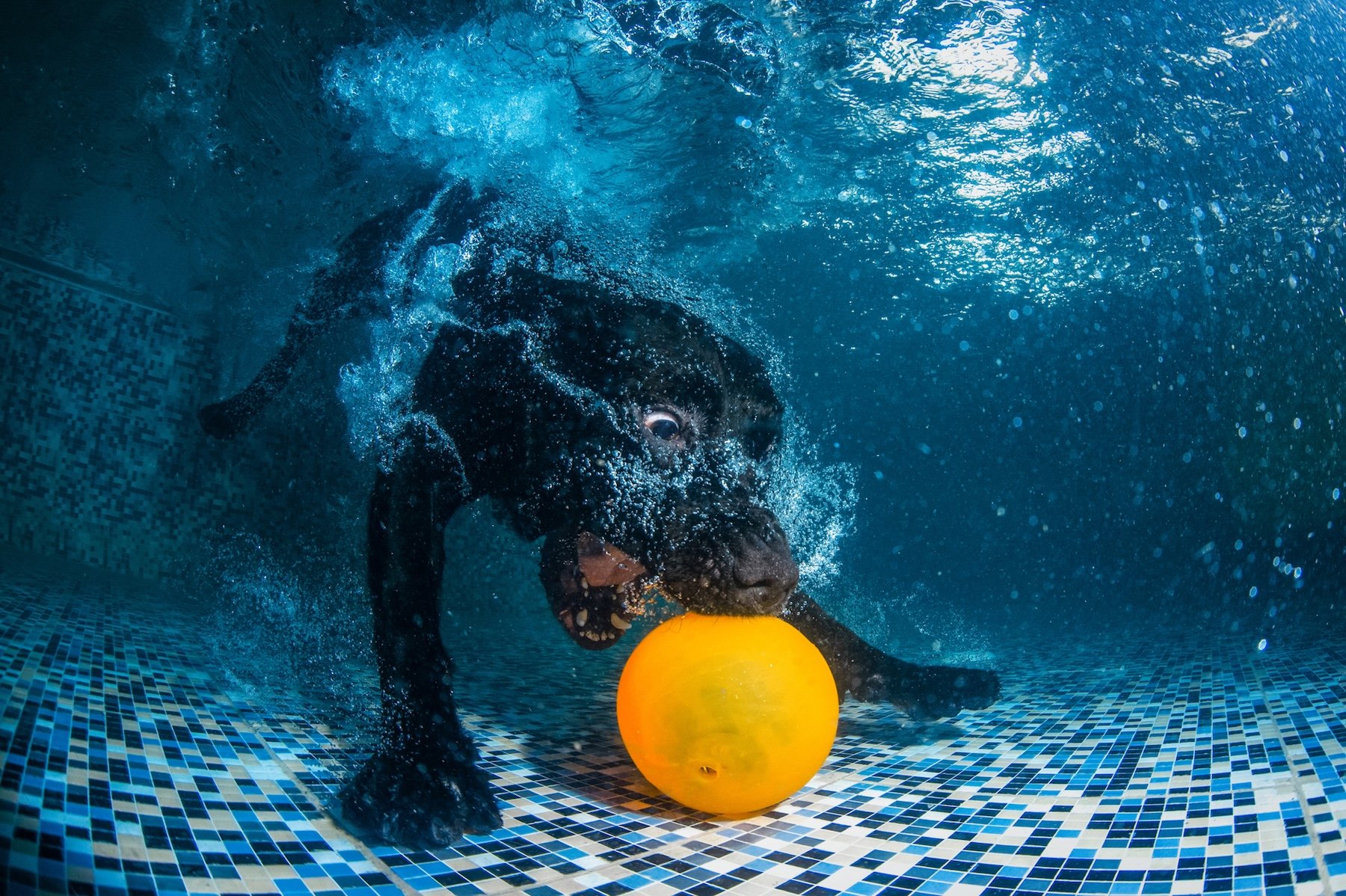
“Elegance Awaits” 2026 Portrait Outdoor, Honorable Mention Credit: Grace Fiselman / Dog Photography Awards“Mirror, Mirror” 2026 Portrait Outdoor, Honorable Mention Credit: Perdita Pretzl / Dog Photography Awards Henrik Spranz“Mission Balance” 2026 Action Category, 2nd Place Credit: Gavriella Leon / Dog Photography Awards“Beyond the Track” 2026 Portrait Outdoor Category Winner Credit: Elena Marchi / Dog Photography Awards Zeiss57“Chasing Beyond Limits” 2026 Documentary, Honorable Mention Credit: Jodie Grieve / Dog Photography Awards“Therapy Dogs in a Nursing Home” 2026 Documentary, Honorable Mention Credit: Jessica Mozzetti / Dog Photography Awards Jessica Mozzetti“Peggy” 2026 Studio Category, Honorable Mention Credit: Jane Thompson / Dog Photography Awards JANE THOMSON“Working as a Team” 2026 Documentary, Honorable Mention Credit: Rebecca Williams / Dog Photography Awards“Waiting” 2026 Documentary Category Winner Credit: Tianhang Zhang / Dog Photography Awards“The Weight of Connection” 2026 Dogs & People Category, 3rd Place Credit: Santos Ramón / Dog Photography Awards SANTOS ROMAN“Puppy’s Curiosity” 2026 Studio Category, Honorable Mention Credit: Sylvain Langler / Dog Photography Awards“Underwater Fetch” 2026 Action Category, Honorable Mention Credit: Tianhang Zhang / Dog Photography Awards
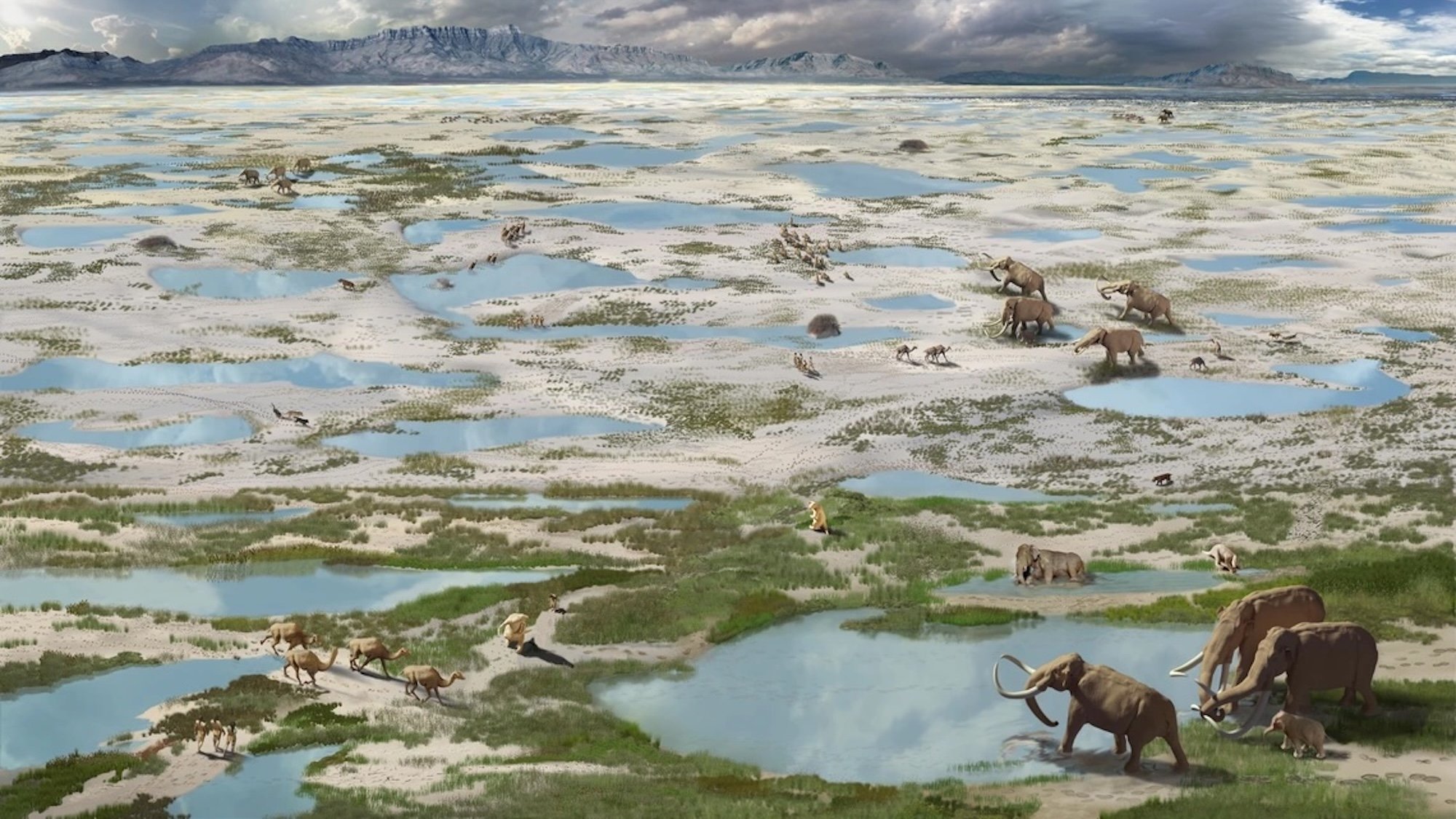
An extensive new analysis further confirms the oldest known human footprints in North America date back to the last ice age (about 23,500–21,700 years). To pinpoint their origins, researchers at the University of Arizona relied on cutting-edge methods at the United States Geological Survey (USGS) Radiocarbon Laboratory to examine hundreds of thousands of prehistoric pollen grains extracted from the tracks. According to researchers writing this week in the journal Science Advances, the team can even describe some of the dramatic environmental fluctuations experienced by these prehistoric humans within a single generation.
New Mexico’s White Sands National Park contains more than stunning vistas and desert dunes. It’s also home to one of the most controversial (and consequential) prehistoric discoveries of the last century. In 2006, archaeologists located footprints inside a dry lakebed that they later determined to be the earliest evidence of humans in North America. But there was a problem. Until then, researchers largely agreed that the first humans migrated into the continent about 16,000–12,000 years ago via Beringia, the subcontinent once connecting Alaska to Russia.
However, the White Sands footprints were estimated to be around 23,000 years old. That implied a sustained human presence on the continent at least seven millennia earlier than expected. Various archeological camps continued debating the true age of the White Sands footprints for years, while others cited similar—and sometimes older— sites in both North and South America. Meanwhile, the dry lakebed’s rarely seen geological conditions allowed researchers like University of Arizona geoscientist Jessica Tierney to learn more than each footprint’s age.
“The White Sands sediments are unique in that they allow us to reconstruct environmental conditions during the last ice age at a very high temporal resolution, so that we can see fluctuations that were relevant for the humans present at that time,” Tierney said.
Combining geochemical sediment signatures with the fossilized pollen, researchers accurately determined ancient regional details such as plant distribution, precipitation, temperature, and aridity. They soon learned that the humans who made the White Sands footprints would have experienced incredibly dramatic environmental shifts within their own lifetimes. Within only a few decades, the surrounding conifer forests transformed into plains covered with oak and sage. Lake Oterio, a giant body of water that once covered New Mexico’s national park, fluctuated in size for about 1,500 years until it receded completely. Although these shifts were large, they actually closely followed similar global climate changes at the time.
“And throughout that whole sequence, people were walking there, leaving their tracks alongside those of mammoths, giant sloths and dire wolves,” added Tierney.
It takes a village to raise a child, and sometimes it takes more than one wildlife rehabilitation center to care for a bat. Even if the bat in question weighs only six grams (about two ounces).
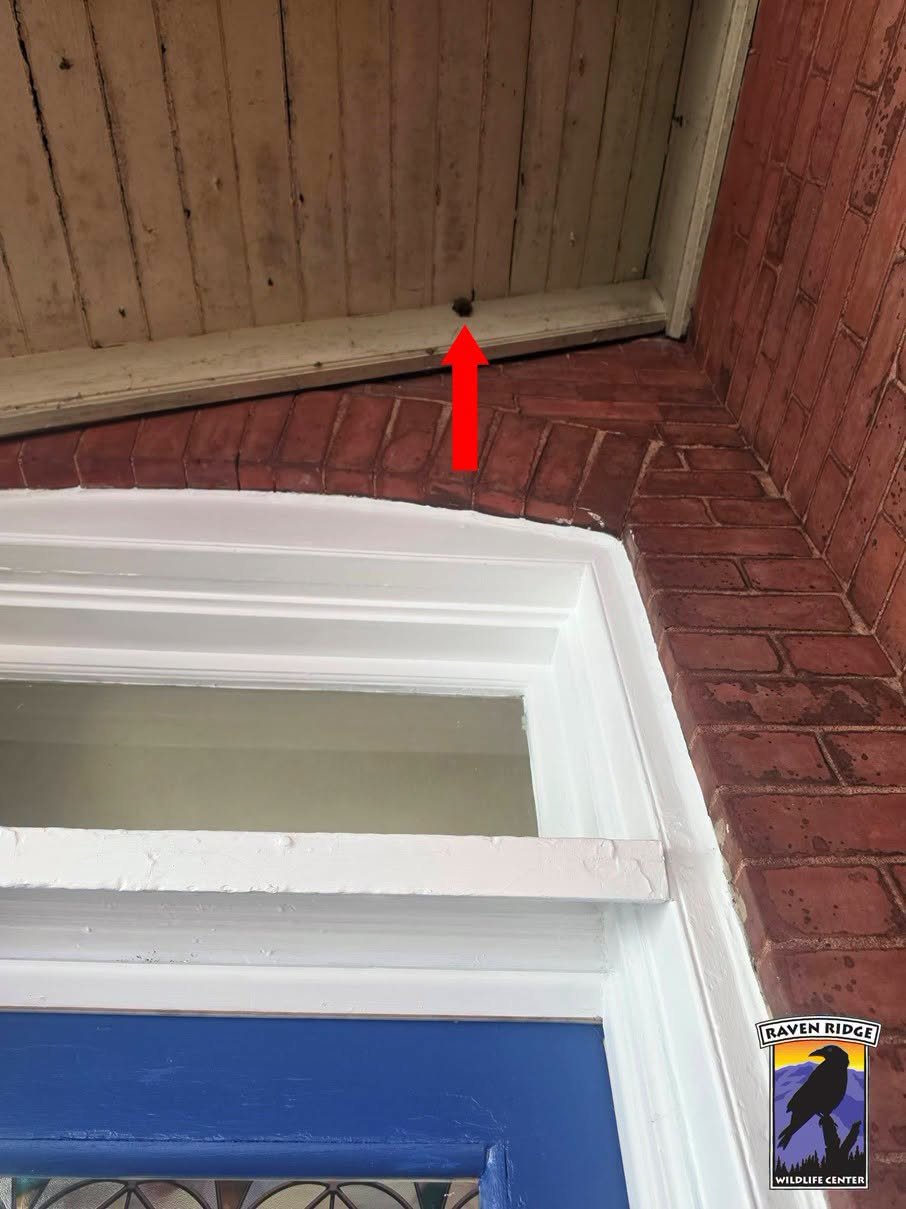
The recent rescue of the juvenile bat in Lancaster, Pennsylvania involved teamwork from the beginning. The “sky puppy” had been hanging on a local porch for two days. While that might not sound off, the bat’s exposure to the elements in a single location for that period of time made the situation an emergency, according to Raven Ridge Wildlife Center in southern Pennsylvania.
The rescued bat perched on a local porch. Image: Raven Ridge Wildlife Center.
Pennsylvania Bat Conservation and Rehabilitation contacted Raven Ridge, who sent a team member to get the bat. The winged mammal was very dehydrated and underweight. It was also unlike the bats that typically arrive at Raven Ridge. The team stabilized her, recontacted PA Bat Conservation and Rehabilitation, and the two organizations realized that they had a northern long-eared bat (Myotis septentrionalis) on their hands.
“Sadly, northern long-eared bats are now critically endangered in North America, with their population dropping by as much as 97% to 100% because of white-nose syndrome,” Tracie Young, Raven Ridge Wildlife Center director, tells Popular Science. White-nose syndrome is a fungal disease that has killed millions of bats in the U.S. and Canada.
“They are now protected at both the state and federal levels,” Young adds.
A Raven Ridge volunteer ultimately drove the youngster to the PA Bat Conservation and Rehabilitation facility about an hour away, where the team is expert in critically endangered bats. The bat was eventually returned to the wild, with a video featuring the little bat launching from a woman’s gloved hand into the night.
“Even though this is just one bat, it was important to get this bat to the rehabber who specializes not only in bats but also in those in a critically endangered status,” Young adds. “The video shows her flying beautifully. This effort was a wonderful partnership between Raven Ridge Wildlife Center and PA Bat Conservation and Rehabilitation.”
Nothing is quite as joyful as watching a dog get caught up in a bout of “zoomies,” zipping around a living room or backyard in a burst of energy. But our canine pals aren’t the only animals subject to these hyperactive displays.
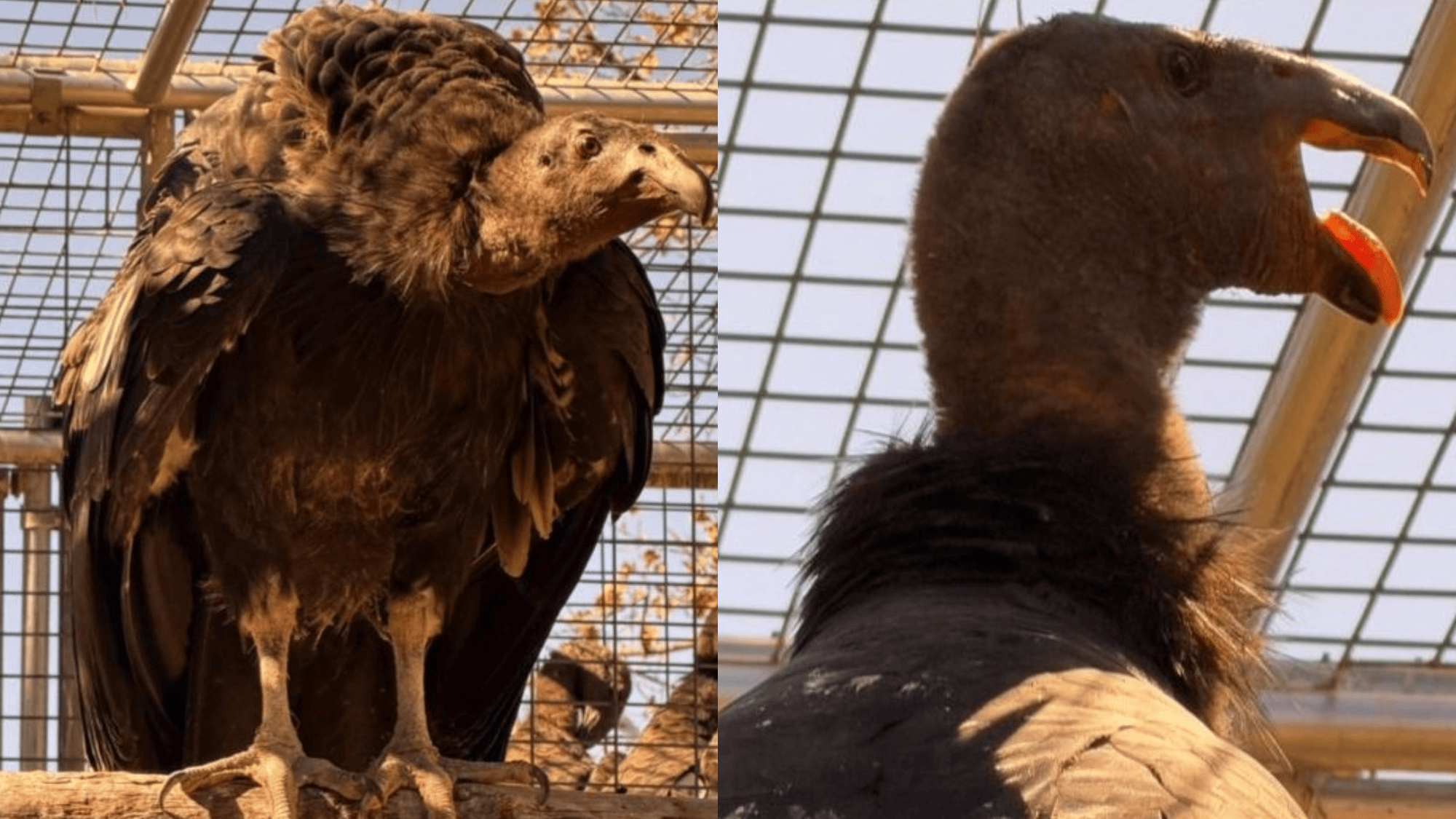
Young condors can also engage in zoomies, as demonstrated in a recent Facebook post from the Ventana Wildlife Society in California. The video shows clips of two young California condors (Gymnogyps californianus), Chert and Pumice, seemingly having a blast in their release pen.
“We observe the zoomies in both captive and wild condors. It’s just a sudden expression of pure excitement for young condors and very fun to watch,” Joe Burnett, California Condor Recovery Program Manager at the wildlife society, tells Popular Science. “Zoomies come out of nowhere and they just can’t contain themselves and totally let loose. They hop, run in circles, or flap around, or all the above! It’s just pure fun!”
It’s not just about the fun, however. Zoomies allow the young condors to release energy and grow stronger, as well as help them figure out their wings, according to the team.
The two zoomie condors are 1.5-year-old males who were raised in zoos before arriving at Ventana Wildlife Society’s San Simeon release pen in early September. It’s called a release pen because Chert, Pumice, and three other captive condors will be kept in the pen to acclimate until their release on October 24 at 10 a.m. The release will also be livestreamed.
The quintet will become a part of the wild condor population of central California, which today includes 104 individuals. But it won’t be a total goodbye. Scientists will be able to keep an eye on Pumice and Chert’s locations via wing-mounted radio & GPS transmitters and ID tags.
California condors are North America’s largest land bird. They measure 9.5 feet from wing tip to wing tip. But their size didn’t spare them from a precipitous population drop. In 1982 there were only 23 condors left in the world. All wild condors were captured and included in a captive breeding program.
“Condor releases are critical to achieving our ultimate goal- to reestablish a self-sustaining condor population in the wild,” Burnett concludes.
At the end of 2025, there were 607 California condors. We’d say Pumice and Chert earned their right to party.
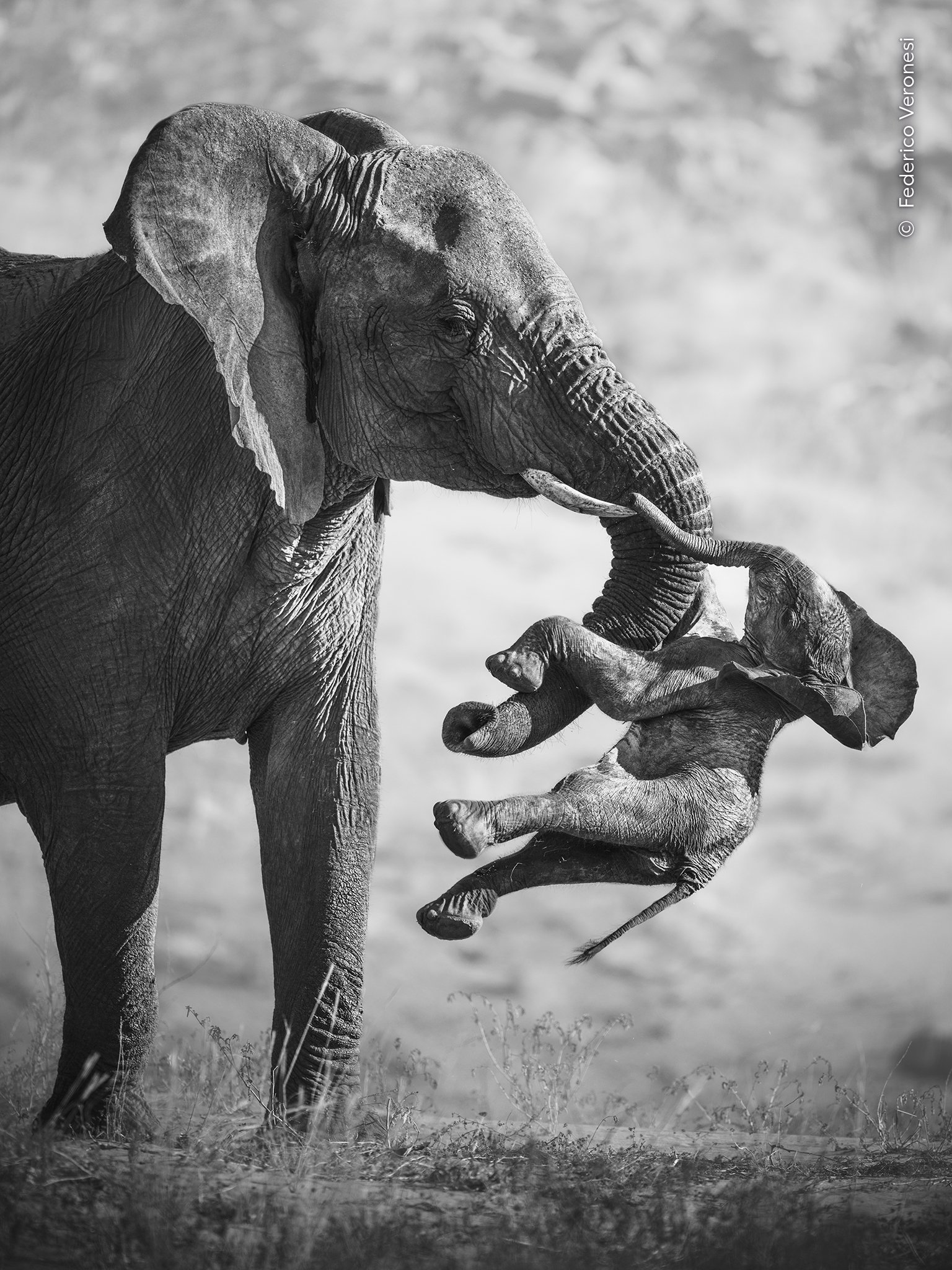
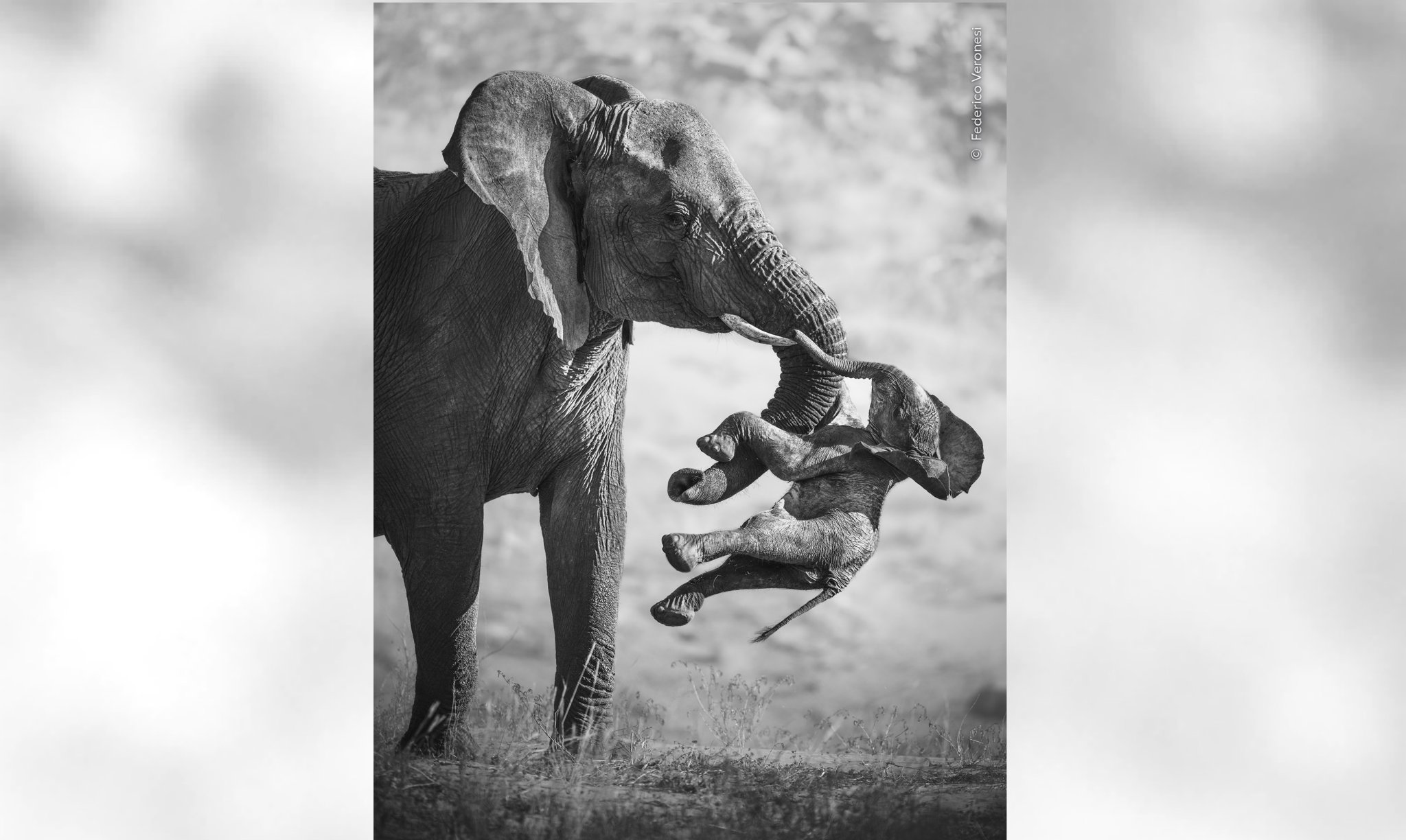
In the Huab River Valley of Namibia, a female elephant carries the body of a deceased calf. It’s a tragic scene that offers a rare glimpse at the complex social behaviors of animals. Photographer Federico Veronesi documented the moment and his striking image took top honors at 2026 Wildlife Photographer of the Year awards.
“This photograph works on so many levels. Emotionally it’s a gut punch, heartbreakingly poignant,” Kathy Moran, Chair of the Wildlife Photographer of the Year Jury, said. “Intellectually it’s proof that animals have cognition. This photograph says it all!”
“The Aftermath“ Wildlife Photographer of the Year 2026 Winner, Behaviour: Mammals Federico was tracking elephants when he came across an unusual pattern of drag marks in the sand of a dry riverbed. The source became clear when he caught up with a family group. A female emerged with the calf, its leg wedged between her tusk and trunk. Behaviours centring on death have been observed in both Asian and African elephants, including vocalisations, guarding the dead, inspecting and handling bones, and carrying the deceased. Some researchers suggest these behaviours could indicate an elephant’s journey to understanding death, while others interpret these actions as possible displays of grief. Credit: Federico Veronesi / Wildlife Photographer of the Year 2026
Photographers from around the world submitted more than 65,000 photographs for consideration this year. Prizes were awarded across 20 categories, including honors for young photographers.
Winners across categories:
10 Years and Under: Amelie Davis (UK)
11 – 14 Years: Oscar Whitfield (UK/Zimbabwe)
15 – 17 Years: Konrad Gräeter (Germany)
Animals in their Environment: James Lewin (UK)
Animal Portraits: Aaron Sanders (UK)
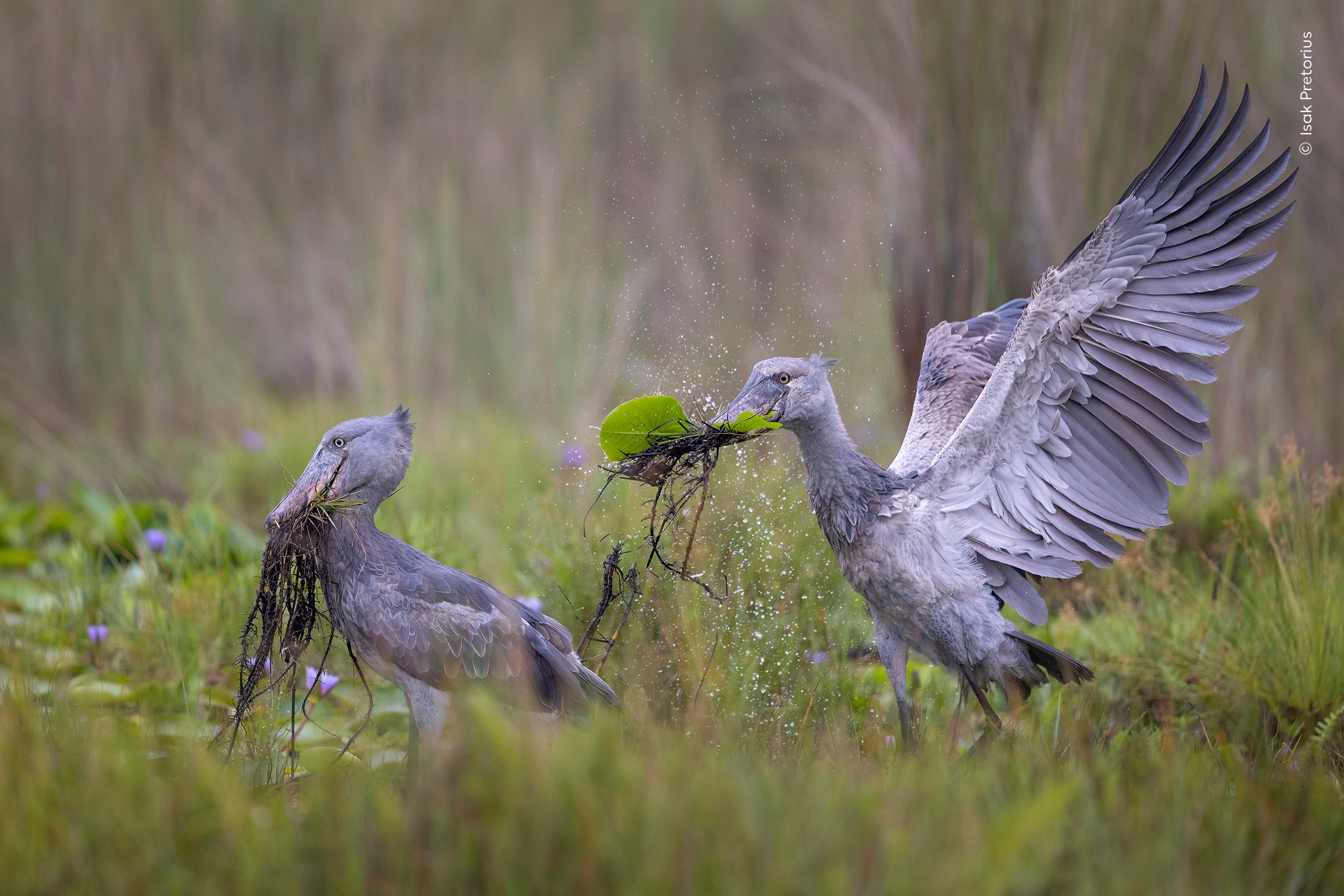
Behaviour: Birds – Isak Pretorius (South Africa)
Behaviour: Mammals – Federico Veronesi (Italy)
Behaviour: Amphibians and Reptiles – Anton Sorokin (USA)
Behaviour: Invertebrates – Sitaram Raul (India)
Oceans: The Bigger Picture – Alex Lindbloom (USA)
Plants and Fungi: Agorastos Papatsanis (Greece)
Natural Artistry: Michał Michalski (Poland)
Underwater: Tony Wu (Japan/USA)
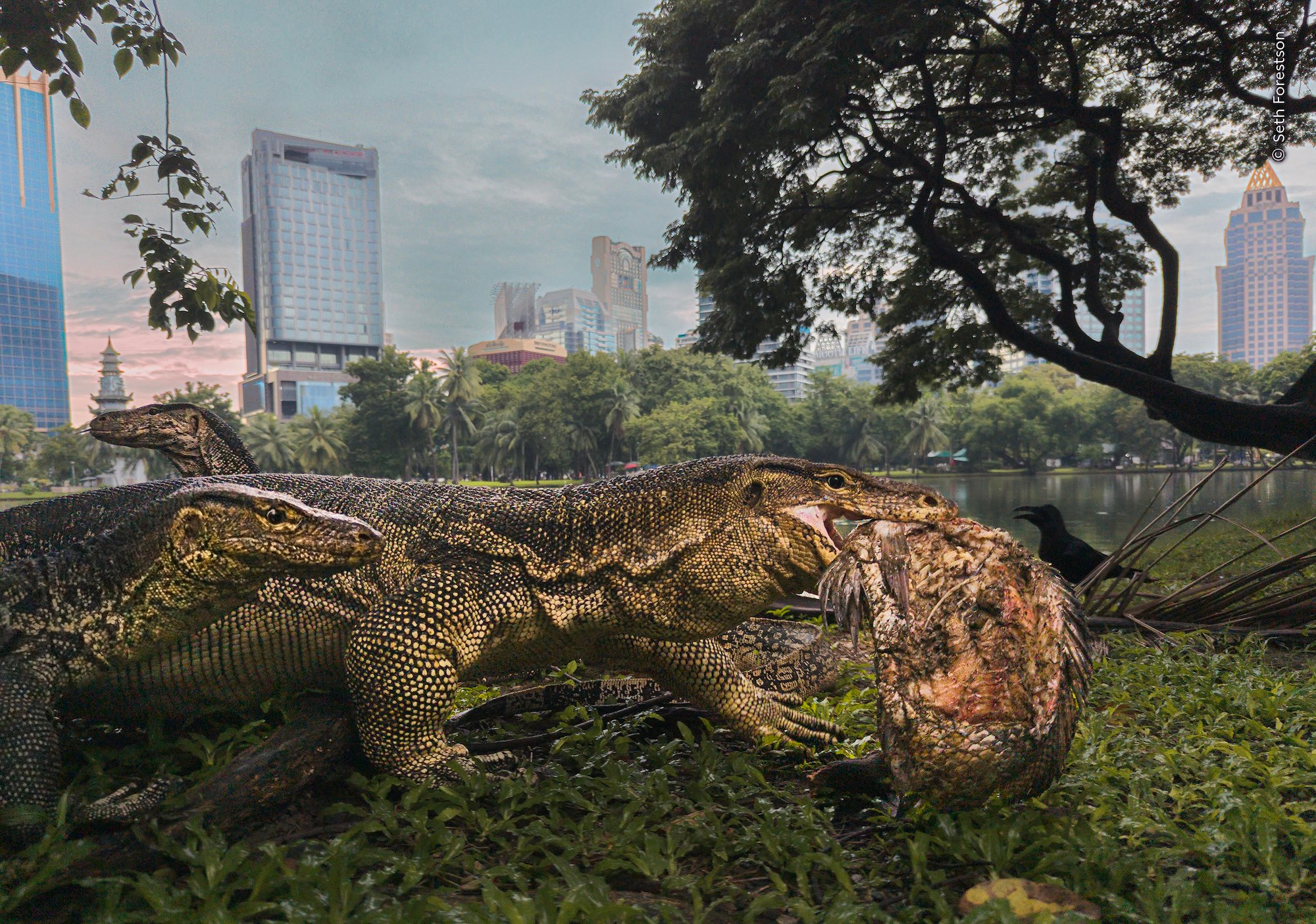
Urban Wildlife: Seth Forestson (USA)
Wetlands: The Bigger Picture – Alex Visbal (Colombia)
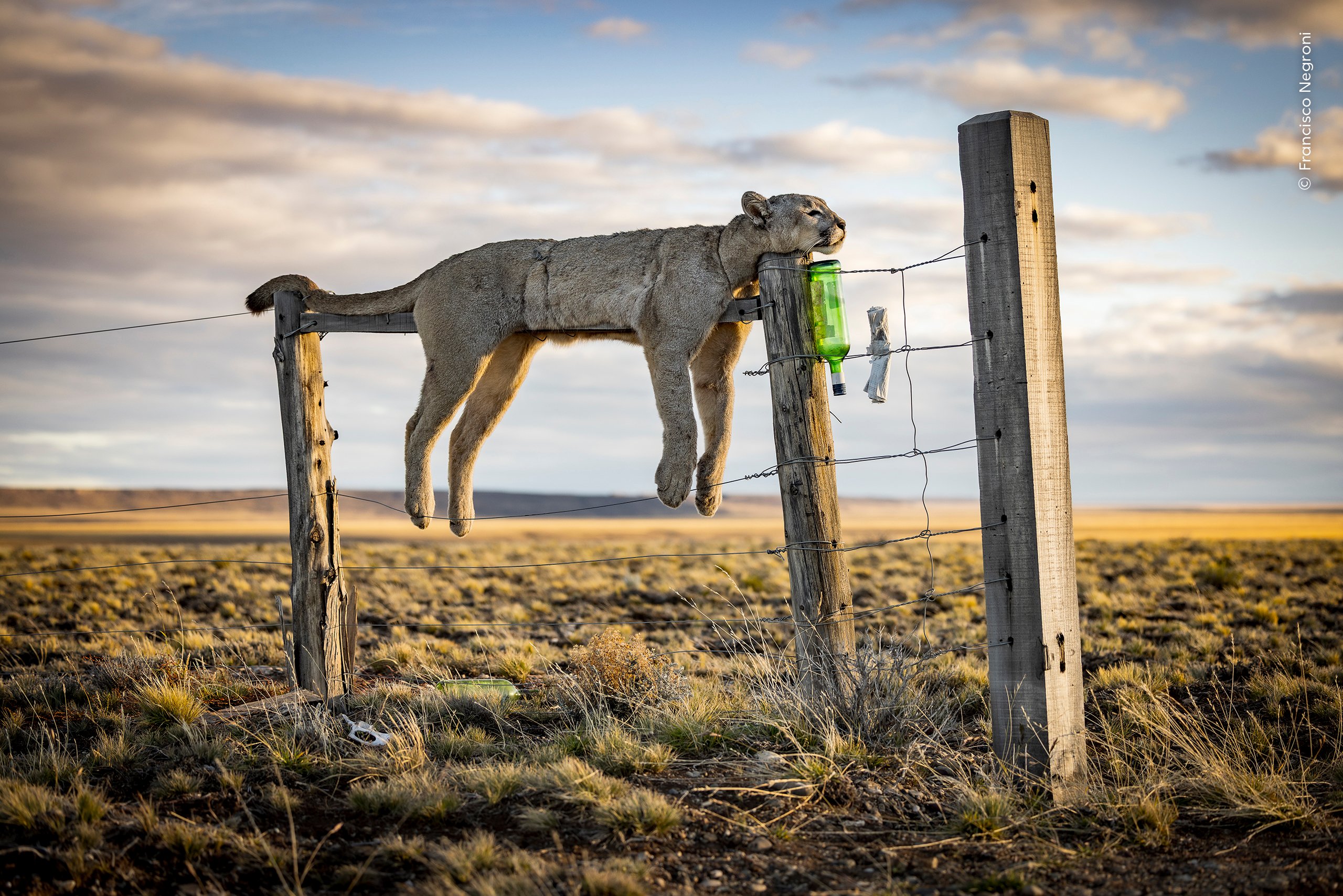
Photojournalism: Francisco Negroni (Chile)
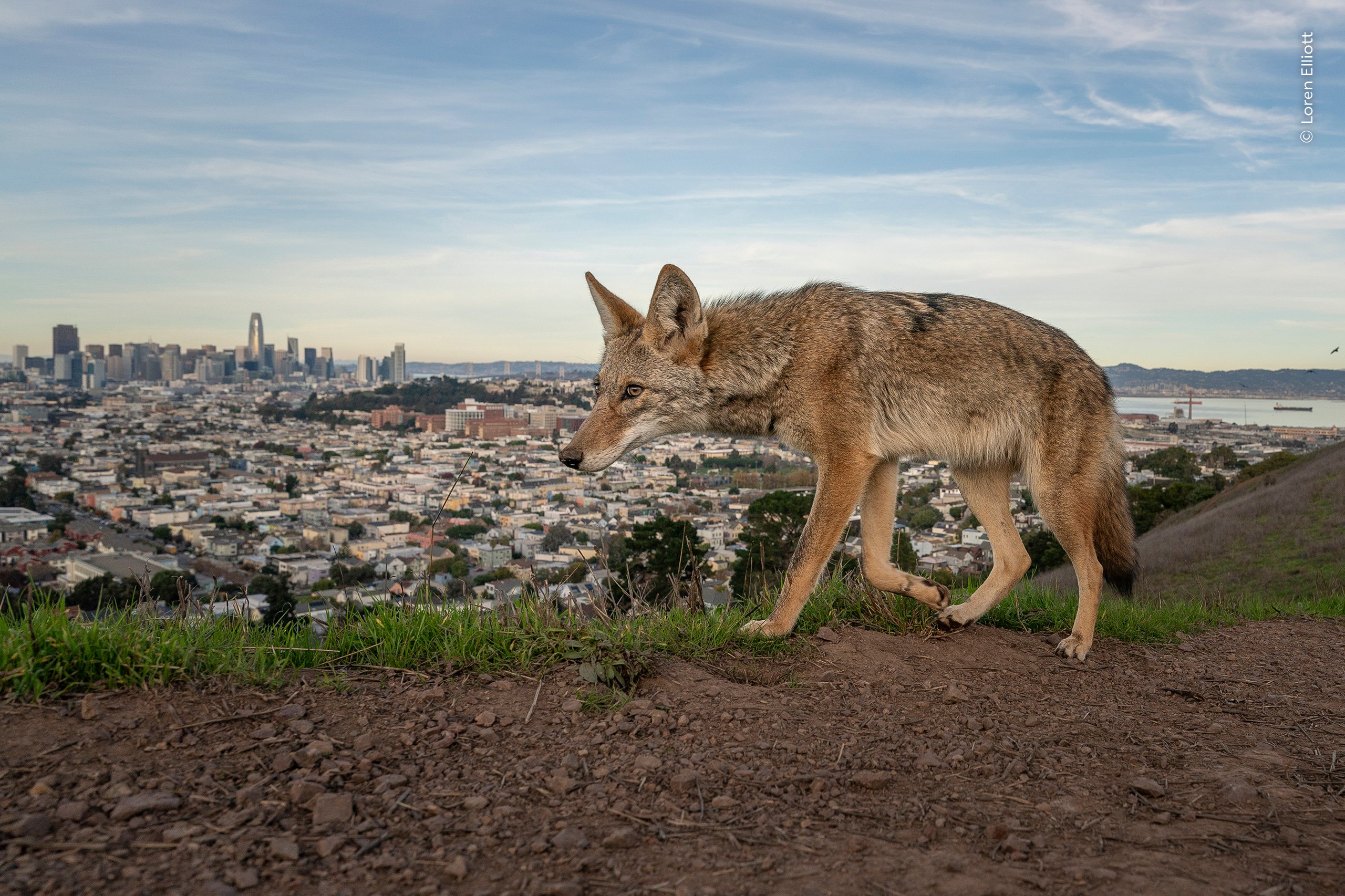
Photojournalist Story Award: Loren Elliott (USA)
Rising Star Award: Alexis Tinker-Tsavalas (Germany)
Portfolio Award: Kutub Uddin (Bangladesh/UK)
Wildlife Photographer of the Year: Federico Veronesi (Italy)
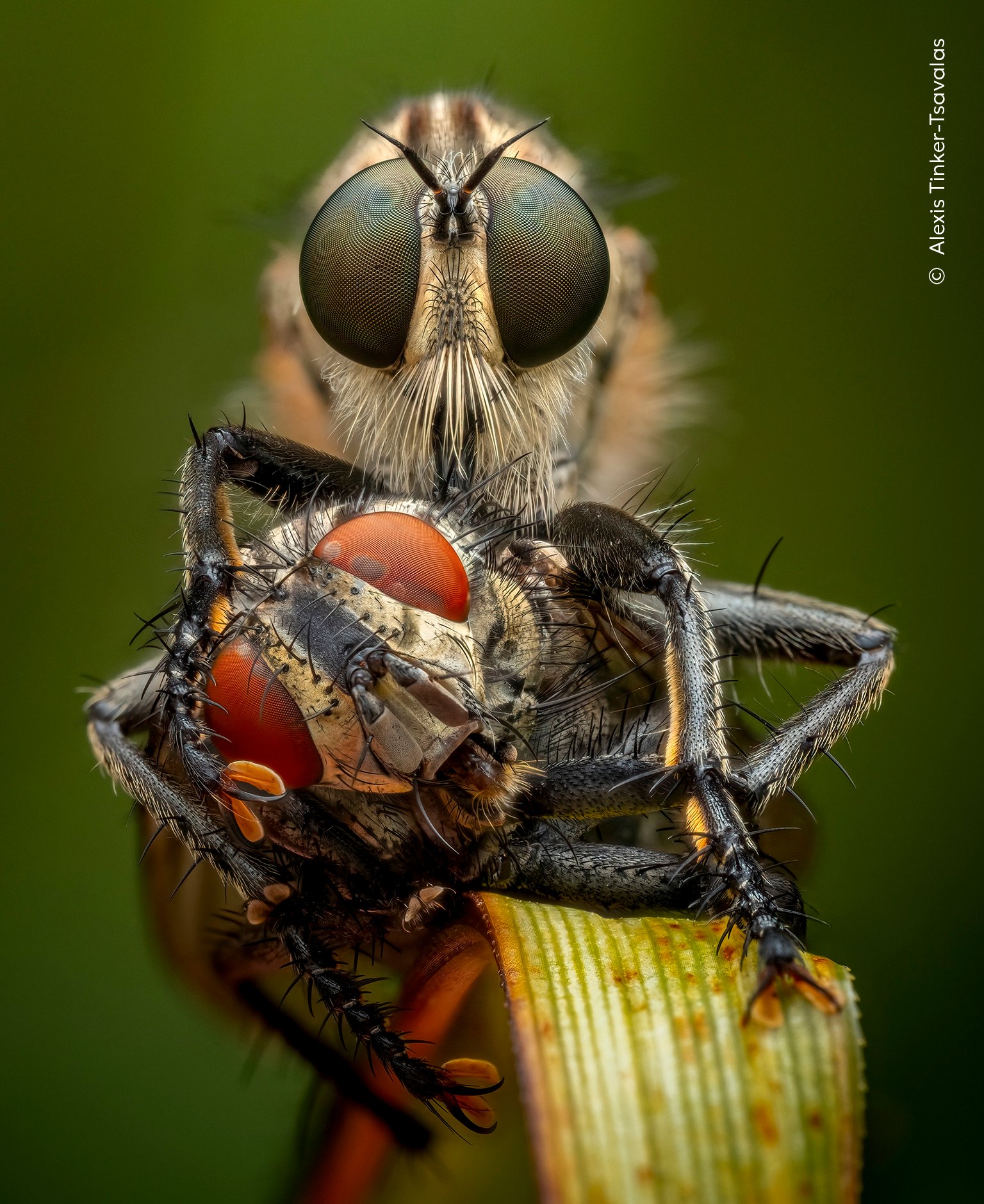
“Afternoon Snack” Winner, Rising Star Award When Alexis spotted this robber fly, it had already impaled the flesh fly with its needlelike mouthparts. The bubbles forming in the victim’s eyes indicate that the robber fly has injected digestive enzymes that liquefy its internal tissues before they are sucked out. Credit: Alexis Tinker-Tsavalas / Wildlife Photographer of the Year 2026 “On the Outskirts“ Winner, Photojournalist Story Award A coyote pads along a trail in Bernal Heights Park, overlooking the city and bay of San Francisco. This individual is part of a resident pack that Loren observed hunting rodents in the park, which is also popular with people and dogs. Credit: Loren Elliott / Wildlife Photographer of the Year 2026 LOREN ELLIOTT“Urban Jungle” Winner, Urban Wildlife The challenge wasn’t finding these lizards, but catching them in action, as they spend most of the day basking in the sun. When Seth spotted this one, he lowered himself down onto the mud to frame this city dragon against the Bangkok skyline. Common water monitors have successfully adapted to living within cities across South and Southeast Asia. They will take whatever food source is available, such as the plentiful supplies of catfish and koi in the lakes of Bangkok’s Lumphini Park. Credit: Seth Forestson / Wildlife Photographer of the Year 2026“Warning Sign” Winner, Photojournalism Tied to the fence and presented as a hunting trophy, this display was one Francisco had ‘never witnessed or photographed before’. In 2025, Santa Cruz banned the hunting of pumas, but illegal persecution continues. Livestock predation is one of the major causes of human–puma conflict, and it’s suggested that enclosing sheep at night and using guard dogs can significantly reduce the loss of livestock without resorting to hunting. In southern Chile, some owners have even abandoned sheep farming in favour of puma tourism. Credit: Francisco Negroni / Wildlife Photographer of the Year 2026 Francisco Negroni“Scenes from the Swamp“ Winner, Behaviour: Birds Exploring the swamp in a narrow canoe with a guide, Isak felt exceptionally lucky to see not one but two elusive shoebills. The birds pulled out vegetation, dropped it and then repeated the process several times. It’s likely this is a breeding pair gathering nesting material. Though often called the shoebill stork, these large birds are more closely related to pelicans, herons and ibises. Fewer than 5,300 mature shoebills survive across their entire range and their numbers are decreasing. Credit: Isak Pretorius / Wildlife Photographer of the Year 2026
Wildlife Photographer of the Year is developed and produced by the Natural History Museum, London. The winning images will be on display at the museum until July 11, 2027.
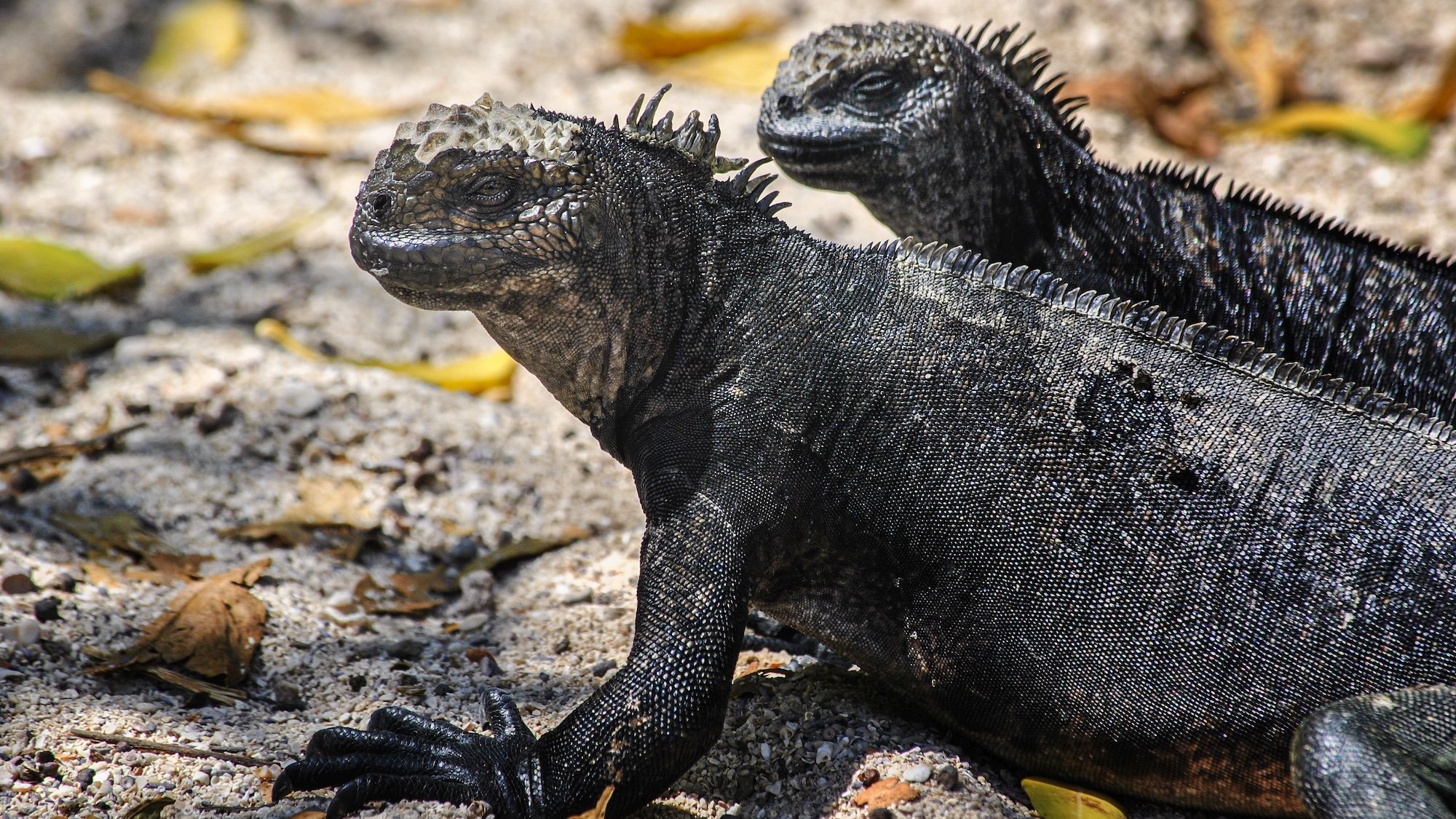
Marine biologists are sounding the alarm on behalf of the Galápagos Islands’ marine iguana (Amblyrhynchus cristatus). Without tightened regulations on the often abused exotic pet trade, researchers warn that a recent “strange uptick” in illegal animal trafficking combined with this season’s Super El Niño is further endangering the already vulnerable reptiles living on the Eastern Pacific archipelago.
“They are already shrinking in size and facing mass mortality, either by starvation or by trying to swim longer distances in search of food,” Juan José Alava, a marine ecotoxicologist at Canada’s Simon Fraser University, explained in a recent letter published in Science.
The marine iguana family encompasses at least 11 known subspecies, each specially evolved to live on the Galápagos Islands. They are the only reptiles in the world capable of foraging underwater for macroalgae, which makes up the majority of their diet. Although iguana colonies remain relatively stable, the International Union for Conservation of Nature (IUCN) still lists them as Vulnerable due to predators, mounting pollution issues, and cyclical El Niño events. Ten of the 11 recognized subspecies are also locally classified as either Critically Endangered or Endangered. Sale of iguanas is banned under the Convention on International Trade in Endangered Species of Wild Fauna and Flora (CITES), but a recent uptick in illegal trafficking along with increasingly dramatic climate shifts is adding more stress to the situation.
Ecuadorian authorities have caught people attempting to smuggle iguanas multiple times this year. In May, officials discovered at least a dozen animals inside handbags at an airport that were bound for illegal markets. Law enforcement found another 32 tied up inside a suitcase intended for similar buyers in August. Many trafficked iguanas won’t survive the stress and rough handling, but even rescued reptiles face challenges. Because subspecies are evolved to live on specific islands, ecologists must test each rescued iguana’s DNA to determine where to return them.
Smuggling hasn’t been seen within the Galápagos Marine Reserve itself, but Alava and his colleagues theorize that smugglers are capturing iguanas near Ecuador’s coastal shorelines. Traffickers then obtain CITES permits that falsely declare the reptiles are captive bred in other nations, even though no such authorized facilities actually exist. Often, smugglers are only engaged in the industry out of financial necessity or coercion.
“Artisinal fishing communities from Galapagos and coastal Ecuador, who are facing severe socioeconomic hardship and expanding organized crime activities, may feel pressured to participate in this international black market,” the letter’s authors wrote.
Conservationists are now urging a multifaceted approach to protect the animals. CITES representatives need to close existing permit loopholes, while the Ecuadorian government should focus on simultaneously breaking up organized crime and providing economic aid to struggling communities.
“Maintaining global ocean observing systems is essential, and extreme marine event forecasting and response capabilities are improving,” the authors wrote. “But responsibility and action remain fragmented across environmental [organizations], fisheries, and emergency management, and public health agencies.”
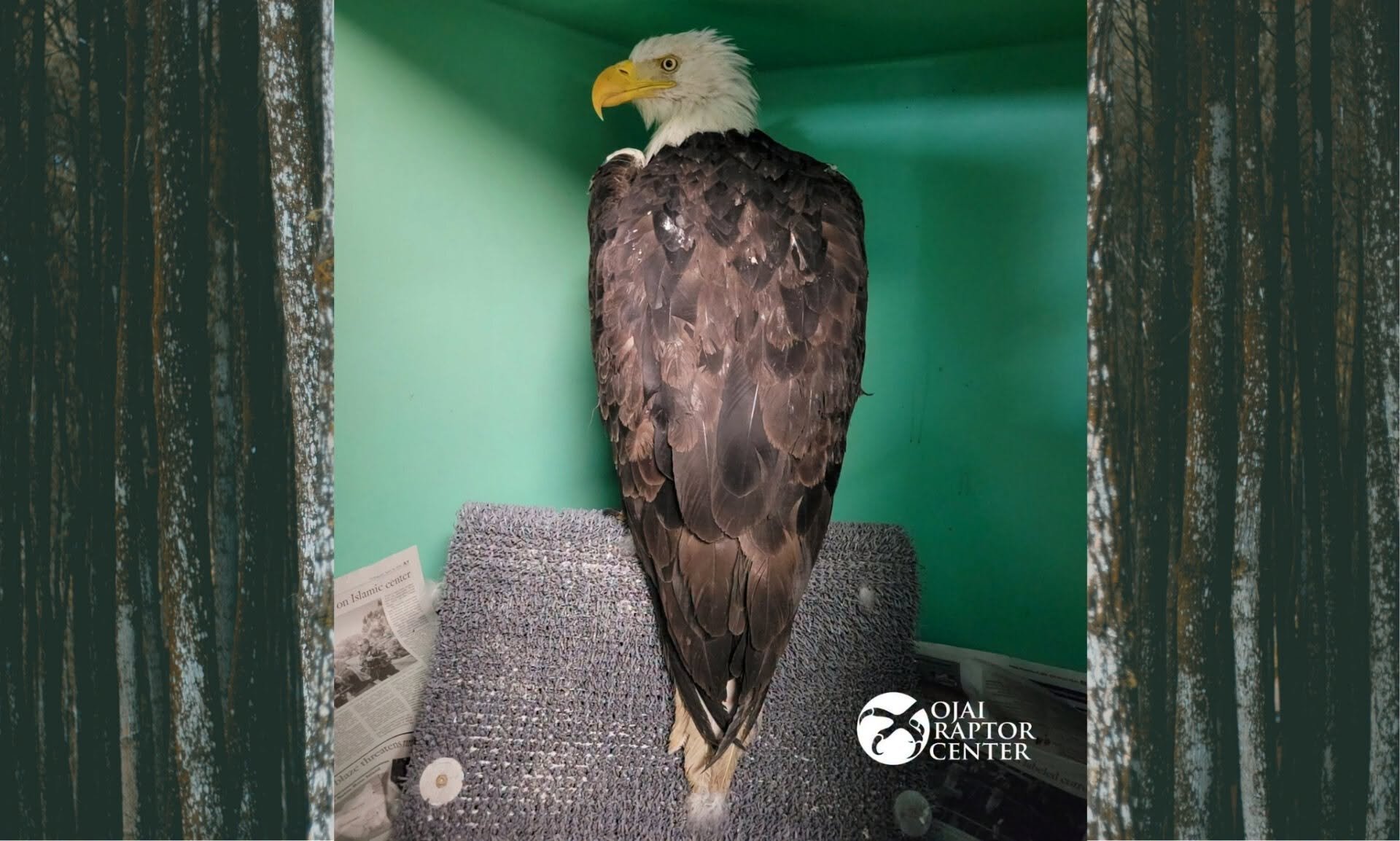
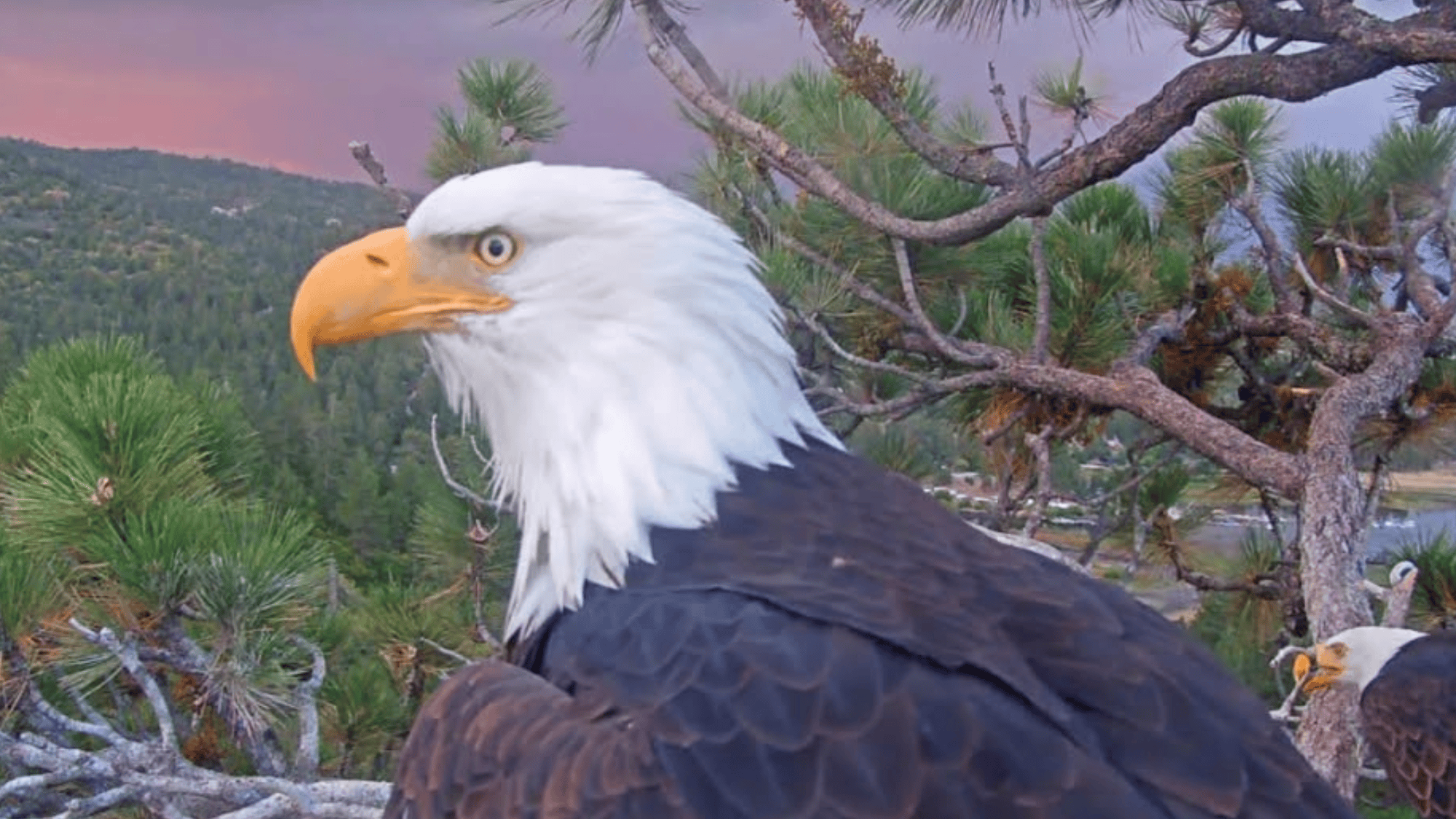
The Ojai Raptor Center released the final necropsy results for Jackie, an internet-famous bald eagle mother who was in their care this summer. Jackie was brought into the bird rehabilitation center weak and dehydrated following an altercation with another eagle in July.
Officially designated as Patient 26-519, Jackie’s necropsy revealed a “complex and unusual disease process involving severe, chronic inflammation and ulceration of the stomach, persistent internal bleeding, anemia and secondary bacterial sepsis.” She was also diagnosed with Highly Pathogenic Avian Influenza (HPAI) commonly called bird flu, which was behind severe stomach ulceration. Raptors (eagles, hawks, falcons, owls, etc.) are highly susceptible to the virus
All of these medical complications developed over time and ultimately contributed to her death on August 10.
“These findings have helped connect many of the pieces we were seeing throughout her hospitalization and provided a better understanding of the challenges she faced,” the Ojai Raptor Center wrote. “We are grateful to the many veterinary specialists, laboratories, wildlife agencies and partner organizations who worked alongside our team to understand her illness and provide her with the best possible care. Caring for her was an extraordinary privilege for our entire team.”
The full report can be read in Jackie’s veterinary medical journal. The necropsy was preformed by veterinary pathologists at the San Diego Zoo Wildlife Alliance.
Friends of Big Bear Valley (FOBBV), the non-profit organization that runs the live cameras where viewers from all over the world watched Jackie and her partner Shadow, said that they will follow up with their thoughts once their team has had time to process the report.
“The story of the Big Bear bald eagle reflects the powerful connection people feel to these iconic birds,” California Department of Fish and Wildlife Director Meghan Hertel added. “We’re grateful to everyone who cared for her and worked to support her well-being. Understanding the results of these tests is an important part of learning from this case and can help inform the care and treatment of other eagles and wildlife in the future.”
Jackie on a perch at the Ojai Raptor Center in July. Image: Ojai Raptor Center.
Jackie’s story
Jackie was born, raised, and lived in Big Bear Valley in Southern California. Prior to the 2011-2012 nesting season, no bald eagle chicks were known to have ever hatched in Big Bear Valley. Then came Jackie, named after a forest ranger and born to parents Ricky and Lucy in 2012.
During the 2016-2017 nesting season, Jackie took over a nest where Friends of Big Bear Valley (FOBBV) had a camera stationed. In 2018, she had two chicks named Stormy and Big Bear Baby (or BBB) with her first mate, Mr. B.
Her long-time partner Shadow entered the picture in summer 2018. He showed up at the nest and would not leave. FOBBV called the new male Shadow because he appeared so determined to stay in the nest, and the team initially believed he was one of Jackie’s siblings, also named Shadow. The eagle’s plumage indicated he was one year older than the other Shadow and not Jackie’s sibling, but the name stuck.
Shadow continued to hold his ground and Mr. B gave up and eventually left. Jackie then accepted Shadow as her new mate.
Wildlife cameras documented Jackie and Shadow’s life together, offering viewers a direct look into the brutality and beauty of nature. The pair successfully raised chicks in 2019 (Cookie and Simba) and 2022 (Spirit). The pair’s eggs failed to hatch in 2023 and 2024. In 2025, Jackie laid three eggs that all hatched in early March. However, a strong snowstorm dumped up to two feet of snow and battered the nest with strong wind and only two of the chicks (Sunny and Gizmo) survived.
In January, Jackie laid two eggs in the nest, but ravens destroyed them. She later laid two more eggs that hatched in April and named Luna and Sandy. The name Sandy is in honor of FOBBV’s former executive director Sandy Steers who died from cancer in February.
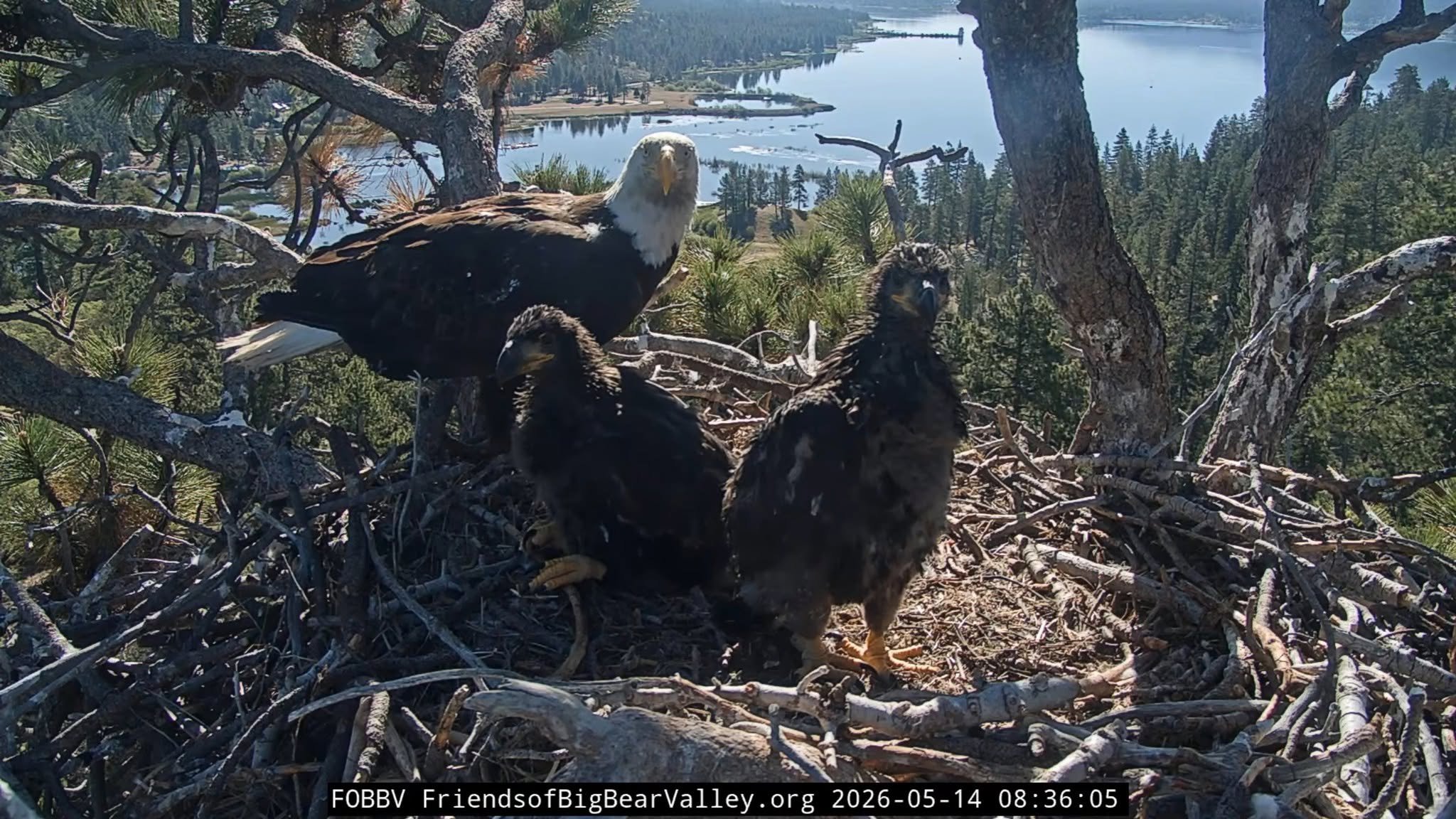
Jackie, Luna, and Sandy on their nest in May 2026. Image: Friends of Big Bear Valley.
Jackie’s injury and death
On July 17, Jackie was found injured on the ground near Dana Point Park, California. Cell phone video from a witness confirmed that she had an altercation with two other subadult eagles. She successfully fended off the other eagles by turning over and using her talons, but could not fly far away.
She was transferred to the Ojai Raptor Center, where she was diagnosed with severe anemia. Her anemia worsened during the first week of August, the Ojai Raptor Center said that she was in unstable condition on August 9. Her packed cell volume (PCV) fell below percent, before rising to nine percent.
On July 17, Jackie was found injured on the ground near Dana Point Park, California. Cell phone video from a witness confirmed that she had an altercation with two other subadult eagles. She successfully fended off the other eagles by turning over and using her talons, but could not fly far away.
She was transferred to the Ojai Raptor Center for care, where she was diagnosed with severe anemia. Her anemia worsened during the first week of August, the Ojai Raptor Center said that she was in unstable condition on August 9. Her packed cell volume (PCV) fell below percent, before rising to nine percent.
Jackie died early in the morning on August 10. The necropsy did not reveal a single cause of death, and instead pointed to several factors including severe anemia, blood clots in her wing and one kidney, and liver and lung abnormalities.
It’s a fungi-filled world and we are just living in it. There are roughly 150,000 to 157,000 known species of fungi, and now there is a new giant species to add to that tally.
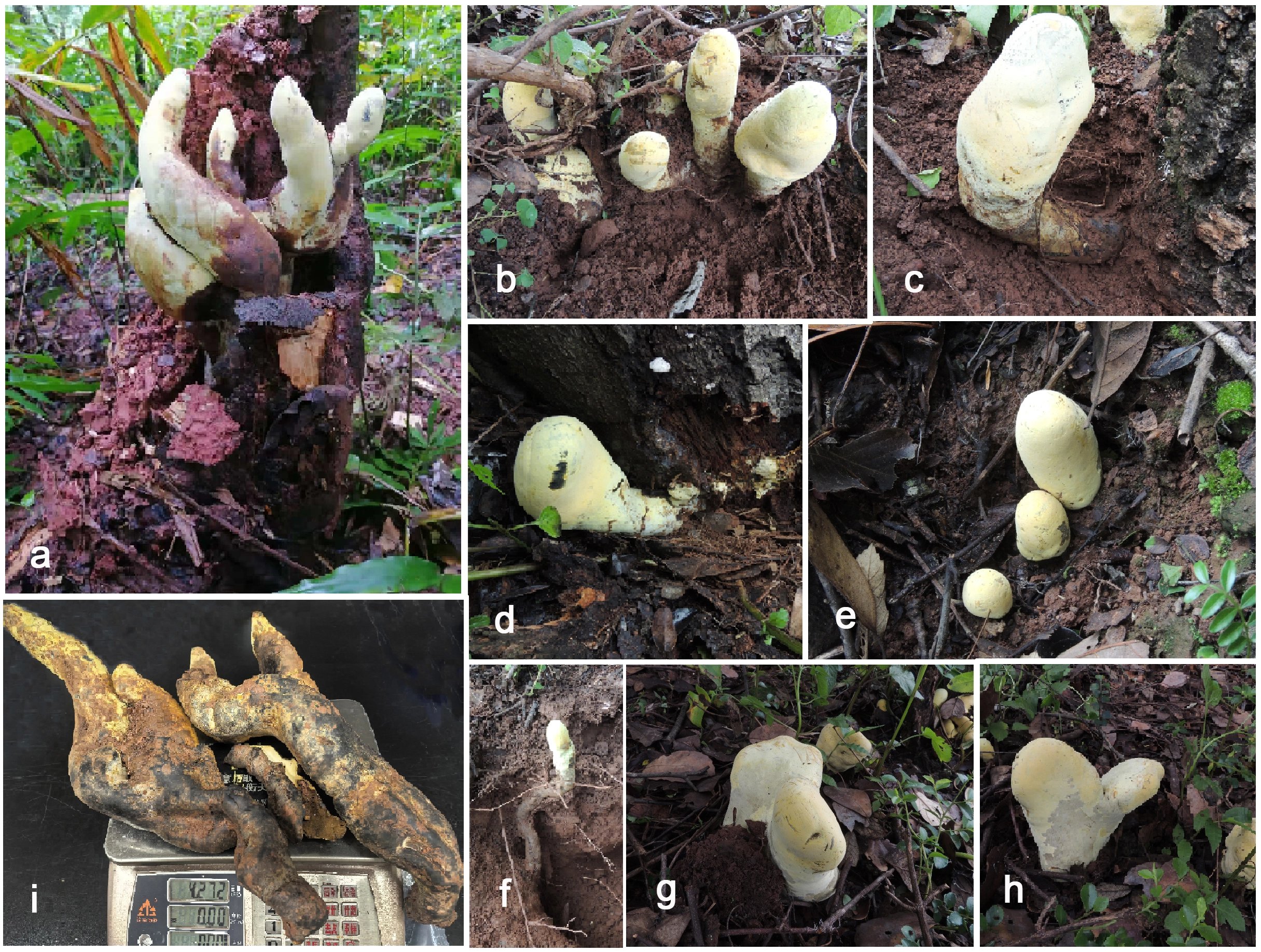
A team of scientists exploring the forests of Yunnan in southern China discovered the new fungus, which shows just how large these organisms can grow. The new species Dianjunus rex grows vertical fruiting bodies (the top part of the fungi that we usually see as a mushroom) that can grow as high as a foot (50 centimeters) and weigh close to five pounds (2.2 kilograms).
This new fungus is the largest known species within the phylum Ascomycota, the largest known phylum of fungi with over 64,000 known species. The new fungus is described in a study recently published in the journal Frontiers in Fungal Biology.
“This remarkable species represents a new fungal family, Dianjunaceae, and provides a rare window into the evolution of extreme fungal body forms,” Indunil C. Senanayake, a study co-author and mycologist at the Germplasm Bank of Wild Species of the Kunming Institute of Botany in China, said in a statement. “The discovery illustrates how much fungus biodiversity remains to be discovered in East Asian forests.”
The scientists spotted the fungus during fieldwork in the temperate coniferous forests near Damaidi and Yipinglang and in a tropical rainforest near Nanbang in southern China. They noticed large whitish fruiting bodies (called stromata) coming out of some fallen wood that belonged to an unknown species of Ascomycete fungus.
Stromata of Dianjunus rex in the field. (a, c, d, f) Stromata attached to host roots. (b, e, g, h) Stromata around host plant. (a) Collectors. (i) Total weight of largest bilobedstromata. Image: Song, Yan, Pérez-Moreno, Zhang, Yang, Xie, Su, Liu, Wang, Liu, Yang, Yang, Liu, Shi, Wan, Cheewangkoon, Dai, Senanayake and Yu
Ascomycetes don’t always sprout traditional mushrooms, but release their spores from tiny, sac-like structures inside or on the surface of such fruiting bodies instead. They typically grow on woody roots of Chinese cork oak trees.
The team collected the curious fruiting bodies, and grew spores back in the lab to study the fungus’ morphology and its genome. The genetic tests and a detailed study of its morphology revealed that the fungus is a new species, a new genus, and even a new family.
They named it Dianjunus rex (which the team calls D-rex for short), for its regal size and the ancient Dian kingdom. This ancient civilization in Yunnan reached its height during the second and first centuries BCE.
The team also found a connection to dinosaurs beyond its nickname which sounds like T. rex. It appears that this fungi family arose around 65 million years ago, or only one million years after the Cretaceous-Paleogene mass extinction event. This most famous of Earth’s mass extinctions wiped out the dinosaurs and countless other animals and plants.
“This timing raises an intriguing possibility. After the mass extinction, forests experienced dramatic changes, including the sudden availability of large amounts of dead plant material,” added Senanayake.
For fungi, this kind of environmental disruption may have created new ecological opportunities for it to fill.
As for its size, D-rex’ fruiting bodies grow about 20 to 30 centimeters taller than other Ascomycetes. The team thinks this size might help the wind disperse their spores better in dense forests. However, a large fruiting body like D-rex requires a lot of energy, so the strategy may have evolved if the ecological benefits outweighed the energy costs.
The team also believes that there are more fungi waiting to be discovered in subtropical China—we just need to keep looking.
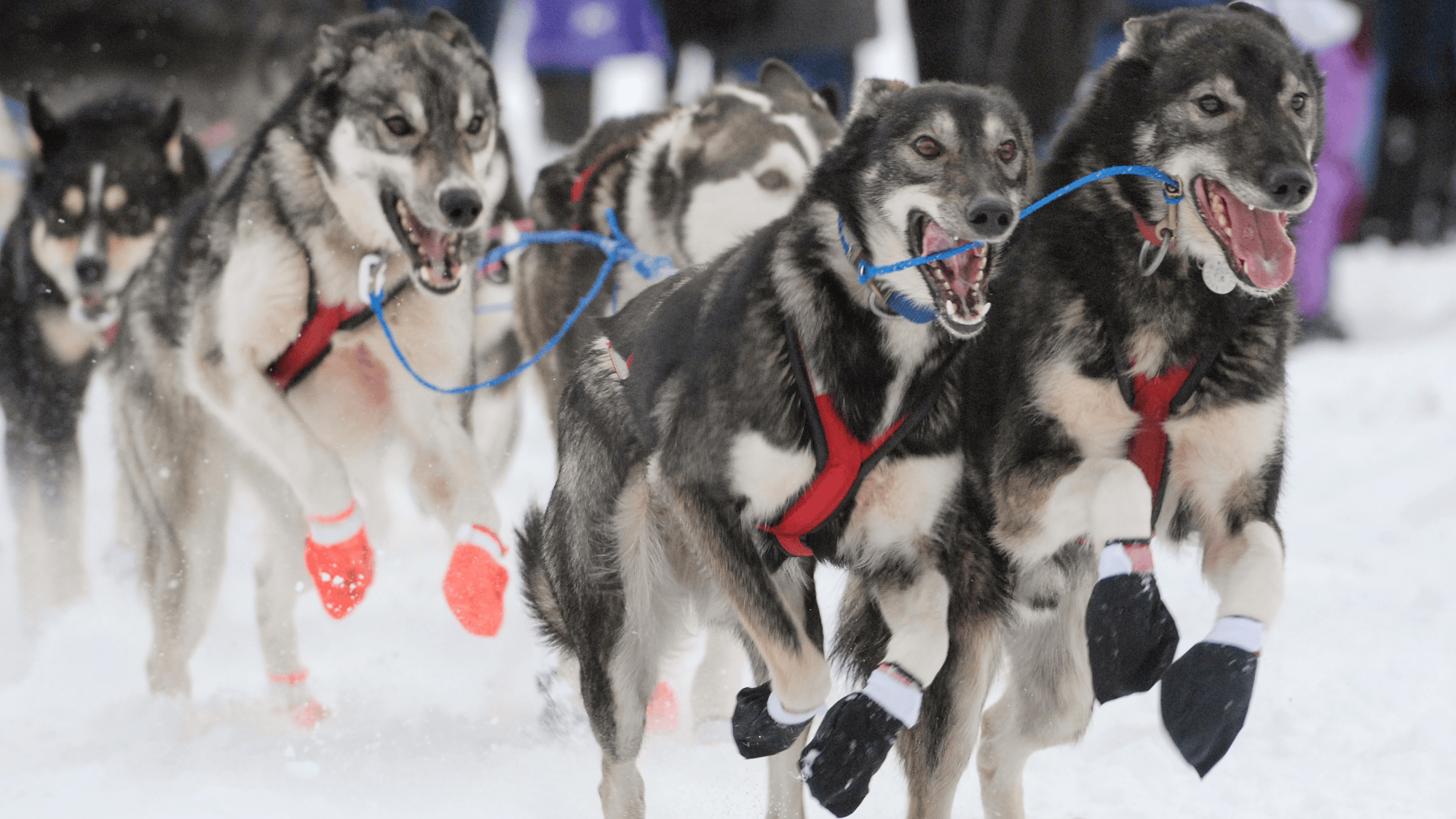
They’re some of Earth’s most powerful athletes, traversing thousands of miles of rough terrain in sub-zero temperatures, through blinding snow, and biting winds. Sled dogs have been helping humans travel across the planet’s coldest regions for centuries, hauling supplies, people, and equipment across the snow and ice. In the process, this important role that goes above and beyond simply being “man’s best friend” could have a visible impact on their evolution.
Sled dogs may have evolved shorter legs to help them pull loads more efficiently. Currently working sled dogs and those that lived about 2,000 years ago have six percent shorter leg bones than similar species, according to a study published today in the journal iScience. These findings could help biologists trace the origins of sled dogs and understand more about how dog-powered transportation spread over the past 9,000 years.
“Sled dogs have played an indispensable role in communities in the Arctic,” Mitya Kletzerman, a study co-author and an archeologist at the University of Haifa in Israel, said in a statement. “Without dogs, people couldn’t move as efficiently to hunt, relocate as conditions changed, or travel between communities to exchange knowledge and share new ideas. Understanding how the practice evolved could give us new insights into how people adapted to life in the Arctic.”
As of now, our earliest archeological evidence associated with dog sledding comes from 9,000-year-old sled parts and dog remains uncovered in 2017 on Zhokhov Island (present-day Russia). Sledding equipment like this is rarely found in the archaeological record, so it has remained difficult to pinpoint when and where the practice first emerged or spread.
Earlier studies have shown that work associated with humans can leave traces in an animal’s skeleton. Reindeer used for racing, carrying loads, and pulling have limb bone differences compared to those that do not pull. Kletzerman and her team were curious if sled dogs have also developed particular skeletal traits that have helped them adapt to all of the physical demands of pulling a sled.
In the study, the team developed a biomechanical model to help them understand how a dog’s body handles the work of pulling a sled. The model showed that one effective way to pull a sled loaded with material is for a dog to lower its center of gravity. This increases the canine’s ability to generate pulling force.
“When people or animals pull a load, it tends to tip them backward. A lower or more forward position of the center of mass counteracts this effect, allowing greater pulling force,” Kletzerman explained.
They then tested whether modern sled dogs have skeletal proportions that can lower their center of mass. They analyzed bones in 60 different modern canids, including sled dogs, wolves, spitzes, and mongrels. They then compared the lengths of five leg bones. Three in the forelegs (the humerus, radius, and ulna) and two in the hind legs (femur and tibia).
After accounting for overall skeletal size, they found that sled dogs have relatively shorter radius, ulna, and tibia bones than their non-sled pulling counterparts. These bones measured about six percent shorter on average.
“It’s unclear how this trait developed, but selective pressure may have preserved it, because it gave sled dogs an advantage over other dogs,” Kletzerman said.
To see if this characteristic already existed in ancient dogs, the team analyzed 82 ancient dog bones and three skeletons. The three skeletons were from ritually buried dogs uncovered from three archaeological sites associated with ancestral Inuit populations in present-day Chukotka, Russia, and date to 2,000 to 500 years ago.
Nearly 89 percent of the bones were consistent with the modern sled-dog pattern of shorter leg bones, as were all three ritually buried dogs. According to the team, this suggests that the skeletal pattern may be an effective way to identify that canine remains belonged to a sled dog, even when archaeological remains are incomplete or do not have any direct evidence of sled equipment.
“Dogs have been working alongside humans for thousands of years, but we’re only beginning to understand how that partnership shaped them,” Kletzerman concluded.
Even after decades of meteorological advances, weather forecasting remains infamously difficult. Today’s most trusted models are rarely accurate beyond a two-week window due to a constant cascade of atmospheric and climatic variables. These unpredictable meteorological interactions are the foundations of chaos theory. The interdisciplinary field studies how even the world’s most predictable systems can still produce completely unpredictable results, and was first developed by MIT mathematician Edward Lorenz during the 1970s.
“He came up with this theoretical two-week limit where beyond that, we just can’t predict weather because the noise in the system grows so much that it overwhelms any signal you start with,” Judah Cohen, a climatologist also at MIT, explained.
According to Cohen, many climate researchers continue to view Lorenz’s two-week hurdle as insurmountable. And that assumption has largely proven true for nearly 50 years. Even today’s dynamical simulations and artificial intelligence models begin to break down when attempting to predict conditions two-to-six weeks in the future—a window known as subseasonal forecasting. Nicknamed the “predictability desert,” this range runs into slow-moving, highly variable forces like this year’s super El Niño event. Once those factors enter the equation, forecasting becomes more of a roll of the dice l than anything concrete. However, Cohen has had his suspicions about chaos theory’s limitations.
“I never really believed that completely,” he said. “In theory, the atmosphere can create an infinite number of patterns, but it likes to fall into these favorite patterns over and over again.”
To try and break this forecasting barrier, Cohen and his colleague Lester Mackey have spent years developing an AI system that not only minimizes forecasting errors, but learns from its inevitable mistakes through a method called postprocessing. With postprocessing, the AI improves by comparing the inaccuracies with existing historical data, and then adjusts from there.
Cohen’s team recently submitted three versions of their model featuring the postprocessing system the European Center for Medium-Range Weather Forecasts (ECMWF). Widely known as the world’s best forecasting hub, the ECMWF also hosts seasonal competitions that pit the latest prediction models against one another. Most of these systems have relied on historic climate averages to reach their conclusions, but this was the first time a group submitted a program with postprocessing capabilities.
Cohen and his colleagues reported their results in a study published today in the journal Nature. Their AI postprocessing integration blew the existing forecasting models out of the water. For the two-to-six-week subseasonal window, researchers doubled overall prediction accuracy. Such massive improvements could soon help the farmers and energy providers who already rely on subseasonal forecasts, but the benefits may even save lives.
“It also improves predictions of extreme weather events, whether it’s flooding or cold spells or something else,” said Cohen. “It’s really important to predict both, but extreme events might be the most impactful part of this for society.”
Many researchers have long presumed subseasonal forecasting to be a dead end, but the latest leap may clear the way to even bigger advances in the field.
“People have questioned if it’s even worth investing in models at all for this time range,” said Cohen. “[But] we consistently beat climatology averages with our models.”
Griffith Observatory is one of Los Angeles’s most iconic landmarks. Part of the city’s sprawling “urban wilderness,” Griffith Park, the free public science center boasts dozens of exhibits and displays, including one of the first planetariums in the United States and the most-viewed telescope in the world.
But there’s a dark secret behind Griffith Observatory’s founding. It might never have been built if it weren’t for the desperation of its namesake, Griffith J. Griffith, a wealthy real estate magnate who had once been a pillar of his community. In 1906, when Griffith first proposed the observatory as a gift to the city, he was hoping to salvage his reputation after the shocking crime he had committed three years earlier: the attempted murder of his wife.
Who was Griffith J. Griffith?
Born in Wales, Griffith immigrated to the United States as a teenager in 1865, initially settling in Pennsylvania. A few years later he moved to San Francisco, where he worked as a business journalist covering the West Coast mining industry. Griffith then used his expert knowledge of mining to work as a consultant for mining companies, earning himself a fortune.
In 1882, Griffith moved to the rapidly growing city of Los Angeles and purchased 4,000 acres of the Rancho Los Feliz land grant with an eye toward development. He rented out parcels of this land for various businesses, from homes and hotels to an ostrich farm. (Although the farm eventually failed, it proved a popular tourist attraction: Some of California’s first passenger railways were built to bring sightseers to the ostriches.)
Acquaintances described Griffith as “a roly-poly pompous little fellow” and “an egomaniac.” Known for his brash personality and humor, he dressed flamboyantly, favoring a gold-handled cane and a top hat. Griffith also called himself “Colonel,” despite having never served in the military. His grandiosity led to the mocking nickname, “the Prince of Wales.”
Acquaintances described Griffith as “a roly-poly pompous little fellow” and “an egomaniac.” Image: Public Domain
Griffith’s doomed marriage
By the mid-1880s, Griffith was a member of Los Angeles high society. He rubbed shoulders with fellow wealthy developers whose names are still visible on city maps, such as the Bixbys, the Sepúlvedas, and the Mesmers.
While some of these families traced their lineages back to the colonial aristocrats of Mexico or New England, the Mesmers, like Griffith, were recent European immigrants, having come to the United States from Alsace, France. Griffith soon began courting 22-year-old Christina Mesmer, nicknamed Tina, who was considered one of the city’s most eligible young ladies.
Not only did Tina have prominent parents, she had personally inherited a major property from a childless family friend in 1885. Known as “the Briswalter tract” after the previous owner, Andre Briswalter, it was 240 acres in a prime development area just south of downtown L.A. Worth at least 35 million dollars today, the land was used by Briswalter himself for fruit orchards, but now encompasses the neighborhood of Historic South-Central.
Griffith knew that the Briswalter land would be his if he married Tina Mesmer, and made no secret of his motives. Three weeks before they were to be married, Tina informed Griffith that she had transferred partial ownership of the property to her father. It is unknown if Tina performed this transfer willingly, but Griffith wrote to her of his fear that she had become her father’s “pawn.” In the same letter, Griffith threatened to call off the wedding unless he was made sole owner.
Wishing to avoid scandal, the Mesmers relented and the wedding proceeded in 1887. However, the rocky start to the marriage was an ill omen of things to come. In public, the two presented a harmonious image of a high society couple. In private, tensions plagued their marriage, including over religion (the Mesmers were Catholic, while Griffith was Protestant).
In 1887, Christina ‘Tina’ Mesmer, a young Los Angeles socialite, married Griffith. Image: Public Domain
At home, Griffith was paranoid and menacing. Despite publicly supporting the Temperance movement, he was secretly an alcoholic, and his drinking worsened his behavior. Griffith’s paranoia reached a fever pitch after a narrow brush with death in 1891.
While the Griffiths were in a carriage on their way to the grave of Tina’s recently-deceased mother, someone fired a gun at them from another carriage, grazing Griffith’s head. The attacker, who fatally shot himself before he could be apprehended, turned out to be an investor from the failed ostrich farm, who had been ruined and owed Griffith back rent.
How the idea of Griffith Park first emerged
In 1896, despite his private troubles, Griffith was at the height of his power. Ever-ambitious, he sought a way to immortalize himself. He was also flush with cash, having sold off most of the Briswalter tract acquired from Tina, but still owed a tax debt that he hoped the city would forgive. That Christmas, the Griffiths donated more than 3,000 acres of Rancho Los Feliz to the city of Los Angeles for the formation of a public park, to be called, of course, Griffith Park.
While Griffith spoke of wanting to give back to the community and create “a place of rest and relaxation for the masses,” generosity may not have been his only motive. Critics called the huge donation a tax scheme, and pointed out that Griffith could afford to part with the land. Not only did he have Tina’s fortune, he had already rented out the most profitable parts of the Rancho Los Feliz, and what remained was no good for purposes like farming.
Griffith shoots his wife Mrs. Tina Griffith
The more his influence grew, the more unstable Griffith became. According to Tina’s later testimony at Griffith’s trial, he pulled a gun on her for the first time in May 1903, when she threatened to leave him during an argument. “He is very proud and did not want the public to know” of their marital disputes, she said.
A few months later, the Griffiths stayed at the Hotel Arcadia in Santa Monica with their only child, 15 year-old Vandell. Tina hoped that a family vacation would calm Griffith’s nerves, but Griffith was on edge. He repeatedly asked servers in the hotel restaurant to change his food and drink, believing it had been poisoned.
On the last night of the trip, Vandell Griffith went to the beach with the hotel owner’s son, leaving his parents alone in the hotel room. While Tina was packing, Griffith approached her with a gun in his hand. He forced her to kneel and started asking her about the death of Andre Briswalter years earlier.
Apparently, Griffith now suspected that the Mesmers had poisoned Briswalter, and planned to poison him next. Griffith then asked Tina if she had ever been unfaithful. She assured him that she had not, and that Briswalter’s death had been natural, but he fired off a bullet at point-blank range.
Tina Mesmer Griffith survives
Tina leapt from the window and rolled to safety, breaking her shoulder in the fall. Hotel staff soon found her and took her to a doctor. A surgeon who attended her injuries later reported that “if the bullet had struck Mrs. Griffith one-sixteenth of an inch below where it did, it would have gone through the eye socket and into the brain.”
Tina lost her right eye, and due to the risks of infection and blood loss, doctors were not sure whether she would survive. Miraculously, she did.
Police began searching for Griffith immediately, but it was three days before they found him at a nearby bar in the midst of an alcoholic bender. The subsequent trial became a massive media scandal. Tina took the witness stand wearing a veil and black glasses to hide her injuries.
A sketch published in The Los Angeles Times shows how Christina ‘Tina’ Mesmer wore a veil in the courtroom to conceal her injuries. Image: Public Domain
When she entered the courtroom, “she looked at [Griffith] casually as though he were someone she had never seen,” the Los Angeles Times reported, while Griffith remained motionless, listening intently. Tina testified for an hour before fainting from exhaustion, returning later that day for a second round of questioning. Only then did the extent of the Griffiths’ private problems become public knowledge.
The outcome of the trial
Griffith’s attorneys argued that he was not in his right mind; instead, his drinking had made him delusional, a case of “alcoholic insanity.” Griffith was fined and sentenced to just two years in prison.
Tina was granted a divorce on grounds of cruelty, one of the few legal justifications for divorce in 1903. She also received a cash settlement and full custody of Vandell, but she was unable to receive half of the estate, as she had asked for.
The couple’s properties had long been under Griffith’s name only, including what remained of Tina’s inheritance. As one of her lawyers told the Los Angeles Times, the law prevented her from obtaining “any approximation of what really should be hers.” However, Tina was left with enough to live on, and Griffith agreed to pay for Vandell’s future education as long as he didn’t attend a Catholic university.
The aftermath
After the trial, Tina moved in with her sister. Though she stepped away from city development, she devoted herself to Catholic charities and social events. She was apparently a big fan of whist, a four-player card game. She never remarried and continued to be known as “Mrs. Griffith” until her death in 1948 at the age of 86.
When Griffith emerged from San Quentin in December 1906, he appeared to be a changed man. He gave up drinking and devoted himself to the cause of prison reform, as well as improving facilities for visitors in the park that bore his name. He also came up with an idea for a second “Christmas gift” to rehabilitate himself in the eyes of the Los Angeles public: a free science center and an outdoor theater.
However, the city was now reluctant to associate with him. As one newspaper op-ed stated, Los Angeles was “neither so poor nor so lost to [a] sense of public decency that it can afford to accept this money.”
Griffith died of liver disease in 1919 without seeing this dream become reality, but he bequeathed the funds for the Observatory and the nearby Greek Theatre to the city in his will. The project would finally move forward more than ten years after his death.
It was Griffith and Tina’s son, Vandell Griffith, who oversaw the construction of the Observatory as president of the Los Angeles Park Board. (Vandell would later become a city police commissioner, and was described in a 1951 newspaper as “a dead honest man.”)
When the Griffith Observatory opened in 1935, it was an instant success, part of a new wave of interactive museums that made astronomy and other sciences accessible to the public. And it all goes back to a man who destroyed his own reputation. It’s a strange chapter in the history of Los Angeles, and a reminder that the legacies people leave can be complicated.
In That Time When, Popular Science tells the weirdest, most surprising, and little-known stories that shaped science, engineering, and innovation.
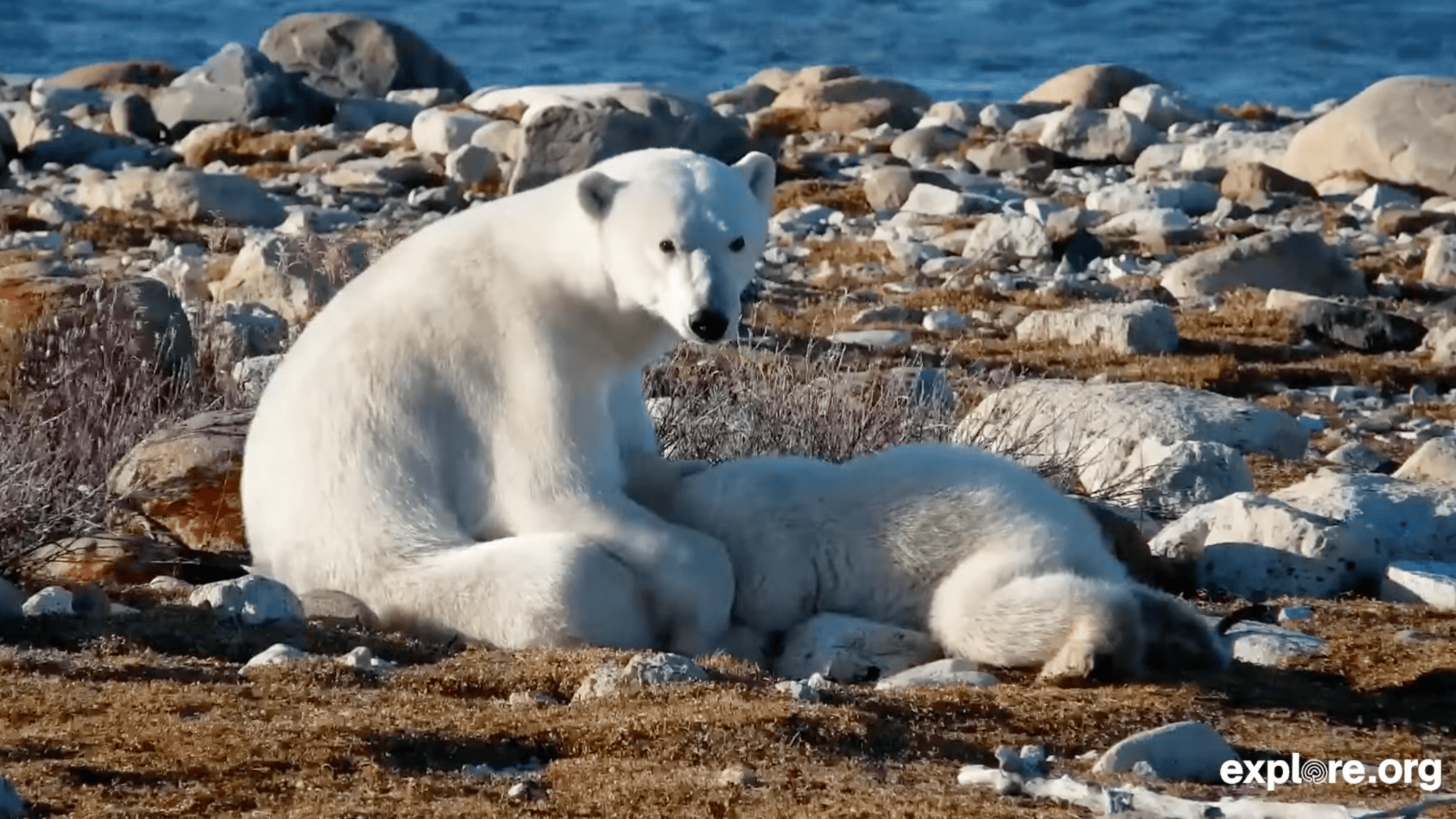
Explore.org and Polar Bears International run eight different livestreams from Churchill, Manitoba, Canada. Known as the polar bear capital of the world, Churchill’s Wapusk National Park is home to one of the world’s largest concentrations of polar bear (Ursus maritimus) maternity dens. During October and November, viewers can watch bear families wait for sea ice to form.
Twenty populations of polar bears live in the Arctic. The population living along the Western Hudson Bay is one of the most comprehensively studied and best known. It is part of Canada’s “Seasonal Ice Ecoregion.” In this area of the Arctic, the sea ice completely melts in the summer, typically in July. While the bears may remain sporadically active on land, in the summer, they generally create day beds or curl up in the bush to rest. The pregnant females will often settle in or near their dens for several months to rest where it is cooler and with less mosquitoes. Many of these dens were first excavated by bears generations ago.
In the fall, all of the bears except the pregnant female will increase their activity and move closer to the coast. Here, the bears will hunt for seals once the bay freezes over again. From early October onward, they will gather on the tundra along the shores of Hudson Bay, waiting for ice to form. As soon as the first coastal ice is thick enough to support their weight, they will head out to find seals. They may continue to trek back and forth between ice and land at first, but they primarily head out onto the bay until it begins to thin and they ashore again in the summer.
These cameras are one way for scientists and the public to aid in real scientific research. In December 2025, scientists here confirmed that a wild female polar bear adopted a cub that was not her own. This rare behavior was captured on cameras during the polar bear’s annual migration along Western Hudson Bay.
The mother bear (designated as bear X33991) was first spotted in spring 2025, when she came out of her maternity den with one tagged cub. When scientists saw her again in the fall, she had two cubs. One cub had a tag and one did not, indicating that the untagged cub was not hers. The survival rate for a polar bear cub into adulthood is about 50 percent, so only time will tell how this blended family will do.
Viewers can also take a virtual ride on the Tundra Buggy Lodge from two different angles. The lodge is made of tundra buggies that are linked together like a train. This moving hotel includes staff quarters, a dining area, a supply cart, and two carts for guests.
By night, viewers can also take in another of the north’s natural wonders with the aurora borealis cam. The northern lights livecam is on top of the Churchill Northern Studies Center and located directly underneath the aurora oval. This spot is considered one of the best places to watch the aurora dance across the night sky. The aurora season is only just beginning, with late winter and early spring being the best times to tune into this camera.
And if birds are more your thing, a raven cam is streaming from Cape Churchill Wapusk National Park. The resident ravens selected the topside of a radar reflector attached to the Cape Churchill observation tower for their nest. This “cabin in the sky” has also been home to numerous biologists researching the local wildlife since the 1970s. This camera will be switched off at night to preserve power.
The organizations also provide highlight reels to help viewers catch up on what to watch for this winter. Happy polar bear season!
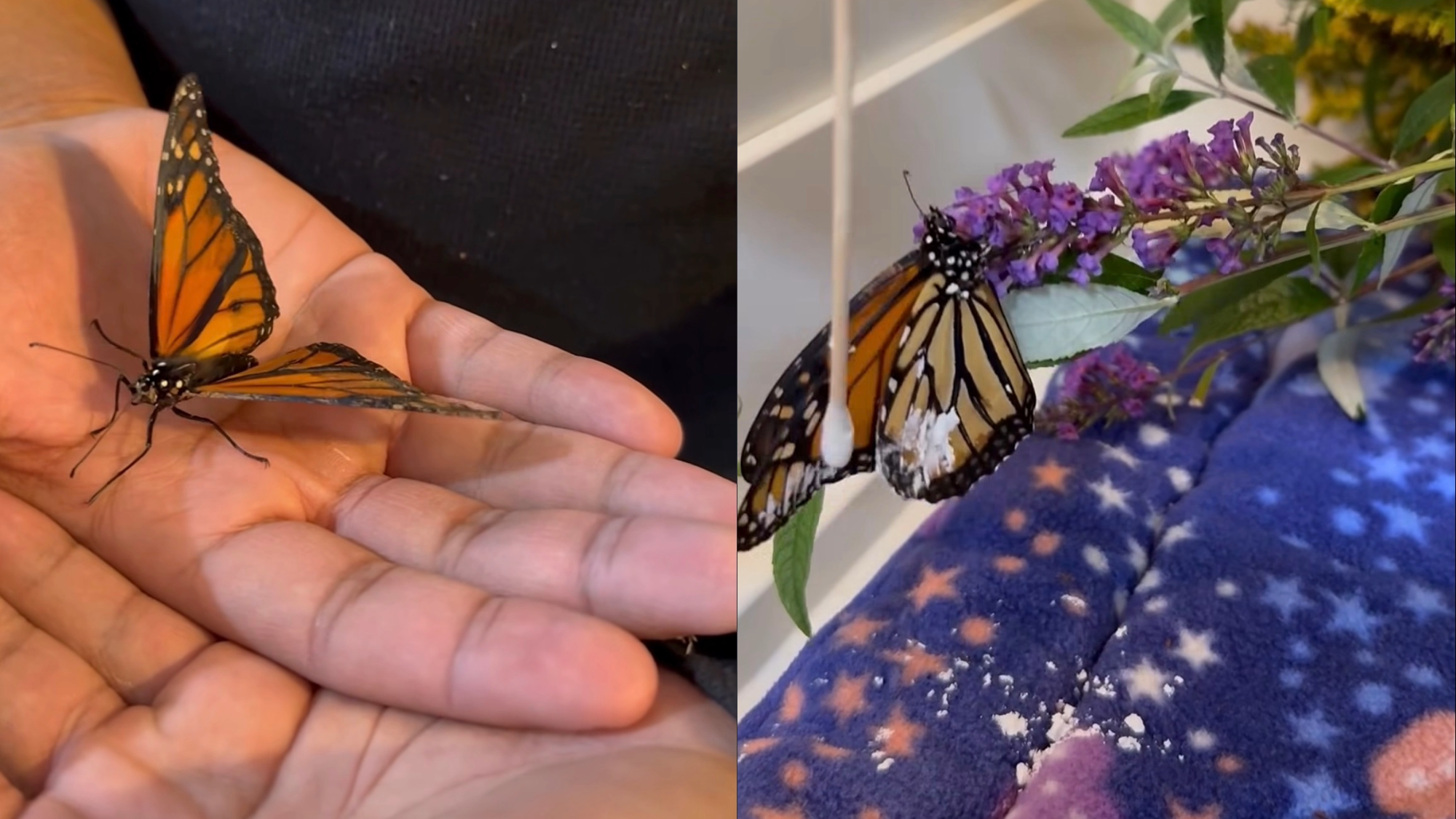
A migrating monarch butterfly (Danaus plexippus) recently brought into Sweetbriar Nature Center in Smithtown on New York’s Long Island came with a unique backstory. The male butterfly flew into a nearby house and landed on a pot of refried beans. The man living there took the butterfly out of the pan, but by morning the butterfly still could not fly. There was only one thing left to do for the injured insect—bring him to the professionals.
“Butterflies are incredibly delicate, and even handling them can cause additional damage or leave them unable to fly,” Janine Bendicksen, Sweetbriar Nature Center’s Director of Wildlife Rehabilitation, tells Popular Science. “That makes butterfly rehabilitation especially challenging—we have to be extremely careful with every step.”
The team got to work on fixing this unusual patient. They started by checking the butterfly for a parasite called OE (Ophryocystis elektroscirrha) that can live on monarchs. If the insect is parasite-free, the team can then assess the injuries and determine whether rehabilitation is possible. Butterflies are very delicate, and just handling them can cause additional damage.
“In cases where a monarch has lost part of a wing, we may be able to transplant a portion of a donor wing,” says Bendicksen. “When the circumstances are right, we can carefully attach the donor wing to the injured butterfly.”
The team gently sprayed the butterfly’s wings with water several times to remove the bean residue that prevented him from flying. Then, a challenge arose. How do you remove the greasy residue from such delicate wings? The solution came from a common powdery substance found in kitchen pantries—cornstarch.
“We use starch regularly in wildlife rehabilitation to help dry out materials, and we had also previously used starch when replacing a wing on another monarch,” Bendicksen explains. “Because we already knew it was safe and effective in that context, we felt it was a good option for this particular situation. We were looking for something that would help remove the remaining moisture and residue without causing additional damage to the delicate wings.”
The cornstarch trick worked. The monarch was able to fly again. The team gently transported him outside and he took to the skies. Monarchs are currently on their way to the overwintering grounds in the forested mountains of Central Mexico. Their migrations are multigenerational, with roughly four generations of monarch butterflies emerging throughout the year. This butterfly may have been in the third generation (lays eggs in the north, but does not migrate) of the fourth generation that treks south.
“It’s not often that we are called upon to rehabilitate a butterfly,” Bendicksen says. “Most butterflies have relatively short lifespans, but when we receive a monarch in the fall—especially one that will travel thousands of miles on its migration to Mexico—we do everything we can to give it the best possible chance.”

 Login