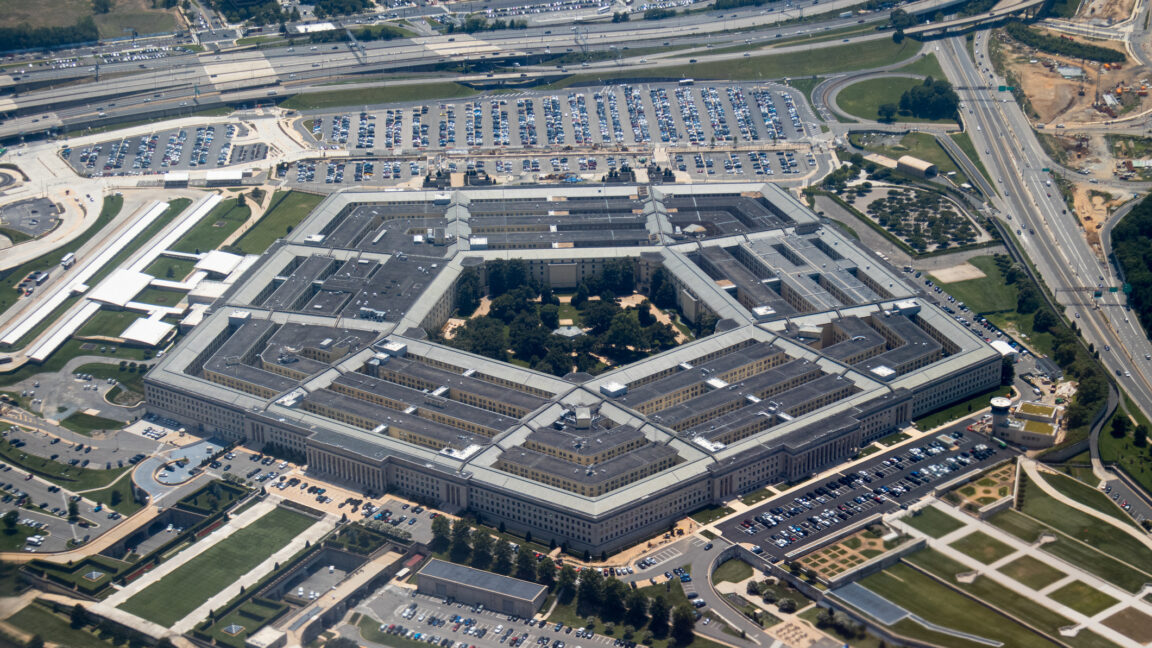
Late last week, word started leaking that the National Institutes of Health (NIH) had reached an agreement with the Department of Defense that would see part of the NIH's budget used to fund research at the Department of Defense. So, on the Friday just prior to a US holiday weekend, the Department of Defense released a copy of the agreement and confirmed that it had been signed roughly a month earlier. The move is striking for a number of reasons, ranging from the existing budget disparities between the two parties involved to the fact that the money would be used for projects that the current NIH leadership has explicitly rejected.
The agreement itself sets up a system where the NIH would transfer money to the Department of Defense to fund staff and projects that would "support the advanced development of medical countermeasures against pandemic influenza, chemical, biological, radiological, and nuclear (CBRN) threats, and emerging infectious diseases." The money would come out of the budget for the NIH's National Institute of Allergy and Infectious Diseases, or NIAID, to which Congress has allocated $6.6 billion in 2026. The agreement is set to run for a decade.
Left unspecified is just how much of the NIAID budget will be spent on Defense projects. Reporting by Nature suggests that the Department of Defense was looking for up to a third of its total budget but was being told to settle for about 10 percent. There's obviously an enormous disparity between the budgets of these two agencies, given that the 2026 Defense budget is roughly $1 trillion. That budget is under considerable strain, however, due to the open-ended nature of the conflict with Iran. The deal has also been announced at a time when the NIH has been struggling to issue sufficient grants to use the money that Congress allocated to it.
Under a new partnership, the Defense Department would play a larger role in biodefense and pandemic preparedness. Democrats warned it could allow a Pentagon cash grab.
Venezuela is believed to have one of the world’s largest reserves of oil but it produces very little oil because of mismanagement, corruption and U.S. sanctions.
Battery materials startup Sila will use a $1.4 billion loan from the U.S. Department of Defense to scale production at its factory in Washington state.
Hundreds of bases are contaminated with PFAS, which are linked to low birth weight and other risks. Politicians from both parties are demanding explanations.
Hundreds of bases are contaminated with PFAS, which are linked to low birth weight and other risks. Politicians from both parties are demanding explanations.
A recent episode underscored the Trump administration’s increasing reliance on advanced A.I. systems for cybersecurity even as it battles a leading U.S. developer.
It’s the third such deal the Interior Department has struck to pay firms to abandon plans for offshore turbines, spending roughly $2.5 billion to get companies to abandon their wind projects.
It’s the third such deal the Interior Department has struck to pay firms to abandon plans for offshore turbines, spending roughly $2.5 billion to get companies to abandon their wind projects.
The freeze affects 41 wind projects in Texas, which produces more wind power than any other state in the U.S., as well as projects in Colorado, Illinois, Iowa, Kansas, New Mexico, Oregon and Washington.

 Login