
❌

Reading view

Asteroid mining gets sold as a trillion-dollar gold rush, but the economics point the other way: hauling platinum back to Earth would crash its price, so the only prize that adds up is mining water and burning it as fuel in space
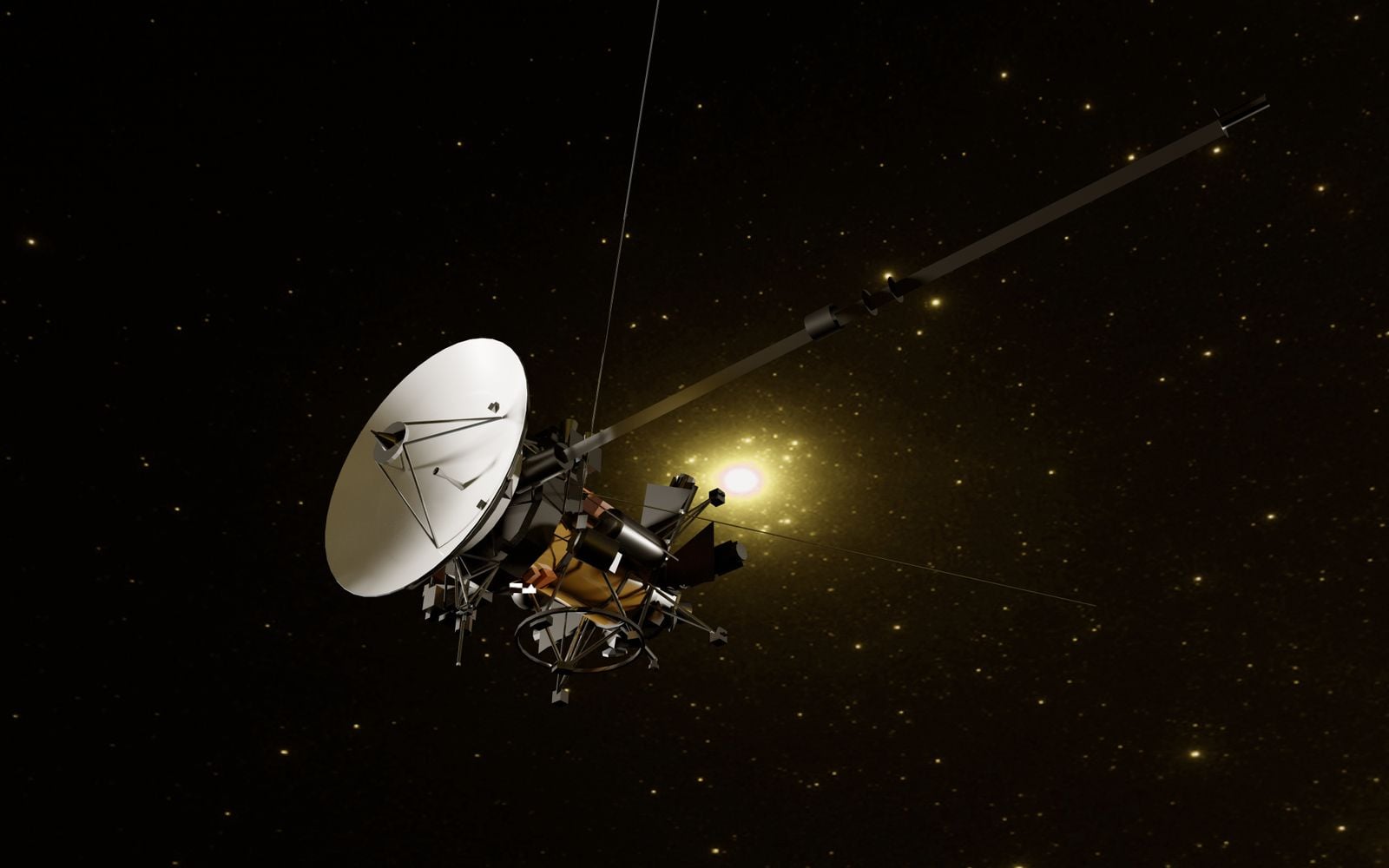
Illustration of a spacecraft in deep space

Every few years asteroid mining returns to the headlines as a trillion-dollar gold rush waiting to happen, usually attached to a single staggering number about how much some metal-rich rock is theoretically worth. It is a genuinely exciting idea. It is also one where the economics tend to run in the opposite direction to the pitch.

I am a writer with a long interest in this beat, not an engineer or an economist, so take this as a careful reading of the material rather than expert testimony. The short version is that the case for asteroid mining is real, but almost nothing like the version that gets sold.

The graveyard of the first gold rush

This has been tried before, with serious money behind it. In the 2010s two well-funded companies, Planetary Resources and Deep Space Industries, set out to mine asteroids and drew backing from high-profile investors.

Neither mined anything. As CNBC reported, both ran short of the money needed to cover enormous development costs and were absorbed by other companies by 2018 and 2019, one of them pivoting to blockchain. The lesson was not that the resources are not there. It was that the timelines are long, the capital required is vast, and investors ran out of patience long before anyone reached an asteroid.

Why the trillion-dollar numbers mislead

The valuations that drive the headlines are the least useful part of the story. The metal asteroid 16 Psyche is often quoted as being worth something like ten quintillion dollars, a figure that dwarfs the entire world economy.

Two things are wrong with reading that as a business plan. The first is that the number assumes you could deliver all that metal to Earth at no cost, when the delivery is the entire problem. The second is more fundamental: if you actually did land that much platinum or gold, you would flood the market and collapse the price of the thing you came to sell. The markets for precious metals are small by weight, and they do not have room to absorb asteroid-scale quantities without the value evaporating.

It is worth adding that NASA’s Psyche mission, now on its way to the asteroid, is not a mining venture at all. It is a science mission to study a metal-rich world, which the agency now estimates is somewhere between 30 and 60 per cent metal. Nobody is going to mine Psyche, and there is no technology that could.

The prize that actually adds up is water

Strip out the gold-rush fantasy and a more sober case remains, and it is not about bringing anything home at all.

The expensive part of anything in space is lifting mass off the Earth against its gravity. A litre of water already in orbit is therefore worth far more than a litre sitting in a reservoir here, because you have not had to pay the enormous cost of launching it. Many asteroids, the dark carbonaceous ones, are thought to hold water ice, and water can be split into hydrogen and oxygen, which is rocket fuel, or used directly for life support.

So the version of asteroid mining that pencils out is not platinum sold on Earth. It is water and simple materials mined in space and used in space, to refuel spacecraft and supply habitats without hauling everything up from the ground. An analysis in the Harvard International Review makes this point plainly: the real economic logic points to servicing activity in orbit and beyond, not to enriching commodity markets back home.

This is a much less glamorous business than a space gold rush, and it is also the only one that currently makes physical sense.

The current attempt

A new generation is trying anyway, with more modest aims. The startup AstroForge is the most visible, and its record so far is a fair snapshot of how hard this is.

Its Odin spacecraft launched in February 2025 to scout a metallic near-Earth asteroid, but the company lost contact with it not long after deployment, ending the mission early. A follow-up probe, Vestri, is intended to actually dock with a small metallic asteroid, which would be a real first for a private spacecraft. It has not happened yet.

The targets, sensibly, are near-Earth asteroids, the ones whose orbits bring them close to us and make them reachable with reasonable amounts of fuel. These are the same objects we track for planetary defence, including ones like Apophis, which will pass close to Earth in 2029. Accessibility, not raw value, is what makes an asteroid worth visiting.

None of this is investment advice, and I have no idea whether any of these companies will succeed. What I can say is that the sober question worth watching is not which rock is worth the most on paper. It is whether anyone can mine water in space and sell it to the next spacecraft, because that, and not a platinum windfall, is the business that would actually change how we operate off the Earth.

The post Asteroid mining gets sold as a trillion-dollar gold rush, but the economics point the other way: hauling platinum back to Earth would crash its price, so the only prize that adds up is mining water and burning it as fuel in space appeared first on Space Daily.

  •  

About 66 million years ago an asteroid roughly 10-15 km wide struck off Mexico’s Yucatan, gouging a crater some 180 km across β€” and the extinction that followed wiped out the non-avian dinosaurs and around 75% of all species

Roughly five billion. That is the number of Hiroshima-sized bombs it would take to match the energy of a single morning 66 million years ago.

Yes, according to a Physics Today summary of recent impact modelling, β€œThe collision energy was 3 Γ— 1023 J, which is equivalent to about 5 billion Hiroshima-sized atomic bomb explosions.” The figure is a model-derived estimate, and the Hiroshima comparison is illustrative rather than exact but it still does the work of making an unimaginable event somewhat graspable.

The asteroid was about 10 to 15 kilometres in diamater. It struck the northern YucatΓ‘n Peninsula and left the Chicxulub crater, a buried scar some 180 kilometres wide. What followed was not a single catastrophic instant but a chain of consequences that played out over hours, months, and years. The story worth telling is less about the strike itself than about how a brief collision became a planetary reset.

The first hours

The immediate physics were brutal. Simulations summarised in the same Physics Today piece indicate that β€œWithin seconds, the impact excavated a hole more than 20 km deep into Earth’s surface and threw bedrock and sediment into the upper atmosphere.” Again, that depth is a simulation result, not a measurement, but it captures the scale of the excavation.

Material did not just fall back where it came from. A 2022 review in Nature Reviews Earth & Environment, led by researchers at Imperial College London, synthesised the modelling this way: β€œSeveral thousand gigatonnes of asteroidal and target material were ejected at velocities exceeding 5 kilometres per second, forming a fast-moving cloud that transported dust, soot and sulfate aerosols around the Earth within hours.” A regional event became a global one before the day was out.

The long winter that did the killing

The strike was survivable for a great many organisms. The aftermath was not. The Nature Reviews synthesis frames the central mechanism plainly: β€œThese impact ejecta and soot from global wildfires blocked sunlight and caused global cooling, thus explaining the severity and abruptness of the mass extinction.” That cooling likely explains why the extinction was so sharp, though the relative contributions of dust, soot, and sulfate aerosols remain debated.

How long the dark lasted is genuinely unsettled. The same review notes carefully that β€œit remains uncertain whether this impact winter lasted for many months or for more than a decade.” That uncertainty matters, because the duration is the difference between a lean season and the collapse of nearly every food web on the planet.

The debate over what drove the cooling is still live. A 2016 study in Scientific Reports proposed that soot ejected from the oil-rich rock at the impact site, spread globally through the stratosphere, drove much of the cooling and darkening, placing soot from the impact site itself, not just wildfires, near the front of the killing sequence. More recently, a 2025 Nature Communications paper by Katerina Rodiouchkina and colleagues revised the sulfur estimate sharply downward, suggesting a less prominent role for sulfur emission and a milder impact winter, with implications for which species pulled through the first years after the strike. It is one study, and it conflicts with other modelling that treats sulfur as the main early driver. The precise recipe of the winter is still being worked out.

Who slipped through

The pattern of survival is the part that tends to surprise people. Size was close to a death sentence. The Scientific Reports analysis notes that only about 12% of land-dwelling forms survived, with large-bodied land animals probably almost entirely wiped out. The contrast with the water is striking: around 90% of species in the freshwater assemblage survived, buffered because they relied on detritus rather than the living plants and plankton that the darkness destroyed much of.Β 

Finding the crater, decades later

For years the impact was a hypothesis without a smoking gun. The crater was first detected in the late 1970s by petroleum geophysicists Glen Penfield and Antonio Camargo, but its connection to the extinction was only confirmed around 1990 and 1991, after Alan Hildebrand tied iridium-rich boundary deposits to the buried structure beneath the YucatΓ‘n.Β 

The rock record has since been read directly. In 2016, an international drilling project bored into the crater’s peak ring, recovering shocked minerals and impact rocks that confirmed long-modelled details of the collision. As a summary of that work records, the drilling confirmed the peak ring was built from granite ejected within minutes from deep in the Earth.Β 

What the record shows, followed to the end, is quietly disorienting. The event erased three-quarters of life on Earth.Β 

The post About 66 million years ago an asteroid roughly 10-15 km wide struck off Mexico’s Yucatan, gouging a crater some 180 km across β€” and the extinction that followed wiped out the non-avian dinosaurs and around 75% of all species appeared first on Space Daily.

  •  
❌