❌

Reading view

Scientists study 3,000 supernovas and discover that dark energy may be evolving

A catalog of almost 3,000 white dwarfs that exploded as type Ia supernovas after overfeeding on companion stars indicates that dark energy, the mysterious force accelerating the expansion of the universe, is changing over time.

The discovery, in conjunction with data from the Dark Energy Survey (DES), backs results revealed from the Dark Energy Spectroscopic Instrument (DESI) published in 2024 that suggested dark energy's influence is weakening.

That means that the team's research doesn't just involve the most comprehensive catalog of type Ia supernovas; it presents the clearest picture yet of the evolution of the universe and the influence of dark energy.

"We've rebuilt 3 decades of astronomical observations into a single, consistent framework," team member Ryan Camilleri of the University of Queensland said in a statement."We combined our data with other cosmic measurements, including relic light from the Big Bang and maps of how galaxies are distributed through space.

"Instead of confirming the standard model of cosmology, which assumes dark energy is fixed and unchanging, we have more evidence that dark energy may change over time."

How do exploding white dwarfs tell us about dark energy?

White dwarfs are the smoldering stellar remnants that are left over when stars with around the mass of the sun exhaust the fuel for nuclear fusion in their cores. This ends the outward pressure that supports a star against its own gravity, meaning the star's core collapses as the outer layers are shed. The core becomes a white dwarf, and for single stars, that is the end. But around 50% of sun-sized stars have a binary companion, and this can lead to renewed activity and a change in the star's fate.

If the white dwarf and its companion are close enough together, the dead star begins stripping away the outer layers of its companion. As this material builds on the white dwarf, it pushes the stellar remnant's mass over the so-called Chandrasekhar limit, allowing it to go supernova.

These cosmic explosions are called type Ia supernovas, and their light output is so uniform that these events are referred to as standard candles. They are of vital importance because measuring how their light has been redshifted as it travels means type Ia supernovas can be used to measure cosmic distances.

"Over the years we've learned a lot more about how supernovae behave so we've been able to go back and apply that improved understanding to older data," Camilleri said. "Extensive work has been done to link observations from different telescopes with different capacities and take into account issues such as cosmic dust and galaxy mass which can affect the light coming from a supernova.

"We also incorporated more subtle effects such as gravitational lensing, which is the bending and magnification of light around large objects as it travels from a supernova to Earth."
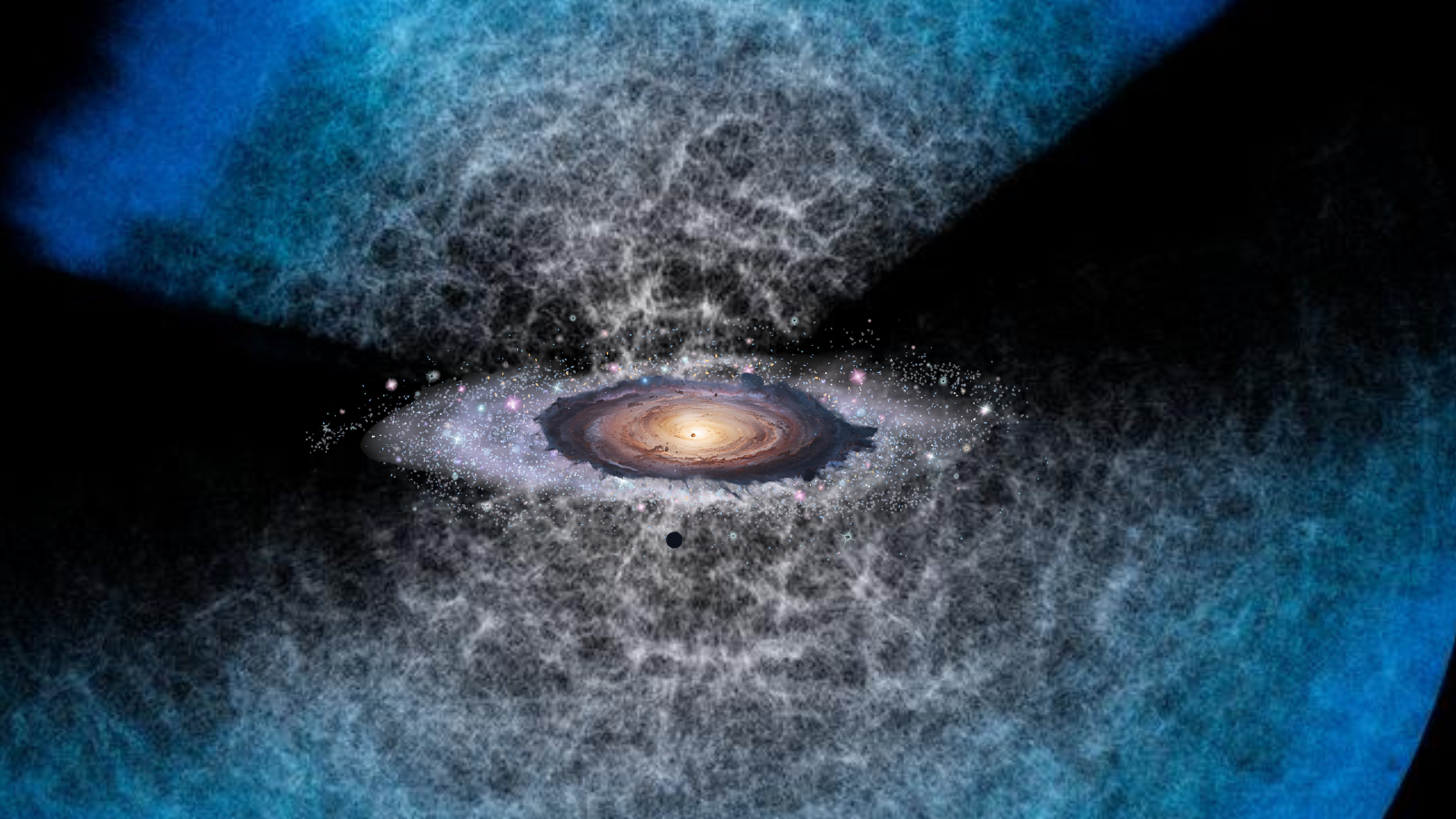
Two blue

Two "fans" representing DESI observations above and below the plane of the Milky Way (Image credit: DESI Collaboration/DOE/KPNO/NOIRLab/NSF/AURA/R. Proctor/ Robert Lea (created with Canva))

Combined with the 2024 results from DESI, this research could change our idea of what dark energy actually is.

"Our supernova data from DES in 2024 first showed hints that dark energy may be time-varying, and this new compilation also sees a deviation from the standard model, although in a slightly different direction," Davis said. "Similarly, results from DESI found hints of variations in dark energy in its surveys of relic sound waves from the early universe.

"So, two completely independent measurements have found hints of time variation in dark energy, challenging the standard model that dark energy doesn't change."

Davis added that, as well as revealing what dark energy actually is, this research may also hold the clue to explaining how gravity and quantum physics fit together. While quantum physics (the best theory we have of how the universe operates at subatomic scales) and Einstein's theory of general relativity (our best picture of gravity) have been highly successful in their own rights, scientists have so far been unable to unite them. In other words, there is no theory of quantum gravity.

β€œWe know these two theories are each immensely successful in their own realms, so if we can figure out how to put them together, that would be a huge step in theoretical physics," Davis continued.

This effort will receive a boost when data is added to the team's already comprehensive type Ia supernova catalog. This will include observations from the Dark Energy Bedrock All-Sky Supernova program (DEBASS), which is detecting hundreds more local supernovas than even the DES survey.

The team's results are available on the repository site arXiv.
  •  

Is dark matter 'tuned in' to a hidden dimension?

Two major mysteries in science, the nature of dark matter and the possible existence of higher dimensions, could be linked, new research suggests. The team behind a new study proposes that dark matter may be so strange and ghost-like because it is in tune with a fifth dimension.

When scientists discuss "extra dimensions," they aren't talking about other universes in which another evil version of you exists (and with a beard). Instead, they refer to dimensions that could be "curled up" with reality alongside the standard four-dimensional spacetime, consisting of the three dimensions of space and one dimension of time.

While these extra dimensions remain highly speculative, they have become a hot topic, especially as string theory, the most popular extension to standard physics, relies upon the existence of at least 11 dimensions. Scientists are more sure that dark matter exists, but proving its existence still remains troubling because, despite its gravity literally holding galaxies together and outweighing ordinary matter by around five to one, it remains effectively invisible because it doesn't interact with light and it simply ghosts through ordinary matter.

"Understanding dark matter would represent a profound advance in humanity's knowledge of the cosmos and what it is made of," team member Yu-Dai Tsai of the University of Sheffield said in a statement.

"Our research gives physicists clear new targets in the search for dark matter, while connecting two of the biggest ideas in fundamental physics: the mystery of dark matter and the existence of hidden dimensions."

Dark photons play dark matter like a violin

Though the main idea is that dark matter may operate in the fifth dimension, this new research expands upon that concept with another theory. It suggests that dark matter exists with another inhabitant of the fifth dimension, a force-carrying particle called a "dark photon."

Standard photons are the constituent particles of electromagnetic radiation, or light; dark photons would be similar but for a hypothetical "dark force."

The team's new proposal would see the unique geometry of the fifth dimension causing the masses of dark matter particles to form an arrangement that gives rise to a "dark matter resonance." This is akin to the intense vibration of a musical instrument at certain notes.

"Dark matter resonance is already known to be a powerful idea, with the potential to change our understanding of how dark matter was produced in the early universe and how we search for it today," team member Yu-Dai Tsai of the University of Sheffield said in a statement. "But many previous resonant dark matter models have treated the resonance as an assumption. This work gives a possible deeper origin for it: the resonance may come directly from the geometry of hidden dimensions."

An illustration shows a cloud of dark matter slipping past a distant star

An illustration shows a cloud of dark matter slipping past a distant star (Image credit: Robert Lea (created with Canva))

Tsai explained that while dark matter resonance is a phenomenon that has been explored before, the research conducted by this team differs because it suggests dark matter resonance is not a coincidence. Instead, the possible deeper origin for the resonance sees it emerge directly from the geometry of hidden dimensions. This would allow dark matter to interact strongly shortly after the Big Bang while allowing it to settle into its ghost-like inert existence today.

"This resonance can make dark matter interactions much stronger at crucial epochs in cosmic history, such as in the early universe," Tsai added. "Crucially, the model allows for these strong interactions in the past while still explaining why dark matter appears so inert and hard to detect today."

Of course, it is very early days for the team's theory, but it excitingly offers a way toward solving two of the universe's greatest mysteries.

The team's research was published in the Physical Review D.

  •  

Dark energy is still accelerating the expansion of the universe, and astronomers are relieved. 'Thankfully, we have averted this crisis'

The expansion of the universe is still accelerating under the influence of dark energy, despite recent claims to the contrary, according to new research. This means that dark energy, the mysterious force that dominates the universe, is not weakening but continues to get stronger, considered something of a "cosmological crisis" as it was so against expectations.

In 1998, via the study of cosmic explosions called Type Ia supernovas, astronomers discovered that not only is the universe expanding, but that the speed of that expansion is increasing. "Dark energy" was the name given to the mysterious force driving this accelerating expansion. Since then, scientists have discovered that dark energy accounts for around 70% of the universe's matter and energy.

In November 2025, research was published that suggested the expansion of the universe was slowing, meaning dark energy would be weakening. But this new research suggests that these findings from last year might not be a cosmic hand grenade thrown into the cosmological apple cart, but instead may have actually emerged from a scientific misunderstanding.

"Thankfully, we have averted this crisis, but the mystery about why the rate of expansion of the universe is still accelerating remains," lead author of the new refuting research, Phil Wiseman, from the University of Southampton in the UK, said in a statement. "The previous and well-accepted measurements were, in fact, fine, and our current understanding of the fate of the universe remains robust. By proving our measurements are correct, we can get back to trying to understand what this dark energy actually is, rather than wondering if it exists at all."

The research from 2025 that suggested dark energy was weakening was based upon a reassessment of the brightness of Type Ia supernovas, which occur when a dead star called a white dwarf overfeeds on a companion star. This causes a runaway nuclear explosion of such uniform brightness that it can be used to measure cosmic distances. In fact, these explosions are so uniform that astronomers refer to them as "standard candles."

This prior research determined, incorrectly it now seems, that as the universe has aged, the brightness of Type Ia supernovas had changed, leading to incorrect measurements of distances based on them as well as incorrect estimates of the speed of the universe's expansion. Both of these led to the suggestion that dark energy is weakening.

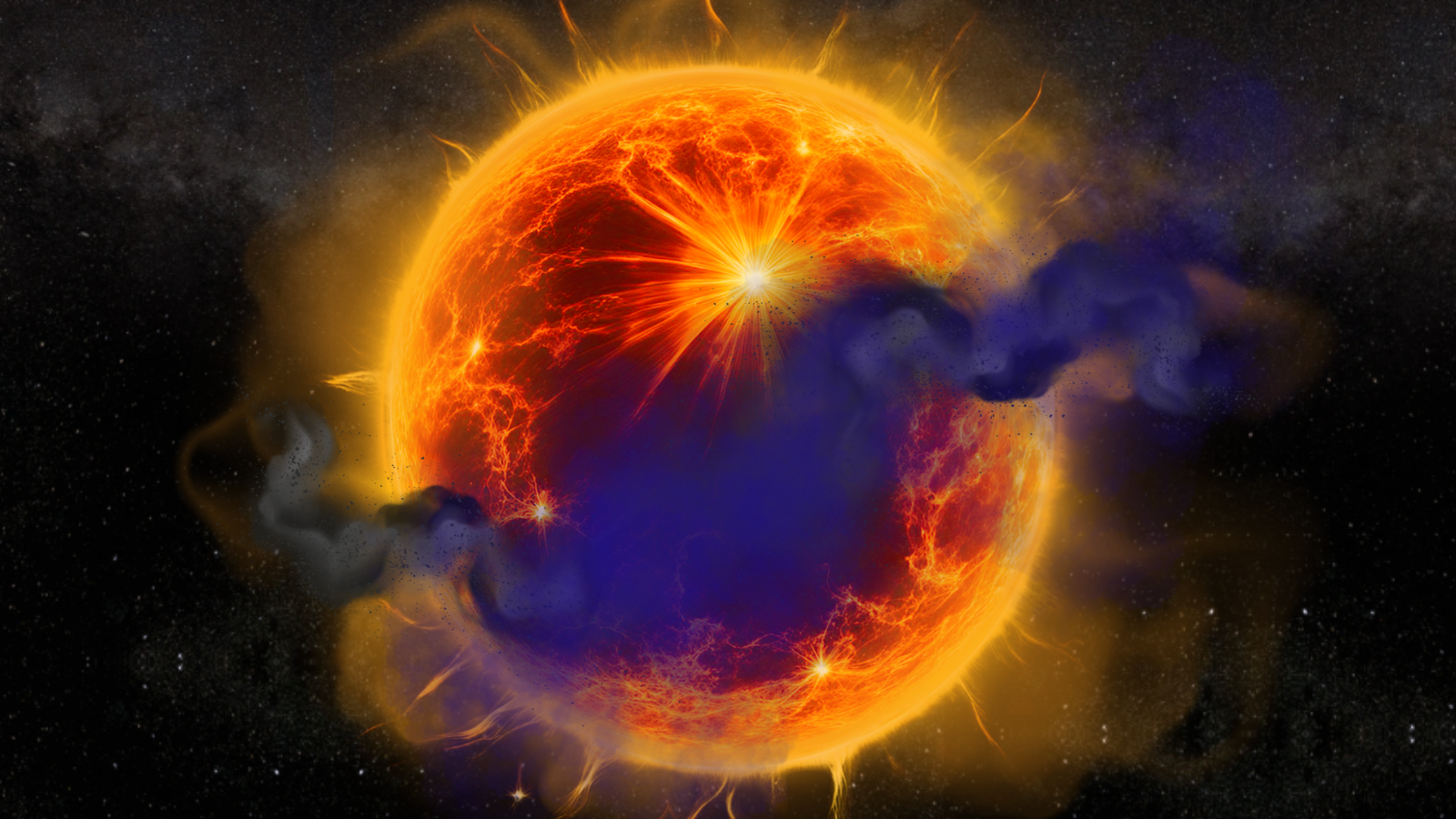
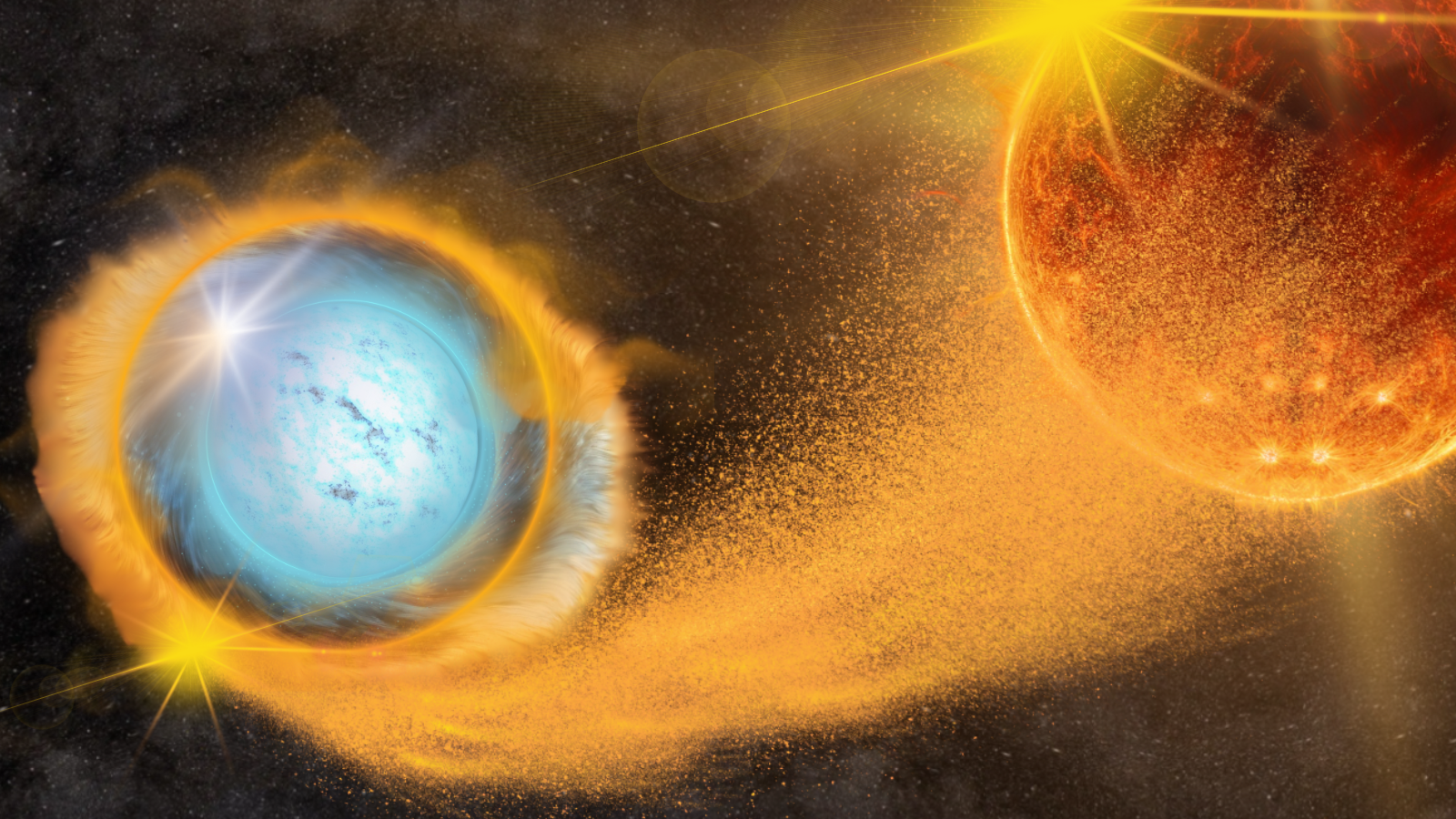
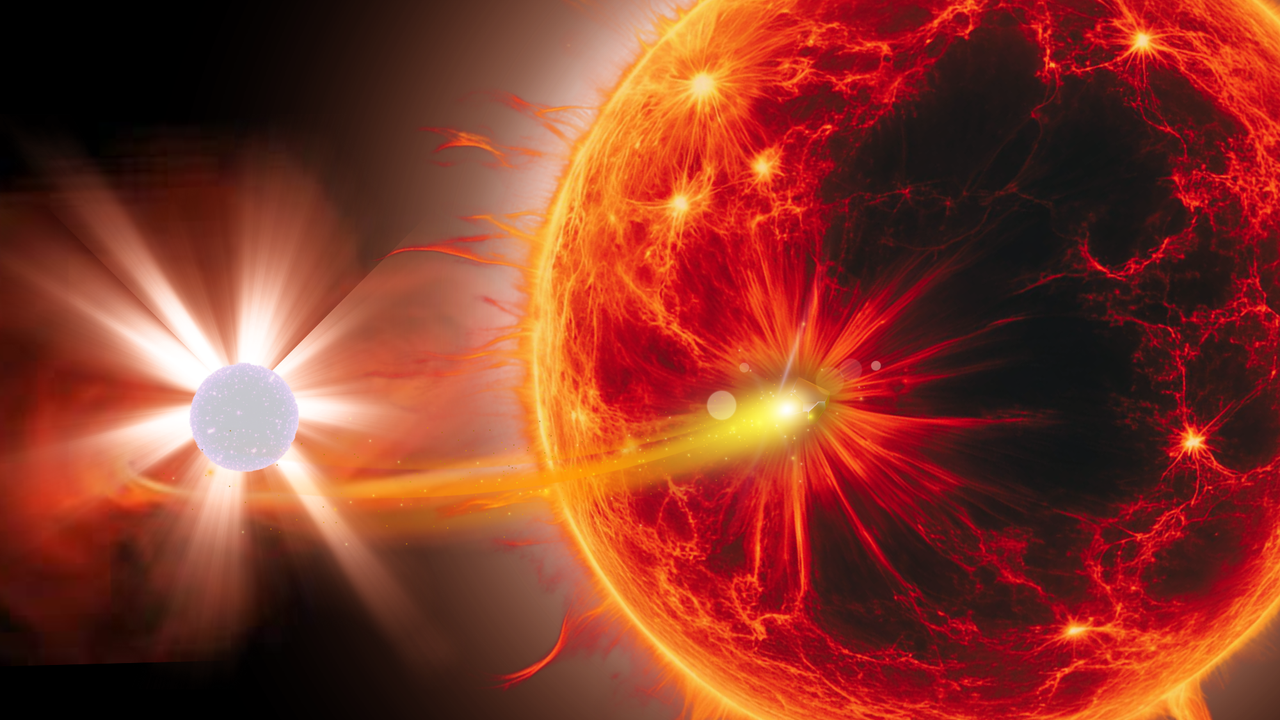
An illustration  of a white dwarf star feeding on a stellar companion prior to a Type Ia supernova

An illustration of a white dwarf star feeding on a stellar companion prior to a type Ia supernova (Image credit: Robert Lea (created with Canva))

But Wiseman and colleagues found this previous team had made an error in how they calculated the ages of exploding white dwarfs, finding they had assumed the ages of these stars would be the same as the ages of the galaxies in which they exploded.

They also found the 2025 research hadn't accounted for a common correction used in cosmology that factors in the masses of galaxies in which Type Ia supernovas occur.

"Extraordinary claims require especially careful testing," team member Adam Riess, who in 2011 shared the Nobel Prize for the discovery of dark energy, said. "What we find is that when we calibrate these supernovae, accounting for different host environments and populations, the evidence for cosmic acceleration remains remarkably consistent."

While the challenge to dark energy's growing dominance over the universe seems now to have been refuted, the back and forth on this topic shows how ideas in science aren't dogma and remain open for revision.

"This is how progress is made," team member Mark Sullivan, also from the University of Southampton, said. "Although this idea did not turn out to be correct, it has opened up new ways of thinking about how supernovae explode and how we can measure dark energy more accurately."

The team's research was published on June 10 in the journal Monthly Notices of the Royal Astronomical Society.

  •  

A mysterious gamma-ray stream comes from the Milky Way's center. Could dark matter have something to do with it?

One of the most hotly debated mysteries in astronomy is set to continue, as new research fails to rule out self-annihilating dark matter as the source of gamma-ray emissions from the heart of the Milky Way. Known as the Galactic Center Excess, a spherical gamma-ray glow extending out for thousands of light-years from the core of our galaxy, this high-energy light has baffled researchers for over a decade.

While several possible explanations for the Galactic Center Excess have been put forward, including a population of rapidly spinning neutron stars called pulsars, one of the most prevalent has been a specific type of dark matter particle. Dark matter is the mysterious stuff that accounts for 85% of the universe's matter. It is effectively invisible because it doesn't interact with light or with "ordinary" matter composed of atoms. That fact has led to many possible dark matter candidate particles being proposed, including some that self-annihilate. This is akin to what happens when an electron meets its antimatter counterpart, or positron. The two annihilate each other, releasing energy into the cosmos.

For self-annihilating dark matter, these particles would be their own antiparticles, meaning when they interact, they would annihilate and release energy as gamma rays. With dark matter outweighing ordinary matter by a ratio of five to one, one might expect this annihilation to be occurring constantly, flooding the cosmos with gamma rays, but dark matter rarely interacts with itself in this model. Thus, dark matter annihilation is only a factor when this mysterious stuff is densely clustered in a region like the heart of a galaxy.

Unfortunately, investigating the heart of the Milky Way is challenging indeed.

"Interpreting the signal is particularly difficult because the Galactic Center is an exceptionally bright and crowded region of the gamma-ray sky," team member and University of Vienna researcher Florian List said in a statement.

Getting to the point

To investigate if annihilating dark matter could indeed account for the Galactic Center Excess, List and colleagues turned to machine learning trained on more than a million simulated gamma-ray observations. Previous similar approaches had pointed to comparatively bright, unresolved light sources as a potential source of the Galactic Center Excess. However, this new research showed that these point sources, including pulsars, would be extremely faint, and that is good news for scientists who favor annihilating dark matter as the cause of these gamma rays.

That is because, whereas previous research has suggested just a few hundred pulsars could be enough to account for the Galactic Center Excess, these findings indicate that the pulsar population at the heart of the Milky Way would have to be greater than 35,000.

"Our new analysis shows that the sources would have to be so faint that they would be almost indistinguishable from the emission expected from annihilating dark matter," team member Nick Rodd, a scientist at the Lawrence Berkeley National Laboratory, said.

While this research may keep dark matter in the game as a plausible explanation, it far from confirms the annihilation of this mysterious stuff as the source of the Galactic Center Excess. "The origin of the Galactic Center Excess is one of the longest-running debates in astrophysics," List said. "Our work does not show that dark matter is responsible for the signal. However, it suggests that it is still too early to rule out this possibility."

The team's research was published on Thursday (Feb. 5) in the journal Physical Review Letters.

  •  

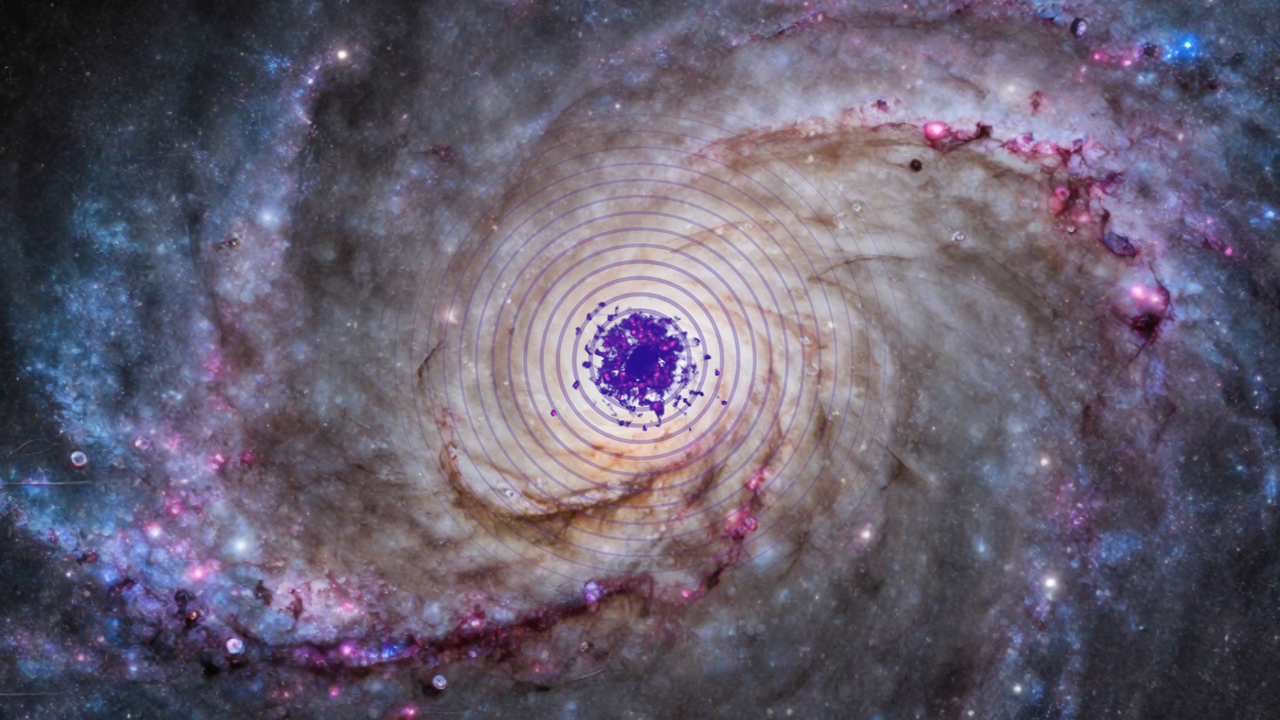
Supermassive black holes may be surrounded by dark matter clusters, new 'echo map' technique suggests

Astronomers have used a technique called echo mapping to detect hints that supermassive black holes, such as the cosmic titan at the heart of the Milky Way, known as Sagittarius A* (Sgr A*), are surrounded by dense clouds and clusters of dark matter. The research could teach us more about this mysterious substance and the environments around supermassive black holes.

Dark matter is the universe's most mysterious stuff, outweighing ordinary matter in the cosmos by a ratio of five to one β€” but remaining effectively invisible because it doesn't interact with electromagnetic radiation, including the light we use to see. The only way scientists can even infer the presence of dark matter is via its interaction with gravity, and the impact that this interaction has on objects made of traditional matter like stars. For instance, the gravitational effect of dark matter allows stars at the edges of galaxies to whip around at much greater speeds while not flying loose than the visible matter of those galaxies would allow.

This team decided to test the gravitational influence of dark matter at the hearts of galaxies, environments dominated by supermassive black holes which can have masses millions or even billions of times that of the sun. Ordinary matter around these supermassive black holes is often very visible, especially when spiraling into the maw of one of these cosmic titans from a flattened cloud called an accretion disk. This is because the gravitational influence of those black holes generates immense amounts of friction, causing them to grow brightly. That wouldn't work for dark matter; it can't feel friction because it doesn't interact with itself or with ordinary matter, and it can't glow because it doesn't absorb or emit light.

Clearly, dark matter can't be spotted around supermassive black holes even using the most advanced telescopes such as the Event Horizon Telescope (EHT), which has captured glowing rings of material around Sgr A* and around a more distant supermassive black hole that rules the heart of the galaxy Messier 87 (M87).

While discussing the problem of detecting dark matter around supermassive black holes, Mayank Sharma, a physics graduate student at Virginia Polytechnic Institute and State University (Virginia Tech), hit on an interesting solution.

"We could actually test this prediction using a technique in astronomy, which allows you to measure the distance to the surrounding gas by looking for echoes of light," Sharma said in a statement. The technique Sharma refers to is "reverberation mapping," and it has become a trusted method of determining the mass of black holes.

Echoes of dark matter

Reverberation mapping is based upon the fact that as matter falls into a black hole, it releases a burst of energy that causes the accretion disk it comes from to pulse. This pulse of light travels from the accretion disk to gas in the wider environment of the black hole. This gas absorbs that light and also pulses, with this secondary pulse serving as an echo of the first.

Because we know the speed of light, when astronomers see the first pulse of light and then its echo, they can use the time between pulses to estimate the distance between the black hole and the gas on the outskirts of its environment. The size of a black hole and the distance between it and outer gas clouds can be used to determine its mass, and could also be used to determine the mass of dark matter clustered around it.

The team applied their method to 14 different galaxies, finding in five cases that mass increases moving away from the central black hole in a way that couldn't be accounted for by visible matter alone. Despite the early success of this research, it far from proves that supermassive black holes are indeed gathering places for dark matter. The team's findings do point an interesting way forward for the investigation into the universe's most mysterious substance and its most mysterious regions.

"These galaxies are definitely showing a hint that there is extra material that cannot be explained by just the supermassive black hole," Sharma said. "The prospects are exciting."

The team's research was published in the journal Physical Review D.

  •  
❌