❌

Reading view

Vendas de Apple Watches cresceram 14% no segundo trimestre de 2026

Seguindo uma tendência oposta à do mercado, a Apple foi a empresa que mais cresceu com a venda de smartwatches no segundo trimestre de 2026 — embora ainda esteja em segundo lugar no ranking das maiores companhias no setor.

Com crescimento recorde em todas as regiões, a Maçã conta agora com 20,1% de market share, graças a um crescimento de 14% nas vendas em relação ao ano passado, quando ocupava uma fatia de 17% no mercado.

Segundo a Counterpoint Research, o bom resultado se deve à adoção contínua da linha de Apple Watches lançada no ano passado. O Series 11 e o SE 3, juntos, representam mais de 80% das vendas da empresa no período.

Trata-se de um movimento bastante positivo para a empresa — e pode ser considerado também uma recuperação em relação ao mesmo trimestre de 2025, quando a Maçã observou uma queda na venda de Apple Watches.

Counterpoint Research

A Apple também diminuiu sua diferença em participação em relação à primeira colocada HUAWEI, que agora é responsável pela venda de 21,8% dos smartwatches globalmente — um ponto percentual a mais que no ano passado.

Ao todo, o mercado viu suas vendas diminuírem 4% após um ano. Além das duas empresas supracitadas, completam o Top 5 a imoo (7,8%), a Xiaomi (6,1%) e a Garmin (5,6%).

Apple Watch Ultra 3

Cores: natural ou preto
Pulseiras: loop Alpina, loop Trail, Oceano ou estilo milanês de titânio
R$ 8.050,47
R$ 10.499,00

Apple Watch Series 11

Material: alumínio ou titânio
Cores: cinza-espacial, prateado, ouro rosa, preto brilhante, natural, dourado ou ardósia
Tamanho: 42mm ou 46mm
Conectividade: GPS ou GPS + Cellular
Pulseiras: esportiva ou estilo milanês
R$ 4.222,21
R$ 5.499,00

Apple Watch SE 3

Cores: meia-noite ou estelar
Tamanhos: 40mm ou 44mm
Conectividade: GPS ou GPS + Cellular
Pulseira: esportiva
R$ 2.399,00
R$ 3.299,00

NOTA DE TRANSPARÊNCIA: O MacMagazine recebe uma pequena comissão sobre vendas concluídas por meio de links deste post, mas você, como consumidor, não paga nada mais pelos produtos/serviços usando os nossos links de afiliado.

  •  

Apple Captures 65% of Global Premium Smartphone Market

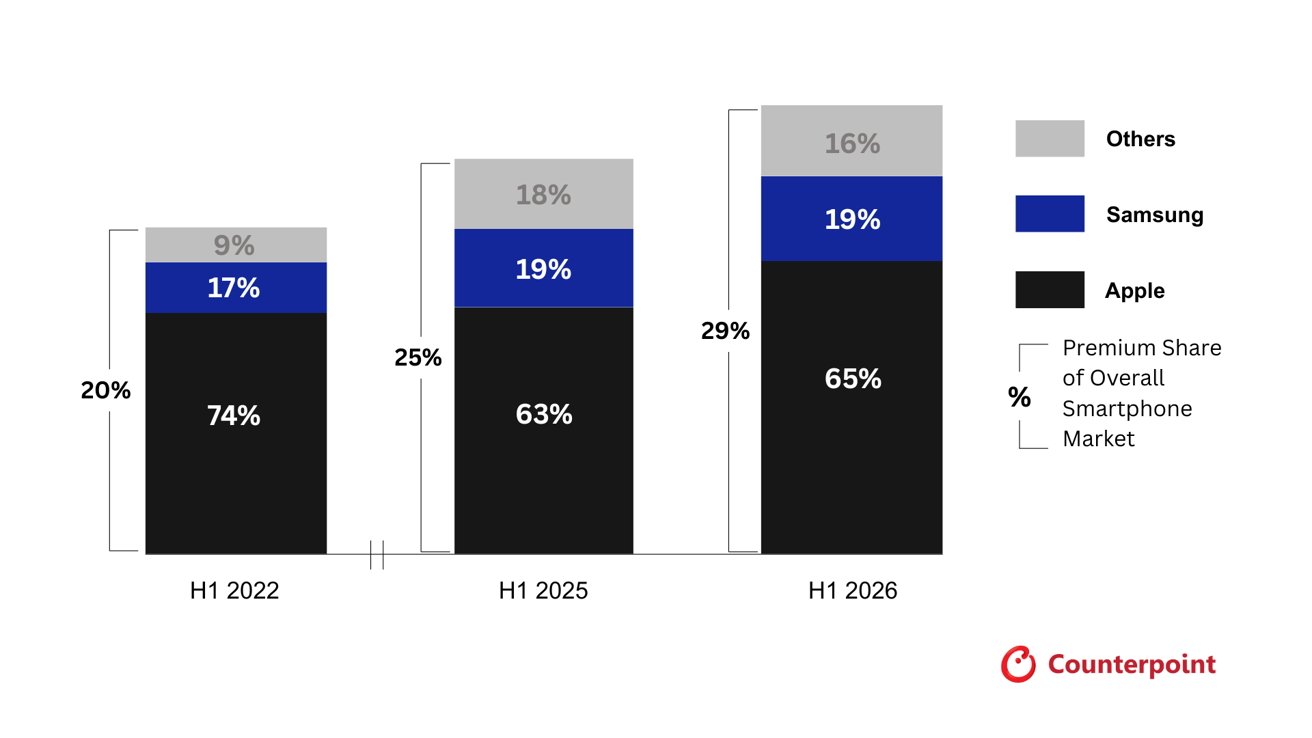
Apple captured 65% of the global premium smartphone market in the first half of 2026, as the wider premium segment's share of overall smartphone sales climbed to a record 29%.


That's according to Counterpoint Research's Handset Model Sales Tracker, which tracks smartphones with a wholesale average selling price of $600 or more. Apple's premium segment revenue grew 9% year-over-year in the first half of 2026, which Counterpoint attributed to strong sales of the iPhone 17 lineup, particularly the base model.

Even with that growth, Apple's share of the premium segment has slipped from 74% in the first half of 2022. Counterpoint pins the decline on intensifying competition in China, the largest premium smartphone market, where Huawei, Xiaomi, OPPO, and vivo have all sharpened their flagship offerings, pulling more Chinese consumers toward domestic premium brands.

Across the broader premium segment, unit sales grew 5% year-over-year in the first half of 2026, with the segment's overall market share up from 25% in the first half of 2025 and 20% in the first half of 2022. Counterpoint says the latest gains stem largely from rising memory and component costs, which have hit low- and mid-tier phones harder than flagship models.


Premium brands, including Apple, were better positioned to absorb the higher costs through wider margins and fewer promotions, helping sustain demand even as the broader market grew more challenging. The share gains between the first half of 2022 and the first half of 2025, by contrast, were driven mainly by a broader premiumization trend as consumers traded up to higher-end devices.

Counterpoint Research said the narrowing price gap between mid-tier and premium phones is accelerating that shift, making flagship devices, including older or discounted iPhones, a more attractive upgrade for consumers:

As mid-segment Android smartphone prices rise, the price gap with premium devices, especially older or discounted flagship models, is narrowing. This trend makes flagship smartphones a better upgrade option for consumers. To support this shift, OEMs are expanding financing, trade-in and buyback programs to improve affordability. Samsung has also expanded its Galaxy Forever program to several markets to make flagship devices more accessible.


Samsung remains the only other brand in Apple's league, holding 19% of the premium segment after 3% year-over-year growth, despite a later launch for the Galaxy S26 series. Behind the two leaders, Chinese brands showed the sharpest growth off a much smaller base: OPPO grew 69% on the strength of its Find X9 series, while vivo grew 20% as the X300 series outperformed its predecessor.

Counterpoint expects Apple to keep its lead alongside Samsung, citing Apple's strength in developed markets, its integrated ecosystem, and its brand value, even as Huawei and Xiaomi are seen as well positioned to keep gaining share in China. Counterpoint added that premiumization "will be the key strategy in the smartphone industry as the focus shifts from shipment volumes to value and profit maximization."
This article, "Apple Captures 65% of Global Premium Smartphone Market" first appeared on MacRumors.com

Discuss this article in our forums

  •  

Aliança entre Hisense e LG pode abalar o domínio de Samsung e TCL no mercado dos televisores em 2026

Apesar do melhor desempenho da Samsung nos últimos dois anos e a TCL ter conseguido o maior aumento da sua história, espera-se que o acordo entre a LG e a Hisense possa alterar a liderança no mercado dos televisores.

The post Aliança entre Hisense e LG pode abalar o domínio de Samsung e TCL no mercado dos televisores em 2026 appeared first on Tek Notícias.

  •  
❌