
❌

Reading view

iPhone 18 Pro vs. iPhone Duo Buyer's Guide: Which Should You Choose?

Apple's new iPhone lineup asks buyers a new and challenging question: Is a foldable display worth feature compromises?
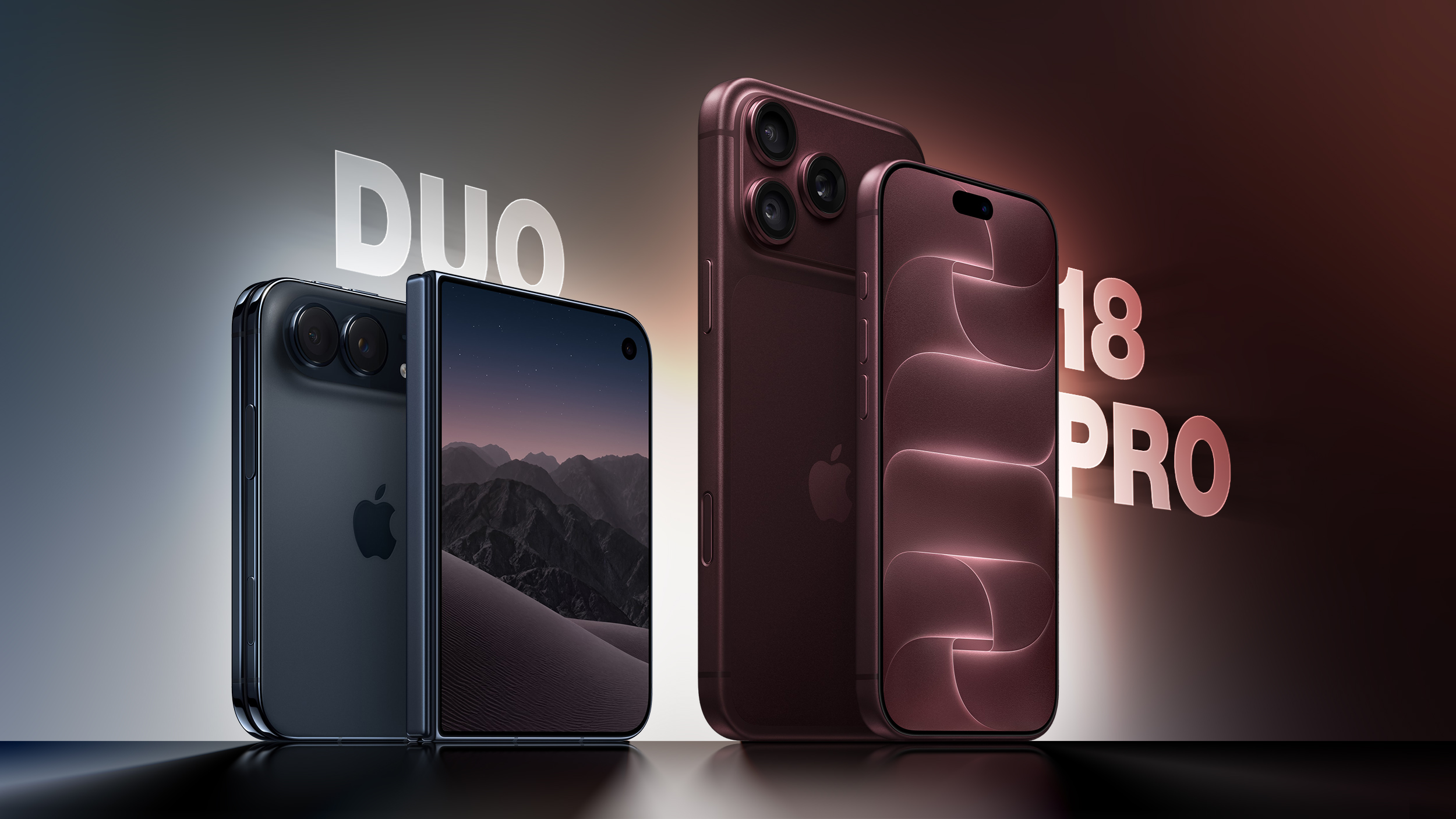

Alongside the iPhone 18 Pro and ‌iPhone 18 Pro‌ Max, which start at $1,199 and $1,299 respectively, there is now the iPhone Duo, Apple's first foldable iPhone, which starts at $1,999. All three are brand new, all three feature the same A20 Pro chip, and all three sit at the top end of Apple's lineup.

The Duo is not a Pro model, though, and Apple's own wording makes that clear. For example, its rear camera array is branded the 48-megapixel Dual Fusion system rather than the Pro Fusion system, and the word Pro appears nowhere in its name. The $700 premium over the ‌iPhone 18 Pro‌ Max buys a folding 7.6-inch display, not a better camera.

All three models still share a large amount of hardware. The shared features include:


  • A20 Pro chip with a 6-core CPU, 7-core GPU with Neural Accelerators, dual 16-core Neural Engine, and hardware-accelerated ray tracing

  • Apple C2 modem (except on the Pro Max in the United States), N1 wireless networking chip, Wi-Fi 7, Bluetooth 6, Thread, and the second-generation Ultra Wideband chip

  • Super Retina XDR OLED displays with ProMotion up to 120Hz, Always-On display, Dynamic Island, and 3000 nits of peak outdoor brightness

  • Ceramic Shield 2 front with 3x better scratch resistance, Ceramic Shield back, and IP68 water resistance to a depth of 6 meters

  • Camera Control, a 48MP Fusion Ultra Wide camera at 13mm and f/2.2, Photographic Styles 3, Dual Capture, smart focus tracking, and 48MP macro photography

  • Apple Intelligence and Siri AI in iOS 27

  • Emergency SOS, Crash Detection, Roadside Assistance, Messages, and Find My via satellite

  • USB-C with USB 3 speeds, MagSafe and Qi2 wireless charging up to 25W, and dual eSIM

  • 256GB, 512GB, 1TB, and 2TB storage options


The comparison below outlines every difference between the Pro models and the Duo:

Display


‌iPhone 18 Pro‌ and ‌iPhone 18 Pro‌ Max ‌iPhone Duo‌
iPhone 18 Pro: 6.3-inch display
iPhone 18 Pro Max: 6.9-inch display
7.6-inch inner folding display and 5.4-inch outer display
iPhone 18 Pro: 2622-by-1206 resolution at 460 ppi
iPhone 18 Pro Max: 2868-by-1320 resolution at 460 ppi
Outer display: 1398-by-2034 at 460 ppi
Inner display: 1878-by-2670 at 430 ppi
Nano-texture finish and wide-angle OLEDs on the inner display
Supports Apple Pencil with USB-C


Design and Build


‌iPhone 18 Pro‌ and ‌iPhone 18 Pro‌ Max ‌iPhone Duo‌
Aluminum unibody Polished titanium frame with a 3D-printed hinge cover
Action button
Face ID enabled by TrueDepth technology Touch ID in the side button
Dual ambient light sensors Four ambient light sensors
Compatible with ‌MagSafe‌ cases, wallets, and wireless chargers Compatible with ‌MagSafe‌ cases and wireless chargers
Black, Silver, Glacier, and Burgundy options Night Sky and Star White options
Made with 40% recycled content, including 85% recycled aluminum in the enclosure, 100% recycled rare earth elements in all magnets, 80% recycled steel in the battery enclosure and vapor chamber chassis, and 100% recycled tungsten in the Taptic Engine Made with 35% recycled content, including 100% recycled aluminum in the internal structural frame, 85% recycled titanium in the enclosure, and 100% recycled titanium in the 3D-printed hinge cover
50% of manufacturing electricity sourced from renewable electricity 60% of manufacturing electricity sourced from renewable electricity


Dimensions and Weight


‌iPhone 18 Pro‌ ‌iPhone 18 Pro‌ Max ‌iPhone Duo‌
Height 5.91 inches (150.0 mm) 6.43 inches (163.4 mm) 4.64 inches (117.8 mm) closed
4.64 inches (117.8 mm) open
Width 2.83 inches (71.9 mm) 3.07 inches (78.0 mm) 3.31 inches (84.1 mm) closed
6.48 inches (164.6 mm) open
Depth 0.34 inch (8.75 mm) 0.34 inch (8.75 mm) 0.44 inch (11.3 mm) closed
0.21 inch (5.2 mm) open
Weight 7.44 ounces (211 grams) 8.78 ounces (249 grams) 8.96 ounces (254 grams)


Rear Cameras


‌iPhone 18 Pro‌ and ‌iPhone 18 Pro‌ Max ‌iPhone Duo‌
48MP Pro Fusion camera system 48MP Dual Fusion camera system
48MP Fusion Main camera: 24mm, second-generation sensor-shift OIS, 100% Focus Pixels 48MP Fusion Main camera: 26mm, sensor-shift OIS, Hybrid Focus Pixels
Variable aperture on Main camera: f/1.48, f/1.8, f/2.8, and f/4.0 Fixed f/1.6 aperture on Main camera
12MP optical-quality 2x "telephoto" sensor crop at 48mm from the Main camera 12MP optical-quality 2x "telephoto" sensor crop at 52mm from the Main camera
48MP Fusion Telephoto camera: 100mm (4x), f/2.8, tetraprism, 3D sensor-shift OIS and autofocus
12MP optical-quality 8x Telephoto sensor crop at 200mm, f/2.8, from the Fusion Telephoto camera
LiDAR scanner
0.5x, 1x, 2x, 4x, and 8x optical zoom options 0.5x, 1x, and 2x optical zoom options
8x optical-quality zoom in, 2x optical zoom out, for a 16x optical-quality zoom range 2x optical-quality zoom in, 2x optical zoom out, for a 4x optical-quality zoom range
Digital zoom up to 40x for photos and up to 24x for video Digital zoom up to 10x for photos and up to 6x for video
Adaptive True Tone flash True Tone flash
Four studio-quality mics
Smart Take and Duo Preview


Pro Capture Features and Formats


‌iPhone 18 Pro‌ and ‌iPhone 18 Pro‌ Max ‌iPhone Duo‌
Pro controls for lens aperture, shutter speed, white balance, and viewing histogram
ProRAW
Apple Reference Image (Fusion Main camera only)
Spatial photos
Spatial video recording at 1080p at 30 fps
ProRes video recording up to 4K at 120 fps with external recording
ProRes RAW video recording
Apple Log 2
Academy Color Encoding System (ACES)
Genlock
Image formats captured: HEIF, JPEG, and DNG Image formats captured: HEIF and JPEG
Video formats recorded: HEVC, H.264, ProRes, and ProRes RAW Video formats recorded: HEVC and H.264
Video playback formats include HEVC, H.264, AV1, and ProRes Video playback formats include HEVC, H.264, and AV1


Front Cameras


‌iPhone 18 Pro‌ and ‌iPhone 18 Pro‌ Max ‌iPhone Duo‌
18MP Center Stage front camera, f/1.9 12MP Center Stage outer camera, f/2.2
Autofocus with Focus Pixels on the front camera
Front camera Pro controls, ProRAW, ProRes, ProRes RAW, Apple Log 2, and Academy Color Encoding System
Kid Cue on the front camera
Under-display FaceTime camera on the inner display, f/1.8, limited to 1080p video at 30 or 60 fps with no Night mode, portraits, or Photographic Styles
Duo ‌FaceTime‌
Optical zoom with the rear camera in ‌FaceTime‌ Zoom with the rear camera in ‌FaceTime‌


Battery and Charging


‌iPhone 18 Pro‌ and ‌iPhone 18 Pro‌ Max ‌iPhone Duo‌
Built-in rechargeable battery Dual built-in rechargeable batteries
iPhone 18 Pro: Up to 24 hours typical use
iPhone 18 Pro Max: Up to 30 hours typical use
Up to 24 hours typical use
iPhone 18 Pro: Up to 36 hours video playback
iPhone 18 Pro Max: Up to 45 hours video playback
Up to 44 hours using the outer display, up to 31 hours using the inner display
iPhone 18 Pro: Up to 33 hours streamed video playback
iPhone 18 Pro Max: Up to 40 hours streamed video playback
Up to 37 hours streamed using the outer display, up to 26 hours using the inner display
50% charge in around 15 minutes 50% charge in around 20 minutes


Price


‌iPhone 18 Pro‌ ‌iPhone 18 Pro‌ Max ‌iPhone Duo‌
256GB $1,199 $1,299 $1,999
512GB $1,399 $1,499 $2,199
1TB $1,799 $1,899 $2,599
2TB $2,399 $2,499 $3,199


For most buyers, the ‌iPhone 18 Pro‌ or ‌iPhone 18 Pro‌ Max is the better choice. They offer the same A20 Pro chip as the Duo, a more versatile camera system, and a lower price. Choose the Pro if you prefer a smaller, lighter phone, or pay $100 more for the Pro Max if you want a larger screen and longer battery life.

The camera system is the clearest reason to choose an ‌iPhone 18 Pro‌ over the ‌iPhone Duo‌. Alongside a more advanced Main camera, the Pro models offer a variable aperture for greater control over depth of field and a dedicated Telephoto camera for subjects you cannot get close to. These advantages matter even if you never use professional capture formats: The Pro gives you more flexibility both when framing a shot and when controlling how it looks. If photography or videography is a priority, choose the ‌iPhone 18 Pro‌. Buyers who also use ProRAW, ProRes, or manual controls have even more reason to do so.

The ‌iPhone Duo‌ is worth considering if you frequently wish your phone had a larger screen for reading, documents, taking notes, or watching video. Its 7.6-inch folding display and ‌Apple Pencil‌ support are unique in the iPhone lineup and could reduce the need to carry a separate tablet. If you would unfold it several times a day for those sorts of tasks, the benefit may outweigh the camera compromises and higher price. If most of your use involves messaging, social media, and taking photos, there is less reason to pay extra for the ‌iPhone Duo‌.

The compromises also extend beyond the rear cameras. Both of its front-facing cameras are also inferior. The ‌iPhone Duo‌ also replaces ‌Face ID‌ with ‌Touch ID‌ and drops the Action button, so buyers will need to adjust. It also lacks the Pro models' LiDAR Scanner, adaptive True Tone flash, four studio-quality microphones, and spatial photo and video recording.

You also need to be comfortable with the Duo when it is closed. Despite its smaller outer screen, it is wider and thicker than either Pro model and slightly heavier than the Pro Max. Battery life is another reason to favor the Pro Max: The Duo matches the smaller Pro's rated typical-use battery life, and using its inner display reduces its video playback time substantially.

The price gap remains significant at every storage tier. A 1TB ‌iPhone 18 Pro‌ Max is only $100 cheaper than the entry-level ‌iPhone Duo‌, but that Duo has just 256GB of storage. At the same capacity, you pay $700 more than the Pro Max or $800 more than the Pro. That premium needs to be justified by how much you would use the folding screen and how much you care about some of the device's compromises.

Buy the Duo if you have a clear idea of the things you would regularly unfold it to do, or if experiencing Apple's first foldable and a radically new kind of iPhone is itself worth the premium to you. If you are unsure how the larger screen would fit into your routine, the Pro models remain the stronger purchase with their traditional "slab" form factor and host of superior specifications.

The ‌iPhone 18 Pro‌ and ‌iPhone 18 Pro‌ Max are available to pre-order now. ‌iPhone Duo‌ pre-orders open on October 16 ahead of an October 23 release.
Related Roundups: iPhone 18 Pro, iPhone Duo
Related Forum: iPhone

This article, "iPhone 18 Pro vs. iPhone Duo Buyer's Guide: Which Should You Choose?" first appeared on MacRumors.com

Discuss this article in our forums
  •  

Apple Watch Ultra 3 vs. Ultra 4 Buyer's Guide

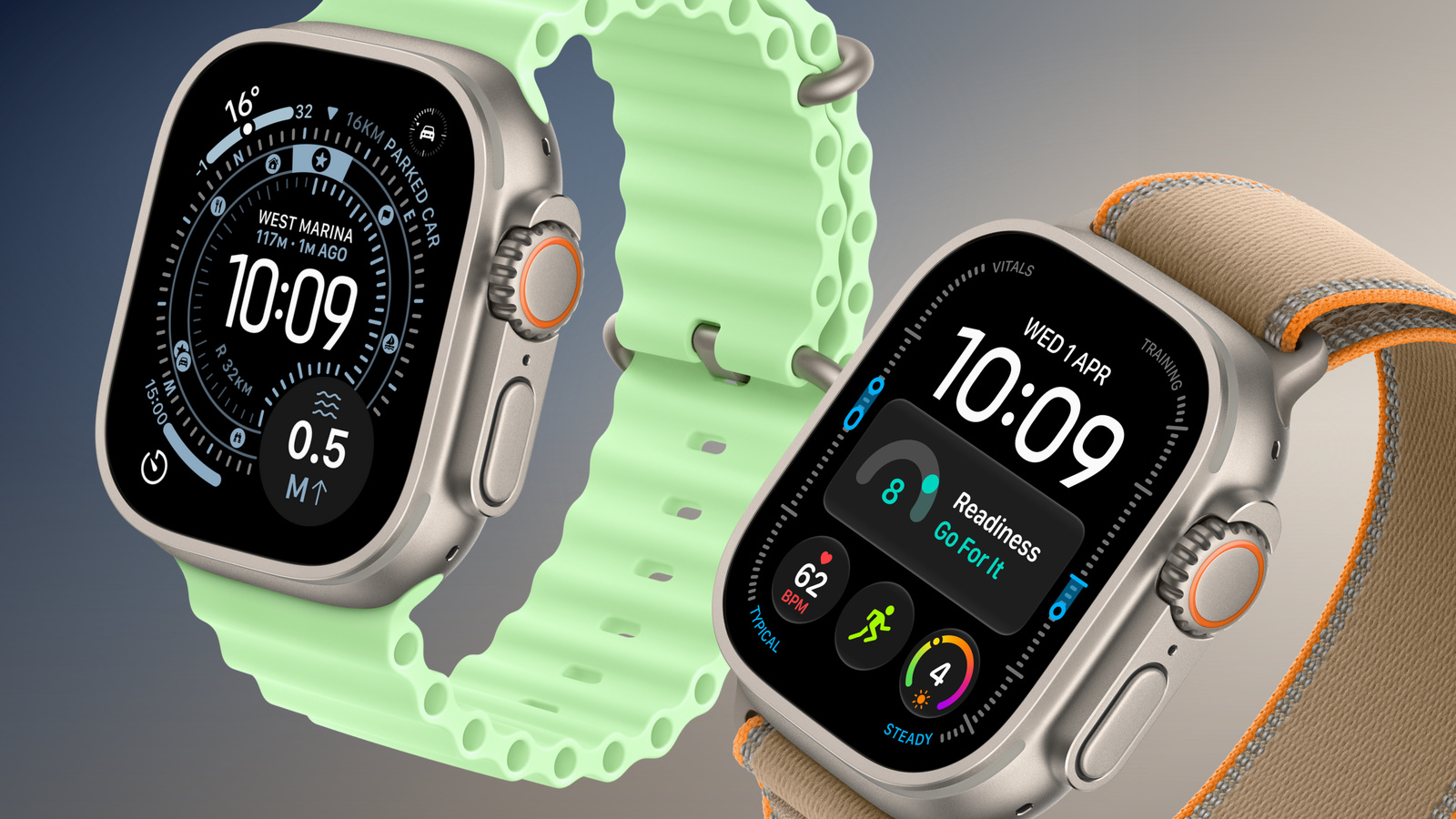
The Apple Watch Ultra 4 is now available for pre-order, bringing a new health sensing system, more memory, and longer battery life over its predecessor. Here's everything that's new.


Last year, the Apple Watch Ultra 3 introduced a larger, more efficient display, satellite connectivity, 5G, and improved battery life. The Ultra 4 retains the same basic design and display, but focuses on more detailed health and fitness insights, new Audio Intelligence features, and further battery life improvements.

It launches on Friday, September 18, at the same $799 starting price as the Ultra 3. The comparison below outlines the differences between the two generations:


Apple Watch Ultra 3 Apple Watch Ultra 4
S10 chip (2024) S11 chip (2026)
2GB RAM 4GB RAM
Electrical heart sensor "Health Sensing System" with second-generation electrical heart sensor
Third-generation optical heart sensor Always-on optical heart sensor
Background heart rate tracking High-frequency background heart rate tracking every five seconds, 60x more frequently
HRV Recovery HRV and overall HRV, measured up to 24x more often
Vitals app with heart rate, respiratory rate, wrist temperature, and sleep duration Vitals app heart rate, respiratory rate, wrist temperature, sleep duration, HRV, and a daytime vitals view
Readiness app
Real-time heart rate complication
Step tracking More accurate step tracking and indoor workout distance measurements
Steps complication
Audio Intelligence (Live Rewind, Siri Recap, Sound Recognition, and automatic music identification with Shazam)
Up to 42 hours of normal use Up to 50 hours of normal use
Up to 72 hours in Low Power Mode Up to 84 hours in Low Power Mode
Up to 14 hours of outdoor workout tracking with full GPS and heart rate readings Up to 18 hours of standard outdoor workout tracking
Up to 20 hours of outdoor workout tracking in Low Power Mode with full GPS and heart rate readings Up to 25 hours in Extended Workout mode with full GPS and heart rate readings
Up to 35 hours of outdoor workout tracking in Low Power Mode with Fewer GPS and Heart Rate Readings enabled Up to 45 hours in Max Extended Workout mode, retaining GPS readings every second
15 minutes of charging for up to 12 hours of normal use 15 minutes of charging for up to 18 hours of normal use
5 minutes of charging for up to 8 hours of sleep tracking 5 minutes of charging for up to 10 hours of sleep tracking
Natural titanium: 61.6 grams
Black titanium: 61.8 grams
Natural titanium: 63.0 grams
Black titanium: 63.1 grams
GPS, GLONASS, Galileo, QZSS, and BeiDou GPS, Galileo, QZSS, and BeiDou
40% recycled content 45% recycled content
Now discontinued From $799


Is It Worth Upgrading From Ultra 3 to Ultra 4?


For the vast majority of Apple Watch Ultra 3 owners, the Ultra 4 is not worth upgrading to. The Ultra 3 already offers all of the headline display, durability, satellite connectivity, and established health features. If it comfortably lasts between your usual charging sessions and records your longest workouts, the new model is unlikely to meaningfully change how you use your watch.

The strongest reason to upgrade is if you want recovery tracking to play a larger role in your training. The Ultra 4's more frequent measurements feed into Readiness and Recovery HRV, making it easier to assess when to push harder or take a lighter day. These features are more compelling if you will regularly use them to adjust your training, rather than simply check another set of health metrics.

Battery life is a more practical reason for endurance athletes. If you currently change settings to finish long events or recharge during an extended outing, the Ultra 4 gives you a little more flexibility. For shorter daily workouts, however, the improvement mainly means less frequent charging, which is difficult to justify replacing a year-old $799 watch for.

Audio Intelligence may also justify upgrading for specific users, particularly deaf or hard of hearing users who would benefit from Sound Recognition on their wrist. Live Rewind and ‌Siri‌ Recap are less convincing reasons to upgrade immediately, since they arrive in beta later this year and require a compatible newer iPhone.

Should You Buy Ultra 3 or Ultra 4?


For new buyers, the Ultra 4 should be the default choice when the price difference is modest. If you plan to wear it for several years, paying a little more for the new chip, more memory, better battery life, and health tracking enhancements is easier to justify than replacing an Ultra 3 you already own.

The Ultra 3 becomes the better value when it is heavily discounted. If you mainly want a "rugged"-style Apple Watch with a large screen, satellite connectivity, and enough battery life for everyday use and regular workouts, it delivers much of the same experience. Buyers interested in Readiness and recovery insights, or who regularly record very long activities, have a stronger reason to pay more for the ‌Apple Watch Ultra 4‌.

For used or refurbished Ultra 3 models, factor battery condition and warranty coverage into the saving. A cheaper watch with a degraded battery is less appealing if endurance is your main reason for buying an Ultra.
Related Roundup: Apple Watch Ultra 4
Related Forum: Apple Watch

This article, "Apple Watch Ultra 3 vs. Ultra 4 Buyer's Guide" first appeared on MacRumors.com

Discuss this article in our forums
  •  

iPhone 16 Pro vs. iPhone 18 Pro Buyer's Guide: Worth Upgrading?

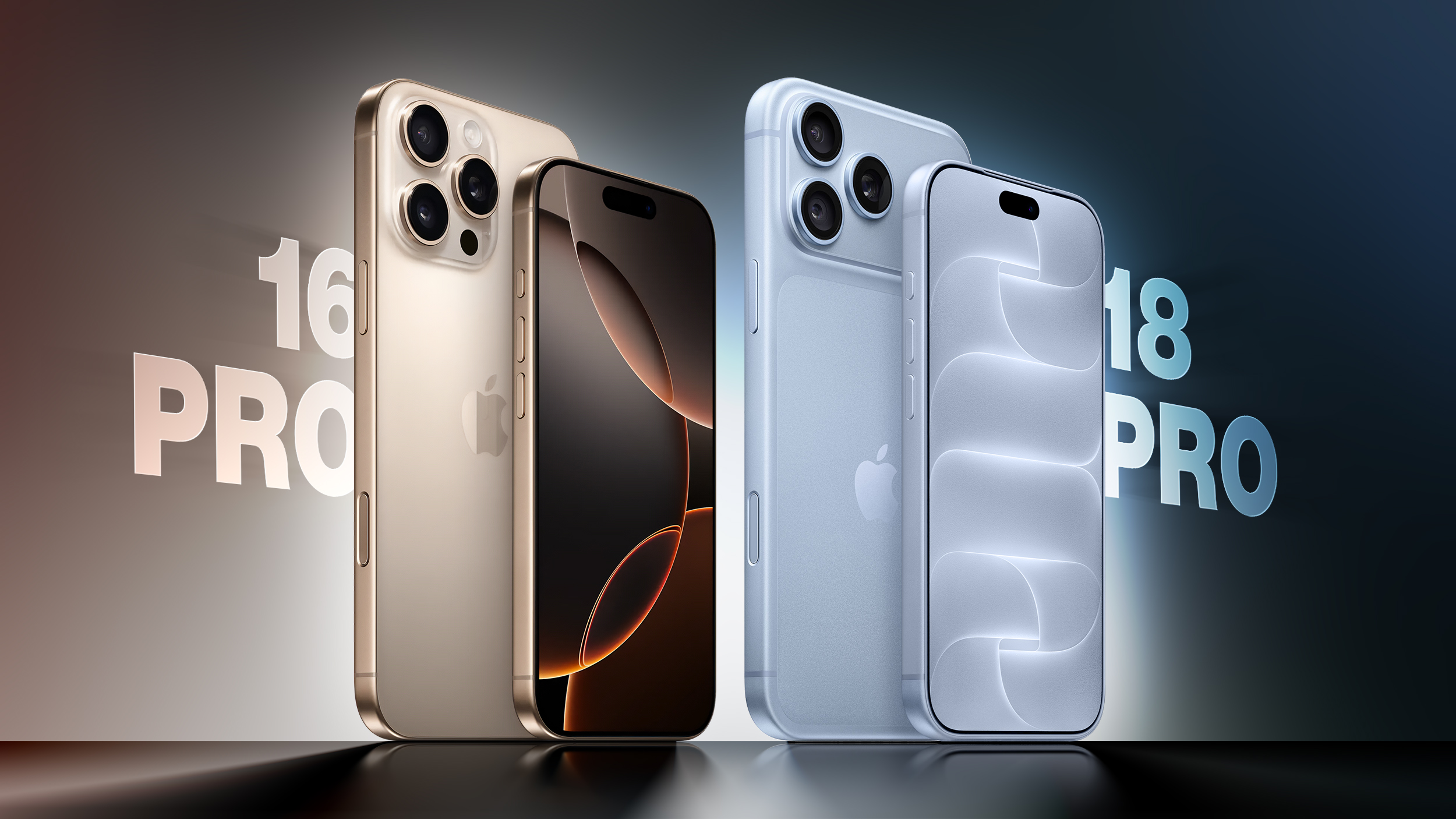
Apple last week announced the iPhone 18 Pro and ‌iPhone 18 Pro‌ Max, arriving two years after the iPhone 16 Pro and ‌iPhone 16‌ Pro Max. Skipping a generation means makes for a bigger upgrade, with more than 50 differences between the 2024 and 2026 models.


Most of the visible change arrived in between, with the iPhone 17 Pro replacing the titanium frame and glass back with an aluminum unibody and Ceramic Shield 2, adding vapor chamber cooling, and upgrading both the telephoto and front cameras. This year's update is largely focused on internal changes, centering on the A20 Pro chip, a variable-aperture Main camera, a smaller Dynamic Island, and a battery capacity increase that delivers the largest jump in battery life in the iPhone's history. For ‌iPhone 16‌ Pro owners, the two sets of changes stack on top of each other.

The ‌iPhone 18 Pro‌ starts at $1,199 for 256GB, $200 more than the ‌iPhone 16‌ Pro's $999 launch price, although the entry storage tier has doubled from 128GB. Apple no longer sells the ‌iPhone 16‌ Pro directly, so any comparison now involves either a device you already own or a third-party listing. Here's everything that differs between the ‌iPhone 16‌ Pro and ‌iPhone 18 Pro‌:

Design and Display


‌iPhone 16‌ Pro (2024) ‌iPhone 18 Pro‌ (2026)
Titanium frame with full glass back Aluminum unibody with partial Ceramic Shield back
8.25mm thickness 8.75mm thickness
Glass rounded square camera bump Full-width rounded rectangle aluminum camera plateau
Ceramic Shield front Ceramic Shield 2 front with 3x better scratch resistance
Fingerprint-resistant oleophobic coating only Apple-designed anti-reflective display coating to reduce glare
2,000 nits peak display brightness (outdoor) 3,000 nits peak display brightness (outdoor)
2x better outdoor contrast
‌Dynamic Island‌ supports up to two simultaneous Live Activities Smaller ‌Dynamic Island‌, supports up to three simultaneous Live Activities
iPhone 16 Pro: Weighs 7.03 ounces (199 grams)
iPhone 16 Pro Max: Weighs 7.99 ounces (227 grams)
iPhone 18 Pro: Weighs 7.44 ounces (211 grams)
iPhone 18 Pro Max: Weighs 8.78 ounces (249 grams)
Available in White, Black, Natural, and Desert Available in Silver, Black, Glacier, and Burgundy


Chip, Performance, and Connectivity


‌iPhone 16‌ Pro (2024) ‌iPhone 18 Pro‌ (2026)
A18 Pro chip A20 Pro chip
Built with TSMC's N3E process (3nm) Built with TSMC's N2 process (2nm), Apple's first 2nm smartphone chip
6-core CPU with 2 performance cores and 4 efficiency cores 6-core CPU with 2 super cores and 4 efficiency cores
60GB/s memory bandwidth ~115GB/s memory bandwidth
8GB RAM 12GB RAM
6-core GPU 7-core GPU with Neural Accelerators
16-core Neural Engine Dual 16-core Neural Engine (32 total cores)
Vapor chamber cooling with 3x more surface area than the ‌iPhone 17 Pro‌
New chip packaging that places silicon die beside memory, allowing it to attach directly to the vapor chamber
Qualcomm Snapdragon X71 modem iPhone 18 Pro: Apple C2 modem in all countries
iPhone 18 Pro Max: Apple C2 modem in all countries except the U.S., where it uses a Qualcomm modem
Broadcom Wi-Fi and Bluetooth chip Apple N1 chip for Wi-Fi, Bluetooth, and Thread
Bluetooth 5.3 connectivity Bluetooth 6 connectivity


Rear Camera


‌iPhone 16‌ Pro (2024) ‌iPhone 18 Pro‌ (2026)
12-megapixel Telephoto camera 48-megapixel Fusion Telephoto camera
0.5x, 1x, 2x, and 5x optical zoom options 0.5x, 1x, 2x, 4x, and 8x optical zoom options
Fixed ƒ/1.78 aperture on the 48-megapixel Fusion Main camera Variable-aperture 48-megapixel Fusion Main camera with four stops: ƒ/1.48, ƒ/1.8, ƒ/2.8, and ƒ/4.0, using six laser-cut blades
API available for developers to control the aperture range within their own apps
Faster Night mode, tied to the new variable-aperture lens
Pro controls in the Camera app: manual lens aperture, shutter speed, white balance, and histogram
New sensor and computational imaging pipeline on the Fusion Main camera, delivering around 50% better low-light performance and more detail in the back of group photos
Photographic Styles 2, adjusting tone and color Photographic Styles 3, adding texture and grain controls alongside tone and color
Smart focus tracking
Cinematic mode recording up to 4K Dolby Vision at 30 fps Cinematic mode recording up to 4K Dolby Vision at 60 fps
Cinematic mode effects can be applied after capture, on video shot at up to 60 fps
Improved low-light video
Time-lapse video recording with stabilization, up to 4K Dolby Vision
Apple Reference Image (Main camera only)
Audio Mix Audio Mix with new algorithms for higher-quality voices, and the ability to isolate music
ProRes RAW capture support
Genlock support


Front Camera


‌iPhone 16‌ Pro (2024) ‌iPhone 18 Pro‌ (2026)
12-megapixel TrueDepth camera 18-megapixel TrueDepth camera
Tap to zoom Tap to zoom and rotate
Center Stage
Ultra-stabilized video
Dual Capture (up to 4K Dolby Vision at 30 fps)
Photographic Styles 2, adjusting tone and color Photographic Styles 3, adding texture and grain controls alongside tone and color
Smart focus tracking
Cinematic mode effects can be applied after capture
Improved low-light video
Time-lapse video recording with stabilization, up to 4K Dolby Vision


Battery and Charging


‌iPhone 16‌ Pro (2024) ‌iPhone 18 Pro‌ (2026)
iPhone 16 Pro: 3,582 mAh battery
iPhone 16 Pro Max: 4,685 mAh battery
iPhone 18 Pro: 4,056 mAh battery
iPhone 18 Pro Max: 5,391 mAh battery
iPhone 16 Pro: Up to 27 hours of video playback
iPhone 16 Pro Max: Up to 33 hours of video playback
iPhone 18 Pro: Up to 36 hours of video playback
iPhone 18 Pro Max: Up to 45 hours of video playback
iPhone 16 Pro: Up to 50% charge in 30 minutes with a 20W adapter or higher
iPhone 16 Pro Max: Up to 50% charge in 35 minutes with a 20W adapter or higher
Up to 50% charge in around 15 minutes with a 60W-capable adapter
iPhone 16 Pro: MagSafe wireless charging up to 22W with a 30W adapter or higher
iPhone 16 Pro Max: ‌MagSafe‌ wireless charging up to 25W with a 30W adapter or higher
‌MagSafe‌ wireless charging up to 25W, reaching 50% charge in 30 minutes with a 35W adapter or higher


Storage and Pricing


‌iPhone 16‌ Pro (2024) ‌iPhone 18 Pro‌ (2026)
iPhone 16 Pro: Available with 128GB, 256GB, 512GB, or 1TB storage
iPhone 16 Pro Max: Available with 256GB, 512GB, or 1TB storage
Available with 256GB, 512GB, 1TB, or 2TB storage
iPhone 16 Pro: Launched at $999 (128GB), $1,099 (256GB), $1,299 (512GB), $1,499 (1TB)
iPhone 16 Pro Max: Launched at $1,199 (256GB), $1,399 (512GB), $1,599 (1TB)
iPhone 18 Pro: $1,199 (256GB), $1,399 (512GB), $1,799 (1TB), $2,399 (2TB)
iPhone 18 Pro Max: $1,299 (256GB), $1,499 (512GB), $1,899 (1TB), $2,499 (2TB)
Now discontinued, only available via third-parties iPhone 18 Pro: Sold directly by Apple, from $49.95 a month for 24 months via Apple Upgrade
iPhone 18 Pro Max: Sold directly by Apple, from $54.12 a month for 24 months via Apple Upgrade


Which to Choose?


For ‌iPhone 16‌ Pro and ‌iPhone 16‌ Pro Max owners, the ‌iPhone 18 Pro‌ is a worthwhile upgrade, and a far easier recommendation than it is for anyone coming from last year's model. Two generations of changes accumulate, touching almost every part of the device: an all-new aluminum unibody with Ceramic Shield 2 and three times better scratch resistance, a display that is 50% brighter outdoors at 3,000 nits and features an anti-reflective coating the ‌iPhone 16‌ Pro lacks entirely, and a battery that runs for 36 hours rather than 27, rising from 33 hours to 45 hours on the Pro Max. Charging has changed most dramatically of all, dropping from 50% in 30 minutes to 50% in around 15 minutes.

The camera differences are also major. The telephoto camera moves from 12 megapixels at 5x to 48 megapixels with 4x and 8x optical options, the front camera jumps from 12 megapixels to 18 megapixels and gains Center Stage and ultra-stabilized video, and the Main camera trades its fixed ƒ/1.78 aperture for a four-stop variable aperture ranging from ƒ/1.48 to ƒ/4.0. Add ProRes RAW, Genlock, Dual Capture, Cinematic mode at 60 fps, and manual Pro controls, and the ‌iPhone 18 Pro‌ is a substantially different camera system.

Performance is the other argument for upgrading, particularly if you have noticed your ‌iPhone 16‌ Pro throttling. The A20 Pro moves to a 2nm process, gains a seventh GPU core with Neural Accelerators, and doubles the Neural Engine to 32 cores, while the vapor chamber that the ‌iPhone 16‌ Pro lacks entirely is now in its second generation. If you play demanding games, shoot long video clips, or expect to lean on on-device Apple Intelligence features for several more years, the extra 4GB of RAM and the doubled Neural Engine make the ‌iPhone 18 Pro‌ the more future-proof purchase.

That being said, the price has moved against you. The ‌iPhone 18 Pro‌ costs $200 more than the ‌iPhone 16‌ Pro did at launch, even accounting for the doubled 256GB entry tier, and the ‌iPhone 18 Pro‌ Max is $100 more than its equivalent. The ‌iPhone 18 Pro‌ Max is also 22 grams heavier than the ‌iPhone 16‌ Pro Max, which is noticeable in the hand, although it buys you the largest battery gain Apple has ever delivered on an iPhone and the option of a 2TB device.

A notable exception arises if you are upgrading primarily for the design, the telephoto camera, or the battery. Almost all of those enhancements arrived with the ‌iPhone 17 Pro‌ rather than this year's model, so an ‌iPhone 17 Pro‌ bought from a third-party retailer at a heavy discount will get you most of the way there for meaningfully less money. The ‌iPhone 18 Pro‌'s genuine exclusives over that model are the variable aperture and Pro controls, the C2 modem, the smaller ‌Dynamic Island‌, and roughly three extra hours of battery life. If none of those matter to you, last year's model is the better value.

Pre-orders for the ‌iPhone 18 Pro‌ and ‌iPhone 18 Pro‌ Max opened on Saturday, September 12, with availability beginning Friday, September 18.
Related Roundup: iPhone 18 Pro
Related Forum: iPhone

This article, "iPhone 16 Pro vs. iPhone 18 Pro Buyer's Guide: Worth Upgrading?" first appeared on MacRumors.com

Discuss this article in our forums
  •  

Mac Mini vs. Mac Studio Buyer's Guide: 20 Differences Compared

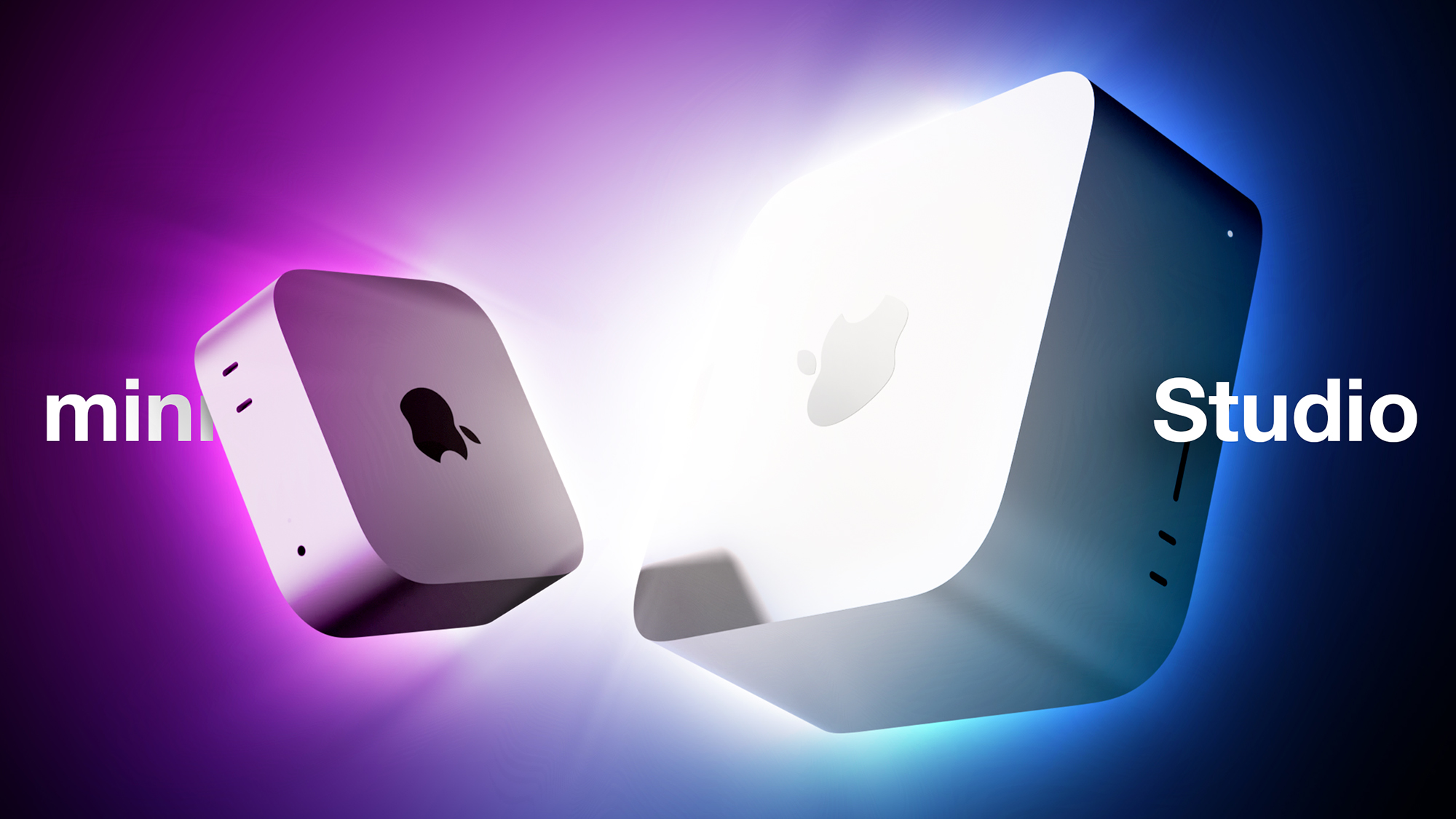
Apple announced new Mac mini and Mac Studio models last month, with both available to pre-order now. It is the first time in years that Apple has revised its two desktop Macs simultaneously, so which should you choose?


There are now two desktop Macs to choose from following the discontinuation of the Mac Pro, but the prices have moved sharply. The ‌Mac Studio‌ starts at $2,499 and rises to $5,499 for the M5 Ultra model, while the ‌Mac mini‌ starts at $899 with the M6 chip and $1,699 with the M5 Pro.

Those prices come on top of the across-the-board Mac and iPad increases Apple made in June, which took the ‌Mac mini‌ from $599 to $799, the M4 Pro configuration from $1,399 to $1,599, and the ‌Mac Studio‌ from $1,999 to $2,499. The M5 Ultra adds a further $200 to the post-June M3 Ultra price, putting it $1,500 above what the M3 Ultra cost at launch.

Our guide helps to answer the question of how to decide which of these two desktop Macs is best for you. The two machines now share a large number of key features, including:


  • A boxy silver aluminum enclosure with no color options

  • Apple's N1 chip, bringing Wi-Fi 7 and Bluetooth 6 to both machines for the first time

  • Neural Accelerators built into every GPU core

  • Hardware-accelerated ray tracing

  • A Media Engine with hardware-accelerated H.264, HEVC, ProRes, and ProRes RAW, plus AV1 decode

  • A next-generation SSD architecture that Apple says is up to twice as fast as before

  • Genlock support over USB-C for synchronizing a display with a camera, including the iPhone 17 Pro

  • An HDMI port with multichannel audio output

  • A 3.5mm headphone jack with support for high-impedance headphones


Beyond that, the two lines diverge on chip generation, memory capacity, ports, and external display support.


‌Mac mini‌ (M6) ‌Mac mini‌ (M5 Pro) ‌Mac Studio‌ (M5 Max) ‌Mac Studio‌ (M5 Ultra)
M6 chip M5 Pro chip M5 Max chip M5 Ultra chip (two dual-die M5 Max chips joined by UltraFusion)
Made with TSMC's 2nm process Made with TSMC's 3nm process Made with TSMC's ‌3nm‌ process Made with TSMC's ‌3nm‌ process
12-core CPU (2 super cores + 4 performance cores + 6 efficiency cores) 15- or 18-core CPU (up to 6 super cores + 12 performance cores) 18-core CPU (6 super cores + 12 performance cores) 30- or 36-core CPU (up to 12 super cores + 24 performance cores)
12-core GPU 16- or 20-core GPU 32- or 40-core GPU 64- or 80-core GPU
Dual 16-core Neural Engine 16-core Neural Engine 16-core Neural Engine 32-core Neural Engine
Up to 170GB/s memory bandwidth 307GB/s memory bandwidth Up to 614GB/s memory bandwidth 1.2TB/s memory bandwidth
16GB, 24GB, or 32GB unified memory 24GB, 48GB, or 64GB unified memory 32-core GPU: 36GB unified memory
40-core GPU: 48GB, 64GB, or 128GB unified memory
64-core GPU: 96GB or 256GB unified memory
80-core GPU: 96GB, 256GB, or 512GB unified memory
256GB, 512GB, 1TB, or 2TB storage 512GB, 1TB, 2TB, 4TB, or 8TB storage 512GB, 1TB, 2TB, 4TB, or 8TB storage 1TB, 2TB, 4TB, 8TB, or 16TB storage
Video decode engine Video decode engine Video decode engine Two video decode engines
Video encode engine Video encode engine Two video encode engines Four video encode engines
ProRes encode and decode engine ProRes encode and decode engine Two ProRes encode and decode engines Four ProRes encode and decode engines
Support for up to three displays: two at 6K 60Hz or 4K 165Hz, plus a third at 5K 60Hz over Thunderbolt or 4K 60Hz over HDMI Support for up to three displays, all at 6K 60Hz or 4K 165Hz Support for up to five 4K displays, four 6K displays, or two 8K displays Support for up to eight 4K displays, eight 6K displays, or four 8K displays
Two displays per Thunderbolt port All three displays through a single Thunderbolt port
Three rear Thunderbolt 4 ports Three rear Thunderbolt 5 ports Four rear Thunderbolt 5 ports Four rear Thunderbolt 5 ports
Two front USB-C ports Two front USB-C ports Two front USB-C ports Two front Thunderbolt 5 ports
Two rear USB-A ports Two rear USB-A ports
2.5Gb Ethernet or 10Gb Ethernet port 2.5Gb Ethernet or 10Gb Ethernet port 10Gb Ethernet port 10Gb Ethernet port
SDXC card slot (UHS-II) SDXC card slot (UHS-II)
Bottom power button Bottom power button Rear power button Rear power button
Starts at $899 Starts at $1,699 Starts at $2,499 Starts at $5,499


Both enclosures carry over unchanged, so the dimensions of the two devices remain radically different, with the ‌Mac Studio‌ dwarfing the ‌Mac mini‌ in every way.


‌Mac mini‌ ‌Mac Studio‌
Height 2.0 inches (5.0 cm) 3.7 inches (9.5 cm)
Width 5.0 inches (12.7 cm) 7.7 inches (19.7 cm)
Depth 5.0 inches (12.7 cm) 7.7 inches (19.7 cm)
Weight M6: 1.5 pounds (0.67 kg)
M5 Pro: 1.6 pounds (0.73 kg)
M5 Max: 6.0 pounds (2.7 kg)
M5 Ultra: 8.0 pounds (3.6 kg)


Most customers should choose the M5 Pro ‌Mac mini‌ over the M5 Max ‌Mac Studio‌, saving $800 on the base models. The gap widens across custom configurations, since the ‌Mac Studio‌'s memory and storage tiers start higher and climb further.

There is an unusual situation at the bottom of the lineup this year. The $899 ‌Mac mini‌ is the only machine of the four with a latest-generation chip, and the M6 is Apple's first 2nm chip. Its Dual 16-core Neural Engine, which Apple says system frameworks can drive simultaneously, is also more Neural Engine hardware than either the M5 Pro or the M5 Max provides. If your workload leans on on-device machine learning rather than sustained CPU or GPU throughput, the cheapest Mac in this comparison is not obviously the weakest one for the task. The trade-offs are Thunderbolt 4 rather than Thunderbolt 5, a 32GB memory and 2TB storage ceiling, and a single video encode engine.

You should only consider the ‌Mac Studio‌ if you have a professional workflow that can genuinely leverage the M5 Max or the M5 Ultra, along with the additional ports, display outputs, and memory capacity. If you need the ‌Mac Studio‌, you will likely already know that you are looking for a highly powerful machine capable of supporting a specific intense workload. The M5 Ultra is Apple's first quad-die M-series chip, and its four ProRes engines, four video encode engines, and 1.2TB/s of memory bandwidth are aimed squarely at multi-stream video work and large local AI models. The 512GB memory ceiling has no equivalent anywhere else in the Mac lineup, and it is what allows models with hundreds of billions of parameters to run entirely on device.

The ‌Mac Studio‌ still has a superior selection of ports, with four rear Thunderbolt 5 ports on the M5 Max and six in total on the M5 Ultra, plus an SDXC card slot, USB-A, and 10Gb Ethernet as standard. This makes a practical difference for anyone working off fast external storage or camera media. The ‌Mac mini‌ has closed part of the distance by moving to 2.5Gb Ethernet as standard, up from Gigabit.

Clustering over Thunderbolt 5 and RDMA is not a point of difference between the two machines, since it arrived in macOS 26.2 last December and works on any Mac with Thunderbolt 5, including the M5 Pro ‌Mac mini‌ and the previous-generation ‌Mac Studio‌. The exception is the M6 ‌Mac mini‌, which has Thunderbolt 4 and cannot take part.

Both ‌Mac mini‌ models still cap out at three external displays, but they now reach 165Hz at 4K, up from 144Hz on the M4 generation, and the M5 Pro model drives all three through a single Thunderbolt port. For a three-display desk setup at high refresh rates, the M5 Pro ‌Mac mini‌ is sufficient. It is only above three displays, or at 6K and 8K, that the ‌Mac Studio‌ becomes necessary.

A notable exception arises at the top of the ‌Mac mini‌ lineup. An M5 Pro ‌Mac mini‌ configured with additional memory and storage moves close enough to the $2,499 ‌Mac Studio‌ that the comparison changes somewhat. For an increment of a few hundred dollars, the ‌Mac Studio‌ substitutes a chip with roughly twice the memory bandwidth, a second video encode engine, far greater display support, and headroom to 128GB of unified memory. If you are already spending heavily on a ‌Mac mini‌, price the ‌Mac Studio‌ before committing.

If you plan to keep the machine for many years, the ‌Mac Studio‌'s ceiling matters more than its starting price, because it is the only one of the two that can be configured beyond 64GB of unified memory. Buyers weighing the M6 ‌Mac mini‌ against the M5 Pro ‌Mac mini‌ should note that the newer chip generation and the newer process node both sit in the cheaper machine, and that the M5 Pro's advantages are concentrated in multi-core and graphics performance rather than in longevity.

To some extent, purchasing decisions should be driven by budget, but any savings on the computer itself can be put toward a good external display such as Apple's Studio Display, which starts from $1,599 and was one of the few products spared June's price rises. An M6 ‌Mac mini‌ paired with a ‌Studio Display‌ comes to $2,498, a dollar less than a bare M5 Max ‌Mac Studio‌ with nothing to plug into. An M5 Pro ‌Mac mini‌ and a ‌Studio Display‌ together come to $3,298, which is $799 more than the base ‌Mac Studio‌ and $2,201 less than the M5 Ultra ‌Mac Studio‌ with no display at all.

Both machines are available to pre-order now and arrive on Tuesday, September 22, with education pricing of $799 and $1,599 on the two ‌Mac mini‌ models and $2,299 and $5,099 on the two ‌Mac Studio‌ models. ‌Mac Studio‌ configurations with 512GB of unified memory are not due until late October.
Related Roundups: Mac Studio, Mac mini
Tag: M5
Related Forums: Mac Studio, Mac mini

This article, "Mac Mini vs. Mac Studio Buyer's Guide: 20 Differences Compared" first appeared on MacRumors.com

Discuss this article in our forums

  •  
❌