
❌

Reading view

La Brea Tar Pits Yield New Species of Ice Age Toad
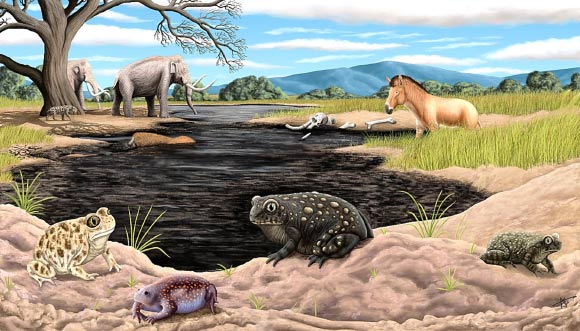
Reconstruction of Spea labreae (center and right) in La Brea Tar Pits compared with Spea hammondii (left), the species currently present in the area, and the presence of the Mexican burrowing toad (bottom). Image credit: Arturo DΓ‘valos.

Paleontologists studying the La Brea Tar Pits, one of the world’s richest Ice Age fossil sites, have identified a previously unknown species of spadefoot toad that lived in what is now California during the latest Ice Age.

The post La Brea Tar Pits Yield New Species of Ice Age Toad appeared first on Sci.News: Breaking Science News.
  •  

3.5-Million-Year-Old Fossil from Japan Reveals Lost Lineage of Giant Salamanders

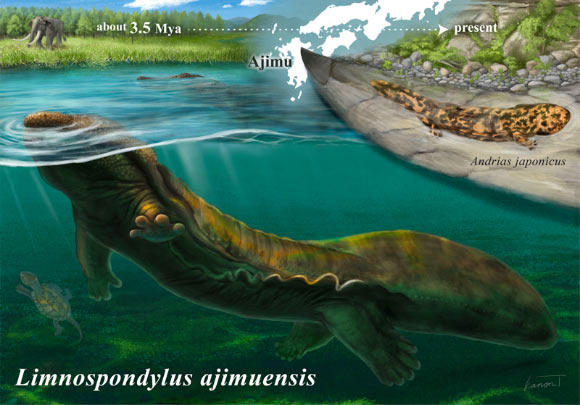
Life reconstruction of Limnospondylus ajimuensis. Image credit: Kanon Tanaka.

A new genus and species of cryptobranchid salamander that lived in lakes in Japan about 3.5 million years ago has been identified from three fossil vertebrae, filling a major gap in the fossil record of one of the world’s oldest amphibian lineages.

The post 3.5-Million-Year-Old Fossil from Japan Reveals Lost Lineage of Giant Salamanders appeared first on Sci.News: Breaking Science News.

  •  

Earth’s First Land Animals May Never Have Been Amphibian-Like After All

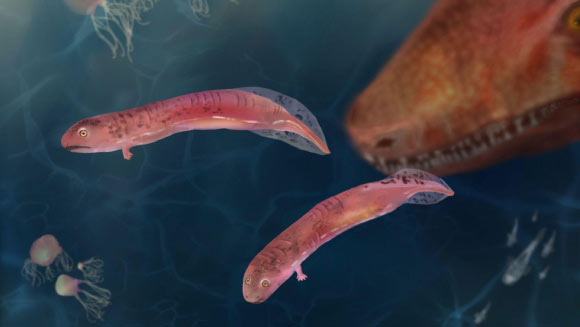
New fossil evidence suggests that embolomeres did not undergo a metamorphosis the way that modern amphibians do when growing up, which challenges a long-standing scientific belief that amphibians, reptiles, and mammals evolved from animals that had a tadpole stage. Image credit: Berit Godring.

Paleontologists from the Field Museum of Natural History have described the fossilized remains of baby embolomeres, crocodile-like predators that prowled ancient rivers and swamps between 350 and 280 million years ago.

The post Earth’s First Land Animals May Never Have Been Amphibian-Like After All appeared first on Sci.News: Breaking Science News.

  •  
❌