❌

Reading view

ANU accused of ‘hysterical’ response to students using AI to cheat as unis scramble to ‘secure’ assessments

Australia risks ‘shipping’ intellectual capability overseas if educational rigour not restored, experts warn

An academic at the Australian National University has accused it of a “hysterical” response to students using AI to cheat, as tertiary institutions rush to shore up the credibility of assessments.

But a colleague warned Australia is in danger of “shipping our national intellectual capability” to companies in California and China if educational rigour is not restored.

Continue reading...

© Photograph: Lukas Coch/AAP

© Photograph: Lukas Coch/AAP

© Photograph: Lukas Coch/AAP

  •  

Goooool v goal: English speakers flock to Telemundo for lively World Cup coverage

The Spanish-language broadcaster has won over millions of US viewers with its energetic commentary during games

Soccer fans looking to watch the 2026 World Cup on US television have been presented with two very different options this tournament.

The first is Fox Sports, a cousin of Fox News owned by the same parent company and the sole network airing matches in English in the US. Audiences tuning in to Fox, which acquired the exclusive English broadcast rights in 2015, are met with coverage that reflects the network’s “America first” aesthetic, with promos for pro-Donald Trump talkshows, advertising breaks during games and the frequent, grating presence of host Alexi Lalas.

Continue reading...

© Photograph: Sarah Yenesel/EPA

© Photograph: Sarah Yenesel/EPA

© Photograph: Sarah Yenesel/EPA

  •  

Apple dethrones Nvidia to regain title of world’s most valuable company

Shift in pecking order illustrates that investors are reassessing outlook for artificial intelligence

Apple overtook Nvidia on Friday to become the world’s most valuable company, reshuffling the top ranks of tech heavyweights as investors reassess the outlook for artificial intelligence.

Apple was last valued at $4.88tn as ⁠its shares held steady, while Nvidia ⁠was roughly at $4.86tn, ​after a 3.5% decline.

Continue reading...

© Photograph: Michael M Santiago/Getty Images

© Photograph: Michael M Santiago/Getty Images

© Photograph: Michael M Santiago/Getty Images

  •  

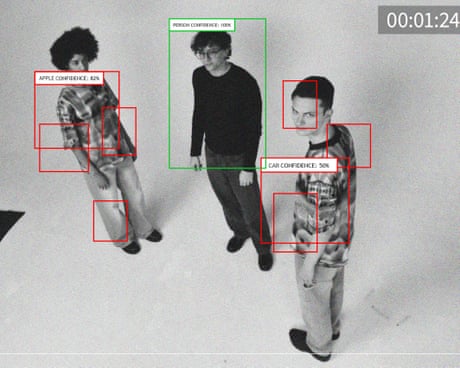
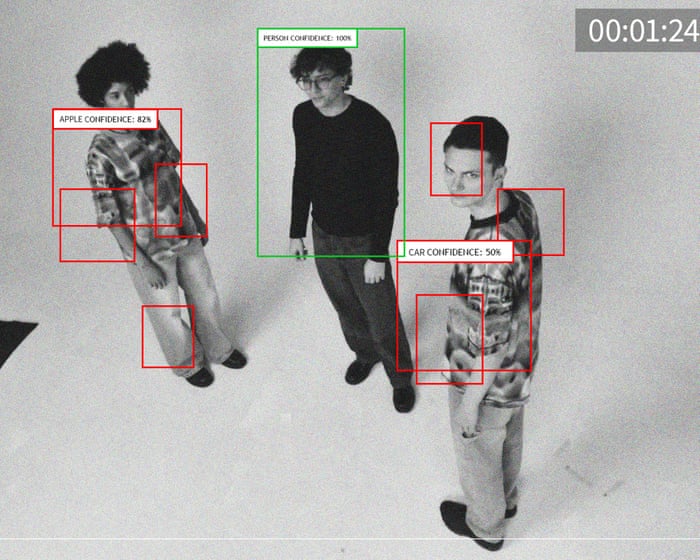
‘Adversarial clothing’: are garments designed to confuse facial recognition systems about to go mainstream?

Designers say that as well as offering a degree of protection from surveillance, their clothes make a powerful fashion statement about the importance of privacy

As facial recognition technology is rolled out across Britain’s public spaces, a new generation of designers say privacy could be the next big fashion trend.

Companies have started incorporating “adversarial patterns” in their garments – carefully designed arrangements of shapes, colours and repeated motifs said to exploit weaknesses in some computer vision systems.

Continue reading...

© Photograph: PR

© Photograph: PR

© Photograph: PR

  •  

Castlevania: Belmont’s Curse - Konami classic rises again from Paris sewers and Joan of Arc is a boss

Evil Empire creatives explain how it is playing to today’s ‘metroidvanias’ and honouring the original’s legacy with much fresh slaying to be done

Since the last Castlevania game hit the shelves (2014’s Castlevania: Lords of Shadow 2), Konami’s dormant series has unexpectedly spawned a hit genre. With an entire generation raised on “metroidvanias” – a portmanteau of Metroid and Castlevania – millions of players have only ever seen the games inspired by Konami’s seminal games. Now with Belmont’s Curse, launching in October, Castlevania is finally dashing back to console, where Konami hopes to reclaim its side-scroller throne.

Set 23 years after the events of 1989’s Castlevania 3 – the same setting as the hit Netflix show – Belmont’s Curse shakes off the series’ 3D ambitions and takes the Belmonts back to basics. Dispatching players to the demon-infested streets of 1499 Paris, you’re placed in the tattered boots of Trevor Belmont’s daughter, Rose. As a bishop pleads with the Belmonts to rid Paris of the ancient evil besetting the city, Rose heads into the sewers, longsword in hand, and her demon-slaying adventure begins.

Continue reading...

© Photograph: KONAMI

© Photograph: KONAMI

© Photograph: KONAMI

  •  

Robert Laidlow: Reality Eaters album review

BBC Philharmonic/Havlat/Kaziboni/Piatti Quartet
(NMC)

Einstein’s field equations, Newton’s universal law and artificial intelligence are among the subjects of Laidlow’s ambitious orchestral works

Robert Laidlow is as at home in the realms of science and technology as he is in the world of classical music. As this NMC debut album demonstrates, his intricate, wildly imaginative work is eminently approachable, even if the core concepts are highly complex.

Warp, a terse, 12-minute piano concerto, proposes a musical solution to Einstein’s field equations as the intrepid Joseph Havlat boldly goes where no pianist has gone before amid the distorting fabric of orchestral space-time. Strident orchestral lines spiral ever upwards, stretching instruments to their limits, while the piano maintains its course towards a serene conclusion. Handsomely recorded, the BBC Philharmonic and Vimbayi Kaziboni offer vibrantly detailed support.

Continue reading...

© Photograph: Jonathan Slade

© Photograph: Jonathan Slade

© Photograph: Jonathan Slade

  •  

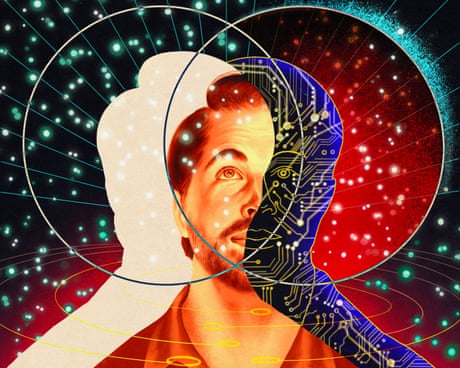
‘There’s this deep mystery of what, actually, is this thing?’: the philosopher inside Google DeepMind AI – podcast

Since 2017, Iason Gabriel has worked at the tech giant, trying to anticipate – and think through – the impact of AI. But as commercial and geopolitical pressures escalate, can ethicists make any difference?

By Robert P Baird. Read by Simon Darwen

Read the text version here

Support the Guardian today: theguardian.com/longreadpod

Continue reading...

© Illustration: The Guardian

© Illustration: The Guardian

© Illustration: The Guardian

  •  

Thousands of Google workers demand layoff protections amid AI boom in petition to CEO

The petition to Sundar Pichai, the CEO, included more than 4,500 signatures and included calls for buyout options

Google workers on Thursday delivered a petition calling for layoff protections as tech giants continue to slash their workforces while pouring billions into AI.

“Make no mistake: this is a company that is enjoying massive, unprecedented success,” Parul Koul, Google software engineer and Alphabet Workers Union president, said outside the company’s California headquarters after delivering the petition to the office of the CEO, Sundar Pichai’. Koul pointed to Google’s $4tn valuation, which has quadrupled over the last six years: “These layoffs and cuts are not difficult decisions, but simply profit being put over the people that make this company run.”

Continue reading...

© Photograph: Justin Sullivan/Getty Images

© Photograph: Justin Sullivan/Getty Images

© Photograph: Justin Sullivan/Getty Images

  •  

Trump made $1.4bn from crypto in one year. Is Justin Sun the man who helped him do it?

The entrepreneur is known in Washington as the financial power behind the president’s crypto fortune. How did Sun’s business love-in with the Trump family spiral into dueling lawsuits?

The most infamous financial scandal in US presidential history – the 1920s Teapot Dome affair – involved then president Warren G Harding’s interior secretary, Albert Fall, taking roughly $400,000 in bribes. Adjusted for inflation, that’s about $6m today. Last year, Donald Trump made at least $2.2bn; his single year of income is on the order of 200 to 300 times larger than the bribe that defined “presidential corruption” in the American imagination for a century.

It’s taken for granted that Trump flogs items like Bibles and gold sneakers as a way to wring more money from his loyal base. But of the president’s $2.2bn, at least $1.4bn came from his crypto businesses. That’s an extraordinary achievement, even for an unscrupulous sitting president. How exactly did he do it without any prior background in crypto?

Continue reading...

© Photograph: Bloomberg/Getty Images

© Photograph: Bloomberg/Getty Images

© Photograph: Bloomberg/Getty Images

  •  

Musk’s xAI sues user who allegedly used Grok to create child sexual abuse material

Case is one of first brought by an AI company against a user ⁠for allegedly using a tool to generate child abuse material

Elon Musk’s artificial-intelligence startup xAI has sued a South Carolina man arrested ⁠earlier this year on charges of sexually exploiting minors, alleging he misused the company’s AI system Grok to ⁠create child sexual abuse ⁠material.

xAI ​alleged in the lawsuit, filed in federal court in Texas on Tuesday, that Terry Harwood violated the company’s ⁠terms of service. The case is one of the first brought by an AI company against one of its users ⁠for allegedly using an AI system to generate child sexual abuse material.

Continue reading...

© Photograph: Samuel Boivin/NurPhoto/Shutterstock

© Photograph: Samuel Boivin/NurPhoto/Shutterstock

© Photograph: Samuel Boivin/NurPhoto/Shutterstock

  •  

Brain implant helps paralysed man to feed himself and drink from cup

Keith Thomas can move arms and hands, and feel sensation of touch after ‘double neural bypass’ and months of training

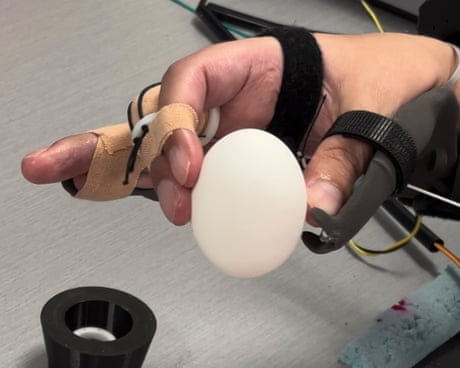
A man who was paralysed from the chest down in a swimming accident six years ago has been able to feed himself and drink from a cup thanks to a brain implant that bypasses his spinal cord injury.

Keith Thomas of Massapequa, New York, could not lift his arms off his wheelchair when he agreed to trial the technology in 2021, but after surgery to implant electrodes in his brain and many months of training, he was able to move the limbs again.

Continue reading...

© Photograph: Feinstein Institutes for Medical Research

© Photograph: Feinstein Institutes for Medical Research

© Photograph: Feinstein Institutes for Medical Research

  •  

Denshattack! review – time to get on board with kickflipping trains

PC, PS5, Xbox Series X/S, Nintendo Switch 2; Undercoders
Colourful, counter-cultural and captivating – this rail riding game set in a dystopian Japan is as weird as it is exhilarating

Every now and again a game appears with a premise so outrageous you stop in your tracks to take it all in. Denshattack!, a game about kickflipping trains across a dystopian future Japan, is the epitome of this feeling. Set in a post climate disaster world, people have retreated to corporate-owned domed cities to live out their days in air-conditioned, ignorant comfort. Save for a handful of outcasts, the rest of the country is a mess of broken infrastructure, where rival gangs battle it out on the ruins of Japan’s famously extensive rail network. Naive upstart Emi has one goal: become the best Denshattacker there is, one sick nosegrind at a time.

Taking the idea of an on-rails platforming game to its extreme conclusion, developers Undercoders have combined the best bits of the Tony Hawk’s Pro Skater series – grinding, flipping and spinning through an entire dictionary of tricks – with the anti-establishment message behind Jet Set Radio. The rivals Emi encounters showcase the history of Japanese misfits, pitting you against ageing rockabillies and violent girl gangs without a shred of judgment.

Continue reading...

© Photograph: Undercoders

© Photograph: Undercoders

© Photograph: Undercoders

  •  

CurrentBody Multi Light Therapy LED mask review: hands down the best I’ve tested

With five light modes targeting everything from fine lines to blemishes and pigmentation, CurrentBody’s latest mask promises a lot – and so does its price tag

• The best LED face masks

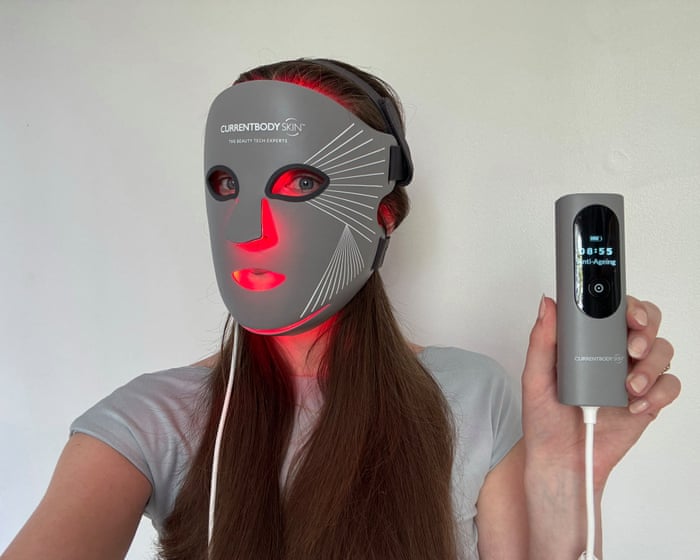
I’ve been testing LED masks for a couple of years now, and the CurrentBody Series 2 red-light face mask has long been my favourite option for anti-ageing. It’s comfortable, offers excellent coverage and powerful deep near-infrared treatments. Sadly, it doesn’t work for other skin concerns. It’s a one-trick pony.

So, when I heard that CurrentBody had launched its Multi Light Therapy mask with five different modes, I was interested to see how it would stand up to the stellar performance of its predecessor. As someone with hormonal acne, I was especially keen to try the mask’s “clearing” mode, but it also offers a calming “restoring” mode, a pigmentation-reducing “brightening” mode, and a distinctive “complete” mode, as well as the “anti-ageing” mode.

Continue reading...

© Photograph: Sarah Matthews

© Photograph: Sarah Matthews

© Photograph: Sarah Matthews

  •  

TikTok facing UK investigation amid fears over age checks and harm to children

Ofcom concerned TikTok’s age verification is ineffective, leaving some exposed to posts on suicide, self-harm and pornography

TikTok is under formal investigation over concerns it has failed to protect children from harmful content, the UK’s online regulator, Ofcom, has announced.

The social media platform’s approach to checking the ages of users has sparked “particular concerns” at the watchdog, almost a year after measures to protect children from the worst of online content came into effect under the Online Safety Act.

Continue reading...

© Photograph: True Images/Alamy

© Photograph: True Images/Alamy

© Photograph: True Images/Alamy

  •  

‘Keys to the kingdom’: hackers who gained access to heart of London transport network jailed

Thalha Jubair, 20, and Owen Flowers, 19, sentenced to five and a half years each for cyber-attack that cost Transport for London £39m

The data of millions of commuters was stolen, Londoners were left out of pocket and 27,000 Transport for London staff were forced to reset their passwords.

Over four days in 2024 a pair of teenage hackers had London’s transport network at their mercy. Thalha Jubair and Owen Flowers had burrowed into the heart of Transport for London’s IT systems and held the “keys to the kingdom”.

Continue reading...

© Photograph: William Barton/Alamy

© Photograph: William Barton/Alamy

© Photograph: William Barton/Alamy

  •  

The social media ban sceptic: are we getting it wrong on kids, tech and mental health?

Psychologist Candice Odgers has studied adolescent mental health for 25 years. She fears the current debate around smartphones obscures some of the biggest issues facing teenagers – from the impact of Covid to the health of their adult caregivers

The quickest way to make being online safer for children and teens would be to kick all adult men off the internet, the Canadian psychologist Candice Odgers believes. Men are the biggest perpetrators of sextortion and most likely to spread misinformation, she says.

Odgers is not recommending this as a policy for governments to adopt: “That would be crazy, right? It would be unfair.” But she is on a drive to puncture the prevailing narrative that the best way to address online harms is a social media ban for teenagers.

Continue reading...

© Photograph: Jessica Pons/The Guardian

© Photograph: Jessica Pons/The Guardian

© Photograph: Jessica Pons/The Guardian

  •  

Moroccan intelligence insider reveals widespread use of Pegasus hacking software

Whistleblower suggests internal security services deployed spyware from 2017 against key domestic and foreign targets

A former member of Morocco’s domestic intelligence service has helped to provide an unprecedented insight into how the north African state used hacking software – including Pegasus spyware – to target journalists, human rights defenders, French politicians and Spanish cabinet ministers and police officers.

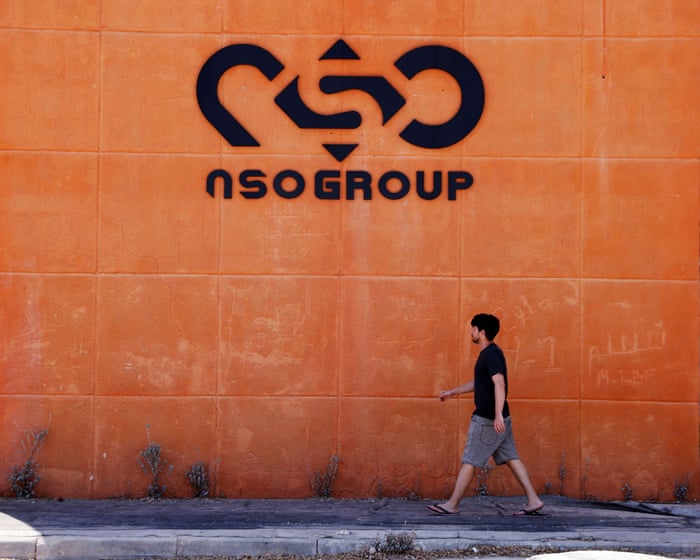
Pegasus, which is manufactured by the Israel-based NSO Group, allows its operator to access everything on a target’s mobile phone, including emails, text messages and photographs. It can also activate the phone’s recorder and camera, turning it into a listening device.

Continue reading...

© Photograph: Amir Cohen/Reuters

© Photograph: Amir Cohen/Reuters

© Photograph: Amir Cohen/Reuters

  •  

Robots, AI and drones: how the Dutch navy is using tech to transform its sea defences

Uncrewed systems are the future for armed forces and the Netherlands is leading the way ‘to keep people out of danger zones’

On each side of the target ship, a black vessel keeps a watchful distance. Defender 1 and Defender 2 are the eyes and ears of the navy – but they have nobody onboard, and their paths are controlled by a computer system.

This is the future of the Royal Netherlands Navy, according to Capt Sjoerd Feenstra, head of the expertise centre for unmanned systems. He is leading a five-week mission, off the coast of Den Helder in the north of the country, to test the limits of systems that operate without the human touch.

Continue reading...

© Photograph: John van Helvert/Media Centrum Defensie

© Photograph: John van Helvert/Media Centrum Defensie

© Photograph: John van Helvert/Media Centrum Defensie

  •  

Trump rails against New York’s statewide datacenter moratorium

AI-friendly president shared a post saying governor Kathy Hochul should scrap the one-year policy ‘IMMEDIATELY’

Donald Trump railed against the New York governor, Kathy Hochul, for pausing the construction of large new datacenters, the resource-intensive facilities that power artificial intelligence.

New York became the first US state to enact a moratorium on new datacenters on Tuesday, when Hochul signed an executive order mandating a one-year statewide pause on so-called “hyperscale” datacenters.

Continue reading...

© Photograph: Matt Roberts/Shutterstock

© Photograph: Matt Roberts/Shutterstock

© Photograph: Matt Roberts/Shutterstock

  •  

‘What’s the point?’ Teenagers give their verdict on Britain’s social media curfew

All the young people the Guardian spoke to disagreed with aspects of the government’s proposed block

Sixteen- and 17-year-olds in Britain are to be encouraged to observe a midnight to 6am social media curfew but will be able to opt out by changing their account settings.

From next spring, they will be urged to refrain from using certain apps, with the block being switched on by default. But the curfew will not be mandatory and can be overridden.

Continue reading...

© Photograph: Cultura/Alamy

© Photograph: Cultura/Alamy

© Photograph: Cultura/Alamy

  •  
❌