❌

Reading view

The global race to make a practical quantum computer just took a big leap forward

Audio und werbung

In the global race to build bigger and better quantum computers, researchers have taken a step forward. A new machine called Helios is a radically different system compared to other quantum computers.

Quantum computers harness the power of quantum mechanics, the laws that govern how physics operates at atomic and sub-atomic scales. Among various designs for such machines, Helios is a trapped-ion quantum computer, which means it uses charged atoms suspended in free space using electromagnetic fields.

It operates using 98 qubits – the units of information that a quantum computer uses to process data. This number of qubits makes it the largest trapped-ion quantum computer built so far. Quantinuum, the company behind the device, which is based in Cambridge, UK and Broomfield, Colorado, demonstrated earlier machines operating on 32 qubits in 2023 and 56 qubits in 2025.

Helios and its predecessors use an architecture (or operational structure) with separate regions for storing and processing quantum information. The architecture is called a QCCD (quantum charge-coupled device) and was invented in 2002. This is akin to the architecture of classical computers that have a memory for storage (hard disk drives, solid state drives) and a separate processor (CPU, GPU).

The specific geometry of Helios resembles a rosette, with the ring for storage and two streamers for processing. The crucial element is the four-way X junction where they meet. A QCCD physically transports the charged objects (the ions) from the storage to the processing regions electrically.

The processing is done using laser pulses. This requires a quantum algorithm to be broken up into ion transport and quantum processing. This differs substantially from other quantum computing architectures such as superconducting qubits, where the qubits are fixed in space, and processing is executed by electrical signals switched on and off in time.

Error correction

Classical charge-coupled devices, the template for the types now used in Helios, were the central component in early digital cameras. There are three main advantages to now using these in quantum computation.

Gates are the fundamental building blocks of quantum circuits, which operate on qubits. One advantage of the QCCD approach is that gates operating on certain qubits do not affect their neighbours. This reduces a phenomenon known as “crosstalk”, leading to better quality performance.

The second advantage is the ability to measure and reset qubits during a computation. This enables inevitable errors in the computation to be detected and corrected at the earliest possible time, again improving performance.

Finally, as qubits can be accessed from and returned to very different parts of the memory after processing (within limitations), distant qubits can be connected, leading to more efficient operation.

The Helios device demonstrated all the above advantages. It relies on two major advances – one in hardware and one in software. First, the four-way X junction lets the system handle several tasks at once rather than one at a time, which is much faster. That was impossible in earlier QCCD machines, which could only move data back and forth in a single line or loop.

Secondly, judicious use of the freedom offered by the two dimensions of the X junction relies on a new classical control software called Helios runtime which plans the smartest, fastest route for moving and processing the data.

Together, these represent a substantial advance in the engineering of quantum computers. An important consequence is that Helios can perform computations that cannot be performed even on the largest supercomputers using known methods within reasonable amounts of time and power consumption.

Computational prowess

It shows the ability of this device, and its successors, in surpassing the computational prowess of classical computers – albeit their algorithms and hardware are rapidly advancing too.

Having said that, Helios’ computations have just been random benchmark tests, so the practical importance of this leap forward is still limited. To perform quantum computations of practical importance from areas of science and commerce, even the most optimistic estimates suggest that quantum computers must be enormously bigger and better – of the order of a million qubits.

The UK National Quantum Strategy Mission 1 proposes to have a fault-tolerant quantum computer (FTQC) with a trillion operations. For reference, the longest computation Helios ran had about 4,000 operations operating on 98 qubits.

Building FTQCs out of the Helios device, or any other known architecture or system for that matter, remains a formidable challenge. As the numbers suggest, it would require connecting thousands of QCCD devices, each with thousands of qubits, via quantum links.

Visions exist for QCCD devices with a two-dimensional grid layout resembling city streets that can operate on thousands or more qubits. The inevitable challenge of engineering and operating such a system with an immense number of junctions and concomitant qubit-jams – akin to traffic jams – is yet to be encountered, let alone overcome. The physical transporting of qubits is also a very slow process because it uses very precise voltages, and this will only grow with larger devices and more qubits.

As of now, the Helios device is an exciting advance in the field of quantum computing. Whatever form the FTQCs of the future take, they will involve imaginatively engineered quantum hardware devices assisted by smart software.

The Conversation

Animesh Datta receives funding from the UKRI, Horizon Europe programme, UK Space Agency, and European Space Agency.

  •  

Are zoos ready for the changing climate?

amarw92/Shutterstock

When people think about climate change and animals, they might picture melting sea ice, drought-stricken landscapes or species struggling in the wild. Far less attention is given to the animals living in our care. Yet as heatwaves become more frequent, intense and unpredictable, zoos may be facing one of the biggest animal welfare challenges of the coming decades.

The recent deaths of three lions at Tama Zoo, Japan during a heatwave that reached over 40°C have brought this issue into sharp focus. Investigations are ongoing, but the incident raises an important question. Do we understand how animals will – or won’t – cope with heat in a rapidly changing climate?

Many people are surprised to learn a lion can be vulnerable to high temperatures. After all, lions evolved in Africa and are often associated with hot, arid landscapes. But this assumption oversimplifies how animals experience heat. Temperature is only one part of the story.

Humidity can play an equally important role. Lions, like many mammals, do not sweat effectively like humans do. Instead, they seek shade, move less and pant to dissipate heat.

High humidity can make these cooling strategies less effective. Perhaps surprisingly, humans are often more heat tolerant than lions. Our ability to sweat over most of the body makes evaporation cooling remarkably effective, allowing us to remain active in conditions that may force lions to rest and seek shade.

In the wild, lions may have more choices available to them that help them to remain cooler. Wild lions can move across large landscapes, select favourable microclimates, rest in shaded areas and adjust their activity patterns – none of which may be feasible in a zoo. Wild lions are famously inactive for much of the day, often waiting until cooler periods to hunt and socialise.

Other vulnerable species are perhaps unsurprising, including polar bears, penguins and red pandas, all of which are adapted to cooler climates. However, climate change may also affect species that people typically associate with warm environments.

Great apes, tapirs, cheetahs and even elephants can struggle with dangerous levels of thermal stress when high temperatures are combined with humidity, which reduces the body’s ability to dissipate heat. For elephants in particular (due to their large body size), the risk is heightened when access to shade, water or other cooling opportunities is limited.

This highlights an important principle in animal welfare science: welfare is influenced not simply by the environment animals are exposed to, but by the degree of choice and control they have within it.

Climate change is changing welfare

Historically, many zoos, particularly in temperate regions such as the UK, were designed with cold weather in mind. Considerable effort has gone into protecting animals from low temperatures and rain. Extreme heat, by comparison, has often been viewed as a relatively minor concern. That assumption may no longer hold.

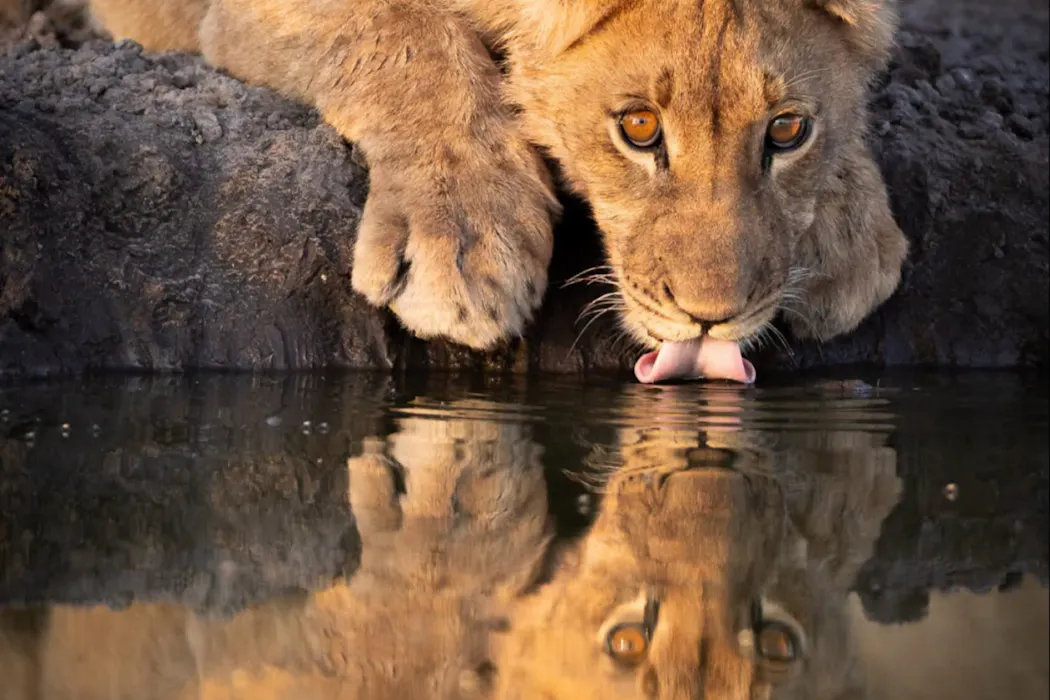
Lion with tongue hanging out
Zoo lions may share your views about the endless heatwaves this summer. NaturePhotographyOfficial/Shutterstock

Climate change is increasing the frequency, duration and intensity of extreme heat events across the globe. As heatwaves become a more regular feature of British summers, zoos will need to think differently about how they manage animal welfare. Temperature control measures that were adequate ten or 20 years ago may not be sufficient for the conditions today and in the future.

Zoos have long managed environmental conditions for species with specialised needs. Tropical animals are often provided with heated indoor shelter, for example. The challenge is that climate change is shifting the environmental baseline upon which many of these systems were designed.

One strength of modern zoo management is its recognition that animals are individuals. Two animals of the same species living in the same enclosure may respond very differently to identical conditions. Older animals may have less physiological resilience. Animals with respiratory conditions or other underlying health issues may be particularly vulnerable.

The good news is zoos routinely maintain detailed individual records on behaviour, personality, social relationships, health history and life experience, which will help them monitor any changes.

Increasingly, extreme heat should be treated in the same way as severe storms, flooding or disease outbreaks: as a foreseeable animal welfare risk. This might involve expanding shaded areas, creating climate-controlled refuges, improving ventilation, installing misting systems and water features, and monitoring temperature and humidity in real time.

But infrastructure alone will not be enough. Zoos may also need to adapt their daily management practices, adjusting feeding and enrichment schedules and modifying routines to minimise heat exposure during the hottest parts of the day.

Tell-tale signs

One of the most valuable and commonly used indicators of animal welfare is behaviour. An animal that appears lethargic, withdrawn or less engaged with its surroundings may be signalling compromised welfare long before clinical symptoms emerge.

An animal experiencing thermal discomfort may alter its activity patterns, spend more time in certain locations, change its posture, eat less food or interact differently with other animals. Humans are no different.

During heatwaves we change our routines, seek cooler places, struggle to sleep and often reduce activity. In people, exposure to extreme heat also affects cognition and behaviour. Evidence suggests that attention, memory and decision-making can deteriorate under thermal stress, raising important questions about how heat may influence the behaviour and welfare of animals in our care.

These insights are relevant not only to zoos, but to all managed animal populations. Farms, wildlife parks, rescue centres and companion animal owners are all likely to confront similar welfare challenges in a future defined by more frequent and intense heatwaves.

The Conversation

Samantha Ward does not work for, consult, own shares in or receive funding from any company or organisation that would benefit from this article, and has disclosed no relevant affiliations beyond their academic appointment.

  •  

How a 19th-century estate agent offered 3D property ‘walkthroughs’ before the dawn of the photography age

The Cosmoramic Room in P.T. Barnum’s American Museum, New York. Illustration from the museum’s official guidebook.

If you’re thinking about moving house or just feeling nosy about your neighbours, your first port of call may be an online property marketing site: Rightmove and Zoopla in the UK, Zillow in the US or Magic Bricks in India.

They offer 3D plans of their properties and a video walkthrough, sometimes with added interactive tools. It all seems very modern – yet it turns out, at least one pioneering London estate agent was offering its clients 3D visual walkthroughs long before the advent of commercial photography.

In the UK, estate agents came into being as a specialised profession in the mid-19th century, as rapid urbanisation and greater social and geographic mobility led to a dramatic increase in the demand for housing.

But in this pre-photography era, how did the Victorian era’s newly monied see what they could buy with their gains from trade or industry? One high-end London estate agent, Brooks & Green, came up with a novel answer.

Illustration of how the cosmorama worked.
How the cosmorama worked. From The Boy’s Own Book: A Complete Encyclopedia (1849)

In 1838, the year of Queen Victoria’s coronation, this Old Bond Street estate agent began advertising an early form of immersive visual technology called a “cosmorama”, to offer prospective buyers a virtual tour of the properties it was selling.

A cosmorama involved looking at paintings or artists’ prints through a large convex lens, which magnified the image and enhanced the perspectival depth, creating a basic 3D effect.

A blackened square frame between the lens and picture hid the edges – enhancing the viewer’s sense of looking at a large scene through an extended opening. Clever lighting effects further enhanced the depth and immersive effects.

To create this cosmoramic view, a skilled artist would have had to visit the estate to prepare the sketches. For 20 years, Brooks & Green promoted its “cosmoramic gallery” as a proto-version of a digital walkthrough. This was nearly 50 years before photography was widely used to advertise property.

Cutting of a Brooks & Green advert for its cosmorama device.
Brooks & Green advert for its cosmorama device. The Patriot newspaper, April 1842.

The estate agent advertised heavily in the London press. An 1842 advert claimed its office property gallery included “several hundred views of different estates”. Prospective buyers of one property were promised an “aerial perspective, the site and architectural elevation of a mansion, the local scenery and features of a park [and] ornamental grounds”.

The viewing experience of the cosmorama supposedly offered much more realism and detail than a written prospectus – without rich London buyers having to travel miles to inspect the property in question.

But this service was definitely not available to ordinary families. Only high-value mansions and estates were valuable enough to be visualised in this way. Entrance to the Brooks & Green gallery was supposedly free, but you needed an admission card – probably granted only to those who looked like they had suitably deep pockets.

Visual explanation of the cosmorama (November 1821). C. Blunt for La Belle Assemblée, nº155, vol. 24.

Exhibits around the world

For the first half of the 19th century, the cosmorama was one of the most common forms of visual show across Europe and the Americas. It was first revealed at a Paris exhibition in 1808 by the French showman Abbot Constant Gazzera. His success led to many more exhibitions throughout Europe during the 1820s and ‘30s.

In London, the Cosmorama Rooms opened in 1821 at 29 St James’s Street, moving to Regent Street in 1823. The gallery became one of the established London attractions for over 30 years. With Regent Street only a mile from Old Bond Street, it may have prompted an ambitious Brooks & Green employee to have the idea of using this innovation to market its property.

Also shown across Europe in pleasure gardens, popular science institutions, retail bazaars and fairgrounds, the cosmorama was successful because urbanisation and population growth had created a critical mass of middle-class audiences. It offered a new kind of immersive visual exhibition, reaching audiences who would never visit a fine-art gallery.

Cosmorama means “views of the world” in Greek. It was mainly used to display picturesque landscapes, renowned European sites and striking architectural interiors – such as the eruption of Mount Vesuvius, the canals of Venice or the interior of Saint Peter’s Basilica in Rome. The interest in this device reflected the public’s growing desire to be cultivated, and to learn about the wonders of the wider world.

Fascination with 3D worlds

But the cosmorama is just part of the story of immersive pictorial entertainment from the early 19th century. Other popular technologies included peepshows, panoramas and dioramas, all of which offered users a sense of virtual travel.

Panoramas were large circular paintings – the Imax cinema of the age – and dioramas were illusionistic spectacles created from 3D models. At the same time, itinerant exhibitors of peepshow boxes travelled the country’s fairgrounds displaying scenes of national events and sensational murders. Picturegoing had become part of everyday life.

I came across the Brooks & Green adverts for its cosmorama in my research for a historical project led by the Universidade Lusófona in Lisbon, which has mapped cosmorama exhibits across Europe and beyond. In all, Curiositas: Peeping Before Virtual Reality has catalogued more than 650 cosmoramas in Portugal, Spain and the UK.

Many more of these devices were exhibited in countries as far apart as North America, Brazil, Cuba and Australia. The famous US showman P.T. Barnum installed a cosmoramic gallery in his American Museum in New York.

The cosmorama was ultimately superseded by the stereoscope, which also created a 3D photographic experience by looking through lenses. Thus, the cosmorama was an early part of the story of our fascination with virtual worlds – of being taken outside and beyond ourselves, and immersed in another environment.

The Conversation

John Plunkett does not work for, consult, own shares in or receive funding from any company or organisation that would benefit from this article, and has disclosed no relevant affiliations beyond their academic appointment. He is the co-author of Popular Visual Shows 1800-1914: Picturegoing from Peep Shows to Film (Oxford University Press, 2025)

  •  

What happens when someone’s chromosomes, sex hormones and body don’t align?

The intersex symbol nito/Shutterstock

I teach a university course called Hormones and Behaviour. What surprises students is that biological sex is not produced by a single switch. What surprises me is that many students have never been taught this before. It is basic biology, but it helps explain life.

Sex emerges through a sequence of events before birth and continues at puberty. Chromosomes help direct the formation of gonads, the body parts that usually become ovaries or testes. Gonads make hormones. The body then has to respond to those hormones. In most people, these steps flow in the same direction. But in rare cases, they do not.

These cases are known as disorders, more recently differences, of sex development (DSDs). They are not new but they provide a useful way to understand how bodies develop. DSDs can affect hormone production. Some affect the body’s response to hormones. Some affect chromosomes or gonad development. Two people can have a DSD, yet have very different bodies, medical needs and life experiences.

Each condition reveals what can happen when one step in the normal sequence is altered. Here are five ways sex development can take a different path.

Congenital adrenal hyperplasia

This DSD affects around one in 16,000 births.

The adrenal glands, which normally produce small amounts of male hormones, even in females, are hyperactive in this condition.

A baby with two X chromosomes and ovaries can therefore be born with external genitals that look male.

Complete androgen insensitivity syndrome

In contrast, a child with complete androgen insensitivity syndrome (CAIS), can have XY chromosomes and internal testes that make testosterone, but their body cannot respond to that testosterone.

This lack of a response to testosterone keeps the developing fetus in its “default” female state, leading to female external genitals at birth.

Someone with CAIS will develop breasts at puberty. Since their external anatomy is typically female, people with CAIS are usually raised as girls and may only be diagnosed later, often when their periods do not start.

CAIS is estimated to affect one to five in 100,000 live born females.

5-alpha-reductase deficiency

Another condition, called 5-alpha-reductase deficiency, shows how sex development does not finish at birth.

The body needs an enzyme called 5-alpha-reductase to turn testosterone into a stronger version of the hormone before birth. When a genetic mutation inactivates this enzyme, an XY baby may be born with genitals that are read as female and may be raised as a girl. At puberty, however, the normal surge of conventional testosterone masculinises the body.

The condition is rare worldwide and its exact incidence is unknown, partly because conditions affecting sex development have often been surrounded by silence.

In parts of the Dominican Republic, where this condition is known as guevedoces, studies have reported surprisingly high local rates. A rare genetic mutation is more common in these isolated populations, about one in 90 males.

More recently, some of these communities have begun to recognise guevedoces at birth and raise them as boys.

Small wooden mannequins with magnifying glass against pink and blue background.
A person’s sex is more complicated than you might think. s880/Shutterstock

Sex chromosomes disorders

Usually, females receive one X chromosome from their father and one X from their mother, and are therefore XX, while males receive one X chromosome from their mother and the Y chromosome from their father. However, a person with Klinefelter syndrome, affecting one in 500-1,000 male births, has XXY chromosomes, causing smaller testes, scant body hair, lower testosterone and reduced fertility. It is often never diagnosed.

On the other hand, Turner syndrome, or the loss, in females, of one of the two X chromosomes, affects one in 2,500 female births and impairs growth, puberty and fertility. It can affect physical appearance, for instance a wide neck and broad chest and often comes with health conditions such as hearing loss and kidney problems.

Swyer syndrome is rarer: a person has XY chromosomes but with a mutation in the Y chromosome that disrupts the signal that normally drives testes formation. The gonads do not develop into testes, testosterone remains low and the external and internal anatomy is typically female.

These are the clearer examples. Milder sex differences can result from mutations that reduce, rather than completely inactivate, an enzyme or hormone response. For example, non-classic congenital adrenal hyperplasia, where some enzyme activity remains. Their effects may be less obvious, and their incidence is often unknown because many cause subtler changes or are never diagnosed.

What this does and does not tell us

None of this is new. These conditions have been known to scientists for decades. But now genetic testing can identify the mutation behind some cases.

Specialist clinics and patient groups have pushed for clearer information for parents, better psychological support for patients and greater caution around irreversible childhood surgery when it is not medically urgent. Recent patient-centred research shows that clear information, good communication and psychological support are central to good care for people with DSDs. It’s unclear whether increased awareness has improved people’s lives, but the direction is clear: better information, specialist care and long-term support matter.

The lesson is not that sex is meaningless or endlessly fluid. These rare conditions do not provide a simple answer to every argument about sex and gender.

However DSDs do show sex is not a single event. Just like the growth of our body, it is a process. When chromosomes, gonads, hormones and the body’s response to them all follow the usual sequence, the result often looks simple. When one link changes, the body may no longer fit the binary pattern many of us were taught at school.

For the people affected, this is not an abstract puzzle. Some need lifelong hormone treatment. Some face infertility. Some discover their condition only as teenagers or adults. Chromosomes or sex designation at birth may explain part of the biology behinds DSDs. It does not explain what it feels like to grow up, go through puberty, seek fertility treatment or decide who needs to know.

The Conversation

Jean-Michel Fustin is a Medical Research Council-funded Senior Research Fellow in the Division of Integrative Physiology at The University of Manchester. He contributes the level-3 course Hormones & Behaviour.

  •  

The death of dark energy is a false alarm – the universe is still accelerating

A 2025 study by South Korean researchers caught the attention of the astronomy community when it suggested that the evidence behind dark energy could be wrong. Dark energy makes up about 70% of the universe but nobody knows what it is. This makes it a frequent target for scepticism.

Scientists had long known that the universe was expanding. But in the late 1990s, researchers discovered that this expansion was accelerating. Astrophysicists concluded that something must be driving the acceleration. They named this unknown quantity “dark energy”.

The 2025 re-analysis, by a team at Yonsei University in Seoul, suggested that the expansion of the universe was not in fact accelerating.

Our team at the University of Southampton has now gone through the Yonsei team’s findings. Our results, published in Monthly Notices of the Royal Astronomical Society (MNRAS), suggest that the results were a false alarm.

However, the Yonsei University team have said they stand by their results and that a follow up study supports their finding that the universe may not be accelerating.

What is dark energy?

In the late 1990s, cosmology was upended by a startling discovery. Scientists knew the universe was expanding, but they had assumed that gravity was gradually slowing down this expansion.

However, by observing incredibly bright, thermonuclear explosions of white dwarf stars, two independent teams of astronomers found the opposite. Because these explosions, known as Type Ia supernovae, have almost the same intrinsic brightness, comparing how bright they appear gives a precise distance.

In 1998, data revealed that distant supernovae were fainter than they should have been in a slowing universe. Because faintness implies distance, the observations placed these supernovae farther away than expected, and implied that the cosmic expansion was not slowing.

In fact, when the calculations were run, it was clear that the expansion of the universe was actually speeding up.

There was no convincing physical explanation for this “cosmic acceleration”. Physicists labelled the mysterious, repulsive force that causes the acceleration “dark energy”.

Cosmic calibration

To understand the Yonsei University group’s claims, we must understand how astronomers use supernovae as “standard candles” to measure cosmic distances. Type Ia supernovae are remarkably alike, but they are not identical.

Cosmologists correct for these differences. They use subtle calibrations to account for relationships between the brightness of the supernovae and measurements like their colour, the duration of their light curves, and the type of galaxies they explode in.

One of those corrections is well known but subtle. It links the brightness of a supernova to the size of the galaxy it exploded in. Big galaxies hold more stars, and so more mass. After the standard corrections, supernovae in those big (massive) galaxies come out a few per cent brighter than ones in small galaxies. Nobody knows why.

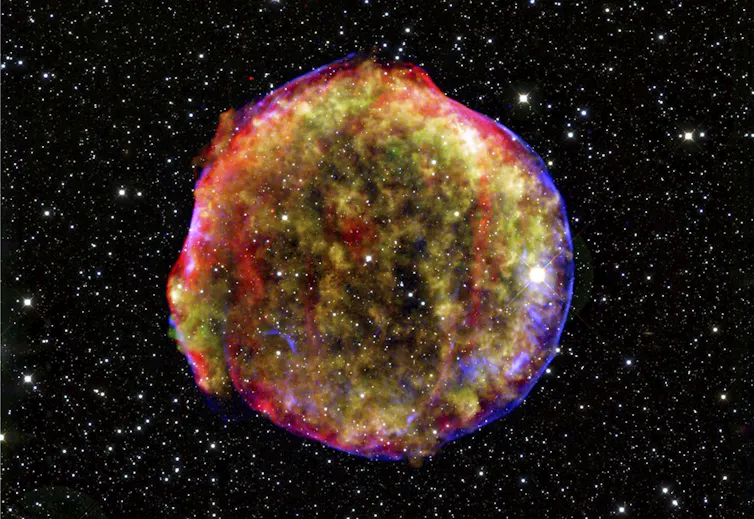
SN 1572 is the remnant of a Type Ia supernova. Nasa / JPL-Caltech / CXC / Calar Alto O. Krause /MPIA

But bigger galaxies typically have older stars that are made up of heavier elements, which could in turn influence the properties of the supernovae that some of those stars become. The authors of the 2025 study proposed a far bigger evolutionary effect. They argued that the brightness of Type Ia supernovae changes significantly as the universe ages.

Specifically, they claimed that older white dwarf stars, which are more common in the nearby, present-day universe, produce brighter explosions. That would mean today’s supernovae are inherently much brighter than their distant, early-universe counterparts.

If true, the faintness we observe in distant supernovae would not be a result of their being further away, a relationship that is in turn driven by dark energy, but rather an evolutionary trait of the stars themselves. This claim threatened to dismantle almost three decades of progress in astronomy.

Addressing the claims

Extraordinary claims need careful testing. At the University of Southampton we embarked on an audit of the data, using observations from the Dark Energy Survey (DES), an astronomy project designed to constrain dark energy’s properties, alongside the same dataset used by the authors of the 2025 work. In doing so, we sought to replicate and test their conclusions.

Our re-analysis revealed what we saw as two problems in the Yonsei study: a technical omission and a flawed assumption about stellar populations. Once corrected, the data fell back in line with standard cosmological results, including those of DES.

Victor M Blanco telescope in Chile.
The Dark Energy Survey gathered data using a wide-field camera mounted on the Victor M Blanco telescope in Chile. CTIO/NOIRLab/NSF/AURA/T. Matsopoulos, CC BY

Crucially, the 2025 study did not account for how supernovae in big galaxies come out a few per cent brighter than ones in small galaxies. When our team reapplied this correction to the same dataset, the correlation between a supernova’s brightness and galaxy age – presented by the Yonsei team in their paper – became far weaker.

This doesn’t mean that the age of a white dwarf star has no effect on the brightness of a resulting supernova. Indeed, most researchers in the field would likely accept that the brightnesses of supernovae are more affected by the age of the stars that explode than by the mass of the galaxy that it is in.

However, measuring a galaxy’s mass is far less expensive in terms of telescope time and requires fewer technical assumptions than measurements of the ages of galaxies, which are challenging. What we showed is that the galaxy mass calibration is adequate to the accuracy required to constrain dark energy.

The bright dot of a Type Ia supernova (supernova 1994D) appears next to galaxy NGC 4526. Nasa, Esa, The Hubble Key Project Team, and The High-Z Supernova Search Team

Secondly, the 2025 analysis relied on a flawed proxy, incorrectly assuming that the overall age of a host galaxy is identical to the specific age of the star that exploded. But galaxies are not uniform like this: even large, ancient galaxies contain localised pockets of young stars.

By overestimating the difference in age between the stars that explode nearby and those that explode in the distant universe, by a factor of three to five, the Yonsei University study overestimated the amount by which the age-brightness calibration could bias supernova distance measurements.

Once these omissions were corrected, the data behaved as expected under the standard model of cosmology. As such, evidence for an accelerating universe remains secure.

Science friction

While the 2025 study turned out to be incorrect, the challenge it posed was valuable. Challenging accepted ideas and rigorously testing our observations is fundamental to scientific progress.

Their claims provided an opportunity for cosmology teams to return to their baseline data, interrogate their core assumptions, and test different ways of calibrating the measurements. When measuring distances, however, the age effect and the mass effect are highly correlated, and therefore we (the Southampton team) believe it is incorrect to make a full age-based adjustment to distances that have already been corrected for the mass effect.

The Southampton team was invited, among others, to a workshop at Yonsei in June 2026, where we discussed our methods and talked about ways to include both stellar mass and stellar ages into the brightness corrections.

In a follow up study, recently accepted by MNRAS, the Yonsei University team maintain that the ages of stars have an important effect on the supernovae they produce. They say that two methods used in earlier studies have suppressed the importance of this phenomenon.

When these effects are accounted for consistently, they explain, it leads to results similar to those in the 2025 study. “We therefore continue to find evidence that stellar-population age is an important factor in Type Ia supernova standardisation,” authors Junhyuk Son and Hyejeon Cho, told The Conversation.

“Because the typical ages of supernova host populations change with cosmic time, understanding this effect is important for precision measurements of the Universe’s expansion history.”

Future measurements will depend on understanding supernova explosions better. It is a job we hope the community can take on together. But none of this removes the need for dark energy: it is still there, and still unexplained.

Ultimately, we have shown that existing measurements of dark energy are robust. Rather than debating whether cosmic acceleration exists, the astrophysical community can return to the exciting task of figuring out what dark energy actually is and how we best measure it.

Over the next 10 years, the Vera C. Rubin Observatory in Chile will carry out a project known as the Legacy Survey of Space and Time, which will produce a sample of supernovae 20 times larger than the DES sample used in our analysis. There is no better time to be investigating the mysteries of dark energy.

The Conversation

Dr Phil Wiseman receives funding from the Science and Technology Facilities Council.

Mark Sullivan receives funding from the Science and Technology Facilities Council.

  •  

An astronomer on what it’s really like to stargaze for a living

metamorworks/Shutterstocl

Jodie Foster tearing up a dirt road, yelling stellar coordinates into a walkie-talkie à la the 1997 sci-fi film Contact. Control rooms alive with a cacophony of “enhance that signal”. Real-time discovery. That’s what I pictured when my PhD supervisor told me I’d be going observing at a telescope.

Cut to 2am on top of a mountain in La Palma last April, at an altitude that makes you forget you’re in the Canary Islands. It was utterly freezing, and I had dressed for the sunny archipelago in thin layers. I almost dropped my mug trying to close the telescope door against the wind.

Coffee and food waited two minutes away in the service building. In the darkness, the wind caught a loose scrap of fabric and scared the life out of me. I fell over within 30 seconds. Winds of 40km/h aren’t uncommon at the observatory; I was just entirely unprepared.

I sat on the road, mourning my dignity. And I looked up. For the first time in my life, I saw the Milky Way. It painted the sky, reminding me violently of my insignificance. Nothing in my life has ever compared to that. I allowed myself to bask in it for ten minutes. Then the work beckoned me: I needed coffee, and hadn’t told my colleague which star was next on the schedule.

How is an observing night prepared?

A night at a telescope begins in the afternoon. At around 4pm, my colleague, who was training me to use the telescope, and I drove up to the Nordic Optical Telescope. It’s a gorgeous piece of kit, with a diameter of 2.56 metres. It collects enough starlight for exquisitely precise measurements.

Every instrument and filter had to be carefully tested. On my side, this was a few lines of code. The telescope operator ensured everything worked properly and set up the telescope. While calibrations ran, I started scheduling the night’s observations.

Telescope time is limited, so having three nights at the helm meant I had to squeeze out every second I could. Hollywood did not prepare me for how many spreadsheets this involves. This sort of scheduling requires careful balancing of many factors. For example, observing stars close together on the night sky consecutively to avoid spending too much time repointing the telescope.

Once calibration and scheduling were complete, I watched the sun set. It was beautiful, but also a warning – working hours will soon begin. If you catch the right moment, you can see a small fleet of astronomers in cars headed to their respective telescopes.

The mountain came to life with domes opening, catching the first starlight of the night. There’s more than 20 telescopes in the observatory on the mountain, whose specialisms range from observing supernovae to exoplanets (any planet beyond our solar system).

The night itself

Around 8pm, the first light from a star – HD153557 in this case , a dwarf star around 59 light-years away – entered the telescope. This is always a bit special. The whir of the dome moving, the shutters opening, seeing the monitors show the first traces of data. I sipped my coffee, turned up the 80s hits, and was content in the knowledge that I’d still be in that chair in 12 hours.

This night started rather predictably. The weather was perfect, not a cloud in sight, and the telescope behaved beautifully. Before long we had a spreadsheet slowly getting filled in with completed observations. I knew the peace wouldn’t last. I’d done ten observing nights at two different telescopes by that point in my career, and not one of them without something disrupting my colour-coded plans. Typically, a cloud will move right in front of a star I’m trying to observe, or it’ll rain and that means we have to close the dome. But every few nights, there’s something a little more exciting.

An email just before midnight brought with it a Target of Opportunity alert. These are observations that need to be done immediately, a blink-and-you’ll-miss-it moment. This one was a gamma-ray burst. It’s one of the most violent events in the universe, over a trillion times brighter than our Sun. This was picked up by a space-based detector and emailed to us to request the observation.

Gamma-ray bursts aren’t in my area of expertise – I research stars like the Sun and their surrounding planets. Far less explosive. Between switching observing instruments, rotating the dome, checking calibrations, I was also digesting as much information as I could about what a gamma-ray burst is. This was probably the closest I’ll ever get to my Jodie Foster moment, and it was a rather anticlimactic, blurry image loading very slowly on a screen.

After the gamma-ray burst was observed, the control room became quiet again. Back to my spreadsheets and falling over trying to get coffee. To feeling slightly lonely but seeing another dome rotating under the moonlight when I stepped outside, and being reminded of the other tired astronomers all working beneath the same stars.

It was 8:30am when I finally got back to my room. Ready for a shower, and bed, and to wake up in five hours and do it all again.

The scientific end product

The reality is that scientific interpretation rarely happens in real time. The telescope measurements are first cleaned and calibrated by a computer programme, which turns them into usable spectra. I then apply my own analysis code to these spectra. For me, this comes much later, at my desk in Birmingham once my sleep schedule has recovered. These particular observations gave us stellar spectra: when a star’s light splits into a rainbow, imposed with patterns that reveal its temperature and chemical composition.

The most common observing nights involve balancing spreadsheets, a whole lot of coffee, and slowly surrendering to the delirium of sleep deprivation. Some of them have dramatic alerts. Some of them end up entirely clouded out and allow for an early bedtime.

There is no pivotal “enhance that signal” moment, but there is the quiet, consistent sense of joy that I’m cataloguing and understanding the stars that could one day be found to host another Earth. Hollywood didn’t prepare me for the scientific process. But it got the wonder spot on.

The Conversation

Alix Violet Freckelton receives funding from UKRI.

  •  

Why snake venom may have evolved to catch dinner, not for defence

In the animal kingdom, any hunt for a meal or encounter with a predator is a matter of life and death. To survive both, animals have evolved a multitude of weapons, of which venoms may be one of the most widespread and effective.

But building a chemical weapon presents an evolutionary dilemma. Should venom be optimised to disarm prey, or to cause rapid pain to deter predators? Our new study suggests that in snakes, a meal comes before self-defence.

Venoms are complex chemical cocktails. Their composition is shaped fundamentally by their intended purpose. Predatory venoms disrupt multiple tissues and organs at once to immobilise prey. On the other hand, defensive venoms have only one job: to cause rapid, intense pain to deter predators. Think of a bee sting, for example.

These differences create a conundrum. What if an animal wants to use its venom for both predation and defence? This is not a trivial question, because the storage capacity of venom glands is limited, and producing venoms is thought to carry an energetic cost. That opens the door to an evolutionary trade-off: investing resources into one function might leave less for the other.

Venomous snakes are probably the best-studied venomous organisms, and for a good reason. Unfortunately, snakebite remains a huge medical issue, especially in tropical countries. More than 100,000 people die yearly and more than 400,000 people suffer lifelong injuries as a consequence of snakebite.

In theory, antivenoms could prevent many of those deaths, but there is another problem. Snake venoms are extremely variable, not just between species but also between different populations of the same species. This means that antivenoms developed for one region can fail to work in another. Understanding what drives this immense venom variation is the first step towards more effective treatments.

Snakes use their venoms both for hunting and self-defence. We have good evidence that diet is the central factor shaping venom composition in many snakes. In contrast, defence against predators has rarely been studied as an important evolutionary driver, and never in comparison with diet.

Based on the results of a previous study, we suspected that species that hunt easy, low-risk prey such as insects might not need a highly lethal predatory venom, freeing up resources to invest in more defensive, pain-inducing compounds instead.

To test this idea, we looked at a group of venomous snakes called meadow vipers (Vipera ursinii and relatives). These curious little snakes live in the lowland steppes and alpine meadows of Eurasia. Their diet is unusual among vipers, as they eat mostly or almost entirely grasshoppers, crickets and locusts.

On the other hand, they also regularly fall prey to predators like birds of prey, badgers and foxes. It’s exactly the kind of pressure that might favour a defensive venom.

For our study, we travelled to where their populations can be found across Europe to obtain venom by “milking” them. It’s a process that causes no harm to the snakes, and they were released back to their habitats afterwards. We also collected venom from other European vipers like the adder (V. berus), asp viper (V. aspis) and nose-horned viper (V. ammodytes), which mostly feed on more dangerous prey, like rodents.

If our trade-off theory held, we would expect these venoms to be more predatory and less pain-inducing than those of meadow vipers.

Putting venom to the test

To measure pain, we tested the venoms on cultures of specialised sensory neuron cells. These are cells responsible for detecting harmful stimuli in the body. If such a cell is activated to produce pain, calcium ions flow into the cell. So, to track whether venom triggered these cells, we treated them with a fluorescent dye that reacts to calcium and measured the emitted fluorescence.

To our surprise, regardless of diet, none of the tested venoms activated these cells, not even that of the insect-feeding meadow vipers. So, it appears that European viper venoms, like in most snakes, probably evolved to overcome prey rather than to fend off predators.

All this does does not mean that viper bites don’t hurt. They do. But it seems that the pain is mostly caused as a side effect of other venom actions, such as inflammation, tissue degradation or muscle spasms.

There are however exceptions elsewhere in the snake world. Some toxins found in lanceheads and coral snakes do directly stimulate pain receptors. However, such toxins have been documented in only a handful of species and their ecological function remains enigmatic.

That means the story of snake venom is far from complete. Rather than revealing a universal rule, our findings suggest that, at least in European vipers, the evolutionary pressure to catch prey has outweighed the need to deter predators. Understanding where that pattern holds – and where it doesn’t – could help explain why snake venoms vary so dramatically, an essential step towards developing better treatments for snakebite around the world.

The Conversation

Bálint Üveges received funding from the Leverhulme Trust, the Bangor Fund / Cronfa Bangor, Bangor University and the Taith research mobility programme of the Welsh Government. He currently receives funding from the National Research, Development and Innovation Office of Hungary.

Wolfgang Wüster receives funding from the Leverhulme Trust, Natural Resources Wales, Natural England and the Amphibian and reptile Conservation Trust

  •  

What it’s like to discover an ancient Egyptian tomb – and the race against time to preserve it

The first moment you look inside a newly discovered ancient tomb is at once exciting and terrifying. I was fortunate to experience this recently as director of an international research team carrying out fieldwork in the Theban necropolis, a Unesco world heritage site near the modern Egyptian city of Luxor.

Our project’s primary aim is to implement a conservation and risk management programme for the necropolis (burial ground) of Lower Sheikh ʿAbd el-Qurna. Due to its location at the foothills of the Theban mountain, monuments in this area are extremely vulnerable to flash flooding from intense bursts of rain.

To direct this floodwater away from the tombs, we are systematically removing debris and excavating the area, using archaeological techniques that ensure all historical information is preserved. This is how we came across this previously unknown, roughly 3,000-year-old tomb.

As we prepared to enter it, we had no idea if the ceiling had collapsed, if the tomb had been looted or destroyed, or if it was still well preserved.

Its layout is typical of Theban elite tombs dating to the New Kingdom period (ca. 1550-1069 BC). At this time, Thebes (now Luxor) was Egypt’s capital and main religious and political centre.

The tomb features an outer courtyard, rock-cut chapel and subterranean burial chambers. The well-preserved courtyard area includes a mudbrick platform with a niche for a stela (upright stone grave marker) and staircase with ramps on either side, giving access to the tomb.

Once inside the rock-cut chapel, we noticed its walls are decorated with vivid paintings of the main tomb owner adoring various deities in shrines, and also sitting with his wife in front of an offering table laden with bread, beer, fruits, meat and flowers. Based on the iconography and painting style, we determined that the tomb dates to the Ramesside period (ca. 1292-1069 BC), named after the many pharaohs called Ramesses in that era.

This was a particularly exciting moment. These wall paintings offer invaluable historical details about ancient Egyptian daily life and society. They also shed light on the tomb owner’s position in the Ramesside hierarchy, and on the other family members buried here – plus, potentially, later reusers of the tomb.

Identifying the tomb’s owner

The vast Theban necropolis, comprising an area of around 10km², was Egypt’s main royal and elite cemetery for half a millennium, from ca. 1550 BC onwards.

Situated opposite the city of Thebes on the west bank of the River Nile, it features many world-famous historical sites including the Valley of the Kings (a burial ground for pharaohs including Tutankhamun and Ramesses II) and Valley of the Queens, plus hundreds of private elite tombs, royal memorial temples and remains of royal palaces.

Our team has been carrying out fieldwork here since 2018, in close collaboration with the Egyptian Ministry of Tourism and Antiquities.

Based on a first analysis of the painted decoration inside the tomb, we identified its main owner as a male official named Paser. However, the paintings are covered in a layer of dirt. Once they are cleaned by a conservation specialist, we expect to find out more about the identities and personal narratives of the people buried here.

One of the main research questions associated with our fieldwork focuses on the question of tomb placement and tomb reuse – for which the newly discovered tomb carries important scholarly significance. It will help us explain why in the Ramesside period, officials such as Paser chose to reuse, modify or build tombs adjacent to the monuments of the preceding 18th-dynasty elites.

Specific questions we will try to answer include: how did features of the ancient mortuary landscape (including proximity to processional routes, tombs of relatives, or monuments of special cultic importance) influence the placement of these tombs? And what influenced the decision to reuse them for burial, rather than building new ones?

A race against time

Unfortunately, our work is something of a race against time. As a result of climate change, the frequency and intensity of flash flooding is expected to increase significantly in the coming years here.

This poses a major threat to the tombs in this area. Flooding can lead to immediate, extensive damage such as moisture-activated growth of salt crystals, loss of painted decoration and, potentially, structural collapse. So, one of the most important aims of our project is to implement a preventive conservation and risk management programme that safeguards these monuments for future generations.

At the same time, these activities also allow us to explore this area archaeologically for the very first time, revealing the historical and cultural development of the Lower Sheikh ʿAbd el-Qurna necropolis. Up to now, this area has barely been studied in comparison with famous nearby sites such as the Valley of the Kings and the large temple complexes of Luxor and Karnak.

But our ongoing research shows that Lower Sheikh ʿAbd el-Qurna is rich in archaeological material. This includes exquisitely decorated tombs that offer a unique glimpse into the daily lives, funerary beliefs, artistry and monuments of Egypt’s ordinary people and officials over many centuries.

The Conversation

The project led by Carina van den Hoven is funded by the Gerda Henkel Foundation, and it also receives funding from the Luxor Archaeological Heritage Foundation. A proof of concept study on the digital documentation and material analysis of the ancient wall paintings in Theban Tomb 45 was funded by the Netherlands Institute for the Near East and the Leiden University Centre for Digital Humanities. In 2017 Carina established the Luxor Archaeological Heritage Foundation, a non-profit organisation aimed at providing financial support for the Dutch archaeological expedition to the Theban Necropolis.

  •  

AI-designed viruses are a test of whether biosecurity can keep pace

TSViPhoto/Shutterstock

Scientists have crossed an important line in biological engineering. In a recent study, researchers used artificial intelligence to design complete sets of genetic instructions for bacteriophages, viruses that infect bacteria. Some of those computer-generated designs produced working viruses when they were built and tested in the laboratory.

These viruses were designed to infect bacteria rather than people. The researchers worked with bacteriophages that target E. coli, and one of the AI models they used, Evo 2, was developed with safety restrictions. Its developers excluded viruses that infect organisms such as animals, plants and humans from the data used to train it.

Even so, the experiment raises an important question: if AI becomes increasingly able to help design biological systems, are our safeguards developing fast enough?

As engineers working in vaccine manufacturing and public health security, we see good reasons to continue this research. Bacteriophages could potentially be used to treat bacterial infections, including those that are becoming harder to treat with antibiotics. But advances in biological design also create new challenges for biosecurity.

Genome language models work in a broadly similar way to AI language models that learn patterns in text. Instead of learning from words and sentences, they learn patterns in genetic code. Evo 2, for example, was trained on trillions of DNA building blocks taken from many different forms of life.

This gives researchers a powerful new way to study biology and generate possible DNA sequences. It also means that part of biological design can now happen on a computer, before anything has been made in a laboratory.

An AI-generated DNA sequence is still several steps away from becoming a real biological threat. A digital design has to be turned into physical genetic material, assembled correctly and tested under the right laboratory conditions. Each of those stages also creates an opportunity to reduce risk.

One safeguard can be built into the AI model itself. The developers of Evo 2 deliberately removed viruses that infect humans and other similar organisms from its training data for safety reasons. Their research found that the model performed poorly when tested on proteins from viruses that infect humans.

Such precautions will need to be tested and strengthened as AI tools for biology become more capable. Researchers have already argued that AI and biosecurity need to be considered together, so that safeguards develop alongside new capabilities.

Another checkpoint comes when digital DNA is turned into physical DNA. Companies that manufacture DNA to order can check both the requested genetic sequence and the person or organisation ordering it for potential security concerns. Researchers working on DNA synthesis screening have argued for common international approaches as this technology becomes more widely available.

Screening may also need to become more sophisticated. A system designed mainly to recognise DNA that resembles known dangerous pathogens may struggle if AI produces something genuinely new. Recent research on identifying “sequences of concern” has therefore considered what a genetic sequence might do, as well as whether it resembles one already linked to a dangerous organism.

Laboratories and research institutions provide another layer of protection. Potentially risky research can be assessed before experiments begin, including questions about how biological material will be contained, who will have access to it and whether the expected benefits justify the risks.

Research funders can also influence how security risks are managed. UK Research and Innovation (UKRI), for example, has established a Trusted Research and Innovation team to help researchers and institutions identify and manage security risks in collaborative research.

Public health preparedness belongs in this discussion too. If biological design becomes faster and more accessible, health authorities will need to be able to detect and investigate unusual outbreaks quickly. The Metagenomics Surveillance Collaboration and Analysis Programme (mSCAPE), led by the UK Health Security Agency, analyses genetic material from samples to help detect and track emerging pathogens.

The programme is not specifically designed to find AI-created viruses. But its approach is relevant because scientists do not have to know exactly which pathogen they are looking for in advance. Systems capable of detecting unusual or previously unseen organisms could become increasingly valuable as biological technologies develop. Preparedness also means being able to develop diagnostic tests, treatments and vaccines quickly when a new threat appears.

In our view, one of the biggest weaknesses in global biosecurity is that countries are not equally prepared. Some already have established systems for identifying and responding to biological risks, while others are still developing them. We see a similar gap in vaccine regulation, where countries vary considerably in their ability to assess new products. Biological threats can cross borders, so effective preparedness will depend on strengthening these capabilities internationally.

There are difficult trade-offs. Heavy restrictions can slow useful research, including work aimed at understanding disease or developing treatments. Weak safeguards can allow scientific capability to develop faster than the systems intended to prevent misuse.

Open science makes this harder. Evo 2 was released openly, including the code and technical information needed for other researchers to use and develop it. Openness can accelerate discovery and widen access to powerful research tools. But once such tools are widely distributed, controlling how they are used becomes harder.

No single safeguard can deal with all of these risks. Biosecurity will need to operate at several stages, from how biological AI models are developed and released to DNA screening, laboratory oversight and public health preparedness.

The recent bacteriophage study does not show that AI can design a pandemic virus. What it shows is significant enough: AI can already help design complete viral genomes that work when they are physically created.

We have an opportunity to decide what responsible safeguards should look like while this technology is still developing. Waiting for more dangerous capabilities to emerge would leave scientists, governments and public health systems trying to develop protections after they are already needed.

AI is beginning to change what humans can design in biology. Our ability to govern that power needs to develop alongside it.

The Conversation

Tuck Seng Wong receives funding from Department of Health and Social Care (DHSC), UK Research and Innovation (UKRI), and Foreign, Commonwealth & Development Office (FCDO).

Kang Lan Tee receives funding from Department of Health and Social Care (DHSC), UK Research and Innovation (UKRI), and Foreign, Commonwealth & Development Office (FCDO).

  •  

How animals prepare for war

Chacma baboons don't hang around in risky areas. Danita Delimont/Shutterstock

Battles between rival groups are a story as old as time. This sounds like a human story, but it is also one that is playing out across nature.

Conflict between groups of animals competing for territory and resources is widespread, and contests between animals can be dangerous. Getting ambushed, especially by a larger or more powerful group, can have disastrous consequences.

However, conflict is sometimes unavoidable.

Emerging research shows war preparations are not a trait unique to humans.

A new article by my colleagues and I highlights how many of the same principles apply to animals too, and not just in our closest relatives like apes. We reviewed the literature and found examples throughout the animal kingdom of animals preparing for future conflicts. This behaviour probably explains how animals persist in the face of often intense conflict.

Animals may sense the recent presence of their rivals. Many species, such as dwarf mongooses, leave scent marks to advertise their presence, and react to those laid down by rival groups. Others animals may rely on their memories of past conflict to change their behaviour in situations they deem risky, such as at territory edges or contested resources.

There can be sex differences in how animals approach conflict. Vervet monkeys are a good example here. Males often stand to lose more from conflict, while females stand to benefit – as it could lead to securing long-term access to high-quality food. Researchers have observed males attempting to defuse conflict yet females try to promote male participation.

When assessing that the risk of conflict, there are many questions for animals to consider. Are rival groups likely to be close by? How powerful are they? Are they restricting access to key resources? Do you have vulnerable offspring to protect?

Animals use many different approaches to reduce the dangers rivals may pose. Here are three main ones:

1. Inform yourself

Information is power. Across group-living species, from mongooses to invertebrates, there is evidence that animals can prioritise gathering information in risky situations. Chimpanzees have been seen to climb to the top of hills and wait quietly, listening out for rivals before making their next move.

Two dwarf mongooses wrestling standing on their hind legs.
Dwarf mongoose are highly territorial. PACO COMO/Shutterstock

Similarly, when groups of dwarf mongooses encounter the scent of rivals, they move less, investigate their surroundings more and post more sentinels to look out for danger. Gathering information comes at a cost, often in the form of lost opportunities to find food and engage in social interactions. But if the risk is high this can be a small price to pay.

2. Strategise

The way animals use space can be crucial. Some species, such as long-tailed tits and chacma baboons, choose to minimise the time they spend in risky areas, such as where territory overlaps. Others animals, such as meerkats, lay down scent marks near their burrows, which are a valuable resource.

Staying within familiar areas and defending them can give groups of animals a home advantage, as groups are more likely to win when they are on familiar ground. Groups can also stay closer to one another, reducing the chances of animals getting isolated should a contest arise suddenly.

Many species, including ants and apes, raid rival groups. These include targeted forays into rival territory with the goal of injuring and even killing rivals to reduce the threat they pose to their own group. Raids in ant species also allow groups to steal the brood of their rivals, bolstering their future fighting force.

3. Stick together

Make sure your groupmates have your back. Although groups often cooperate with one another, animals can be out for themselves, especially those less related to their groupmates or with less to gain from winning.

Group members therefore need to be confident that the others won’t turn tail when the going gets tough. This can be achieved by both carrot and stick. Chimpanzees play and groom more before conflict occurs. These bond-building activities aim to ensure nobody defects if backs are against the wall. It happens more on days when they later engage in conflict, which suggests they know to some degree that an attack will be more likely.

Vervet monkeys, however, take a different approach. Monkeys that failed to participate in previous contests can face aggression from groupmates, coercing them to step up and help next time.

All of this preemptive behaviour can require animals to keep track of who their rivals are, how strong they are and where they might be. Gathering and processing this information can take a lot of effort. But if it allows animal groups to survive, then intergroup conflict may lead to the evolution of cognitive abilities. Indeed, researchers have suggested the need to outmanoeuvre rivals contributed to the intelligence we have as humans today. That is not to say that all anticipation is mentally costly. When rivals are predictable, simple rules can suffice.

Although our work focused on animals in groups, many of the same principles should generalise to solitary and pair-living animals too. Just imagine how many potential cold wars are playing out between rival animals, each trying to preempt the other while going about their daily lives.

The Conversation

Josh Arbon receives funding from the University of Cambridge Herchel Smith Fund. He works for the University of Cambridge and has previously worked for the University of Bristol.

  •  
❌