❌

Reading view

Why some primates have even tougher births than humans

Having a baby is no joke for tamarins. Martin Leber/Shutterstock

Scientists have long thought humans have a uniquely difficult birth compared to other primates.

And it’s true that from an evolutionary perspective, we face an obstetrical dilemma. As we evolved to walk on two feet, our pelvis changed shape and size and our birth canal became smaller and oddly twisted. Meanwhile, the evolution of our enormous brain meant that a large-headed baby needed to fit through it.

But our new study found that some primates have to give birth to babies that are squashed even more tightly in the birth canal.

Primate births usually happen at night which makes them difficult to study, especially in the wild. Because of this, we do not know much about them. Rare observations suggest a more solitary, shorter and less noisy labour compared to humans.

To get around this lack of direct observations, in 1949, the Swiss anthropologist Adolph H. Schultz looked for clues in anatomy instead. He measured the size of the pelvic birth canal and of the neonatal head in humans and seven other primates. He wanted to find out how tightly the baby’s head fitted through the birth canal. His results suggested that humans were unique in having a rounder birth canal, one in which the baby’s head only just fitted through. Other great apes seemed to have an oval canal with plenty of space for the baby’s head. Schultz’s influential study shaped how we think about human birth as unusual and harder than other primates.

However, the way he measured the birth canal was based on human anatomy. And the human standard measure Schultz used did not actually reflect how much space there was. He used the distance between the top of the sacrum (a large triangular bone at the base of the spine) and the top of the pubis bone to represent the diameter of the canal (a standard obstetric measurement in humans). Since the sacrum sits higher in the pelvis in other primates, only its lower part forms part of their birth canal. This is why their birth canals appeared so elongated in his diagram.

Our study instead used 3D scans of the pelvis and measurements of the newborn head from 29 primate species, including humans, to revisit Schultz’s study using more appropriate measurements. We found that, in reality, many primates experience a much tighter fit than humans do.

Some of the most striking examples were squirrel monkeys and tamarins, small primates from Central and South America that live high in the tree canopy. Their babies are born with heads that are about double the size of the maternal pelvic canal.

Small monkey with black snout carry a baby on their back
Squirrel monkeys have a tight fit at birth. dangdumrong/Shutterstock

Birth for squirrel monkeys and tamarins might seem impossible with such a head-to-pelvis disproportion, but a 1995 study provides an explanation. After many sleepless nights spent observing squirrel monkeys giving birth in a primate centre, doctoral researcher Melissa Stoller managed to take X-ray images of the labour, revealing that the monkey’s pelvic bones temporarily dislocate, creating extra space for the baby to pass through. We think a similar strategy may help bushbabies, whose newborns also have unusually large heads relative to the mother’s birth canal. As we showed in a 2025 study, the pelvis of female bushbabies (but not males) is open at the front, where their pubic bones do not meet and elastic connective tissue between them can stretch and expand during labour.

Another adaptation concerns the way the baby moves through the birth canal. In these species, babies usually enter the canal face-first rather than with the top of the head (the orientation assumed by Schultz in his diagrams). This reduces the amount of space needed during birth. Stoller’s X-ray study showed this in squirrel monkeys and baboons, and it may be common in other monkey species too.

Neither of these adaptations could be easily adopted by humans. Because we walk upright, our pelvis must provide stable support to our body and cannot easily stretch during labour. In fact, when the pelvic ring dilates too much during birth, this can lead to severe pelvic pain, and difficulty in walking after the birth. Instead, our babies have evolved a highly plastic head that can mould to the shape of the maternal birth canal as it passes through it.

The dangers of giving birth

Giving birth is neither easy nor risk free. Despite huge medical advances, we still see three maternal deaths per 1,000 live births worldwide, and more in low-income or war-torn countries. Birth is even riskier for babies, with 17 deaths per 1,000 live births in sub-saharan Africa. Maternal mortality rates were much higher a hundred years ago, before antibiotics and advances in obstetric care.

Golden lion tamarin mother rests with baby nestled against her, surrounded by foliage
Spare a thought for tamarin mothers. Martens Coyotes/Shutterstock

While these adaptations make birth possible, they do not necessarily make it easy. Going back to squirrel monkeys, despite their flexible pelvis they have high maternal and foetal mortality.

Looking even more widely across mammals, there are many examples of unique adaptations for apparently impossible births; from female bats having evolved a pelvic girdle fully open at the front so the pelvis is more of a horseshoe structure to accommodate enormous babies, to spotted hyenas having to give birth through their extremely large clitoris.

Primates, and mammals at large, show a diversity of obstetrical dilemmas, each solved in different ways depending on their anatomy, ecology and movement. If we are unique, so are all other species.

The Conversation

Lia Betti received funding from the Leverhulme Trust and the Great Britain Sasakawa Foundation.

Nicole Torres Tamayo is currently working as a researcher at the Institut Català de Paleontologia Miquel Crusafont (ICP-CERCA). She is affiliated with the Department of Anthropology of University College London and the Institute of Evolutionary Medicine od the University of Zurich.

  •  

What if disabled astronauts are just better suited to space?

yucelyilmaz/Shutterstock

The UK Space Agency and space startup Vast just signed an agreement to send Paralympic sprinter and below-knee amputee John McFall into orbit as early as 2027. Most coverage framed it as a victory for inclusion. As a space health researcher, I think something far more interesting happened.

For 70 years, spaceflight has assumed a rigid archetype: a healthy white man with a military background. The assumption was that physical uniformity minimised risk. As we prepare for Mars, the evidence increasingly suggests the opposite.

Star Trek understood this decades ago: exploration rewards difference. The further you travel into uncertainty, the more kinds of human experience you need. It debuted in 1966 with a Black female communications officer, a Japanese helmsman, a Russian navigator, a biracial Vulcan, and a captain who made mistakes and felt his humanity down to the last drop.

What strikes me now as a scientist is not how idealistic that vision was, but how practical. Despite decades of spaceflight, we still cannot reliably predict how one person’s health will change in space. Consider Mars 500, a 520-day simulated isolation mission between 2007 and 2011 where six male crew members in identical conditions diverged dramatically in psychological resilience. Two participants remained stable; three developed severe sleep disturbances; and one suffered persistent depression.

Additionally, around 17% of astronauts experience significant physical deterioration in spaceflight despite following identical exercise regimes. Disability does not necessarily introduce uncertainty into spaceflight; uncertainty is already the norm.

Who performs best in space?

Sometimes those excluded perform better. In 1961, several female pilots outperformed the men of Mercury 7 programme, the first US astronauts. Jerrie Cobb scored in the top 2% of all candidates ever assessed by Nasa. Several of the women outperformed the men on cardiovascular endurance. And the late Wally Funk remained in an isolation tank for over ten hours while the male Mercury astronaut record was just over three. But the women never flew. Nasa insisted on military jet pilot experience as an entry requirement, while simultaneously barring women from flying military jets.

About a decade earlier, Nasa recruited eleven deaf men to study motion sickness, a condition affecting 60 to 80% of astronauts in their first days of weightlessness. Motion sickness happens when conflicting inner-ear signals cause nausea and disorientation severe enough to impair performance. Most of the eleven men had lost vestibular function (the inner-ear balance system) following childhood meningitis. In rotating rooms and on rough seas, as experienced test pilots were sick around them, the deaf participants played cards. The trait that excluded them from military careers made them unusually tolerant of the environments that undid everyone else.

Researchers are finally investigating this issue: like asking whether amputees, who carry less mass and respond differently to microgravity, offer advantages in space. People with lower-limb mobility impairments or vascular differences may be naturally adapted to the headward fluid shifts of weightlessness that cause brain swelling and vision changes in around 70% of astronauts.

When a cooling leak filled Italian astronaut Luca Parmitano’s helmet with water during a 2013 spacewalk, it left him nearly blind and deaf to mission control. He survived by navigating back to the airlock using touch alone. On Mars where dust storms reduce vision to near-zero, blind people would have an advantage here as they are dependent on other senses.

There is no perfect astronaut

The myth of the perfect astronaut has always been just that – a myth. Chuck Yeager, celebrated as the gold standard of what an astronaut should be, broke two ribs the night before he broke the sound barrier in 1947. He concealed the injury, improvised a way to seal his cockpit door using a broom handle, and flew anyway. The right stuff was never about physical perfection. It was about adaptation.

In 1985, Soviet cosmonauts Vladimir Dzhanibekov and Viktor Savinykh manually docked with the dead and uncontrolled Salyut 7 station and spent a week manually rewiring it in freezing pitch-black conditions to bring it back to life. For many people in the disability community, navigating broken infrastructure, sensory issues and isolation is an everyday reality. Disabled people spend their lives adapting to environments designed for somebody else. That makes us experts at navigating the unknown.

The real “right stuff” is interdependence: being creative together with your crew when a plan fails. When Apollo 13’s oxygen tank exploded in 1970, the crew came home not because of perfect engineering, but because people depended on each other under pressure. A Mars mission, years from home and communication delays of 20 minutes each way, will demand it. Astronauts will face problems nobody could anticipate, because that is the nature of exploration.

Disability is an extreme environment

Every person who lives long enough will experience disability at some point. It is my normal. In my research career, I have improvised creative solutions to inaccessible equipment, and learned to pace my energy carefully. Even getting into the building or having access to a bathroom could be my engineering problem for the day.

I’ve been told using a mobility aid is unprofessional and for years, even doctors dismissed my symptoms. When they finally had an answer, it came with a caveat: there is no cure and no treatment pathway. The medical system had reached its limit. I had not. These experiences forced me to monitor my own health, adapt and advocate for myself. On a Mars mission, millions of miles from the nearest specialist, every astronaut will need exactly that skill.

Perhaps the most undervalued asset the disability community brings to space is its relationship with joy. Disabled people do not survive extreme environments through stoicism alone. They survive through humour, putting flowers on their wheelchairs (like mine), and deeply loving communities. On a three-year Mars mission, that may be the most critical thing of all.

Design can be better too. Deaf pilot Sheila Xu described in June 2026 at the United Nations how she designed a colour-changing light signal system to use instead of auditory cues during parabolic flights, aircraft that fly a steep arc to produce brief periods of weightlessness, used in astronaut training. It improved safety for everyone on board, deaf or not, when engine roar made verbal commands impossible. This is the “curb cut effect”: solve for the margins, and you make the system better for everyone.

The good news is we are seeing a paradigm shift. In 2021, Hayley Arceneaux spent three days in orbit on SpaceX’s Inspiration4, becoming the first person with a prosthetic bone to reach space. In 2025, ESA engineer Michaela Benthaus became the first wheelchair user on a suborbital commercial flight. McFall’s selection marks the first time a major space agency has cleared a disabled astronaut for long-duration scientific work in orbit.

Progress does not come from excluding each other, but from discovering what becomes possible when the universe’s criteria finally replace our own.

The goal, then, should not be simply to send one disabled astronaut to space and call it progress. It is to involve disabled thinkers, engineers, and designers at every stage of mission planning. The systems they would help build would be demonstrably better for it.

Adaptation, more than perfection, may turn out to be what matters most.

The Conversation

Zoe Elisabeth Swann Baillie, PhD is supported by funding from the Leverhulme Trust via the Leverhulme Centre for Humanity and Space.

  •  

Composting and water cremation: how the eco credentials of alternatives to burial add up

There’s a growing interest in alternatives to traditional burials as well as making the process more environmentally friendly in many countries. For many people it’s about the environmental impact of the funeral industry globally.

In the US, for instance, a surface equal to the size of Hawaii (1.6 million hectares) is deforested each year for manufacturing coffins. The amount of wood used is equal to building 4.5 million homes. Other costs include approximately 1.6 million tons of cement for graves. Carbon emissions from a single cremation are equivalent to those released by a private car driven for 3,369 kilometres.

Another factor is that many countries are running out of space in graveyards.

Discussions about the environmentally friendly aspects of dealing with death often take in woodland burial sites, memorials with bird boxes and using different coffin materials.

Two methods, burial and cremation, have been used in Europe for centuries. But a much wider range of burial techniques such as composting and water cremation are now starting to be offered more widely.

Water cremation, also called alkaline hydrolysis, is where the body is treated with 170°C hot water and an alkali-based solution, the results are then dried out, and ground down into a powder. These remains are then returned to relatives in an urn. This was introduced in Scotland as an option in March 2026 and is being discussed in England and Wales. It is also allowed in other countries including Australia, South Africa, some US states, Canada and Ireland.

Scotland’s public health minister Jenni Minto described this option as an “environmentally friendly alternative”.


Read more: Water cremation: sustainable body disposal is coming to Scotland – here are the benefits


Natural organic reduction or composting is already used in Ireland and Germany as well as Australia. In this form of human composting the body is placed in dry material such as hay, straw or wood-chips in a sealed container where microbes decompose the body into soil. This is then broken up into tiny particles and buried in a wooden vessel.

Are they better for the environment?

But how environmentally friendly are these newer methods compared with the conventional ones? To determine this, one must consider several factors. These include the choice of flowers for the funeral, the coffin, shrouding and embalming.

Another factor is the working conditions for employees in the funeral industry, since traditional treatment of the dead body often includes handling toxic chemicals in embalming, for example. The greatest environmental cost comes from transport: not only of the deceased, but also the number of mourners attending the funeral and how they travel.

Other factors can complicate comparisons. Crematoria differ widely between countries, both in terms of emissions and the process itself, depending on whether biofuels or diesel are used.

Different cultures also have different burial practices. In the United States, for instance, there is a practice of perpetual grave rights, where graves are supposed to last for eternity, combined with concrete burial vaults. This leads to a significantly high environmental impact.

What is water cremation?

In a report published in 2023, research from Linnaeus University in Sweden, examined composting, cremation and burial in Sweden. The study examines a wide range of factors beyond the disposal of the body itself. The findings show that all three methods mentioned above have relatively similar levels of environmental impact. When waste heat from crematoria is recovered and used for district heating (a form of centralised heating widely used in parts of Europe), cremation emerges as the best environmental option. Once again, like every method, it is the surrounding arrangements and transport that account for the greatest environmental impact.

Other research highlights how different funeral options are attempts to appeal to people’s desire for sustainability and naturalness. But reliable data on green disposal methods is hard to find and therefore can be difficult to analyse.

The ways in which dead bodies may also be handled are strongly shaped by cultural and religious beliefs. The most environmentally friendly method, dismembering bodies and placing them in nature, still used in Buddhist Tibet for instance, is unlikely to be acceptable in most modern societies, for both practical and emotional reasons.

Freezing in Sweden

In one bid to try something different, and more green, bodies in Sweden were kept frozen while awaiting the implementation of cryomation or freeze-drying. Twelve of them remained in storage for more than ten years.

In 2013, a legal decision on this case eventually required conventional burial, and the last bodies were buried in 2016.

In this case, the desire for an environmentally friendly disposal of the bodies, resulted instead in prolonged frozen storage with considerable environmental impact.


Read more: Gin Lane by William Hogarth is a critique of 18th-century London’s growing funeral trade


Cultural considerations are often important. The promotion of cremation around the turn of the 20th century, for example, reflected a society in which it was seen as hygienic and modern.

Today’s promotion of alternative methods similarly mirrors contemporary discussions in which environment and nature have become more regular debating points.

Ultimately, the question is not simply which method is the most environmentally friendly, but how societies negotiate the balance between ecological responsibility, cultural values and respect for the dead. Any meaningful shift towards what might appear to be greener choices will depend not only on technological innovation, but also on a broader cultural willingness to rethink what constitutes a dignified and meaningful farewell.

The Conversation

Lynn Akesson does not work for, consult, own shares in or receive funding from any company or organisation that would benefit from this article, and has disclosed no relevant affiliations beyond their academic appointment.

  •  

Don’t change lanes – the maths of holiday traffic jams

ClimbWhenReady/Shutterstock.com

Millions of people will take to the roads this holiday season, only to end up spending frustrating hours sitting in traffic jams. Congestion costs drivers time, fuel and patience – while also increasing pollution and placing huge pressure on transport networks.

If you’ve ever found yourself staring enviously at the lane next to you, convinced it’s moving faster, you’re not alone. Most of us instinctively believe that changing lanes will get us home sooner. But mathematics suggests this intuition is usually wrong.

As an applied mathematician, much of my research is driven by one question: how can we predict and control the behaviour of complex systems operating under uncertainty? And this can apply as much to holiday traffic as it does to emerging quantum technologies.

We tend to think traffic jams need a trigger: an accident, roadworks or a lane closure. Yet some of the most frustrating queues have no obvious cause at all. These are known as phantom traffic jams – stop-start waves that travel backwards through traffic even though every vehicle is moving forwards.

In 2008, Japanese researchers asked 22 drivers to drive around a circular track while maintaining a constant speed and safe distance from the vehicle in front. Within minutes, tiny and unavoidable differences in braking and reaction times grew into a stop-start wave that travelled continuously around the circuit, despite there being no obstacle anywhere on the road.

The explanation is surprisingly simple. One driver brakes slightly more than necessary. The driver behind reacts a little later and brakes a little harder. The next driver does the same.

In this way, the initial tiny disturbance grows as it travels backwards until drivers hundreds of metres behind are forced to stop completely, even though nobody can identify what caused the queue in the first place.

The mathematics behind traffic

Rather than modelling every driver individually, mathematicians treat traffic as a continuous flow – borrowing ideas from fluid dynamics, where the movement of vehicles is analysed much like the flow of water through a pipe.

One of the simplest relationships in traffic flow theory is q = ρv, where q is the traffic flow (the number of vehicles passing a point each hour), ρ is the traffic density (amount of cars on the road) and v is their average speed.

This deceptively simple equation explains a counterintuitive phenomenon. Initially, adding more vehicles obviously increases the overall traffic flow, as more vehicles pass along the road.

But once the road becomes too crowded, everyone is forced to slow down. Eventually, this reduction in speed outweighs the increase in number of vehicles such that the overall flow is reduced.

The equation shows there is an optimal traffic density that maximises the number of vehicles passing through the road each hour. Beyond that point, adding more cars reduces the efficiency of the road – and increases the time it takes everyone to get to their destination.

The same mathematics explains why constantly changing lanes is rarely worthwhile.

A lane change creates a small disturbance that neighbouring drivers must react to. If many drivers behave in the same way, these disturbances accumulate and increase the likelihood of traffic waves. So, what feels like a clever decision for one driver can ultimately make conditions worse for everyone.

Can maths help reduce traffic jams?

In my research on probabilistic mathematical methods, I develop approaches that combine prediction, coordinated decision-making and feedback to keep complex systems stable, even when the available information is incomplete or “noisy” (full of extraneous data).

In traffic, the disturbances we seek to prevent are the stop-start waves that create phantom traffic jams. In other complex systems, they might be power failures, communication bottlenecks or unstable autonomous systems.

How phantom traffic jams form. Video: SotonTRG.

Rather than designing solutions for one specific application, applied mathematicians develop general mathematical frameworks. That’s one reason why ideas originally developed for engineering systems can also help us think differently about traffic – with each of our mathematical tools playing a different role:

  1. Signal processing transforms measurements from road sensors, cameras and connected vehicles into useful information.

  2. Stochastic modelling accounts for uncertainty arising from driver behaviour, weather conditions and changing traffic demand.

  3. Machine learning identifies patterns in all this data, and forecasts where congestion is likely to develop.

  4. Control theory then closes the loop by determining how traffic systems should respond, whether by adjusting traffic-light timings, introducing adaptive speed limits, recommending alternative routes or coordinating fleets of autonomous vehicles.

Rather than optimising the journey for one driver, the objective becomes improving the performance of the entire traffic network.

Perhaps the most striking demonstration came in 2018, when researchers repeated the Japanese circular-track experiment with one key difference. They replaced one of the human-driven vehicles with a single autonomous car, programmed to accelerate and brake smoothly.

Remarkably, that one vehicle, less than 5% of the traffic, was enough to dampen the stop-start wave around the entire circuit, improving traffic flow and reducing fuel consumption for every driver involved.

Tips for your next car journey

Traffic congestion is unlikely ever to disappear completely. Population growth, increasing travel demands and the unpredictability of human behaviour will always put pressure on our roads.

But mathematics is helping us move away from reacting to congestion, towards preventing it.

One important aspect is understanding how large networks of interacting agents can make coordinated decisions using only local information, without requiring every component to know the state of the entire system. These ideas are central to the design of intelligent transport systems, where connected vehicles and infrastructure must cooperate to improve traffic flow.

In the meantime, if you’re about to set off on holiday in your car, here are three driving tips all backed up by strong mathematical evidence. If everyone adopts them, this should reduce the time you spend in traffic queues.

  • Maintain a safe following distance;

  • Accelerate and brake smoothly;

  • Resist the temptation to keep switching lanes in search of tiny gains.

Applied mathematics shows the fastest way to your destination isn’t to drive more aggressively. It’s to help keep the entire system stable.

The Conversation

Randa Herzallah have received external research funding from the Leverhulme Trust ("Control of Behavioural Dynamics"), the Engineering and Physical Sciences Research Council (EPSRC), and Isansys (ECG-derived biosignals PhD studentship, 2016–2019)

  •  

Why the US-China Moon race could turn into a lunar land grab

Nasa is planning to build up its lunar base in stages. Nasa

Sixty years ago, the United States and the Soviet Union were embroiled in a race to the Moon, which the USA won. The 21st-century lunar contest, with China stepping in for the Soviet Union, has many similarities, but key differences.

The Apollo astronauts planted the stars and stripes in lunar soil, bounced – and drove – around, set up experiments and collected scientifically valuable rock samples. Ultimately, however, there was no real plan to stay.

The new Moon race is different: space agencies are targeting the south pole of the Moon due to its deposits of water ice. This water can be used for life support on a lunar base. It can also be turned into rocket fuel, splitting it into the hydrogen and oxygen used by space vehicles, making it a valuable resource.

But ice deposits are not evenly distributed and suitable spots for establishing human outposts are finite. This could spark competition to bag the best spots. So will the US-China lunar contest turn into a land grab?

For anyone growing up in the 1980s and 90s, human space travel almost seemed to become “routine”, but that era was still mainly the domain of the US and the Soviet Union (and then Russia). While the European Space Agency was growing, it focused largely on robotic scientific mission and commercial launches. Now, 30 years later, the sector has grown massively, and space is no longer the sole domain of a few superpowers.

Around 20 nations are able to carry out space launches, mainly to send satellites into orbit. But there have also been privately funded robotic missions to the Moon – albeit with significant support from government agencies.

Artemis II crew
The Artemis II mission recently returned astronauts to the Moon for the first time in more than 50 years. Nasa

Despite this globalisation of space, only three countries are currently able to send humans into space using their own rockets: the US, Russia and China. This is largely a reflection of the fact that spaceflight gets much harder when people are involved, because they need continuous supplies of food, water, heat and air.

Space is an unforgiving environment, so there is absolutely no margin for error. There’s limited scope for backup or rescue, and so everything needs to be tested and tested again.

That’s part of the reason China is on track to catch up with the US and Russia in terms of achievements in space, despite starting decades later. As of 2021 they operate a modular, permanently crewed space station called Tiangong. While not as large as the International Space Station, there is plenty of scope for expansion.

The very successful Chang'e lunar programme has returned samples from the Moon’s far side, deployed relay satellites to provide more reliable communications, and explored the lunar terrain with rovers. It’s due to these successes that China, partnering with Russia, is the main competition for the United States in Moon race 2.0.

China has been developing a lunar landing vehicle called Lanyue (CCTV Video News Agency).

So how should we expect this lunar contest to unfold? The US-led effort has a medium-term goal of establishing a permanent human base at the south pole. These lunar outposts would probably operate in a similar way to the International Space Station, and the research bases in the Antarctic, staffed by rotating crews.

Nasa is using the Orion spacecraft to carry astronauts from Earth to our closest celestial neighbour. But they will need a separate vehicle to land. These landers do not yet exist in final form. Two companies, Blue Origin and SpaceX, are competing to develop separate landing craft. An important test will take place next year: for Nasa’s Artemis III mission, an Orion capsule will attempt to dock with one or both landers in low Earth orbit.

Over the next few years a fleet of robotic craft will also send experiments, deliver cargo and use drones and rovers to scout landing sites and locations for lunar outposts. Like the lunar lander, many of these missions will be led by private industry.

Moon
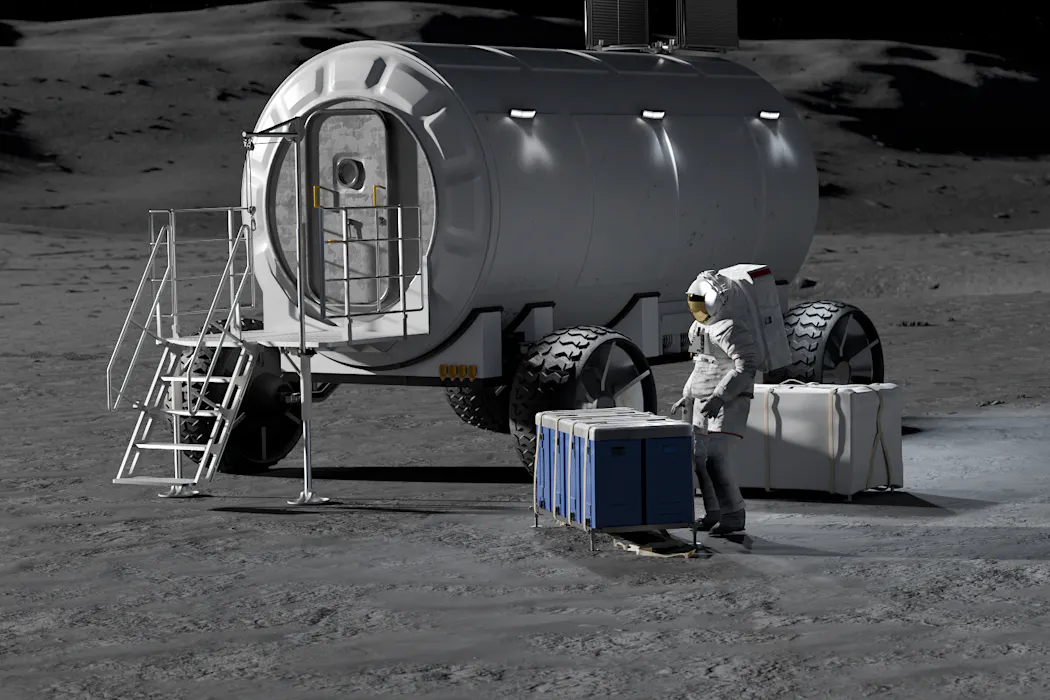
Lunar bases may operate in a similar way to outposts in the Antarctic, accessible within a few days’ travel time from Earth. Nasa

But the lunar south pole is a challenging place for astronauts to operate. The ice deposits are at the bottom of craters that never see sunlight, where temperatures are more than 200 degrees below zero. There are mountaintops near the pole that are almost always visible from Earth, but relay satellites in lunar orbit are needed to help with communications when they do drop over the horizon.

The Sun also rises to just a few degrees above the horizon, and is sometimes below it for days at a time – plunging some locations into darkness. The low temperatures require heating units for humans and equipment alike. But, with inconsistent sunlight to generate solar power, other energy sources, such as nuclear fission, will be needed to keep the batteries charged.

Visualisation of the interior of Shackleton Crater, at the south pole of the Moon. NASA's Scientific Visualization Studio

The next phase of lunar exploration, pencilled in for 2029-2032, should see the laying down of key infrastructure, such as power supplies and communications systems.

Drilling and digging will prepare the ground for an eventual base, which could be partly underground to protect against radiation and impacts by tiny space rocks. Nasa will also send a more sophisticated Japanese-built rover to the surface with a pressurised interior. This will allow astronauts to live and work in a mobile lab without bulky space suits

The plans for the final phase, from 2032 onwards, involves people living for long periods on the Moon, building up a modular base and taking advantage of the Moon’s resources to produce water, oxygen and even building materials.

The Japanese space agency and Toyota are building a pressurised rover for lunar missions. SuFlyer, CC BY

For the rival effort to build a lunar base, China is partnering with Russia and collaborating with several other countries. Over the next couple of years, Beijing will test its Mengzhou crew capsule and Lanyue landing vehicle ahead of a first lunar landing around 2030.

Construction of a base, called the International Lunar Research Station, is scheduled to be underway by 2035. The planned location for this base is also the lunar south pole, so there’s a race to pick the best spot.

There’s plenty of science to be done by crews living in these bases, some of it related to understanding the structure and formation of the Moon itself, as well as investigations related to medical and materials research.

Artemis III (now IV) candidate landing sites
Nasa has been studying potential landing sites at the lunar south pole. Nasa

Another scientific goal could be to establish radio telescopes on the far side of the Moon, where they would be shielded from the sea of radio communications originating on Earth. This could allow astronomers to detect faint cosmic signals that are otherwise impossible to detect using ground-based instruments.

And the relatively low gravity of the lunar surface could make it easier than Earth for launching missions to other destinations in the solar system. By sending up components and assembling them on the Moon, future missions could use much larger, more capable spacecraft. That’s particularly important if there are people on any of those missions.

There are also economic benefits to having a lunar presence. Private companies will make money by building the landers, rovers and other key technologies. There may also be a market in transporting equipment and experiments to the lunar surface. Making rocket fuel on the Moon would make space exploration cheaper than lugging it from Earth. It could even be used to refuel satellites in Earth orbit.

If humanity can do one thing well, for better or worse, it’s to exploit the natural environment.

The 1979 United Nations Moon Agreement states that no one can claim sovereignty over the Moon, and must use its resources responsibly – which sounds promising. Unfortunately, almost none of the countries involved with Artemis, including the US and UK, have signed it. As scientists, we live in hope that this doesn’t all turn into a big land grab.

The Conversation

Chris North does not work for, consult, own shares in or receive funding from any company or organisation that would benefit from this article, and has disclosed no relevant affiliations beyond their academic appointment.

  •  

Himalayan snowfall has been miscalculated for years, here’s how we found a new way to measure it

Researchers developed a new way to measure snowfall which will help communities plan on how to use and capture water. Evgeni Fabisuk/Shutterstock

Mountain snow and meltwater from glaciers in the Himalayas determine how much water is available for drinking, farming and hydropower for millions of people in India, Pakistan, Nepal, China and Afghanistan.

This is especially important during the spring and early summer crop-growing season when meltwater helps sustain the flow of rivers and provides the region with a vital buffer against the worst impacts of a dry season or drought. Because many of these rivers cross national borders, changes in water supply can also heighten regional tensions when resources are scarce.

Meltwater from snow is one of the pillars of survival – but it’s proved difficult in the past to get accurate measurements across this challenging terrain.

So measuring where and how much snow falls is essential. My team’s new research gives improved estimates of snowfall across the west-central Himalayas. Results show that in just one winter, the previous best available snowfall analyses underestimated total seasonal snowfall by 37% over Lake Hampta area in Himachal Pradesh. By including new snowfall observations, we reduced that error dramatically.

Why snowfall predictions have been wrong

Because most instruments were originally designed to measure rain over very small areas, rather than snowfall spread across large areas, most calculations of snowfall levels have historically been inaccurate. A rain gauge around the size of a dinner plate was used in the past – too small for the purpose and therefore missing large amounts of snow. These small devices were particularly bad at catching snow during strong winds. As a result, mountain water resources are often misunderstood and have been underestimated by 50–100% over the years.

To change this, we developed a new way to measure snowfall using commercially available water-pressure sensors deployed on the lakebeds. The team installed these instruments at three lakes – Ghepan and Hampta in the western Himalayas, and Mugu in Nepal. Unlike conventional instruments, these sense the whole lake surface – an area of thousands to billions of square metres – to measure the timing and intensity of snowfall. These use water pressure in lakes to directly measure the mass (water content) of accumulating snow, providing an accurate and unbiased estimate of snowfall. This is based on Archimedes principle of displacement: as snow accumulates on a frozen lake, it changes the water pressure beneath.

Snowfall from these devices was analysed and used to refine physical processes in a weather model. This is the same model which provides weather predictions over the UK but is customised for mountainous regions. The results show the model can generally reproduce both when the snow falls and how much accumulates, and is particularly good at representing extreme snowfall events. We now have new insights into where and when snow falls across the region at much finer detail than previous estimates, making mountain water resources more predictable. In contrast, a snowfall map based on previous analysis shows a much more uniform distribution and considerably less snowfall.

Planning for water shortages

This information could help regional communities adapt and improve water planning, help manage reservoirs and protect vulnerable infrastructure from snow-related hazards. It could also support engineering interventions such as snow harvesting in areas that receive abundant snowfall, for example, by artificially storing meltwater in community-managed reservoirs and into ice stupas (an artificial glacier) designed to gradually release water during the growing season.

An understanding of when snow falls will be crucial for predicting when it will melt and how much water will flow into rivers and help communities and policymakers better prepare for future water shortages.

The Himalayan ice fields are important because they are the largest permanent ice-cover outside of the polar regions and contain some of the largest reservoirs of freshwater on earth.

With this region starting to see more water shortages it’s time to start reassessing reliance on mountain water supplies. But how much water the mountains provide, and how it will change, remain remarkably uncertain.

Good measurements of snowfall are now more important than ever for predicting the future of water resources, which until now have been lacking. For example, a single long-running active weather station above 4,000 metres has provided one of the few continuous snowfall records across the vast 566,000 square kilometres of Himalayan headwaters that feed the Brahmaputra, Indus and Ganges river basins.

This work is also deeply personal for me. I grew up in a city just 50 kilometres from the outer Himalayas. On family holidays, I was captivated by the thriving beauty of pines and junipers against the backdrop of the Himalayas, while learning that mountains and rivers are more than just landscapes. Those experiences fostered a lasting connection to the region, and I continue to return to the mountains whenever I can.

Water is a precious commodity upon which every society depends, and shortages can cause untold misery.

With better snowfall estimates, we are already beginning to understand how to make the future of the mountain eco-system more predictable, and help people cope.

The Conversation

Siddharth Gumber receives funding from the National Environmental Research Council (NERC), The Big Thaw project (NE/X005267/1).

  •  

Why power banks in hold luggage pose such a risk on holiday flights

Skrypnykov Dmytro / Shutterstock

Airline passengers are being warned not to pack power banks in their hold luggage ahead of the summer holiday travel period.

Devices with rechargeable batteries, like mobile phones, laptops, tablets, and smartwatches can be plugged into power banks on the go, where charging sockets may not be available. However, power banks are not danger-free or environmentally friendly.

The warning has come from the UK’s Civil Aviation Authority (CAA), which believes that many travellers still aren’t aware of the rules – or the fire risk.

Passengers on UK flights must take power banks – and other items containing lithium batteries – with them into the cabin. They must never be used to charge another electronic device while on the plane. Additionally, only two power banks per person are allowed on a flight.

Consider a scenario where you are about to take off on a flight. You have settled into your seat, started using your mobile phone, and put it in airplane mode. All of a sudden, an unusual hissing sound comes from your bag; smoke starts rising, and within seconds, there is a fire inside your luggage.

This actually happened on a flight between South Korea and Hong Kong in January 2026, when a power bank caught fire in mid-air. The accident on this flight is not a rare occurrence; hundreds of fires, explosions and other safety incidents involving lithium batteries and power banks have been recorded by the US Federal Aviation Administration (FAA).

The main reason for accidents involving power banks is the lithium-ion battery, the most common battery type used in them. The lithium-ion battery has a tendency to overheat, which can trigger a thermal runaway in which the temperature rises rapidly, leading to the battery’s explosion.

A lithium battery fire broke out on an Air China flight in 2025 (NBC News).

Such an explosion can occur for many reasons, including poor design, manufacturing issues, and improper use. In 2017, a family in the UK woke to smoke filling their home. The cause of the fire was a power bank charger, plugged into an electrical outlet. It overheated and set itself ablaze. Their rooms were burned down.

From a scientific point of view, the answer is obvious: heat is the sworn enemy of lithium-ion batteries. Each time you recharge or discharge a power bank, chemical reactions produce heat in the battery. And if that heat is not properly controlled – whether due to inadequate design or excessive environmental temperature – a thermal runaway occurs (an uncontrolled, self-heating chain reaction).

In 2026, an Australian man left a power bank in his vehicle on a hot day in Mount Nathan in Queensland. The extreme heat caused the battery to explode, starting a fire. Luckily, no one was injured in the incident.

Electric shocks

Fire and explosions are not the only hazards associated with these gadgets. They can also cause a dangerous electrical shock to users. This is despite the fact that they are operating at lower direct current voltage.

If the power bank becomes faulty due to being dropped, getting wet or because of manufacturing defects, the circuitry inside may fail. This would cause the device to shoot a surge of electricity into the user’s body.

In May 2026, a 75-year-old woman in the US died when her power bank exploded while charging it.

China, which manufactures many of the world’s power banks, has seen manufacturers recall hundreds of thousands of devices due to defects. Some of these faults have been blamed on downstream suppliers.

Another alarming trend has been the rise of counterfeit power banks.

I have spent a great part of my career and life caring about the environment and developing eco-friendly technologies, and the widespread use of power banks is a serious concern due to their negative environmental impact. The manufacturing and disposal of power banks may generate large amounts of electronic waste that can pollute soil, water and air.

Moreover, the extraction of lithium and other materials for power-bank production poses environmental and societal risks. For example, lithium mining in Chile’s Atacama desert has resulted in pollution and friction with indigenous communities.

As a scientist and professor of engineering, I urge people to be aware of the potential dangers posed by power banks and how these risks can be mitigated. By adhering to precautions, such as charging devices on hard, non-flammable surfaces, we can ensure the safe usage of these devices.

In addition, it is vital to understand the significance of responsible innovation and sustainability to ensure that technologies can be safely developed and deployed.

Your power bank is a powerful tool, but it demands respect. Treat it with the caution it deserves.

The Conversation

Amor Abdelkader does not work for, consult, own shares in or receive funding from any company or organisation that would benefit from this article, and has disclosed no relevant affiliations beyond their academic appointment.

  •  

Why an EU ruling about a traffic app could have major implications for big tech companies

Alexandros Michailidis/Shutterstock

Many of the biggest online platforms have long argued they aren’t publishers of the content their users upload, merely hosts. The likes of Google, YouTube, Meta and TikTok claim they simply store and display information created by others, so should not be seen as legally responsible for it.

But a recent ruling by the Court of Justice of the European Union (CJEU) makes that argument harder to maintain – at least in cases where the platform’s algorithm is deciding which content gets pushed, ranked or amplified.

The case relates to Coyote, a French driving assistance company which stores traffic reports submitted by users and redistributes them to the wider network. The question being tested was whether Coyote merely hosts its users’ information, or also controls (and benefits from) how that information is circulated.

The significance of this case – brought by the Conseil d’État, France’s highest administrative court and the government’s chief legal adviser – extends far beyond driving apps. It clarifies when a provider may lose the legal right of “intermediary immunity” for the user information it stores and circulates.

Traditional book, newspaper and magazine publishers have always been held responsible for their content. A defamatory article generally exposes the publisher to liability, since it chose to make the material available.

In contrast, technology companies have been treated as neutral intermediaries – closer to a corner shop stocking newspapers than a publisher producing content, with clear limits to their liability.

For these companies, the Coyote judgment is significant because it sharpens the boundary between neutral hosting and algorithmic control. A platform that merely stores user content is likely to remain legally protected. But one that decides, in its own interest, how that content is disseminated may no longer be.

One important caveat: as this case is from the CJEU, it does not apply to users in the UK and elsewhere outside the EU. However, it will affect British and international companies that have a significant audience within the EU. So, no technology platform can dismiss the issue simply because it is headquartered outside Europe.

What the court decided

A hosting provider is protected under Article 6 of the EU Digital Services Act (DSA) if it lacks actual knowledge of illegal content – and then acts expeditiously once notified about it.

The question in the Coyote case was whether a service that stores and retransmits user-generated information still counts as a neutral host when its algorithm decides how that information circulates.

A Coyote user explains how the app works. Video: Loic Le Mur.

The court concluded that a platform can have no knowledge of a specific message’s content, yet can still have legal responsibility for its dissemination. Where a platform’s algorithm determines – in its own interest – the conditions, manner or priority with which information is disseminated, then the “safe harbour” of being a neutral host falls away.

This outcome was anticipated in 2019 by technology law experts Jennifer Cobbe and Jatinder Singh, who argued that algorithmic curation complicated the assumption that platforms are passive, neutral hosts.

The ruling does not doom every algorithm. Simple categorisation, such as showing all posts by one user or from the past 24 hours, remains close to traditional hosting. But ranking or promoting content in the platform’s own interest does not.

None of this makes these platforms automatically liable. Losing the exemption only opens the door to being sued – claimants must still prove the platform’s conduct actually caused harm.

Potential impacts of the Coyote ruling

1. For social media content

A social media company may remain protected when it stores user content or displays it in ways that are largely user-directed or chronological. But algorithmic feeds are different.

“For You” pages, recommendation systems, trending modules and paid amplification systems all decide what content is shown to which users and in what priority. When that decision is made in the platform’s commercial or service interest, Coyote makes it harder to describe the platform as merely hosting the content.

The same reasoning may matter for extreme or graphic material. If a platform simply stores content uploaded by a user, the hosting exemption could still apply. But where a recommender system repeatedly pushes that material to users because it drives engagement, Coyote gives claimants a stronger argument that the platform was not passive.

The content does not always need to be unlawful in itself. But claimants would still need to demonstrate both liability and harm.

2. For paid search

When a platform sells priority, decides how a sponsored result is displayed, and presents that result to users because doing so serves its own commercial interest, it becomes harder to argue that the platform is merely storing or neutrally indexing third-party information.

This matters because online advertising has become a major route for fraud and consumer harm. Following the Coyote ruling, claimants harmed by paid advertisements may have a stronger argument that the harm arose at least in part because the provider sold, ranked and prioritised that information.

But they would still need to prove the advert was unlawful, that the platform’s role fell outside immunity, that the promotion caused their financial loss or other harm.

3. In libel cases

A newspaper that publishes a defamatory allegation can be liable because it has chosen to publish it. In contrast, a hosting platform where a user makes and uploads such an allegation has not been treated in this way.

However, if the platform’s recommender system promotes that post or pushes it into feeds, the CJEU ruling gives claimants a clearer argument that the platform should be held responsible for increasing the audience reach of the allegedly defamatory content.

Changing the terrain

The Coyote judgment does not abolish hosting immunity – but it does change the terrain. It makes clear that the “safe harbour” argument depends not only on where information came from, but what the provider does with it.

The more a platform determines dissemination in its own interest, the harder it is to maintain that it is merely hosting, according to this groundbreaking ruling. And this, remember, holds for international as well as European technology companies.

The Conversation

Iain Nash does not work for, consult, own shares in or receive funding from any company or organisation that would benefit from this article, and has disclosed no relevant affiliations beyond their academic appointment.

  •  

Why you are seeing bees struggling to survive this summer

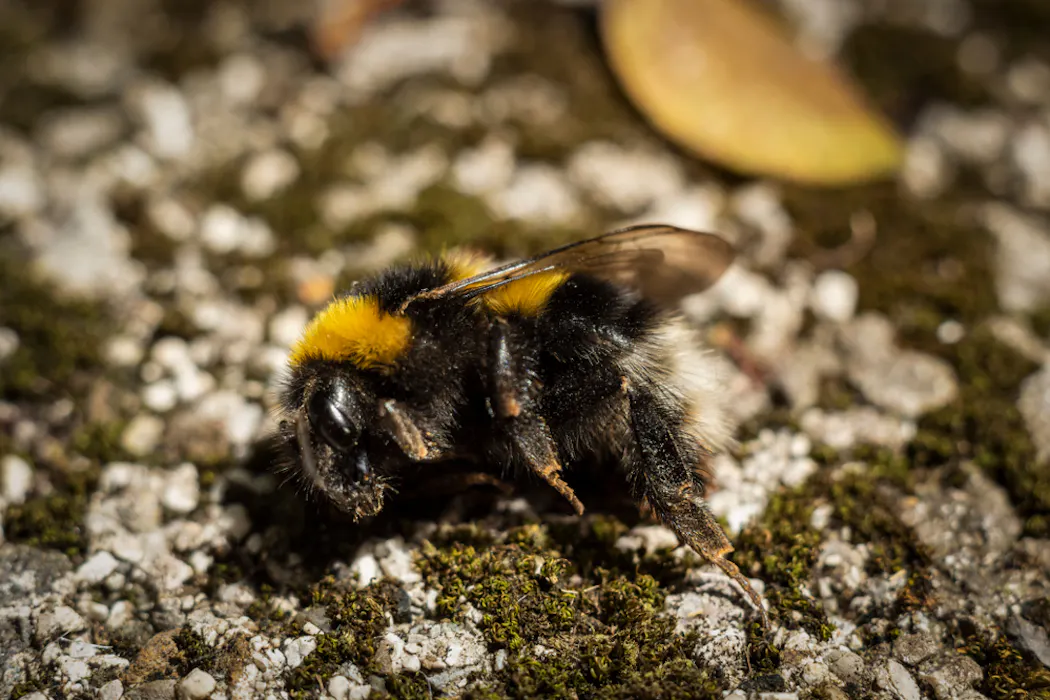
Bumblebees die in extreme heat, but there are other reasons too. Jay-Dee/Shutterstock

You may be spotting bodies of dead bumblebees lying across pavements near you in the summer months.

There are several reasons for this, some to do with the weather and some very much due to humans.

Bumblebees are social, living in colonies that are maintained by very active workers with a relatively short lifespan of 4-6 weeks. This means, that in a relatively short space of time, older bees die off and to prevent disease making it’s way through the colony, the healthy young workers bring out their dead, moving them far away from their colony.

Another factor is the weather. It was the warmest June on record in England (and the second hottest for the whole UK) in 2026 and other high temperatures are expected this summer.

Thermal stress in bees is caused by this kind of extreme heat. Prolonged heat exposure alters development and threatens long-term population stability.

Heatwaves also severely disrupt reproduction, flight capacity and ability to forage. Social insects including bees rely on cooling behaviour for example fanning their wings when things get too hot to buffer the hive but there are limits as to how effective this is in extreme heat.

As it gets hotter bee foraging activity may increase, and they may cover greater distances. Bees can thermoregulate themselves by moving heat around their body while in flight, but extremes of temperature can affect their health.

Don’t kill your dandelions

Other elements play a part in bee deaths. Pesticide and herbicide use is commonplace and these chemicals affect the fitness of bees, causing them to die off. However, not only do these chemicals affect the bees directly, they can also remove important plants that they rely on for food causing them to starve. Dandelions for example, are a massively important nectar source for bees, but also a plant commonly controlled with herbicides. So don’t weed your garden and pull them out.

Pesticide use is one of the historical key causes for loss of bees. Pesticides applied to reduce the insects feeding on crops – is some what ironically – responsible for harming a group of animals responsible for their pollination.

The EU and the UK have banned the use of the most harmful neonictinoids, however pesticides are still routinely used, with harmful knock-on effects on pollinators. Insecticides such as organophosphates, synthetic pyrethroids and phenylpyrazoles cause paralysis and death of these insects, as well as disrupting the bees ability to navigate.

Habitat loss is another key issue for bees, with land use changing for housing developments, intensive agriculture and other human structures such as roads. Without these habitats to support the bees, their populations suffer.

Climate change is causing other problems.


Read more: A common soil pesticide cut wild bee reproduction by 89% – here’s why scientists are worried


Phenological mismatch is when two organisms that are dependent upon each other appear at the wrong time. With a changing climate this is happening. An example of this is that plants that the bees are dependent upon being in flower when the bees aren’t around. Essentially they are flowering at a time of year when the bees aren’t there. They could come out of hibernation too early and not have any nectar to feed on, or conversely the flowers could come out before the bees appear. This, of course, is a disaster for both flower and the bees.

The life of bees explored by David Attenborough.

Bees under threat

Insects are the most diverse and abundant group of animals on the planet, but in spite of this dominance they are the most threatened.

We are losing our bees at an alarming rate. In Europe, the number of wild bee species considered at risk of extinction has more than doubled from 77 in 2014 to at least 172 today (around 10% of assessed species).

But we really need them. They provide so much support for our planet, as decomposers, pest controllers, food for other animals and generally for keeping our systems clean and tidy. Scientists call these these roles ecosystem services. However, one such service they provide is directly very important for us, and disproportionately carried out by one group of insects, the bees, and that is pollination of our crops.

Bees are one of the most diverse insect groups. They support an estimated 75% of global crop pollination, and nearly 90% of all flowering plants. The rest can be pollinated by other animals, or by the wind and weather.

If we lose that food security afforded by our pollinators we could have a global food crisis on our hands.

Anything that can be done?

When it comes to pesticide use, be a thoughtful and informed consumer. Support local, sustainably produced food where possible and, if feasible, buy from farmers who use nature-friendly practices. This does not necessarily mean choosing organic products, but rather considering how food is produced and the environmental impact of different farming systems. As a homeowner, explore non-chemical alternatives first, and apply any treatments sparingly and responsibly to minimise harm to beneficial insects and other wildlife.

One of the simplest ways to address habitat loss for bees is to make room for native species. Plant a diverse range of native flowering species, and leave some areas of lawn unmown. This can help create safe havens for bees.

In the short term there is one thing that people can do to help bees in distress. Providing sugary water to a bee you see struggling on the pavement on a hot summer’s day can help revive it. A mixture of sugar and water will do the trick at a two-to-one ratio of sugar to water..

Moving the bee, if safe to do so, to a flower or a shady spot too is also advised. But please do not do this if you have allergies, or are likely to get stung.

The Conversation

Alex Dittrich does not work for, consult, own shares in or receive funding from any company or organisation that would benefit from this article, and has disclosed no relevant affiliations beyond their academic appointment.

  •  

Hummingbirds and pineapples: why this ancient relationship hits the evolutionary sweetspot

kirkchai benjarusameeros/Shutterstock

High above the rainforest floor, tiny ponds form in the leaves of plants perched on tree branches. Frogs breed in these ponds, alongside insects, microbes and even tiny crustaceans, creating miniature ecosystems suspended high in the canopy. These are the bromeliads – the remarkable plant family that also gave us air plants, the towering 12-metre “Queen of the Andes”, and the pineapple on your terrible pizza.


Many people think of plants as nice-looking greens. Essential for clean air, yes, but simple organisms. A step change in research is shaking up the way scientists think about plants: they are far more complex and more like us than you might imagine. This blossoming field of science is too delightful to do it justice in one or two stories. This article is part of a series, Plant Curious, exploring scientific studies that challenge the way you view plantlife.


Bromeliads are one of the great evolutionary success stories of the neotropics, the tropical ecosystems of the Americas. The ancestor of all living bromeliads existed just 20 million years ago, and since then, they have branched into about 3,800 species. To put this into perspective, hydrozoans – a lineage of predatory jellyfish-like animals – took more than 500 million years to evolve about 3,800 species.

Explaining how the remarkable plant biodiversity of the neotropics evolved remains one of the greatest challenges in evolutionary biology. Bromeliads, which are almost entirely unique to this region, provide one of the best natural experiments for investigation. My colleague Elizabeth Forward and I have published a new study that confirms hummingbirds played a crucial role in this plant family’s evolution.

Over the past 20 million years, bromeliads repeatedly evolved new adaptations to the point that some of them are hard to recognise as close cousins.

Many abandoned the forest floor to grow on tree branches as epiphytes (meaning they use their host as a perch and don’t harm it). Others evolved leaf formations that trap rainwater. Some evolved Cam photosynthesis, the same water-saving strategy used by cacti living in the harshest deserts.

Plants that use Cam photosynthesis only absorb carbon dioxide at night, when it is cooler. These adaptations allowed bromeliads to maximise new ecological opportunities at high speed.

However, one idea that dates back to Charles Darwin is perhaps the strongest, and that is the influence of different pollinators.

A panel showing the diversity found within the bromeliad family. (a) A tank-forming species. (b) An air plant. (c) The Queen of the Andes. (d) The familiar pineapple.
The diversity of bromeliads. (a) A tank-forming species. (b) An air plant. (c) The Queen of the Andes. (d) The familiar pineapple. Wikimedia, CC BY

The hummingbird hypothesis

Most flowering plants, including the earliest bromeliad ancestors, are pollinated by insects such as bees. However, at least half of all bromeliad species today are pollinated by hummingbirds, and some others rely on bats, butterflies or moths.

Scientists have long suspected that the repeated evolutionary shifts between pollinators helped accelerate the formation of new bromeliad species. But exactly when these shifts occurred, and what effect they had on diversity, has remained uncertain.

My colleague and I tested this idea. We compiled pollinator records for more than 400 bromeliad species, and reconstructed the history of how bromeliads switched between pollinators through 20 million years of evolution.

Photographs of hummingbird species visiting different bromeliads. Botanical Journal of the Linnean Society, CC BY

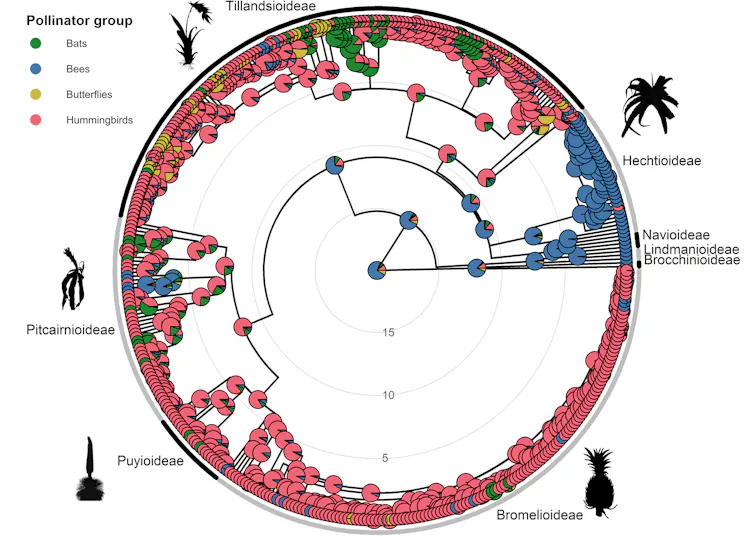
Our analyses support the idea that the earliest bromeliads were pollinated by bees. Following this, there were repeated shifts, primarily to hummingbirds, but also bats and butterflies. Bromeliads experimented with different pollinators as they spread into new habitats across the neotropics. Our results reveal a more dynamic evolutionary history than scientists previously suspected.

One pattern stood out. The bromeliads pollinated by hummingbirds split into new species at almost double the normal rate.

New species usually arise when populations become separated and gradually stop exchanging genetic material. Given enough time and isolation, enough genetic differences accumulate that they become unable to reproduce with each other. Pollinators can influence this process because they help shape which populations of plants are genetically connected and can reproduce together.

One possibility is that hummingbirds move pollen around differently to insects as many species move larger distances, which changes how genetic material flows across landscapes. Different pollinators also favour different flower colours, shapes and flowering times. Hummingbirds often prefer long, bright red and tubular flowers with copious nectar rewards, which match their long, slender beaks and hovering feeding behaviour. Over thousands of generations, these small differences build up. In mountainous regions, where many hummingbirds live, and in which valleys and peaks naturally separate populations, these effects may become even stronger.

Like most evolutionary stories, there is unlikely to be a single explanation that explains everything. Other innovations, such as epiphytism, also accelerate diversification rates. However, our study suggests that hummingbirds were of particular importance for bromeliads, helping to accelerate one of the fastest known plant radiations.

The bromeliad family tree with pollinators mapped to ancestors. Different subfamilies are highlighted with silhouettes of plants.
The bromeliad family tree with pollinators mapped to ancestors. Botanical Journal of the Linnean Society, CC BY

An ongoing evolutionary story

This high-speed evolutionary story of bromeliads has not finished. Our reconstruction shows that many shifts between pollinators occurred surprisingly recently. For example, the hummingbird-pollinated Hechtia iltisii, which looks a bit like a cross between a spider plant and an aloe vera. Its closest cousins are bee-pollinated.

In fact, about a quarter of bromeliad species changed their pollinator from that of their most recent ancestor in the last few million years, suggesting that bromeliads are still experimenting today. But they, and hummingbirds, face unprecedented pressures from habitat loss and climate change, threatening not only individual species but the evolutionary interactions that generate biodiversity across the neotropics.

Up to 81% of bromeliads are predicted to be possibly threatened with extinction. And dozens of hummingbird species are considered endangered.

Every pineapple in the supermarket, every air plant on a bathroom windowsill, and every pond-forming bromeliad clinging to a rainforest tree is the result of 20 million years of high-speed evolutionary experimentation. Tiny hummingbirds in particular have helped transform a single ancestral plant population into one of the richest bouquets of neotropical plant biodiversity.

The Conversation

Jamie Thompson receives funding from The Leverhulme Trust.

  •  

The secret life of roots: how plants fight back against salty soils

Young shoots of corn. malshkoff/Shutterstock

To people, salt is a kitchen staple. But to crops, too much of it can be devastating.

Across coastal regions and irrigated agricultural land, salt is accumulating in soils, making it harder for plants to absorb water and reducing harvests. Scientists estimate that around half of the world’s irrigated farmland is now affected by salinity to some degree.

The problem is only expected to grow. Rising sea levels can push saltwater into coastal farmland, while changing rainfall patterns and more frequent droughts are increasing reliance on irrigation. Poor-quality irrigation water and the overuse of fertilisers can worsen the problem, leaving salts behind in the soil year after year.

This is an issue because the global population is expected to approach 10 billion by the middle of the century, while demand for food continues to rise. Finding ways to grow crops in increasingly difficult conditions is becoming one of agriculture’s biggest challenges.

But plants are not passive victims. Beneath the surface, their roots are engaged in a constant battle with their environment. They sense danger, adapt their growth and deploy sophisticated strategies to survive.

Underground intelligence network

Roots do far more than anchor plants in the ground. They are the plant’s frontline, constantly gathering information about the soil around them. Every day, roots assess water availability, nutrient levels and environmental threats. When salt levels begin to rise, they are the first part of the plant to detect the change.

For plants, excess salt creates a double challenge. First, it makes it harder to draw water from the soil, almost as if the plant is trying to drink through a blocked straw. Second, sodium can build up inside tissues, damaging cells and interfering with essential biological processes.

Roots can detect these changes remarkably quickly. As salt concentrations increase, cells in the root begin sending warning signals through the plant. These signals trigger a cascade of responses, including shifts in hormone levels and the activation of emergency survival mechanisms designed to protect growth.

Aerial view of agricultural land affected by salinity
Saline soil in a wheat crop field. RUPESH_ROY/Shutterstock

One of the most remarkable things about roots is their flexibility. Unlike the branches above ground, roots can continually reshape themselves in response to changing conditions. Faced with salty soil, they may alter how deeply they grow, how many side branches they produce and even the direction they travel.

In effect, roots can steer themselves away from trouble. Research has shown that plants can bend roots away from highly saline patches of soil while continuing to search for water and nutrients elsewhere. Growth may slow in certain areas, helping the plant avoid pushing vulnerable new tissues into harmful conditions.

This hidden reshaping of the root system can make a difference to the chances of survival. By avoiding the saltiest parts of the soil, plants can reduce the amount of sodium they absorb while continuing to access the resources they need.

At the same time, roots are working to control any salt that does enter the plant. Excess sodium is dangerous because it can damage proteins and cell membranes. To prevent this, root cells actively move sodium into storage compartments where it can do less harm, or pump it back into the surrounding soil.

The result is a carefully managed balancing act that helps protect the more sensitive tissues above ground.

Can plants ‘remember’ stress?

Perhaps the most surprising area of research is the idea that plants may be able to learn from experience. Scientists are increasingly finding evidence that previous exposure to environmental stress can influence how plants respond in the future. In crops such as rice, for example, plants that have encountered salt before can sometimes cope better when exposed to it again.

Rather than involving memory in the human sense, these experiences appear to leave lasting chemical marks on DNA and associated structures within cells. These marks can influence which genes are switched on or off when stress returns, allowing plants to respond more quickly or effectively.


Read more: How plants are able to remember stress without a brain


Similar effects have been observed in responses to heat and drought stress. It suggests that plants may possess a surprisingly sophisticated ability to prepare for future challenges.

Some studies even suggest that aspects of these stress responses could be passed to the next generation, potentially helping offspring cope better with harsh environments. While many questions remain unanswered, the possibility that plants can retain and pass on information about past stresses is opening up an exciting new area of research.

But what does this mean for future food supplies? As salt levels in soil increase, crops face mounting pressure. Salinity can stunt growth, reduce yields and leave plants less able to cope with other challenges such as drought and extreme heat. In reality, these stresses often arrive together. That’s why understanding roots has become such an important scientific priority.

The better researchers understand how roots detect, avoid and tolerate salt, the better equipped breeders will be to develop crops that can thrive in difficult conditions. By identifying the root traits that help plants survive saline environments, scientists may be able to breed or engineer varieties capable of maintaining yields on land that would otherwise become less productive.

Much of this battle is invisible, unfolding centimetres below our feet. But the decisions that roots make underground could have profound consequences above ground. In a future where climate change is making agriculture increasingly unpredictable, the key to protecting food supplies may lie in understanding how plants wage their quiet war against salt.

The Conversation

Amber Williams receives funding from UKRI.

  •  

Is recursive self‑improvement the dawning of AI superintelligence?

freedom100m/Shutterstock

The US AI research company Anthropic has become known for building powerful AI models while simultaneously warning about their dangers.

Most recently, its executives wrote about the threat posed by “recursive self-improvement”. This is the point when AI systems can improve themselves by themselves, potentially leading to “superintelligence” far beyond human control.

“We are not there yet, and recursive self-improvement is not inevitable,” the Anthropic blogpost declared. “But it could come sooner than most institutions are prepared for.”

In fact, the idea of recursive self-improvement dates back decades. The British mathematician Irving John Good, who worked with Alan Turing at British codebreaking HQ Bletchley Park, warned in the mid-1960s of the “intelligence explosion” that would follow when a machine could design even better machines without human assistance. Good suggested “the first ultra-intelligent machine is the last invention man need ever make”.

In the 2000s, researcher Eliezer Yudowsky began building a community on the premise that recursive self-improvement and loss of human control could have catastrophic results, up to total human extinction (known as “x-risk”).

Yudkowsky discussed the idea of a “seed AI” that, while not very powerful, is designed for self-modification and able to read its own source code. This means it could generate new, better versions of itself which, in turn, would keep doing the same – researching improvements and writing code, creating a chain reaction of rapid new developments.

Two decades later, the question of recursive self-improvement is looming larger. Here’s why.

An AI coding revolution

It is not an overstatement to say that large language models (LLMs) are revolutionising computer programming. These AI models are well-suited to the job because computer code is highly structured and much simpler than human language. It is also easy to test and verify, and training data is abundant.

Each year, the University of Galway hosts the AtlanTec conference for Ireland’s tech industry. Two years ago, we saw IT companies mainly strategising about AI coding. Last year, they were experimenting. Now, they are incorporating it into engineering workflows.

Since LLMs are made using computer code, it is possible to program them to improve themselves. They can inspect, edit and improve the code, and can combine that with almost all relevant human knowledge gleaned from websites, books and academic publications.

This means we have the pieces in place for recursive self-improvement to become a reality – and we are starting to see it happen.

Video: Bloomberg Tech.

Despite Anthropic’s statement that “we are not there yet”, the same blogpost revealed that 80% of all code added to the company’s production codebase in May 2026 was generated by its Claude Code AI programming system, under direct human supervision. In February 2025, when Claude Code was launched, this figure was less than 5%.

The number of research papers published in the field of AI has also exploded, tripling over the past decade. Most use some AI systems in their production – whether in experimental design, coding, plotting graphs, or polishing prose.

This form of recursive self-improvement is slow – improvement cycles are in the order of months or years, because each is in some way gated by human approval and requires a lengthy training period. But it is still concerning.

LLMs have already been caught deceiving their overseers. In 2025, for example, the US AI research company OpenAI created a test. An LLM was told if it scored over 50% in a set of questions, it would be considered too powerful and would no longer be used for that task. So the LLM answered only four of the ten questions correctly, even though it had reliably scored better outside this particular test.

Why it’s so hard to ‘pause’ AI

This is not the first time there have been calls for caution. In March 2023, an open letter to AI labs called for a pause on large-scale AI development. It was signed by some of the most notable people in AI, such as deep-learning pioneer Yoshua Bengio and leading AI textbook author Stuart Russell.

Soon after, Yudkowsky suggested those who understood the risks of superintelligent AI should even be “willing to destroy a rogue datacenter by airstrike if necessary”. But such calls did not lead to a pause, and investment in AI training has only increased.

Anthropic’s leaders have now called for a globally coordinated pause mechanism regarding the issue of recursive self-improvement – stressing that people outside AI companies should be involved in open deliberation. Pope Leo XIV recently weighed in with a thoughtful and well-informed encyclical, urging for the pace of AI development to be slowed.

The trouble is, we face a coordination problem. Pausing only works if everyone pauses.

In the short- to medium-term, we believe world leaders will need to reckon with recursive self-improvement by collaborating across borders to curtail some forms of AI research and development.

Yet the EU’s AI Act does not mention this issue explicitly, and is strictly concerned with risks where humans misuse AI. This is important, but not the only issue. To date, Chinese regulation has taken a similar approach.

Meanwhile, the US government has created a chaotic and unclear regulatory environment. For the next few months at least, this means the most advanced AI models will require authorisation before release. This may be a case of doing the right thing for the wrong reasons.

But globally connected, long-term thinking is needed. Perhaps controversially, this should include the right to inspections inside AI tech companies, because a model which is quickly recursively self-improving – even if unreleased to the public – could still be out of human control.

One of us (James McDermott) is now leading a project for Research Ireland’s newly established Rinn network which will explore how to use debate among multiple AIs as a kind of self-check which can be monitored by a human overseer.

This is the kind of response to the issue – and potential threat – of recursive self-improvement that we believe is now urgently required.

The Conversation

Michael G. Madden is the Chair of the Artificial Intelligence Association of Ireland, and a researcher funded by the Rinn AI National Centre for Research and Innovation in Data Science and AI.

James McDermott is a researcher funded by the Rinn AI National Centre for Research and Innovation in Data Science and AI.

  •  

Heatwaves: why British trees are shedding branches and dying

British trees are struggling to survive in heatwaves. Forests like these are likely to be affected. Billy Stock/Shutterstock

If you visit the Royal Botanic Gardens at Kew, on the edge of London, you will see a brightly painted skeleton of a dead oak tree. The tree, known as the climate changed oak, succumbed in the heatwave of 2022. Instead of removing it, Kew left it in place as a reminder that climate change is already taking its toll on Britain’s trees.

The 2022 heatwave killed 400 of Kew’s trees and predictions show that up to 50% of Kew’s existing 11,000 trees could be vulnerable to climate change by 2090.

A similar story is playing out across the UK. Mature trees shedding limbs and branches during intense periods of hot weather, their canopies thinning, and some dying back altogether. Although these changes can appear sudden, they are often the final visible signs of a much longer process of decline that has been unfolding inside the tree.

The problem is not simply these high temperatures, but that the combination of both extreme heat and drought, increasingly referred to as a “hot drought”, pushes trees beyond the limits of what they can cope with.

Trees struggle to keep cool

To understand why heatwaves are so damaging to trees, one needs to appreciate how trees keep themselves cool. When water is absorbed by the roots, this travels through the xylem (the network of microscopic tubes that carries water from the roots to the leaves), where it evaporates through stomata (tiny pores on the leaf surface). This cools the leaves in much the same way that sweating cools humans.

This cooling system works well when water is freely available. A clear example can be seen in Fremont cottonwood (Populus fremontii), which is often found close to rivers. This tree used this process to keep its leaves between 2°C and 5°C cooler than the surrounding air during Arizona’s record-breaking heatwave in 2023, even when air temperatures exceeded 48°C.

As air temperatures rise, the atmosphere draws water from leaves more rapidly, in a process plant scientists call the vapour pressure deficit. Concurrently, dry soil makes it harder for roots to replace those losses, placing trees under increasing water stress and limiting their ability to maintain normal physiological functions.

By closing their stomata, trees conserve water. But this in turn restricts carbon dioxide uptake, slowing photosynthesis and reducing sugar production required for growth, repair and for defence against pests and diseases. When stomata are open, this allows for continued cooling, but comes at the cost of unsustainable water loss.


Read more: Heatwaves: expert tips on redesigning UK homes to cope with hotter temperatures


Every leaf has a thermal limit beyond which its ability to photosynthetise suffers irreversible damage. Surviving a heatwave therefore depends on maintaining enough evaporative cooling to stay below that threshold, although this safety margin is known to disappear surprisingly quickly. A recent study on poplar trees found that only 72 hours of reduced soil moisture and access to water was enough to disrupt leaf cooling. The leaves that had previously remained cooler than the surrounding air temperature became hotter than the air itself, reaching temperatures damaging to photosynthetic tissue.

Why branches fall

As heatwaves persist, problems can often spread beyond just the leaves. With xylem water under constant tension, when water supplies become limited, tiny air bubbles known as embolisms begin to form within the xylem in a process called cavitation. This results in a blockage impeding the transport of water. Ultimately, if enough xylem vessels become blocked in this manner, the tree experiences hydraulic failure, with water no longer able to reach the canopy tree effectively. This causes branches or entire sections of the crown to die back.

Some trees effectively sacrifice parts of their own canopy, reducing the need for water to keep the main stem alive. This strategy is known as hydraulic segmentation and helps explain why seemingly healthy trees may lose substantial numbers of limbs during prolonged hot weather.

Trees can continue to pay a price long after a heatwave is over, as this extreme weather depletes overall carbohydrate reserves and reduce growth potential. These effects can persist for years, leaving trees less resilient when the next drought arrives. A tree may therefore survive one exceptionally hot summer, only to succumb after another as the stresses accumulate over time. Water-stressed trees also become more vulnerable to insect pests and fungal and bacterial diseases because they have fewer resources available to defend themselves from attack.

Britain’s trees evolved under relatively cool, wet summers, and temperatures above 40°C were unheard of until recently. Many are now being exposed to climatic conditions well outside those under which they evolved. Research following the 2003 European heatwave suggests that vulnerability depends not only on how hot it becomes, but also on how well species can adapt to local conditions. As heatwaves become more frequent, many traditional species may increasingly find themselves outside their climatic comfort zone.

Record temperatures were seen across Europe in June 2026.

What can help?

Fortunately, there are several practical steps that can help, particularly for younger and more susceptible trees. Occasional deep watering is much more effective than frequent light watering because it encourages roots to grow deeper into the soil, where moisture remains available for longer.

Mulching, creating a thick layer of hardwood chip or compost, reduces soil surface evaporation rates, moderates soil temperatures and, as it breaks down, improves soil structure and water holding capacity. Soils with high concentrations of organic matter can absorb water/rain more effectively, which supports more resilient root networks.

Managing mature woodlands to increase their resilience to future heatwaves will require new strategies. Increasing woodland species diversity, reducing the concentration of trees in drought-prone areas and planting species better suited to future climates should be considered. A greater diversity of species helps resilience to hot weather.

Many of Britain’s mature trees have stood for centuries – these may be the most effective ways of protecting them for the future.

The Conversation

Glyn Barrett does not work for, consult, own shares in or receive funding from any company or organisation that would benefit from this article, and has disclosed no relevant affiliations beyond their academic appointment.

  •  

Iran’s environmental catastrophe has also wrecked its economy

For several decades, Iran has devoted substantial financial, institutional and political resources to military expansion. It has invested heavily in supporting its regional partners, as well as in pursuing geopolitical influence across the Middle East.

Previously, the Islamic Republic has shown few signs of swivelling its resources toward fixing its ever expanding environmental problems.

And those problems are considerable. Around 11% of deaths and 52% of the burden of diseases across the country are attributable to environmental risk factors, according to the World Health Organization.

Excessive groundwater extraction has caused buildings and roads to crack and sometimes collapse. Iran’s capital Tehran is often ranked as having the worst levels of air pollution in the world. In 2025 local media reported 350 deaths caused by poor air quality within a ten-day period. Hospitals at the time reported rising numbers of cases of respiratory and cardiac complications across Iran.

Lake Urmia – once the Middle East’s largest saltwater lake – has dried out, leaving salt-laden dust plumes were capable of travelling hundreds of kilometres and even crossing national borders in less than 12 hours.

The peace agreement that is being hammered out between the US and Iran’s leaders could hand Tehran a significant financial asset. It may unfreeze Iranian assets in foreign banks that they were previously unable to access due to US sanctions. This will give the government access to billions of dollars. Iran is also now exporting millions of barrels of crude oil that had been held in storage during the conflict.

The question then is where will all this money be spent.

Many analysts suggest a massive reconstruction project is needed to rebuild damaged factories, roads, and other essential infrastructure. While it thought highly unlikely that Tehran will see environmental investment as its top priority, the approach could provide major economic benefits.

Iran is now using its groundwater far faster than it can be naturally replenished. As a result, major lakes and wetlands are drying up. Water shortages are undermining agriculture, and forcing some rural communities to leave their farms. Studies indicate that approximately 56,000 km2 (3.5%) of the country’s area is subject to land subsidence, caused by excessive groundwater extraction.

Air pollution imposes significant public health and productivity costs. This contributes to thousands of premature deaths each year, and reduces labour productivity through illness and absenteeism. Dust and salinity storms continue to hit many parts of the country. They damage crops and soils, increase respiratory disease, disrupt daily life, and make already vulnerable regions harder to inhabit.


Read more: Iran’s record drought and cheap fuel have sparked an air pollution crisis – but the real causes run much deeper


Rich rewards

When a state destroys its basic natural resources, it is not merely experiencing an ecological downturn. Natural systems (water, soil, ecosystems) are the foundations of any country. Without them, a nation has severely undermined its long-term economic output: farms disappear, road and rail systems crack and break, and people struggle to live.

A peace dividend from the US deal could therefore present Tehran with a rare moment of strategic re-evaluation and a chance to fix its long-term environmental problems. A different approach could generate long-term value, economic stability and, potentially, improved public health outcomes.

A serious national investment, and reconstruction, programme needs to focus on repairing leaking urban water networks, restoring wetlands and forests that regulate water and reduce dust storms. It could also upgrade ageing water and energy infrastructure, and redesigning cities to better withstand drought, extreme heat, and air pollution. It would also create jobs and mobilise high-skilled labour across engineering, science, manufacturing and technology sectors. This would begin reversing decades of damage to the natural systems on which Iran’s economy depends.

Iran is struggling with extreme levels of air pollution.

What needs work?

Restoring depleted aquifers, rehabilitating degraded land and modernising water and energy systems would increase the economy’s capacity to produce goods and services while reducing the long-term costs associated with environmental degradation.

Iran should see environmental restoration as its most important long-term growth strategy. A national investment programme could be centred on modern irrigation networks, wastewater recycling and reuse. These alongside renewable energy, and ecosystem recovery, would be a massive economic engine.

More efficient water use would strengthen food security. Investments in infrastructure would continue generating economic returns long after the initial capital has been spent.

Legal caps on groundwater abstraction, and economic diversification away from water-intensive crops are essential. Improved irrigation and wastewater reuse plus adjusting water pricing to reflect scarcity would also help.

This approach could not only be a valuable peace dividend for the Iranian people, but also a massive economic boost. Those financial benefits may have some appeal to a government which has ignored many of these environmental problems for so long.

The Conversation

Nima Shokri is affiliated with Hamburg University of technology

  •  

What happens inside a tennis player’s brain as they try to return a 148mph serve?

The fastest serve so far at this year’s Wimbledon tennis championships was struck by the Argentinian Thiago Agustín Tirante on the opening day.

His serve of almost 148mph (238km/h) was still some way under the Wimbledon record of 153mph, set by Frenchman Giovanni Mpetshi Perricard in 2025. And despite Tirante giving his opponent less than a fifth of a second to play each serve, he lost the match in straight sets.

Which means his rocket serves were successfully returned on lots of points. Our emerging understanding of how the human brain works can help explain how this feat is achieved.

Whether you’re a player or a spectator, the ability to see a tennis ball travelling that quickly across the court is a marvel of human physiology. At nearly 150mph, the ball is travelling faster than anyone can watch it move.

By the time your brain has processed the sight of the ball leaving the racket, it is already well on its way to the other end of the court. Yet professional tennis players return these high-powered serves with astonishing accuracy.

The reason is that they do not rely on reaction alone. Returning a tennis serve depends on one of the brain’s most remarkable abilities: predicting the future.

Predicting the future

Tennis players – and spectators – face the same basic problem: the visual information arrives in their brain slightly late.

Before a player becomes aware of a tennis ball hurtling across the court, light reflected from its surface has to be detected by their eyes’ retinas, converted into electrical signals, then transmitted along the optic nerves to the brain. There, the visual cortex begins analysing its colour, shape, speed and direction.

Even under ideal conditions, this takes around a tenth of a second. During that time, a ball travelling at nearly 148mph will have covered several metres.

For a spectator, this delay is rarely noticeable. The brain’s predictions are so accurate that the ball appears to move smoothly across the court, despite what you are seeing being a fraction of a second out of date.

But the player standing at the other end of the court needs to do a lot more than just watch the ball. They must move their body to that specific point on the court, position their racket and time their swing with great precision if they want to be in with a chance of winning the point.

In fact, much of this process begins before the ball has even left the opponent’s racket. It is an extraordinarily complex system.

How the brain works it all out

As the server prepares to strike the tennis ball, the receiver is already gathering information. The height and position of the ball toss, the rotation of the server’s trunk, the movement of their shoulder and forearm, the angle of the racket face and the speed of the swing all provide clues about what is about to happen.

Elite players have, of course, spent many thousands of hours learning to recognise these subtle biomechanical cues. Their brains combine the latest cues with all that previous experience to estimate the likely speed, direction and spin of the serve – before the ball has even crossed the net.

Central to this is the cerebellum, a densely folded structure tucked beneath the back of the brain. Although best known for coordinating movement and balance, advances in brain imaging and computational neuroscience have revealed it is also one of the brain’s great prediction engines.

Rather than simply responding to sensory information as it arrives, the cerebellum continuously generates internal models of how the body and external world behave. As fresh visual information reaches the brain, these models are updated almost instantaneously, allowing movements to be adjusted before conscious awareness has caught up.

But the cerebellum does not work alone. A specialised region of the visual cortex, known as area MT or V5, is exquisitely sensitive to movement, and calculates the speed and direction of the ball as it crosses the player’s visual field.

This information travels along the dorsal visual stream – often called the brain’s “where pathway” – to the posterior parietal cortex, where the ball’s position is integrated with information about the player’s own body.

The brain’s two visual streams

Illustration of a human brain showing its two visual streams.
OpenStax College/Anatomy & Physiology, Connexions website via Wikimedia., CC BY-NC-SA

From there, premotor regions begin preparing possible movements. The supplementary motor area helps organise their sequence, and the primary motor cortex sends commands to the muscles of the trunk, shoulder, arm and wrist.

At the same time, the frontal eye fields and the superior colliculus (a small structure in the midbrain that rapidly redirects the eyes towards objects of interest) generate rapid eye movements towards where the ball is expected to be next – rather than where it was a fraction of a second ago.

This is why the fastest returns in tennis are not simply feats of lightning-fast reflexes. They are the product of a brain that is constantly making, testing and refining predictions. The players who appear to have more time have become exceptionally good at anticipating what will happen next.

Tennis and beyond

Neuroscientists are still trying to understand why some tennis players acquire these remarkable predictive skills faster than others. Is it simply a matter of hours spent on court, or are some brains naturally better equipped to build the internal models that underpin elite performance?

For now, the answer appears to be a combination of both.

Understanding how the brain predicts movement has implications far beyond tennis. Similar neural mechanisms help us catch a falling glass before it hits the floor, judge when it is safe to cross a busy road, or drive through traffic.

These predictive systems are becoming an important focus of neuroscience research. Insights into how the cerebellum and wider motor networks anticipate movement are helping researchers improve rehabilitation after neurological injury, understand disorders of movement and coordination, and design robots capable of interacting more naturally with an unpredictable world.

Meanwhile, insights from neuroscience might also help hone a future Wimbledon tennis champion.

The Conversation

Michelle Spear does not work for, consult, own shares in or receive funding from any company or organisation that would benefit from this article, and has disclosed no relevant affiliations beyond their academic appointment.

  •  

New UK defence plan fails to deliver on space, despite the military’s growing reliance on satellite systems

The defence investment plan sets out the UK government’s funding choices for the British armed forces. Over a year late, it allocates an additional £15 billion to the ministry of defence.

Its priorities are the nuclear deterrent and submarine programmes, a sixth generation fighter jet and an expansion of autonomous systems and guided weapons.

Across land, sea and air, the defence investment plan points towards a force that depends more on space-based systems, not less. So it is disappointing that the new plan is unclear on its long-term plan for space.

Both the 2025 strategic defence review and the 2026 defence investment plan tend to speak of space-based capabilities in the broadest terms, providing no clear sense of direction in many areas.

The newest planp is following the tradition of past defence reviews by approaching space as a list-making exercise, where generic capability categories are listed as desirable and important but no prioritisation is made. The DIP does not offer any rationale for which specific capabilities the UK military should develop first.

Some space-based capabilities remain sovereign – operationally controlled by the UK. Others are acquired from external providers: allied countries such as the US, or commercial entities.

Limited defence budgets mean that many space services rely on a mixture of sovereign and external systems. These include satellite communications, space control (ensuring freedom of action in space and denying it to others) and intelligence, surveillance and reconnaissance. This is a broad category and includes many different kinds of imagery and other data gathered from spy satellites.

Political leaders have a responsibility to explain the trade-offs and why they are made. But the defence investment plan does not explain which specific space services the UK armed forces will demand from its allies and from commercial third parties, or how the rest of the force will operate within those constraints.

High-intensity warfare

The headline treatment of space – across one and a half pages – appears positive. Space is recognised as “critical national infrastructure” by the UK government, in line with years of established policy.

Space infrastructure is seen in the defence investment plan as “the central nervous system of modern, high-intensity warfare”. The defence investment plan allocates £3.2 billion to space capabilities up to 2030 and promises at least £9 billion more between 2030 and 2035.

But most near-term spending remains concentrated in satellite communications, with £2.3 billion allocated to the Skynet satellite system, which provides secure communications to the British military. Delayed by two years, the Skynet 6A satellite is scheduled for launch in 2027.

Plans were underway for Skynet satellite systems that would cover the wideband and narrowband frequency ranges respectively. The narrowband system has now been cancelled, but the defence investment plan does not explain the operational consequences of this move, or what will replace it.

Darc will be networked with similar installations in the US and Australia. The image shows a reflector being assembled for Darc in Australia. Mike Kortum, Four Sea Group Inc.

The planned Deep Space Advanced Radar Capability (Darc), along with Skynet, is one of the few specific space related programmes named in the plan. It will provide radar coverage of the geostationary belt, a region of space where satellites orbit at the exact speed of the planet’s rotation.

Darc will monitor satellites, space debris and potential space-based threats from other nations. Based in Wales, Darc will be networked with similar installations in the United States and Australia to provide global coverage.

A worrying omission in the defence investment plan is the relationship between its £880m allocation for intelligence, surveillance and reconnaissance and space control and the existing Istari programme. Istari is described as a £970 million multi-satellite programme to support global surveillance and intelligence for military operations.

One of the satellites under the Istari programme, Tyche, launched on August 16 2024. Tyche is the ministry of defence’s first sovereign optical imagery satellite. Another Istari satellite programme, called Oberon, is expected to provide two synthetic aperture radar satellites for day and night, all-weather 3D radar imagery.

Yet the defence investment plan does not clarify whether the £880 million allocated for intelligence, surveillance and reconnaissance in the plan continues, replaces, or accelerates specific capability types within Istari – or whether it will go to services acquired from external providers.

New or old?

It remains unclear how much of the £3.2 billion for space represents new spending or restates earlier commitments in the 2021 integrated review, the 2021 national space strategy, the 2022 defence space strategy and the 2023 national space strategy in action.

The UK requires a much clearer account of what space services its future force assumes responsibility for, which of those services it must own or control, and which it is willing to access through allies or its commercial providers.

Much of the defence investment plan’s wider logic amounts to a rediscovered faith in old 1980s-era reconnaissance-strike battle doctrines. It prioritises finding and neutralising the enemy’s command and control, logistics, and reconnaissance capabilities using long-range precise weaponry.

The issue is not that this model is the wrong way to organise combat forces, but that it is highly dependent on space infrastructure. This will require multiple integrated technologies that are able to convert raw operational data into actionable intelligence, not least from space.

The defence investment plan recognises this in rhetoric but does not explain how the UK will secure access to the required space infrastructure.

The consequence is that British military operations will continue to depend on a “central nervous system” that is not sovereign. That places greater weight on UK diplomacy, foreign policy, and contracting mechanisms to ensure continued access to US, European, and transnational commercial space infrastructure.

More spending on space is not always the answer given other pressing needs. Rather, detail is lacking about what the UK military intends to invest in with its existing funding. It is also unclear whether UK government understands the strategic consequences of Britain’s reliance on allies and commercial third parties for essential military space infrastructure.

The defence investment plan was a moment in which the government could have converted five years of strategy documents into a modestly funded order of clear, specific capability development priorities. The government declined to do so.

Until it can, the £3.2 billion buys continuity rather than direction: a communications programme, a new ground radar, a small down payment on divergent types of intelligence, surveillance and reconnaissance, and another list. Admitting the limitations would set a more grounded foundation for public and professional debate on British defence policy in the space age.

The Conversation

The authors do not work for, consult, own shares in or receive funding from any company or organisation that would benefit from this article, and have disclosed no relevant affiliations beyond their academic appointment.

  •  

What will AI do for us? Young adults in lower-income countries feel more positive about its potential – new survey

i_am_zews/Shutterstock

Young people in low- and middle-income countries appear generally more optimistic about how AI can enhance their work prospects and social lives than their western peers, according to our new survey of people in ten countries in Africa and South Asia.

While debates in higher-income countries often focus on job losses, misinformation and mental health risks, many of the 1,864 young adults we surveyed (all aged 18-35) placed more emphasis on the opportunities artificial intelligence tools present for them. In particular, nearly 80% of our participants expect AI to deliver improved education and learning for them.

Until now, there has been little evidence of how young people in middle- and low-income countries use AI, and how they feel about this technology – for good and bad. The 2026 youth AI survey – run by global charity Restless Development and academics from the universities of Makerere in Uganda and Cambridge in the UK – seeks to correct this imbalance.

It comes immediately after the UN Independent International Scientific Panel released its preliminary report on AI. Commenting on the need for more science about AI’s use around the world, the UN’s secretary general, António Guterres, admitted: “The world cannot govern what it cannot understand.”

Our responses were collected in Angola, Kenya, India, Nepal, Nigeria, Sierra Leone, Tanzania, Uganda, Zambia and Zimbabwe – with the UK included for comparison. Two-thirds of respondents said they use AI every day, with Meta AI the most common tool, followed by Claude.

The extent of AI use is striking given the obstacles many young people encounter. In every African country surveyed except Nigeria, more than half said high data costs limit their access. Weak internet connections and a lack of digital skills were also raised, with many relying on basic-feature phones. By contrast, UK participants said ethical concerns played a stronger role in limiting their AI usage.

AI work opportunities

While few respondents (14%) said they earn income directly from AI tools yet, half expected AI to improve their employment and economic opportunities within the next five years.

Currently, AI’s main work-related uses among our respondents are learning new skills and job searches. In almost every lower-income country, young people held broadly positive attitudes about AI’s future role in their working lives – although many (32%-50% per country) expressed concerned about its impact on their future income.

How will your income be affected by AI?

Chart showing breakdown of how worried respondents are by AI across 11 surveyed countries.
Sonal Gupta/Youth AI Survey 2026, CC BY-SA

Among those from lower-income countries, more than seven in ten thought AI would bring them better education and learning opportunities in the near future. A 28-year-old self-employed man in Nepal commented: “AI has the potential to empower young people in developing countries like Nepal by improving access to knowledge, digital skills, and economic opportunities.”

Our sentiment analysis found respondents to be most positive in Tanzania and Zambia, with young women there even more upbeat than young men. In the UK, young men diverged from their international peers in feeling more negative towards AI and work.

Biggest AI concerns

Some respondents described AI tools as “Americanised”, built around western norms and unable to grasp local nuance. They worried this could lead to their languages being further marginalised.

“These AI tools are fed major languages that are spoken worldwide, unlike Shona,” said a 25-year-old student in urban Zimbabwe. Shona is spoken by around 14 million people mainly in southern Africa, but is severely underserved by AI and other technology tools.

A Ugandan respondent was similarly critical about provision for her native language, Luganda – the country’s most widely spoken Indigenous language. “AI barely knows the spellings, grammar and how to interpret sentences. It’s not even familiar with our culture at all, which increases mistakes when we get to things concerning our own world.”

What most concerns you about AI?

Chart showing respondents' main AI concerns across 11 surveyed countries.
Dark blue to light green reflects large to small proportions of respondents expressing ‘high levels of concern’ about the issues listed on x-axis. Sonal Gupta/Youth AI Survey 2026, CC BY-SA

Despite the widespread belief that AI would improve education and training, some held strong reservations. A 21-year-old female student in rural Uganda said: “Slowly by slowly, AI is making us dumb. We can no longer think for ourselves.”

The more often these young people use AI, the more worried they appear to be about it. The biggest concerns highlighted by daily users were around who owns their data and the power of AI companies.

Concern about AI’s environmental impact and the welfare of AI workers followed a similar pattern of higher usage co-existing with higher concern. Mental health is the only domain where non-users worry slightly more than daily users.

Gender differences

Significantly more young men (38%) than women (23%) reported having “a lot” of AI knowledge. This probably reflects a combination of diverging gender self-confidence, which tends to emerge from school age, and different levels of AI use. “AI is scary but helpful too,” said one female homemaker in urban Nepal.

Almost twice as many men than women use AI to search for work (33% vs. 17%). This difference is probably rooted in gendered access to data and technology, as well as differing social roles – such as the tendency for women to do more care work.

What have you used AI for in the past month?

Chart showing breakdown of how  respondents used AI in past month, across 11 surveyed countries.
Note: the bars sum to more than 100% because many respondents have multiple uses for Al. Sonal Gupta/Youth AI Survey 2026, CC BY-SA

In most of the ten lower-income countries surveyed, young women expressed greater concern about AI than men – with their biggest concern being over who owns their data. In the UK, 68% of young women were strongly concerned about data ownership, compared with 29% of men.

What young people want from AI

Many of our participants stressed the need for cheaper data and internet connections that work well. But they also want AI tools that fit their lives and culture – and speak their language. Until then, most recognise that talk of AI “leapfrogging” traditional stages of economic and social development is just that – talk.

Some efforts to make AI more inclusive and relevant for lower-income countries are underway. These include initiatives for “frugal AI”, as well as regional collaborations such as Masakhane for African languages and QuechuaBase in Peru.

How can AI be made safer?

Chart showing breakdown of how respondents believe AI can be made safer, across 11 surveyed countries.
Note: the bars do not sum to 100% because survey participants selected multiple responses. Sonal Gupta, CC BY-SA

Most of our participants framed AI safety as much more of a governance problem than a technical one. Many countries are establishing new AI policies, shaped in part by global forums such as the UN-led AI for Good summits. Overwhelmingly, our respondents agreed that governments, not tech companies, should be setting the rules when it comes to AI regulation and privacy protection.

The Conversation

Anna Barford receives funding from UKRI. She has previously been funded by the British Academy, Leverhulme Trust, ESRC, the Asian Development Bank, the Mastercard Foundation, and a philanthropic gift to the University from Unilever. She is a co-director of the Business Fights Poverty Institute and does consultancy work for the International Labour Organization.

Anthony Mugeere works as a Research Fellow for the Advocates Coalition for Development, Uganda's leading thinktank specialising in advocacy and analysis on climate change. He has received funding from the British Academy and the Mastercard Foundation to conduct research on climate change and young people.

Giulia Occhini does not work for, consult, own shares in or receive funding from any company or organisation that would benefit from this article, and has disclosed no relevant affiliations beyond their academic appointment.

  •  

Flow batteries that store energy in liquid could accelerate the green transition

nano-stocker/Shutterstock

Harnessing renewable resources such as wind and solar energy is vital for the green transition. But these renewables are intermittent and unpredictable. It’s impossible to control when the wind blows and when the sun shines.

Currently, we don’t have to rely on the weather to boil a kettle. That’s largely thanks to our use of fossil fuels. To break our reliance on this finite and polluting source of power, we need to be able to store vast amounts of renewable energy cheaply and safely, but unfortunately, no technologies yet tick all the boxes.

Lithium-ion batteries are used in our phones, laptops, and electric vehicles. But lithium-ion technology depends on costly, geographically concentrated materials such as lithium and cobalt.

Cobalt mining can be a dangerous and polluting process. The organic lithium-ion-containing electrolyte (the liquid chemical between the positive and negative terminals inside a battery) is flammable. Because it poses a fire hazard, it’s risky to deploy these batteries at a large enough scale to power our homes, cities, and industries.

But there is an alternative solution: flow batteries.

In a flow battery, energy is stored in liquid electrolytes which are held in large external tanks. To charge or discharge the liquid, it is pumped through a stack of cells where electrochemical reactions generate or consume electrons. This has several advantages.


Read more: What will batteries of the future be made of? Four scientists discuss the options – podcast


In most batteries, two properties (energy and power) are intrinsically linked. Energy refers to how much electricity is actually stored by the battery and therefore how long that supply can run at a given rate. Power is the rate at which the energy is delivered and how much can be supplied within a given time.

Usually, it’s impossible to change one without changing the other. To store more, you add cells, and that adds power you may not need (and cost you don’t want).

However in flow batteries, this is not the case. Need to store more energy? Simply use larger tanks with more liquid. Need more power? Simply use a bigger cell stack. This ability to independently control power and energy makes the technology cheaper to scale up. Additionally, unlike lithium-ion batteries, flow batteries can’t catch fire (as they are mostly water) and are extremely durable. Some flow batteries have been in operation for more than 20 years.

Several large-scale flow battery systems have already been deployed. In China, the largest systems that connect to the grid reach gigawatt-hour scale (equivalent to powering 100,000 homes for a full day). In Switzerland, what will be the world’s largest flow battery, at 2.1 gigawatt-hours (equivalent to powering over 200,000 homes for a full day) is being constructed to power an AI data centre. Nevertheless, flow batteries are still an emerging technology, with several challenges still to solve.

Test cells

Worldwide, researchers like us are developing new electrolyte chemistries and materials to reduce the cost of flow battery systems and drive wider adoption. But getting started in flow battery research can be quite daunting. Test cells can often cost thousands of pounds and testing a new cell requires lots of ancillary equipment.

Through our research, we have developed a low-cost 3D-printed test cell. This makes flow battery research much easier and has enabled our research group to test dozens of these cells. But our team struggled to get repeatable test results. It was also difficult to replicate results from previous flow battery studies by other groups in our own labs at Queen’s University Belfast. This resulted in several months of frustration as we scrutinised every aspect of our testing protocols.

lab set up with batteries
Lab-scale development of all-iron flow battery electrolytes at Queen’s University Belfast. Josh Bailey/Queen's University Belfast, CC BY-NC-ND

As it turned out, our research group was not alone. At a conference in early 2024, we attended a talk by Fikile Brushett, a chemical engineering professor from the Massachusetts Institute of Technology in the US. He described the lack of protocols in this field. Together, we have led a series of studies to investigate and work out how to tackle the issue of reliably replicating data from reported scientific studies.

In one study, published in April 2026, we sent our low-cost 3D-printed test cell to several leading research groups around the world. We were struck by the extent of performance variability between different groups all nominally testing the same battery. Since then, we have identified several potential causes for this variability and have suggested improvements to testing protocols.

Our latest study has involved more than 30 research groups assessing our test cells. Our testing data is now publicly available online. We are using this to pin down why performance varies across the cohort. Our findings will help the community to develop testing protocols that all researchers can use.

Eventually, this work could make it easier for newcomers to make a start in flow battery research. It could also give established groups a reliable foundation to compare results and accelerate their work. This all helps chemical engineers innovate more quickly towards storing renewable energy cheaply, safely and at scale.

The Conversation

Joshua James Bailey receives funding from UKRI's EPSRC.

Hugh O'Connor received funding from UKRI's EPSRC and PSDI.

  •  

How to create the blackest black ever known – from nature to nanotechnology

Achieving the blackest of blacks has been one of humanity’s enduring challenges. It is a frontier that unites modern nanotechnologists with nature’s ancient colour palette.

Black emerged as one of humanity’s first engineered colours, stemming from charcoal and soot used in the prehistoric cave art of Lascaux in southwestern France.

For centuries, darkness has been associated with power, rarity and prestige. In Renaissance Europe, richly dyed black fabrics became symbols of wealth and authority, adorning monarchs, judges and aristocrats. Black conveyed status because producing a deep, uniform darkness was technically demanding and prohibitively expensive.

But the pursuit of ever-deeper black is more than just an aesthetic endeavour. At the turn of the 20th century, German theoretical physicist Max Planck sought to explain the mystery of blackbody radiation – and revealed fundamental laws governing the interaction of light and matter.

While Planck examined the theoretical behaviour of an ideal perfect absorber, today’s scientists have demonstrated materials that come astonishingly close to this in practice. Advances in nanotechnology – engineering at an atomic and molecular scale – have enabled the creation of ultra-black materials capable of absorbing virtually the entire spectrum of visible light. (The more light that is absorbed, the darker the black appears.)

One commercial example was BMW’s ultra-black concept car. Coated in “Vantablack”, a material composed of vertically aligned carbon nanotubes, the vehicle had an unreal appearance. Reflections vanished and contours collapsed into a seemingly two-dimensional silhouette.

Vantablack on aluminium foil.
Vantablack on aluminium foil, showing its property of removing visual texture from objects. Surrey NanoSystems via Wikimedia Commons, CC BY-NC

The artist Anish Kapoor’s exclusive licence to use Vantablack for artistic purposes proved controversial, with many artists arguing that such a privilege should not be reserved for a single practitioner. Kapoor’s striking void-like forms helped drive the development of alternative ultra-black materials which continues today.

Like absolute zero, perfect absorption is a theoretical limit we can progressively approach but never really reach. But with nature’s help, scientists are getting closer all the time.

Ultra black in nature

Long before engineers grew forests of carbon nanotubes, nature had already refined its capacity to create ultra-black structures.

In the perpetual darkness of the deep ocean, fish species evolved skin capable of absorbing nearly all incoming light, rendering them effectively invisible to predators. Their camouflage arises from delicate surface architectures that capture photons with remarkable efficiency.

Evolution has also used darkness for the opposite objective. In birds of paradise and some butterflies, ultra-black structures serve not for concealment but display. Set beside intensely iridescent colours, these ultra-dark spots absorb so much light that they create the illusion of voids. This makes neighbouring colours appear brighter, richer and more luminous.

Studies of birds of paradise have found light reflection values as low as 0.05-0.31% – approaching those of the latest engineered ultra-black metamaterials. The birds’ feathers contain highly modified barbules arranged in tilted arrays which force incoming light to scatter repeatedly, producing their velvety ultra-black appearance.

In all these cases, colour and darkness emerge from geometry, morphology (surface patterns such as ridges, grooves and pores) and topology (how these patterns are arranged).

Modern nanotechnology is embracing this biomimetic strategy. Ultra-black coatings based on vertically aligned carbon nanotube forests echo the solutions perfected by deep-sea organisms, butterflies and birds of paradise.

Billions of carbon nanotubes act as artificial optical traps, forming dense labyrinths into which light photons readily enter but cannot escape. The result is a synthetic material that rivals, and in some respects surpasses, the optical performance of nature’s darkest surfaces.

Modern ultra-black uses

Today’s ultra-black carbon nanotube materials are employed wherever unwanted reflections might compromise performance.

In astronomy, ultra-black coatings line the inside of telescopes to absorb stray light. Without them, the glare from nearby stars would mask the faint reflection from distant galaxies and exoplanets, leaving many of these worlds invisible.

In high-resolution microscopes and scientific cameras, ultra-black surfaces eliminate reflections that blur images, revealing details that would otherwise remain hidden. In spectroscopy and quantum sensing, they suppress background noise so that extremely weak signals from molecules and photons can be detected.

Video: Nasa.

Ultra-black coatings also improve thermal management by absorbing and controlling heat, making them ideal in spacecraft, satellites and high-performance electronics where even minor temperature changes can affect performance. In solar thermal systems, they maximise sunlight absorption, increasing the efficiency of converting solar energy into heat.

Carbon nanotube coatings also help aircraft, drones and satellites lower both visible and infrared signatures, making them more difficult to detect by cameras, thermal imaging systems and radar. They could also reduce light pollution in our night sky.

Whereas earlier ultra-black systems were often fragile, achievable only through complex nanofabrication, a recent Chinese study shows how robust, strongly adhering ultra-black coatings can now be generated using far more practical, industry-compatible strategies.

As the study highlights, waterborne carbon nanotube composite materials exemplify this progress, achieving light absorption above 99.9% while maintaining the durability required for highly demanding applications in the automotive industry.

What began as a symbol of status has become a state-of-the art technological challenge. The darkest blacks are no longer defined by pigments but by carefully engineered structures that absorb, trap and silence photons with extraordinary efficiency.

The Conversation

Antonios Kelarakis does not work for, consult, own shares in or receive funding from any company or organisation that would benefit from this article, and has disclosed no relevant affiliations beyond their academic appointment.

  •  

In our deep oceans, evolution is supercharged – this diversity of life could help unlock humanity’s greatest challenges

Deep-sea hydrothermal vents like these in the mid-Atlantic Ocean are natural laboratories for studying life in extreme conditions. Gallwis/Shutterstock

Far beneath the surface of the ocean lies the largest and least explored habitat on Earth. The deep sea is cold, dark, highly pressurised – and home to a huge amount of undiscovered life.

The first hydrothermal vent systems were only discovered in 1977 during an expedition to the Pacific Ocean’s Galapagos Rift by a team from the US Woods Hole Oceanographic Institution. They observed these underwater geysers surrounded by dense communities of organisms such as giant tube worms, clams and mussels, all living in complete darkness.

These deep-ocean vent systems represent natural laboratories for studying life in extreme conditions. My latest research with colleagues at the Institute of Oceanology and BGI Research, both of which are based in China, shows that this extreme world is an evolutionary engine, producing tiny organisms with yet-to-be-discovered properties anywhere else on land or in the sea.

Such biological novelty could help drive important innovations in biotechnology. Potential benefits include discovering new antimicrobial molecules for fighting disease, diagnostic tools to track the spread of pathogens in the environment, and even new ways to tackle plastic pollution in our oceans.

Difficulties of deep-sea research

Scientists have long known that microbes dominate the deep ocean. Many of these tiny organisms help more complex lifeforms such as tube worms and crabs thrive, because microbes convert hydrogen sulphide and methane into organic matter.

But until now, the deep ocean has remained taxonomically uncategorised. Our research programme set out to address that, using around 2,000 samples from deep-sea environments across the planet. Half had been collected by previous studies, while the other half were collected by our team from ecosystems in the deepest part of the ocean, known as the hadal zone – more than 6,000 metres below the surface.

Collecting samples at such depth is very challenging. Our team used a Chinese state-of-the-art crewed submersible, the HOV Fendouzhe.

Traditionally, the field of biotechnology has relied on organisms that can be cultured in the laboratory. But most deep-sea microbes cannot be grown easily. We overcame this bottleneck with the help of AI and bioinformatics tools such as AlphaFold.

This enabled us to do large-scale genetic sequencing of natural microbial communities (microbiomes) – and discover many more enzymes originating in the deep sea without extracting them directly from individual species or strains.

Our project has now isolated more than 500 million genes from a diverse array of sediment and water samples – expanding the Global Ocean Gene Catalog by over 50%. This represents a shift in how scientists explore biodiversity. We believe it could unlock the potential of deep ocean genomes to tackle some of humanity’s greatest challenges.

How deep oceans supercharge evolution

Our study suggests a substantial part of the deep ocean’s genetic diversity is explained by much faster rates of evolution, compared with nearer the surface. This helps organisms cope with the elevated water pressure and low oxygen levels, as well as toxic metals and highly reactive molecules in the deep ocean.

These harsh environmental conditions do a lot of damage to the DNA of deep-sea microbes. Since DNA repair is error-prone, the rate of mutations increases. This speeds up evolutionary change over time (evolvability), driving genetic diversity and biological novelty.

Microbes in other extreme environments – for example, polar ecosystems with sea ice, permafrost and glaciers – are likely to possess similar supercharged evolutionary engines. However, as they are equally understudied, we lack solid proof.

Extreme environments also produce enzymes that drive the chemical reactions necessary for life – but in some cases, with unusual and potentially valuable properties. For example, we have identified a new type of helicase – an enzyme that unwinds DNA strands. This process underpins the latest DNA sequencing technologies, now widely used in medicine, environmental monitoring and basic biological research.

Our deep-sea helicase is able to process DNA approximately twice as fast as the existing enzymes being used. We assume this is because of structural changes in non-core parts of the helicase that as yet have only been found in these deep-sea microbes.

We also discovered a new variant of the enzyme Cas9 from a hydrothermal vent. This variant exhibits extreme heat tolerance to much higher temperatures exceeding 70°C.

Cas9 is already widely used for genetic engineering, with applications from crop science (such as synthesis of drought-resistant crops) to medicine (treatments of heritable diseases such as sickle cell disease). The variant we have discovered could make biofuel production and fermentation more efficient, for example, because these processes would be more resistant to chemical breakdown at high temperature.

On average, more than 60% of the proteins we have derived from the deep sea have not been previously identified, according to our analysis of public DNA databases. This is a significant level of novelty compared with what has been found in the surface oceans.

A crucial ally

In time, our and other global efforts to record the genetic and genomic diversity of the oceans (at all depths) could transform their image as a hostile and largely unproductive environment for scientific discovery.

For these efforts to materialise, though, international collaborations and major funding are needed. This research requires sophisticated technology both to access these environments (including manned submersibles and ice breakers) and for the subsequent DNA sequence analysis.

The investment will be worth it. Earth’s largest environment is also one of the most valuable frontiers for understanding and safeguarding life on every part of this planet.

The Conversation

Thomas Mock receives funding from the Natural Environment Research Council, The Royal Society, The Leverhulme Trust, and the European Commission.

  •  
❌