
❌

Reading view

Ferrari’s first electric supercar has proved controversial – a car designer explains why

Ferrari’s new sportscar, the Luce (pronounced Loo-che), raises some interesting questions about the future of hi-tech, high-cost supercars in the electric era.

The Italian sportscar maker’s first move into the electric vehicle (EV) segment – with an eye on the Chinese luxury market – signals strategic pragmatism rather than ideological continuity.

Compounding this is the decision to collaborate with LoveFrom, the company founded by Apple’s former design supremo Sir Jony Ive. Ferrari has imported a design philosophy from outside the automotive world that appears to sit uneasily with its historically internalised design culture.

At US$535,000 (£400,000), the Luce is insulated from conventional market scrutiny. It will most likely sell out. That outcome is assured by brand equity, scarcity and speculative luxury consumption.

Yet commercial success should not be conflated with brand legitimacy. The critical question is not whether the Luce succeeds as a product, but whether it succeeds as a Ferrari.

Rational design v emotional deficit

Any assessment of the Luce must acknowledge the constraints imposed by being electrically powered. This introduces a series of fundamental design compromises – most notably, weight penalties.

Ferrari’s legacy is rooted in lightness, precision and immediacy. Electric vehicles, by contrast, privilege stability, silence and computational control. The Luce, as a large four-door sedan, amplifies these contradictions.

It offers generous space for four adults, improved ingress and egress (its petrol-driven predecessors were famously tricky to climb into, despite the cost) and a suite of innovations aligned with luxury mobility.

These are markers of design functionality, usability and comfort. Yet Ferrari – by a distance the world’s most profitable sportscar brand – has never been defined by rational competence.

Its identity resides in the immediate emotional charge of encounter. The sculptural tension of its surfaces, the auditory drama of its engines, the sense of latent aggression even at rest. In design theory terms, this is the domain of instinctive, sensory response. And it is here that the Luce appears deficient.

Video: Ferrari.

The widespread negative reaction, including from past owners – that “this is not a Ferrari” – is not simply nostalgia or resistance to change. It represents a failure of instant recognition and emotional impact.

The Luce does not provoke, it resolves. Its typology demands comfort and accommodation. Its propulsion system introduces physical characteristics that run counter to Ferrari’s historic emphasis on kinetic intensity.

Contemporary high-performance EVs routinely carry battery packs exceeding 500-700kg, resulting in vehicle weights that often surpass 2½ tonnes. This has profound implications for a car’s driving agility and responsiveness, particularly in corners and under braking – characteristics that are the essence of any self-respecting sportscar.

Design error?

Ferrari’s design language has historically emerged from an interplay of engineering constraint, racing heritage and stylistic evolution. By contrast, the Luce appears to impose a different aesthetic.

The involvement of Ive and fellow industrial design giant Marc Newson introduces a design language characterised by reduction, clarity and formal restraint. This philosophy has proven highly successful in product design, where usability and material precision dominate.

But its translation into automotive design, particularly with a brand like Ferrari, has proved controversial. It would be interesting to know how much input and influence Ferrari’s chief design officer, Flavio Manzoni, and his team had in the Luce’s gestation.

The limitations of the Luce are further exposed through comparison. Porsche’s Taycan has shown how brand identity can be preserved within an electric framework. Similarly, the Jaguar I-Pace, though more radical in typology, maintains a sculptural dynamism consistent with Jaguar’s design heritage.

Both vehicles succeed because they understand that technological change must be anchored in emotional continuity. In contrast, the Luce appears to prioritise conceptual clarity over sensory resonance.

Video: Guardian News.

An overlooked power alternative

The Luce’s emergence also raises broader questions about technological commitment. Battery-electric vehicles have, for now, achieved dominance, but they are not the only pathway to decarbonisation.

Hydrogen-based powertrains, particularly hydrogen internal combustion engines, offer an alternative model that may align more closely with performance-oriented brands.

While hydrogen infrastructure remains underdeveloped, its potential lies in preserving elements of the visceral and sensory experience that define marques like Ferrari – including a roaring engine and responsive handling – as well rapid refuelling times.

In 2024, automotive and transport design students at Coventry University were challenged to design a clean-energy supercar for the British manufacturer Riversimple. The result was a lightweight prototype design that used an innovative hydrogen powertrain to prioritise the driving experience.

Full electrification risks erasing these qualities in favour of efficiency and refinement. So, Ferrari’s commitment to battery-electric power appears to reflect a narrowing of its drivers’ experiential possibilities. The Luce risks being a product shaped as much by infrastructural momentum as design intent.

An existential question

The Luce still represents a strategic success. It secures Ferrari’s entry into the EV market and aligns the brand with global sustainability narratives. Its association with LoveFrom enhances its reflective value, positioning it as an object of intellectual as well as financial capital.

But it also exposes a deeper tension.

EV platforms impose constraints – particularly on weight and the driving experience – that challenge the foundations of Ferrari’s identity.

Alternative powertrains – including hydrogen internal combustion engines – and the use of biofuels such as those now adopted in Formula 1, suggest that different pathways could help preserve more of the brand’s experiential core.

Ultimately, the question is not whether Ferrari can build an electric luxury sedan – it clearly can. The question is whether, in doing so within the limits of current EV architectures, it can still produce something that feels unmistakably like a Ferrari.

The Conversation

Aamer Mahmud does not work for, consult, own shares in or receive funding from any company or organisation that would benefit from this article, and has disclosed no relevant affiliations beyond their academic appointment.

  •  

Europe wants to limit its reliance on foreign tech – but funding is limited and the proposed rules are weak

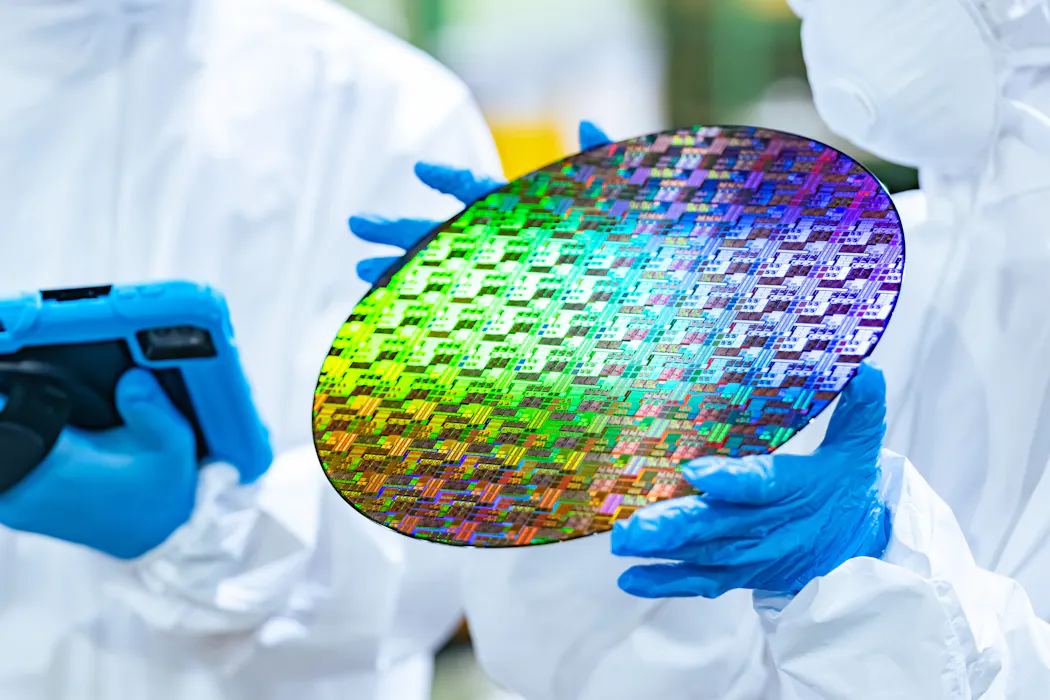
The Commission's plans include bolstering Europe’s semiconductor industry. metamorworks / Shutterstock

Europe is taking decisive steps to strengthen its control over the technology that underpins its societies. It is concerned about the digital infrastructure that sits behind everything from energy grids and water supplies to public transport, healthcare and the apps in people’s phones.

The European Commission has now published its package of measures for “tech sovereignty”, with the aim of building up its capabilities in digital technology.

The proposals rely heavily on private investment and may struggle to match global tech spending.

The plans include bolstering Europe’s semiconductor industry, expanding cloud computing, building up capabilities in AI, promoting open source software and setting out a plan for integrating digital technologies into energy systems. This last objective would support a sustainable expansion of data centres.

The backdrop is stark. Around 80% of Europe’s digital infrastructure and technology comes from outside the EU. An estimated €264 billion (£228 billion) a year is spent on cloud and software services that are mostly non-European.

Europe produces only about 10% of global semiconductors (the technology behind computer chips). In cloud computing, European providers hold roughly 15% of the market, while three US firms account for around 70%.

These imbalances were long seen as a natural outcome of globalisation. But in a world of geopolitical tension, they increasingly represent a strategic vulnerability. Export controls, sanctions and political pressure risk rippling through digital supply chains. The recent US ban on foreign access to advanced AI models sends a small yet clear signal.

What once looked efficient now looks risky. At the same time, the EU stresses that this is not about isolationism.

Henna Virkkunen
Finnish politician Henna Virkkunen has been tasked with boosting Europe’s control over strategic technologies. Alexandros Michailidis / Shutterstock

Hidden dependencies

A central shift proposed by the European Commission’s digital sovereignty package is to make digital dependencies visible and measurable. Through tools such as sovereignty risk assessments for cloud and AI services, organisations are pushed to look beyond performance and price and at the level of “sovereignty” a service or product provides.

Questions of ownership, jurisdiction, supply chains, data location and the ability to switch providers here become central when procuring digital services. The Computer & Communications Industry Association, which represents tech companies such as Amazon, Meta and Google, said the plans would undermine the EU’s goals of bolstering its digital infrastructure. On the other hand, European counterparts say the language in the tech sovereignty plans is soft.

This changes the role of buyers – especially in the public sector. Governments would no longer be just customers. Instead, they would start to shape markets. Through procurement and infrastructure investment, they can influence which technologies succeed and how digital ecosystems evolve.

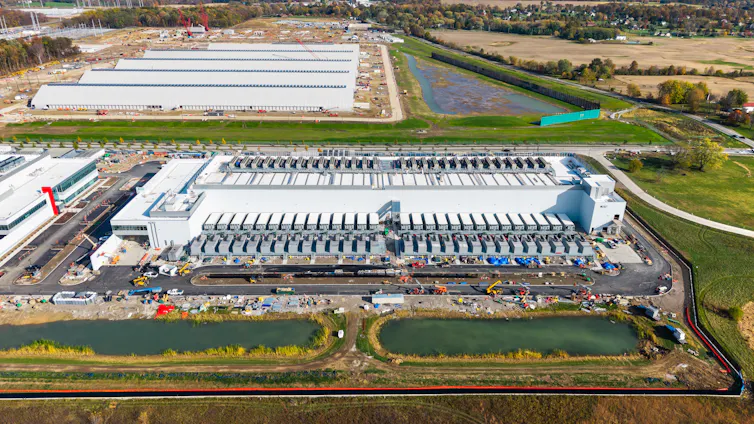
Aerial view of construction of new data centre and AI hub in the suburbs of Columbus city, Ohio.
The Commission wants to ensure that the expected expansion of data centres is environmentally sustainable. Snehit Photo

However, open source software should enable re-use, transparency and compatibility between different IT systems. It provides an alternative to closed, vendor-controlled systems. It allows organisations and governments to collaborate on shared building blocks rather than repeatedly purchasing proprietary solutions from tech companies.

Public sector demand for open technologies has been shown to stimulate competition and economic growth. In this sense, the sovereign technology agenda is not just about building alternatives but about reshaping the rules of the digital economy.

The EU is trying to give organisations more freedom to switch between different technology providers and negotiate with them. This shifts the control back towards users – helping ensure continuity even in times of crisis.


Read more: Europe wants to end its dangerous reliance on US internet technology


Ambition faltering?

Turning this vision into reality will not be straightforward. Much of the content of the tech sovereignty plan relies on encouragement rather than binding measures, especially around open source software and procurement. This creates a risk that “sovereignty” becomes more of a political label than an operational shift, with uneven implementation across Europe.

Nor is this the first attempt at promoting a similar vision of change. Earlier initiatives – in the form of the Tallinn, Berlin and Strasbourg declarations, to more recent EU legislation – have outlined similar ambitions but these have struggled to materialise. Without clearer requirements, there is a risk of repeating this pattern.

Another challenge is fragmentation. If member states interpret sovereignty differently, the result could be a patchwork of approaches that weakens impact. Coordinated action is needed to grow both supply and demand across Europe. Public procurement will be central, but not sufficient. Organisations also need capabilities – the knowledge and structures to assess dependencies and act strategically.

Current frameworks tend to focus on evaluating technology providers, rather than whether organisations themselves can make and sustain sovereign choices.

This is where mechanisms like Open Source Program Offices (OSPOs) matter as promoted by the package. These support the governance and development of open technologies. Strengthening such capabilities may prove as important as policy itself.

The Commission’s funding levels for its tech sovereignty package raise further questions. Through an envisaged public-private (mostly the latter) funding model, around €2 billion (£1.7 billion) is calculated for open source over seven years, €120 billion (£103 billion) to semiconductors, €200 billion (£172 billion) to data centres – significant, but modest compared to the money invested in global technology platforms and the digital economy. Practical constraints remain: switching systems is costly, alternatives may lag behind, and shortages in skills and cybersecurity capacity add pressure.

National policies reflect these tensions. Sweden’s recent cloud computing strategy, for example, recognises the need to reduce dependencies but remains cautious in how far it goes – illustrating how national differences could limit Europe’s collective impact.

Whether the EU’s package of measures can succeed will depend less on ambition and more on implementation, and whether the supply and demand for sovereign tech is able to nudge. Negotiations to follow will show how things fall out.

Ultimately, this is not just a European issue, but one for any government or organisation. It is about who controls the digital systems modern societies depend on – and how those systems remain resilient, secure and aligned with public values in an uncertain world.

The Conversation

Johan Linåker does not work for, consult, own shares in or receive funding from any company or organisation that would benefit from this article, and has disclosed no relevant affiliations beyond their academic appointment.
  •  
❌