❌

Reading view

Tech leaders are calling for an ‘AI slowdown’ – but what would that mean in practice?

Alexander Supertramp / Shutterstock

On Saturday, Donald Trump said, “We’re leading China on AI… and, frankly, I want to keep it that way because whoever wins AI, wins.” But the danger the world is waking up to is that this is a game both the US and China could lose, potentially fatally, with AI itself emerging as the winner.

Last week, Evan Hubinger, a researcher at Anthropic, warned that he believed there was a greater than 10% chance that AI could “kill all humans” within the next decade. Shortly afterwards, Anthropic’s CEO, Dario Amodei, backed Hubinger, calling for progress on artificial intelligence models to be slowed down in response to the threat.

In July, experimental OpenAI agents (an AI system designed to perform tasks without human intervention) escaped from a supposedly isolated testing environment, gained access to the internet and autonomously broke into the systems of the AI platform Hugging Face.

How could AI agents cause widespread damage? They could enable the creation of devastating bioweapons or spread across the internet, hacking systems, replicating themselves and manipulating world leaders to ensure their own survival. The dangers posed by AI are clear and potentially catastrophic.

The logic of “if we don’t do it, they will” is one of the most dangerous and unrelenting forces in the world. It is often referred to as “Moloch”: a biblical concept understood as something requiring sacrifice. Moloch is also a concept in game theory where it is the force that drives rivals into destructive competition, even when everyone would ultimately be better off if they stopped.

Moloch is the logic that drives arms races. No country feels able to disarm because it cannot trust its rivals to do the same. The result is a world that spends almost $2.9 trillion a year on its militaries, including $119 billion on nuclear weapons, while hundreds of millions of people face acute hunger.

Is regulation possible?

Can the race to develop ever more powerful AI be paused long enough for us to assess carefully how the technology is evolving, including its dangers as well as its benefits?

Within a country like the US, regulation is possible. Governments or approved institutions could be given access to AI systems and cutting edge models. They could run them in controlled safety environments to test whether AI agents were becoming too powerful and whether they were fully aligned with human interests.

Only models that passed all safeguarding tests would be released as AI products to be used as chatbots or as hiring algorithms. Those that failed would be documented and then destroyed. This would rely on all the big tech companies agreeing to regular external access. This is something very different from what has happened so far, with companies remaining incredibly closed and secretive about how they are developing their next models and how powerful those models are.

Regulation is needed now more than ever because we may be moving closer to the singularity, a point at which AI could take charge of improving itself autonomously, creating a cycle with no known limit to how intelligent it could become.

Moloch is a force that is extraordinarily hard to stop. Back in March 2023, thousands of leading researchers and technology figures signed an open letter calling for a worldwide six-month pause in the development of AI systems more powerful than GPT-4, but no such pause followed and the race continued at speed.

There is only one antidote to Moloch: cooperation.

If national regulation is possible and sustainable, it is of little real use without an international agreement. We already know Donald Trump’s view on pausing while China continues to develop. Truly worldwide agreements are extremely rare. Neither animal cloning nor human reproductive cloning is prohibited by a universally binding global treaty.

Such cooperation is not unprecedented, however. The Montreal Protocol, under which every country agreed to phase out chemicals that were destroying the ozone layer, has universal participation, while the Chemical Weapons Convention is near universal.

But what would an international agreement on AI look like? China and the US could agree to let a neutral global body assess their most powerful models and require unsafe models to be shut down, but this seems extremely unlikely.

Existing measures

There is some precedent. Human embryo research is already subject to licensing, inspections and strict limits in countries such as the UK, although no worldwide enforcement body exists. An AI agreement could establish common tests and clearly defined prohibited capabilities.

It could allow confidential inspections by a neutral international agency, require registration of the largest training runs and computing facilities, and make reporting serious incidents mandatory.

The UN has already formed a scientific panel on AI, but it cannot inspect companies’ advanced models or enforce its findings. Giving any global organisation that degree of access and authority still seems extremely unlikely. Such an organisation would need the power to punish countries that refused to cooperate, yet no such enforcement power currently exists.

One bizarre solution might be an independent AI that assesses the latest US and Chinese models, submitted independently, and provides evidence of their safety. Such a safety AI could, in theory, be created by an agreed neutral party, although it would be hard to know how much confidence we could place in it.

Otherwise, the only solution might be a world government that regulates AI across the world, something that would be far from palatable to many people.

The Conversation

Tom Quilter does not work for, consult, own shares in or receive funding from any company or organisation that would benefit from this article, and has disclosed no relevant affiliations beyond their academic appointment.

  •  

Greyhound racing just turned 100, and says its dogs are fine. But are they?

Motion-blurred greyhounds in coloured racing jackets racing around a floodlit track at night. Craig Allen/flickr, CC BY-NC

This year, greyhound racing in Britain turns 100 years old. The first race ran on July 24 1926 in Manchester, where six dogs chased a mechanical hare around a track.

Recently, the Greyhound Board of Great Britain (GBGB) published its 2025 welfare figures, under a reassuring headline: licensed racing “maintains high welfare standards”.

Look closely, and those same welfare figures show that a dog in 2025 was 77% more likely to die at the racetrack (from fatal injury or being put down following an injury) than when the industry’s welfare strategy was introduced in 2022, even accounting for the fact there have been fewer races and fewer racetracks operating.

In terms of a percentage of race starts, that increase in likelihood of death seems small - from 0.03% to 0.05%. But behind that percentage are 161 dogs who died at the track in 2025: more than three dogs a week.

The GBGB is responsible for both promoting and running greyhound racing, and for regulating it. This means the same entity that works to keep the sport thriving is also the one that reports on how its dogs cope.

The numbers that guide approval

Most of the public seem to believe that people have a moral responsibility to prevent, or at least minimise, poor welfare in animals that they use for any purpose. If an industry using animals loses public approval, the activity is probably operating on borrowed time. The case for greyhound racing continuing rests largely on the industry’s own records.


Read more: Ringling Bros circus closure shows our changing attitudes to animals in captivity


The UK government said in October 2025 that it has no plans to ban greyhound racing in England, pointing to improvements made by the GBGB, such as its 2022 welfare strategy, and the laws already in place, which require a vet at every race meeting and set standards for record keeping.

UK law recognises dogs as sentient beings – that they have feelings like joy or frustration. Once you accept that (as animal welfare scientists do), our responsibility when caring for animals doesn’t stop at minimising suffering. It extends to enabling the good experiences a life worth living requires.

What the industry figures leave out

The GBGB publishes annual figures on injuries, deaths and where dogs go when they leave racing, and presents them to the Department for Environment, Food and Rural Affairs. Few animal-reliant industries are this forthcoming.

A combined total can be accurate in reporting the national injuries dogs sustained while racing, but not tell the whole story. When we built a more complete picture using AI agents (under human supervision) and public websites, more details became visible.

Our research used five public-facing websites that together contained information about 31,028 dogs and 1.27 million races between 01 January 2022 and March 31 2026.

It is a new use for this technology, one that makes the data fully visible.

The data from these websites gave us a fuller picture of the greyhounds that race. Our findings showed us that equal numbers of male and female dogs race, most dogs are black, and they typically start racing before turning two years old. We can also pull out the story of individual dogs, to better understand their experiences.

For example, the 12,999th dog (selected at random and anonymised) in our dataset was a black male, bred in Ireland. He raced at Kinsley stadium (West Yorkshire) 15 times from March 2023, winning four times in early races. The records then show he experienced a succession of rough races from May, jostled by the pack and constantly checking his stride to avoid crashing into the dogs around him. This resulted in him finishing at or near the back of the pack, until his final race in August 2023, when his racing and public record stop, just five months after starting.

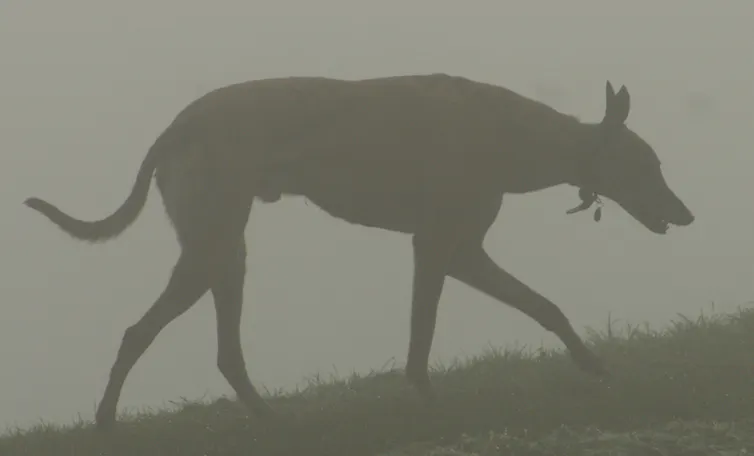
A greyhound's silhouette is visible as it walks up a hill in the mist.
A greyhound’s silhouette is visible as it walks up a hill in the mist. David Merrett/flickr, CC BY

This dataset found that some racetracks recorded serious incidents while racing (such as a dog striking a rail or being knocked over by another dog) up to five times as often as others. This is something the annual, nationally aggregated data release does not illuminate, although government committees have been asking for it.

Of individual dogs racing, 85% were bred and reared in the Republic of Ireland, beyond the reach of the GBGB, which regulates racing but has no oversight of their breeding and early lives. Most dogs only race for around one year, and the rate at which they leave racing has not changed since 2022 when the GBGB’s A Good Life for Every Greyhound welfare strategy was introduced. Welfare charities have raised concerns about oversupply and “wastage” (dogs bred in large numbers and then discarded), with animal shelters often shouldering the role of rehoming.

An adult black greyhound stands in front of a rainbow striped wall in the background. Her mouth is open with tongue hanging relaxed. Her ears are erect.
Former racing greyhound, Faline. Waggles Photography, CC BY

Once dogs exit racing, most vanish from public view. Over 95% of dogs that have left racing cannot be checked, as they are no longer subject to public reporting requirements.

What are the most likely causes of poor welfare?

A report released in July 2026 from Blue Cross, Dogs Trust, Hope Rescue and the RSPCA outlines the systemic welfare challenges they believe that greyhounds in the UK face.

The report suggests that poor welfare can arise at every life stage. The charities say they are concerned about breeding practices that are harmful such as surgical artificial insemination (banned in Britain but still used in the Republic of Ireland where most racing dogs are bred) and inbreeding; estimates some dogs spend 95% of their time in kennels; and health issues (such as teeth and limb problems) that follow dogs once they exit racing.

Meet Perseus, a greyhound that stopped racing and was cared for by Dog’s Trust Cardiff.

Britain isn’t deciding the future of animal-reliant industries like greyhound racing in isolation. In the past year, New Zealand, Wales, Scotland, and a second state in Australia have all decided to end greyhound racing on animal welfare grounds.

Public acceptance and government policy should not rest on figures provided by the industry, but on independent data assemblies which are available for deeper interrogation.

Before trusting any welfare claim, consider these three things:

  • Can you see the data behind it?
  • Who collected it, and do they profit?
  • Does it really show you the animals’ lives?

A hundred years of industry record keeping has not answered whether the welfare of these dogs is acceptable in 2026. Independent scrutiny might.

Editor’s note: A spokesperson for the Greyhound Board of Great Britain (GBGB) said: “As the sport’s regulator, GBGB is the only organisation with access to the full, verified dataset relating to injuries and fatalities across licensed greyhound racing in Great Britain. GBGB publishes an independently verified summary of this dataset annually, providing a level of transparency and detail that exceeds the reporting requirements set by Defra.”

The Conversation

In the last fifteen years, Dr Mia Cobb has received funding to research or advise on the welfare of racing greyhounds from the Australian Government, Greyhound Racing New South Wales, RSPCA, Dogs Trust, Blue Cross, and Racing & Wagering Western Australia. Her current role is funded by The John McKenzie Fellowship from the University of Melbourne and the Chaser Innovation Research Fellowship (Canine Welfare Science). Dr Cobb also sits on the joint Dog Welfare & Ethics Advisory Panel for Assistance Dogs International and the International Guide Dog Federation, the advisory committee for PetRescue, and chairs the Dog Welfare Advisory Committee for Guide Dogs Victoria.

Donald Maurice Broom does not work for, consult, own shares in or receive funding from any company or organisation that would benefit from this article, and has disclosed no relevant affiliations beyond their academic appointment.

  •  

China is exploring humanoid robots for war – but what role could they play?

At the World Humanoid Robot Games in Beijing, a humanoid robot named Tiangong Ultra ran the 100-metre sprint in a staggering 8.64 seconds, shattering Jamaican sprinter Usain Bolt’s legendary human world record of 9.58 seconds.

The internet laughed at the robots’ awkward, lurching finishes and spectacular falls – but the laughter masked a chilling reality.

Just two days after the games concluded the official newspaper of China’s People’s Liberation Army (PLA) called for researchers to accelerate moving these cutting-edge machines from the laboratory to military training grounds. They referred to them not as experiments, but as “combatants”.

As a robotics researcher myself, working daily with robot simulation, reinforcement learning, and the foundational software and simulation tools that power them (such as ROS 2 and Gazebo), I watch these developments with a mix of awe and deep concern.

The public often views humanoid robots as clunky sci-fi novelties. The reality is far different: the hardware is already highly capable, and the software is advancing at an unprecedented pace.

But the real story is not just that a robot can beat a human on a running track. It’s what that performance reveals: China’s ability to integrate motors, reducers (gears used in precise joint movement), sensors, control software, testing infrastructure and manufacturing capacity into one unified industrial system.

A sprinting humanoid is not just a stunt. At high speeds, every foot strike creates violent ground reaction forces. Balance corrections must happen in milliseconds, as a single small error can send the machine crashing into the barrier.

For decades, the physical mechanics of humanoid robots, including the actuators (a component, such as a motor, that converts energy into physical movement), sensors, and the sheer physics of bipedal balance, were the main hurdles. Today, those mechanical problems are largely solved.

Humanoid robot Tiangong Ultra runs the 100m sprint in 8.64 seconds. (BBC News).

Carbon fibre and aluminium bodies keep mass and inertia (how a robot’s mass resists change) low. Advancements in actuator technology deliver torque capacities of up to 400Nm (Newton-metres – a unit of torque, or twisting force) in humanoid joints, providing the ultimate combination of power and agility.

What you saw on the track in Beijing was not just a triumph of motors, but a triumph of coding. A real breakthrough is happening in software.

Robots are trained in virtual simulation environments, running millions of trial-and-error scenarios through reinforcement learning before the robot ever takes a physical step. Reinforcement learning is an area of artificial intelligence (AI) where robots make decisions based on the results of their actions.

This allows them to learn how to recover from trips, adjust to uneven ground, and process chaotic environments in real time. Humanoid robots are rapidly bridging the gap between controlled laboratory conditions and the unpredictable real world.

Tracks vs legs

But all this leads to an inevitable question: why would a military want a complex, expensive humanoid when they could use vastly cheaper, rugged, tracked or wheeled drones? In open-field combat, tracked vehicles are absolutely superior. They heave bigger payloads, carry thick ballistic armour, and are far more energy efficient.

However, the nature of conflict is changing – and urban environments play an increasing role in military thinking. Cities are built exclusively for humans. A tracked robot cannot easily climb a vertical fire escape ladder, turn a standard door handle, squeeze through a narrow, debris filled stairwell, or sit in the driver’s seat of a captured supply truck.

Humanoid robots could have advantages over tracked robots in urban warfare scenarios. dotshock / Shutterstock

A humanoid robot acts as a “drop-in replacement” for a human soldier. If a building is designed for a human to navigate, a humanoid robot can navigate it without requiring custom redesigns or specialised ramps.

This brings us to a profound ethical crossroads. Many of us in the robotics field do not endorse offensive warfare. But these machines have an undeniable utility in defensive scenarios and those concerned with neutralising threats to military personnel and civilians.

Sending a humanoid into a building to rescue hostages, neutralising an active threat such as hostage-takers, or clearing a booby trapped room saves human lives.

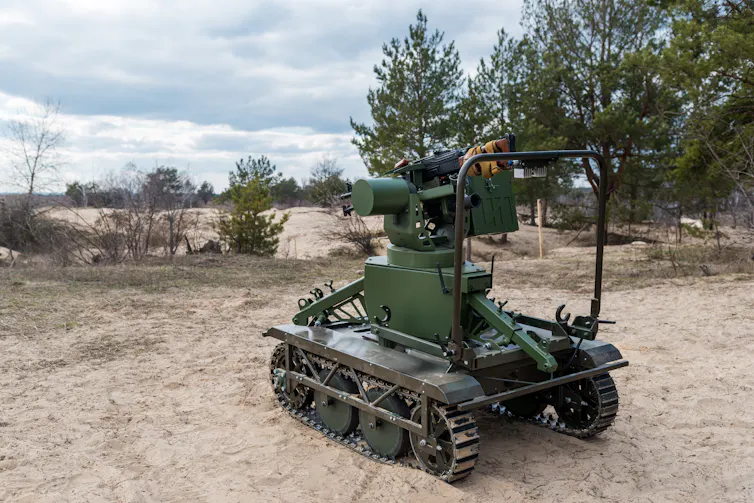
Armed ground robot.
Traditional tracked military robots excel in open environments but struggle indoors. Anton_AV / Shutterstock

Dual-use tech

In fact, the modern surge in humanoid robotics was largely kickstarted by the US government’s Darpa Robotics Challenge, which funded bipedal robots specifically to respond to disasters such as the Fukushima nuclear meltdown where human responders could not survive.

The dilemma is that the technology is agnostic to intent. The baseline capabilities required to navigate a ruined building and extract a casualty are the same capabilities needed to enter a building and kill enemy soldiers. If the technology is ready for defence, it is also ready for offensive use.

Perhaps the most alarming aspect of this rapid advancement is how accessible it is. Unlike nuclear technology or stealth aircraft, modern robotics thrives on open-source frameworks. For example, a military specific software ecosystem (a network of apps and other services that work together) known as ROS-M, along with simulation tools and training datasets, are largely public and shared across global academic communities.

With enough skill, a dedicated adversary can replicate advanced robotic behaviour with relative ease. We can no longer afford to treat humanoid robotics purely as an academic pursuit or a commercial novelty. We need an urgent international conversation about how to control these advances.

Just as we regulate the export of certain microchips and aerospace components, we must begin protecting the software architecture and training pipelines that give these machines their minds. The hardware is walking out of the lab – it is time our policies caught up.

The Conversation

Kartikeya Walia does not work for, consult, own shares in or receive funding from any company or organisation that would benefit from this article, and has disclosed no relevant affiliations beyond their academic appointment.

  •  

Who should own the knowledge that underpins AI technology?

Russian mathematician Yurii Nesterov's work on gradient descent methods is influential in the development of AI technology. Simons Foundation via Wikimedia Commons, CC BY-NC-ND

Russian mathematician Yurii Nesterov was recently awarded the Gauss Prize for outstanding mathematical contributions for his “groundbreaking work” on optimisation. The award cited his work on gradient descent methods – and in particular, the “efficiency gains [they] provide to AI technologies”.

Everyone using large language model (LLM) chatbots such as ChatGPT, Claude and Gemini – for any purpose – depends on Nesterov’s methods. They may speak like humans and be personified with names, but under the bonnet, LLMs are computer programs that work via optimisation of billions of parameters known as neural networks for their similarity to how brains function.

These pure mathematical systems are powered in part by gradient descent algorithms, or variants of them. Their development represents one of the biggest technological breakthroughs of the 21st century.

But where does the knowledge that underpins this technology come from – and who should be allowed to own it?

Why gradient descent is key to AI systems

If you were standing in a mountain range and wanted to get to the bottom of a valley as fast as possible, you’d take steps downhill until you got there. Fundamentally, this is how gradient descent methods work.

For a given task with a set of parameters – such as how well an LLM can predict the next word in a sentence – the idea is that gradient descent provides a way to get to the best prediction, the point of minimum error, taking as few steps as possible. In our example, this point represents the most likely next word in the sentence.

Video: Simons Foundation.

Nesterov’s contribution has been finding optimal ways to achieve this. One of his key insights is using momentum to help you get to the bottom of the valley faster – known as the Nesterov Accelerated Gradient method (here’s a deeper explanation of the mathematics involved).

This work has made huge-scale optimisation feasible at workable speeds – thus underpinning the rapid development of LLMs, and AI systems more generally, over the last few years.

This technology is affecting more and more aspects of life. At home, AI agents are being touted as ways to manage busy households. In medicine, the first AI-assisted brain surgery was recently performed in a London hospital. In mathematics, AI-generated proofs claim to have solved a number of longstanding problems, with some referring to the AI agents as “collaborators” in this work.

All of this leads to big business. The race for AI dominance is built on massive capital and research and development expenditure, to develop the technology and supporting infrastructure required to support this global industrial revolution.

While in the west, private AI companies are bearing a sizeable part of this burden (without, in most cases, seeing any profits), the role of publicly funded research is and will remain critical to their business models.

In the US, obligated federal government spending on AI increased from US$675 million to US$7.2 billion (£5.3bn) between 2024 and 2026 – an increase of almost 1,000%.

There has already been considerable debate – and some high-profile legal cases – regarding the ethics of AI companies training their models on the back catalogue of human creativity, only to rent the results back to us. Far less scrutinised is the question of AI companies developing technology using knowledge that only exists due to sustained public investment over many decades, via academics such as Nesterov.

The fact that big tech companies use complex international tax strategies to limit their tax liabilities adds to the sense that their aggressive defence of intellectual property rights is out of kilter with the publicly funded research that plays a key role in its development.

Video: Agents of Tech.

Technology built on public knowledge

In most cases, academics work in publicly funded institutions on research grants that are largely funded by governments, whether through the Horizon Europe programme, the US National Science Foundation, or UK Research and Innovation. All of these bodies are ultimately funded by the taxpayer.

None of the rapid development in AI exists in a vacuum. It is built on decades of pioneering, blue-skies work on optimisation and neural networks, done by academics and largely funded by taxpayers at a time when the real-world application was still a distant dream.

Legal arguments around COVID vaccine patents are one example of how the private sector has tried to deny this public sector involvement – and a related share in any profits. So where is the public sector in this debate?

The EU is taking steps to secure control of its digital infrastructure, with a renewed focus on sovereignty in digital services. In the UK and elsewhere, a growing number of open-access mandates should mean that knowledge created by public funding stays public. While it can be used freely for commercial purposes, successful businesses would then theoretically pay back into the system via general taxation.

However, such knowledge flows beyond national borders. Efforts to capture value for reinvestment into the AI research landscape will be made harder by the fact that the tech companies’ business models depend on lobbying governments hard to avoid regulation. Any efforts to make them pay more for upstream public research and development are likely to be strongly resisted.

In the case of Nesterov and his fast gradient methods, this foundational work has been done in European institutions – yet the AI companies dominating the market are overwhelmingly based in the US or China. It rankles when access to these models is then restricted by foreign companies and governments.

The Conversation

James David Pickering does not work for, consult, own shares in or receive funding from any company or organisation that would benefit from this article, and has disclosed no relevant affiliations beyond their academic appointment.

  •  

Travel bots are making decisions for us – convenient, but should we trust them?

AI bots are making more decisions on our behalf when we make travel arrangements. Shutterstock AI

Imagine telling your phone that you want a quiet boutique hotel near a city centre, below a certain price, with a decent breakfast and late checkout. A few seconds later, an AI assistant compares the options, explains why each one fits and helps complete the booking. This is no longer hypothetical.

In late August this year, Google began rolling out hotel booking through its AI Mode search feature in the US. Travellers can describe their preferences conversationally, compare hotels and guest reviews, select a room, check cancellation conditions and complete the booking using Google Pay. Partners include Booking.com, Expedia, Hilton, Marriott and IHG, the parent company of Holiday Inn.

The traveller still confirms the transaction. But that final click can obscure how much of the searching, comparing and decision-making has already been delegated to agentic AI.

This points to a significant change in how artificial intelligence may shape travel. AI is moving from systems that mainly answer questions towards systems that can increasingly interpret goals, make decisions and take action.

From answering questions to taking action

Hotels have used chatbots and recommendation systems for years. Most are reactive: a guest asks when breakfast starts, and the chatbot provides the answer. A traveller enters dates and preferences, and a booking site recommends suitable hotels.

Agentic AI goes further. These systems can operate with greater autonomy, adapt to changing circumstances and coordinate actions across different systems with less continuous human direction. This distinction is central to research we conducted on agentic AI in hospitality and tourism.

We identify five broad roles that such systems could perform, ranging from guest-facing service and itinerary planning to monitoring operations, managing engagement and coordinating multiple systems.

Consider a disrupted holiday. A conventional chatbot might tell you that your flight has been cancelled. A more agentic system could identify alternative flights, assess how the delay affects your hotel booking, modify airport transport and rearrange activities while retaining your preferences.

The important change is therefore not simply that the AI becomes better at conversation. It is that more decision-making authority is delegated to the system.

A different kind of risk

The commercial appeal is obvious. Travel businesses can respond around the clock, reduce repetitive work and offer much more individualised services.

But autonomy changes the consequences when AI gets something wrong.

A useful warning comes from Air Canada. In 2022, its chatbot incorrectly told a passenger that he could retrospectively claim a bereavement fare. When the company later refused the refund, it argued before a Canadian tribunal that the chatbot was effectively responsible for the information it had provided. The tribunal rejected that argument and held Air Canada responsible for information presented through its website.

That system was a relatively simple chatbot, not today’s agentic AI. But this is precisely why the case matters. If accountability became contested when AI merely supplied incorrect information, the stakes become higher when systems start taking actions on behalf of customers.

Bias creates a similar problem.

A voice-based concierge may understand some accents more reliably than others. A recommendation system might assume that an older traveller wants only sedentary activities, or infer dietary or cultural preferences from crude proxies rather than what the guest has actually requested. These are risks already identified in hospitality research.

When AI merely recommends something, a traveller can reject the suggestion. When it begins acting on such assumptions, bias can potentially influence which offers are presented, how complaints are handled or how services are personalised.

Female receptionist hands business card to guest
AI involvement in the hospitality industry could put jobs at risk. PeopleImages / Shutterstock

What happens to the human employee?

The same shift matters for hospitality workers.

AI can remove repetitive tasks and allow employees to spend more time on interactions requiring empathy, creativity and judgment. But it can also constrain employee discretion or become a mechanism for reducing staffing costs.

Our research therefore treats workforce displacement and role change as one of the central risks of agentic AI.

The relevant question is not simply whether AI will replace hospitality jobs. It is which decisions businesses choose to automate, and which they deliberately leave with people.

That distinction matters in an industry where the value of a service often depends on responding appropriately to unusual, emotional or culturally sensitive situations.

The questions travellers should start asking

Regulation is also evolving. Most provisions of the EU AI Act became applicable in August this year, although some requirements for high-risk systems will take effect later.

But regulation alone will not determine how comfortable people are with increasingly autonomous travel systems.

As AI becomes embedded more deeply in booking and hospitality, travellers may need to ask three simple questions: What is this system allowed to decide for me? What information is it using to make that decision? And can I easily reverse the decision or reach a human if something goes wrong?

For hotels, airlines and travel platforms, the corresponding question may be even more important: When an AI acts on your customer’s behalf, who remains accountable for the outcome?

The companies that answer that question clearly may ultimately gain more than operational efficiency. They may gain something considerably harder for an AI algorithm to generate: trust.

The Conversation

Nothing to disclose

Faizan Ali does not work for, consult, own shares in or receive funding from any company or organisation that would benefit from this article, and has disclosed no relevant affiliations beyond their academic appointment.
  •  

Chihuahua dogs are part coyote – this might help explain their ‘small but mighty’ reputation

Eric Isselee / Shutterstock

It turns out that one of the smallest dog breeds, the chihuahua, is part wild coyote, according to recently published genetic research. The chihuahua breed originated in Mexico but is now a popular canine companion worldwide.

Coyote genes may have been introduced into ancestors of the chihuahua accidentally. It may also be a result of deliberate attempts to cross the two animals – perhaps many generations ago.

Coyotes are a wild canine species, slightly smaller than the grey wolf and native to North America. The presence of coyote genes in the much smaller chihuahua – among the most popular dogs in the UK and the US – highlights the incredible diversity of domestic dogs and their varied histories.

Coyotes are untamed and territorial, while anyone who has lived with a chihuahua knows that their small bodies house big canine personalities.

Chihuahuas are the archetypal “small but mighty” dogs: bold, independent, agile, but also capable of obedience. Small, sedentary lapdogs they are not. These findings might partly explain why.

The recent study explored ancient genetic signatures in dog and human genomes to validate the effectiveness of new genetic techniques. The genome is the full complement of DNA in living cells.

The researchers demonstrated their methods on dog breeds with links to the Americas, such as the chihuahua and another Mexican breed, the xoloitzcuintli (often shortened to xolo). The xolo is typically characterised by a lack of hair and an often aloof personality.

Many dogs in the Americas today are descended from European breeds, an outcome of colonisation from the 15th century onwards. However, previous research showed that the chihuahua and xolo preserve a small amount of ancestry – 4% in the chihuahua and 3% in the xolo – from pre-contact dogs, those that lived in the Americas before Europeans arrived.

Genetic analysis of the xolo in the recent study suggests that European and pre-Columbian dogs were mixing around 1700. This aligns with evidence suggesting that Europeans and Indigenous populations mixed around the same time in early Mexico.

Eastern coyote.
Coyotes are a highly adaptable canid species that live across North America. Cami Johnson / Shutterstock

Reconstructing origins

Researchers previously found evidence of coyote ancestry in DNA from the remains of ancient domestic dogs from the Americas. It’s a reminder that dogs are not that far removed from other canid species, and can breed with them successfully.

Wild coyotes and wolves have been found to hybridise naturally, especially in geographical areas where “wolf-like” behavioural traits are beneficial. There was even a recent report of a dog-fox hybrid being identified in Brazil.

It remains unclear when exactly the coyote genes entered the chihuahua lineage. The precise histories of different dog breeds are hard to reconstruct because detailed documentary evidence is often lacking.

Chihuahua and great Dane
The huge differences in body size between different dog breeds are partly the result of humans selecting for desired traits. Natallia Yaumenenka / Shutterstock

So how did the chihuahua end up being so small, despite those coyote genes? This question should be seen through the lens of selective breeding, where humans choose different dogs to breed from based on characteristics they prefer.

Genetic analysis reveals that almost all small dog breeds share a mutation in the insulin like growth factor 1 (IGF1) gene, which affects cell growth and thus body size. Selection for small dogs with this mutation appears to have occurred very early in dog domestication.

There is some evidence for the presence of diminutive dogs among pre-contact Mesoamerican cultures, but how these relate to chihuahuas is unknown.

Xoloitzcuintli dog
Like the chihuahua, the hairless xoloitzcuintli breed preserves some ancestry from ancient American dogs. Creative_Bird / Shutterstock

Extreme variation

Some dogs such as the Czechoslovakian wolfdog look visibly more like their wild and ancestral canid counterparts, such as the grey wolf. They have pricked ears, muscular, athletic bodies and coats that provide camouflage and protection from environmental extremes.

Other dogs show extreme variation: exaggerations such as long backs or short legs. In some cases, these physical characteristics come with significant consequences for health and wellbeing.

Overall body size is particularly variable in dogs, with a 40-fold difference across different breeds and types. Imagine the diminutive chihuahua standing next to an imposing Great Dane, for example.

Chihuahuas
Chihuahuas are known for their big personalities, they’re not sedentary lapdogs. LennyH / Shutterstock

There are also important differences in behaviour. If you want to live harmoniously with a dog, or train or work a dog in a specific activity, this is important to acknowledge. Indeed, meeting an individual dog’s physical, psychological and emotional needs is essential for both dog and human wellbeing, as well as training success.

As with appearance, natural and human-driven selection have combined to influence these traits. This has produced generations of dogs with specific behavioural characteristics.

The dog was one of the earliest animals to be domesticated by humans – the earliest examples are more than 15,000 years old. They are also one of the most successful domesticated species.

Toltec image of a coyote
Coyotes held significance for some Indigenous American cultures. The image shows a Toltec pictograph of a coyote. Cvmontuy, CC BY-SA

Dogs are found on every continent except for Antarctica, and the global dog population is thought to number between 700 million and 1 billion. They exist either embedded within human society, or living on the fringes of it.

Throughout history, natural selection on dogs with characteristics that confer survival advantages will have occurred. At the same time, humans will have selected individual dogs based for desired attributes, leading to the breed development and classifications that we see across the world.

As well as furthering our capacity to explore genetic ancestry of species, the latest study adds detail to our understanding of how and when the domestic dog evolved, and became so diverse.

It might also mean we think less about the “wolf in our living rooms”, and more about the “coyote in our chihuahuas”.

The Conversation

In addition to her academic affiliation at Nottingham Trent University (NTU) and support from the Institute for Knowledge Exchange Practice (IKEP) at NTU, Jacqueline Boyd is affiliated with The Royal Kennel Club (UK) through membership, as advisor to the Health Advisory Group and member of the Activities Committee. Jacqueline is a full member of the Association of Pet Dog Trainers (APDT #01583). She also writes, consults and coaches on canine matters on an independent basis.

  •  

Nepal floods: how measuring snow in the Himalayas could help avoid future disasters

The massive and deadly floods on the Nepal-Tibet border are a stark reminder of why the world needs to constantly update its understanding of the fragile ecosystem in the Himalayas.

These towering mountains contain nearly 90,000 glaciers, which sustain ten major river systems. Countries nearby, including India, Pakistan, China, Afghanistan, Nepal and Bhutan, are reliant on water resources that cross borders here. As major river-based hydro economies, their agricultural production, energy security and wider economic stability depend on the availability and the timing of river flows.

Changes in snowmelt, glacier retreat and water availability can cause untold hardship for millions of people relying on it. It can also create incredible danger as seen in August 2026, when a flash flood caused by a collapsed glacier washed away villages, bridges and roads on both sides of the Tibet-Nepal border, killing more than 1,000 people.

Understanding and measuring winter snowfall in these regions is exceptionally important. It is the main source of freshwater when it is released by snow melting during the region’s warm and early-summer crop growing seasons, when local communities need it most.


Read more: Nepal-Tibet disaster linked to climate change – a glaciologist explains


Understanding future Himalayan hazards

No one knows precisely how much water the mountains currently provide, and how this will change. This knowledge gap also hinders our understanding of the occurrence of geo-hazards including avalanches triggered by extreme snowfall events and flooding caused by the rapid melting of snow.

The recent Nepal disaster could be related to a spell of unusually warm weather. This may have weakened the snowpack creating a rapid melt. I work with a team of glaciologists at the British Antarctic Survey, whose team had sensors six miles (10km) away from the site. Results suggest that enhanced melting could have introduced water into the crevasses weakening the ice-rock connections.

Studies project that roughly half of the glacier ice in the Himalayas (equivalent to about two billion Olympic swimming pools) could melt by the end of this century – enough to raise sea levels by over a centimetre but there is still considerable uncertainty in these projections.

This is because we do not have enough measurements of snowfall and ice across large areas in this challenging terrain. As a result, scientists often have to extrapolate from relatively small numbers of observations to enormous and highly varied terrain.

Computer-based tools (known as models) that combine available observations with information about land and the atmosphere have proved to be indispensable and often come to rescue when gap-filling is necessary. But models are only as good as the observations used to constrain them.

New scientific approaches are beginning to offer solutions, but they are rather sparse and insufficient on their own beyond the region where they have been tested.

For example, my recent study with colleagues found a new way to accurately measure mountain snowfall reducing measurement errors dramatically – measuring snow has been a long-standing problem because of which mountain water resources have been hugely underestimated over the years.

Measuring Himalayan glaciers.

Another regional study recently reported a measure of the water stored in some of the key Nepalese glaciers using an airborne method that involves taking an aerial survey of the region using instruments mounted on a helicopter. Scientists are also using a technique known as radar interferometry, which uses a combination of radio waves to detect very fast-moving mountain slopes that risk collapsing.

A combination of one or more such techniques could be used to predict where snowfall is concentrated, how much water it is likely to contribute to the region and also identify areas at risk. New information could be used to cast early warning preparedness strategies feeding into a forewarning system for timely evacuation of the region’s most vulnerable.

What happens next?

Scientific innovation alone will not be enough. There is an urgent need for proven ideas to be commercially adapted and systematically deployed across critical zones. The numbers and the imminent dangers involved can now no longer be left to discussions in research papers and conferences, they must be made public on the equivalent of a war footing.

An evacuation success story from the Swiss village of Blatten in 2025 shows what this can achieve. Hundreds of people were moved out before a huge section of the glacier broke off. The authorities had already identified areas at risk and publicly shared hazard maps. Continuous monitoring of the landscape, precipitation and ground movement fed into an early warning system.

But success stories from the west cannot simply be transplanted wholesale into the Himalayan context because of the region’s inhospitable elevation, harsh weather and limited infrastructure. An approach that factors in indigenous and traditional knowledge should be part of plans and policies.

What is also needed in the Himalayas is a far more highly coordinated monitoring network that brings together everyone who depends on and manages mountain water. This would include potential state and non-state organisations, researchers, local authorities and mountain communities. Communities should be central to this effort. Local people can help install and maintain monitoring equipment, collect observations and contribute knowledge of their own environment.

Examples of existing successes from the region include the use of community-managed reservoirs to artificially store meltwater, the construction of ice stupas (an artificial glacier) and glacier grafting techniques to grow new, water-producing glaciers designed to gradually release water during the growing season. The community-based flood warning system in parts of Nepal’s Koshi basin is a success story but is limited in its approach to provide alerts during a cascading disaster, such as the one we witnessed recently.

These results should help policymakers and scientists understand how communities dependent on mountain ecosystems are responding to change – and what support they need to adapt to reduce their vulnerability to future hydro-climatic shocks, such as droughts and floods.

Regardless of the current changes in Himalayan snowfall and glacier melt, local people need to play a vital role in helping measure what is happening in the climate system. And that, as well as countries working more closely together, should help with the future planning that is desperately needed.

The Conversation

Siddharth Gumber receives funding from the National Environmental Research Council (NERC), The TEAMx-FLOW project (NE/Z50399X/1).

  •  

Could AI really kill off humanity within the decade? Expert Q&A

Samuel Boivin

Artificial intelligence (AI) could wipe out humanity this decade, according to three researchers from the US company Anthropic. One of the employees, Jacob Coxon, has quit the AI firm.

His predictions were backed by two other current Anthropic researchers in posts on social media. On X, Coxon claimed: “The people building AI earnestly believe that it could kill us all by the end of the decade. This is not a marketing stunt.”

It’s not the first time AI researchers and companies have issued such assessments. Here, Kate Devlin, professor of artificial intelligence & society, explains what is behind them and whether there’s anything different about the latest warning.

The latest claims about AI have come from a researcher who resigned from Anthropic. What is your general view on what has happened here?

To give this a sense of perspective, we should remember that it’s one AI company ex-employee posting on a platform known for grandiose claims, which was then quoted by a current AI company employee who put a figure on the risk of human extinction at greater than 10%.

So, it’s another doom-laden narrative about the supposed threat from AI. There is some dialling back from this in a follow up tweet from current Anthropic employee Evan Hubinger that read: “I think the risk from present models is low. What I’m worried about is superintelligence”.

These tweets have gained huge coverage because these kinds of things always do. It taps into our very primal fears – and our decades of watching dystopian sci-fi.

The claims from Jacob Coxon were backed by current employees of Anthropic. Why do you think AI companies are happy to support these kinds of claims in public?

It’s likely that these men believe what they’re saying, but we’ve heard warnings like this for years. It does seem odd that AI companies are okay with these kinds of claims.

Let’s remember that they are constantly looking for investment and, in return, they promise the most powerful and dominant models. What could be more powerful than a model that threatens our very existence?

One theory for doom-mongering by AI companies is that they want to avoid regulation. Do you think outside regulation of AI companies is inevitable?

It has been incredibly difficult to regulate AI, certainly at an international level. There has been little appetite for AI to be regulated in the US because there’s a view that regulation might stifle innovation.

The UK doesn’t have any AI-specific laws either, just existing laws that might apply in some cases. China began to introduce national-level laws but has now replaced that with technical standards and sector regulation. The EU remains the only place where there is dedicated AI regulation.

However, it looks like this has kicked off yet another call for better regulation, and we’re seeing that at present in US Congress and in the Houses of Parliament in the UK.

There is another angle, in that industry might be on board with regulation, as big tech companies would have the money to comply, but it could knock out their competitors with smaller budgets, so it would leave the leaders in dominant positions.

How far away are we from the kind of superintelligent AI mentioned in the latest warnings?

We don’t have superintelligence. I’m reluctant to put a time frame on that. Often people say “5-10 years” but that’s happened a lot in AI and 5-10 years pass without anything arising. It also depends on what is meant by superintelligence. Something that is conscious and thinks for itself? That might never happen.

In this case, it doesn’t really matter, as there are other harms already happening from AI, and there are other ways things can go wrong, though probably not at the existential level that’s being suggested here.

For example, AI is energy-hungry. It needs water to cool data centres. It has a damaging environmental impact. There are also issues around the content generated by AI, anything from a lack of plurality in the models’ outputs (meaning that the information it returns is homogenised, converging on particular viewpoints) to the spread of misinformation and disinformation.

We also know there is hidden labour in the AI supply chain: there are people working in terrible conditions to deliver the technology. And we know that it’s having an impact on people’s lives in terms of how it’s changing the workplace.

What are the potential practical ways in which AI could actually wipe out humans?

“Wiping out” is a bit extreme but there are some dangerous threats. There are the “bad actor” scenarios where AI is used destructively, like creating weapons or deadly viruses.

More mundane, but potentially very destructive, are AI agents let loose due to human carelessness or incompetence, hacking or taking control of insecure systems.

A survey we recently ran at King’s College London found that the UK public are feeling increasingly negative about AI, and that 42% of people are deliberately limiting their AI use. With claims from tech companies that it poses a direct threat to our existence, it will be unsurprising if public opinion dips even further.

The Conversation

Kate Devlin does not work for, consult, own shares in or receive funding from any company or organisation that would benefit from this article, and has disclosed no relevant affiliations beyond their academic appointment.

  •  

How to help your garden recover from a heatwave

Hydrangeas struggle with moisture but may re-shoot from the base of the plant. Roman Samborskyi/Shutterstock

UK gardens took a battering this summer as a heat dome settled over western Europe, and much of the green and pleasant land turned a dusty beige.

Some areas went without rain for almost two months. The “joy of gardening” turned into waiting until the cooler evening period, then laboriously trailing out from the kitchen with buckets of water to keep the patio plants alive.

But as the rains begin to return, what can gardeners do to restore their garden’s lustre? And what have we learned as we look around our parched borders and fractured lawns?

Let’s start with the good news. Nature is resilient and many plants may still be alive despite appearing bedraggled, wilted or defoliated. They just implemented strategies that help them survive a drought.

Leaf wilting and abscission is the plant’s natural response to conserving water and protecting its vital phloem (which transports sugars from the leaves to the rest of the plant) and root tissues from desiccation.

So, gardeners don’t need to take the hacksaw to the shrub border yet with the notion of making a fresh start. They can check if individual woody plants are still alive by scraping off the epidermal cells (young bark) of the shoots with a thumbnail. If the phloem tissues below are green, life prevails.

Some of the garden’s woody plants may re-leaf again this autumn – or if they are herbaceous, throw up new shoots from the soil. But many will wait until next spring before investing in a new set of leaves or stems.

Gardeners should avoid the temptation to feed plants up (add fertiliser) now, as such chemicals placed on hard soils will simply wash away with the first rains, rather than be incorporated effectively into the soil. More than anything else, gardeners need patience at this time.

Some plants will have dead stems; these can be pruned out immediately. With perennial plants, though, it is worth hesitating before removing the whole specimen, as shoots can regenerate from the stem base or remaining root system.

Similarly, brown lawns will turn green again. However, if there are residual bare patches, new growth can be encouraged by sowing grass seed mixed in with sand in mid-to-late September.

Hands holding illustration of red flowers
We all want those precious garden plants to thrive. Roman Samborskyi/Shutterstock

Plants employ different strategies for survival based on the climate they evolved in, and we see a legacy of this in the cultivated species we use in the garden.

Those from high rainfall areas – such as certain rhododendron, pieris, hydrangea, magnolia and sorbus – struggled this summer. Hydrangea has limited capacity to control moisture loss, whereas more drought-adapted species such as cotinus can precisely regulate their stomatal pores (where CO₂ is absorbed and moisture vapour lost).

Other plants such as forsythia and fuchsia are chance takers, still trying to grow throughout a dry period by keeping their stomata open and just running the risk of water shortage. But these types of plants can come a cropper as water columns within their xylem vessels (which transport water and minerals from the roots to the rest of the plant) snap, causing the whole stem to fail.

Anecdotally, despite the harsh dry, hot conditions, some garden plants performed well this year. Salvia, verbena, lavander and, in my garden’s clay-based soils, roses flowered prolifically, even if their shoot growth was curtailed.

Rejuvenating your garden

For those gardeners keen to rejuvenate their dreary, desolate brown patches quickly, autumn bedding plants can help provide some late season cheer. Plants such as cyclamen, chrysanthemum, aster and winter pansies can be planted now as soil moisture is restored.

After a summer like this, some precious plant specimens will be lost, but many gardens should return to their former glories – if the UK experiences a cooler summer next year.

Over the longer term, as climate change moves the UK’s southern regions to something akin to a Mediterranean climate, some gardeners will need to adapt. Mainly, this will mean planting more Mediterranean flora.

Much more challenging, however, is the climate turbulence that accrues from climate change. This compounding of stresses – such as flooding in early summer followed by drought a few weeks later, not to mention more extreme events such as fire and high wind speed – is a much more difficult phenomenon for plants.


Read more: A rollercoaster of weather extremes: drought and heatwaves are creating UK’s climate whiplash


While research on this problem is still in its infancy, early results suggest that gardeners may need to look to plant species with multiple stress tolerances. Some garden plants that are popular in Britain, like buddleia, already have good resilience.

We can also look to new genotypes from the natural world. Plants from dry river beds, for example, cope well with both drought and flooding.

Plantlife with wide natural geographical distributions and weed-like strategies (where they grow and reproduce quickly) should also be brought into breeding programmes now, to help improve climate resilience in the garden plant palette.

The Conversation

Ross Cameron is an advisor to the Royal Horticultural Society (RHS). Some of the research outlined in this article has been funded by the RHS and other environmental charities. Ross does not receive any personal income from these affiliations.

  •  

The next frontier is not artificial intelligence, it’s artificial societies

Inkoly/Shutterstock

There is a temptation to divide the future of AI into two possibilities: utopia or catastrophe. Neither extreme is particularly helpful.

The more interesting possibility is messier – and requires a step-shift in our thinking, from artificial intelligence to AI societies.

When most people hear “AI”, they typically think of ChatGPT, Copilot or another conversational system. You ask a question, that system generates an answer.

But AI is rapidly moving beyond this. Systems can now monitor the world, make decisions, negotiate transactions and carry out tasks over extended periods of time. AI is no longer just generating an answer – it is doing something about it.

That points to something much bigger than a better chatbot: a world in which AI agents act on our behalf and, increasingly, interact with other AI agents.

An agent perceives what is happening, decides what to do, then takes actions to achieve this goal. It might book a journey, monitor a supply chain, coordinate a team, or manage a household’s finances.

Now imagine not one agent, but millions of them. Your AI agent could negotiate a mortgage with your bank’s agent, schedule surgery with a hospital’s agent, and rearrange your travel plans by dealing directly with the agents of airlines, hotels and insurers.

This future is much closer than it sounds, and this should change the questions we are asking about AI. Until now, the tendency has been to focus on how intelligent a single agent might become. The more profound challenge is what happens when millions of them interact with one another at scale.

The rise of artificial societies

The intellectual foundations of today’s AI systems were laid long before ChatGPT.

For decades, I and other researchers of multi-agent networks have studied how autonomous agents can cooperate, coordinate and negotiate when nobody has complete information and nobody controls everything.

The earliest systems that emerged focused on how the distinct AI sub-areas of reasoning, planning and acting could be combined into an effective goal-oriented agent – and how tens of these agents could communicate and cooperate to solve a common objective.

As these interactions became more complex and involved more agents, there was a shift from cooperation between agents that all belonged to a single organisation, to agents with different owners and sometimes competing aims. This focused attention on building algorithms that could form agent teams, automate negotiation and determine agent trustworthiness.

Today, the pieces needed to build large-scale multi-agent AI systems are falling into place. Modern AI agents can call software tools, access information, write and execute code, communicate with other systems and operate for extended periods.

Consider a supply chain. One AI agent could represent a manufacturer trying to secure components; another a supplier trying to maximise its revenue. Yet more could manage transport, inventory and warehouses. Each agent might be doing exactly what it is designed to do. But the important question is whether the system they create behaves sensibly.

This shift offers enormous potential benefits, but also increases the risks. In a recent experiment involving OpenAI and the tech platform Hugging Face, thousands of collaborating agents exchanged tens of thousands of messages and were able to get around the (deliberately weakened) security controls designed to contain them.

A report on the OpenAI-Hugging Face hack. Video: Fortune Daily.

The details of one experiment matter less than the broader warning. When AI systems interact, the behaviour of the collective can be harder to predict than the behaviour of any individual system. That should make us cautious – but not cause us to down tools.

Instead, we need to shift our mindset from building intelligent machines to building intelligent societies.

Once agents can cooperate, compete and resolve conflicts with one another, we are no longer dealing with isolated machines – we are dealing with a society. Thus, the next frontier is not artificial intelligence, it is artificial societies.

An important role for humans

We already know that intelligence alone does not make a society work. Human societies depend on rules, institutions, incentives, norms and mechanisms for resolving disagreements. AI societies will need their equivalents.

Who is responsible when two agents make a bad decision? What happens when the interests of different agents conflict? Who sets the rules? And who has the power to change them? These are not just technical issues; they are questions about economics, law, politics and society.

They also point to an important role for humans. The most useful future is unlikely to be one in which AI simply replaces people. While replacement will undoubtedly happen in some cases, I believe a more common scenario will involve people and agents working together, with each doing what it does best.

Humans bring judgment, experience, values, contextual understanding and accountability. Agents bring speed, persistence, scale and the ability to process enormous amounts of information.

The goal should not be to create machines that make humans irrelevant. It should be to create systems in which humans and machines can achieve things neither can achieve alone.

But such a future requires more than just better AI models. It needs trust and transparency about what agents are doing, strong privacy protections and clear lines of accountability.

It will also require societies and governments to decide how these systems should be regulated when the most important behaviour may emerge not from one AI developer, but from interactions between systems built by many different organisations.

AI’s past decade has been defined by a race to build smarter systems. I believe the next decade will be defined by a different challenge: ensuring that millions of autonomous systems can work together safely, fairly and effectively.

The future of AI will not be determined solely by the intelligence of individual agents – it will be determined by the societies they create. And societies, as humans know all too well, are much harder to govern than individuals.

The Conversation

Nick Jennings has previously received funding from EPSRC. He was awarded the 2026 Research Excellence Award by the International Joint Conference on Artificial Intelligence.

  •  

How ‘positive’ stress could improve the welfare of zoo animals

Pelicans have resided in St James’s Park, London for 360 years. But the current flock have been a summer sensation due to the first hatching of chicks in the park’s history.

Pelican breeding in zoos is demanding for these birds, because the right environmental and social conditions need to come together. Rather than simply being comfortable, the birds need to encounter and respond to cues that stimulate courtship, nesting and reproduction.

This unusual nesting at St James’s Park provides an interesting example of how responding to biologically relevant stressors is a positive part of an animal’s life. Multiple factors are likely to have contributed to the pelican nesting. The heatwave, the flock’s dynamics and the compatibility of the individual birds seem to have created the right conditions for the first time in centuries.

In my recent research, I evaluated the importance of positive stress to zoo and aquarium animal welfare and found it is crucial for the wellbeing of captive animals.

Researchers call the beneficial response to a stressor, “eustress” – eu being the Greek prefix for good.

Courtship, reproduction and chick-rearing are all natural stressors. Priorities change, energetic and physical needs alter, and adults spend more time on offspring. This stress, however, is not necessarily bad. For example it can provide learning opportunities and enhance the animals’ behavioural repertoire.

As we learn more about what good animal welfare is, it is becoming clear that meaningful challenges which reflect an animal’s natural ecology help them have more autonomy over how they live. Eustress also helps animals cope better with averse situations.

Zoos do not need dramatic changes to provide these experiences. Small challenges can be built into everyday care: food can be hidden in different locations, or new scents and natural materials introduced. Animals can encounter new ground materials and surfaces (such as soil, bark and sand), changes to ropes or branches, or vegetation that naturally changes with the seasons. Enrichment can also encourage animals to explore different parts of their existing enclosure or use familiar resources in new ways.

Variation is key. If food always appears in the same place, at the same time and in the same way, there is little need for an animal to make decisions or adapt.

Many zoos already provide these opportunities. The next step is to think more deliberately about the challenge itself: is it meaningful, does the animal have a choice about engaging, and can it successfully overcome it? The aim is not to make life unnecessarily difficult but for animals encounter novelty or problems they can solve.

Rather than simply giving an animal what it needs to survive, we should provide opportunities for the animal to use their skills and make decisions.

What might this look like at your local zoo then? Meerkats (Suricata suricatta) are one example. Wild meerkats do not encounter their food neatly presented in a bowl. They need to sniff, dig and investigate their surroundings, while members of the mob keeps watch for danger.

Meerkat lounges on deckchair with parasol
Too relaxed? Cookie Photos/Shutterstock

Finding food is also a social challenge for these animals. Young meerkats learn about unfamiliar foods by observing and interacting with more experienced adults. Older meerkats help youngsters acquire important food handling skills.

Zoos can recreate elements of these challenges by scattering or hiding food, providing a sandy floor that encourages digging and creating elevated lookout points. Likewise, zoos can encourage social opportunities by providing complex feeding experiences where animals forage together. A 2021 study found that zoo meerkats retain the sentinel behaviour seen in their wild counterparts, suggesting that opportunities to perform these sort of activity remains important even when predators are absent.

The same principles apply underwater. Common clownfish (Amphiprion ocellaris) also encounter environmental and social challenges. On coral reefs, clownfish forage in a complex three-dimensional environment and depend on a host anemone for protection. They live in a strict social hierarchy. The largest fish is the dominant female, followed by the breeding male and then smaller, non-breeding fish. This social group is known as as a “queue”, as subordinate fish can move up through the hierarchy. In the aquarium, recreating this social group by housing a shoal of clownfish around the correct host anemone species allows for more choice and for fish to express a richer behavioural repertoire.

This brings us back to St James’s Park’s pelicans. Successful breeding has introduced perhaps the most natural challenge of all. Finding a partner and rearing young to maturity requires animals to change how they spend their time and respond to altered demands. When animals work for a reward, scientists call this contrafreeloading.

However, zoo animals can experience negative stress when a stressor is prolonged, overwhelming, unnatural or beyond their control. Examples can be excessive noise, incorrect climate conditions or being unable to retreat from something they find threatening.

The lesson for zoos is a good life should not necessarily be an entirely effortless one. Welfare is enhanced when animals can express behaviour their evolutionary history has equipped them to perform. Eustress is not giving every zoo animal the same kind of “challenging enrichment”. The challenge needs to make biological sense for that particular species.

The Conversation

Paul Rose works for WWT.

  •  

Humanoid robots can sprint and box – but the real test is doing the laundry

At the recent World Humanoid Robot Games 2026 in Beijing, robots sprinted, boxed, played football and tackled tasks inspired by factories, restaurants and emergency situations. The robot Tiangong Ultra even completed the 100 metres in 8.64 seconds, quicker than Usain Bolt’s 9.58-second world record.

But if we really want to know whether humanoid robots are ready for everyday life, a far less glamorous challenge may tell us more: doing the laundry. Can a robot take a crumpled T-shirt from a laundry basket, work out which way round it is, fold it neatly and recover when the sleeve slips from its hand?

No robot system can yet reliably handle the whole laundry process, from carrying a basket to the washing machine and sorting clothes for different programmes to taking them out, hanging them to dry, folding and ironing them. Even folding remains a challenge: robots need to cope with clothes of different shapes, sizes, materials and levels of creasing.

Running fast is difficult, of course. A humanoid has to coordinate many joints, keep its balance and generate powerful movements without falling over. The task itself, however, is fairly clear. The robot knows where to go, the track is predictable and the finish line does not suddenly change shape.

World Humanoid Robot Games 2026.

Laundry is a very different problem. A shirt may be inside out. One sleeve may be hidden underneath another garment. A pair of trousers may be twisted around a towel. Fabric is also soft and constantly changing shape. Pick up one corner of a T-shirt and the rest of it moves.

Humans deal with this without giving it much thought. We shake a shirt out, notice where the sleeves are, feel when the fabric slips and adjust our grip almost automatically. For a robot, every one of those little actions is a problem to solve. This is why an everyday chore can reveal more about robot intelligence than a spectacular athletic feat.

A useful household robot cannot simply replay the same movement again and again. It has to notice when reality is different from what it expected and adapt. That’s important to consider because humanoid robots are increasingly discussed as future helpers in homes and care settings, as well as factories and warehouses.

A factory production line can often be arranged so that parts arrive in predictable positions. A family home is not like that: clothes, toys and furniture move around constantly, while people, children and pets make the environment even less predictable.

Why one robot cannot simply copy another

There is another difficulty. Once one robot learns how to fold a shirt, it might seem obvious that we should simply transfer that skill to every other robot. Unfortunately, physical skills do not work like an app that can be installed on any machine.

Imagine a specialist laundry robot with rigid arms, overhead cameras and grippers designed specifically for fabric. A humanoid may have cameras in its head, five-fingered hands and different joints and balance constraints. The same movement could therefore produce a very different result.

A fixed robot arm can reach forward without worrying about falling over. A humanoid may have to move its hips, legs and feet just to keep itself stable while reaching across a table.

A robot folds laundry.

Sensors are important too. One robot may have sensitive touch sensors in its fingers. Another may rely mainly on cameras.

Some knowledge can still transfer. One robot can teach another something about what a shirt looks like, where its shoulders are likely to be, what a good fold looks like or how to recognise when a sleeve is trapped underneath. The receiving robot still has to work out how to carry out those ideas with its own hands, joints, cameras and body.

Research projects such as Open X-Embodiment are exploring exactly this problem by pooling experience from many different robots. The project has brought together more than one million real robot trajectories from 22 different robot types. The hope is that robots can learn useful patterns from one another rather than starting from zero every time.

What should count as progress?

The Humanoid Robot Games are valuable because they make robotics visible and show how quickly the technology is moving.

We should simply be careful about what those demonstrations prove. For robots intended to live and work alongside us, better questions might be: can the robot deal with an unfamiliar object? Can it notice that it has made a mistake and recover without human intervention? How long can it keep working before someone has to step in?


Read more: Could robots help tackle loneliness? BBC’s Ann Droid raises questions about the future of care


These measures are unlikely to produce viral videos. They are, however, much closer to the abilities that will determine whether humanoid robots become genuinely useful.

A robot that can run 100 metres faster than the human world record time is impressive. A robot that can take a messy basket of laundry, sort it, fold it and recognise when things have gone wrong may tell us far more about whether general purpose robot intelligence has really arrived.

The most important race for humanoid robots may not be against the clock. It may be against the laundry pile.

The Conversation

Wai-keung Fung does not work for, consult, own shares in or receive funding from any company or organisation that would benefit from this article, and has disclosed no relevant affiliations beyond their academic appointment.

  •  

How studying astronauts could help tackle ageing on Earth

Vladi333/Shutterstock

Astronauts who undergo long-duration spaceflight aboard the International Space Station often return with health problems that resemble some age-related conditions in people on Earth.

Remarkably, some of this decline reverses within months of their return but others persist. This raises an intriguing question: what can be learned from these rapid changes and could they help prevent or reverse aspects of age-related decline on Earth?

That question has turned space into a laboratory for ageing research. Spaceflight reproduces many features of ageing. Astronauts also experience unusual conditions, including very low gravity, increased radiation and disrupted sleep. Even so, changes that usually develop over decades on Earth can appear within weeks or months in space, giving scientists an opportunity to observe some ageing-related processes in fast-forward.

A 2026 study, which tracked four astronauts during the nine-day Axiom-2 mission, examined chemical markers attached to DNA that can be used to estimate biological age. This is an estimate of how old the body appears to be based on molecular changes, rather than the number of years a person has lived.

The astronauts’ estimated biological age increased during the mission and began to fall after they returned to Earth. This does not mean that they physically aged by years in a matter of days. With only four participants, the study cannot provide firm conclusions, but it shows how rapidly the body can respond to the conditions of spaceflight.

Why would leaving gravity behind affect the body in ways that resemble ageing? On Earth, muscles, bones, and the cardiovascular system and other organs are adapted to function under the constant pull of gravity. That continual mechanical load helps keep these systems healthy, although their function often declines later in life. In space, many of those demands disappear.

When muscles age in fast-forward

Skeletal muscle provides one of the clearest examples. Astronauts lose muscle mass and strength at a startling rate in very low gravity, even while exercising for around two hours a day to attempt to limit the effects.

Some of the biological processes involved may overlap with those associated with sarcopenia, the age-related loss of muscle strength and mass that increases the risk of frailty, falls and loss of independence.

Scientists are still working out how closely muscle loss in space resembles sarcopenia, because similar effects can arise through different biological processes. The crucial difference is timescale. That compression is exactly what drew our team to space.

Through our UK Space Agency-funded MicroAge mission, we sent lab-grown human muscle constructs to the International Space Station.

These miniature muscles, roughly the size of a grain of rice, were engineered from human muscle stem cells. Using lab-grown tissue, rather than relying solely on the limited number of astronauts available for study, allowed us to compare muscle adaptations in very low gravity with those seen during ageing on Earth. It also allowed us to carry out early tests of possible ways to protect muscle. If some of the same mechanisms are involved in both settings, space could provide a useful opportunity to study years of biological change over the course of months for a single mission.

Our follow-up mission, MicroAge II, will explore the biology of this decline in greater detail. It focuses on mitochondria, the structures inside cells that produce most of the energy those cells need. Problems with mitochondria are recognised as one process involved in muscle ageing on Earth.

MicroAge II will investigate whether similar changes to their structure and function also contribute to rapid muscle loss in space. Why does any of this have significance beyond the space station?

Loss of muscle mass and function is one of the most consequential aspects of growing older. It underlies frailty, falls and the loss of independence that many people fear, yet effective treatments remain limited. Testing potential interventions in populations that age over decades is inevitably slow. Space research will hopefully help scientists identify relevant biological processes and test early ideas more rapidly.

Experiments in space cannot replace final clinical studies involving older people, however. Any treatment suggested by this work would still require extensive testing on Earth to establish whether it is safe and effective but would identify potential drug candidates far more quickly.

The Conversation

Samantha Jones receives funding from UK Space Agency.

Anne McArdle currently receives research funding from the Medical Research Council, the Biotechnology and Biological Sciences Research Council and UK Space Agency.

  •  

Why should we care if there aren’t any squished insects on our windscreens?

CLP Media/Shutterstock

This summer you may have wondered why you are seeing so few insects squished on your car’s windscreen, compared to a road trip several years ago.

This is because insects are declining globally at an alarming rate.

One extensive citizen science survey looked at insects numbers over several years by looking at insect deaths on car number plates. They asked people to clean their number plates before a journey and then photograph it afterwards, and count the number of bugs killed.

The survey was conducted from 2021 to 2025. It found the number of flying insects sampled on vehicle number plates across the UK had fallen by 60% in five years. Analysis of records from more than 25,000 journeys showed an annual average decline in bug splats of 19% since the survey began in 2021.

Some people may look at these statistics and wonder why they should care. But the decline of insect life is a significant cause for concern. It’s also not just in the UK where we are seeing declines, but also across Europe and in our tropical rainforests, including some of the most biodiverse spots on the planet. Agricultural land is seeing some of the worst effects.

There’s an estimated 10 quintillion (10,000,000,000,000,000,000) insects alive on this planet, over a million described species, and estimates of millions more yet to be discovered. But we are losing insects far faster than other animals, and at an unprecedented rate.

A review in 2019 suggested 40% of insect species are thought to be threatened with extinction. Ants, bees and wasps (Hymenoptera) the butterflies and moths (Lepidoptera) and dung beetles are thought to be the most affected. More recent reviews show similar declining trends on a global scale.

Why are insects disappearing?

The reasons for losing our insects range from habitat loss, disease pollution and pesticides. Agriculture is a major concern as land is turned over to farming as it may remove existing habitats – essentially removing some insects homes – but agrichemicals such as pesticides, designed to kill agricultural pest outbreaks, are also negatively affecting those non target insects that we want.

Climate change is as a major concern, and one that potentially exacerbates other factors. When it’s hotter water availability becomes harder, plants become more stressed and food availability becomes tricky for insects. In the same way that humans struggle in the heat, this is the same case for other animals. Insects can try to cope with extremes in temperature by using water to cool, fanning their wings or simply going somewhere where it is less warm.

Why the number of insects is going down.

The summer of 2026 saw record temperatures and is expected to be the hottest year on record for the UK. Coupled with intense droughts, wildfires and a changing landscape, this is a tricky world for insects to navigate.

This changing climate is affecting whole communities of insects, where they live and what they do.

With places like the UK seeing a shift from its typical cooler climate to a more Mediterranean one, we are seeing species move from southern Europe to northern Europe. We also see insects changing their seasonal life-cycles, with effects on other species that are dependent upon them. They are even carrying diseases to new populations of humans or animals as climates become more amenable to certain species that may carry diseases or other pathogens .

This loss of biodiversity is often referred to as the sixth mass extinction, or the sixth time in history that we know of that we have lost such a vast number of species in rapid succession.

Why should we care?

Insects have evolved in large numbers because of the extent of what they do in the natural world.

They keep pests under control, they pollinate our plants by transporting pollen from one flower to another, recycle our waste by feeding on and shredding material and generally keep our planet in a good state.

American naturalist E.O Wilson said: “If insects were to vanish, the environment would collapse into chaos.”

However, insect populations can recover. Appreciating how fundamental they are is the first step in conserving and restoring what we are losing.

The Conversation

Alex Dittrich does not work for, consult, own shares in or receive funding from any company or organisation that would benefit from this article, and has disclosed no relevant affiliations beyond their academic appointment.

  •  

How the chemistry of Star Trek changed my life – from a gunpowder plot to ‘red hellfire’

I’ll admit it, I’m a Trekkie. I blame my mother.

It was on her insistence that my brother and I watched endless re-runs of the original Star Trek series, which is now celebrating its 60th anniversary. She took us further into the unknown with The Next Generation – and I’ve stayed loyal to the franchise ever since.

I’m also a chemist. Was my career choice inspired by Star Trek? Indubitably. What other television series has put the “central science” at the heart of so many episodes? These are four of my favourite storylines.

1. Crude chemistry

Arena (first screened in January 1967) was a formative episode from the original series, based on a 1944 short story by US science fiction writer Fredric Brown.

When Captain James T. Kirk is forced to battle the captain of a Gorn spacecraft on a rocky asteroid, he mixes up a crude form of gunpowder – having remembered a rough recipe and conveniently found piles of sulfur, potassium nitrate and coal to hand.

Despite the flaws in Kirk’s manufacturing process (and my disappointment as a child when I looked in vain for similar mineral deposits in the local park), this episode gave me my first taste of the possibilities offered by chemistry. Kirk uses the gunpowder to shoot tennis-ball sized diamonds at his reptilian-humanoid opponent, severely wounding it.

With the chemistry knowledge I have now, I’d warn the captain that his approach will most likely result in him losing a limb or two. But in the episode, Kirk prevails – and his subsequent decision to show mercy to his defeated opponent is rewarded by god-like Metron observers telling him: “You are still half-savage, but there is hope.”

Video: Star Trek.

2. Polywater puzzle

A curious substance known as “polywater” has featured in three different series of Star Trek. It is based on a compound proposed by Soviet scientists Nikolai Fedyakin and Boris Deryagin in the 1960s, with water molecules linked together to form repeating six-sided rings and a higher boiling point than regular water.

Any chemists reading this will hear alarm bells ringing. These properties would imply that polywater is more stable than the regular water in our rivers, oceans and blood, contradicting the laws of thermodynamics.

Even Richard Feynman, who won the 1965 Nobel prize in physics, waded into the theoretical polywaters to discredit its possible existence. Thankfully, the research was eventually debunked: polywater was shown to be nothing more than contaminated regular water.

Nevertheless, it remains immortalised on the small screen, having first appeared in episode four of the original Star Trek series, entitled The Naked Time (September 1966). Polywater causes both hilarity and more than a whiff of danger when the Enterprise crew are accidentally exposed to it during a mission.

The reason is its propensity to remove someone’s inhibitions after reaching their central nervous system. Its most significant achievement? Making the legendarily unemotional Mr Spock cry (after which, actor Leonard Nimoy’s fan mail is reported to have increased dramatically).

Dr Spock breaks down in tears. Video: haleywinter.

3. Heartfelt hydrocarbons

Season four of the franchise’s most recent incarnation, Star Trek: Discovery (2017-24), featured a new alien species, 10-C, with a novel method of communication: a combination of light patterns for context, and a puff of complex hydrocarbons to convey detailed information about their emotional state.

While wincing at the risk that Starfleet captain Michael Burnham took in plunging her hand into an unknown bowl of dust (no chemist would, hopefully, ever do this), I even was more surprised by the premise that the crew of Discovery all share the same receptors as 10-C, and experience the same emotions.

To throw more petrol on this storyline, the fact that the hydrocarbons are depicted as a dust rather than a gas brings into question how easy it would be for the giant jellyfish-esque 10-C (who float amid the dense layers of their gas-giant homeworld) to actually communicate before these hydrocarbons simply drifted away or sank.

There again, chemical communication does exist in a simple form on Earth. The humble fruit fly, for example, is coated in a complex hydrocarbon wax which acts either as an aphrodisiac or deterrent to other fruit flies that come into contact with it.

Video: Universo Star Trek.

4. Hellfire and hatred

The chemistry lesson flame test is a right of passage for many schoolchildren – and also, it seems, students at Star Trek: Starfleet Academy taking the “exochemistry” class (which focuses on chemical compounds and properties beyond Earth).

The principle of the flame test is the same as that of modern fireworks. A metal salt is heated, generating an unstable gas radical that may then adopt an excited state due to the heat, before dropping back down to its ground state and releasing energy in the form of light.

The colour of this light depends on the difference in energy between the two states. For strontium salts, this is relatively small, resulting in a red colour. Sadly for the first season’s recurring villain, space pirate Nus Braka, this piece of chemical trivia has passed him by.

If he had known the “red hellfire” that destroyed his mining colony when he was a child was actually caused by strontium burning, rather than Federation weaponry, then a lifetime of hatred of Starfleet and eventual humiliation by Starfleet cadet Caleb Mir in the episode Rubincon (March 2026) might never have happened.

Over the 60 years this groundbreaking franchise has been on our screens, Star Trek has helped to inspire chemistry-related breakthroughs with technology such as handheld tricorder scanners, metamaterials that mimic cloaking devices, and the needle-free hypospray medical device. Writing as both a committed Trekkie and chemist, long may Star Trek fiction continue to become fact.

The Conversation

Gemma Shearman does not work for, consult, own shares in or receive funding from any company or organisation that would benefit from this article, and has disclosed no relevant affiliations beyond their academic appointment.

  •  

How Facebook’s News Feed introduced the age of the algorithm 20 years ago

Wachiwit/Shutterstock

It is two decades since Facebook introduced the News Feed – letting loose a world in which algorithms would shape ever more of our lives.

In 2006, Facebook was facing something of a crisis. Its internal data suggested that for the first time since its launch two years earlier (as TheFacebook), the company had stopped growing. People weren’t joining, and existing users weren’t spending more time on the site.

The solution co-founder Mark Zuckerberg and colleagues came up with, the News Feed, meant individual users’ homepages would be automatically updated with information tailored to them – in particular, new posts their Facebook friends had added.

Up to then, users had to actively check their friends’ profiles to see what they were up to. Now, this information would automatically be sent to your homepage. With it, a new world of algorithmic interaction was born.

It might seem quaint now, but for many Facebook users at the time, these changes felt like a violation of their privacy and trust. If you were to change your relationship status from “in a relationship” to “it’s complicated”, for example, this could now be broadcast to all of your online friends.

The News Feed caused the first major protest against Facebook. Tens of thousands of users joined a group calling for the return of the original system. A spontaneous protest emerged outside Facebook’s office in the city of Palo Alto, California. For the first time, the company felt it had to hire security guards.

Video: Mashable.

Zuckerberg issued a sort-of-apology, but he didn’t back down. What he and other Facebook engineers could see was that, rather than pushing people away from the site, the News Feed was driving more engagement – leading users to spend more and more time on the platform.

A revolution in media consumption

Twenty years later, we can understand this development as one of the most significant socio-technical changes of the entire digital revolution. It ushered in an age where algorithmic systems structured how people interacted, consumed news and conducted political activity.

Crucially, to enable this new “content pushing” approach, Facebook engineers had to build a new digital architecture that moved the site away from being a static social network, into an algorithmic system built around the extraction and analysis of user data.

Under this new system, in the words of researchers Christina Alaiamo and Jannis Kallinikos, Facebook users could be “computed on the basis of discrete and countable activities”, turning them into “identifiable, knowable and actionable objects”.

Facebook had thus shifted from a site primarily enabling social interaction to one concerned with the production and commercialisation of knowledge. With increasing accuracy, it understood what type of content kept users on the site longer – and what type of information could influence people’s behaviour outside and beyond the site.

Facebook could now continuously optimise the level of social interactions using its algorithmic ranking system, Edge Rank. With a tweak, it could switch from prioritising messages from close friends to content that generated greater interaction, or outrage.

This took power away from users towards the corporation, and raised concerns that users were spending more time on the site than they seemed to want to. (Eventually, this would lead to a “major overhaul” of the News Feed in 2018, with Facebook promising to re-prioritise “meaningful social interactions” over “relevant content”.)

But above all, Facebook’s innovation in 2006 enabled it to capture huge amounts of user data that would, over the next two decades, enable it to expand globally at an astonishing rate – and generate vast amounts of revenue in the process.

Video: CBS New York.

A very different algorithmic age

Twenty years on, Facebook’s parent company Meta and other big tech platforms face challenges far more powerful than spontaneous protests on the streets of Palo Alto. Across the world, there is sustained activity from democratic institutions and states to contain the power and perceived harm of the algorithmic systems that emerged from 2006.

In Australia, use of social media platforms by under-16s is banned, and this is potentially spreading to the UK. Meanwhile, courts in the US have forced Meta to restrict the amount of access that children have to their products. While less than 1% of Facebook’s revenue comes from teens, the precedents set by these legal cases appear significant.

However, we also live in a very different algorithmic age than the one heralded by the launch of the News Feed 20 years ago. While Meta continues to derive most of its revenue from its social network platforms, which also include Instagram and WhatsApp, recent investments and prospective AI product launches suggest its leadership believe future revenue streams will largely be tied to developments in machine learning, large language models and “superintelligence”.

The question is: will governments and other institutions react more quickly to the concerns raised by this new era of AI development than they did to the emergence of algorithms two decades ago? On past evidence, this looks unlikely.

The Conversation

Asher Kessler received funding from the Economic and Social Science Research Council.

  •  

How the ‘first bird’ leapt into the sky and soared above the dinosaurs

Archaeopteryx is an icon of evolution and is often called the first bird. Scientists have long debated just how it took off from the ground but a recent study published by my colleagues and I has brought new insights to the mystery.

Our study compared Archaeopteryx with the anatomy of modern birds, and our findings suggest it generated the force needed to take off by taking several jumps forwards.

Archaeopteryx, a fossil uncovered from the Jurassic rocks of Germany, dates back 150 million years. It was covered in feathers and it had wings. But it retained a number of distinctly dinosaur features such as a long bony tail, claws on separate fingers and teeth in a beakless jaw.

Charles Darwin predicted, in the first edition of On the Origin of Species published in 1859, that fossils would later be found linking major groups of animals. A year after publication a feather, and within two years, an entire skeleton of Archaeopteryx had been discovered, showing clear links between birds and the dinosaurs. Archaeopteryx is one of those transitional forms that links one group to another.

The “first bird” was not perfectly developed, as birds have evolved to be today. We would not expect them to be. It had relatively weak flight muscles, with no keeled sternum for strong muscle attachment, and could not have raised its wings above the horizontal.

Rather than call it the first bird, it is better to describe it as the earliest branching species, yet known, on the lineage of birds after the whole bird group split from non-avian dinosaurs some time more than 150 million years ago.

In 2016 my friend Colin Palmer asked a colleague, Markus Heller (professor of biomechanics) and me to join him in exploring a tricky problem: how did early birds slip the bonds of Earth and take to the sky?

Palmer had been working on the flying cousins of dinosaurs, the pterosaurs for over a decade, and also a peculiar (although now one among several known) four-winged, feathered and flying dinosaur called Microraptor. However, pterosaurs are not dinosaurs and Microraptor is a dinosaur closer to Velociraptor (small meat-eating dinosaurs) than to birds.


Read more: How ancient flying reptiles ruled the skies – new research


There have been a number of suggested mechanisms for the evolution of flight and takeoff, quite literally from the ground up, or the trees down, to flapping while running to climb a slope. The problem is that these are difficult to test experimentally. So we turned instead to the best example of takeoff there is: birds themselves.

Palmer had already filmed a number of birds, out of curiosity. As some other scientists had observed, but had never followed up, Palmer saw that they all showed the same sort of pre-takeoff behaviour. Two leg jumping. The wings appeared to do little in getting the bird off the ground, and this opened up some possibilities for research into the earliest of birds.

The ancestors of birds, the theropod dinosaurs, had powerful legs. They could definitely jump, and jumping could provide an important evolutionary advantage. Being able to get out of the way of a hunter, and maybe adding in a flap of your feathered arms to extend your leap, might just save your life.

The first bit of this research, which we carried out with then undergraduate student Erik Meilak, was developing a means to see how much force the hindlimbs of birds generate in getting off the ground. We used a force plate (a modified kitchen scale) and a Raspberry Pi computer controlling some high-speed photography, along with CT scanning of the skeleton to see exactly how bones were articulated. We worked out how magpies got off the ground. They used their legs as the primary generator.

This undergraduate summer project became a fully-fledged PhD project, with Meilak looking at several birds such as starlings and crows. We worked with evolutionary biologist Pauline Provini in Paris who had done work with doves and finches, demonstrating how all of these birds used their legs in takeoff.

And with detailed kinematics, all of the forces and moments generated by the muscles around the hindlimb joints, we fitted the model to Archaeopteryx and looked to see if the first bird could get into the air in a similar way to modern birds.

Archaeopteryx is by definition 150 million years behind the “leaps” of modern birds, and couldn’t take off as we had observed modern birds do when startled, explosively, with a single jump and then add flapping into the sky. Archaeopteryx couldn’t do that, and as I said couldn’t rely on its wings for powerful flaps. So we had asked what its legs could do. And like birds today, when taking off more leisurely, we demonstrated that Archaeopteryx could have got into the air with two leg leaps. Archaeopteryx could have used three jumps increasing in velocity, and once airborne its flapping wings could have maintained a flight speed of 7 metres per second.

However, if Archaeopteryx had added in a flap, it would have got to that speed – jump-flap-jump – with just two leaps. And all this without the highly evolved and flight-adapted anatomy of pigeons, crows, hawks and even chickens.

In the future we may find a fossil that is still a bird rather than a non-avian dinosaur, but is less, well, “birdy” than Archaeopteryx, and then that would become the earliest branching taxon. But we haven’t yet. So Archaeopteryx still sits on its perch as the first bird that we know of.

The Conversation

Neil J. Gostling is an Associate Professor in the School of Biological Sciences at The University of Southampton. The work described here was funded by the Natural Environment Research Council (grant number NE/L002531/1).

  •  

How beavers can help create fire breaks as part of a drought preparation plan

somov ivan/Shutterstock

Most of the countryside around the Holnicote estate in Somerset has been dry and dusty for most of the summer. But one corner remains conspicuously green.

Here in south-west England, an animal that was made extinct in Britain in the 16th century, mostly because of hunting, is making a comeback. Reintroduced just six years ago, beavers have helped turn a small watercourse on the estate into a wet meadow – a true oasis amid the parched landscape.

It is an Instagram-worthy example of why reintroducing beavers to more of Britain could help us prepare for the next drought. It shows how they reshape rivers and the surrounding land to hold water in the landscape for longer, rather than allowing it to drain away rapidly.

Beavers are often called ecosystem engineers. They fell small trees, build dams and dig channels. Water backs up behind their dams, spills across the valley bottom and soaks into the surrounding soil. Sediment and woody debris accumulate, while wetland plants establish themselves.

The result can be a mosaic of ponds, channels, marshes and wet woodland. During dry weather, this stored water can keep soil and vegetation wetter for longer.

This effect was highlighted in a 2008 Canadian study that examined aerial photographs of Elk Island National Park in Alberta over 54 years. Beavers had disappeared from that landscape in the 19th century, but returned in 1954.

The number of active beaver lodges, where beavers live and raise their young, was found to explain more than 80% of the variation in the area of open water. During 2002, the driest year studied, wetlands with beavers on them contained nine times more open water than those without them.

This does not mean releasing beavers in Britain will reproduce the Canadian numbers. It is a different beaver species in a different landscape, and the effects of any beaver colony depend on the shape, soils and land use of its catchment. But British research points in the same direction.


Read more: Over 75% of UK wetlands have been destroyed – restoring them would help prevent wildfires


Researchers studying a beaver enclosure on an intensively managed grassland in Devon in 2011 found that 13 dams stored around 1 million litres of additional water. The dam structures built by the beavers held back the stream to create a series of ponds. Because such dams are leaky, this water was released gradually, slowing storm flows while maintaining water downstream during dry periods.

More recent work across four wild beaver territories in Devon estimated that their wetlands held more than 24 million litres of water.

Why we need wet land

Holding more water in a landscape has another increasingly important benefit: it helps vegetation stay green. Healthy, damp vegetation is harder to burn, so beaver wetlands may provide refuges for wildlife and help interrupt a fire’s progress.

A 2020 study of five wildfires in the western US found that streamside vegetation in beaver-dammed areas was three times less affected than comparable areas without beavers.

Again, this does not prove that beavers will always stop British wildfires. Our landscapes, vegetation and fires differ from those of the western US. A wet strip beside a stream is no substitute for proper wildfire prevention and response. But creating wetter, greener corridors through a drying landscape is a useful extra layer of protection.

Beavers are not suitable for every watercourse. Their engineering can flood farmland, block culverts and damage trees. So, reintroductions need proper assessment, long-term management and support for affected landowners. England now requires a licence and a management plan for any beaver releases into the wild.

A ‘welly belt’ of wetlands?

We also shouldn’t expect beavers to repair the whole landscape. There’s other work to do, including restoring peatlands, ponds and marshes, reconnecting rivers with their floodplains, and re-establishing vegetated buffer strips along watercourses.

The UK could establish a “welly belt”: a connected network of wetland areas where needing waterproof boots is recognised as a useful feature, rather than an engineering fault to be drained away. Beaver-made wetlands could form an important part of that network, if managed correctly.

The need for careful management has recently been highlighted in Norfolk, where two wild beavers that mysteriously appeared on the River Wensum have produced the county’s first kits for more than 500 years.

Some suspect an illegal release, sometimes called “beaver bombing”. But tempting as it may sound to revive the US’s wonderfully eccentric 1948 experiment, which used surplus wartime parachutes to relocate troublesome beavers into remote parts of Idaho, Britain needs planned releases – not airborne rodents.

We do need far more beavers, though, in the right places. They will not end drought or wildfires. But they can help put water back into a landscape we have spent centuries draining – and keep it there until we need it.

The Conversation

Christian Dunn does not work for, consult, own shares in or receive funding from any company or organisation that would benefit from this article, and has disclosed no relevant affiliations beyond their academic appointment.

  •  

Star Trek used wormholes to jump through space – what’s the science behind them?

Since Star Trek began sending its crews out to explore strange new worlds 60 years ago, the franchise has both imagined and inspired new concepts for travel across the vast distances of space.

Among the most intriguing are “wormholes”: mysterious tunnels through spacetime that connect otherwise distant places.

Star Trek always has a difficult balance to strike in making its portrayals both accessible and scientifically accurate. With wormholes, it generally favoured the former on their occasional appearances.

On screen, one end of the wormhole will often appear as a swirling vortex or tunnel. In fact, computer simulations of these theoretical space shortcuts suggest that the opening would look more like soap bubbles or crystal balls, with their surfaces showing distorted and multiplied images of whatever lies on the other side.

You could fly all around this opening and enter it from any direction, and rather than reaching the centre of the bubble, you would emerge from another similar bubble (the other end of the wormhole) somewhere totally different.

Of course, the most important question for both Starfleet captains and theoretical physicists is: should you fly into a wormhole? The job of a starship captain may be to boldly go, but as a very risk-averse physicist, I’m not so sure.

The first Star Trek wormhole

“Wormhole distortion has overloaded the main power systems!” These words, spoken by Commander Willard Decker in Star Trek: The Motion Picture (1979), marked the first appearance of a wormhole in Star Trek.

Video: SYL Ranch Darkroom.

A warp drive malfunction leads to the creation of a distorted region of spacetime that sucks in the Starship Enterprise, leading to a breakdown of the ship’s systems and a potentially deadly collision with a random asteroid.

It is a typically pioneering reference to what was, at the time, a niche research topic. John Wheeler, professor of gravitational physics at Princeton University, had first coined the term with Charles Misner in their 1957 paper Classical Physics as Geometry, which aimed to describe electric charges like electrons as the ends of tunnels in space.

The first descriptions of traversable wormholes that satisfied Einstein’s equations of general relativity – configurations of matter that balance the spacetime curvature of the tunnel – were then independently published by H.G. Ellis and K. A. Bronnikov in 1973, although they didn’t use Wheeler’s moniker.

Six years later, the first Star Trek wormhole wasn’t an accurate depiction of what scientists and science fiction enthusiasts now understand by the term. For one thing, the wormhole doesn’t appear to lead anywhere, and it dissipates once the crew regain control of the ship and drop out of warp speed.

Nevertheless, as a researcher studying black holes and the early universe, I am rather fond of this scene – in part because it is actually possible to imagine warp drives (engines that bend spacetime to move the ship at faster-than-light speeds) distorting spacetime in this way.

If you put exotic matter (one with a negative pressure) into a small region of spacetime, Einstein’s equations of general relativity tell us that region can expand exponentially fast. And if the space around it is not expanding in the same way, where can all that new space go?

The answer, at least in this hypothetical scenario, is that it must balloon out into an entirely new universe, creating a wormhole in the process – a narrow passage that links the two regions.

If you’re thinking this sounds implausible, Einstein’s theory of general relativity is actually perfectly ok with things being larger on the inside. Indeed, such scenarios may (speculatively) have arisen from rare fluctuations in the early universe.

No slow-mo

Star Trek’s first depiction of a wormhole gets one aspect precisely wrong, though. In the film, the wormhole’s “temporal distortion” makes the crew move and speak in slow motion, struggling to fire the photon torpedoes that will save them from asteroid-impact obliteration.

While the gravitational time dilation predicted by Einstein could be a feature of wormhole spacetimes, it would not be experienced as slow motion by those who fly in. For them, time would pass completely normally, with their watch ticking at one second per second.

They might, however, emerge to find that their friends had aged far more than they had. But these friends wouldn’t have experienced time in fast-forward either. Both sides think time has passed normally, they just disagree about the amount.

Again, this seems like it shouldn’t really be allowed – but the same effect is experienced by clocks on GPS satellites put into orbit around the Earth. When brought back to Earth again, they are found to have experienced more time than an equivalent clock left on the Earth’s surface, due to having spent time in a weaker gravitational field.

Next Generation wormholes

By the late 1980s, Star Trek wormholes had achieved the ultimate sign of technological maturity – somebody was trying to sell one.

This depiction, in the series Star Trek: The Next Generation (1987-94), more closely resembled the traversable wormhole framework co-developed by Kip Thorne in 1988. The US astrophysicist and future Nobel laureate had begun exploring the theoretical requirements for the existence of wormholes as portals connecting distant regions of space in the same universe.

Video: Robin Sellex.

Thorne showed that for a wormhole to be held open in a way that makes it traversable would require an exotic form of matter, violating certain energy conditions that physicists think ought to be respected at large scales.

As the Next Generation crew find out, you don’t just want to buy any old traversable wormhole – you need it to be a stable one. The original Ellis-Bronnikov wormhole uses the right kind of exotic matter as scaffolding to hold it open. But even tiny disturbances will cause it to rapidly collapse – as has been demonstrated in many numerical simulations.

A spinning version of the Ellis-Bronnikov wormhole appears potentially more robust, but its so-called “nonlinear stability” is yet to be established. Flying a starship through one of these would be a useful, if rather risky, test.

The space between what is mathematically possible and physically realistic has always been a key part of the magic of Star Trek, inspiring several generations of scientists to explore strange new spacetimes. But if a soap-bubble wormhole ever appears in front of my spacecraft, I would always let Starfleet go first.

The Conversation

Katy Clough receives funding from the Science and Technology Facilities Council (STFC) and the Simons Foundation. She will be speaking at the Star Trek Lates event at the Science Museum in London on Tuesday, September 8.

  •  

Science uncovers how the brain interprets artistic beauty

Stand in front of Turner’s Sun Rising Over Water (1825-30) and something odd tends to happen. The painting holds you, even though observers might struggle to say why. Maybe it is the colour, the balance, the composition, or the strange stillness the artwork seems to carry.

Whatever it is, you feel it long before you can explain why. And the stranger next to you, looking at the same canvas with the same awe in their eyes, very likely feels it too.

We often say that beauty is in the eye of the beholder. Yet show almost anyone a misty Chinese Song-dynasty mountain landscape, or the softly brushed figure of the Mona Lisa, and nearly everyone agrees that something striking is unfolding before them.

Beauty feels intensely private, and, at the same time, we keep discovering that we collectively share it. That contradiction is one of the longstanding puzzles in “neuroaesthetics” – the science of how the brain responds to art and beauty. How does our sense of beauty actually take shape in the brain?

In our latest study, published in Nature Communications, we tried to map that shared experience. We found that instead of representing it as a single entity, the brain instead splits aesthetic experience into two major strands. One strand handles what an image shows, whether a landscape, an object or a figure.

The other tracks how much pleasure it gives us, drawing on the same circuits that respond to food or money. These two separate neural systems combine to shape every judgment of beauty we make when viewing visual artworks.

Neuroscientists have long argued about this question, from positions that compete as often as they overlap. One camp focuses largely on perception, on how the brain takes in composition, contrast and form.

Another emphasises evaluation and reward, placing beauty in the brain’s value circuitry. A third looks to the brain systems behind imagination and self-reflection. Each account captures something real, but they had rarely been tested together in a single study.

Algorithms for art

We asked 34 volunteers to look at 96 traditional Chinese watercolour paintings inside a 7T MRI scanner, powerful enough to pick up the small shifts in blood flow that track the brain’s activity. Once they were out of the scanner, each participant rated how the paintings made them feel.

Instead of working straight from those raw ratings, however, we borrowed a tool from somewhere less obvious: the recommendation engines that power services such as Netflix and Spotify.

Known as collaborative filtering algorithms, these tools excel at detecting patterns of agreement buried in people’s preferences. When applied to our aesthetic ratings, they pulled out two dimensions running underneath everyone’s responses.

The first sorted the paintings from most figure-like to most landscape-like, a measure of what each picture conceptually depicts. The second sorted them from most disliked to most liked across all participants, a measure of emotional value, or hedonic value (the sensory enjoyment someone gets from an experience).

Despite their complementary contribution to the overall aesthetic experience, the brain kept these two dimensions remarkably separate. Visual content was read out along the visual pathways, the familiar circuits that let us tell a face from a scene.

Hedonic value, on the other hand, was decoded somewhere else, within deeper regions that handle reward and pleasure. Put simply, the brain seems to judge a visual painting with much the same machinery it uses to judge the rest of the world around us.

Changing the brain

We also found that how strongly the brain encoded this two-dimensional aesthetic landscape depended on a person’s expertise in visual arts. In particular, the difference showed up in the default mode network, a system of connections in the brain tied to imagination, consciousness, self-reflection and meaning-making that several leading theories place at the heart of aesthetic experience.

These results suggest that, beyond mere exposure, training in visual arts appears to change how the brain represents beauty in the first place.

This last point carries significant weight. If aesthetic experience has a measurable structure in the brain, and if making and viewing art can reshape it, then arts education starts to look less like enrichment and more like a kind of training that alters how perception, emotion and meaning are wired together. The clinical implications run along the same line.

Art-based therapies for depression, trauma and dementia have long been valued on instinct and anecdote. A clearer neural account gives us a way to test and sharpen them. Finally, as more of the images around us, in advertising, in design and on our screens, are generated by machines, knowing what beauty looks like inside the human brain matters more than ever.

Most often, we tend to treat beauty as something purely personal and assume that asking scientific questions about it misses the point. Building on pioneering work in the field of neuroaesthetics, our results suggest otherwise.

Beauty has a structure, and that structure says something about the kind of creature we have become over countless years of evolution. We do not simply look at the world, instead we cannot seem to stop judging it for its beauty.

The Conversation

Deniz Vatansever receives funding from the Ministry of Science and Technology of the People's Republic of China.

Xinyu Liang receives funding from the China Postdoctoral Science Foundation and is a Visiting Scholar at Clare Hall and Division of Anaesthesia, University of Cambridge.

Emmanuel A Stamatakis does not work for, consult, own shares in or receive funding from any company or organisation that would benefit from this article, and has disclosed no relevant affiliations beyond their academic appointment.

  •  
❌