
❌

Reading view

Composting and water cremation: how the eco credentials of alternatives to burial add up

There’s a growing interest in alternatives to traditional burials as well as making the process more environmentally friendly in many countries. For many people it’s about the environmental impact of the funeral industry globally.

In the US, for instance, a surface equal to the size of Hawaii (1.6 million hectares) is deforested each year for manufacturing coffins. The amount of wood used is equal to building 4.5 million homes. Other costs include approximately 1.6 million tons of cement for graves. Carbon emissions from a single cremation are equivalent to those released by a private car driven for 3,369 kilometres.

Another factor is that many countries are running out of space in graveyards.

Discussions about the environmentally friendly aspects of dealing with death often take in woodland burial sites, memorials with bird boxes and using different coffin materials.

Two methods, burial and cremation, have been used in Europe for centuries. But a much wider range of burial techniques such as composting and water cremation are now starting to be offered more widely.

Water cremation, also called alkaline hydrolysis, is where the body is treated with 170°C hot water and an alkali-based solution, the results are then dried out, and ground down into a powder. These remains are then returned to relatives in an urn. This was introduced in Scotland as an option in March 2026 and is being discussed in England and Wales. It is also allowed in other countries including Australia, South Africa, some US states, Canada and Ireland.

Scotland’s public health minister Jenni Minto described this option as an “environmentally friendly alternative”.


Read more: Water cremation: sustainable body disposal is coming to Scotland – here are the benefits


Natural organic reduction or composting is already used in Ireland and Germany as well as Australia. In this form of human composting the body is placed in dry material such as hay, straw or wood-chips in a sealed container where microbes decompose the body into soil. This is then broken up into tiny particles and buried in a wooden vessel.

Are they better for the environment?

But how environmentally friendly are these newer methods compared with the conventional ones? To determine this, one must consider several factors. These include the choice of flowers for the funeral, the coffin, shrouding and embalming.

Another factor is the working conditions for employees in the funeral industry, since traditional treatment of the dead body often includes handling toxic chemicals in embalming, for example. The greatest environmental cost comes from transport: not only of the deceased, but also the number of mourners attending the funeral and how they travel.

Other factors can complicate comparisons. Crematoria differ widely between countries, both in terms of emissions and the process itself, depending on whether biofuels or diesel are used.

Different cultures also have different burial practices. In the United States, for instance, there is a practice of perpetual grave rights, where graves are supposed to last for eternity, combined with concrete burial vaults. This leads to a significantly high environmental impact.

What is water cremation?

In a report published in 2023, research from Linnaeus University in Sweden, examined composting, cremation and burial in Sweden. The study examines a wide range of factors beyond the disposal of the body itself. The findings show that all three methods mentioned above have relatively similar levels of environmental impact. When waste heat from crematoria is recovered and used for district heating (a form of centralised heating widely used in parts of Europe), cremation emerges as the best environmental option. Once again, like every method, it is the surrounding arrangements and transport that account for the greatest environmental impact.

Other research highlights how different funeral options are attempts to appeal to people’s desire for sustainability and naturalness. But reliable data on green disposal methods is hard to find and therefore can be difficult to analyse.

The ways in which dead bodies may also be handled are strongly shaped by cultural and religious beliefs. The most environmentally friendly method, dismembering bodies and placing them in nature, still used in Buddhist Tibet for instance, is unlikely to be acceptable in most modern societies, for both practical and emotional reasons.

Freezing in Sweden

In one bid to try something different, and more green, bodies in Sweden were kept frozen while awaiting the implementation of cryomation or freeze-drying. Twelve of them remained in storage for more than ten years.

In 2013, a legal decision on this case eventually required conventional burial, and the last bodies were buried in 2016.

In this case, the desire for an environmentally friendly disposal of the bodies, resulted instead in prolonged frozen storage with considerable environmental impact.


Read more: Gin Lane by William Hogarth is a critique of 18th-century London’s growing funeral trade


Cultural considerations are often important. The promotion of cremation around the turn of the 20th century, for example, reflected a society in which it was seen as hygienic and modern.

Today’s promotion of alternative methods similarly mirrors contemporary discussions in which environment and nature have become more regular debating points.

Ultimately, the question is not simply which method is the most environmentally friendly, but how societies negotiate the balance between ecological responsibility, cultural values and respect for the dead. Any meaningful shift towards what might appear to be greener choices will depend not only on technological innovation, but also on a broader cultural willingness to rethink what constitutes a dignified and meaningful farewell.

The Conversation

Lynn Akesson does not work for, consult, own shares in or receive funding from any company or organisation that would benefit from this article, and has disclosed no relevant affiliations beyond their academic appointment.
  •  

Europe wants to limit its reliance on foreign tech – but funding is limited and the proposed rules are weak

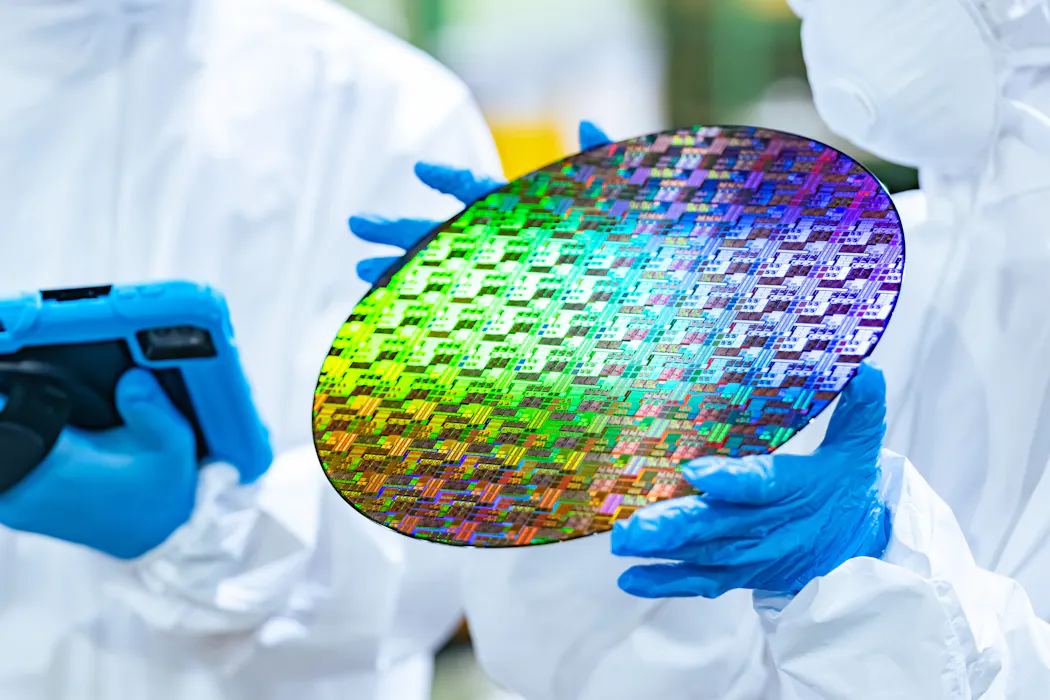
The Commission's plans include bolstering Europe’s semiconductor industry. metamorworks / Shutterstock

Europe is taking decisive steps to strengthen its control over the technology that underpins its societies. It is concerned about the digital infrastructure that sits behind everything from energy grids and water supplies to public transport, healthcare and the apps in people’s phones.

The European Commission has now published its package of measures for “tech sovereignty”, with the aim of building up its capabilities in digital technology.

The proposals rely heavily on private investment and may struggle to match global tech spending.

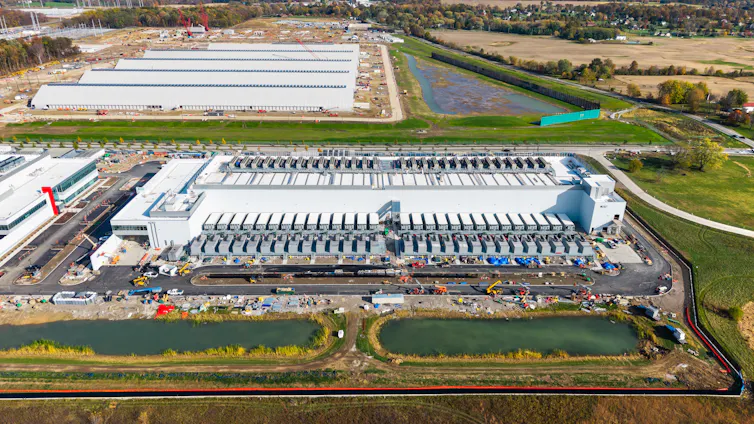
The plans include bolstering Europe’s semiconductor industry, expanding cloud computing, building up capabilities in AI, promoting open source software and setting out a plan for integrating digital technologies into energy systems. This last objective would support a sustainable expansion of data centres.

The backdrop is stark. Around 80% of Europe’s digital infrastructure and technology comes from outside the EU. An estimated €264 billion (£228 billion) a year is spent on cloud and software services that are mostly non-European.

Europe produces only about 10% of global semiconductors (the technology behind computer chips). In cloud computing, European providers hold roughly 15% of the market, while three US firms account for around 70%.

These imbalances were long seen as a natural outcome of globalisation. But in a world of geopolitical tension, they increasingly represent a strategic vulnerability. Export controls, sanctions and political pressure risk rippling through digital supply chains. The recent US ban on foreign access to advanced AI models sends a small yet clear signal.

What once looked efficient now looks risky. At the same time, the EU stresses that this is not about isolationism.

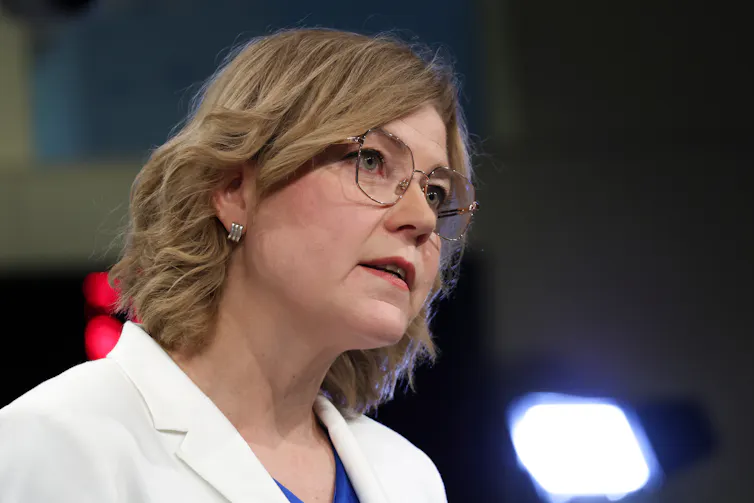
Henna Virkkunen
Finnish politician Henna Virkkunen has been tasked with boosting Europe’s control over strategic technologies. Alexandros Michailidis / Shutterstock

Hidden dependencies

A central shift proposed by the European Commission’s digital sovereignty package is to make digital dependencies visible and measurable. Through tools such as sovereignty risk assessments for cloud and AI services, organisations are pushed to look beyond performance and price and at the level of “sovereignty” a service or product provides.

Questions of ownership, jurisdiction, supply chains, data location and the ability to switch providers here become central when procuring digital services. The Computer & Communications Industry Association, which represents tech companies such as Amazon, Meta and Google, said the plans would undermine the EU’s goals of bolstering its digital infrastructure. On the other hand, European counterparts say the language in the tech sovereignty plans is soft.

This changes the role of buyers – especially in the public sector. Governments would no longer be just customers. Instead, they would start to shape markets. Through procurement and infrastructure investment, they can influence which technologies succeed and how digital ecosystems evolve.

Aerial view of construction of new data centre and AI hub in the suburbs of Columbus city, Ohio.
The Commission wants to ensure that the expected expansion of data centres is environmentally sustainable. Snehit Photo

However, open source software should enable re-use, transparency and compatibility between different IT systems. It provides an alternative to closed, vendor-controlled systems. It allows organisations and governments to collaborate on shared building blocks rather than repeatedly purchasing proprietary solutions from tech companies.

Public sector demand for open technologies has been shown to stimulate competition and economic growth. In this sense, the sovereign technology agenda is not just about building alternatives but about reshaping the rules of the digital economy.

The EU is trying to give organisations more freedom to switch between different technology providers and negotiate with them. This shifts the control back towards users – helping ensure continuity even in times of crisis.


Read more: Europe wants to end its dangerous reliance on US internet technology


Ambition faltering?

Turning this vision into reality will not be straightforward. Much of the content of the tech sovereignty plan relies on encouragement rather than binding measures, especially around open source software and procurement. This creates a risk that “sovereignty” becomes more of a political label than an operational shift, with uneven implementation across Europe.

Nor is this the first attempt at promoting a similar vision of change. Earlier initiatives – in the form of the Tallinn, Berlin and Strasbourg declarations, to more recent EU legislation – have outlined similar ambitions but these have struggled to materialise. Without clearer requirements, there is a risk of repeating this pattern.

Another challenge is fragmentation. If member states interpret sovereignty differently, the result could be a patchwork of approaches that weakens impact. Coordinated action is needed to grow both supply and demand across Europe. Public procurement will be central, but not sufficient. Organisations also need capabilities – the knowledge and structures to assess dependencies and act strategically.

Current frameworks tend to focus on evaluating technology providers, rather than whether organisations themselves can make and sustain sovereign choices.

This is where mechanisms like Open Source Program Offices (OSPOs) matter as promoted by the package. These support the governance and development of open technologies. Strengthening such capabilities may prove as important as policy itself.

The Commission’s funding levels for its tech sovereignty package raise further questions. Through an envisaged public-private (mostly the latter) funding model, around €2 billion (£1.7 billion) is calculated for open source over seven years, €120 billion (£103 billion) to semiconductors, €200 billion (£172 billion) to data centres – significant, but modest compared to the money invested in global technology platforms and the digital economy. Practical constraints remain: switching systems is costly, alternatives may lag behind, and shortages in skills and cybersecurity capacity add pressure.

National policies reflect these tensions. Sweden’s recent cloud computing strategy, for example, recognises the need to reduce dependencies but remains cautious in how far it goes – illustrating how national differences could limit Europe’s collective impact.

Whether the EU’s package of measures can succeed will depend less on ambition and more on implementation, and whether the supply and demand for sovereign tech is able to nudge. Negotiations to follow will show how things fall out.

Ultimately, this is not just a European issue, but one for any government or organisation. It is about who controls the digital systems modern societies depend on – and how those systems remain resilient, secure and aligned with public values in an uncertain world.

The Conversation

Johan Linåker does not work for, consult, own shares in or receive funding from any company or organisation that would benefit from this article, and has disclosed no relevant affiliations beyond their academic appointment.
  •  
❌