
❌

Reading view

Women are more emotionally intelligent than men, and that’s a problem – landmark study

PeopleImages/Shutterstock

Who comes to mind when you think of someone emotionally intelligent? Someone who can read a room, defuse an argument, and who knows exactly what to say when a friend is struggling? For many people, that person is a woman. It’s such a widely held belief that popular psychology treats it as fact.

We decided to put that assumption to the test. Our new study, co-led by Dr Vera Hampel and co-authored with Leon Bach, reviewed nearly three decades of research, from 1995 to 2023, across 76 countries and more than 600,000 people. We wanted to answer a simple question: are women really more emotionally intelligent than men? The headline answer is yes, on average, women score higher.

But the more useful finding is the type of emotional intelligence women seem to excel at, and what it potentially costs the people who have it.

Emotional intelligence is the ability to recognise, understand and regulate emotions in yourself and in others. When we looked at each element of emotional intelligence, the female advantage turned out to be concentrated in the “others’ feelings” half of the equation.

This means recognising what someone else is feeling, understanding why and helping them manage it. A child has a meltdown, a colleague goes quiet after their idea gets dismissed in a meeting, a negotiation gets tense. Plenty of men are excellent at this too, and plenty of women aren’t; these are averages across hundreds of thousands of people, not predictions about any one person in the room.

Is that gap simply biology? We can’t rule biological or hormonal factors out entirely. But two patterns in our data point elsewhere. The female advantage is far smaller in children than in adults, and this gap has been narrowing across the three decades our data spans. That’s not what you’d expect from something fixed at birth. Although the data in our study cannot tell us the exact reasons these differences emerge, this pattern aligns with what you’d expect from something shaped through practice.

Image of woman from profile view overlayed with glowing brain
The burden of being the most emotionally intelligent person in the room. Pavlova Yuliia/Shutterstock

There’s a plausible source for that practice, too. Other research has found that parents use a wider vocabulary of emotion words with daughters than sons, and more often encourage girls to reflect on and articulate their feelings.

Boys, meanwhile, are more often steered toward managing emotions by suppressing them. Their sisters are encouraged to work through it with other people – exactly the kind of social and emotional skill our data shows women excel at.

Put simply, girls appear to get more practice reading and responding to other people’s emotions, starting early in life. Like any skill built through repetition, whether it’s learning a new language or picking up a new instrument, the more you practice, the more natural it becomes.

In fact a 2019 meta-analysis of 58 studies found that emotional intelligence can be trained. Gender didn’t seem to impact the effectiveness of learning how to be more emotionally intelligent.

That’s good news. If emotional intelligence is a trainable skill rather than a fixed trait, the gap isn’t destiny. That means men can benefit from these skills too, including in negotiations and at work.

But there’s a less comfortable implication, too. If women’s advantage here goes unrecognised as a skill and gets treated instead as “how women are”, it becomes very easy to take for granted. The colleague who’s good at defusing tension becomes the one who’s always expected to do so. A capability quietly turns into an obligation: unpaid and unrewarded.

This plays out in the workplace every day. Organisations benefit when employees manage team tension, support stressed colleagues and smooth over conflict. It is work that keeps a team functioning but almost never shows up in a performance review.

Two practical shifts need to follow our study findings. First, employers should name this work and reward it, in reviews and in promotion decisions. Second, invest in developing these abilities in all staff.

The same logic holds outside the office. In families and friendships, the person who remembers a friend is having a bad week and checks in without being asked, who notices when someone stops responding in the group chat, who always asks a family member about their day is doing real work too, and that work is often taken for granted precisely because it looks effortless.

None of this means women don’t have a real strength here. Our data shows a female advantage in emotion abilities. But a strength that’s assumed rather than trained, and expected rather than shared, isn’t something to reinforce. It’s untapped potential for men. The person everyone turns to when things get hard isn’t lucky or simply built that way: they’ve probably had more practice.

What we haven’t done is give everyone else that same opportunity or incentive to practice, or made clear emotional intelligence was a skill worth building in the first place.

The Conversation

The authors do not work for, consult, own shares in or receive funding from any company or organisation that would benefit from this article, and have disclosed no relevant affiliations beyond their academic appointment.
  •  

Could sodium replace lithium as the dominant ingredient in batteries?

Mahir Asadli / Shutterstock

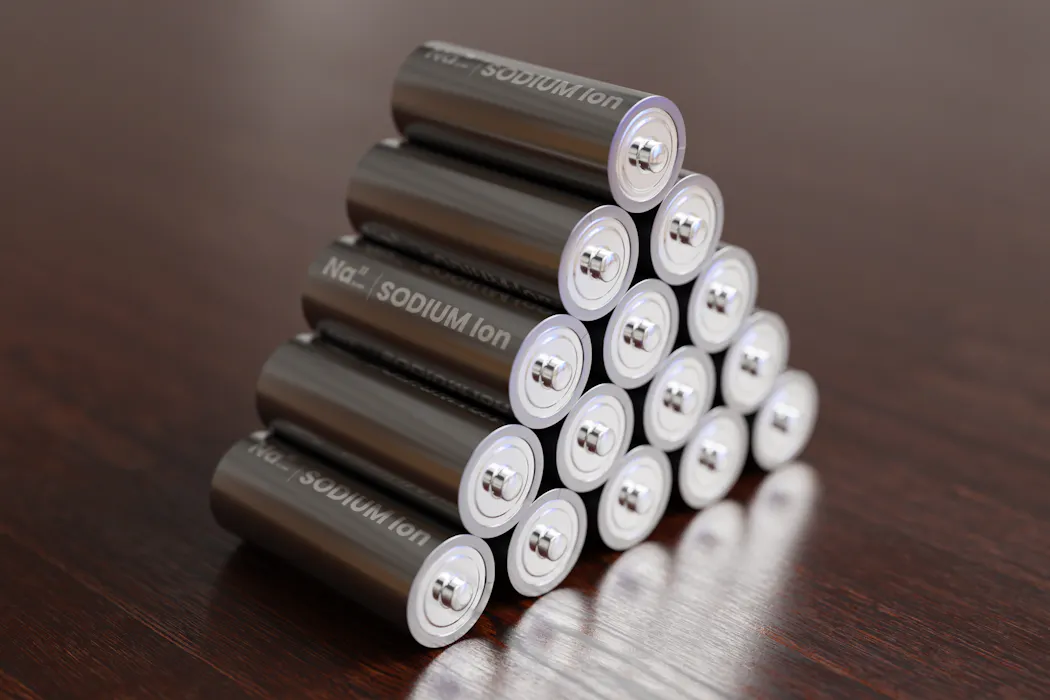
The world we live in today runs on batteries. But the lithium ion batteries that dominate the market are expensive and environmentally demanding to extract. The raw materials for lithium ion batteries are scarce and concentrated in a few geographical regions. This places continued pressure on supply chains.

Sodium-ion batteries are a promising alternative because they use abundant materials. But sodium has shortcomings that have blocked it from being used as a replacement for lithium.

In work carried out at the University of Limerick’s Bernal Institute, my team has now produced a battery that combines the strengths of sodium and lithium. This could lead to more sustainable batteries that reduce the supply chain pressures associated with lithium. The results have been published in the journal Nano Energy.

Sodium-ion batteries lag behind lithium ones in their energy density. Energy density is the amount of energy stored in a battery relative to its weight or size. Lower battery energy densities have an impact on the devices and machines they power.

If electric vehicles used battery modules with lower energy densities, it would limit the distance they could travel before needing to be recharged. Lowering the energy densities of batteries would also make tablet devices and laptops heavier.

As an energy storage researcher, this paradox gnawed at me. How could we harness sodium’s sustainability without sacrificing performance? The tension feels like the ancient philosophical concept of yin and yang. This idea describes how seemingly opposing forces are actually complementary and connected.

In this case, sodium is abundant but weak, while lithium is powerful but scarce. Inspired by this dichotomy, I wondered whether the two technologies could work in harmony rather than competing.

This led us to produce the first full cell battery with two electrodes – one positive, one negative – that uses two charged atoms or molecules (ions). In this case the charged atoms are sodium and lithium. Batteries that use different positively charged ions to store and transfer energy are known as dual cation batteries.

Why sodium ions fall short

A standard battery is made up of one or more cells. The cell converts chemical energy into electrical energy. In the cell are two electrodes, or terminals: a positive terminal called a cathode and a negative terminal called the anode.

When the battery is used to power an electronic device, negatively charged electrons flow through the circuit and reach the battery’s positive terminal. The chemical medium between the anode and cathode is called the electrolyte.

I decided to combine lithium and sodium in a half cell, which has one electrode immersed in an electrolyte rather than two. Just a modest amount of lithium salt added to a sodium-dominant electrolyte radically changed the way the battery behaved.

Syed Abdul Ahad (L) and Hugh Geaney are shown with the experimental set-up.
Syed Abdul Ahad (L) and Hugh Geaney are shown with the experimental set-up. University of Limerick

It roughly doubled the storage capacity of our half cell compared with an equivalent state-of-the-art sodium based battery. It was also stable up to 1,000 charge-discharge cycles at higher charging currents. Charge-discharge cycles measure how many times a battery can drain from 100% to 0% and recharge to 100% before its capacity degrades.

For someone who had previously watched sodium-ion batteries fade after a few dozen cycles, these results felt like witnessing a miracle.

Behind the scenes, a fascinating chemical ballet between lithium and sodium was taking place. Lithium ions are smaller than sodium ions, so they can move more easily through the anode material. Their movement helps open smoother pathways for sodium, lowering the “diffusion barrier” – resistance at the anode that normally slows sodium batteries down. This allowed more ions to enter the anode, allowing it to store more charge.

Just as importantly, sodium helped prevent lithium from getting trapped inside the material after discharge. This back-and-forth exchange kept the reaction reversible, giving the battery both higher capacity and better cycle stability. In this yin–yang interplay, neither ion dominated; instead, they worked in harmony.

Powering clean energy

Half-cell tests are the first step towards real world applications. For the next step, I demonstrated how a mixture of lithium and sodium worked in a full battery cell.

Battery capacity retention measures the percentage of the energy originally stored in a battery that remains available after a given period of usage. The full cell delivered a battery capacity retention of 70% after 200 cycles. This is far better than the sodium-only electrolyte, which started to fail after about 50 cycles.

The full cell performance was particularly satisfying, as sodium remains the dominant charge carrier. This ensures that the battery is still fundamentally a sodium-ion system.

This breakthrough could help power the world’s clean-energy transition by reducing reliance on cobalt- and nickel-rich cathodes, which are common, but expensive, supply-constrained and linked to environmental concerns. Our design keeps sodium as the main working ion and pairs it with a more sustainable iron sulphide cathode. Because sodium and iron are more abundant than many conventional battery metals, the chemistry could be cheaper and easier to scale.

The small amount of lithium acts mainly as a performance booster rather than the main resource. That makes the battery both higher performing and potentially less dependent on costly critical materials. Furthermore, it represents a new route to storing renewable energy on the grid, which can help communities and industries transition to a greener future.

Despite the success of our prototype, much work remains to be done. The anode in our cell and half-cell was made of germanium, which is expensive. The next challenge is to replace germanium with cheaper anode materials. One candidate is silicon, which can reversibly host both lithium and sodium ions during charging and discharging, but also provide the battery with a higher storage capacity.

This boost would increase the energy density of sodium-dominated batteries. We also need to pair the anode with a cathode capable of producing higher voltages than we currently have.

I have already been exploring alternative and sustainable pairings of different ions, such as lithium–magnesium and potassium–sodium. I am also experimenting with new electrolyte formulations.

My team’s research shows that by embracing the yin-yang of lithium and sodium, we can move towards batteries that show both high performance and sustainability. This raises the prospect of a world where your phone, car and even the grid will draw power from cheap, abundant sodium ions – gently assisted by a whisper of lithium.

The Conversation

Syed Abdul Ahad receives funding from Research Ireland Postdoctoral Fellowship supported by government of Ireland. While Syed Abdul Ahad led the conceptual design and experimentation, these findings would not have been possible without the support of his mentor, Professsor Hugh Geaney, and collaborators within the University of Limerick and the University of Birmingham.

  •  
❌