❌

Reading view

Why do some people feel life is so unfair? Understanding this may help explain conspiracy beliefs
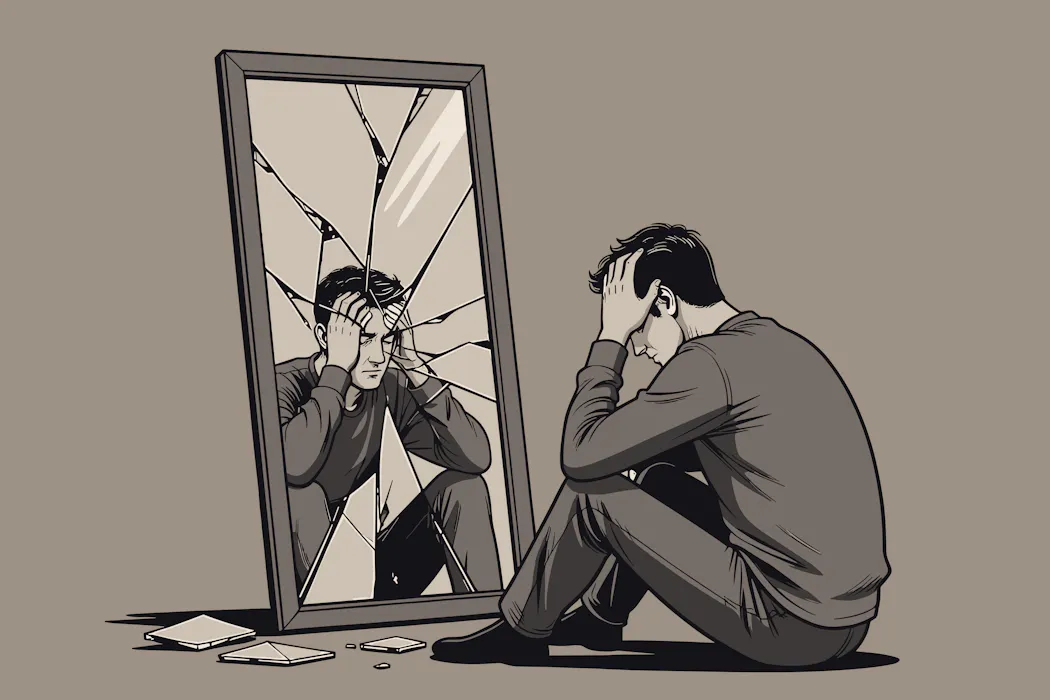
HimelVector/Shutterstock

Most people set out in life wanting to believe the world is fair. They expect people to wait their turn in queues, to be treated equally in their job, and to be rewarded for hard work. These expectations influence how they understand the world around them, and shape their responses to it.

But what happens when life repeatedly challenges those assumptions? Psychologists have long been interested in this question. Our new research, published in the British Journal of Psychology, suggests adverse experiences shape both how fair people believe the world is, and how they view their place in society.

Over the course of a lifetime, personal setbacks – from illness and bereavement to being a victim of crime – may have a cumulative effect, leading to a growing sense that the world is unfair. We think this is important in the context of today’s increasingly polarised societies, in which trust in institutions has declined severely in the UK and many other countries.

Video: TEDxTalks.

Adversity and unfairness

Our research set out to answer two key questions: do experiences of adversity influence whether people see the world as fundamentally unfair – and if so, what are the societal consequences? We conducted three surveys involving more than 1,200 British participants with an equal gender split and average age of 39.

In one study, we found that people who reported experiencing more lifetime adversity – including illness, bereavement, financial hardship and violence – were more likely to believe the world was unfair.

In another, we compared people who had experienced violent victimisation with those who had not. After accounting for demographic factors, people who had experienced violent crime reported stronger perceptions of injustice.

Our final study found that greater lifetime adversity was associated with lower trust in institutions through perceptions of injustice. This is important because trust underpins many aspects of society, from confidence in public institutions to democratic participation.

Together, these findings suggest that people don’t simply interpret information based on the facts available to them. They also interpret it through the lens of their previous experiences.

Two people can read the same news story, watch the same political debate or hear the same public health advice, yet come away with very different conclusions that may not simply reflect differences in knowledge or politics. It may also reflect differences in how they have come to see the world as a result of the hardships they have faced.

Furthermore, if someone increasingly believes that the world is unfair, they may be more likely to notice fresh examples of perceived injustice, corruption or hidden motives – and interpret new events through that lens.

Belief in conspiracy theories

Previous research has shown that people who feel uncertain, powerless or threatened are often more likely to endorse conspiracy theories. Most of this work, however, has focused on their identities, traits and beliefs.

In our investigation of the impact of adverse life experiences on people, we found a remarkably consistent pattern. When these hardships are associated with stronger perceptions of injustice in the world, the same people more strongly endorse conspiracy beliefs.

Conspiracy theories rarely describe events as random. Instead, they tend to suggest that powerful individuals or organisations are secretly responsible for what happens. They offer explanations that identify intentional causes behind events that might otherwise seem confusing or unjust.

Research suggests that across societies, the level of belief in conspiracy theories is relatively stable over time. But once these beliefs become part of how someone understands the world, they can be difficult to shift.

This makes it all the more important to understand the experiences and psychological processes that may contribute to these worldviews developing in the first place. Our findings suggest that perceptions of injustice are one such pathway.

For someone who increasingly feels the world is unfair, conspiracy theories may become more psychologically appealing – providing a way of making sense of experiences that otherwise feel difficult to understand.

Our research does not suggest that adversity inevitably leads to conspiracy beliefs; nor that conspiracy theories are an inevitable consequence of trauma. Rather, it highlights a long-term psychological process that may help explain why some people become more receptive to these ideas.

In an increasingly polarised world, the media and political focus is often concentrated on what information people consume. But our research suggests we should pay more attention to the experiences that shape the lens through which people interpret information. This could help explain why people can look at the same events and reach very different conclusions.

Ultimately, people’s experiences don’t just affect them in the moment. They shape their worldview – which can influence how they interpret and respond to events and other people’s behaviour far into the future.

So, we believe any effort to reach greater consensus in society may require a deeper understanding of the hardships people have lived through over the course of their lives – and how these can affect their sense of injustice.

The Conversation

Daniel Jolley has received funding from the Leverhulme Trust, the British Academy, and the Engineering and Physical Sciences Research Council (EPSRC). The studies mentioned in this piece were funded by the British Academy/Leverhulme Small Research Grants Scheme (SRG23/230720) and carried out in collaboration between Daniel Jolley, Laura Blackie, and research assistant Anna Maughan.

Laura Blackie has received funding from the British Academy.
  •  

Are cats getting tamer – or is it people who are changing?

DimaBerlin/Shutterstock

Around 15 years ago, I created a Facebook page for my cat, Sandi. Friends thought it was weird. Today, social media accounts for cats attract millions of followers, cats travel in backpacks and prams, and surveys consistently show that the overwhelming majority of owners regard their pets as family.

I’ve previously written about how cats became domesticated. But domestication isn’t necessarily a process with an endpoint. Could it still be continuing today?

Examples from wildlife suggest that adaptation to living alongside people can continue long after animals first encounter humans.

Research led by biologist Kevin Parsons at the University of Glasgow provides one of the clearest examples of this process. In 2020, Parsons and his team compared the skulls of urban and rural red foxes from London and the surrounding countryside, and found consistent differences between the two populations.

Urban foxes had shorter, broader snouts and smaller braincases – the rounded part of the skull that encloses the brain. These are changes that often accompany domestication. The researchers suggest that city life may favour foxes that are less fearful of people and better at exploiting food and shelter provided by humans.

A similar story is emerging in Dublin’s Phoenix Park. In 2022, ecologists Laura Griffin, Simone Ciuti and colleagues at University College Dublin found that, while some fallow deer living at the edge of the city rarely came near humans, others consistently approached people for food. Around a quarter of the population were β€œconsistent beggars”, and these bolder females produced heavier fawns – suggesting that animals willing to approach people may be at an advantage.

These studies show that living alongside humans can drive evolutionary change in wild and semi-domesticated species.

But does the same apply to cats, a species domesticated thousands of years ago? There are two possible answers. Cats may still be changing – or perhaps cats have not changed much, and it is our relationship with them that has.

Let’s start with the cats.

Compared with dogs, cats have traditionally been viewed as β€œless” domesticated. Dogs were bred to work alongside us – herding livestock, guarding homes and helping with hunting – while cats largely domesticated themselves.

Drawn to the rodents attracted by early farming settlements, cats chose to live near people because it suited them, not because we selectively bred them for particular jobs.

One reason cats have been so successful is their flexibility. Unlike many species, they can adjust their behaviour to suit the environment they live in.

Where food is scarce, cats tend to live alone and defend their own territory. But where food is plentiful, such as around people, they can tolerate one another and form stable social groups. In fact, some researchers suggest that cats first evolved to tolerate other cats living nearby, before extending that tolerance to humans.

Although genetics plays a role, kittens that have frequent positive interactions with humans during a critical period (between around two and seven weeks of age) are far more likely to grow into confident, friendly adults.

This suggests cats have long had the capacity to form close relationships with people when the conditions are right. Rather than becoming fundamentally different animals, they may simply be expressing a capacity they have long possessed. If so, the biggest change may not have been in cats, but in us.

People’s changing needs

Over the past century, many people’s way of life has changed significantly. Across much of the world, fertility rates have fallen dramatically, from almost five children per woman in 1950 to just over two today. People are having fewer children, delaying parenthood, living alone for longer, and increasingly relying on companion animals to meet needs once fulfilled by close family relationships.

These demographic shifts have changed not only how families are structured, but also who, or what, occupies the centre of family life.

In Finland, a country that has experienced many of these demographic shifts, a 2023 survey of 857 pet owners found that, when speaking with family and friends, people without children were more likely than parents to refer to themselves as β€œmom” or β€œdad” in relation to their pets. They were also more likely to describe their companion animals as kids, children or family members, and reported stronger emotional attachment to them.

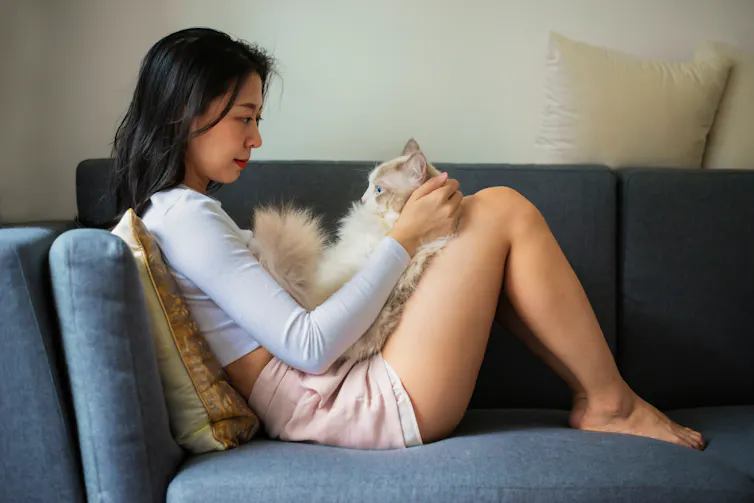
As more people delay parenthood or remain child-free, this way of relating to companion animals may become increasingly common. This shift may also be reflected in the growing popularity of cat breeds such as the ragdoll, valued for their affectionate and docile nature.

Woman sitting on the sofa with fluffy cat on her lap.
Ragdoll cats are known for their affectionate nature. xixicatphotos/Shutterstock

Changing attitudes have transformed the lives cats now lead. A species once valued primarily for controlling rodents is now just as likely to have health insurance, see a behaviourist and eat a specialist diet.

None of this means cats have stopped evolving. Living alongside humans could still shape their behaviour over many generations. But the evidence suggests that the more dramatic transformation has been in their owners.

We have changed what cats mean to us and, by doing so, changed the lives they now lead. Back when I created a Facebook page for Sandi, people thought it was eccentric. Today, it seems many more people have come round to my way of thinking.

The Conversation

Grace Carroll does not work for, consult, own shares in or receive funding from any company or organisation that would benefit from this article, and has disclosed no relevant affiliations beyond their academic appointment.

  •  
❌