❌

Reading view

How a ‘psychic’ horse named Clever Hans changed the way we do science

Do you sometimes wish that you had telepathic or other supernormal powers?

Around a hundred years ago, some of the greatest minds in philosophy thought there were people who had such abilities. In fact, they even suggested that perhaps horses and dogs could have them too.

At the turn of the 20th century, many great scientists, psychologists and philosophers became fascinated by the possibility of “psychic phenomena” like telepathy, clairvoyance or ghosts. Many of them, like J.J. Thomson, the 1906 winner of the Nobel prize in physics, performed experiments to test mediums. Others, like the philosopher C.D. Broad, attended seances and thought about the possibility of precognition – the ability to foresee future events.

These weren’t just marginal charlatans. Many of them had an impact on philosophy and science in the 20th century. Many of the concepts philosophers of time still argue over today trace back to C.D. Broad, such as the growing block theory, which says that the past is real, the present is real, but the future does not yet exist.

Most of their focus was on the psychic abilities of humans. However, some of these “psychic researchers” went even further and began wondering about the possibility of telepathy in animals.

The philosopher Friedrich Canning Scott Schiller (1864-1937), who spent most of his career at the University of Oxford, was an active member of the Society for Psychical Research (SPR). He was one of the founders of pragmatism, the philosophical view that the truth of a theory can be judged based on whether it works in practice.

Schiller engaged in heated discussions about the psychic abilities of animals. His article on “psychical research” for the Encyclopedia Britannica has a section about “equine mathematicians” – horses with supposedly paranormal mathematical abilities that they demonstrated by tapping out solutions to equations with their hooves.

In 1914, Schiller wrote an article for the SPR about Rolf, “the thinking dog of Mannheim” (in south-west Germany). Rolf was credited with the ability to tap out answers to mathematical problems with his paw. And, with the help of a spelling code for letters and syllables, Schiller even claimed that the dog managed to produce entire sentences.

On one occasion, Schiller alleged that the dog professed its Catholic faith to a priest.

The case of Rolf (and other “thinking dogs” who suddenly started cropping up elsewhere) caused a dilemma for psychical researchers. Some thought this proved that animals have hidden intellectual powers just like humans. Others, like the Russian scientist Vladimir Bechtereev, suggested that the whole thing can be explained by telepathy.

Bechtereev went on to make major discoveries about memory and brain structure. In his view, the dog’s owner telepathically communicated all the information to him.

Schiller believed that his theory of pragmatism could help settle these disputes. He thought there was no point discussing these things in the abstract. What matters is whether either of the theories can be shown to have practical consequences for how the animal behaves. If Rolf was really so skilled at arithmetic, why does he not use mathematics in everyday life? And if he is a confessed Catholic, why does he not go to church?
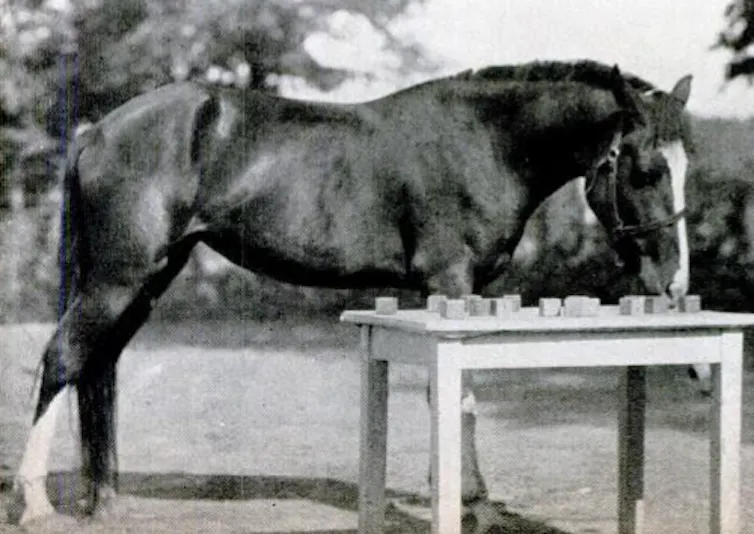
Horse stands next to table covered in blocks.
The alleged Francis Wickware

Joseph Banks Rhine (1895-1980) and his wife Louisa (1890-1983) are widely considered to be the founders of the controversial field of parapsychology. They published the influential volume Extra-Sensory Perception (1934) and founded the Parapsychology Laboratory at Duke University, which has since been shuttered. Their approach of using a large number of tests with multiple subjects has been closely connected with modern statistics.

In 1929, the Rhines published an article about the horse Lady Wonder. This horse was seemingly able to make predictions, work out answers to mathematical problems, and tell time, all of this by touching lettered and numbered blocks with her nose.

The most famous of these mathematically gifted horses was Clever Hans. Just like Lady Wonder in the US, Hans attracted huge crowds to his native Germany, who were eager to witness his arithmetic abilities. This included psychical researchers curious to see whether Hans had supernormal powers, as well as Carl Stumpf (1848-1936), one of the fathers of modern psychology.

It was Stump’s research assistant Oskar Pfungst who eventually got to the root of Hans’s miraculous powers. Pfungst observed that Hans could only provide the correct answer when his owner, standing nearby, knew the answer to the question asked – and only when Hans could see him.
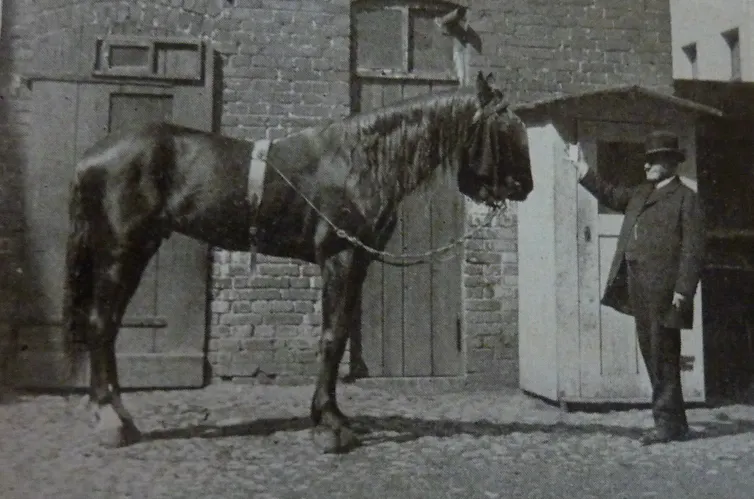
Large horse looks at man holding up a card
Clever Hans and his owner Wilhelm von Osten. Karl Krall

This led Pfungst to conclude that Hans was simply responding to involuntary signals from his owner, signals that his owner did not even realise he was providing. Pfungst thereby discovered the so-called Clever Hans effect. This describes situations where the bad set up of an experiment causes the experimenter to unintentionally influence the subjects they are studying.

Pfungst’s explanation got rid of the need to appeal to supernormal abilities and partially contributed to the gradual disappearance of psychical research from universities. Like many other psychic phenomena, modern psychology could explain what was going on.

Although it turned out that these horses and dogs had no such mathematical powers, the studies conducted by psychical researchers helped uncover new knowledge. One surprising example is the development of randomisation in experiments.

Randomisation means deciding the order or allocation of things in an experiment by chance, rather than allowing the researcher or participant to choose. It is now a basic part of good experimental design because it helps prevent expectations from influencing the results. Surprisingly, attempts to test telepathy helped drive its development. Researchers realised that if people knew what answer was expected, even tiny unconscious cues could affect the outcome.

The case of Clever Hans and other “telepathic” animals shows just how turbulent this period of time was for modern science and philosophy. The telephone suddenly made it possible to contact someone on the other side of the world, and the X-ray allowed you to see inside the body. So perhaps it’s not that surprising that some of the greatest minds began to investigate telepathy in animals.

The Conversation

Matyáš Moravec does not work for, consult, own shares in or receive funding from any company or organisation that would benefit from this article, and has disclosed no relevant affiliations beyond their academic appointment.
  •  

Are cats getting tamer – or is it people who are changing?

DimaBerlin/Shutterstock

Around 15 years ago, I created a Facebook page for my cat, Sandi. Friends thought it was weird. Today, social media accounts for cats attract millions of followers, cats travel in backpacks and prams, and surveys consistently show that the overwhelming majority of owners regard their pets as family.

I’ve previously written about how cats became domesticated. But domestication isn’t necessarily a process with an endpoint. Could it still be continuing today?

Examples from wildlife suggest that adaptation to living alongside people can continue long after animals first encounter humans.

Research led by biologist Kevin Parsons at the University of Glasgow provides one of the clearest examples of this process. In 2020, Parsons and his team compared the skulls of urban and rural red foxes from London and the surrounding countryside, and found consistent differences between the two populations.

Urban foxes had shorter, broader snouts and smaller braincases – the rounded part of the skull that encloses the brain. These are changes that often accompany domestication. The researchers suggest that city life may favour foxes that are less fearful of people and better at exploiting food and shelter provided by humans.

A similar story is emerging in Dublin’s Phoenix Park. In 2022, ecologists Laura Griffin, Simone Ciuti and colleagues at University College Dublin found that, while some fallow deer living at the edge of the city rarely came near humans, others consistently approached people for food. Around a quarter of the population were “consistent beggars”, and these bolder females produced heavier fawns – suggesting that animals willing to approach people may be at an advantage.

These studies show that living alongside humans can drive evolutionary change in wild and semi-domesticated species.

But does the same apply to cats, a species domesticated thousands of years ago? There are two possible answers. Cats may still be changing – or perhaps cats have not changed much, and it is our relationship with them that has.

Let’s start with the cats.

Compared with dogs, cats have traditionally been viewed as “less” domesticated. Dogs were bred to work alongside us – herding livestock, guarding homes and helping with hunting – while cats largely domesticated themselves.

Drawn to the rodents attracted by early farming settlements, cats chose to live near people because it suited them, not because we selectively bred them for particular jobs.

One reason cats have been so successful is their flexibility. Unlike many species, they can adjust their behaviour to suit the environment they live in.

Where food is scarce, cats tend to live alone and defend their own territory. But where food is plentiful, such as around people, they can tolerate one another and form stable social groups. In fact, some researchers suggest that cats first evolved to tolerate other cats living nearby, before extending that tolerance to humans.

Although genetics plays a role, kittens that have frequent positive interactions with humans during a critical period (between around two and seven weeks of age) are far more likely to grow into confident, friendly adults.

This suggests cats have long had the capacity to form close relationships with people when the conditions are right. Rather than becoming fundamentally different animals, they may simply be expressing a capacity they have long possessed. If so, the biggest change may not have been in cats, but in us.

People’s changing needs

Over the past century, many people’s way of life has changed significantly. Across much of the world, fertility rates have fallen dramatically, from almost five children per woman in 1950 to just over two today. People are having fewer children, delaying parenthood, living alone for longer, and increasingly relying on companion animals to meet needs once fulfilled by close family relationships.

These demographic shifts have changed not only how families are structured, but also who, or what, occupies the centre of family life.

In Finland, a country that has experienced many of these demographic shifts, a 2023 survey of 857 pet owners found that, when speaking with family and friends, people without children were more likely than parents to refer to themselves as “mom” or “dad” in relation to their pets. They were also more likely to describe their companion animals as kids, children or family members, and reported stronger emotional attachment to them.

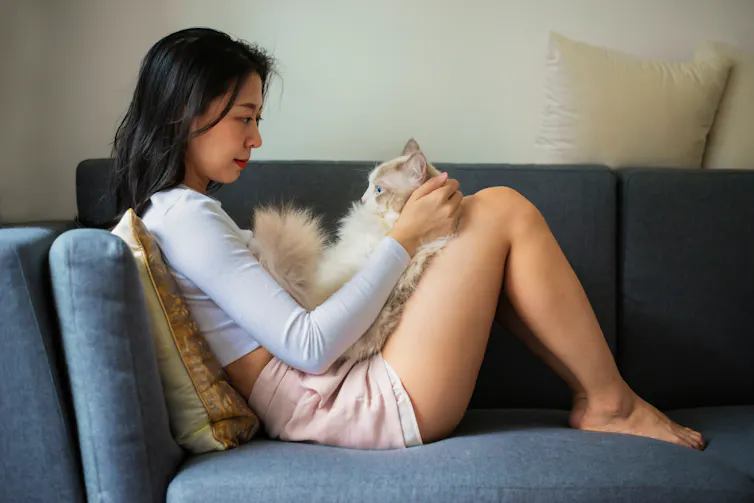
As more people delay parenthood or remain child-free, this way of relating to companion animals may become increasingly common. This shift may also be reflected in the growing popularity of cat breeds such as the ragdoll, valued for their affectionate and docile nature.

Woman sitting on the sofa with fluffy cat on her lap.
Ragdoll cats are known for their affectionate nature. xixicatphotos/Shutterstock

Changing attitudes have transformed the lives cats now lead. A species once valued primarily for controlling rodents is now just as likely to have health insurance, see a behaviourist and eat a specialist diet.

None of this means cats have stopped evolving. Living alongside humans could still shape their behaviour over many generations. But the evidence suggests that the more dramatic transformation has been in their owners.

We have changed what cats mean to us and, by doing so, changed the lives they now lead. Back when I created a Facebook page for Sandi, people thought it was eccentric. Today, it seems many more people have come round to my way of thinking.

The Conversation

Grace Carroll does not work for, consult, own shares in or receive funding from any company or organisation that would benefit from this article, and has disclosed no relevant affiliations beyond their academic appointment.

  •  

Flow batteries that store energy in liquid could accelerate the green transition

nano-stocker/Shutterstock

Harnessing renewable resources such as wind and solar energy is vital for the green transition. But these renewables are intermittent and unpredictable. It’s impossible to control when the wind blows and when the sun shines.

Currently, we don’t have to rely on the weather to boil a kettle. That’s largely thanks to our use of fossil fuels. To break our reliance on this finite and polluting source of power, we need to be able to store vast amounts of renewable energy cheaply and safely, but unfortunately, no technologies yet tick all the boxes.

Lithium-ion batteries are used in our phones, laptops, and electric vehicles. But lithium-ion technology depends on costly, geographically concentrated materials such as lithium and cobalt.

Cobalt mining can be a dangerous and polluting process. The organic lithium-ion-containing electrolyte (the liquid chemical between the positive and negative terminals inside a battery) is flammable. Because it poses a fire hazard, it’s risky to deploy these batteries at a large enough scale to power our homes, cities, and industries.

But there is an alternative solution: flow batteries.

In a flow battery, energy is stored in liquid electrolytes which are held in large external tanks. To charge or discharge the liquid, it is pumped through a stack of cells where electrochemical reactions generate or consume electrons. This has several advantages.


Read more: What will batteries of the future be made of? Four scientists discuss the options – podcast


In most batteries, two properties (energy and power) are intrinsically linked. Energy refers to how much electricity is actually stored by the battery and therefore how long that supply can run at a given rate. Power is the rate at which the energy is delivered and how much can be supplied within a given time.

Usually, it’s impossible to change one without changing the other. To store more, you add cells, and that adds power you may not need (and cost you don’t want).

However in flow batteries, this is not the case. Need to store more energy? Simply use larger tanks with more liquid. Need more power? Simply use a bigger cell stack. This ability to independently control power and energy makes the technology cheaper to scale up. Additionally, unlike lithium-ion batteries, flow batteries can’t catch fire (as they are mostly water) and are extremely durable. Some flow batteries have been in operation for more than 20 years.

Several large-scale flow battery systems have already been deployed. In China, the largest systems that connect to the grid reach gigawatt-hour scale (equivalent to powering 100,000 homes for a full day). In Switzerland, what will be the world’s largest flow battery, at 2.1 gigawatt-hours (equivalent to powering over 200,000 homes for a full day) is being constructed to power an AI data centre. Nevertheless, flow batteries are still an emerging technology, with several challenges still to solve.

Test cells

Worldwide, researchers like us are developing new electrolyte chemistries and materials to reduce the cost of flow battery systems and drive wider adoption. But getting started in flow battery research can be quite daunting. Test cells can often cost thousands of pounds and testing a new cell requires lots of ancillary equipment.

Through our research, we have developed a low-cost 3D-printed test cell. This makes flow battery research much easier and has enabled our research group to test dozens of these cells. But our team struggled to get repeatable test results. It was also difficult to replicate results from previous flow battery studies by other groups in our own labs at Queen’s University Belfast. This resulted in several months of frustration as we scrutinised every aspect of our testing protocols.

lab set up with batteries
Lab-scale development of all-iron flow battery electrolytes at Queen’s University Belfast. Josh Bailey/Queen's University Belfast, CC BY-NC-ND

As it turned out, our research group was not alone. At a conference in early 2024, we attended a talk by Fikile Brushett, a chemical engineering professor from the Massachusetts Institute of Technology in the US. He described the lack of protocols in this field. Together, we have led a series of studies to investigate and work out how to tackle the issue of reliably replicating data from reported scientific studies.

In one study, published in April 2026, we sent our low-cost 3D-printed test cell to several leading research groups around the world. We were struck by the extent of performance variability between different groups all nominally testing the same battery. Since then, we have identified several potential causes for this variability and have suggested improvements to testing protocols.

Our latest study has involved more than 30 research groups assessing our test cells. Our testing data is now publicly available online. We are using this to pin down why performance varies across the cohort. Our findings will help the community to develop testing protocols that all researchers can use.

Eventually, this work could make it easier for newcomers to make a start in flow battery research. It could also give established groups a reliable foundation to compare results and accelerate their work. This all helps chemical engineers innovate more quickly towards storing renewable energy cheaply, safely and at scale.

The Conversation

Joshua James Bailey receives funding from UKRI's EPSRC.

Hugh O'Connor received funding from UKRI's EPSRC and PSDI.

  •  

We’re ‘green chemists’ – why we think this emerging science can transform the way the world uses its resources

Corona Borealis Studio / Shutterstock

Society depends on chemistry far more than we consciously realise, from medicines to energy to electronics. However, chemistry is viewed with as much apprehension as gratitude, because of the pollution and health problems that some chemicals cause.

There is a strong desire to have all the benefits of chemistry, but none of the downsides. This has led to terms like “chemical free product” coming into popular usage.

Of course it’s impossible to have a chemical free product – the ingredients in these products are still chemicals. But they employ a different approach, using benign ingredients from nature. These innovative products are examples of “green chemistry”.

Green chemistry takes a holistic – all encompassing – approach to the production of chemicals. This approach brings chemistry into balance with nature and avoids harm. Green chemistry protects the environment and considers the future by design.

Examples of green chemistry include using compounds derived from seaweed to replace man-made plastics. Another is capturing CO₂ from power plants and transforming it into more sustainable fuels for jets and ships. The principles of green chemistry are also being applied to developing smart materials that can change their properties, such as their colour.

Fresh approaches

Instead of merely making older approaches to chemistry a little bit “less bad”, green chemistry is about finding new functions for the materials we use in our daily lives and getting better levels of performance out of them.

This approach reflects the fact that using resources wastefully can be eliminated through smarter chemistry. This involves rethinking everything, including the supply chains.

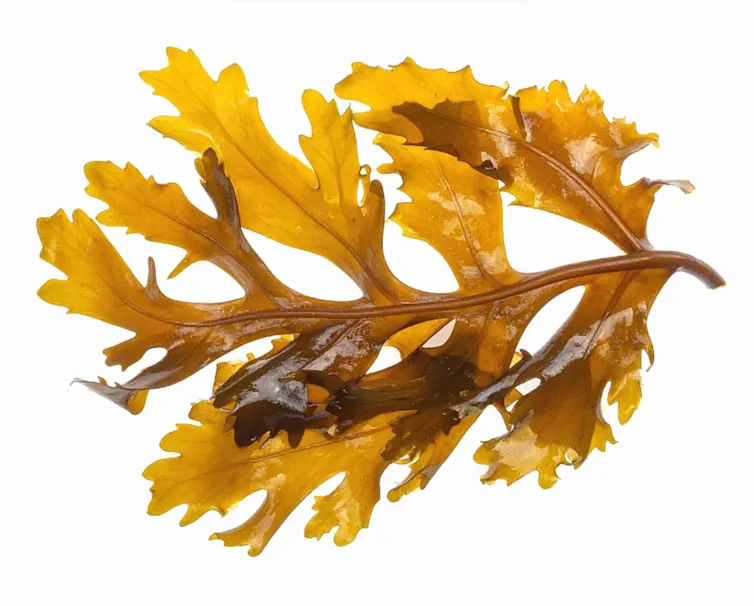
Alginates are compounds obtained from brown seaweed. They can form natural polymers with a variety of uses. Arfin Studio

An example of finding new functions for existing chemicals includes the use of natural polymers derived from seaweed, called alginates, that are already used in cosmetics and foods, to also replace plastics in packaging so that packaging biodegrades in soil.

The Green Chemistry in America 2026 report published by the Gordon and Betty Moore Foundation surveyed 300 US executives and other leaders from the worlds of research and development and technology. Over 90% of those leaders who were familiar with green chemistry agreed that it delivers a competitive advantage. Some 76% of these leaders said that green chemistry will fuel innovation and long term economic growth.

Waste as raw material

Countless tonnes of waste are often generated during manufacturing. This can be produced in far greater quantities than the product itself and can turn into pollution. Instead, green chemistry uses waste as a raw material, making chemical use more circular and sustainable.

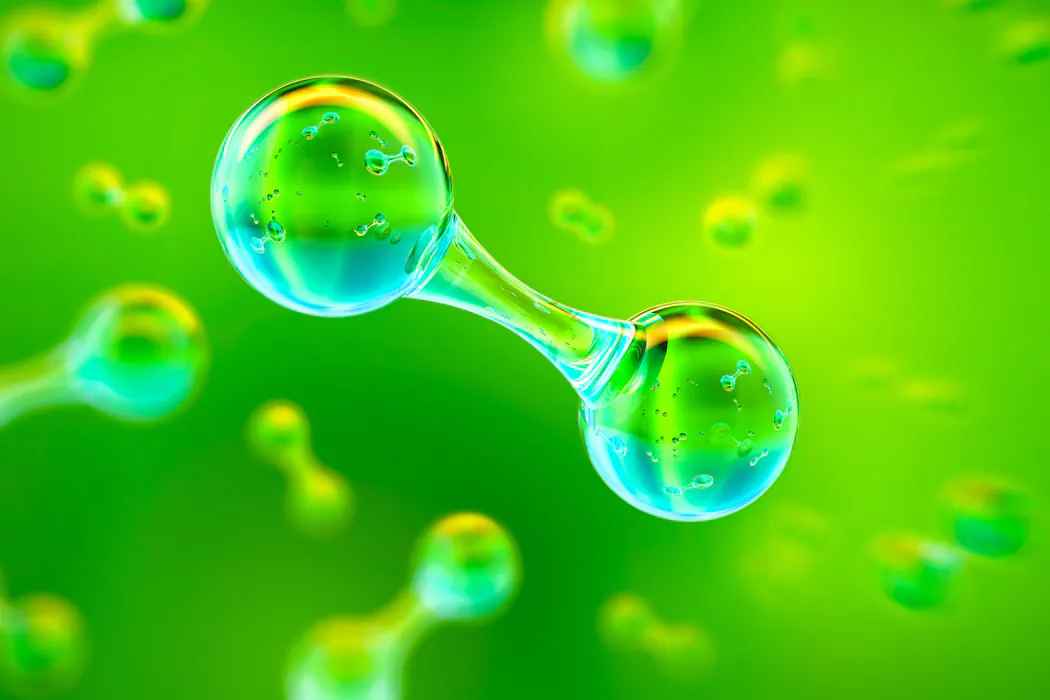
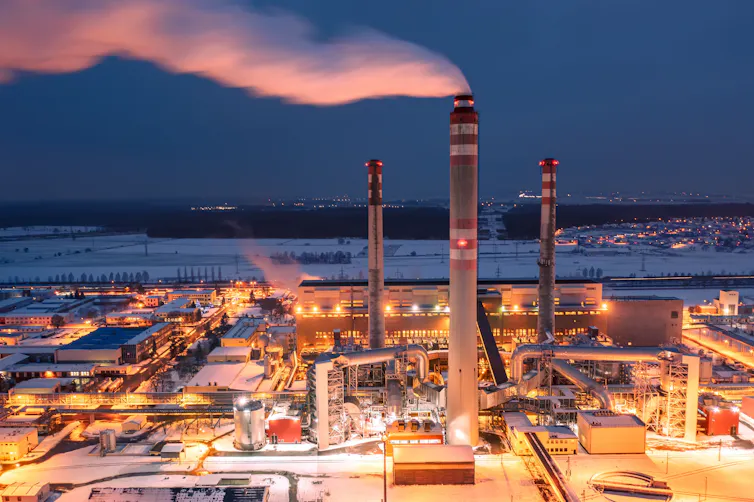
Instead of changing our climate with gigatonnes of CO₂ emitted from smokestacks, green chemistry is capturing CO₂ and transforming it into products like more sustainable fuels for jets and ships. These synthetic fuels are created by combining green hydrogen (produced from water using renewable electricity) with the captured carbon dioxide.

Near-term investments are advancing the development of dynamic – and sustainable – materials that will change in ways that we want them to on command; such as their colour, or ability to conduct electricity.

Smart materials that can change colour or shape are already a reality (University of Waterloo).

These are but a few of the near-term visions of how green chemistry could foster a revolution in innovation. However, these advances need to take place on a timeframe and scale that can benefit humanity in the near future.

Some of the world’s top scientists met in Stockholm in May 2025 to wrestle with the question of how to make this possible. The result was The Stockholm Declaration on Chemistry for the Future.

This declaration contains two particularly important sentences that reflect its purpose. The first of these is that “the chemistry of sustainability recognises that sustainability without innovation is impossible and innovation without sustainability would be ruinous”. The second key sentence is: “While scientific discovery and invention is crucial, it is also not sufficient by itself.”

Opatovice power station, Czechia
Carbon dioxide from power plants can be captured and used to make more sustainable fuels for aircraft and ships. David Jancik / Shutterstock

The Stockholm document goes on to list all the sectors of society that are needed to implement its vision. These include business, investment, education, communication, policy and public support.

All consumers are affected by “bad” chemistry, so they should take decisions accordingly – demanding green chemistry in all products.

The resources available to improve the ways that chemicals are made include sunlight, wind, agricultural and food waste, geothermal energy and – most importantly – human ingenuity. There is an immense potential for innovation.

The Conversation

Paul T Anastas has equity in several carbon dioxide utilisation companies.

Andrew C Marr does not work for, consult, own shares in or receive funding from any company or organisation that would benefit from this article, and has disclosed no relevant affiliations beyond their academic appointment.

  •  
❌