❌

Reading view

This Tiny E-Reader Is the Single Best Piece of Technology in Years

No matter how you read it, The Power Broker is a serious undertaking. The paperback weighs as much as a brick; to avoid lugging around all 1,344 pages, people have cut it apart at the spine and chunked it into sections. Others have organized in-person Power Broker marathon readings that run continuously for three full days. I decided to try something else.

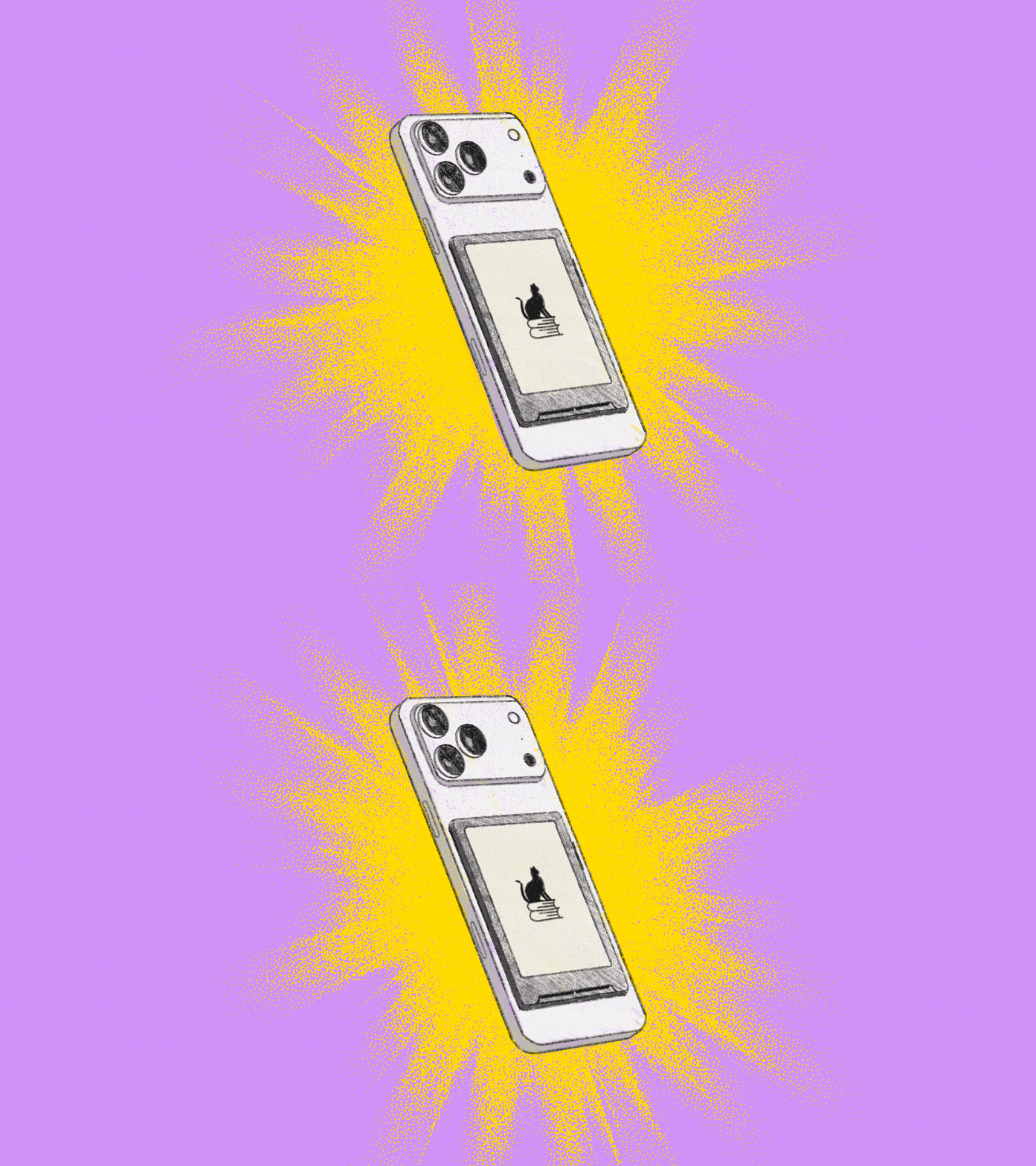
Over the past several weeks, I’ve spent 10 hours paging through Robert Caro’s masterpiece on an e-reader the size of a credit card. It’s magnetic, and small enough to attach to the back of my iPhone without adding any real bulk to my pocket. (Yes, this does mean that I have a screen on the back of another screen.) It’s called the Xteink X3, and at a glance, it looks like a cheap gimmick: more electronic junk made by unknown brands and sold on Temu and TikTok Shop—the kind of thing influencers are always hawking. (Can I interest you in a programmable LED hat for $11.60? Or how about $20 AirPod look-alikes made by “Fhumsh”?)

In a sense, it is that. Xteink sounds less like a real brand name than the kind of garbled text you’ll find in AI-slop memes. (Speaking of which, the official website of the China-based company is full of AI-generated photos of people posing with the device.) And indeed, since the X3’s release on Amazon in May, TikTokers and YouTubers have raved about how the device is a steal and you should buy it right now—just click the link in bio.

[From our August 2026 issue: The end of reading is here]

And so I did. On Amazon, the X3 is $69 and tops the “hot new releases” list for e-readers, beating out a slew of Kindles. In person, the Xteink is many things: plasticky. Flawed. Finicky. Nevertheless, it is the single best piece of technology that I have purchased in years. In the two months before getting this cartoonishly tiny e-reader, I finished only one book. In one month with the X3, I read three books without even really trying—and my iPhone’s average daily screen time dipped by 25 minutes.

The X3 is great because of its size, not in spite of it. (For once, “fun-size” actually lives up to the billing.) Because this is such a runt of a device, you can stick it to your phone and have an e-reader in your pocket at all times. As a result, I’ve found myself reading on my morning commute, in line at a museum, even while waiting through Netflix ads. The display on my Xteink may be roughly half the size of the smallest Kindle, but the text is big enough to easily read. Even after three straight hours of inching through The Power Broker, my eyes weren’t strained.

The device’s size actually helped me develop a different relationship to reading altogether: Because each “page” on the Xteink amounts to just a paragraph or two—and sometimes less—I’m compelled to finish it. And now that I’m onto the next page, I might as well finish that one too. A YouTuber who recently reviewed the Xteink had the same experience—she referred to the uniquely addictive experience of using the device as the “TikTokification of reading.” I know how terrifying that sounds, but consider the outcome: Whenever there are even a couple of minutes of free time, I now have a healthy alternative to doomscrolling on Instagram. I don’t even have to put my phone down. Flip over the Bad Screen and fire up the Good Screen.

For all of its charm, the Xteink is a pretty basic piece of hardware. For $70, you get what you pay for. Other popular e-readers now come with AI-powered recaps, high-definition displays, and Android operating systems. Meanwhile, the Xteink has no touch screen, color display, or backlight for reading in the dark. (Xteink recently launched the X4 Pro, a slightly larger and more expensive model that has a reading light and a touch screen.) Just reading a book on the device isn’t necessarily seamless: The preloaded software is horrific and can’t even display book covers or properly format some text. Unlike with a Kindle, you can’t port over books from Amazon with one click.

In spite of itself, the Xteink X3, in all of its 3.7 inches of glory, has become a viral hit. Online, people have posted photos of their Xteink on trips to the Austrian mountains or the Aegean Sea; one anesthesiologist says he tucks it into his scrubs. People are mounting the Xteink X3 to their kitchen hood to display recipes and are making all sorts of bespoke accessories, including 3-D-printed reading lights and a case that looks like a gun (I’m serious). Fans have built their own open-source firmware, Crosspoint, that considerably upgrades the device. The version I downloaded displays reading stats and an array of fonts, and it lets me screenshot pages as I read. Late last month, Crosspoint added the ability to access books on Libby, the popular library ebook app.

The best thing about the Xteink is not any one feature. It’s that this tiny e-reader is fun in a way so few gadgets are anymore. Despite all our advances, the consumer-electronics landscape of 2026 is predictable and banal. Our laptops, smartphones, and tablets are thinner and more powerful than ever, but that feels like a weak substitute for innovation. Next week, Apple is poised to launch one of its most hyped products in years: a folding iPhone. But even folding smartphones are old news; Samsung released its version in 2019. After shelling out hundreds or thousands of dollars for a new gadget, you might still have to pay for subscriptions and endure annoying ads. Sometimes, your purchases aren’t even really yours. Amazon recently removed the ability to download ebooks you already own and transfer them to non-Kindle devices.

In other words, we need more gadgets like the Xteink: cheap, simple, and customizable. With few exceptions, these products are now coming out of China. Neck fans from brands such as JisuLife and Civpower have become sensations for helping people endure the summer heat. Anker’s portable projectors and earbuds are both Wirecutter-recommended. Silicon Valley has left a gaping hole in the gadgets market, and Americans are more than willing to look elsewhere.
© Illustration by Jonelle Afurong / The Atlantic. Source: Getty.

  •  

My New Life With the Palantir Chore Coat

This article was featured in the One Story to Read Today newsletter. Sign up for it here.

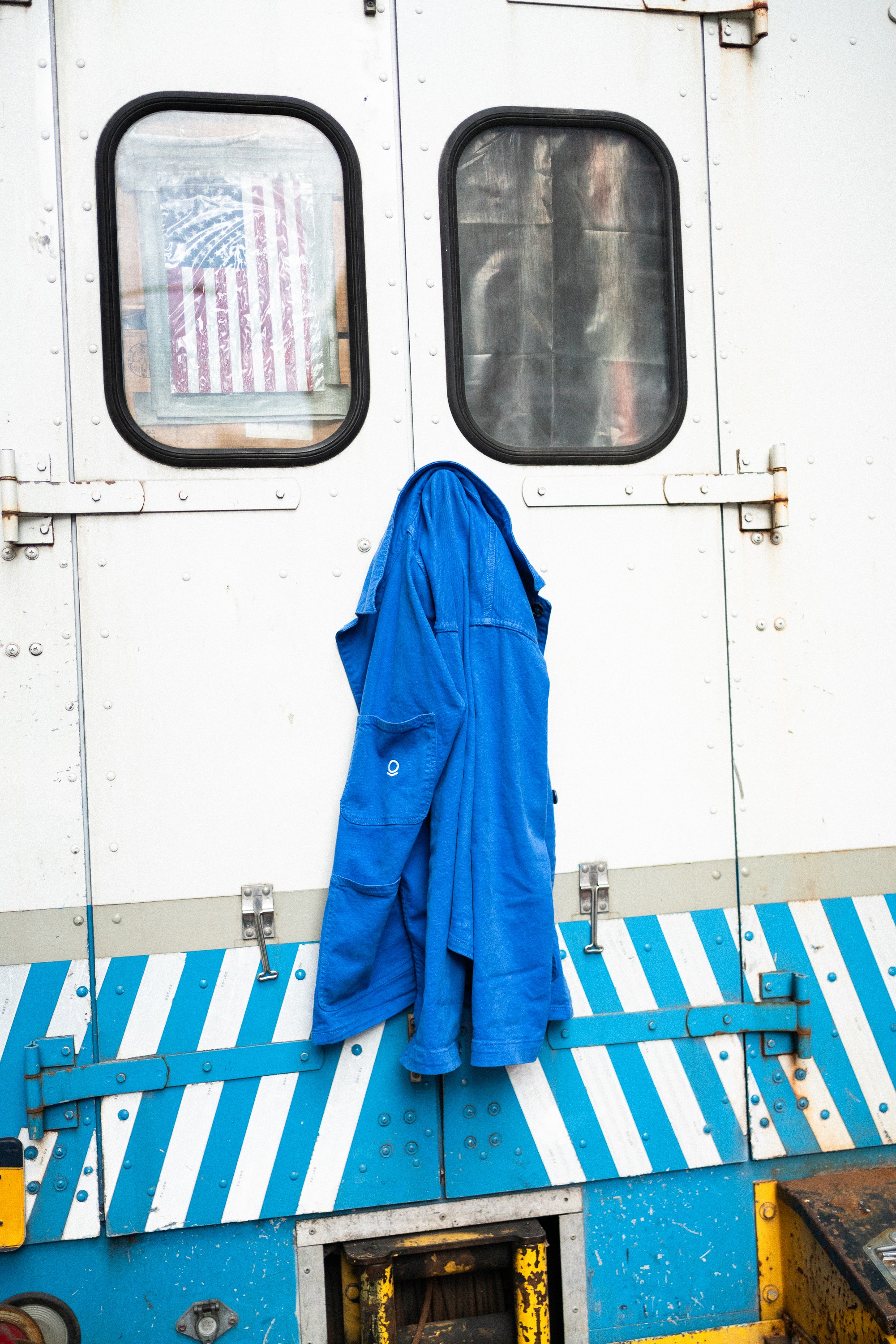
Nothing about the Palantir chore coat makes any sense. Mine is a size small, though it’s so oversize that I look like a teen wearing a hand-me-down. Then there’s the color: a piercing blue that’s nearing the shade of an iMessage bubble. The jacket is also the most comfortable and practical garment I own. It’s buttery soft and as heavy as a blanket, with three massive patch pockets that each can hold a paperback book. The coat’s plastic buttons—swirls of black and blue—are unlike any I have ever seen.

The Palantir chore coat is made by the same Palantir named in homage to Lord of the Rings, the same Palantir that has developed a reputation as ruthlessly committed to any number of national-security imperatives, and, yes, the same Palantir that builds AI tools for the military and tracks migrants for ICE. The mysterious tech giant now also wants to sell you outerwear. Only a tiny Palantir logo is embroidered into the coat’s left breast pocket, but flip the coat inside out and you’ll find a message from Palantir’s CTO, Shyam Sankar, sewn into the lining. Ask yourself constantly, Am I winning? If the answer is yes, nothing else matters. Chaos is tolerable; pain is tolerable. The only thing that matters is to win.

When the chore coat was announced in April, it became an instant grail for Palantir’s many devotees, who are drawn to the hard-core ethos of the CEO, Alex Karp (or “Daddy Karp,” as he’s sometimes known online). Palantir is proudly America First—Karp has said that his goal is “making America more lethal”—and sure enough, the company’s marketing emphasizes that the jacket is made in America with 100 percent American-grown cotton. The jacket also has been easy to mock. Here is a foray into fashion from a nearly $300 billion company that is automating warfare. People have dubbed the coat “the worst clothing release this year” and darkly wondered, “Is this the uniform that will be issued after we are all put in labor camps?” In a ranking of despicability, New York magazine’s “Approval Matrix” placed the Palantir chore coat near flesh-eating bacteria.

In the name of journalism, I decided to buy one. What would it be like to drape myself in the sartorial expression of one of the most polarizing companies in the United States? The minute that pre-orders went live, I refreshed Palantir’s website, frantically typed out my credit-card number, and paid $252, including shipping and tax. Within hours, all of the coats had sold out. Mine arrived two weeks later in a giant box labeled SOFT WEAR COLLECTION. The package included a placard signed by Sankar, a SOFTWARE DOMINATION sticker, a postcard urging me to CHEW THE GLASS, and a luxurious cedar hangar embossed with Palantir’s name and logo. A plastic card certified that this was a genuine Palantir chore coat, No. 191 of 200.

Over the past month, I’ve worn the chore coat essentially everywhere. It has accompanied me on subway rides and walks around my neighborhood in Brooklyn. I’ve worn it while perusing a gourmet gift shop stocked with elderberry kombucha, to a dive bar hosting a Friday-night drag show, and on a weekend trip to Woodstock, New York, surrounded by yoga studios and aging hippies. On a few occasions, strangers spotted the Palantir logo and did a double take. One dad scowled at me while he rolled a stroller down the sidewalk.

AC_PalantirCoat-HR-09602.jpg
Ali Cherkis for The Atlantic

But for the most part, people just saw a blue coat. The logo is small and generic enough to pass notice, and the coat’s internet infamy, it turns out, extends only so far into the real world. I received far more passing compliments than shocks of recognition. “Wow, love the color!” one colleague told me unprompted. I even wore the coat to a shift at my local food co-op (I know, I know), which felt akin to showing up to a PETA meeting with a bucket of KFC. In the store, I ran into an acquaintance who praised the buttons. When I told him who’d made the coat, he didn’t know what to say.

The quality of the coat seemed genuinely high, at least to my untrained eye, so I showed it to Andrew Chen, a co-owner of 3sixteen, a menswear brand that makes its own chore coat. “It’s not easy to make something like this in America,” he told me as I modeled it for him outside a Manhattan coffee shop. (Even a 94-degree day was not going to stop me and my coat.) Chen described the fit as “a little funny” but told me that the “construction looks solid” and that “fabric-wise, it’s a really nice blue.”

AC_PalantirCoat-HR-09543.jpg
Ali Cherkis for The Atlantic
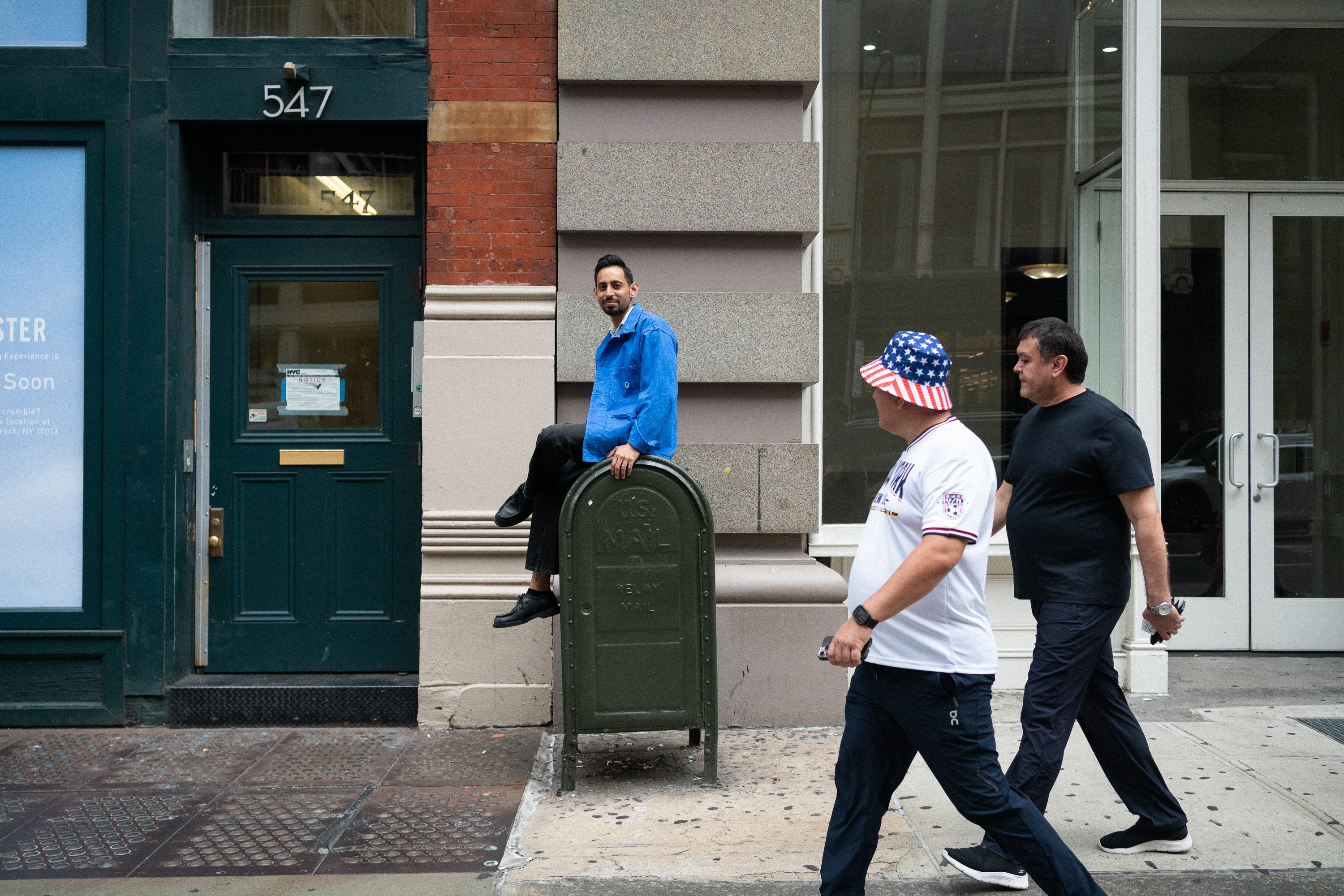
A photographer joined me in SoHo, one of New York’s most fashionable neighborhoods. When you look this good, why not perch on a mailbox?

According to Eliano Younes, Palantir’s head of strategic engagement, the exact shade of blue was personally picked out by Karp. “This is actually called ‘Karp blue,’” he told me. Functionally, Younes, who is 37 years old, is Palantir’s in-house fashion guy and meme lord. He spoke about the chore coat like a proud parent. I heard about the “American bull denim” made of cotton that’s grown in Texas and North Carolina, the many weeks spent on getting the pockets just right, and the orders that have rushed in from countries around the world. (This includes France, where chore coats were first made for laborers in the 19th century; their famous blue color is where blue collar comes from. The irony was not lost on me as I wore the coat at my desk and typed away at my laptop.)

When we spoke on Zoom last week, Younes was decked out in full Palantir-branded apparel: black shorts, black shirt, black bucket hat. Palantir has started to push all kinds of merch. Its offerings include a T-shirt that says DOMINATE beneath a watercolor illustration of Karp in sunglasses ($75, plus tax and shipping); an off-white sweatshirt printed with SILICON VALLEY DROPOUTS on the back (a reference to the company’s decision to move its headquarters out of the Bay Area); and a nylon tote bag that can accommodate up to a 17-inch laptop. Last month, when Palantir held an event in Tokyo to launch the bucket hat, people waited up to two hours in line to buy one. The hat comes with a poster that is printed with a full analysis of Karp’s body composition (age: 58 years old; weight: 77.2 kilograms; body fat: 8 percent). 

Younes is far from the first person in Silicon Valley who’s thought of turning software into soft wear. Tech companies have long doled out corporate merch. In addition to the classics—branded T-shirts, water bottles, Patagonia vests, Google’s propeller hat—tech companies sometimes hand out much weirder products to their clients and staff. Reddit has made moka pots branded with its logo. OpenAI’s employee-only store has, at various points, stocked a rice cooker, a basketball, and, yes, a chore coat.

Essentially, none of this swag is actually sold to the public. Palantir, meanwhile, is explicitly trying to become a lifestyle brand. As Younes has put it on X: “Palantir is THE lifestyle brand. The most pro-west, meritocratic, winning obsessed, and based brand on the face of the earth.” (On social media, he has called Palantir a “lifestyle brand” no fewer than 14 times.) To some degree, it is working. “Oh shit, that’s the Palantir chore coat!” a young guy in a white T-shirt and a gold chain yelled at me as I walked down a street in Lower Manhattan. A Palantir fan who refused to give me his name, he had heard about the coat and wanted one for himself.

AC_PalantirCoat-HR-09539.jpg
Ali Cherkis for The Atlantic
This stunt was funny until I ran into a model doing an actual photo shoot.

Palantir’s strategy is familiar: The company makes a new product in limited quantities, hypes it up before a pre-announced release, and then proceeds to quickly sell out of it. (On eBay, Palantir coats are going for $600.) The same trick of juicing artificial scarcity is everywhere. In November, when Starbucks dropped special-edition teddy-bear coffee cups, police officers had to break up fights between adults trying to scoop them up. Earlier this month, when Zohran Mamdani announced New York City–branded World Cup jerseys, people started lining up at 1 a.m to buy one. The point is not only to make money (though it’s also that) but to get attention.

Palantir needs neither. The company is so notoriously opaque and does such sensitive government work that even its own employees can’t always describe what it does. Palantir’s software can feel incomprehensible and intangible, if not dystopian. But therein lies the appeal of a well-made coat. By selling merch, Palantir comes off as a smaller and more human operation. (Younes, who said he’s one of two employees focused on the company’s store, told me with apparent earnestness: “I feel like I’m running a small family-owned-and-operated business.”) Perhaps it’s no wonder that other tech companies have recently started doing the same, if in more strained ways than Palantir. Anduril has collaborated on a custom video-game console made from the metal it uses in its attack drones. Late last year, Nvidia posted a job listing for a director of “gear and merchandise” with a salary of roughly $200,000; in March, the company dropped a green knit sweater printed with an avatar of Nvidia’s CEO, Jensen Huang.

AC_PalantirCoat-HR-09571.jpg
Ali Cherkis for The Atlantic
AC_PalantirCoat-HR-09635.jpg
Ali Cherkis

Palantir has little to lose in this game. If American-made chore coats and water-repellent bucket hats endear people to Palantir, the company wins. If the merch serves only to provoke Palantir’s detractors, then, well, perhaps the company still wins. Online, Younes has not always taken kindly to people who have poked fun at his creations. Could the coats “be operated remotely? detonated?” one X user posted. “Here for the shitposting but I need to see better from you,” Younes replied. “This is unoriginal and not funny.” Younes told me that he is tuning out the “negative noise,” yet he seems to recognize that soliciting reactions is partly the point. The chore coats were a success not just because they sold out but also because of the “chatter,” Younes said. Palantir fans were eager to buy one, “and so they’re sharing and talking about it,” he said. “And then you have people who are also criticizing it because they might not like the company. That creates sort of this viral reaction.” If nothing else, the Palantir chore coat is an elaborate troll.

In that sense, the jacket is perfect. No other product better encapsulates how exhausting and predictable it is to be online right now. The merch-industrial complex has come so far from KFC-branded clogs and Panera’s baguette purse that even a company like Palantir is hawking swag for the likes and lolz. Next month, Palantir plans to release a tennis skirt and, to celebrate America’s 250th birthday, boxing gloves. One day, Younes said, he wants to drop a Palantir espresso machine. Sure, why not? It’s more than a bit sad. But so is the alternative, in which Palantir disappears entirely into the shadows. At least online, Palantir is just like everyone else.

© Ali Cherkis for The Atlantic

  •  

The Only Thing Worse Than Spirit Airlines

This article was featured in the One Story to Read Today newsletter. Sign up for it here.

Spirit Airlines died as it lived: lots of angry customers and no one picking up the phone. Early yesterday morning, when America’s most hated airline announced that it would immediately cease all operations, Spirit left tens of thousands of passengers at airports across America scrambling to figure out what to do next. Some arrived to catch their flight, only to find deserted check-in kiosks plastered with a goodbye message: All Spirit flights have been cancelled, and customer service is no longer available.

The end of Spirit was sudden and dramatic, but not unexpected. The budget airline had long been going through it: one failed merger after the next, two bankruptcies within the span of a year, and finally, rising fuel costs from the Iran war that turned a bad situation into a dire one. When the hope of a last-minute Trump-administration bailout fell through, Spirit Airlines apparently had no choice but to ground its banana-yellow planes for good. (A company spokesperson declined to comment.)

The schadenfreude that Spirit’s many haters are feeling now is free—unlike everything else Spirit ever offered. The airline lured customers with dirt-cheap fares, and then nickel-and-dimed them with hidden extra charges. Wanted to book online? That came with a “passenger usage” fee of up to $28 each way. A carry-on bag? That was $33, or more if you waited until the last minute. Or how about a printed boarding pass? Another $10 a pop if you asked an airport agent. Even the water came with a price tag: $4.50. And that was before the indignity of cramped seats, frequent delays, and unreliable customer service. People have dubbed Spirit the “school bus of the sky” and the “airline equivalent of gas station sushi.” In one 2014 poll, respondents said that they would prefer sitting near snakes on a plane—actual reptiles, not the movie—over flying Spirit.

For all the justified kvetching, America is about to learn a hard lesson: The only thing worse than a world with Spirit is one without it. The Spirit haters “are going to eat their words,” Katy Nastro, a travel expert at Going, a flight-discount site, told me. The airline ran on a singular cynical insight: In exchange for low air fare, plenty of travelers would be willing to tolerate essentially anything. When one passenger emailed Spirit in 2007 to complain, Ben Baldanza, then the company’s CEO, accidentally replied-all and gave up the game: “Let him tell the world how bad we are,” he wrote. “He’s never flown before with us anyway and will be back when we save him a penny.”

[Read: The Spirit Airlines paradox]

And Baldanza was right. Even factoring in all of the add-in fees, Spirit reliably was among the most affordable options. Especially if you needed a last-minute ticket, Spirit was going to offer you the cheapest option “nine times out of 10,” Nastro said. I owe some credit for my marriage to a $58.19 Spirit flight. In 2017, I had just started dating my now-wife when she moved halfway across the country, and a flight I booked on a whim kept us together. My flight was delayed and the seat was roughly as cushiony as a park bench, but the price was right, and now I have a life partner.

In other words, Spirit was the airline of the masses—the kind of people who pack their own sandwiches instead of paying $21 for a turkey wrap at Hudson News. Because Spirit was so focused on budget travelers, the airline operated in many smaller cities that otherwise had few other options. And it was the only airline that offered nonstop flights on certain routes.

Even if you swore off Spirit—and plenty of people did—you have certainly benefited from the airline. Spirit paved the way for other ultra-cheap airlines, and the entire industry has had to slash prices to keep up. Consider what happened when Spirit started flying from Houston to Kansas City in 2014. The airline launched its route at $150, half the average price offered by the sole carrier at the time, United. Within months, United had sliced its fare down to $180, and Spirit had dipped down to $90. The same phenomenon happened so many times and in so many places that it now has a name: the Spirit Effect. According to one study, in markets with ultra-cheap airlines such as Spirit and Frontier, air fare is 21 percent lower on average compared with markets without them.

In response to the airline’s success, most airlines now have their own “Basic Economy” fares that needle you to pay extra for baggage, seat selection, and so much else. (In large part, Spirit was a victim of its own success.) None of that is going away now that Spirit is no longer around. Instead, everyone is going to be stuck paying more for less. Without the competition from Spirit, airlines have one fewer reason to keep prices down. One analysis found that air fares rose by an average of 14 percent for routes that Spirit left between 2024 and 2025. And 2026 is already turning out to be the most expensive summer-travel season in years. “This is the worst time for the worst possible outcome,” Nastro said.

[Read: The great travel meltdown of 2026]

The paradox of Spirit is this: It was a horrible airline to fly. But it also allowed more people to fly than ever before. When you’re forced to squeeze into a middle seat in row 27, it’s not hard to feel nostalgic about a time when flying was glamorous and comfortable. In the 1950s, Pan Am passengers in coach were served stuffed guinea hen. Flying round-trip from Los Angeles to New York cost $208 in 1958; in today’s dollars that’s $2,377. Since just 1995, average air fare in the U.S. decreased by 41 percent. Now cheap flights are becoming harder and harder to come by. Spirit is gone, and other budget airlines—Jet Blue and Frontier—are also struggling. Soon, the $4.50 water bottle will look like the real golden age of travel.

© Illustration by The Atlantic. Source: Giorgio Viera / AFP / Getty.

  •  
❌