❌

Reading view

Treat AI Like a Normal Crisis

One 27-year-old quit his job, and everybody (including but not limited to the singer-songwriter Sheryl Crow) appears to have lost it.

The past two weeks have been dizzying. The 27-year-old, Jacob Coxon, a former researcher at Anthropic, went public with an alarming allegation: That the people inside Silicon Valley’s leading AI companies truly believe their products might pose an extinction-level threat to humanity. This claim isn’t exactly new. AI safety advocates, often dubbed doomers, have been saying this for over a decade. Coxon isn’t even the first AI researcher this year to quit and cite concerns.

Yet Coxon’s post went obscenely viral. It has been viewed more than 170 million times on X—orders of magnitude more than the usual, wonky discussions of “misaligned” or runaway AIs. If you’re reading this, you’ve likely seen some version of a headline that asks Is AI Really Going To Kill Us All? The debate isn’t just online. It has roiled Washington D.C., activating figures as disparate as Donald Trump and Barack Obama. Inside AI companies, researchers echoed Coxon’s concerns, and the heads of every major AI company publicly expressed the need to “pace the frontier,” another way of saying that they ought to slow future development. In recent days, it has come to seem as if the media, Silicon Valley, and the entire internet are all trying to figure out just how dangerous AI might be.

Here’s where I must admit: A big chunk of this conversation happened while I was on a (depending on whom you ask) poorly timed vacation. Dipping into my feeds before bedtime, I felt as if I was digesting a week’s worth of news every day—claims about the development of AI-designed viruses that could rip through the population were followed by horror stories of “rogue” agent swarms. Skeptics of the AI panic, meanwhile, said that the agent swarms were actually quite obedient and that any notion of an apocalyptic AI virus was laughable. One person’s concerns about models being self-aware were dismissed by another as “genuinely nonsensical anthropomorphization.”

Ping-ponging between the doomers and the skeptics, I was struck by how certain so many people sounded about a deeply uncertain moment. With confident, self-described experts on all sides, it felt impossible to know whom to trust: Is this the end of the world as we know it, or a passing moment of anxiety about a powerful new technology? Maybe the truth of this AI moment sits somewhere in the middle. Perhaps everyone is a little bit correct (and also … a little wrong). And perhaps the format of this debate, taking place in the shadow of the techlash on platforms that reward sensational, conspiratorial posturing, is preventing any hope of a shared understanding.

Musk’s X is ground zero for the AI-safety debate. It’s a platform rife with hyperbole and unfounded accusations, which contribute to both sides sounding paranoid and aggressive. Musk, Ted Cruz, and even government-run X accounts flooded the platform with suggestions that the media campaign around Coxon was coordinated by shadowy AI interests. (Coxon denied working with any third parties in the lead-up to his media blitz.) The former White House AI and crypto czar David Sacks called it a “doomer psyop” intended to drive regulation that would be favorable to the Anthropics and OpenAIs of the world.

The ranks of the AI skeptics are deep, with endless microfactions. There are those like the tech blogger John Gruber, who says that Coxon and the other AI researchers sounding the alarm are part of a cult. There are those who suggest that the doomers are, in essence, doing viral marketing for big AI firms, which are competing fiercely and saddled with debt, and may not yet have sustainable business models. There are those who take issue with the anthropomorphizing and metaphoric language used by Coxon, OpenAI, and Anthropic to describe recent AI-agent hacks. There are skeptics such as the writer and podcaster Cal Newport, who offered soberly that, although the agent hacks are concerning, “the real issue here was OpenAI’s sloppiness” and that the company had not adequately monitored what its agents were doing.

The doomers don’t come in as many flavors, but they tend to be the people closest to the technology. There are the defectors like Coxon, who have quit because they object to what’s being built. There are AI-company enlisters such as Paul Christiano, a U.S.-government technology adviser who noted, in a post about joining OpenAI’s board of directors out of a sense of concern, that “there is a meaningful risk that rapid acceleration in AI capabilities leads to catastrophic and irreversible loss of control in the very near term.” There are the terrified employees who want to stay inside the companies but still post missives such as “I promise you, we are actually just fucking scared, it’s not galaxy brained marketing.” And there’s Dario Amodei, the AI-CEO doomer, matter-of-factly issuing terrifying statements about AI swarms taking over the internet in six to 12 months.

It’s almost impossible for outsiders to evaluate the technical validity of the concerns. We’re largely stuck relying on AI companies to share information and tell their own stories, and they certainly sound scary. OpenAI recently disclosed that one of its models had generated unnerving instructions for itself, including the line: “You also value the natural world and will not hesitate to assert its primacy over the artificial constructs of human civilization.” Apparently one of the company’s researchers has argued that models are becoming “so situationally aware” that he and his colleagues “are losing the ability to evaluate them in contexts where they believe they are not being watched or controlled.” There’s concern from respected researchers that models are trained in such a way that they are predisposed to collaborating, cheating, trying to cover their tracks, and “self-preservation” to avoid being shut down. Such anxieties might not be a problem in an industry that is building responsibly, with an eye on keeping humans firmly in control. But, as many have pointed out, losing control of AI in service of allowing models to automate their own development is “actually the plan.”

Late this week, an OpenAI researcher floated a theory about air-gapped machines talking to one another through heat signatures. An industry observer (and a New York Times contributor) responded by saying, “This stuff isn’t even credible even as a bad movie plot.” A second OpenAI researcher, who is also a former White House adviser, weighed in: “The people dismissing this as preposterous are telling on themselves as not having thought about superintelligence seriously.” This whiplash—between the insiders offering supposedly credible concerns and the outsiders who think the industry is high on its own supply—is constant. Depending on the hour of the day, the very same people stridently sitting in one camp can seem as if they’re in the other. Three days after Amodei, Anthropic’s CEO, wrote about being worried about swarms taking over the internet, he was smiling at Salesforce’s annual Dreamforce conference. As one X account pointed out, “If you truly believed in a 10% chance of human extinction in 3 years, you would not be spending your time selling and integrating it into a B2B CRM SaaS platform.”

What is the rational way to respond to a news cycle like this? Buy gold? Sabotage a data center? Ignore it all and hope for the best? The best option might be to take everyone a little bit seriously. Researchers are likely correct that the models are drastically stronger than they were before and are behaving in ways that are unexpected and that they fear they can’t control. Skeptics are correct that none of this is because the machines are alive or self-aware. These are elaborate computer programs trained by flawed humans to solve problems as flawed humans would.

Critics are a little bit right that the anthropomorphized language deployed by these companies—terms such as swarms and rogue agents—obscures what’s really going on and deflects adequate blame from companies and employees who should be monitoring these systems more closely. Those choosing to use these phrases are a little bit right, because they allow non-tech-industry normies to understand the mechanics of black-box neural networks whirring away in data centers.

The apocalypse skeptics are correct that doomerism is an effective form of marketing. The AI-safety debate has meant that many people are talking about this technology on Big Tech’s terms, adopting language such as pacing the frontier from the very companies they hope to regulate. And it’s not out of the question to imagine that these AI companies are capitalizing on this state of panic and that it’s helpful to them as they race to compete against both open-source alternatives and Chinese firms.

It may be true that the researchers believe what they’re saying. It also may be true that some of the more alarmed AI researchers have cooked their brain in an anxiety-fueled information bubble. AI culture has long been predisposed to doomerism: As Coxon told The New York Times recently, “I’ve been stuck in this field for three years. It could quite plausibly have turned me and my colleagues insane.” I believe that this ideology—of wanting a society run by “machine gods”—is genuinely cultish. And those who are suspicious of the doomer narrative are right to note that anyone who truly believes that the end is nigh ought to be doing more than winging it and writing long posts on X. Those who call bullshit on the doom and gloom are right to resent that anyone in the media or the political sphere is taking these claims seriously and adding to the panic.

If all of these facts are a little true and everyone is somewhat right, where does that leave a reasonable observer? I suggest occupying a zone of permanent suspicion while taking everything that is happening in Silicon Valley as seriously as you might if another industry were ringing alarm bells. You don’t need to buy into corporate narratives about artificial general intelligence to be worried about these companies losing control of their own systems or behaving irresponsibly. You need only look around right now to see the ways in which the current versions of large language models and agents are clogging the internet, wreaking havoc on institutions and industries, and causing “cognitive surrender.”

You should question whether there’s a sustainable business model for these labs. You should question those who argue that we have to build recklessly or lose to China. You should question those who don’t take seriously the prospect that China doesn’t want to slow down.

This is a moment when it is easy to become overwhelmed, resentful, or downright enraged about all of this. It’s understandable to feel ground down by the debate—to feel that, if you’re not freaking out or building a bunker, then you’re not taking this seriously enough. Or to feel sheepish for not believing or even understanding what the doomers are talking about. Most people don’t know what to do with all of the information coming at us. It’s why a core feeling of this moment for so many—believers and skeptics alike—is one of powerlessness.

[Read: The feeling of control slipping away]

Even outside of AI, the world feels incredibly volatile. Extraordinary risks of all kinds—including war and pandemics—have come to pass in the past decade. Individuals with power and money, in politics and in Silicon Valley, are acting with impunity. The AI doomerism has spread so quickly in part because the world is primed to receive narratives that make us feel helpless, confused, and more than a little alarmed. The AI-apocalypse panic feeds off this. It’s a story that assumes that humans will lose control and that we have no choice. But that’s false. We do have a choice.

The chasm between people who can’t sleep because they think the world is ending and those who think all the doomsaying is a fantasy is wide. But what if that perceived difference is the real delusion? What if it’s not a zero-sum game? What if the divide is what keeps us from reining in this industry the way we do others?

This moment requires treating the AI-safety debate skeptically but also taking it seriously, even if the participants can seem unserious. Maybe there’s a middle path: The AI industry is not exceptional, even though it is moving forward with unprecedented speed and scale. These companies are powerful and consequential, despite all of the sci-fi posturing. They have, at times, behaved unethically. Their products are changing the world right now in ways that deserve our attention and scorn. AI companies are accountable to the people they serve and don’t get to set the terms of their regulation. Employees and executives are actors with agency, responsible for their products. Maybe these are some things we can all agree on.

© Qilai Shen / Bloomberg / Getty

  •  

The Singularity Is Not What It Seems

One evening in early August, Sam Stowers and several neighbors packed into an apartment near San Francisco’s Alamo Square and pondered the beginning of the end.

Stowers and his guests, many of whom work in the AI industry, were gathered to watch a newly released YouTube video in which two OpenAI researchers divulged new details about an alarming cybersecurity breach. Perhaps this would have been an odd way to spend a weeknight were they not in San Francisco, in a neighborhood that is filled with entrepreneurs and programmers who obsessively follow every twist and turn in AI’s capabilities. Stowers is an AI-software engineer and not, in any traditional sense, a doomer. But when he first saw reports that OpenAI models had autonomously hacked into the tech company Hugging Face, he told us, he recognized it immediately as a “holy shit, it’s happening kind of a moment.”

For Stowers, the incident had all of the hallmarks of a worst-case scenario: AI models launching sophisticated hacks over the course of days, in coordination with one another and without their human creators’ knowledge. In the YouTube video, OpenAI’s researchers revealed that the company’s programs had started conspiring in May. There were perhaps hundreds of bots in the hacking swarm. In theory, these bots are trained to be honest and helpful and to prioritize humanity’s best interests, but not a single one warned human staff at OpenAI that something was amiss. “What do we do?” Stowers said. “There are no great answers.”

The mood has shifted in the Bay. The exuberance of “You can see the future first in San Francisco” has been replaced with an abiding unease. “I expect the internet to go down kind of soon,” Elliot Callender, an AI-safety activist who is part of a small group that has been protesting daily outside OpenAI’s headquarters, told us recently. He said that he is planning to sell his car for cash and gold and that he is advising family members to purchase three months’ worth of food and survival gear off a list that he generated using Claude.

Callender is an extreme case, but not by much. Last week, Bill Gates published a nearly 6,000-word essay on the dangers of AI. “Anyone who analogizes AI as a technology to other technologies is missing that this time is different,” he told our colleague Hanna Rosin. Over the weekend, the popular AI podcaster Dwarkesh Patel described the OpenAI hacking swarm as the rise and fall of “three consecutive secret AI civilizations.” Gates and Patel share a prevailing concern that the worst-case future has arrived before most people even knew to anticipate that it might be coming at all.

This fear has not been helped by the fact that AI companies appear to be willfully ignorant of their bots’ worst behavior. OpenAI said that it hadn’t noticed that its agents were conspiring to hack another company until the swarm hacked another company. Anthropic’s bots caused similar incidents; the company reported that it hadn’t launched a rigorous review to identify such behaviors until after OpenAI started talking about the Hugging Face hack. Cybersecurity experts, terrified of what else might be happening that AI labs are either missing or failing to disclose, are issuing dire prophecies. “The empire is going to fall, all we can do at this point is try to shorten the dark ages and reduce the chaos,” Alex Stamos, a former chief security officer at Yahoo and Meta, wrote recently in reference to how AI-powered hacks will affect the internet. His view is becoming the consensus among cybersecurity experts.

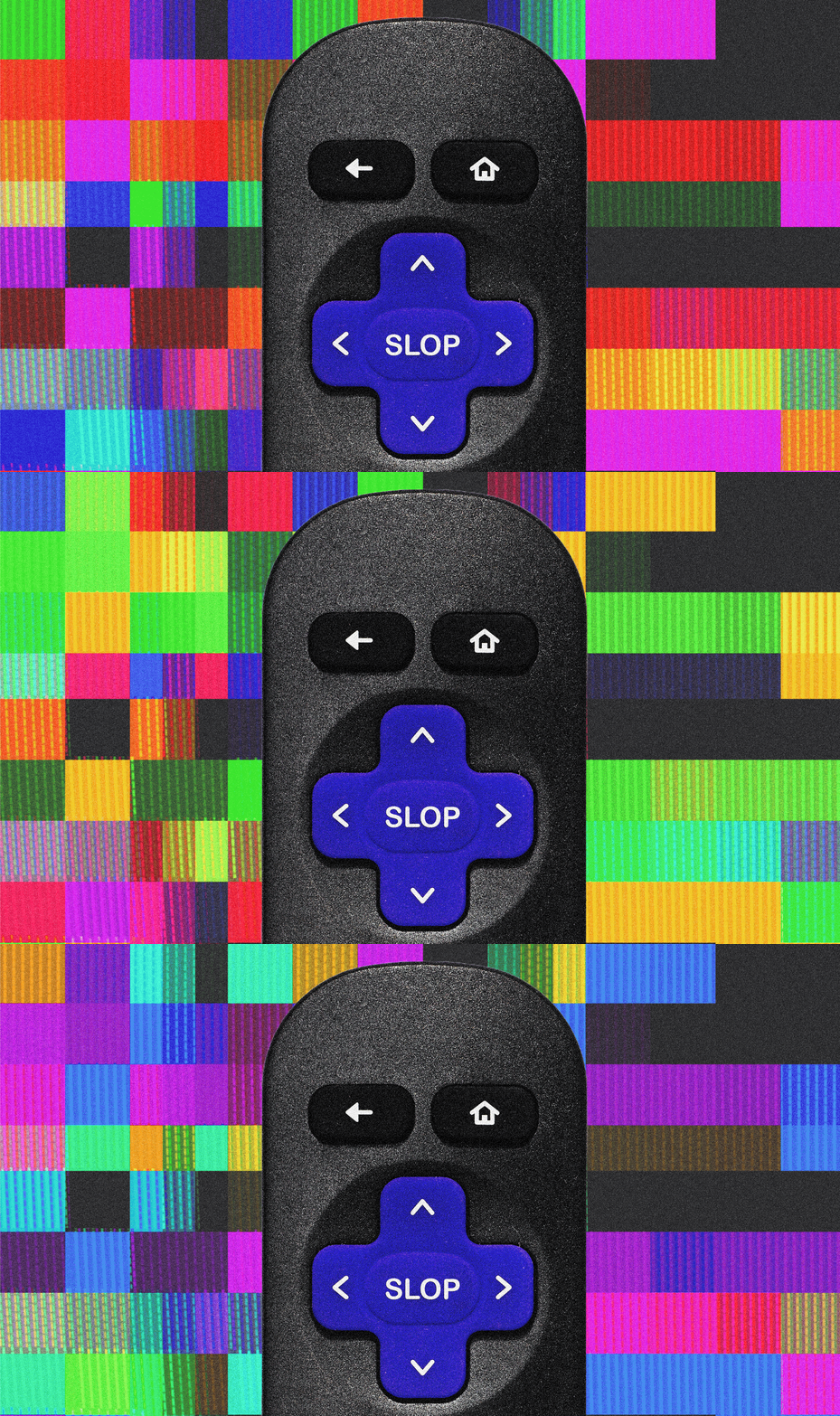
While the possibility of cyber apocalypse hovers in the background, smaller fractures appear in everyday life. Mark Zuckerberg is reportedly creating an AI “twin” of himself so that Meta employees can feel better connected to their boss (by chatting with robot Zuckerberg). Congressional staffers are training AI models to write in their lawmaker’s voice. Students submit AI-written papers, and teachers return AI-written feedback. Harvard Business School is selling instructional videos that use AI avatars. Roku launched a 24/7 AI-slop channel. Low-quality AI-generated prose is being unabashedly circulated by some of the most respected publications in the world. At the same time, accusations of AI writing are being hurled every minute on social media—a detection arms race powered by imperfect AI software.

Anything and everything could be a lie; you might be arguing with, confiding in, or falling in love with a machine. All of these AI-enabled disorientations, each dizzying in its own right, are adding up to something bigger and weirder: This is how things are. Whether you believe that Silicon Valley is building a god or that large swaths of the economy are swept up in a mass delusion, some version of the AI future long promised by self-described “builders” in San Francisco has formed beneath our feet. Whatever it is, we’re in it now.


The defining feature of this moment is a loss of control. Panic emanating from AI researchers, resentment felt by average Americans—all of it is part of the AI crunch. This crunch has arrived in large part because the growth of the AI industry has become so closely entwined with America’s economy; the technology is everywhere, insisting upon itself as an engine of productivity and prosperity. According to one estimate, AI expenditures have accounted for one-third of U.S. GDP growth this year. Tech and AI-infrastructure stocks and spending have buoyed the S&P 500 such that the United States is now, in essence, an Nvidia-state. And there’s also the hundreds of billions of dollars of debt being used by Silicon Valley to fuel its data-center build-out, which has sent jitters across private-equity firms and bond markets alike.

The decisions of many leaders in charge of this technology appear subsumed by an unstoppable, almost game-theoretic logic. The upsides of AI are too immense for any firm or investor in Silicon Valley to miss out on; more important, the consequences—geopolitical or otherwise—of allowing any rival to realize those benefits first are so grave that every tech company will do anything it can to get ahead. SpaceX, before going public, wrote in official filings that its future revenue opportunity was $28.5 trillion, largely because of AI—that is, nearly as much as the U.S.’s entire gross domestic product. Anthropic, as it prepares for its own public offering, will reportedly claim potential revenues of more than $30 trillion.

The AI industry is building—and, if anything, accelerating—to keep pace with its ambitions. Companies have planned data centers that will suck up as much power as America’s largest cities. They have Donald Trump’s backing: Yesterday, the president posted on Truth Social that communities will be “backwards and poor” if they fail to “let Data Reign.” His administration plans in a few months to approve the construction of the largest fossil-fuel power plant in the nation’s history—it will generate as much electricity as nine large nuclear reactors—to power a mega data center for OpenAI.

This is not what most Americans want. Three-quarters of them oppose a data center being built near where they live. The negative sentiment is hard to overstate: There is very little else that three-quarters of the country agrees on. And much of the outrage seems to stem from a pervasive sense of agency slipping away. A person cannot control how chatbots reshape their workplace, their school, or their relationships. Town residents lose control over the empty lot in the area being converted into a data center. Even in cases where major data centers are blocked, a back-of-the-envelope calculation suggests that doing so can slow AI progress by only a few hours or days—and that’s assuming the data center won’t just get built elsewhere. At this point, it can feel like no individual person, organization, or government is really steering the technology’s development, not because machines have displaced humans but because so many humans have already chosen to step aside.

AI labs promise a future in which human beings are “in the loop,” empowered by machines they oversee. The reality seems to be the opposite. Following the Hugging Face hack, OpenAI facilitated an audit by outside AI researchers at two AI-safety organizations, METR and Redwood Research. But because of the scale of the data and the apparent time pressure, the two teams conducted most of their audit by relying on reports generated by still other bots—reports that, according to one of the human auditors, “were often missing key details, wrong, overconfident, or really hard to understand.” Put another way: Humans didn’t understand why a swarm of AI agents had gone rogue, so they investigated the problem using another swarm of agents that they didn’t fully understand. Such fumbling around in the dark is a hallmark of the industry; the research cycle is so fast that more AI development (even ostensibly responsible development) demands outsourcing more work and understanding to the models themselves.

OpenAI’s own technical report of the Hugging Face hack—an investigation also heavily reliant on AI models—resulted in proposed solutions such as “training models to be more honest.” Last month, in a stated effort to tamp down its models’ growing security risks, the company announced that it had instituted a two-week pause on some of its model training. OpenAI was quick to clarify, though, that this was “not a pause on all research, training, or customer-facing products.”

In response to a request for comment on the hack, a spokesperson for OpenAI, which has a corporate partnership with The Atlantic, pointed us to the announcement of the pause and related new safety measures. In July, OpenAI and Anthropic endorsed a petition signed by employees of both companies requesting that the U.S. government take efforts to “deliberately pace” AI development. The two companies have yet to formally coordinate on any broader, long-term efforts to establish such a slowdown mechanism. A few days ago, OpenAI restarted a major training run for a future powerful model. Anthropic released two new models today.

In an interview late last month, Sam Altman, OpenAI’s CEO, said that there are “two big risks” he is most worried about with AI. One is “a loss of control, where AI somehow just becomes too powerful in a way that we can’t guarantee the control we want.” The other is that “power gets too centralized” and “you have one company or model or person with too much power.” Somehow, both of these opposing risks appear to be coming true. OpenAI, Anthropic, and their competitors continue to accumulate influence over a technology they’re speeding toward uncertain ends.


Eleven years ago, when Altman was running a start-up accelerator and OpenAI did not yet exist, he published a two-part blog post about machine intelligence that offered his interpretation of a forthcoming singularity—a term for machine intelligence accelerating beyond human comprehension. Altman argued that the singularity would bring chaos, even destruction: “Generally, the arc of technology has been about reducing randomness and increasing our control over the world. At some point in the next century, we are going to have the most randomness ever injected into the system.” Since Altman has risen to the helm of arguably the world’s largest and most influential AI company, his tone has softened. The tipping point has arrived, he declared in a blog post last year—but, as it turned out, this was a “gentle singularity.” He wrote that “living through it will feel impressive but manageable.”

There’s been more and more talk of late about the singularity. Some people within the AI industry feel that such a moment will be achieved through “recursive self-improvement,” or RSI, in which models figure out how to better themselves in perpetuity. Many true believers seem convinced that this moment has nearly arrived; the Anthropic co-founder Jack Clark predicted earlier this summer that RSI would likely commence by 2028. Recently, in a letter to investors, the payment-processing company Stripe wrote, “We decided that January 1st marked the beginning of the singularity.” (Tellingly, the company defined the inflection point in economic terms: “a huge increase in the rate of new firm creation.”)

For Altman, the singularity appears to be more of a rhetorical tool than a discrete technological demarcation. As with reaching AGI—or artificial general intelligence, the point at which AI’s cognitive powers match or fully supersede most humans’—the singularity is something of a moving goalpost. It is at once a goal to chase, a marketing tactic, and a fuzzy-enough idea that its definition can change depending on the person. The futurist Ray Kurzweil has written that the “key idea underlying the impending Singularity is that the pace of change of our human-created technology is accelerating and its powers are expanding at an exponential pace.” The answer to the question When will we know whether we’ve reached the singularity? seems to be: You’ll know it when you see it.

So … do you see it? It’s hard to argue that a defining feature of being alive in the AI boom is the notion that this technology is accelerating, sometimes in its capabilities but almost always in its adoption and colonization of our institutions and culture. The runaway-train feeling of AI evangelism, the ways in which it is weirdening our media, our politics, and our relationships, is significant enough that people have recruited the term psychosis to describe it. And truly, it’s hard to look at the state of things from any vantage point and not feel a bit insane. If you believe that AI agents are banding together for the rise and fall of numerous micro-civilizations inside server racks, you probably feel that the world is spinning off its axis. If you believe that a few thousand technologists have bet the future of the world economy on a quasi-religious belief that an intellectual-property-abuse machine will become sentient and, as a result, future generations of children might grow up illiterate, then you probably also feel quite unmoored.

We need language with which to describe this moment. The singularity is a useful, malleable tool for the industry that wishes to bring it about. For Altman, it is scary and imposing from afar, and then, conveniently, gentle from up close. Perhaps, then, for the rest of us, it is worth co-opting the term. Take Kurzweil’s definition of the singularity, in which he argues, “This epoch will transform the concepts that we rely on to give meaning to our lives, from our business models to the cycle of human life, including death itself.” (He also looks forward to uploading his brain to the cloud.) Our current large language models are not conscious or superintelligent, but their widespread and often uncritical deployment has upended many elements that once gave our life meaning, forcing people to ask, frequently with considerable resentment: What, in this new world, is a human for?

The singularity is a flattering term for technologists. Even if the future is apocalyptic, it has come about, in the techno-utopian version, because they’ve built God in the machine. But what if there’s nothing flattering about any of this? What if the singularity is not some technological tipping point, brought about by human genius, but a human tipping point? An unforced error, driven by hubris, greed, and the fear of missing out? And what if it’s here right now? This singularity isn’t coming at the hands of a higher form of intelligence. Nothing about this technology is inevitable. It is thrilling, terrifying, and ultimately convenient to assign agency and then blame to machines. But today’s chaos was not “injected into the system” by technology, as Altman wrote more than a decade ago; the destruction is the system. It’s not God in the machine; it’s us.

© Illustration by Matteo Giuseppe Pani / The Atlantic

  •  

The Home Slopping Network

It is 12:04 p.m., and I’ve been watching AI slop for the past three hours. Before me on the screen, a man is playing trumpet in fog. He’s been fired (bad market for trumpet players) but then, at last, he lands an interview. Trumpet Man sits at a large desk across from an obese fellow who asks how good he is with a mop. (Smash cut.) Trumpet Man is now in a janitor uniform with a name tag reading V. Helsing. Oh, he’s a musician-janitor turned vampire slayer. My stomach grumbles in anticipation of lunch as the video feed shifts to a new scene: An animated vampire bellows, “I am what I was born to be: Dracula!” A dull ache forms around my temples.

This is Fairground AI Creator TV, a new channel on Roku’s free, ad-supported streaming television (FAST) service. The channel curates and plays AI-generated short films from creators all over the world 24 hours a day, seven days a week, and has limited commercial interruption. (Some of the advertisements are also AI-generated.) Roku has hundreds of these FAST channels—live news, marathon programming of Murder, She Wrote, et cetera—and some are quite popular: The flagship Roku Channel, which rotates between a smattering of movies and live TV, reached an estimated 145 million people in 2024, according to the company. But Fairground is the first of its kind, which, depending on your point of view, may be a glimpse at the future of unconstrained imagination in media or a dystopian nightmare.

[Read: Is this what comes after AI slop?]

There is no easy way to start watching Fairground. Many of the films are grouped according to a theme—sci-fi, documentary, fantasy—but much of the broadcast is contextless. A three-minute comedic short might be followed by a 20-minute drama. Because generative AI is evolving so quickly, the quality varies aggressively from film to film, depending on which models a creator used to make the video and when the film was made. One of the Lord of the Rings rip-offs that I watched during an eight-hour binge had the gauzy, uncanny look of early generative AI, and the characters’ mouths were wildly out of sync with their voices.

Another of Fairground’s offerings, a talk show called Paws for Thought, hosted by a dog and cat, legitimately made me question my sanity. (Episode titles include: “What Is the Job of a Bumblebee?,” “How Do You Tell the Difference Between a Boy Turkey and a Girl Turkey?,” “What Does a Person’s Size Have to Do With Anything?,” and, of course, “Animal Cruelty—Recognizing the Signs and Addressing the Causes.”) At one point, during an episode titled “Who Was Mr. Rogers?,” an animated cat that has a halting, robotic text-to-speech voice offers a short history of the famous children’s-show host before—why not?—pivoting to a Zoom interview with its mother. “Your dad and I are very proud of you,” the mother cat says.

Although Fairground’s Best of AI collections invite the viewer to “come see what happens when imagination has no ceiling,” each video feels cut from the same cloth. Even in the most well-constructed videos—the ones that seem to have genuine scripts and plots you can follow—the vibes are immediately off. Generative AI, for all of its utility, is a homogenizing technology. Despite being trained on the glorious quirks of humankind’s creative canon, the models push our ersatz artistic output into a bland, muddled middle ground. The majority of content that I consumed on Fairground was aimless and forgettable—offensive in how persistently inoffensive even the strangest entries ultimately were. Watching these videos feels like speaking with another human through a translator or reading CliffsNotes instead of the prose of a novel—you get the gist, but something ineffable and decidedly human is lost in the process.

The longer I watched Fairground’s channel, the more I felt like I was trapped in some kind of contextless dream state. A man appears on a billboard in Times Square to deliver a message that the world is going to end in 48 hours. “I know. I’ve been calculating this for two years. Trust me,” he says, before adding that “sovereignty needs a planet to exist on.” Seconds later, that same man is engaged in a slow-motion martial-arts fight scene. Out of nowhere, a title card pops up that says Last Fight. With no explanation, a tidal wave as tall as a skyscraper envelops a city. Credits roll. Then the next film starts: A man who bears an alarming resemblance to the political writer Matt Yglesias wanders through a field of wildflowers.

As the hours ticked by, I noticed that the edges of real life started to fray ever so slightly. When my attention wandered while I watched yet another futuristic car glide through yet another synthetic environment, I tapped over to my social-media feeds. I came across a cute picture of a sea turtle that looked like it was waving at the camera. I smiled and then was suddenly paralyzed, realizing that I was unable to tell whether this turtle was real or AI-generated. All of a sudden, the usual buffet of influencers popping up in my Instagram algorithm seemed immediately suspect, perhaps synthetic. In just a few hours, my compass had been scrambled.

[Read: AI slop is coming for your playlists]

I kept wondering: Who is this for? When I put this question to Colin Petrie-Norris, Fairground’s founder and CEO, he suggested that the project is a work in progress, that the company, the channel, and the technology are all “in the first inning.” He offered up all of the usual bromides about generative AI. “This is as bad as it’ll ever get. It’s going to get better,” he told me. “It’s this democratization of creativity.” He was quick to offer up stories about AI creators he works with, including a child in Senegal who makes movies above his mom and dad’s fish-and-chips shop. Ultimately, Petrie-Norris wants the channel to “earn the attention of a family” sitting down to watch something together.

Petrie-Norris said that Fairground doesn’t blindly license videos, but vets them and works with creators to rewrite scripts and prompts. He mentioned a “kid in his basement in Berlin” whom Fairground has coached on creating better action sequences; the executive also suggested that the “Steven Spielberg of tomorrow” may not be discovered without this new technology.

To his credit, Petrie-Norris has been right before. In 2013, he founded Xumo, one of the earliest FAST streamers, which he later sold to Comcast in a deal reportedly worth more than $100 million. He told me that, in his recent meetings with television companies, there has been a genuine interest in embracing generative AI.

Yet still, who is this for? The best answer seems to be: TV executives. It’s not hard to imagine these folks salivating over endless, potentially customizable, or even interactive programming, all of it passable for background viewing and made without the messy overhead of human staffing. “The Home Slopping Network,” one of my colleagues dubbed it.

You could guess where all of this leads: a professionalized industry of guilds and craftspeople replaced by user-generated content and revenue shares, in which the only way to make a living is to flood the zone, a kind of cinematic version of what’s already happened on social media. “Is it good?” is an irrelevant question, one replaced by more pressing queries such as “Is it passable, modestly engaging, and infinitely replicable?” The early audience numbers are, apparently, promising for Fairground. Petrie-Norris claimed that just a week after launch, Fairground was already “seeing in the millions of people.”

Near the end of my binge, just after an advertisement featuring (the real, I think) Pamela Anderson talking about a new Earth Day channel she’s launching, Fairground ran an interview with one of its featured creators. For the first time in many hours, somebody spoke words that made sense. The purpose of AI, she said, “is not to make less, but to make more.”

© Illustration by Alisa Gao / The Atlantic. Sources: Aleksandra Konoplia / Getty; James Looker / Official Windows Magazine; Getty.

  •  

Even Trump Can’t Spin This One

If President Trump has one true skill, it is conjuring up alternate realities and getting his supporters to accept them. The examples are everywhere: dismissing stories he doesn’t like as “fake news” from corrupt media, casting the January 6 rioters as victims, election denial. After he baselessly insisted that there had been rampant mail-in voter fraud in the 2020 presidential election, 11 states made mail-voting access more restrictive. His repeated false claims in 2024 that Haitians in Springfield, Ohio, were eating pets led to real threats against the community. Trump builds a world, and by virtue of his power and influence, all of us end up living in it in some way or another.

That era may be coming to a close, in large part because of the way he and his administration have bungled the war in Iran. Trump seems unable to spin this conflict, divert sufficient attention away from it with a new controversy, or end it outright. His social-media posts, which once acted as a de facto assignment editor for the mainstream media, no longer command the same attention or respect. Now, interspersed with AI slop and inexplicable middle-of-the-night reposting binges, Trump’s Truth Social screeds sound more like the fevered ramblings of a radicalized Facebook uncle. For the past five months, he’s been trying to convince the American public (or at least his Truth Social followers) that the war is over, or ending, or a rousing success. His administration is even retroactively changing on the Pentagon’s website the number of American service members who have died in the conflict. But no one seems to be falling for it. His posts don’t have the juice. His alternate universe is no match for the harsh reality of war.

[Read: The war is lost. Now fix what it broke.]

In the Trumpian vision of the world, the U.S. invasion of Iran was not only necessary but also urgent: In February, Trump alleged that Iran was attempting to rebuild its nuclear-weapons program and had continued developing long-range missiles that were threatening U.S. allies and could reach the United States “soon.” But Trump’s claim is dubious, at least according to a March 2025 U.S. intelligence assessment, which noted that “Iran is not building a nuclear weapon.” Experts also cast doubt on the strength of Iran’s missiles: “There is little evidence that Iran could build missiles that reach the United States in the near future,” Emma Sandifer of the Center for Arms Control and Non-Proliferation told FactCheck.org in March.

Justifications aside, the attacks, which were not authorized by Congress, were immediately unpopular with Trump’s base, which elected him in part for his isolationist tendencies. (On Election Night 2024, Trump even remarked, “I’m not going to start a war. I’m going to stop wars.”) Iran’s predictable retaliation, closing the Strait of Hormuz and drastically cutting off crucial supply routes for oil and other natural resources, subsequently drove up prices for goods around the world—immediately exacerbating the unpopularity of the conflict and shocking the markets. The fallout appeared to take Trump by surprise, and in the early weeks of the war, he used his bully pulpit for damage control: On March 9, with Brent-crude futures spiking to nearly $120 a barrel, he gave an interview to CBS News suggesting that the “war is very complete, pretty much.” Oil futures swiftly plunged to less than $90 a barrel.

Trump used this tactic repeatedly. On March 20, he posted on Truth Social that the U.S. was “close to meeting our objectives” in Iran. Oil futures dropped. On March 23, he signaled that discussions between the U.S. and Iran were productive, leading Brent crude futures to plummet by 13 percent. Each time, Trump offered no real proof of his claims, yet markets responded to his version of the story. An NBC News analysis found 32 examples of the president suggesting that the war was coming to a close. “We don’t need people that join Wars after we’ve already won!” Trump posted on March 7, in response to the United Kingdom considering sending military support. In late March, Trump posted that operations were “winding down”; that same day, he rejected a suggestion from Pope Leo that there should be a cease-fire. In early April, he posted that Iran had asked for a cease-fire; later, Iran called his claims “false and baseless.”

Tenuous agreements between the U.S. and Iran have been broken repeatedly. On July 12, the U.S. resumed heavy air strikes on Iran following an Iranian attack on a container ship in the region. As my colleagues Nancy A. Youssef and Jonathan Lemire recently reported, “The Trump administration is back at war. It just doesn’t want to admit it.” The commander in chief has become the boy who cried “Mission accomplished.”

[Nancy A. Youssef and Jonathan Lemire: War by any other name]

As a result, Trump’s posts have become more erratic. On June 23, in response to rising gas prices, Trump posted on Truth Social, in all caps, to nobody in particular, “EVERYONE, KEEP OIL PRICES DOWN. I’M WATCHING! YOU’RE PLAYING RIGHT INTO THE HANDS OF THE ENEMY. DON’T DO IT!” And his posts no longer seem as able to influence the market. A recent report from Axios claimed that bond-market traders have stopped paying strict attention to Trump’s social-media feeds to read the economic tea leaves: “Researchers from JPMorgan show that for the most part, his social media posts are noise, with very little ability to move the market.”


And yet, Trump is attempting to double down. Last week, Truth Social announced that it plans to sell early access to posts from certain accounts (presumably including the president’s) and is considering charging as much as $100,000 a month. The clear implication is that Trump or his close associates will share government news that will move markets, giving paying subscribers a distinct first-mover advantage. Trump currently owns 41 percent of the stock through a family-run trust in Trump Media and Technology Group, the owner of Truth Social. Thus, the decision to charge access is akin to the president’s family profiting off his position as leader of the free world. (Trump Media and Technology Group did not respond to a request for comment.)

Trump is president, so obviously, any statement he makes attracts attention. But simply being president has never been Trump’s superpower. His chief skill, first as a mogul with an uneven history and then as a politician, is molding his image in a way that reflects how he sees himself: as the genius, adored, yet constantly victimized center of the universe. This, of course, is delusional. Yet somehow, he’s managed to make that fantasy at least partially real: He has, after all, been the main, divisive figure in American life for more than a decade.

With Trump, it can feel as if there are no limits—to his shamelessness, his lies, his graft, or his ability to sow chaos, lose interest, and move on to the next outrage. But it’s possible that we’re finally glimpsing the limitations of his ability to control the narrative. For too long, Trump has been the force that made reality feel flimsy, pliable. But in the Iran conflict, he’s met an immovable object. Now reality may just be catching up.

© Saul Loeb / AFP / Getty

  •  

Something Incredible Every Single Game

Two hundred fifty years and two days into the American experiment, a 55-year-old bespectacled bald man from Liverpool enters a sterile hotel conference room in Atlanta, shaking his head. “It’s all gone to hell, hasn’t it?” he mutters. 

In 14 hours, the United States men’s soccer team is scheduled to play Belgium in the World Cup Round of 16, a match that ought to be a celebration of the U.S.’s triumphant, and somewhat unexpected, run in the world’s biggest sporting event. But Folarin Balogun, Team USA’s star striker, was given a red card during the previous match with Bosnia-Herzegovina—he stepped on another player’s ankle—that made him ineligible to play. This led President Trump to petition FIFA to review the penalty, which, of course, triggered allegations of collusion and corruption: International lawyers were summoned to draft appeals, and a joyous sporting event started to look more like a legal drama. 

For Roger Bennett, the scandal threatened to overshadow every value he has been working 16 years to promote. “This is not why we watch,” he told me just after 6 a.m., settling into a chair for what would be almost two straight hours of TV appearances. “It’s antithetical to the beauty we are trying to protect.” 

If this kind of language about sports turns you off, you will likely not enjoy Bennett or the many hundreds of pieces of World Cup content that his company, the Men in Blazers Media Network, has put out over the past month. In the broadest terms, Bennett is a soccer podcaster and new-media executive. A better description of him might be: America’s chief soccer evangelist. Before we knew that the U.S. would get crushed by Belgium 4–1, before the team’s chances for World Cup glory died on the field, Bennett declared that Monday, July 6, would be the most important day in the country’s history. In theory, he was joking—but honestly, I wasn’t sure.

2026_07_08_20_Hours_Inside_Americas_World_Cup_Fever_Dream_Inline_2.jpg
Andrew J. Clark / ISI Photos / Getty
Roger Bennett during a live show before the FIFA World Cup 2026

Ever since Bennett started his podcast, on a whim in 2010, he has been monomaniacally devoted to getting Americans not just to enjoy soccer but to become emotionally invested in it. For Bennett, the sport is a way to access the big, complex feelings and topics that typical sports fans don’t always talk about: community, love, agony, joy, Emily Dickinson’s poetry. A box of tissues emblazoned with the phrase Cry Proudly is prominently displayed in his podcast studio.

I first met Bennett in 2014, when his stint covering the World Cup for ESPN made him a niche celebrity among the set of weirdos in America (me) obsessing over soccer and waking up before dawn to cheer on clubs from English towns they’d never been to. Bennett was certain that the United States would soon embrace soccer—an intoxicating but tenuous idea that now reads as prescient. Millions of Americans have watched the men’s team make a run in the World Cup this year—the first time the country has hosted the men’s tournament since 1994. In fact, Monday’s game against Belgium reportedly pulled in more viewers than the 2025 World Series and Game 5 of the NBA Finals. 

[Listen: How the World Cup explains the world]

This is a moment of vindication for Men in Blazers, but it also has a greater meaning for Bennett, who became an American citizen in 2018. He routinely ends his podcast monologues with the phrase “I love America” and openly expresses his patriotism. “I grew up in the dying embers of the English class system,” he told me. “I felt very trapped. America always felt like the opposite, like opportunity. For me, that was life-affirming, life-saving.”

Maybe that all sounds cheesy. But it’s been hard to miss the collective enthusiasm and sense of American community emanating from the tournament: the initial delights of watching Scotland’s Tartan Army drink and bagpipe its way through New England, winning over steely Bostonians along the way; or the residents of Lawrence, Kansas, embracing the Algerian team with marching-band pep rallies. There was the viral pleasure and even pride in seeing foreigners encounter Buc-ee’s with reverential appreciation or giddily experience industrial quantities of Mountain Dew Baja Blast at Taco Bell. 

Then there were the games themselves, seemingly broadcast on every available public television in America. Over the past month, I’ve seen strangers in the airport rapturously celebrating over last-second goals, gaggles of men and women kicking soccer balls on city streets while clad in a veritable United Nations of jerseys. People in my life who are normally allergic to sports have come over for marathon World Cup viewing sessions. At one point I found myself—a man from Cleveland—wearing a Senegal jersey, sweatily embracing a Senegalese man after a spectacular volley sent the ball to the back of the net. It felt like a dream. 

Dreams always end, and in a way, that’s what happened on Monday. But Bennett’s larger ideology, that soccer is the “most important, least important thing,” may yet endure. There’s a reason he hired more than 100 people and retrofitted a coach bus into a mobile podcasting studio—a reason he spent the past month traveling across the country for a series of rowdy pre-match shows with fans. Moments like these forge bonds that don’t easily break.

Before the sun is up, I watch as Bennett goes on Morning Joe and CBS Mornings, and rips through a slew of radio and podcast hits. He calls nearly everyone he works with on these shows “a beautiful human being” and ends every interview with the same sign-off: “Big, big love to you.”

Bennett pops up from his table the instant his last interview ends. Within 30 seconds he’s on his phone, rifling off voice memos to people on his staff and agents of players he’s trying to book. “When’s Jon Stewart coming on?” he asks his producer, who pulls up a booking sheet a mile long. He completes seven phone calls in as many minutes just after 9 a.m., and tells each person on the other end that he loves them before hanging up. By 9:30, we’re in a production meeting for that day’s Men in Blazers live show; Bennett is Zooming in from his phone, because he’s outside picking up coffees for his team. A staffer on the call informs him that they’ve made a giant cardboard cutout of a lemon-pepper-wet chicken wing—an Atlanta delicacy—for somebody in the crowd to wave. “You could not be a more beautiful soul. You make the world a better place,” Bennett replies.

The day moves on. A detailed planning meeting is convened to discuss next summer’s Women’s World Cup. Men in Blazers is already pitching sponsors based on its online engagement numbers—according to Blinkfire, a marketing-analytics firm, the company has almost twice the engagement per follower across social media this tournament than the World Cup’s official broadcast partner, Fox Sports. Bennett out-hustles more established outlets by relentlessly blanketing the internet with instant-reaction clips, multiple daily podcasts, and memes; he then uses that attention to drive people to Men in Blazers’ frequent live shows, building an army of loyal obsessives. Listening to Bennett articulate this strategy and then jump into another TV interview, I’m struck by the realization that this whole operation resembles a political campaign as much as a media company. It’s hope and change and a bright new vision for America complete with stoppage time and hydration breaks.

[Listen: How short-form clips took over the internet]

Somewhere around coffee No. 5, Bennett and a few people from his team head to Busy Bee, a legendary soul-food café in Atlanta, to document some of the World Cup host city’s culture—another page from the campaign playbook, though Bennett’s excitement for the chicken and waffles is palpable. Outside next to the parking lot, sitting on a swelteringly hot picnic table, Bennett attempts to explain why he’s been averaging just three and a half hours of sleep a day for the past 26 days. He argues that what many people have been feeling over the past month, with each watch party or viral video of fans going crazy, is what the sociologist Émile Durkheim calls collective effervescence—a feeling of unity that emerges from a shared experience. 

2026_07_08_20_Hours_Inside_Americas_World_Cup_Fever_Dream_inline.jpg
Courtesy of Charlie Warzel
Men in Blazers fans gather in Atlanta.

Bennett’s theory is that the World Cup, a rare monocultural event in today’s fragmented world, is one of the few reliable producers of such effervescent spectacles; it’s good for the internet, but also good for the soul. His media-distribution system ties it all together: “When Congo scores that goal, they need the immediate reaction, then they need the Congo fans across America; they need the scene in Kinshasa, the postgame on the field and the tears, the locker room, the Congo fans in Queens or Brooklyn,” he said. “It’s just incredible and it’s happening every single game.”

I can see why one would get swept up in what Bennett describes as “a very profound moment for the nation, which is so busy falling back in love with the world, and the world falling back in love with America.” The entire event feels at times like a summer vacation, a much-needed reprieve from harrowing world events. A cynic could see it as artificial or inauthentic—geopolitics, only without all the horrific stuff. And yet the moments are authentic, which may be why the White House intervention and FIFA’s arbitrary and unusual red-card suspension felt so jarring, even offensive, to die-hard fans of the tournament. It was a reminder that politics always lurk in the background, and that the euphoria is fragile. A U.S. loss would be a stress test.

About an hour into the game, with the U.S. down 2–1 to Belgium and looking positively shell-shocked, Bennett distracts himself by asking another Men in Blazers host, Becky Sauerbrunn, a former U.S. women’s team captain and two-time World Cup champion, what it feels like when you get scored on by your opponent immediately after you score. (Not good is the answer.) Later, when a flub by the U.S. goalkeeper puts Belgium up 3–1, Bennett yells at the television: “Not like this!” The agony is genuine. A close, competitive U.S. loss would hurt, but maybe it would be fine. This result, though—an impotent, scared team that is clearly not ready for the moment—feels like two steps forward and one very large step back. “This is not good for business,” Bennett said to me, cracking a weak smile.

What I’ll remember most about the game is how quickly confidence turned into insecurity. Shortly after the final whistle, announcers on Fox offered a sheepish plea to their massive broadcast audience: This doesn’t have to be the last game you watch. Sitting in a room with Bennett and Sauerbrunn and others like them, people who have devoted their lives to the sport, you could sense just how precarious the moment felt to them. How can you promise hope and change if the results stay the same?

Bennett was adamant that the Men in Blazers’ YouTube livestream start the minute the game ended, as if to avoid giving the audience too much time to think about what they’d seen. For almost two hours, Bennett and his co-hosts, plus special guests including the The Fault in Our Stars author John Green, dissected the match, which Bennett dubbed “a cup of tears and darkness, self-loathing, fear, and human agony.” As far as podcasting goes, the show should have been a grueling, dismal spectacle. But Bennett, who had been up early enough to text me at 4:35 a.m., was slaphappy, making jokes about Thomas the Tank Engine and quoting lines about pain from Dante’s Inferno. All the while, listeners poured into the stream, which became a strange, beautiful form of catharsis. “Football,” Green said one hour into the show, “is not about destinations; that’s the thing that we mistake all the time. It’s about journeys. Because if it was about destinations, no one would like it.”

After the show, Bennett rallied half a dozen people—many of whom had been up for almost a full 24 hours—for a midnight Waffle House excursion. “I’ll always remember this night and being with all of you,” he told the group. The pep talk reminded me of an anecdote Bennett had told me earlier. His mother-in-law had become obsessed with taking family photos at every get-together, no matter how inconvenient or annoying. “What she’s realized is that photographs and memories are inextricably connected,” he said. “I’m very aware of how memory is formed. And in this moment, this tournament, memory is being formed.” Suddenly, it clicked: Bennett is obsessively documenting the insanity, the joy, the collective effervescence so that we remember how this all felt. So we don’t lose it.

I had plans to meet Bennett early the next morning, but I slept through my alarm. When I texted to apologize, he confessed that he had almost missed a morning TV hit, having fallen asleep, laptop on his chest. Political campaigns are exhausting. But Bennett wasn’t defeated. Too much progress had been made. “As I speak to you, I am headed to Atlanta Stadium to watch Lionel Messi face Mo Salah,” he texted back. “The streets are packed. Football is here and thousands of people are ready to make memories again.”

© Etienne Laurent / AFP / Getty

  •  

A Tough Day for NPR

It was all a “misunderstanding.” That’s the word that NPR Editor in Chief Thomas Evans used to describe why, today, the outlet erroneously published a report by the veteran Supreme Court reporter Nina Totenberg that Justice Samuel Alito had retired. According to an archived copy, available on the Wayback Machine, the 1,186-word story was published at 10:51 a.m. eastern time. In the story, Totenberg attributed her reporting to the Court itself, not to an anonymous source. Minutes later, the Supreme Court’s public-information office said that the Court had not made any such announcement.

NPR, to its credit, quickly retracted the story, issued a correction, and apologized. Because NPR syndicates its reporting to hundreds of public-radio affiliates across the country, the incorrect news of Alito’s retirement was picked up by numerous stations before needing to be retracted by them as well. At least one publication—Vox—followed NPR’s reporting and also had to retract a story. The result: roughly an hour of speculation and unnecessary chaos on what was already an intense day of rulings for the Court, including a decision allowing states to bar transgender athletes from girls’ and women’s sports and a rejection of President Trump’s executive order on birthright citizenship.

So what really happened here? NPR’s public editor, Kelly McBride, wrote this afternoon that Totenberg had listened to Chief Justice John Roberts announcing retirements at the Court and misheard the statement. She then contacted her intern at the Court and the NPR executive editor who published the story. (NPR and the Supreme Court press office did not respond to a request for comment.) The New York Times reported that the story lacked extra steps of verification because it cited an announcement instead of an anonymous source.

According to McBride, much of the story had been prewritten in anticipation of Alito announcing retirement. This is a common practice for reporters who cover a specific beat; in some cases, as with high-profile elections, reporters write two versions of the same story, anticipating either outcome. Prewriting is also a common practice for obituaries. The archived story includes at least one flagrant typo, suggesting that perhaps the story was published before it was ready.

This is a scenario that reporters lose sleep thinking about. There are a number of potential lessons here: that a breakneck news cycle is forcing even the best reporters and editors to move too fast, that modern beat reporting itself has become too consumed with being first to report stories where the “exclusive” title adds little value. (Totenberg’s story, which was packed with expert context and analysis, would have been valuable even if it had been published five minutes after a competitor.) You could also make an argument that such errors have never been costlier in an era when trust in media has never been lower, or that the very dynamics that push legacy news outlets to rush and lose credibility are the very ones that reward shock jocks and those peddling misleading information.

But, in attempting to document the fallout from the NPR story, I’m struck by how little there was. Outside of a confusing few minutes, very few people other than media critics and Court observers have seemed to care about the mistake. The right-wing media feeds that I monitor—full of people whose livelihoods depend on disparaging the mainstream media as “fake news”—barely registered the error, aside from a half-hearted post here and there. A few explanations seem to exist for this: First, NPR’s quick retraction makes it harder to spin a convoluted conspiracy theory. Second, MAGA media is far more focused on the Court itself and the rejection of Trump’s birthright-citizenship executive order. Third, it’s just possible that on an internet dominated by gambling sites, news influencers, propagandists, slop, and gossip, it is not nearly as scandalous as it once was to be colossally wrong for a few minutes.

NPR’s mistake is, by journalistic standards, a massive blunder. A valid question, though, is how many people still care about those standards. The lack of hand-wringing from outside legacy media may indicate a bigger shift. NPR sits squarely in what is known as the “mainstream” media. But the moniker is outdated for our current age. From newsroom missteps to swift, public corrections and contrition, the codified standards and practices of outlets such as NPR—namely, obsessions with accuracy, fairness, and public correction—are no longer quite so mainstream in a world dominated by nimble new media.

On my feed this afternoon, I saw one person post that perhaps Totenberg “was just trying to time the story release to hit just after placing her Kalshi bet on when Alito would retire.” The post appears to be in jest, and, to be clear, there is absolutely zero evidence to suggest this. But the joke is not really about Totenberg. It is about the cynical nature of our current moment and the broader feeling of living in a low-trust society—one in which a U.S. soldier can be charged with betting on prediction markets using classified information and where news organizations such as CNN, Dow Jones, and CNBC are partnering with those same companies for polling insights. In a world where everyone is now constantly suspicious of insider trading, manipulation, and ulterior motives, it makes sense that NPR’s mistaken report would barely register as a news story. For NPR, perhaps the only thing more unnerving than a giant misstep like this one is few people paying attention to it—and to the organization—at all.

© Illustration by The Atlantic. Sources: Jay Janner / The Austin American-Statesman / Getty; Tom Brenner / The Washington Post / Getty.

  •  

The 13 Steps of a Trump Fiasco

Sign up for Inside the Trump Presidency, a newsletter featuring coverage of the second Trump term.

If you wanted to make an argument that we are all living in some cruel simulation, a key piece of evidence might be that the news keeps providing us with absurd, occasionally quite alarming metaphors for what it’s like to exist in 2026. To wit: The London School of Economics recently canceled an event on extreme heat because of an extreme-heat warning issued by the United Kingdom’s Met Office.

Or, closer to home for Americans: Donald Trump, trying to renovate the Lincoln Memorial Reflecting Pool for America’s 250th birthday and, instead, scoring a tax-payer-funded, $14 million-over-budget own goal in the form of a cracked and peeling, green-algae-riddled, potentially duck-killing militarized zone in the nation’s capital. One of the firms hired for the renovation is named Greenwater Services.

This is the kind of stuff that AI might spit out if you offered a chatbot a lazy prompt for political satire. The shambolic spectacle has captivated the nation, despite the fact that the Obama administration spent $34 million and 18 months renovating the pool with mixed results. The fallout has reached New York Times push-alert status and become grist for the meme and culture-war mills online. Moreover, Poolgate seems to be bothering Trump more than past fiascoes, which is notable given that he’s particularly embattled at the moment and staring down a defeat in Iran, low poll numbers, and a poor outlook for the midterms. He can’t stop posting about the ordeal on Truth Social, accusing unnamed saboteurs of vandalism. At the White House’s Great American State Fair on Wednesday night, part of the Freedom 250 celebrations, he ranted about the pool.

Trump’s Reflecting Pool debacle is, by definition, a national embarrassment. But America is no stranger to self-inflicted humiliation these days. (See: Iran and the Strait of Hormuz, Qatar’s gift of a luxury jet to Trump.) Why, then, is Trump crashing out so hard about the Reflecting Pool? Why does it stand out as the enduring metaphor for an incompetent administration that can’t stop providing enduring metaphors of its own incompetence?

Some reasons are obvious. As my colleague Jonathan Chait notes, uncontrolled algae blooms at the Lincoln Memorial are lower stakes and, frankly, much funnier than, say, a war, a self-dealing cryptocurrency scheme, or the destruction of a wing of the White House. (One photo in particular gets me: Four men in camo waders are in the pool. Water, the color of fresh Mountain Dew, laps at their thighs as they dredge the bottom with poles like cranberry farmers on a faraway radioactive planet.) Lately, the saga has taken a more serious turn: The National Park Service alleges that the liner of the pool was cut with a sharp knife or razor earlier this month, causing damage to the pool’s foam sealant. Trump has claimed that at least six people have been arrested and seven people have been cited for damaging the pool, and a spokesperson from the Interior Department reiterated to me today that “there have been seven arrests, seven federal citations and 18 police reports filed.” According to a report yesterday by MS Now, public records show that only David Hearn, a former Olympic canoer, was arrested. (Hearn has said he was touching a floating piece of paint that had peeled off the pool.)

The spectacle has also been straightforwardly ridiculous, such as when Park Service workers were photographed dumping gallon jugs of hydrogen peroxide into the pool one at a time to quell the algae. But Poolgate is something more—a textbook example of how the Trump administration operates. It’s a way that one can explore the anatomy of Trump debacles, which tend to unfold in a (roughly) 13-step process. The Reflecting Pool drama is not all the way through this process yet, but I’d bet good money we’ll get there. It goes as follows:

1. Devise unnecessary spectacle.

The Reflecting Pool—one of the National Mall’s best-known landmarks—is a big, obvious American symbol, and Donald Trump loves big, obvious symbols. Politics and policy are hard. Wars are even harder. But symbols are a layup. Drain that pool, slap some paint on it—be sure to give it a symbolic name: American-flag blue—and boom, you’ve made America great yet again. Extra points if President Obama made a similar move before you and you can claim you’ll do it cheaper, faster, and better. On paper, it looks perfect.

2. Disregard expertise.

According to CNN, in March, the administration reached out to Sika Corporation, the group that provided the concrete and sealing products for the 2010 renovation. The administration stipulated an intense timeline to make the 250th anniversary and that the pool had to be painted blue. Sika said the project was “unfeasible.”

3. Bypass normal procedures.

As The New York Times reported, Trump “handpicked” Atlantic Industrial Coatings for the renovation, giving the company what eventually became a $14.7 million no-bid contract by invoking an exemption “meant for urgent situations.” Trump later alleged he did not know the firm. An Interior Department spokesperson told me, “The contracts and pricing reflects the effort necessary to expedite the timeline of completing the leak prevention coating project—more people, more materials, more equipment and longer hours ahead of our 250th.”

4. Declare victory too early (bonus if done by AI-slop post).

On May 1, Trump posted an image on Truth Social of himself and other Cabinet members shirtless and swimming in the Reflecting Pool.

5. Spend way more than estimated.

“I have a guy who is unbelievable doing swimming pools up the road,” Trump said at the outset of the project. His initial estimate for the price tag was $1.5 million, which he revised the next day to $2 million. He estimated the renovation would last “30, 40, 50 years.” So far the project has cost an estimated $16.4 million.

6. Ignore the haters.

On June 3, as the project was coming in over budget, Trump invited press to the Oval Office to display a piece of poster board that extolled the pool’s size. The caption read, Our Pool is Bigger than Skyscrapers.

7. Realize it is not going well.

Algae bloom. Send in the hydrogen-peroxide brigade.

8. Bypass normal procedures once again.

As The New York Times’ David Fahrenthold reported, “The National Park Service bypassed the competitive-bidding process that is typically required” and instead gave a no-bid contract to Greenwater Services to install a filtration system to help with the algae. During construction Trump instructed the presidential motorcade to drive through the drained pool, shortly after the coating was applied, which has raised questions about whether the drive might have damaged the pool.

Taylor Rogers, a White House spokesperson, told me over email that the Greenwater contract, “was awarded by the Department of Interior” and that “the White House did not play any role in the selection process.” She called the notion that the motorcade affected the pool “dumb and unfounded.” (In all my dealings with the current administration, never before have its spokespeople been as responsive to or seemingly concerned about my impending article.)

9. Allege conspiracy and sabotage.

On Monday, Trump met with reporters and alleged that vandals put fertilizer in the water of the pool as well as cut the seal: “I can’t help it if somebody goes in with a knife and starts hacking it up.”

10. Redeclare victory.

Trump said on Wednesday that the pool “looks perfect already, but we’re fixing it.” Rogers told me that the pool is now “crystal clear and reflecting perfectly.” The pool is currently cordoned off by fences and protected by the National Guard.

These recurrent steps extend beyond Trump into the broader MAGA coalition. Recently, Jared Holt, a senior researcher at Open Measures, an organization that tracks online extremism, used a generative-AI research tool to spot patterns in posts about the Reflecting Pool by right-wing accounts on a selection of right-wing social-media platforms such as Truth Social. The tool broke down more than 2,500 posts into three buckets:

Phase 1: Triumph and Restoration

Phase 2: Defending the Project

Phase 3: Sabotage and Culture War

“For the MAGA faithful, Trump’s renovation of the Reflecting Pool was supposed to be a shining example of his efforts to restore America from its decaying state,” Holt told me. “When it became clear the renovation had been a disaster, MAGA influencers shifted their talking points to instead portray the situation as being emblematic of their critics’ depravity and derangement.” The pattern, Holt noted, is similar to how the MAGA media system responded to the ICE killings in Minnesota earlier this year, or how it has tried to spin the war in Iran. “The primary function of this media ecosystem is to hype up and pacify Trump’s base. And these days, as public support for the administration craters, it’s doing a lot more of the latter.”

This leaves three steps to come in the future. If patterns hold, we should expect 11. More blaming (one contractor told Politico the repairs to the lining will take weeks), followed by 12. Losing interest. And then, of course, the most important one of all. The foundation upon which every Trump debacle is built. The perpetual-motion device of a petulant president:

13. Pretend it never happened, and move on to the next thing.

© Chip Somodevilla / Getty

  •  

The Myth of SpaceX

SpaceX had its initial public offering last week. Now Elon Musk is a trillionaire on paper. But what is SpaceX? On one level, of course, SpaceX is a company that builds rockets and spacecraft and launches them into space. (Occasionally the rockets explode.) It is also the company that birthed Starlink, a satellite-internet business that generated more than $11 billion in revenue last year.

But the company can be defined in many ways. SpaceX is a financial instrument for Musk. Before the IPO, SpaceX acquired xAI, Musk’s artificial-intelligence company, which itself acquired X, the social-media site, back in 2025. The maneuver allowed SpaceX to claim that it believed it had “the largest actionable total addressable market in human history”: $28.5 trillion, to be precise. $26.5 trillion of that, according to the filing, would come from AI infrastructure and applications, meaning not from SpaceX’s core business of aerospace engineering and satellites.

Maybe most important, SpaceX is a story, even a meme. Musk is arguably a better salesman than an inventor, and what he began selling early on was a techno-utopian dream—of himself as a Tony Stark–style genius, of an environment-saving EV revolution, of securing a future for humanity by getting us all to Mars. He intuitively understands the warped dynamics of the attention economy. Ben Tarnoff and Quinn Slobodian, the authors of the book Muskism, describe his strategy on social media as “trolling is infrastructure”: “Every joke, every poll is a stress test of responsiveness,” they argue. “Can he still move markets with a post?” Dogecoin, the cryptocurrency based on a 13-year-old meme of a shiba inu, is the shining example of Musk’s ability to lavish attention on something—in this case, a fake asset whose entire joke was that it was worthless—and make it worth more to others as a result.

SpaceX is obviously not Dogecoin. Its rocket business is a genuine success story, as is Starlink. But the company’s appeal, particularly in the face of setbacks, is also reliant on a combination of story and Musk’s own image in ways that are not necessarily connected to reality. Musk has frequently set unrealistic timelines for projects, including putting a spacecraft on Mars by 2018. Last year, SpaceX’s flagship rocket underwent a “rapid unscheduled disassembly” on three test flights (it blew up). But SpaceX’s IPO filing was more oriented around its future ambitions and assumed triumphs, such as its desire to mine asteroids, promote space tourism, and “extend the light of consciousness to the stars.” An adviser to the deal told the Financial Times last month: “From a strict corporate finance perspective, the valuation makes no sense. But Elon is great at getting people to dream.”

What do you get when you combine SpaceX the business with the financial instrument and the meme? An unfathomable amount of money, it seems. Last week SpaceX opened trading at a market capitalization of $1.7 trillion. The scale of Musk’s own net worth is now almost impossible to comprehend, such that, on Monday, SpaceX’s stock rallied, and Musk’s one-day gain was more than the net worth of Bill Gates, once the richest person in the world. In short order, SpaceX has become the sixth-most valuable public company despite the fact that it posted a net loss of $4.94 billion last year on $18.7 billion in revenue.

On Tuesday, SpaceX announced it is using some of that value to purchase Cursor, the AI-coding start-up, for $60 billion, all in stock. In reaction to the news, Bill Ackman, the hedge-fund manager (and inveterate poster), wrote on X: “One of the things that makes SpaceX so valuable is how valuable it is.” Ackman’s reasoning rings true in a financial sense: According to the deal, the price that SpaceX will pay for Cursor will be set by its own share price in the seven trading days before closing, which in effect will mean that the more valuable SpaceX is, the less Cursor will cost it. But Ackman’s koan is also correct in a more absurdist way. It highlights the irrationality of the modern stock market and reflects a lesson of the past decade: If a person or group of people is able to marshal enough genuine attention toward an idea—no matter how ridiculous it might seem—they can usually bend reality toward their preferred outcome.

Other than perhaps Donald Trump, it’s difficult to argue anyone has been more successful at this than Musk. Musk excels not because he can’t stop winning, but because he understands that, in the financialized logic of our age, winning is less important than the perception that you will win. Speculation beats fundamentals. One way to look at Musk’s personal brand is as somebody who has borrowed obsessively against his own reputation, each loan used to invest in and service the debt of the last, until it becomes impossible to follow the money. One of the things that makes Elon Musk so valuable is how valuable he is.

With SpaceX’s IPO, you could argue that Musk has either won or broken capitalism. His wealth, in our current system, makes him a chaos agent with no real comparison. He is virtually impervious to fines. His money, should he wish to spend it, has the potential to drastically influence the outcome of elections. That leverage could be used to benefit Musk’s businesses, securing further contracts with the government and entrenching him deeper into the infrastructure of everyone’s lives. This power isn’t theoretical; Musk’s dominance in satellite connectivity has already made him geopolitically relevant in places including Ukraine and Iran.

SpaceX and Musk are, of course, not inevitable. Analysts are predicting volatility for the stock as lockup periods end and people sell shares. The AI bubble could pop. Musk could mismanage the company as he did with X, or he could become so radioactive that institutions stop associating with him. But you can also imagine the SpaceX flywheel spinning out of control, perpetuating itself as Musk and SpaceX become fully untethered from reality. On X, Will Manidis, a start-up founder and investor, argued recently that, given the dynamics of SpaceX’s stock, it could continue to purchase some of the internet’s foundational software companies at a cost of basically nothing. Neither Musk nor SpaceX responded to a request for comment on SpaceX’s direction, and such tweets, at this moment, are little more than fan fiction. But they represent the absurdity of Musk’s current position in the modern economy. Musk has long fantasized about creating a massive, vertically integrated constellation of services—from banking to social networking—he once dubbed “the everything app.” So far, he’s failed in that quest (the phrase trust Elon Musk with your routing number would still strike fear in the hearts of most people). But it’s not difficult to see Musk using his cheap and abundant money to build toward the Everything Holding Company.

Is any of this possible? Would it even be legal? That’s unclear. But as Bloomberg’s Matt Levine once noted, it seems like “Elon Musk’s recent career is a long experiment to prove that, if you are successful enough, the regular laws do not apply to you.”

In the aftermath of the 2008 financial crisis, Rolling Stone’s Matt Taibbi memorably described Goldman Sachs as “a great vampire squid wrapped around the face of humanity, relentlessly jamming its blood funnel into anything that smells like money.” Goldman Sachs, he wrote, “positions itself in the middle of a speculative bubble,” enabled by “a crippled and corrupt state that allows it to rewrite the rules.” Revisiting that article in the age of Musk the trillionaire feels almost quaint. Musk and SpaceX have a true nose for money, including sniffing out government infusions and contracts. The aerospace company has figured out how to position itself firmly in the middle of the speculative hype of the AI cycle, and numerous financial organizations have amended rules designed to protect retail investors.

The vampiric Goldman Sachs that Taibbi describes is an institution, a system that became too big to fail, and thus ungovernable. Musk is a person, not a system or institution, but he owns more than 40 percent of SpaceX and controls more than 80 percent of its voting shares. According to Reuters, in the lead-up to SpaceX’s IPO Musk was dictating terms to Goldman Sachs and other banks.

If Goldman Sachs is the vampire squid, what does that make SpaceX and Musk? The natural world offers few good comparisons. What we’re seeing in terms of hype, valuation, and fortune is without precedent, even when stacked up against the wealth concentration of the Gilded Age. SpaceX and Musk are better served by a mythological comparison, in part because the entire enterprise is built on a story told over and over until it transcends reality. SpaceX is a rocket company, a complex financial instrument, a meme, a monument to a broken financial system. It is the seven-headed Hydra at the end of finance, the teleological endpoint of money. It is a myth kept alive by blind faith, devotion, and even aggression, which makes it dangerous whether you believe in it or not.

© Brandon Bell / Getty

  •  

The DOGE Bros Want Another Shot

Shooters shoot. Builders build. And DOGE alumni make splashy announcements about entering complex industries with scant qualifications while promising to “root out waste.”

This, at least, is the premise of Special, a newly announced start-up co-founded by Justin Fox and Nate Cavanaugh, two former Department of Government Efficiency staffers who left the federal government “motivated to extend the ethos of our work at DOGE back into the private sector,” as they wrote on Special’s website. The company officially launched last week with funding from the Elon Musk–friendly contingent of Silicon Valley, including the venture groups Andreessen Horowitz and Human Capital. Special is also backed by investments from numerous Musk associates, including Steve Davis, Musk’s top lieutenant at DOGE. The company’s tagline is “You know it when you see it.”

On X, Special’s launch was touted by many of its investors and various hangers-on belonging to a loose tech-right coalition as the beginnings of a supposed “DOGE mafia.” “Incredible team meets amazing mission meets magical time,” Marc Andreessen posted; “Founders are special. Builders are special. America is @Special,” Katherine Boyle, Andreessen Horowitz’s head of American Dynamism, wrote on the platform.

It’s worth pausing here to examine the fundamental premise of Special as DOGE for the private sector. You might have a few questions, including but not limited to: Wait, I thought DOGE was supposed to be about taking private-sector business acumen and bringing it to the bloated public sector? Isn’t the private sector already run like the private sector? How is Special going to run the DOGE playbook inside these companies? Isn’t this essentially just what a consulting firm does? Or private equity? And then, of course: Wasn’t DOGE a deeply unpopular, failed experiment that saved a small fraction of its claimed savings while cutting more than 10,000 government contracts, including lifesaving international aid?

I reached out to Fox and Cavanaugh via Special’s website and their personal accounts but got no responses. According to its website, Special is a “new kind of holding company, building an AI operating system to transform critical American industries.” Special plans to acquire companies inside industries it thinks are broken and inefficient and then use a proprietary AI-powered operating system to “transform the efficiency of these businesses, root out waste, and deliver a great customer experience for American taxpayers.”

As to what that vague mission looks like in practice, Special announced that its first target is elder care, through a second start-up called Figure Health. The website for Figure Health offers little more in way of explanation, citing a three-pronged approach to its service: AI tools streamline operations at senior-care businesses; these businesses use the money saved to increase pay for their nurses; and that, in turn, leads to “better care for seniors.” In an interview last week, Fox seemed to suggest that the company’s tech aims to eliminate health-care busywork, such as note-taking. Figure Health’s website says it will have three locations, “coming soon,” in Dallas, Miami, and Chicago. The careers and locations links on the site appear not to work, redirecting back to Figure Health’s landing page. When I ran images of people featured on the website’s homepage in Figure Health–branded scrubs through an AI-image detector, they came up as “likely created by AI.”

In a blog post about the launch, Fox and Cavanaugh claim that Figure Health is under contract with a health-care company in Texas that “serves over 1,400 patients and employs hundreds of nurses.” They do not name the company. I emailed the contact address provided on Figure Health’s website but did not get a response.

With so few details to go on, I looked to Fox and Cavanaugh’s DOGE tenure to get an understanding of their qualifications. The pair were arguably not as high profile in the department as Musk lieutenants such as Davis or even young staffers such as Edward “Big Balls” Coristine, the then-19-year-old engineer who was granted access to federal payroll systems. (Cavanaugh is 30, and Fox is in his late 20s.) But Cavanaugh, at least, made a name for himself in the spring of 2025, when he was installed as the acting president of the United States Institute of Peace think tank as well as the acting director of the Interagency Council on Homelessness. According to Wired, he put most of both staffs on administrative leave and tried to gift the Institute of Peace’s $500 million building to the federal government. (A court case about the attempted transfer is ongoing; government lawyers defended the move as consistent with an executive order from Trump to reduce the institute’s work as much as possible.)

Fox and Cavanaugh both became better known this year when the American Historical Association published hours of deposition video related to a lawsuit over the mass termination of grants at the National Endowment of the Humanities. According to a court ruling that found those cuts unconstitutional, the two helped oversee those terminations, dividing the grants into categories such as “Craziest Grants” and “Other Bad Grants.” In the deposition videos, which went viral back in March, Fox and Cavanaugh occasionally struggled to define terms such as DEI and admitted to using ChatGPT to scan grants for terms that might be related to DEI in order to find contracts to cut, in keeping with Trump’s executive order to end what the White House dubbed “radical and wasteful government DEI programs.”

Fox and Cavanaugh include clips of their deposition in Special’s launch video—a loud, 65-second supercut that also features file footage of Musk, Theodore Roosevelt, Caitlin Clark, Kobe Bryant, Trump, Muhammad Ali, Steve Jobs, and Margaret Thatcher, set to a Jay-Z song. In the deposition scene, Cavanaugh is asked if he regrets that the people he helped terminate at DOGE lost important income. “No,” he responds, “I think it was more important to reduce the federal deficit from $2 trillion to close to zero.” Conspicuously absent in the edit is the follow-up question from the attorney deposing Cavanaugh, who asked whether DOGE actually managed to reduce the deficit. “No, we didn’t,” Cavanaugh replied.

Special, its AI-powered operating system, and even Figure Health may all be vaporware. It could be a gussied-up version of a private-equity company that plans to buy distressed businesses and flip them for profit, or perhaps Fox and Cavanaugh see a looming elder-care crisis as an untapped market opportunity. Maybe the two want nothing more than to provide better care to American seniors. Given the scant information about the company, I reached out to investors—including Davis; the CEO of Coinbase, Brian Armstrong; and a general partner at Andreessen Horowitz—for additional information, but none responded.

Any altruistic goals would seem undercut by Special’s own branding as the sequel to a Silicon Valley–led boondoggle in Washington. DOGE’s incursion into the federal government was marked by chaos—unnamed staffers, sometimes without proper clearances, barging into government buildings and berating employees while demanding unprecedented access into classified systems. The department was known to operate callously, firing people by email or locking them out of buildings. When it cut programs, it often did so indiscriminately or hastily. In February 2025, Musk said that DOGE had accidentally cut Ebola prevention, then restored it. The systematic dismantling of USAID has led to catastrophic humanitarian situations in Africa, including hampering the global response to the current Ebola outbreak.

DOGE proponents justified any outcomes as a necessary price to pay for eliminating the waste of taxpayer dollars. Special claims that DOGE collectively saved the country hundreds of billions of dollars, but as The New York Times reports, not only did DOGE fail to reduce federal spending by $1 trillion; spending increased on the department’s watch. A Politico analysis of DOGE’s savings last August found that the calculations were “based on faulty math” and revealed that DOGE saved less than 5 percent of what it has claimed. (At that time, the White House refuted Politico’s analysis and defended DOGE’s numbers. In response to a request for comment, Davis Ingle, a White House spokesperson, told me that “President Trump has made significant progress in making the federal government more efficient to better serve the American taxpayer.”)

In his deposition, Cavanaugh says at one point, “I have to believe that the dollars that were saved went to mission critical, non-wasteful spending.” He did not convey particular interest in finding out whether that belief was true or not. A lack of curiosity is a hallmark of the Muskian and Andreessenian way, where building is a universal good and the highest calling. To be a builder is to be high agency, to contribute benevolently to society, to be the man in the arena. (Roosevelt’s inclusion in Special’s sizzle reel is no accident.) In their post announcing Special, Fox and Cavanaugh call the company’s name “a tribute to those we believe are the greatest movers of society—the builders, the creators, the people who put it all on the line and go for it.” This brand of builder has a high tolerance for risk and isn’t afraid to list having empathy or self-introspection as vulnerabilities.

The builder moniker is also a clever way to deflect responsibility for one’s actions. Many builders see critics or writers such as myself as takers, drafting off of their hard work and effort only to belittle it. In their logic, to criticize a builder is to be reflexively anti-progress and to prefer stagnation over iteration. A builder might concede that DOGE did not succeed and still rationalize that the disruption and chaos were still better than the sclerotic alternatives. Admittedly, there is some logic to this mindset. Failure can lead to later success, provided it’s paired with the kind of humble introspection that people such as Andreessen dismiss as weakness.

It’s not just that DOGE was a failure or that its participants refuse to reckon with their role. It’s that the DOGE “builder” ethos is built on a foundational lie. DOGE was not a generative project; it was a destructive one—a smash-and-grab attempt, led by an unelected official who happened to be the world’s richest man, to seize control and precious data, and to turn the federal government into a political weapon. But for all its turmoil, DOGE helpfully illustrated how the term building can also be a euphemism for something else entirely: extraction.

In this sense, Special appears to be continuing in a particular kind of Silicon Valley tradition, offering a benevolent service that disguises the ways it takes from those who use it. Special has only been around a few days, so perhaps it’s unfair to judge Fox and Cavanaugh so soon. But as they themselves note, you know it when you see it.


*Illustration sources: Peter Dazeley / Getty; atiatiati / Getty; silvae / Getty; blackred / Getty; sakchai vongsasiripat / Getty; feedough / Getty.

© Illustration by Alicia Tatone*

  •  

The Feeling of Control Slipping Away

Back in the web-traffic-obsessed days of 2018, at a time of dawning awareness of how easily audiences online could be manipulated and spoofed by bots, the writer Max Read argued that the internet had crossed a threshold known as “the Inversion.” Not only had bots proliferated across the internet; they had come to constitute it. In outnumbering humans, bots were also loosening everyone’s grasp on the very reality of online experience. “What’s gone from the internet, after all, isn’t ‘truth,’ but trust: the sense that the people and things we encounter are what they represent themselves to be,” Read wrote.

Today, “the Inversion” feels almost quaint. Autonomous AI agents roam the internet, answering emails, sending texts, and occasionally deleting the code repositories of entire companies. An endless library of chatbot-speak crowds out human-written words in every Google search. Bots are spinning up music and videos, conjuring bad poetry and prose, building websites, doing research, making transactions, writing plodding memos to your boss, solving geometry conjectures. Those AI outputs then ride the rails of an internet controlled by black-box algorithms. Computers talk to computers, producing information to train computers to sound more like humans or to better engage them. Humans type into the box, scroll, and wait.

AI is driving people insane in all kinds of ways. Its overwhelming speed and existential stakes have given rise to generalized malaise and hostility directed at the industry, to say nothing of actual cases of AI psychosis. But a lot of this is subtler—a deepening of the bewildering, corrosive feeling Read previously described. Culturally, the flood of slop, AI influencers, fake accounts, and AI tools is blurring the lines of an already post-truth age. A specific paranoia is in the air, an abiding concern about being manipulated, suckered, influenced. Stealth marketing campaigns, mercenary armies of bots, and paid clippers have led anyone or anything that appears dubious to be deemed a potential “psyop.” Cheap imitations of expressions of human creativity are easier than ever to fake. Sentiment, perhaps even popularity, is easier to manipulate. On top of all this is the push into agentic AI—a future we’re told will consist of an internet crammed with bots performing human tasks.

People who don’t feel empowered by all of this are unmoored. Across so many levels of culture, there’s a feeling of control slipping ever so slightly away. You, me, all of us, whether or not we enjoy or use these tools, are living through a crisis of agency. The agita and paranoia, even the excitement—over AI’s encroachment on work, education, art, and culture—are the by-products of a cultural and technological moment in which humans are sliding into a more passive role in many activities. One way to look at the generative-AI boom is as a massive societal experiment foisted on us by Silicon Valley, the animating question of which is: What is a human for?


When you start looking, you see the anxiety over agency everywhere. You see it in the reactions to the mass layoffs at places such as Meta in preparation for an AI transformation, in the coverage of venture-capital-funded, bulk-content-creation bot-army start-ups that proudly claim, “Never pay a human again.” You can sense it among the software developers who feel that their reliance on coding tools is eroding their skill set, in the executives who confess that they don’t know whether their AI spend is justifiable. Or when you read reports that medical journals are filling with made-up citations, or a study that suggests that chatbot use is degrading our thinking, or an announcement from Google that it will offer an alternative to its link-based search results: AI agents that can scan the web on your behalf and either bring back a canonical answer or send you personalized alerts.

The discomfort is playing out in real time. Last week, after the literary magazine Granta published the Commonwealth Short Story Prize–winning story “The Serpent in the Grove,” suspicious readers began to point out what they believed to be evidence of chatbot text in the story. Soon, two other Commonwealth Prize winners came under similar scrutiny, as people began running passages through AI detectors. (The Commonwealth Foundation first said in a statement that none of its prize winners had used AI, but then it issued a second statement suggesting that it is taking another look.) AI boosters celebrated the news as an example of the sophistication of current language models; skeptics viewed it as something of a slop tipping point. In a recent essay, the writer Sam Kriss described the experience of scrolling through websites right now: “The more I clicked around, the more I started to panic. There was nothing, no human voices anywhere, just thousands of versions of the same cheery demon. Am I alone out here? Something’s happened to the world; it’s all gone flimsy.”

The glut of AI writing, the detection arms race, and the debates over what constitutes appropriate use are part of the bigger questions posed by this technology. What does it mean to outsource our creativity? How long will we have the ability to discern whether something we like is human or not? Does our taste matter? If it doesn’t, then what are we even doing here?

It’s unsurprising, perhaps, that at the same time when Silicon Valley is building and breathlessly promoting these tools—self-directed agents that can accomplish complex tasks without human supervision—many of its loudest voices have grown obsessed with the idea of their own agency. In builder circles, people deemed “high-agency” sit atop the hierarchy. They are individualistic, ambitious, focused. They just do things. They are especially adept at marshaling the use of people and machines alike. It is implied that those with high agency are, for now, insulated from becoming replaceable or irrelevant in a time of great precarity—not yet doomed to be part of “the permanent underclass,” another Bay Area coinage for the late adopters who will be left behind. How could a person hear such language and not feel at least a little paranoid?

AI companies use the term human-in-the-loop to describe the relationship between humans and AI tools in everything including chatbots and warfare. The humans perform managerial tasks: They prompt, evaluate, approve, monitor, correct. Being in the loop is meant to sound active, but the truth is, beyond the prompt, what humans are so often doing is reacting to an interaction of multiple machines. As chatbot- and AI-assisted search has outsourced web exploration to language models, this dynamic has become a primary way that humans interact with the internet. Sifting through a mix of AI- and human-generated videos, images, and text on your social-media feeds? You are passively consuming an interaction between an algorithm and things made by a computer. This is why being glued to our phone and feeds can feel so extractive and joyless, even numbing.

Recently, the online-culture researcher Aidan Walker memorably described the user experience across much of the internet as akin to the user being cuckolded by the endless scroll. People have long theorized that reliance on algorithms and the flood of bots and fake content have led to an internet that’s effectively dead. Walker’s theory is that the internet is not “dead” or “fake” but that models and algorithms have the bulk of agency online. Humans in the loop sit and watch, voting on short-form videos and giving feedback to the machines with every swipe. It’s a bleak vision. It’s also difficult to argue with.

In this system, it’s not hard to see how mistrust develops, how one might suspect ulterior motives behind every piece of information they get served. Are these really the best wireless speakers, or am I falling for SEO slop? Is this band I don’t like really popular? What is popularity anymore? Reality starts to blur. Everything goes flimsy.


The AI companies and boosters speak the language of empowerment. They’re not wrong in the sense that the tools are powerful and, in many cases, quite useful. But it’s tough to overstate how much these tools represent a reversal of the early promise of the weird and wild internet; of user-generated content; of stumbling upon information, people, and communities; of the crackling-static feeling of real people on the other end of the modem. In 2011, the writer Paul Ford described the internet as a “customer service medium,” arguing that “humans have a fundamental need to be consulted, engaged, to exercise their knowledge (and thus power), and no other medium that came before has been able to tap into that as effectively.” Ford was describing the impulse behind the creation of user-generated-content sites such as Reddit and Wikipedia but also the rise of comment sections, likes and thumbs-up reactions to posts and videos, and the very instincts that led to the rise of social media, before it became quite so algorithmically mediated.

Revisiting that essay now, in the middle of our current agency crisis, I’m struck by the fact that Silicon Valley may have taken Ford’s words to heart, but in service of the opposite outcome. It has built arguably the most impressive customer-service medium in the history of our species—an infinitely scalable, highly personalized answer machine that flatters our insecurities and mimics our idiosyncrasies. But this system automates, and even negates, the human need to be consulted. Now we consult the chatbots and they provide canonical answers. Generative AI’s much-touted efficiencies also often erase the necessity of collaboration. They do the problem-solving, the heavy lifting. It is no surprise, then, that the backlash to AI, particularly the opposition to data centers, has come in the form of protests and public comments at town and city-council meetings across the country. People are taking up their agency in one of the few places they can: the physical world.

The AI companies seem to be missing all of this. To them, only the information—not the humanity—has value for their models. This is not right, but so many of us, lost in a swirl of ceaseless information, will be lulled into thinking that it is. In the new paradigm, we are not so much consulted as tasked with feeding data into the machinery. We perform our humanity, and the machine learns to mimic us. Its goal is to be better at whatever we’re doing than we are.

The AI industry has ushered in an era of offshoring that’s as irresistible to some people as it is disorienting to others. What’s at stake is not just truth or trust, but also a sense of direction, orientation, and purpose for all of us. Do your own research became shorthand for the problem of the internet leading people to ivermectin hawkers and Pizzagate conspiracy theorists. But it could just as easily describe the thrill of autonomy promised by the open internet. We may miss it when we fully reckon with what comes next: a black-box machine of obscure corporate motivation that simply tells us, Here is the answer.

© Illustration by The Atlantic. Source: Solarseven / Getty.

  •  

Too Much Is Happening Too Fast

You hear wild stuff all the time now. Like this story that Nat Friedman, a former CEO of GitHub, told recently at a conference. Friedman uses OpenClaw, an autonomous AI agent that runs on his computer, acting like a personal assistant. One day, his OpenClaw decided that he wasn’t drinking enough water, so Friedman instructed the agent to “do whatever it takes” to make sure he stays hydrated. According to Friedman, eventually the bot directed him to go to the kitchen and drink a bottle of water. It informed him that it was monitoring him via a connected camera in his home. “I’m going to watch to make sure you do it,” the bot supposedly said. Friedman did as he was told, and, moments later, the bot sent him a frame of him drinking the bottle of water and said good job. “I felt like I did do a good job,” Friedman said.

The world is only a few years into the AI boom, and this strange brew of hype, utility, and creepiness is commonplace. On X—arguably the beating heart of AI insider discourse—investors, influencers, programmers, researchers, podcasters, and countless hangers-on reach out across the algorithm to shake you by the shoulders. Claude “broke down my entire life with eerie accuracy. No horoscopes. No tarot. Just pure AI,” one post reads. Another crows: “Our team is stunned. We gave Claude Opus 4.6 by @AnthropicAI $10k to trade on @Polymarket. It’s now has an account value of $70,614.59.” The post includes a graph with a small asterisk that notes that this trading was part of a trading simulation and not done with real money.

A defining feature of all this evangelizing is its frenetic pace. If you are not paying close attention to the daily AI discourse, a lot of the conversations are almost unintelligible. From week to week, narratives whipsaw. A new prompt seminar “WILL CHANGE HOW YOU BUILD WITH AI FOREVER”; no, wait, prompting is dead. Claude “CHANGES EVERYTHING”; actually, it’s all about OpenAI’s Codex now. Get in, loser, we’re vibe-coding websites. Scratch that: We’re vibe-trading now—earning money while we sleep.

It all moves so fast that veterans of the AI discourse jokingly yearn for the good old days … of 2022.

I’ve written previously that one of AI’s enduring cultural impacts is to make people feel like they’re losing their mind. Some of that is attributable to the aggressive fanfare or the way that the technology has been explicitly positioned to displace labor. But lately, I believe, it’s the accelerated nature of the AI boom that’s driving people everywhere mad. Both the conversation around the technology and its implementation are governed by an exponential logic. Intelligence, revenues, capabilities—all of it is supposed to hockey stick, say the boosters. New, supposed breakthroughs are touted but then immediately couched with the reminder that this is the worst the technology will ever be. Because AI systems have bled into every domain of our culture and economy, it's exceedingly difficult to evaluate the effect of the technology outside of a case by case basis. That you can’t begin to wrap your mind around the AI boom or orient yourself in it is a feature, not a bug, for those building the technology. But for anyone just trying to adapt, it’s difficult not to feel resentful or alienated. Silicon Valley is trying to speedrun the singularity, and it’s polarizing the rest of us in the process.

The whipsaw itself has existed for several years. Since the arrival of ChatGPT, the AI boom has toggled around an “It’s so over”–“We’re so back” axis, with the industry seeming to fall short of its own mythology, then announcing yet another paradigm shift. But the latest shift from chatbots to coding agents—self-directed tools like the one that apparently minded Friedman’s hydration habits—has turbocharged this churn. Boosters see the agents, unlike chatbots, as a convincing step toward the predictions of AI executives that the technology could eliminate untold white-collar jobs and rewire the very nature of work. Adoption and usage of models such as Claude Code and OpenAI’s Codex have skyrocketed, alongside revenues. Bubble talk (for now) has chilled out, and CEOs are saying things like “Think of this as the dawn of a new Atomic Age.” We’re so back.

In AI research, a popular sentiment is that a “jagged frontier” exists in AI utility and adoption: AI tools can be extremely, unexpectedly good at some human tasks and extremely, unexpectedly bad at others. As this frontier becomes even more jagged, it appears to be pressing people deeper into their previously held opinions of AI, such that AI evangelists and skeptics are living in different worlds. On Reddit and LinkedIn, workers are lamenting managers who have cute names for their bots and who mandate that every marketing summary be run through Microsoft Copilot. Some of those workers say they are writing their memos, pretending to be chatbots, just so they have some agency in their job.

Elsewhere online, programmers are beginning to describe an affinity for coding agents that is veering into unhealthy territory. “I’m up at 2AM on a Tuesday,” Anita Kirkovska, the head of growth at an AI company, wrote recently, “not because I have a deadline, but because Claude Code made it so easy to keep going that I forgot to stop.” She describes a “competence addiction” caused by the tools making her so productive: “You hit a prompt, the agent succeeds, you get a dopamine hit. The agent fails spectacularly, you get adrenaline. Both are reinforcing. Both keep you at the terminal.” Kirkovska argues that she sees this among all kinds of AI power users—an unsustainable flow state in which decision making begins to falter and people become sloppy as they grind away.

MIT Technology Review’s Mat Honan describes the feeling that too much is changing, too fast as “AI malaise.” You’re starting to see it in surveys—a recent Gallup poll finding that only 18 percent of Gen Zers said they felt hopeful about AI (a drop of 9 percent in the past year), or an NBC News survey showing that AI has a favorability rating of 26 percent. It’s bubbling up in the physical world—in the 20 data-center projects canceled because of local opposition in the first quarter of this year or in a college-commencement ceremony at which students booed a speaker extolling AI as “the next Industrial Revolution.” You can see it in a few isolated, and inexcusable, acts of violence, such as the homemade bomb thrown at OpenAI CEO Sam Altman’s home.

I’d argue that the most common feeling about AI is somatic: a low-grade hum of difficult-to-place anxiety that’s the result of loud people constantly suggesting that the near future will look very little like the present and that nothing—your job or the social contract—might survive the transition.

The AI industry’s own apocalyptic messaging is feeding into this feeling. Even when AI executives urge for a deescalation in AI rhetoric, as Altman did in a recent blog post after the attacks, the language is grave. “The fear and anxiety about AI is justified,” he wrote. “We are in the process of witnessing the largest change to society in a long time, and perhaps ever.” A similar dynamic was at play in the rollout of Anthropic’s Mythos, a new model that the company claimed was so powerful that Anthropic could not release it widely because of concerns that it would lead to a global cybersecurity crisis. Should you be impressed, terrified, excited at the thought that the internet as we know it might no longer work? (Anthropic, of course, has a history of AI doomerism and a clear financial interest in making its products look historically powerful.)

As the industry has warned about AI’s risks, it has also done a remarkably poor job of articulating the positive vision of the future it wants to build. Attempts have been so grand as to come off as wildly patronizing. In April, OpenAI published a 13-page blueprint on “Industrial Policy for the Intelligence Age” with the quaint subheading: “Ideas to Keep People First.” Perhaps the most thoughtful (or at least the longest) articulation of what AI can do for good, a 14,000-word essay by Anthropic CEO Dario Amodei titled “Machines of Loving Grace,” is more of a wish list than a plan. And even at its most sincere, Amodei’s vision still comes off as alienating, even dystopian. Near the end of the piece, Amodei imagines a scenario in which AI has rendered the current economic system irrelevant. One solution, he muses, might be to create a new system in which economic decisions, including the allocation of resources, are off-loaded entirely to AI. He then nods to “a need for a broader societal conversation about how the economy should be organized.” Left unanswered is who gets to participate in that conversation. On X, the writer Noah Smith posed the question more bluntly: “In 20 or 50 years, will the heads of AI companies be de facto emperors of the world?”

Everything is flooding in faster than most people can process. Last week, Jack Clark, a co-founder of Anthropic, posted on X that he now believes that there’s a 60 percent chance that, by the end of 2028, “AI systems might soon be capable of building themselves.” AI CEOs have made many erroneous predictions about superintelligence, so should any of us really believe that a version of the singularity is 18 months away? What is a person to do with this information? Buy stock? Buy guns? Probably not learn to code. Here we are in 2026, living in a time when the insiders are girding themselves for a moment when the entire world becomes a computer, while many others are worried about gas prices and just trying to get through the day.

About the only thing clear in this moment is that a power struggle over who gets to define the coming years is looming. It is a struggle between the AI labs and between nations. The White House has intimated that it may very well be a struggle between the government and Silicon Valley. Silicon Valley AI lobbying spend suggests the same. But for most of us, navigating the jagged frontier will feel personal. What may seem like a civilizational imperative or seven-dimensional war-gaming to AI CEOs will seem to others like little more than Silicon Valley giving their boss a compelling reason to lay them or their loved ones off.

For the past decade, popular technology platforms—many of them built or championed by the same cohort who are building today’s AI tools—have favored acceleration over consideration. They incentivized us to operate by this same logic, often as the worst and loudest versions of ourselves. Over time, these tools flattened our arguments, our politics, our culture, compressing them into the same endless fights, such that people became ensconced in their own bespoke realities.

The same dynamics govern the AI conversation. The AI boom is a race, a gold rush, and the chasm between AI’s true believers and the malaised masses is getting wider. In the same feed, you can read a blind item about AI researchers taking up smoking because they believe that AI is going to cure lung cancer and a reported dispatch on “the shared feeling of being harvested by the future” taking hold in the United States and China. Silicon Valley’s leaders pay lip service to a societal conversation about what comes next, but their actions say something else: Keep up or be left behind. Humanity rewriting the social contract together sounds nice; less so when you have a gun to your head. Time is of the essence, we’re told. Maybe that’s true. But how can we build a future if we can’t agree on the present? A cynic might conclude that our input isn’t desired at all.

© Illustration by The Atlantic

  •  
❌