❌

Reading view

'Data centers can be located in exhausted open pits': Russia eyes 300-meter-deep coal mines to shield server infrastructure from Ukrainian drones

  • Russia proposes abandoned coal mines as potential sites for future data centers
  • Some exhausted open pits reach depths of approximately 300 metres
  • Accumulated mine water could offer another option for cooling infrastructure

Russia is considering abandoned coal mines as potential locations for data centers, following reported damage to digital infrastructure during Ukrainian drone attacks.

Ilya Seredyuk, governor of the Kemerovo region, has proposed using exhausted mining sites for computing facilities, cryptocurrency operations and other infrastructure.

The idea could reduce construction expenses while providing additional physical protection for servers against attacks from above.

Abandoned mines offer space and potential protection

Seredyuk introduced the proposal during the recent Russian Energy Week, arguing that instead of spending money to reclaim the mines, they could just build new facilities.

Some former open pits reach about 300m deep, creating substantial vertical space for infrastructure without requiring conventional surface construction across large areas.

Seredyuk also suggested that accumulated mine water and underground waterways could help lower cooling expenses.

At the moment, this is simply a proposal and the technical feasibility of such a project remains uncertain.

The governor suggested covering underground installations with roofs and developing landscaped areas above them, potentially creating parks across reclaimed mining properties.

Such arrangements could conceal server buildings from direct observation, although landscaping alone would not establish meaningful protection against aerial surveillance or precision attacks.

Modern commercial and hyperscale data centers are increasingly treated as legitimate military and strategic targets because they run cloud computing, AI, surveillance, and military-logistics networks.

Consequently, developing public parks above underground server facilities could expose civilians, including children, to potential risks if those installations became targets.

Russia's struggling coal industry could also benefit if abandoned mining properties attracted investment for alternative industrial uses.

However, converting deep open pits into dependable computing facilities would require substantial engineering assessments covering structural stability, water management, electricity supply, ventilation and emergency access.

Yandex incidents expose infrastructure vulnerabilities

The proposal comes amid concerns about attacks on Russia's digital infrastructure, including facilities operated by Yandex, one of the country's major technology companies.

Reports said a drone attack sparked a fire at a Yandex data center in Sasovo, within the Ryazan region, on October 8 2026.

Yandex subsequently suspended operations at the affected facility, although the company did not publicly confirm the full extent of the reported damage.

The incident raised questions about the vulnerability of concentrated computing infrastructure during continuing hostilities between Russia and Ukraine.

Russian outlet Verstka also reported that Yandex had obscured four cloud data center locations on its mapping service.

Those facilities were identified as being in Mytishchi, Kaluga, Vladimir and Sasovo, although concealing map locations does not establish that every site suffered damage.

Moving data centers underground could introduce new engineering difficulties, particularly where groundwater accumulates, or mining operations have weakened surrounding rock.

Reliable computing facilities also require continuous electricity, redundant connectivity, fire suppression, and accessible maintenance routes, regardless of their physical depth.

All these factors would need careful assessment before Russia could determine whether abandoned coal mines offer a practical alternative to conventional data center sites.

Via United24media

Google logo on a black background next to text reading 'Click to follow TechRadar'

  •  

'Autonomously commanded from up to 70 miles away': The US military is testing self-flying cargo helicopters that navigate around sudden no-fly zones on their own

  • Airbus’ MQ-72C rerouted itself after restricted airspace suddenly appeared during flight
  • Starlink carried remote commands to a cargo helicopter from 70 miles away
  • Shield AI’s Hivemind software helps helicopters navigate without constant pilot intervention

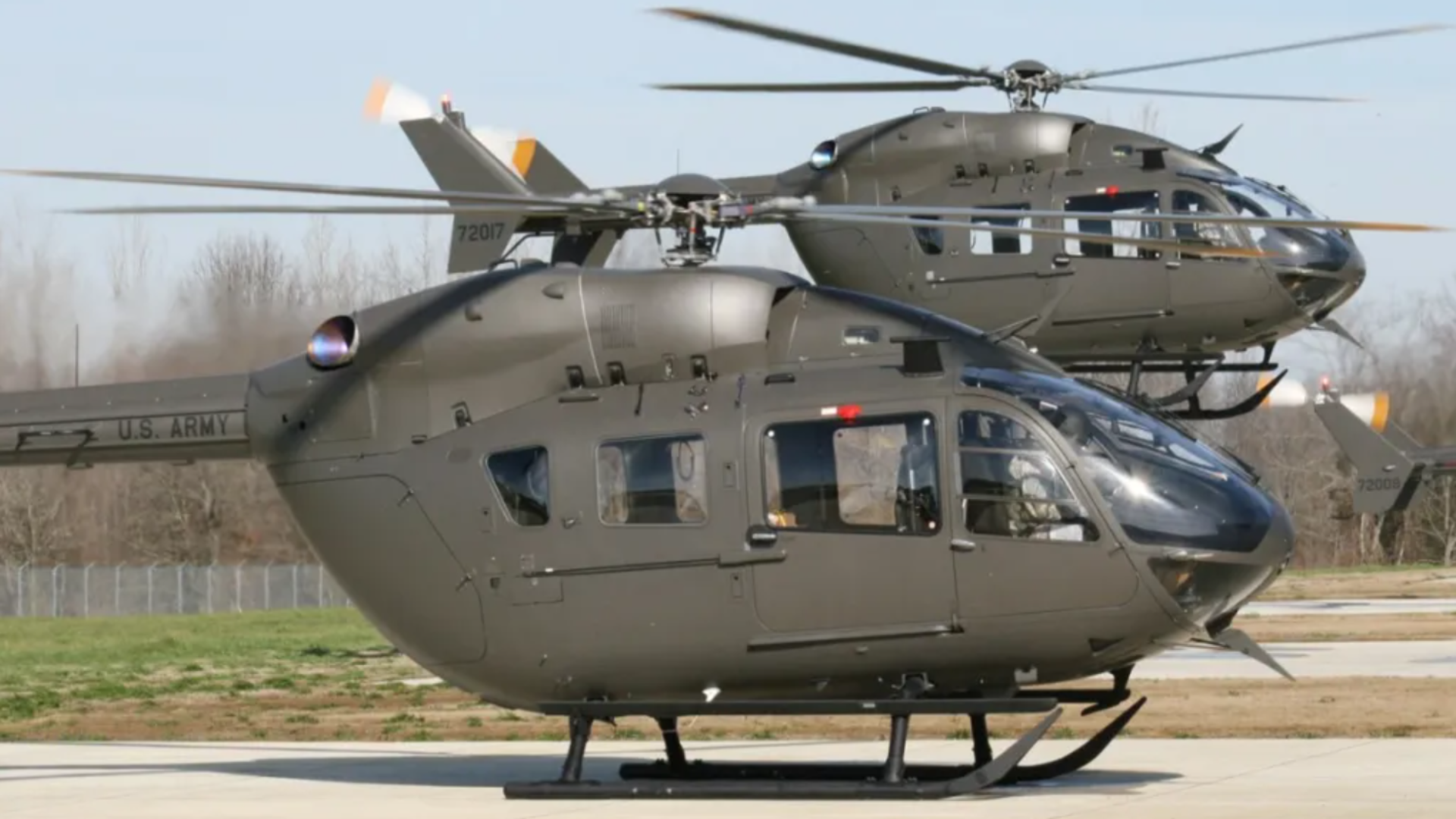
The US Army has tested Airbus’ MQ-72C Lakota Connector, an autonomous cargo helicopter designed to reroute around suddenly restricted airspace.

Operators controlled the helicopter from distances reaching 70 miles through communications infrastructure supporting operations beyond conventional line of sight.

The aircraft follows a flight plan supplied by a human operator, while onboard autonomy software handles navigation and responses to changing conditions.

Starlink and Hivemind enable remote control and autonomous navigation

Airbus conducted five demonstration flights at Huntsville Executive Airport in Alabama, showcasing autonomous hovering, complex turns, and conventional airport traffic patterns.

During one exercise, the aircraft encountered a newly introduced restricted airspace area and calculated an alternative route using its onboard autonomy systems.

β€œThe aircraft had to autonomously make decisions about how it was going to route itself around the no-fly zones,” said Jaysen Yochim, Airbus’ senior director for the Aerial Logistics Connector programme.

A pilot remained aboard for safety during these trials, although Yochim said the individual never needed to assume control.

The helicopter’s autonomy depends partly on Shield AI’s Hivemind software, which interprets imagery collected by onboard sensors.

Two LiDAR sensors, facing forward and backward, work alongside a nose-mounted electro-optical camera to supply environmental information for navigation decisions.

Remote command relies on a separate communications layer, with SpaceX’s Starlink satellite network carrying instructions between ground control stations and the aircraft.

Airbus has already tested this arrangement beyond conventional line of sight, enabling human operators to issue commands from far distances.

We’ve had flights that have been autonomously commanded from up to 70 miles away. All of that is stuff that’s happened in the last year,” Yochim added.

β€œWe also have where the aircraft can be commanded from both a ground control station like this and also with the Samsung tablet.”

Cargo conversion and military adoption remain unfinished

Airbus based the MQ 72C on its UH 72B Lakota, derived from the H145, but additional modifications remain necessary for cargo operations.

Front-mounted clamshell doors would create a passage through the cabin, allowing crews to load and unload supplies more quickly.

Although Airbus has completed initial design work and preliminary testing, flight and wind tunnel tests remain outstanding. The company expects to install the doors around 2029 or 2030.

The Army also needs better ways to supply troops following long-distance air assaults involving future MV 75A tiltrotors.

Major General David Gardner, head of the 101st Airborne Division, explained the challenge of transporting heavy equipment across hundreds of miles.

β€œWe can put some things inside the helicopter, and we can put some things under a helicopter with a sling load. We’re not going to sling load something moving 250-ish knots for 500 miles. We’re not going to hang Humvees under that,” said Gardner.

Other contenders for autonomous military cargo delivery include the AW139, Black Hawk, Robinson R66 and Bell 505.

The Army has not announced a procurement requirement, although its interest in Airbus’ demonstration suggests autonomous cargo delivery is receiving attention.

Google logo on a black background next to text reading 'Click to follow TechRadar'

  •  

South Korea unveils world's first fielded laser air defense weapon β€” Hanwha's Cheongwang downs drones in 1 second for just $1.50 a shot

  • South Korea deploys Cheongwang, a laser weapon designed to destroy hostile drones
  • Hanwha estimates each Cheongwang engagement costs approximately $1.50
  • Laser weapons could reduce dependence on expensive interceptor missiles against drones

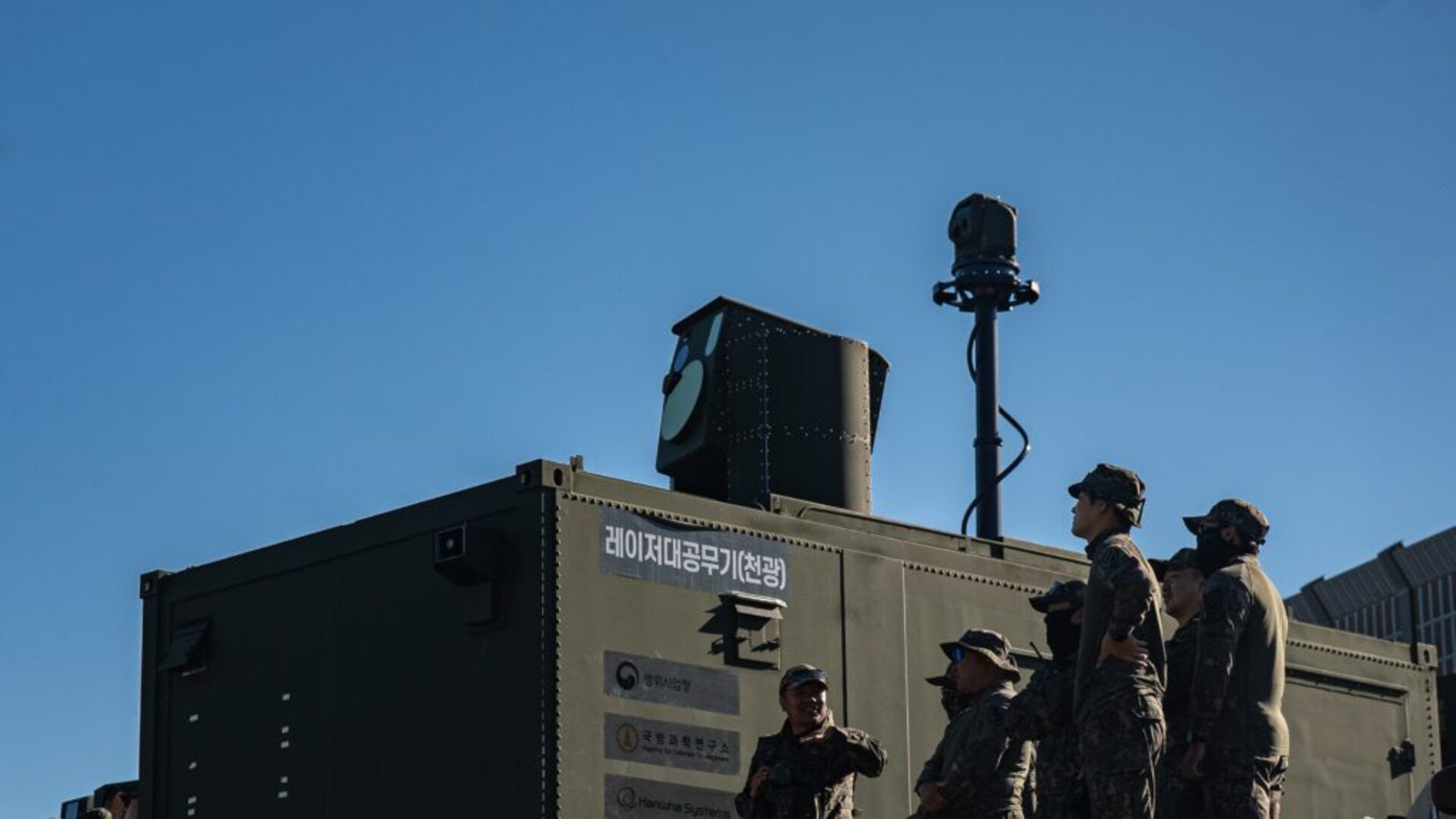
South Korea has deployed Cheongwang, a laser-based air defence system designed to destroy hostile drones without using conventional ammunition.

Developed by Hanwha Systems alongside the Agency for Defense Development, the weapon has entered operational service.

Its manufacturer estimates each engagement costs approximately $1.50, potentially reducing the financial burden of defending against inexpensive aerial threats.

Cheongwang demonstrates low-cost drone interception

The Republic of Korea Army tested Cheongwang during its TIGER+ Future Warfare Integrated Combat Exercise on October 14, 2026.

Hanwha Systems reported that the 30-kilowatt-class weapon destroyed all three drones launched during the exercise, which attracted about 500 military personnel and other observers.

Cheongwang operates by directing concentrated laser energy onto an aerial object until the resulting heat damages its structure or critical components.

Unlike conventional interceptors, the system does not require a separate missile for every engagement, provided sufficient electrical power and cooling remain available.

The manufacturer estimates that firing costs approximately $1.50 per engagement, substantially below the price of many missiles used against attack drones.

That figure does not necessarily represent the complete operating cost, since maintenance, electricity, equipment depreciation and other expenses may also affect deployment economics.

The conflicts between Russia and Ukraine as well as that between the U.S. / Israel and Iran have revealed how expensive drone interception can be. The laser technology seeks to offer a cheaper option.

β€œLaser weapons are core assets that will fundamentally change the game of air defense,” said Joohun Shin, head of Hanwha Systems' Laser Systems Business Centre

β€œDriven by unmatched technological capability and proven operational performance, we will accelerate our entry into the global market...”

Hanwha pursues more powerful mobile laser systems

Hanwha also demonstrated a 50-kilowatt Laser Armored Vehicle during the Defense Drone Technology Exhibition on September 16, 2026.

The company reported that Cheongwang neutralised four drones and two uncrewed aircraft consecutively during that separate demonstration.

The more powerful vehicle is being developed for greater mobility and potential international sales, with Hanwha displaying it at MSPO in Kielce, Poland.

Its development indicates that South Korea's defence industry is pursuing laser systems with different power levels and deployment requirements.

The United Kingdom is also advancing similar technology through DragonFire, a directed energy weapon developed by MBDA, Leonardo and QinetiQ alongside the Defence Science and Technology Laboratory.

The system struck aerial targets during trials in Scotland's Hebrides in 2024, and British authorities are advancing plans for installation aboard a Royal Navy Type 45 destroyer.

Laser weapons could offer sustained protection against repeated drone attacks, although their effectiveness depends on available power, tracking accuracy, engagement time and atmospheric conditions.

A laser can engage only a limited number of targets simultaneously, making attack volume an important consideration for operational planners.

South Korea's deployment allows Hanwha to pursue global customers seeking less expensive counter-drone options.

However, wider adoption will depend on independently verifiable performance and operational reliability and evidence of effectiveness.

Via UKDJ

Google logo on a black background next to text reading 'Click to follow TechRadar'

  •  
❌