
❌

Reading view

The end of 'rip and replace'? New survey finds businesses are sticking it out with legacy tech

  • Report finds 57% of UK organizations opted to extend legacy system use rather than replace the tech
  • This is despite almost half of UK businesses are scaling AI
  • Meanwhile, over three quarters of UK businesses have gone over budget on modernization, with over two thirds have paused or abandoned the process

Does technological progress necessarily mean replacing old gear? New research from Ensono claims businesses are keeping hold of legacy tech, with older systems extended and upgraded to support modern applications.

This is happening while businesses scale their AI use, focusing budgets on affordable upgrades for existing PCs, laptops, and servers on one hand, and embracing AI on the other. It’s a balancing act, one that is being managed by around 52% of businesses – 57% in the UK, and 48% in the US.

However, the driving factor for this reliance on older tech may not be smart budgeting and foresight. Across the US and UK, 61% of businesses have been forced to pause, scale back, delay, or even completely abandon IT modernization in the past two years.

IT modernization?

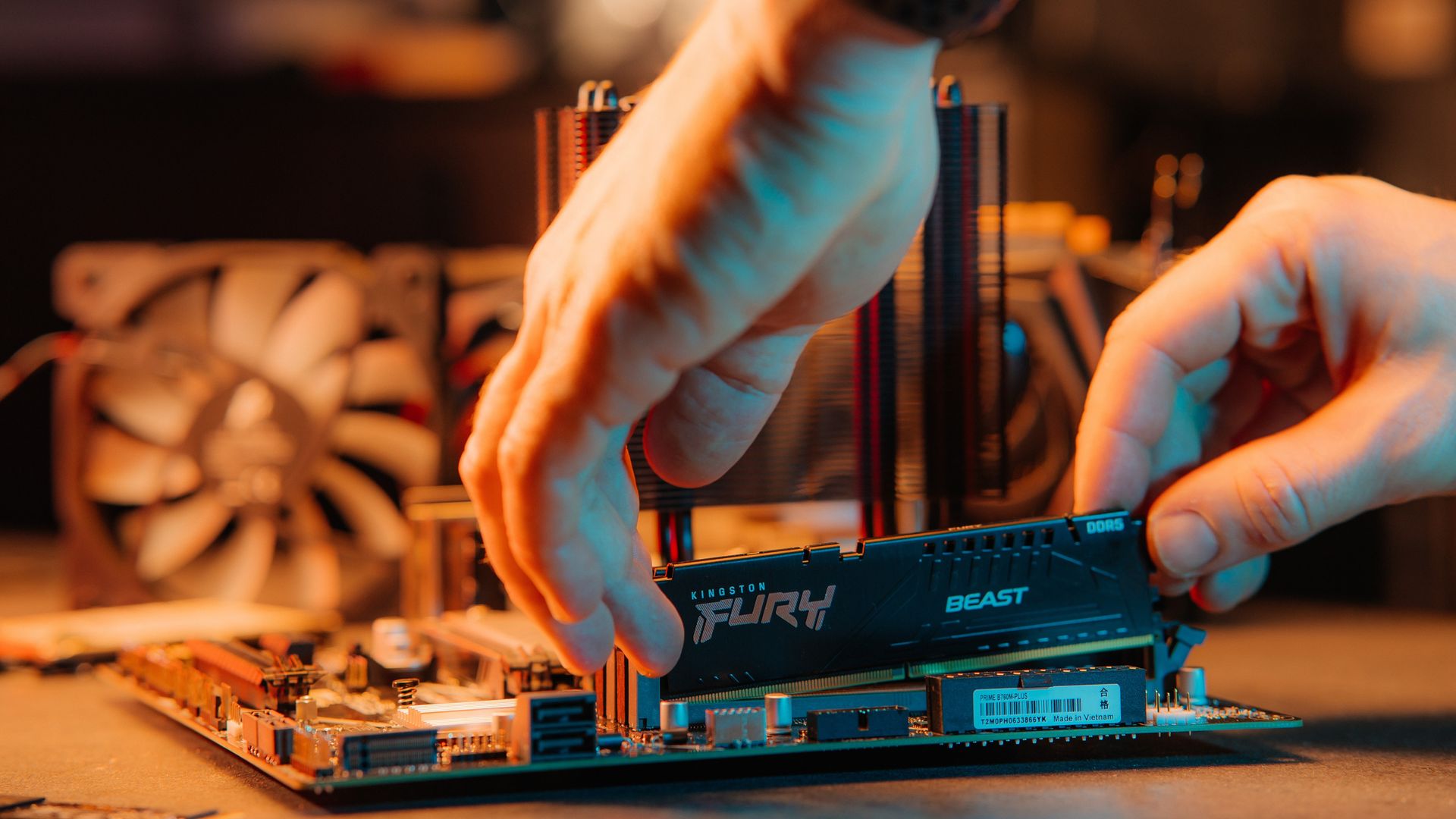
Ensono’s second annual State of IT Modernization Report seems to point to a change in how IT modernization is achieved: rather than replacing old tech, businesses are upgrading. The takeaway is that IT budgets are dictating a focus on AI spending, so where possible PCs, laptops, and some lower-end servers are increasingly being upgraded with faster, higher capacity storage and RAM.

Other key statistics in the report include the news that 71% of IT modernization projects have exceeded budgets, with workflow challenges (33%) and limitations with existing infrastructure (28%) among the roadblocks to an ROI on AI spending.

Underpinning all of this is the growth in decision makers declaring that AI is accelerating modernization, up from 39% last year to 54%.

Rediscovering legacy systems

Budget demands seem to be driving the reliance on older tech within organizations striving to keep up with AI modernization.

β€œAI is expanding the possibilities for modernization, enterprises are discovering that legacy systems, like the mainframe, are intensely powerful, reliable and efficient sources of computing that can now be augmented and made more agile thanks to AI," noted Brian Klingbeil, Chief Strategy Officer at Ensono.

This means that IT leaders are being forced to decide what needs to be preserved, and where to use AI investment wisely.

β€œThese systems contain decades of data and business logic that drive many businesses,” says Klingbeil. β€œThe advantage will go to organizations that understand their environments well enough to distinguish what should be replaced vs. what should be augmented, and embrace new modernization methods that simply were not available even 18 months ago."
  •  

Chinese scientists achieve 10 billion writing cycles in major future memory endurance breakthrough that improves endurance by 100x

  • Future memory could be more durable thanks to developments with wurtzite ferroelectrics materials
  • A new structural design has enabled a demonstration of 10 billion writing cycles, around 100 times the previous limit
  • The breakthrough was made by scientists from the Xidian University working with the City University of Hong Kong and Fudan University.

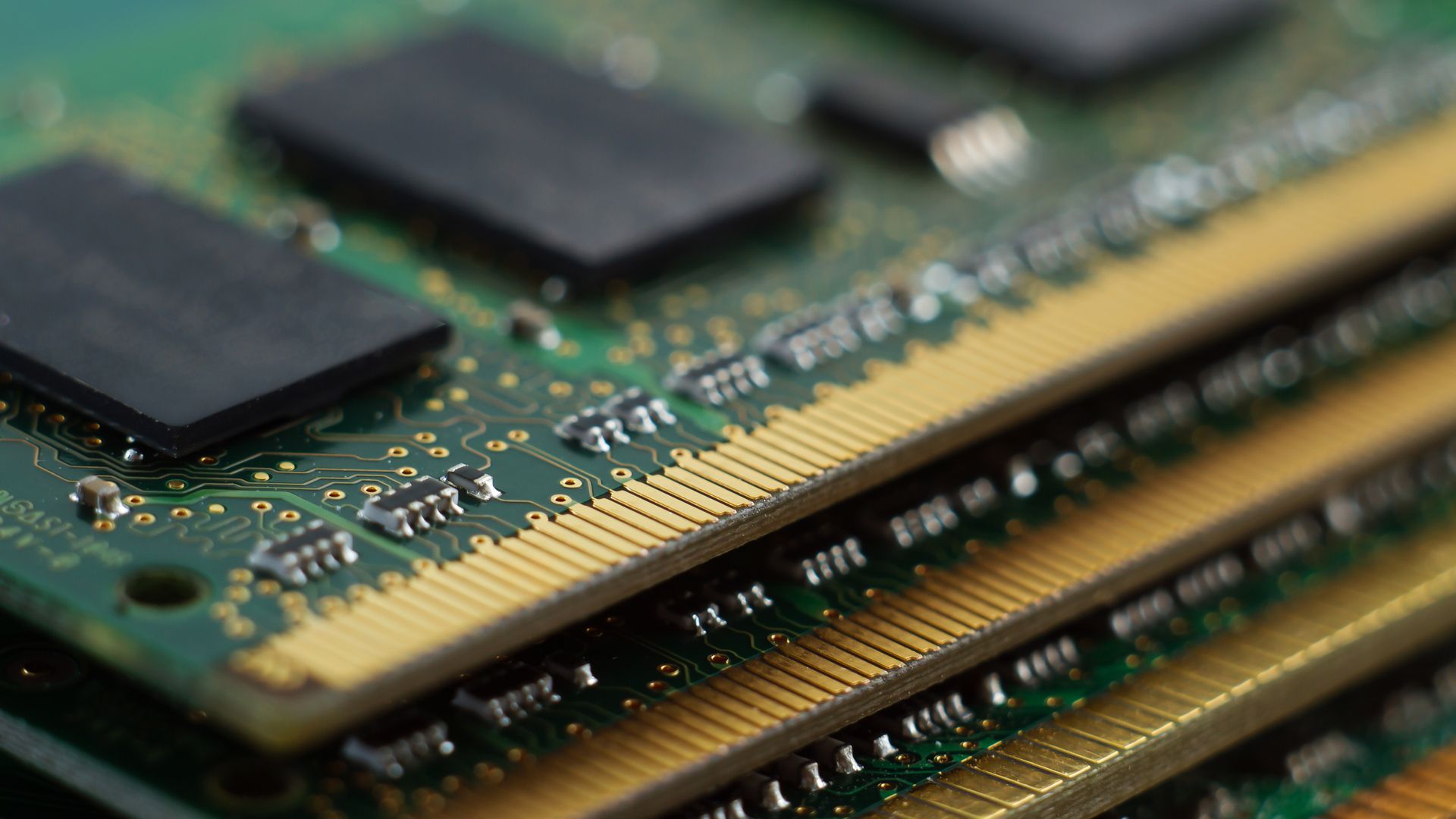
Next generation memory for future AI systems will need far faster and more durable performance, and scientific researchers in China seem to have made a breakthrough, demonstrating a new design which can complete some 10 billion writing cycles, 100 times more than the previous limit.

This development – by teams at the Xidian University working with the City University of Hong Kong and Fudan University – is one of the most significant breakthroughs in memory development, and relies on the discovery of a quirk in the behavior of Nitrogen atoms.

Dense, low-power memory chips now seem to be a realistic possibility for a future demanding ever-scaling AI processing.

Wurtzite ferroelectrics

Creating faster memory and storage with greater capacity while keeping the energy requirements low is the holy grail of computing.

Over the past few years, research has increasingly focused on wurtzite ferroelectrics (polar crystal materials) such as aluminium scandium nitride (AlScN), which has the advantage of being compatible with semiconductor manufacturing processes currently in use.

It also offers that low energy target, along with the superior switching speed required by fast storage. Until now, the main challenge had been reliability. Testing of repeated switching in previously developed AlScN chips had resulted in failure after around 100 million writing cycles, but the researchers have found a solution.

Nitrogen cornfields

So, why has this breakthrough been made now? The previous failed attempts led researchers into deeper investigation as to why the AlScN chips would top out at 100 million cycles, which is where they found the problem: missing nitrogen atoms.

Wang Ruiqing, is a doctoral researcher at Xidian University and one of the authors of the research paper on the study, recently published in journal Science.

β€œThink of ferroelectric material as a neatly planted cornfield,” Wang said, β€œwith nitrogen vacancies representing spots where seedlings are missing.” The defects were not the problem itself, however, but rather their behavior during switching. Rather than remain stationary, the nitrogen vacancies would move, and even group together. The consequence of this was the creation of β€œpathways” that allowed electricity to leak.

Upon discovering this, the team designed a structure to minimise the nitrogen vacancies, slowing the deterioration of the material.

β€œIn the past, researchers knew that the devices failed and could observe some of the symptoms, but no one had been able to explain at the atomic scale what was moving, how they were moving and how that movement ultimately caused failure.” Wang added.

If successful, AlScN-based RAM and storage could form the backbone of future server farms and provide the framework for greater LLM and artificial intelligence adoption.

  •  
❌