❌

Reading view

'This computer works almost like a guitar': Fingernail-sized quantum chip uses vibrations to store data

  • ETH Zurich quantum chip sees superconducting qubit act as CPU and the vibrational modes of a fingernail-width acoustic resonator serve as quantum RAM
  • The approach borrows from classical computer architecture as it completely flips the script on how modern quantum computing might store short-term data
  • The team demonstrated a universal gate set and ran small instances of the quantum Fourier transform and period finding

A guitar string essentially stores a note based on how it vibrates, and if one plucks it differently, an entirely different note plays.

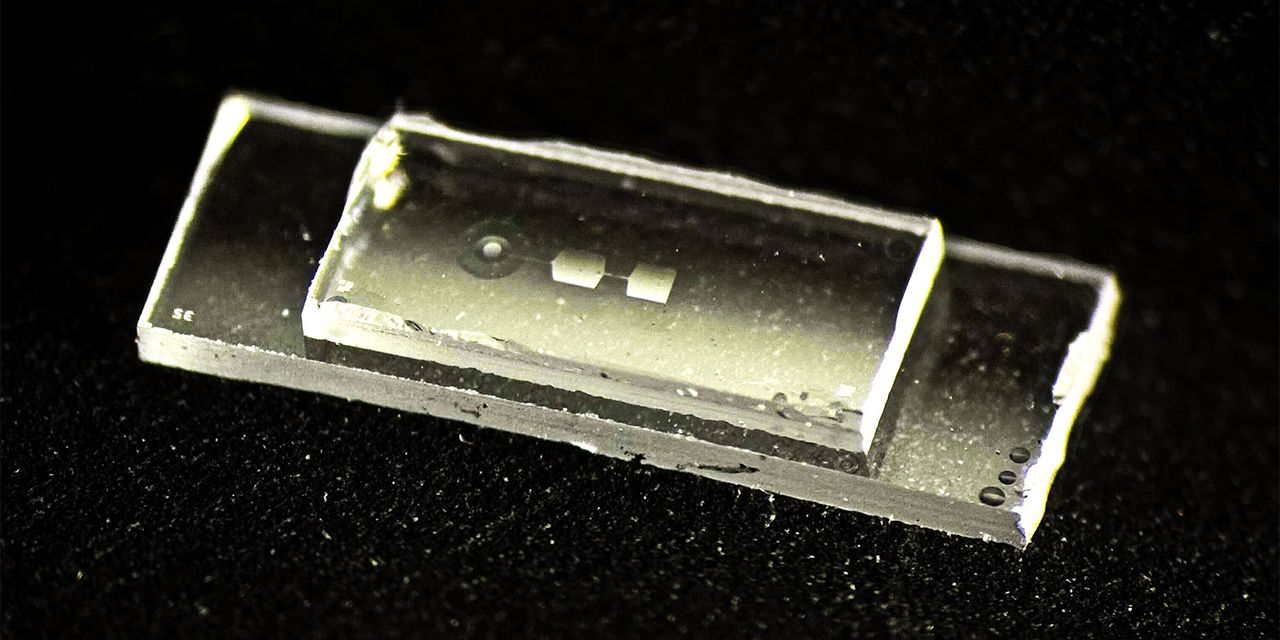
A team of researchers at ETH Zurich has leveraged the same principle to build a quantum chip that stores information by replacing the string with microscopic acoustic resonators.

This allows the chip to increase its working memory significantly, essentially increasing the storage capacity, a prohibitively expensive commodity in quantum computing, significantly.

A vibrations-based quantum storage play

ETH Zurich's research is led by quantum physicist Yiwen Chu, who used tiny mechanical vibrations to both store and process information. The vibrations, however, go far beyond the range of human hearing, happening inside a quantum chip where they essentially replace or complement the working memory of a quantum computer.

The study, published by the Hybrid Quantum Systems group, lists Professor Yiwen Chu, along with doctoral students Yu Yang and Igor Kladarić, as lead authors and focuses on replicating the division of labor seen in a classical computer.

A superconducting transmon qubit serves as the CPU, while the working memory (the quantum equivalent of RAM) is a high-overtone bulk acoustic wave resonator, or HBAR, whose many vibrational modes each serve as a memory slot.

The Qubit essentially swaps a quantum state from a vibrational mode (reads it, in classical computer terms), manipulates it (modifies it), and swaps it back (writes it). This makes for a unique configuration that most modern quantum computers do not follow, in which processing and storage are two distinct segments; most designs treat both memory and compute similarly.

The approach has advantages, however: acoustic waves have wavelengths roughly a hundred thousand times shorter than electromagnetic ones, allowing an entire quantum chip to be extremely small, as the research team states, even if the actual computer will be many orders of magnitude larger.

The chip has passed stress tests, including a proof of feasibility, which also included testing using two of the most commonly used methods to benchmark a quantum computer: the quantum Fourier transform and a period-finding algorithm.

The endgame here, as noted by the research team, is quantum random-access memory (QRAM), which would allow modern quantum computers to access a much larger store of quantum memory than current specifications allow. Whether this pans out depends on both the scalability of the approach and the computational power in play.
  •  

Cheaper than an iPhone: Price of record-breaking Ukraine AI FPV drone slashed to $500 as range increases sixfold to 68 miles

  • Vyriy 15 FPV with The Fourth Law's TFL-1 AI guidance reportedly struck Russian logistics 68 miles (110 KM) away
  • Ever-innovating Ukrainian drone industry continues to achieve economies of scale even as it becomes a growing threat to Russian advances
  • With a payload capacity of 8kg and the ability to be equipped with a thermal imaging module as well as electronic warfare deterrence, it offers an interesting alternative to comparable fixed-wing drones that cost thousands of dollars

Basic FPV drones are hardly a new thing in a market flooded with hundreds, if not thousands of options that can cost as little as $100 to 200, but the Russia-Ukraine conflict might have upped the ante on affordability for a different kind of UAV that leverages the same tech: attack drones.

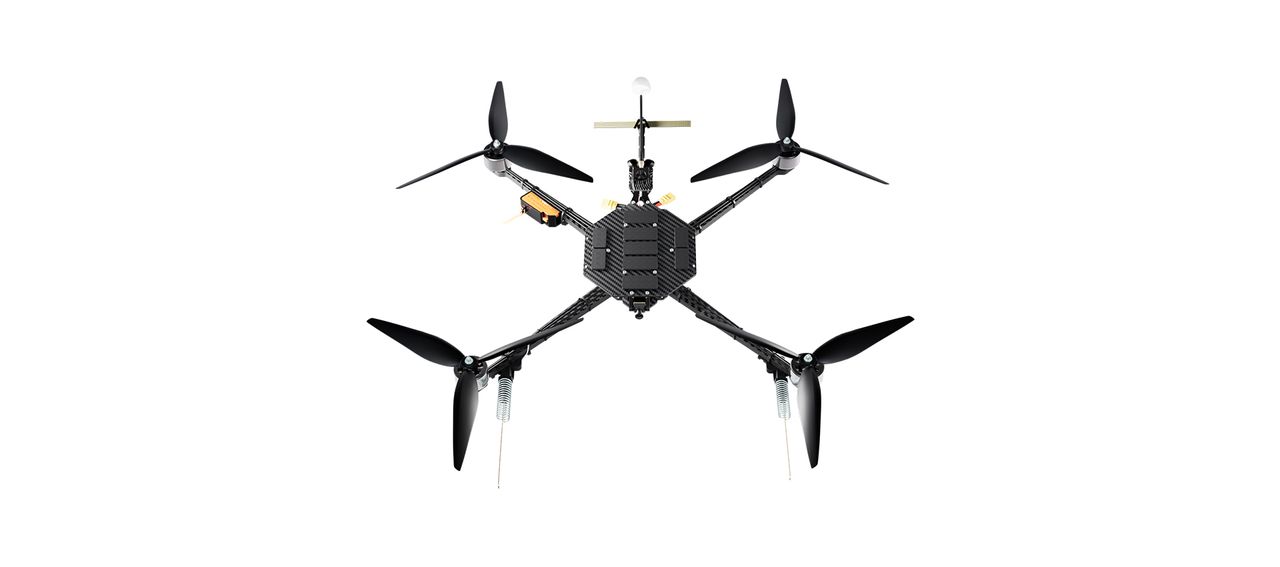
The Vyriy 15 is a self-styled "kamikaze drone" by the company that offers a stated strike range of 40-70km with up to a 8kg payload in tow which can be retrofitted with a thermal imaging module as well as an extended band VTX module to make jamming it harder.

With a control range of up to 30KM and a flight duration of 20 minutes (with a payload) and a cruising speed of 60-100 km/h, its not the most technologically advanced drone out there, but at its purported price tag of $500, it doesn't need to be.

An FPV strike record backed by AI

On the 10th of July, Yaroslav Azhnyuk, the CEO of Ukrainian autonomy developer The Fourth Law, announced on X what he called "a new FPV strike record": a Vyriy 15 quadcopter, flown by Ukraine's 5th Border Guard Detachment and fitted with his company's AI terminal-guidance module, had flown 110 km (68 miles) to strike a Russian logistics target.

This is both a significant achievement for Ukraine's domestic drone industry and a key indicator of how fast the Russia-Ukraine war has turned into one of attrition, with supply lines becoming increasingly targeted to prevent significant advances in either direction.

It also showcases how AI on the battlefield is shaping the conflict: the Vyriy 15 is, by default, a manually controlled drone that would otherwise need an operator or a relay to be closer to the theater of war.

The competition is American-made Hornets, fixed-wing drones that can cost upwards of $5,000, a 10-fold increase in cost for an already cash-strapped Ukrainian military that is increasingly looking towards localized solutions.

The optional AI module used to set the record is The Fourth Law's TFL-1, a machine-vision terminal-guidance module that operates on a fire-and-forget principle: once the operator visually designates a target, an onboard computer takes over the final approach, essentially countering Russian jammers that would otherwise disrupt a video link.

If Ukraine manages to mainstream such warfare in the future while cutting costs down to a tenth of what they do right now, reliably striking as deep as 100km into enemy territory while proving difficult to jam or costly to intercept, drones like the Vyriy 15 could signal an evolution in the modern battlefield even as aggression with low-cost drone swarms is already being rewarded in other conflicts such as the US-Iran war.

  •  
❌