We've put the batteries in Apple's newest iPhones to the test
There are upgrades here, but not huge ones
Apple has been touting major boosts in battery life on these handsets
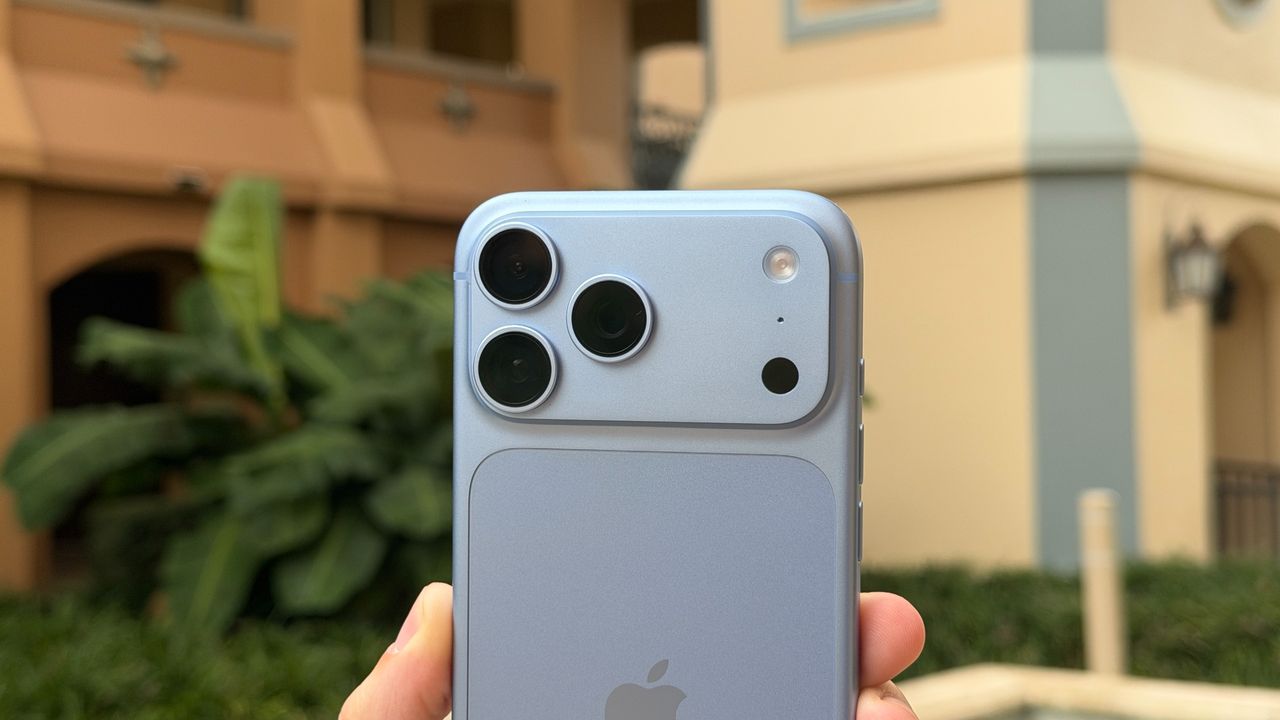
Sift through the press releases that Apple pushed out while announcing the new iPhone 18 Pro and iPhone 18 Pro Max, and you'll see some big battery life increases touted — including "the largest increase in battery life ever" on an iPhone with the Pro Max model (compared to the iPhone 17 Pro Max).
We know that the iPhone 18 Pro and iPhone 18 Pro Max come with 4,056 mAh and 5,391 mAh capacity batteries respectively (at least in Europe), but does that translate into much better battery life? We put both of these new handsets through their paces in the TechRadar labs (as part of our full iPhone 18 Pro review) to see if Apple's claims held up under some real-world testing.
Our standard test involves having the iPhone automatically cycle through a series of websites over a cellular connection, until the battery dies. Features like location services, Wi-Fi, and Bluetooth are all turned off while the test is being run, and the battery management features in iOS are disabled too.
The iPhone 18 Pro managed 16 hours and 17 minutes in the test, compared to 15 hours and 21 minutes on the iPhone 17 Pro, a boost of around 6% overall. The iPhone 18 Pro Max managed 18 hours and 27 minutes compared to 17 hours and 54 minutes on the iPhone 17 Pro Max, an increase of roughly 3% in total.
Those increases are of course welcome, but perhaps aren't quite as impressive as Apple is making out, though there are a lot of different variables (like screen brightness) involved. Apple's own figures usually make use of video playback time — as in how long a single battery charge lasts when you've watching a video.
For the iPhone 17 Pro and iPhone 17 Pro Max, Apple quotes 33 hours and 39 hours respectively, while for the iPhone 18 Pro and iPhone 18 Pro Max those numbers go up to 36 hours (a 9% increase) and 45 hours (a 15% increase). That last jump is indeed significant, but may only apply in quite a narrow set of scenarios.
"All battery claims depend on network configuration and many other factors," explains Apple in the small print on its comparison page. "Actual results will vary. Batteries have limited recharge cycles and may eventually need to be replaced. Battery life and charge cycles vary by use and settings."
We can safely say that you should see better battery life on the iPhone 18 Pro and Pro Max compared to the models that preceded them, but based on our own testing, don't expect the kind of improvements Apple is promising unless you're doing nothing but watching videos in long stretches between recharges.
New camera-free smart glasses from Meta are rumored
The wearable could be unveiled as early as next week
A new glasses-detecting app is proving popular with users
It's fair to say that the various iterations of Meta's smart glasses had been quite well received by users — as you'll see from our own reviews — but over time, the general public has become less and less comfortable with the idea of being secretly spied on through the cameras embedded in these wearables.
That might explain Meta's plans to release some spectacles with cameras on board, as reported by The Information. According to the outlet's sources, the glasses have the codename Luna, and will be available in two styles called Clubmaster and Burbank.
With no camera, the focus will be on the audio capabilities of the glasses, which will let you have conversations with Meta's own AI chatbot. The report says we could get a grand unveiling at the Meta Connect event next week, on September 23 and 24.
While Meta's smart specs have always been fitted with LED lights that show when they're recording, modders were finding ways around this, enabling more covert video and photo capture. While those mods have since been disabled and prevented by software updates, it's still left people with a general sense of unease.
The backlash continues
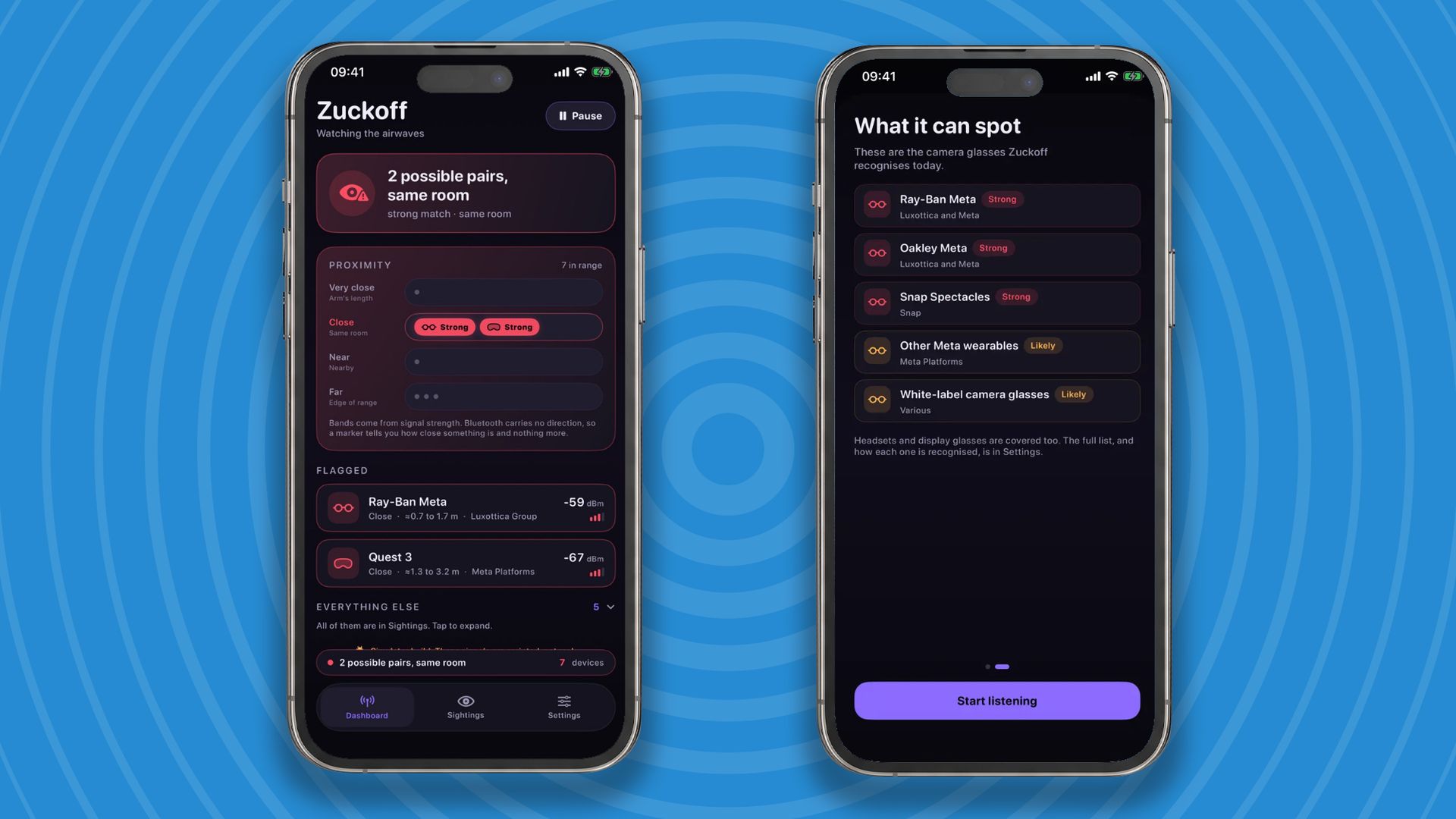
The ZuckOff app on iOS (Image credit: ZuckOff)
As Meta apparently preps its next pair of smart glasses, Wired reports on the ZuckOff app that takes a swing at the Meta CEO in its name, and alerts users when they might be in the presence of someone wearing Meta glasses. The app uses Bluetooth to scan the surrounding area for these wearables.
With several thousand downloads on both Android and iOS, the app is clearly proving popular. It's free to download and use in its basic form, with a pro version available for $9.99 / £9.99 / AU$14.99 a year that scans continuously and gives you scan histories.
It's not your only option either: if you're on Android, Nearby Glasses is open source and free to use, and does a similar sort of job as ZuckOff without the provocative name. That app has now racked up more than 100,000 downloads.
There's definitely been a shift in perception when it comes to glasses that can record, warning light or no warning light — even though these specs have been around for years. There's even talk of bans and government regulation coming in at some point, which Meta might be trying to get ahead of with its next pair of glasses.
The iPhone Duo animation has been recreated on a Galaxy Z Fold 8
For now, it's only a demo — not something you can set up yourself
Samsung would need to implement the hack for it to work system-wide
The initial reactions to Apple's new, foldable iPhone Duo seem to be largely positive, with a lot of praise for the various software tweaks that have been implemented in iOS 27 for the new form factor — including a cool transition animation that shows up when you switch between the inner and outer screens.
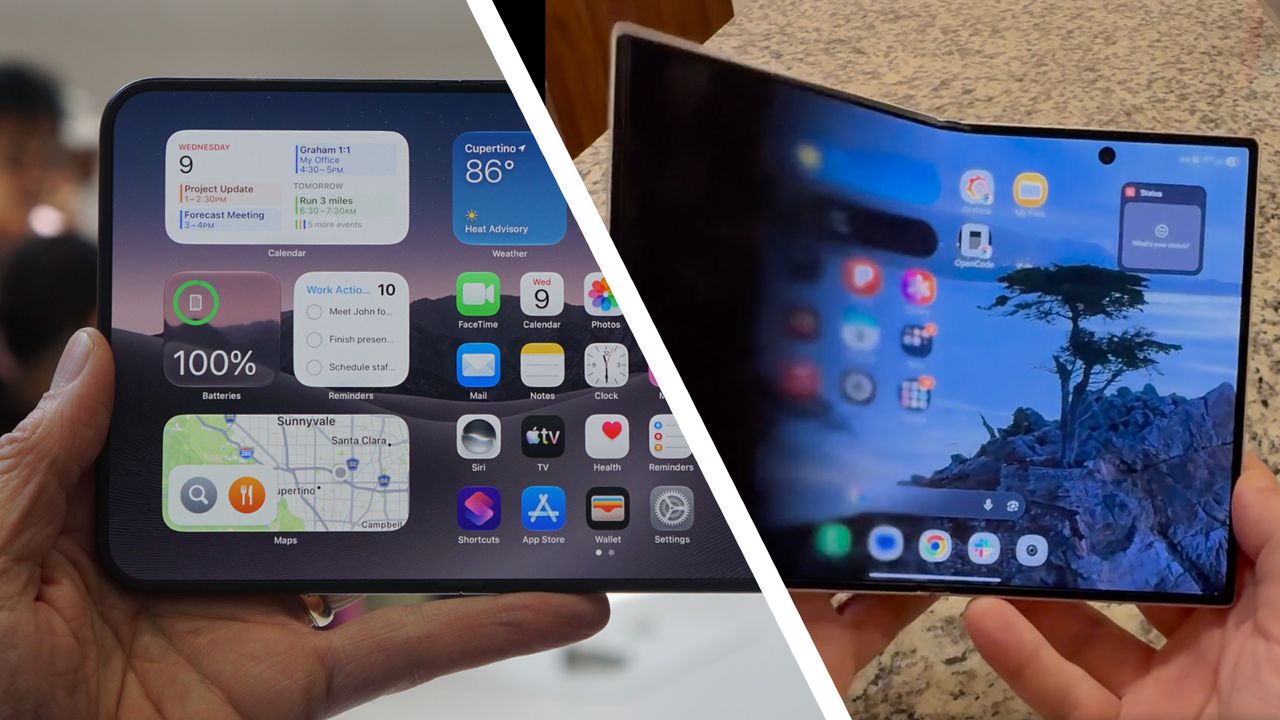
As you open up or close the main 7.6-inch display, the wallpaper dissolves and seems to pass through the moving half of the screen to reappear on the other side. It's a neat effect, and one Android user has wasted no time in recreating the effect on their Samsung Galaxy Z Fold 8 foldable.
"Felt a bit of FOMO seeing that cool iPhone Duo animation Apple showed off today, so I poked around and found that the Z Fold 8 has a really accurate hinge sensor," explains the user in question on Reddit. "I realized it would be pretty simple to take the hinge sensor values and use them to drive a transition animation on both screens."
It works really nicely too, as you can see from the video embedded below. The half of the display that's opening and closing looks like it becomes semi-transparent as it moves, revealing what's underneath — though as with the iPhone Duo, it's all trickery involving motion sensors and gradients.
Unfortunately, this is only a demo for now — as in, an app that screenshots the display, then shows how an open/close animation could potentially work. It's not actually something you can apply at the system level and use across all your apps, and the developer says only Samsung would have the necessary access for that.
The reactions in the Reddit thread are overwhelmingly positive, nevertheless. The hack gets described at various points as "great", "awesome", and "so cool" — and it's genuinely impressive that it was created so soon after Apple's event. It seems a lot of Samsung foldable owners would want this on their phones.
There is perhaps a word of warning here for iPhone Duo buyers. When asked about using the effect, the original poster says "honestly, it looks cool for the first minute, but it gets really annoying after that", adding that "the effect is also only convincing head on" and "any difference in viewing angles really breaks the illusion".
Whether or not that's the case on Apple's foldable remains to be seen, but it's worth considering. For the time being at least, the iPhone Duo is the only folding handset that has this particular animation — and if you've really got to have it, pre-orders open on Friday, October 16, with prices starting at $1,999 / £1,999 / AU$3,499.
Brand new Apple CEO John Ternus has hosted his first ever Apple launch event — we'll miss you, Tim Cook — and he had a lot to introduce. We got Apple's first foldable phone, the iPhone 18 Pro and iPhone 18 Pro Max, two new smartwatches, and plenty more.
To help you make sense of the 78-minute event, here's your essential rundown of everything important that Apple talked about. As well as the main headlines, there are some smaller reveals that you might have missed.
1. The iPhone Duo is Apple’s first foldable
(Image credit: Lance Ulanoff / Future)
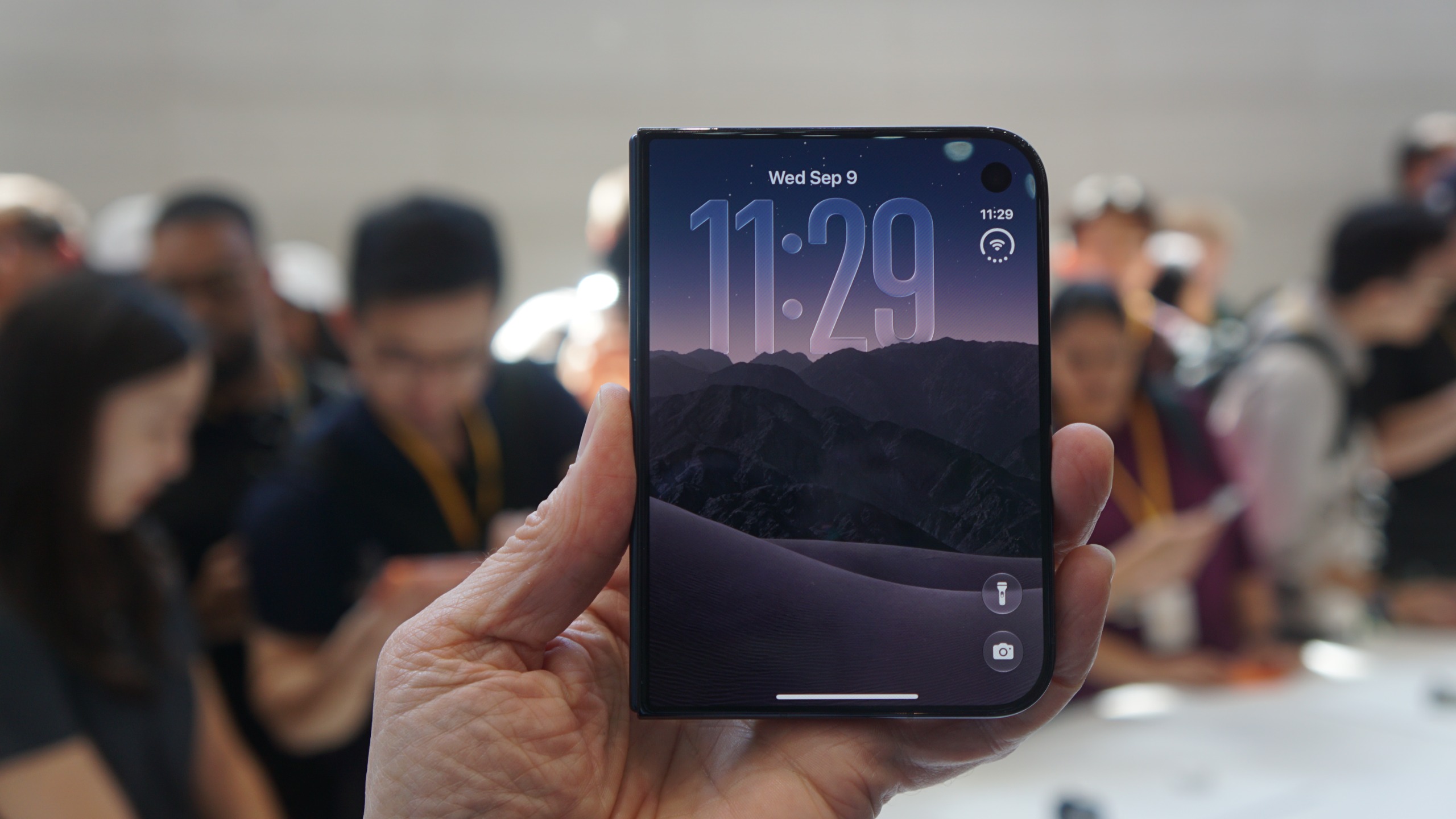
The big one: after many years of rumor and counter-rumor, Apple has released its first foldable phone, ready to compete with the likes of the Samsung Galaxy Z Fold 8 and the Google Pixel 11 Pro Fold. Like the Galaxy Z Fold 8, it uses a wider, 'passport' style form factor that gives you a more tablet-like experience (measuring 7.6 inches corner to corner) when it's opened out.
You can get the iPhone Duo in star white and night sky, with pre-orders opening on Friday, October 16, and full availability on Friday, October 23. Hopefully, you've been saving up: it starts at $1,999 / £1,999 / AU$3,499 with 256GB of storage.
2. iOS 27 has learned some unique tricks for the iPhone Duo
(Image credit: Apple)
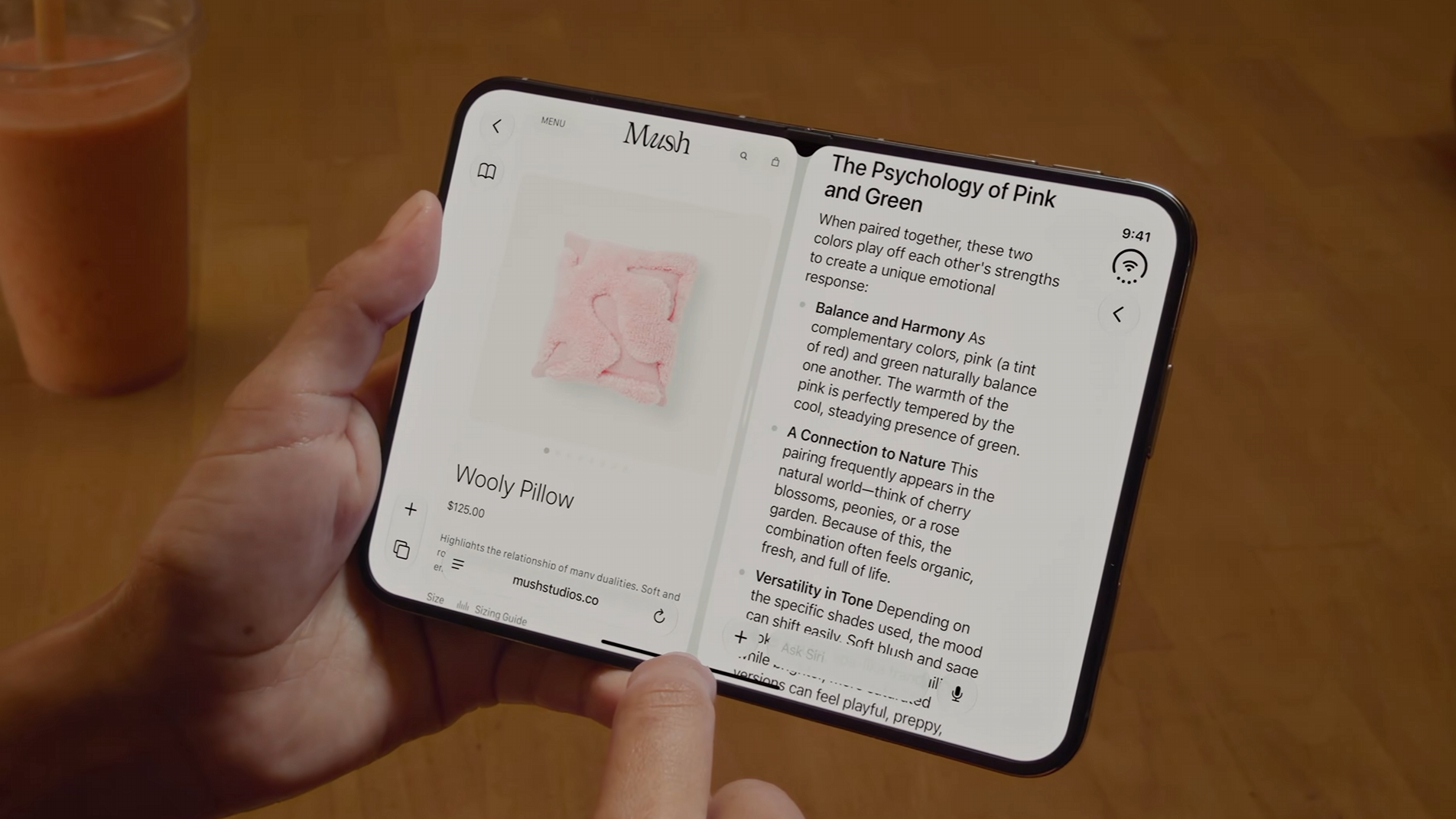
Apple has clearly put a lot of thought into the iPhone Duo experience, and that extends to iOS 27 and the native apps that run on top of it. When the phone is folded closed for example, the key navigation buttons shift to the right of the screen so they're easy to tap with your thumb.
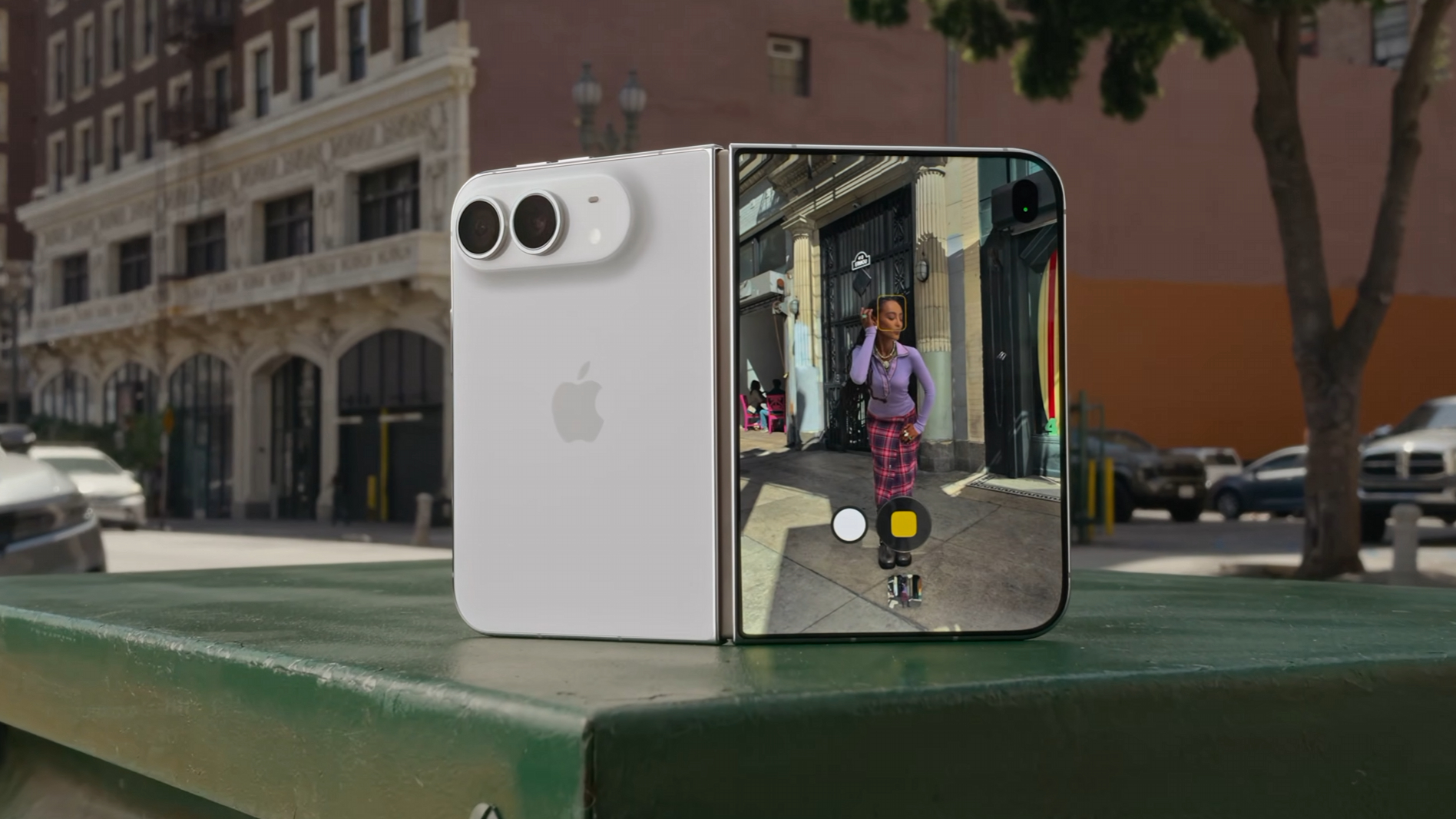
You can put apps side-by-side on the big screen, and pin pairs of apps together to make it easier to get back to them. Apple has included some clever camera tricks as well including a selfie preview that uses the outer screen in combination with the rear cameras.
3. The Duo brings Apple Pencil to the iPhone for the first time
(Image credit: Apple)
Squint a little, and the iPhone Duo looks like an iPad mini when it's opened out. Adding to that impression is Apple Pencil support for the handset — it's the first time you've been able to use a stylus with an iPhone (apologies to Steve Jobs).
You don't get the Apple Pencil bundled with the iPhone Duo, and there's no storage slot as there is on the Samsung Galaxy S26 Ultra, but you'll be able to use the accessory on either screen to make selections or get creative.
4. The Duo's two screens are the same aspect ratio
(Image credit: Apple)
Another nice touch we've noticed with the iPhone Duo: both the 5.4-inch outer screen and the 7.6-inch have the same aspect ratio, which Apple says ensures "visual continuity" as you open up the phone and close it again.
The aspect ratio in question is 1:1.4, and should mean that you don't have a jarring experience switching between the displays. The larger main display can also be used in portrait as well as landscape mode, with apps adjusting to fit.
5. The iPhone 18 Pro and Pro Max have some serious camera boosts
(Image credit: Apple)
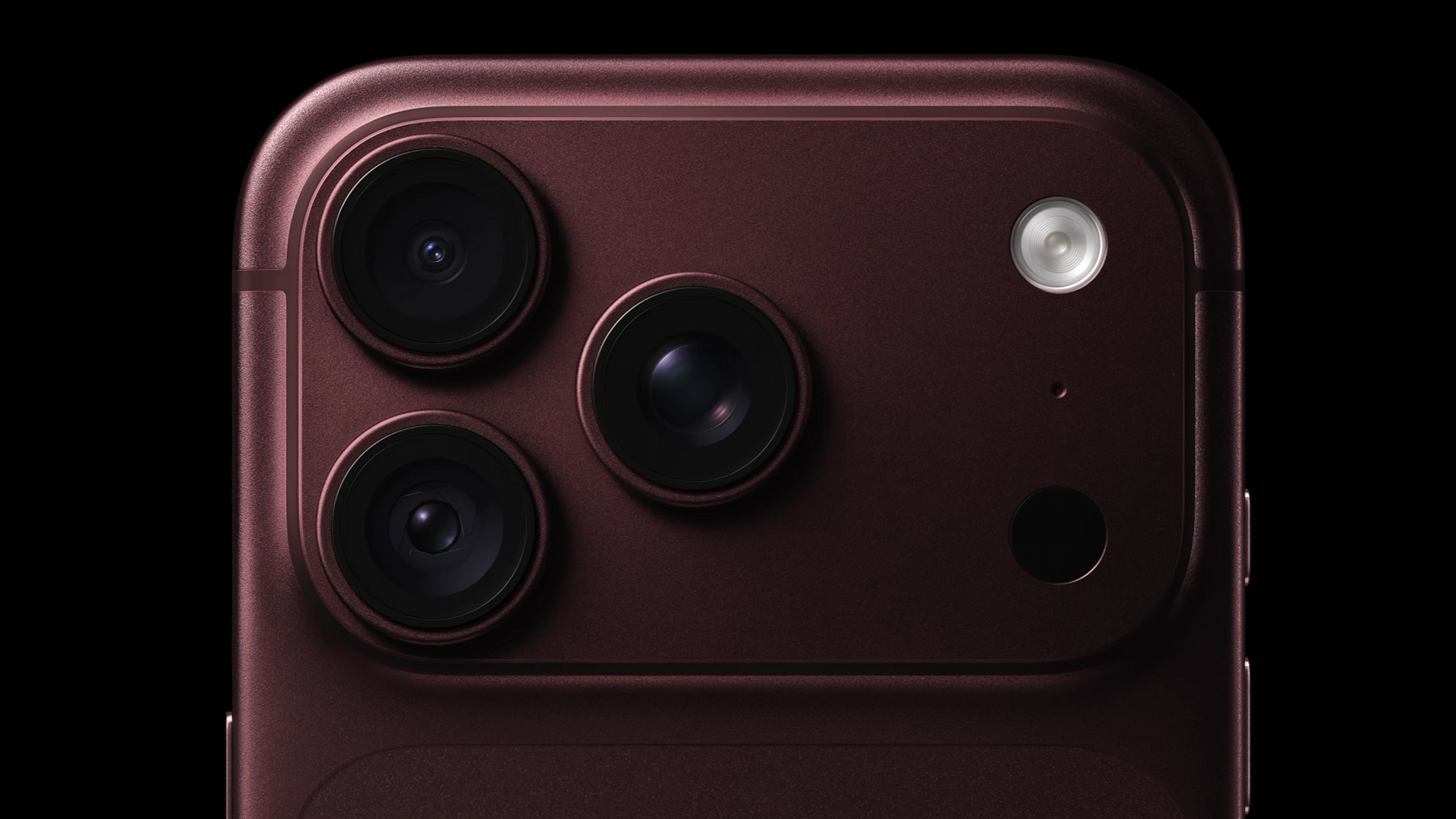
During Apple's reveal of the iPhone 18 Pro and Pro Max, the cameras took center stage. We've got a 48MP main camera that adds a variable aperture for the first time on an iPhone (for better light control), as well as a new sensor behind it.
Apple is also talking up a new "computational imaging pipeline", improved Photographic Styles, and extra professional controls in the Camera app, enabling you to take more control over how your images are captured.
6. The iPhone 18 Pro Max is the ultimate iPhone for battery life
(Image credit: Apple)
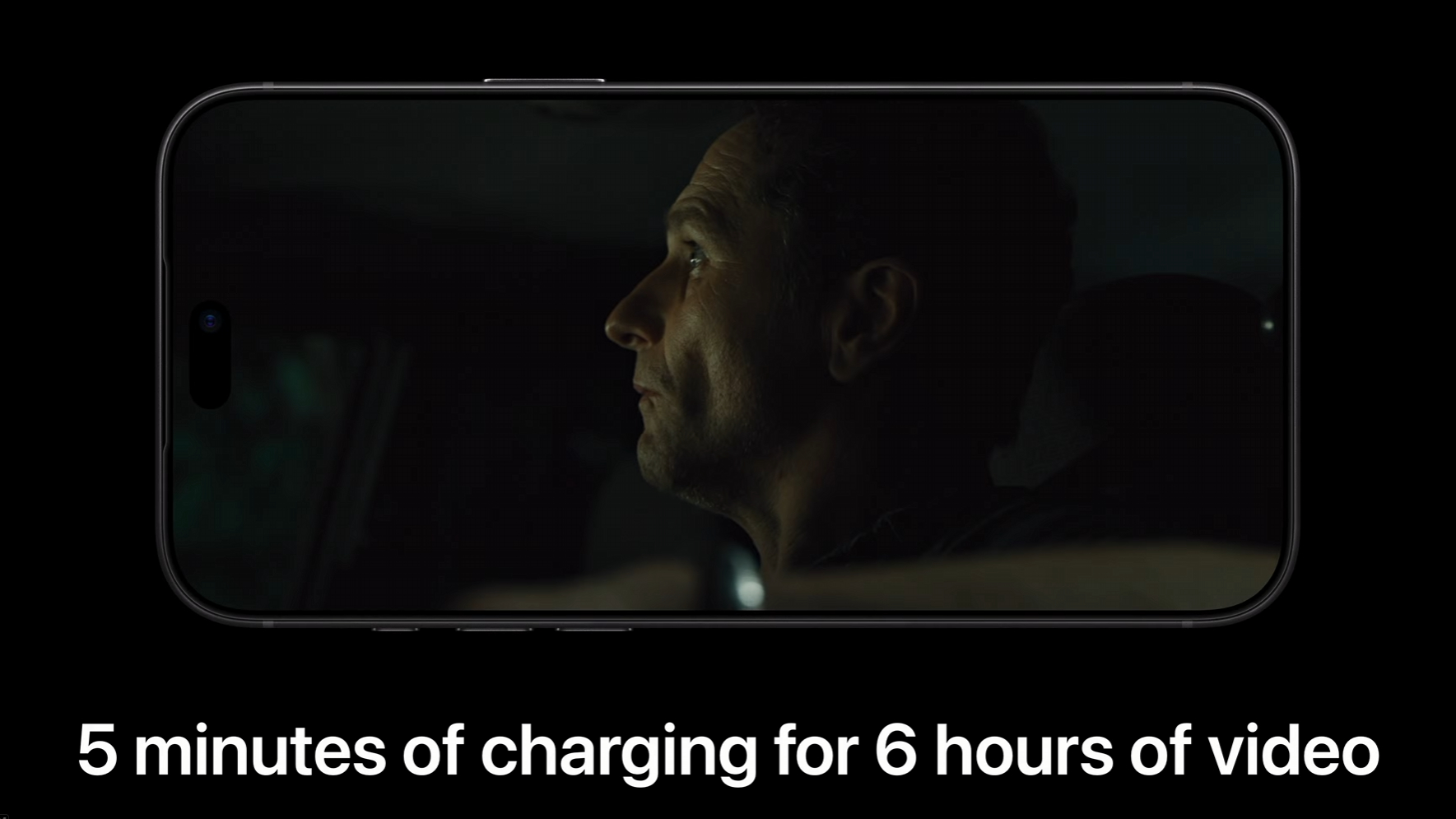
Another plus point on the iPhone 18 Pro Max: it's very much the iPhone to get if you value battery life above everything else. You can get up to 45 hours of video playback on the eSIM version of the iPhone 18 Pro Max between charges, a new iPhone record.
The iPhone 18 Pro is no battery slouch either, and can manage up to 36 hours of video playback on a single charge if you're using the eSIM version. Charging speeds have been upped over last year's models as well.
At the center of the iPhone Duo, the iPhone 18 Pro, and the iPhone 18 Pro Max we've got the brand new A20 Pro chipset. It boasts a 6-core CPU, a 7-core GPU, and two 16-core Neural Engines for all your AI needs.
Add in an upgraded vapor chamber, and we can expect major performance upgrades over the 2025 models. Apple says there's as much as a 40% sustained performance gain on the iPhone 18 Pro compared to the iPhone 17 Pro.
On to the new open-ear AirPods 5, which come in two different versions, both of which have Active Noise Cancellation (ANC) that Apple is calling "best-in-class". Thanks to changes in the design of the earbuds and the algorithms they're using, you can expect up to 50% more noise removal compared to the AirPods 4 with ANC.
The improvements don't stop there, because the Transparency mode has been upgraded as well, so when you need to hear voices and nearby sounds through your AirPods, they should be more accurately represented.
9. Siri Recap is creepy, always-on audio feature for the Apple Watch 12
(Image credit: Apple)
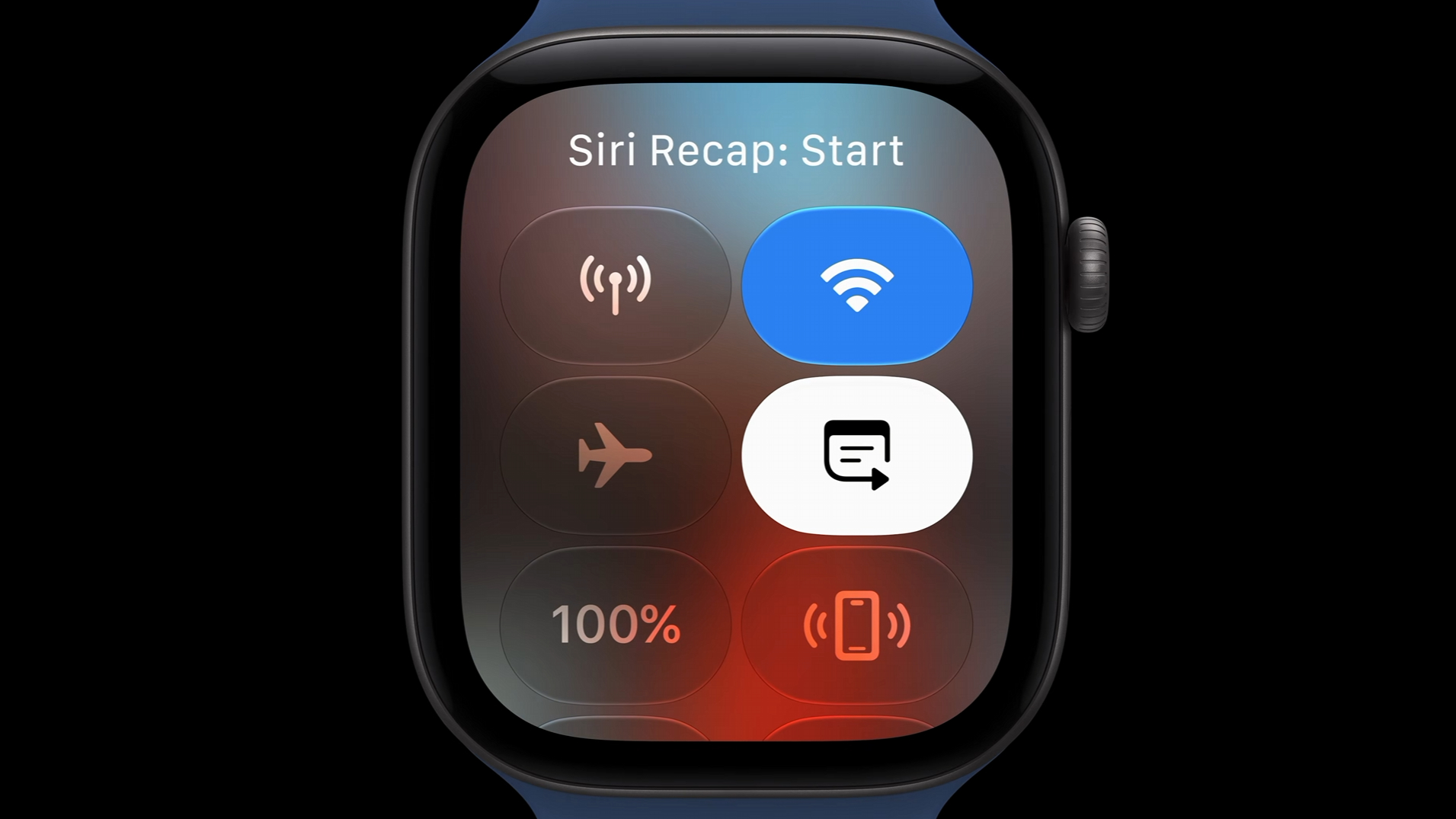
Here's one feature we're a little less sure about: the Apple Watch 12 comes with a Siri Recap feature that essentially listens to the conversations you're having and lets you see a summary of them later, just in case there are details you need to remember.
It might come in handy in certain situations, but we can see users having a few concerns. Apple says Siri Recap processes audio in real-time and never recordings anything, and that no one — not even Apple — can access the audio feed.
10. iOS 27 will launch on September 14 with Siri AI
(Image credit: Apple)
It's been a long wait for iOS 27 since Apple first announced it back in June, but the operating system update is finally going to make its way to millions of iPhones worldwide from Monday, September 14.
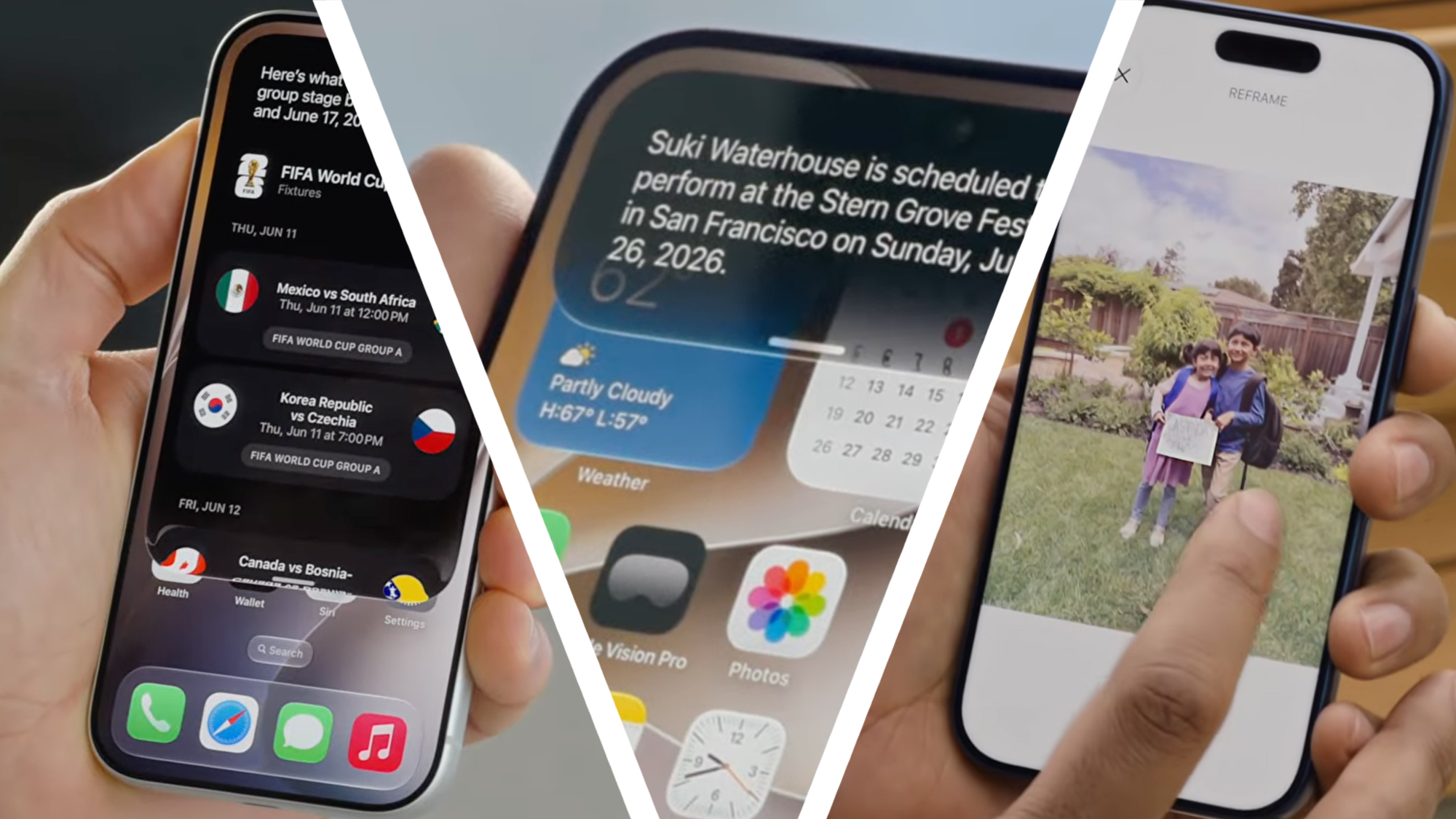
The headline new feature is of course that big Siri AI upgrade — we've been waiting for that for even longer. Expect a digital assistant that's more on a par with ChatGPT and Gemini, able to interact with your apps and give comprehensive answers.
11. The new Apple Watches have a Health Sensing System
(Image credit: Future / Apple)
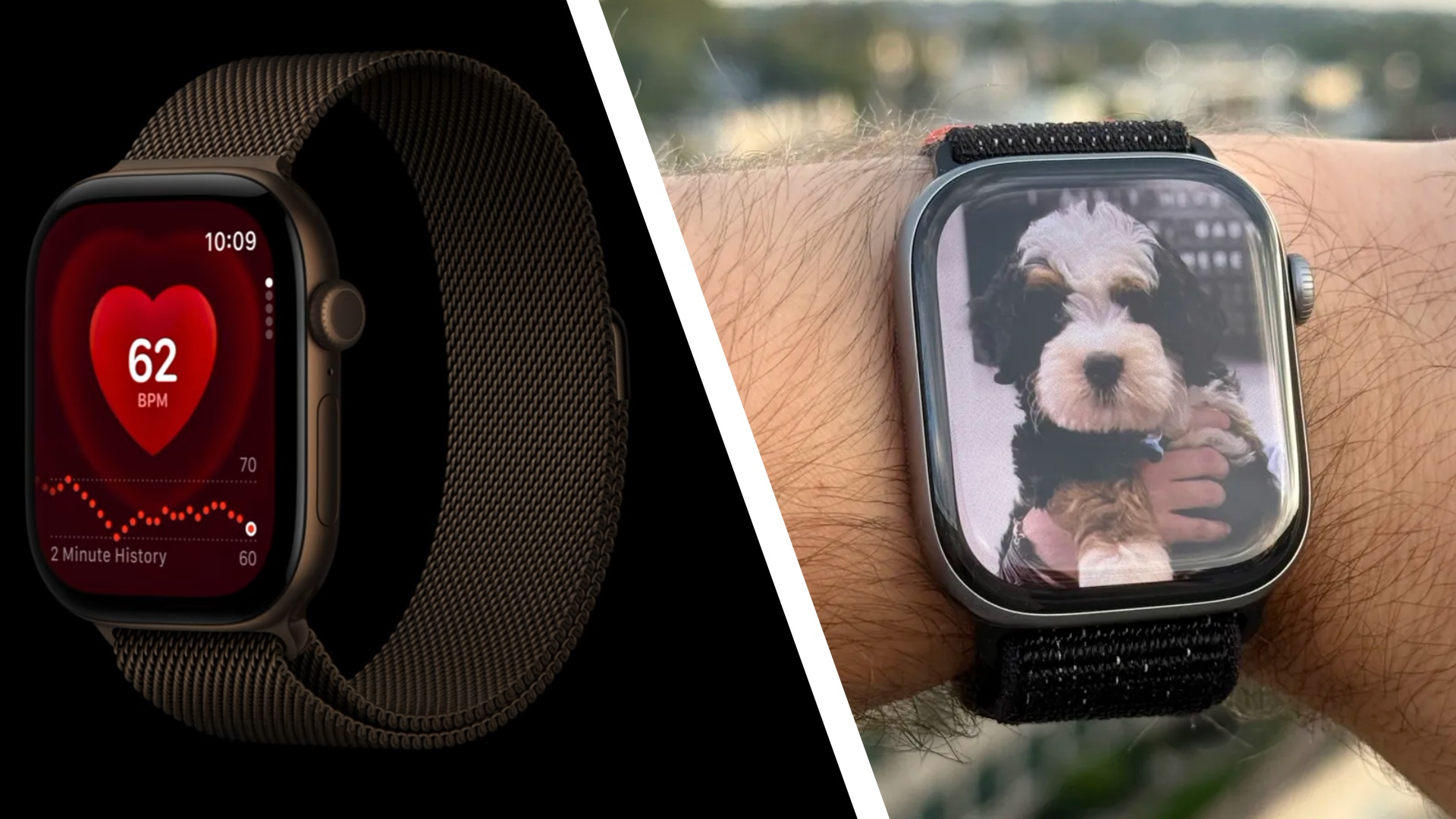
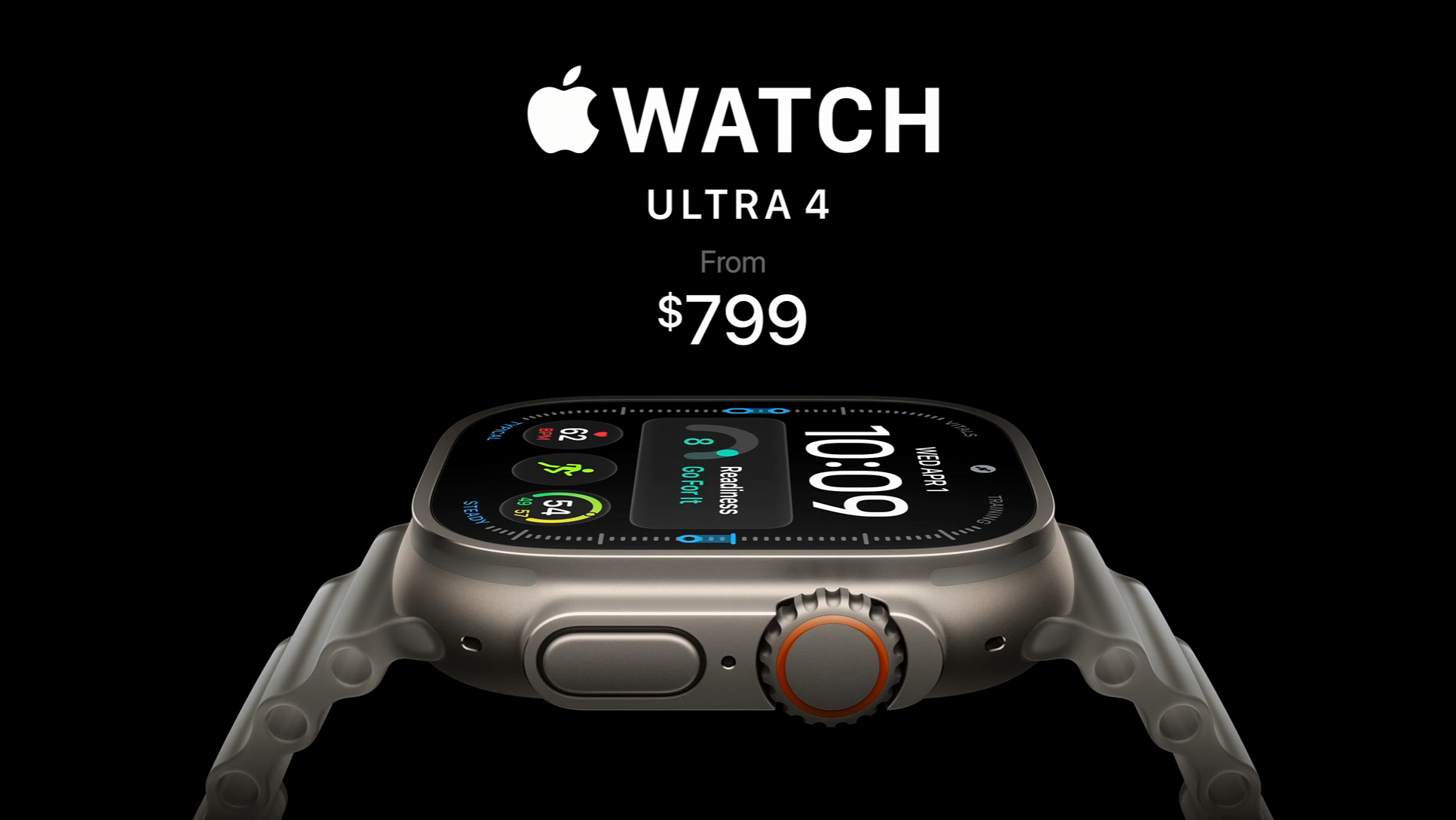
Apple didn't neglect its smartwatches during the event, and says that the Apple Watch 12 and Apple Watch Ultra 4 both offer "the most accurate heart rate sensing in a wearable", which is quite the claim.
That's achieved through higher-frequency heart rate and heart rate variability (HRV) measurements, via new optical and electrical heart sensors. It's part of a wider Health Sensing System that gives users a more detailed look into their fitness.
12. There's a redesigned Health app as well
To match the new features on the latest Apple Watch wearables, as well as some other changes (including Apple Intelligence upgrades), the Health app on the iPhone is getting a redesign — including a new Insights tab with "timely health information".
There's also a new Longevity tab, which shows you deeper health insights over a longer period. There's a Health Age reading here, for example, which shows how certain fitness metrics are matching up with your actual age.
13. We’ll have to wait longer for a new Apple TV 4K
(Image credit: Future)
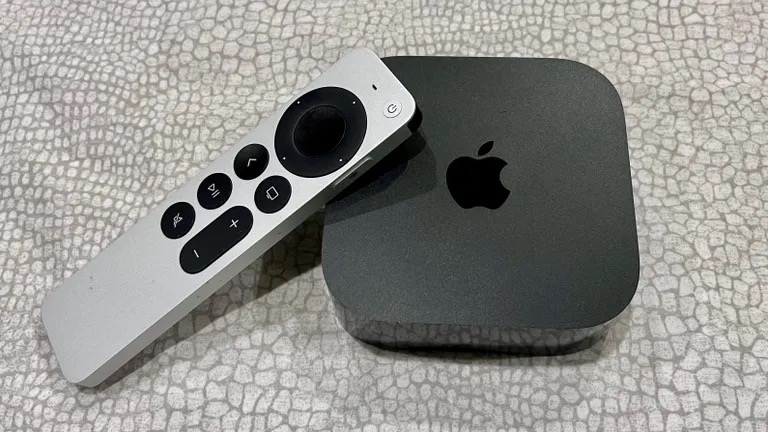
One of the no-shows at the 'Surprise and Shine' event was a new Apple TV 4K. As a reminder, the last model (the third generation) was launched all the way back in 2022, so we're overdue a new one.
Some of the pre-show rumors had suggested Apple would refresh its streaming box, but there's nothing yet. A new device has been showing up in Apple software code, so it shouldn't be too long before it appears.
14. There’s no new base iPhone 18 (yet)
Wondering where the iPhone 18 is? Well, we don't think it's been canceled. Rumors have been swirling all year that the standard model phone would be pushed back to March-ish, to launch with the iPhone Air 2 and the iPhone 18e.
There are multiple reasons, according to the leaks: Apple wants to spread out its revenue more evenly across the year, reduce the pressure to get hardware and software out every September, and better compete with manufacturers who launch their handsets earlier in the year (looking at you, Samsung).
15. Apple largely spared us from price hikes
(Image credit: Apple)
It was a mixed bag in terms of pricing at the Apple event, though it's fair to say that the price hikes we did see weren't quite as severe as we might have expected given the ongoing memory shortage affecting the whole industry.
Both the iPhone 18 Pro and the Pro Max are starting at a $100 higher price than their immediate predecessors, but the new Apple Watch models are sticking to the same prices as last time, while the AirPods 5 are actually cheaper than the AirPods 4 were at launch.
Some Android Auto users are missing the Google Maps speedometer
The feature only recently rolled out to a wider group of people
Real-time traffic data on the map has also vanished for a number of users
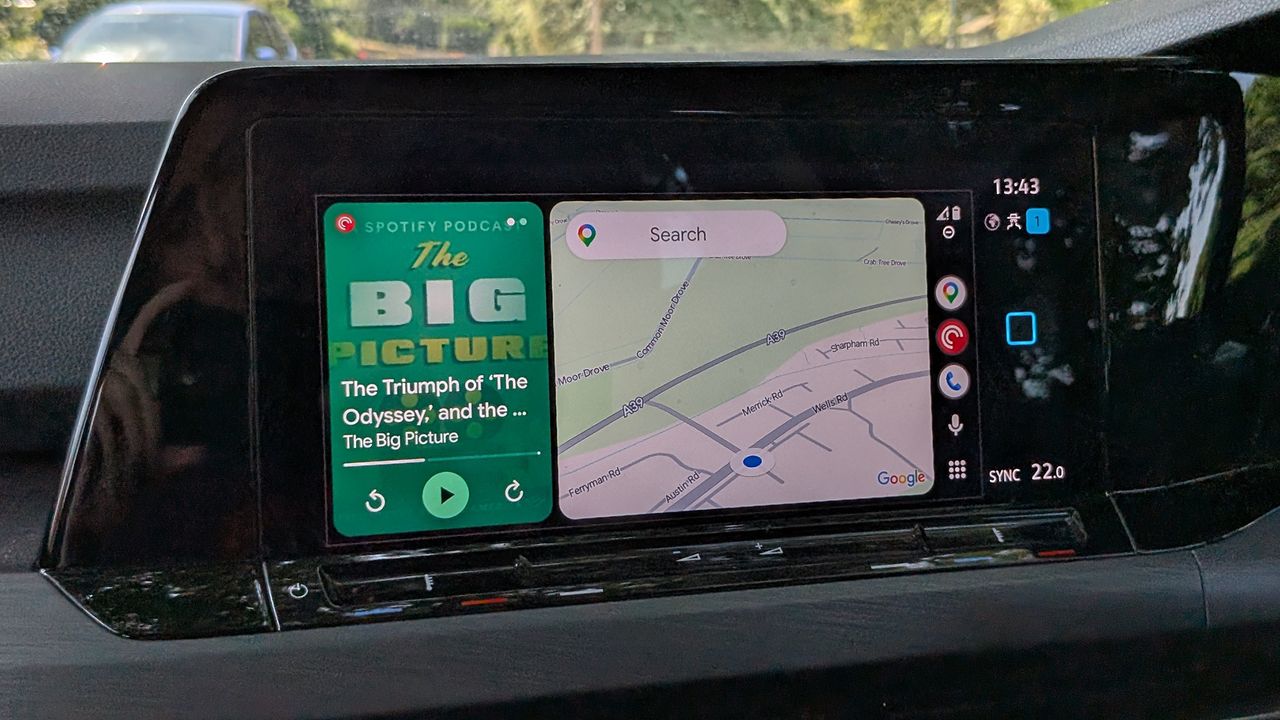
Google Maps has only recently started showing speed limit information on Android Auto screens — so recently that it hasn't reached everyone yet — but now users are reporting that the speedometer has started disappearing unexpectedly, together with real-time traffic data in some cases.
Reports appearing on Reddit (via 9to5Google) suggest the problem isn't affecting everyone, and comes and goes intermittently, but is definitely a real issue. Stop signs and traffic signals also appear to be affected by the same bug.
Some commenters on Reddit are saying that the speedometer shows up in Android Auto when connected to the phones of some family members but not others. That might indicate the problem is related to a specific Android or app version somehow.
Other users say the bug is connected to switching to or from the beta versions of Android Auto and Google Maps, which could be another explanation of what's happening. For now though, Google hasn't officially acknowledged that there's an issue.
The problem of real-time traffic information not showing up has actually been going on for longer, and seems to be sticking around. Again, it doesn't look like a vast number of users are affected, but the bug is definitely having an impact for some.
With so many different Android device models, software versions (including betas), and vehicle types involved, it's perhaps no surprise that annoyances like this crop up from time to time — but that doesn't make the experience any less frustrating for users.
At least one Redditor in the main complaints thread has already quit Google Maps over the decision to rename Lake Ontario as Lake America in the app, under the direction of the White House, which does mean no need to worry any more about these bugs.
The good news for everyone who's sticking around is that Google regularly rolls out updates for Android, Google Maps, and Android Auto, and so we're hoping that these problems are sorted sooner rather than later. In the meantime, if you're seeing these issues, you'll just have to sit tight and wait for a fix to appear.

 Login