❌

Reading view

Five species of wrasse fish in the western Atlantic have been filmed selecting a specific rock or coral slab as an anvil, smashing shellfish against it, and switching anvils depending on the prey — the first video evidence of the behavior in the western Atlantic, extending a foraging technique already known among Indo-Pacific fish to a new ocean basin

Marine biologists have documented five species of wrasse in the western Atlantic using rocks, coral rubble and shells as makeshift anvils to crack open crabs, mollusks and other armored prey — a foraging technique already documented in fish from the Indo-Pacific but never before filmed in the Atlantic. A study published in Coral Reefs in March 2025 provides the first evidence of anvil use in three of the five species and the first video documentation of the behavior in the other two.

The wrasses behind the discovery

The research, led by Dr. Juliette Tariel-Adam of the Fish Lab at Macquarie University’s School of Natural Sciences in Sydney, focused on New World wrasses in the genus Halichoeres: the slippery dick (H. bivittatus), the Brazilian wrasse (H. brasiliensis), the yellowhead wrasse (H. garnoti), the black-ear wrasse (H. poeyi), and the puddingwife wrasse (H. radiatus), documented at Fernando de Noronha Island off Brazil’s northeast coast.

The paper lists co-authors Jaqueline G. Toledo, C. E. O’Brien, Sergio R. Floeter and Professor Culum Brown alongside Tariel-Adam. Anvil use in fish is not new to science. Since it was first documented in an orange-dotted tuskfish roughly fifteen years ago, researchers have logged the behavior in roughly two dozen of the more than 550 known wrasse species, almost all of them in the Indo-Pacific and Indian Ocean. What sets this study apart is geography and scale: it is the first systematic documentation of anvil use among wrasses native to the western Atlantic, and it draws on the largest video dataset yet assembled for the behavior in this ocean basin.

The team built that dataset by turning to citizen scientists. Divers, snorkelers and underwater photographers working across the Caribbean, the Caicos Islands and Brazil submitted footage and written accounts through a public call for observations, contributing 16 new records to the study. Combined with existing records, the dataset gave researchers close, repeated looks at details of the behavior that had previously been described only impressionistically.

How the fish crack their prey

Fish in the study grabbed a hard-shelled item — in most cases a crab, mollusk, sea urchin or hermit crab — and swam it to a chosen surface before repeatedly slamming it against that surface to crack it open. Successful cracking attempts required an average of six or more strikes and took at least a minute to complete, and prey was successfully accessed and consumed in 12 of the 19 documented events, according to the published paper. One of the study’s more striking findings involves anvil choice. 

The wrasses used a range of materials as anvils — rock outcrops, coral rubble, reef platforms and shells — without sticking to a single preferred striking surface, switching anvils mid-attempt in 53 percent of observed strikes.

Researchers interpreted this flexibility as a sign the fish are actively assessing which surface will most efficiently break a given prey item rather than relying on a classic bite-and-swim mechanism regardless of the target.

Researchers make the case for fish cognition

Tariel-Adam framed the findings as part of a broader case for taking fish cognition seriously. “Tool use is typically associated with humans, but this behaviour is proof that fish are far cleverer than they get credit for,” she said, in comments reported by Phys.org. Senior author Culum Brown, who has spent much of his career studying fish behavior and welfare, added that the wrasses “demonstrate flexible and dexterous tool use, expanding our understanding of tool use evolution in the animal kingdom.”

The paper situates the discovery within debates over how and why tool use evolves. Because anvil use has now turned up independently in wrasse lineages on opposite sides of the globe, the behavior increasingly looks like a foraging strategy that several unrelated reef fish lineages have independently evolved — one that is easily missed by divers not specifically watching for it, which is part of why the researchers built their dataset largely around community-contributed footage, supplemented by only a handful of controlled observations.

Coverage of the paper by Scimex and Oceanographic magazine both note that the research team is continuing to solicit new footage from divers and underwater photographers, on the expectation that further observations will clarify how widespread the behavior is among western Atlantic reef fish and whether other genera beyond Halichoeres practice it as well.

Further detail on the study is available via the Macquarie University research profile and additional reporting from ZME Science.

The post Five species of wrasse fish in the western Atlantic have been filmed selecting a specific rock or coral slab as an anvil, smashing shellfish against it, and switching anvils depending on the prey — the first video evidence of the behavior in the western Atlantic, extending a foraging technique already known among Indo-Pacific fish to a new ocean basin appeared first on Space Daily.

  •  

American states are holding tens of billions of dollars in forgotten bank accounts, uncashed cheques and insurance payouts, and anyone can search their name for free to see whether some of that money belongs to them

Karen Baker runs the Yolo Food Bank in Northern California’s Yolo County, which she describes as the most food-insecure county in the state. When CBS News California Investigates told her, on camera, that California had been sitting on money that belonged to her organisation, she asked one question: was it really hers? It was.

Tens of millions of Americans are in the same position, without a journalist on hand to tell them.

Where the money comes from

Every US state runs an unclaimed property program, which is essentially a lost and found for cash. The National Association of Unclaimed Property Administrators, the body that coordinates those programs across all fifty states, estimates that about one in seven Americans has something waiting. Searching costs nothing.

Nothing glamorous, mostly. Dormant savings accounts, uncashed payroll cheques, utility deposits from a flat someone moved out of in 2009, insurance payouts nobody told the family about, share dividends posted to an address three moves ago, and the contents of safe deposit boxes whose renters died or forgot.

Companies do not get to keep this stuff. State law obliges banks, insurers and other holders to hand it over once an account has gone quiet for a set period, typically three years in California, as the State Controller’s unclaimed property division explains. The state then holds it. There is no deadline to claim, and no fee.

The scale of the pile

California alone is minding about $15 billion in unclaimed property, per the State Controller’s Office, spread across tens of millions of individual records. New York is worse, or better, depending on your perspective: the Office of the New York State Comptroller oversees $19 billion in unclaimed funds, some of it dating back to 1943, and returned $504 million of it in a single fiscal year.

Nationally, the numbers move. NAUPA’s own annual report put total returns at $4.49 billion to Americans in fiscal 2024. That sounds like a lot until you set it against what is still sitting there.

What the states do while they wait

So what happens to the money while it waits to be claimed? In many states, it flows straight into general operations, and the state keeps whatever it earns until someone comes looking.

Citing the California Legislative Analyst’s Office and state budget documents, CBS News reported that unclaimed property is one of California’s top General Fund revenue sources, generating around $1 billion a year, while the state has returned roughly 3.5 per cent of what it holds. The original sum comes back when the owner claims it. The interest does not.

That reporting comes from a single news investigation focused largely on one state, not a national audit.

Washington notices

Sam Liccardo and Mike Lawler agree on very little. Liccardo is a Democrat, Lawler a Republican, and together they have introduced the Safeguarding Americans’ Fairly Earned Retirement Act, which would sharply limit when states can take custody of securities, digital assets and investment accounts. Senator Elizabeth Warren has separately written to NAUPA requesting state-by-state data on how these systems work and how the rules are changing.

Whether any of that passes is anyone’s guess. The databases are already open.

Where the records sit

NAUPA’s search hub links out to every participating state’s official database, alongside MissingMoney.com, the multi-state tool covering 49 states, several Canadian provinces and Puerto Rico. Hawaii runs its own system separately.

Property is reported by the company holding it, which means records often sit in a state the owner left years ago.

Old savings bonds now follow the same route. The Treasury retired its Treasury Hunt tool on 30 September 2025, and unredeemed bonds are handled through state unclaimed property offices instead.

A market has grown up around all this. Private recovery firms, legal in most states, charge a percentage to locate money that sits in the same public databases the states publish for free.

A dollar surrendered to a state in 1994 comes back as a dollar. Not a dollar plus thirty years of compounding, not a dollar adjusted for what groceries cost now, just the dollar. Whoever holds it in the meantime is the only party earning anything.

This article is journalism, not financial or legal advice. Unclaimed property rules, dormancy periods and claims procedures vary by state and change over time. Anyone dealing with a substantial claim, an estate, or a disputed entitlement should consult a qualified professional.

The post American states are holding tens of billions of dollars in forgotten bank accounts, uncashed cheques and insurance payouts, and anyone can search their name for free to see whether some of that money belongs to them appeared first on Space Daily.

  •  

A driver hauling an excavator struck more than a dozen overpasses along 60 miles of the New York State Thruway. The driver did not stop or report it, only realizing the damage when troopers flagged him down at a tandem lot.

A truck wedged under a bridge, its roof peeled back like a sardine can, is such a familiar sight that the Australian city of Melbourne turned one bridge into a folk legend. The Montague Street rail bridge has claimed so many trucks that someone built a website tracking how many days since it was last hit. Bridge strikes are not exotic. They are one of the most repetitive failures in road transport.

Which brings us to a stretch of Central New York in the spring of 2026, and a load that never should have been on the road at the height it was.

What happened over 60 miles of the Thruway

On March 18, 2026, a tractor-trailer hauling an over-height excavator on a flatbed struck multiple overpasses as it traveled west on the Thruway.

The scope is what makes it notable: more than a dozen overpasses hit across roughly 60 miles between Exits 30 and 36.

The driver, 38-year-old Oleksander Tarakanovskyi of North Carolina, was apparently unaware that his load had struck the bridges. After the Thruway Authority alerted State Police, troopers found the truck and stopped it at the Mattydale tandem lot in the town of Salina.

Tarakanovskyi was charged with reckless endangerment in the second degree and issued more than 20 traffic tickets, including violations of federal commercial motor vehicle safety regulations. He was released with an appearance ticket returnable to Salina Town Court on April 8.

The reaction from officials was blunt. Frank G. Hoare, executive director of the Thruway Authority, said, “How a tractor trailer driver could be unaware that his load hit more than a dozen bridges is beyond comprehension.” State Police Major Brian T. Ferrone added, “Reckless, egregious behavior will not be tolerated.”

Why bridge strikes keep happening

The public record does not explain how Tarakanovskyi failed to notice the impacts. But the larger bridge-strike problem often starts before a truck reaches the bridge: with the vehicle’s height and route.

A Network Rail survey in the UK, part of its “Wise Up, Size Up” campaign, found that 43 per cent of lorry drivers admitted they did not measure their vehicle before setting off, while 52 per cent said they did not take low bridges into account. That’s UK data, not a direct explanation for this New York incident, but it shows why height checks and route planning are central to bridge-strike prevention.

Where the safeguards are supposed to catch it

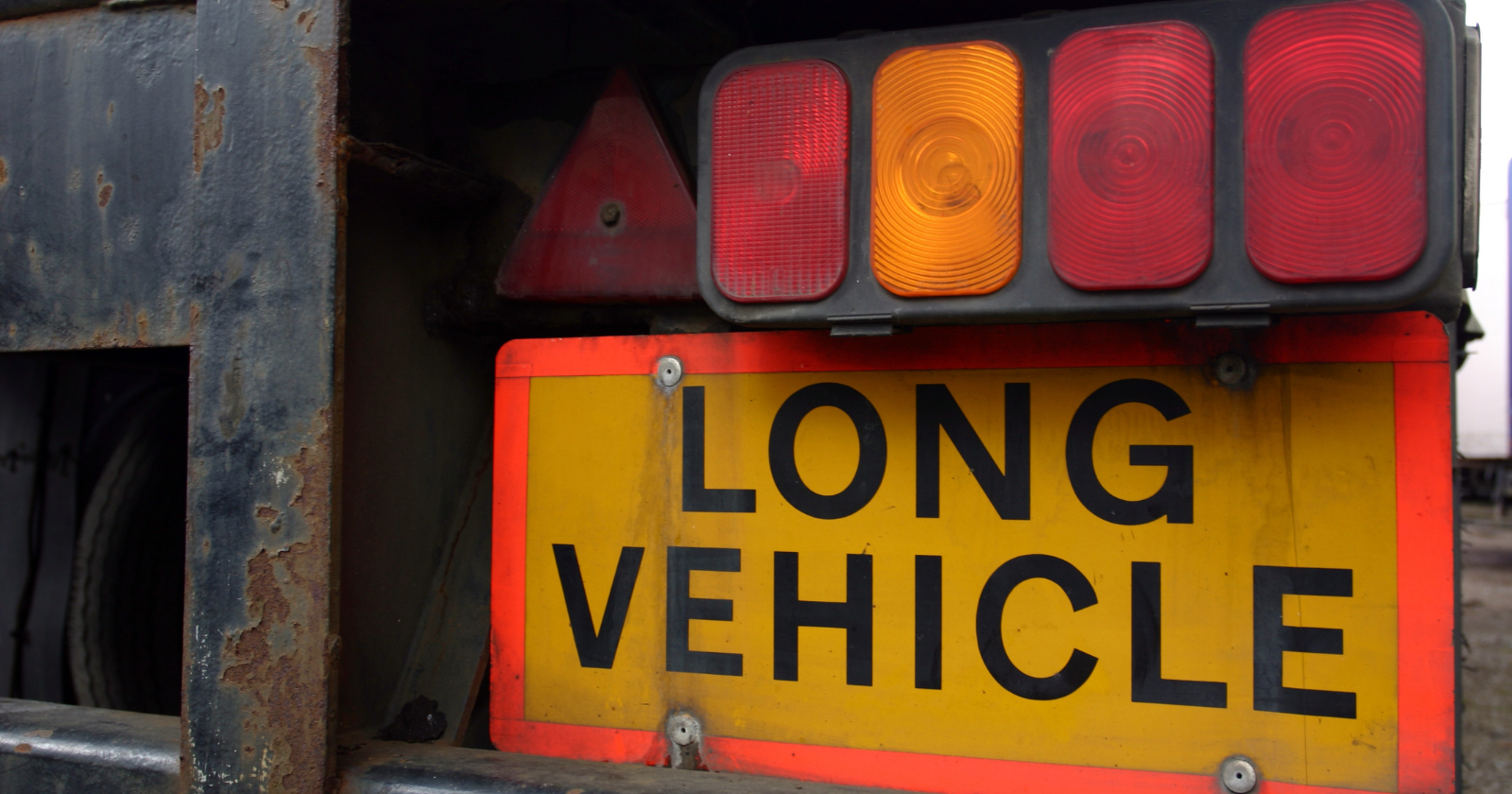
In the US, there is no single federal vehicle-height limit; state limits for standard commercial vehicles commonly run from 13 feet 6 inches to 14 feet. On the New York State Thruway, loads 13 feet 7 inches or higher require a special hauling permit.

Permits, approved routes, escorts and height poles are all meant to move the moment of discovery to before the trip, rather than after a bridge is hit.

Take the King Street Bridge over the Hutchinson River Parkway in Westchester County. It was 

The wider problem has been documented for years. A 2013 City College of New York study found that bridges in the state were experiencing roughly 200 strikes annually at the time, with many concentrated on a much smaller group of repeatedly hit bridges.

A solvable problem that stays unsolved

At a 2018 meeting about bridge strikes on the Hutchinson River Parkway, Westchester County Executive George Latimer captured the exasperation. “This is a solvable problem,” he said, adding, “If government can’t solve a problem like this, then government can’t do anything.”

The engineering measures are familiar: know the vehicle’s height, plan a legal route, use permits and escorts where required, and install detection systems where repeated strikes justify them. The hard part is making those checks work consistently across a large road network.

The 2026 Thruway incident stands out because one over-height load allegedly produced a 60-mile trail of damage before police stopped it. But the underlying failure was not new. Bridge strikes are repetitive precisely because the safeguards depend on measurements, route choices and warnings being acted on before the truck reaches the bridge.

The post A driver hauling an excavator struck more than a dozen overpasses along 60 miles of the New York State Thruway. The driver did not stop or report it, only realizing the damage when troopers flagged him down at a tandem lot. appeared first on Space Daily.

  •  

A London doctor traced hundreds of cholera deaths in 1854 to one neighborhood water pump and persuaded the parish to remove its handle — months later he mapped the outbreak, years before contaminated water was widely accepted as a cause of cholera

A mother rinsed her baby’s dirty nappy in a bucket and tipped the water into the cesspool outside her front door. Within ten days, more than 500 of her neighbours were dead. If Henry Whitehead’s later reconstruction was right, hers was where it started.

The baby was five months old and lived at 40 Broad Street, Soho, in a district of tenements chopped into cheap rented rooms. Her death, on 2 September 1854, went into the records as diarrhoea rather than cholera, so she never appeared in the tally that made the street famous, as Gavi’s account of the outbreak notes.

Ten minutes’ walk away in Sackville Street lived a physician named John Snow, who had spent five years arguing that cholera travelled in water and getting nowhere. His 1849 essay on the subject was largely ignored by the medical profession. Respectable opinion held that epidemic disease rose off rotting matter as a poisonous vapour, a theory called miasma. Under miasma, the smell was the disease.

The map was made of black bars

Snow got the addresses of the dead from the General Register Office and walked them. He knocked on doors, asked survivors where they drew their water and worked out that the deaths clustered overwhelmingly around one public pump on Broad Street.

Months later he turned that investigation into the map that became famous, marking each known death as a short black bar at the address where it happened. By December he had tracked down 616 deaths, though only 574 could be placed on the map itself, the rest belonging to people who had died away from the district with no address on record. He published it in the second edition of On the Mode of Communication of Cholera in 1855.

He had no germ, no culture and no microscope image worth anything, only addresses.

The strongest evidence came from people who survived

Seventy men worked at the brewery on Broad Street and not one of them died. They drank a daily beer allowance, used a private well and never touched the public pump, per the Science History Institute’s account of the investigation. A workhouse squarely inside the death zone held over 500 people, lost only a handful and had its own supply.

Then there was the widow. A woman in Hampstead, miles to the north, died on 2 September, her visiting niece the day after. Neither had set foot in Soho for years. Snow went up to interview her son and learned she had once lived on Broad Street, liked the taste of the water and kept a servant carting bottles of it north. Her last delivery arrived on 31 August, the night the outbreak began.

Geography was the wrong variable and plumbing was the right one.

The parish agreed and the government did not

On the evening of 7 September, Snow put his case to the Board of Guardians of St James parish. They were sceptical of the theory and impressed by the arithmetic, and the handle was unscrewed the following morning.

Deaths were already falling by then, as Snow himself acknowledged. Thousands had fled the neighbourhood, and the contamination that triggered the outbreak had probably washed through days before.

The national verdict was blunter. England’s General Board of Health reviewed Snow’s theory through its Committee for Scientific Inquiries and rejected it outright: “After careful inquiry we see no reason to adopt this belief.” That committee, as Nigel Paneth and colleagues documented in the American Journal of Public Health, spent roughly a third of its 352-page scientific appendix on barometric pressure, wind direction, cloud cover and ozone levels. One of its own inspectors had handed Snow the Hampstead evidence.

The curate who found the first case

Henry Whitehead, assistant curate of St Luke’s on Berwick Street, had spent the outbreak climbing those stairs with food and last rites. He thought Snow was wrong, and joined the parish inquiry committee partly to clear the pump’s name. Snow gave him a copy of the monograph and he read it and stayed unconvinced, so he went out to disprove it. In April 1855, seven months after the last death, he traced the chain back to the baby at number 40, a case Snow had never counted, as S.P.W. Chave set out in Medical History.

The parish surveyor dug up the well and found the cesspool brickwork rotted through, inches from the well lining.

Whitehead also worked out what taking the handle off achieved. The baby’s father came down with cholera on 8 September, the morning the parish disabled the pump, and his waste would have gone the same way his daughter’s had.

Snow died in 1858, aged 45, with the profession still against him. In Florence that same autumn of 1854, an anatomist named Filippo Pacini had put cholera discharges under a microscope, seen comma-shaped organisms swarming in them and published. Italian medicine believed in bad air too, and Pacini’s finding went unnoticed by Snow, by Robert Koch and by almost everybody else until long after his death. Bacteriologists made it official in 1965, naming the organism Vibrio cholerae Pacini 1854.

Two men landed on the answer in the same year, in two cities, and the medical establishment believed neither of them. The handle came off anyway.

The post A London doctor traced hundreds of cholera deaths in 1854 to one neighborhood water pump and persuaded the parish to remove its handle — months later he mapped the outbreak, years before contaminated water was widely accepted as a cause of cholera appeared first on Space Daily.

  •  

The U.S. government accidentally sold an Apollo 11 bag still carrying traces of moon dust for just $995 in 2015 — the Illinois woman who bought it survived a legal fight with NASA, then sold the same bag at Sotheby’s two years later for $1.8 million

For $995 you could buy a decent second-hand lawnmower, a mid-range mattress, or, if a government spreadsheet has a bad day, a piece of Apollo 11 with moon dust still caught in its seams.

That last one happened. In February 2015, an online auction held on behalf of the US Marshals Service listed a white zippered pouch stamped “Lunar Sample Return”. Nancy Lee Carlson of Inverness, Illinois, bid $995 and won. She knew it had flown on something. What she did not know was that it had ridden along on the first crewed landing on the Moon.

How a moon bag ended up in a garage in Kansas

Blame starts with Max Ary, who ran the Kansas Cosmosphere and Space Center in Hutchinson from 1976 to 2002 and was convicted in November 2005 on twelve federal counts, including theft of government property, wire fraud and money laundering. Investigators searching his garage two years earlier had found a box, and the bag was inside it. As documented by The Hutchinson News, Ary was ordered to pay more than $132,000 in restitution for the space artefacts he had taken, a mix of property belonging to NASA and the museum itself. He always maintained he had simply muddled his own collection with theirs.

His forfeited property went to auction to cover the bill. That is where the mix-up happened. Per the Associated Press, government officials later said two lunar bags had been merged into a single entry when their inventory numbers were combined on spreadsheets. One was from Apollo 17. The other had been to the Sea of Tranquility, and nobody caught the difference before the gavel came down.

What the fabric was hiding

Carlson did the sensible thing and posted the pouch to NASA’s Johnson Space Center for authentication.

Terrible idea, as it turned out. Curators tested the cloth, found lunar material embedded in the fibres, and established that the pouch had served as the outer decontamination bag around the first rocks Neil Armstrong scooped up during the Apollo 11 moonwalk. Then NASA kept it, arguing the bag was government property that should be on public display, not sitting in someone’s living room, and asking the Justice Department to reverse the forfeiture.

Carlson sued. Twice, in two states.

The ruling nobody at NASA wanted

In December 2016, Judge J. Thomas Marten of the US District Court for Kansas ruled that Carlson was “a good faith purchaser, in a sale conducted according to law,” as reported by Robert Pearlman at collectSPACE. Marten went out of his way to say NASA had done nothing wrong here, and that the bag only mattered at all because of what NASA’s own people had pulled off in 1969. He also said he had no power to unwind a sale that had already gone through. Space.com later reported that NASA handed the bag back in February 2017.

Sold at Sotheby’s, well short of the estimate

Sotheby’s offered the pouch on 20 July 2017, 48 years to the day after Armstrong used it. NPR put the hammer price at $1.5 million, or $1,812,500 once Sotheby’s premium was added, which sounds enormous until you notice the house had estimated $2 million to $4 million. The buyer stayed anonymous.

Plenty of people thought the sale should never have happened at all. Michelle Hanlon of For All Moonkind, a group campaigning to protect the Apollo landing sites, said in a statement carried by Smithsonian magazine that the bag belonged in a museum where the world could share in the achievement it represents. Carlson told CBS News she decided to sell because she no longer felt it was safe in her home.

The dust went on to have its own career

NASA’s testing had lifted particles off the bag onto carbon tape mounted on aluminium stubs, and the agency held on to them after returning the pouch. collectSPACE reported that Carlson sued again in January 2019, claiming the testing had damaged the bag, dragged down its market value and caused her real distress, and demanding the return of the lunar material itself. That dispute settled out of court, and the samples went to her.

Which is how, in April 2022, five aluminium stubs, each topped with a 10-millimetre disc of carbon tape, came up in a New York saleroom. Bonhams sold them for $504,375, well under a pre-sale estimate of $800,000 to $1.2 million. Bidding opened at $220,000, seven bids came in, and the hammer fell at $400,000. Independent testing found four of the five stubs carried particles matching Armstrong’s first sample.

NASA still holds almost all of the 382 kilograms of rock, dust and core material brought home by the six Apollo landings. Its position on the rest hasn’t shifted in half a century: this material belongs to the public, not to private collectors. That stance holds up fine, right until two rows get merged on a spreadsheet.

Somewhere out there is a collector nobody can name, holding a cloth bag worth more than most houses, backed by a government receipt for $995 confirming the sale was done by the book.

The post The U.S. government accidentally sold an Apollo 11 bag still carrying traces of moon dust for just $995 in 2015 — the Illinois woman who bought it survived a legal fight with NASA, then sold the same bag at Sotheby’s two years later for $1.8 million appeared first on Space Daily.

  •  

After a munitions ship exploded in Halifax in 1917, Boston mobilized doctors, nurses and medical supplies and sent them north by train through a blizzard — more than a century later, Nova Scotia still sends Boston a giant Christmas tree each year in thanks

A sailor burst into a small wooden railway station in the north end of Halifax on the morning of 6 December 1917 and told everyone inside to run.

Vince Coleman, the dispatcher on duty, walked back to his telegraph key instead. As the Maritime Museum of the Atlantic recounts, he was thinking about the overnight passenger train from Saint John, roughly 300 people aboard, due in at 8:55am on a line that ran straight past a burning munitions ship. He tapped out a warning to hold the train, then signed off: “Guess this will be my last message. Good-bye, boys.”

Minutes later the French cargo ship Mont-Blanc, packed with explosives bound for the war in Europe, detonated in Halifax Harbour.

A city with 2,000 dead and no spare hospital beds

Almost every building within half a mile of the water came down, and records held by the Massachusetts State Library put the immediate toll at 1,800 killed, 3,000 seriously wounded and another 10,000 needing medical attention. Later counts settle at close to 2,000 dead.

Halifax was in no position to absorb that. It was a wartime port, and as the medical journal Proto has documented, local hospitals were already carrying soldiers sent home to recover. Doctors worked through the first night and kept going.

Then it started to snow.

Boston did not wait to be invited

News crossed the wires and landed on the desk of Massachusetts governor Samuel McCall around 11am. What he had was fragmentary at best, a few lines about some sort of catastrophe up the coast. Writing in its account of that day, the Massachusetts Historical Society notes that McCall wired back a promise that his state would go the limit, and called an emergency meeting of the Committee of Public Safety.

By 10pm, twelve hours after the blast, a relief train loaded with doctors, nurses and supplies pulled out of Boston. Nobody in Halifax had yet told them what was needed.

A blizzard caught the train en route, hardly a surprise for Maine and New Brunswick in December. It did not turn back. Staff wired ahead for extra supplies while they were still stuck in the drifts, and the Halifax Municipal Archives documents the first American medical train arriving on 8 December, having pushed through snow for most of the trip.

The help kept arriving for years

That first train turned out to be the opening instalment. Author John U. Bacon, speaking to WBUR about his book on the disaster, counted two trains, two ships, 100 doctors, 300 nurses and about a million dollars in supplies, enough to stand up several temporary hospitals.

The medical unit went home on 14 December and formed the Massachusetts-Halifax Relief Committee on the journey back. The same archive shows it raised half a million dollars, refurnished more than 1,800 homes and set aside $25,000 for the care and education of people blinded by flying glass. Halifax named a block of temporary housing the Governor McCall Apartments, on a newly laid-out Massachusetts Avenue.

One tree in 1918, then a gap of fifty-odd years

Nova Scotia sent Boston a Christmas tree the following December as a thank you, and the tradition quietly lapsed.

It came back in 1971, and not purely out of sentiment. As reported by The Signal, the Lunenburg County Christmas Tree Producers Association revived the gift with one eye on the export market for Nova Scotian spruce. The provincial government took the job over a few years later and has handled it ever since, which is how a one-off act of gratitude became a line item.

What it takes to qualify as the tree

Anyone can nominate one. Criteria published by the Government of Nova Scotia ask for a white spruce, red spruce or balsam fir standing 12 to 15 metres, healthy, good colour, medium to heavy density, uniform and symmetrical, and easy to get a truck near. Officials narrow the field before checking their shortlist with Boston.

Boston’s 2025 tree was a 45-foot white spruce nominated by Ronald and Claire Feener of Lunenburg County. It reached the Common by flatbed truck under police escort, the City of Boston confirmed. Mayor Michelle Wu flew up for the cutting and, as CBC News reported, took a turn with the chainsaw herself on a 42-year-old spruce while a certified tree-felling instructor supervised.

That was a year of tariff threats and cross-border sniping, and the tree went south anyway.

Most international goodwill exists as paperwork nobody reads. This one gets scouted for months, felled in front of a crowd, driven hundreds of kilometres and switched on in a public park every December, all because a train once left Boston into a blizzard for a city that had barely had time to explain what was wrong.

The post After a munitions ship exploded in Halifax in 1917, Boston mobilized doctors, nurses and medical supplies and sent them north by train through a blizzard — more than a century later, Nova Scotia still sends Boston a giant Christmas tree each year in thanks appeared first on Space Daily.
  •  

American employers told young women painting luminous watch dials that radium was harmless and instructed them to shape the radioactive brushes with their lips — the lawsuits that followed helped establish that employers could be held financially responsible for harm caused by their work

The women walked home at night and glowed.

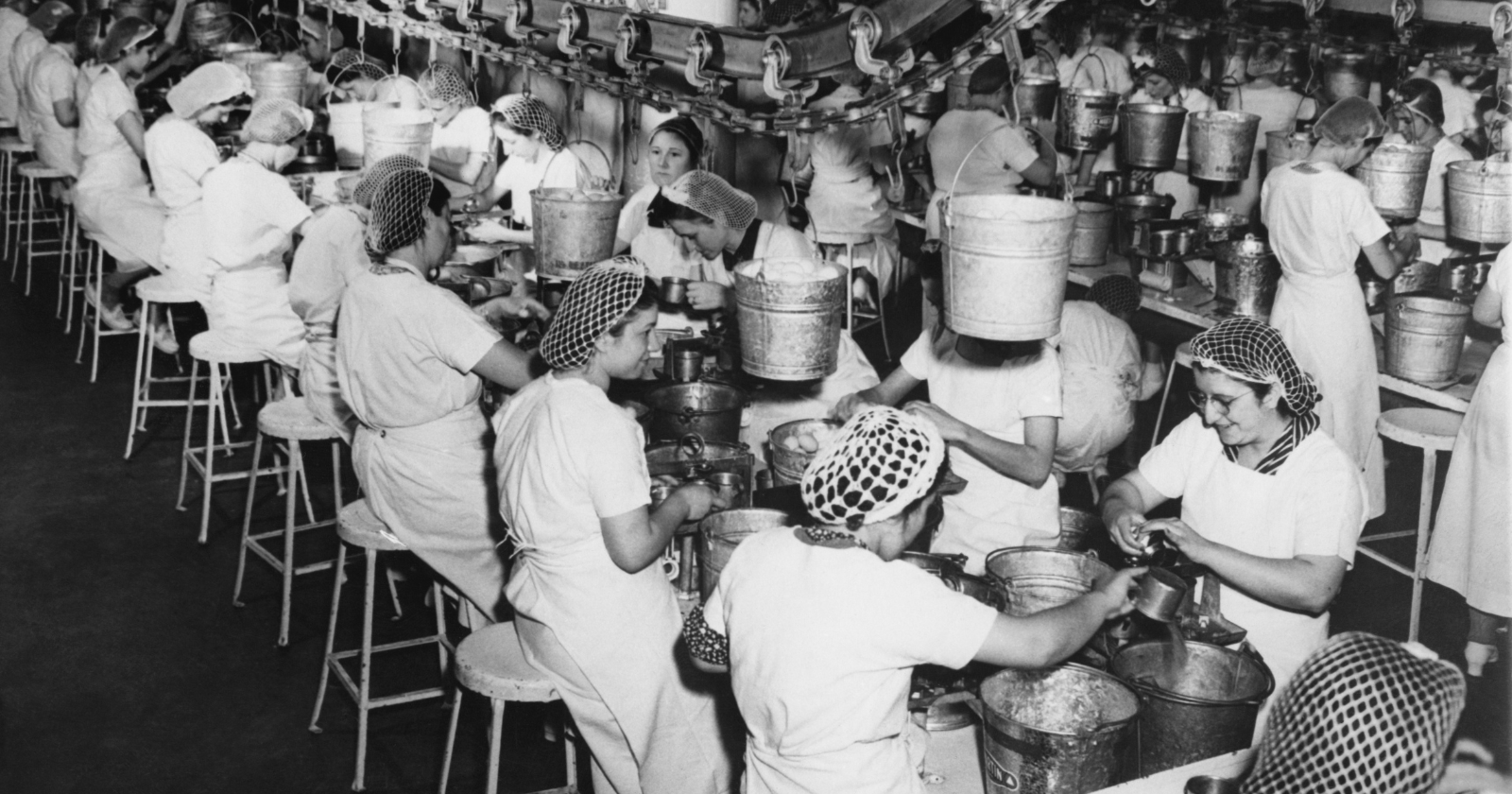
Radium dust settled in their hair and on their coats, so a dial painter leaving the plant in Orange, New Jersey, trailed a faint shimmer down the footpath. Plenty of them thought this was marvellous. They painted their fingernails with it and dabbed it on their teeth before a dance. Nobody in management suggested they stop.

The paint was branded Undark, a mix of radium and zinc sulfide developed by Dr Sabin von Sochocky. In its account of the digitised company files, the National Archives describes how the Radium Luminous Material Corporation opened its Orange factory in 1917, selling the glow to watchmakers and instrument firms. Radium dials were prized in the trenches of the First World War and fashionable everywhere else.

How the paint got into their bones

Brushes were the whole problem.

Camel-hair bristles lose their point after a few strokes, and the numerals on a wristwatch face are minute. So the painters were taught to roll the brush between their lips before each dip. Lip, dip, paint, several hundred times a shift. The Science Museum Group notes that the New Jersey women worked on paper dials with a water-based paint, applied with fine camelhair brushes rather than the metal stylus used elsewhere in the industry. A trace of radium went down the throat with every dial.

Radium behaves chemically like calcium, so the body lodges it in bone and leaves it there, decaying quietly, for a life that just got much shorter.

The doctor who worked it out

Dentists noticed first. From about 1922 they were pulling aching teeth from young women in Orange, finding that pieces of jawbone came away too. A dentist, Theodor Blum, described the condition in 1924 and named it radium jaw.

Harrison Martland, the Newark pathologist who became Essex County’s first medical examiner, took it further. Writing in the Journal of the American Medical Association in 1925, he measured radioactivity in the tissue of dead dial painters and in the exhaled breath of living ones. A retrospective in Brain credits that work with pioneering the measurement of radioactivity inside contaminated human tissue.

U.S. Radium hired its own experts to challenge his findings. Reasonable enough in 1925, when one man’s diagnosis was still just one man’s diagnosis, though the company kept denying any link to radium for another decade.

Five women, one settlement, no admission

Grace Fryer needed two years to find a lawyer who would take her case. Katherine Schaub, Edna Hussman, Quinta McDonald and Albina Larice joined her, and by the first hearing in January 1928 none of the five could lift an arm to swear the oath.

They settled that June for $10,000 each, an annuity of $600 for life and their medical bills covered. The company admitted nothing, and most dial painters received no compensation at all, the National Archives notes. In 1936, a federal court in New Jersey ruled that U.S. Radium had not fraudulently hidden the danger, a decision that pushed surviving claims outside a two-year limitation period and effectively ended them.

What happened in Ottawa

Meanwhile, in Ottawa, Illinois, the Radium Dial Company assured its painters that the Orange trouble had nothing to do with them, since the radium over there was impure. The firm had been medically screening its own workers since 1925 and keeping the results to itself. As History.com documents, Illinois workers lost in court through the mid-1930s, after which the state passed the Illinois Occupational Diseases Act, effective 1936, requiring employers to carry cover for industrial poisoning.

Catherine Donohue led fifteen women in a fresh suit in 1937. By a hearing the following February she weighed around 32 kilograms and had to be carried into the room, and, as Northern Public Radio reported, she arrived with a box of what she said were pieces of her own jawbone. Local papers took to calling the group the society of the living dead, NPR Illinois reports, and their lawyer, Leonard Grossman, took the case for free because his clients had nothing to pay him. Later hearings moved to Donohue’s home, where she testified from a couch because she could no longer travel.

The Illinois Industrial Commission ruled for Donohue in April 1938 and confirmed the award that July. She died on 27 July, three weeks later. Radium Dial fought on regardless. The Illinois Supreme Court threw out the company’s petition to overturn the award in June 1939, and the U.S. Supreme Court declined a further appeal that October, more than a year after Donohue’s death.

That refusal to intervene left the award standing, and with it the principle that an employer could be held liable for a disease that surfaced years, sometimes a decade or more, after the job ended. Grossman’s son, three decades a Department of Labor lawyer, traces a line from those hearings to the federal OSHA Act, which he dates to 1971.

The measurements they left behind

Many surviving painters later volunteered their bodies to researchers at Argonne National Laboratory, whose review of the radium cases sets out how those measurements shaped radiation protection limits for the nuclear age.

Radium-226 has a half-life of roughly 1,600 years, so the women are still faintly radioactive in their graves and will be long after everyone reading this is gone. A surprising amount of modern workplace law rests on that fact. None of them were trying to found a legal doctrine. They wanted someone to pay the dentist.

The post American employers told young women painting luminous watch dials that radium was harmless and instructed them to shape the radioactive brushes with their lips — the lawsuits that followed helped establish that employers could be held financially responsible for harm caused by their work appeared first on Space Daily.

  •  

George Vanderbilt hired a young forester in 1892 to restore the exhausted farmland and cut-over woods surrounding his vast North Carolina estate — the experiment that followed transformed thousands of acres and became the first professionally managed forest in America

America’s first professionally managed forest finished its first year in the red, and the man running it called that a good result.

The shortfall was $392.40. It sits in a table near the back of Gifford Pinchot’s account of the first year’s work at Biltmore Forest, a slim pamphlet printed in Chicago in 1893 as an exhibit for the World’s Columbian Exposition. Pinchot opened by pointing out that the attempt was the first practical application of forest management in the United States.

What Vanderbilt bought

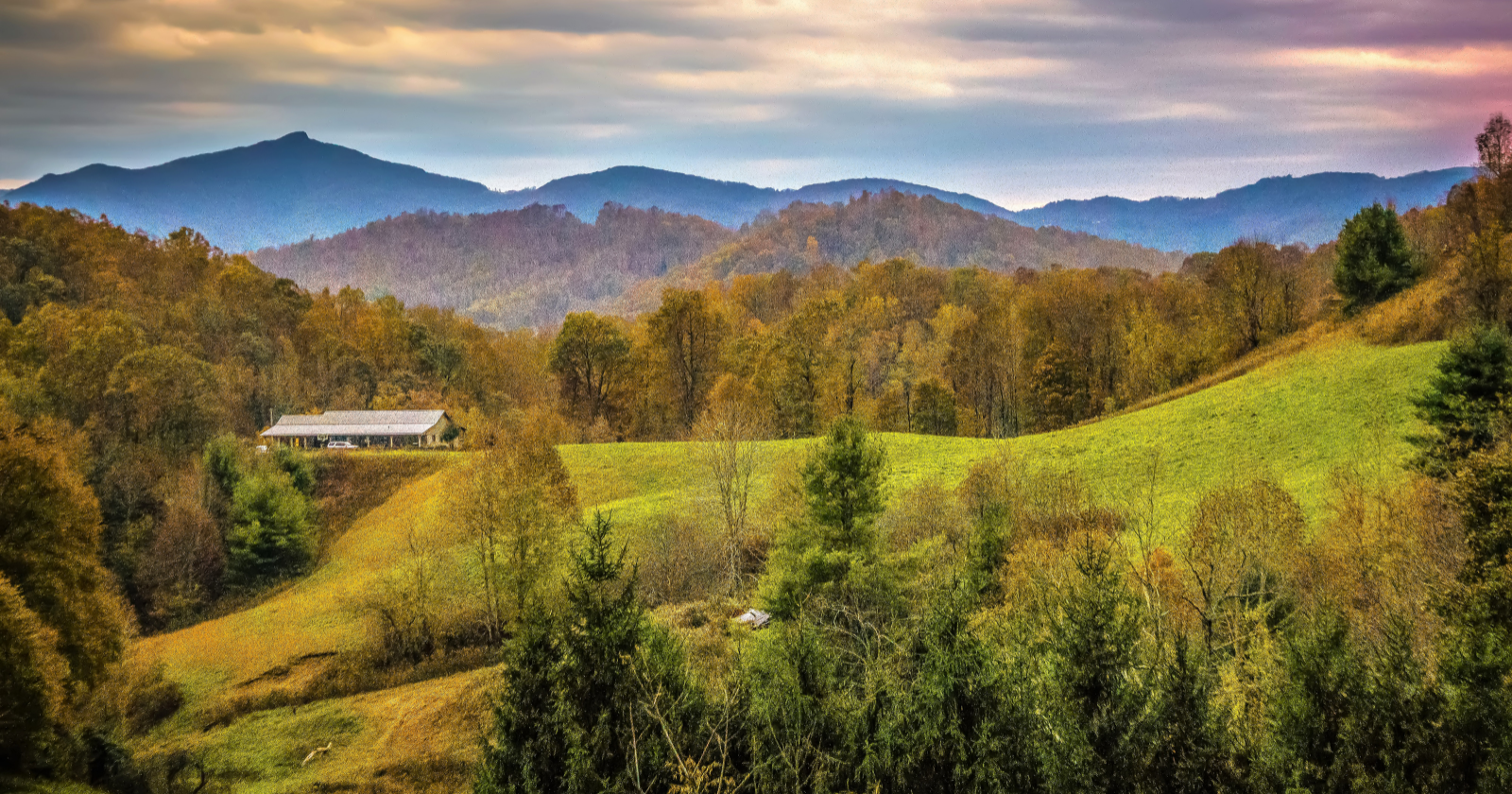
George Vanderbilt had been assembling land south of Asheville since the late 1880s for a house the size of a small village. The ground came cheap because it was wrecked. As the Special Collections Research Center at NC State University documents, landscape architect Frederick Law Olmsted advised that the soils and terrain would never support a grand park, and suggested growing timber instead.

Pinchot’s survey put the estate at 7,282 acres, a little over half of it woodland. The families who had farmed the land before Vanderbilt bought it cut anything sellable as fuel, fencing or saw-logs, grazed cattle through the young growth, and burned the woods off for pasture. Asheville had been heating itself on those hillsides for years.

Pinchot summed up the condition of much of it in three words: “deplorable in the extreme.”

A card catalogue for a forest

Pinchot arrived on 2 February 1892, aged 26, trained in Europe because there was nowhere in America to train. NCpedia records that Olmsted put his name forward, and that he and Vanderbilt agreed on three objectives: sell timber at a profit, produce a steady yield every year, and leave the forest healthier than it was.

Then he counted. Crews broke the woods into more than 600 sections of about 5.7 acres each, describing every one in shorthand on a postcard-sized card and filing the cards as a catalogue of the whole property. He grouped the forest into 92 numbered compartments bounded by ridges, streams and old wood roads, then set a rotation of 150 years, meaning the second crop would be ready for the axe a century and a half after the first came out. Nobody involved expected to see it.

What the first year’s books showed

Labourers earned between 90 cents and a dollar a day, mules 75 cents.

The forest sold cordwood to the estate brickworks, ties to the railroad and lumber to anyone who wanted it, at open market prices. Expenses ran to $9,911.76. Receipts and stock on hand came to $9,519.36. Pinchot kept his own salary out of the accounts and conceded that supervision costs for fewer than 4,000 acres were far too high, arguing the same effort would have covered ten times the area.

Two findings mattered more than the balance. Large old trees could be dropped out of dense young growth with very little damage to the crop underneath, and the additional cost of careful work over ordinary destructive logging was small enough to be beside the point. Both were arguments about money, the case Pinchot had to make in a country that still treated trained forestry as a European specialty.

The German who built a school

Pinchot left in 1895 and went on to become the first chief of the US Forest Service. His replacement came from Germany. Biltmore’s own history of the estate credits Carl Alwin Schenck with running and expanding the plan over the next 14 years, and founding the Biltmore Forest School in 1898, the country’s first forestry school, which trained more than 300 of America’s earliest professional foresters before closing in 1913.

How a private estate became public land

In 1894 Pinchot came across the Pink Beds, a valley of rhododendron and mountain laurel in Transylvania County, and told Vanderbilt to buy it. That purchase and others became Pisgah Forest, and the holdings eventually stretched to roughly 125,000 acres.

Vanderbilt died in March 1914. Per NCpedia’s history of Pisgah National Forest, his widow Edith offered the federal government 86,700 acres at $5 an acre, around $200,000 below the price the family had asked a year earlier, and completed the sale in 1915. Combined with other purchases made under the Weeks Act, that land became Pisgah National Forest on 17 October 1916, the first national forest created under the act, as the Forest History Society documents.

Congress went further in 1968, setting aside 6,540 acres around the Pink Beds as the Cradle of Forestry in America, a site built around the remains of Schenck’s school.

The slow part of the work was never the trees. Pinchot enlarged his crews carefully, because the men he hired had only ever cut wood one season at a time, and the idea of protecting a crop nobody present would live to harvest had to be taught one foreman at a time. It took. More than half a million acres of North Carolina now run on a principle that began as a line item somebody had to justify to a very rich man.

The post George Vanderbilt hired a young forester in 1892 to restore the exhausted farmland and cut-over woods surrounding his vast North Carolina estate — the experiment that followed transformed thousands of acres and became the first professionally managed forest in America appeared first on Space Daily.

  •  

In 2025, researchers ground retired wind turbine blades into powder, stirred it into a gel and set it into an insulation composite. The composite combined low density with much greater compressibility than many of the insulating aerogels and composites it was compared with, squashing to a fifth of its thickness without breaking apart.

Wind turbines under a clear blue sky symbolize clean energy and sustainability.

A wind turbine blade is basically glass fibre set in hardened resin. The fibres give it strength, the resin holds them in place, and the two are bonded so tightly that a blade can survive wind, rain and stress.

That same toughness is the problem once the blade comes down. Thermoset epoxy does not melt back into a workable liquid, and its stable chemical bonds are difficult to break. So retired blades are typically cut into sections and sent to landfill.

That is the waste a group of researchers decided to work with. In a 2026 study published in ACS Applied Engineering Materials, a team at Xi’an Shiyou University, with collaborators at the Beijing Institute of Technology and Monash University, ground old blade material into powder and turned it into a lightweight, sponge-like insulation.

Here is what came out of the lab, and how it stacks up against the size of the problem.

It squashes to a fifth of its thickness and springs back

The most surprising thing about the material is how far you can crush it without wrecking it. The team reports it took a squeeze of over 80 percent and recovered, meaning you can press it down to roughly a fifth of its height and it bounces back. That matters because conventional silica aerogels are famously fragile. They insulate well but can be brittle. A material that can take a squeeze and spring back is far easier to handle and install.

The trick is in the structure. Instead of a solid block, the composite is a network full of tiny connected pores, with the blade powder stiffening a soft, springy scaffold. 

It combined low density with unusually high compressibility

Weight is where the main result sits. The material reached a density of 0.184 grams per cubic centimetre while sustaining more than 80 percent compressive strain. The authors say the composite showed “a superior combination of low bulk density (0.184 g cm–3) and high compressive strain (>80%), outperforming a wide range of reported silica-based or organic aerogels and composites.”

A caution is warranted: that line is the researchers describing their own work, not an outside verdict. “Outperforming” is their framing, and the comparison is against numbers from other published papers rather than a head-to-head test by a neutral lab. The figures themselves are measurable; whether the material performs as well in practice is the kind of thing other labs and larger-scale testing would need to settle.

It holds heat in about as well as ordinary insulation

Being light and squishy would not count for much if heat poured straight through it. It doesn’t. The composite measured a thermal conductivity of 0.068 watts per metre-kelvin, and lower is better here because it means less heat gets across. For comparison, ordinary glass wool building insulation sits around 0.04. So the blade composite is not a record-setting insulator, but it is in a sensible range for the job while remaining highly compressible.

It self-extinguishes instead of feeding a flame

Insulation lives inside walls and roofs, so how it behaves near fire matters. The team reports enhanced flame self-extinguishing capability, meaning it tended to stop burning once the flame source was removed rather than carrying the fire along. Again, this is one lab result on lab samples, though, and real fire-safety ratings require standardised testing. Read it as promising, not certified.

It turns a landfill problem into the raw material

The reason any of this is interesting is the sheer number of blades headed for the ground. Worldwide, the mass of blades expected to be discarded by 2050 may reach about 43 million tonnes. Right now, around 12,000 blades are retired across Europe and the US each year, and they are typically cut up and sent to landfill. A process that takes that same material and makes something useful flips the equation.

As the authors put it, reusing the blade waste “not only helps to reduce environmental burdens and resource waste but also opens up avenues for generating high-performing, useful materials.”

Where this actually sits

This is one study and one set of lab measurements. The chemistry is clever and the numbers look good, but the gap between a lab composite and a pallet of insulation shipped to a building site is wide. The paper doesn’t answer the questions that fill that gap: cost, batch-to-batch consistency, how the material holds up over years inside a wall, and whether grinding and processing old blades at scale actually makes economic sense.

That last question is the real hinge. Something has to make the recycled route cheaper or required before a lab result becomes a real supply chain.

None of that takes away from what the team built. This is a good answer to a narrow question, which is whether hard-to-recycle blade waste can be turned into a useful, light, tough insulating material at all. The evidence here says yes. The bigger question, whether it can be done by the tonne cheaply enough to matter, is still open.

The post In 2025, researchers ground retired wind turbine blades into powder, stirred it into a gel and set it into an insulation composite. The composite combined low density with much greater compressibility than many of the insulating aerogels and composites it was compared with, squashing to a fifth of its thickness without breaking apart. appeared first on Space Daily.

  •  

In 1941, just 14 adult whooping cranes remained on the Texas coast; the winter 2024–2025 survey around Aransas estimated 557 birds, including 41 juveniles and 193 adult pairs

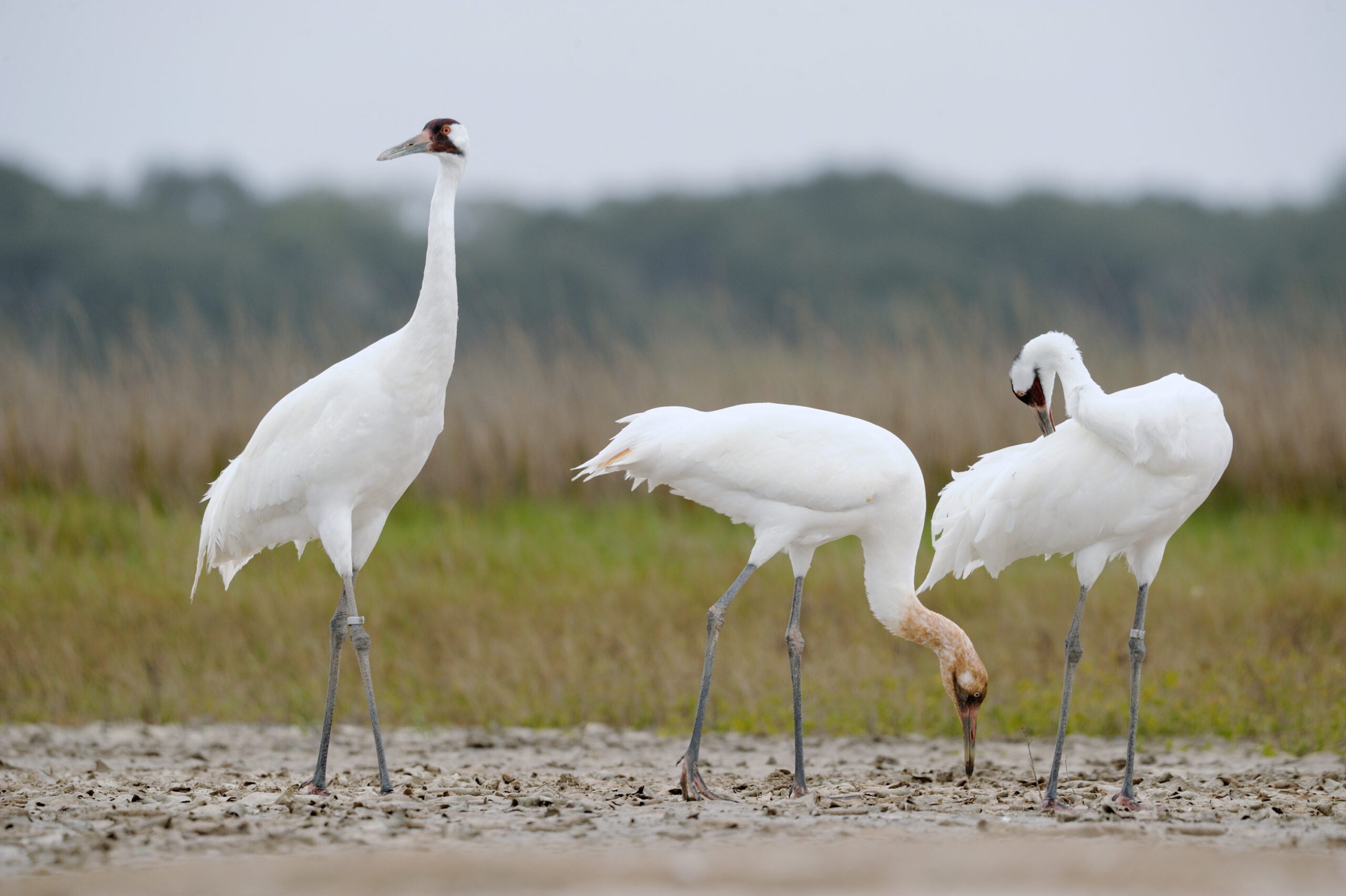
Three whooping cranes (Grus americana) at Aransas National Wildlife Refuge, Texas. Photo: Klaus Nigge / U.S. Fish and Wildlife Service. CC BY 2.0 via Wikimedia Commons.

Fourteen adult whooping cranes wintered on the Texas coast in 1941. In the winter of 2024–2025, biologists flying the marshes and tidal flats around Aransas National Wildlife Refuge estimated 557 of them, including at least 41 tawny juveniles, according to the U.S. Fish and Wildlife Service’s survey announcement. The agency’s 2024–2025 whooping crane status report gives the estimate as including 193 adult pairs. It was the first time the agency had estimated the Aransas–Wood Buffalo population above 550 individuals.

The number is an estimate, not a hand tally. Whooping cranes are five feet tall and white enough to read against green cordgrass from a thousand feet up, but they move, they hide behind live oak motts, and no aerial pass catches every bird in every acre. What the Service publishes is a statistical estimate with uncertainty attached, and the 2024–2025 figure of 557 carries a 95% confidence interval of 478.7 to 645.1 birds, with a coefficient of variation of 0.137.

What the January flights measured

The survey work happened in a narrow window. Crews flew a Quest Kodiak over roughly 170,500 acres of primary survey area six separate times between January 22 and January 31, 2025, then covered about 85,250 acres of secondary area twice on February 1 and 2. The underlying Butler et al. survey report says abundance was estimated from the aerial surveys using hierarchical distance sampling, with the confidence interval expressing the uncertainty around that estimate rather than a simple difference between repeated passes.

Inside that estimate, the age and pairing structure matters as much as the total. The survey put the population at 193 adult pairs, with a 95% confidence interval of 167.5 to 221.4, and at least 41 juveniles, birds hatched in summer 2024 and still carrying rusty cinnamon feathering across the head and neck. Recruitment worked out to 8.1 chicks per 100 adults, with an interval of 6.3 to 10.5. Juveniles are the part of the count that cannot simply be carried over from an earlier winter estimate. Each one is a bird that hatched, fledged, and completed a first southbound migration.

The Canadian Wildlife Service reported at least 33 chicks fledged on the northern breeding grounds in summer 2024. The winter estimate of 41 juveniles sits above that. The joint status report says the discrepancy is likely caused by differences in survey methodology and detectability of young between the breeding-ground and wintering-ground surveys; the Butler report also notes that juvenile plumage can become less distinct by late January.

From 14 adults to a 4.33% climb

The 1941 low is the baseline against which the recovery is often described. Service biologist Matthew Butler, lead author on the survey, makes the point plainly in the agency’s announcement: today’s whooping cranes descend from the 14 adults that remained on the Texas coast that year. The species had been reduced to a single wild migratory flock wintering on a strip of Gulf coast marsh, with its northern breeding grounds not identified until later.

Those breeding grounds were in and around Wood Buffalo National Park, roughly 2,500 miles north in Canada. The Aransas–Wood Buffalo flock makes that roughly 2,500-mile migration twice each year, north toward the nesting grounds and south toward the Texas coast, threading the Central Flyway through the Great Plains.

Measured from the winter of 1938–1939 to the winter of 2024–2025, the population has grown at an average rate of 4.33% per year. That figure summarizes the long recovery record; it is an average across eight decades, not a claim that the flock grew at exactly 4.33% every year. Kevin McAbee, the Service’s Whooping Crane Recovery Coordinator, credits the long climb in the announcement to decades of cooperative work across the flyway rather than to any single intervention.

Beyond the survey box

Cranes do not restrict themselves to the polygons drawn on a survey map. During the 2024–2025 effort, observers documented 68 additional whooping cranes outside the designated primary survey area. Those birds are not simply added to 557, and the Service is careful about why. Some may represent birds not otherwise counted; some may have moved in and out of the survey boundary. The overlap is unknown, which is exactly the reason the 68 stays separate from the primary-area estimate.

What the beyond-area observations do suggest is that wintering whooping cranes are using ground beyond the refuge core, a pattern the Service has tracked as the population has grown. The annual survey itself is a cooperative operation, drawing on the Fish and Wildlife Service’s National Wildlife Refuge System Region 2, the Migratory Bird Program and Ecological Services, the Guadalupe-Blanco River Authority in Texas, and the Canadian Wildlife Service.

The recovery record still runs through a very narrow gate. Every one of the estimated 557 birds in the primary survey area in winter 2024–2025, every one of the 193 adult pairs, and every one of the at least 41 juveniles counted after arriving from Wood Buffalo traces back to the tiny remnant flock represented by those 14 adults on the Texas coast in 1941. Eight decades later, the same wild migratory population was being measured again from the air, with six passes over 170,500 acres between January 22 and January 31, 2025.

The post In 1941, just 14 adult whooping cranes remained on the Texas coast; the winter 2024–2025 survey around Aransas estimated 557 birds, including 41 juveniles and 193 adult pairs appeared first on Space Daily.

  •  
❌