❌

Reading view

SpaceX has asked to operate up to one million AI satellites, but their direct waste heat would barely affect global temperature; the larger climate question is what launches and mass re-entry would put into the upper atmosphere
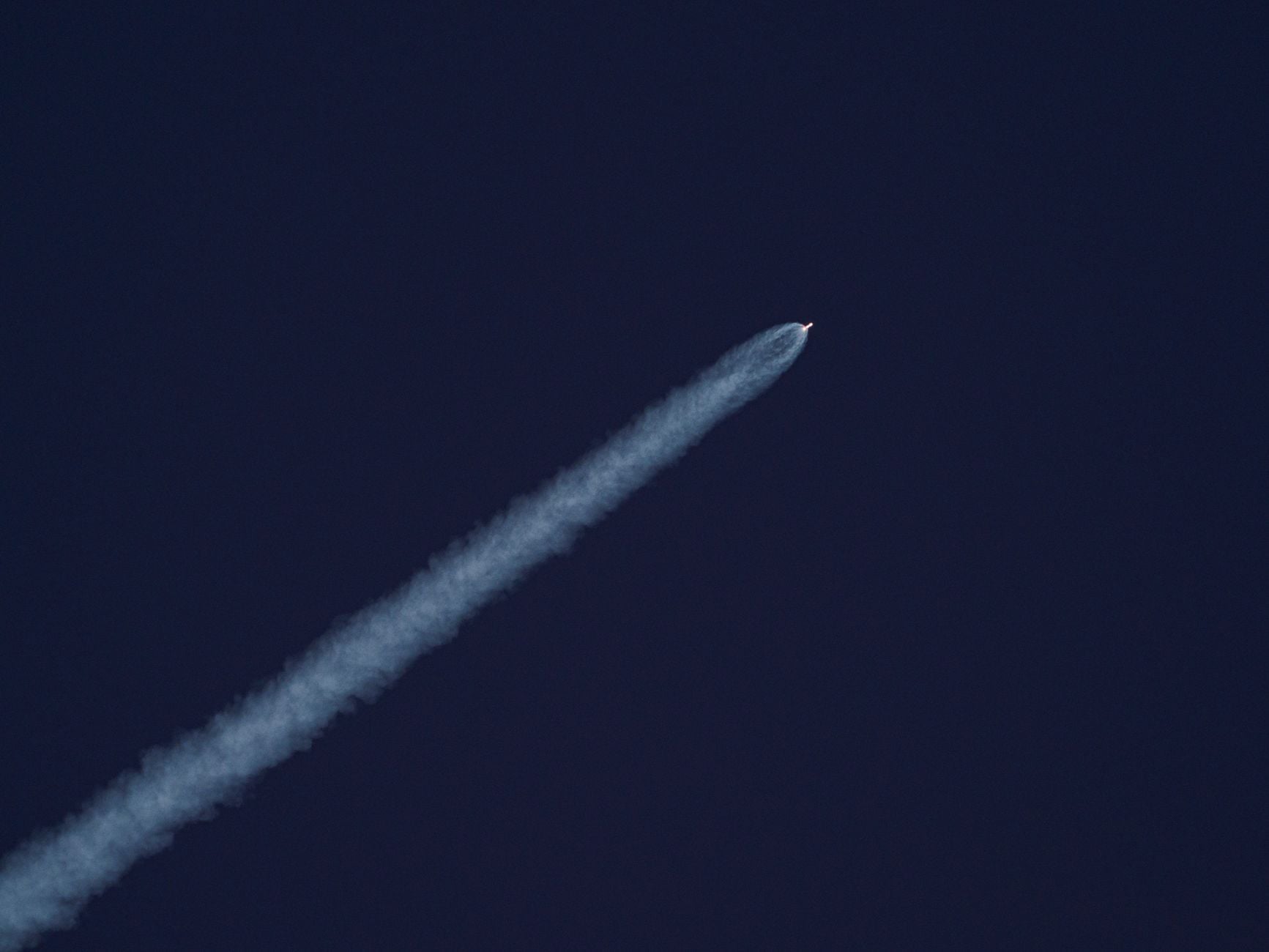
Representative rocket lifting off through a plume of exhaust

SpaceX has formally asked US regulators for permission to operate as many as one million AI data-center satellites. That number is real. It is also an upper limit in an application, not an approved fleet, a launch schedule or evidence that one million spacecraft will actually be built.

If the full Starmind system ever existed, its direct waste heat would be too small to become a major global climate driver. The harder environmental question lies in the industrial cycle required to create and replace it: manufacturing enormous amounts of hardware, launching it through the atmosphere and eventually vaporizing much of it during re-entry.

Climate models have only begun to study satellite constellations measured in tens of thousands. A million large computing satellites would sit far beyond the scale directly tested in that literature.

The FCC has accepted an application, not approved a million launches

SpaceX filed its application on January 30, 2026. The Federal Communications Commission accepted it for public comment on February 4.

The filing seeks authority for a non-geostationary system of up to one million satellites between 500 and 2,000 kilometers altitude. The spacecraft would exchange data through optical links and connect with SpaceX’s Starlink network.

Accepting an application for filing is an administrative step. It does not mean the FCC has determined that the architecture is safe, environmentally acceptable or technically achievable. The public notice also says SpaceX plans different hardware versions across multiple orbital shells, so “one million satellites” does not describe one fixed design.

SpaceX has since presented its first AI1 design for the Starmind system. The company’s published specifications give it a 120-kilowatt average compute load, a 150-kilowatt peak and a deployed wingspan of 70 meters.

The computers’ direct heat is not the main climate problem

Computers turn almost all the electricity they use into heat. In orbit, that heat cannot leave through air or cooling water because neither is available. Large radiator surfaces must emit it as infrared radiation.

One million AI1 satellites operating at the advertised average would use about 120 gigawatts for computing. To put a strict upper bound on the direct climate effect, imagine that every watt of that heat somehow reached and was absorbed by Earth. Spread over the planet’s surface, it would average roughly 0.00024 watts per square meter.

That artificial scenario overstates the real effect because radiators can direct most thermal radiation toward deep space. Even so, its value is more than 10,000 times smaller than the IPCC’s estimate of 2.72 watts per square meter for total human-caused effective radiative forcing between 1750 and 2019.

The fleet would therefore not warm Earth simply by running hot computers overhead. Reflected sunlight, radiator orientation and the design of vast solar arrays would still need assessment, but direct compute heat is not the dominant global term.

Space solar power could avoid some terrestrial emissions

SpaceX argues that sun-synchronous satellites could collect solar energy without clouds or night-time interruptions and reject heat without chillers, cooling towers or fans. If orbital computing genuinely replaced electricity from fossil-fueled grids, it could avoid some power-sector carbon emissions and water consumption.

That benefit cannot be calculated from the one-million figure. A fair comparison would need the energy and materials used to manufacture satellites and rockets, propellant production, launch emissions, ground stations, replacement rates, failed spacecraft and the carbon intensity of the terrestrial data centers displaced.

No published life-cycle assessment yet covers SpaceX’s proposed full system. “Powered by solar energy” describes operation in orbit, not the environmental balance of building and continually replenishing the fleet.

Rocket exhaust is unusually effective high in the atmosphere

Rocket emissions are small beside global aviation, shipping or power generation by mass. Their location makes them different. Rockets inject black carbon, water vapor, nitrogen compounds, alumina and other products directly into atmospheric layers that surface pollution rarely reaches.

Black carbon absorbs sunlight and warms the surrounding stratosphere, changing atmospheric circulation and ozone chemistry. A NOAA modeling study found that a tenfold increase in hydrocarbon-rocket soot could warm parts of the stratosphere by 0.5 to 2 degrees Celsius and alter circulation. The authors stressed that soot emissions from different engines remain poorly measured.

A newer 2026 study in Earth’s Future modeled launch and re-entry emissions from the recent megaconstellation era through 2029. It found a global stratospherically adjusted forcing of about -0.0064 watts per square meter from all space missions in its scenario, with megaconstellations contributing 42 percent.

That modeled forcing is small compared with the present greenhouse-gas-driven climate imbalance, and its negative sign represents a slight cooling influence after the stratosphere adjusts. It is not necessarily good news. The same soot warms the stratosphere, changes circulation and can affect ozone. It is better understood as an uncontrolled atmospheric perturbation than as useful climate cooling.

The result also cannot be multiplied mechanically from thousands of satellites to one million. Starmind would use different spacecraft, potentially different launch vehicles and an unknown deployment cadence.

Re-entry would turn satellite material into atmospheric aerosol

Low-Earth-orbit constellations require replacement. Hardware fails, components age and atmospheric drag eventually brings spacecraft down. A million-satellite fleet with a five-year average life would imply 200,000 replacements and re-entries every year. SpaceX has not established that lifetime for the full system, but the example shows why lifespan matters as much as fleet size.

Re-entering spacecraft do not simply disappear. Heating vaporizes metals and creates particles and gases in the upper atmosphere. A 2024 global emissions inventory identified aluminum oxide as the dominant modeled metal oxide from satellites that ablate, alongside nitrogen oxides produced by high-temperature re-entry.

A 2025 atmospheric modeling study tested a scenario with 10,000 metric tons of re-entry alumina per year, a level associated with forecasts of roughly 60,000 satellites. Depending on particle size and re-entry latitude, the model produced regional temperature anomalies reaching about 1.5 degrees in the middle atmosphere and changes to polar-vortex winds.

That is not a prediction of 1.5 degrees of global surface warming. It is a modeled regional response high in the atmosphere, with large uncertainty about particle size, composition and transport. Scaling to Starmind requires basic information that is not public, especially spacecraft mass, material composition, operational life and disposal pattern.

A million is a different environmental regime

Space Daily has already examined how large Starmind spacecraft could affect ground-based astronomy. Climate and atmospheric chemistry pose a separate problem: pollution can accumulate even when each individual launch or re-entry looks small.

The most honest answer is therefore split. Direct waste heat from the orbital computers would be negligible at the global climate scale. Moving computing away from terrestrial grids might avoid emissions, but that benefit has not been demonstrated through a full life-cycle study.

The serious unknown is the launch-and-replacement machine surrounding the constellation. Existing research already finds measurable, though currently small, radiative and ozone effects from today’s much smaller space industry. A fleet approaching one million satellites would turn an emerging source of upper-atmosphere pollution into a planetary experiment without a validated model of the outcome.

The post SpaceX has asked to operate up to one million AI satellites, but their direct waste heat would barely affect global temperature; the larger climate question is what launches and mass re-entry would put into the upper atmosphere appeared first on Space Daily.

  •  

The Bluetooth symbol on your phone is actually a thousand-year-old Viking monogram. It belongs to a Danish king who united warring tribes, and the reason his name ended up on billions of devices was never even meant to be permanent.

Pick up your phone. Open the settings. Find the small blue rectangle with the pointy angular symbol inside it, the one you have been ignoring since the first mobile device you ever owned. That specific little glyph, on the accumulated historical evidence of the past thirty years of wireless technology, is the personal monogram of a Danish king who ruled from approximately 958 to 986 AD, died in the year Halley’s Comet last returned to Earth before 1066, and has been buried in Roskilde Cathedral for the better part of a thousand years.

His name was Harald Gormsson. His nickname, according to the surviving Old Norse records, was Blåtand. Which translates directly into modern English as Bluetooth.

The whole story of how his personal monogram ended up on every wireless device on the planet is one of the more genuinely accidental facts of the modern technology industry.

The king in question

According to the official history maintained by the Bluetooth Special Interest Group, the industry consortium that owns the technology standard and runs its trademark, Harald Bluetooth was a considerably more interesting historical figure than the somewhat comic nickname suggests. Between roughly 958 and 986, he unified the previously fragmented tribes of what is now Denmark into a single kingdom, brought Norway into the same political sphere, and was responsible for the formal Christianisation of the Danes, an achievement he commemorated by carving one of the earliest known references to the country of Denmark on a runestone that still stands today in the small town of Jelling.

The nickname itself, on the surviving linguistic record, appears to have come from a physical peculiarity. He had, according to the accounts that reached the medieval Icelandic chroniclers, a prominent dead tooth that had darkened to a shade closer to grey-blue than to healthy white. In an era before dentistry, this was the kind of visible personal feature that stuck. The great unifier of Scandinavia became, in the mouths of his contemporaries and their descendants, the man with the blue tooth.

His initials, in the runic alphabet of his time, were ᚼ for the H sound in Harald and ᛒ for the B in Blåtand. In the Younger Futhark script used in tenth-century Scandinavia, those two characters look nothing like the modern Latin letters H and B. What they look like, when combined into a single glyph in what scholars call a bind rune, is the exact symbol currently sitting on every Bluetooth-enabled device in the world.

On a related note, I came across a video that dives into the effect our phones are quietly having on us. You’ve probably felt it before, but this video will put a name to the feeling:

The Toronto bar

The story of how the king’s monogram ended up on modern electronics has been recounted in detail by the person primarily responsible, an Intel engineer named Jim Kardach. According to Kardach’s own 2008 account, published in EE Times under the title “Tech History: How Bluetooth got its name”, the origin of the whole naming decision took place in a Toronto bar in late 1997.

Kardach was at the time working on short-range wireless radio at Intel. Three separate industry efforts were running in parallel. Intel had a project called Biz-RF. Ericsson had one called MC-Link. Nokia had a third called Low Power RF. All three companies were trying to build essentially the same thing, which was a small, low-power wireless standard that would let phones, computers, and peripheral devices talk to each other without cables. In late 1997, after a joint industry meeting in Toronto that Kardach later described as having gone badly, he and Ericsson engineer Sven Mattisson went out drinking together and, being history enthusiasts, started swapping stories about the medieval Scandinavian kings Mattisson had been reading about in Frans G. Bengtsson’s Viking-era novel The Long Ships.

One of the kings in the book was Harald Bluetooth. Kardach, on his own subsequent account, went home from the trip and read further, ordering Gwyn Jones’s A History of the Vikings, and found a photograph of the runestone Harald had commissioned. Harald had united the fragmented tribes of Scandinavia into a single political unit. The three technology companies, if they could ever agree on a single standard, would be uniting the previously fragmented world of consumer electronics into a single wireless protocol. The parallel was, on Kardach’s telling, too neat to ignore. He proposed the name Bluetooth as a temporary internal code name for the project.

The bind rune of Harald’s initials became the working logo. Kardach later created a PowerPoint slide showing Harald holding a mobile phone in one hand and a notebook in the other.

How it stayed

The name was not, on any of the surviving contemporary correspondence, meant to be permanent. According to both the Bluetooth SIG’s own account and Kardach’s, the intention was for the marketing departments of the participating companies to come up with a more polished official name in due course, and for Bluetooth to be quietly retired once something better arrived.

Two names were shortlisted as replacements. One was RadioWire, which was Intel’s preferred candidate. The other was PAN, which stood for Personal Area Networking. The launch of the industry consortium was scheduled for early 1998. The trademark clearance process for RadioWire dragged past the deadline. A search for PAN turned up so many unrelated uses of the acronym on the newly emerging commercial internet that its usefulness as a brand collapsed. The Bluetooth Special Interest Group was formed in February 1998, under Kardach’s temporary code name, on the understanding that the name would be replaced later.

The first Bluetooth-enabled products shipped in 1999. By then, according to a National Geographic feature on the technology’s Viking origins, the name had already acquired sufficient market recognition that rebranding would have cost more than continuing to use it. The tech press was writing about Bluetooth. Trade shows had Bluetooth banners. Product packaging was going to press. Nobody wanted to spend the money to change everything. The temporary code name became the permanent one, and the bind rune of a tenth-century Danish king’s initials became the visual identity of a wireless standard that would, over the following quarter century, be installed on more than five billion devices per year.

Kardach himself, on his own account of the whole episode, has been surprised at the trajectory ever since. He was inducted into the Bluetooth Hall of Fame for his role in the naming decision. He retired from Intel as chief power architect in 2012. And the symbol he first proposed as a working code, drawn from a book about medieval Scandinavians he happened to be reading during a badly-timed Toronto business trip, has become one of the most reproduced pieces of graphic design in the world.

None of this was meant to happen. Harald Bluetooth did not know his initials would end up in the pocket of every person on the planet. Kardach did not intend the code name to survive marketing review. The Bluetooth SIG did not plan to build a global brand around a Scandinavian pun. What connects all of these accidents is the strange gravitational pull of anything that becomes familiar quickly enough. Once a placeholder gets attached to a project long enough for the trade press to start using it, and long enough for it to appear on the sides of shipping products, the cost of changing it starts to exceed the cost of simply leaving it in place. And so, on the accumulated evidence of thirty years of consumer electronics history, the temporary becomes the permanent, and the initials of a long-dead Viking king continue to appear, every day, on the connection screen of every device you own.

Kiran Athar is not a historian or a technology industry analyst. She writes about history, technology, and the ordinary corners of modern life where the two intersect, drawing on peer-reviewed research and primary-source scholarship.

The post The Bluetooth symbol on your phone is actually a thousand-year-old Viking monogram. It belongs to a Danish king who united warring tribes, and the reason his name ended up on billions of devices was never even meant to be permanent. appeared first on Space Daily.
  •  

The claim that a third of humanity cannot see the Milky Way comes from a 2016 atlas, and newer studies show why producing an updated global headcount is harder than it sounds

Representative starry sky above a city illuminated at night

A third of humanity cannot see the Milky Way from where they live. The statistic is real, but it needs a date and a definition attached to it.

It comes from the 2016 New World Atlas of Artificial Night Sky Brightness, not from a survey in which billions of people were asked to look up. Researchers combined satellite observations, ground measurements, a model of how light scatters through the atmosphere and population data to estimate who lived under skies bright enough to erase the galaxy’s pale band.

No newer study has yet replaced it with an equivalent global headcount. More recent research shows that artificial light at night is still changing, often quickly, but those measurements do not translate directly into a new percentage of humanity that can or cannot see the Milky Way.

The one-third figure was published in 2016

The New World Atlas was published in Science Advances by Fabio Falchi and an international team. Its headline results were stark: more than 80 percent of the global population lived under light-polluted skies, while more than 99 percent of people in the United States and Europe did.

The threshold for losing the Milky Way was higher than the threshold for merely experiencing some artificial skyglow. Under the atlas model, the galaxy was hidden from more than one-third of humanity, including about 60 percent of Europeans and nearly 80 percent of North Americans.

Space Daily reported those findings when the atlas appeared. The number has remained in circulation because the atlas is still the most complete population-weighted global estimate of this specific loss.

Researchers mapped skyglow rather than counting people looking up

The atlas used low-light observations from the Visible Infrared Imaging Radiometer Suite aboard the Suomi NPP satellite. Those measurements showed light emitted upward from towns, roads and industrial areas.

A propagation model then estimated how that light would scatter through a standard clear atmosphere and return toward an observer as skyglow. Thousands of calibrated measurements made on the ground were used to check the model. Finally, the brightness map was combined with population data.

The result was not a prediction for every night. Clouds can amplify urban skyglow, while moonlight, haze, snow, altitude, season and the observer’s eyesight can all change what is visible. The atlas instead described modeled clear-sky conditions at the zenith using consistent assumptions, which made places comparable.

A zoomable version maintained by the Cooperative Institute for Research in Environmental Sciences shows how light from cities spreads beyond their built boundaries. A person can live well outside a city center and still look through its luminous dome.

A later study used human eyes as sensors

Satellite instruments are excellent at mapping emitted light, but they do not see the night exactly as a dark-adapted person does. A 2023 study approached the problem from the ground.

Researchers analyzed 51,351 naked-eye observations submitted to the Globe at Night citizen-science project between 2011 and 2022. Participants compared the stars they could see with a sequence of charts under cloudless, moonless conditions.

The study found that the decline in visible stars at the observed locations was consistent with artificial sky brightness increasing by 7 to 10 percent per year in the human-visible band. Its central estimate was 9.6 percent.

That does not mean every place on Earth brightened by 9.6 percent each year. The observations were concentrated in Europe and North America and were biased toward inhabited locations. The authors explicitly noted that the sample did not represent the average distribution of either land area or global population.

It therefore cannot be applied to the 2016 total like compound interest to produce a new global headcount.

Why a satellite can miss light that hides stars

The difference between satellite and naked-eye trends is partly about direction. An orbiting sensor mainly detects light traveling upward. Skyglow is the result of light scattering back down toward people on the ground, and horizontally emitted light can make a large contribution.

Color matters too. The widely used VIIRS day-night instrument is relatively insensitive to shorter blue wavelengths. Human night vision is more sensitive to that part of the spectrum, and blue light scatters efficiently in the atmosphere. A city switching from orange sodium lamps to broad-spectrum white LEDs can therefore change the visible sky in ways the satellite record does not fully capture.

This does not make satellite measurements wrong. It means upward radiance and the brightness perceived by a person looking at the sky are related but different quantities.

A 2026 analysis found both brightening and dimming

A separate Nature study published in 2026 analyzed more than 1.16 million daily satellite images from 2014 through 2022. It found a net 16 percent rise in global artificial-light radiance over that period.

The global total concealed movement in both directions. Brightening added radiance equivalent to 34 percent of the 2014 baseline, while dimming elsewhere offset 18 percent. Urbanization and electrification drove many increases, especially in Asia, while energy policy, conflict, economic disruption and lighting changes produced reductions in other regions.

The authors also stressed that their satellite measurement was not the same as downward skyglow. It was especially sensitive to upward light after midnight within a limited range of wavelengths. That makes it valuable for tracking how Earth’s illuminated surface changes, but it still cannot provide an updated Milky Way visibility percentage by itself.

The old estimate may be dated, but it is not obsolete

It is reasonable to suspect that the 2016 figure is now conservative in many growing urban regions. Ground observations show stars disappearing faster than earlier satellite trends suggested, and the 2026 analysis found a net rise in emitted light. Yet some places have dimmed, and the world’s population has moved as well as grown.

The defensible statement remains precise: the best global atlas found that more than a third of humanity lived where artificial skyglow hid the Milky Way under its modeled conditions. Newer work shows continued and uneven change, not a replacement population fraction.

Space Daily recently examined what losing routine access to a star-filled sky may mean psychologically. The measurement story adds a quieter lesson: we cannot protect what we do not measure carefully.

The good news is that skyglow is not permanent contamination. The US National Park Service recommends using light only where and when it is needed, choosing fully shielded fixtures, keeping output to the minimum necessary and favoring warmer colors. Unlike many environmental changes, turning down unnecessary light can improve the view that same night.

The post The claim that a third of humanity cannot see the Milky Way comes from a 2016 atlas, and newer studies show why producing an updated global headcount is harder than it sounds appeared first on Space Daily.
  •  

Some babies are born with a mysterious blue-grey mark across their lower back — a birthmark legend has linked to the descendants of Genghis Khan, but science offers a very different explanation for where it comes from.

My two daughters were born less than two years apart, and yet only one of them arrived with a faint blue-grey patch spread across her lower back. My older daughter had it from her first day. My second daughter, born this past July, doesn’t have it at all. Same parents, same city, same general recipe, and one very visible difference between them before either one could hold up her own head.

I didn’t think much of it with my first until a nurse mentioned it by name almost in passing, the way you’d mention a birthmark anyone in the ward had seen a hundred times before. It’s common enough to have its own clinical shorthand and, unfortunately, its own history of being misread as something it isn’t.

What that mark actually is

The medical explanation has nothing to do with bruising, injury, or anything that happened during delivery. Cleveland Clinic explains that the marks form when “some melanocytes, the cells that give skin its color, don’t move to the surface of the skin as they normally do” while a baby is still developing in the womb. Instead of migrating up into the outer layers of skin the way they usually do, a cluster of them gets left behind deeper down, and the tissue above them scatters light in a way that reads as blue-grey rather than brown or tan. Nothing is wrong with the skin. The pigment cells are simply parked in the wrong layer.

These marks are also, by every account, completely harmless. Cleveland Clinic is blunt about it: the birthmarks need no treatment and tend to fade on their own as a child grows, with many fading substantially within the first year and the majority gone somewhere between ages six and ten, though larger or darker patches can occasionally last into adulthood.

The name people reach for, and the legend that comes with it

Search for this mark online and the Genghis Khan story comes up almost immediately, the idea that it marks out the bloodline of the Mongol Empire, passed down through the centuries to anyone who carries it. It’s a good story, and it’s almost entirely a modern piece of internet folklore rather than a documented belief with any real age to it.

The actual history behind the clinical name is stranger and less flattering. It traces back to the 1880s and a German physician named Erwin Bälz, who was working in Japan at the time and documented the mark in Japanese infants. He borrowed the label from an outdated racial classification system from the century before, one that had lumped a wide range of Asian and Indigenous populations together under the single, since-abandoned category of the “Mongolian race.” The name was never really about the nation of Mongolia or any specific bloodline. It was a leftover from a scientific framework doctors gave up on generations ago, which is exactly why dermatology has been quietly moving away from it. A 2021 review in the medical journal Cureus put the broader principle plainly: “Terms that stigmatize a culture, region, people, country, communities, and ethnic group should be replaced by their more descriptive counterparts,” which is why you’ll increasingly see the mark called congenital dermal melanocytosis or a slate-grey nevus in clinical settings instead.

Why it shows up on some babies and not others

None of that explains why my older daughter has it and her sister doesn’t, but the biology does. The marks are simply far more common in babies with more heavily pigmented skin. Cleveland Clinic notes they turn up more often in babies of Asian, Black, or Hispanic ancestry, though any baby, of any background, can be born with one or without one. It comes down to how much melanin a particular baby’s skin was already producing and exactly how much of it got trapped on the way to the surface, a small, essentially random variation in a process every fetus goes through. Two children from the same two parents can land on different sides of that variation the same way they can end up with different eye colors or different amounts of hair at birth.

A small irony sits in my own case. I grew up in Central Asia, not far at all from the region the outdated name technically points to, and my husband is Chilean, which puts a decent amount of Indigenous Latin American ancestry somewhere in our daughters’ family tree as well. Both backgrounds are commonly cited as ones where this mark shows up often. And it still only showed up in one of our two children. Shared ancestry raises the odds. It doesn’t hand down a guarantee, and it certainly doesn’t sort itself along any bloodline neat enough to make a good legend.

The one clinical detail worth knowing

The part of this that actually matters for a new parent isn’t the legend, it’s a practical one: these marks are frequently mistaken for bruises, and that mistake has occasionally triggered real child-abuse investigations for entirely innocent families. Physicians have known about this risk for decades. Writing in the journal Contemporary Pediatrics back in 1999, a team of dermatologists advised that “to minimize confusion, it is wise to document the presence and location of Mongolian spots in the patient record,” so that a mark noted at birth doesn’t get mistaken for a fresh injury months or years later by someone seeing a child for the first time. Most hospitals do exactly this now as a matter of routine. It’s worth asking about if you notice one on your own newborn and nobody brings it up first.

What I make of it now

No hidden meaning explains which of my daughters has the mark and which one doesn’t, no ancestral message waiting to be decoded. It’s melanocytes settling in slightly different places during two otherwise very similar pregnancies, nothing more mystical than that. What I do find worth sitting with is how easily a mark like that gets a legend attached to it, and how the real explanation, the quieter, more mechanical one, tends to arrive later and get repeated far less often. My older daughter’s mark is already noticeably lighter than it was a year ago. It will likely be gone before she’s old enough to ask me what it was, and when she does, I’d rather have the real answer ready than the one that just sounds better in a headline.

The post Some babies are born with a mysterious blue-grey mark across their lower back — a birthmark legend has linked to the descendants of Genghis Khan, but science offers a very different explanation for where it comes from. appeared first on Space Daily.
  •  

In 1859, a solar storm now called the Carrington Event induced currents so strong in North American telegraph lines that operators disconnected their batteries and kept sending messages on the geomagnetic current alone, while auroras lit up the sky over Cuba and Hawaii

In 1859, a solar storm now called the Carrington Event induced currents so strong in North American telegraph lines that operators disconnected their batteries and kept sending messages on the geomagnetic current alone, while auroras lit up the sky over Cuba and Hawaii

On the morning of 2 September 1859, telegraph operators along the Boston-to-Portland line unplugged their batteries, watched the acid-slick terminals go dark, and kept sending messages anyway. The wires were carrying a current the sky was pushing through them. For roughly two hours, the storm itself ran the telegraph.

The event that made this possible had begun the previous day, when English amateur astronomer Richard Carrington, sketching sunspots through a filtered telescope at his private observatory in Redhill, saw two beads of intense white light flare above a complex sunspot group and fade within five minutes. Roughly seventeen and a half hours later, a coronal mass ejection slammed into Earth’s magnetic field. According to the National Environmental Satellite, Data, and Information Service, that night skies from the Rocky Mountains to Panama glowed brightly enough for people to read newsprint by aurora alone.

Auroras were reported over Cuba, over Jamaica, over Hawaii, over Colombia. Gold miners in the Rockies got up and cooked breakfast, thinking dawn had come early.

What the operators actually did

The telegraph network of 1859 was the most sophisticated communications system humans had ever built — tens of thousands of kilometres of copper strung on wooden poles across North America and Europe, powered by wet-cell batteries at every station. It was also, unintentionally, the world’s first planetary-scale antenna for geomagnetic current.

When the coronal mass ejection compressed Earth’s magnetic field, the rapid change induced voltages along any long conductor lying roughly east-west. The longer the wire, the bigger the induced current. Telegraph lines were exactly that: long, conductive, and grounded at both ends.

Contemporary accounts of the storm record what followed. Machines sparked. Paper caught fire. Some keys clacked out garbled text on their own. On the Boston-to-Portland line, the two operators on duty — never named in the surviving transcript, which was printed in the Boston Evening Traveller — realised their batteries were fighting the induced current rather than adding to it. They disconnected the batteries. The line kept working.

Space Daily has previously covered the Boston-Portland exchange in detail, including the transcript-style back-and-forth in which the two men agreed the auroral current was steadier than their own.

How big the storm actually was

The Carrington Event remains the most intense geomagnetic storm ever directly recorded. Estimates of its energy vary wildly depending on what is being measured — the flare itself, the coronal mass ejection, or the ground-level magnetic disturbance — but the Yahoo News summary of contemporary reconstructions puts the released energy on the order of 17 billion one-megaton nuclear bombs. That figure is a rhetorical benchmark rather than a measurement, but it points at the right order of magnitude.

More useful is the transit time. Most coronal mass ejections take three to four days to cross the 150 million kilometres between the Sun and Earth. The Carrington ejecta did it in roughly 17.6 hours. That implies a bulk speed above 2,000 kilometres per second, meaning the plasma cloud arrived while its magnetic field was still coherent and aggressive.

A 2024 paleomagnetic reanalysis suggests the storm was even more powerful than the nineteenth-century instruments could capture. IFLScience’s summary of that reanalysis notes that some of the magnetograph traces from 1859 were pinned against their stops — the needles had physically reached the end of their travel and could measure no further.

Why auroras reached Cuba and Hawaii

Auroras form when charged particles funnelled along Earth’s magnetic field lines slam into the upper atmosphere at roughly 100 kilometres altitude, exciting nitrogen and oxygen atoms. The colours — green from oxygen at lower altitudes, red from oxygen higher up, blue and purple from nitrogen — depend on which atoms are being hit and how hard.

Normally the field lines that carry these particles anchor near the magnetic poles, which is why the aurora borealis is a high-latitude phenomenon. During a severe geomagnetic storm, the entire auroral oval expands equatorward. The stronger the storm, the further south (or north, in the southern hemisphere) the glow reaches.

For the Carrington Event, the oval expanded so far that observers in Havana logged red auroras overhead. In Honolulu, the sky reportedly went blood-red. Ship captains in the Caribbean noted the phenomenon in their logs. This is the signature of an extreme storm: not just bright aurora at the usual latitudes, but aurora somewhere it has never been seen before.

The physics behind the wires is the same whether the conductor is a telegraph line in 1859 or a high-voltage transmission cable in 2026. A changing magnetic field induces a voltage in any conductor sitting inside it. Long, grounded conductors accumulate the biggest voltages because the induced electric field integrates over the length of the wire.

Solar storms, as Space Daily has explored elsewhere, do not attack people directly. They attack long metal. In 1859, the only long metal humans had strung across continents was telegraph wire, and there were only a few tens of thousands of kilometres of it. Today’s grid, pipelines, rail signalling systems and undersea cables constitute a target surface millions of times larger.

That is why the same physical event, replayed on modern infrastructure, would look nothing like sparking telegraph paper. It would look like transformers cooking themselves from the inside as DC-like induced currents saturate their iron cores.

What the same storm would do now

The most cited worst-case assessment comes from the US National Research Council’s 2008 report on severe space weather events. That report estimated recovery from a modern Carrington-class event could take four to ten years and cost trillions of dollars, with the damage concentrated in extra-high-voltage transformers that are custom-built, expensive, and made by only a handful of manufacturers worldwide.

Space physics researcher Vincent Ledvina, quoted in the All That’s Interesting piece, describes a Carrington-class event as potentially “one of the most economically devastating natural disasters to affect planet Earth”.

Not everyone agrees the picture is that bleak. Grid operators in the United States have been under FERC rules since 2014 requiring geomagnetic disturbance planning. Some transformer designs are more tolerant than others. And the geometry of the storm — which hemisphere gets hit at what local time — matters enormously. A hit at the wrong hour could be catastrophic; the same magnetic pulse a few hours earlier or later, geometrically misaligned with the major grids, would be far less destructive.

The best modern measurement of a Carrington-class event comes not from Earth but from a spacecraft that happened to be in the wrong place at the right time. In July 2012, a coronal mass ejection of comparable magnitude to the 1859 storm erupted from a region of the Sun that had rotated just past the Earth-facing line. The ejecta missed Earth. It hit NASA’s STEREO-A spacecraft squarely.

STEREO-A’s instruments were built to measure exactly this sort of plasma cloud. They survived the encounter and returned detailed data on the shock front, the magnetic field orientation, and the particle energies. Reconstructions suggest that had the eruption occurred a week earlier, with Earth in the firing line, the induced ground currents would have exceeded the 1859 event.

The May 2024 G5 storm — the strongest to hit Earth in more than two decades — was, on Ledvina’s assessment, roughly an order of magnitude weaker than Carrington. Auroras reached Florida and southern Europe. Some GPS-guided tractors in the American Midwest were knocked off-line during planting season. The grid held.

Proposed defences, from prosaic to exotic

Most of the practical mitigation work is unglamorous: adding neutral-current-blocking capacitors to transformer neutrals, hardening spare-transformer stockpiles, refining space-weather forecasts so operators can shed load or reconfigure grids before a storm arrives. The Space Weather Prediction Center at NOAA runs continuous monitoring and provides the alerts that grid operators act on.

Then there are the more ambitious proposals. A 2026 paper in the journal Space Weather, summarised on Hackaday’s coverage of the concept, proposes what its authors call StormWall: releasing a cloud of neutral alkali-metal gas at geosynchronous orbit ahead of an incoming coronal mass ejection. The gas gets ionised by the storm plasma, and in the process absorbs — the paper’s simulations suggest — up to fifty per cent of the storm’s coupling energy before it reaches the magnetosphere.

The mass required is not small. The simulation called for 384,048 kilograms of gas, which the authors estimate as roughly six Starship launches to GEO. Whether that is feasible depends on assumptions about Starship’s eventual payload capacity that remain, in 2026, unproven at scale.

What the 1859 record does and does not tell us

The Carrington Event is the calibration point for every modern space-weather risk model. It is also a single data point. Discover Magazine’s overview notes the estimated recurrence interval is roughly once every 500 years, but that figure comes from ice-core nitrate spikes and tree-ring carbon-14 anomalies with wide uncertainty bars. Some paleomagnetic studies suggest even more powerful storms may have occurred in 774 CE and 993 CE, both detected as radiocarbon spikes rather than direct observations.

What the 1859 record does not tell us is what happens when a storm of that magnitude hits a civilisation that runs on transformers, semiconductors and just-in-time logistics. The Boston-to-Portland operators had the option of unplugging their batteries and carrying on. A modern grid operator watching geomagnetically induced currents climb through a substation’s neutral does not have that option. The transformer either holds or it does not, and if it does not, the replacement is on a barge from South Korea.

NPR’s Short Wave segment on the current solar maximum notes that Cycle 25 has already produced stronger activity than forecasters expected, though nothing yet approaching 1859.

The Sun is currently near the peak of that cycle. Activity will decline over the next few years toward solar minimum around 2030, then climb again. A Carrington-class event is not tied to the peak — the 1859 storm actually occurred as Cycle 10 was descending — so the elevated risk window is not neatly bounded.

Somewhere on the visible disc of the Sun tonight, a sunspot group is being tracked by half a dozen space-weather forecasting centres. Most such groups produce nothing more than routine flares. Occasionally one produces a coronal mass ejection that misses Earth by a few degrees of solar longitude. The 1859 event happened because one group, at the right moment, pointed itself squarely at the third planet and let go. The wires were waiting.

The post In 1859, a solar storm now called the Carrington Event induced currents so strong in North American telegraph lines that operators disconnected their batteries and kept sending messages on the geomagnetic current alone, while auroras lit up the sky over Cuba and Hawaii appeared first on Space Daily.

  •  

Psychology says the person in the friend group who never seems to need anything isn’t low-maintenance, they learned in childhood that having needs was the fastest way to become inconvenient

Psychology says the person in the friend group who never seems to need anything isn't low-maintenance, they learned in childhood that having needs was the fastest way to become inconvenient

Walk into any kitchen where a group of old friends has gathered, and you can spot them within ten minutes. The kettle is going, someone is loudly relitigating a bad date, someone else is asking whether the wine in the fridge is open. And then there is the quiet one at the end of the counter, refilling everyone else’s glass, remembering who takes oat milk, laughing at the right moments, needing absolutely nothing. They are the easiest person in the room. They are also, often, the most misunderstood.

The group has a name for this person. Low-maintenance. Chill. The reliable one. Sometimes it is said with affection and sometimes with a kind of relief, as though the rest of the group is grateful not to have to worry about them. What almost no one says out loud is that the person in question rarely worries about themselves in front of others either. They have made a lifelong practice of being the one who does not need much. And that practice, in most cases, started long before adulthood.

The friend who never asks for anything is usually the friend who learned not to

Psychologists who study attachment have a specific term for the pattern behind this. It is called avoidant attachment in childhood, and it often shows up in adulthood as a dismissive-avoidant style. According to clinical research summarised by psychologist Lisa Firestone, roughly 30 percent of people carry some version of this pattern, and it tends to develop when a child does not consistently feel safe, seen, or soothed by the adults raising them.

The child adapts by becoming what Firestone calls pseudo-independent. They meet their own needs, because depending on someone who keeps failing to respond is more painful than going without. Over time, they stop registering the needs at all. It is easier to feel nothing than to feel repeatedly disappointed.

By adulthood, this looks like competence. The person is efficient, self-contained, warm in a slightly reserved way. They rarely ask for favours. They rarely complain. When something is wrong, they process it privately and present the group with the finished thought. Everyone assumes this is temperament. Often it is training.

What actually happens in the child’s nervous system

The clearest picture of this pattern comes from a study designed in the 1970s by Mary Ainsworth, and it still holds up. In her Strange Situation experiment, a child plays with a parent in a room, the parent leaves, and the child’s response to the reunion is observed. A securely attached child gets upset when the parent leaves and seeks comfort when they return. An avoidant child appears unbothered when the parent leaves and does not seek comfort when they come back.

The catch is what the heart monitor shows. The avoidant child shows physiological signs of distress the entire time the parent is gone. The distress is there. It has simply been separated from any outward request for help. As contemporary attachment research puts it, the internal working model formed in these early years quietly guides expectations of self and others for decades afterward.

Translate that into a friend group in your thirties or forties. The person who never seems to need anything is not calm. They are regulated at the surface and activated underneath. The performance of being fine is so old and so practiced that even they cannot always tell the difference anymore.

The specific belief that keeps the pattern running

What the child learned was not simply that adults are unreliable. The child learned something more corrosive, which is that having needs made the adult withdraw further. So the needs themselves became the problem. Firestone describes the internal script bluntly: the child begins to believe they are not worth paying attention to, and disconnects from their wants to avoid the shame of them going unmet.

That belief does not evaporate at eighteen. It shows up at brunch, at group chats, at the office. It shows up as the friend who insists they are fine while going through a divorce. It shows up as the colleague who quietly absorbs an unreasonable workload and only mentions burnout after they have already accepted a job somewhere else.

The core conviction is not that other people are cruel. It is that having a need, out loud, is the fastest way to become inconvenient. And no one wants to be the inconvenient one.

Why this looks like a virtue from the outside

Culture rewards the low-maintenance friend. They get invited more, complained about less, and praised for being easy. In a world where many people are quietly carrying some form of insecurity, the person who asks for nothing feels like a gift.

But the reward system is part of the trap. Every time the friend group praises the quiet one for being so easy, it confirms the original lesson: your value here is your lack of need. This is how the pattern survives into middle age. It is being reinforced by the very relationships that are supposed to make the person feel safe.

It is worth saying plainly. Being easygoing is not the same as being avoidantly attached. Plenty of secure people are also low-drama. The difference is whether the person could ask for something if they needed to, and whether they would trust the room to respond. The avoidant friend usually cannot, and does not.

How it shows up in romantic relationships

The friend-group version is the softer face of the pattern. The romantic version is where it tends to break things. A February 2025 piece in Forbes on attachment and partner selection notes that people with a dismissive style tend to hold positive views of themselves and negative views of others, which reads at first like confidence but functions like a wall.

In a relationship, this looks like the partner who is present but somehow unreachable. They plan the holidays. They remember birthdays. They are physically there. And yet a partner can spend years feeling as though there is a room in the house they have never been allowed into. When the more expressive partner asks for closeness, the dismissive partner reads the request as neediness, dramatics, too much.

What makes it hard to name is that the dismissive partner is not consciously withholding. They are running the same program they ran at four years old, which is: notice nothing, need nothing, do not give the other person a reason to pull away. The tragedy is that this is often exactly what causes the other person to pull away.

The physical cost of never being inconvenient

Suppressing a need is not free. The nervous system still registers the want, still fires the stress response, still processes the disappointment. It just does so silently. Over time, this shows up as vague physical symptoms, sleep problems, low-grade resentment that has nowhere to go, and a strange sense of loneliness in rooms full of people who love you.

The loneliest people in midlife are often not the ones without partners or children. They are the ones surrounded by people who only know the version of them that shows up when everyone else needs something. The low-maintenance friend is often that person. Beloved, and unknown.

Why the pattern can pass to the next generation

Attachment researchers have found that the way a parent processes their own history matters more than what happened to them. If we do not make sense of and feel the full pain of our past, we are much more likely to repeat it. The parent who was raised in an emotional desert and never grieved that fact tends to raise a child in a slightly greener version of the same one.

The findings extend into how people build families in the first place. A study covered by Scientific American found that attachment style may even influence how many children people end up having, with insecure patterns correlating with different family sizes than secure ones. The influence runs deeper than most people realise.

This is not a life sentence. It is a pattern that responds to attention. But it does not respond to willpower or to being told to open up more. It responds to a slow rebuilding of the belief that a need, expressed out loud, will not cost the person the relationship.

What a secure version of this friend actually looks like

Descriptions of what secure attachment looks like in children tend to emphasise a specific balance. The child explores confidently and comes back for comfort when they need it. They do not have to choose between independence and closeness. They get both.

In adulthood, the secure version of the low-maintenance friend is still calm, still competent, still not prone to drama. But when something is genuinely hard, they say so. They do not perform crisis, and they do not perform fineness either. They tell one or two people what is going on, they let those people help, and they trust that the friendship will not shrink because of it.

The difference is small on the outside and enormous on the inside. One version is regulating alone in a room full of people. The other version is actually with them.

Signs the pattern is running, in a friend or in yourself

A few markers show up consistently. The person can list what everyone else in the group is going through, but goes vague when asked about their own life. They deflect care by redirecting the conversation. They apologise for taking up time before saying anything hard. When someone offers help, they refuse it reflexively, then feel a private flash of resentment that no one pushed harder.

Descriptions of the dismissive-avoidant style in adult partnerships often note this reflex specifically. The person genuinely believes they are protecting others by not burdening them, while the others often feel shut out by exactly this protection.

A more painful version of the same wiring, sometimes called fearful-avoidant attachment, involves wanting closeness intensely and pulling away from it in the same breath. The internal experience is exhausting. The external presentation, again, often looks like someone who simply does not need much.

How the pattern actually loosens

The change does not come from a dramatic disclosure. It comes from small experiments in being slightly more inconvenient than usual, and noticing that the room does not empty out. Saying, out loud, that you had a hard week. Asking a friend to come with you to an appointment. Letting someone drive you home when you could have taken a cab. These sound trivial. For someone whose nervous system was trained to hide need, they are not.

Firestone’s clinical work emphasises building what she calls a coherent narrative, which is essentially the ability to tell the story of what happened to you as a child without collapsing into it or dismissing it. People who can do this tend to raise more securely attached children, and tend to form warmer adult relationships, regardless of what they started with.

The friend group rarely notices the shift at first. What they eventually notice is that the quiet one at the end of the counter is talking a little more about themselves, asking for the thing they actually want, letting someone else refill their glass for a change. It looks like a personality change. It is closer to a homecoming.

A last thought about the person who never seems to need anything

If someone in your life fits this description, the useful move is not to interrogate them or to praise them harder for being so easy. It is to ask specific questions and to stay in the room when the answer is slow. What was hard about this week. What would actually help. What would you want if you thought you were allowed to want it. Then wait.

The person who learned early that having needs made them inconvenient did not choose that lesson. They inherited it from a room that could not hold them. A different room, decades later, can teach a different lesson. It just has to be willing to keep asking, and to mean it.

The post Psychology says the person in the friend group who never seems to need anything isn’t low-maintenance, they learned in childhood that having needs was the fastest way to become inconvenient appeared first on Space Daily.
  •  

In September 1983, a Soviet lieutenant colonel named Stanislav Petrov sat in a bunker south of Moscow watching his early-warning screens light up with five incoming American missiles, and instead of phoning it up the chain he decided the computer was lying and waited — a judgment call that historians now credit with preventing a retaliatory nuclear launch

In September 1983, a Soviet lieutenant colonel named Stanislav Petrov sat in a bunker south of Moscow watching his early-warning screens light up with five incoming American missiles, and instead of phoning it up the chain he decided the computer was lying and waited — a judgment call that historians now credit with preventing a retaliatory nuclear launch

Just after midnight on 26 September 1983, an alarm sounded inside the Serpukhov-15 command bunker south of Moscow. A satellite feed from the Soviet Union’s new early-warning system, Oko, reported that the United States had launched a nuclear missile. Within minutes it reported four more. The officer on duty, Lieutenant Colonel Stanislav Petrov, had a screen in front of him with the word LAUNCH in Cyrillic, a bank of phones connecting him to the Soviet high command, and roughly the length of a coffee break to decide whether the warning was real.

He decided it wasn’t. He picked up the intercom to the operations duty officer and reported a system malfunction.

He was guessing.

Soviet bunker command console

What the screen actually said

The Oko constellation was Moscow’s answer to the American Defense Support Program satellites: a ring of spacecraft in highly elliptical orbits designed to spot the infrared bloom of a US intercontinental ballistic missile the moment its engines lit. The system had gone operational only months earlier. According to a HistoryExtra account of the incident, Petrov knew Oko was new and relatively untested, and that fact was doing quiet work in the back of his mind as the alarm escalated.

Protocol was unambiguous. A confirmed launch detection went up the chain immediately. From there, the Soviet doctrine of the day — launch on warning — would have compressed the decision window to minutes. The general staff would consult, wake Yuri Andropov if he wasn’t already awake, and either sit on the report or authorise a retaliatory salvo of hundreds of warheads at American cities and silos.

Petrov’s job was not to make that decision. His job was to pass the alert along cleanly, quickly, and without editorial. He did not do his job.

Why he thought the computer was lying

Two things nagged at him. The first was arithmetic. A genuine American first strike, in the Soviet threat models of 1983, would look like a wall — hundreds of missiles arriving in a coordinated wave designed to destroy Soviet retaliation capability before it could launch. Five missiles was not a decapitation strike. Five missiles was almost a taunt. As The Guardian noted in its obituary, Petrov reasoned that the shape of the attack made no strategic sense.

The second was the ground picture. Soviet over-the-horizon radars could not see American missiles until they crested the earth’s curvature, and at that moment those radars were showing nothing. Waiting for confirmation from ground radar meant burning the warning window down to almost zero. If the satellites were right and he waited, the Soviet Union would have only minutes to respond, and possibly not even that.

He waited anyway.

The room, the phones, the interval

The Serpukhov-15 bunker was not a small room with one man at a desk. It was a full command post, staffed with duty officers and analysts, and Petrov later described the atmosphere in the minutes after the first alert as loud and physically disorienting. The alarm was audible. Screens flashed. Junior officers around him were shouting numbers.

He held the intercom. He listened to the ground-radar operators reporting nothing. He counted the missiles as Oko reported them: one, then four more.

According to NPR’s account of the night, Petrov later said he had a funny feeling in his gut. That was the phrase he used. It is not the phrase military historians prefer. It is, however, the phrase that survived.

He reported a system malfunction to the operations duty officer. The report he filed said false alarm.

early warning satellite

What had actually happened

Investigators reconstructed the fault over the following weeks. The Oko satellites had been positioned to look at the horizon rather than straight down at American silo fields, a design choice that reduced background noise from Earth’s own thermal emissions. But it made the system vulnerable to a specific optical trick: sunlight at a shallow angle, reflecting off high-altitude clouds above North Dakota, hit the satellite’s infrared sensor with the same signature as a rocket exhaust.

Five reflections, five “missiles.” A weather artifact, dressed up by a young algorithm as the end of the world.

The engineers who built Oko later patched the system to cross-check any launch detection against geostationary satellite data before triggering the top-level alert. That patch existed because of the night Petrov spent staring at the screen.

How close it actually came

Historians and former Soviet officers have argued for decades about how close the world really came to launch. Petrov did not have his finger on any button. He was one node in a decision chain that included the general staff, the defence minister, and ultimately Andropov himself, and each of those nodes could in principle have declined to authorise a strike even if Petrov had passed the warning up.

But context mattered. Three weeks earlier, a Soviet Su-15 interceptor had shot down Korean Air Lines Flight 007 over Sakhalin, killing 269 people including a US congressman. Washington’s rhetoric had turned incandescent. Andropov, ill and paranoid, had spent the previous year convinced the Reagan administration was planning a genuine first strike, and had ordered the KGB to hunt for evidence of it under a programme codenamed RYaN. The Soviet posture in September 1983 was hair-trigger by design.

A warning delivered up that chain, into that room, on that night, would not have been filed and forgotten. Whether it would have produced a launch order is unknowable. That it might have is why the story persists.

What happened to Petrov afterwards

He was not decorated. He was interrogated. His superiors were embarrassed — the malfunction pointed at design failures in a system the Soviet military had just spent enormous sums fielding, and honouring the officer who exposed it would have been an implicit indictment of the engineers and generals who signed off on it. Yuri Votintsev, then commander of Soviet missile-defence forces, privately praised Petrov’s judgment and mentioned an award. The award never came.

Petrov was reprimanded on paperwork grounds: his log entries from the night were incomplete. He was reassigned to a less sensitive post and took early retirement in 1984, in part because the stress of the incident had contributed to a nervous breakdown. He lived out the rest of his life in a small apartment in Fryazino, a satellite town outside Moscow, on a modest pension, growing potatoes.

The incident stayed classified until the late 1990s, when Votintsev published a memoir mentioning it. Western journalists tracked Petrov down. He gave interviews reluctantly. He never claimed to have saved the world, and got irritated when interviewers tried to write him as a hero. He said he was doing his job — that his job included judgment, and that judgment had told him the computer was wrong.

He died in May 2017, aged 77, of pneumonia. A German friend, Karl Schumacher, found out months later, when he called that September to wish Petrov a happy birthday and was told by Petrov’s son that his father had already died. According to later reporting on the incident, the delay in the news reaching the wider world was itself a kind of coda: the man who may have prevented the end of civilisation had died without anyone outside his family noticing.

Why the story keeps getting retold

Space Daily has looked before at what Petrov’s night reveals about human judgment against automated systems, and at a similar moment aboard a Soviet submarine during the Cuban Missile Crisis, when Vasili Arkhipov refused to authorise a nuclear torpedo launch against American destroyers. Both stories share a shape: a single officer, a broken or misleading input, a rule that says escalate, and a person who declines.

The engineering point buried in the Petrov story is worth pulling out. Oko was not a bad system in principle. It did what it was designed to do — detect the infrared plume of a rising ballistic missile — and it did so within its physical envelope. The failure was in the confidence with which its output was treated. The Soviet doctrine of launch on warning assumed the satellites would only ever be wrong in one direction, missing real attacks. It did not adequately model what would happen when the satellites reported an attack that wasn’t there.

Every early-warning architecture built since has had to reckon with the same asymmetry. The American BMEWS radars in Greenland famously mistook the rising moon for a Soviet ICBM salvo in October 1960, and the fix there was similar in spirit to what Oko needed: cross-checking, corroboration, redundancy across sensor types. The North American Aerospace Defense Command has publicly discussed multiple false alerts in the 1970s and 1980s that were caught before they reached the level of a launch order.

The number to remember

Five. The system reported five American missiles. Not one, which might have been dismissed as a rogue launch or a test gone wrong. Not four hundred, which would have matched the Soviet mental model of a genuine first strike and would probably have been believed. Five — a number small enough to be plausibly a glitch, large enough to be plausibly a warning shot, and squarely inside the gap where a human being had to decide which.

Petrov decided glitch. He was right. If Oko had reported a single missile, or a hundred, the story ends differently — either dismissed at a lower level, or believed at a higher one. It was the specific number, and the specific man watching the specific screen at 00:15 Moscow time, that made the incident hinge.

He kept the intercom in his hand. He did not press it up the chain. The clouds over North Dakota drifted east. The sun climbed. The satellites recalibrated. The morning shift arrived at Serpukhov-15 to find their new early-warning system had, overnight, tried to end the world, and a middle-aged engineer with a headache had told it no.

The post In September 1983, a Soviet lieutenant colonel named Stanislav Petrov sat in a bunker south of Moscow watching his early-warning screens light up with five incoming American missiles, and instead of phoning it up the chain he decided the computer was lying and waited — a judgment call that historians now credit with preventing a retaliatory nuclear launch appeared first on Space Daily.

  •  

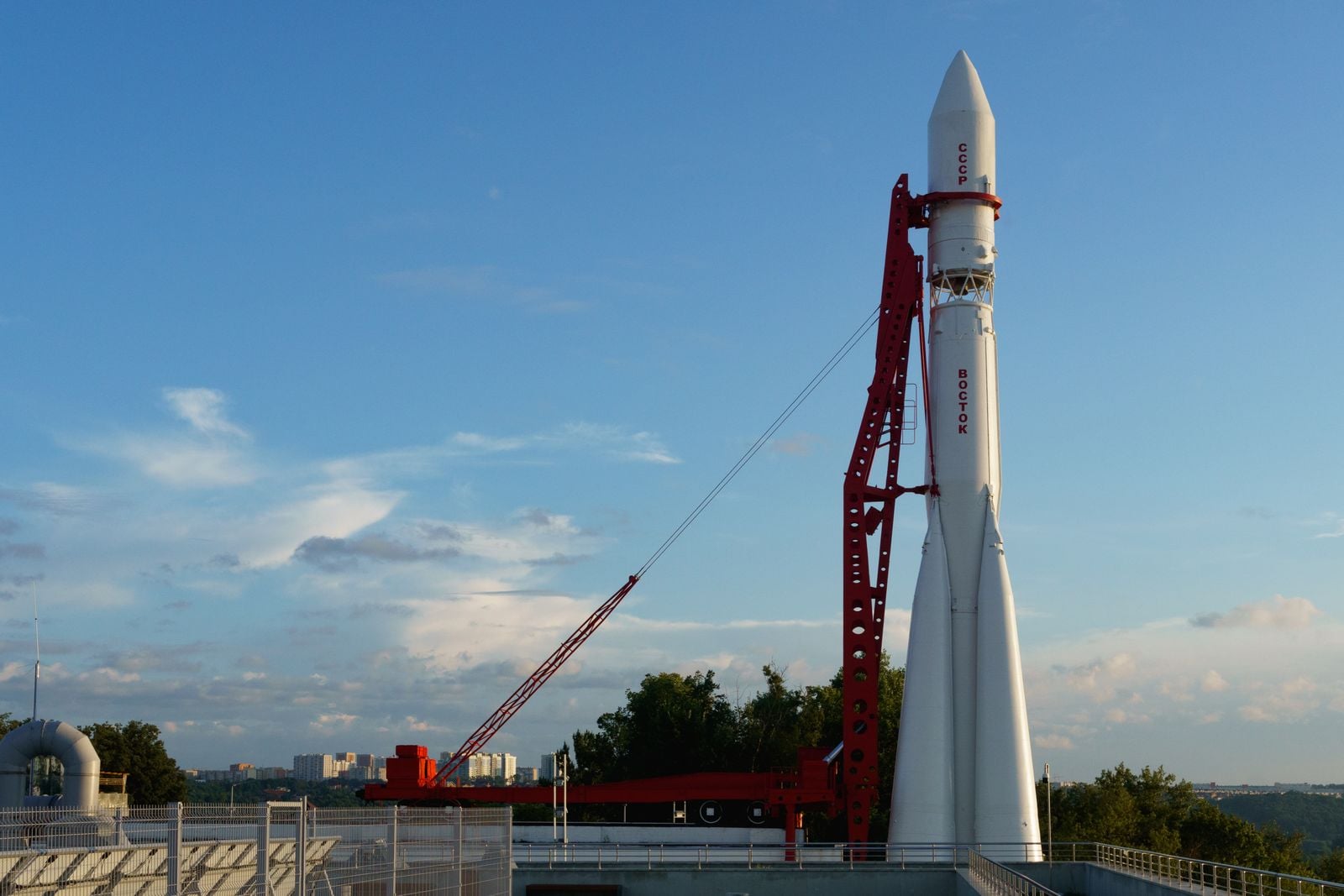
In 1966, the Soviet chief designer behind Sputnik, Gagarin’s flight, and the entire early space program died during routine surgery, and only then did the world learn his name was Sergei Korolev — for a decade Moscow had referred to him in print only as the Chief Designer, because the KGB feared the CIA would have him killed

In 1966, the Soviet chief designer behind Sputnik, Gagarin's flight, and the entire early space program died during routine surgery, and only then did the world learn his name was Sergei Korolev — for a decade Moscow had referred to him in print only as the Chief Designer, because the KGB feared the CIA would have him killed

On 14 January 1966, a 59-year-old man died on an operating table at a Moscow hospital during what had been scheduled as a routine procedure to remove a bleeding polyp from his intestine. Two days later, the Soviet newspaper Pravda ran an obituary with a photograph, and hundreds of millions of readers learned, for the first time, the name of the man who had built Sputnik, launched Yuri Gagarin, and beaten the United States to almost every early milestone of the space age.

His name was Sergei Pavlovich Korolev. Until that obituary, Soviet newspapers had only ever called him Glavny Konstruktor — the Chief Designer.

For roughly a decade, one of the most consequential engineers of the twentieth century had been, by state policy, an anonymous title. Gagarin knew him. Khrushchev knew him. The workers at the Baikonur Cosmodrome knew him. The Central Intelligence Agency did not.

The secrecy, and why Moscow kept it

The practice was not a rumour or a later embellishment. Fordham University historian Asif Siddiqi, whose NASA-published Challenge to Apollo: The Soviet Union and the Space Race, 1945–1974 remains the standard English-language account of the program, has said that a Soviet newspaper reader in the early 1960s would have encountered only Korolev’s title, never his name. The show Star City, a recent Apple TV series, dramatises the practice literally: a character is referred to throughout as the Chief Designer, and the production notes confirm the naming was drawn from the historical record rather than invented for effect.

The scale of the anonymity is easier to grasp by inversion. Wernher von Braun, Korolev’s American counterpart at Marshall Space Flight Center, appeared on the cover of Time and gave televised interviews explaining the Saturn rocket family. Von Braun’s face and voice were part of the American story. Korolev’s were state secrets.

When Gagarin flew on 12 April 1961, the world saw the cosmonaut. It did not see the man who had designed the R-7 rocket carrying him, chosen the launch window, and stood in the bunker at Baikonur listening to the countdown.

The official reasoning, as Soviet-era veterans of the program have described it since, was straightforward: a named Chief Designer was a targetable Chief Designer. The Soviets wanted him anonymous, on the view that if he became known, both his life and the space program would be at risk.

Whether the CIA would in fact have moved against Korolev is a claim that historians treat cautiously. What is documented is that Soviet security services behaved as if that risk were real, and that the anonymity was maintained with unusual discipline across state media, scientific publications, and Nobel Prize correspondence. The Nobel Committee reportedly asked, more than once, for the name of the person responsible for Sputnik so a prize could be awarded. Khrushchev is said to have replied that the achievement belonged to the entire Soviet people. No name was given. No prize followed.

The National Review obituary essay marking the fiftieth anniversary of his death notes that the same secrecy that shielded Korolev also denied him the international recognition his American rival received in life. Von Braun died in 1977 as a public figure. Korolev died in 1966 as a title.

Sergei Korolev portrait

Who Korolev actually was

He was born in 1907 in Zhytomyr, in what is now Ukraine — a fact that has become politically charged in recent years, with the Russian Foreign Ministry publicly disputing Ukrainian claims on his legacy as recently as 2023. He trained as an aeronautical engineer in Moscow and Kyiv, worked on early liquid-fuel rocket research in the 1930s, and in 1938 was arrested during Stalin’s Great Purge on fabricated charges of sabotage.

He was sent first to a gold-mining camp in Kolyma, one of the harshest sites in the Gulag system, where he lost most of his teeth to scurvy and nearly died. He was later transferred to a sharashka — a prison design bureau where technically skilled prisoners worked on military aviation projects under guard. He was not formally rehabilitated until 1957, the same year Sputnik went up.

The man who launched the space age had, twenty years earlier, been beaten by NKVD interrogators and left to freeze in a labour camp. Sputnik’s insistence on a 1-watt transmitter loud enough for ham operators worldwide to hear was Korolev’s doing — he wanted ordinary people, not just governments, to know the object was up there.

The R-7, Sputnik, and the run of firsts

The rocket that made all of it possible was the R-7 Semyorka, originally designed as an intercontinental ballistic missile capable of carrying a thermonuclear warhead to the continental United States. On 4 October 1957 a modified R-7 placed Sputnik 1 into orbit. On 3 November 1957 it lofted Laika. On 12 April 1961 it carried Gagarin. The same fundamental design, in updated form, still launches Soyuz crews to the International Space Station today — the longest-serving orbital launch vehicle family in history.

Between 1957 and 1966, Korolev’s bureau delivered the first artificial satellite, the first animal in orbit, the first human in orbit, the first woman in orbit (Valentina Tereshkova, 1963), the first multi-crew spacecraft (Voskhod 1, 1964), and the first spacewalk (Alexei Leonov, March 1965). A BBC Sky at Night Magazine profile of Korolev notes that this run of firsts was compressed into less than a decade, driven by a single bureau operating under a single technical director whose name the public was not permitted to know.

Gagarin, according to accounts published after Korolev’s death, referred to him in private simply as SP — the initials of his first name and patronymic. Even the cosmonauts used the euphemism.

The surgery that killed him

By late 1965, Korolev was 58, exhausted, and unwell. He had been complaining of intestinal bleeding. On 14 January 1966 he was admitted to a Moscow hospital for what was described as a routine polyp removal. The operation was performed by Boris Petrovsky, the Soviet Minister of Health. Once the surgery began, the situation worsened rapidly: the polyp turned out to be a large malignant tumour, and Korolev’s jaw — broken during his 1938 NKVD interrogation and never properly reset — could not be opened wide enough to intubate him for extended anaesthesia. He died on the operating table of heart failure.

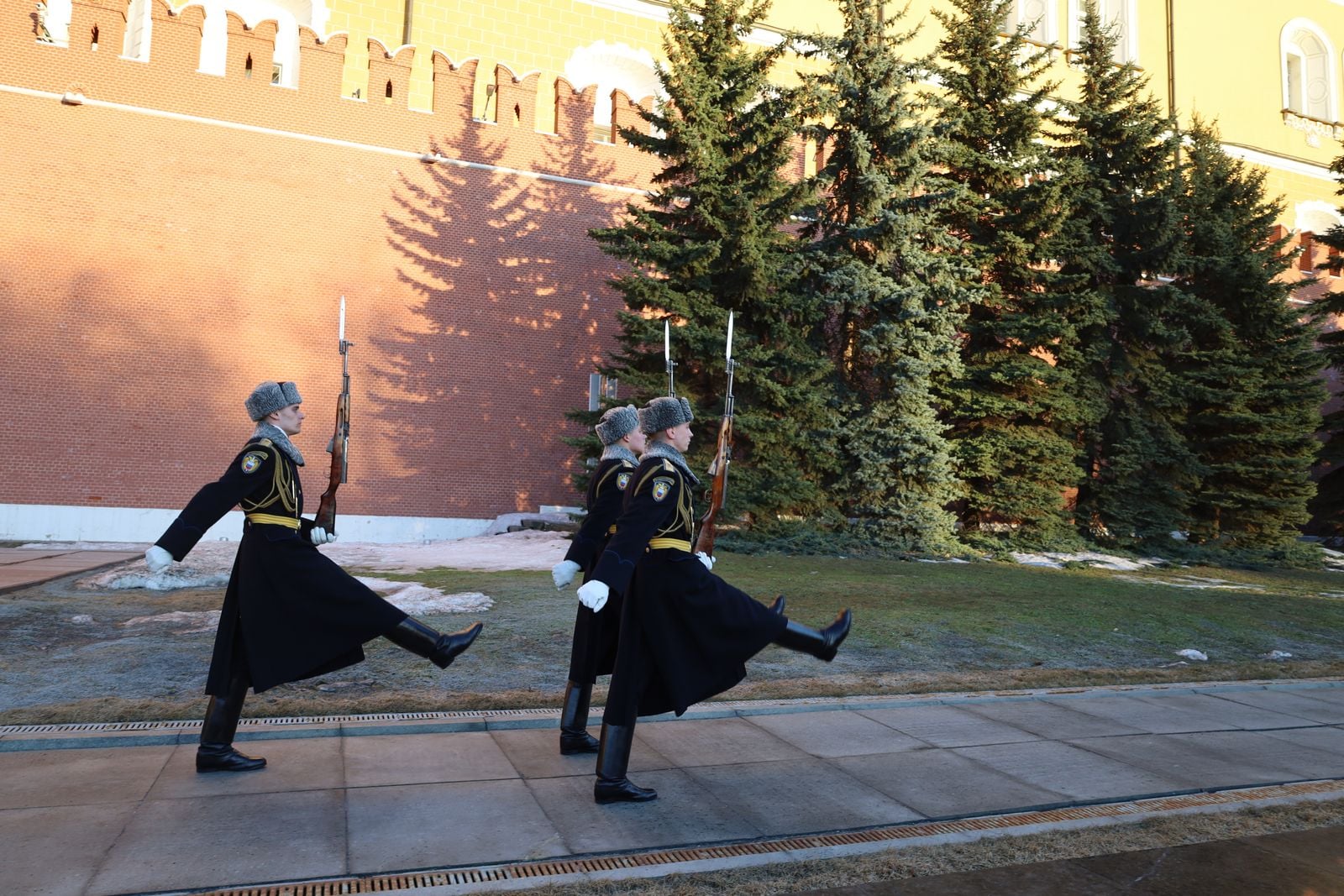
He was 59. The Pravda obituary two days later carried his photograph and, for the first time in print, his full name and title. He was buried in the Kremlin Wall Necropolis. The state that had hidden him spent the following week publishing everything he had built.

Kremlin Wall Necropolis

What his death cost the program — and the record

The lunar program he had been directing — the N1 super-heavy rocket, the Soviet answer to the Saturn V — collapsed in the years after his death. All four N1 launches between February 1969 and November 1972 failed, most spectacularly the second attempt in July 1969, which destroyed the launch pad. The rocket clustered 30 NK-15 engines in its first stage because Korolev’s rival Valentin Glushko had refused to build larger engines using the propellants Korolev preferred; the KORD fault-management system meant to coordinate those 30 engines was defeated by electromagnetic interference between them, turning single-engine failures into cascade shutdowns.

Siddiqi, the Fordham historian, has offered the measured verdict that Korolev’s death had a very negative effect on the Soviet space program as a whole, including the lunar program, but that he doubted the Soviets would have made the Moon landing even if Korolev had lived, because so many structural and organisational problems were already present while he was alive.

That caveat is the one the alternate-history television now rests on. Star City, which premiered on Apple TV in 2026, is set in a timeline where the 1966 surgery does not kill him and Alexei Leonov walks on the Moon in 1969. The show’s dramatic engine is not that Korolev was a genius who could solve any problem, but that his survival was the necessary condition under which the program’s institutional pathologies could have been addressed at all.

One consequence of a decade of anonymity is that the Western intelligence picture of the Soviet space program was, for years, a picture without a face. CIA assessments through the late 1950s and early 1960s referred to the Chief Designer as a hypothesised figure whose existence could be inferred from the pattern of Soviet achievements but whose identity, nationality, and biography were unknown. Some analysts speculated the Chief Designer was a committee. Others suspected a captured German engineer. The correct answer — a Ukrainian-born, Gulag-surviving aeronautical engineer named Korolev — was not confirmed in the West until Pravda printed it.

Space Daily has written before about the Buran shuttle’s single 1988 flight, another Soviet program whose technical achievement was decoupled from public recognition by the state’s habits of secrecy. The pattern is older than Buran. It began with Korolev.

The anonymity also meant that when he died, the state had to invent his public identity retroactively. The Pravda obituary was the first time Soviet citizens saw the photograph of the man whose name had been on none of the achievements they had spent a decade celebrating. Schoolchildren who had memorised Gagarin’s flight learned, in one morning, that there had been a designer, that he had been Ukrainian-born, that he had been imprisoned by Stalin, and that he was already dead.

The name on the wall

Korolev’s ashes are interred in the Kremlin Wall, near Lenin’s mausoleum. A crater on the far side of the Moon carries his name. A city outside Moscow, formerly Kaliningrad, was renamed Korolyov in 1996. The Yuri Gagarin Cosmonaut Training Center at Star City — the real one, not the Apple TV version — still trains the cosmonauts who ride his rocket’s descendants to orbit.

The R-7 family, in its current Soyuz-2 configuration, has now flown more than 1,900 times across all variants since 1957. Every crewed launch from Baikonur since Gagarin has used a rocket that traces its lineage directly to the machine Korolev built to carry a hydrogen bomb.

The man’s name appeared in a Soviet newspaper for the first time on 16 January 1966. Sixty years later, it is on a Moon crater, a Russian city, and the side of every Soyuz that leaves the pad.

The post In 1966, the Soviet chief designer behind Sputnik, Gagarin’s flight, and the entire early space program died during routine surgery, and only then did the world learn his name was Sergei Korolev — for a decade Moscow had referred to him in print only as the Chief Designer, because the KGB feared the CIA would have him killed appeared first on Space Daily.

  •  

Mars is slowly pulling Phobos inward by about 1.8 centimetres a year; models suggest the battered moon could be torn apart in 20 to 40 million years, giving the planet a temporary ring

Representative rocky red landscape under a dark sky

Mars has no rings today, but it already carries the material for one.

Phobos, the larger and innermost of the planet’s two small moons, is moving towards Mars by about 1.8 centimetres each year. That drift is measurable. What happens at the end is modelled rather than observed, and depends heavily on how much strength is hidden beneath the moon’s battered surface.

One influential analysis suggests the weakest parts of Phobos could be pulled apart in 20 to 40 million years, spreading into a temporary ring while stronger fragments continue down towards Mars.

It is a dramatic future assembled from a very small motion.

Phobos completes three orbits during one Martian day

Phobos is an irregular body measuring roughly 27 by 22 by 18 kilometres. According to NASA’s Phobos overview, it circles Mars three times per day at an altitude of about 6,000 kilometres above the surface.

The European Space Agency gives its orbital period as 7 hours and 39 minutes. That is much shorter than the time Mars takes to rotate once. To an observer on much of the Martian surface, Phobos would therefore appear to rise in the west and set in the east, the reverse of the familiar daily motion of Earth’s Moon.

The short orbit is also the reason Phobos is in trouble. It lies inside the altitude where a moon’s orbital period would match the planet’s rotation. The tidal bulge it raises on Mars consequently lags behind the fast-moving moon. Their gravitational interaction removes orbital energy from Phobos and transfers it to Mars.

Losing orbital energy does not make a moon hover more slowly at the same height. It drops into a lower orbit, where it travels faster and raises stronger tides. The descent gradually accelerates.

A yearly drift cannot simply be extended in a straight line

NASA expresses the present decay as 1.8 metres every century, while ESA gives the equivalent figure of 1.8 centimetres per year. A simple division of the moon’s current altitude by that rate would produce a timescale of hundreds of millions of years.

That calculation is misleading because the rate will not remain constant. As Phobos approaches Mars, the strength of the tidal interaction increases. The last part of its inward spiral is expected to proceed much faster than the motion measured today.

This is why public estimates differ. NASA says Phobos could strike Mars or break into a ring in about 50 million years. ESA uses the broader phrase “within 100 million years.” These are not scheduled events with a precise date. They reflect different assumptions and levels of rounding applied to a nonlinear process over geological time.

The measured direction is the firm part: Phobos is moving inward.

The ring prediction depends on a damaged interior

Whether Phobos reaches the surface mostly intact or comes apart first depends on its internal strength. The moon has a nine-kilometre impact scar called Stickney crater, fine surface dust, grooves and evidence of repeated impacts. Its exterior looks less like a solid, pristine rock than an object that has been worked over for billions of years.

In a 2015 analysis published in Nature Geoscience, Benjamin Black and Tushar Mittal combined geological observations, spectral measurements, orbital theory and a geotechnical model of Phobos’s strength. They concluded that much of the moon may consist of weak, heavily damaged material.

Their model placed tidal dispersal of the weakest material about 20 to 40 million years in the future. Once Mars’s gravity pulls more strongly on the near side of Phobos than the moon’s own cohesion can resist, that material would no longer remain a single body.

This is one model, not a direct measurement of the interior. No spacecraft has drilled through Phobos or mapped its structure in full. A stronger, more coherent moon could survive closer to Mars, while a loose aggregate would begin failing farther out.

The grooves are intriguing, but they are not a visible countdown

Long grooves cross much of Phobos, and their origin has generated several explanations. Some have been linked to debris launched from impacts on Mars. Others may have been cut by boulders rolling away from Stickney crater.

A 2016 study in the Journal of Geophysical Research: Planets, led by Terry Hurford, tested another possibility. Its stress models found that tidal forces acting on a weak interior could produce fractures with a pattern similar to some observed grooves.

That does not establish that every groove is a stretch mark caused by orbital decay. Surface features can have several origins, and the competing explanations involve different sets of grooves. The study is better read as evidence that tidal damage is physically plausible for a weak Phobos, not that the moon is visibly splitting today.

At the present decay rate, human observations cover almost none of the remaining process.

A Martian ring could outlast species and still be temporary

Black and Mittal estimated that the resulting ring could persist for one million to 100 million years. Its initial mass density might be comparable with Saturn’s rings, although that does not tell us exactly how bright or broad it would appear from the Martian surface.

The ring would not be Phobos’s only ending. Material strong enough to avoid disruption would keep descending and eventually strike Mars in oblique, relatively low-speed impacts. Smaller particles in the ring would also evolve, collide and gradually move towards the planet.

On geological timescales, a ring lasting millions of years can still be a passing phase.

The contrast with Earth’s Moon helps show why. NASA’s lunar measurements show that our Moon is receding by about 3.8 centimetres per year. Earth rotates faster than the Moon orbits, so Earth’s tidal bulge transfers energy outward to the Moon. Phobos orbits faster than Mars rotates, reversing the exchange.

The same broad physics can push one moon away and pull another towards destruction.

Mars offers a ring system in slow preparation

Nothing about Phobos’s fate is urgent on a human scale. Twenty million years is more than four thousand times the span of recorded history. The moon will look effectively unchanged to any mission operating this century.

Its inward motion still matters because it lets planetary scientists observe one stage of a process otherwise inferred from finished ring systems, impact deposits and missing moons. Mars is not merely a planet that may acquire a ring in the distant future. It is a planet whose tides are already preparing the material.

The 1.8 centimetres measured in a year is almost nothing. Given enough time, it is the beginning of an ending.

The post Mars is slowly pulling Phobos inward by about 1.8 centimetres a year; models suggest the battered moon could be torn apart in 20 to 40 million years, giving the planet a temporary ring appeared first on Space Daily.

  •  

AI will not pilot future spacecraft like a human captain; its practical role is narrower and more important, choosing routes, spotting hazards and keeping missions working when Earth is minutes or hours away

Representative image of a satellite travelling above Earth

AI is likely to become important to future space travel for a fairly unglamorous reason: Earth is too far away to make every decision in time.

A spacecraft near Mars may wait minutes for a radio command. At the outer planets, the delay stretches into hours. A vehicle approaching an asteroid, descending towards unfamiliar ground or responding to a failing component may need to act before a human team can see the problem, discuss it and send an answer back.

That does not mean future spacecraft will be handed to a talking machine captain. On the evidence available today, the practical role is narrower: recognising a local situation, choosing among approved actions and keeping a mission working within limits set by people.

Spacecraft autonomy began before the current AI boom

NASA tested an onboard artificial-intelligence system on Deep Space 1 in 1999. The Remote Agent experiment received high-level goals, produced plans, executed them and responded to four simulated faults inserted by the mission team. It also encountered a software bug during its first run, a useful reminder that autonomy creates new failure modes as well as new capability.

Deep Space 1 separately tested autonomous optical navigation. The spacecraft photographed asteroids against background stars, calculated its position and commanded its ion propulsion without waiting for engineers to perform each navigation calculation on Earth.

These systems were not generative AI. They were purpose-built planning, diagnosis and navigation software, designed around a constrained mission. That distinction remains useful today.

I wrote earlier about how AI already flying in space tends to solve one specific physical problem. Future capability will probably grow by joining many such bounded systems, not by installing a single general intelligence and asking it to improvise.

DART showed why decisions sometimes have to stay onboard

NASA’s DART spacecraft had to strike Dimorphos, an asteroid moonlet roughly 150 metres across, while closing at about six kilometres per second. During the final phase, human intervention would have been too slow and the target did not separate clearly from the larger asteroid until late in the approach.

DART’s SMART Nav system used images from its camera to identify the bodies, select Dimorphos, calculate corrections and command manoeuvres. The system guided DART through the last four hours without human control, ending in the intended collision on 26 September 2022.

That is autonomy with a sharply defined objective.

The spacecraft was not deciding whether the mission was wise or inventing a new scientific goal. People had designed, tested and authorised the decision structure. The machine handled the part that had to occur faster than the radio link allowed.

Newer AI can assist with planning before it flies

In December 2025, NASA’s Perseverance team completed the first two drives on another world whose waypoints had been generated by AI. A vision-language model examined orbital imagery and elevation data, identified terrain features and proposed a route.

The AI was on Earth, not steering the rover live. JPL engineers ran its commands through a digital replica of Perseverance and checked more than 500,000 telemetry variables before transmission. The rover then drove 210 metres on 8 December and 246 metres on 10 December, according to JPL’s account of the demonstration.

This suggests a near-term division of labour. AI can examine large image sets, propose waypoints and reduce routine planning work. Engineers can test those proposals against mission rules. Onboard navigation can then handle nearby rocks and other hazards as the vehicle moves.

Each layer has a different job, and each can be checked differently.

Hera will test more autonomy around an asteroid

ESA’s Hera spacecraft is due to reach the Didymos system in November 2026 to examine the aftermath of DART’s impact. ESA describes Hera as having autonomy comparable to a self-driving car, although the comparison refers to sensor fusion and local navigation rather than road-driving software transplanted into space.

Hera will combine camera images, laser-altimeter readings, inertial sensors and star-tracker data to build a working picture of the two asteroids. Its experimental modes are intended to recognise surface features and make navigation decisions near bodies whose weak gravity and irregular shapes are difficult to model perfectly from Earth.

If those tests work, the same broad approach could help later spacecraft rendezvous with small objects, inspect damaged satellites or land in places where detailed maps are incomplete. It would be evidence for particular navigation methods, not proof that a spacecraft can manage an entire mission alone.

Future travellers will need systems that know their authority

For robotic probes, autonomy can mean more observations and less time waiting. For crews, it could help monitor equipment, flag anomalies, manage inventories or compare possible responses while Earth is unavailable. Yet a system making suggestions for astronauts is not the same as one controlling life support or propulsion, where an error could be irreversible.

The harder engineering question is therefore not simply how capable the AI becomes. It is how its authority is bounded, how uncertainty is displayed, what happens when sensors disagree and how people regain control.

I recently looked at the much larger physical barrier in the possibility of sending a probe to Alpha Centauri. AI cannot provide the propulsion, shielding or energy such a mission lacks. It could, however, help a small vehicle operate for decades without expecting Earth to supervise every choice.

That is the credible future role: not replacing mission control, but carrying a carefully tested part of mission control aboard the spacecraft when distance makes immediate help impossible.

The post AI will not pilot future spacecraft like a human captain; its practical role is narrower and more important, choosing routes, spotting hazards and keeping missions working when Earth is minutes or hours away appeared first on Space Daily.

  •  
❌