❌

Reading view

After more than 50 years, a solar telescope in New Mexico is being pulled down, after liquid mercury from the bearing that let its 250-ton optical system turn was found inside the tower. Crews found the metal on January 5.

A solar telescope in New Mexico is being torn down, and the reason is a pool of liquid mercury hidden inside it. The mercury was the clever trick that made the telescope work. It is now the thing that dooms it.

The telescope’s optical system weighs 250 tons, and it had to turn smoothly all day. You can’t spin something that heavy on ordinary wheels. So instead the whole thing floated on a sealed pool of liquid mercury. Mercury is dense and flows easily, so the load rode on the fluid and turned with almost no friction. That is how the 250-ton optical system of the Richard B. Dunn Solar Telescope was designed to move.

However, on January 5, crews found some of that mercury where it wasn’t supposed to be.

We are not engineers, chemists, or occupational-safety specialists, and nothing here is guidance for handling mercury or any other hazardous material. This is our reading of a public engineering story and the agency documents around it, not advice.

Why a telescope floated on liquid metal

The Dunn sits at about 9,200 feet on Sacramento Peak, inside the Lincoln National Forest. The Air Force built it, and it opened as the Vacuum Tower Telescope on October 15, 1969. From the start it was one of the best high-resolution instruments in the world for studying the Sun.

As sunlight comes through the telescope, the Sun’s image slowly rotates over the course of a day. To keep that image lined up with the instruments studying it, you have to turn the whole optical assembly to match. Not just the tube, but the observing room, the lab, and the floor people stand on. That is where the 250 tons comes from. The mercury float let crews rotate the image of the Sun by turning the entire instrument.

The amount of mercury involved surprises people. The system floated on roughly 120 gallons of the liquid metal, sealed in the bearing. Mercury is so dense that this much weighs around 18,000 pounds on its own. And the bearing carrying the full load hung, according to the observatory, on just three bolts, each three inches across.

The result was a turn so smooth it sounds made up. Dave Dooling, a science writer who served as the site’s education officer, described it this way: the bearings “make rotation so smooth that a person could stand with one foot on the main floor and one on the turntable and slowly rotate all 250 tons” of it. That captures what the mercury bought: a huge instrument you could nudge by hand.

What crews found on January 5

On January 5, 2026, two New Mexico State University staff members found liquid mercury on a platform inside the tower. The site closed, along with its visitor center.

A puddle of mercury is a serious problem because of what the metal does. It is a neurotoxin, it gives off vapor at room temperature, and once it escapes a sealed system it doesn’t stay put. The real question became whether the bearing could be trusted to hold 18,000 pounds of a poison for years to come. The National Science Foundation brought in the engineering firm Thornton Tomasetti to assess that, and the answer shaped everything that followed.

Why removing the mercury ends the telescope

The mercury isn’t a part you can swap out. It is the thing the entire optical system stands on. Take it away and the telescope can’t rotate, which means it can’t do the one job it was built for. Removing the hazard and keeping a working telescope turned out to be the same decision pointing in opposite directions.

On February 24, 2026, the NSF announced it would remove the mercury, leaving the telescope permanently unusable, then demolish it. In its own words, “After assessing the engineering challenges, anticipated repair costs and safety and environmental risks, NSF determined that removing and safely disposing of the telescope’s mercury is the most prudent course of action.” That is the agency defending its own call, and worth reading as such. Preservation advocates in New Mexico dispute that demolition was the only option, and residents and lawmakers have pushed to save the wider observatory campus.

The Dunn was already near the end of its working life. The Air Force transferred it to the NSF in 1976, and in its final years it ran only in a limited mode since 2019. Much of what it once did best has moved to the NSF’s newer, far larger Inouye Solar Telescope in Hawaii. 

What comes down with it

Demolition is scheduled to begin as early as September 2026, and the NSF has said it will contribute up to $100,000 toward an exhibit about the observatory. What ends is more than a building: more than half a century of solar science from a machine that, for a long stretch, was the best in the world at what it did.

The post After more than 50 years, a solar telescope in New Mexico is being pulled down, after liquid mercury from the bearing that let its 250-ton optical system turn was found inside the tower. Crews found the metal on January 5. appeared first on Space Daily.
  •  

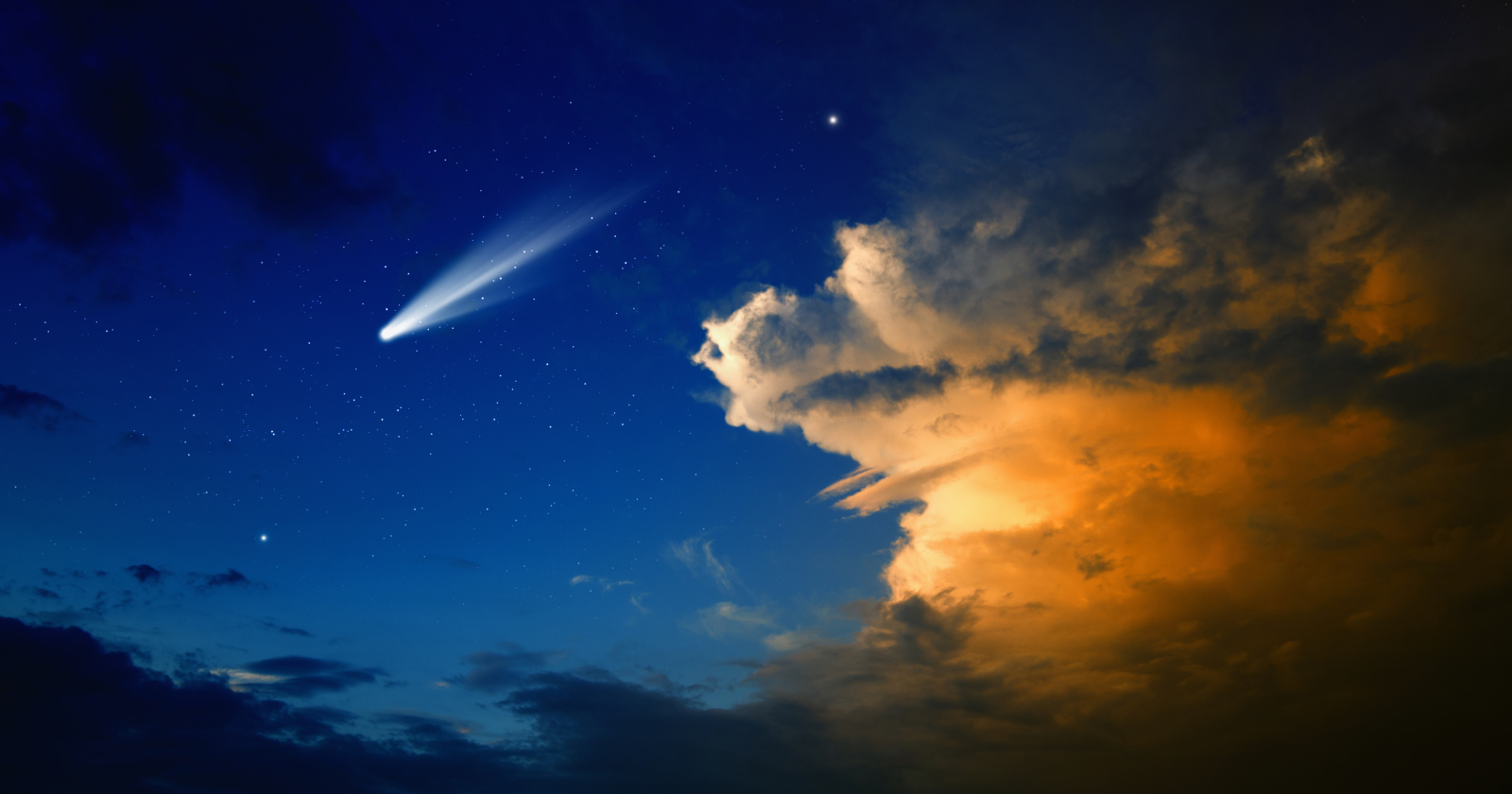
Astronauts on the space station have no washing machine, because water is far too precious to waste on laundry, so they wear the same clothes for days and then pack the dirty ones into a cargo capsule that burns up on reentry, which means a fireball crossing the sky could, in theory, be a bundle of an astronaut’s old underwear.

The International Space Station has been in continuous crewed operation since November 2000, which means somebody has been living roughly four hundred kilometres above the surface of the Earth every single day for the past twenty-five years without a break. During that time the station has been visited by more than two hundred and eighty astronauts and cosmonauts from more than twenty countries, and each of them has faced the same practical problem that any long-term resident of anywhere eventually has to solve.

Their clothes get dirty. And the space station, for reasons that come down to the physics of orbital resupply, does not have and has never had a washing machine on board. What NASA and the Russian space agency have therefore developed over the intervening decades is one of the more counterintuitive laundry solutions in any modern human institution. There is no laundry. The clothes go into a cargo capsule when the astronauts are done with them. The cargo capsule burns up on the way home.

Why nobody bothered to send a washing machine up

The reason is water. Aboard the space station every drop of water is a precious resource that either has to be lifted up from Earth at roughly $10,000 per kilogram in launch costs, or has to be extracted and recycled from the crew’s own urine, sweat and exhaled breath through a purification system that operates continuously in the background of station life. The station recycles roughly 90 per cent of the water it produces internally, which is considerably better than any comparable industrial recycling system on Earth. But even at that recycling rate, adding a washing machine to the water demand of the station would consume enough additional water per cycle to fundamentally change the economics of resupply. According to a 2017 VICE interview with Robert Trevino, a senior engineer with NASA’s Crew and Thermal Systems Division who is responsible for astronaut clothing on the station, the engineering team has been examining this question for years. NASA’s own internal trade studies compared the water and power requirements of a hypothetical station laundry system against the cost of simply replacing dirty clothes with fresh ones sent up on cargo runs. Replacing the clothes turned out to be cheaper. So that is what NASA does.

If space exploration fascinates you, you’ll enjoy this video we made on why astronauts come home feeling like they’re being watched…

What this means in practical terms is that astronauts on the station wear each piece of clothing for as long as it can reasonably be worn before it becomes unusable. Exercise clothes get roughly two weeks of use because the mandatory hour of daily exercise required to prevent bone and muscle loss in microgravity produces enough sweat to defeat the antibacterial coating on the fabric within a fortnight. Regular daily-wear clothes, meaning the cotton polos and cargo shorts that most station astronauts prefer, get anywhere between one and three months of wear per garment. Underwear rotation is up to the individual crew member. Trevino told VICE that former astronaut Don Pettit was known to have worn the same pair of shorts for months at a stretch, which was apparently a source of considerable amusement among his crewmates. The clothing is sourced by NASA’s contractor Lockheed Martin from ordinary commercial suppliers, including Lands’ End, Cabela’s, and Blackhawk. There is nothing technologically special about the fabric.

Where the clothes actually end up

Once a garment has reached the end of its useful wearing life, it goes into the station’s waste system alongside the packaging, food waste, expired equipment, and general trash that the crew generates every day. The waste is bagged, taped, and stored in whichever visiting cargo vehicle happens to be docked at the time. There are currently three different cargo vehicles that regularly deliver supplies to the station. Russia’s Progress capsule and Northrop Grumman’s Cygnus vehicle are both single-use, meaning they are launched from Earth full of supplies, unloaded at the station, refilled with trash, undocked, and then deliberately deorbited over the Pacific Ocean where they burn up in the upper atmosphere on the way down. SpaceX’s Dragon capsule is the exception. It is reusable, and it returns to Earth intact via parachute for a splashdown in the Pacific and eventual reuse on a subsequent mission. So while Dragon comes home in one piece, the trash from every Progress and Cygnus run ends up as a spectacular fireball crossing the sky somewhere in the upper atmosphere above the South Pacific.

According to Space.com’s November 2023 reporting by managing editor Brett Tingley on the reentry of the Russian Progress MS-23 cargo spacecraft, the reentry of a fully loaded trash-carrying capsule is a visually striking event. The Progress MS-23 undocked from the station on 29 November 2023 carrying, in the words of the Roscosmos cosmonaut Oleg Kononenko who saw it off, “old equipment and household waste, or everything the experts have decided to toss from the station.” Four hours later NASA astronaut Jasmin Moghbeli, who had been alerted by mission control to look out of a specific window at a specific time, was able to photograph the reentry from the ISS itself. Her photographs show what looks like a spectacular meteor. Bright trails of fire streak across the darkness of the upper atmosphere. The main capsule breaks apart into several distinct fragments as the atmospheric heating destroys its structural integrity. Then everything disperses into smaller and smaller sparks until nothing recognisable is left. Moghbeli wrote on X afterwards that the whole event lasted only two or three minutes and reminded her of fireworks.

What was inside the capsule during those two or three minutes was, among many other things, the accumulated clothing that seven astronauts and cosmonauts on the station had been wearing over the preceding several months. Somewhere in the fireball was Kononenko’s old exercise gear, along with the daily-wear cotton polos of the American, Japanese, and Danish crew members who had been aboard during the same period. Whether any of the specific garments in question had been observed by anyone on the ground as bright flashes in the night sky is impossible to say with certainty. But the fireball that briefly crossed the upper atmosphere above the South Pacific on the evening of 29 November 2023 did in fact contain, among its many other contents, the discarded underwear of at least seven people who had been living in low Earth orbit at the time.

Which is to say that the surprising claim in the title turns out to be more or less exactly what actually happens. The station has no washing machine. The clothes get worn until they can’t be worn any longer. They get packed into whichever cargo vehicle is next scheduled to depart. And the cargo vehicle, on its final trajectory back through the upper atmosphere, becomes a briefly visible streak of light in the night sky before the whole thing burns away to nothing over the Pacific Ocean. If you happen to be looking up at the right moment from the right latitude, and if you know the timing of the current Progress or Cygnus deorbit schedule, you might catch one. And what you would be watching, in the strict literal sense, is somebody’s old socks and shirts on their final journey home.

The post Astronauts on the space station have no washing machine, because water is far too precious to waste on laundry, so they wear the same clothes for days and then pack the dirty ones into a cargo capsule that burns up on reentry, which means a fireball crossing the sky could, in theory, be a bundle of an astronaut’s old underwear. appeared first on Space Daily.

  •  

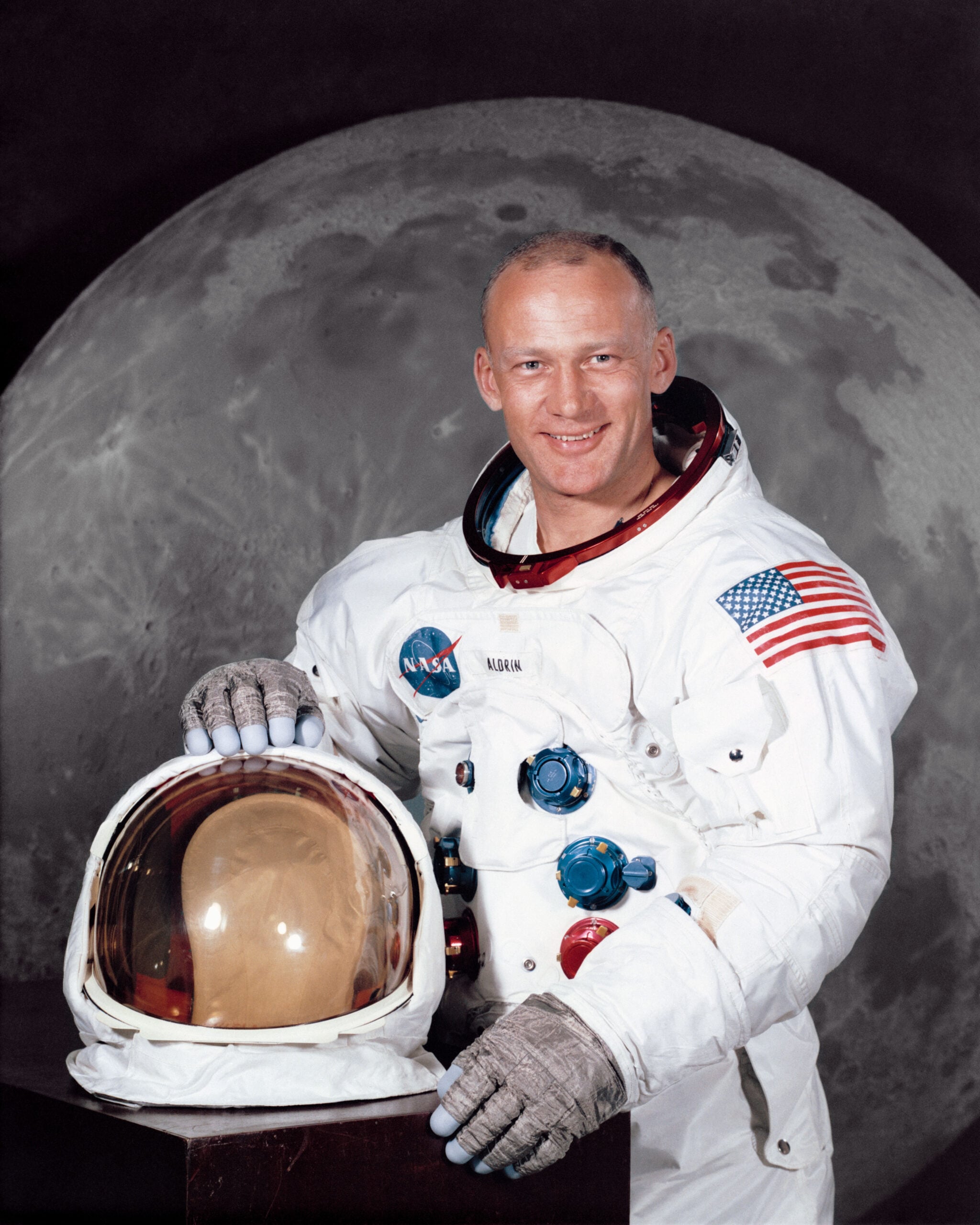
The second man to walk on the Moon later dug out his old expense claim from the trip, and it turns out Buzz Aldrin was reimbursed the grand sum of 33 dollars and 31 cents, not for the rocket or the spacecraft, but for the ordinary travel expenses of getting himself to and from the launch site like any other business trip.

The Apollo 11 mission cost NASA more than twenty billion dollars in 1969 money, or somewhere north of one hundred and fifty billion dollars in modern terms. It was one of the most expensive single scientific undertakings in human history, involving roughly four hundred thousand people across NASA and its contractor network. Everything about it was unprecedented. The Saturn V rocket had never been flown with a crew on a full lunar trajectory before. The Lunar Module had never been landed on a celestial body. The re-entry profile at the return end of the trip had never been survived. Buzz Aldrin flew on the mission as the second of three crew members and walked on the lunar surface on 20 July 1969. He returned home four days later. And when he got back to Houston he filed a routine federal government travel expense claim like any other public employee returning from a work trip. It was for thirty-three dollars and thirty-one cents.

What the voucher actually itemises

Aldrin posted a photograph of the original voucher on Twitter on 30 July 2015 to mark the forty-sixth anniversary of the moon landing. According to CBS News reporting the following day by science journalist Amanda Schupak, the voucher covers the period from 7 July 1969 through to 27 July 1969, which is a week and a half before the launch through to three days after the splashdown. What follows is probably the strangest business trip itinerary in the history of American federal expense accounting. The listed points of travel are Houston, Texas to Cape Kennedy, Florida on 7 July, then Cape Kennedy to Moon on 16 July, then Moon to Pacific Ocean on 24 July, then Pacific Ocean to Hawaii the same day, and finally Hawaii back to Houston on 27 July. The mode of transport listed for each leg is equally striking. Government Air for the two flights inside the continental United States. Government Spacecraft for the leg between Cape Kennedy and the Moon. USS Hornet, which is the aircraft carrier that recovered the crew, for the leg between the Pacific Ocean and Hawaii. And a US Air Force plane for the return to Houston.

The life of an astronaut is truly fascinating – check out the video we made on what every astronaut sees in the mirror:

The federal expense reimbursement system in 1969 did not distinguish between astronauts and any other government employee. If you were travelling on official business you filled out the same form, listed the same route, claimed the same mileage rate for personal vehicle use, and provided the same receipts for any out-of-pocket costs. Aldrin’s voucher was processed by a routine NASA finance office alongside vouchers from technicians attending conferences and administrators travelling to Washington. Nobody appears to have thought the situation odd enough to route it through any special channel. The reimbursement was paid in the normal course of business a few weeks later.

Why the amount was so small

The reason the total came to only thirty-three dollars and thirty-one cents rather than something more substantial is spelled out on the voucher itself. According to BBC Science Focus Magazine’s August 2015 write-up by Rachel Baxter, the document states in plain text that government meals and quarters were furnished for all the dates in question. That covered his food and lodging at the pre-launch quarantine facility at Cape Kennedy, aboard the Saturn V and the Apollo capsule, on the lunar surface itself, aboard the USS Hornet during the post-splashdown recovery, and inside the mobile quarantine facility where he and Neil Armstrong and Michael Collins were confined for twenty-one days after their return in case they had brought back any unknown lunar pathogens. The federal government had covered every one of those things directly, so Aldrin had nothing to claim against any of them.

What the thirty-three dollars and thirty-one cents actually covered was almost certainly the mileage rate for driving his own personal vehicle from his home in Houston to Ellington Air Force Base and back at each end of the trip. Government employees in 1969 were entitled to claim a per-mile rate when using their own car for official business. Aldrin did what everybody at NASA did. He drove to the airfield, got on the government plane, and came home the same way at the end. He submitted his mileage on the standard form. He got his check for thirty-three dollars and thirty-one cents in the mail a few weeks later.

The voucher was not the only piece of Apollo 11 bureaucratic paperwork Aldrin dug out and shared publicly in 2015. He also posted the US Customs declaration that he and Armstrong and Collins had signed on landing in Honolulu after the recovery. The declaration listed their country of departure as Moon and their flight number as Apollo 11. The cargo section listed moon rock and moon dust samples. The question about whether any crew member had been in contact with an infectious disease during the trip was answered by Aldrin in the space provided as “moon disease TBD.” A Honolulu customs inspector had counter-signed the form and accepted it as filed. The crew had cleared customs.

What the whole set of documents represents is one of the more revealing curiosities of the entire Apollo programme. NASA had achieved something in July 1969 that no human institution had ever previously come close to achieving, and the federal bureaucracy processing the paperwork for the people who had done it treated them exactly like every other federal employee returning from a work trip. That was partly because the routine forms were the only ones available. But it was also because the people at NASA didn’t consider themselves exempt from the ordinary paperwork obligations of federal employment. Aldrin filled out his expense form. He submitted his customs declaration. He collected his thirty-three dollars and thirty-one cents. And forty-six years later he still had the voucher in a drawer.

The post The second man to walk on the Moon later dug out his old expense claim from the trip, and it turns out Buzz Aldrin was reimbursed the grand sum of 33 dollars and 31 cents, not for the rocket or the spacecraft, but for the ordinary travel expenses of getting himself to and from the launch site like any other business trip. appeared first on Space Daily.

  •  

SpaceX has asked to operate up to one million AI satellites, but their direct waste heat would barely affect global temperature; the larger climate question is what launches and mass re-entry would put into the upper atmosphere

Representative rocket lifting off through a plume of exhaust

SpaceX has formally asked US regulators for permission to operate as many as one million AI data-center satellites. That number is real. It is also an upper limit in an application, not an approved fleet, a launch schedule or evidence that one million spacecraft will actually be built.

If the full Starmind system ever existed, its direct waste heat would be too small to become a major global climate driver. The harder environmental question lies in the industrial cycle required to create and replace it: manufacturing enormous amounts of hardware, launching it through the atmosphere and eventually vaporizing much of it during re-entry.

Climate models have only begun to study satellite constellations measured in tens of thousands. A million large computing satellites would sit far beyond the scale directly tested in that literature.

The FCC has accepted an application, not approved a million launches

SpaceX filed its application on January 30, 2026. The Federal Communications Commission accepted it for public comment on February 4.

The filing seeks authority for a non-geostationary system of up to one million satellites between 500 and 2,000 kilometers altitude. The spacecraft would exchange data through optical links and connect with SpaceX’s Starlink network.

Accepting an application for filing is an administrative step. It does not mean the FCC has determined that the architecture is safe, environmentally acceptable or technically achievable. The public notice also says SpaceX plans different hardware versions across multiple orbital shells, so “one million satellites” does not describe one fixed design.

SpaceX has since presented its first AI1 design for the Starmind system. The company’s published specifications give it a 120-kilowatt average compute load, a 150-kilowatt peak and a deployed wingspan of 70 meters.

The computers’ direct heat is not the main climate problem

Computers turn almost all the electricity they use into heat. In orbit, that heat cannot leave through air or cooling water because neither is available. Large radiator surfaces must emit it as infrared radiation.

One million AI1 satellites operating at the advertised average would use about 120 gigawatts for computing. To put a strict upper bound on the direct climate effect, imagine that every watt of that heat somehow reached and was absorbed by Earth. Spread over the planet’s surface, it would average roughly 0.00024 watts per square meter.

That artificial scenario overstates the real effect because radiators can direct most thermal radiation toward deep space. Even so, its value is more than 10,000 times smaller than the IPCC’s estimate of 2.72 watts per square meter for total human-caused effective radiative forcing between 1750 and 2019.

The fleet would therefore not warm Earth simply by running hot computers overhead. Reflected sunlight, radiator orientation and the design of vast solar arrays would still need assessment, but direct compute heat is not the dominant global term.

Space solar power could avoid some terrestrial emissions

SpaceX argues that sun-synchronous satellites could collect solar energy without clouds or night-time interruptions and reject heat without chillers, cooling towers or fans. If orbital computing genuinely replaced electricity from fossil-fueled grids, it could avoid some power-sector carbon emissions and water consumption.

That benefit cannot be calculated from the one-million figure. A fair comparison would need the energy and materials used to manufacture satellites and rockets, propellant production, launch emissions, ground stations, replacement rates, failed spacecraft and the carbon intensity of the terrestrial data centers displaced.

No published life-cycle assessment yet covers SpaceX’s proposed full system. “Powered by solar energy” describes operation in orbit, not the environmental balance of building and continually replenishing the fleet.

Rocket exhaust is unusually effective high in the atmosphere

Rocket emissions are small beside global aviation, shipping or power generation by mass. Their location makes them different. Rockets inject black carbon, water vapor, nitrogen compounds, alumina and other products directly into atmospheric layers that surface pollution rarely reaches.

Black carbon absorbs sunlight and warms the surrounding stratosphere, changing atmospheric circulation and ozone chemistry. A NOAA modeling study found that a tenfold increase in hydrocarbon-rocket soot could warm parts of the stratosphere by 0.5 to 2 degrees Celsius and alter circulation. The authors stressed that soot emissions from different engines remain poorly measured.

A newer 2026 study in Earth’s Future modeled launch and re-entry emissions from the recent megaconstellation era through 2029. It found a global stratospherically adjusted forcing of about -0.0064 watts per square meter from all space missions in its scenario, with megaconstellations contributing 42 percent.

That modeled forcing is small compared with the present greenhouse-gas-driven climate imbalance, and its negative sign represents a slight cooling influence after the stratosphere adjusts. It is not necessarily good news. The same soot warms the stratosphere, changes circulation and can affect ozone. It is better understood as an uncontrolled atmospheric perturbation than as useful climate cooling.

The result also cannot be multiplied mechanically from thousands of satellites to one million. Starmind would use different spacecraft, potentially different launch vehicles and an unknown deployment cadence.

Re-entry would turn satellite material into atmospheric aerosol

Low-Earth-orbit constellations require replacement. Hardware fails, components age and atmospheric drag eventually brings spacecraft down. A million-satellite fleet with a five-year average life would imply 200,000 replacements and re-entries every year. SpaceX has not established that lifetime for the full system, but the example shows why lifespan matters as much as fleet size.

Re-entering spacecraft do not simply disappear. Heating vaporizes metals and creates particles and gases in the upper atmosphere. A 2024 global emissions inventory identified aluminum oxide as the dominant modeled metal oxide from satellites that ablate, alongside nitrogen oxides produced by high-temperature re-entry.

A 2025 atmospheric modeling study tested a scenario with 10,000 metric tons of re-entry alumina per year, a level associated with forecasts of roughly 60,000 satellites. Depending on particle size and re-entry latitude, the model produced regional temperature anomalies reaching about 1.5 degrees in the middle atmosphere and changes to polar-vortex winds.

That is not a prediction of 1.5 degrees of global surface warming. It is a modeled regional response high in the atmosphere, with large uncertainty about particle size, composition and transport. Scaling to Starmind requires basic information that is not public, especially spacecraft mass, material composition, operational life and disposal pattern.

A million is a different environmental regime

Space Daily has already examined how large Starmind spacecraft could affect ground-based astronomy. Climate and atmospheric chemistry pose a separate problem: pollution can accumulate even when each individual launch or re-entry looks small.

The most honest answer is therefore split. Direct waste heat from the orbital computers would be negligible at the global climate scale. Moving computing away from terrestrial grids might avoid emissions, but that benefit has not been demonstrated through a full life-cycle study.

The serious unknown is the launch-and-replacement machine surrounding the constellation. Existing research already finds measurable, though currently small, radiative and ozone effects from today’s much smaller space industry. A fleet approaching one million satellites would turn an emerging source of upper-atmosphere pollution into a planetary experiment without a validated model of the outcome.

The post SpaceX has asked to operate up to one million AI satellites, but their direct waste heat would barely affect global temperature; the larger climate question is what launches and mass re-entry would put into the upper atmosphere appeared first on Space Daily.

  •  

The claim that a third of humanity cannot see the Milky Way comes from a 2016 atlas, and newer studies show why producing an updated global headcount is harder than it sounds

Representative starry sky above a city illuminated at night

A third of humanity cannot see the Milky Way from where they live. The statistic is real, but it needs a date and a definition attached to it.

It comes from the 2016 New World Atlas of Artificial Night Sky Brightness, not from a survey in which billions of people were asked to look up. Researchers combined satellite observations, ground measurements, a model of how light scatters through the atmosphere and population data to estimate who lived under skies bright enough to erase the galaxy’s pale band.

No newer study has yet replaced it with an equivalent global headcount. More recent research shows that artificial light at night is still changing, often quickly, but those measurements do not translate directly into a new percentage of humanity that can or cannot see the Milky Way.

The one-third figure was published in 2016

The New World Atlas was published in Science Advances by Fabio Falchi and an international team. Its headline results were stark: more than 80 percent of the global population lived under light-polluted skies, while more than 99 percent of people in the United States and Europe did.

The threshold for losing the Milky Way was higher than the threshold for merely experiencing some artificial skyglow. Under the atlas model, the galaxy was hidden from more than one-third of humanity, including about 60 percent of Europeans and nearly 80 percent of North Americans.

Space Daily reported those findings when the atlas appeared. The number has remained in circulation because the atlas is still the most complete population-weighted global estimate of this specific loss.

Researchers mapped skyglow rather than counting people looking up

The atlas used low-light observations from the Visible Infrared Imaging Radiometer Suite aboard the Suomi NPP satellite. Those measurements showed light emitted upward from towns, roads and industrial areas.

A propagation model then estimated how that light would scatter through a standard clear atmosphere and return toward an observer as skyglow. Thousands of calibrated measurements made on the ground were used to check the model. Finally, the brightness map was combined with population data.

The result was not a prediction for every night. Clouds can amplify urban skyglow, while moonlight, haze, snow, altitude, season and the observer’s eyesight can all change what is visible. The atlas instead described modeled clear-sky conditions at the zenith using consistent assumptions, which made places comparable.

A zoomable version maintained by the Cooperative Institute for Research in Environmental Sciences shows how light from cities spreads beyond their built boundaries. A person can live well outside a city center and still look through its luminous dome.

A later study used human eyes as sensors

Satellite instruments are excellent at mapping emitted light, but they do not see the night exactly as a dark-adapted person does. A 2023 study approached the problem from the ground.

Researchers analyzed 51,351 naked-eye observations submitted to the Globe at Night citizen-science project between 2011 and 2022. Participants compared the stars they could see with a sequence of charts under cloudless, moonless conditions.

The study found that the decline in visible stars at the observed locations was consistent with artificial sky brightness increasing by 7 to 10 percent per year in the human-visible band. Its central estimate was 9.6 percent.

That does not mean every place on Earth brightened by 9.6 percent each year. The observations were concentrated in Europe and North America and were biased toward inhabited locations. The authors explicitly noted that the sample did not represent the average distribution of either land area or global population.

It therefore cannot be applied to the 2016 total like compound interest to produce a new global headcount.

Why a satellite can miss light that hides stars

The difference between satellite and naked-eye trends is partly about direction. An orbiting sensor mainly detects light traveling upward. Skyglow is the result of light scattering back down toward people on the ground, and horizontally emitted light can make a large contribution.

Color matters too. The widely used VIIRS day-night instrument is relatively insensitive to shorter blue wavelengths. Human night vision is more sensitive to that part of the spectrum, and blue light scatters efficiently in the atmosphere. A city switching from orange sodium lamps to broad-spectrum white LEDs can therefore change the visible sky in ways the satellite record does not fully capture.

This does not make satellite measurements wrong. It means upward radiance and the brightness perceived by a person looking at the sky are related but different quantities.

A 2026 analysis found both brightening and dimming

A separate Nature study published in 2026 analyzed more than 1.16 million daily satellite images from 2014 through 2022. It found a net 16 percent rise in global artificial-light radiance over that period.

The global total concealed movement in both directions. Brightening added radiance equivalent to 34 percent of the 2014 baseline, while dimming elsewhere offset 18 percent. Urbanization and electrification drove many increases, especially in Asia, while energy policy, conflict, economic disruption and lighting changes produced reductions in other regions.

The authors also stressed that their satellite measurement was not the same as downward skyglow. It was especially sensitive to upward light after midnight within a limited range of wavelengths. That makes it valuable for tracking how Earth’s illuminated surface changes, but it still cannot provide an updated Milky Way visibility percentage by itself.

The old estimate may be dated, but it is not obsolete

It is reasonable to suspect that the 2016 figure is now conservative in many growing urban regions. Ground observations show stars disappearing faster than earlier satellite trends suggested, and the 2026 analysis found a net rise in emitted light. Yet some places have dimmed, and the world’s population has moved as well as grown.

The defensible statement remains precise: the best global atlas found that more than a third of humanity lived where artificial skyglow hid the Milky Way under its modeled conditions. Newer work shows continued and uneven change, not a replacement population fraction.

Space Daily recently examined what losing routine access to a star-filled sky may mean psychologically. The measurement story adds a quieter lesson: we cannot protect what we do not measure carefully.

The good news is that skyglow is not permanent contamination. The US National Park Service recommends using light only where and when it is needed, choosing fully shielded fixtures, keeping output to the minimum necessary and favoring warmer colors. Unlike many environmental changes, turning down unnecessary light can improve the view that same night.

The post The claim that a third of humanity cannot see the Milky Way comes from a 2016 atlas, and newer studies show why producing an updated global headcount is harder than it sounds appeared first on Space Daily.

  •  

Mars is slowly pulling Phobos inward by about 1.8 centimetres a year; models suggest the battered moon could be torn apart in 20 to 40 million years, giving the planet a temporary ring

Representative rocky red landscape under a dark sky

Mars has no rings today, but it already carries the material for one.

Phobos, the larger and innermost of the planet’s two small moons, is moving towards Mars by about 1.8 centimetres each year. That drift is measurable. What happens at the end is modelled rather than observed, and depends heavily on how much strength is hidden beneath the moon’s battered surface.

One influential analysis suggests the weakest parts of Phobos could be pulled apart in 20 to 40 million years, spreading into a temporary ring while stronger fragments continue down towards Mars.

It is a dramatic future assembled from a very small motion.

Phobos completes three orbits during one Martian day

Phobos is an irregular body measuring roughly 27 by 22 by 18 kilometres. According to NASA’s Phobos overview, it circles Mars three times per day at an altitude of about 6,000 kilometres above the surface.

The European Space Agency gives its orbital period as 7 hours and 39 minutes. That is much shorter than the time Mars takes to rotate once. To an observer on much of the Martian surface, Phobos would therefore appear to rise in the west and set in the east, the reverse of the familiar daily motion of Earth’s Moon.

The short orbit is also the reason Phobos is in trouble. It lies inside the altitude where a moon’s orbital period would match the planet’s rotation. The tidal bulge it raises on Mars consequently lags behind the fast-moving moon. Their gravitational interaction removes orbital energy from Phobos and transfers it to Mars.

Losing orbital energy does not make a moon hover more slowly at the same height. It drops into a lower orbit, where it travels faster and raises stronger tides. The descent gradually accelerates.

A yearly drift cannot simply be extended in a straight line

NASA expresses the present decay as 1.8 metres every century, while ESA gives the equivalent figure of 1.8 centimetres per year. A simple division of the moon’s current altitude by that rate would produce a timescale of hundreds of millions of years.

That calculation is misleading because the rate will not remain constant. As Phobos approaches Mars, the strength of the tidal interaction increases. The last part of its inward spiral is expected to proceed much faster than the motion measured today.

This is why public estimates differ. NASA says Phobos could strike Mars or break into a ring in about 50 million years. ESA uses the broader phrase “within 100 million years.” These are not scheduled events with a precise date. They reflect different assumptions and levels of rounding applied to a nonlinear process over geological time.

The measured direction is the firm part: Phobos is moving inward.

The ring prediction depends on a damaged interior

Whether Phobos reaches the surface mostly intact or comes apart first depends on its internal strength. The moon has a nine-kilometre impact scar called Stickney crater, fine surface dust, grooves and evidence of repeated impacts. Its exterior looks less like a solid, pristine rock than an object that has been worked over for billions of years.

In a 2015 analysis published in Nature Geoscience, Benjamin Black and Tushar Mittal combined geological observations, spectral measurements, orbital theory and a geotechnical model of Phobos’s strength. They concluded that much of the moon may consist of weak, heavily damaged material.

Their model placed tidal dispersal of the weakest material about 20 to 40 million years in the future. Once Mars’s gravity pulls more strongly on the near side of Phobos than the moon’s own cohesion can resist, that material would no longer remain a single body.

This is one model, not a direct measurement of the interior. No spacecraft has drilled through Phobos or mapped its structure in full. A stronger, more coherent moon could survive closer to Mars, while a loose aggregate would begin failing farther out.

The grooves are intriguing, but they are not a visible countdown

Long grooves cross much of Phobos, and their origin has generated several explanations. Some have been linked to debris launched from impacts on Mars. Others may have been cut by boulders rolling away from Stickney crater.

A 2016 study in the Journal of Geophysical Research: Planets, led by Terry Hurford, tested another possibility. Its stress models found that tidal forces acting on a weak interior could produce fractures with a pattern similar to some observed grooves.

That does not establish that every groove is a stretch mark caused by orbital decay. Surface features can have several origins, and the competing explanations involve different sets of grooves. The study is better read as evidence that tidal damage is physically plausible for a weak Phobos, not that the moon is visibly splitting today.

At the present decay rate, human observations cover almost none of the remaining process.

A Martian ring could outlast species and still be temporary

Black and Mittal estimated that the resulting ring could persist for one million to 100 million years. Its initial mass density might be comparable with Saturn’s rings, although that does not tell us exactly how bright or broad it would appear from the Martian surface.

The ring would not be Phobos’s only ending. Material strong enough to avoid disruption would keep descending and eventually strike Mars in oblique, relatively low-speed impacts. Smaller particles in the ring would also evolve, collide and gradually move towards the planet.

On geological timescales, a ring lasting millions of years can still be a passing phase.

The contrast with Earth’s Moon helps show why. NASA’s lunar measurements show that our Moon is receding by about 3.8 centimetres per year. Earth rotates faster than the Moon orbits, so Earth’s tidal bulge transfers energy outward to the Moon. Phobos orbits faster than Mars rotates, reversing the exchange.

The same broad physics can push one moon away and pull another towards destruction.

Mars offers a ring system in slow preparation

Nothing about Phobos’s fate is urgent on a human scale. Twenty million years is more than four thousand times the span of recorded history. The moon will look effectively unchanged to any mission operating this century.

Its inward motion still matters because it lets planetary scientists observe one stage of a process otherwise inferred from finished ring systems, impact deposits and missing moons. Mars is not merely a planet that may acquire a ring in the distant future. It is a planet whose tides are already preparing the material.

The 1.8 centimetres measured in a year is almost nothing. Given enough time, it is the beginning of an ending.

The post Mars is slowly pulling Phobos inward by about 1.8 centimetres a year; models suggest the battered moon could be torn apart in 20 to 40 million years, giving the planet a temporary ring appeared first on Space Daily.

  •  
❌