A paradox is when a scenario seems — at first — impossible. It goes against what your gut feeling tells you is true. Once resolved, however, a paradox often reveals something crucial about how a system works. It may correct a common misconception. Or it may address incorrect assumptions.
Sometimes, a paradox consists of real facts that seem to defy expectation. Moravec’s paradox is one example. It notes that many abilities that come easily to humans are quite hard to program into a robot. Walking, for instance. On the flip side, many easy-to-program abilities, such as complex math, are hard for humans to learn. Exploring this paradox can help us better understand how the human mind works.
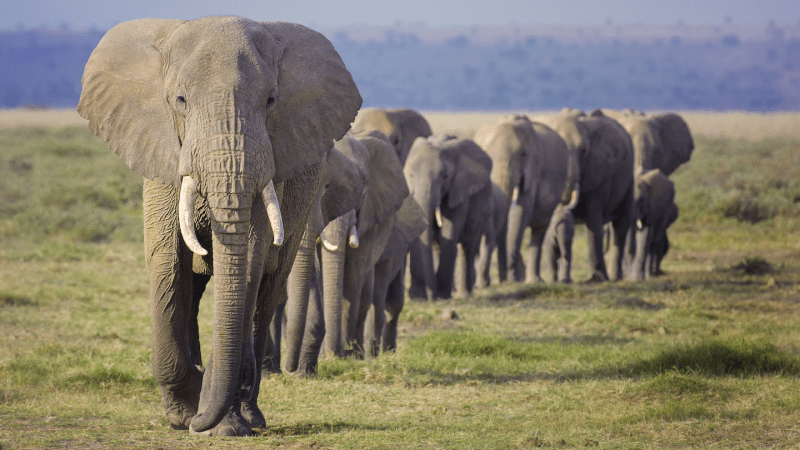
Peto’s paradox is another example. It points out that large, long-lived animals get cancer at about the same rate as small, short-lived ones. For a long time, that fact puzzled scientists. They expected large animals to get cancer more often. Cancer starts when something goes wrong with a single cell’s genetic material. Shouldn’t large animals — which contain many more cells — have this problem much more often than small ones? The data showed this was not the case.
Scientists studied this paradox. They learned that large animals have genes that help reduce cancer risks. Researchers did not know to look for such genes before noticing the paradox. This is one case of a paradox helping us learn things we didn’t know that we didn’t know.
Some paradoxes are thought experiments. That’s an imaginary scenario that allows us to explore an idea that we can’t test in real life. Imagine, for instance, you traveled to the distant past. But then, you accidentally killed a distant ancestor. (Oops!) This might mean that you would no longer be born. But wait. If you no longer exist, that means you wouldn’t be able to travel back in time to kill your ancestor in the first place, right?
On its own, this sci-fi paradox doesn’t answer questions. But it does help us think about the physics of time. And that can inspire new ideas in scientists who study the nature of our universe.
In a sentence
The “paradox of horror” refers to how people often seek out films that seem — on first glance — to evoke only negative emotions.
In the movie WALL-E, the last Earthlings travel through the Kuiper Belt on board the starship Axiom. For 700 years, a fully automated crew of robots has cared for them now that Earth has become inhospitable. Running the ship’s operations is AUTO. AUTO is an artificial intelligence (AI) system working to keep humans away from Earth — forever.
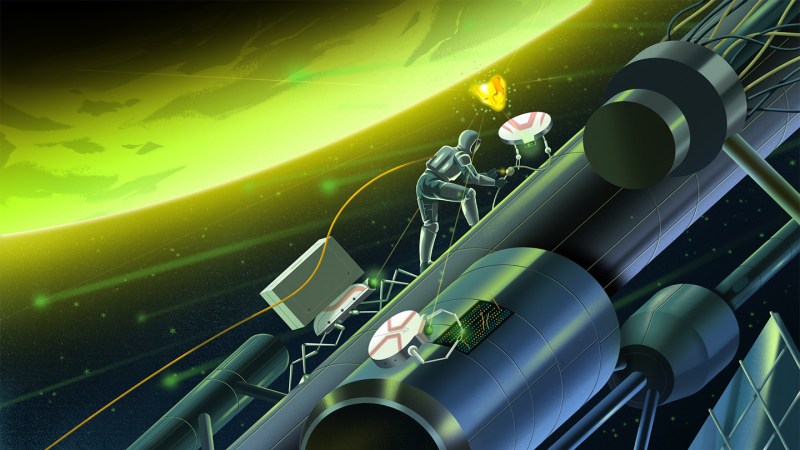
Here at home, space agencies like NASA and the European Space Agency are using AI to explore our solar system. This includes guiding rovers on Mars, preventing satellite collisions and training astronauts for spaceflight. But these AI systems are much more limited than their fictional counterparts.
Today’s AI is much more unpredictable and prone to mistakes than what you see in fiction, says Daniele Gammelli. At Stanford University in California, he studies how to integrate AI systems into robots that interact with their environment.
Anyone using ChatGPT has probably seen how it hallucinates, or makes up inaccurate information. AI systems in space robots would need to complete multi-step tasks in all sorts of scenarios without mistakes. After all, Gammelli says, in space, “you have virtually no room for error.”
The little robot that could
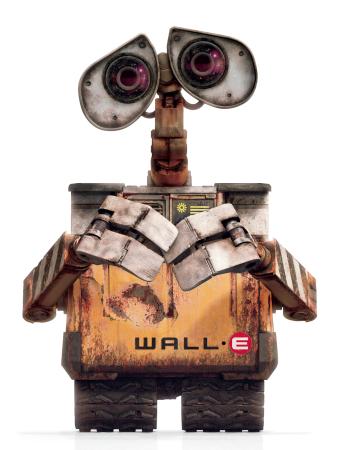
The title robot WALL-E is a trash-compacting machine — one that abandons his duties to follow another robot, EVE. WALL-E’s greatest strength is, arguably, his ability to handle change. To escape a self-destructing pod, WALL-E uses a fire extinguisher to flee. When his wheel or eye malfunctions, WALL-E can replace the damaged part. All this is learned from experience and done without additional programming.
Such versatility is an example of artificial general intelligence (AGI). This type of AI doesn’t yet exist. It would think and learn like a human across different situations. AGI could also take on tasks for which it had not been programmed.
Unlike today’s robots, the trash-compacting robot WALL-E makes his own decisions without input from engineers.PICTURELUX/THE HOLLYWOOD ARCHIVE/ALAMY
Adapting to unforeseen situations is a big goal for future space robots, says Gammelli. Between radiation, extreme temperatures and space debris, space is a dangerous, ever-changing environment. Any robot navigating space would need to handle evolving conditions — many of which don’t exist on Earth.
“The kind of scenarios you are kind of forcing on your robot are, by definition, things that nobody has ever seen,” he says.
Today’s AI excels at single tasks or several closely related ones. Known as narrow AI, it handles repetitive and predictable work well. “I’d say the top skill that it excels in is processing a huge amount of data very efficiently,” says Sanjoy Paul in Houston, Texas. There, at Rice University, he studies how AI can assist in space missions.
Martian rovers use narrow AI. To select rock samples, Perseverance employs AI algorithms to scan minerals and assess if they’re worth collecting. Another rover, Curiosity, uses AI to zap rocks with lasers based on their shape and color. All of this is done without human input.
Any human sorting through that kind of data could get overwhelmed, says Paul. When faced with huge amounts of data, people can struggle to make decisions. Why? Picking out important details becomes much harder. “AI can actually cut through all the details … and highlight those things for humans to take a look at,” he says.
To handle multi-step tasks, nearly all space robots rely on so-called autonomy stacks, explains Gammelli. These are separate, but linked, modules that tackle different actions. For instance, one AI model might use cameras or sensors to detect rocks or obstacles. This info would be passed to another module. It would interpret those results and determine the appropriate next action. Other modules would then carry out the physical maneuvers to get that job done.
Still, today’s robots fall short of what people can physically do, says Paul. Many of the basic actions we perform require lots of coordination. Researchers are still studying how to design AI models to carry out actions as efficiently as possible, says Paul.
Would you trust AI with your life?
Aboard the fictional Axiom, robots manage everything. Custodial robots scrub and polish. Utility bots handle repairs and maintenance. Hover chairs cart the ship’s residents to their destinations. This lets Axiom’s passengers live sedentary lives, spending their days watching videos and drinking food shakes.
People would probably need to play a bigger role in space travel than what was depicted in WALL-E, says Paul. While AI continues to improve by leaps and bounds, it remains unpredictable. With lives at risk, one small mistake could prove disastrous. “If your life depends on it, would you really bank on AI? Probably not,” he says. “You still need humans in the loop.”
Most likely, he suspects, space travelers would rely on AI as an assistant. That might look more like another fictional AI system: J.A.R.V.I.S. from the Iron Man series. Tasked with monitoring Tony Stark’s buildings and power suits, J.A.R.V.I.S. acts more like a team member than a captain. It synthesizes data and offers suggestions to Stark, who remains in control. With large language models like ChatGPT and Claude, that option seems much more feasible, says Paul.
Still, people wouldn’t want to micromanage all spacecraft, says Gammelli. Machines like rovers should eventually be able to make their own mini-goals, he says. These would all align with the engineer’s overall mission.
Such mini-goals would allow bots to handle unforeseen situations better. It would also free up people to take care of more critical tasks and decisions. “We want these robots to be as independent as possible,” he says. Though maybe not as independent as mission-quitting WALL-E.
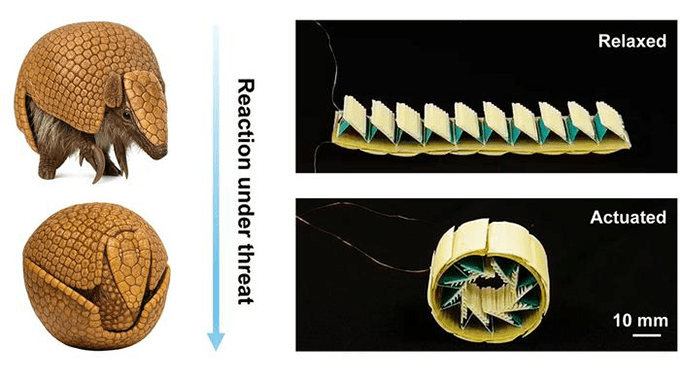
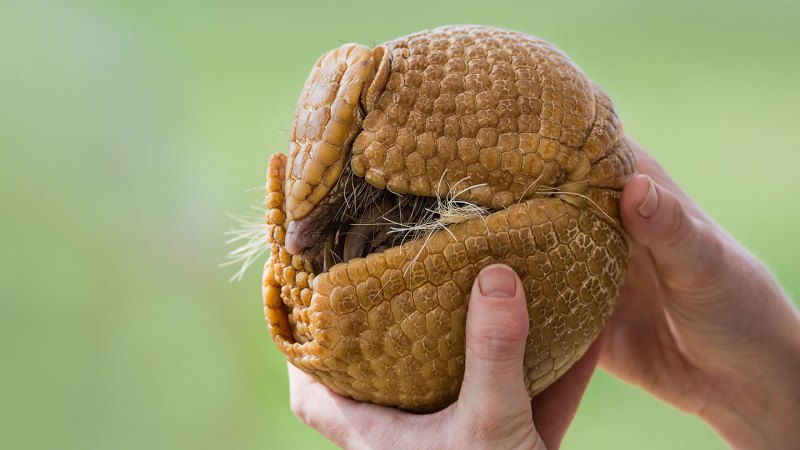
The three-banded armadillo has an unusual way to protect itself. When threatened, it rolls itself up. The adorable mammal’s thick plates form a nearly impenetrable ball that just may save its life. That ability has now inspired the outer shell for a new robot — one that can keep fragile stuff, such as electronics, from getting damaged.
Like an armadillo, the new device changes shape to protect itself with a rigid shell, says study leader Jianyu Zhou. He’s a mechanical engineer at North Carolina State University, in Raleigh.
His team’s new gadget starts out flat. But when touched, it can roll up into a wheel. A hard, 3-D printed outer surface will guard its contents from puncture, breakage or falls.
The design can protect components built into a device. But there’s also “an inner space,” Zhou adds. So it can hold and protect a small payload, too.
Zhou works in the lab of Yong Zhu, much of whose work has focused on flexible electronic devices — ones whose electronic innards tend to be fragile. Such gadgets might be wearable fitness trackers or patches that measure blood pressure or blood-sugar levels.
Zhu’s group also has created soft, squishy robots. Inspired by caterpillars, these might wriggle through debris after a natural disaster to help search for survivors or assess damage. They also might be sent out to explore and study hazardous sites, such as the floor of the deep ocean or areas near an active volcano.
Such outings could put soft, morphing robots at risk of getting crushed, fried or pulverized. “The natural question,” Zhu says, has been “how to protect those.”
When he and Zhou set out to explore new defenses for fragile electronics a few years ago, they looked to nature.
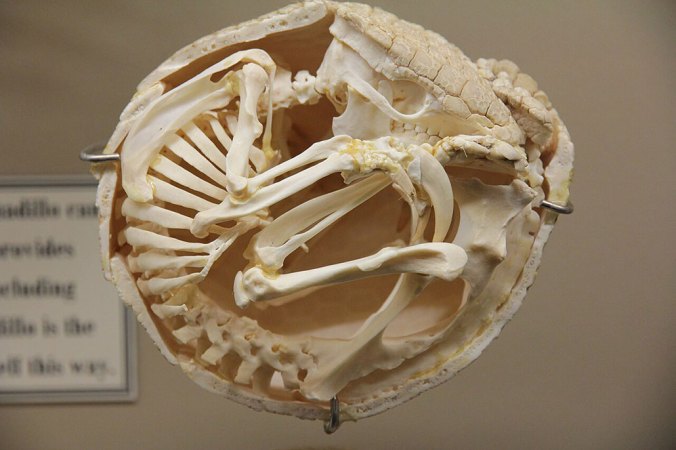
This skeleton of a three-banded armadillo shows how the creature can lock itself into a ball for protection. Polyoutis/Wikimedia Commons (CC BY-SA 4.0)
Some animals, such as turtles, have hard shells to keep predators or other dangers at bay. But the armor protecting three-banded armadillos and pangolins has another benefit: It can change shape, allowing the animals to form an almost perfect sphere.
Despite being able to morph, it offers a protective “rigid shell,” Zhou points out.
Anatomy of the robo-armadillo
It took the engineers more than a year to create their new robot. The challenge: They had to find a design that could curl up and lock into itself. For this, they took a layered approach. On the outside is a hard shell made from rigid, protective plates. They not only connect but also bend.
Inside this shell are layers of a flexible material that acts like a synthetic muscle. One layer expands when heated. Under that is a layer that contracts when heated. The innermost layer of the device is an inner skeleton made of almost-triangular pieces that lock together as the device rolls up. Zhou says it comes together like an origami creation.
The three-banded armadillo (left) rolls itself up when it senses possible danger. So does a new electronic device (right).Jianyu Zhou/North Carolina State University
Next, the team had to create a sensor that, when triggered, will set the shell in motion. When it detects a vibration nearby, which could be as gentle as a touch, this sensor sends a signal to an actuator. That component turns on a tiny heater that warms the muscle-like material. That material contracts, pulling everything together to form a wheel-like structure. The entire process takes about a minute.
This three-banded armadillo and wildlife ambassador, Roswell, demonstrates how to roll up into a ball.
Nina Attias has been studying armadillos for decades as a conservation biologist in Brazil. She works for the Wildlife Conservation Network, based in San Francisco, Calif. “I am passionate about armadillos, I love them,” she says. She’s happy, but not surprised, that these animals inspired the new robot. “Once you start knowing about them,” she says, “you see that these are pretty amazing creatures.”
The new device impressively mimics the armadillo’s strengths, she says. Only three of the 20 known armadillo species can roll into a ball. Those include the three-banded armadillo native to South America. It’s super-sensitive to vibrations, she adds. It can sense yummy underground termites. These armadillos also can detect the approaching steps of a jaguar that views them as lunch.
After sensing a touch, the new device similarly rolls itself up. And its contracting material, between the shell and skeleton, act like the strong muscles that keep an armadillo’s armor in place. When an armadillo rolls up, “you can’t open it for anything,” Attias says.
The new device survived a range of tests. For instance, the researchers dropped it from a few feet onto a bed of tacks. Fragile objects inside it, including glass spheres and raspberries, remained unharmed.
What’s exciting about the new device, Zhou says, is how it brings rigid and soft parts together. “The armadillo offers a good balance between function and protection,” he says.
Zhu says it’s too soon to know how people might decide to use such a device. But he’s encouraged by the success of a nature-inspired way to solve an engineering problem. In future work, he says that he’ll be looking at other animals for more inspiration.
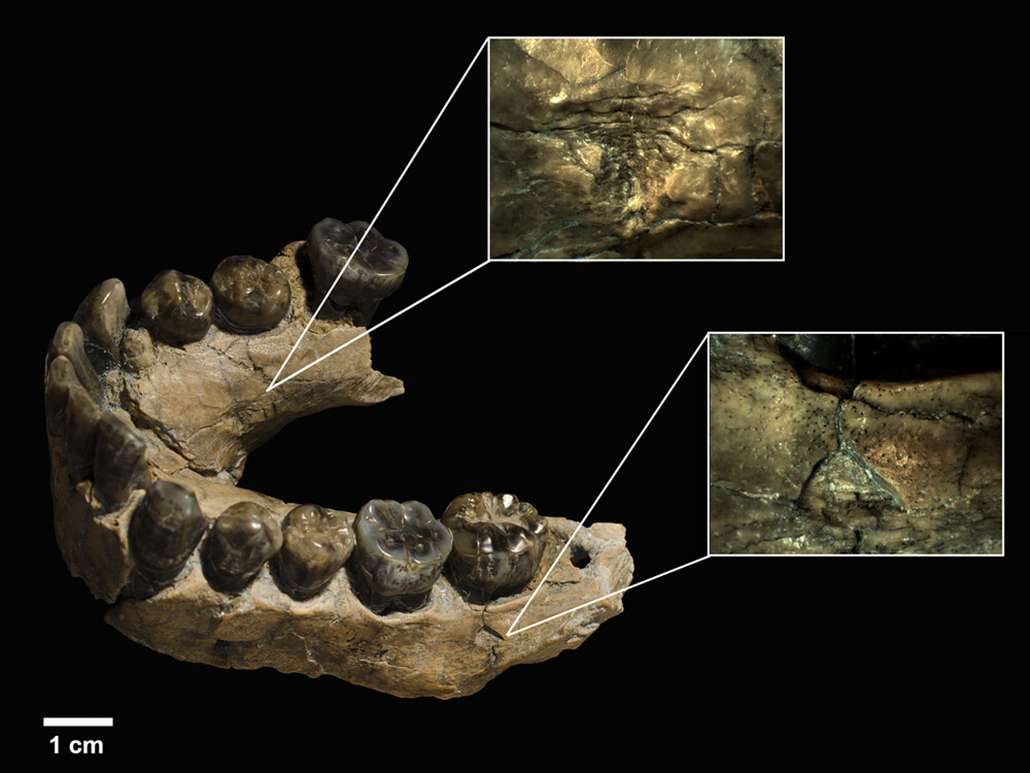
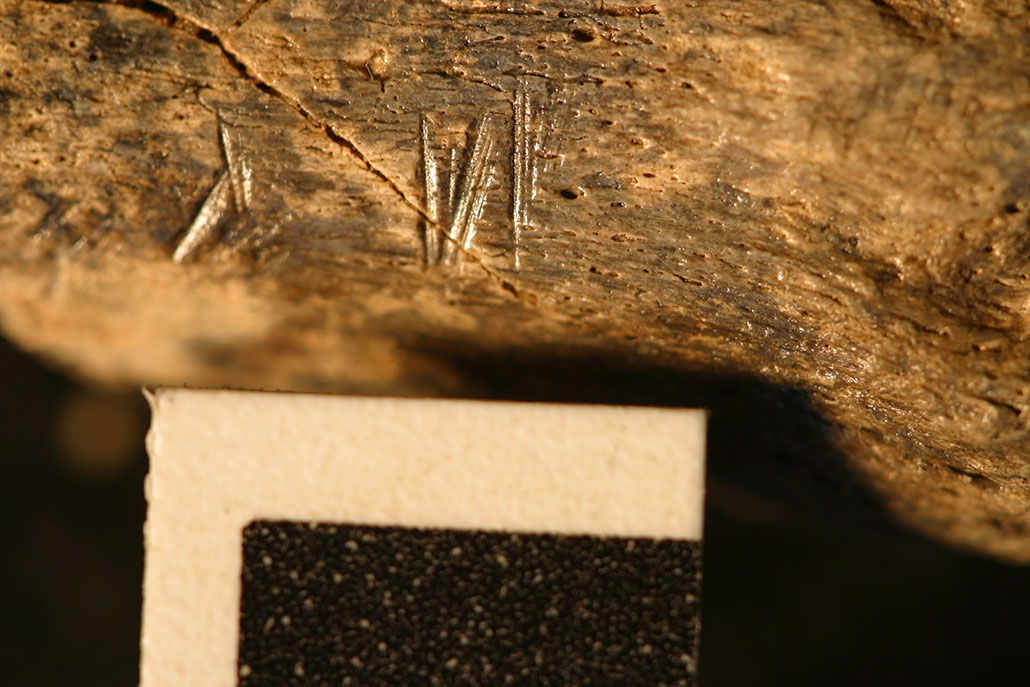
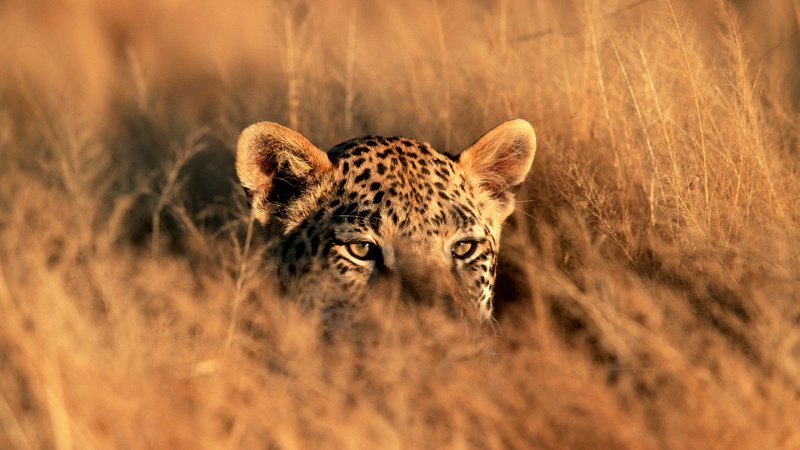
Nearly 2 million years ago, a leopard in Africa sank its teeth into the face of an early human. This bite etched tiny tooth marks into the unlucky person’s jawbone. That bone now speaks to a chilling early chapter in our history: when humans were prey.
The fossil belongs to Homo habilis. It’s one of the earliest members of our genus. (Homo includes modern humans and our closest relatives.) At first glance, the bone marks look like scratches. But a recent, close analysis tells another story. The bite marks suggest leopards hunted these early folk.
That discovery helps solve a fossil mystery. It also raises questions about a time when humans held a more precarious spot in the food web. Sometimes people ate meat. Other times, they were the meat being eaten.
That threat of becoming prey to some other predator likely shaped how humans evolved. To survive, our ancestors learned to count on each other for protection. They may have lived and worked in groups, sharing information about dangers and teaching each other skills. Over generations, these behaviors could have helped people become more cooperative and successful.
Today, it’s easy to imagine our early ancestors as fearless hunters, chasing prey across ancient savannas. But that image reflects a time late in our evolution. Before we became one of the world’s most successful predators, we first had to survive life as prey.
The cliffs of Olduvai Gorge in Tanzania have yielded a trove of ancient human fossils. They preserve evidence of a time when human survival on the savanna meant competing with — and sometimes losing to — powerful predators.ChrisCrafter/iStock/Getty Images Plus
When humans were on the menu
Much of what scientists have learned about ancient humans comes from fossils found at Olduvai Gorge, in Tanzania. Since the 1930s, researchers have unearthed many bones from our early ancestors at this site in southeastern Africa. They include a pair of tooth-marked jawbones.
Sharp stones likely served as knives. Cut marks on animal bones suggest early humans ate meat. This led many scientists to assume H. habilis was a hunter. But these early people may have dined on leftovers scavenged from bigger, stronger predators.
The bitten human jawbones add another angle to this story.
Marina Vegara-Riquelme studies our human ancestors and their fossils at the University of Alcalá in Spain. She led a team that examined H. habilis bones using artificial intelligence, or AI. Her group wanted to know what animal had left its bite marks on a human jaw.
Different carnivores have different eating habits. Hyenas often scavenge dead carcasses. Leopards, in contrast, rarely eat meat they didn’t kill. Knowing which one left the marks would suggest whether the H. habilis had been hunted or died some other way.
Tooth marks produced by a leopard are visible on this Homo habilis jawbone. Two pits, shown in insets, matched bite marks from a leopard.M. Vegara-Riquelme et al/Annals of the New York Academy of Sciences 2025
Even experts can struggle to tell apart the tooth marks of a leopard from those of a hyena, Vegara-Riquelme notes. But AI can. By comparing thousands of details, it can spot patterns too subtle for the human eye to see. Her team used thousands of tooth-mark images from modern carnivores to train the AI. Then they showed it the bones in question.
“Two Homo habilis specimens show tooth marks most likely inflicted by leopards,” Vegara-Riquelme says. That makes it look less like scavenging.
Study co-author Manuel Domínguez-Rodrigo co-directs the Institute of Evolution in Africa in Madrid, Spain. To him, it’s clear how the encounter ended. “That individual was preyed upon,” he says. “Not scavenged.”
If true, what had the lives of H. habilis been like with lions and leopards as neighbors? Could survival have required new traits that helped our ancestors ascend the food web?
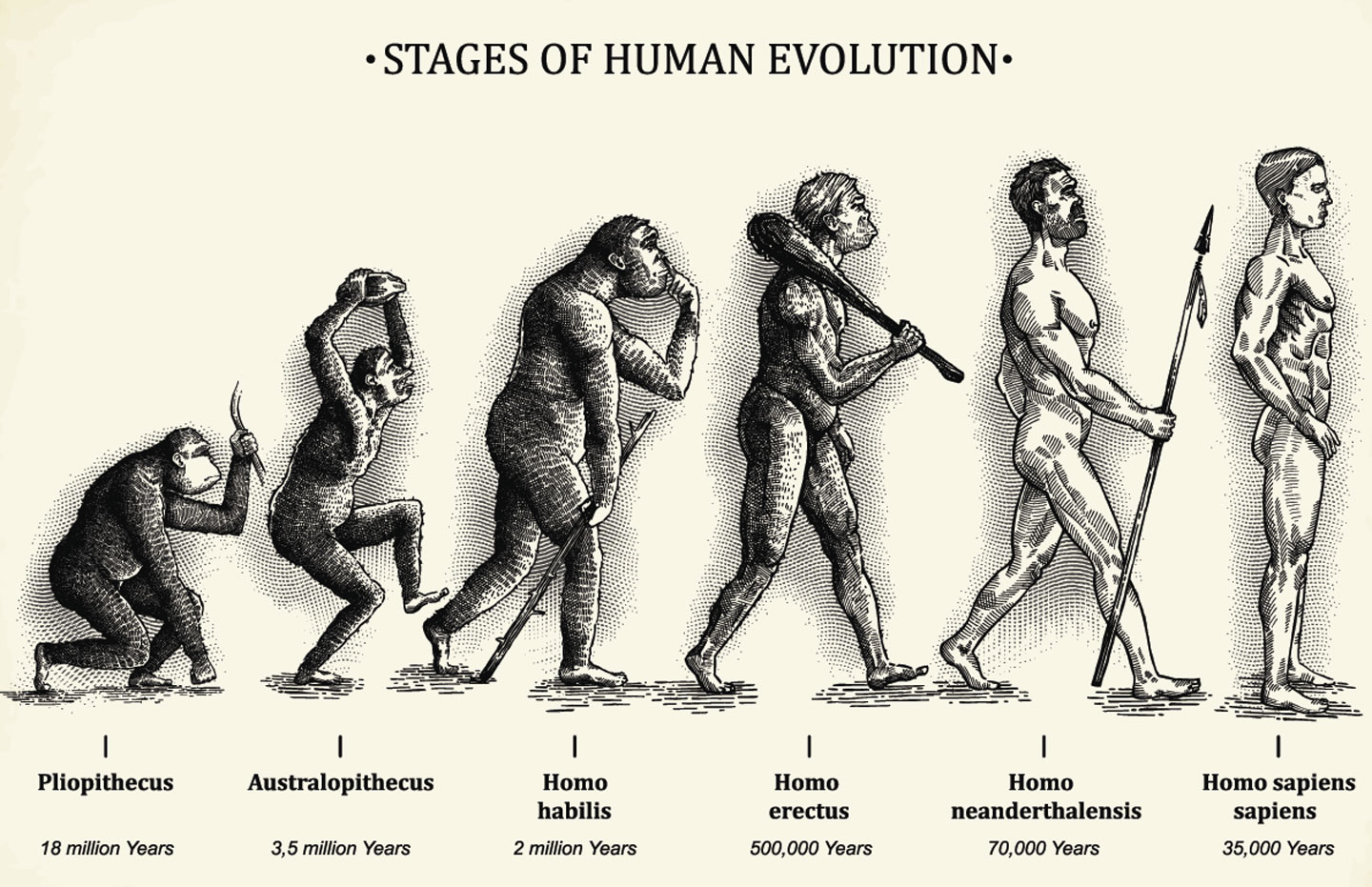
Homo habilis, which lived about 2.4 million to 1.4 million years ago, got its name — “handy man” — from its use of stone tools. Homo erectus, which emerged around 1.9 million years ago, had body proportions similar to modern humans.Man_Half-tube/DigitalVision Vectors/Getty Images
Life in a world of predators
For millions of years before H. habilis, our ape ancestors spent most of their time in trees. They might venture to the ground now and then. But when danger emerged, they’d dart into the trees and out of reach.
By the time H. habilis evolved, humans were walking upright (though not as well as today’s H. sapiens), spending far more time on the ground.
An open savanna offered new opportunities. Ambling upright helped early humans travel farther. It also gave them a better vantage to spot potential food across the landscape. But being out in the open may have made them easier targets, too, for powerful predators.
Craig Stanford studies predator and prey relationships among primates. He’s an evolutionary biologist at the University of Southern California in Los Angeles. He’s spent years in Tanzania watching Africa’s monkeys work together and protect one another.
Life on the open savanna would have been risky for early humans, he says. Even if predators killed only a few people, the threat would have shaped how early species lived and behaved.
“Predation may have been rare, but that doesn’t mean it was unimportant,” Stanford says. “There’s no question that predation influenced our evolution.”
Many prey species rely on group living for protection. “You have more eyes to detect a predator coming,” Stanford explains. When one animal spots danger and yells an alarm, others can run or climb to safety.
And safety in numbers isn’t just about watching. It can also help to fight back.
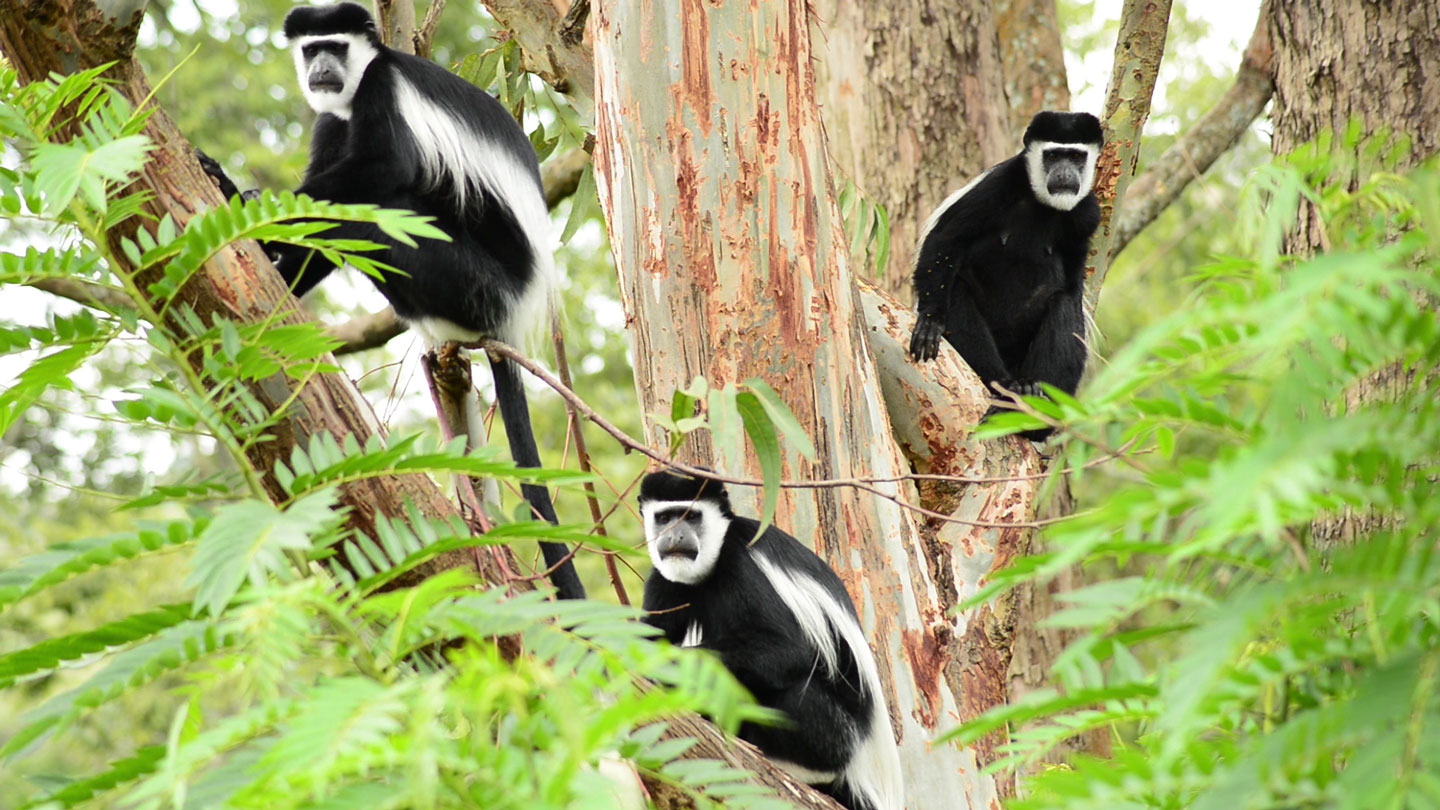
Many primates find safety in numbers. Largely tree-dwelling colobus monkeys, like these, have been known to team up to defend their group against a much larger chimpanzee.kunstbada/Creatas Video+/Getty Images Plus
In Tanzania, Stanford saw male colobus monkeys work together to fend off threats. They would leap onto chimpanzees that threatened them. An adult male chimp weighs about 54 kilograms (120 pounds); a colobus monkey only about 9 kg (20 lbs). “So three [monkeys] together weigh half of what the chimp weighs,” Stanford says. “They’re biting the chimps.” Such group attacks could fend off a chimp.
Early humans on the open savanna may have similarly benefited from teaming up. Faced with threats from big cats, people who were more alert and willing to cooperate may have been more likely to survive. If so, they could have passed along those traits to their offspring.
Survival wasn’t just about not becoming someone else’s meal, though. It also was about getting access to your own high-quality food. Here, too, cooperation would have helped.
Briana Pobiner works at the Smithsonian’s National Museum of Natural History in Washington, D.C. She studies what ancient humans ate and how they got their food. Marks on fossil bones can say a lot about this, she says.
Early humans would have cut meat from wherever they could get it. Consider butchery marks on bones that don’t have a lot of meat on them — “like ankle bones and lower foot and leg bones,” says Pobiner. Here, she says, “We think [humans] mostly got the scraps after the predators ate.”
Such a pattern suggests people were scavenging.
Marks of stone-tool butchery show up here, on a roughly 1.5-million-year-old animal bone from Kenya.B. Pobiner
With large prey, early humans likely ate after big carnivores had already taken the better meat. That doesn’t mean these humans didn’t hunt. They may have captured smaller animals on their own. Taking down large prey, however, would have been much harder and more dangerous.
“Early humans probably got the not-great parts of animals when they were able to eat meat,” Pobiner says. “The predators were getting the best parts.”
Fossils can’t directly show cooperation. But the bone markings suggest humans gained better access to meat over time. Researchers think teamwork may have helped make that possible.
Working in groups would have given humans a better chance of getting larger prey and better meat. Sharing meat may have strengthened social bonds. Plus, large carcasses are hard for one person to process or defend.
Such cooperation may have paved the way for humans to become more successful.
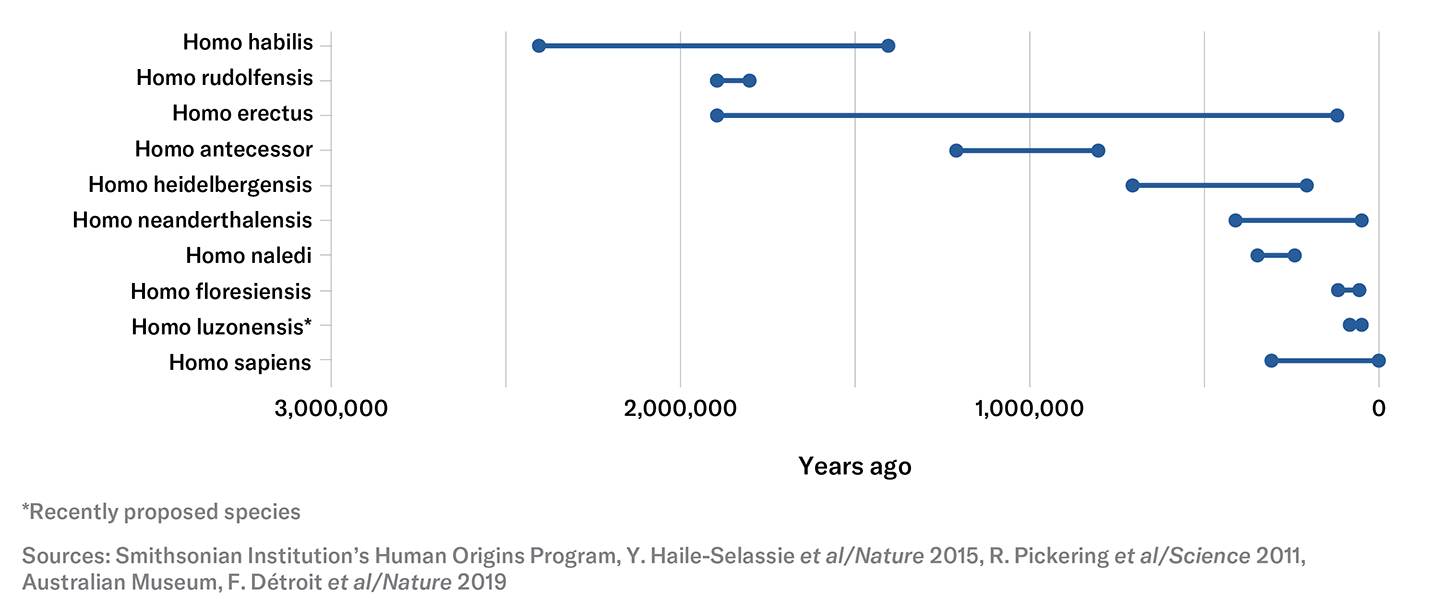
Human species across time
This chart shows the emergence (and later die-offs) of many humans — Homo species — throughout the past 3 million years. Notice how far apart H. habilis and H. sapiens are.
Adapted from H. Thompson/Science News
Learning to control fire
People likely evolved group living for several reasons, cautions Richard Wrangham. He works at Harvard University in Cambridge, Mass. As a biological anthropologist, he studies how fire has shaped human evolution.
Around 1.8 million to 1.5 million years ago, fossils show the rise of a new species of human, Homo erectus. Compared to earlier species, such as H. habilis, H. erectus had longer legs, a larger body and a bigger brain. These changes suggest humans were better adapting to life on the ground. This may have included sleeping there rather than in trees.
Here, fire also may have been key. “Once you’ve got fire, it increases the amount of protection against predators substantially,” Wrangham says. Flames and smoke would have scared off big cats, especially at night. He says, “I would imagine that there was much more predation of [early humans] prior to fire.”
Groups able to control fire may no longer have needed to retreat to trees each night. Sleeping on the ground would have marked a major shift in human evolution. With time, arms got shorter. Legs got longer. Walking and running became more efficient. Such changes would have made them more effective hunters, too.
People who could travel long distances could also track prey across broad savannas.
Controlling fire may have protected early humans from predators. For many reasons, it likely changed how they lived, slept — and ate. Some scientists, such as Richard Wrangham, argue that cooking (with fire) is what allowed humans to ascend to the top of the food web.
Cooked food is easier to digest. That extra energy could have allowed brains to grow bigger and more complex. Wrangham explored this idea in the 2010 book, Catching Fire: How Cooking Made Us Human.
Ours is the only human species alive today. But earlier in history, multiple human species lived — and evolved — beside each other. Fossils suggest that not all of these species advanced at the same pace. The pressures of avoiding predators while getting enough food may have nudged some species higher in the food web. As a result of these gradual changes, some species flourished. All but one of them — H. sapiens — died out.
By 300,000 years ago, stone-tipped spears appeared. Archaeologists found dozens of these along with the bones of hunted and butchered animals at a site in Germany. The find suggests that people had become skilled hunters. They planned ahead and worked in groups to hunt big animals. No longer just surviving within their ecosystem, humans were beginning to dominate it.
Those leopard bites on ancient jawbones remind us that humans haven’t always been on top. Our ancestors came to survive by working together, sharing resources and developing new tools and skills. Over time, these behaviors helped people shift from fearing predators to competing with them.
That almost nothing hunts us is a fairly recent development. Our history has been shaped by our vulnerability and the behaviors that allowed our ancestors to survive long enough to thrive.
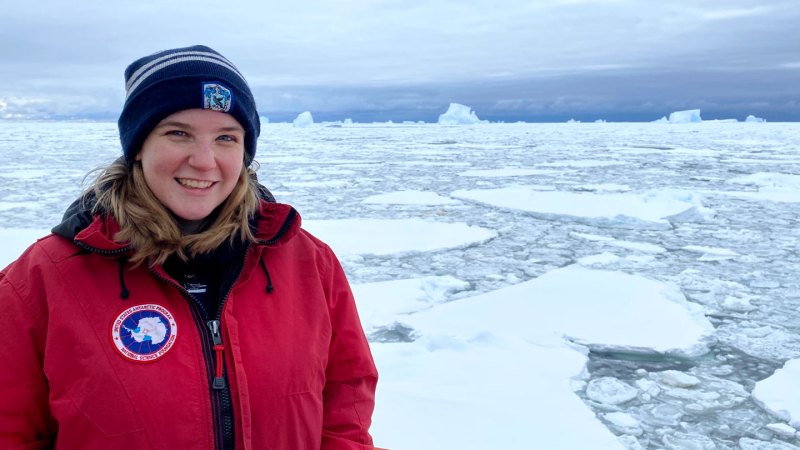
While at Brown University in Providence, R.I., oceanographer Lily Dove studied the physics of Antarctica’s Southern Ocean with the help of some unusual, furry assistants: Antarctic seals. “They’re oceanographers,” she says. “They are regularly making dives in areas that we don’t often get to sample.”
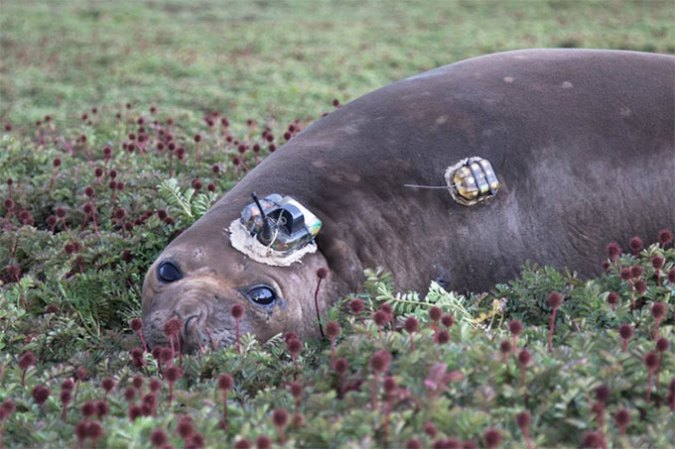
Dove didn’t work with the seals directly. Instead, she interpreted data collected by the Marine Mammals Exploring the Oceans Pole to Pole program. This international group of scientists collects ocean data through sensors attached to the foreheads of southern elephant and Weddell seals. (Don’t worry. The animals don’t mind.) The seals dive more than 100 meters (330 feet) in search of food, allowing researchers to monitor temperature, salinity and pressure at depths inaccessible to human divers.
Dove used these data to study how climate change is impacting the Southern Ocean. That’s the vast ocean that circles Antarctica. In certain areas of the Southern Ocean, atmospheric heat moves from the surface to the deep ocean. This heat is typically trapped for hundreds of years once it reaches the depths, further increasing ocean temperatures.
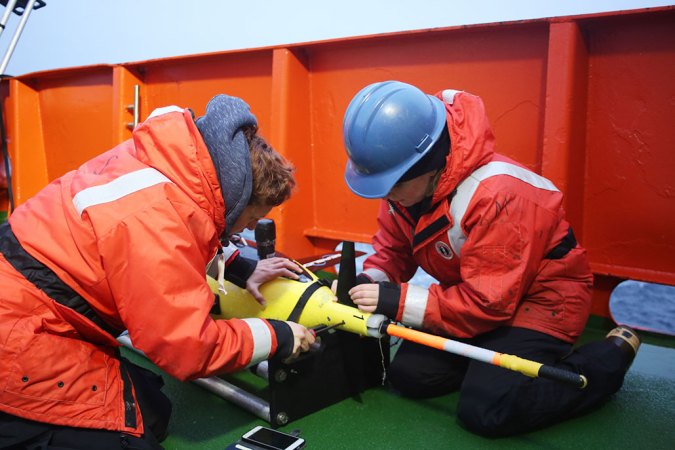
Now at the Georgia Institute of Technology, Dove works with autonomous robots to study polar oceans. Some, such as floats, ride sea currents. Others, such as gliders, are pilotable underwater vehicles, meaning Dove can target specific locations. “And this is all remote,” she says. “I can sit here in Georgia and tell my glider in a whole different hemisphere where I want it to go.”
This tech is also more predictable than her past assistants. “Seals are very independent,” she says. Unlike a glider, “seals very much tell me where they want to go,” she says. In this interview, Dove shares her experience and advice with Science News Explores. (This interview has been edited for content and readability.)
Part of Dove’s work has included analyzing data gathered by sensors placed on Antarctic seal species, such as Southern elephant seals. Etienne Pauthenet (EPFL, Switzerland)
What inspired your career?
Growing up in Florida, the ocean interested me as this powerful system that we take for granted. But I didn’t really consider it as a career back then. I knew I loved science, like physics and chemistry. In college, I knew I wanted to do one of those things or some combination. I changed majors like five times.
Then I realized that I liked those topics because they could help explain what I cared about: the Earth and the environment. I learned that you need all different kinds of science to understand the Earth system. Biology, physics, chemistry, geology — all of them. I ended up researching atmospheric chemistry.
How did you get to where you are today?
In graduate school, I took those skills from studying atmospheric chemistry and started doing oceanography instead. The atmosphere and ocean have the same physics. That made it feel like it was the perfect transition for me. I landed in a group that was investigating polar oceans, which wasn’t something I’d even considered before. I went to the Southern Ocean for the first time in 2020. The polar oceans are pretty remote and far away from where most people live. But they have massive impacts on our climate system, especially the Southern Ocean. It wasn’t until I was there that I realized that. That’s when I knew that this is exactly what I wanted to be doing.
Dove now uses underwater autonomous vehicles, such as this glider being prepared for launch, to explore the ocean.Linnah Neidel
What was your biggest challenge, and how did you overcome it?
I’ve experienced quite a bit of discrimination in this field as a woman. There are a lot of assumptions people have about who is welcome to do polar science. Historically, women have not been included on research cruises. Women used to stow away on ships to get data for their research theses. There’s a famous case at the Woods Hole Oceanographic Institution of a woman stowing away on a research vessel in the 1950s.
That stigma is still present to an extent, but it’s changing a lot. And it’s not just about women. People of color, queer people and disabled individuals are also experiencing this less-overt discrimination.
Throughout my time in the field and in academia, there have been times when people have assumed I can’t do something. That’s really frustrating, but it’s also given me the skill to really speak up and advocate for myself.
What advice would you give to your younger self?
Say “yes” to as many opportunities as possible. That could be attending an event, talking with a scientist or taking a course. The worst-case scenario is that you learn something new that’s just not super interesting to you. The best-case scenario is that something grabs your attention, and you can’t let it go.
I am also glad that I didn’t hyperfixate on a particular area of study super early. I’m glad I got a strong basis in a lot of different scientific fields before I decided on a focus. It allowed me to be really flexible and open to new ideas.
If you already know that you’d want to do something specific, listen to your gut. But if you are not quite sure, lean into just learning a lot.
When you hear the word “fossil,” you might at first think of a dinosaur skeleton at your local museum. Or perhaps the imprints of leaves or shells in a rock from a nearby creek. Both are examples of body fossils. But there is a second type of fossil: trace fossils.
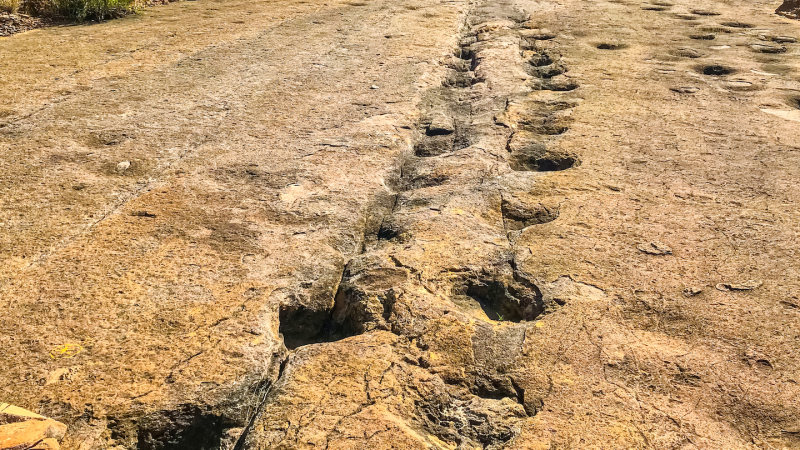
Body and trace fossils are created through similar processes. In both cases, some trace of an ancient life form is left in sediment. That remnant gets preserved when the sediment transforms into hard rock. But while body fossils preserve the remains of ancient life forms themselves, trace fossils keep a record of those life forms’ activities. Examples include burrows, nests, footprints, poop and vomit.
Ichnologists use trace fossils to obtain snapshots of ancient life forms’ daily lives that these scientists can’t get from remains alone. Take, for instance, fossilized poop, called a coprolite. Coprolites can offer clues about an ancient creature’s diet.
Dietary info can also come from fossil vomit, known as regurgitalite, and fossilized stomach contents, called cololites.
The marks that ancient animals carved into their environments can also make useful trace fossils. Rocks from coastal Taiwan, for example, contain burrows likely dug by giant worms some 20 million years ago. Those lairs suggest that the worms lurked beneath the seafloor like Star Wars monsters and shot out to attack their prey.
Scientists have also studied dinosaurs’ footprints to tease out details like how fast they ran.
Want to know more? We’ve got some stories to get you started:
Want to see how easy it is for ancient life forms to leave traces behind? Make your own trace fossil with instructions from the Natural History Museum of Los Angeles County.
Proteins are made of building blocks known as amino acids. Human proteins are made of various combinations of 20 of these. A diet especially rich in one of them — arginine — appears to help the immune system. It can fend off infections and at least one type of cancer, finds a new study in mice.
Arginine appears to ramp up the immune system’s ability to spot danger. A high-arginine diet seemed to offer the rodents some protection against flu and COVID-19 viruses. It also quashed colon tumors, says Sohail Tavazoie. A doctor and cancer biologist, Tavazoie works at Rockefeller University in New York City.
His team shared the new findings July 30 in Cell.
“I don’t want the takeaway to be that everyone should be just consuming arginine all the time,” says Tavazoie. It’s just too soon, he says, to know if taking it as a food supplement could prevent or even treat these diseases in people. But he’s interested in launching human studies to test that.
The new data do make a compelling case for further testing, says Costas Lyssiotis. He had no role in the new study. But he is a cancer researcher at the University of Michigan Medical School in Ann Arbor.
Might a high-arginine diet help the human immune system recognize tumors and target them for destruction? That’s not yet clear, Lyssiotis says. But, he adds, it’s something that is “super provocative and should be pursued.”
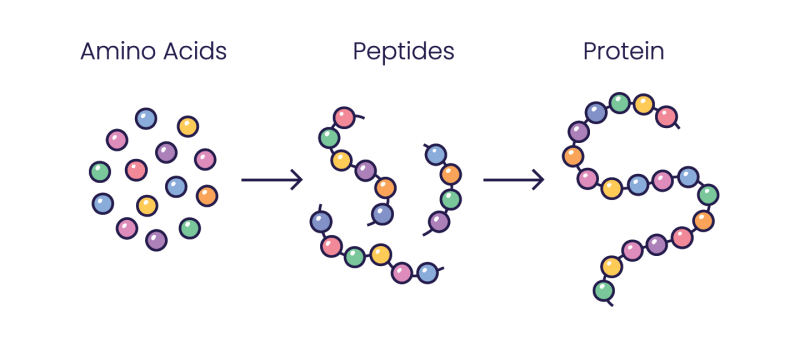
Amino acids are the building blocks used to build proteins in the human body and in many other organisms. As they start to assemble, these amino acids may form small molecular chains known as peptides. Eventually, these short chains will collect into the longer proteins that cells use to carry out their tasks.Vitali Dumma/iStock/Getty Images Plus
Not ‘essential’ — but beneficial
Research has been suggesting that arginine may play an outsized role in disease.
Nine amino acids are considered “essential” nutrients. That’s because our bodies use them but can’t make them; they must be acquired as part of what we eat. Arginine is not one of those. But because this amino acid can open blood vessels, some people do take arginine as a food supplement. The goal is to help their blood circulate.
Arginine also tends to be scanty in the lungs of people with influenza or COVID-19. It’s barely present, too, in the tumors that develop in people with colon cancer. What’s more, studies have shown that both cancer and viral infections can crank up the destruction of arginine.
Tavazoie’s team wondered what was so important about this amino acid that multiple diseases shut it down.
In the lab, his group tinkered with arginine levels in mouse and human cells. Cutting back on arginine reduced levels of key immune proteins, they found.
Take what’s known as MHC class 1 proteins. Riding on the surface of our cells, they tell the immune system what to watch out for. Like a police officer holding up a sketch of a criminal, they display snippets of viral or cancer proteins. But the immune system has trouble recognizing and rousting those outlaws when cells have fewer MHC-1 proteins than normal.
A key player in immunity?
Tavazoie’s team then turned to mice at risk of colon cancer. When the researchers fed them a low-arginine diet, MHC-1 levels fell and the number of colon tumors rose. But add bonus arginine to the diet — what would be about 10 grams a day for humans — and the outcome flipped. Now MHC-1 levels rose and tumor-forming fell.
These data suggest dietary arginine can control MHC-1, a very important group of immune proteins, Tavazoie says.
Arginine-starved cells slowed their assembly of MHC-1 proteins. That may be because these proteins contain long stretches of arginine units. If there aren’t enough of these building blocks available, “there’s a supply-chain shortage,” he says. At that point, MHC-1 construction stalls.
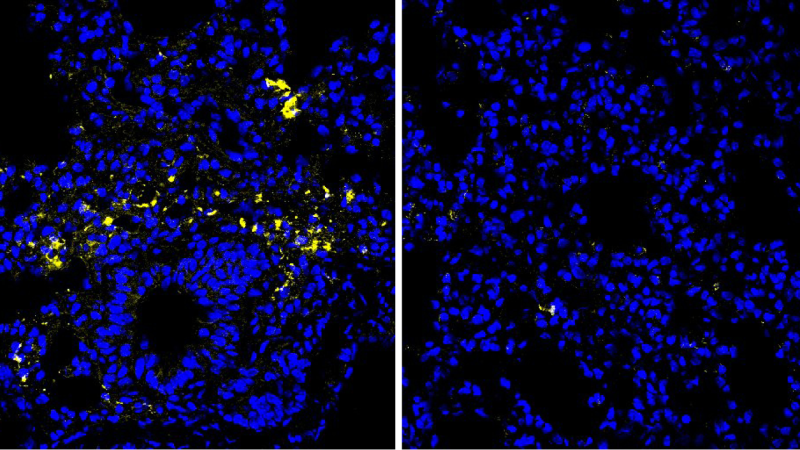
The team observed a similar story in mice infected with the flu virus or the virus that causes COVID-19. Low-arginine diets led to them having low levels of MHC-1 proteins. They also had more viral proteins and inflammation in their lungs compared to mice eating high-arginine diets.
This suggests arginine was blunting the effects of infection. And arginine supplements given after flu infection boosted mouse survival, the team found. That points to it as a possible treatment one day. Tavazoie now wonders whether other amino acids may play similarly important roles.
There’s still much work needed to know if the mouse data predict effects in people, says Pierre Close. He’s a cancer researcher at the University of Liège in Belgium. He didn’t participate in the new study. But, he says, this research might one day lead to therapies that help the immune system better tackle disease. “We are all looking for new strategies.”
Antimatter is made of antiparticles. Think of antiparticles like partners of ordinary particles, but with the opposite properties.
You’ve likely heard of protons, neutrons and electrons. These are the tiny particles that make up atoms. But you may not have heard of their anti-twins. These are antiprotons, antineutrons and positrons.
Particles and antiparticles have the same mass. But they generally have opposite electric charges. An electron is negative. So the positron is positive. A proton is positive. So the antiproton is negative. But exceptions to law of opposites exist. Take the neutron, which has no electric charge. It’s neutral. So the antineutron is also neutral.
When matter and antimatter meet, they destroy each other. If an electron meets a positron, for instance, they self-destruct. As physicists say, they “annihilate” each other. This releases energy in the form of gamma rays. That’s a high-energy type of light.
Antiparticles can bind together to form atoms, just as ordinary particles do. Scientists have built antihydrogen in the lab. They do that by pairing a positron and an antiproton. This isn’t an easy feat, though. If either of those antiparticles touch ordinary matter — poof! They cease to exist. That means scientists must “handle” the particles without touching them. They do this through magnetic or electrical fields.
Very, very little antimatter exists today. A tiny amount occurs naturally. For example, cosmic rays constantly smash into Earth’s atmosphere. When they do, they produce tiny bits of antimatter. Some radioactive decay gives off antiparticles, too. But antimatter never lasts very long. Normal matter quickly destroys it.
Scientists believe that the Big Bang produced equal amounts of matter and antimatter. Why does ordinary matter reign supreme today? That’s one of the universe’s biggest mysteries.
Our sweets cravings may have set the stage for the human brain to become big and powerful. That’s the finding of a new study.
The brains of our upright-walking ancestors, some 4 million years ago, weighed only around 300 grams (11 ounces). That’s about equal to a medium apple. Today, the human brain averages 1,500 grams (3.3 pounds). That’s about equal to 1.5 liters of water. Much of this brain expansion took place before early humans mastered both fire and cooking. That’s a point that marked when they could start regularly dining on energy-dense starches.
Carbohydrates come in two main classes. Sugars tend to be relatively simple molecules. Starches tend to be bigger and more complex. A new analysis of existing data from human ancestors, as well as chimps, suggests that a large share of their energy probably came from sugary carbs, such as those in fruits and honey.
Until now, much of how diet affected human evolution has centered on meat. Around 2.5 million years ago, our early upright-walking ancestors began eating more meat — raw at first, then eventually cooked. Meat is rich in protein and fat. And that appeared to play a big role in fueling our ancestors’ ever-expanding brains.
But Jennie Brand-Miller thought there might be more to the story. A nutrition scientist at the University of Sydney, in Australia, she wondered how sugars might have affected the evolution of our brains.
Fruits were a major part of the early hominid diet and remained so going forward in evolutionary history.swkunst/iStock/Getty Images Plus
A 2017 study had shown that fruit-eating primates had bigger brains than leaf-eating ones. Eating fruit boosts demands on various thought processes, other researchers had suggested two decades earlier. Might this have kickstarted the evolution of big brains in humans?
Explains Brand-Miller, “You need to remember when various species of ripe fruit begin to ripen, then you need to remember where it is in the forest.” And, she adds, “Your memory is associated with a bigger brain.”
“All these things kept adding pieces to this lovely tapestry, this puzzle that said fruit-containing sugars must be important [in human evolution],” she says.
Brand-Miller is part of a team that has now calculated the dietary needs of chimps, humans and three early species of human ancestors. To do this, the researchers combined data from fossils, teeth, the species’ metabolism and the biology of bodily processes.
Clever foraging skills would have helped fuel their energy-sapping brains. These would have included hunting, cracking nuts, grinding seeds or extracting bone marrow. Later, once cooking became common, humans could have turned to starches (such as grains, beans and tubers). But a constant need for sugary foods appears to have been a key player in our evolution. And it didn’t disappear after a shift to foods high in proteins and fat, such as meats.
Meat and sugars? “I see them as parallel stories, not one replacing the other,” Brand-Miller now says. “Animal foods were clearly important. They’re very nutrient dense.”
A past focus on meat-eating may have missed some food trends that helped build the human brain, agrees Julie Lee-Thorp. She’s an archaeologist at the University of Oxford in England. She did not take part in the new study.
For a long period, evolutionary biologists saw meat as a major energy source that helped fuel the growth and complexity of the human brain. And it did. But a new surprise is that sugary carbs did, too, and they may have even kicked off the brain’s evolutionary growth.Igoravris/iStock/Getty Images Plus
Focusing on meat’s role may reflect a modern bias, she adds. “Meat is a high-status food today,” notes Lee-Thorp. “And that has perhaps been carried over into the way we think about the past.”
But Brian Wood largely dismisses that. The study of human evolution has not been obsessed with meat-eating, he says. A biological anthropologist, Wood works at the University of California, Los Angeles. A diverse range of foods fueled our evolution, he says. And they were made possible by our growing “ability to capture and harvest high-quality, difficult-to-acquire foods.” This included hunting, sure. But, he adds, foraging for fruit, honey, nuts and the underground parts of plants was also part of it.
Earth has frozen over in the past — at least five times. Science fiction is full of takes about how it might happen again and the implications of a modern ice age. The problem: At a minimum, sci-fi gets the timetable for Earth turning into a “snowball” wrong — often laughably.
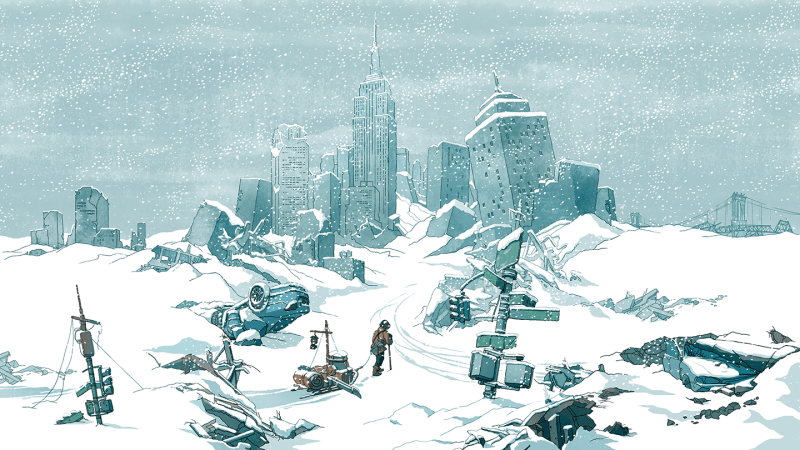
Here’s how some stories have portrayed it: Earth freezes. Humankind’s remnants huddle in ice caves, fending off giant alien monsters (Snowball Earth). Or people shelter in the New York Public Library as ice encases the Empire State Building (The Day After Tomorrow). Or a train hurtles in an endless loop, both protection and prison for Earth’s scant survivors (Snowpiercer).
These stories are all set in Earth’s near future, within a decade from now. And what makes their visions so chilling is that there’s at least a snowflake of truth in each. (Well, space monsters haven’t invaded Earth — yet.)
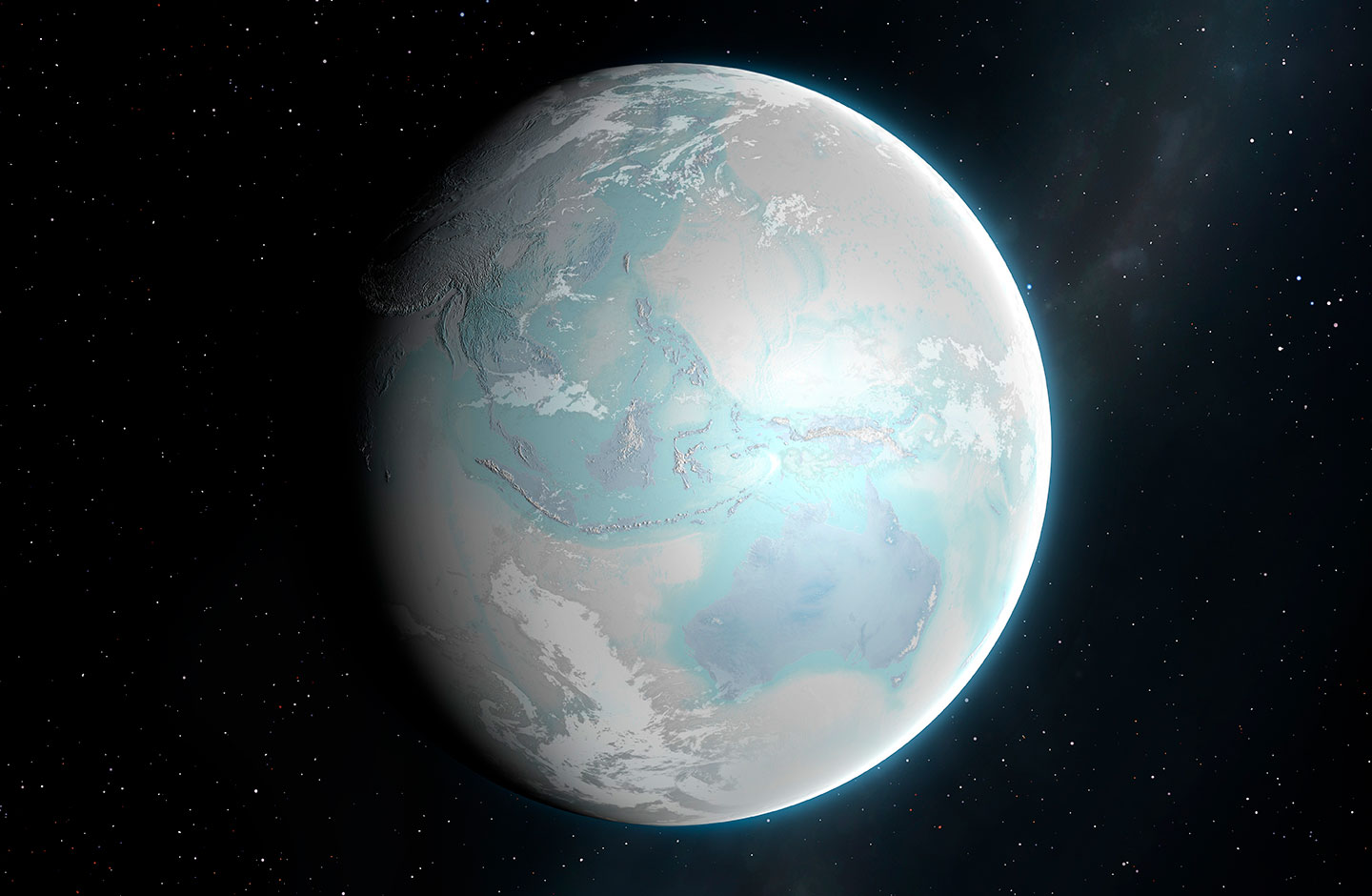
The most severe of Earth’s ice ages spanned from 720 million to 635 million years ago. It’s aptly been named the Cryogenian Period, from the Greek krýos (meaning cold) and génesis (meaning birth). At least twice during this period, glaciers extended from pole to pole. It could have amounted to a true Snowball Earth.
Although “maybe it was more of a Slushball Earth,” says Thomas Algeo. A geoscientist, he works at the University of Cincinnati in Ohio. Fossils, he says, suggest that even in the coldest times, seafloor-dwelling algae survived. They would have needed sunlight. So patches of open water must have persisted near the equator, he says.
The concept of a “Snowball Earth” includes glaciers and ice sheets spanning much of the globe, as imagined in this illustration.MARK GARLICK/SCIENCE PHOTO LIBRARY/Getty Images Plus
All such past deep freezes set in due to a series of geologic events. Take the Cryogenian. It developed after shifting tectonic plates caused a supercontinent to split apart. That increased rainfall and rock weathering. These dramatically reduced atmospheric carbon dioxide, which triggered a runaway cooling effect. Widespread ice, which reflects the sun’s warming rays back into space, would have exaggerated that cooling.
All of these processes are slow, which is not ideal for action flicks. Fortunately, sci-fi can play with time. It’s not unusual for fiction to take natural or human-caused climate interactions (and feedback effects) and accelerate or amp them up for drama.
The Day After Tomorrow, for example, which hit theaters in 2004, is based on a real-world scenario: the potential shutdown of a part of a global system of ocean currents. These move heat around the planet. Known as AMOC, this system is short for the Atlantic Meridional Overturning Circulation. Today, AMOC brings relative warmth to regions that might otherwise be frigid.
Scientists today fear it could happen again — and soon.
But to geologists, “soon” doesn’t mean in days to weeks (as portrayed in The Day After Tomorrow). For them, it means perhaps decades to a century.
Here’s the movie trailer for 2004 disaster flick The Day After Tomorrow.
The Day After Tomorrow’s filmmakers were “quite up-front” about their process, says Stefan Rahmstorf. For ultimate drama, they just “took known weather extremes — tornadoes, storm surges, cyclones, hail storms and blizzards — and amplified those.” Rahmstorf is a physical oceanographer at the Potsdam Institute for Climate Impact Research in Germany. He fact-checked aspects of the film.
Despite its super-short timeline for turning the Northern Hemisphere into a deep freeze, this film did point to some very real science, he notes. For instance, the movie starts out with its science hero giving a talk at a United Nations science meeting. Its topic was “the possible risk of a shutdown of the North Atlantic Current. I gave a very similar talk at such a UN conference in Buenos Aires in 1998,” Rahmstorf notes. “I even showed the same diagram [as the movie’s scientist].”
Snowpiercer imagines a different deep-freeze scenario. Geoengineering goes haywire in this 2013 movie, 2014 graphic novel and TV series (which ran from 2020 to 2024). Here, scientists release aerosols into the sky to reflect sunlight back to space. Their goal was to slow global warming. This idea is, in fact, based on a real type of Earth engineering known as solar-radiation management.
But in this story line, the aerosols proved an overkill. They plunged Earth into a deep freeze within weeks (hours, actually, in the novel).
Geoengineering strategies could cool Earth — just not that quickly. They would more likely take at least a few years. And they wouldn’t be that potent, either. To bring on an ice age, aerosols would have to be deliberately and repeatedly injected over generations, says Douglas MacMartin. He’s a climate engineer at Cornell University in Ithaca, N.Y.
How Earth freezes in Snowball Earth is still something of a mystery, as the manga is still in progress (though a streaming anime version debuted in April). Here, the transition to an ice world takes about a decade. And — spoiler alert — giant alien monsters might have had something to do with it. (For that, scientists don’t really have an answer.)
But the premise behind these stories — that Earth could freeze over — is grounded in very real science. It’s happened before and could again. But it won’t happen quite the way these stories tell it.
One of Earth’s most vital ocean currents is rapidly weakening. The cause: global warming. A collapse of this current could send devastating ripples through the planet’s climate.
The current is known as the Atlantic Meridional Overturning Circulation. Most scientists just call it AMOC. If it were to shut down, the consequences could be catastrophic and far-ranging. In the worst case: Earth’s warming climate could flip to a deep-freeze. Scientists refer to this scenario as a “snowball Earth.”
Why might that happen?
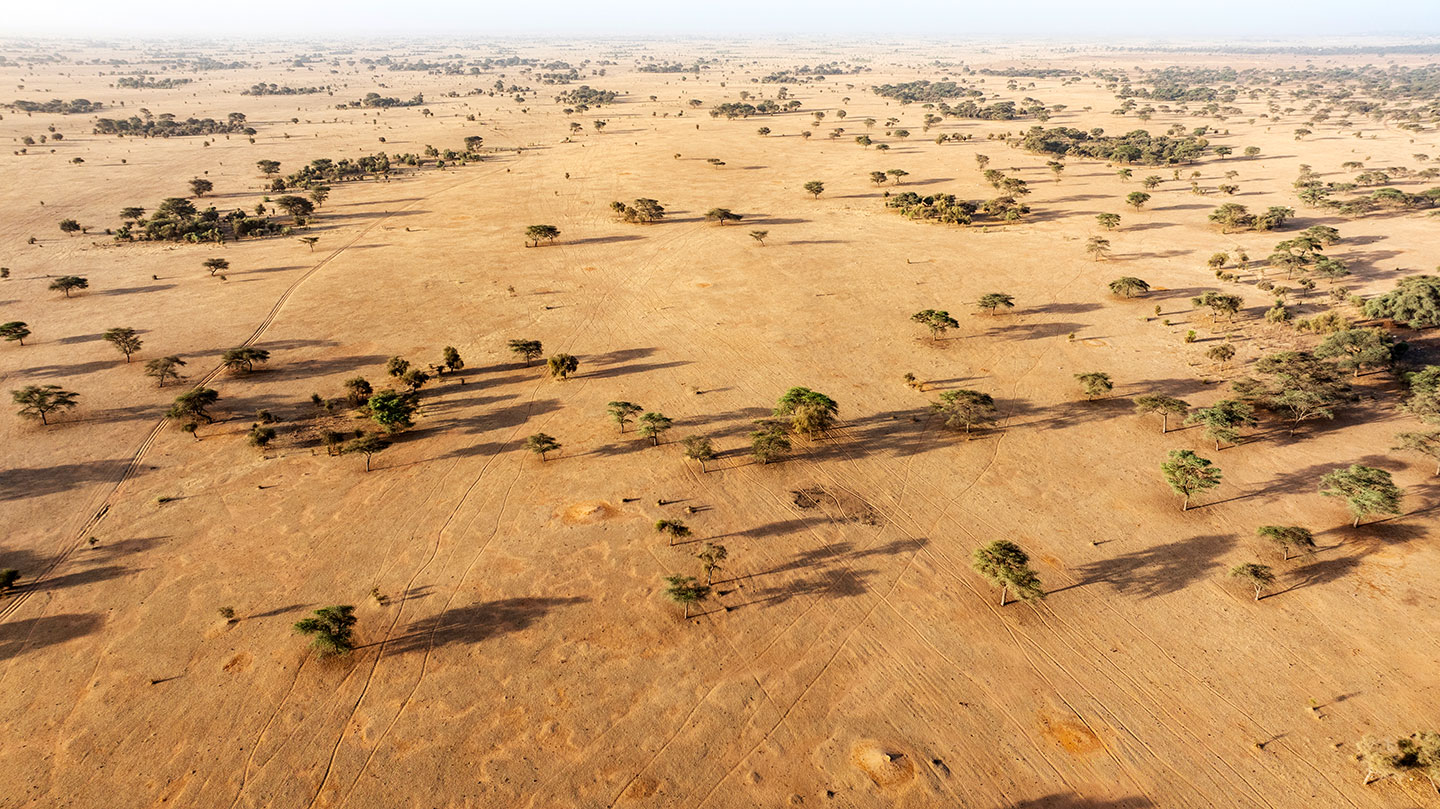
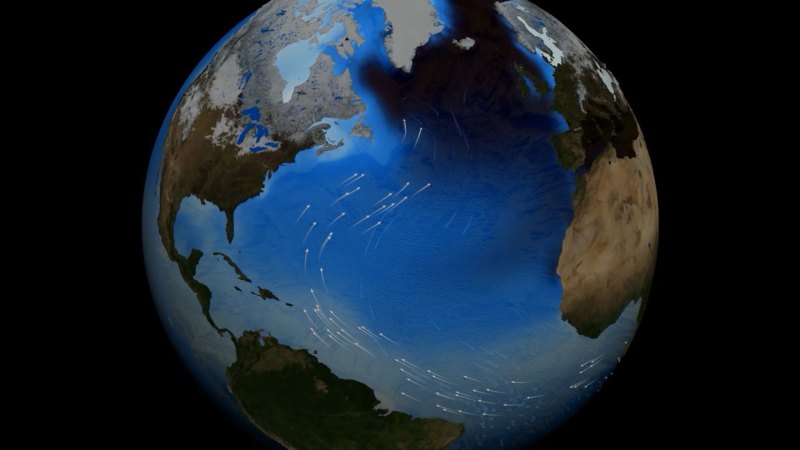
AMOC moves warm surface waters in the Atlantic Ocean from the tropics northward toward Europe. This water ferries with it a massive amount of heat. If that transport were to shut down, scientists say, the world might see a host of dramatic weather. Europe could experience more temperature extremes, of both chilling and heating. The Southern Hemisphere would warm even more than it is now. The North Atlantic would trigger stronger storms. The drought in Africa’s Sahel would worsen. And summer rains in Europe could sharply decrease, with devastating outcomes for farmers.
Africa’s Sahel region stretches across the continent just south of the Sahara Desert. A weaker AMOC could worsen drought conditions there, such as this arid region in Senegal.Martin Harvey/Photodisc/Getty Images
Researchers have rung warning bells about the AMOC for decades. Its possible shutdown even was the theme of The Day After Tomorrow, a 2004 snowball-Earth disaster movie.
This short January 2025 video notes that the scenario that played out in The Day After Tomorrow had actually been an extrapolation from research observations by Scottish geoscientists.
Their consensus: It’s not good — AMOC is weakening.
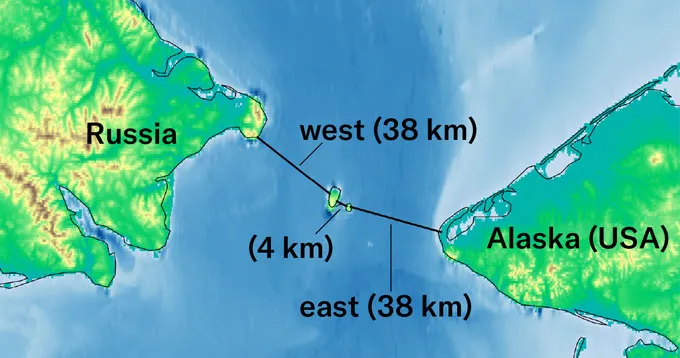
The stakes are so alarming that some scientists have proposed engineering changes to AMOC. One is building a series of dams to seal off the Bering Strait between Russia and Alaska. By cutting off the northward flow of water from the Strait into the AMOC, the current’s strength might stabilize. At least that’s what researchers claim in a report April 24 in Science Advances.
Such proposed changes are controversial. No one can be sure what unknown impacts they might trigger. And the Science Advances paper “is very much a conceptual study,” says Jelle Soons of Utrecht University in the Netherlands. By that he means it’s a clever idea — but no one yet knows how it might be achieved. And Soons should know. He’s not only a physical oceanographer but also a coauthor of that new report.
What such suggestions can do is focus attention on how serious a threat an AMOC shutdown is — and how little time remains to address it.
The role of sea salt
A system of currents — including the AMOC — moves ocean waters around the planet. The water’s density is what drives them.
Saltier masses of water sink below less-salty ones. Colder waters also sink relative to warmer ones. The constant shifting between these masses keeps those currents on the move, almost as if they were riding a conveyor belt.
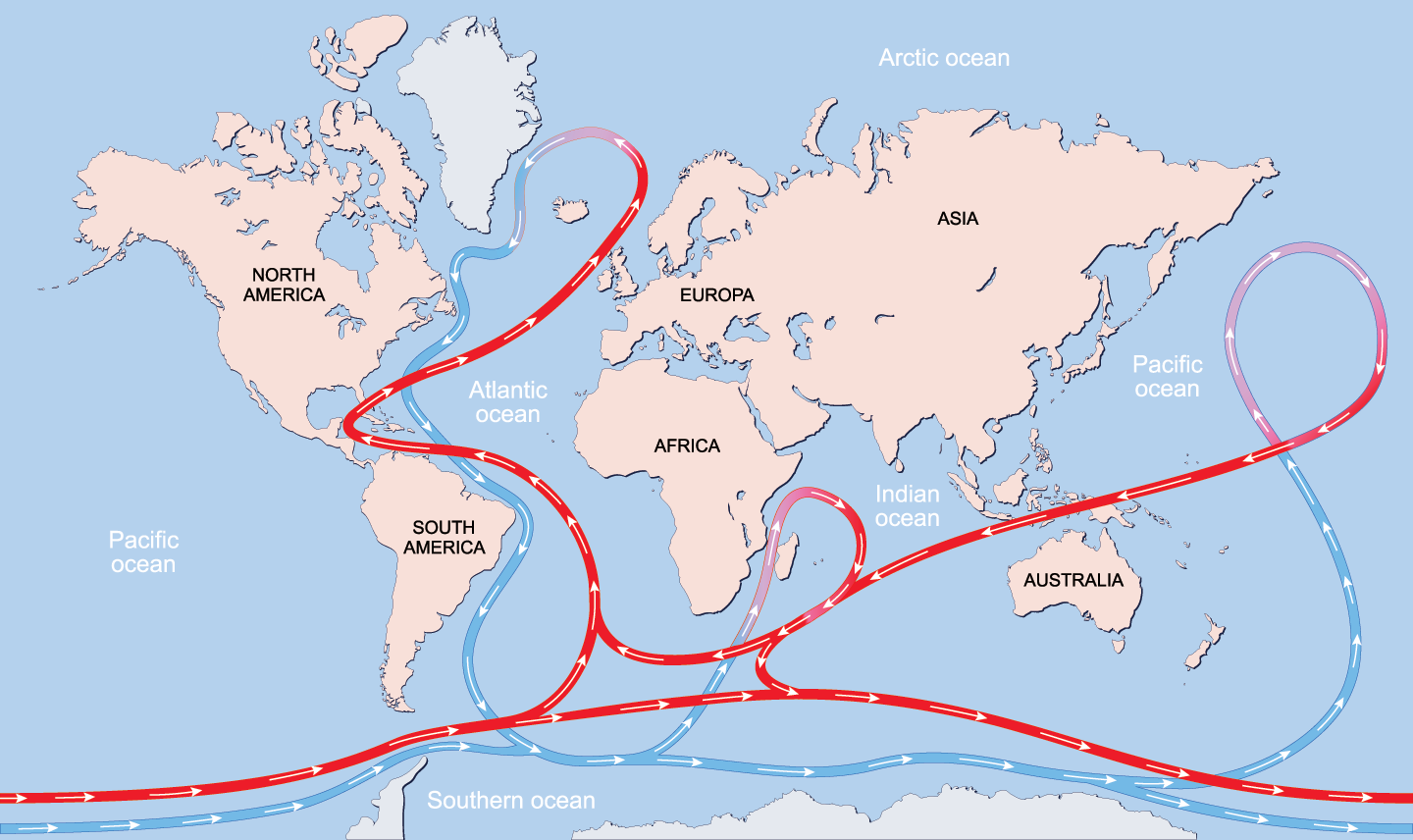
As the AMOC releases heat to the atmosphere at its North Atlantic destination, the water chills and sinks. That colder, denser water then heads back southward along the seafloor. To replace it, warmer water gets pulled northward along the surface.
Surface ocean currents are shown in red and deep water currents are shown in blue. AMOC is the major current in the Atlantic Ocean, carrying warm water from the tropics toward Europe and cold water from the Arctic down the east coast of North America.ttsz/iStock/Getty Images Plus
For decades, researchers have worried that Earth’s changing climate could weaken AMOC’s strength.
Computer models have suggested the AMOC might weaken as the planet warms. But those models found it hard to know when and by how much — at least without data measured from the current. And such data had been lacking.
But scientists now have about two decades of direct observations to work with. These seem enough to start identifying a trend.
Predicting how the AMOC will change over time is “not as easy as predicting global temperature,” says Stefan Rahmstorf. He’s a physical oceanographer at the Potsdam Institute for Climate Impact Research in Germany. “It’s notoriously difficult to get [AMOC predictions] right,” he says.
The uncertainty is not strongly linked to future predictions of greenhouse-gas releases, says Valentin Portmann. He’s a climate-data scientist at the University of Bordeaux in France. He’s also lead author of the April 15 paper. Instead, he says, the issue comes down to differences between the many climate models.
The U.N. Intergovernmental Panel on Climate Change (IPCC) regularly updates its prediction of how Earth’s climate may change over the next few decades. To do this, it uses about 50 different computer models of climate. They’ve been developed by different scientists across the globe. Each model uses data on the current climate differently as it seeks to predict the future.
“The IPCC takes the mean of these to estimate what will be the future climate,” Portmann says. But the estimates can vary a bit above and below the mean, or average. This is known as standard deviation. For projections of Earth’s future heat, climate models show little disagreement. But for AMOC, the “spread is very high.”
The biggest problem, scientists say, is correctly projecting how salty different parts of the Atlantic Ocean’s future water will be. Where saltier and less-salty parts will be also matters, since saltier waters are more likely to sink, helping to drive currents.
To make an accurate prediction, Rahmstorf says, “you have to get the salinity all over the Atlantic Ocean right.”
To do that, scientists must also predict how precipitation will vary as the climate changes. Why? Rains can dilute the ocean’s saltiness. To predict rains, he says, “you’re talking about clouds — the biggest uncertainty in [climate] models.”
This video describes how water temperature and salinity affect ocean currents. Toward the end, researchers describe NASA’s Aquarius satellite, which launched in 2011 to collect better data on ocean salinity.
That’s one reason past models have varied widely when predicting how much AMOC will weaken over the next 75 years. The average drop hovers around 32 percent — give or take another 37 percent!
Portmann’s team used a branch of math known as statistics to get a less fuzzy estimate. One approach helped simplify complex problems with a lot of variables, like this one. This approach is “not often used in climate science,” Portmann notes, “but is very well known in statistical science.” Called ridge-regularized linear regression, it offered the best match to the problem.
It showed the likelier outcomes were those seen in models whose predictions were more dire. They now suggest AMOC will weaken by about 51 percent (plus or minus 8 percent) by the end of the century.
“What they have shown very convincingly is that, unfortunately, the simulations with the strongest decline are the most realistic ones,” says Rahmstorf. He did not take part in that analysis.
The biggest factor in this correction came from how one factor was weighted: how salty the surface of the future South Atlantic Ocean will be. Researchers had long suspected that the saltier those surface waters would be, the weaker the AMOC would become.
The new analysis now supports that link.
And measurements of these waters show they have been getting saltier. One reason is increased evaporation as the oceans have been warming. Another reason: More salty water has been leaking into the South Atlantic from the Indian Ocean as wind patterns shift.
The AMOC’s ins and outs are a lot to grasp
Scientists have identified many things that impact the AMOC besides the salinity of the South Atlantic. Those include circulation in the Nordic Seas and the release of freshwater into the oceans. This is especially likely in places such as the Arctic’s Bering Strait or where meltwater from Greenland’s ice sheet is flowing into the sea.
In fact, any big glut of freshwater entering the ocean is going to have a huge impact on its density. That in turn will drive changes in ocean currents.
Consider one 2025 study in the Earth ArXiv. Hundreds of thousands of years ago, it showed, meltwater from a decaying Greenland ice sheet triggered a weakening of the AMOC. That weakening lasted about 1,000 years!
Meltwater from the Greenland Ice Sheet that reaches the ocean dilutes the sea’s salinity. In the past, large amounts of freshwater flooding the North Atlantic weakened the AMOC. Jason Edwards/The Image Bank/Getty Images Plus
Still, AMOC is one complex beast. It has a northern branch known as the Nordic Seas Overturning Circulation, or the NOC. Even as AMOC has been weakening, NOC appears to be stable. Some computer models even project it could strengthen a bit in coming years.
That might seem like good news, says Sasha Roewer. She’s a physical oceanographer at the Max Planck Institute for Meteorology in Hamburg, Germany. However, she warns, NOC’s strengthening might actually be another warning sign.
She, Rahmstorf and other researchers modeled what would happen as the North Atlantic Ocean became less salty. On April 20 in Ocean Science, they reported this would — for a time — strengthen the NOC current.
But “eventually it reaches a tipping point where convection in the Nordic Seas breaks down,” Roewer says. And then, she says, “both currents collapse.”
The idea of damming the Bering Strait “really was a very spontaneous one,” says Soons at Utrecht. “It just started with a thought experiment.”
A study last year in Geophysical Research Letters analyzed what had played a role in a strong AMOC some 3 million years ago. And the Arctic’s Bering Strait was one factor.
Researchers propose that constructing three dams spanning a total of 80 kilometers across the Bering Strait could help stabilize the AMOC. J. SOONS AND H.A. DIJKSTRA/SCI. ADVANCES, 2026
It is narrow, just 82 kilometers (51 miles) wide. It’s also shallow, on average just 30 to 50 meters (100 to 160 feet) deep. So changing sea levels will alter how much water flows through this strait.
And that finding was like a light bulb going on, says Soons. “It made me think: Could we close the Bering Strait again?”
His simulations with Utrecht colleague Henk Dijkstra now suggest that damming the Bering Strait might work. But it’s also time sensitive. If the closure occurs during a very weak AMOC, they found, this stabilizing effect could backfire.
The damming idea has triggered mixed opinions. Notes Soons, “There are debates of whether we should even [study] geoengineering.” Why? “It would distract from the real problem,” says Soons — “give people a way out” of focusing on reducing the pollution behind climate change. (Soons admits that he and Dijkstra didn’t consider ecological and other impacts of damming the Strait.)
“I’m not a great fan [of the dam proposal], to put it mildly,” says Rahmstorf. “The most important thing we can do is stick to the Paris Agreement,” he says. This United Nations treaty aims to reduce emissions of greenhouse gases and slow global warming.
In fact, average temps this year are likely to blow through that treaty’s target: a warming of 1.5 degrees Celsius (2.7 degrees Fahrenheit) above what was typical in the 1700s. (That’s when heavy use of fossil fuels began.)
The world has likely not passed the point of triggering AMOC to stall, Rahmstorf says. When exactly that will be, he adds, is hard to know. But based on the most recent studies, that time might come as soon as the 2040s. That suggests, he says, “We have no time to lose.”

 Login