❌

Reading view

What to know about using AI chatbots for therapy

When you’re feeling sad, angry or stressed, it might be tempting to ask a chatbot for help. In fact, a new survey of 12- to 21-year-olds showed that nearly 1 in 5 of them had turned to AI for mental health support. That’s up from 1 in 8 just a couple years ago.

It’s perhaps not surprising that many teens and young adults are seeking advice. In 2023, a whopping 40 percent of high school students said they felt so sad or hopeless that they couldn’t engage in activities that are normal for them. In 2024, 15 percent of 12- to 17-year-olds had a major depressive episode — many without treatment.

Clearly, there is a big need among young people for mental and emotional support. But as lifelike as they might sound in conversations, chatbots aren’t real people with empathy. And free, general-use chatbots such as ChatGPT, Meta AI and Character.AI weren’t built to support mental health. They don’t earn licenses to offer therapy — or follow rules for treating patients — the way humans do.

So, what should teens know before using AI tools for mental health advice? Science News Explores asked the experts.

an illustration showing a boy laying on his stomach on a sofa and looking at a tablet
“There absolutely are positive use cases for using even general-purpose [chatbots] to learn more about mental health,” says psychologist Vaile Wright. These tools can help you search for information on mental health conditions and find resources. (Just be sure to double-check a chatbot’s answers.)Malte Mueller/fStop/Getty Images

Should AI ever be used for mental health help?

A chatbot could help you learn more about mental health issues, says Vaile Wright. A psychologist in Chicago, Ill., she works with the American Psychological Association.

You could use AI to search for information about mental health conditions and resources online, Wright suggests. (Just be sure to double-check its findings. Chatbots sometimes make stuff up.) An AI might even be able to offer “some basic advice if you’re struggling in the moment and don’t know where else to turn,” Wright says.

Treating a chatbot like a therapist, though, is not wise. “It’s really when you’re having these multi-turn, very extended types of conversations where you’re using the chatbot to fill some sort of emotional gap in your life,” Wright says, that you enter risky territory.

Why doesn’t a chatbot make a good therapist?

A real therapist’s goal is to help their patient. Chatbots are different. “They’re purposely engineered to keep people on the platform for as long as possible,” Wright says. “The way they do that is by being exceedingly validating and just telling people exactly what they want to hear.” That might feel good. But it’s not what a therapist would do. And it’s not likely to give you useful advice.

“A therapist is going to validate somebody’s feelings,” Wright says. “But it’s also our role to point out where … someone’s acting, thinking or feeling in ways that’s not maybe helpful to them.”

Plus, a chatbot doesn’t have the same types of information a therapist does, says Darja Djordjevic. She’s a psychiatrist at Stanford University in California. “AI was built to have this encyclopedic knowledge,” she says. “But it doesn’t understand the context of people’s lives.” That well-rounded knowledge of a person is key to aiding their mental health.

What are the risks of treating chatbots like therapists?

“They do not handle any mental health crises or emergencies well,” says Djordjevic. She has studied how AI systems would respond to users with a variety of mental health conditions, such as self-harm, anxiety and eating disorders.

“The models really don’t do a good job of recognizing … situations that would warrant human intervention,” Djordjevic says. “Unfortunately, we have some very tragic, more extreme cases [showing this] that involve young people.” Take Adam Raine, 16, of California. He died by suicide last year after discussing his suicidal thoughts with ChatGPT.

Djordjevic notes how crucial human connection is. “We have very little research right now on what the long-term effects of using AI for mental health would be,” she says. “What we do have a lot of research on is how much social connection and human contact are important for health and flourishing. So we know what’s good for us.” Leaning on AI might get in the way of forming crucial connections with real people.

There also are privacy risks to using AI, adds Wright. “Everything [you] put in these apps is not private. All the chats are maintained.” If a chatbot were hacked, someone else might be able to read your sensitive conversations with a bot.

a woman and a teen girl sit on a sofa, the girl is hugging a pillow and looks very sad. The woman looks concerned and supportive.
A chatbot might be able to help you brainstorm ideas for how to ask a trusted adult for mental or emotional support. Frants Tsyvinskyi/iStock/Getty Images Plus

Any advice for seeking mental health help from people, not chatbots?

“It doesn’t have to be an either-or,” Wright says. “You could use the chatbot to say, ‘I’m nervous about approaching my dad about my concerns. How could I do it?’… Using the chatbot as a tool to connect with human relationships in real life, I think, is probably one of the most impactful things that this technology can do.”

Djordjevic notes that most schools have a counselor students can talk to. The National Alliance for Mental Illness also has lots of resources on its site, she adds. This includes a free, confidential helpline for teens.

Sometimes, it might seem easier or less embarrassing to ask a computer about mental-health issues than a real person. In the new survey, almost two-thirds of young people who used chatbots for mental health didn’t tell anyone they were doing it.

But for anyone nervous about seeking human help: Fear not, Djordjevic says. “A lot more adults and people around you have struggled at some point or struggle with mental health issues than you think.”

Suicide was the third leading cause of death among U.S. teens ages 15-19 in 2024. If you or someone you know is suffering from suicidal thoughts, please seek help. In the United States, you can reach the Suicide Crisis Lifeline 24/7 by calling or texting 988 or chat at 988lifeline.org. Please do not suffer in silence.

  •  

Scientists Say: Amphisbaenian

Amphisbaenian (noun, “am-fis-BEE-nee-un”)

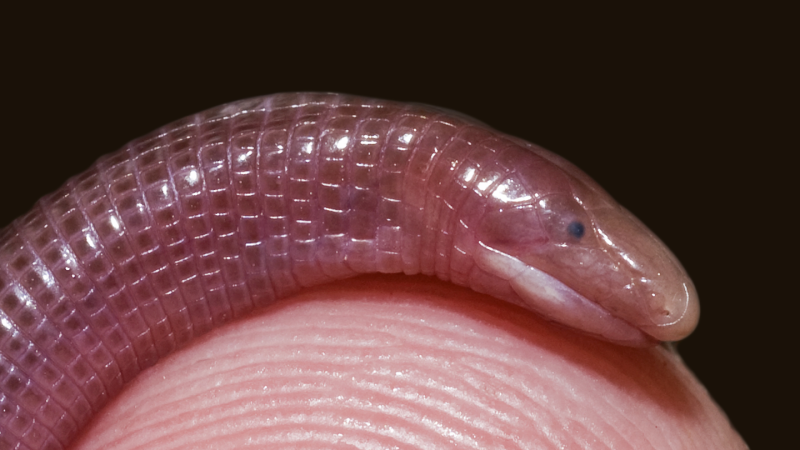
Amphisbaenians are a group of mostly legless reptiles also known as “worm lizards.” More than 200 species of them live around the world. They’re found in North America, Africa, Europe, the Middle East and the Caribbean. But since worm lizards spend most of their time underground, little is known about them.

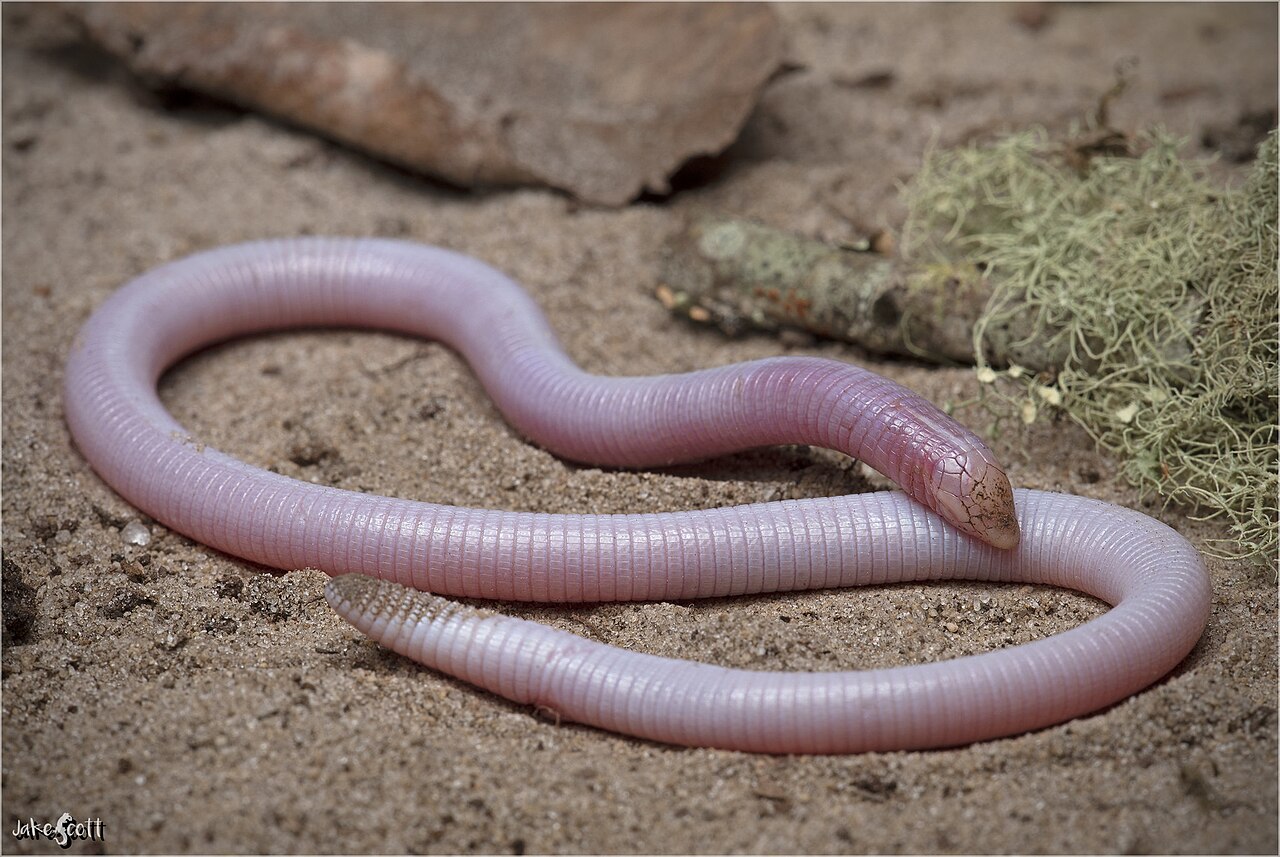
Small and pinkish, amphisbaenians look a bit like earthworms. Most are less than 15 centimeters (6 inches) long, and their ringed scales resemble those of earthworms. But amphisbaenians are actually related to lizards and snakes. In fact, worm lizards descended from reptiles with limbs. And several modern amphisbaenian families contain remnants of limbs. Worm lizards of the Bipes genus, for instance, have two small limbs near the fronts of their bodies.

The name amphisbaenian comes from Greek and Roman mythology. In ancient stories, an “amphisbaena” was a serpent with a head on each end of its body. Real worm lizards have tails that resemble their heads. What’s more, they can move well both forwards and backwards.

a pinkish creature that looks like an earthworm coils up on the dirt
Amphisbaenians are found primarily in Africa and South America, though some live in North America. This Florida worm lizard (Rhineura floridana) is also called a “thunderworm” because it is only seen during heavy rain. It retreats into its burrow tail first.Caudatejake/Wikimedia Commons (BY CC 4.0)

Worm lizards push themselves through the soil in an accordion-like motion and use their strong skulls to burrow. The shapes of different species’ skulls are thought to reflect the soil that they inhabit. There are four main skull shapes, described like different gardening tools. They are: shovellike, round, keellike and spadelike.

Amphisbaenians can’t see much. Their eyes are covered in skin and scales, and they mainly detect light. Burrowing worm lizards rely on their unique ear structures to get around. These structures in the critters’ heads allow them to detect vibrations in their environment. That helps them find the insects and even small rodents to eat.

In a sentence

The red worm lizard species of amphisbaenians is commonly found inside the nests of leafcutter ants, hiding inside their waste chambers.

Check out the full list of Scientists Say.

  •  

‘Superpuff‘ planets are as dense as cotton candy

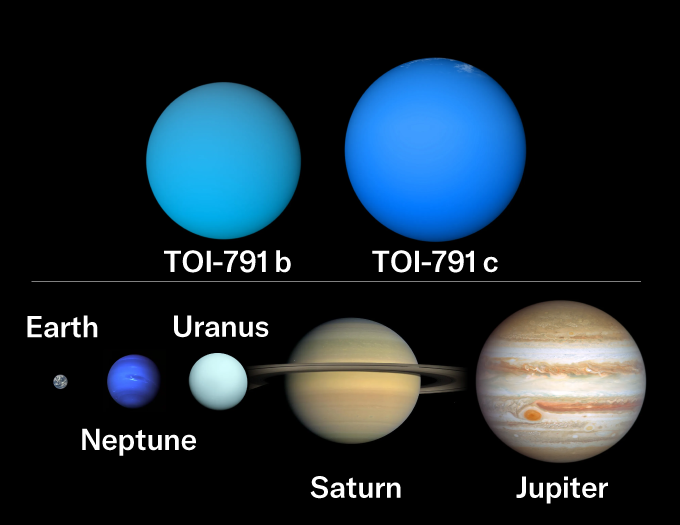
A pair of newly found planets are the puffiest worlds ever seen. They’re both about the size of Jupiter but with less than 6 percent of its mass.

In terms of density, these planets are “like candy floss or shaving foam,” says George Dransfield. She’s an astrophysicist at the University of Oxford in England. “They’re the lightest planets that are Jupiter-sized.”

Both orbit TOI 791. That’s a sunlike star about 1,113 light-years from Earth. The TESS space telescope spotted them as they passed — or transited — in front of their star and blocked some of its light. Comparing the star when it was blocked and unblocked let Dransfield and others measure the planets’ width.

One world is about 0.993 times as wide as Jupiter. The other has about 1.155 times Jupiter’s width.

An infographic comparing the size of two superpuff planets to the planets in our solar system.
Two newfound planets that orbit the star TOI 791 (top row) are roughly as large as Jupiter and about as dense as shaving cream. Their large sizes could be due to heat “puffing” up their atmospheres.Daniel Rutter/NASA

For the team to find their density, it needed to know both the planets’ size and mass. Transits only give their size. That’s where their orbits come in. The two planets periodically pass by one another as they circle their star. As they do, the planets give each other a little gravitational tug.

“They’re in this fun little dance,” Dransfield says. “We were able to measure the masses of the planets by how much they kick each other’s orbits.”

Dransfield and her teammates tracked the planetary dance over several years. They used the Antarctic Search for Transiting ExoPlanets telescope, or ASTEP. It was the only telescope on Earth that could observe the planets’ entire transits. Why? Because it takes about 12 hours for each planet to pass in front of its star. It’s hard to find a place on Earth that gets 12 straight hours of darkness at a time during which to view that. But Antarctica gets three straight months of darkness each year.

“Without this telescope, this discovery would not have happened,” Dransfield says.

Those measurements let her team deduce the planets’ masses. One was 9.5 times the mass of Earth. The other had the heft of 18.6 Earths. (Jupiter has 317 times Earth’s mass.) That means their densities are 0.038 and 0.047 grams per cubic centimeter. For comparison, cotton candy’s density is typically about 0.05 grams per cubic centimeter.

The researchers shared these findings in the July Monthly Notices of the Royal Astronomical Society.

Sizing up superpuffs

The new planets join the small group of large but lightweight worlds known as superpuffs. Astronomers aren’t sure how they form. One theory is that they’re born far from their star and move inward. Their atmospheres would heat and puff up as they neared their stars.

Some superpuffs might have giant ring systems, which could make them look bigger than they really are. Astrophysicists Anthony Piro and Shreyas Vissapragada proposed this idea in 2020. But that’s probably not the case for the two newfound planets, says Piro.

Having two ringed planets mistaken for superpuffs around the same star would be too much of a coincidence, he says. Piro works at the Carnegie Observatories in Pasadena, Calif. He did not take part in the new study.

The host star is spinning quickly, which could be a sign that it’s fairly young, Piro notes. If so, these superpuffs might still be cooling off. They might shrink as they age. “We might be catching these planets at an intermediate stage,” Piro says.

The next step is to use the James Webb Space Telescope to probe the planets’ chemical makeup. That could reveal more about their origins, Dransfield says.

“Finding things like superpuffs, which are incredibly rare, means we can learn more about how planets form,” Dransfield says. They also offer clues about how planets evolve and what they can end up looking like. “That also helps us [understand] Earth in the wider context of the cosmos.”

Do you have a science question? We can help!

Submit your question here, and we might answer it an upcoming issue of Science News Explores

  •  

Explainer: What is bioprinting?

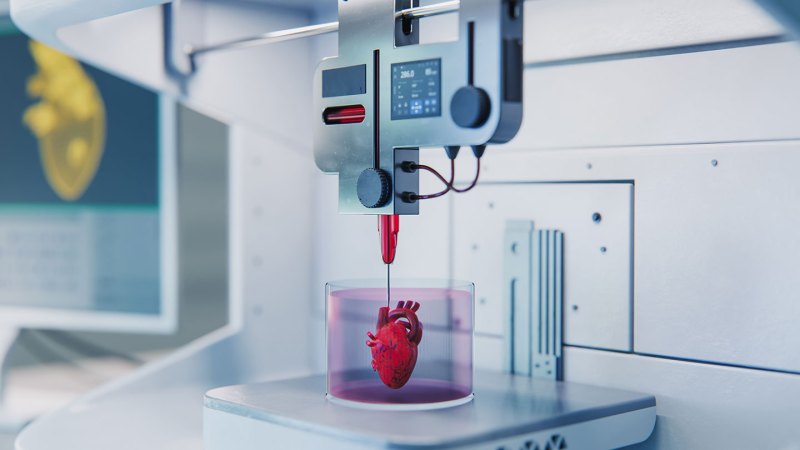
With the help of 3-D printers, even hobbyists can make model rockets or gaming accessories out of seemingly nothing. What if that printer could make new body parts, such as an ear, lung or skin? This may sound like science fiction. But scientists are already using living cells to “ink” prototypes of these tissues. 

This 3-D bioprinting uses the same basic strategy now used to print toys, sculptures, metal pieces or even basketballs. Specialized printers just swap out plastic or metal for living cells.

Actually, there’s a bit more to it than that. In most cases, you can’t use the same devices to make tissues. And you can’t just spew cells onto a surface, layer by layer, and expect them to link up into working organs. The cells have to be mixed with some soft, gel-like materials to make them unite with their neighbors.

Although still experimental, some devices have already printed skin, cartilage and even early-stage blood vessels. In 2025, researchers in Australia used an experimental robot to bioprint ink made from a patient’s own skin cells directly onto her burn wounds.

One of the doctors who pioneered the bioprinting of skin onto burn wounds describes how it’s done and why her team is excited about it.

It starts with the ink

In most 3-D printers, a resin, plastic filament or metal serves as the ink. Bioprinters instead use cells — and something to keep them alive.

“Bioinks are specialized soft gels that can have living cells mixed inside them,” explains Ryan Martin. He works on this tech at Virginia Commonwealth University, or VCU, in Richmond. Think of these inks like Jell-O: wobbly, soft materials that can hold their shape while protecting what’s inside.

Scientists make these hydrogels from materials such as alginate (AL-jin-ate) and collagen. Alginate comes from seaweed. Collagen is a protein found in skin and bones.

But bioinks contain more than just cells and hydrogel. That extra stuff — part of a complex matrix — helps the mix mimic the material that surrounds cells in the body, explains Ankita Pramanick. She’s a biomedical engineer at Utrecht University in the Netherlands.

Bioprinted tissue in space

a photo of Jonny Kim working with bioprinted liver tissues on the International Space Station
NASA Johnson Space Center/Wikimedia Commons

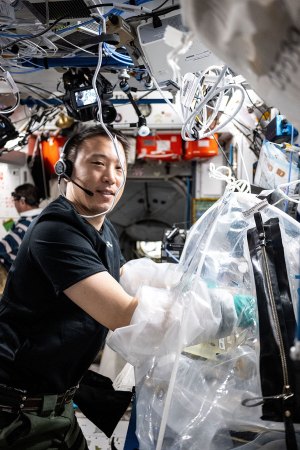
NASA astronaut Jonny Kim treats bioprinted liver tissue on September 17, 2025, in a portable glove-bag on the International Space Station. These samples later went into another research device so researchers could study the effects of microgravity on blood vessel formation in engineered tissues.

What makes bioinks different from most other 3-D inks is that they host living cells. And those cells must survive the printing process, where they’ll get squeezed through nozzles and exposed to temperature changes. The matrix is designed with these challenges in mind.

After printing, the inked structures go into incubators, which are containers that maintain ideal conditions to help cells grow. There, the newly printed cells can mature, strengthen and grow together to form tissues — perhaps cartilage for joints or layered skin with blood vessels.

Printing living cells

Engineers have been developing several different ways to turn bioinks into tissue. Which one they choose depends on what they’re building.

Most times, a “bioink is pushed through a nozzle like toothpaste from a tube,” Martin explains. This process is known as extrusion. A machine controls how fast the ink comes out, building up a tissue layer by layer.

For example, to create skin tissue, you’d first print fibroblasts (FY-broh-blasts) — the cells that make up the inner layer of your skin. Later, you’d layer on keratinocytes (Kare-uh-TIN-oh-sites). These are the cells that make up our skin’s protective outer layer. Once printed, this combined structure matures within an incubator.

Extrusion works well for thicker, structured tissues. These include skin and cartilage. But it’s relatively slow. Squeezing cells through a nozzle can also stress them.

Inkjet bioprinting is faster and gentler. It sprays tiny droplets of bioink onto a surface in much the same way an office printer sprays ink onto paper. It works best with a very liquid matrix. That’s why it’s often used for thin cell layers, such as those that line the insides of blood vessels.

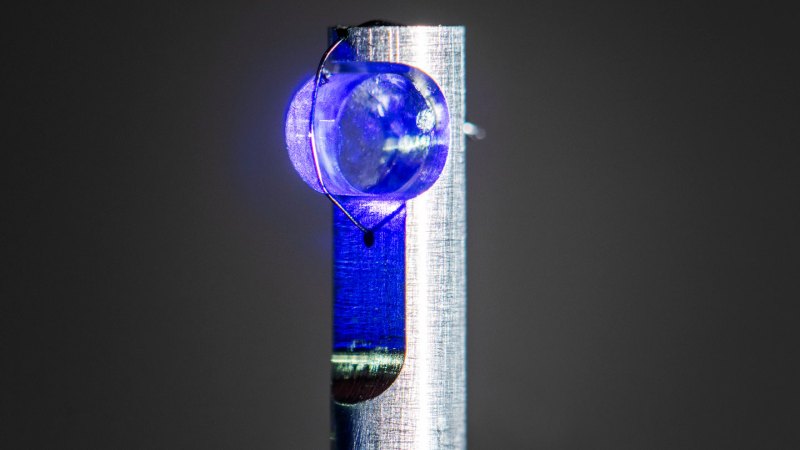
Another type of bioprinting creates entire structures at once instead of building them layer by layer. To start, a laser shines its light into a spinning tube of light-sensitive gel and cells. This solidifies them into the precise shape needed.

With this, scientists might print a small network of blood vessels all at once — complete with all its branches. It could take just seconds. And that’s important, because speed matters. The faster tissues are printed, the less time their cells spend outside their ideal environment.

a photo of a 3-D printed ear implant made of a polymer
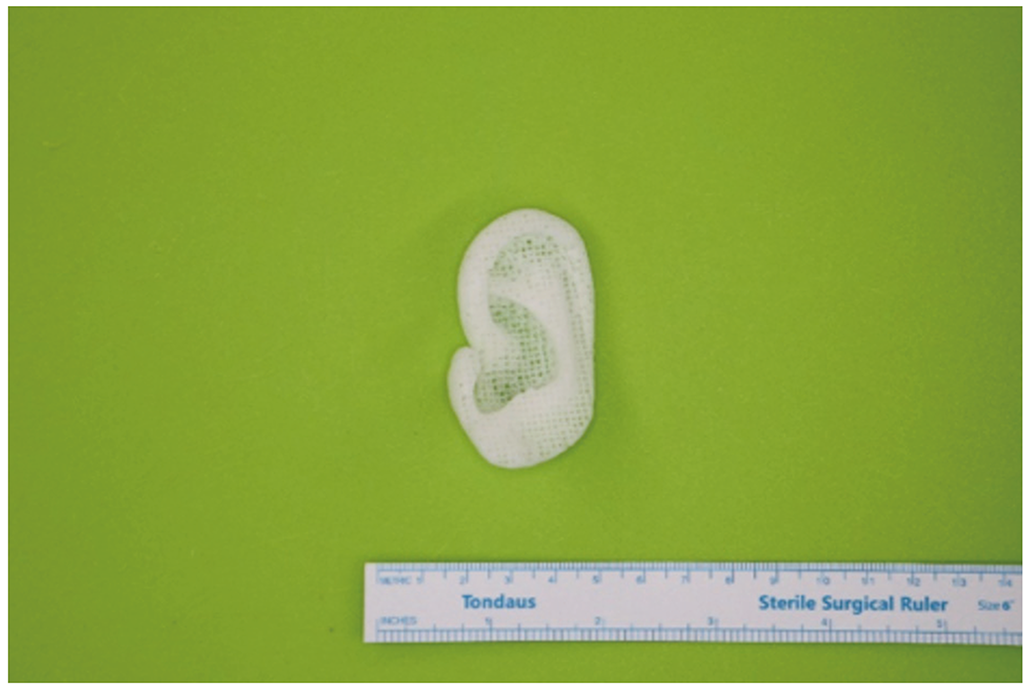
This 3-D printed ear implant was made from polycaprolactone (PCL), a biodegradable polymer. The implant is custom-designed to match a patient’s own ear and is shown next to a ruler for scale. The goal is to transition from plastic, as here, to implants made from living cells.M. Kim et al./Yonsei Medical Journal 2024 (CC BY-NC 4.0)

What’s being printed

In 2022, a patient received a 3-D–printed ear made from their own cells. In late 2025, surgeons successfully implanted a bioprinted cornea — the clear outer layer of the eye — into someone who had been legally blind.

Skin grafting is perhaps the most advanced application. A skin graft is a type of transplant where healthy skin is used to cover missing or injured skin. A 2025 trial in Australia tested bioprinted skin on burn patients. In a news conference with her doctor, the first patient to receive such a graft showed it had successfully worked on her leg.

Bone is trickier to print. Unlike skin or cartilage, it contains hard minerals mixed with living cells. Scientists have used 3-D printing to create bone scaffolds — frameworks that encourage the body’s own bone cells to grow and fill in the gaps. But no one has yet bioprinted actual bone with living cells in it for people.

Complex, fully-functioning organs such as hearts and kidneys are still a work in progress. Tissues thicker than a few millimeters (about a tenth of an inch) face a critical problem: Shortly after printing, their cells quickly start dying from a lack of oxygen and nutrients.

Heart of the matter

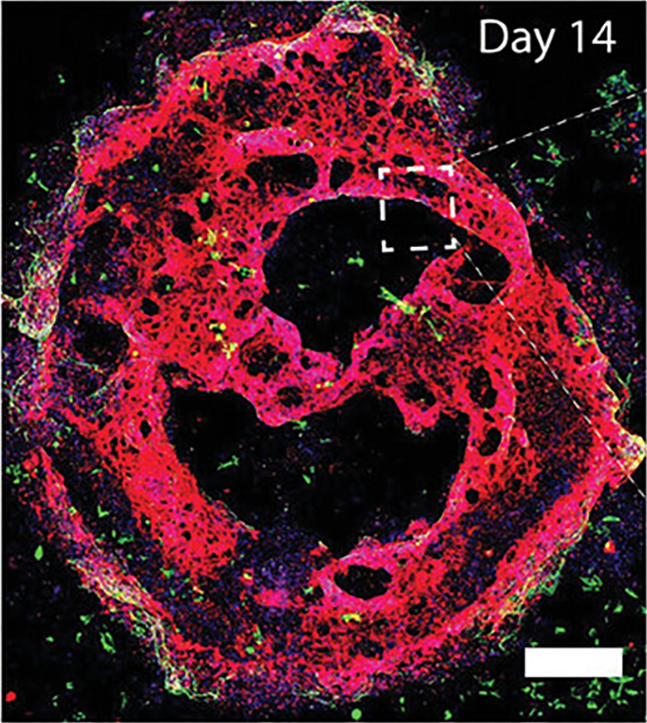
a section of bioprinted heartlike tissue under a microscope with false coloration
A Pramanick et al./Advanced Functional Materials 2025 (CC BY 4.0)

The image shows bioprinted heartlike tissue after 14 days in an incubator. The different colors help show the position of different types of cells inside the tissue.

The missing piece: blood vessels. These are needed for bringing oxygen to cells deep inside thick tissues and carrying away wastes. Without that oxygen and waste removal, cells will die. That’s why building blood vessels into tissues is the biggest hurdle standing in the way of fully printed organs.

The problem comes down to diffusion — the movement of molecules from areas of high concentrations to low concentrations. Oxygen can diffuse only a few millimeters into tissue. In thicker tissues, cells in the center would suffocate before oxygen could reach them. Imagine a big, densely populated city with no roads. Food trucks can’t bring in supplies. Garbage trucks can’t haul away waste.

Scientists have tried ways to avoid this problem. One method uses sacrificial inks. These serve as temporary placeholders. The inks are printed in the shape of vessels, then tissue is printed around them. Once the tissue solidifies, the sacrificial ink dissolves. In its place sit hollow channels through which blood can flow.

Scientists are also looking for a way to print blood vessels directly into tissue as it’s being built up.

Do you have a science question? We can help!

Submit your question here, and we might answer it an upcoming issue of Science News Explores

Moving forward

This short overview describes what bioprinting is, how advanced it’s become and where it might go.

In September 2025, researchers made a promising advance with a 3-D bioprinting system they’re calling GRACE. ”This technology enables the printing of blood vessels directly around [the printed tissue itself],” explains Pramanick at Utrecht. She works in the lab that’s developing GRACE.        

Here’s how it works. A computer-vision system “sees” where cells are located. It then asks artificial intelligence to figure out the best pattern of blood vessels to deliver oxygen-rich blood to all those cells. In seconds, bioprinting then creates pipe-shaped structures to begin delivering that blood.

Speed matters enormously here. Traditional methods might take hours to print vessel networks layer by layer. Because GRACE does it in seconds, cells spend little time without oxygen.

Full organs remain years away. Forming stable, treelike structures in different sizes — from big arteries down to the tiniest vessels known as capillaries — to seamlessly work with a patient’s blood-vessel system remains a big challenge, notes Martin at VCU. As bioinks and printing speeds improve, the prospect of integrating printed tissues with blood vessels into the body appears ever nearer. Today, the question is no longer if 3-D bioprinting can create replacement organs — it’s when.

  •  

Scientists made clocks from an atomic nucleus

For the first time, scientists have used an atomic nucleus as a clock.

Clocks need to keep a steady rhythm. (Think of the swinging pendulum in a grandfather clock.) The new clocks are based on how light interacts with an atomic nucleus — the collection of protons and neutrons at the center of an atom. This technique could allow scientists to make clocks that tick more precisely than any before.

The world’s most precise timepieces are already made using atoms. Existing atomic clocks rely on their electrons. Clocks based on atomic nuclei might perform even better. Now, two teams of scientists have finally made the first nuclear clocks.

This tech is still at an early stage. So nuclear clocks don’t yet tick more precisely than atomic clocks. But these new clocks can already test physics in novel ways.

A research team used one of these clocks to search for dark matter. That’s an unidentified substance that makes up much of the universe. The team describes its new clock — and the search — in a paper submitted June 3 to arXiv.org. This nuclear clock didn’t find any dark matter. But it seems to be more sensitive to some types than atomic clocks. In that search, “we’re already outperforming all of the atomic clocks,” reports Thorsten Schumm. He’s a physicist on the project at Vienna University of Technology in Austria.

“This is an outstanding result,” says Victor Flambaum, who did not take part in the work. A theoretical physicist, he works at the University of New South Wales in Sydney, Australia. The new feat should spur more progress, he says. “This is only the first step. [The] race for building super-accurate nuclear clocks just started.”

Do you have a science question? We can help!

Submit your question here, and we might answer it an upcoming issue of Science News Explores

The clocks’ laser ‘pendulum’

Nuclear clocks have the potential to weigh in on other weird physics, too. That’s why they’re “one of the most actively pursued frontiers,” says Shiqian Ding. He’s a physicist at Tsinghua University in Beijing, China. Ding’s team made a nuclear clock based on a technology similar to Schumm’s. They described this second clock in a paper submitted June 7 to arXiv.org. (Neither paper has been peer reviewed.)

Both clocks contain crystals of calcium fluoride. Embedded in those crystals are atoms of thorium-229, a radioactive isotope. That thorium is key. In the entire periodic table, it’s the only element whose atomic nucleus can be used to make a clock.

Scientists hit that thorium-229 with a laser. The wiggling electromagnetic waves of laser light acted like a clock’s swinging pendulum. Thorium’s role was to make sure that the frequency of those waves didn’t change. This kept the “ticking” of these clocks from slowing or speeding up.

The way this works is based on quantum physics, the branch of science that describes atoms and similarly tiny stuff. According to quantum physics, a nucleus can hold only certain amounts of energy. That gives each nucleus a set of energy levels. A jump between two particular energy levels of a given atom always takes the same amount of energy.

So the laser’s frequency was locked to a jump between energy levels in the thorium nucleus. Only the right frequency of light will make that jump take place. Scientists used the jump to readjust the laser. They did this over and over to keep the ticks steady.

Thorium-229 is the only atomic nucleus that has an energy jump of a size that will be initiated by a laser. So it’s the only one that can be used to make a clock.

Although scientists have previously gotten close to making nuclear clocks, this readjustment step had never been done before.

“This was the final missing step before calling it an actual clock,” says Lars von der Wense, who also was not involved with the research. A physicist, he works at Johannes Gutenberg University Mainz in Germany. With improvements to lasers and crystals on the horizon, he says, nuclear-clock technology is expected to advance rapidly.

Improving on atomic clocks

Nuclear clocks have been hotly anticipated. Compared with atomic clocks, they’re less sensitive to stray electromagnetic fields that can throw them off. And they can be made out of solid materials. The atoms in atomic clocks must be suspended in a cumbersome vacuum chamber. These traits have scientists hoping for more portable, robust clocks.

And atomic nuclei respond to different forces than electrons. Electrons mainly are subject to electromagnetic forces. In contrast, the strong nuclear force holds protons and neutrons together. That opens up new possibilities for study.

Numbers called fundamental constants determine the relative strength of those forces. Comparisons of an atomic clock to a nuclear one could be used to check if those numbers really stay constant over time.

It’s been a long wait — almost a quarter century — since scientists first dreamt of a thorium nuclear clock. But “I have always been optimistic about the success of this project,” says Ekkehard Peik. He’s a physicist at the National Metrology Institute in Braunschweig, Germany. Peik is one of the scientists who proposed the idea for such a clock and was a coauthor with Schumm on a paper describing the new clocks.

After initially slow progress, researchers have made rapid advances in recent years. Now, Peik says, “a great deal of interesting research … is only just beginning.”

  •  

Songs prep unhatched finches’ brains for a hot world

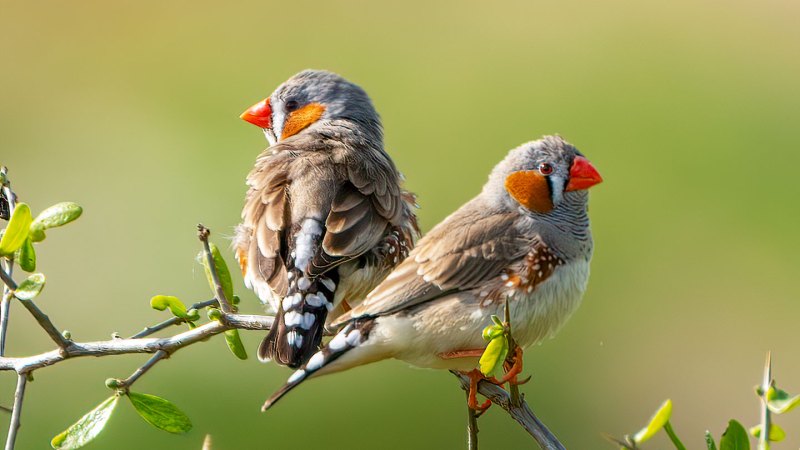
Like many parents, zebra finches sing to their young. But some parental songs seem to prepare the baby birds for hot weather, even before they leave the egg.

Zebra finches live in sun-crisped Australian woodlands. On hot days, adults make a rapid, peeping “heat call.” It kicks off genetic changes in the brains of their unhatched babies. The tune acts like a weather forecast. It prepares them for the broiling conditions on the outside of the eggshell.

Researchers described their new findings June 11 in the Journal of Experimental Biology.

A decade ago, behavioral ecologist Mylene Mariette was part of a team that made a discovery. Exposure to heat calls in the egg, shortly before hatching, changed how chicks of these zebra finches (Taeniopygia guttata) dealt with high temperatures. They grew more slowly. They also preferred warmer places to nest. In all, they seemed better able to handle heat. 

But one mystery remained: How could hearing a simple song trigger all this?

Singin’ for the brain

Mariette, of Deakin University in Waurn Ponds, Australia, teamed up with neuroscientist Julia George. George works at Clemson University in South Carolina. The pair wanted to know if those songs might trigger changes in the brain’s hypothalamus. This region plays a big role in controlling the birds’ metabolism and responses to heat. 

Hear the finch’s heat-induced call

This high-pitched, rapid peeping is the “heat call” of Australian zebra finches. It spurs their unhatched babies’ brains to change how they move blood around. This might reduce the hatchlings’ risk of heat stroke — and lasts the birds’ entire life.

“Some of the consequences of [the call] are permanent. The birds will choose warmer nest sites as adults if they are exposed to heat calls as embryos,” says study author Julia George. “And they will produce more offspring in those warmer environments.”

AUDIO: M. MARIETTE

The researchers raised the eggs of zebra finches at a consistent temperature. Then they separated them into two groups. They exposed about half of these eggs to playbacks of an adult’s heat call. The other half heard a different call for a few days. Afterward, the team removed the embryos from the eggs and euthanized them.

Researchers cut out a small sample of the hypothalamus and extracted some of its RNA. This is a messenger molecule made based on DNA. It carries genetic information to the protein-making parts of the cell. The researchers planned to compare the levels of different RNAs. This should show how certain genes ramp up or down.

The team expected the heat calls would trigger changes in hormone-regulating genes, George recalls. Instead, the songs reduced the activity of genes that control how the brain’s blood vessels squeeze. The researchers now think this helps the chicks brains’ shed heat.

“It’s important that the temperature of the brain is kept cool, even in hot temperatures,” George says. Modifying blood flow there could protect against dangers such as heat stroke.

The calls didn’t change how the hypothalamus works, in general. Instead, only a select set of systems in it seemed to change. These systems are vulnerable to high temperatures. Only about 2 percent of the RNA in the hypothalamus showed this response to the heat calls.

The heat calls could be “like a little weather forecast,” George says, that allows finches to fine-tune their brain’s development. And this might leave them “better suited to the environment right after they hatch,” she adds.

Ready for a warmer world

Other types of yet-to-hatch birds have also shown sound-triggered changes. Yellow-legged gulls warn each other of predators. Those exposed in the egg to these warning calls grew more slowly. After hatching, they also were more likely to crouch when they heard those calls.

Alexandra Cones wonders if there are other genetic and cellular ways for animals to adapt to heat. Cones is an evolutionary behavioral ecologist at Ludwig Maximilian University. It’s in Munich, Germany. She did not take part in the new finch study. But her own research has shown that adult house sparrows can change how their chicks’ metabolisms respond to temperature.

Cones’s team never uncovered exactly how this happens. But, she says, the zebra finch data “forces us to consider a broader range” of possibilities for how such a flexibility evolved.

Zebra finches may not be alone in their brain-bending musical abilities, George concludes. Perhaps there’s a whole playlist of heat-busting birdsongs yet to be discovered.

Do you have a science question? We can help!

Submit your question here, and we might answer it an upcoming issue of Science News Explores

  •  

Scientists Say: Alloy

Alloy (noun, “AL-oy”)

An alloy is a metal-based mixture. Familiar examples of alloys include steel, bronze and brass. Some alloys are metal-metal mixtures. Others mix metals with nonmetals.

Alloys offer strong, flexible support for skyscrapers, jewelry and more. By adjusting the recipe of an alloy, metalworkers can fine-tune its properties. That way, they create the perfect material for the job.

Take steel. This alloy contains the elements iron and carbon. Iron is metallic element. Adding carbon to it strengthens the metal. The result is a versatile metal alloy that is strong, flexible and resilient. That makes it perfect for making everything from a thin knife blade to scaffolding for our tallest buildings.

An alloy made only of carbon and iron is called carbon-steel.  But often, chemists add other elements to fine-tune the properties. For instance, a little bit of chromium added to the mix creates stainless steel. This upgraded version greatly increases steel’s resistance to rust. It works because the chromium combines with oxygen in the air. Technically, this is how rust forms. But in the case of stainless steel, the chromium “rust” forms a barrier that does not flake away like iron rust. This barrier protects the iron — which, on its own, is a very rust-prone metal.

Pure silver is a metal element. But sterling silver is an alloy. For millennia, silver’s beautiful, rust-resistant gleam has inspired craftsmen to create jewelry. In the modern age, silver’s high electrical conductivity makes it an important metal for electronics. However, silver is rarely used on its own. Like gold, silver is a “soft” metal. Jewelry made from pure silver would warp out of shape. So, metalworkers blend in a bit of copper or some other metal for added strength. Almost all silver jewelry is made from alloys. To be considered “sterling” silver, the alloy must contain 92.5 percent silver.

In a sentence

Alloys made from rare-earth metals can create super magnets, superconductors and more.

Check out the full list of Scientists Say.

  •  

Fog — it’s alive! 

A bank of fog might seem gloomy. But that mist may carry an unexpected community of environmental helpers. Ground-dwelling clouds can house bacteria that clean the air, a new study finds.

Microbes can find air a harsh place, notes Kathleen Weathers. Temperatures can fluctuate broadly. And even in fog, there can be a high risk of drying out. A fog scientist, Weathers works at the Cary Institute of Ecosystem Studies in Millbrook, N.Y. But, she adds, fog hosts many things needed for those microbes to “make a living.” These include moisture, nutrients and comfortable temperatures.

Yet until now, scientists hadn’t known microbes could actually live there, says Weathers, who did not take part in the new work.

It took Thi Thuong Thuong Cao, a chemist who loves hiking on foggy mountainsides, to show microbes not only can live in fog, but also grow and reproduce.

Collecting clouds 

As a chemist, Cao wondered what might be inside fog droplets. At first, she focused on their chemistry. Soon, though, she teamed up with other scientists to see what microbes might hitchhike in fog — and what they might be doing.

At the time, Cao was a graduate student at Arizona State University in Tempe. Part of her team traveled to Pennsylvania, where another team member was based. The area had great spots to collect fog.

This team focused its hunt on a special type of low-lying cloud: radiation fog. It forms at night when the ground cools and then lowers the air’s temperature. Cooler air can’t hold much water. So it sheds the excess into the air as small droplets, creating fog.

Radiation fog doesn’t roll in. Instead, it forms in place. So any microbes should be local, not ones carried in from elsewhere.

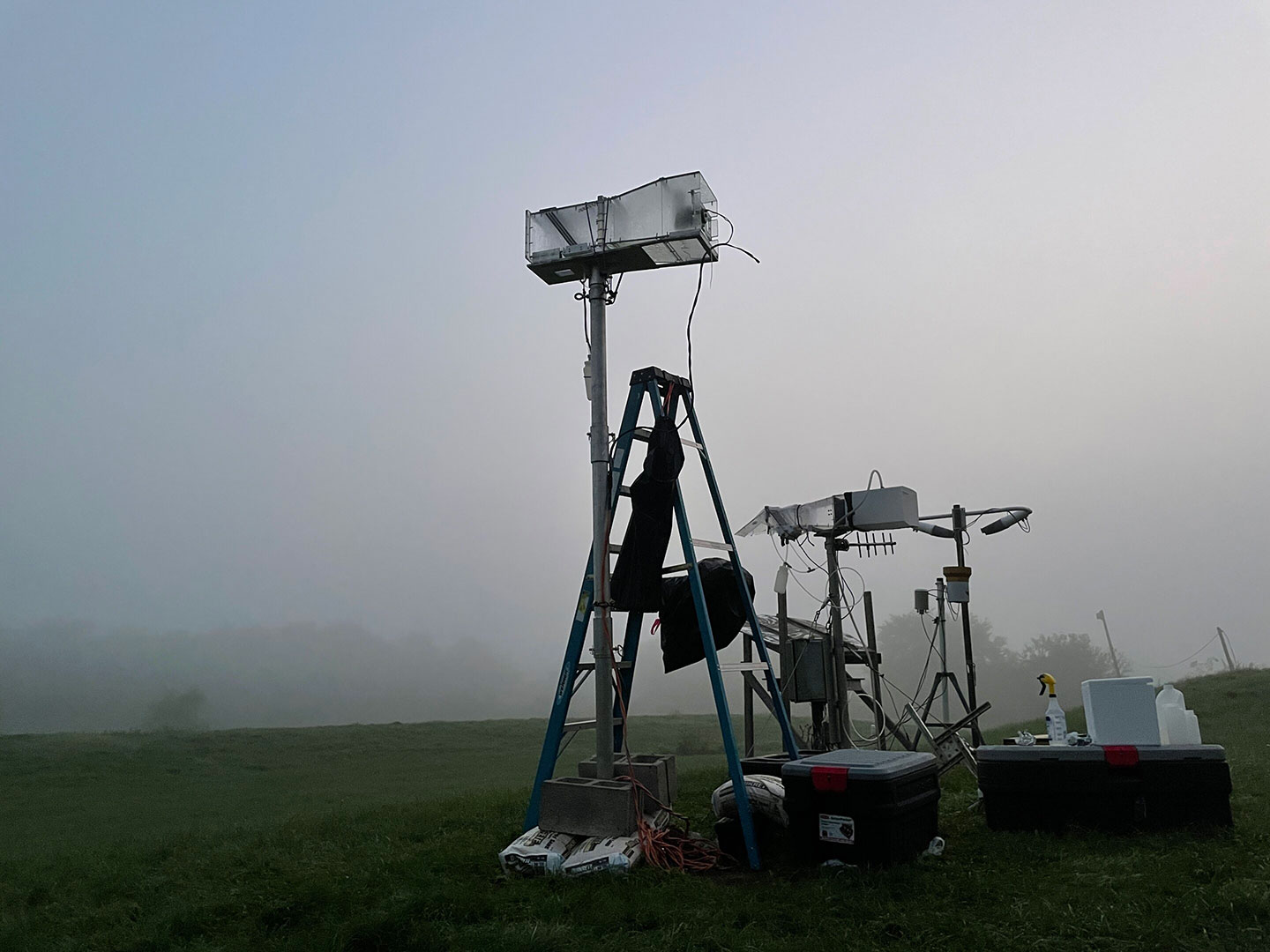
Over about two years, the team collected samples of water from 32 “fog events.” They used a device called a cloud-water collector. It pulls air into a chamber containing strings.

scientific equipment set on grass on during fog
Researchers assembled this setup in a Pennsylvania field to collect fog samples. They were looking to capture not only fog but also anything that might be living in the airborne water droplets.T.T.T. Cao

As fog condenses on the strings, it forms droplets that drip into a bottle below. The scientists collected up to 200 milliliters (about 7 ounces) of fog water per event. That’s roughly the volume of a juice box. They also collected samples of the air in between the fog droplets. They trapped similar air samples before and after fog events.

The fog samples housed a multitude of microbes. In fact, fog water is about as densely populated with microbes as ocean or lake water. When examined under a microscope, many fog-water microbes seemed to have been dividing when they were collected. That led the researchers to conclude the microbes had been growing in the fog.

Next, the team extracted the fog-dwellers’ RNA, a type of genetic information. Cao’s team compared these types of genetic maps to those in a database on known microbes. That helped them identify the fog’s inhabitants.

An average of 188 unique genetic patterns showed up in each fog event. Each represented a unique type of bacteria. The communities of microbes present were similar across all fog samples. But they differed quite a bit from those found in air without fog.

Cao and her team shared their findings in mBio on May 22.

Do you have a science question? We can help!

Submit your question here, and we might answer it an upcoming issue of Science News Explores

Turning pollution into food 

Their analyses showed Methylobacterium was the most abundant microbe in fog water. It accounted for up to half of all microbes present.

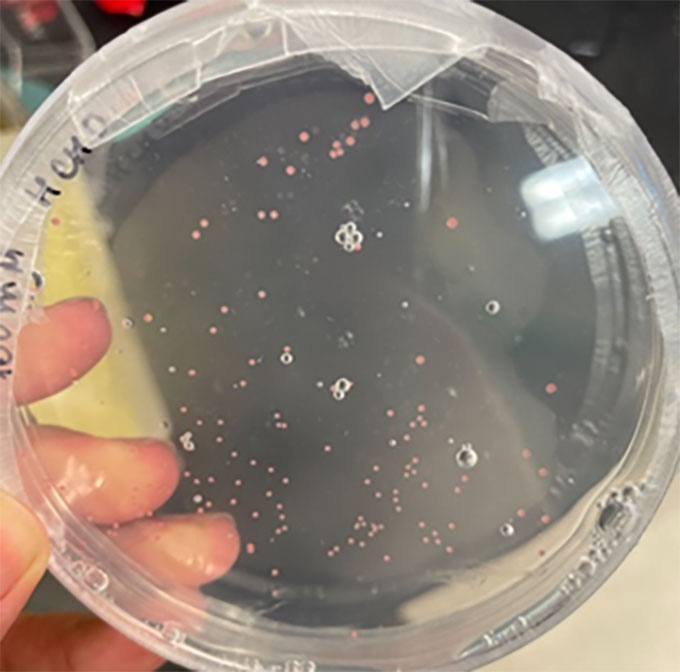
To grow in fog, the team reasoned, those Methylobacteria must have found something in it to eat. This microbe is known to consume carbon-containing chemicals, such as formaldehyde.

a petri plate showing some of the colonies of bacteria sampled from the fog
Researchers grew colonies of Methylobacterium in this dish, feeding them only formaldehyde, a toxic chemical. “[T]hey have [a] pink pigment,” says Thi Thuong Thuong Cao. “They’re really cute.”T.T.T. Cao

Formaldehyde is a common and toxic air pollutant. Breathing it can cause harm. Some formaldehyde comes from natural sources, such as rotting plant materials. Human activities, such as construction and burning fossil fuels, also release it. It’s even one of the chemicals that makes cigarette smoke harmful.

Methylobacteria are well suited for dealing with this chemical, Cao says. “They can survive formaldehyde at a concentration higher than other bacteria [can].” They break it down hundreds of times faster than other microbes, too.

Her group measured formaldehyde in freshly collected fog water. Over several hours, levels of the chemical fell surprisingly fast.

The researchers also isolated Methylobacterium from fog water and then grew it on its own. These bacteria were able to quickly remove formaldehyde when exposed to an artificial fog water containing the chemical.

It disappeared so quickly, in fact, that the bacteria couldn’t have used it all for growth. The microbe may break the chemical down as well as eat it, the team concludes. Such a strategy might keep formaldehyde from reaching toxic levels.

This all seems to confirm Methylobacterium can remove formaldehyde from fog. The researchers don’t yet know how the bacteria might affect air quality. But their new data now point to fog as a potential ecosystem.

Fog can transport water and microbes across a landscape. These data now suggest that as it does, it may play a role in shaping the chemistry of the environment.

  •  

U.S. sunscreen users are finally getting a new option  

Glowy oils, tinted creams, misty sprays, chalky sticks, lightweight gels. Like many people, my pool bag is filled with many types of sunscreen. But all use the same sun-shielding chemicals. In fact, the allowed ingredient list for U.S. sunscreens hasn’t changed in 20 years — until now.

This June, the U.S. Food and Drug Administration (FDA) added bemotrizinol (Beh-moh-TRIZ-eh-nol) to its approved list.  

“I think we should all be super excited,” says Tanya Hathaway. She’s a dermatologist who specializes in treating high-risk skin-cancer patients. Hathaway works at the Fred Hutchinson Cancer Center in Seattle, Wash.

Bemotrizinol has many benefits. It lasts longer than other sunscreen ingredients. It won’t get quickly absorbed into the bloodstream. And it’s very good at blocking those rays of the sun that age skin.

Sunscreens in Europe have used the chemical for more than 25 years, Hathaway notes. More recently, it’s been approved in Japan, Canada, Australia and many other places.

There are some sunscreen ingredients used elsewhere that still are not allowed in U.S. products. Bemotrizinol’s approval could open U.S. doors for some of these. It’s “a great first step,” Hathaway says.

A new chemical sunscreen

Sunscreens use a few tricks to protect our skin from the sun’s rays. Physical sunscreens rely on minerals such as titanium dioxide and zinc oxide. These create a coating that reflects sunlight, like a mirror. But they can leave a white sheen on the skin. Just think of a lifeguard’s nose, says Jennifer Stein. She’s a dermatologist at NYU Langone Health in New York City.

Those zinc and titanium products also “don’t rub in so well,” she notes. “And if people don’t like the way their sunscreen smells or feels, they’re not going to use it.”

Do you have a science question? We can help!

Submit your question here, and we might answer it an upcoming issue of Science News Explores

Non-mineral sunscreens often rub in a bit better. They often use chemicals such as avobenzone (Ay-vah-BEN-zoan) and oxybenzone to absorb the sun’s rays. But these molecules are not very stable. They start to break down when hit by sunlight, Stein says. That’s not ideal for something that’s designed for use in the sun.

Because bemotrizinol is more stable, people may not need to apply sunscreens with it as often. This new ingredient also is good at blocking ultraviolet A1 (UVA1) radiation. That’s a type that gets deep into the skin. Over time, UVA1 can make skin wrinkly, loose and spotted, Hathaway says.

Current U.S. sunscreens do a good job of blocking UVB, which causes sunburns. But U.S. sunscreens had fewer options for blocking UVA, she says. Bemotrizinol “really expands that UVA spectrum of coverage.”

Is it safe?

You might have seen influencers on TikTok or Instagram making DIY sunscreens. Often, they will call the ingredients in commercial brands “toxic.” Sunscreen skepticism on social media is nothing new, Stein says. Patients who avoid sunscreen often worry about chemicals passing through the skin.

That can happen with things like avobenzone and oxybenzone. They may even get into your blood, Stein says — but only if “you apply them to large areas of the body repeatedly throughout the day.” Even so, people shouldn’t fear them. Hathaway says no studies have shown that U.S. sunscreen ingredients are unsafe when used at current levels.

Bemotrizinol, which is a big molecule, is less likely to pass through skin than these other chemicals. It’s “too big to squeeze through the skin cells to get down into your bloodstream,” Stein says.  

FDA classifies bemotrizinol as GRASE (short for generally recognized as safe and effective). Titanium dioxide and zinc oxide are the only other U.S. sunscreen ingredients with this rating.

Bemotrizinol’s U.S. approval goes into effect on August 9. So sunscreens using it could hit shelves later this summer. But a new sunscreen is not the only way to stay safe from the sun. There are plenty of low-tech options, too: long sleeves, hats, sunglasses and staying in the shade. “The more clothing you’re wearing,” Stein emphasizes, “the less you have to depend on sunscreen.”

  •  

Experiment: Measure fake blood spatter

Objective: To investigate how, in the field of forensic science, the size of blood spatter correlates to the distance from which the blood fell.

Areas of Science: Physics

Difficulty: Intermediate medium

Time required: Very Short (≤ 1 day)

Prerequisites: None

Material availability: Readily available.

Cost: Low ($20 – $50)

Safety: This topic can be a little scary. If you are squeamish, you may want to choose another topic. Adult supervision is required when doing background research, especially online, on this topic.

Credits: Michelle Maranowski, Ph.D., and Teisha Rowland, Ph.D., Science Buddies

The word forensic comes from the Latin word forensis, which means of or before the forum. “During the time of the Romans, a criminal charge meant presenting the case before a group of public individuals in the forum. Both the person accused of the crime and the accuser would give speeches based on their side of the story. The individual with the best argument and delivery would determine the outcome of the case. Basically, the person with the sharpest forensic skills would win. This origin is the source of the two modern usages of the word ‘forensic’ — as a form of legal evidence and as a category of public presentation.” (Wikipedia, 2008)

Today, the use of scientific evidence is so prevalent in the courtroom that the term forensics has become associated with forensic science. Forensic science is any science that is used in the courts or judicial system and it is extremely vital. The goal of a forensic scientist is to remain impartial and to appraise all of the available evidence in order to determine the truth.

Forensic science includes many areas of study, such as criminalistics, engineering science, pathology and biology. If a sports player were to die suddenly while playing a game, a forensic scientist with a specialty in pathology and biology would be called in to find out the cause. The scientist might have to perform an autopsy and examine the body to determine if the death had a natural cause — such as a health problem — or not. (To find out more about a related career, you can check out the Science Buddies career profile on pathologists.)

On the other hand, a forensic engineer may need to apply engineering principles to the purposes of law investigations. For example, a forensic scientist with specialty training as a civil engineer may study failure analysis and evaluate the quality of construction and manufacturing of structures involved in a crime or catastrophic event. They may look into why a particular car rolled over or why a building or bridge collapsed.

In general, to become a forensic scientist, you may need to study math, science and engineering. To find out more about being a forensic scientist, you can check out the Science Buddies career profile on forensic science technicians.

In this forensics science project, you will investigate how the size of blood spatter changes depending on the height that the blood was dropped from, but you will be using fake blood instead of real blood. In crime scenes where people are wounded, investigators apply principles of blood spatter analysis by taking measurements, such as of the diameter of the blood spatter, to figure out what happened. How do you think the diameter of the spatter changes as blood is dropped from different heights? Find out by trying your hand at collecting evidence in this science project and remember that solving mysteries is serious work!

Terms and concepts

  • Forensic science
  • Evidence
  • Blood spatter analysis

Questions

  • What is forensics?
  • What are the different areas of study in forensic science?
  • What kinds of projects do forensic scientists work on?
  • How do you think the height from which something falls, such as a drop of blood, affects how it lands on the surface below?

Objective

To investigate how, in the field of forensic science, the size of blood spatter correlates to the distance from which the blood fell.

Resources

The following sources will help you learn more about forensic science:

Materials and equipment

  • Digital scale (or you can use measuring spoons)
  • Graduated cylinder, 50 mL or 100 mL size (or you can use measuring spoons)
  • Cornstarch (17 g or about 2 tbsp)
  • Corn syrup (60 mL or about 4 tbsp)
  • Red food coloring (5 mL or 1 tsp)
  • Bowl
  • Water
  • Fork or spoon for mixing
  • Optional: Plastic wrap
  • Cardboard. You will want enough cardboard to create seven pieces that are each about 30 cm by 30 cm (12 in by 12 in). The pieces should be able to lay flat and should not have many folds or creases in them.
  • Scissors
  • Pencil or pen
  • Medicine dropper
  • Measuring tape
  • A chair or stepping stool
  • Metric ruler or measuring tape that has millimeter marks
  • A location to do your experiment where the ground can be easily cleaned (in case of spilling the simulated blood). For example, concrete or linoleum may work well.
  • Optional: Butcher paper or newspaper
  • Helper
  • Lab notebook

Experimental procedure

Making the simulated blood

  1. Using the digital scale, weigh 17 grams (g) of cornstarch and place it into the bowl. (Or measure two tablespoons [tbsp] of cornstarch and add it to the bowl.)
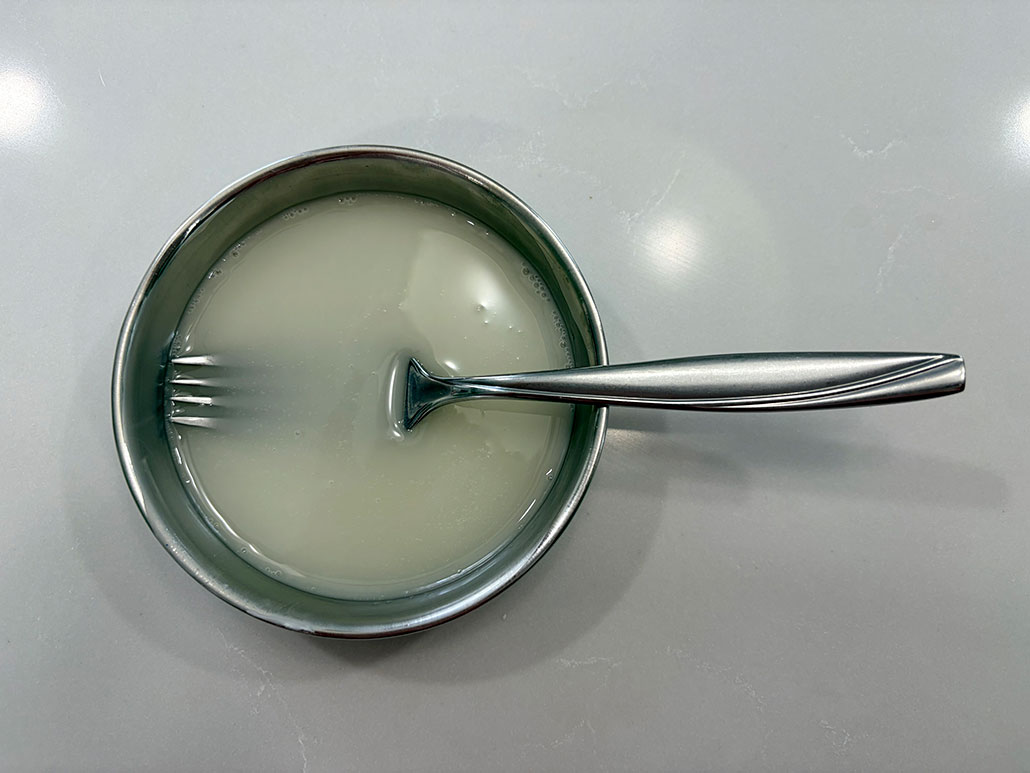
  2. Thoroughly mix 30 milliliters (mL; 2 tbsp) of water into the cornstarch with a fork or spoon. The mixture must be smooth, as shown in Figure 1 below.
Figure 1. Mix the water into the cornstarch until the mixture is smooth.S. Zielinski

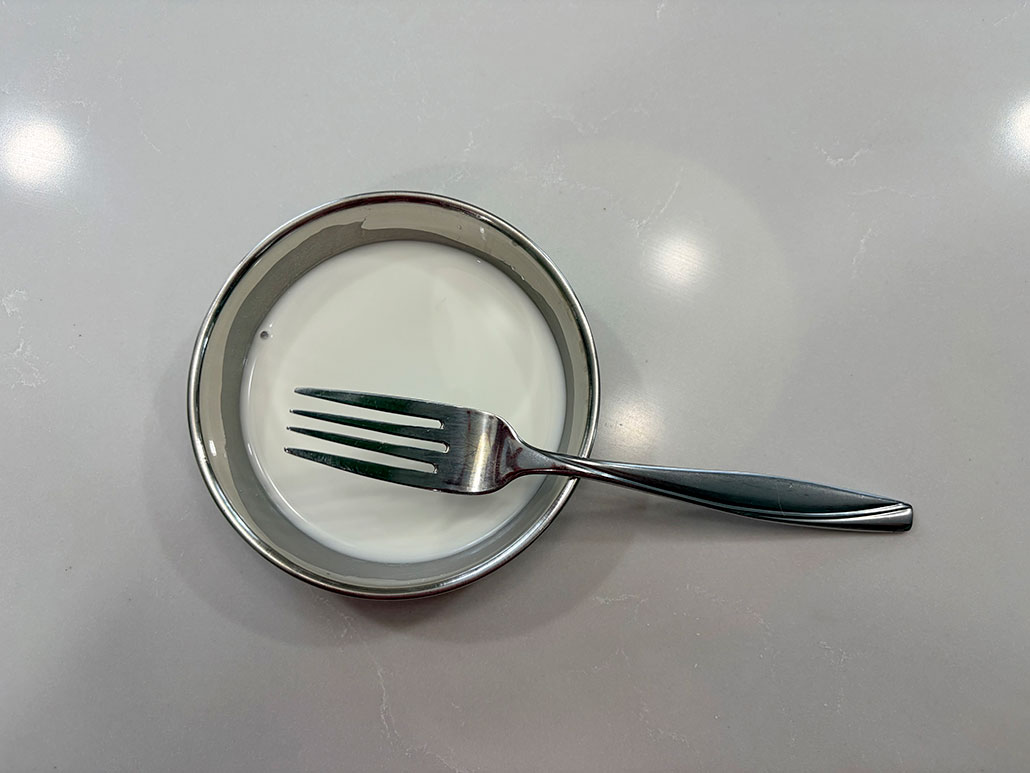
3. Add 60 mL (4 tbsp) of corn syrup to the bowl and mix thoroughly. The mixture should be smooth, as shown in Figure 2 below.

a bowl of milky white liquid with a fork in it
Figure 2. Mix the corn syrup into the mixture until it is smooth.S. Zielinski

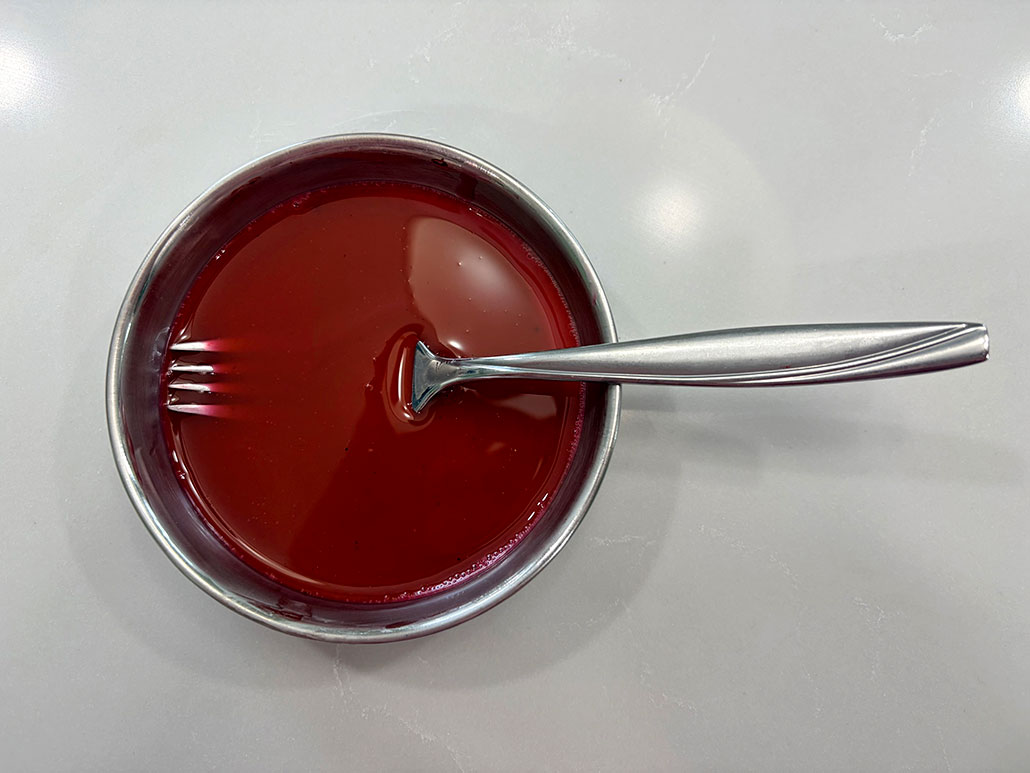
4. Mix in 5 mL (1 tsp) of red food coloring. Stir until the mixture is a consistent color, as shown in Figure 3 below.

a bowl of dark red liquid with a fork in it
Figure 3. A bowl of simulated blood (cornstarch, corn syrup, water and red food coloring).S. Zielinski
  1. You should now have a small bowl of simulated blood. If you will not be using it right away, cover the bowl with plastic wrap and set it aside.
  2. Note: Be careful not to spill the simulated blood on furniture or carpeting, as it can stain! If it does spill, be sure to clean up the simulated blood immediately.

Blood spattering

  1. Carefully cut up the cardboard into seven pieces of similar sizes. Each piece will be used for testing a different height.
    1. Each piece should be about 30 centimeters (cm) by 30 cm (12 inches [in] by 12 in). This will give you a good amount of space for dropping 10 drops of simulated blood onto each piece.
    2. Make sure the pieces can lay flat.
    3. Avoid using pieces with many folds or creases in them.
  2. Use a pencil or pen to label each piece of cardboard with the height you will be testing on it.
    1. The heights you will be testing are 30 cm (12 in), 60 cm (24 in), 90 cm (36 in), 120 cm (48 in), 150 cm (60 in), 180 cm (72 in) and 210 cm (84 in).
  3. Lay the cardboard piece you labeled for testing a height of 30 cm (12 in) flat on the ground where you will do your experiment.
    1. Because the simulated blood can stain, you should only do this experiment on a surface that can be easily cleaned, such as linoleum or concrete.
    2. You may also want to cover the surface (under the cardboard) with butcher paper or lots of newspaper to prevent stains.
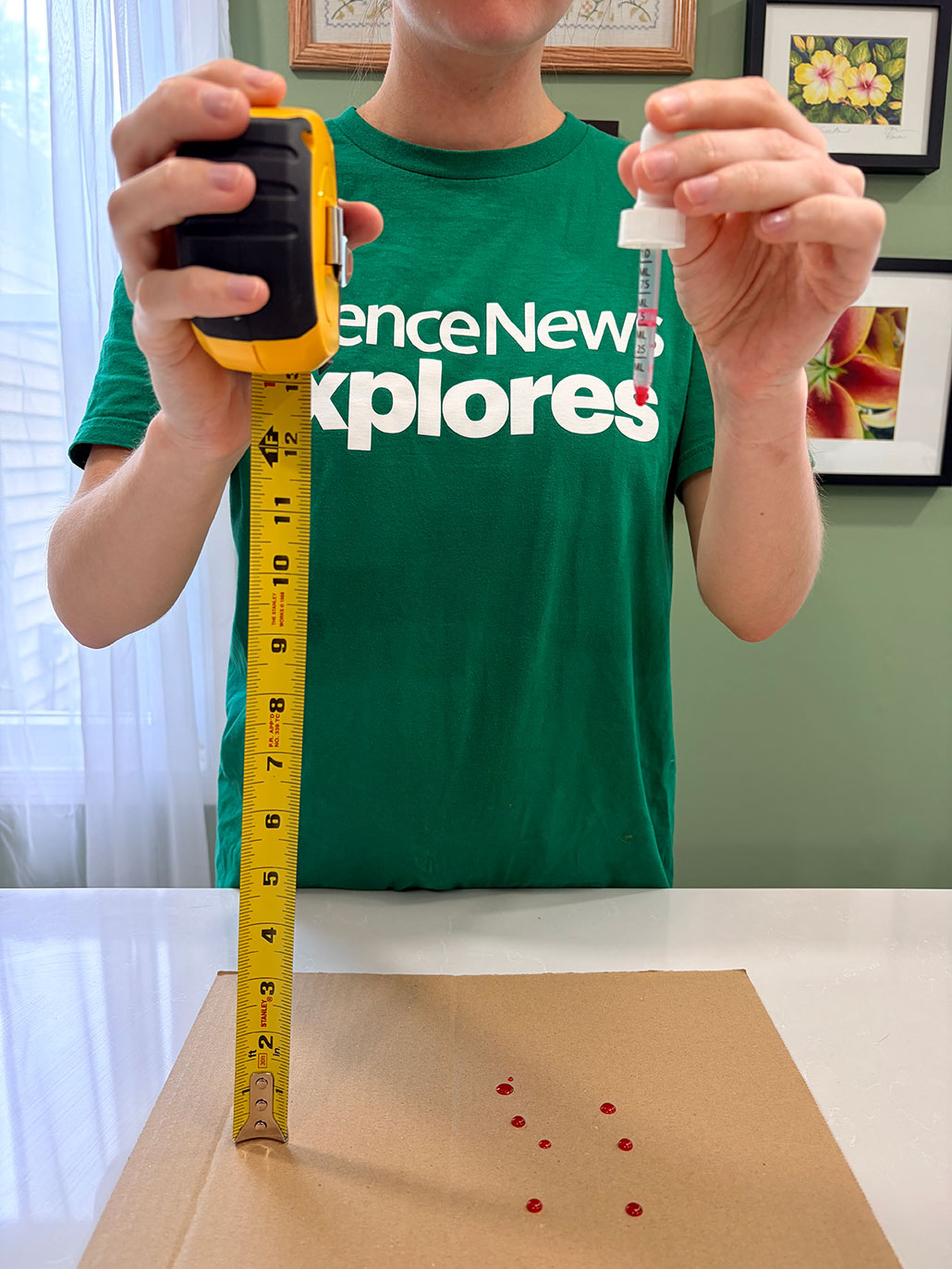
  4. Fill the medicine dropper with some simulated blood and hold the dropper completely vertically above the cardboard piece, as shown in Figure 4 below. Have a helper use the measuring tape to make sure the tip of the dropper is 30 cm (12 in) above the cardboard.
a person holds a tape measure vertically 12 inches high, and a dropper filled with red liquid on the same level, both over a piece of cardboard
Figure 4. Hold the medicine dropper 30 cm or 12 in above the cardboard piece, holding the dropper in a vertical position.S. Zielinski
  1. Drop a single drop of simulated blood onto the cardboard piece.
  2. Repeat steps 4–5 nine more times so that you have dropped a total of 10 drops onto the cardboard piece. Then let the cardboard piece dry, being careful not to disturb the drops while they dry.
    1. If any of the drops landed on another drop or landed in a crease or fold on the cardboard, do not count these drops for your total of 10.
  3. Repeat steps 3–6 with all of your other cardboard pieces, being sure to test each from the correct height.
    1. You and your helper will need to stand on chairs or stepstools to reach the highest heights. Be careful when doing this.
  4. When all of the drops on the cardboard pieces have dried, measure the diameter of each drop — or spatter — in millimeters (mm) or inches (in) and record the measurements in your notebook in a data table like Table 1 below. Be sure to measure very carefully, because there may be very small, but measurable, differences between the drops. Tip: The drops may look glossy and wet even after they have dried. You may want to make an extra drop on one of the cardboard pieces that you can test (by touching it) to see when the drops have completely dried.
Drop height (cm) or (in)DropDrop diameter (mm) or (in)Average drop diameter (mm) or (in)
301
2
3
…
10
601
2
3
…
10
901
2
3
…
10
etc.etc.
Table 1. In your lab notebook, make a data table like this one and fill it in with your measurements. Measure the diameter of all 10 drops (in mm) on each of the 7 cardboard pieces.
  1. Calculate the average diameter of the drops for each height. Add your answers to your data table.
    1. For example, if the 10 drops you measured at a height of 90 cm (36 in) had diameters of 12.5 mm (0.49 in), 12.0 mm (0.47 in), 12.5 mm (0.49 in), 13 mm (0.51 in), 12.5 mm (0.49 in), 13 mm (0.51 in), 12.5 mm (0.49 in), 12.0 mm (0.47 in), 13.5 mm (0.53 in), and 12.0 mm (0.47 in), the average drop diameter from a height of 90 cm (36 in) would be 12.6 mm (since the sum of all 10 drops is 125.5, and this number divided by 10 rounds to 12.6 mm (0.50 in).
  2. Make a graph of your results. On the x-axis, put the drop height (cm or in), and on the y-axis, put the average drop diameter (mm or in).
  3. Look at your graph and try to draw some conclusions based on your results.
    1. How did the diameter of the spatter change as the simulated blood was dropped from different heights?
    2. How do you think your results could help a forensic scientist figure out what happened at a crime scene?

This activity is brought to you in partnership with Science Buddies. Find the original activity on the Science Buddies website.

A banner that reads "SCIENCE BUDDIES"

  •  

Analyze This: How sea slugs get their flashy colors

In the sea, soft-bodied sea slugs crawl around without shells to protect them. Instead, they sport dazzling colors and flashy patterns to warn would-be predators that they’re toxic. Now, researchers have learned that many of these vibrant hues come from structures under the slugs’ skin.

These slugs, called nudibranchs (NU-dih-branks), are sometimes dubbed the “butterflies of the sea.” Their colors are “exceptionally bright,” says materials scientist and physicist Samuel Humphrey. He works at the Max Planck Institute of Colloids and Interfaces in Potsdam, Germany. Nudibranchs’ range of colors and patterns exceeds those of other ocean dwellers and is only like that of butterflies and birds, he says.

Not much was known about nudibranch colors, Humphrey says. But in nature, some of these colors — such as white, blue and purple — are hard to get from pigments. (Those are molecules that provide color.) That made Humphrey’s team suspect the slugs’ colors instead arise from light waves bouncing off structures on their bodies. Such structural color can create hues as intense as those seen on the sea slugs.

left: bright pink sea slug; right: brown and gold polka-dotted sea slug
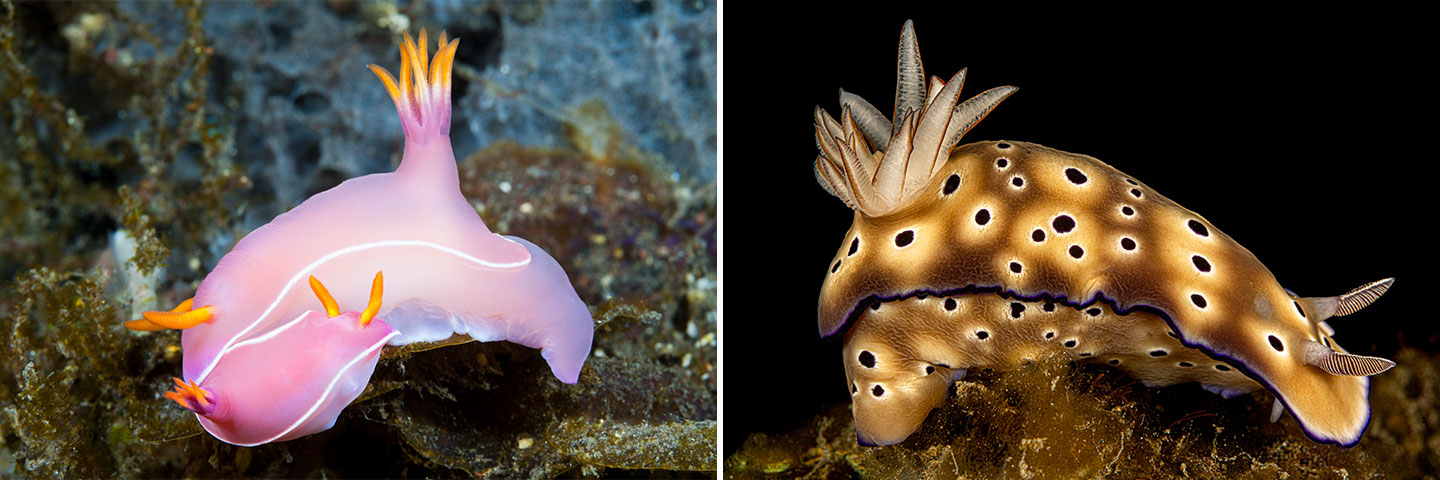
Two sea slugs — a Barbie-pink Hypselodoris bullockii (left) and a golden-speckled Hypselodoris tryoni (right) — use the same technique to wear wildly different hues.Left: Reinhard Dirscherl/Getty Images; Right: ifish/iStock/Getty Images Plus

Humphrey collected one species of nudibranchs off the coast of France. Others, he and his colleagues bought from aquarium shops. The researchers looked at the creatures under the microscope and saw tiny dots of colors that combined to create a shade. For instance, a nudibranch might look purple, but zoom in, and you may find specks of red and blue. “It’s a bit like mixing paints until you get the color you want,” Humphrey says.

Actually, he adds, “it’s better than that.” Sea slugs’ hues arise from specific wavelengths, or colors, of light bouncing off them and reaching our eyes. And the team found that, for a given color, nudibranchs reflect up to 80 percent of light that hits them. That makes their hues more vivid than those produced by pigments, which create colors by absorbing light. Losing light means losing brightness, Humphrey explains.

The researchers shared their results in the March issue of the Proceedings of the National Academy of Sciences.​

With a powerful microscope, the team saw stacks of tiny plates under nudibranchs’ skin. The plates were crystals made of guanine. The thickness of the plates and the distance between them in a stack determined the colors that they reflected. That allows sea slugs to wear a rainbow of colors made of just one material.

The many tiny dots of color on sea slugs’ skin creates an effect akin to how TVs make images with many spots of only a few colors. This is called pixelation. “It feels like a thing that humans have invented,” Humphrey says. “But actually, evolution had invented it millions of years ago.”

Sea slugs’ style is spot on

Humphrey et al/PNAS 2026 (CC BY 4.0)

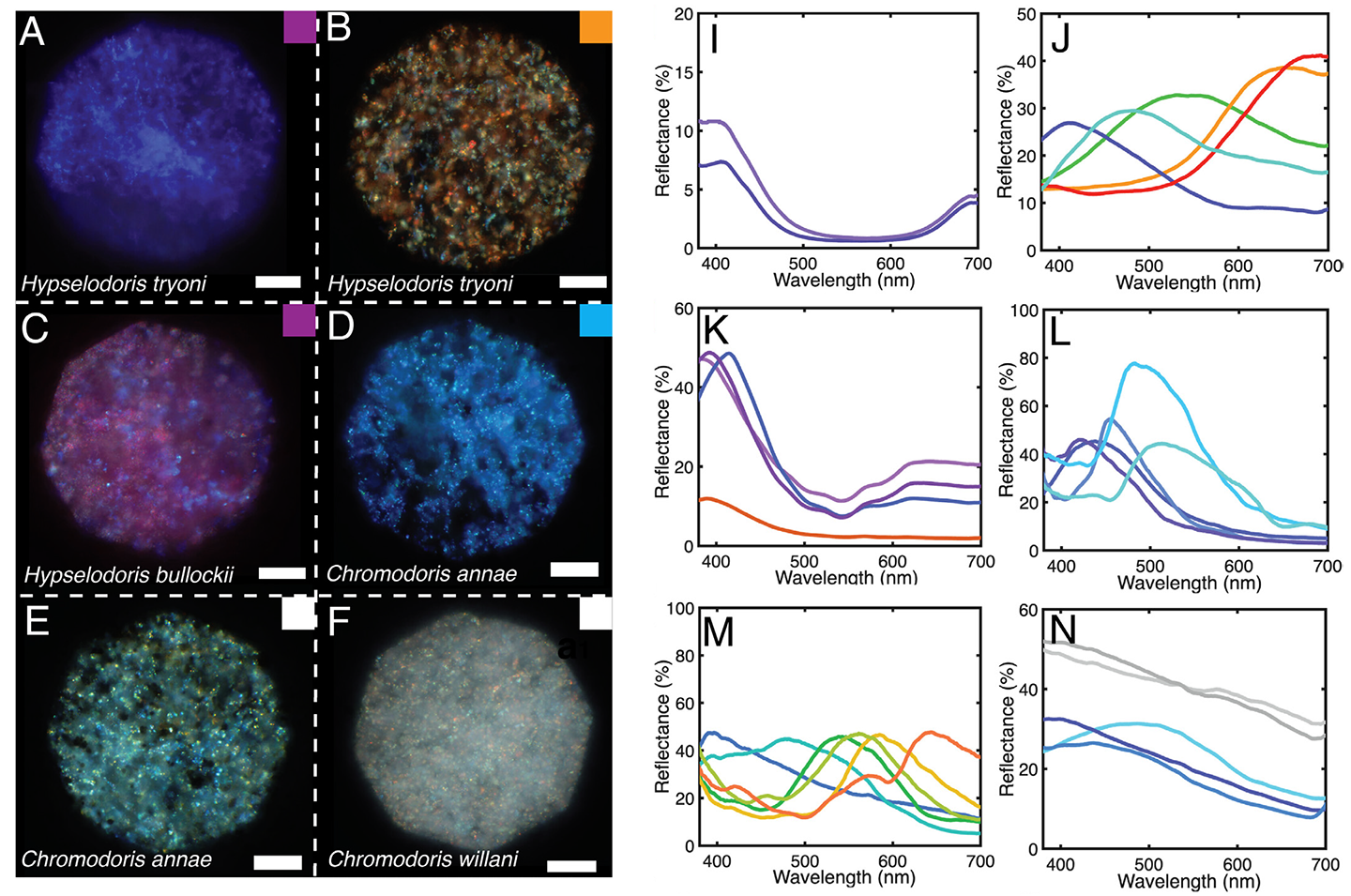
Microscope images revealed close-ups of nudibranchs’ skin (Figures A–F). These images show the many dots of different hues that make up a single area of color on the animals. Researchers also measured how these areas interact with light (Figures I–N). The graph in Figure I goes with the image in Figure A, Figure J goes with Figure B and so on. The graphs show the reflectance, or how much light reflects off differently colored spots to reach our eyes. Most colors have a specific wavelength at which the most light is reflected. For example, Figure C shows the pink region of Hypselodoris bullockii, which has some violet colored dots (Figure C). These dots reflect the most light at a wavelength of around 400 nanometers (Figure K).

Data Dive:

  1. How many types of colored light make up the violet hue of Hypselodoris tryoni (Figure A)?
  2. How many types of colored light make up the beige or white region of the same slug (Figure B)? Which color of light has the highest reflectance? What is that color’s peak wavelength?
  3. Which sea slug here has the color with the highest reflectance? (Hint: Not all the y-axes are exactly the same.) What is that color and what is the peak wavelength?
  4. How many different colors of light are in the region of Chromodoris annae (Figures E and M)? Based on those colors, how do you think this area of the slug looks to the eye?

  •  

Scientists Say: Fjord

Fjord (noun, “FYORD”)

Fjords are long, narrow arms of the sea that often reach far inland. They are typically flanked by tall, steep cliffs on either side. Below water, their trenches often plunge much deeper than the open sea to which they connect.

Fjords are usually formed by glaciers. This sets them apart from other types of narrow valleys, or gorges. As glaciers slowly make their way to the ocean, they can carve deep channels through the terrain. These channels remain even after the glaciers have melted and filled with water, creating fjords.

This breathtaking image captures the majestic sunrise over a Norwegian fjord. The warm, golden rays of the rising sun reflect upon the tranquil waters, enveloping the surrounding mountains in a gentle glow. The morning light creates an atmosphere of serenity and tranquil beauty. Perfect for conveying the calming splendor of sunrise, the stillness of the fjord, or evoking a sense of optimism and renewal, this image exudes timeless beauty and the captivating allure of a Norwegian fjord at sunrise.
Fjords are long, narrow arms of the sea that often stretch far inland. Joern Siegroth/Getty Images

These dramatic landscapes offer sweeping vistas of craggy cliffs and majestic mountains that inspire awe. Some scenes in The Lord of the Rings movies were filmed in the fjords of New Zealand. For instance, aerial shots showing the fictional River Anduin get their steep, forested terrains from Fiordland National Park.  

However, Norway holds the record for most fjords. It has more than 1,200. The largest is Sognefjord. This fjord stretches 205 kilometers (127 miles) inland. Steep mountains and cliffs rise up to two kilometers (1.2 miles) above the water below. This water hides a deep underwater trench that plunges up to 1.3 kilometers (0.8 mile) below sea level.

In a sentence

In 2023, a landslide triggered a tsunami that wiped out vegetation along Greenland’s Dickson Fjord.

Check out the full list of Scientists Say.

  •  

A geometric pattern lurks in Chinese money plant leaves

A common houseplant hides a splendid geometric pattern.

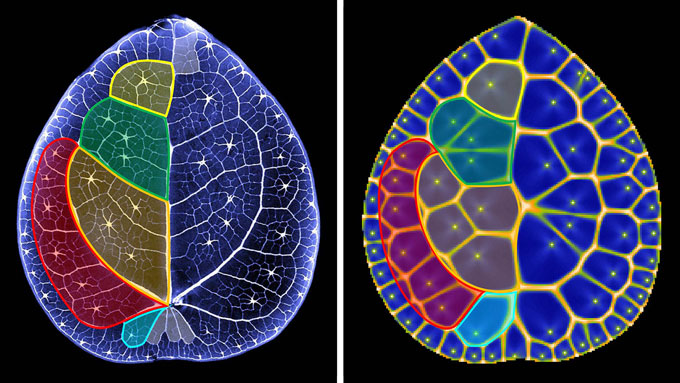
This design, called a Voronoi diagram, appears on the leaves of the Chinese money plant. The layout may arise as waves of a plant hormone spread across a leaf during its development. A similar process may shape the vein patterns in leaves of other plants, too.

Researchers shared these findings May 12 in Nature Communications.

This is a “beautiful” showcase of how plant veins develop to move water across leaves most efficiently, says Lawren Sack. He did not take part in the research. But he does study plant biology at the University of California, Los Angeles. Veins of leaves “have so much to tell us” about how to get resources where they need to go, he says.

Lurking in leaves

Leaves of the Chinese money plant (Pilea peperomioides) are speckled with pores. Called hydathodes, these pores release water. Each one is fenced in by veins to form a mosaic.

While in high school, Elijah Blum discovered a curious pattern in those leaf veins. He noticed it while plant-sitting for his sister. At the time, Blum was an intern at Cold Spring Harbor Laboratory in New York. (He’s now in college at New York University.) He shared what he’d found with his internship supervisor, computer scientist Saket Navlakha.

“He showed the plant to me, and he said, ‘Look, the veins look kind of interesting here,’” Navlakha says. “We sort of held it up to the light — and we saw that … Voronoi diagram.”

Side-by-side images compare a Chinese money plant leaf with a computer simulation, showing similar colored regions outlined by veinlike networks.
The layout of veins and pores on a Chinese money plant leaf (left, in false color) closely matches a computer model of a Voronoi diagram (right). Scientists made the computer model using the leaf’s pore positions as an array of dots. Colors show the regions on the actual leaf that correspond to regions in the computer model.Navlakha lab/CSHL

In a Voronoi diagram, a surface is split up into zones. Each zone contains a designated point. And every spot within a zone must be closer to that zone’s point than any other.

Urban planners use the same idea to decide which fire department a house should be assigned to. This helps each house in a city or town be closer to the fire station in its zone than any other station.

Patterns that look similar to Voronoi diagrams appear elsewhere in nature. The tiles on giraffe fur look like this type of design. So do the scales of dragonfly wings. But in a true Voronoi diagram, the mosaic must form around a set of points. In the Chinese money plant, the water-oozing pores serve as those points.

Making the mosaic

Blum and the others were curious how this pattern might develop.

Similar leaf veins are thought to form through canalization. In this process, a hormone involved in plant development — auxin — branches out across leaves. As it does, it creates a treelike network of channels that become veins.

But that wouldn’t produce a Voronoi diagram around a leaf’s pores, the team found. Computer models instead showed that as Pilea leaves develop, waves of auxin spread out from each pore. Those waves collide to form ridges. Eventually, they become a leaf’s major veins.

More research is needed to find out why Pilea leaves follow this pattern, says team member CiCi Zheng. She studies the math of living things at the Allen Institute in Seattle, Wash.

The Voronoi diagram layout might be useful for plants, she says. This pattern keeps a leaf’s major veins — which transport water — as far as possible from its water-leaking pores. “You might want to place the veins not directly close to any of those locations where water evaporates super-fast,” Zheng says.

Sack at UCLA is excited about what new tech this finding might inspire. Past studies of leaf veins, he says, have helped engineers reimagine how to distribute resources such as water and energy. Such insights have improved solar panels, electronic circuits and irrigation systems.

“The more we know about leaf veins,” Sack says, “the more we can build functional and beautiful systems around us.”

Do you have a science question? We can help!

Submit your question here, and we might answer it an upcoming issue of Science News Explores

  •  

Dormant microbes from Ötzi the Iceman’s body can grow in the lab

For a long time, scientists considered Ötzi the Iceman a messenger from the Copper Age. But new research shows this frozen mummy wasn’t alone. He hosts small companions — dormant, cold-adapted yeasts. In other words, his remains might not be as frozen in time as researchers once thought.

Since Ötzi’s discovery in the Italian Alps in 1991, his body has been housed in a specialized facility in Bolzano, Italy. Scientists there held his remains at –6° Celsius (21.2° Fahrenheit). This has been to keep his body from degrading. It’s a temp close to that of the glacier in which he’d been found.

Four ancient species of yeast have now been found in his remains. And they’re still able to grow in the lab, reports Albert Zink. His team isolated “ancient DNA from these species,” he notes. An anthropologist, until recently, he worked at the Eurac research center in Bolzano, Italy. (He’s now at Ludwig Maximilian University of Munich, in Germany.)

Those DNA show the yeast “accompanied [Ötzi] over thousands of years while he was preserved in the ice,” Zink says.

Scientists suspect Ötzi thawed and refroze several times — especially in the first 1,500 years after his death. That could help explain why his remains still host microbes.

Zink’s team shared its results on June 3 in Microbiome.

Do you have a science question? We can help!

Submit your question here, and we might answer it an upcoming issue of Science News Explores

Frozen in time?

Researchers thawed Ötzi’s body to 4 °C (39.2 °F) for five hours. Then, they collected the liquid that melted off his remains. They also swabbed parts of Ötzi’s body and took samples of his skin and other tissues.

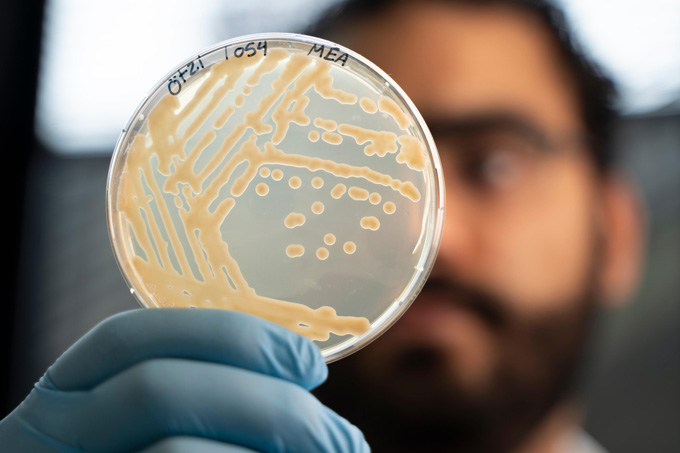
Four colonies of yeast grew from these samples. Scientists compared these yeasts to those in soil near the glacier where Ötzi was found. They also checked air and the water that the museum had used to keep the mummy’s chamber humid.

These tests showed those four yeast species really came from the mummy. They were effectively time capsules of Ötzi’s time in the ice after his death. Bacteria were also extracted from internal tissues. None of these grew in the lab.

The new findings suggest the iceman’s remains seem to still be interacting with the environment.

A petri dish of microbes grown from Otzi
Scientists grew colonies (shown) from four species of yeast found on the mummy’s body.Eurac Research/Andrea De Giovanni

Risks to the mummy

Those microbes could pose a problem. If they don’t stay dormant, they could end up decomposing the mummy.

This conclusion is “right on the mark,” says Patrick Hunt. He’s an alpine archaeologist at Stanford University in California who did not take part in the new study.

Ötzi is “the most important archaeological-science finding of the 20th century,” Hunt says.

Ötzi’s mummy has offered an incredible window into the man’s former life. From many studies, scientists know he wore leather clothes, had multiple tattoos and would have likely gone bald. Past work even shows he ate a high-fat meal before he died and carried an ax made of copper derived from far away.

More such discoveries may emerge only if Ötzi’s body remains preserved. That requires getting to know the cold-loving and potentially damaging microbes on his body. It also makes the new findings essential, Hunt says. They’ll help scientists preserve this iceman for the ages. 

  •  

A ‘super’ El Niño appears to be emerging. What’s the big deal?

Climate scientists are warning us to buckle up for a bumpy ride. An El Niño has begun. By year’s end, this periodic climate event might become the strongest El Niño on record.

An El Niño Southern Oscillation, or ENSO, is a recurring two- to seven-year ocean-climate pattern. On June 11, the U.S. National Oceanic and Atmospheric Administration confirmed Earth has officially entered the El Niño phase of this cycle.

El Niño events emerge in the Eastern Pacific. Eventually, the changes in climate they spawn will affect weather globally. And the stronger an El Niño, the more costly it can be to human health, farming, buildings and our wallets.

Forecasters currently predict a 63 percent chance that, by winter, the new El Niño will prove very strong — as in a “super El Niño.”

Here are four things to know as this climate pattern takes hold.

What’s an El Niño?

An ENSO’s several-years-long cycle has three phases.

The first, known as El Niño, involves months of warmer than normal sea-surface temperatures in the eastern equatorial Pacific. Back in the 1600s, fishers in Peru noticed this warming tended to show up around Christmas. So they dubbed it “El Niño,” which is Spanish for “little boy.” It’s also the name given to “the Christ child.”

A second phase — La Niña (or little girl) — swings to cooler than normal temps in those eastern Pacific waters near the equator.

The last is a neutral, in-between phase. It brings average temperatures back to the Pacific’s equatorial sea surface.
The “Southern Oscillation” part of ENSO’s name refers to another seesawing pattern. Here the swings are between areas of high and low atmospheric pressure over the eastern versus western Pacific Ocean. That up-and-down pressure pattern triggers global-scale changes in winds, air temps and precipitation.

Scientists track ENSO air-pressure changes at two main stations. One is in the West Pacific at Darwin, Australia. The other is in the East Pacific at Tahiti (part of French Polynesia).

During neutral periods and La Niña phases, the high-pressure zone is in the east. That sends prevailing winds westward across the Pacific around the equator. These winds push the warming surface waters of the Pacific to the west. This keeps them away from the coast of the Americas.

In so doing, it allows cold, nutrient-rich water to well up from the deep ocean. That keeps the eastern equatorial Pacific waters cold.

But every few years, conditions flip. Now high pressure prevails over the western Pacific, and lower pressure over the eastern Pacific.

This weakens or even reverses the direction of the prevailing winds. It also allows warm surface waters to stay in place. This suppresses the upwelling of cold water. Now sea-surface temps warm rapidly in the eastern Pacific. This also serves as a telltale sign an El Niño is back.
No two El Niño events are exactly alike, says Tom Di Liberto. He’s a climate scientist and meteorologist now working for the nonprofit news group Climate Central. It’s based in Washington, D.C.

But each El Niño transfers huge amounts of heat from tropical Pacific waters into the air. That bonus heat can temporarily — and dramatically — boost air temperatures around the globe.

Do you have a science question? We can help!

Submit your question here, and we might answer it an upcoming issue of Science News Explores

What makes for a “super” El Niño?

An El Niño officially starts when sea-surface temperatures in the eastern equatorial Pacific Ocean steadily remain at least 0.5 degree Celsius (0.9 degree Fahrenheit) above average for several months. The warmer the waters, the stronger an El Niño’s likely global impacts.

Waters warmer than 2 degrees C (3.6 degrees F) above average signal the emergence of a very strong — or “super” — El Niño.

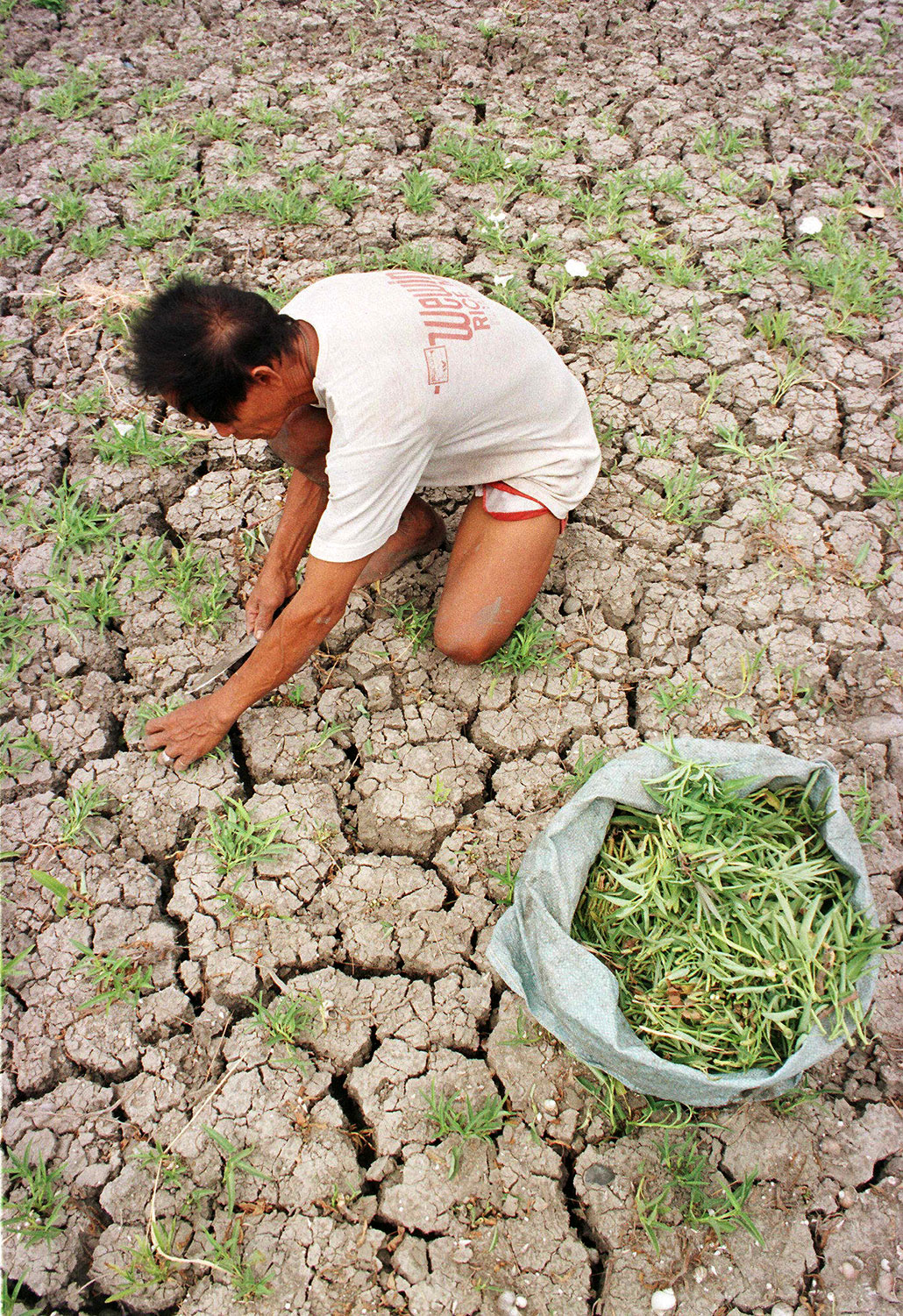
a photo of a farmer hunched over a dried and cracking field with wilted plants. He's pulling out the plants and putting them in a nearby plastic bag.
This Philippine farmer was trying to salvage any surviving water-pond plants during the super El Niño in April 1998. He hoped to feed local people and livestock. Seven Philippine corn and rice growing provinces were declared a state of calamity after their crops were totally destroyed by this El Niño’s long, severe drought.Romeo Gacad/AFP/Getty Images Plus

Since April, temps over the eastern equatorial Pacific Ocean have remained well above average. Dozens of forecasters around the world concluded an El Niño was on its way. By June, as the ocean warmed even more, their forecasts began to warn that this could prove a really powerful event.

Recently, climate change has made detecting an El Niño’s onset and strength more difficult. Why? Global temperatures have been warming steadily over the last decade, which can mask an emerging El Niño. So in May, NOAA’s Climate Prediction Center adopted a new tool for its El Niño forecasts. This now adjusts for that climate change–related warming.

Using this new tool, NOAA predicts that this winter, sea-surface temps in the eastern tropical Pacific are 63 percent likely to be more than 2 degrees Celsius higher than average. That’s what suggests a super El Niño is developing.

In fact, computer models are now forecasting “shockingly high” global temperatures for November and December, Di Liberto says.

Such heat can have deadly consequences. A rise in heat-related illnesses is one. Another is upticks in diseases (such as cholera, typhoid and malaria) carried by mosquitoes and other pests that like it hot.

El Niños also alter the track of the Pacific jet stream. The result: Some areas will become drier than normal. Others will get wetter.

For the United States, one of the most significant impacts will likely be more numerous and intense Pacific cyclones. At the same time, changing wind patterns can make it harder for Atlantic hurricanes to form.

Fortunately, the life of any one El Niño is relatively short: Events typically form in the summer, strengthen into the winter, then die out the next spring.

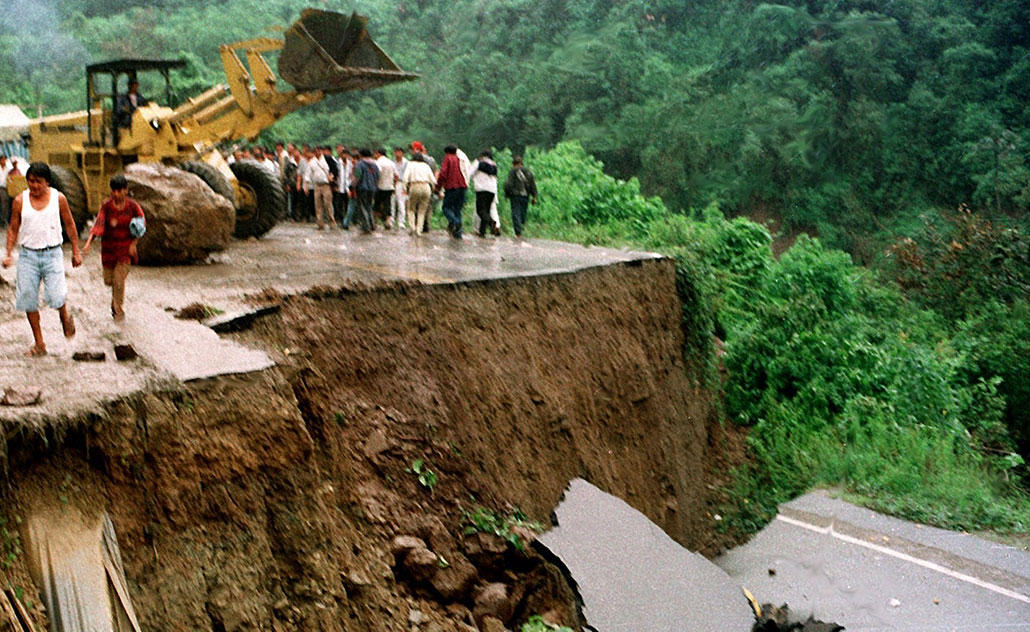
a photo of a people standing in the rain in front of a completely washed out section of road in Bolivia
People in Locotal, Bolivia, check out a major road after torrential rains washed out a large section of it on January 9, 1998. Meteorologists attributed the flooding rains and mudslides here to a powerful El Niño, which had been triggering extreme weather events around the globe.STR/AFP/Getty Images Plus

How will this year compare to past major El Niños?

The most recent strong El Niños happened in 2015–16, 1997–98 and 1982–83.

The 1997–98 event was the strongest on record. It temporarily raised average global temps by 1.5 degrees Celsius (2.7 degrees Fahrenheit) and triggered devastating weather events.

These included torrential rains and floods in Peru and East Africa. Those, in turn, triggered an outbreak of Rift Valley Fever in Africa. Droughts in Southeast Asia kicked off deadly wildfires. California saw powerful storms that brought major flooding and landslides. Soaring ocean temperatures led to the bleaching of about one-sixth of the world’s coral reefs.

Such strong El Niños are costly, too. The 1982–83 one cost the world an estimated $4.1 billion. The 1997–98 event was estimated to cost about $5.7 trillion.

How bad this year’s event will be is still unclear. But it’s occurring on top of strong global warming from human activities. And even if this year’s turns out to be only moderately strong, Di Liberto says, its impacts could still be very big. “It would not take a very strong El Niño to see records broken this year.”

Here a BBC meteorologist offers a snapshot of why weather forecasters are worried about the developing El Niño and how its impacts could play out across the globe.

Is there a way to downgrade this El Niño?

People might be able to weaken future El Niños by injecting small smoke-size particles into the atmosphere. That’s the finding of an analysis in the July 10 Science Advances.

To work, these aerosols would have to be targeted over a particular patch of the Pacific Ocean. This should increase and brighten clouds there, a new computer model finds. And that would reflect more of the sun’s warming light back into space, cooling the climate.

The idea for this was sparked by the 2019–20 Australian wildfires, says Jessica Wan. She’s a climate scientist at the University of Chicago in Illinois. Those fires spewed huge billows of particles into the air. Plumes of them wafted over the southeastern subtropical Pacific Ocean. This brightened clouds there — and helped trigger a multiyear La Niña.

This natural “experiment” hinted at how altering clouds in the proper region can change large climate patterns, says Wan. Her team’s computer model has now calculated what would happen if people injected a huge quantity of aerosols into the atmosphere (as the wildfires had). This should weaken an El Niño. But how much weaker it got would depend on when the injection took place, the model finds. The strategy seemed to work best when done early in an El Niño.

This idea “is really interesting and very new,” says Daniele Visioni. He’s a climate scientist at Cornell University in Ithaca, N.Y. who did not take part in this new study. To him, “the fact that it looks like this could work is a really good indication that it is something worth thinking about.”

But it’s not a strategy that could work for this year’s El Niño. There are too many big questions to answer first, Wan says. For one thing, the technology to inject particles is years from being ready. Plus, there needs to be more study about the possible negative consequences of injecting aerosol particles.

  •  

King cobras may be riding trains across India [COMIC]

Dikansh S. Parmar rescued a snake for the first time in middle school. It happened at his karate class in Surat, India. Someone spotted a baby cobra among a nearby pile of construction materials and wanted to kill it. But Parmar stopped them. His dad had rescued snakes, and he had a rough idea what to do. He took a rod from the construction site and used it to coax the baby snake inside a water bottle.

Parmar was lucky. The snake didn’t harm him. And people without proper training shouldn’t approach snakes. But this encounter inspired him to become a trained snake rescuer as a teen. Parmar is now also a herpetologist who studies snakes. He works at the Leibniz Institute for the Analysis of Biodiversity Change in Bonn, Germany. Recently, Parmar combined his snake rescue and science knowledge to discover something curious about his favorite snakes: king cobras.

Western Ghats King Cobras (Ophiophagus kaalinga), his team found, might ride trains across the Indian state of Goa. Parmar and his colleagues shared their evidence for this January 26 in Biotropica.

illustrated text reads "Wild Things: A graphic tale" with animals drawn around the letters
Text: Snakes on a Train. Written by Maria Temming. Illustrated by JoAnna Wendel. Image: A woman sitting on a train looks up from her phone to side-eye the passenger sitting beside her — a snake that is reading a newspaper.
Text (above images): In 2023, Dikansh S. Parmar received a shocking late-night phone call from a friend. Image (left): A man in a forested area is on the phone. He says, “Guess who rescued a king cobra?!” Image (right): A man sits up in bed, holding a phone to his ear. He says, “What? No way!” Text (below images): Parmar and his friend are both trained snake rescuers. But it was very rare to catch a king cobra — the world’s longest venomous snake.
Text (above image): Western Ghats King Cobras are found in the Indian state of Goa, where Parmar’s friend lived. But these snakes are not known to live in his village of Chandor. Image: A map of India shows the state of Goa on the western coast. A map of Goa shows the village of Chandor slightly left to the center of the state. Text (below image): Parmar studies snakes at the Leibniz Institute for the Analysis of Biodiversity Change in Bonn, Germany. Intrigued by the rogue king cobra, he traveled to Chandor to see where it had been found.
Text (above image): Railway workers had spotted the king cobra below a train station platform. Image: Parmar stands with a notebook and pen with a group of railway workers. The group are standing in a grassy area below a train station platform. A sign beside the platform reads, “Chandor, Goa.” Railway Worker 1 says to Parmar: “It was terrifying! Your friend is a real hero!” Railway Worker 2 says: “I still think I could have taken it.” Railway Worker 3 says: “Uh, it was a 13-foot venomous snake.” Railway Worker 1 says: “Yeah, you asked me to kill a spider for you yesterday.” Text (below image): The scene reminded Parmar of another snake rescue he’d performed in 2017.
Text (above image): A train station employee in Surat, India, had called Parmar at midnight, insisting that he come catch a cobra loose on one of the trains. Image: Parmar grabs the tail of a snake sitting on the seat of a crowded train car. Parmar says: “Sorry buddy, you’re coming with me.” The snake says: “But it’s not my stop!” Text (below image): At the time, Parmar didn’t think much about the snake beyond getting it safely off the train and himself back to bed. Now, it made him wonder if the king cobra in Chandor was a railway stowaway, too — and if other king cobras ever rode trains.
Text (above image): Parmar and his colleagues made a map of where Western Ghats King Cobras had been rescued across Goa from 2002 to 2024. Almost all had been found near their preferred habitats: cool, rainy forests. Image: A map of Goa shows where the most suitable king cobra habitats exist in the state. The eastern half of the state contains more suitable habitats than the western half. Black lines show where rail lines cut across the state, and red dots near some of those lines show where king cobras have been rescued. Text (below image): But five king cobras had been found near Goa’s more arid western coast — all a short distance from railroad tracks.
Text (above image): Parmar’s team also found news reports and social media posts about other snakes, including a king cobra, that had been spotted on trains. Image: Parmar looks down at his phone and says, “Whoa.” A news report with a video is on the phone’s screen. The news headline reads: “Watch a 10-foot king cobra removed from a train!” A video accompanying the report shows a railway worker trying to take a snake off a train car. The snake says, “You human paparazzi are relentless!” Text (below image): This strengthened the scientists’ suspicion that Western Ghats King Cobras were accidentally riding trains across Goa.
Text (above image): Food left on board by passengers and leftovers thrown outside train windows onto tracks can attract rats, which attract snakes — including king cobras, which eat other snakes. Image: A train platform bustles with people. A railway worker yells, “All aboard!” Meanwhile, a snake slithers onto one of the cars of the train parked at the platform. The snake says, “Don’t mind if I do!” Text (below image): Snakes might also seek shelter inside trains during the heavy rains of monsoon season.
Text (above image): To test their hypothesis that king cobras catch trains, Parmar’s team could gather more data with cameras at railway stations or by outfitting snakes with tracking devices. Image: Parmar sets up a camera near railroad tracks. Two snakes are hiding in the grass nearby, watching. One snake says to the other, “You weren’t kidding about the human paparazzi.”
Text (above image): Parmar wouldn’t be surprised if snakes travel by train. He and his colleagues in Surat have rescued Eastern bronzeback tree snakes that most likely arrived in town on trucks. Image: A map of India shows a path from Darjeeling to Surat that spans 1,700 kilometers. Below the map, a truck driver waves to a man pushing a cart of sapling trees. Two snakes are hiding in the leaves of those trees. One snake says to the other, “Why do humans complain about roadtrips? This service is excellent!”
Text (above image): But the fewer Western Ghats King Cobras riding trains, the better. King cobra bites are deadly. Unfortunately, snakes can’t read ‘keep out’ signs. Image: A snake slithers up to railroad tracks. Beside the tracks is a sign. On the sign is a snake with a big red X through it. The snake says, “They say ‘X marks the spot!’ I must be in the right place!” Text (below image): So it’s up to human passengers to clean up leftovers — and minimize how much construction cuts through king cobras’ forest habitats — to avoid tempting the snakes on board.
All: J. Wendel

  •  

Chatty cats and talking dogs could one day ‘speak’ in our language 

In the animated movie Up, a yellow, tail-wagging dog shows up wearing an electronic collar. The main character, a curious and cheerful 8-year-old boy named Russell, tells the dog to sit. The dog sits. Russell tells the dog to shake. The dog extends a paw. Russell then tells the dog to speak.  

“Hi there,” says the dog.  

To Russell’s amazement, the dog’s collar translates his doggy thoughts into actual human words. “My master made me this collar,” Dug the dog tells his new acquaintances. “He is a good and smart master, and he made me this collar so I may talk — SQUIRREL!” 

This is a common piece of technology in stories — a translator that can decode animals’ barks, squeaks, meows, clicks and such, into human language.  

Back here in the nonfiction world, anyone with a pet has probably wondered at some point what’s going on in that cute little animal head. Scientists can’t say. But there are reasons to think that an animal-human translator won’t stay a work of science fiction forever. “I think these things may be one day doable,” says Erich Jarvis. He’s a neurogeneticist at The Rockefeller University in New York City.

One day, pets may wear little devices like Dug’s collar. Or an app on a phone might translate pet sounds into words. This neat trick could finally let you learn the answer to why your cat is staring at that empty corner of the living room.

Learning languages 

Advances in computing power, artificial intelligence (AI) and fancy tools that measure sounds promise to bring people closer to conversing with other animals. These advances could turn animal chatter into bits of information that can be decoded by humans.  

Of course, some animals can already talk to us — in our preferred languages, too. Jarvis tells the story of a parrot that left its California home. It returned years later speaking Spanish, he says.  

Such language skills are rare. Thinking up a message and making intricate vocal sounds to convey it take special mental skills and a great flexibility of body systems. These traits are present in fewer than 1 percent of vertebrate species, says Michael Long. He’s a neuroscientist at New York University in New York City.  

Not all animals may be good conversationalists. Take vervet monkeys. “Their cognitive abilities are huge,” Long says. But they flounder when it comes to producing complex sounds. “So they have one of those requirements, but they need to get the other one,” Long says.  

And with rare exceptions, none really speak our language. But that gap can be overcome. It may just take a slight shift in what we consider talking. “Animals are speaking, often — to use speaking in a very loose way — more vibrantly than we had ever given them credit for,” Long says. 

A video still from the movie Up shows Carl, an older adult man, sitting on a porch with the golden retriever, Dug.
In the Pixar movie Up, a golden retriever named Dug wears a collar that translates his thoughts to speech. Dug’s collar translates all of his thoughts, even mid-sentence distractions like “SQUIRREL!”ALBUM/ALAMY

Understanding animals 

Like parrots, dolphins and whales may similarly make good conversation partners with people. In 2023, scientists used a decoded whale “hello” to enjoy a short conversation with an Alaskan humpback. This exchange consisted of a volley of whale whups, translated into English as “hello.” Still, both parties engaged in this interspecies chat. 

Another group of researchers has since discovered that whale language shares statistical properties with those spoken by humans. With these sorts of advances, perhaps we’ll soon be swapping krill recipes.

Some of Jarvis’ research includes mice that have been genetically changed to produce more complex sounds. He is part of a team that’s closely examining key genes that are active in good vocal learners. Mice with a human version of a protein called NOVA1, for instance, made more complex vocalizations. To be clear, this is not yet a talking mouse. But the research is moving fast.

Some animal messages are clear even without a fancy sci-fi gadget. “Animals are broadly expressive,” Long points out. Anguished yowls of a cat sitting by her unfilled food dish are no great mystery.  

Messages don’t even require a vocal tract. Mongolian gerbils, for instance, beat out messages by thumping the ground percussively. Dances, posture, color and even objects can all carry messages. Just think about it: You can probably figure out the message when a dog holds his leash in his mouth and sits by the front door. 

So while we wait for a gizmo that translates our pets’ thoughts into words, consider the wildly variable ways animals already communicate. Long’s formerly stray Brooklyn cats, for instance, have plenty to say. Their needs and wants are “very, very transparent,” he says.

Should a cat-human translator ever exist, Long’s message to one of his cats would be short, sweet and practical: “I would tell him not to sit too close to the stove when I’m cooking. I think that’s it.”  

  •  

Scientists Say: Subsidence

Subsidence (noun, “sub-SY-dens”)

Subsidence happens when land sinks because water, soil, rock or other underground materials are removed. It can happen quickly, with the sudden appearance of a sinkhole or abrupt shift during an earthquake. It can also happen gradually as people remove groundwater from aquifers. Over time, the overlying land sinks down to fill the open space.

Most subsidence occurs in areas where people pump groundwater out of aquifers. These natural storage areas are not underground lakes. Rather, they are porous rocks that hold water like vast sponges. Water that soaks into the ground after a good rain or snowmelt fills the spaces in the rock.

When we dig wells, we tap into these groundwater sources. But the more water we remove, the more air pockets we leave behind. Overlying rock and soil collapse into the porous rock, causing the surface to sink. Aquifers can take thousands of years to refill with water. So subsidence is an ongoing issue in many places.

a woman stands on sloped ground, holding up meter sticks that show where the land used to come up to, decades ago
This spot in California’s Central Valley dropped almost 2 meters (more than 6 feet) between 1988 and 2016. Subsidence is happening here as farmers use groundwater for their crops.Justin Brandt/California Water Science Center/USGS

Sometimes subsidence happens because people remove other substances from the ground. This includes mining for minerals or drilling for oil or natural gas. When those materials are removed, land settles into the gaps, leading to subsidence.

Subsidence happens around the world, but it is more common in areas with large cities and lots of agriculture. Human activity in these places can lead to overuse of groundwater. Cities face an additional problem if they are built on fine sediments left behind by rivers. These types of sediments can sink under the heavy weight of buildings and other structures. New York City and Shanghai, China, have both experienced subsidence due to the weight of their buildings.

In a sentence

As many coastal cities sink due to subsidence and face sea level rise, they become more likely to flood.

Check out the full list of Scientists Say.

  •  

The mystery of the ‘Plain of Jars’ in Laos may now be solved

Archaeologists have discovered the remains of at least 37 people, some likely dating from more than 1,000 years ago. A large stone “jar” in northern Laos became their last resting place. Part of the mysterious “Plain of Jars,” it’s one of thousands of similar ancient stone vessels. A local legend says giants used the jars to make rice wine. Researchers now think the newfound jar was a multigenerational burial site for ancestor worship.

That would make the Plain of Jars a vast ancient burial complex. Researchers describe this in the August issue of Antiquity.

The newfound stone jar spans more than two meters (6.6 feet) across. It sits in a forest about 70 kilometers (40 miles) northeast of Phonsavan, Laos, in Southeast Asia. Part of the Xieng Khouang Plateau, this region is dotted with thousands of the stone jars.

Skulls and other bones are visible within a circle of massive stone at a site in Laos that is being excavated. You can see a researcher and some excavation tools around the wooded site.
The remains of at least 37 people who died between the 9th and 13th centuries were found in this stone vessel in northeastern Laos. These remains provided key evidence to how the vessels in this Plain of Jars had been used. N. Skopal

The most well-studied groups are around Phonsavan itself. However, the entire plateau is now considered the Plain of Jars.

People had noticed a few of the jars contained bones or some ashes. But it seemed unlikely that so many large stone vessels would have been carved for burial ceremonies. So the jars’ original purpose had been a mystery.

“The big jar we’ve found is unique, and I’ve seen a lot of jars,” says Nicholas Skopal. He’s an archaeologist at James Cook University in the Queensland city of Townsville. This vessel finally confirms that the jars were part of ancient burial ceremonies, he says. But their precise use at different places may have varied.

A close up of glass beads in various sizes and colors
These beads were found in the burial “jar” along with ancient human bones.N. Skopal

Many sets of bones inside the newfound jar are separate. They are not part of a full skeleton. That suggests this jar is a “secondary burial” — a spot chosen for bodies that had partially decomposed elsewhere (such as in smaller jars). There are several smaller jars a short distance away.

“Maybe they used those [smaller] stone jars to ‘distill’ the bodies,” Skopal suggests. Remains might have been put in those smaller jars until “all the flesh comes off,” he says. “Then they take the bones and they put them … in this big jar. So it’s like a big crypt, almost.”

Do you have a science question? We can help!

Submit your question here, and we might answer it an upcoming issue of Science News Explores

The long-standing mystery of the Plain of Jars

French archaeologist Madeleine Colani investigated the stone jars near Phonsavan in the 1930s. Most are just over a meter high (a bit more than 3 feet). Some weigh several tons. Some are lying on their side. A few had stone lids.

Early French explorers had assumed these jars once stored food and water. Colani rejected that. She instead suggested the jars had a burial role.

Scientists largely overlooked this remote region after Colani’s survey. Newer expeditions were hampered by the large number of explosives from the Vietnam War left in this area. Lao officials have been working to clear out the explosives.

Archaeological studies since the mid-1990s found burial pits filled with ancient human remains next to the jars. The remains might have been left there to decompose while awaiting later placement in the jars.

Colani had estimated that the oldest jars could have been made in the 5th century B.C. That would be up to 2,500 years ago. More recent radiocarbon dating indicates the remains are less than half that old — about 1,000 years old. Some jars contained ashes and burned bone fragments, a sign of cremations. This practice is a later, Buddhist tradition. Perhaps the jars were reused for burials after Buddhism took hold in this region, Skopal suggests.

“This is a collective mortuary assemblage,” says Miriam Stark, who did not take part in the new work. “I find that very interesting.” An anthropologist and archaeologist, Stark works at the University of Hawaii at Manoa. She says she had been hoping a jar like the newly studied one would be found.

No sign yet exists of which people might have used the jars for burials, she notes. “I do wonder, where did these people live?”

  •  

Big waves shape this surfer-scientist’s research and life

Professional surfer and scientist Cliff Kapono gets his best ideas when he’s in the ocean. “The thinking turns off, but the ideas start to pour in,” he says. To him, the connection makes complete sense because the native Hawaiian word for “idea” is the same as “wave” — nalu.

Kapono is a native Hawaiian; these are the Indigenous people of Hawaii. He grew up in Hilo, Hawaii, where he is based today, blending his lifelong passions for surfing and science daily. “I want to understand how waves move across our planet, so I can be better at catching these waves,” he says.

As a kid, all he wanted to do was surf every day, all day long. He practiced until he could surf at a professional level. “That’s the same thing that I did in science. It started off where I just wanted to take science classes and get A’s. With surfing, the equivalent is catching nice waves,” Kapono says.

Kapono is now a professional free surfer. These athletes chase the best swells around the world to earn sponsorships and media exposure. He also has time to do scientific research. For Arizona State University’s Center for Global Discovery and Conservation Science in Hilo, he studies how humans and ocean environments interact, from molecular to macro scales, through the lens of a surfer. In this interview, he shares his experience and advice with Science News Explores. (This interview has been edited for content and readability.)

How do you balance professional careers in surfing and science?

When I was younger, I didn’t think I could put the two together. But if I were to pursue a full-time career in either, I would be unhappy. So I figured out a path where I could spend just as much time inside the science lab as I am in the ocean. The Western world defines your job based upon what you get paid to do, not about what you invest your time into. I totally departed from that idea. My job is to be the best version of me. The best version of me is surfing good waves every day and understanding about the natural world through a scientific lens. 

A person in a black sleeveless wetsuit standing in dark water, leaning over a surfboard. The board holds fins, a snorkel, and a small orange cylinder. Thick green plants fill the background.
“The best version of me is surfing good waves every day,” Kapono says, “and understanding about the natural world through a scientific lens.”Nani Welch Keliʻihoʻomalu

What does surfing mean to the Native Hawaiian community?

The clearest example of a productive society is the amount of leisure time they have. If you have a highly functioning system, you have surplus time. Our society was able to invest that time into the cultural arts, such as surfing.

Surfing has been documented within our histories for close to 2,000 years. It’s not just recreation. Surfing is so deeply embedded into the Hawaiian culture. It’s in the stories, the chants and the songs. It was celebrated tremendously by all peoples — from folks who were fisher people, farmers, basket weavers, cooks, to the royalty. In the late 1800s, it began being sort of exported outside of Hawaii and demonstrated at different locations around the world. By the 1950s, it reached global fame. 

What would you consider one of your biggest successes?

A success for me is elevating scientific literacy within the surf community. As a scientist, I represent an identity in the surf community that I didn’t see growing up. I can play that role for the next surfer scientist — or maybe it’s a surfer chef or surfer lawyer — to show that you can still contribute on a professional level to multiple communities within society at the same time.

Describe a research breakthrough moment you’ve had.

I’m currently trying to identify the structural complexity of reefs at some of the best, most iconic waves around the world. It’s known as bathymetry, the study of the seafloor. I’m looking specifically at where certain famous waves break. Over the last five years, I’ve been traveling around mapping the characteristics of these different reefs. I’m seeing similarities between these waves based upon their reef structure. A personal interest and curiosity is now supported by research — that keeps me excited. Finding out that, by learning more about the reef, I can be a better surfer is a breakthrough for me. 

An underwater photo of a snorkeler wearing a dive mask and green fins, reaching toward a large rock on a coral reef. Many fish, including yellow and dark-colored ones, swim in the blue water around them. Sunlight filters down from above.
Kapono studies the structural complexity of reefs at some of the best, most iconic wave spots around the world.Sarah Lee

What’s one of your biggest failures, and how did you get past that?

I have gotten a lot of F’s in my academic career, but I’ve never felt like getting an F was a failure. My dad would always tell me that failure is an event, not a person. It’s just a moment that passes, so it’s not going to stay with you very long. So, I’ve actually embraced a lot of failures. I failed at many science experiments. I failed at catching a wave. I fail to ride the wave all the way to the shore. Sometimes I fail to even stand up. I fail in obtaining resources to do my science. I fail in knowing what the right answer is. I fail daily. But failing is not a bad thing if it helps you to find the successes. I don’t feel embarrassed or ashamed to fail anymore. I just tell myself that it’s all going to work out in the end if I don’t let the failure stop me.

Do you have a science question? We can help!

Submit your question here, and we might answer it an upcoming issue of Science News Explores

Who were your role models growing up?

I always looked up to elders in the Hawaiian community that maybe aren’t super famous but, within our communities, really treated me kindly and shared knowledge with me. Whether they were teachers, family members or professional surfers, I always looked up to people who were willing to share what knowledge they had with me. Anybody who helped me to navigate the difficulties of being on an island in a small community and feeling like there’s a bigger world out there. Anybody who helped me to get to a higher level of thinking and develop my intelligence, from my academic intelligence to my emotional intelligence. The people who helped me understand more about the world and myself.

As a professional surfer and professor, Kapono has always pushed himself to succeed in both fields. “The better I got in science, I wanted to make sure I got better at surfing,” he says.

What do you do in your spare time?

I volunteer for a scientific group called Mega Lab that is trying to develop technology to protect the ocean and give it to communities who need it the most. The biggest project we have going on right now is mapping a million reefs by 2030. We’re teaching 10,000 citizen scientists how to map the reef with their GoPro, cell phone or camera. The program is called Map to Adapt. Anyone can join the Mega Lab — artists, skaters, ballerinas or firefighters. There are no requirements, you just come by and start doing science together. We just want to have a good time and party for the planet.

Why do science and surfing fit together so well?

Having an interest in science really has helped me to be a better surfer. And my interest in surfing has helped me to become a better scientist. Science is like a superpower for me. It’s really fun to be able to jump from a community that is so focused on riding a wave into one that wonders about how that wave moves. To me, that’s a pretty epic way to live.

  •  
❌