❌

Reading view

Entanglement Survives Violence of CERN’s Large Hadron Collider

In 2012, physicists from the ATLAS and CMS experiments at CERN announced the discovery of a new boson looking very much like the Higgs boson. Image credit: Daniel Dominguez / CERN.

Physicists from the ATLAS Collaboration at CERN’s Large Hadron Collider have confirmed that quantum entanglement -- the phenomenon Albert Einstein called β€˜spooky action at a distance’ -- can survive in some of the most extreme conditions ever produced in a laboratory.

The post Entanglement Survives Violence of CERN’s Large Hadron Collider appeared first on Sci.News: Breaking Science News.

  •  

New Study Explains Why Venus Has No Moon

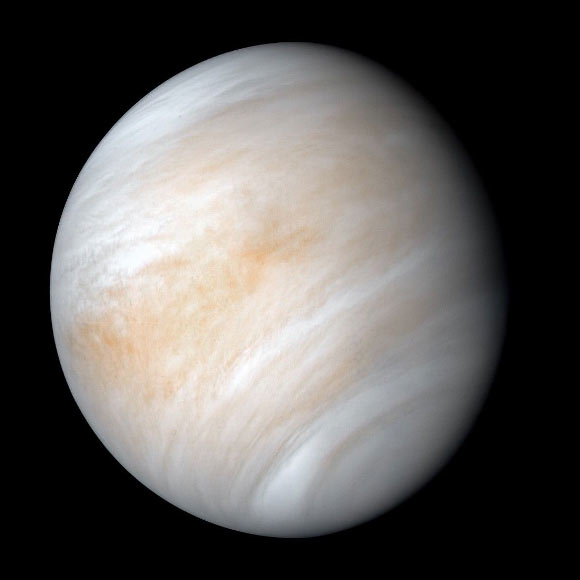
NASA’s Mariner 10 spacecraft captured this view of Venus in February 1974. Image credit: NASA / JPL-Caltech.

Dr. Stephen Kane from the University of California, Riverside and colleagues offer a tidy explanation for one of the Solar System’s enduring puzzles: why Venus, so similar to Earth in size and mass, has no moon at all.

The post New Study Explains Why Venus Has No Moon appeared first on Sci.News: Breaking Science News.
  •  

Spanish Amber Deposit Offers Rare Window into Cretaceous Life

Life reconstruction of Hallucinochrysa diogenesi. Image credit: J.A. PeΓ±as.

El Soplao, a fossil site tucked into the hills of Cantabria in northern Spain, stands out for yielding amber pieces with a blue-violet hue and abundant bioinclusions, according to a new review paper.

The post Spanish Amber Deposit Offers Rare Window into Cretaceous Life appeared first on Sci.News: Breaking Science News.

  •  
  •  

Mercury Has Shrunk Even More than Planetary Scientists Thought

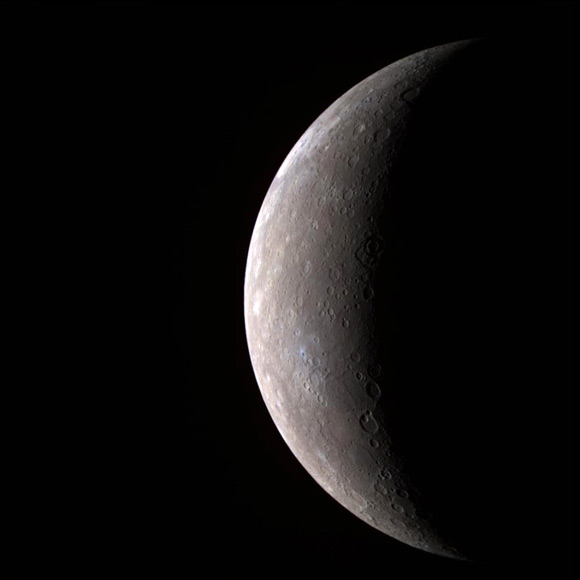
This color image of Mercury was generated from three MESSENGER images taken through filters sensitive to light in different wavelengths. Image credit: NASA / Johns Hopkins University Applied Physics Laboratory / Carnegie Institution of Washington.

The Solar System’s smallest planet has contracted by nearly 19 km (12 miles) across, as crater debris masked telltale wrinkles on its surface, according to new research led by the German Aerospace Center’s Institute of Space Research.

The post Mercury Has Shrunk Even More than Planetary Scientists Thought appeared first on Sci.News: Breaking Science News.
  •  

Devonian Armored Fish Show Multiple Ways to Crush Hard-Shelled Prey

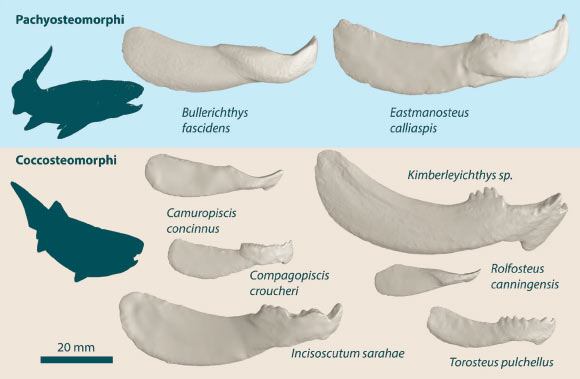
Devonian placoderm inferognathal jaw bones used display ranging size and morphology reflecting their evolutionary and ecological diversity. Image credit: Mitchell et al., doi: 10.1038/s41598-026-57261-3.

Long before sharks or reptiles ruled the seas, armor-plated fish called placoderms were already experimenting with different jaw designs to crush hard-shelled prey.

The post Devonian Armored Fish Show Multiple Ways to Crush Hard-Shelled Prey appeared first on Sci.News: Breaking Science News.
  •  

Study: Interstellar Comet 3I/ATLAS Formed in Cold, Nitrogen-Rich Environment

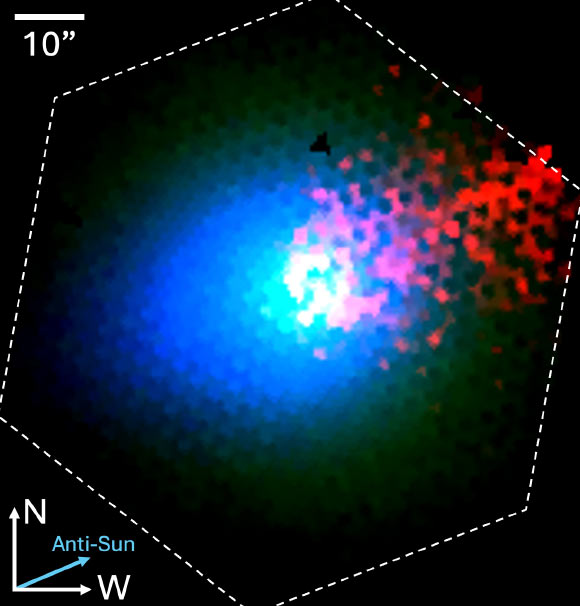
The distribution of dust (blue), gas (green) and ions (red) in the interstellar comet 3I/ATLAS. Image credit: Lea Ferellec.

Astronomers have found new evidence that 3I/ATLAS, only the third confirmed interstellar object ever detected entering the Solar System from beyond, formed in an extremely cold environment far from any star.

The post Study: Interstellar Comet 3I/ATLAS Formed in Cold, Nitrogen-Rich Environment appeared first on Sci.News: Breaking Science News.
  •  

Ichthyosaurs Had Surprisingly Dense Ribs, New Study Finds

Cryopterygius kristiansenae, a species of ophthalmosaurid ichthyosaur from the Jurassic of Svalbard. Image credit: Esther van Hulsen.

New research from the Natural History Museum at the University of Oslo suggests ichthyosaurs’ rib cages may have done a job modern whale ribs don’t: acting as ballast to help them dive.

The post Ichthyosaurs Had Surprisingly Dense Ribs, New Study Finds appeared first on Sci.News: Breaking Science News.
  •  
❌