❌

Reading view

Biology Might Not Be Quantum, but Its Math Is Quantumlike

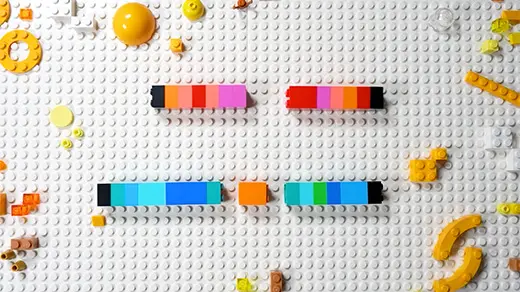
Two decades ago, scientists seemed on the verge of understanding biology in a new, quantum way. Life unfolds over an incomprehensible span of scales, from our planet-enveloping biosphere at one end, to individual cell-building biomolecules at the other. Even at its most microscopic, though, biology doesn’t really reach down to the quantum realm, in which particles act like waves…

Source

  •  

How Virus-like β€˜Jumping Genes’ Became Our Partners in Evolution

You might imagine that the DNA in your cells has a simple history. Even though it’s been recombined in every generation through sex and gained the occasional mutation, on the whole the genome has been stable and has been passed down reliably from your ancestors. But that’s not the entire story. Nearly half of your genome is a wild drama: mobile, repetitive, disruptive, even viral.

Source

  •  

Mathematicians Build Long-Awaited Graph Sandwich

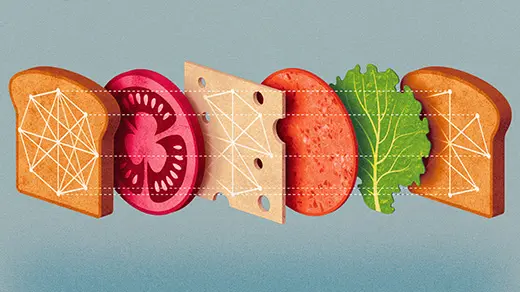
In 2004, two mathematicians hypothesized a powerful kind of sandwich. They were studying graphs, which are collections of points (called vertices) and lines (called edges). Graphs might represent anything from social groups to the internet to neurons in the brain. The mathematicians hoped to understand properties of one type of graph β€” a type that’s ubiquitous in mathematics and computer science…

Source

  •  

Where Does the Quantum World End and Ours Begin?

Quantum mechanics may be one of the most precisely tested paradigms in science, but there’s still no universally accepted interpretation of what it tells us about reality. How do we get from the wave-like behavior of quantum systems to the solid, macroscopic world of objects and the universe at large? Jonathan Halliwell, a professor of theoretical physics at Imperial College London…

Source

  •  

Ctenophores Aren’t Just Beautiful. They’re Biological Wonders.

Around 700 million years ago, a group of organisms resembling little more than glowing, gelatinous blobs split off from the rest of the animals, forming possibly the earliest branching animal lineage. Nearly 200 species of ctenophores, commonly known as comb jellies (but unrelated to jellyfish), live today in environments ranging from the cold depths of the sea to warm coastal surface waters.

Source

  •  
❌