❌

Reading view

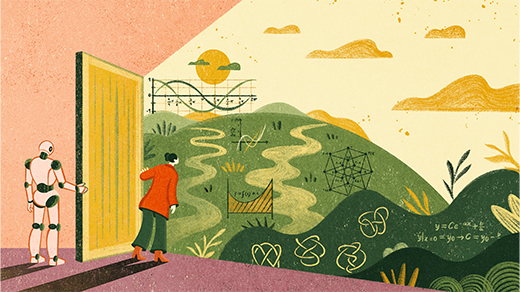
What Is Math’s Mysterious Langlands Program Really About?

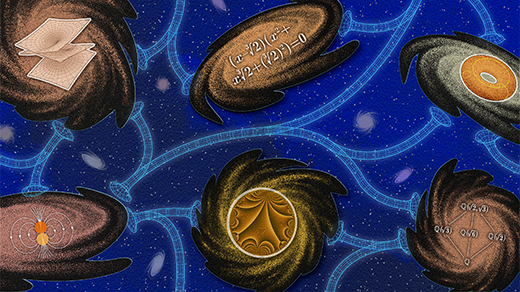
The mathematical universe is boundless and heterogeneous, encompassing, over here, truths about numbers and equations; there, the logic of shapes and spaces; and over there, the study of change and probability. Its domains have grown organically over centuries, each centered around its own objects, methods, and questions. That’s why it’s so surprising when direct connections between different…

Source

  •  

AI Has Solved One of Math’s $1 Million Millennium Prize Problems

On the morning of Tuesday, September 8, mathematicians at OpenAI announced that a group of 10,000 autonomous AI agents under their direction, running on an advanced model not available to the public, had found a “singularity” in the Navier-Stokes equations in three dimensions — thus resolving one of the six remaining Millennium Prize Problems posed in 2000 by the Clay Mathematics Institute…

Source

  •  

Live from ICM 2026: What Is Math For in the Age of AI?

Mathematicians are witnessing a profound shift in their field. AI systems are now producing proofs, spotting connections between distant fields, and, in a few cases, solving problems that had stumped mathematicians for decades. The pace of progress over the past several months has raised challenging questions: What can AI systems actually do? And what happens to the more human…

Source

  •  

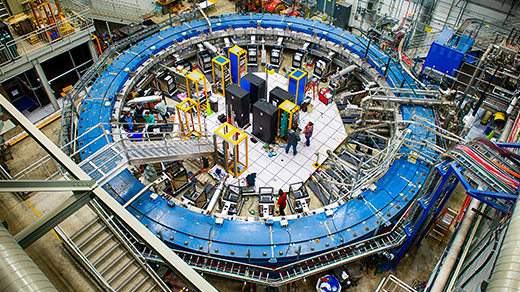
In an Age of AI, a Physicist Seeks What Endures

In July 2026, the U.S. Department of Energy selected 278 projects to fund as part of its Genesis Mission, meant to incorporate artificial intelligence into the scientific process. One project will use AI to help physicists search for a vanishingly rare particle transformation — a muon becoming an electron — by controlling different aspects of the Mu2e experiment at Fermi National Accelerator…

Source

  •  

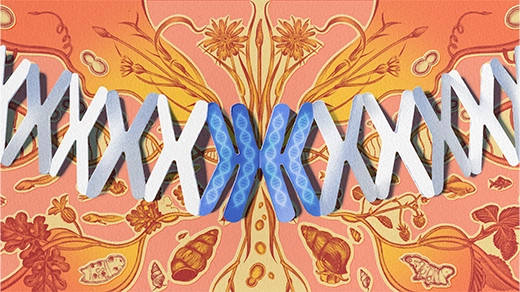
Genome Duplication Is a Radical Evolutionary Gamble

No larger than the head of a match, Potamopyrgus antipodarum doesn’t look very impressive. Few people visiting New Zealand’s Lake Alexandrina even notice the tiny gastropods littering the shores. The snail’s diminutive size, however, conceals a massive secret. Sometime in the recent past, its genome doubled. Instead of having two sets of chromosomes and two copies of every gene…

Source

  •  

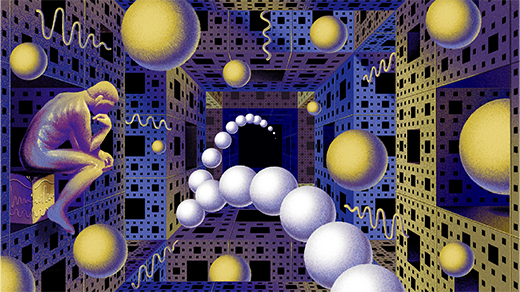
Graduate Student Proves a Quantum Uncertainty Principle for Fractals

At the quantum scale, tiny particles behave in bizarre ways. One reason for this is the uncertainty principle, which says that the more you know about where a quantum particle is, the less you can know about how fast it’s moving, and vice versa. Recently, this rule got a rare upgrade. The new uncertainty principle relates to fractals, shapes that remain equally complex no matter how much you…

Source

  •  

Why Are Rivers So Mathematical?

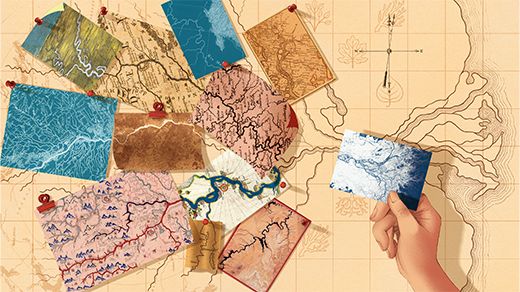
A river has my heart. It’s not the austere, black Thames winding through London, where I was born, but a lazy green one 5,000 miles away, where I spent my adolescence: the Blanco River in Texas. My maternal ancestors have dipped into its waters for generations, as I have on countless summer days. The Blanco is a tributary of the San Marcos, which flows into the Guadalupe, and on into the Gulf of…

Source

  •  

Neutrinos From Deep Inside Earth Provide a New Picture of the Mantle

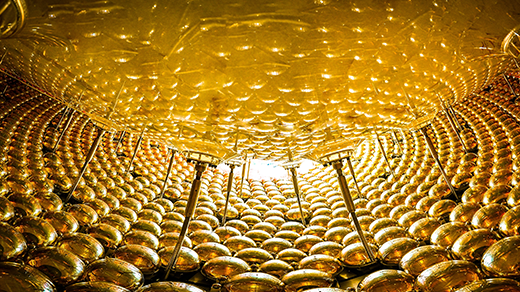
In a laboratory 2 kilometers underground, a crane lowers Matt Depatie, a detector technologist, through a hatch into a white-walled cavern filled with about 7,000 tons of ultrapure water that glows as blue as wiper fluid in the light. “Splashdown,” Depatie says over a radio as he steps into an inflatable raft waiting below. Normally, the cavern is one of the darkest places on Earth, but today…

Source

  •  

How Does Touch Lead To Pain Or Pleasure?

Pain and pleasure seem like simple facts of life, however they are anything but that. Neuroscientists still cannot say why physical pain differs from psychological pain, for instance, or why a loved one’s touch soothes while a stranger’s touch repels. To explore the science behind these sensations, Janna Levin talked to Ishmail Abdus-Saboor, a neuroscientist at Columbia University’s Zuckerman…

Source

  •  

Corals Spin Tiny Vortices to Get Oxygen, but Not if It’s Too Hot

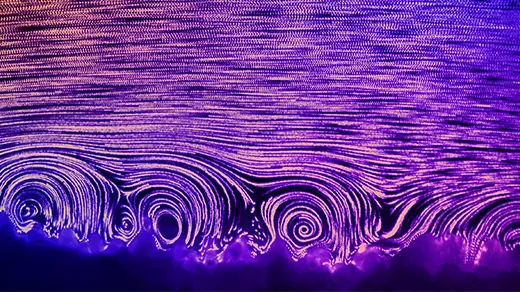
At first glance, corals present as little more than colorful rocks — piles of lobes, stalagmites, and branches poking out from the seafloor. They are anything but. Corals are complex creatures that form enduring colonies, and just like other animals they need oxygen to live. Across the living surface of coral, a frantic dance of survival takes place, invisible to our eyes and unknown to science…

Source

  •  

Why the Legendary Erdős Problems Are Falling to AI

On May 20, 2026, OpenAI made an announcement that shook the mathematical world. An internal AI model — one not available to the public — had come up with a counterexample to the “unit distance” problem, a conjecture made in 1946 by Paul Erdős, the prolific, itinerant Hungarian mathematician. Erdős posed thousands of questions, but this one was special: It was both simple to explain and…

Source

  •  

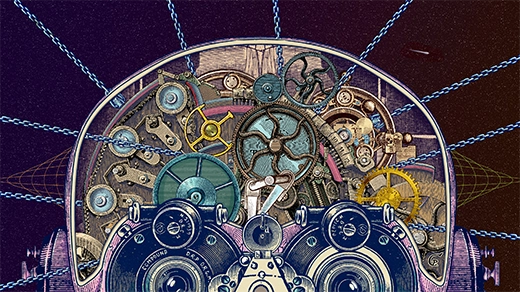
Is AI Reasoning Right for the Wrong Reasons?

I’ll just say it: What the hell is going on with AI “reasoning”? Sorry for the air quotes. That punctuational side-eye was more common in 2024, when the specially trained cousins of LLMs now known as “large reasoning models,” or LRMs, were still new. Nowadays it may seem downright churlish, though, given that a “general-purpose reasoning model” from OpenAI solved a famous open mathematical…

Source

  •  

Physicists Solve a Big Quantum Mystery. Now, Old Results Don’t Add Up.

For 25 years, physicists have been puzzled by an apparent one-part-in-a-million problem. Their expectations of the way that certain particles should wobble in a magnetic field were clashing with what they saw in experiments. The discrepancy was an electrifying hint that they might be seeing evidence of unknown particles. Then in 2021, that hint seemed to evaporate. When researchers updated the…

Source

  •  

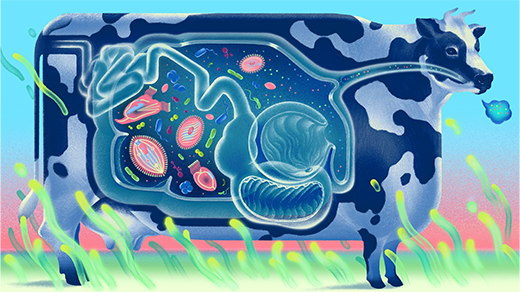
A New Way That a Cow’s Inner World Shapes Earth’s Atmosphere

Within every cow is a thriving ecosystem. Churning deep in its intestines, a massive fermentation chamber known as the rumen hosts a robust microbiome that can consume up to 100 pounds of feed daily. Inside this gut pouch, tens of millions of bacteria scavenge for scraps of fiber, starch, and other nutrients, and break down cellulose and proteins. They get a hand from microbial fungi…

Source

  •  

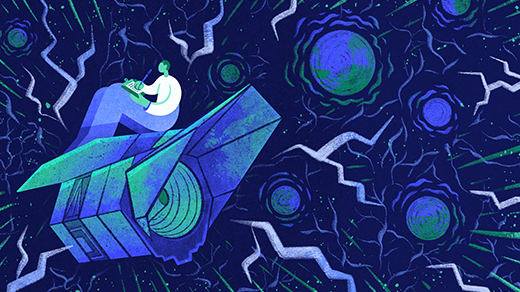
How Fast Is the Universe Really Expanding?

One of the biggest mysteries in cosmology seems to keep getting bigger. Astronomers have known since the 1930s that the universe is expanding, but in the 1990s, the discovery that this expansion is accelerating rather than slowing down came as a huge shock to the field. Something had to be driving that acceleration, and dark energy was proposed as the cause. What began as a seismic shock in…

Source

  •  

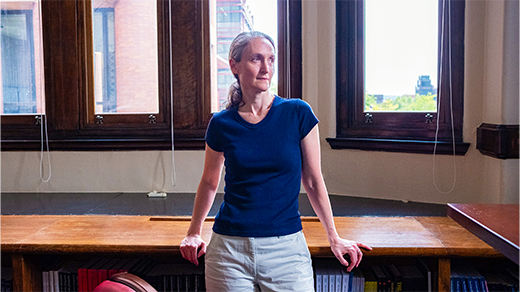
Fields and Abacus Medals 2026

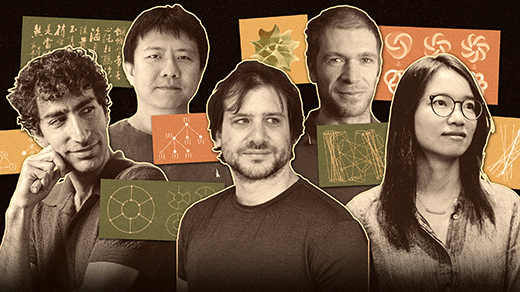
Every four years, the math world’s preeminent awards are given to the finest minds of a generation. The young winners — all under 40 on the first day of the year — have reshaped mathematics and theoretical computer science. Here are their stories.

The post Fields and Abacus Medals 2026 first appeared on Quanta Magazine

  •  

A Master of the Traveling Salesperson Problem Finds His Own Path

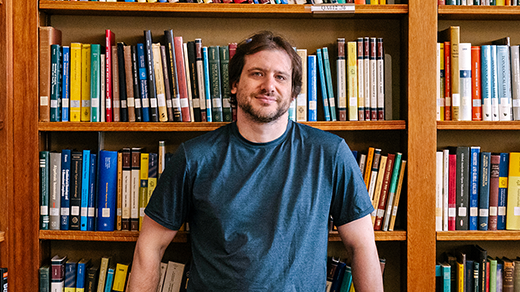
In theoretical computer science, the key to cracking tough problems is finding the right tools. Most researchers gravitate toward tools that match the problems they hope to solve, and some devote entire careers to mastering a few familiar techniques. But Shayan Oveis Gharan, a computer scientist at the University of Washington in Seattle, has never been content with the familiar.

Source

  •  

Living Fully in the Math World Means Threading the Needle

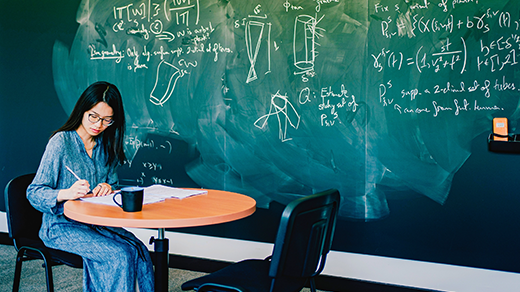
One might imagine that, for a mathematician, proving a monumental theorem is a blissful experience. It wasn’t so for Hong Wang. In February 2025, Wang and her collaborator Joshua Zahl presented a 127-page proof of a long-standing conjecture at the intersection of multiple branches of math. The duo had been checking their work for months and had sent it to select colleagues for review before…

Source

  •  

Sometimes Being First Means Seeing the End Before Anyone Else

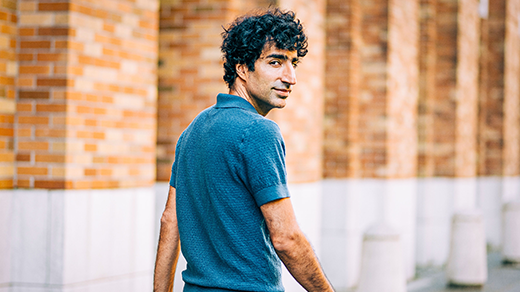
Jacob Tsimerman knows that many people see mathematics as a search for beauty. Over the course of his career, he has encountered beauty many times. But beauty is not what drives him. What he loves most is to solve hard problems, and to be the first to do so. “In my experience, and I think many people’s experience, math is very much a goal-oriented endeavor,” he said. “The truth-and-beauty stuff…

Source

  •  

Thermodynamic Computers Go With the (Energy) Flow

In the quest to make computers accurate and reliable, noise is the enemy. The thermal jiggling of atoms is a constant threat to the precision needed for detailed calculations. Whether we’re dealing with familiar classical devices like the laptops or supercomputers that we use today, or fancy quantum devices that promise us faster computation tomorrow, we don’t want some haphazard heat fluctuation…

Source

  •  
❌