❌

Reading view

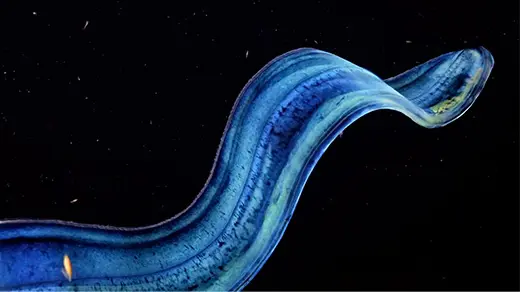
Ctenophores Aren’t Just Beautiful. They’re Biological Wonders.

Around 700 million years ago, a group of organisms resembling little more than glowing, gelatinous blobs split off from the rest of the animals, forming possibly the earliest branching animal lineage. Nearly 200 species of ctenophores, commonly known as comb jellies (but unrelated to jellyfish), live today in environments ranging from the cold depths of the sea to warm coastal surface waters.
Source

  •  

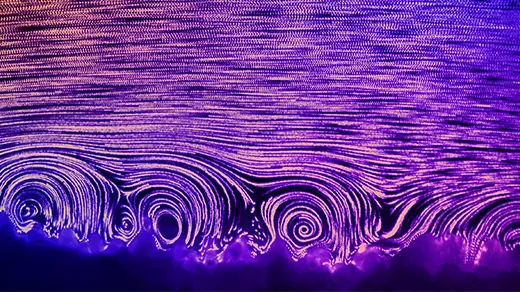
Corals Spin Tiny Vortices to Get Oxygen, but Not if It’s Too Hot

At first glance, corals present as little more than colorful rocks β€” piles of lobes, stalagmites, and branches poking out from the seafloor. They are anything but. Corals are complex creatures that form enduring colonies, and just like other animals they need oxygen to live. Across the living surface of coral, a frantic dance of survival takes place, invisible to our eyes and unknown to science…

Source

  •  

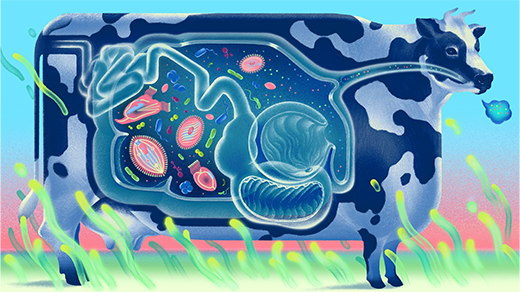
A New Way That a Cow’s Inner World Shapes Earth’s Atmosphere

Within every cow is a thriving ecosystem. Churning deep in its intestines, a massive fermentation chamber known as the rumen hosts a robust microbiome that can consume up to 100 pounds of feed daily. Inside this gut pouch, tens of millions of bacteria scavenge for scraps of fiber, starch, and other nutrients, and break down cellulose and proteins. They get a hand from microbial fungi…

Source

  •  

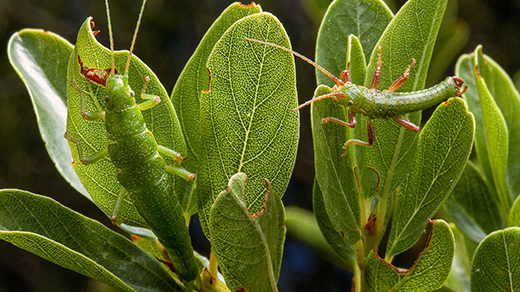
How Ecotypes Harbor the Genetic Memory of a Species’ Past

When she was a graduate student in the 1970s, the evolutionary biologist Kerstin Johannesson regularly walked the shores of a Swedish archipelago, scanning the ground for pebbles that moved: marine snails. Her adviser, a taxonomist, had tasked her with describing the species present there by documenting their traits. She noticed that snails with thicker shells stayed on the shore…

Source

  •  
❌