❌

Reading view

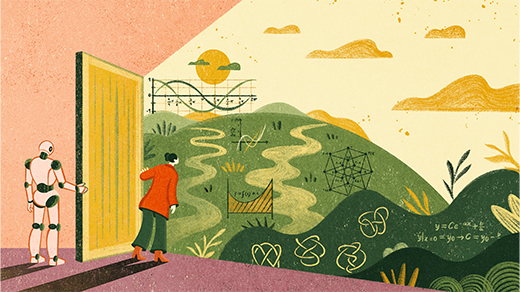
Live from ICM 2026: What Is Math For in the Age of AI?

Mathematicians are witnessing a profound shift in their field. AI systems are now producing proofs, spotting connections between distant fields, and, in a few cases, solving problems that had stumped mathematicians for decades. The pace of progress over the past several months has raised challenging questions: What can AI systems actually do? And what happens to the more human…
Source

  •  

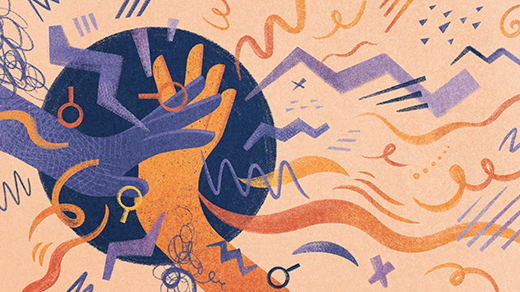
How Does Touch Lead To Pain Or Pleasure?

Pain and pleasure seem like simple facts of life, however they are anything but that. Neuroscientists still cannot say why physical pain differs from psychological pain, for instance, or why a loved one’s touch soothes while a stranger’s touch repels. To explore the science behind these sensations, Janna Levin talked to Ishmail Abdus-Saboor, a neuroscientist at Columbia University’s Zuckerman…

Source

  •  

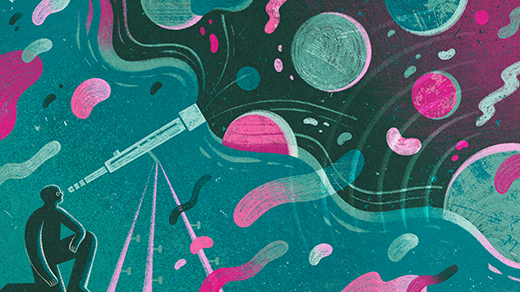
Will We Ever Find Alien Civilizations?

Does intelligent life exist elsewhere in the universe? The question has captivated us for centuries, but despite decades of searching it remains frustratingly unanswered. Every so often a curious signal appears β€” fossilized structures in a meteorite, say, or an unusual gas in an exoplanet’s atmosphere β€” and for a moment it seems possible that we are not alone before the excitement gives way to a…

Source

  •  

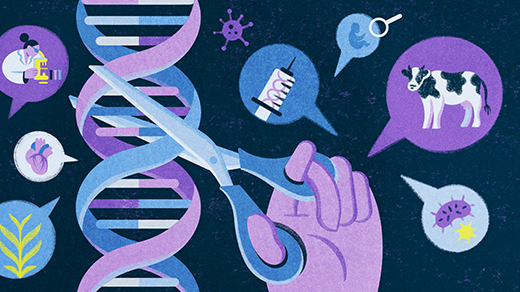
What’s the Future of Gene Editing?

One of the most surprising and remarkable discoveries in recent scientific history has been CRISPR. Short for Clustered Regularly Interspaced Short Palindromic Repeats, CRISPR is a form of immune system that evolved in bacteria more than a billion years ago to defend against persistent viral threats. Under attack, bacteria can snip a small fragment of a virus’s DNA, store it in the CRISPR region…

Source

  •  
❌