U.S. President Donald Trump’s administration recently repealed the 2024 Public Lands Rule, which established that conservation should have equal priority with industry when it comes to accessing leases for U.S. public land. That shift in priorities will apply to 245 million acres (99 million hectares) of public land managed by the Bureau of Land Management (BLM). That’s roughly 10% of U.S. land that the agency leases for a multitude of private uses including grazing, mining, energy development and, until recently, conservation. In the federal register the Department of the Interior (DOI) said, “[b]y rescinding the 2024 Rule, the BLM eliminates mechanisms — such as restoration and mitigation leasing — that threatened to restrict productive use of the public lands.” An example of the decision’s impact can be found in the state of Montana. Roughly 950 American bison (Bison bison) have grazed on 63,000 acres (25,495 hectares) of federal land there since 2022. However, the DOI, which oversees BLM, revoked that grazing permit on May 8, just days before repealing the Public Lands Rule. Interior secretary Doug Burgman said that according to federal grazing laws, public land leases can only be given to animals, “intended for use primarily for their meat, milk, or other animal products.” He added that “considerable evidence” suggests the bison are intended for “for some other purpose, such as conservation.” Before western settlement, upwards of 100 million bison roamed the plains, serving as “ecosystem engineers shape[ing] healthy and diverse ecological communities,” the DOI acknowledged in its 2020 Bison Conservation…This article was originally published on Mongabay
SPOKANE, Wash. (AP) — High winds drove a wildfire into an eastern Washington neighborhood, forcing the evacuation of about 1,500 people and destroying some homes, fire officials said Wednesday. It’s unclear how many homes were lost in Spokane. Fire officials were working Wednesday to determine the number and the full extent of the damage, said Matthew Vinci, fire chief for Spokane County Fire District 9. He confirmed Tuesday that some homes were engulfed in flames. The evacuation order for the 1,500 residents remained in effect Wednesday, said Chandra Fox, deputy director for Spokane County Emergency Management. “Our concern is for increased winds Wednesday afternoon,” Fox said. The blaze started just after noon on Tuesday and quickly moved up a hill, said fire district spokesman Robert Gray. Winds then shifted, sending flames into a neighborhood, Gray said. Fire crews from Washington state and Idaho attacked the fire from the ground and air, but it quickly grew to 225 acres (.35 square miles). It was 10% contained Wednesday morning, according to the National Interagency Fire Center. More than 32,000 fires have burned more than 3,900 square miles (10,100 square kilometers) so far this year in the United States, according to the fire center, which coordinates the mobilization of large-scale firefighting efforts. That’s significantly higher than the 10-year average of just under 24,000 fires burning about 2,200 square miles (5,700 square kilometers) by early June, according to the fire center, even though fire activity has been relatively light in recent weeks. Weather and…This article was originally published on Mongabay
Two municipalities in the Peruvian Amazon have granted native stingless bees the legal right to exist, thrive and be represented in court. This is the first time any insect has been recognized as a rights-bearing entity anywhere in the world, according to a correspondence published in Nature. The ordinances passed in the municipalities of Satipo and Nauta-Loreto guarantee the bees’ right to exist, reproduce and flourish. This establishes a legal framework allowing Indigenous groups and conservationists to sue on behalf of the bees. The campaign was led by Rosa Vásquez Espinoza, founder of Amazon Research Internacional. She spent years traveling into the Amazon to document the bees in collaboration with Indigenous communities. Indigenous peoples have cultivated stingless bees since pre-Columbian times, and they have cultural and spiritual meaning for Indigenous groups such as Asháninka and Kukama-Kukamiria peoples. “Within the stingless bee lives Indigenous traditional knowledge, passed down since the time of our grandparents,” Apu Cesar Ramos, president of EcoAshaninka of the Ashaninka Communal Reserve told The Guardian. “The stingless bee has existed since time immemorial and reflects our coexistence with the rainforest.” The Nature authors noted that stingless bees pollinate roughly 80% of tropical flora. However, they face climate change, deforestation, pesticides and competition from invasive European honeybees. Peru’s national Law No. 32235, passed in 2025, formally recognized stingless bees as a species of national interest. This milestone helped pave the way for the municipal ordinances. “This ordinance marks a turning point in our relationship with nature: it makes stingless bees visible,…This article was originally published on Mongabay
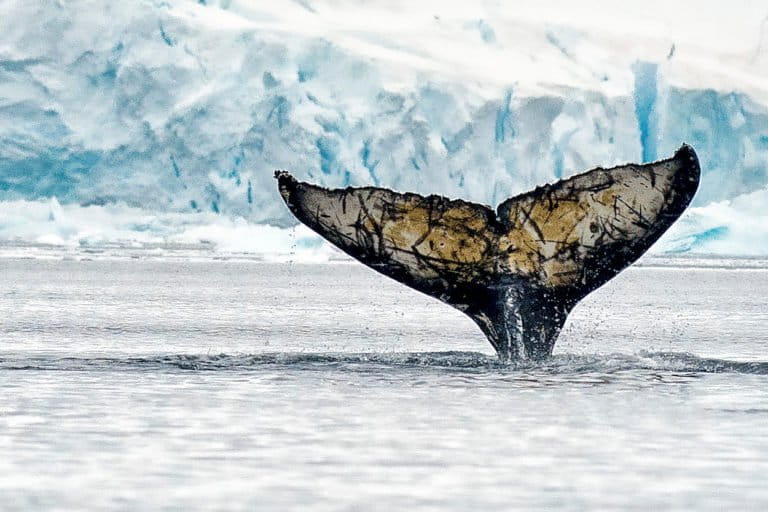
This week, as governments of various coastal states gather in Mombasa, Kenya, for the Our Ocean Conference, Africa must demand an end to industrial krill fishing in the Southern Ocean before irreversible damage is done to Antarctica and the ocean systems upon which our continent depends. A clear call from Africa would bolster international calls for a ban on industrial krill fishing and support positive leadership developments like the European Parliament’s recent call for a moratorium on krill fishing. The Southern Ocean regulates global ocean circulation, absorbs enormous quantities of heat and carbon dioxide, and sustains marine life across the planet. At the center of this system is Antarctic krill (Euphausia superba), the tiny crustacean that feeds whales, penguins, seals and seabirds while helping lock carbon into the deep ocean. Industrial krill fishing has expanded rapidly over the last few years, with the largest share of this extraction controlled by fleets linked to certain European and Asian countries. Most concerningly, fishing is intensifying precisely where Antarctic wildlife is most vulnerable: critical feeding grounds for whales, penguins and seals are actively targeted by the industry. A single adult Antarctic krill (Euphausia superba) is usually just five centimeters long, but the importance of its massive populations to marine food chains, and the millions of people who depend on ocean protein as part of their daily diet, is major. Image courtesy of Uwe Kils via Wikimedia Commons. The damage is already visible. In April, the International Union for Conservation of Nature (IUCN) classified…This article was originally published on Mongabay
Former sea turtle hunters in Cabo Verde, off the coast of West Africa, have shifted to working in loggerhead turtle conservation along the archipelago nation’s main nesting beaches. The change was propelled by 2018 legislation that criminalized killing threatened turtle species, Sonam Lama Hyolmo reported for Mongabay. Rangers, around a dozen of which used to poach or hunt turtles, now patrol key beaches where turtles lay their eggs, walking several kilometers each night during the nesting season, which runs from June to October. Turtle meat is historically consumed in Cabo Verde and many other regions, which has created a conflict between conservation needs and local customs. However, awareness campaigns and employment opportunities are helping to bridge that gap. “I had turtle meat for personal consumption and never realized I could make a living out of conserving them,” Roni Nelson Batista Ramos, a ranger and camp coordinator at the Turtle Foundation, told Mongabay. “But now, I guard them against the poachers, and it’s motivating to see how these efforts have driven positive impacts for their conservation.” Ramos and others monitor around 31 kilometers (19 miles) of coastline, patrolling the beaches on foot, and using drones and dogs for added assistance. Roughly two-thirds of loggerhead turtle nesting activity in Cabo Verde happens on the eastern island of Boa Vista, which has seen a dramatic decline in illegal turtle hunting, according to the Turtle Foundation. In 2007, 1,253 female loggerheads were illegally caught on the island; by 2024 there were just 20. Over…This article was originally published on Mongabay
This week, thousands of delegates are gathered in Mombasa, Kenya, for the first Our Ocean Conference to be hosted on African soil. As expected, much of the conversation will focus on the global “30×30” target — protecting 30% of the world’s land, freshwater and oceans by 2030. Yet, far from the conference halls, the big pledges and state commitments, many of the people doing the daily work of marine conservation are community organizations operating on modest budgets along Africa’s coastlines. They often do so far from the spotlight, but their contribution is vital for the global ambition to conserve ocean spaces. The Convention on Biological Diversity (CBD), under whose Kunming-Montreal Global Biodiversity Framework the 2030 targets were adopted, highlights that success hinges heavily on community involvement. Across Kenya, Tanzania and Namibia, four such groups — Coastal and Marine Resource Development (COMRED), Action for Ocean, Mwambao Coastal Community Network and the Namibia Nature Foundation (NNF) — offer a window into what community-led marine conservation looks like in practice. Their work might be underfunded, uneven and sometimes slow, but are increasingly central to how marine protection is imagined on the continent. Marine ecosystems in Africa support fisheries, tourism, transport, carbon storage and coastal protection while sustaining millions of livelihoods from the Western Indian Ocean to Africa’s Atlantic and Mediterranean coasts. In East Africa in particular, mangroves, coral reefs, seagrass meadows and nearshore fisheries underpin food systems and local economies even as they face pressure from overfishing, habitat degradation, climate change and pollution.…This article was originally published on Mongabay
In India’s northeast, local communities are leading the charge for the protection of the marbled cat, one of Asia’s most poorly studied small wild cat species, reports contributor Barasha Das for Mongabay India. The marbled cat (Pardofelis marmorata) is widely distributed across South and Southeast Asia. However, not much is known about its population and movement patterns because it isn’t a species many researchers specifically set out to study. It is “often studied as part of broader wild cat groups rather than through species-specific research,” Jimmy Borah, deputy director of the legal and advocacy division at conservation NGO Aaranyak, told Mongabay India. Most of what is known about the cat is from camera trap records, Borah added. One such camera trap study in Southeast Asia found that only a small proportion of the marbled cat’s range in the region lies within protected areas. Similarly, conservationists with the Eastern Himalayas Marbled Cat Project (EHMCP) used camera traps to confirm the presence of the marbled cat in parts of the states of Arunachal Pradesh, Nagaland and Meghalaya, finding that most habitats of the wild cat extend beyond protected areas. “It became clear that if conservation efforts are to be effective, we need to focus on sensitizing communities living around these forests because they interact more frequently with these species but are less aware of them,” Giridhar Malla, founder of the EHMCP, told Mongabay India. The EHMCP conducted awareness programs in villages near the cat’s habitat and engaged local youth and hunters…This article was originally published on Mongabay
ROOIELS, South Africa — Baboons aren’t exactly punctual, but Gavin Lundie still expected them to appear in the village around 9 a.m. “They’re coming!” his wife Lesley called. Members of the Rooiels baboon troop had begun to make their way down. Lesley made her way to the sliding doors on their patio and secured it with two shoelaces attached to a hook. She remained on the balcony and watched as the troop entered into the village a few properties away. The Lundies live in Rooiels, a small, affluent village on False Bay, approximately 80 kilometers (50 miles) from Cape Town’s city center. The village, scattered from the coastal flats up the slopes of the Klein Hangklip mountain, is part of the Kogelberg Biosphere Reserve. The mountain’s cliff faces offer sleeping baboons (Papio ursinus) protection from leopards, their natural predator, but the sparse vegetation doesn’t offer enough for them to eat or drink. In contrast, the lower slopes, where the village has grown up, is still covered with dense fynbos scrub on undeveloped plots, in gardens and along unpaved verges. The baboons forage on a range of flowers, seeds and berries in the warmer months; in winter, when the fynbos is dormant, the baboons eat kikuyu grass from lawns in the village. They also eat limpets in the intertidal zone, and the Rooiels River is a year-round source of freshwater. A juvenile baboon clings to its mother’s back as she forages in fynbos on the roadside in Rooi Els. Image by…This article was originally published on Mongabay
In Malawi’s Chiradzulu district, located in the southern region of the country, Diana Sitima’s farm shows how a combination of agroecology and secure land ownership can create a thriving commercial enterprise. Many neighboring farmers rely primarily on growing and selling maize. But, on her 3.5-hectare (8.6-acre) farm, Sitima combines diverse crops of fruits and vegetables with fishponds and livestock to protect soil health and reduce the need for synthetic fertilizers, reports Mongabay contributor Charles Mpaka. Sitima started farming as a side hustle in 1993 while working as an office assistant. At the time she used microloans to rent small parcels of land. By 2006, she had saved enough to purchase her own property, a move she describes as the most critical step toward her success. In 2026, Sitima’s farm is “almost 100% organic,” she says. She uses a biodigester to turn manure into biogas for cooking and to power an egg incubator, while growing aquatic ferns to supplement livestock feed. “The animals and the crops support each other in various ways,” Sitima tells Mongabay. The farm’s productivity has led to significant economic results. It generates approximately $1,200 in weekly sales and provides permanent employment for six workers. Sitima attributes her growth to persistent learning, having relied on technical advisors from the government for two decades. Beyond her own fields, Sitima serves as a mentor and the chairperson for a local chapter of the Rural Women’s Assembly (RWA), a grassroots network supporting nearly 200,000 small-scale women farmers across 11 countries in…This article was originally published on Mongabay
Williams electric blue day gecko is a small Tanzanian reptile whose recovery shows what focused conservation can do, reports Mongabay contributor, Manuel Fonseca. Once heavily collected for Europe’s pet trade, the species is now rebounding because pressure from trade has eased, captive breeding has reduced demand for wild animals, and local people are helping restore the forest it needs. The gecko (Lygodactylus williamsi) lives in only two small forest reserves in central Tanzania, Kimboza and Ruvu, and depends almost entirely on screwpines for shelter, food, basking and breeding. That dependence made it vulnerable. Collectors cut down screwpines to reach the geckos, and by 2009, researchers estimated that tens of thousands had been taken from the wild. The species was later listed as critically endangered, and international commercial trade was banned under CITES, the global wildlife trade convention, in 2017. The work on the ground has mattered just as much. In Kimboza, forest ecologist Charles Kilawe and people from surrounding villages have worked with rangers to remove invasive Spanish cedar, which had spread through the reserve and displaced native habitat. Since 2016, they have cut down nearly 100,000 cedar trees, reduced forest fires by around 80%, and planted about 5,000 native trees a year. Those efforts are helping the gecko’s population return toward earlier levels. They are also improving habitat for other wildlife, including blue monkeys (Cercopithecus mitis), white-chested alethes (Chamaetylas fuelleborni) and trumpeter hornbills (Bycanistes bucinator). For species with tiny ranges, conservation can be very specific work: Keep trade pressure…This article was originally published on Mongabay

 Login