Soon after becoming president and chief executive of the Wildlife Conservation Society, Adam Falk visited the giraffe keeper at the Bronx Zoo. What struck Falk was the source of the keeper’s commitment. If a giraffe needed help in the middle of the night, he said, the keeper would come in because of his bond with the animal. Falk recognized something familiar. Before joining WCS, he had been a theoretical physicist, a professor at Johns Hopkins University, president of Williams College, and president of the Alfred P. Sloan Foundation. Academics often pursue highly specialized work that matters deeply to them. A university leader has to support those individual efforts while helping the institution work toward shared goals. Falk found much the same challenge at WCS: leading people whose motivation is rooted in the work itself. Adam Falk with Joe Nappi, a Senior Keeper in the Mammal Department, and a Giraffe at the Bronx Zoo. Photo courtesy of WCS. He took over WCS in July 2025 without professional experience in zoology or conservation. That was unusual for the head of an institution founded in 1895, which now operates four zoos and an aquarium in New York alongside conservation programs in more than 50 countries. His first year gave him an outsider’s view of a field with its own history and assumptions. One of his early observations was that conservation work involves people as much as animals. Public campaigns often focus on wildlife, especially large and familiar species. Field programs depend on relationships…This article was originally published on Mongabay
As Bangladesh is rapidly being urbanized, more and more forests are getting fragmented, resulting in the construction of more roads, which means more wildlife are being killed in collisions with vehicles. To address these wildlife deaths, the Forest Department’s Tangail Divisional Office has recently facilitated a low-cost solution. At a total cost of 625,000 takas (around $5,000), ropeway bridges have been installed in northern Bangladesh at five locations along an 8-kilometer (5-mile) stretch of the Mymensingh-Tangail Highway N401, which slices through the reserved forest of Madhupur National Park, where heavy-duty vehicles regularly collide with wildlife, especially primates. “These ropeways are expected to protect rhesus macaques, capped langurs, Indian civets and small carnivores like fishing cats from roadkill,” Tangail divisional forest officer Abu Naser Mohsin Hossain told Mongabay. According to a 2018 study, the 8,436-hectare (20,845-acre) Madhupur National Park, the largest deciduous forest of Bangladesh, supports 151 wildlife species belonging to 23 orders and 62 families. According to available data that the Forest Department has from local sources, rhesus macaques (Macaca mulatta) are most frequently killed in road accidents during the day. However, none of the roadkill in Madhupur can be documented, because the forest dependent Indigenous community here consumes the carcasses soon after an accident, said Md. Mossarrof Hosain, a deputy ranger at the Madhupur National Park. Naser said that the nylon-rope bridges are expected to provide safe aerial corridors for arboreal animals, both nocturnal and diurnal. Each is 30 meters (100 feet) long and almost 1-meter (3-feet) wide and…This article was originally published on Mongabay
Founder’s Briefs: An occasional series where Mongabay founder Rhett Ayers Butler shares analysis, perspectives and story summaries. For more than three decades, Willie Tucker has helped care for Sierra Leone’s western chimpanzees and watched the pressures on them change, reports contributor Patricia Sia Ngevao for Mongabay. Tucker, widely known as “Pa Willie,” helped establish Tacugama Chimpanzee Sanctuary in 1995. Since then, the sanctuary has rescued and cared for hundreds of chimpanzees, many confiscated from the illegal pet trade. It now houses more than 120 critically endangered western chimpanzees (Pan troglodytes verus), indicating that trafficking remains a serious problem. Tacugama’s work also shows why wildlife protection cannot be separated from local livelihoods. The sanctuary supports nearby communities through livestock, seed, and other livelihood programs intended to reduce dependence on hunting and forest resources. Families with more dependable sources of food and income may have less need to exploit wildlife habitat. Such programs can also give communities a direct stake in conservation and make restrictions on forest use more workable. Public recognition has helped as well. In 2019, Sierra Leone designated the western chimpanzee as its national animal. Tucker says the decision increased awareness of the species and encouraged greater respect for it. National symbols do not protect habitat by themselves, but they can support education, enforcement, and political attention. Tacugama’s experience offers several practical lessons for conservation organizations. Rescue centers can do more than rehabilitate individual animals. They can train local staff, document wildlife crime, assist law enforcement, educate visitors, and…This article was originally published on Mongabay
A massive wildfire within a national park in Indonesia has forced a total closure of one of the country’s best-known tourist destinations. Some 899 hectares (2,222 acres) of savanna and forest within Bromo Tengger Semeru National Park (TNBTS) in East Java province have been destroyed by fire as of the morning of Aug. 11, the provincial disaster management agency told Mongabay. The fire, which broke out on Aug. 3 in the park’s eastern entrance, is suspected to be human-caused, TNBTS chief Rudijanta Tjahja Nugraha told local media. TNBTS spokesperson Endrip Wahyutama confirmed the blaze originated along a path used as a shortcut by local residents that bypasses the park’s official tourist roads. “The source is … not a tourist location, and not a public road either,” Endrip said as quoted by Detik.com. The Bromo Tengger Semeru National Park Agency, which manages the protected area, has ordered it closed until further notice. Daryono Perwira Sakti, a disaster mitigation educator who previously oversaw the earthquake and tsunami directorate at the BMKG, Indonesia’s weather agency, posted on social media that it’s crucial the park be closed because vegetation on loose volcanic soil there is highly vulnerable to severe fires, which could trigger more disaster. “The extreme heat from this fire not only destroys vegetation cover and natural seed reserves (seed bank), but also triggers the formation of a water-repellent soil layer,” Daryono wrote. He said this water-repellent soil layer eliminates water absorption into the soil, elevating risks of massive gully erosion and landslides…This article was originally published on Mongabay
There’s no conservation motive or benefit behind the Uzbekistan government’s recent releases of more than 2,000 captive-bred Asian houbara bustards across its desert regions, according to an expert on the threatened species. The government has touted the releases over the past three months as a wildlife restoration effort, but Nigel Collar, a conservation biologist at BirdLife International, suggested the birds are meant to serve as quarry for hunting parties. “In reality both areas [where they were released] are hunting concessions for Gulf State falconers and these are birds being put out in the wild simply to provide ‘sport,’” Collar, who also co-chairs the Bustard Specialist Group at the IUCN, the global wildlife conservation authority, told Mongabay by email. “[T]here is no conservation strategy related to these releases, because they are not intended for conservation except in the sense that they can absorb some of the hunting pressure on wild populations,” he added. Neither Falcon Hunting Solutions LLC nor Uzbekistan’s National Committee on Ecology and Climate Change, both involved in the releases, had responded to Mongabay’s requests for comment by the time this story was published. The Asian houbara (Chlamydotis macqueenii) is listed as vulnerable to extinction on the IUCN’s Red List. It migrates between Central and South Asia and the Middle East, and is hunted intensively across this range. Uzbekistan released nearly 900 of the birds in the Aral Sea region of Karakalpakstan in May this year, followed by some 670 birds in June, according to statements from the National…This article was originally published on Mongabay
Gabon has ended its 19-year fisheries partnership with the European Union, which allowed EU industrial vessels to target tuna in Gabonese waters in exchange for payment, arguing the agreement no longer serves the country’s economic interests. The decision follows a June 2025 Council of Ministers meeting at which the government announced it would seek to renegotiate the Sustainable Fisheries Partnership Agreement (SFPA), before formally ending it on June 29, 2026. In a statement last year, the Gabonese government said the massive exploitation of fishery resources wasn’t commensurate with the returns Gabon should receive in exchange. In a speech in January, government spokesperson Charles Edgard Mombo, said the move to cancel the agreement “reflects Gabon’s firm commitment to strengthening its sovereignty over its fishery resources and promoting a renewed, balanced, sustainable, and mutually beneficial cooperation framework.” The SPFA between the EU and Gabon was established in 2007 and implemented through three protocols lasting between three and six years. The latest protocol covering 2021–2026 allowed up to 27 EU purse seiners, commercial fishing boats that use large, vertical nets; six pole-and-line tuna vessels and four exploratory crustacean trawlers to fish in Gabonese waters. An independent evaluation commissioned by the European Commission found the EU paid Gabon an average of €2.6 million ($3 million) annually between 2021 and 2024 in exchange for access to 32,000 tons of tuna. However, it also found that Gabon captured just 23% of the total economic value generated; nearly half accrued to other countries because EU vessels made…This article was originally published on Mongabay
In Indonesian Borneo, conservation organization KehatiKu is testing a new approach: paying local people to photograph wildlife and upload the sightings through an app. In just one year, the project has collected around 175,000 records. Participants can earn about $6 for a photo of an orangutan, while smaller payments are offered for more common species. Thanks to the initiative, local communities are already working to prevent illegal hunting in their areas. Why this new approach? In the last 20 years, more than $1 billion has been spent on orangutan conservation, yet around 100,000 orangutans have been lost. However, according to KehatiKu this new conservation approach is showing concrete successes at a small fraction of the cost of traditional conservation efforts. Some experts advise caution. Paul Ferraro, professor of human behavior and public policy at Johns Hopkins University in the U.S., argues it requires a constant flow of funding, which could create problems in the future. It may be effective for initial engagement, he says, but could prove difficult to sustain in the long term.This article was originally published on Mongabay
Kazakhstan has released its first tiger into the wild more than seven decades since the last confirmed sighting of the big cat in the country. On July 31, 2026, an adult female Amur tiger called Umit, which means “hope” in Kazakh, leapt from her cage on the back of a pickup truck, as she was released into the wilderness of the 450,000-hectare (1.1 million-acre) Ile-Balkhash State Nature Reserve in southeastern Kazakhstan. According to a statement issued by the Kazakhstan government on Aug. 3, Umit is fitted with a satellite tracking collar to monitor her movements and behavior in real time. “Today we are truly witnessing a historic event,” said Kazakh Ecology and Natural Resources Minister Yerlan Nyssanbayev in the statement. “For the first time in over 70 years since tigers were wiped out in Kazakhstan, a tiger has been reintroduced to its historic range.” The area of the Ile-Balkhash Reserve where Umit was released was once inhabited by the extinct Caspian (Turian) tiger. Its last confirmed sighting in Kazakhstan was recorded in 1948. Umit is an Amur tiger, a population of the mainland Asian tiger (Panthera tigris tigris) native to the Russian Far East and northeastern China. The Amur and Caspian tigers were once recognized as two distinct tiger subspecies, but the IUCN recognized both as Panthera tigris tigris in 2017. Preparations for returning tigers to Kazakhstan have taken more than a decade, the Ministry of Ecology and Natural Resources said. The reserve was established in 2018 to create the…This article was originally published on Mongabay
This is the second story in a special three-part series on microplastics in the Amazon. Read the first part here. MANAUS, Brazil — In Amazonian waters, the pirarucu lives between two worlds. In the oxygen-depleted waters typical of floodplain lakes, this giant fish rises to the surface to breathe air. Over an evolutionary history spanning at least 100 million years, it developed a modified swim bladder that functions as a primitive lung. This rare adaptation has allowed it to thrive in environments that are too harsh for other fish species. Today, however, the very adaptation that ensures its survival makes it vulnerable to a new threat: Microplastic pollution. “Amazonian environment is already highly challenging,” said Adalberto Val, a biologist and head of the National Institute of Science and Technology for Adaptations of Aquatic Biota of the Amazon (INCT-Adapta). “Here we have high temperatures, low oxygen levels in the water … Organisms already respond to these challenges as they learned during the evolutionary process. Then we start adding new challenges, like plastic.” When breathing becomes a risk Pirarucus (Arapaima gigas) cannot survive for more than 10 minutes without surfacing for air. They rely on an air-breathing organ connected to their modified swim bladder, a necessity that puts them in direct contact with microplastics floating at the surface. Drawing on established knowledge about the species, Val and researchers from the University of British Columbia in Canada published an article outlining the dangers of this exposure. When microplastics enter the pirarucu’s air-breathing organ,…This article was originally published on Mongabay
Founder’s Briefs: An occasional series where Mongabay founder Rhett Ayers Butler shares analysis, perspectives and story summaries. The best-known wildlife recoveries in the U.S. are often associated with the West. Yet some important gains have occurred east of the Mississippi, among cities, roads, farms, and landscapes altered over several centuries. Andrew Moore’s new book, Beasts of the East: The Fall and Rise of America’s Eastern Wilderness, examines the decline and partial return of animals that once occupied the region in abundance. Before European settlement and large-scale land conversion, eastern habitats supported bison, elk, moose, woodland caribou, cranes, black bears, passenger pigeons, and Carolina parakeets. Many disappeared as forests were cleared, wetlands drained, and wildlife hunted. Some losses were permanent. Other species have returned through reintroductions, habitat restoration, hunting restrictions, and long-term management, reports Mongabay’s Erik Hoffner. The state of Kentucky now has roughly 10,000 elk (Cervus canadensis) across a 16-county restoration zone, the largest herd east of the Mississippi. At Nachusa Grasslands in the state of Illinois, conservationists have restored tallgrass prairie on former farmland and reintroduced bison (Bison bison). Forest regrowth across parts of New England has helped moose, bears, fishers, and otters expand their ranges. These recoveries have also brought some problems. An animal may find enough food and cover while still struggling to coexist with people. Elk damage crops, browse vegetation, and get hit by vehicles. Pumas (Puma concolor) could survive in much of the East, where forests and deer are plentiful, although proposals to restore them…This article was originally published on Mongabay
Human-induced climate change has more than doubled the likelihood of the extreme weather conditions that fueled Canada’s destructive 2026 wildfire season, finds a rapid analysis. As of early August, thousands of wildfires torched more than 3.8 million hectares (9.4 million acres) across the country — an area already significantly in excess of Canada’s 30-year annual average of 2.7 million hectares (6.7 million acres). The 2026 wildfire season has escalated with astonishing speed, with approximately 94% of the total burned area accumulating in a brief five-week window between late June and late July. In its analysis of Canada’s wildfires, the team at World Weather Attribution (WWA), a global network of scientists who examine the influence of climate change on extreme weather events, focused on a metric called daily severity rating (DSR). It integrates temperature, wind, humidity and dryness to measure how difficult a fire is to suppress once ignited. By combining observational data with climate models, the researchers found that the kind of fires that burned in July 2026 can now be expected in today’s climate influenced by greenhouse gas emissions every two to six years in the Northwest Territories and every six to 15 years in Ontario. In a pre-industrial, cooler climate, such fires would occur every 50 years or so. “Our research is yet another piece of evidence for this shift being due to climate change,” Theodore Keeping, research associate in extreme weather and climate change at Imperial College London, said in a press release. “The geographic spread…This article was originally published on Mongabay
Numbering fewer than 25,000, lions remain vulnerable to extinction. These big cats have suffered catastrophic declines and today occupy roughly 6% of their historical range. Living with lions (Panthera leo) is not easy. Outside of protected areas, lions kill livestock and, infrequently, people. In response, the cats are poisoned, shot and speared. But across Africa, where the majority of lions live, communities are trialing traditional and new ways to ensure people and lions can coexist. To mark World Lion Day on Aug. 10, 2026, here is a look at some of Mongabay’s recent coverage of those projects. Protecting livestock saves lions In a conflict hotspot in northern Zimbabwe, Zimbabwean lion conservationist Moreangels Mbizah and her colleagues train Batabilili (“protectors” in Tonga, the local language). These community guardians track lions and promote the use of secure enclosures for livestock, as well as lion deterrents, reports Mongabay contributor Ryan Truscott. While not a panacea, the guardians program has significantly helped reduce conflict between lions and people, and vice versa. In 2026, Mbizah won a prestigious Whitley Award for her work. The £50,000 ($67,500) prize money will help Mbizah’s NGO, Wildlife Conservation Action, recruit more “Batabilili.” More evidence of success? In northern Botswana’s Okavango Delta region, a conservation nonprofit, CLAWS Conservancy, has helped set up a real-time alert system to warn locals of approaching lions so they can take measures to protect themselves and their livestock. Lions are fitted with GPS collars and tracked. “If the lion gets within a 5-kilometer [3-mile] radius…This article was originally published on Mongabay
For people trying to protect the Amazon, one problem has persisted for decades. A hectare of intact forest stores carbon, regulates water, supports wildlife, and provides food and materials for the people who live there. Much of that value does not appear in an economic ledger. Cattle, timber, soy, and gold do. For a farmer, a company, or a local government, clearing forest can therefore produce income more readily than keeping it standing. The Amazon bioeconomy grew from efforts to change that calculation. It includes forest products, agroforestry, biotechnology, carbon markets, and other businesses that depend on maintaining living forests. The aim is to make such activities commercially viable at a scale that matters. Mariano Cenamo spent most of his career working on that problem. He was 23 when he moved from São Paulo to Manaus in 2003. Trained as a forestry engineer at the University of São Paulo, he had first come to the Amazon for an internship. He stayed at the encouragement of Virgílio Viana, a former professor who was then Amazonas state’s environment secretary. Cenamo was struck by the gap between conservation work and the economic realities of people living in the forest. Environmental groups were doing important work, he later recalled, but local livelihoods often sat outside the conservation discussion. In 2004 he helped establish what became Idesam, the Institute for the Conservation and Sustainable Development of the Amazon. At first there was barely an institution. Cenamo later described himself as an “ING”, an indivíduo não…This article was originally published on Mongabay
Eriberto throws his head back with a laugh and shakes it as he tills his plot of land in the Peruvian Amazon, near the Cordillera Azul National Park in central Peru. “That does not work here,” he says with a chuckle, responding to a question about why he doesn’t call his diverse forest garden “agroforestry”. In the past, government officials promoted planting coffee or cacao in agroforestry systems near his community. But Eriberto Guerra and other Indigenous farmers in the town of Lamas say it hasn’t been effective enough and some have rejected the sustainable farming label. “They promoted growing just one or two other food crops with some trees,” Guerra tells Mongabay. “But you need to plant dozens of species along with traditional plants. When one crop fails or doesn’t perform well in the local market, you need to have others to make up for it. And those others need to be the right crops, planted the right way, near the right plants.” His forest garden attracts endemic bird species and wildlife researchers, and has sustained his family for a decade, he says. “This is what is working,” Eriberto says. To mark the International Day of the World’s Indigenous Peoples and better understand the subtleties in biodiversity conservation and climate solutions implemented by people living at the frontlines, Mongabay interviewed nine Indigenous representatives from around the world. Dami Tateburuk, Frengky Sabbattilat, Ismael Saumanuk and Vincent Tateburuk (left to right), part of Malinggai Uma Tradisional Mentawai, a grassroots, Indigenous-led organization…This article was originally published on Mongabay
Deforestation in the Brazilian Amazon has fallen to its lowest level in 13 years, according to new satellite data from Brazil’s National Institute for Space Research (INPE), continuing a decline that began after President Luiz Inácio Lula da Silva returned to office in 2023. INPE’s DETER alert system detected 2,874 square kilometers (1,110 square miles) of deforestation in the Amazon between August 1, 2025, and July 31, 2026. That was 36% below the previous 12-month period and 55.6% below the average of the preceding decade. The total is the lowest since INPE introduced the current DETER system in 2015. Including data from its predecessor system, the last time alerts were lower was the 2012/13 deforestation year, when 2,766 sq km were recorded. Accumulated deforestation for Aug 1-Jul 31 in recent years according to INPE’s DETER alert system. Image by Mongabay DETER is designed as a rapid-response system for enforcement agencies. It uses satellite imagery to identify new forest clearing quickly enough for authorities to investigate and intervene. It differs from PRODES, INPE’s higher-resolution annual monitoring system, which provides Brazil’s official deforestation rate. Preliminary PRODES figures for the year ending July 31 are expected in October or November. PRODES data for the year ending July 2025 had already put Amazon forest loss at its lowest level in 11 years. The latest DETER figures indicate that clearing fell further during the following year. If PRODES shows a decline similar to that recorded by DETER, Brazil could register its lowest official Amazon deforestation…This article was originally published on Mongabay
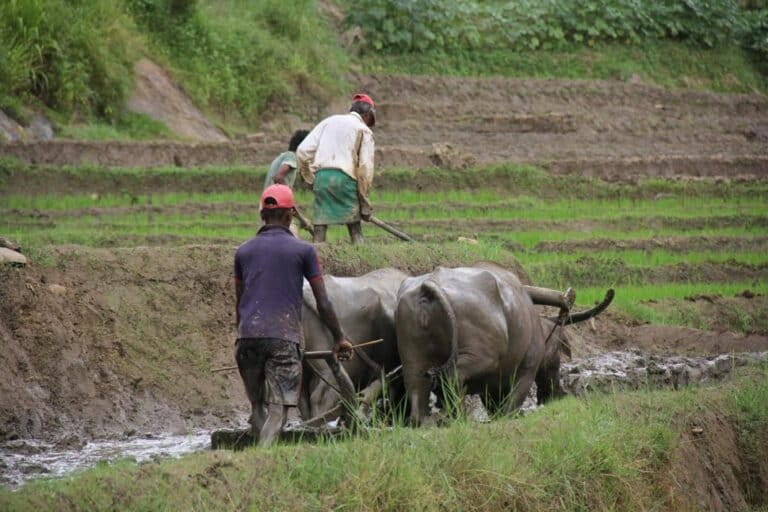
WASGAMUWA, Sri Lanka – Prior to the 1940s and the Green Revolution, Sri Lankan paddy farmers cultivated traditional rice, locally known as purana haal. These rice cultivars were resilient and known to possess various nutritional and medicinal properties yet were soon replaced by new improved rice varieties to obtain better quality and bigger yields. Karu Herath, an heirloom paddy farmer in the village of Dunuwila, bordering the Wasgamuwa National Park located within the Matale and Polonnaruwa districts, has cultivated heirloom paddy varieties for the past 27 years. He told Mongabay that fewer than 30 varieties remain out of the estimated 2,500 varieties of heirloom rice that once existed, a claim supported by rice researchers. According to researchers, many of these rice varieties are long-aged, tall and low-yielding. Therefore, traditional farmers would only cultivate them during one harvesting cycle, known as the Maha season, which runs from September through March. With the introduction of new, improved rice varieties and fertilizers after the 1940s, Sri Lanka lost much of its Indigenous rice varieties and traditional knowledge of Indigenous farming practices. Image courtesy of Pethum Bandara. Herath follows this practice and cultivates only during the monsoon season. “During the Yala season [May to August], when it’s dry, we let the soil recover and grow heirloom cereals and vegetables such as kurakkan [finger millet] and mung [mung bean],” he said. “This draws different nutrients and requires less water than rice. This was the traditional land use system, which was changed by British colonialists who…This article was originally published on Mongabay
In the grassy dwarf shrublands of South Africa’s Karoo, Michelle Marie Schroeder is looking for a very specific kind of poo. Black-footed cats spend most of the day hidden in burrows and emerge mainly under the cover of darkness, making them notoriously difficult to study. That’s why the conservation biologist relies unconventional assistants: Lyka and Sebala, two German Shorthaired Pointers trained to detect the cats’ scat by scent. When the dogs find a sample, they lie down and remain still to alert Schroeder, who works with the non-profit Canines for African Nature. Working on her own, Schroeder found just four scats in more than a year. Ten-year-old Lyka, by contrast, has located hundreds of samples in just a few months, providing the basis for non-invasive genetic monitoring of Felis nigripes. “I probably wouldn’t have found more than 90% of the scats without help,” she tells Mongabay. “And it’s also very difficult to distinguish them from those of other small carnivores. The dogs are much more accurate.” Lyka has located hundreds of black-footed cat scat samples, making non-invasive monitoring of the elusive species possible. Image courtesy of Veer Bills. On the trail of the black-footed cat Hal Brindley, a researcher at the Institute for Communities and Wildlife in Africa at the University of Cape Town, also studies these small, cryptic predators. “Studying the black-footed cat is incredibly difficult without resorting to invasive methods like trapping and collaring,” he says. “More common non-invasive approaches, such as camera trapping, are often ineffective. Fecal…This article was originally published on Mongabay
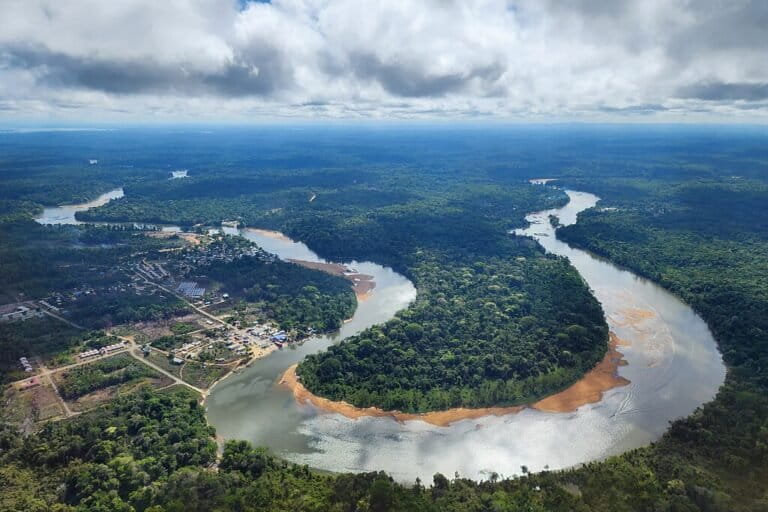
The government in Suriname has started toughening up on land developers who illegally clear the Amazon Rainforest for agriculture and cattle ranching, according to Suriname President Jennifer Geerlings-Simons, speaking at an Aug. 4 press briefing. In recent months, officials have started investigating illegal settlements and revising zoning for hundreds of thousands of hectares of mostly primary forest, previously set aside for agribusiness. Many areas under development are connected to Mennonites, a conservative Christian group who migrated to the country from other parts of the region, with plans to establish religious farming communities. “The people who are active there in the interior and have cleared land to live there, are there illegally,” Geerlings-Simons said during the briefing. “And that means that we’re going to take measures against them.” In 2023, Mongabay revealed that private agribusiness investors were working with the government to develop a Mennonite pilot program, in which around 1,000 families would be relocated from Bolivia — and possibly other parts of the region — onto as much as 30,000 hectares (about 74,000 acres) of land in interior departments of Suriname. In 2023 and 2024, Mongabay also published stories detailing the government’s plan to transfer around 467,000 hectares (1,153,982 acres) of mostly primary rainforest from the Ministry of Land Policy and Forest Management to the Ministry of Agriculture, Livestock and Fisheries (LVV) for future agribusiness development projects. Geerlings-Simons during the press briefing Aug 4. Image courtesy of Key tv 8.2 Backlash to the plans focused on Suriname’s 93% forest cover…This article was originally published on Mongabay
The scars of bottom trawling are still visible on seamounts in Chile’s Juan Fernández Archipelago, even 25 years after the fishing practice took place in the area, according to a new study. In 2024, scientists from Chile and the U.S. used remotely operated vehicles aboard the Schmidt Ocean Institute’s research vessel R/V Falkor to survey four seamounts, underwater mountains that rise up from the seafloor, off Chile’s coast. Three of the seamounts are located in the Juan Fernández Archipelago, a cluster of volcanic islands that has one of the highest known rates of marine endemism on the planet. An estimated 62% of the reef fish species of Juan Fernández and the neighboring Desventuradas Islands are found nowhere else in the world. Other unique endemic species include the Juan Fernández fur seal (Arctocephalus philippii) and the Juan Fernández rock lobster (Jasus frontalis). The fourth study site was the Solito Seamount, located north of the Juan Fernández Archipelago and known to harbor similar marine communities. In the late 1990s and early 2000s, fishers conducted bottom trawling on the Juan Fernández seamounts, dragging weighted nets across the seafloor to catch orange roughy (Hoplostethus atlanticus) and alfonsino (Beryx decadactylus), long-living, deep-sea fish. After catches dwindled, these fisheries collapsed and the trawling stopped. Later, in 2015, Chile permanently banned bottom trawling on all of its seamounts. At Solito, by contrast, the study, published in July in Deep Sea Research, found no evidence that bottom trawling had ever occurred. Twenty-five years after bottom trawling had taken…This article was originally published on Mongabay
Modern conservation is often traced to the establishment of Yellowstone National Park in the U.S. in 1872. In Sweden, a similar milestone came with the founding of Sarek National Park in 1909, partly intended to protect the endangered brown bear of the far north. Yet, long before states established national parks and environmental agencies, people across the world protected landscapes through religion, customary law, and Indigenous stewardship. In Japan, Shinto shrine forests have been preserved for centuries. In India, villagers continue to maintain sacred groves. Ethiopia’s churches and monasteries are often encircled by protected forests, while parts of rural Italy still contain sacred landscapes rooted in traditions older than Christianity itself. Some are associated with Francis of Assisi, the patron saint of animals and ecology; others may descend from sites once dedicated to Jupiter. A growing body of research suggests that such places have often functioned — intentionally or otherwise — as informal systems of conservation. In 2021, the researcher Piero Zannini and his colleagues published a systematic review of sacred natural sites and biodiversity conservation. Examining studies from around the world, they found that sacred natural sites frequently contained greater biodiversity, more intact vegetation, and better-preserved ecosystems than surrounding landscapes. Sacred places, they argued, often operate as effective forms of conservation grounded not in state bureaucracy or scientific management, but in cosmology, ritual, and local tradition. Sami people in Enontekiö, Finland, at the summit of Saana Fell, which they consider sacred. Image by Ninara via Flickr (CC BY 2.0).…This article was originally published on Mongabay

 Login