The plane sprayed the soy fields beside the forest. Residents of Khikatxi said the single-engine aircraft appeared several times during each harvest and passed over Wawi Indigenous Territory. They worried about pesticides reaching their water, gardens, animals, and homes. People reported itching and diarrhea. Crops weakened, streams grew cloudy, and some game animals seemed to smell of agricultural chemicals. For years, Khuiusi Khisêtjê watched the farms advance around his people’s land. In 2018 he made a decision. The community would rebuild its village ten kilometers deeper in the forest. Leaving a village is difficult. Houses must be rebuilt, paths cleared, gardens planted, and daily routines restored. The old place contained years of work and memory. Khuiusi Khisêtjê had already lived through several such upheavals. He knew what was lost when people were forced from their land. He also knew when it had become unsafe to remain. The move took the Khisêtjê farther from the expanding agricultural frontier. It was one more decision in a life devoted to the survival of his people. Khuiusi, who died in Goiânia on July 3rd, at about 80, belonged to a generation that saw the Khisêtjê come close to extinction. He was born when his people still lived beyond the settled frontiers of central Brazil. Their villages lay among rivers, forest, and savanna in a region that would later form part of the Xingu Indigenous Territory and the adjoining Wawi Indigenous Territory in Mato Grosso. Contact with outsiders brought disease, violence, and displacement. Epidemics killed…This article was originally published on Mongabay
When Mongabay Latam began publishing in 2016, the decision felt like a logical next step. Mongabay Indonesia, launched four years earlier, had shown that a locally led, local-language newsroom could build an audience for sustained environmental reporting. Spanish offered the chance to apply that approach across a region extending from Mexico through Central America and the Andes to Chile and Argentina. The political and ecological conditions varied widely, but the need was similar: important environmental stories were going unreported, or receiving attention only after a crisis became difficult to ignore. Latin America and the Caribbean are the most biologically diverse region on Earth, holding nearly half of the world’s tropical forests and unusually large shares of its mammals, birds, fish, insects, reptiles, amphibians, and plants. The Spanish-speaking countries in Mongabay Latam’s coverage area include some of the richest parts of the Amazon rainforest, the tropical Andes, Mesoamerica, the Chocó, and the eastern Pacific. These landscapes face growing pressure from mining, agriculture, infrastructure, organized crime, and climate change. Macaws in Peru. Image by Rhett Butler for Mongabay. I was also drawn to the region’s cultural and intellectual range. Latin America has produced many responses to these pressures, including Indigenous territorial governance, community forestry, new legal approaches to nature, and locally designed conservation programs. A regional news service could document environmental damage while also examining how people were responding to it. Mongabay Latam’s staff and contributors built the newsroom that followed. Editors developed the judgment, relationships, and institutional memory needed to…This article was originally published on Mongabay
For much of the year, migratory songbirds were treated as temporary visitors to the tropics. They arrived from the north, spent the winter, and departed again. Ornithologists paid more attention to their journeys and breeding grounds than to the months they passed farther south. The birds were often described as transients, moving through tropical forests without becoming part of them. What they did there, and how firmly they occupied those places, remained poorly understood. Years of catching, banding, and watching them suggested a different account. In the forests of southern Mexico, individual birds returned to familiar patches and defended feeding territories. They were regular members of tropical bird communities for months at a time. A bird that appeared to be a passing visitor might return to the same small area year after year. Its life in the tropics was structured, local, and essential to its survival. Migration could not be explained only as an escape from northern winters. Its origins might instead lie in dispersal from warmer regions, as birds gradually extended their ranges toward seasonal food and breeding opportunities. John Hilton Rappole, who died on June 30th, aged 79, pursued this argument for much of his career. It became known as the dispersal theory of bird migration. The theory challenged a long-standing explanation for why birds crossed continents. His commitment to it reflected his approach to science. He relied on sustained field observation, questioned established assumptions, and was prepared to defend an idea over many years. He was less…This article was originally published on Mongabay
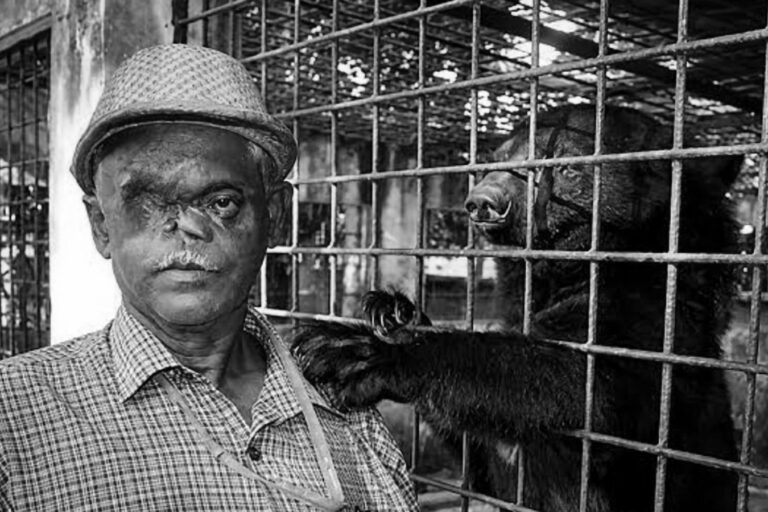
The bear came out of the forest with enough force to kill him. It mauled the hunter badly and cost him an eye. He spent three months in a hospital recovering. There, he began asking himself questions that had not troubled him much before. Why was he hunting? Why was he killing? Hunting had come to him through his family. His father and grandfather were known around Sreemangal, in northeastern Bangladesh, for killing leopards, wild boars, and other animals that threatened people or crops. As a boy, he accompanied his father into the forest. After his father died, he continued hunting. He became a gunsmith and a guide, familiar with animal tracks, forest paths, and the habits of creatures that most people encountered only by accident. Sitesh Ranjon Deb holds a pair of jungle cats in his house in Sreemangol, Bangladesh. Image via Agence France-Presse (AFP) After the bear attack, Sitesh Ranjan Deb, who died on July 14th, gave up hunting. He began capturing injured animals, removing snakes from houses, treating wildlife recovered from traffickers, and returning animals to the forest. The grounds of his home became a treatment center. It eventually developed into the Bangladesh Wildlife Service Foundation, one of the country’s best-known privately established wildlife-rescue institutions. The center remained closely tied to his household. Its patients occupied bedrooms, courtyards, cages, and improvised treatment spaces. Jungle-cat cubs, pythons, slow lorises, monkeys, birds, and other animals passed through. Those requiring constant attention stayed close to the family. Deb kept photographs…This article was originally published on Mongabay
His nephew recalled that the children were taught to chant, “Hyenas are beautiful!” as often as possible. On visits to Kruger National Park, he got them out of bed at midnight to look for bushbabies and again at five in the morning to search for big cats. Wildlife was often most active at inconvenient hours, and he expected anyone accompanying him to adjust. Michael “Gus” Mills, who died on July 13th, spent more than 40 years studying Africa’s large carnivores, especially hyenas, wild dogs, and cheetahs. He published more than 150 scientific papers, chapters, and reports, advised conservation bodies, and trained younger researchers. Much of his working life was spent in a vehicle on a sandy track, waiting beside an animal that might sleep for most of the day. Gus and Margie Mills. Sourced via the Endangered Wildlife Trust At school he had seemed an unlikely future scientist. He described himself as a “very bad student,” failed South Africa’s high-school leaving examination, and was told that science was beyond him. After passing the examination on a second attempt, he joked that he had earned an MA: “Matric Again.” Three years of psychology persuaded him that he did not want to be a psychologist. Zoology held his attention. A visit to Kruger in 1954, when he was eight, had already pointed him toward field biology. “It did something to me,” he said. From then on he wanted to work in the bush. After studying at the University of Cape Town and…This article was originally published on Mongabay
By some accounts, in the Philippine reefs of the 1970s, large groupers appeared every 50 feet or so. Some seemed as large as Volkswagen Beetles. Around them were snappers, fusiliers, wrasses, turtles, and corals, along with fish whose identities were still uncertain. A young biologist could spend his days diving and still feel he had only begun to understand what was there. Kent E. Carpenter arrived in the Philippines at 22, soon after graduating from the Florida Institute of Technology. The Peace Corps assigned him to the Philippine Bureau of Fisheries and Aquatic Resources and put him in charge of coral-reef research. He later called it “the best job there ever was or ever will be in the Peace Corps.” It gave him access to reefs across the archipelago and set the direction of his career. Carpenter was shot dead at his home in Sibulan, Negros Oriental, on July 12th. He was 73. According to police, three men entered the house late at night. A special task group was formed to investigate, and no motive had been established when his death was announced. Kent Carpenter. Image via Old Dominion University Pollution and destructive fishing were already damaging Philippine reefs during his early years there. The large predators he had seen so often became harder to find. He spent much of the next half-century recording marine life in increasing detail: which species lived where, how they were related, how populations changed, and what made them vulnerable. After completing a doctorate in…This article was originally published on Mongabay
Founder’s Briefs: An occasional series where Mongabay founder Rhett Ayers Butler shares analysis, perspectives and story summaries. In Salonga National Park in the Democratic Republic of Congo, researchers and trackers are working to habituate a group of about 60 bonobos. The aim is to help the great apes accept a limited human presence, first for research, and later for carefully managed tourism. The process is slow. Trackers may leave camp around 3 a.m. to reach the previous night’s nesting site before the bonobos (Pan paniscus) wake. They then follow the group through the forest until the endangered apes build new nests in the evening. “The whole idea of habituation is that you meet the group every day in a very friendly, non-interactive way so they accept you as part of the forest,” Felix Bofeko, an assistant researcher in the program, told Mongabay’s David Akana. Habituation requires the same people, same restraint, and same routine, repeated long enough for the animals to stop treating human presence as a threat. When the work began, the bonobos fled at the sight of people. Now, Bofeko says, researchers can sometimes remain with them for two or three hours. Two visitors may be tolerated. Three or four may still be too many. The work has value even before tourism begins. Habituated animals can be observed more closely. Researchers can collect fecal and urine samples for genetic, pathogen, and diet analysis. Salonga is part of the Bonobo Diversity Project gathering standardized data across the DRC. Camera…This article was originally published on Mongabay
A field station is usually a working place. It may have bunkrooms, trails, a generator, stored specimens, weathered notebooks, drying boots, a small lab, and staff who know when the road floods, where to find a mobile network signal, or which hillside burned five years ago. Its value is easy to miss because it is often measured through other things: papers, students, monitoring plots, visiting researchers, restored forest, fewer snares, or a longer record of what changed. A new BioScience paper argues that these stations deserve a larger role in conservation policy, especially in the tropics. The authors describe tropical field stations as institutions that can help turn global environmental commitments into local work. Governments have promised to protect more land and sea, restore degraded ecosystems, slow extinctions, and make conservation more equitable. These goals require information, trust, capacity, and persistence. Field stations can supply much of that infrastructure. Cabang Panti research station in Gunung Palung, Indonesia. Photo by Rhett Ayers Butler The argument is strongest in places where conservation decisions affect both biodiversity and livelihoods. A station in a forest, savanna, wetland, or coastal ecosystem is more than a base for visiting scientists. It can support long-term monitoring, train local researchers, employ people from nearby communities, and keep conservation connected to park staff, farmers, fishers, Indigenous groups, and officials. More data, harder answers That gap is important because conservation has become data-rich and answer-poor. Satellites can detect tree-cover loss within days. Acoustic sensors can record birds, frogs, insects,…This article was originally published on Mongabay
The Amazon is often described in terms of how much carbon it stores. It also moves vast amounts of water. Its trees draw moisture from the soil and return it to the air through transpiration. Some rain caught by the canopy also evaporates back into the atmosphere. That moisture falls again, some of it inside the basin and some of it far downwind. For much of South America, the forest helps sustain rainfall, farming, hydropower, and urban water supplies. A recent paper in Nature, by Nico Wunderling and colleagues, gives this hydrological role greater weight in the climate case for the Amazon. The authors used a dynamical systems model and atmospheric moisture tracking to estimate how deforestation and warming interact across the basin. Without deforestation, their model finds a critical global warming threshold of about 3.7 to 4.0 degrees Celsius, beyond which up to a third of the Amazon forest risks losing stability. When deforestation is included, the risk becomes much larger at a lower level of warming. Under deforestation of 22% to 28% of the biome and warming of 1.5 to 1.9 degrees Celsius, the model finds a near system-wide transition affecting 62% to 77% of the forest. Rain over the Amazon. Photo by Rhett Ayers Butler Those numbers should be treated carefully. The Amazon is not a single ecological unit. Western forests, southern forests, flooded forests, upland forests, secondary forests, and fire-damaged edges differ in species composition, rainfall, soils, and drought tolerance. A model cannot capture every…This article was originally published on Mongabay
At night on Mansouri beach, the first evidence was often a track in the sand. The beach lies south of Tyre, near the border with Israel, where checkpoints, shelling, and evacuation orders have long shaped daily life. It is also one of Lebanon’s important nesting grounds for loggerhead and green sea turtles. The turtles come ashore after dark. They dig, lay, cover, and return to the water. For the hatchlings, the distance from nest to sea is only a few yards. It is still dangerous. Dogs and foxes dig up eggs. Crabs and birds take the young. Lights from roads and resorts pull them away from the water. Plastic drifts offshore. Fishing nets catch adults that have survived for decades. Even a footprint can trap a turtle no bigger than a child’s palm. Mona Khalil gave much of her life to that narrow strip of beach. She was 76 when she died on June 19 from wounds sustained after an Israeli airstrike struck her home at Mansouri beach earlier that month. Her assistant was also injured, suffering severe burns. The house, known to visitors and volunteers as the Orange House, had been the base of her conservation work for more than 25 years. Mona Khalil in 2004 in Lebanon. Photo by Joseph Barrak/AFP/Getty Images She had not set out to become a conservationist. Born in Lagos to Lebanese parents, she later left Lebanon during the civil war. In the Netherlands she worked as a porcelain restorer, a trade that required…This article was originally published on Mongabay
Montañita is a place many people intend to pass through. They come for surf, sun, music, and a stretch of Ecuador’s coast known for surf, music, and its free-spirited nature. Some stay longer. They open small businesses, learn the workings of the communes, put children into local schools, and begin to notice what visitors often do not see: the sewage that is not properly treated, the public works that arrive without answers, the land whose ownership becomes uncertain, and the turtles whose nesting beaches are treated as available ground. For a woman from northern Poland, the change of country became something beyond expatriate life. Ecuador was where she made a home, ran a hostel, raised two daughters, and became part of Santa Elena’s disputes and loyalties. Monika Silva Koniuszek, who was found dead on June 8th at her home in Montañita, was 41. The circumstances of her death remain under investigation. In the weeks before she died, she had spoken publicly of warnings that there was a plan to kill her. She had alerted authorities and sought protection. After her death, Polish diplomats, the European Union, human-rights groups, and the Inter-American Commission on Human Rights called for a thorough and independent inquiry. Her public work began with local problems. Montañita’s inadequate sewage system troubled her. So did the way decisions about beaches, mangroves, public land, and services seemed to benefit the same networks of power. She came to see poverty, malnutrition, poor infrastructure, and environmental damage as linked by…This article was originally published on Mongabay
Williams electric blue day gecko is a small Tanzanian reptile whose recovery shows what focused conservation can do, reports Mongabay contributor, Manuel Fonseca. Once heavily collected for Europe’s pet trade, the species is now rebounding because pressure from trade has eased, captive breeding has reduced demand for wild animals, and local people are helping restore the forest it needs. The gecko (Lygodactylus williamsi) lives in only two small forest reserves in central Tanzania, Kimboza and Ruvu, and depends almost entirely on screwpines for shelter, food, basking and breeding. That dependence made it vulnerable. Collectors cut down screwpines to reach the geckos, and by 2009, researchers estimated that tens of thousands had been taken from the wild. The species was later listed as critically endangered, and international commercial trade was banned under CITES, the global wildlife trade convention, in 2017. The work on the ground has mattered just as much. In Kimboza, forest ecologist Charles Kilawe and people from surrounding villages have worked with rangers to remove invasive Spanish cedar, which had spread through the reserve and displaced native habitat. Since 2016, they have cut down nearly 100,000 cedar trees, reduced forest fires by around 80%, and planted about 5,000 native trees a year. Those efforts are helping the gecko’s population return toward earlier levels. They are also improving habitat for other wildlife, including blue monkeys (Cercopithecus mitis), white-chested alethes (Chamaetylas fuelleborni) and trumpeter hornbills (Bycanistes bucinator). For species with tiny ranges, conservation can be very specific work: Keep trade pressure…This article was originally published on Mongabay
In the American South of the late 1950s, segregation was part of the daily architecture. Airports had separate facilities. Restaurants barred Black customers or served them apart. Schools, buses, waiting rooms, and lunch counters carried the same instructions. The system depended on law, custom, and the expectation that most white people would accommodate it. Resistance often began with small acts that carried real costs. A professor might drive arrested students back to campus. A family might refuse to send its children to segregated schools. A group of faculty members might walk toward a restaurant door together and be met in the parking lot by men who intended to stop them. The work required patience, and it also required a willingness to be arrested, disliked, and misunderstood. Peter Klopfer, who died on June 5 at 95, spent nearly seven decades at Duke University as a zoologist, teacher, and builder of institutions. He helped develop behavioral ecology, studied mother-offspring bonding, and co-founded the Duke Lemur Center, which became the world’s largest collection of lemurs outside Madagascar. He was also the named plaintiff in a Supreme Court case that extended the Sixth Amendment right to a speedy trial to state courts. The civil-rights defendant and the lemur scientist were the same man, formed by the same habits of attention and conscience. He was born in Berlin in 1930 and raised in a German immigrant family in the United States. He attended Friends schools and later studied at UCLA and Yale. At UCLA he…This article was originally published on Mongabay
Founder’s Briefs: An occasional series where Mongabay founder Rhett Ayers Butler shares analysis, perspectives and story summaries. For the Karajarri people of Kimberley in northwestern Australia, the coastline, reefs, wetlands, beaches and desert-edge country form one estate, held through law, memory, work and obligation. That relationship now has new recognition, reports Mongabay’s John Cannon. In March, the Karajarri dedicated Karajarri Jurarr Ngurra, Australia’s first Sea Country Indigenous Protected Area. It covers 237,489 hectares (nearly 587,000 acres) of marine and coastal ecosystems, including part of Malumpurr, the Karajarri name for Eighty Mile Beach. The area is rich in life. Flatback turtles (Natator depressus) nest along the shore of Malumpurr. Migratory birds use the wetlands. Sawfish swim through nearby waters. These species are often recorded through science, surveys and management plans. The Karajarri know them through long presence, close observation and responsibility passed across generations. The new protected area builds on three decades of legal and political work. The Karajarri first secured recognition of their land claims. They then established a land-based Indigenous Protected Area and developed a ranger program. Sea Country protection is the next step. It gives formal weight to an existing relationship. Jesse Ala’i, formerly the Land and Sea Country manager for the Karajarri Traditional Lands Association, put it simply: “In order to have healthy Country, you need healthy people.” The reverse is also true. “Healthy people need healthy Country,” he added. Australia’s Indigenous Protected Areas now account for more than half of the country’s progress toward protecting 30%…This article was originally published on Mongabay
On the far north coast of New South Wales, the old rainforest had mostly disappeared. The Big Scrub once covered about 75,000 hectares of rich basalt country, a lowland subtropical forest of figs, vines, palms and fruit doves. By the time modern conservationists took stock of it, little more than one percent remained, divided among small patches on farms, roadsides and reserves. Weeds pressed in from the edges. Cattle and clearing had done the rest. What remained needed legal protection, science, money, landholders, seedlings and years of follow-through. It also needed someone who could make committees matter. Rainforest restoration can sound gentle, a matter of saplings and goodwill. In the Big Scrub it required persistence of a less decorative kind. Private landholders had to be brought in. Government agencies had to be pressed. Botanists, bush regenerators, nursery owners, donors and volunteers had to keep working together after the first enthusiasm had passed. The work was local, technical and repetitive. It suited Tony Parkes. Tony Parkes. Photo by Kim Honan / ABC North Coast He came to it late. Born in Hobart, he grew up close to bush and estuary. Later came science, business management and investment banking. He retired at 56 after a successful career in Sydney, and might have chosen a comfortable retirement. Instead he and his wife Rowena bought land in the Northern Rivers, learned the history of the Big Scrub and began planting rainforest on their own property. A private restoration project became a second public life.…This article was originally published on Mongabay
Satellite alerts suggest deforestation in the Brazilian Amazon is continuing to fall, putting the country on pace for one of its lowest forest-clearing years in more than a decade. The decline comes as climate scientists warn that a likely strong El Niño could still bring a difficult fire season, even if clear-cutting remains low. New data from Brazil’s National Institute for Space Research, or INPE, show that its DETER alert system detected 370 square kilometers (143 square miles) of deforestation in the Amazon in May. That was down from 960 square kilometers in May 2025, a decline of about 61%. Data from INPE’s DETER and Imazon’s SAD detection systems showing deforestation in the Legal Amazon (“Amazonia”) from Aug 1 to May 31 since 2008. Image by Mongabay Data from INPE’s DETER and Imazon’s SAD detection systems showing deforestation in the Legal Amazon (“Amazonia”). Image by Mongabay May is an important month in the Amazon deforestation calendar. It often marks the transition toward the drier season, when forest clearing and burning tend to increase across parts of the southern and eastern Amazon. Monthly satellite figures can vary because of cloud cover, timing and the way alerts are processed, but the latest data extend a longer downward trend. Over the past 12 months, DETER registered 3,182 square kilometers of deforestation in the Brazilian Amazon. That compares with 4,633 square kilometers during the same period a year earlier. The total is the lowest for any 12-month period in the DETER record dating…This article was originally published on Mongabay
At the mouth of the Carmel River, a teacher set up a spotting scope and let a boy look through it. The birds were the first thing he saw. The habit of looking came next. He saw that the world could be understood, though not quickly, and that its order did not reveal itself to those in a hurry. Later he would say he never recovered from that experience. The remark was light, but also true. A childhood near Monterey, with woods behind the house and the Pacific within walking distance, gave him the subject of his life. Robert “Bob” Ricklefs, who died on June 7th, a day after his 83rd birthday, spent that life asking how living things came to be where they are, and why they lived as they did. He became one of the most influential ecologists of his generation: an ornithologist, biogeographer, theorist, teacher, author and member of the National Academy of Sciences. His textbooks, Ecology and The Economy of Nature, shaped how thousands of students first encountered the field. Their authority came from clarity. He could take a tangled subject and find a usable path through it. Birds were his beginning. As a boy he joined weekend outings with the local Audubon Society and gained the status, modest but real, of a child with a serious interest. At Stanford he briefly followed the spirit of the space age into engineering, then returned to biology. At the University of Pennsylvania he entered the circle of Robert…This article was originally published on Mongabay
When Rainforest Action Network began in 1985, it had little of what usually makes an organization powerful. It had no large budget, no legal department, no reliable access to politicians, and no formal way to force global corporations or development banks to change. It had Randy Hayes, a wide activist network, a way to connect distant forest destruction to everyday choices, and a willingness to use tactics that many mainstream environmental groups avoided. David Benac’s new book, Rainforest Radicals: A History of Rainforest Action Network and Transnational Organizing, tells the story of how that combination became effective. RAN’s early campaigns targeted Burger King over rainforest beef, True Geothermal in Hawai‘i, the World Bank over development projects, and Mitsubishi over tropical timber. These were different fights, involving different places, institutions, and coalitions. Together, they show how a small San Francisco-based group helped bring tropical deforestation, Indigenous rights, and corporate accountability into late twentieth-century environmental politics. Rainforest Radicals: A History of Rainforest Action Network and Transnational Organizing Benac, an environmental and public historian of the postwar United States, came to the subject indirectly. He was researching timber-industry history in the Pacific Northwest when he encountered the MacMillan Bloedel papers and a grassroots campaign against clear-cutting in British Columbia’s coastal rainforests. RAN appeared in the archival trail. That led him to Hayes, RAN’s co-founder, then to a larger oral-history project with activists, allies, and contemporaries. The result is a history built around interviews, archives, and a close look at how people organize when…This article was originally published on Mongabay
Founder’s Briefs: An occasional series where Mongabay founder Rhett Ayers Butler shares analysis, perspectives and story summaries. Cambodia is preparing to reintroduce tigers after nearly two decades without a confirmed wild population. The plan is ambitious, and many of its basic assumptions remain contested, report Mongabay India’s Arathi Menon and Mongabay contributor Andy Ball. The last confirmed tiger sighting in Cambodia came from a camera trap in 2007. By 2016, tigers had been declared extinct in the country. The animals were lost after years of poaching, snaring, habitat degradation, and trade in tiger parts. Those pressures remain. Cambodia’s Indochinese leopard (Panthera pardus delacouri) was declared functionally extinct in 2023, and snares continue to threaten large mammals. The proposed reintroduction would use Bengal tigers (Panthera tigris) from India, released into Kravanh National Park in the Cardamom Mountains. Supporters of the program see a chance to restore an apex predator to one of Cambodia’s largest remaining forest landscapes. India has rebuilt its own tiger numbers over several decades, and Cambodia has approved a tiger action plan. A soft-release enclosure has already been built. The unresolved questions are ecological and political. Tigers need abundant prey. One 2020 study found only a low probability that the proposed landscape could support 25 adult tigers, though it might support a small founder population of five tigers. However, small populations face inbreeding risk and require sustained management. Wild pigs in the landscape may form much of the prey base, but experts disagree on whether current prey data…This article was originally published on Mongabay

 Login